Home Blog Page 689

The judiciary and Justice Dattijo Muhammad’s concern

By The Guardian Editorial Board

The hornet’s nest stirred recently by retired Supreme Court Justice Dattijo Muhammad is yet another wake-up call on the Federal Government and the judiciary as an institution to address lingering perception of irregularities and lack of steadfastness surrounding the judicial system. The point is that until efforts are made to gradually address some of the perceptions, the judiciary will continue to attract a negative image among many Nigerians. While many of the public perceptions are lacking in substance and may have been fuelled more by political considerations, some others appear genuine and require some interventions to allay the apprehension highlighted by the retired justice.

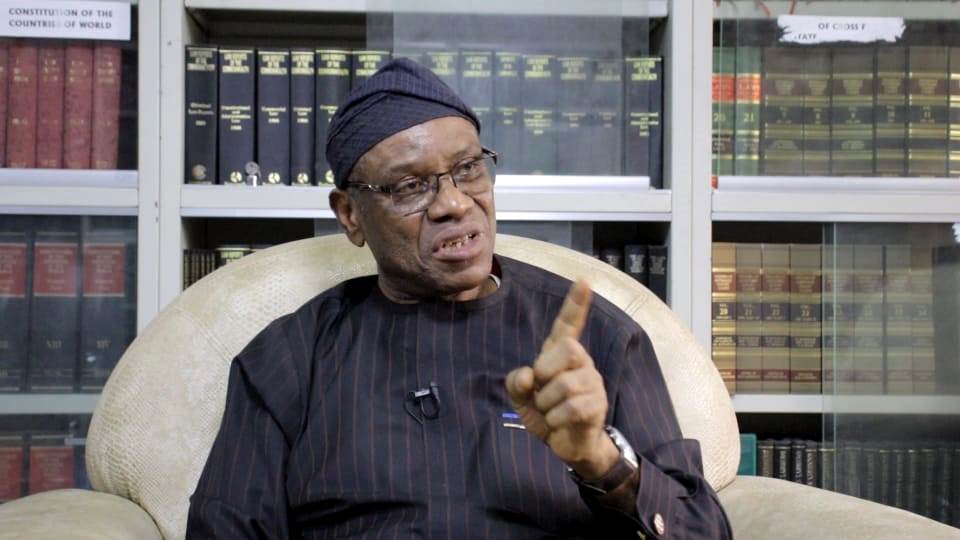
Mr. Muhammad who recently retired from the apex court reviewed some of the negative public perceptions about the judiciary, and spoke against what he considered to be wrong practices in the institution. For instance, he spoke against the over-concentration of powers in the office of the Chief Justice of Nigeria, a fact that he believed is open to gross abuse. He also lamented the seeming opaqueness in the appointment of judges, particularly perception that judges were sponsoring their family relatives to take appointments in a way that invariably undermines meritocracy. And he also lamented the depletion of judges in the appellate courts, particularly the Supreme Court, as this portends great harm to justice dispensation.

Muhammad decried conflicting and controversial decisions emanating from the courts which engendered negative public perception of the judiciary. Lamenting the depleting number of justices at the Supreme Court, Muhammad, further disclosed the lack of federal character in the present composition of the court. Similarly, he criticised the flawed mode of appointing judicial officers, the poor remuneration package of judicial officers, and the alleged misappropriation of judiciary funds by the heads of the courts.  It would seem that the once highly extolled citadel of justice is gradually falling from grace to grass.

Whilst the issues raised by the law lord may not be entirely novel; however, they are deserving of meticulous consideration for proper judicial reforms. Every citizen is a potential victim of a perverse judiciary. According to Justice Samson Uwaifo (rtd), “A corrupt judge is more harmful to society than a man who runs amok with a dagger in a crowded street. He can be restrained physically. But a corrupt judge deliberately destroys the moral foundation of society and causes incalculable distress to individuals through abusing his office, while still being referred to as ‘honourable’. It is difficult to bring him to account under our system.”

It is also important to debunk the notion that the bench has become the exclusive preserve of the high and mighty as meritocracy has been allegedly relegated to the background while mediocrity takes centre stage in recruitment exercise. Although the tradition of seniority on the Bench is strong for the purpose of elevation, competence must be given its pride of place. The practice of nominating only serving judicial officers as judges should give way to appointment of credible and suitable lawyers to the bench, with appropriate advice from the Nigerian Bar Association (NBA). Notably, many judges are presently being nominated to fill vacancies in the apex court; but the situation should not have been allowed to degenerate to the court having only 10 members as presently constituted. How can they adequately administer justice in a federation of more than 200 million people, many of whom are highly litigious?

The enormity of the powers of the CJN as the chairman of the National Judicial Council, Federal Judicial Service Commission (FJSC), National Judicial Institute (NJI) and the Legal Practitioners Privileges Committee (LPPC) is acknowledged. However, there is no authority under the sun that has absolute powers. In fact, the establishing laws of the named Commissions did not clothe the CJN with the sole decision-making right. Paragraph 21 Part One of the Third Schedule to the Constitution empowers the NJC as a body (and not the CJN) to make recommendations to the President and Governors on judicial appointments. Nevertheless, the concern of Justice Muhammad that such powers are prone to abuse should not be treated with levity.

It is, however, important not to create a system that will produce different heads for the commissions in a way to promote unhealthy rivalry and superiority conflict and power play among the various heads. Also, the office of the CJN should not be trivialised, as can happen where the heads of the commissions consider themselves equal to the CJN.

The issue of conflicting judgments being dispensed by the courts is disturbing.  Nigeria’s adjudicating system is precedent-based – courts are mandatorily bound to follow the decisions of superior courts that are higher than them in the judicial hierarchy. However, there have been derogations from this age-long principle of law lately. Where such practice or perception involves the Supreme Court, it sends wrong signals of possible compromise against their Lordships.

It is settled law that the membership of a political party is a domestic affair of the party concerned. Following this principle, the Presidential Election Petition Court dismissed the petition of the All Progressives Party (APC) challenging Mr. Peter Obi’s membership of the Labour Party. However, the Kano State Governor Election Tribunal sacked the elected governor, Abba Yusuf, on the ground that he was not a member of the New Nigeria Peoples Party when he contested the election. Surprisingly, the Court of Appeal recently upheld this decision.

Instructively, the mandatory duty to follow judicial precedent is in the public interest. It ensures that the judicial application of law to facts is orderly and consistent and thereby makes the law more certain, predictable, and responsive to the changed circumstances and expectations of society. Sadly, that certainty is fading in Nigerian law.

Nigeria is ranked 120th of 142 countries in terms of adherence to the rule of law, according to the latest global Rule of Law Index released by the World Justice Project (WJP). If as the defender of the rule of law, the judiciary cannot maintain consistency in justice delivery, then the nation is in trouble. The problems associated with the judiciary are well-identified and the requisite remedies are not rocket science. The authorities, particularly the CJN should confront the sole challenge, which is absence of willpower to do the right thing.

For the sake of its own dignity, the Nigerian judiciary owes the society the duty to administer the law in a manner that ensures that there remains validity in the claim that the judiciary is the last line of defence and hope for the oppressed.

The Guardian

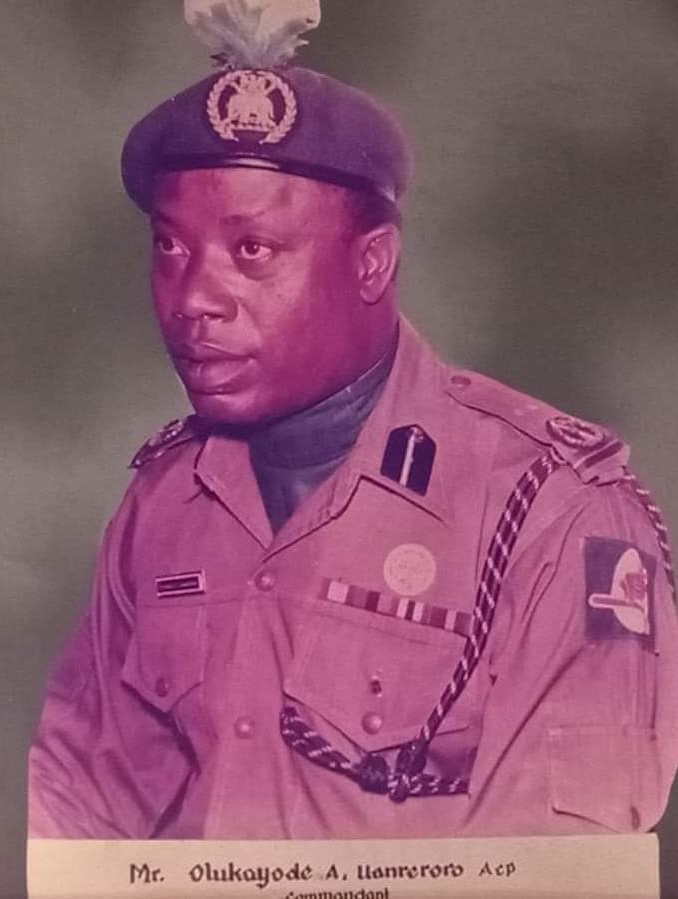
The man who caught the famous armed robber, Lawrence Anini

Mr. Kayode Uaneroro died in the morning of 14 November, 2021. He was the police officer who arrested notorious armed robber Lawrence Anini in the late 1980s. Kayode was the commandant at the Mopol training school at Gwoza when it was suggested to then IGP that if they were serious about getting Anini, Kayode was to be detailed for the task.

Standing at over six feet, dark and rippling with muscles with a no-nonsense visage, Kayode apart from being a crack Police detective also had a black belt in Karate. He had had many encounters with armed robbers and many had paid dearly. He was naturally the man to go after Anini who had become a kind of National embarrassment.

In a couple of weeks and acting on intelligence, Kayode and his ten man team of crack policemen working in mufti but heavily armed stormed into a Benin city house where Lawrence Anini was hiding. The latter wasn’t expecting the Police. He was shot on his left ankle by Kayode and immobilized. That was the end of the reign of Lawrence Anini and the national embarrassment he orchestrated also was terminated.

Shortly after that Koyode left the Police service and became the Chief security officer of a top bank. At that time we had become neighbours in the Akoka area of Lagos. He was a jolly fellow, a perfect gentleman and giant and rarely talked of his escapades in the Police. He humorously referred to his licenced personal rifle as ‘Bomboy’. He would ask his son to fetch ‘Bomboy’ whenever he sensed that armed and dangerous rascals were in the neighborhood. Anywhere he was and no matter the time, Kayode was always prepared for action. He didn’t allow ‘Bomboy’ to be too far away.

Kayode eventually studied Law and opened a private Law office in Ebute-Metta area of Lagos and practiced law till his demise. May he find rest. May his memory always be a blessing for all those who knew him. A great warrior he was.

Credits: Nigerian History

  Why the Yoruba should not dislike the Igbo

By Ikeazor Akaraiwe[1]

  1. Introduction

In 1966, two events took place within 7 months which showed and continues to show the mind of the Igbo towards the Yoruba.

  • The January 15, 1966 Military Coup

Five military officers (four Igbo and one Yoruba) overthrew the democratic order and ushered in a long night of military rule in Nigeria which lasted nearly 30 years. The sole Yoruba in the five-man leadership was not of the top two leaders of the putsch. The set objective of those military officers was to spring Chief Obafemi Awolowo from jail and make him President. Chief Awolowo was Yoruba.[2] (Sources: Gen. Olufemi Olutoye in Punch Newspapers of 31st July 2016; Governor Ezeife in Daily Post of October 7, 2016; Awolowo and the forgotten documents of the civil war by Odia Ofeimun (2) in Vanguard Newspapers of November 3, 2012).

The President who had just been overthrown was Igbo, same ethnicity as majority of the coup plotters. Similarly, the Senate President and Chief of Army were Igbo. The idealistic young officers overthrew them in order to replace them with a government run by a Yoruba. They were not thinking tribe. They were thinking Nigeria. And if they had animus against the Yoruba would probably never have considered Chief Awolowo.

  • The July 29, 1966 Military Coup

Fast forward seven months later to the countercoup of July 29, 1966, wherein Aguiyi-Ironsi, the Igbo General who (together with Col. Ojukwu, another Igbo) put down the Majors’ coup referred to above was overthrown by a coterie of northern soldiers seeking revenge for the January 15, 1966 coup and Ironsi’s failure to timeously try the coupists. After Ironsi was overthrown, Col. Ojukwu objected to the appointment of Lt. Col. Yakubu Gowon as military Head of State, insisting rather on the most senior surviving military officer, Brigadier Babafemi Ogundipe who happened to be Yoruba.[3] (Source: Pg. 106 Olusegun Obasanjo in the Eyes of Time – A biography of the African Statesman by Onukaba Adinoyi-Ojo).

Col. Adekunle Fajuyi

Of course, the story about how Military Governor Fajuyi, a Yoruba, refused to allow the counter-coupists take away his guest Head of State Aguiyi-Ironsi, an Igbo is one of the most heroic stories of selflessness and altruism in Nigeria thus far.

  • How could the Igbo be alleged to want to take over Nigeria through a military coup led by Igbo persons, which military coup was stopped by two Igbo officers?

The above are two scenarios in which Igbo persons in crucial positions thought that the just thing in those peculiar circumstances was for the leadership of Nigeria to go to Yoruba persons. This mindset is a peculiarly Igbo mindset, which has never changed through succeeding generations. It is this mindset that propelled the Igbo to elect Mallam Umaru Altine, a Fulani from today’s Yobe State Mayor of Enugu in the Igbo heartland from 1952 to 1958. 

It is often alleged that the Military coup of January 15, 1966, was part of an Igbo strategic plan to take over control of Nigeria. But the scenarios outlined above show that this is not true. Even though 4 out of the 5 commanding officers were Igbo (due obviously to the demographic advantage of the Igbo in the officer corps of the military at the time), it is noteworthy that the coup was also put down by two Igbo officers, General Aguiyi-Ironsi and Col. Odumegwu-Ojukwu. So, how could the Igbo be alleged to want to take over Nigeria through a military coup led by Igbo persons, which military coup was squelched by two Igbo officers?

This is the major argument against ‘ethnicising’ that military coup.

  • Conclusion – Tragedy of Errors

Suffice to say that:

  • The military coup of January 15, 1966 was an error.
  • The decision of Major-General Johnson Thomas Umunnakwe Aguiyi-Ironsi (born of a Sierra Leonean father and an Igbo mother[4] (Source: The Inside Story of Nigeria’s 1st Military Coup by Max Siollun, [email protected]) to institute a military government instead of handing over to the most senior civilian minister, the Prime Minister having been killed was another mistake.
  • The decision also of Major-General Aguiyi-Ironsi to promulgate the Unification Decree which replaced Nigeria’s federal structure with a unitary structure was an error, which still militates against the progress of Nigeria.
  • The countercoup of July 29, 1966, and the anti-Igbo genocidal pogroms which followed was a gross mistake. Two wrongs do not make right.

Nigeria needs statesmen and women to navigate her out of the historical morass which has institutionalised her as a house divided against itself.   


[1] Ikeazor Akaraiwe is a lawyer, a Senior Advocate of Nigeria and a public commentator.

[2] Punch Newspapers of 31st July 2016 – attributed to Gen. Olufemi Olutoye; Daily Post of October 7, 2016 – attributed to Governor Ezeife / Vanguard Newspapers of November 3, 2012 – article titled Awolowo and the forgotten documents of the civil war by Odia Ofeimun (2))

[3] Pg. 106 Olusegun Obasanjo in the Eyes of Time – A biography of the African Statesman by Onukaba Adinoyi-Ojo

[4] The Inside Story of Nigeria’s 1st Military Coup by Max Siollun, [email protected]

One of the new SANS was 2 years old when a matter concluded in 2015 was filed by his father

A Senior Advocate of Nigeria, Ebun Sofunde has called on stakeholders in the justice sector to declare a state of emergency in what he termed the “current state of the justice delivery sector in Nigeria.

Sofunde, SAN who read the address of the Body of Senior Advocates of Nigeria (BOSAN) at the Special Court Session to mark the commencement of the Supreme Court’s 2023/2024 legal year and the conferment of the rank of Senior Advocates of Nigeria on Monday highlighted a number of issues.

  • Inordinate Delays in The Delivery of Justice

The most obvious manifestation of this system is the inordinate amount of time it takes to dispose of cases. On 2nd February 2005, the Attorney-General of Lagos State filed an Originating Summons at the High Court of Lagos State against National Sports Lottery Ltd (“NSL”). NSL filed a preliminary objection challenging the jurisdiction of the court. The court dismissed the preliminary objection on 18th April 2005 and NSL appealed. In a judgment delivered on 16th July 2008, the Court of Appeal agreed with NSL that the High Court of Lagos State lacked the jurisdiction to the entertain the suit. The Attorney-General of Lagos State instituted an appeal to the Supreme Court in 2009. The Supreme Court, on 31st March 2023 (18 years after the matter was commenced at the High Court!), held that the High Court of Lagos State indeed had jurisdiction, and then sent the case back to the High Court of Lagos State for a determination on the merits.[1] If it took 18 years for a State to see off a preliminary objection to a suit commenced by originating summons, what would be the fate of ordinary litigants?

Shell Petroleum Development Company Ltd v Amaro & Ors[2] is a case commenced in 1983 by, as I understand it, the father of one of the new silks we are celebrating today, in the High Court of Bendel State, Warri Judicial Division. I understand that the new silk was only two years old at the time of the commencement of this case. The suit was consolidated with another suit in 1985 and the High Court delivered its judgment in favour of the plaintiffs in 1997. The defendant appealed in the same year and the Court of Appeal dismissed the appeal in 2000. Dissatisfied once again, the defendant appealed to the Supreme Court. The Supreme Court delivered its judgment dismissing the appeal in 2015 (thirty-two years after the suits were commenced at the High Court). By this time, the new silk had, as I again understand, qualified as a lawyer, and even appeared with his father at the hearing of the appeal at the Supreme Court!

Things ought not to continue like this and we, the bar, and the bench, need to come together to take concrete action to ensure that our system of administration of justice is fit for purpose. If we do not do this quickly, the confidence of the public in the system, which is at an all-time low, will plunge to a point where it may no longer be   redeemable. It is no coincidence that citizens now prefer to take their civil disputes to law enforcement agencies for resolution. Law enforcement agencies now fill the void that has been created by our failure to make the system of administration of justice work for those who should see the courts as “the last hope of the common man.” Indeed, I have a friend who told me that if he wanted to evict his tenant, he would forcibly evict him and take possession of the house and then defend any action brought against him.

  • Inconsistent Judgments And/Or Judgments Given Without Considering Previous Relevant Judgments

There are too many inconsistent judgments emanating from our appellate courts. This makes it difficult for a litigant to be able to take an informed decision as to whether to maintain or defend an action. It has also made it difficult for the Lower Courts to observe the rule or principle of stare decisis effectively. 

The judgments that come out of the courts of a jurisdiction are a mirror through which outsiders view the quality and state of its system of administration of justice. The more overwhelmed our justices are by their caseload, the less time they will have to write well thought-out judgments. For me, as one who has been in active legal practise since 1972 and been in the inner bar since 1988, this is one of the most devastating effects of our system of administration of justice today.

  • Interference With the Administration of Justice by Administrative Acts of The Court

A lot of delays are caused by disruptive administrative acts of court administrators. This is most evident in the way judges are transferred. It is an established principle of our law that when a new judge takes over a part-heard matter, trial must start de novo. Why then do our federal courts of first instance transfer their judges to different states or divisions without adequate planning? Ideally, if judges must be transferred, they should know at least one year in advance, and they ought not be assigned new cases during that “transition period”. The same goes for retiring judges. One of the most predictable things in our judicial system is the date on which a judge will retire from service. Why then don’t we proactively manage the dockets of judges whose retirements are imminent so that the trials before them do not have to be started de novo after they retire? These are problems that could be easily dealt with administratively by court administrators.

  • Delays Caused by Redundant Provisions in The Rules of Court

We need to take another look at the rules of our appellate courts that state that once an appeal has been entered, the appellate court shall be “seised of the whole of the proceedings”. This rule has become a tool with which lawyers delay proceedings, safe in the knowledge that the lower courts are reluctant to be seen as engaging in “judicial rascality” by continuing to hear cases that are the subject of an interlocutory appeal which they have the discretion to do in appropriate cases. While this problem has been somewhat solved in criminal cases by section 306 of the Administration of Criminal Justice Act, there is a need to amend the rules of our appellate courts to make it harder for lawyers to tie the hands of lower courts by simply rushing to have their interlocutory appeals entered, no matter how bereft they are of merit. In effect, it is my suggestion that Rules of the various Court be amended to remove provisions that are impractical or work injustice of some sort.

  • Preference For Technicality Over Substantial Justice

Judges are humans after all, so, when they are overwhelmed by their caseload, it is inevitable that they will treat cases in a perfunctory manner. The goal will become the disposal of as many cases as possible, even if that means sacrificing justice. It is therefore not surprising that a great number of judgments coming out of our apex court, which should be a court of policy, are disposed of on technicalities. The days when our Supreme Court admonished that “justice is not a fencing game in which parties engage themselves in an exercise of out-smarting each other in a whirlgig of technicalities, to the detriment of the determination of the substantial issues between them”[3] seem to be a distant memory. Our present reality is that appeals are now struck out at the Supreme Court, after spending decades to work their way up there, because a lawyer’s seal was not affixed on the originating process at the court of first instance.

  • Suggested Ways Forward

A lot of the above problems, for instance, excessive delays, inconsistent decisions and technicalities over substance are caused largely by the excessive workload faced by the courts. For instance, I have been told on several occasions that the Supreme Court of Nigeria is the most over-worked Supreme Court in any Country of the World. If that is true, this may be rectified by limiting drastically the right of appeal to the Supreme Court (whether as of right or with leave). Secondly, the attitude of our courts should change regarding the way leave is granted to appeal too readily.

On the other side of the coin, I look back to the early years of my practice when judges were not overworked and, consequently, cases were disposed of expeditiously and mostly on the merits. I remember that in the early 80s, I appeared before the Lagos Division of the Court of Appeal then presided over by the late Justice B. O. Kazeem. It was an application for a departure from the rules to allow my interlocutory appeal to be heard on the bundle of documents that I compiled that came up. To my surprise, when the case was called, Justice Kazeem asked me if I was ready to argue the appeal. I reminded him that we were in court for my application for a departure from the rules. It was in February. Justice Kazeem’s response was that if I was not ready to take the appeal that day, he would adjourn my application to November. Of course, it was a simple appeal, so I said I was ready to argue the appeal. that day. Counsel for the respondent also said he was ready. The application was stood down and heard later that day as an appeal. Of course, the court could do this because the workload was not unduly heavy for the Justices. They had been able to digest the bundle of documents against the background of the notice of appeal and decide that the matter was a simple appeal that need not clog the docket of the court for much longer.

It is high time that the full complement of 22 Justices provided by law comes to fruition and this way, the Supreme Court will be able to have at least three panels sitting at the same time on a regular basis.   

It is within the discretion of judges to award costs on an indemnity basis. While most rules of court make provision for this, it is hardly ever the case.  Courts routinely award paltry sums that have no bearing to the actual costs incurred by the party in whose favour they are awarded. Until costs are truly awarded on an indemnity basis, lawyers who feel that their clients have “bad” cases, particularly   aspirants to the rank of SAN will continue to have an incentive to maintain such cases or deploy all sorts of dilatory tactics to thwart the quick and efficient disposal of those cases or explore their rights of appeal to the appellate courts. I have no doubt in my mind that the number of frivolous cases filed and maintained in court will be greatly reduced if lawyers and litigants were required to indemnify the winning party for their costs. This view is substantiated by examples from some other advanced legal jurisdictions, where costs are treated separately after the conduct of the proceedings, in order to determine the adequate quantum depending on the peculiar fact and circumstances at hand.  If indeed costs are compensatory, I wonder what compensation it is to award cost of N100,000 to a party whose lawyer has travelled from Lagos to Abuja on five occasions to have an appeal heard.

  •   Conclusion

In summary, it is my fervent hope that the judiciary, with the support and collaboration of the bar, will take the urgent action required to start the process of fixing our system of administration of justice. For where the citizens lose confidence in the judicial system, anarchy is assured. Also of significance is the fact that the effectiveness and the efficiency of the justice delivery system are major indices for attracting foreign direct investment which are greatly needed at the moment, in order to stimulate the Nigerian economy…


[1] [2023] 12 NWLR pt.1899 p.399.

[2] (2015) 12 NWLR (Part 1472) 122 SC.

[3] Aniagolu JSC in Afolabi v Adekunle [1983] All NLR 470.

The Judiciary is more deserving of public trust and confidence than ever —CJN Ariwoola

  • Says “the river of judicial process has to be kept pure.”
  • Tells new SANs “you now carry a heavy burden on your shoulders.”

The Chief Justice of Nigeria, Hon. Justice Olukayode Ariwoola has announced that “the Judiciary, as it is today, is more deserving of public trust and confidence than ever before.”

Speaking the special session of the Supreme Court of Nigeria to mark the commencement of  the 2023/2024 legal year and swearing-in of newly conferred Senior Advocates of Nigeria, the CJN said: “We are poised to reposition it for effective justice delivery to make our beloved country a destination of note in the observance of the rule of law and tenets of constitutionalism.”

Assuring that the judiciary is “determined to redouble our efforts to bring about a judiciary that Nigerians, home and abroad, will be very proud and ecstatic about,” the CJN charged: “Nigeria must move forward in all spheres of life and we must collectively evolve a society where things must be done right to get the right environment for every right thing to thrive right for our collective good.

Congratulating the courts for having performed excellently, the CJN said: “The Supreme Court; and by extension, the Nigerian judiciary has fared well in the outgone legal year even though our high level of resilience was brazenly taken to task by some overwhelming challenges.”

According to the CJN, “the rule of law and the holistic independence of the judiciary should always be cherished by all. As the Chief Justice of Nigeria, I will do everything within my ability to make it remain part of my responsibility to nourish.”

He warned that “if a Judicial officer is found to be corrupt then he cannot be allowed to hold such a divine Chair of a judge” and that “[If] the faith of the people is to be maintained in the Judiciary, then the river of judicial process has to be kept pure.”

However, he expressed confidence in judicial officers while pointing out that: “Judicial Officers at the various hierarchy of Courts in Nigeria are discharging their judicial functions in a befitting manner.

“But as the Chief Justice of Nigeria, I still strongly desire from all Judicial Officers across Courts to lead a disciplined lifestyle that will enhance their trust and integrity quotient. Judges owe the society a great duty of always deciding cases without fear or favour, affection or ill will friend or foe.

“I expect every Judicial officer to work very hard and also be very honest and courteous litigants, witnesses, and members of the bar and discharge all your Judicial functions with all the humility at your command. Even while doing this, it is still necessary to have at the back of your minds that public opinions, sentiments or emotions can never take the place of the law in deciding the cases that come before you. The law remains the law, no matter whose interest is involved.

“In all we do, as interpreters of the law we should endeavour to sever the strings of emotion from logic and assumption from fact. We should never be overwhelmed by the actions or loud voices of the mob or crowd and now begin to confuse law with sentiment or something else in deciding our cases.

Nevertheless, unnecessary and unwarranted utterances are bound to embarrass not only others but the judge himself; thus what should be asked should be asked and what should not be asked should be avoided.

“I admonish our Judges to, as usual, receive what is tendered in court and eschew what is against the law and facts after thorough analysis and assimilation both in and out of courts, which exercise is of course part of judgeship…”

To the 58 new SANs, the CJN said: “As Senior Advocates of Nigeria, you now carry a heavy burden on your shoulders. From the moment you leave this Courtroom, everything in you and about you will now be freely scrutinized and dissected by everyone that comes in contact with you. There is nothing like private life for you henceforth.”

16 Days of Activism: C’River records 586 cases of gender-based violence in 10 months

Cross River recorded 586 cases of gender-based violence between January and October, the Commissioner for Women Affairs, Mrs. Edema Irom said in Calabar on Saturday.

She told a news conference organised to kick-start 16 days of activism against GBV that the figure represented only cases reported officially to the government.

Irom said the ministry was putting structures in place in the 18 local government areas of the state in collaboration with Non-Governmental Organisations to report GBV cases in real time to address the menace.

“We have a Technical Working Group with members drawn from the ministry and from the NGOs to find a way around the issue.

“The TWG meets quarterly to review efforts put in place to address the issue,” she said.

She explained that the 16-day activism aimed at creating awareness of the menace and honouring those who fought and paid the ultimate price to end violence against women and girls the world over.

“The 16 Days of Activism is an annual event which begins on November 25 and ends on December 10.

“It was set aside by the UN to commemorate the brutal murder of 16 women from the Dominican Republic who were killed for their activism against gender-based violence.

“The activism also commemorates the World Day for HIV prevention on Dec. 1; the International Day for Persons with Disability on December 3 and the International Human Rights Day which holds on December 10,” she said.

In his remarks, Mr Remi Ajuga of the National Human Rights Commission noted that gender-based violence constituted a major plank among issues handled by the Commission.

“With the activism which begins today, we have started the journey to end the menace,’’ Ajuga said.

NAN

The Heads of Courts have been “captured” by the Executive — Ejembi Eko, JSC

Ejembi Eko, JSC

By Hon. Justice Ejembi Eko, JSC

The shoddy recruitment process, and of course the reality of “ the impoverishment of the Judges and the Judiciary”, constitute the real existential threat the Rule of Law in Nigeria.

The Heads of Courts (most of them) have been “captured” by the Executive to do their bidding in the recruitment exercise. Until the Capital and Recurrent expenditures of the Judiciary are expressly made a charge on the Consolidated Revenue Funds of both the Federation and of the States, the Chief Executives and the Heads of Court at both Federal and States will not stop the unholy trade by batter in the shoddy recruitment process. The Executive have now found that planting their candidates on the State Judicial Service Commission (SJSC), Federal Judicial Service Commission (FJSC) and National Judicial Council (NJC) through the Heads of Court is now a guarantee “for winning elections” vide the Judiciary.

Heads of Court nominate members of these very important recruitment agencies for the Executive to “appoint”. Curtailing the enormous powers of the Heads of Court will ensure healthy recruitment process.

The Head of Court is, after all, “primus inter peres.” Let the Judges themselves elect one among themselves for a term who is the most suitable and capable administrator and manager of available personnel and resources. The present practice of appointment of Head of Court on the basis only of gerontology needs to be reformed radically. These days senior Judges, in order to curry favour of the Executive as potential Head of Court, do most despicable things for the Executive; including appearing to be “bag boys” and intellectual thugs on the Bench of the Executive.

Recruitment on the basis only of seniority, in addition to the constitutional requirements, particularly to the appellate courts, which now is becoming the norm at FJSC and NJC, must be jettisoned. Productivity, integrity and learning, not gerontology, should be the determinant.

While poverty may influence corruption; poverty per se does not deny integrity. Mahart Ghandi and Mother Teresa, though poor, had integrity and value for truth. Psychology of corruption is rooted more in avarice than in poverty. The nova riche are in most cases, more avaricious and corrupt than the poor. The most corrupt Judges are, in most times, from the middle and upper class.

In recruitment process: emphasis should be on evidence of contentment and track record of fighting the cause of justice and the Rule of Law.

It is time appellate courts were diversified. At present most appellate Judges have establishment backgrounds, starting and retaining their law career either as State Counsel or Magistrates. Let’s diversify to enrich the jurisprudence, as is the case in India, Canada etc.

Anambra priest remanded for allegedly impregnating teenager

A Sexual and Gender-based Violence Court headed by Chief Magistrate, Genevieve Osakwe, has remanded a Catholic priest, Rev. Fr. Nwaigwe Stephen, for allegedly raping and impregnating a teenager(name withheld).

The priest was also accused of forcefully taking the victim to Benin City, Edo State, where she delivered the baby, but police investigation revealed that the whereabouts of the said baby are still unknown.

It was gathered that the priest met the teenager at a Catholic Church Parish in Obosi, Idemili North LGA of Anambra State, where she was invited for a religious church programme.

According to the charge sheet, the victim, while answering questions in court during the remand proceedings on November 20, 2023, said the priest took her from her parents to live with him when she was 14 years old, promising to sponsor her education, while she equally served as the priest’s cook.

She added that not long after she moved into the priest’s house in Ihiala, Anambra State, he started having carnal knowledge of her and continued until she became pregnant at the age of 17.

She further stated that when she informed the priest about her pregnancy, the priest took her somewhere in Benin City to the house of a man and woman whom the priest introduced to her as his brother and brother’s wife.

She said, “But when I gave birth to my baby at a native birth attendant’s house in Benin City, I was told that the baby had died and when I made efforts for them to show me the dead baby, they said it has been buried.

“While on our way back, the reverend father told me to say that I was gang-raped. But I have never been raped before, except the ones he (father) did to me in his house.”

The Police prosecutor, during the remand proceedings, informed the court that there was probable cause to order the remand of the priest; witnesses were bound over to appear before the court to give evidence whenever the case would be mentioned.

Therefore, the defence counsel applied for the bail of the defendant, urging the court to exercise his discretion of bail in favour of the defendant while citing Sections 13(3), 71(3), 72 and 73 of the Administration of Criminal Justice Law (ACJL) of Anambra State, 2022, as well as, Sections 35 and 36 of the Constitution of the Federal Republic of Nigeria, 1999, as Amended.

He also prayed the court to grant bail to the cleric in most liberal terms, assuring the court that he would not jump bail if granted.

But, in opposition to the bail application by the defence counsel, the police prosecutor prayed the court to refuse bail to the clergyman, stating that the case before the court was an offence against a minor who was supposedly under the spiritual guardianship of the defendant.

The prosecuting police officer stressed that the defendant had since been suspended by the authorities of the Roman Catholic Church, noting that the claim that the defendant had a serious health challenge to warrant being granted bail, was never certified by qualified medical personnel, as required by the ACJL, 2022.

Ruling on the bail application, the presiding Chief Magistrate stated that the case before the court was an offence punishable with life imprisonment, regretting that the offence of rape against minors was becoming rampant in society.

The magistrate, however, warned that the court would not fold its hands to watch the society decay, irrespective of whose ox is gored.

The court gave numerous instances of similar offences which had appeared before it in the past, mentioning specifically, a case involving a 75-year-old man who also allegedly raped a minor and was accordingly remanded.

Therefore, Nwaigwe was accordingly remanded at the Correctional Centre, even as the court urged him to seek his bail at the High Court.

The Magistrate adjourned the case to December 6, 2023, for a report of compliance and also ordered the prosecuting police officer to transmit the original case file to the office of the Attorney-General and Commissioner for Justice of Anambra State.

The PUNCH

Discord as plot over succession plans at Supreme Court thickens

By Lanre Adewole

  • Agim to be CJN, head of judiciary for 10 days
  • Ex-CJN’s son to spend 17 years in Supreme Court, five years as CJN
  • Knocks for outgoing CJN for side-stepping seniority in geopolitical zones

While Nigerians wait on the National Judicial Council (NJC) to make final pick for the Supreme Court bench, fresh claims have emerged to explain the lopsidedness in the 22-person list cobbled by the Federal Judicial Service Commission, from which the council, would recommend 11 justices of the Court of Appeal, for elevation.

The Chief Justice of Nigeria, Justice Olukayode Ariwoola, is the chairman of both judicial bodies.

The age-long process of FJSC nominating to NJC, under one chairmanship, has been severely knocked by many stakeholders with the recent coming from the most senior justice in the country, Justice Musa Dattijo Muhammad.

Sunday Tribune has heard from serving and retired senior judicial officers that the ongoing process deviated from time-honoured practice of picking senior Court of Appeal justices for Supreme Court vacancies in their geo-political zones to position certain nominees as potential future CJN.

In the past, the North had been particularly accused of deliberately promoting young judges and juniors from the axis to stay long enough at the apex court to be CJN due to the succession arrangement that’s based mainly on seniority.

Frustrated judicial stakeholders are querying the morale of the list emanating from FJSC because it did not follow seniority at zone’s level in recommending justices of the penultimate court for the 11 Supreme Court vacancies expected to be filled in weeks from now.

From the available slots, each of North-Central and South-East is getting three, North-West will get two while the trio of South-West, South-South and North-East will get one each.

The system and the public space have been in a meltdown since penultimate Thursday when the FJSC list which was prepared at the behest of the CJN, Justice Ariwoola, was released, showing senior justices of the Court of Appeal playing second fiddle to younger and junior colleagues in their various zones on the priority list.

The 11 nominees on the priority list are expected to be recommended to President Bola Tinubu for appointment and Senate screening, though the 11 on the reserve list have an outside chance should the favoured nominees falter during NJC’s appointment interview.

Sunday Tribune learnt some interest groups have been campaigning for younger justices from all zones to reduce regular appointments to the apex court through retirement and sudden deaths.

It appears that the campaigners got the leadership of the system to listen, as the FJSC list showed that many senior justices of the intermediate court from zones with vacancies were completely ignored for younger and junior colleagues.

Despite being a product of succession-by-seniority, Ariwoola led the commission to completely ignore older and senior justices from the South-West, including the second most senior justice of the court, Justice OlukayodeBada, who joined the court on November 11, 2005 and will retire on May 10, 2025.

Also overlooked from South-West and from the same Osun State as Bada is Justice Tunde Oyebanji Awotoye. He is 15th most senior justice of the Court of Appeal and got to the court on July 16, 2010. He will retire on May 8, 2027.

The duo lost to their junior from Lagos, Justice Adewale Abiru, who was appointed to the court on November 5, 2012 and will retire on October 17, 2034, very likely, at the apex court.

Justice Olubunmi Oyewole, who hails from Osun, but employed as Lagos High Court judge, is on South-West Reserve List and also Abiru’s junior.

Despite Abiru’s expected long stay at the apex court, he will be missing the cut for the top-job, due to the relative young age of other priority nominees from other zones.

He will, however, be second most senior justice for five months in 2034, before his exit.

Court

Going by their age and seniority on the current job which they are expected to maintain at the apex court, when finally lifted, only three of the 11 justices on the priority list, would be in line to be future chief justice of Nigeria.

They are Justice Moore Adumein from Bayelsa (South-South), Obande Ogbuinya from Ebonyi State (South-East), and Justice Mohammed Baba Idris from Niger State (North-Central).

In what signals a deliberate pick, two of the trio were placed on the priority list, while their seniors were on the reserve list.

Instructively too, like the Bada in the South-West scenario, the most senior justices from the trio’s zones were completely snubbed by FJSC.

Justice Ita George Mbaba, the 13th most senior at the Court of Appeal and the most senior from the South-South zone was overlooked for Adumein, likely because of longevity on the apex court bench.

Mbaba is due for retirement in 2025, while Adumein’s retirement is clocked at 2034 and would be CJN for four years, from April 27, 2030 to May 6, 2034, if succession based on seniority is preserved.

He prepared the lead judgement in the controversial but unanimous decision of the Court of Appeal in Kano gubernatorial election appeal last week.

The South-East man, Ogbuinya, who is expected to take over from Adumein from May 7, 2034 to June 16, 2035, is number 17 on the Court of Appeal bench, while Justice Theresa Orji-Abadua from Imo State –placed on reserve– is number 9.

In the South-East, it is a mixed fortune for the most senior justices, especially those in number six, seven, eight and nine.

Anambra-born Justice Uzoamaka Ifeyinwa Ndukwe-Anyanwu is the most senior from the South-East and at number six, but she is retiring December 28, this year.

Next to her is Justice Chidiebere Nwaoma Uwa from Abia State, who is the only senior on the priority list. However, she is primed to leave the apex court early, with her retirement due on October 26, 2028, raising questions about her positive consideration when other senior justices like her, were bypassed.

Like Orji-Abadua, the 9th most senior, Justice ChiomaNwosu-Iheme, who is a step ahead of Orji-Abadua, was asked by the Ariwoola FJSC to play second fiddle to Justice Anthony Ogakwu from Enugu State, who joined the court in March 2014 and will retire on August 4, 2034, almost certain, at the apex court.

Incidentally, just like Abiru, Ogakwu’s long stay won’t deliver the CJN seat to him, as he is out the succession loop, except for unexpected disruption.

He is number 38 at the Court of Appeal.

While the Iheme/Ogakwu episode has attracted a lot of criticism, the nomination that has confounded many stakeholders the most is Idris’s, the son to a former Chief Justice of Nigeria, late Idris Legbo Kutigi.

He is number 54 on the Court of Appeal seniority list, while his reserve, Justice Joseph Ikyegh, from Benue State is 10th most senior.

Many senior lawyers, who do not want to be identified, have argued that like Lagos, Niger was not due for another vacant slot, considering that six states in a geo-political zone are expected to rotate the three statutory slots reserved for each of them.

Justice Musa Muhammad Dattijo, who just retired from the apex bench, is from Niger State.

Kwara State is the only North-Central state without a nomination, either on priority or reserve lists.

The situation is similar to Lagos being positioned to retain the seat vacated by another Lagosian, Justice Olabode Rhodes-Vivour, while Ogun State’s last appointment to the apex court was in 1989 even though both states are expected to rotate the slot.

South-West is currently represented on the apex court by Ariwoola from Oyo State, Justice Kudirat Kekere-Ekun from Lagos State and Justice Helen Ogunwumiju from Ondo State.

The coming of Abiru will give Lagos two slots out of the mandatory three for South West.

In what critics called ‘target’ pick, Kutigi’s son is the only junior on the priority list from the North-Central zone and the only one in the succession line.

Justice Joseph Ikyegh from Benue, who is pairing Idris as his reserve, is number 10 at the Court of Appeal and will retire in 2028, while Idris is going to spend the next 17 years in the apex court, five of which he would serve as the CJN, all things being equal.

Picking future CJNs ahead of their seniors, allegedly deliberately for future leadership, has enraged many insiders who are accusing the Ariwoola-administration of pandering to interests and forces.

As the apex court waits for the latest addition, the succession path for the current nine justices, (outside of the CJN) has also thrown up questions about the turnover of CJNs.

Of the lot, only four are in the succession line, according to seniority and age –Justices Kudirat Kekere-Ekun from Lagos, Inyang Okoro from AkwaIbom, Tijjani Abubakar from Yobe and Emma Agim from Cross River.

While Kekere-Ekun is expected to serve as the second female CJN in the history of Nigeria, from August 23, 2024, to May 7, 2028, Okoro, by established arrangement, will take over from May 8, 2028 to July 11, 2029.

Tijjani Abubakar and Agim are both born in April 1960, though the former is senior.

Abubakar will lead the apex court for nine months, from July 12, 2029 to April 15, 2030.

Agim, who would be the most senior then, would rule from April 16, 2030 to April 26, 2030, making his tenure one of the shortest ever in history, provided nothing human and natural disrupt the succession and seniority arrangement.

Of the five justices of the Court of Appeal that put judicial seal on the election of President Bola Tinubu, only two –Justice Haruna Tsammani, who chaired the panel, and Justice Stephen Adah– are on the priority list for elevation to the Supreme Court.

This article —Discontent spreads over succession plots at Supreme Court— written by Lanre Adewole was originally published by Sunday Tribune on November 26, 2023

Malawi’s Path to an “Award-Winning Judiciary”

By Chidi Anselm Odinkalu

Joyce Banda, Malawi’s fourth (and first female) president, was in Nigeria earlier this month as guest of the Nnamdi Azikiwe University in Awka, Anambra State in south-east Nigeria, where she spoke at the 12th annual lecture in memory of the man after whom the university is named. It was also the 119th birthday of Nnamdi Benjamin Azikiwe, Nigeria’s founding president, and the month of the 26th anniversary of the death in 1997 of Malawi’s founding president.

At the lecture, Joyce Banda described Malawi’s judiciary as “award-winning” and many Nigerians in the audience, embarrassed by the contrast with theirs which wallows in infamy, broke out in spontaneous acclamation. The story of how Malawi’s judges became “award-winning” should be of interest to Nigerians.

On the ruins of the banned Nyasaland African Congress (NAC), Orton Chirwa, Aleke Banda and their confederates, founded the Malawi Congress Party (MCP) in 1959. The previous year, Dr. Akim Kamnkhwala Mtunthama Banda, who would later lead the country to Independence as Dr. Hastings Kamuzu Banda (no relation of Joyce Banda), returned to the brutal embrace of a colonial jail in the country he left on foot in 1915. In the 42 years of his foreign sojourn, Dr. Banda had traveled through many countries and continents, acquiring qualifications in anthropology and qualifying as a medical doctor in both the USA and in the United Kingdom. On his release from jail in June 1960, Orton handed over to Banda the leadership of the MCP.

In 1964, on the sixth anniversary of Banda’s return to the territory, Malawi attained Independence with him as its first prime minister. Orton Chirwa, a graduate, like Nelson Mandela, of Fort Hare University in South Africa, became Attorney-General and Minister of Justice. Two months after the cabinet was sworn in, it was in disarray in a power tussle triggered by allegations of autocracy against Prime Minister Banda.

In many ways, Nigeria’s and Malawi’s trajectories managed to converge and diverge. Six months after the military took over power in Nigeria, Malawi became a Republic in July 1966, with Hastings Banda as its first president. It was also the month of Nigeria’s second military coup.

Orton Chirwa had little regard for the niceties of fair hearing. Prior to Independence, he took issue with the presumption of innocence and burden of proof in criminal trials, arguing for their replacement with traditional African ethos. As Attorney-General he sought these reforms but could not enact them before he was turfed out of cabinet in September 1964.

Following the collapse of the Chilombwe Murder Trials in 1969, Banda scrapped criminal trials by regular courts, transferring jurisdiction over them to so-called Traditional Courts, comprising a traditional chief as chair, with three citizen assessors and one lawyer. As both president and Justice minister, he appointed the traditional courts and they also reported to him. Orton’s ideas had become law.

The Traditional Courts eventually usurped the regular courts, affording to Hastings Banda a perverse veneer of process as they handed to him the heads of a succession of his political opponents in a periodic re-enactment of Biblical blood theatre designed for his macabre amusement.

The three decades of President Banda’s reign accounted for the murder and killing of over 6,000 in a rule described by the Los Angeles Times as characterized by “brutality, nepotism and whim.” The rule of law in the country was reduced to reading the mood swings of the man who would come to be known simply as the “Ngwazi”. As he memorably put it: “Everything. Anything I say is law . . . literally law.”

On Christmas Eve in 1981, Banda arranged to abduct an exiled Orton Chirwa and his wife, Vera, from Zambia and, in a tragic irony, had them arraigned for treason in 1983 before the kind of traditional courts that Orton had advocated for as Attorney-General. Their trial was a charade. The court denied them legal defence and the right to call witnesses. Initially sentenced to death on conviction, Banda commuted this to life imprisonment. Orton spent the remainder of his life in solitary confinement at the Zomba Prison in Malawi where, in December 1992, he died at 73.

In death, Orton exacted revenge on his nemesis. Reputedly born around 1898, Banda’s cognitive capabilities were in terminal decline. On 12 June 1993, Nigeria voted in elections to return the country to democratic rule after a decade of military rule. Two days later, Malawians similarly voted overwhelmingly at the end of tortured advocacy to end single party rule. In Nigeria, the military nullified the vote, extending its rule by another six years. In Malawi, the outcome stood and in elections the following year, citizens toppled Banda’s MCP, replacing him with Bakili Muluzi of the United Democratic Front (UDF).

Under President Muluzi, the country took steps to reinstate the rule of law, reform the Traditional Courts, integrate them into infrastructure of the lower magistracy and update the skills of former traditional court judges through suitable training. In the judiciary, the task of spear-heading this reform then fell upon two young judges, Andrew Nyirenda and Rizine Mzikamanda.

            As his tenure wound to an end at the beginning of the millennium, President Muluzi thought himself indispensable and sought to extend his tenure, pitting him in a battle of wits with the judiciary who eventually ruled that being term-limited made him ineligible to run again. In this battle, the judiciary were strengthened by the popular support of citizens wizened by years under the Ngwazi.

In 2004, Professor Bingu wa Mutharika succeeded Muluzi. When Bingu died suddenly of a suspected infarction in April 2012, his younger brother, Peter, an American law professor for over three decades, who was also Foreign Minister, sought to engineer a departure from the constitution in order to by-pass the vice-president, Joyce-Banda, and install himself president.

Despite failing in this machination, Peter inherited his late brother’s political infrastructure and, in 2014, got himself elected president in succession to President Joyce Banda, whose effort to nullify this outcome was foiled by the courts. In 2019, Mutharika sought re-election and, knowing that he lost, got the electoral commission to TipEx enough results to announce him winner. In February 2020, the Constitutional Court invalidated that declaration.

            The year after taking power, in 2015, President Peter Mutharika appointed Justice Andrew Nyirenda as Chief Justice of Malawi. It fell to Nyirenda’s Supreme Court to affirm in May 2020 that the election organized by the president that appointed him as Chief Justice was too flawed to be lawful. On 8 May 2020, they ordered a re-run.

Ahead of national elections in 2019, Nigeria’s President, Muhammadu Buhari compulsorily retired then Chief Justice, Walter Onnoghen, whose fate was buried by the selfish ambitions of his own judicial colleagues.

In Malawi, by contrast, believing that he needed a more pliable court, President Mutharika sought on 12 June 2020 to oust Chief Justice Nyirenda and his next in line, Justice Edward Twea. In response, Malawi’s citizens blockaded the streets and the courts restrained a desperate president. Two weeks later, the citizens delivered the coup de grace, ousting President Mutharika in the re-run. When he retired in 2021 as Chief Justice, Andrew Nyirenda became a judge of the IMF Administrative Tribunal. His successor as the Chief was Rizine Mzikamanda.

            In the Malawi, citizens learned the hard way that the judiciary is ordinarily a weapon in the hands of the powerful; that judges are not born independent; and that judicial independence is fought for not donated.

Courts and the judges who sit in them are liable to suffer elite weaponization in any country in which citizens are unwilling to provide judges with the political support to enable them to strategically defect from the status quo.

Malawi’s politicians, having learnt that this kind of judiciary endangers them all, have become reluctant converts to judicial independence. Trading in short-term control for long-term security of expectation, they seek and appoint the best to be judges.

In Nigeria, by contrast, subsistence remains the cause of politics, so the politicians weaponize the judiciary in advancing a jurisprudence of subsistence. Citizens interested in changing this could profit from a study of how Malawi changed it.

A lawyer and a teacher, Odinkalu can be reached at [email protected]

TIPS