Home Blog Page 677

Procedure & requirements for writing a will in Nigeria

By Resolution Law Firm

Writing a will in Nigeria involves key requirements and consideration of various laws governing the administration of the estate of a deceased person. The person writing a will is generally known as a testator. A will gives the testator the opportunity to have some control over his estate even after his demise, secure the interest of his loved ones, express his wishes, prevent future disputes amongst his successors, and displace the issues that may arise from his or her intestacy.

The laws governing a will in Nigeria include the Wills Act; the wills laws of various states; the Administration of Estate Laws of the various states and various judicial decisions.

WHAT IS A WILL?

A will is a testamentary document or legal document made by a person to express his/her wishes to be carried out upon his or her death. For a will to be valid, it must be made in accordance with the law.

CONDITIONS & REQUIREMENTS OF A VALID WILL IN NIGERIA

To make a valid will in Nigeria there are certain conditions and requirements that must be met. These conditions and requirements will be summarily discussed below:

  1. Age and mental capacity: The testator must be at least 18 years of age and must not be of unsound mind and must not be seen to have written the will under any form of duress, or undue influence, and must not be mistaken as to the content of the will. At the time of making the will, the testator must have the requisite memory and understanding. He must understand that he is giving his property to one or more beneficiaries, he must understand or recollect the extent of his properties, and he must understand the nature and extent of the claim upon him both of those whom he is including in his will and those he is excluding. In the case of Okelola v. Boyle (1959) 3 ERLR 40, the plaintiff, a cousin of the testator had challenged the will on the ground that at the date of the will, the testator was ill and could not speak, the testator suffered from stroke and paralysis for two years till he died in 1977, before his death he was discharged in bad shape February 1976 and purportedly made a will five days after. There was medical evidence indicating that a stroke on the right side of the testator could affect his brain. The court found that the co-executor named in the will was a non-existent person whose name resembled that of the plaintiff who lived with the testator in his house. The Court held that the state of affairs showed clearly that the testator could not have known about the provision relating to the non-existent executor. The court held that the will is invalid.
  2. Writing: The will must be either handwritten or printed. For the sake of legibility, it is preferable for the will to be printed. A valid will cannot be in oral form, it must be written and duly signed.
  3. Execution: A valid will must be duly executed by the Testator. He must append his mark or signature at the end of the will or on an apparent place on the face of the will. He may also direct another person to sign on his behalf. However, such a person must sign in his presence. The execution must be done in the presence of at least witnesses present at the same time.
  4. Attestation: Two witnesses must also acknowledge the signature of the testator in a valid will. This may be done by appending their mark or signature at the end of the will. The attestation must be done in the presence of the testator.
  5. Lodgment at Registry: A valid will must be lodged or kept at the probate registry of a state high court. The purpose of lodgment is to remove all forms of doubt pertaining to the authenticity of a will. The probate registry is not the only place a will can be kept, it can also be kept at the office of a solicitor to the Testator, but it must be taken to the probate registry of the high court upon the demise of the Testator.
  6. Witnesses must not be part of beneficiaries: A minimum of two witnesses are required for writing a will. The witnesses must not be part of the beneficiaries. There are few exemptions permitted to this rule, which include if the witness is a spouse, he or she can still benefit from the will.
  7. An executor must be an adult and can be a beneficiary: For a will to be valid, a minimum of two executors are required. Both executors must be up to 18 years old. They can also be part of the beneficiaries listed in the will.

CONTENTS OF A WILL

The following should be contained in a will:

  • Details of the testator: The name and address of the author of the will must be contained in the will.
  • Details of the executors: The names and addresses of at least two executors. The executors are the persons that will oversee ensuring that the dispositions in the will are carried out in line with the wishes of the testator.
  • List of the assets: The list of the properties of the testator must also be mentioned in the will. These could include but are not limited to real estate, bank accounts, pension funds, jewelry, cars, and shares.
  • Details of the beneficiaries and distribution of the assets: The name of the persons to inherit or benefit from the will and the assets to be given to them. It should also contain the mode of distribution, the extent or quantity of the assets to be given to each beneficiary. Whether the assets are to be shared amongst the beneficiaries equally or held jointly.
  • Details of the witnesses: The names, addresses, and occupations of at least two witnesses.

Finally, the benefits of writing a will are numerous and it gives the testator the opportunity to express his or her wishes and protect his successors and ensure that his estate is properly managed after his or her death.

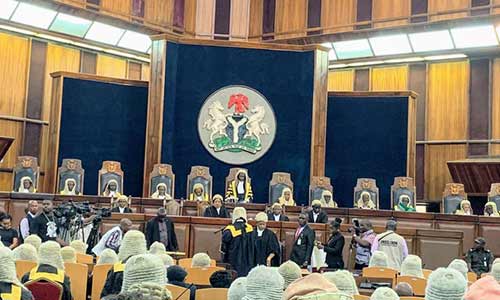
Adekoya’s call for transparency in Judges’ appointments echoes previous calls

By Lillian Okenwa

The Punch newspaper in its editorial of 30th October 2023 held that: “Abuse of judicial powers has significant negative implications for the rule of law and the integrity of the legal system.”

It went further to say that: “Necessary reforms should therefore be implemented to reposition the judiciary and restore public confidence in Nigeria’s legal institutions. The reputation of Nigeria’s judiciary is at its lowest.”

In February this year, the National Judicial Council (NJC) and other entities responsible for the appointment of judicial officers came under scrutiny owing to the allegations of a retired judge of the High Court of Kogi State, Justice Alaba Omolaye Ajileye that the appointment process is fraught with undue influence and lacks transparency.

Days ago the transparency question in the appointment of judges arose again with Senior Advocate of Nigeria, Mrs. Funke Adekoya asking why appointment of judges is not as publicised at that of Senior Advocates.

Posing the question via her X handle, Adekoya, SAN asked: “If elevation to SAN rank requires publication in the newspapers and comments on unfavourable candidates are requested, why is the appointment of judges who will be paid from public funds shielded from the public that they are expected to serve?”

A mischievous X user in response said: “Imagine a Newspaper publication by NJC preceding the appointment/elevation of judges and the list is made up of wives, sons, daughters, nieces and nephews of the CJN. That would be awkward. It is Best such unethical matters are kept away from the glare of the public.”

But this intervention underscores the position of Law Teacher and ex-Chair of the National Human Rights Commission, Chidi Odinkalu, in his article A Captured Temple of Justice.

“The judicial managers of the appointment process skew it deliberately to ensure pre-determined outcomes. This will not be the case if their children, spouses and mistresses (with whom they choose to fill many judicial vacancies) were that competitive. In 2020, for instance, the NJC advertised 15 vacancies for the FCT High Court but nominated 34 persons for appointment, with all of the non-advertised nominations going to the children or relatives of judicial insiders. It seemed clear that they were deliberately parsimonious with disclosure of all the vacancies, in order to be able to share those in an exclusive bazaar among judicial insiders…

“Most importantly, this practice of insider dealing in judicial appointments violates the United Nations Basic Principles on the Independence of the Judiciary as well as Judicial Code of Conduct established by the NJC itself. As a rule under the Basic Principles, “any method of judicial selection shall safeguard against judicial appointments for improper motives.” That is what happens when the best qualification of a nominee for judicial office is who they are related to or whom they sleep with…”

Months back, Justice Ajileye, during his valedictory court session maintained that the process of appointing judicial officers in Nigeria is shrouded in secrecy and clandestineness. Pointing out what he called “evils associated with appointments”, Ajileye said: “Another evil is that recommendations of Honourable Judges and Honourable Justices don’t count. The act of calling for recommendations looks to me like a ritual, exercised merely to fulfil all righteousness. Those who would be appointed would still be appointed with or without recommendations.

“The number of recommendations a candidate receives guarantees nothing for him. The third evil I have seen is that the person a candidate knows matters a lot. And that person must carry a lot of ‘weight.’

”The fourth evil is that the place where you come from also counts. In Nigerian parlance, it is called the federal character or quota system. There is nothing evil on the face of the principle of federal character. What is evil in it is the way the principle is applied by the functionaries of government. This underscores the point that it is the human being that makes or mars an institution.”

He recalled that the Nigerian judiciary at the apogee of its glory withstood military tyranny, stressing that today’s Judiciary has succumbed to the corrupting influences of moneybag politicians.

Ajileye said: ”It was a healthy judicial system in the days of yore, with a reputation for integrity and competence. This was mainly attributable to a fair system of appointment of judges in the superior judiciary wherein appointments were generally made on merit alone. The puzzling question here is, at what point did we get it wrong?”

While admonishing judges to free themselves from every form of influence except law, Ajileye said judges must liberate themselves from self-imposed shackles and fetters that inhibit independence.

“They can do this if they exhibit, at all times, requisite judicial character. The qualities of courage, firmness, integrity, uprightness, patience, open-mindedness, understanding of the law, compassion, humility, and courtesy should be inseparable from the personality” he added.

Similarly, the United Nations Office on Drugs and Crime (UNODC) in its 2023 Working Paper titled: Selection and Appointment of Judges in Nigeria, Analysis and Recommendations, observed a lot of inconsistencies in Nigeria’s judicial appointments. Below are its recommendations.

General recommendations on the selection and appointment of judges in Nigeria:
i. Courts should reflect the societal diversity with regard to professional background, gender, youth and
people with disabilities. As far as practicable, appointments should be aimed at achieving gender balance in the courts for which the vacancy was announced.

ii. Requirements for ethnic diversity should be respected in line with the “federal character” provisions of the Constitution, although not at the expense of merit. Where the processes are objectively applied, excellent candidates can be attracted from all parts of the country in a manner that is merit-based and transparent.

iii. Specific slots should be reserved for outstanding and well qualified members of the private Bar and
academia in order to progressively improve the diversity of the professional, ideological and philosophical backgrounds of both the Supreme Court and the Court of Appeal justices. The appointment of serving judges from across all courts should also be promoted.

iv. Safeguards should be put in place to ensure that NJC undertakes its constitutional role without undue
pressure from any quarter.

v. Consider creating a professionalized cadre of court administrators .

vi. Consider regulating the process of selection and appointment of judges by an act of the National
Assembly.

vii. Consider introducing regular compliance audits to ensure adherence to rules and procedures for the
selection and appointment of judges.

The time has come for those in whose powers the affairs of Nigeria’s judiciary lie to do the needful.

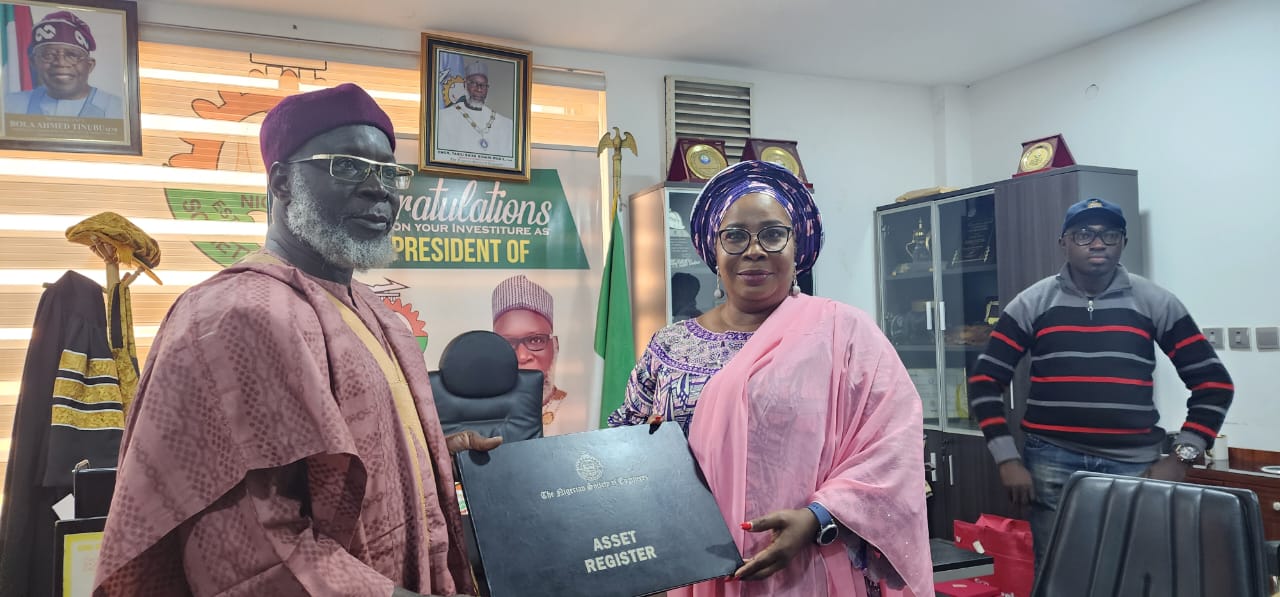
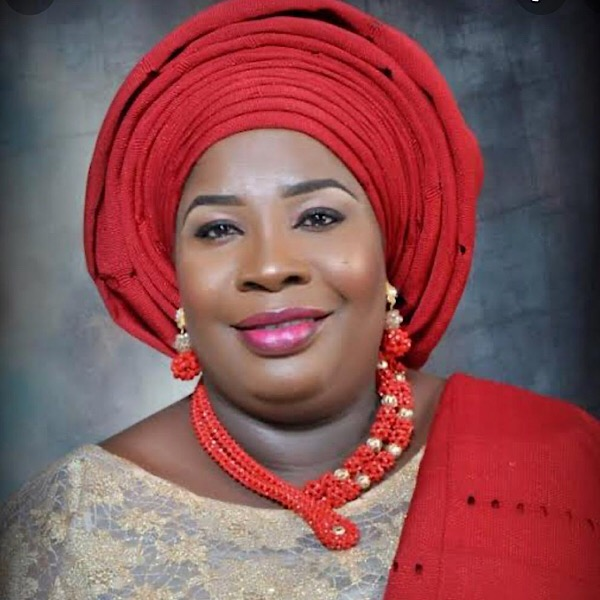
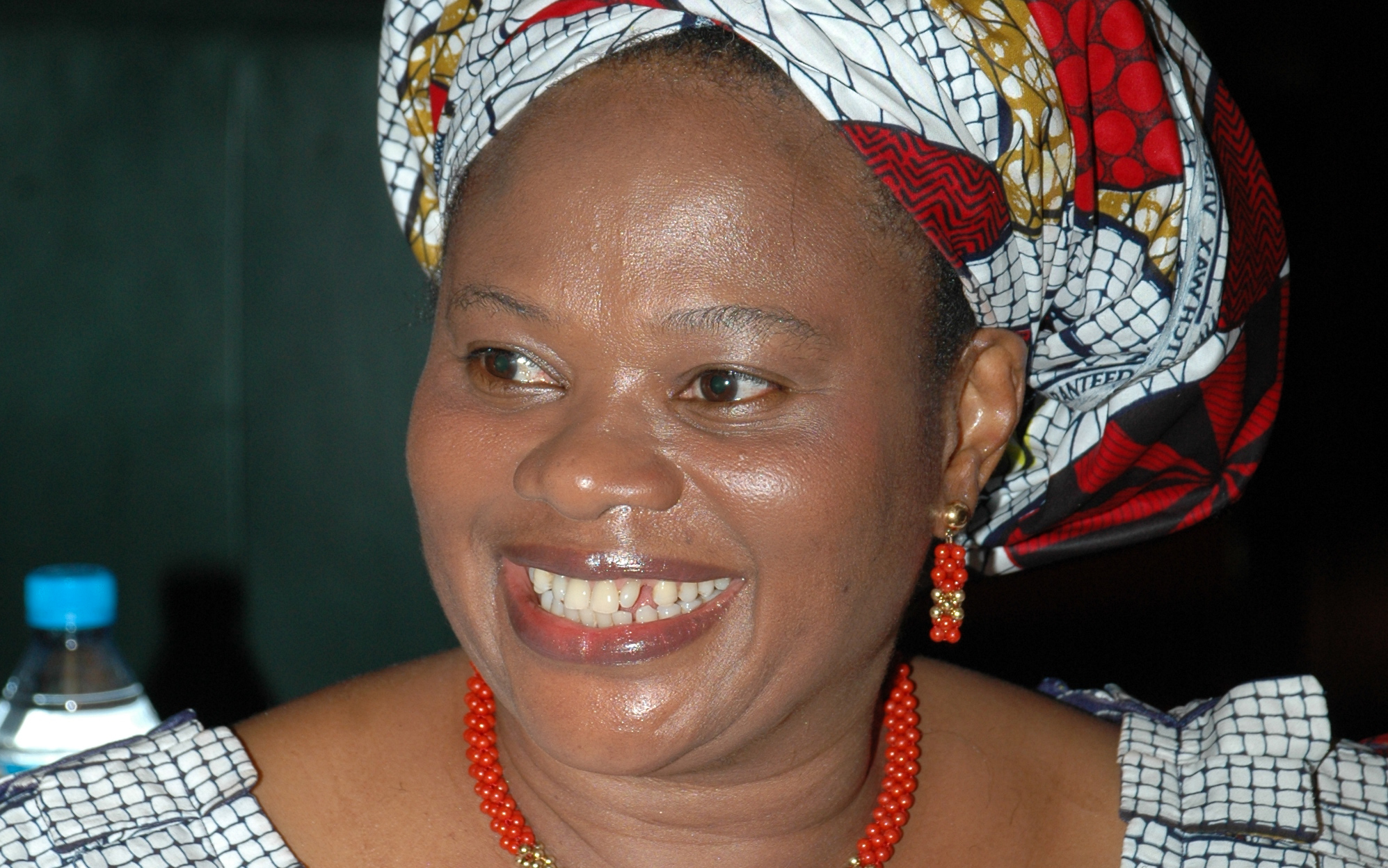
65 Years Jinx Broken: Margaret Aina Oguntala elected Nigerian Society of Engineers’1st female president

After 65 years of its existence, the Nigerian Society of Engineers (NSE), has elected its first female president.

In a historic shift, the incumbent and 33rd president, Engr. Tasiu Sa’ad Gidari-Wudil will hand over the reins of leadership to the 34th and first woman president in the society’s 65 years.

Engr. Mrs. Margaret Aina Oguntala FNSE would take over the reins of the Society from Jan. 1, 2024 in accordance with the laws of NSE for a period of two years.

Margaret Aina Oguntala, popularly known as the “Erelu worldwide” and regarded as the mother of the modern day engineering in Nigeria by young engineers in Nigeria.

She is coming in with a pool of experience, exposure and networks to further consolidate on the giant strides of Engr. Tasiu Sa’ad Wudil who under his leadership produced the first black man as the president of the world federation of Engineering organisation and also made history as the first president to hand over to a female president.

Oguntala obtained a B.ENG degree in chemical engineering from the University of Benin in 1986. She was inducted as a corporate member of the NSE in 1996, registered with Council for the Regulation of Engineering in Nigeria (COREN) the same year and later became a fellow of NSE in 2010. A fellow of the Nigerian Society of Chemical Engineers (NSChE), she is also a fellow of the Institute of Management Consultants (IMC).

Oguntala began her career as a youth corps member with North Brewery Limited, Kano where she worked as an operator and assistant process supervisor. She later gained employment as a chemical sales executive with Afro International Enterprises Ltd, Matori Lagos in 1988 where she rose to the position of marketing manager before leaving to start her own company, Bamsat Nigeria Limited in 1992. The company which started as a chemical sales outfit has grown under her watch and diversified into other areas such as environmental consultancy, oil and gas services and fire/safety with clients among which are NNPC, First Bank of Nigeria PLC, Guinness Nig. PLC and Alaro Free Trade Zone.

Oguntala’s current positions include managing partner, Bamsat Engineering Limited; board member, Black House Media; member, Governing Council, Lagos State Polytechnic among others.

She was the chairman of NSE Ikeja Branch (2009 – 2011) and a three-term vice president (2014, 2015 and 2016).

Oguntala has been married to Engr. Theophilus Oguntala for nearly 33 years. They have children and grandchildren. Oguntala enjoys travelling, acting and reading.

The News Agency of Nigeria (NAN) reports that Oguntala had been the Deputy President of NSE for the past two years.

According to Gidari-Wudil, the election, which was to have been held during the NSE Annual General Meeting in November, is postponed due to a court injunction initiated by a contestants.

“On this note, I wish to inform the general public that the state of affairs of the Nigerian Society of Engineers is stable and robust.

“I hereby wish to crave the indulgence of the newly elected Executive Committee Members to extend that same support to the in-coming President.

“Finally, to all the members of our great Society, I send my sincere appreciations for the trust they reposed in us to offer leadership in the last two years.

“Even though there may have been few challenges here and there, I am happy that we are leaving a united house,” he said.

NAN reports that the newly elected members of the society include the President, Mrs Margaret Oguntala, Deputy President, Mr Ali Rabiu, Vice Presidents Mr Joseph Adebayo, (South-West) and Mr Danladi Adamu, (North-East).

Other Vice Presidents are Mrs Rose Madaki, (North-West), Mrs Felicia Agubata, (South-East), Mr Bemogho Ofoeyeno (South-South) and Mr Ademola Agoro, (South-West).

NAN reports that members of the National Executive Committees also elected are Mr Ibrahim Hammadikko, (North-East), Mr Aliyu Dutsinma Ibrahim, (North-East), Mrs Rachel Ugye (North-Central).

Also Ndifon Agbiji, (South-South), Mr Abraham Aghadike (South-East) and Prof. Olumide Ogundipe (South-West).

On the Statutory Audit Committee are Mr Greg Ashibuogu, Mrs Clara Anyanwu-Amadi and Dr Omolola Adetona. 

NAN

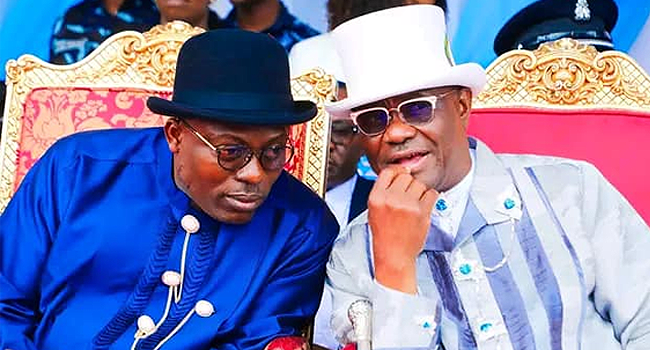
Witness claims Fubara was threatened to sign agreement with Wike in Aso Rock

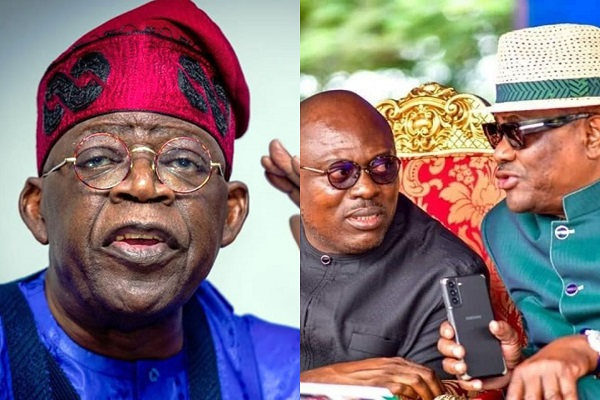
A fresh revelation has emerged over what truly transpired in Aso Rock Villa during the peace meeting brokered by President Bola Tinubu between the Rivers State’s Governor, Siminilayi Fubara, and the FCT Minister, Nyesom Wike.

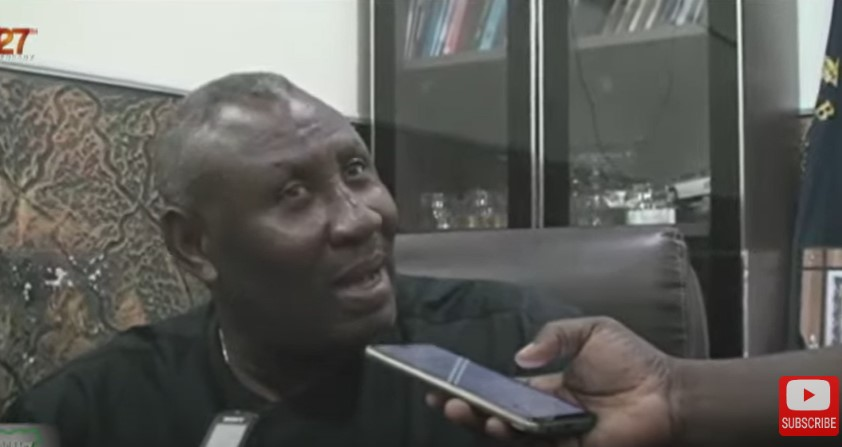
Making the revelation was a former Commissioner for Water Resources in Rivers State, Chief David Briggs, who was at the meeting.

Briggs alleged that President Tinubu intimidated Governor Fubara into signing the peace agreement with Wike.

David Briggs: Fubara was threatened to sign agreement with Wike

Chief Briggs said Governor Fubara signed the resolution under duress. He said there were indirect threats issued by President Tinubu before handing the governor the document to sign.

The former commissioner said he was at the Villa with other Rivers elders, who were equally invited, hence he witnessed first-hand what transpired.

He said President Tinubu threatened that there would be consequences should Governor Fubara refuse to endorse and abide by the tenets of the document which he described as a “presidential proclamation”.

‘I was there’

Briggs said: “I was there, so I’m a witness. What I say is primary, not secondary. We were invited for a meeting but that was not a meeting.

“What happened is that Mr. President walked in with a written resolution, addressed us and declared that what he has in his hand is a presidential proclamation.

“He emphasised the fact that he is the President of the Federal Republic of Nigeria and anybody who dares to say no to what he is saying would face the consequences.

“That, in a simple layman’s word, is called a threat. Let’s get it very clear, if you are in the position of the governor, what will you do? Will you get up and go and say no to Mr President with that kind of subtle but energetic threat?”

He disclosed that most Rivers people who were present at the meeting including Adokiye Amaesimaka were shocked at the President’s attitude and decided to ask questions.

“That being the case, one of us asked him (President Tinubu) a simple question. To be specific, Adokiye Amaesimaka asked him, ‘You said Sim should do this, Governor should do that. You have not said what the 25 or 27 Assembly members who defected from PDP to APC without consulting their constituencies and constituents, should do’.

 “And of course, you can see the situation, the President’s reaction was very clear and simple but very dangerous.”

The crisis

Recall that Governor Fubara and Wike have been at loggerheads over who should control the state’s political structure since October. This has since put the state in serious tension.

Some of the resolutions issued by the President had directed that all impeachment proceedings against the governor be dropped, as well as all matters instituted in courts consequent upon the crisis be dropped, among numerous others which favour the Wike camp.

However, the state Commissioner for Information, Joe Johnson, had insisted that Governor Fubara didn’t sign the peace agreement with his predecessor, Nyesom Wike under duress.

Johnson, who spoke on Wednesday in a television programme, explained that he was at the meeting and did not see the governor negotiate from a position of weakness.

He said: “There is nothing to doubt about it. We have gone beyond the issue as to who signed and who didn’t sign.

“If you listen to the governor at the Pamo University convocation ceremony yesterday (Tuesday), he said no price is too high for peace and the Bible that we all profess says we should pursue peace with all men at all cost.

“I was in that meeting and for anybody to say the Governor was negotiating from a weak position is an overstatement and I take exception to it.”

Elderly French couple lose rare African mask case worth millions

By Ido Vock

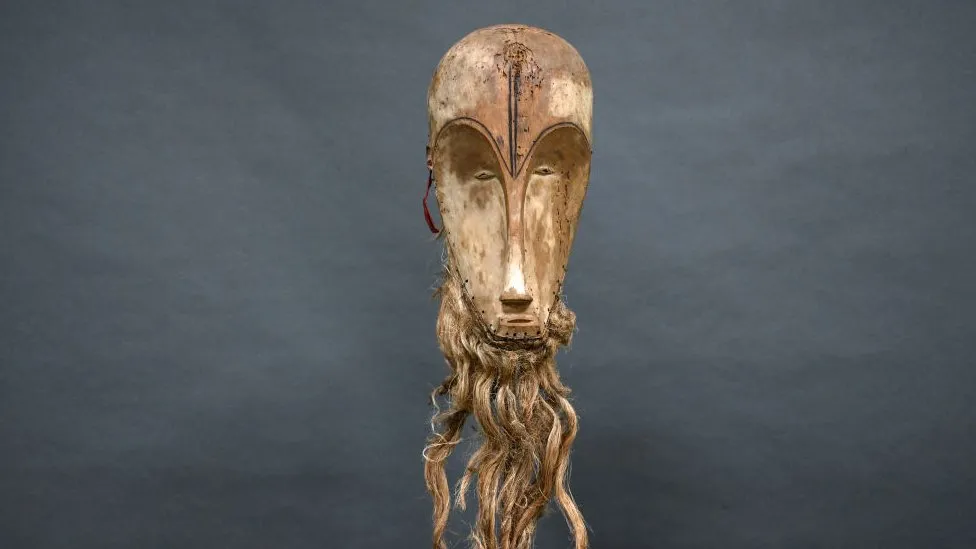
A second-hand dealer has won a case to keep the €4.2m (£3.6m; $4.6m) proceeds from the sale of a rare African mask he found in an elderly French couple’s attic.

He had been brought in to help clear the attic of the couple, who sold him the mask for €150 (£129; $165).

The couple sued, arguing that they had been misled about the item’s value.

But the judge disagreed, saying they had failed to appreciate the artwork’s true worth.

The rare Ngil mask, made by the Fang people of Gabon, is believed to be one of only about 10 in the world.

It would have been worn by members of the Ngil secret society. Historians believe members travelled through villages searching for troublemakers, including suspected sorcerers.

The 19th-Century wooden mask was probably acquired “in unknown circumstances” around 1917 by René-Victor Edward Maurice Fournier, a French colonial governor and the plaintiff’s grandfather.

It was held in the family’s possession until it was sold to the dealer. It was later resold at auction to an unknown buyer.

The couple had gone to court to claim a share of the proceeds of the sale, alleging the dealer had misled them about the true value of the mask.

The dealer denied knowing that it was so valuable and said he had demonstrated goodwill by offering the couple €300,000, the mask’s initial valuation.

His lawyer argued that the couple had failed to research the item’s true worth before selling it. “When you’ve got such an item at home, you should be a bit more curious before giving it up,” Patricia Pijot told French media.

The judge ruled in favour of the dealer and said the couple had failed to exercise due diligence in evaluating the “historical and artistic” value of the mask.

The offer was retracted after the couple sued.

Frédéric Mansat Jaffré, lawyer for the couple, said: “The judge has created a precedent… You or I will now need to ask a professional before then going to see another professional.”

Gabon had separately requested that the sale of the mask be halted on the grounds that it rightfully belonged to the country. But the court also rejected that argument.

The West African country was a French colony at the time Fournier acquired the mask.

Tens of thousands of works of African art are held outside the continent. Most were removed during the colonial era, sometimes under disputed circumstances.

French President Emmanuel Macron has previously called for the restitution of African art.

“I cannot accept that a large part of the cultural heritage of several African countries is in France,” he said in 2017.

Culled from BBC

NBA Garki Branch, Abuja unveils website

In other to effectively administer and enhance the capacity of its teeming membership, the Nigerian Bar Association Garki Branch, Abuja (Liberty Bar) unveils a website: www.nbagarki.com. Some of the top notched features of the website include, but not limited to:

  • a dedicated portal for every member containing all his information and history with the Branch to enhance easy identification of its members, quick response to welfare issues and a reference register to access offers from the Branch partners.
  • payment portal for easy payment of Branch dues and other fees and automatic generation of receipts and storing of same.
  • e-service or online service support for members to minimize physical service point at the Secretariate in order to save the time and resource members.
  • a news platform to disseminate information about the Branch activities and events.
  • a platform containing or housing events and programs executed by the Branch.
  • a platform highlighting the Branch history.
  • portals to download NBA Constitution and other publications of the Branch.
  • portal to find a lawyer belonging to the Branch.

With the coming onboard of this website, the Branch is better positioned to continue adding more values to its members.

Obioma Ezenwobodo Esq.
Chairman

Odinkalu hails Sankey’s confirmation as Supreme Court Justice by Senate

  • Says “It’s a day to appreciate a story of incredible spirit, resilience & values

Law teacher and former Chair of the National Human Rights Commission (NHRC) Chidi Anselm Odinkalu has commended the Senate’s conformation of Hon. Justice Jummai Hannatu Sankey’s as a justice of the Supreme Court.

Odinkalu in a series of tweets on the event said as: “Today is a day to appreciate a story of incredible spirit, resilience & values. Amidst the decrepitude that has beset the #NigerianJudiciary, Jummai Hannatu Sankey exemplifies the reality that you cannot put a good person down even in a bad system.”

Justice Sankey’s elevation to the apex court’s bench was confirmed by the Senate on Wednesday.

Below are Odinkalu’s tweets.

According to a video on X, formerly Twitter, Sankey who is the presiding justice of the Court of Appeal, Owerri division, and one of the 11 nominees expressed worry that there was not a single lawmaker from her state of origin, Plateau, among the committee members.

She, however, took consolation in the fact that there was a senator from Kaduna State in the team. She stated that her husband hailed from Kaduna State and according to her, the Kaduna lawmakers were also her husbands.

“I come from Plateau State. I have noticed that I don’t have any representative backing me here. But, my state by marriage is Kaduna State.

Justice Sankey is a former Chair of the Nigerian Bar Association (NBA) Plateau State.

Senate confirms 11 Supreme Court justices

In less that 24 hours after the nomination notice, Nigeria’s Senate confirmed the appointment of 11 Supreme Court justices appointed by President Bola Ahmed Tinubu to fill the vacancies on the apex court bench.

The confirmation followed the consideration and adoption of a report by the Senate Committee on Judiciary, Human Rights and Legal Matters during Thursday’s plenary.

Tinubu had asked the Senate to confirm the nominees, who were recommended by the National Judicial Council to fill the vacant positions following the death and resignations of some justices.

The nominees confirmed are Justice Haruna Tsammani (Northeast), who chaired the Presidential Election Petition Court, Justice Moore Adumein (South-South), Justice Jummai Sankey (North-central), Justice Chidiebere Uwa (South-east); and Justice Chioma Nwosu-Iheme (South-east).

Others are Justice Obande Ogbuinya (South-East), Justice Stephen Adah (North-Central), Justice Habeeb Abiru (South-West), Justice Jamilu Tukur (Northwest), Justice Abubakar Umar (Northwest) and Justice Mohammed Idris (North-Central).

The chairman of the committee, Senator Tahir Monguno (APC, Borno), while presenting his panel report, said the nominees possessed the requisite qualifications and experience to occupy the position and that there was no petition against them.

He, therefore, recommended their confirmation.

With the confirmation of the 11 justices, the Supreme Court now has the complete statutory requirement of 21 justices on its bench.

Senators, who spoke before the confirmation, had expressed concern over the delay in the appointment of justices for the Supreme Court bench.

Senator Seriake Dickson (PDP, Bayelsa) urged that in the event of subsequent vacancies, a provision for their immediate replacement should be made.

He said, “Anytime these vacancies occur, they should be filled immediately.

“I want to draw that to the attention of the President. There shouldn’t be a delay so that we don’t become a laughing stock.”

The Senate Leader, Michael Opeyemi Bamidele (APC, Ekiti -Central), said it was important that those who are next in line be screened and appointed immediately as the vacancies occur at the apex court.

Senator Orji Uzor Kalu (APC, Abia-North) stressed that the funds allocated to the Supreme Court in the 2024 budget be reviewed upwards to ensure its effectiveness.

He said, “The Senate should look at the budget of the judiciary because even the state courts are in a mess. How can they give good justice? This is not the way it was before; we were doing better.”

The PUNCH

Proliferation Of Fake Products: ‘Our Mother Died For Nothing’ — Akunyili’s Son

Edozie Akunyili, son of a former Director-General of the National Agency for Food and Drug Administration and Control, late Dora Akunyili, has expressed concern over the sacrifices his family made for Nigeria, questioning their worth.

Edozie made his position known while reacting to discussions on X following outrage over the growing prevalence of counterfeit consumer goods in markets and stores across the country.

An X user, Imohunoren, had written, “Since Dora Akunyili left us alone in this evil world, we’ve been eating and drinking fake products . That woman looked out for us for real. Top 5 Nigerian to ever exist.”

Responding, another user, kelvin_ig, said, “I can never forget when her house and office in Lagos was burned down on the same day. Obasanjo asked if she wanted to resign. She said Obj should dead that talk and reinforce her security. Obj did, and she carried on. 😭 she’s wild.”

X user, Morris_Monye added, “Till date, no justice for her family over her attempted murder and her family.

“Her husband was killed. No Justice till now.

“She gave absolutely all for Nigeria. Yet the land has a way of taking her own.

“This is why I choose battles carefully. If you lose your life, Nigeria moves on.”

Responding to the tweets on Tuesday, Edozie said, “Exactly. Nobody has sacrificed more for Nigeria than our family and yet we constantly ask ourselves if it was worth it?

“We would give anything to have our parents with us but Naija moves on with corruption and impunity from the top down seen as normalcy.

“Sadly, she died because she was so engrossed in her work for NAFDAC that she delayed her fibroid hysterectomy for years, which later was found to be cancerous.

“When I see all the lies, corruption and dirty politics, it pains me that we lost our mother for nothing! Was it worth it?”

Dora Akunyili died at a specialist cancer hospital in India on June 7, 2014 after a two-year battle with uterine cancer.

Her husband , Chike Akunyili, was killed on September 28, 2021, at Umuoji, Idemili North Local Government Area of Anambra State.

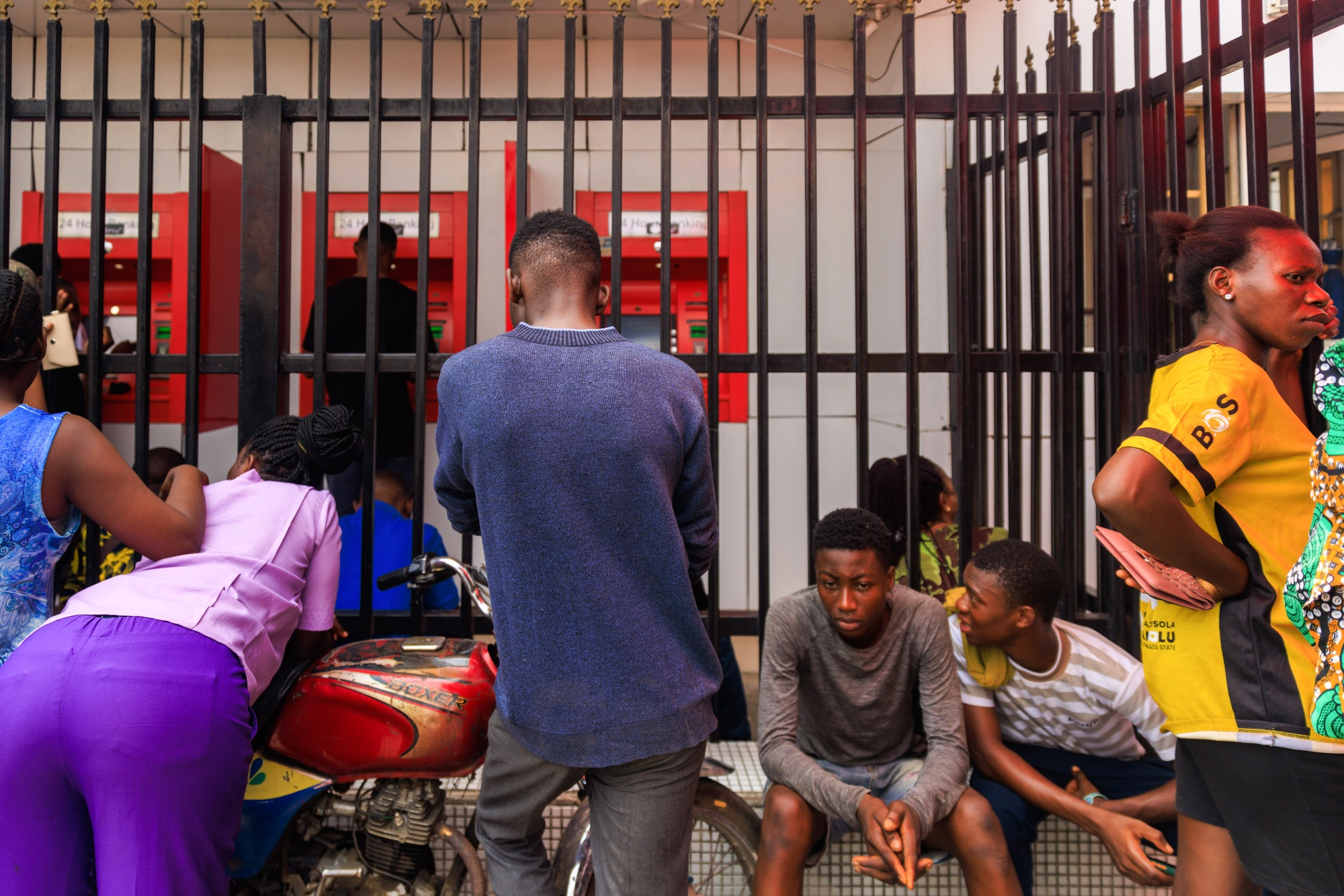
Cash Crunch: CBN, Banks trade blames…..no enough cash to pay for “roasted corn”

By Nik Ogbulie

The protracted cash crunch reminiscent of big festivities returned to the country, less than four days to Xmas.

Nigerians have taken the resurfacing of the miasma for granted based on the impression that a new government is in place to renew the hope of Nigerians with a brand new Central Bank given to excellence. But unfortunately, the development, which started like a joke few weeks ago has risen to a dimension where some banks do not have cash at all and those that have could only dispense an amount not good enough to pay for “roasted corn”.

Bank officials are not ready to discuss this development which seems to shame their efforts to improve financial inclusion as most of them seem to be pointing their two fingers at the CBN while the other three are pointing at them; an indication that the development looks more like a mutually executed discomforts to the teeming population, especially for the over 133 million Nigerians who depend solely on cash transactions.

MoneyReport investigations reveal that banks have more reasons to believe that the apex bank may have floated this occurrence as a way of optimising her cashless project since the growth in the use of customers e-channels has remained largely marginal in the last two years. This belief may have been vindicated by the fact that the CBN has laid serious emphasis on the expedited use of customers echannels by making the recommendation a footnote in all her correspondences/memos with banks in recent times.

But the apex bank has countered the indication by banks, insisting that banks are engaging in sharp transactions with POS agents through whom they scoop their treasury and divert a good portion of the deposits for financial benefits. A bank was believed to have been fingered within the week where teller clerks made direct deposit to POS owners while depositors wait in vain. In a swift reaction, banks noted that the CBN may not have any response or plan to manage this development based on the allegation that money classified as badly mutilated are being returned into bank vaults for payment to customers, most of which are now being rejected in the open market. Banks have been worried that the apex bank has continued the supply of mutilated notes for payment.

What creates confusion in the market is the availability of fresh and new currencies considered as mint at various weddings and other ceremonies where cash is meant to be sprayed. While customers do not mind whether they have the old or new currency, socialites have access to both in quantum.Nigerians who have been told that the development was as a result of the level of corruption in the administration of past executives of CBN are no more amused as this allegation has fallen flat on truth.

They are now of the opinion that the Federal Government has sold sour grapes to them. While the apex bank reels out multiple instructions to banks on this development, the development is getting deeper and deeper with transactions in the market getting so tight.

Conversely, banks are not creating many new echannel holders as the very poor Nigerians are not enthused to clutch plastic money, especially when dealers of their favourite items do not accept cards. It looks like a renewal of the focus on cashless transaction must be made so that the informal operators in the economy must be seriously involved.

Without this, the tendency for government to either reduce or withdraw more money from circulation remain one huge miscalculation. However, all eyes have remained on the CBN as major culprit and solution because it is its responsibility to manage financial system stability.

TIPS