Home Blog Page 678

My tenant’s fiancée burnt my house, property worth N47m, Landlord tells court

A 59-year-old civil servant, Josiah Olowofeso, on Friday, told an Upper Area Court, Kubwa, how his tenant, James Otaru’s fiancée, identified as Kemi Kusimo burnt his house and other property worth N47 million.

The News Agency of Nigeria (NAN) reports that the police had charged Otaru and Kusimo with criminal conspiracy and mischief by fire, to which they, however, pleaded not guilty.

Olowofeso made the allegation while being led in evidence by the Prosecution Counsel, Babajide Olanipekun.

“While I was in church on Jan.15, I got a message that my house at Maryson Street, Byazhin, Kubwa, had been ablaze.

“By the time I got to the house, I discovered that the roof was not there again, while some Nigerian Fire Service personnel had been there trying to put out the fire.

“A photographer was invited and pictures of the scene were taken and printed.

“Some of my tenants told me that there was a misunderstanding between the defendants and that Kusimo threatened to burn down the house but that they cautioned her against doing so, as they would all lose their property.

“Before they knew what was happening, Kusimo had set the house ablaze and locked herself in,” he said.

Olowofeso further stated that policemen from Byazhin Station later arrested Kusimo, while Otaru apologised to him, saying it was the work of the devil.

The complainant said that the estimated loss of his property and those of the tenants was about N47million, saying that Kusimo said she only had N800,000.

The Judge, Mohammed Wakili, however, adjourned the matter till Feb.15 for continuation of hearing.

NAN

19-year-old in custody for allegedly stabbing girlfriend to death

The Police in Bauchi have arrested a 19 year-old man (names withheld), for alleged murder of a commercial sex worker in Bauchi Local Government Area of the state.

SP Ahmad Wakil, the Police Public Relations Officer (PPRO), confirmed the arrest in a statement, on Wednesday in Bauchi.

Wakil said operatives of the command arrested the suspect on Monday, after he stabbed the girl with a knife and killed her.

He said the suspect also stabbed one other person, among those who came to rescue the deceased.

Heated argument, he said, ensued between them after the deceased demanded N5,000, payment for her services during a previous affair.

“It led to physical confrontation where the victim sustained serious injury which resulted to her death.

“The arrest was made following a distress call received from a good samaritan that on the same date, at about 6:45 p.m., the suspect, entered a hotel room of Happiness Garden situated at Bayan Gari.

“He subsequently stabbed his girlfriend, Emmanuella Ande, around her upper chest region and at that point, the victim screamed and the people around attempted to rescue her.

“They forcefully opened the door, where the suspect additionally stabbed one, Zaharaddeen Adamu, on his left hand,” he said.

Wakil said that policemen rescued the suspect from mob action, and refered the victims to the Abubakar Tafawa Balewa University Teaching Hospital, Bauchi.

He said the girl was certified dead by a medical doctor while the corpse had been deposited at the morgue.

The spokesman said preliminary investigation revealed that the suspect and the deceased met on Facebook platform early this year.

It further showed that the suspect debited N400,000 from his father’s bank account, to spend good time with his girlfriend.

He said the police recovered a knife at the crime scene, adding the suspect would be charge to court upon completion of investigation.

NAN

23-year-old arraigned for slaughtering father

The Nigeria Police has charged a 23-year-old man, Saidi Musa, to a Kwara State Magistrates Court sitting in Ilorin over an alleged killing of his father, Chief Musa, the Elemosho of Shareland in Ifelodun Local Government of Kwara State.

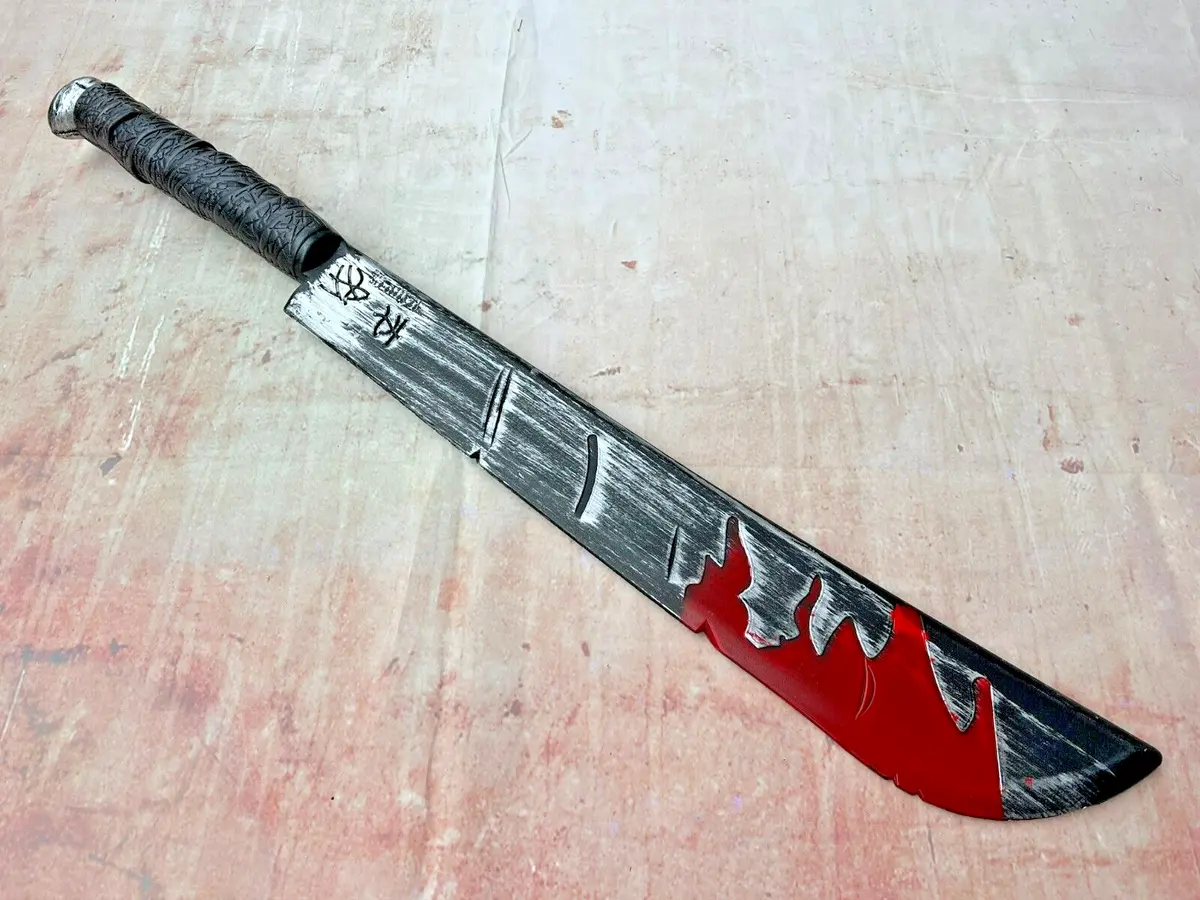
Saidi will stand trial for culpable homicide before the court for allegedly macheting his father to death.

Saidi was alleged to have attacked his father who was the traditional chief in Share, headquarters of Ifelodun Local Government Council in the state, over alleged ‘cause’ being rained on him by the deceased father without any cause.

“Saidi, reportedly got annoyed as a result of his father’s unpleasant words and attacked him with cutlass on the head, hitting him severally till he died and later escaped to a mountain in Share”, the FIR stated.

The police prosecutor, Sergeant Abdullah Sanni, informed the court that the matter is not ordinarily bailable considering the fact that it’s culpable homicide urging the court to consider the motion exparte attached to the FIR and order that the defendant should be remanded in the Correctional facility centre.

The presiding Chief Magistrate, Alhaji Mohammed Dasuki, in his short ruling, ordered Saidi’s remand while the matter is adjourned to 9th January, 2024 for mention.

“This Court lacks jurisdiction on this matter which is Culpable homicide punishable with death. In view of the exparte motion attached to the charge paper, I hereby order that the defendant be put in the Federal Correctional Service facility in Ilorin till the next adjourned date.

“The case is adjourned till 24th of January, 2024 for mention”, he said.

The PUNCH

Agbakoba and the Supreme Court mafia

By Lasisi Olagunju
There are very good people in our courts; there are very bad people there too. Unfortunately, a one-eyed man gained prominence in a town and the whole town got called the town of the blind. The courts below can be both bad and incompetent. We will still be safe if the Supreme Court is a court of competence and justice. I wrote here a few weeks ago that we should show deep interest in who become our judges, particularly at the appellate courts. I made that call because the courts have abducted this democracy. They decide who rules and who does not. They have evolved to become Bashorun Gaa of Old Oyo; they enthrone and dethrone as it pleases them. They are rich and overfed too; they belch while the people yawn – exactly like Orwellian pigs. A one-time Chief Judge of Kwara State, Justice T.A. Oyeyipo, once declared that “the administration of justice is at the core of any successful democracy in the world.” He added that “if the legal profession fails, anarchy will be the only beneficiary.” Oyeyipo gave that warning in 2003. Twenty years down the line, you and I know that we are almost at the doorstep of anarchy.

What could be going on in the mind of President Bola Tinubu on Thursday as he listened to a former NBA president, Mr Olisa Agbakoba’s allegation that a mafia is in charge of our Supreme Court? Agbakoba is a well-read gentleman with an excellent understanding of his trade and a great command of its language. I watched him closely in a trending video carefully choosing his words as he shredded Nigeria’s apex court. Of all the terms a speaker of the English language could use in that context, the gentleman chose “mafia” to describe those who hold the yam and the knife of the Nigerian judiciary. ‘Mafia’, the Oxford Learner’s Dictionary defines as “a secret organisation of criminals.” The dictionary adds that it also means “a group of people within an organization or a community who use their power to get advantages for themselves.” The Collins dictionary defines mafia as “a criminal organisation that makes money illegally…” Collins goes further to tell its users that they “can use mafia to refer to an organised group of people who you disapprove of because they use unfair or illegal means in order to get what they want.” The Cambridge English Dictionary says mafia is “a large criminal organisation”, and can also mean “a close group of people who are involved in similar activities and who help and protect each other, sometimes to the disadvantage of others.”

None of the dictionary meanings of ‘mafia’ should ever be a description of a court system. But the former president of the Nigerian Bar Association used that word. In calling our judiciary a mafia, he had put the Sicilian Cosa nostra in the same dock with the Nigerian Supreme Court – the terminal station of justice seekers. Agbakoba, however, believed the mafia could be displaced if senior lawyers, including him, had seats right there among the gods of the top court. He said he once tried it but the keepers of the gate of the sacred grove slammed the door against him: “I was the first, accompanied by my brother, Wole Olanipekun, who applied because we thought we were qualified to sit at the Supreme Court. The mafia there threw us out…What the constitution says is that once you are 15 years (at the bar), you are qualified (to be justice of the Supreme Court). But the National Judicial Council and the Supreme Court justices have formed a mafia… With the greatest respect, this is the worst Supreme Court I have seen in my 45 years of practice.”

Related Posts
Newly promoted Nigeria immigration service officers urged to prioritise national defense
Nigeria will flourish under Tinubu – CAN President
High Court judge kidnapped, driver killed in Akwa Ibom attack

Someone asked online how complex a mafia could be. The person got a counter question: “Have you ever tried to eat at a restaurant which happened to be a mafia front, but you didn’t know it was a mafia front, and everyone inside just stared at you when you walked in, because nobody actually eats there?” I do not have the name of the author of that quote but its depth speaks to its aptness in dealing with our judiciary. If our Supreme Court is a mafia front, we should stop expressing a shock that it does not give what it advertises. A front is what it is – no more, no less. Some metaphors are contextually universal; mafia is. I would say the same with puns because we keep reading “courting corruption” in journals from coast to coast.

Whatever question we are asking here about our judiciary, other places with a similar problem are asking too. Australian professors of Law, Simon Butt and Tim Lindsey, in their article ‘Judicial mafia: The courts and state illegality in Indonesia’ (2010) describe the judiciary in that country as “a persistent mafia.” They also write about an Indonesian joke which “even judges tell.” They say the joke is about the “word hakim (judge) used as short for hubungi aku kalau ingin menang (meaning: contact me if you want to win).” They hold that the Supreme Court is seen as one of the most corrupt courts in that country. You and I know that there is nothing these professors say in that article about Indonesia’s judiciary that is not being said about what we have here in our country.

Agbakoba did not cover his lips while alleging that the Supreme Court of Nigeria is an enterprise worthy of fearful disdain; that in operation, it merely advertises justice rooted in law and facts but in reality, what it gives is the opposite. The worth of a witch (or a wizard) is in how bold they are in their arts and science. They do not whisper their actions; they are thunderclaps, they yell. Agbakoba climbed the chimneys and chose his audience. It was at a colloquium held in Abuja to mark the 61st birthday of Senate President Godswill Akpabio. President Tinubu was there. He sat patiently, sometimes nodding, many times expressionless. With the president were the other consorts of the Nigerian harem – they included those who make laws for the courts to interpret. There were others there without officially defined roles. If the judges had also been seated, the circle would have been perfect. With the Pope himself reclining in his full glory, I wonder why Akpabio, the flamboyant birthday boy, excluded My Lords from that open conclave of cardinals and saints.

Agbakoba was so sure of what he was saying about the apex court and its sister kabiyesi institution, the National Judicial Council (NJC). Literally, ‘kabiyesi’ means the unquestionable. It is the Yoruba way of acknowledging that their king is above the law. Agbakoba questioned the recruitment process in the judiciary -particularly the appointment of the justices who serve on the Supreme Court bench. He suggested that some persons had abducted the court and – I add – doing with it and its processes what the bandits of Zamfara do with their victims.

How do we survive our own “persistent judicial mafia”? Agbakoba’s key solution to the problem of the judiciary is that senior lawyers be appointed directly to the Supreme Court. But how do we get such persons who have not tasted blood among the big lawyers? And, the learned gentleman did not tell us what benefit the presence of senior lawyers on that bench would bring to Nigeria and Nigerians. Are judges of lower courts not being chosen from among lawyers? Are those courts of better value than the Supreme Court? In any case, can we honestly say that whatever is bad with the apex court today has no contribution from privileged persons in Nigeria’s inner and outer bar? Is it true that senior lawyers serve as bagmen to wealthy judges and justices?

Our courts have become playthings in the hands of disaster. And the ‘mafia’ men there are no longer hiding their bad behaviours. They think they are kabiyesi – we must never query their ways. But thank God, Agbakoba has been bold from the womb. He has helped us to say what our mouths dare not say. The ex-NBA president described today’s Supreme Court as the worst in his 45 years of legal practice. Well, some other Nigerians would likely say that today is simply a child of yesterday. There was a Supreme Court that made someone who never contested a governorship election governor. It did it and asked anyone who did not like what it did to send their appeal to God in heaven. There was the immediate past Supreme Court which was accused by all justices who make up the present Supreme Court of diverting public funds and of being a one-man fiefdom.

The courts tell us that facts which are judicially noticed need no further proof. And so, the Supreme Court cannot deny Agbakoba’s allegation of the existence of a mafia in its chambers. The court’s own evidence convicts it. On 27 October, 2023, Justice Musa Dattijo Muhammed retired from the Supreme Court as its number two justice. He delivered a valedictory speech in which he literally described the Nigerian judiciary as a dictatorship with a kabiyesi at the top.

He said the CJN “neither confers with fellow justices nor seeks their counsel or input on any matter related to these bodies. He has both the final and the only say.” Ironically, just a year earlier, the current CJN himself had led Dattijo and 12 others to attack the then number one justice of the Supreme Court, Tanko Muhammad. They accused him of running a one-man show.

Agbakoba wanted a law that would “govern the appointment process of senior judges.” Looking straight at Akpabio, he asked the National Assembly to “pass a law so that I don’t depend on the Chief Justice of Nigeria if I want to be a judge.” He wanted a law passed “stating the criteria to become a judge.” I heard Agbakoba and felt him. He spoke well. You remember that a few weeks ago, the CJN presided over a meeting of the Federal Judicial Service Commission. At the end of that meeting, the body recommended over 20 appeal court justices for elevation to the Supreme Court. The recommendations were sent by the CJN to the NJC headed by the CJN himself. What mafia can be more powerful than that? But it didn’t start from him and, from all indications, it won’t end with him. The CJN has since led the NJC he headed to do the ratification of what he recommended, warts and all, while the whole nation bowed in a servile chorus of “As Your Lordship pleases.”

Now, who should really be a judge at the Supreme Court of any country? Lawrence B. Solum of Georgetown University Law Center, United States, in a 1988 piece entitled ‘The Virtues and Vices of a Judge’, spoke on what he called “the distinctive intellectual and moral virtues required for excellence in judging.” Solum averred that “to be a good appellate judge, one must possess at least three virtues: a faculty for theoretical understanding of the law, a concern for the integrity of the law, and a practical ability to choose wisely in particular circumstances.” Any court system that habours judges that care more for privilege over “the integrity of the law” cannot serve the cause of justice. It is the same with judges, who, according to Lord Denning, are “concerned with law” as against being “concerned with justice.”

Whatever we decide to do with our judiciary, it will still be necessary to ask what specific personal characteristics would make a person a justice of justice?

Stuart S. Nagel was an American professor emeritus of Political Science at the University of Illinois at Urbana-Champaign, United States. He published an article he entitled ‘Characteristics of Supreme Court Greatness’ in the October 1970 edition of the American Bar Association Journal. What specific personal characteristics did he say would make a judge great? “These characteristics,” Nagel says, include “a brilliant intellect, an ability to write well, a deep knowledge of law and society, a willingness to work hard, a strong personality, an ability to get along with one’s colleagues and a high level of success in one’s prior activities”

Now, because we cannot do without the courts, how do we get it right with the right personnel? How do we identify and nurture the very best from our law schools? How do we carefully remove silt from our body of judges or do we just open the shutters for all the water to flow away?

Of mafia and kangaroo judgment

By Olusegun Adeniyi

This is not the best of times for the Nigerian judiciary. Then serving minister, Mrs Pauline Tallen, sucker-punched a court decision last year, describing it as a ‘Kangaroo judgement’ and the echoes now reverberate. A respected former Nigeria Bar Association (NBA) president, Olisa Agbakoba, SAN, alleged last week that Supreme Court Justices operate like a Mafia (at a forum attended by the president). And a retiring Justice of the same court recently ‘broke Omarta’ by hinting that judicial appointments are now reserved for “children, spouses, and mistresses of serving and retired judges and managers of judicial offices”. This crisis of confidence in justice administration/dispensation in Nigeria will not be resolved by self-help, such as banning a politician from holding public office because she made a comment considered “reckless, and disparaging”. It will only exacerbate it.

Meanwhile, I am aware that many readers of this column expect my position on the political brigandage in Rivers State. I understand the motives of those invested in what is little more than predatory politics by the two sides (of same coin) even while pretending they are moved by higher values. What I consider beyond scandalous is that the presidency would get involved in a blackmarket political deal that neither promotes the rule of law nor advances public decency. Whatever may be our positions (and there is hardly any neutral commentator in this power struggle which is not about Rivers’ people), what is happening in the state poses less threat to the health of our democracy than the way our judiciary is falling (or being dragged) into disrepute. That is my concern today, especially since the tragic drama in Rivers State has only just begun. More will unfold.

On 16 October last year, Mrs Pauline Tallen, then Minister of Women Affairs and Social Development, attended the alumni meeting of the Federal Government Girls College Bida. At the forum, she took a swipe at a “Kangaroo judgement” of the Federal High Court in Yola which “should be rejected by all well-meaning Nigerians”. In the said judgement, the court had nullified the candidature of Aishatu Dahiru aka Benani as the ruling All Progressives Congress (APC) flagbearer for Adamawa State in the 2023 general election. Two days after her remark, the Nigerian Bar Association (NBA) president, Yakubu Maikyau, SAN, asked Tallen to apologise or face legal action. When Tallen gave him and his exco the ‘Kangaroo treatment’ by ignoring them, the NBA filed a case in court. “I am bringing this woman before your Lordships because she is impugning on your integrity”, was the charge regardless of how they may have framed it. And the outcome was predictable.

Interestingly, it was the NBA that told Nigerians on Monday that an Abuja court had indeed “declared that the said statement of Dame Pauline Tallen (the defendant) was unconstitutional, careless, reckless, disparaging, a call to disobey the judgment of court and therefore contemptuous of the Federal High Court of Nigeria.” The NBA went further to report “an injunction restraining Dame Pauline Tallen from holding any public office in Nigeria, unless she purges herself of the ignoble conduct by publishing a personally signed apology letter to Nigerians and the judiciary,” and that “the injunction restraining the defendant from holding any public office in Nigeria shall become perpetual if she fails to abide by the order directing her to publish an apology letter within 30 days.”

Before we go further, it is necessary to understand the meaning of Kangaroo Judgement. The Mariam-Webster dictionary defines ‘Kangaroo Court’ as “a mock court in which the principles of law and justice are disregarded or perverted” or “a court characterized by irresponsible, unauthorized, or irregular status or procedures.” That, I suppose, is self-explanatory since I don’t want Maikyau and his NBA to ask an Abuja court to restrain me from traveling to my beloved Kwara State for Christmas. But considering that the judgement over which the NBA is crying more than the bereaved was unanimously overturned at the Court of Appeal, could it be that Mrs Tallen knew something that we don’t? Besides, what did she say that lawyers have not said?

On Tuesday, Jibril Jimeta, an official of Adamawa State branch of NBA, said in Yola: “Corruption in the legal profession is now in full scale às some of our members serve as the conduit for exchange of money between the judges and litigants.” What do you call a judgement that comes from such a process? In November last year, Maikyau’s predecessor, Olumide Akpata said in the United States during the International Bar Association convention that politicians have taken control of most Nigerian courts to solidify their hold on power. “In my jurisdiction, what happens is that from the point of view of appointment, the process is opaque. So, people who are not supposed to be on the Bench get to the Bench,” argued Akpata who added, “Because politicians recognise that the way to political power now is the judiciary, they do everything to take over the appointment process, ensure the judiciary is not well paid, and make the system dysfunctional.”

Maikyau of course said nothing to that. Nor was there an NBA uproar in April 2017 when Lagos Lawyer, Femi Falana, SAN, declared that “courts in Nigeria are supermarkets where justice is sold.” He made the statement as a guest speaker at the opening of the Law Week of the Enugu Branch of the NBA on the theme ‘Corruption and the justice sector: Implications for the rule of law and democracy’. When Justice J. D. Peters of the National Industrial Court invited Falana, he challenged the summon on grounds that the Judge lacked the jurisdictional competence to summon him for the purpose of explaining a comment credited to him (Falana) in the media. And nothing happened.

Of course, former National Human Rights Commission (NHRC) Chairman, Chidi Odinkalu, has for years been speaking about how judicial appointments have been corrupted in the country. “It is not suitable for the Chief Justice of Nigeria to appoint his nephew to the Court of Appeal and his son to the Federal High Court or for the President of the Court of Appeal to appoint her son-in-law to the bench and her daughter appointed to Plateau State High Court where she comes from,” Odinkalu said last month in a frontal accusation against CJN Olukayode Ariwoola who remains silent on the scandal. These are issues in public knowledge. So, why are the NBA looking away on what their colleagues are saying while harassing Mrs Tallen? When courts of concurrent jurisdiction issue conflicting orders on the same matter, how do you describe such judgement?

In any case, many of our Judges have also made open disclosures about the rot within. In June last year, for instance, 14 Supreme Court Justices (including the current CJN Ariwoola) sent a letter to President Muhammadu Buhari alleging “the height of decadence, and clear evidence of the absence of probity and moral rectitude” at the apex court under the then CJN, Justice Tanko Muhammad. They also warned of an “imminent danger to the survival of this court and the judiciary as an institution which is gradually drifting to extinction.” If we add the damaging allegations in their letter to those in Justice Dattijo’s valedictory speech, it is not too much for rational people to conclude that what would emanate from courts manned by such Judges would be ‘Kangaroo judgements.’

Now, let’s examine Maikyau’s matter. I am not a lawyer, but it is common knowledge that the only way the court can deal with whoever has offended it is by initiating a contempt proceeding. While there is no general definition of contempt of court, criminal codes in all common law countries describe it as a criminal offence that derives its essential from the conduct of an individual, (either in the court or outside the court) that is calculated to impinge on the process of the courts. The common examples given in criminal codes of countries like England, Canada and Nigeria include failure to appear in court, not complying with a court order, refusing to testify and conduct that obstructs or interferes with judicial process. Thus, the controversial suit initiated by Maikyau’s NBA raises the question: Is a civil suit a proper proceeding to deal with this type of ‘contempt’?

While lawyers describe themselves as ministers in the temple of justice which invariably makes them a stakeholder, I do not think that NBA should be the one to initiate proceedings that would lead to this kind of bizarre conclusion. The NBA, like anyone, can draw the attention of the court to Mrs Talllen’s statement and the court can prescribe a specific period within which she should appear before it. Therefore, the order that Ms Tallen should apologise within 30 days may stand but the controversial sanction imposed by the court without any contempt proceedings that would have afforded her a defence makes no sense to me. How does calling a court ‘a kangaroo court’ over a concluded case be considered a conduct that interferes in the administration of justice? In an article written by a renowned Nigerian law firm, Lexavier Partners titled ‘Committal Proceedings in Nigeria-Processes and Procedures’, the writer aptly quoted the profound words of Muhammed JSC in the Supreme Court case of OMOIJAHE V. UMORU that “It is justice itself that is flouted by contempt of court, not the individual court or judge who is attempting to administer it.”

However, to the extent that only the law can moderate whatever may be the misgivings of citizens about those who man the temple of justice in our country, Mrs Tallen could have been more circumspect in her criticisms of the judgement. Especially because she was a serving minister at the time. But her refusal to apologise is also significant. I therefore believe we should all wait for the 30-day ultimatum to elapse before we take a Kangaroo view of the situation.

For now, all eyes are on the NBA given that what their former president said is far more damaging than that of Tallen. “I was the first, accompanied by my brother, Wole Olanipekun, who applied because we thought we were qualified to sit at the Supreme Court. The mafia there threw us out”, Agbakoba said at the ostentatious 61st birthday ceremony of Senate President Godswill Akpabio where he (Agbakoba) narrated the experience of his failed attempt to move from the Bar to the Apex Court. “What the constitution says is that once you are 15 years (at the bar), you are qualified (to be justice of the Supreme Court). But the National Judicial Council and the Supreme Court justices have formed a mafia… With the greatest respect, this is the worst Supreme Court I have seen in my 45 years of practice.” I wonder what Maikyau intends doing about Agbakoba. Drag him before the apex court and say, “Your Lordships, Agbakoba has alleged that you now behave like Mario Puzo’s Don Corleone, should he still remain a free man?”

It is unfortunate that the NBA would be playing the ostrich rather than acknowledge a problem. In our country today, there are Judges who trade in ‘Kangaroo judgements’, a fallout from how they got to the bench in the first place. As Justice Dattijo recently reminded Nigerians in his valedictory speech, unlike in the past when “appointment to the bench was strictly on merit,” that is no longer the case. “It is asserted that the process of appointment to judicial positions are deliberately conducted to give undue advantage to the ‘children, spouses, and mistresses’ of serving and retired judges and managers of judicial offices”, he stated. The consequence: “Public perceptions of the judiciary have over the years become witheringly scornful and monstrously critical. It has been in the public space that court officials and judges are easily bribed by litigants to obviate delays and or obtain favourable judgments.”

In this same country, Chukwudifu Oputa was Chief Judge of Imo State and Kayode Eso, Chief Judge of Oyo State when they were appointed to the Supreme Court while others such as Teslim Elias and Augustine Nnamani were serving Attorneys General of the Federation before being appointed to the apex court bench. Such appointments no longer happen because the National Judicial Commission (NJC) chaired by every sitting CJN has decided that only those who rise through the ranks make the appellate benches.

At a webinar with the theme, ‘Selection and appointment of judges: Lessons for Nigeria’ organised by Justice Research Institute (JRI) in October 2020, then Vice President Yemi Osinbajo, SAN, said, “If we leave it (appointment of Judges) to the system that is going on at the moment; we are clearly headed in the wrong direction because interest whether the private, political or group influences how judges are appointed”. He then recommended: “We must agree to an objective process to rigorously examine, test and interview all of those who want to come forward as judges.”

Unfortunately, the administration in which Osinbajo served did nothing about judicial reform despite repeated promises. Now, Maikyau’s NBA wants to ‘Kangaroo’ Nigerians to silence. They will fail!

Lanrewaju Adepoju (1940 to 2023)

It is unfortunate that despite deploying his prodigious intellect for the promotion of Yoruba language and culture, ‘Ewi Exponent’, Lanrewaju Adepoju died on 10th December this year almost unsung. I am surprised that nobody around President Bola Tinubu had the presence of mind to nudge him to commiserate with Adepoju’s family. And we are talking about a genuine Yoruba icon (with millions of followers before the advent of social media) who incidentally once released a famous track, ‘Tinubu F’omo Yo’ when the president was governor in Lagos.

What is perhaps more worrisome is that Ewi (a form of Yoruba musical poetry) promoted by Adepoju, the late Tubosun Oladapo and a few others are going extinct. And with that, we are being denied the wisdom, the artistry and the chastening/conscious music of that genre in an age of mostly racy entertainment devoid of meaning. Therefore, with Adepoju’s death, something significant has also died in the cultural universe, especially when such genres are not being renewed or sustained.

Incidentally, I share a common admiration for Adepoju’s works with my former lecturer at Ife, Biodun Alao, currently a professor of African Studies at King’s College, London and the programme director of the African Leadership Centre. During one of his visits to Nigeria last year, Professor Alao gave me a most treasured gift: the entire collection of Adepoju’s works in one flash disk! Numbering 128 in all, they include such classics as ‘Edibo Fun Baba’ (easily the political mobilization song of the late Chief Obafemi Awolowo in 1979), Alagbara (powerful man), Omo Oduduwa (children of Oduduwa), Ojo Idajo (Day of Judgement), Nibo La n Lo? (Where are we headed in Nigeria?), Iku Abacha (The death of Abacha) etc.

For members of the X generation who may wonder why Adepoju was important, the Poetry Translation Centre described him as an autodidact who taught himself to read and write in Yorùbá and English. “But his time spent with the griots (West African poets and storytellers) gave him a vast knowledge of the Yorùbá verbal arts and culture that informed his mature work. He worked in a newspaper house as a proofreader, then became a poet, publishing a collection titled ‘Ìrònú Akéwì’ in 1972, as well as a novelist, publishing ‘Ládépò Omo Àdánwò’ in 1975. The novel was later made into a movie in 2005.”

At a period in history when appointments were merit-driven and knowledge was more important than paper qualifications, Adepoju’s poetry earned him a job at the Western Nigerian Broadcasting Service in the seventies, although he later resigned to become an independent poet and record producer. Renowned for his politically charged poetry, Adepoju was, “at different times, a poetic conscience for the Yorùbá-speaking nation, a scourge on politicians, an advocate for the masses, a religious leader whose poems often took on proselytizing characteristics, and eventually a spokesperson for politicians and administrators whose positions he supported,” according to his profile by the Poetry Translation Centre. He of course paid a price for his stand on public issues: “He was detained by military administrators for some of his activism. His insistent political positions lost him some of his supporters, but the talent behind his voice and words was never questioned. He is one of the most notable exponents of the ewì spoken-word poetry in Yorùbá, and one of the most influential voices in the genre.”

A respected Islamic scholar in his own right, Adepoju has been buried. But if there is any Yorubaman who deserves a lasting memorial, Adepoju is one. I hope the Governor of Oyo State, Seyi Makinde, will do something in honour of the late Alasa of Ibadanland. May God comfort the family he left behind.


The Pope has not sanctioned same-sex unions as ‘They’re Against God’s Law, Teachings’ — Nigerian Catholic Bishops

  • Analysts question when polygamy will attract similar sympathy and blessings

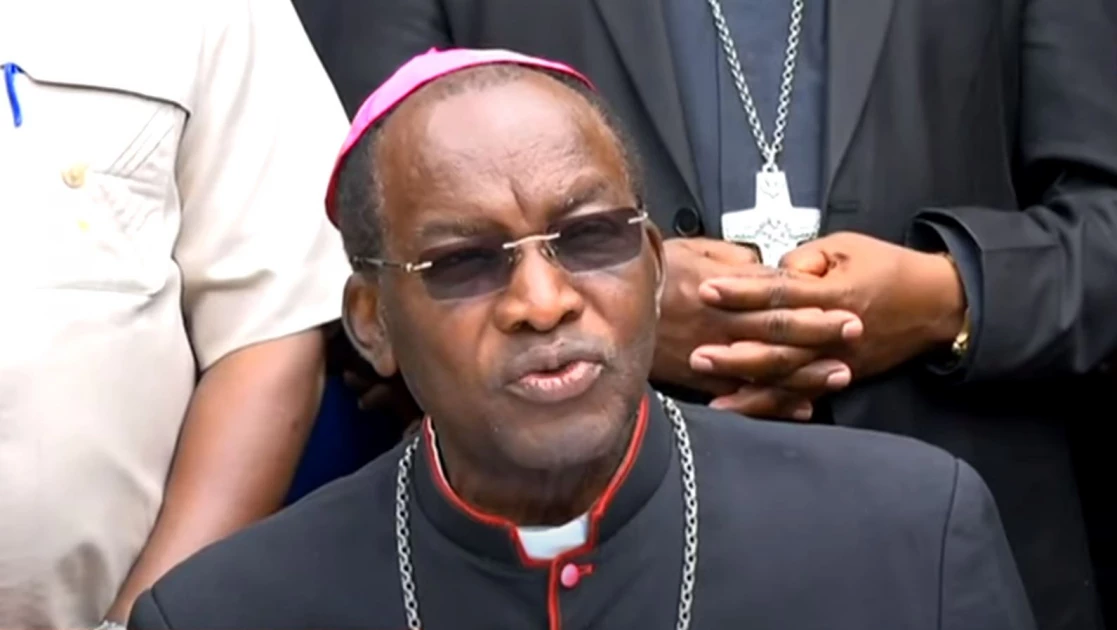
Nigeria’s Catholic Bishops Conference has announced that contrary to interpretations given to the recent declaration of the Pope, same-sex marriage still goes against the Church’s teaching.

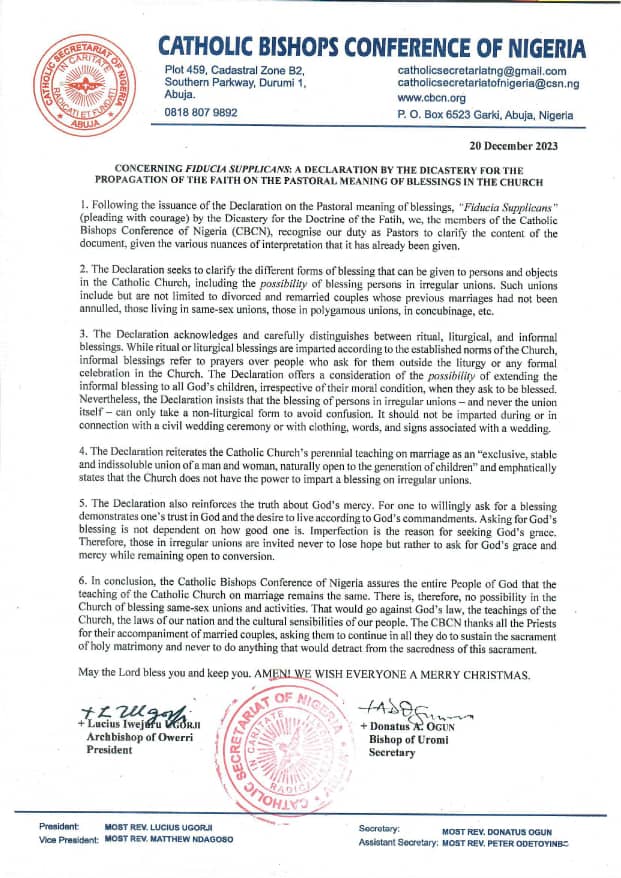
In a statement signed by President of the Catholic Bishops Conference of Nigeria, Lucius Ugirji and Secretary, Donayus Ogun on Wednesday, the bishops said that the declaration recently made by Pope Francis allowing priests to bless same-sex couples is not the same as blessing same-sex marriages.

But analysts are also questioning why the same sympathies have not been extended to polygamy which the church has condemned over the years. Many contend that it is hypocritical of the church which has punished many of its members, relived several off important duties in the church and denied them holy communion for being in polygamous marriages between persons of the opposite sex yet sympathetic towards gay relationships and ambivalent about its true position on gay marriages.

Alfred Ekwo who spoke with Law & Society said: “Do people in polygamous marriages which is even between men and women not deserve blessings too? The Catholic church has treated people in polygamous relationships as if they have committed the worst sin. I hope the Pope will make a declaration too about polygamy which is part of our culture in Africa.”

Making clarifications on the controversial declaration attributed to the Pope however, the Catholic Bishops Conference of Nigeria assured “the entire People of God that the teaching of the Catholic Church on marriage remains the same.

“There is, therefore, no possibility in the Church of blessing same-sex unions and activities. That would go against God’s law, the teachings of the Church, the laws of our nation and the cultural sensibilities of our people.

“The CBCN thanks all the Priests for their accompaniment of married couples, asking them to continue in all they do to sustain the sacrament of holy matrimony and never to do anything that would detract from the sacredness of this sacrament.”

Throwing more light on how blessings work in the Catholic Church, the conference said, “Following the issuance of the Declaration on the Pastoral meaning of blessings, “Fiducia Supplicans” (pleading with courage) by the Dicastery for the Doctrine of the Faith, we, the members of the Catholic Bishops Conference of Nigeria (CBCN), recognise our duty as Pastors to clarify the content of the document, given the various nuances of interpretation that it has already been given.

“The Declaration seeks to clarify the different forms of blessing that can be given to persons and objects in the Catholic Church, including the possibility of blessing persons in irregular unions. Such unions include but are not limited to divorced and remarried couples whose previous marriages had not been annulled, those living in same-sex unions, those in polygamous unions, in concubinage, etc.

“The Declaration acknowledges and carefully distinguishes between ritual, liturgical, and informal blessings. While ritual or liturgical blessings are imparted according to the established norms of the Church, informal blessings refer to prayers over people who ask for them outside the liturgy or any formal celebration in the Church.

“The Declaration offers a consideration of the possibility of extending the informal blessing to all God’s children, irrespective of their moral condition, when they ask to be blessed. Nevertheless, the Declaration insists that the blessing of persons in irregular unions and never the union. itself can only take a non-liturgical form to avoid confusion. It should not be imparted during or in connection with a civil wedding ceremony or with clothing, words, and signs associated with a wedding.

“The Declaration reiterates the Catholic Church’s perennial teaching on marriage as an “exclusive, stable and indissoluble union of a man and woman, naturally open to the generation of children” and emphatically states that the Church does not have the power to impart a blessing on irregular unions.

“The Declaration also reinforces the truth about God’s mercy. For one to willingly ask for a blessing demonstrates one’s trust in God and the desire to live according to God’s commandments. Asking for God’s blessing is not dependent on how good one is. Imperfection is the reason for seeking God’s grace. Therefore, those in irregular unions are invited never to lose hope but rather to ask for God’s grace and mercy while remaining open to conversion.”

Rivers State: Analysing the just-ended Wike-Fubara war in light of Governor Sim’s “no price is too much for peace to reign” declaration

By Sylvester Udemezue
➖➖
MEMORY VERSE:
“The best weapon is to sit down and talk….” (– Nelson Mandela) “…unless both sides win, no agreement can be permanent” (– Jimmy Carter)
➖➖
I’ve just stumbled upon an encouraging piece of news item published on 19 December 2023, under the title, “RIVERS CRISIS: FUBARA BREAKS SILENCE AFTER ABUJA MEETING, SAYS NO PRICE IS TOO MUCH FOR PEACE TO REIGN”.

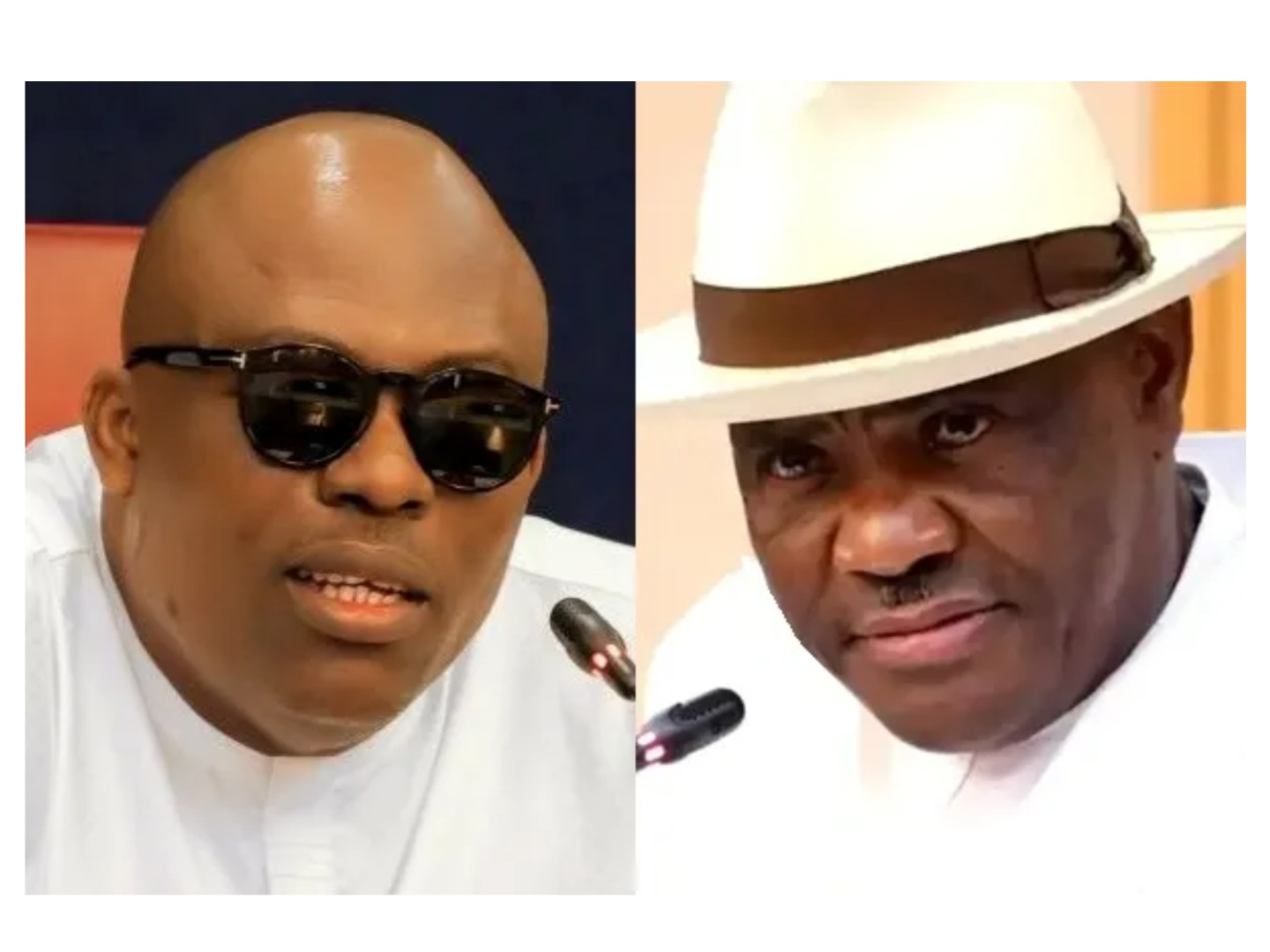
While I would make out time to think aloud, on paper (legal opinion to try to contribute to guiding the future), on all legal aspects of the just ended Rivers crisis, between the immediate past Governor of Rivers State, Nigeria, now the “Governor” of the FCT, Abuja, Ezenwo Nyesom Wike (yes, he’s the proxy-Governor of the FCT by the combined effect of Sections 299(a) and 302 of the Constitution of the Federal Republic of Nigeria, 1999), and his godson who happens to be the incumbent Governor of Rivers State, Mr. Sim Fubara, I beg all to graciously permit me to respectfully offer a suggestion to the effect that I agree totally with the above-cited end-of-war declaration, made by His Excellency, Governor Sim Fubara.

The safety, welfare and progress of the people of Rivers State should be uppermost in the minds of their leaders. Thus, if removing Fubara’s Sim from Nyesome’s Wike’s political phone (i.e., political alliance/family) would stultify peace, endanger order and threaten progress in Rivers State, then it’s better that personal sacrifices and compromises be made in the best interest of the good people of Rivers State.

Experience through history has proven that there can be no progress made, and no achievement recorded, without sacrifice. [See: James Allen (2013). “As a Man Thinketh: The Book of Thoughts, Health and Body, Character, Purpose, Achievement, Visions and Ideals (New Thought Edition – Secret Library)”, p.24, Lulu Press, Inc]. And if you read the work, The Essential Martin Luther King Jr, you’d see that even “freedom is rarely gained without sacrifice and self-denial”. Futher, the suggestion could also been advanced, that without pain, without sacrifice, we would have nothing.

James M. Barrie’s belief that “You can have anything in life if you will sacrifice everything else for it” doesn’t suggest one should not sacrifice anything at all; indeed, more often than not, making sacrifices leads to sacredness and progress. Some people (I’m one among the lot) would describe what has just happened between Wike and his Sim, as facilitated by President Tinubu’s mediatory role, in terms of Stoop to Conquer while some others would agree with those who hold the view that a more fruitful peace usually comes after war. In the wise, please, cast your mind back to this declaration made by the 4th-century writer of the Roman Empire, Publius Flavius Vegetius Renatus: _”Si vis pacem, para bellum” (translated, if you want peace, prepare for war) or “Qui desiderat pacem, praeparet bellum” (May he who desires peace prepare for war).

However, for Wike and his Fubara’s Sim, the question may be asked (borrowing from the Christian Holy Bible’s Roman 6:1-2) that, having begun and continued with war, in search of an enduring peace, if that is what war is all about (not the peace of the graveyard), ” What shall we say then? Shall we continue in sin [THE WAR], that grace may abound? God forbid… “

In other words, If the increase of sin has only led to a larger measure of forgiveness, should it be thought well to continue in the sin (in this instance, the sin of war), as a way of enhancing the measure and glory of forgiving grace? I answer no! To the Christian (both Wike and his Sim are Christians, coincidentally), such thought is abominable because both Wike and his Fubara’s Sim, should, at least in theory and principle, be dead to sin (the sin of war).

A further question (scripture-inspired)! How can we who as Christians are as good as dead to sin, still continue to live in it longer? Accordingly, in line with the Bible, the law, reason, conscience and all, God forbid that Wike and his Fubara’s Sim would still indulge, continue in the sin of war (yes, war is sinful, in my opinion); it’s time for peace, time to listen to Abraham Lincoln’s plea to all: “Discourage litigation[, and war]. Persuade your neighbors to compromise [and embrace peace] whenever [they] can. Point out to them how the nominal winner is often a real loser…”.

Yes, it’s time for peace — in the interest of the electorate (the good people) of Rivers State who (truth be told, according to law) are supposed to be the real owners of the power Wike and his Fubara’s Sim are now wielding and needlessly showcasing in war, instead towards the good of Rivers. I emphasize that this power belongs to the people of Rivers, from whom, according to Section 14(2)(a) of the Constitution of the Federal Republic of Nigeria, 1999, government [i.e., leaders, including Wike and his Fubara’s Sim) through this Constitution derive…all [their] powers andauthority”. So, if the people of Rivers State want peace and calm, as opposed to the sin of war, what’s wrong if the warring parties struck a deal to let Rivers State have the peace and calm.

Besides, if a clash between Fubara’s Sim and Nyeson’s Wike would jeopardize the security and welfare of the people of Rivers State, then what is wrong with that they ended the war, especially considering that the Constitution of the Federal Republic of Nigeria, 1999, has commanded in Section 14(2)(b), that “the security and welfare of the people [not this needless egoistic war] shall be the primary purpose of government”? I see nothing wrong, and I accordingly commend Governor Sim Fubara for his professed sacrifices, aimed to bring about peace, and stay in partnership-for-progress with his political godfather, whom some people have even described (but, is it not true?) as the foundation of the emergence of Fubara’s Sim in Rivers Phone.

Well, I sincerely hope this peace wouldn’t turn out a peace of the graveyard. In his work, Finding Peace, Jean Vanier wrote, and I agree: “True peace can rarely be imposed from the outside; it must be born within and between communities through meetings and dialogue and then carried outward”. I hope also this is not the kind of peace that could or would mortgage, subjugate or otherwise threaten the destiny of the good people of Rivers State, depriving them of the good quality governance to which they are legally and morally entitled. For this purpose, please permit me to, by way of concluding remarks, quickly reproduce verbatim, my earlier, published, words, which I believe would serve as a piece of counsel (although unsolicited) to all stakeholders in the Rivers project:

‘The reality is that all what we need now is reconciliation with one another, not blaming each other, reparation of damaged relations and society, not bullying of a section of it, reconstruction of devasted hopes, not persecution of those who dared to raise their voices; repentance and reengineering, not exacerbation and heightening of tension. Sometimes, God doesn’t send you into a battle to win it; he sends you to end it. All kinds of fights end at forgiveness. We must evolve…a conflict resolution method which rejects revenge, aggression, oppressions, victimization and bullying…. Peace cannot be kept by force; it can only be achieved by understanding.

Jimmy Carter said, unless both sides win, no agreement can be permanent. And according to John F. Kennedy, “peace is a daily, a weekly, a monthly process, gradually changing opinions, slowly eroding old barriers, quietly building new structures.” As Nelson Mandela once suggested, “the best weapon is to sit down and talk….” Finally…. Franklin D. Roosevelt had written that, “more than just an end to war, we want an end to the beginnings of all wars”.’ (See: “A Catholic Cogitation On The Freeze Order Against Bank Accounts Of Alleged #EndSARS Protest Promoters” By Sylvester Udemezue; NOVEMBER 8, 2020; BarristerNG).

In the meantime, worthy of commendation is the sagastic manner Mr President Tinubu has recently helped to restore peace and hope to troubled Ondo and Rivers States. Those criticising the contents of the current peace-deal, executed on 18 December 2023 in re Rivers State, between Wike and Fubara’s Sim, had rather pause to consider whether what matters the most is not that the parties have voluntarily executed the agreement, and thereafter (on the same night) proceeded to demonstrate this by dancing their way through an all-night party in celebration of victory for all, and especially the peace, order, and progress of Rivers State. This is illustrative of a true ADR (alternative dispute resolution) process characterised by initial war, then horsetrading succeeded by compromise, sacrifice on both sides, towards achieving peace on a WIN-WIN balance, which usually culminates in an Agreement executed or a deal struck.

What matters is that calm has been restored to Rivers for governance and peace to take the center stage, because these (good governance and peace) are the principal reasons why the good people of Rivers State (through the ballot) have placed Wike’s Fubara’s Sim into Rivers phone; the original idea being for them to work as a team towards progress. You know of Henry Ford’s “Coming together is the beginning. Keeping together is progress. Working together is success” counsel? Think about it and tell me whether it’s not apt here.

All hail Mr President Bola Ahmed Tinubu for the present (as opposed to the past) condition of affairs in Ondo and Rivers States. Speaking generally, it appears Mr. President’s fatherly approach to resolving crises in these two states stands out, unprecedented, although I stand to be corrected, in case I am wrong. All in all, thank you, Mr President Tinubu, sir; thank you, that Rivers could now, like Ondo, concentrate to enjoy governance. Thank you for saving us from a near-bloodshed-scenario in Rivers.

We all are aware of Goodluck Jonathan’s “no ambition of any politician is worth the blood of any citizen”. Hitherto looming anarchy has just been averted in Rivers State by Mr President Tinubu’s fatherly mediation role. I thank also Nyesom’s Wike and his Fubara’s Sim, for helping Tinubu to achieve the peace that Rivers needed badly, and have now got. Writing in the New York Times on 16 Novemberc1967, A. J. Muste said, “There is no way to peace. Peace is the way”.

Let Wike, Fubara, all indigenes of Rivers State, and indeed all Nigerians, know this now: peace is the only way!! God bless Rivers State, bless the Federal Republic of Nigeria, and bless all its citizens.

Respectfully,
Sylvester Udemezue (udems)
Proctor,
Reality Ministry of Justice (RMJ)
08109024556.
[email protected].
(19 December 2023)

As daughter of beheaded CAN pastor weds, rights lawyer decries absence of Nigerian church

  • Yola IDP attended martyred Pst. Andimi’s wedding while Nigerian pastors were absent
  • American guests stepped in to represent absent father of the bride 

It was a day of mixed emotions as the daughter of murdered CAN official in Mubi, Adamawa state, late Pastor Lawan Andimi wedded in Makurdi, Benue State over the weekend.

In January 2020, Boko Haram rejected N50 million ransom for release of the bride’s father, Rev. Lawan Andimi, branch chairman of the Christian Association of Nigeria (CAN) in Michika Local Government Area in Adamawa State before executing him.

In a small wedding at St Peter’s Parish, Agnes Andimi, a recent graduate, married her schoolmate Gabriel becoming Mrs Egwurube.

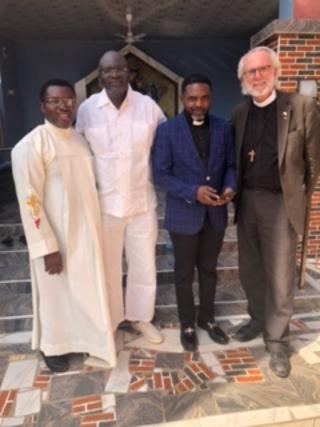
Mrs Tina, Debbie & Mama Mary Andimi, Barrister Ogebe, Father Pito & Dr Devlin after the ceremony

Officiating priest, Father Pito queried the bride on the groom’s hometown and applauded her for correctly naming, “Agila, Ado Local Government, Benue state.”

However, he was taken aback when he asked the groom her origins and he answered, “Chibok, LG, Borno, State.”

Father Pito said he had never met anyone from Chibok then proceeded to ask the bride “if our girls are back.” He thereafter prayed for those still missing and those lost.

Father Pito, Ogebe Esq, BSU Chaplain and Dr Devlin in Makurdi Benue state on Saturday

In attendance all the way from America were international human rights lawyer Emmanuel Ogebe and global humanitarian missionary Dr William Devlin, both recipients of US President Obama and President Biden’s volunteerism award respectively for their pro bono service to humanity.

“I have been in touch with the widow mama Mary Andimi from weeks after her husband’s decapitation by Boko when Dr Pst Paul Enenche hosted us and over 20 victims of terror in a press conference commemorating Leah Sharibu’s abduction anniversary in February 2020.

“When she invited me and I saw her daughter was marrying into my state and my local government area, I was deeply elated.

“I didn’t even know they were from Chibok till that day. I don’t know why God continues to join me with Chibok since I first sponsored another murdered pastor’s orphan from Chibok to US 10 years ago, then over 10 more Chibok girls in 2014 and the daughter of the murdered CAN Secretary of Borno in 2015,” Ogebe said.

On his part, Dr William Devlin broke down in tears following an incident after the wedding ceremony.

As post-nuptial photos were being taken, there was a moment of awkwardness as the MC announced “photo of couple with bride’s parents.”

As the widow Mama Mary Andimi joined the couple alone, it was suggested that her son be called to come and stand in place of his late dad.

At this juncture the US humanitarian duo Dr Devlin and Barrister Ogebe stepped in for the photograph.

A deeply emotional Devlin said, “ I can’t believe I got to stand in the shoes of a kingdom martyr. This is a once in a lifetime experience. I know he’s smiling in heaven that the body of Christ showed up for him, his daughter and his family.

I was quite shocked by the really low attendance. The choir were more than the guests.”

Lamenting, Ogebe said, “I am afraid of this country. With all the big churches and great pastors in this land, you mean none of them cared enough to show up or even help out the family of this great martyr who pleaded on camera for his ransom but said if not possible ‘good bye and see you in glory’?

“Every sector in this country has failed including churches. I am a Christian and have done more internationally for the persecuted than anyone living today in our generation so you can’t say I hate Christianity. 

“In fact it’s because of my faith that I must call our people to order.

“I will be a hypocrite if I accuse Islamist terrorists of killing us then keep quiet when Christians are neglecting the widows and orphans of their own profession and body.

“In case you don’t know, Christ himself called the religious leaders to order and they killed him.

“One of my saddest experiences was when I asked a church to build a house for the mum of an abducted heroine, the excuses they gave me baffled me. I said so these are the kind of uncaring people I have been fighting for?

“Real Christianity is not bling and blowing grammar. James said pure religion is helping widows and orphans.

“I was grieved when I heard mama Mary Andimi was late to the wedding because the vehicle they took from Adamawa to Makurdi broke down.

“There are 5000 pastors in Nigeria that can bless her with a new car and they won’t even feel it.

“There are 10 pastors that could have sent planes to fly her for the wedding and back.

“I am afraid of Nigerian Christians honestly. We pray, make noise and show off but don’t show up for whom Christ holds dear. I am officially tired of this country.

“When we get to glory and God asks, ‘when my father died and I was wedding without him, why didn’t you attend?’ we will see what they have to say.

“Last time we visited Adamawa, it was house rent issue. How can widow Mama Mary Andimi be talking of house rent barely three years after her husband’s globally reported execution on video? Of a truth, some will reach heaven and God will say, ‘you already collected your own enjoyment on earth!’

“Dr Gideon Paramallam was represented by the Chaplain of Benue State University while the Chairman of CAN in the northern states who was out of the country urged the bride to apply for her national youth service with him.

It was a joyous event coming just a month after the burial of mama Mary Andimi’s own mother who recently passed away. The third anniversary of Pastor Lawan Andimi’s execution comes up just nine days after his daughter’s wedding. He was brutally beheaded on Christmas Day 2019 after his abduction by Boko Haram Terrorists in a chilling video circulated around the world. He is survived by nine children most of whom are still schooling. His widow, a farmer lost her farm during the Cameroun dam flooding that devastated the region and subsists on the 30,000 monthly salary given by his church denomination.

“I cried at the funeral of the great Nigerian intellectual, middlebelt hero and global diplomat Obadiah Mailafia not just because of the loss of a wonderful human but I wept for Nigeria which hounded one of its best and brightest to his death because he did not see the Nigeria of his dreams before he died. A few years later, the Nigerian ruling party said there was no Christian from the north with the competence to be Vice President (a spare tyre position even.) It’s not everything we must blame politicians for. Is it Tinubu’s fault that the church abandoned this family?””

Ironically, Mrs Tina Bitrus an IDP traveled all the way from Yola to attend the wedding. 

“Tina who left her family in tents at the IDP camp to travel to Benue had met mama Mary Andimi last year during a trauma healing session organized by the US humanitarians on the anniversary of Leah’s death.

“It was so touching for me to see this lovely lady Tina who has lived in IDP camps for almost 10 years with no home of her own since the terrorists captured Gwoza make the sacrifice to come. Truly heaven will be full of surprises when some unknown faces get their reward because of how the touched the father’s heart and exemplified Christlikeness. 

“I only hope the church in Nigeria does something to radically change the lives of Andimi’s family. That ransom they say CAN was ready to pay for his freedom should be paid to his family.

“Boko Haram used to pay the families of their suicide bombers N40 million each. Why is it that we cannot care for our own as commanded by scripture?

“The is the difference between the church in the north and the church in the south. Pastors in the north are ready to die for their faith while pastors in the south want to live off their faith.

“I therefore urge even Muslims and non-Christians who are against terrorism to help this family,” Ogebe concluded.

AGF Fagbemi lists benefits of plea bargain

The Attorney General of Nigeria and Minister of Justice, Lateef Fagbemi, SAN has announced that plea bargain will enhance quick recovery of stolen assets and proceeds of crime.

Prince Fagbemi said this at the unveiling of the ‘Plea Bargaining Guidelines for Federal Prosecutors’ and the maiden sensitisation workshop on the guidelines on Tuesday in Abuja.

According to the Attorney General, “Under section 494(1) of the Administration of Criminal Justice Act (ACJA), 2015, Plea Bargain is well described as “the process in criminal proceedings whereby the defendant and the prosecution work out a mutually acceptable disposition of the case.

“This includes the plea of the defendant to a lesser offence than that charged in the complaint or information and in conformity with other conditions imposed by the prosecution, in return for a lighter sentence than that of the higher charge subject to the court’s approval. It is also one of the mechanisms that can facilitate cost-effective, timely and sustainable decongestion of custodial centres.”

He, however, noted that the practice of plea bargaining in serious and complex cases, especially when the defendant is a politically exposed person or high net individual, is often misunderstood as a means of giving a soft landing to individuals who have looted the resources of the State and commonwealth of the nation.

“This negative perception was more common prior to 2015, when there was no specific statutory provision regulating the practice of plea bargaining. Today, this perception has not significantly changed, notwithstanding the provisions of section 270 of the Administration of Criminal Justice Act, 2015,” Mr Fagbemi explained.

He added, “And similar provisions in the Administration of Criminal Justice Laws of the various states of the federation now provide for plea bargaining.

“This has necessitated the need for standard guidelines for the implementation of plea bargaining provisions contained in our laws.”

According to the justice minister, the objective of these guidelines is to, among other things, guide the prosecution and the defence in reaching a plea bargain agreement that is in the interest of justice, the public interest, public policy and the need to prevent abuse of legal process.

He added that the guidelines would promote standardisation, enhance the effective implementation of the plea bargaining provisions in the ACJA and significantly contribute to and stimulate the overall efficiency of the criminal justice system in Nigeria.

“The effective deployment of plea bargain provisions will therefore reduce the financial cost of prosecutions, hasten trial processes, eliminate the uncertainty of trials, facilitate the quick return of stolen assets and generally enhance the efficiency of the criminal justice system,” stated the minister.

He noted that considering these advantages, he counted it a great privilege to encourage states to adapt or adopt the provisions of these guidelines, especially when dealing with plea negotiation of federal offences.

The minister said the guidelines were a product of a cumulative effort of all the prosecuting agencies and other stakeholders.

“I must therefore commend the efforts of every stakeholder institution, particularly all the prosecuting agencies involved in the production of these guidelines, for your dedication and commitment to the reforms in the criminal justice sector, especially towards the development of these guidelines,” Mr Fagbemi noted.

The minister noted that the guidelines would not only enhance public confidence in the plea bargaining process in Nigeria but will reduce case backlog and congestion of correctional centres.

“It will ensure that the principles of accountability, equity, integrity and transparency are observed in the exercise of prosecutorial discretion on plea bargain, in line with international best practices,” said the justice minister.

NAN

A governor’s naked dance

By Ebun-Olu Adegboruwa, SAN

The name ADELEKE is revered in the annals of the history of Osun State, nay Nigeria, due to so many reasons. I met Alhaji Isiaka Adeleke (Serubawon) during my days as the President of the Students’ Union of Great Ife. He had invited us as leaders of the students to broker peace between the students and the management of the university even though Great Ife as a federal university did not operate under his immediate authority. He did his best to convince us but we could not find a point of convergence. He said he would give us time to think about his proposals but we never got to meet with him again. He was very jovial, accommodating and receptive to our divergent viewpoints. He was loved by the people of Osun State and the circumstances of his sudden death still remains a mystery to many. Then of course one cannot but mention Mr. David Adeleke a.k.a. Davido, who has been an inspiration to the young ones in some ways although he still has a lot to work to do in positive influence. So, when Mr. Ademola Adeleke sought to contest for public office in Osun State, he rode upon the goodwill already built for the Adeleke family. Even though some saw him as a jester of some sort, the people rallied round him massively and it was widely believed that he won the election but could not sustain the momentum at the end of the inconclusive election of INEC.

Governor Adeleke caught the attention of all with his eclectic dance steps and his general simplistic attitude to life. Coming from a mixed race of Ibo extraction through his mother, a stint in the North where he had his early life and the exposure to civilized life in the Western world, it was generally felt that he would make a good administrator. He chose the names Ademola Jackson Nurudeen Ifeanyi Adeleke and was at home with Muslims, Christians and even traditionalists. There were however questions on his academic qualifications, resulting in some prolonged litigation that ended in his favour. Notwithstanding his success in court, he demonstrated humility when he went back to school abroad to acquire more knowledge. He eventually danced his way back to government house in 2022 when he was returned as the elected Governor of Osun State, after his failed first attempt. Since the affirmation of his election by the Supreme Court, Governor Adeleke has been missing a lot in his dance steps, including his needless foray into the judicial waters.

Honourable Justice Adepele Ojo was appointed the first female Chief Judge of Osun State in June 2013 and was set to retire in October 2023 when she would clock 65 years of age. That was before the election and eventual swearing of Senator Bola Ahmed Tinubu as the President of the Federal Republic of Nigeria. One of his first assignments as President was to assent to the pending Bill for the harmonization of the retirement age of all judicial officers of the higher bench. By that action, judges of the various High Courts would now retire at the age of 70. Many judges benefitted from this exercise, including Honourable Justice Ojo, who had five more years added to her tenure as the Chief Judge of Osun State. For whatever reason, Governor Adeleke was not happy with this development, as he had prompted an action to push the Chief Judge into retirement, despite the new Act extending her tenure. It took the intervention of many for the Governor to back down. As if waiting for the right moment, the governor hurriedly dissolved the State Judicial Service Commission, the body responsible for recommending the appointment and discipline of judicial officers. The end game was very clear, to get rid of the Chief Judge at all costs, but as the saying has been from time immemorial, power belongs to God.

We were all jolted when it was suddenly announced that the Chief Judge of Osun State had been suspended by the House of Assembly of the State and in her place, the next most senior judge would be sworn in as the Acting Chief Judge. The Assembly claimed that it was conducting an investigation into some allegations against the Chief Judge, warranting her purported suspension. The Chief Judge had filed an action before the National Industrial Court, which granted an order of injunction against her removal. To circumvent that order, Governor Adeleke directed his Deputy to swear in an acting Chief Judge. Given the fate of judges who had jumped at such illegal appointments in the past, no judge in Osun State turned up for the mock swearing in ceremony although Governor Adeleke would continue the drama through the State House of Assembly via a phantom panel of investigation. The petition against the Chief Judge was itself bereft of any substance and lacking in merit, containing no cogent allegations worthy of investigation. What played out in Osun State was only a reminder of the mockery of the judiciary by the Buhari regime, which perfected the odious removal of a substantive Chief Justice of Nigeria through an ex-parte order and got the next most senior justice of the Supreme Court to be sworn in as the Acting Chief Justice. I verily believe that the judiciary and indeed Nigeria has not and may never recover from that assault on democracy and the rule of law.

Now, Paragraph 21 (d) of the Fifth Schedule to the 1999 Constitution (as amended) states that all matters of discipline of judicial officers should go through the National Judicial Council, being a provision enshrined to ensure the security of tenure of judges, as part of the tenets of democracy. This much has also been confirmed by the Supreme Court in Ngajiwa’s case. It was therefore surprising that a Governor would seek to bypass the Constitution to desecrate a hallowed institution such as the judiciary. I do not by the condemnation of the illegal actions of Governor Adeleke seek to shield anyone from investigation, but it is not for the House of Assembly of Osun State to launch an investigation into the activities of a judicial officer, purport to find her guilty and then approach the NJC for ratification of the disciplinary action already taken, albeit illegally. Should that happen, all judges in Nigeria would run into severe calamity with their Governors and indeed with the President, as once they deliver any judgment that does not sit well with the executive arm, they will be liable to summary dismissal.

The opposition All Progressives Congress in Osun State challenged the electoral victory of Governor Adeleke and succeeded in annulling it through the Election Petition Tribunal but Governor Adeleke reversed that damning verdict through the Court of Appeal and the Supreme Court. So, you imagine the same Governor Adeleke scheming to become an emperor with the power of arbitrary removal of the Chief Judge, and through that corrupt process become a terror to all other judges and indeed officers of the State! The unfortunate part of Governor Adeleke’s novel ambition is that it gives vent to the opponents of true federalism, as if power had been devolved to the States as we have consistently canvassed, the fate of the Chief Judge would have long been determined whimsically. We must not be deterred however, the solution being to strengthen our institutions for optimal performance, or else we will end up with tin gods in various positions of leadership who will seek to govern with absolute powers. In the case of Osun State, the Nigerian Bar Association, the media and other civil society organisations rallied in strong condemnation of the fascist tendency of Governor Adeleke. In the jurisdictions where we imported democracy, Governor Adeleke would have long been impeached, for the scandalous attempt to rubbish the strongest institution of democratic practice. If judges are no longer free to apply and decide the law without fear or favour, then society should prepare for a state of anarchy and terror.

The National Judicial Council eventually halted the naked dance of Governor Adeleke by dismissing the trumped-up allegations against the Chief Judge and reaffirming her status as the substantive leader of the Bench in Osun State. That should end the drama but as I write this piece, I am aware that members of the Judiciary Staff Union of Nigeria, Osun State branch are on strike, having failed to prevent the Chief Judge from assuming her role as such. Although they claimed to be agitating for the payment of salary arrears and allowances, the coincidence all but points to the same direction of the dancer. JUSUN should call off its strike and save the common people of Osun State who are at the receiving end of this bargain. When the decision of the NJC in respect of the Chief Judge has been fully implemented and consolidated, JUSUN may thereafter review its actions and take a position based on some independent factors unconnected with the current ugly dance upon the face of the judiciary.

The emperor mentality of public office holders must be decimated and buried by those who have the statutory power to checkmate them. The impunity that we all suffer as a nation is due mainly to the condonation of the excesses of our leaders who hold themselves above the law and the institutions established to enforce the law. If there is a genuine allegation against any judicial officer, due process of law dictates that such should be routed to the NJC for investigation and consideration. Individuals should have no power of sanction over those saddled with the determination of the civil rights and obligations of citizens, to adjudicate on disputes between citizens and the government and to curb the excesses of the other arms of government through judicial intervention. It is commendable that for now, the NJC has stopped the superficial dance that was orchestrated without any drum or instrument.

TIPS