Home Blog Page 676

NBA and Akwa Ibom wife-beater

By Lanre Adewole

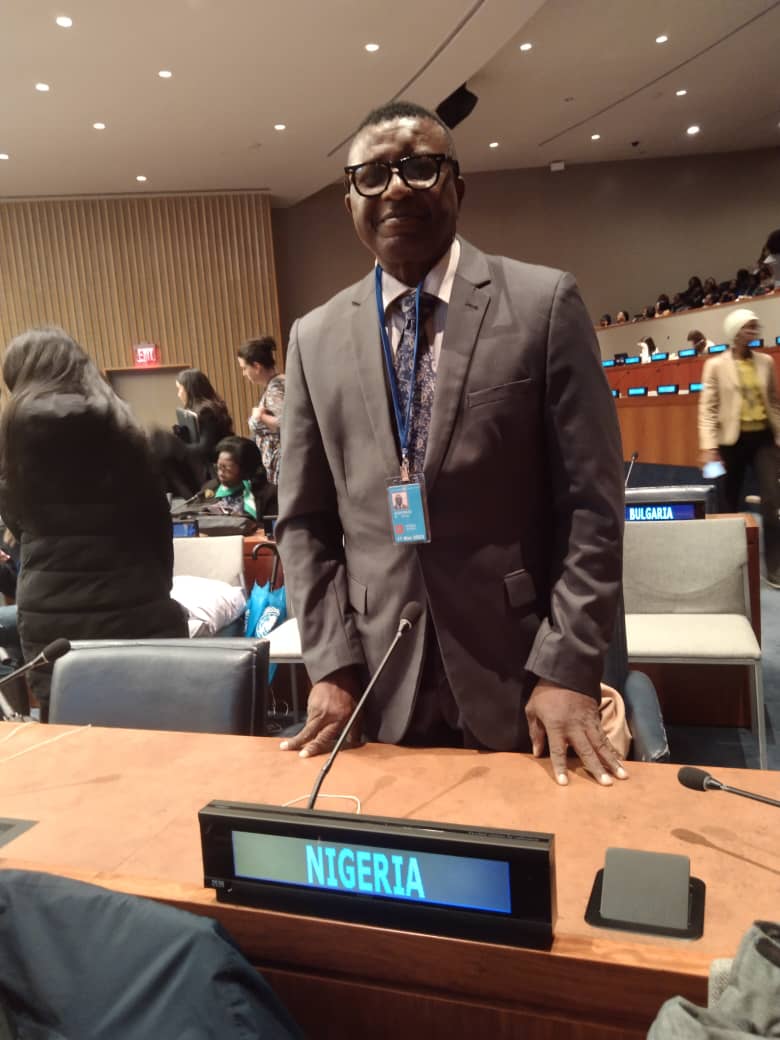
Ekere Sunday Ebong, the Uyo-based lawyer caught on the viral video on social media, pummeling his wife, has 18 years’ post-call experience behind him, and is likely aware of the Violence against Persons (Prohibition) Act 2015, signed into law, by then-President Goodluck Jonathan, on May 28, 2015, probably his last official act in office, which prescribes jail term and fine, for spousal battery.

Section 19 (1) of what is known as VAPP Act says, “A person who batters his or her spouse commits offence and is liable on conviction to a term of imprisonment not exceeding 3 years or to a fine not exceeding N200,000.00 or both”.

Filmed in the act, by his neighbours, exhausted by his years-long physical (and definitely mental and psychological) torture of his wife, the lawyer, with Supreme Court Enrollment number SCN047043, appears to have bought himself a fitting orange jumpsuit, worn by convicts in Nigerian prisons, just like in America.

Everything points to that end. Akwa Ibom, the jurisdiction where his alleged offence took place, domesticated the federal law, more than three years ago. The state assembly passed it on June 10, 2019 and then-governor, Udom Emmanuel, signed it into law on June 19, 2020.

I have read through this 32-sectioned anti-violence law. It is a shame that most Northern states are still treating it like leprosy, refusing to domesticate it, more than eight years of its passage at the federal level. Statistics, as of mid 2022, showed that only 19 states, mostly Southern, had embraced it. Possibly due to cultural and religious considerations, which could be read as misogyny, even states, deemed to be conservatively cosmopolitan in the North like Kano, Sokoto, Niger, Katsina and even Taraba, are still giving the Act a wide possible berth. In some Northern states, the lawmakers have never ever tabled it for possible discussion and well, ultimate rejection. What are they afraid of?

I was crushed watching the Ekeres, with the wife in her pant and white top, blood dripping from her mouth. Ebong was like a man possessed, yet he still didn’t want the battered woman, spend the night outside as he kept demanding from the neighbours shielding her, if they wanted to keep her.

Why does love turn this ugly? These are the same people that must have cooed sweet nonsense as they call pillow talk, into each other’s ears, definitely during courtship and most likely in the early life of the marriage, before whatever asunder.

Ekere may be dominating news now, following his arrest and conviction in public opinion court, with strong possibility of conviction by a conventional court, (now that Evidence (Amendment) Act 2023, has cleared the path for admissibility of electronic evidence in trials), but he won’t be the last. His wife was fortunate to have ‘nosy’ neighbours who damned whatever blowback from dragging him to the social media, which has obviously saved her life. The Ekwueme crooner, Osinachi Nwachukwu wasn’t that lucky. From alleged domestic violence, she passed on, on April 8, 2022. The world has since moved on, from grieving her.

It isn’t only those down the social and economic ladder that engage in spousal abuse. Those high up, with coercive and manipulative influences, are worse.

In 2013, it took a petition from rights lawyer, Mr Femi Falana, SAN, to then-Inspector General of Police, for the world to know what then-First Lady of Enugu State, Clara, was going through allegedly in the hands of her husband-governor, Sullivan Chime. The woman was allegedly imprisoned by her husband. The man said she had mental illness and being sequestered, on doctors’ advice. In such situations, the heavily-fortified walls of government house, would not allow nosy neighbours with smart phones and data, to call in the social media, unarguably the most effective ombudsman around the world today.

What about Jemima Abubakar? Recently, a lady called in from Abuja. She turned out to be a wife to a former spokesperson of a national security outfit. She told a heart-wrenching story of constant abuse by this uniformed fellow, and father to her two children. Her father, a prominent traditional ruler in a North Central state, recently passed away. As influential as he was in his lifetime, he couldn’t reconcile his princess and the once-famous officer. She wanted justice. I directed her to the National Human Rights.

The Ekere saga was breaking as the President of the senate, Godswill Akpabio, the highest-ranking public officer from Akwa Ibom, was rounding off, his well-publicized home and away birthday soirée, first in Uyo, then, Abuja. Happily, the number three citizen has recovered from the fainting episode at the Uyo bash, which he alluded to exhaustion and malaria, with him, now advising Nigerians, to always be well-hydrated.

As a lawyer himself, just like the Nigerian Bar Association (NBA), must have been ashen-faced by Ekere’s conjugal irresponsibility, though no man can claim to have the mojo for forever-bliss in marriage. Anyone who is successful in the institution is simply graced. Yoruba will say, it is only the farmer whose cocoa, survives the nursery, who understands transplantation. Whoever, including genuinely-born again Christians, pious Muslims and conscientious traditionalists, is claiming to have the master key to marital success is taking grace for granted. Marriages do fail for every reason imaginable and unimaginable.

The longest marriage in history to fail was recorded in 2011 when Antonio.C, then-99-year-old Italian, divorce his then-96-year-old wife Rosa.C, after being married for 77 years! He found letters confirming his wife cheated on him, 60 years back!

Before them, were Bertie and Jessie Wood from the United Kingdom? They divorced in 2009 after 36 years of marriage, and wait for this, they were both 98 years at the time! After their (in) famous split as the oldest couple ever to part ways, Bertie died just a year later, shortly before his 99th birthday.

You would expect those so close to their earthly end, to just let whatever it is, including adultery of six decades back, go. But that is marriage for you.

It is always difficult situating the real asunder problems in marriages around here, due to cultural and communal embracement. The issues that would be freely discussed in the western world would be hushed down here, because you don’t want to bring shame to your family.

Only the Ekeres can tell the point where the marriage became a battlefield but Ebong taking the law into his hand, possibly because he is a lawyer or he is ignorant of spousal battery law, cannot be excused.

Truly, ignorance isn’t an excuse in law, but more marriages can be helped if NBA, supported by Akpabio, can work on the abstaining states, to quickly domesticate the Act in the North, where women can use more freedom of choices in marriage.

A law can also be passed, compelling institutions that perform marriage rites, like courts, worship centres and other recognized marriage-affirming bodies, to include the VAPP Act in the must-study and must-pass test for intending couples, before they are joined in wedlock. The entire Act is just 32 sections. Anyone serious with a lifetime commitment like marriage should know what the law says about what he or she is getting into. Spousal battery provision is just a few lines and whoever thinks that is serious work, surely isn’t serious about marriage.

The section should also become part of the marital vow of “till death do us part”. To make it easier for everyone, the provision should be translated into all major indigenous languages. Afterwards, the jail term for spousal battery should be raised to 30 years and 20 million Naira fine. Potential bankruptcy for just a slap, should tether men like Ebong.


Student of National Open University Nigeria denied access into exam hall over “indecent dressing” (video)

A woman was prevented from sitting for her exam at the National Open University (NOUN) in Garki, Abuja, because her dressing was “improper”. 

The student said she arrived at the examination centre in the morning and was getting ready for her 2p.m. paper when she was denied entrance into the exam hall. 

A video captured a security guard holding her back from entering the hall. 

The student then showed herself to the camera and asked viewers to tell her if she was indecently dressed. 

She was wearing a white tank top, blue denim jacket, and black jeans. No part of her body was exposed. 

Watch the video below.

Culled from Linda Ikeji

Two father Christmas seen fighting in Lagos (Video)

Over the years Father Christmas as we know him, with his red coat and cap epitomizes joy and gifts. But what many witnessed in Lagos which has also been trending on social media was rather strange! Father Christmas fighting!

It was a case of two men dressed as father Christmas who forgot the reason for the season as they exchanged fisticuffs!  

It is uncertain what led to their disagreement that degenerated into a fight.

Watch the video below…

https://www.instagram.com/reel/C1JfVo9t9fd/?utm_source=ig_embed&ig_rid=36fb4c60-c666-41e1-91c8-85f3cb92ac30

72-year-old arraigned for kidnapping boss plus fashion designer who raped 11-year-old girl in Ondo

The Ondo State Security Network Agency otherwise known as Amotekun has arraigned 14 suspects for various offences ranging from kidnapping, rape, murder, rape and armed robbery in the state.

The suspects, including a 72-year-old man, were arraigned before an Akure Magistrate Court, on Thursday, December 21, 2023.

The septuagenarian, Basiru Mohammadu, who was security man in a farm, and others still at large conspired to kidnap two persons including his boss. 

The State Prosecutor, O.F. Akeredolu, told the court that the defendant committed the offence on November 17, 2023, at about 6:00 pm, at Upenmen Forest, Owo, Owo Local Government Area of Ondo State.

He also said the defendant had been a member of a kidnapping syndicate in the area. 

The charge reads in part “That you, Mohammadu Basiru, and others now at large, on or about  November 17, 2023, at about 6:00 pm, at Upenmen Forest, Owo, Owo Local Government Area of Ondo State, within the Criminal Jurisdiction of this Honourable Court, did conspire with others still at large to kidnap Nelson Adeyemi and Olaoye Olaniyi “

The offence contravenes Section 2 and Section 6 of the Ondo State Anti-Kidnapping and Anti-Abduction Law, 2010.

Based on the nature of the offences committed, Akeredolu urged the court to remand them at the Olokuta Correctional Centre, pending the issuance of advice from the Director of Public Prosecutions (DPP).

However, the defence counsel, Kehinde Osadugba prayed to the court for an adjournment to enable his client to reply to the application.

Magistrate Damilola Sekoni adjourned the case till December 27, 2023, for a reply and ruling on the application.

Also docked was a middle-aged fashion designer, Adesoji Adebayo for allegedly raping an 11-year-old girl.

The prosecution counsel told the court that the defendant committed the offence on November 1, 2023, at about midnight at Alhaji Camp, Idanre.

Akeredolu said the defendant raped the victim (name withheld) by intentionally penetrating her vagina with his penis which caused injury to the girl.

The offence Section 3 (2) (c) Ondo State Violence Against Persons (Prohibition) Law of Ondo State, 2021.

Akeredolu urged the court to remand the defendant at the Olokuta Correctional Centre for DPP advice. 

Magistrate Sekoni adjourned the case till December 27 for ruling.

Similarly, a man, Ayomide Olamide was arraigned for alleged murder, armed robbery, and possession of firearms

Akeredolu told the court that the defendant and others at large committed the offence on December 12, 2023, at Danjuma, Akure, Akure South Local Government Area of Ondo State.

He alleged that the defendant conspired with others at large while armed with a dangerous weapon, and stole a motorcycle valued at N550,000, property of Jide Ofor.

Olamide was also said to have attempted to kill the victim, by attacking him with dangerous weapons leaving him  injured.

Akeredolu urged the court to remand the defendant pending advice from the DPP.

The Magistrate adjourned the ruling on his remand application till December 27, 2023. 

Other defendants arraigned were Wisdom Victor for stealing a cell phone, Raphael Adeniyi for stealing mechanic equipment, Friday Samson, Babatunde Abiodun, Iroko Ojo and Ariyo Bamikole Ayuba Asiru for stealing a goat and motorcycles. 

14-year-old girl kidnapped and gang-raped by suspected cultists in Rivers

Two suspected cultists, Precious aka Pere and Chidebere aka B2K, allegedly abducted a 14-year-old girl and gang-raped her in the Mile 3 area of Diobu in Port Harcourt, the Rivers state capital.

The incident occurred at about 10am on Wednesday, December 20, 2023, near a three-storey building located at National Street Mile 3.

A source who pleaded anonymity told Punch that the hoodlums accosted the girl at a lone part of the road on National Street and showed her an object that looked like a gun before whisking her away.

“One of the bad boys raised his clothes to show the girl what looked like a weapon and she became afraid. And some part of that road is quiet,” the source said. 

“That was how the girl was deflowered. Before that time, they threatened to kill her if she refused to cooperate with them. After they had their way, they also threatened to kill her if she disclosed what had transpired to anyone.”

The source also said the apartment where the teenage girl was gang-raped allegedly belonged to one of the landlords of the building occupied by his son.

“One of the cultists, Precious aka Pere, recently returned from prison,” he stated.

Meanwhile, mother of the teenage girl who did not want her name in print for fear of stigmatisation confirmed the incident to the publication.

It was gathered that the matter had been reported to the Nkpolu Police Division in Mile 3, Diobu, where the teenage girl was issued medical form and is currently taking treatment at an undisclosed hospital.

The Vice Chairperson of a rights group in Rivers State, Centre for Basic Rights Protection and Accountability Campaign, Jennifer Stephens, has condemned the alleged abduction and gang defilement of the girl by the suspected cultists.

Stephens stated that more disheartening was the revelation that the girl was also deflowered in the process, saying from available information it was not the first time the suspects were perpetrating the act in the same building.

“Now that the matter has been reported to the police, we call on them to expedite action to arrest the fleeing suspects to ensure justice is done and seen to be done in the circumstance.

“We equally urge the police to invite the owner of the building or whosoever that is in charge of the building for questioning as we await the arrest of the suspects.”

Spokesperson for the state police command, SP Grace Iringe-Koko, confirmed the incident, saying investigation was ongoing.

“Yes, I can confirm. The Divisional Police Officer and his team are already on their trail to ensure they are arrested and meant to face the law. For now, investigation is ongoing and I assure you that before long, the suspects will be apprehended,” she stated. 

Joy to the world

By Sonnie Ekwowusi

It’s another Christmas, the dies natalis (birthday) of Jesus Christ. At Christmas, we are invited to relive that deepest mystery that took place more than 2000 years ago. As the Psalmist puts it: “A child shall be born for us, and he will be called God, the Almighty; every tribe of the earth shall be blessed by him”. Prophet Malachi unhesitatingly joins in re-echoing the urgency, immediacy, and the eschatological underpinning of his coming. “But who will endure the day of his coming? And who can stand when he appears” (Mal. 3.1-4)? When peaceful silence enveloped the earth, and the night had run half of its swift course, God, who had taken flesh in the womb of the Blessed Virgin Mary, chose to be born in the relatively humble city of David called Bethlehem. St. Josemaria Escriva recaptured it in these words: “When the fullness of time came, no philosophical genius, no Plato or Socrates, appears to fulfill the mission of redemption. Nor does a powerful conqueror, another Alexander, take over the earth. Instead, a child is born in Bethlehem.” Meanwhile, Pope Francis invites us to speak to and listen to the newborn child Jesus. “Let us turn our eyes to Bethlehem and listen to the first faint cries of the Prince of Peace. For truly, Jesus is our peace,” he says.

The events leading up to the birth of Christ are a salutary lesson in humility, self-abnegation, love, and self-sacrificing service. Presidents, Emperors, and Kings of this world are born in special hospitals, but Christ chose to be born in an animal pen. He came to serve, not to be served. Even as a newborn baby, he allowed himself to experience suffering, want, and deprivation. He was laid in a manger, not in a golden bed. Animals were the first to witness his birth. He was the light. He cared for both the spiritually and materially poor. He condemned injustice. He fed the hungry. Seeing the widow of Naim, who lost her only son, He wept. Later, he allowed himself to be crucified on the cross and, by doing so, redeemed mankind and made the cross the pathway to salvation.

Therefore, following the exemplary life of Christ, world leaders should bring light to the dark land, hope to the hopeless, justice to the oppressed, and integrity to the wasteland. This Christmas affords an opportunity for Russian and Ukrainian leaders to humbly return to the roundtable and re-negotiate a peaceful settlement and ceasefire to the war between the two countries. Equally, we call on Israel and Palestine to end the latest war, strife, and hostilities that have engulfed the Middle East and have claimed uncountable precious human lives, especially the lives of innocent children. In particular, let us pray for peace in Bethlehem, located about 10 kilometers (6.2 mi) south of Jerusalem, where Jesus Christ was born more than 2,000 years ago. We continue to pray for peace in war-torn Southern Sudan. We pray for an end to the bloody conflicts and instability in Libya, Somalia, the Democratic Republic of the Congo (DRC), Mali, and the Central African Republic (CAR).

Back home in Nigeria, we pray for an end to the Boko Haram insurgency, kidnapping, banditry, abduction, arson, and political hired assassination. We pray for a responsible and incorruptible judiciary in Nigeria. We pray that our political leaders should learn from Christ the lesson of altruistic dedicated service to the people. Nigerian political office holders should be ashamed that, while they live in a spendthrift, pompous exhibition of their ill-gotten wealth, many Nigerians are dying in agony in penury. Many federal highways are in bad shape. Many Nigerians will be celebrating this Christmas in darkness due to electricity supply failure that has paralyzed social and communal life across the country. The worst part is that Nigerians who have money in their bank accounts cannot collect them to purchase Christmas goodies owing to the scarcity of the Naira currency. Many illegally detained prisoners will be celebrating Christmas in various prisons across the country. Many sick people will be celebrating it in their sick beds in hospitals. The security of lives and property is not even guaranteed. By now, kidnappers must be sharpening their hands in readiness for the great kidnapping, which will be unleashed in different parts of the country at Christmas. Of course, in this Christmastime, commercial bus drivers drive recklessly; traders swindle hapless customers; workers embezzle their employer’s money; kidnappers and armed robbers lay siege to the country’s highways to kidnap Christmas travelers and rob them of their belongings.

Therefore, this Christmas calls for a deeper reflection and repentance. In general, we need a new humanism in Nigeria. We must learn to see our neighbors as human beings, not just mere instruments to be used to satisfy our selfish interests. The self-sacrificing service of Jesus, Mary, and Joseph at the first Christmas is a spur to us to be less self-centered and attend to the needs of our fellow men and women.

Christmas underlines the importance of the family in nation-building. Jesus was born into a family of Joseph and Mary. Everything in the Holy family of Jesus, Joseph, and Mary bespeaks the family values of concern, service, dedication, and altruism. The family is the nucleus of society. The family plays a vital role in the upbringing of a person. All the things that shape the life of an adult are what he/she learned from his family or from his parents in childhood. Any wonder the family has been dubbed as “the shaper of values.” The values that the family institution imparts into the child eventually form the superstructure around which the child’s future behavior will revolve. And for us in Africa and Nigeria, the family, viewed from a historical and cultural context, essentially doubles as the provider of those “social safety-nets” that a person needs to grow up to become a responsible member of society.

Finally, Christmastime is a time to regain our laughter and sense of humor. Everything may be collapsing; politics may become synonymous with hypocrisy, but with our laughter, we can challenge the sad world to look at us and be hopeful.

Thanks for your company in clothing the naked public square in 2023.

A joyful Christmas.

Pastor Adeboye and king-size destinies, By Lasisi Olagunju

Ahmadu Rabah was 28 years old in 1938 when he made a very strong bid for the Sultanate of Sokoto. He lost the throne to Alhaji Siddiq Abubakar, a man who was not even on the list of three submitted to the British Resident. Fatalists would say that was destiny at work. Ahmadu Rabah later became known as Sir Ahmadu Bello, the Sardauna of Sokoto and Premier of Nigeria’s Northern region. But he was still not content with all the political power he had over the Sultan and the entire sultanate; he wanted that throne. At the very height of his political glory, he said very clearly that he would be pleased to take the post of Sultan of Sokoto if the position became open. Sultan Abubakar III was quoted, famously, as saying, repeatedly, that “the Sardauna is waiting for me to die.” But it didn’t happen; destiny intervened on January 15, 1966. Sultan Abubakar III went on to reign in admirable peace for 50 years. Ahmadu Bello’s biographer, John N. Paden, wrote in 1986 that “if the Sardauna had become Sultan…he might have tried to set up the Sultan of Sokoto as Head of State of Nigeria…” I am sure Nigeria would have taken care of that ambition if he had tried it. But, another scholar, Jonathan T. Reynolds, stretched this further in 1997 with a more thinkable possibility: “It may well be that the Sardauna hoped to reintegrate political and religious authority in the north with himself as both Sultan and premier.”

There are lessons in the Sardauna story for all stool contenders. I recommend his biography, ‘Ahmadu Bello, Sardauna of Sokoto: Values and Leadership in Nigeria’ by John Paden. You may read from page 108 to 128 and also page 215.

For princes, kingship is sweet and nothing compares to sitting on the throne, whatever the sacrifice. And, they can be resolute in pursuing their ambition even when the chances of success are very slim. Those who succeed in having the crown credit their destiny and thank their stars. Those who fail rarely agree that it is not their destiny to be king. So, they fight on, forever in the air, on the land and under the sea – until fate says the final yes or no.

Christians see themselves as persons of destiny; people fated to be saved. Today is Christmas, their day. About a week before today, at the Beulah Baptist Conference Centre, Ogbomoso, Oyo State, an interdenominational thanksgiving service was held for the new Soun of Ogbomoso, Oba Afolabi ‘Ghandi’ Olaoye. At the event, the General Overseer of the Redeemed Christian Church of God (RCCG), highly respected Pastor Enoch Adeboye, said the new Soun was destined from the womb to be oba. In an apparent response to persons who wondered why the General Overseer encouraged a pentecostal pastor to plunge head-long into a cavernous cultural grove, Pastor Adeboye declared: “To my critics, if I said no and God said yes, whose word is the final? God, of course. So, I cannot stop him because Pastor Ghandi Olaoye was destined to be a king even before he was born; and thank God, it is coming to fruition.” Olaoye was a senior pastor in RCCG before his selection as the 21st Soun.

There are issues around the kingship of the new king. Some use his faith to query his presence in the secluded presence of the ancestors. Really, what would drive a born-again Christian pastor to sit on a stool sanctified with the spirits of the ancestors? Such posers are not without some validity: a pastor sitting on the throne of his fathers means drinking from the same vessel with the undead, undying past. Why would a pastor mix his holy communion with the quaint brew of the ancient? But, people who made this query are not looking at the ‘undue’ influence of destiny in the affairs of men. We are each born to play specific roles in our allotted space. Whatever that role is, we know not; we only work and wish and wait for its manifestation.

Every era has had to grapple with the complexities of fate. Every race and creed has something to say about it – unalterable, unstoppable. We call it Àyànmó in Yoruba land with orí (head) as the propeller. We have Àkúnlèyàn- the life we chose while kneeling before our Creator. We have other terms, one of them is kadara, a word we borrowed from the Arabic Qadar. The Romans had Parcae, drivers and directors of destiny; the Greek had the Moirai, deities of fate, sharers and allotters of portions; spinners of the thread of life, personification of man’s inescapable destiny. Classical poet, Homer (8th century BC), wrote in the Iliad about fate’s unchallengeable properties: “…No man will hurl me down to death against my fate. And fate? No one alive has ever escaped it, neither brave man nor coward, I tell you – it’s born with us the day that we are born.” You will read something almost like this in the Christian Bible which came hundreds of years after the Iliad: “…whom he did predestinate, them he also called: and whom he called, them he also justified: and whom he justified, them he also glorified. What shall we then say to these things? If God be for us, who can be against us?” That is from the book of Romans. And, in Proverbs 16:9, it is said that: “In their hearts, humans plan their course, but the Lord establishes their steps.” And, my Muslim brothers and sisters know that God “created everything according to a measure of destiny” (Quran, 54:9); they also know and fear that “…when Allah intends for a people ill, there is no repelling it…”(Quran 13 verse 11). It was a situation like this that held the steady hand of the famous poet, James Shirley (1596-1666), and made him write: “There is no armour against Fate.” It was the same that made Plato say that “no one can escape his destiny.”

Oba Olaoye’s longstanding friend and fate mate, cerebral Oba Adedokun Abolarin, the Orangun of Oke Ila, disclosed last week that the new Soun once scoffed at the idea of him ever contesting to be king. But, the French have a proverb: “One meets his destiny often in the road he takes to avoid it.” The faster we run from fate, the quicker it overtakes us. Yet, there are critical views like that of Henry Miller, an American writer who lived between 1891 and 1980. Miller believes that “destiny is what you are supposed to do in life. Fate is what kicks you in the ass to make you do it.” That debate oscillating between fate and free will has raged throughout history. It is still on although Jay Livingston and Ray Evans’ Qué será, será remains forever sweet in our ears.

Are we truly helpless “grasshoppers in the hands of wanton boys” or we are gallant masters of our destinies? Would Pastor Olaoye have become Oba Olaoye without strongly joining the contest for the stool? My Muslim brothers reading this will remember the first part of Quran 13 verse 11: “Indeed, Allah will not change the condition of a people until they change what is in themselves.” Olaoye’s Bible would tell him at all times to “stand at the door and knock” and be diligent enough in knocking for anyone to hear his voice and open the door. It is his standing and knocking and listening and seeing the door open that qualified him to sit on that throne (Revelation 3:20). But would that qualification alone have put the crown on his head if fate had refused to smile on him?

The new Soun was caught on camera kneeling before Pastor Adeboye, a non-king. Cultural conservationists have not stopped shouting desecration and defilement. They think the new king broke a covenant so early in his reign. They say even the pastor’s Bible frowns at acts that violate the sacred; and they think their culture and tradition are as sacred as holy writs. Temples have lost their potency and nations their verdancy because things which should not have been done were done. Bible scholar, Tova Ganzel, in 2008 wrote on ‘The Defilement and Desecration of the Temple in Ezekiel’. He thinks desecration “extends to the intolerable acts perpetrated by the people that eventually brought about the Temple’s destruction and the nation’s exile.” Ganzel’s thoughts are deep, the details you will find in the journal, Biblica, published in 2008 – Volume 89, Number 3, from page 369 to 379. There are other cases brought to our attention by other sources. Here, I lack the space to cite them. When you are made king in Yorubaland, you are banned forever from kneeling or prostrating to and before any man or woman born of woman. That is the rule and it is presumably strict. But the pentecostal king slipped. He knelt before his pastor and his pastor prayed for him holding the crowned head – another violation. Is it not in the Bible (Mathew 25:21) that the good and faithful servant gets his master’s well done because he “has been faithful over a few things” by doing what he is asked to do with tact? Ogbomoso is in Yoruba land where killing vultures is forbidden and eating vultures is forbidden. But there are still ways in which people eat taboos and wash them down with foaming palm wine. Kings kneel and prostrate before priests but they do not do it in the market place as Oba Olaoye has done. I think it was a genuine error. I believe he won’t do it again.

Then, again, the new king was heard addressing his people in the English language. That was another error. Listeners would view their king as an elitist alien. Even when the people understand that language, they would refuse to understand its message. And every leader needs the people as the wind behind their sail. In ‘The tale of the Heike’, a Japanese masterpiece, it is said that “the sovereign is a ship, his people water. Water keeps the ship afloat; water can capsize it as well. Subjects sustain their sovereign; subjects also overthrow him.” That is why a king must literally and metaphorically speak the language of his people. Speaking in pentecostal tongues alienates leaders. Coming down to the people’s level, using their words, builds trust, fires them up and inspires them to serve their lord and master. The Yoruba have a saying for the groom who speaks to his in-laws in a language he alone understands. But I know that like other human engagements, the kingship process is work in progress; its wine gets better as it adds years. The rough edges may yet get smoothened as the journey progresses in Ogbomoso.

Because in a situation like this, it does not rain, it pours, there was another issue. At the coronation ceremony in Ogbomoso was the Ooni of Ife, Oba Enitan Ogunwusi. Some people feel the occupant of the throne of Oduduwa should not have got up to welcome Osun State governor, Ademola Adeleke, to the event. They say he should have emulated the Olu of Warri, Ogiame Atuwatse III, who sat beside the Ooni and looked unmoved by the gubernatorial entrance. I heard the critics and wondered if they knew that Adeleke was Ooni’s governor and what we run is not a monarchical democracy. And, have they asked themselves if that was how the Olu of Warri would sit if it was his Delta State governor that came before him? Can the critics check why the Olu of Warri bowed when he visited his own governor in Asaba on November 5, 2021? The photo is available online. Before our neo-Yoruba nationalists push their various obas to take on governors, they should reflect on the likely result of a head-butting contest between egg and stone. The governor is the stone, the oba the egg.

I join in celebrating the new king in Ogbomoso. The new oba presents a promise of greatness. His education, his exposure, composure, his physique, his standing and, very importantly, the company he keeps, suggest he will be good for his people. Prayers for him should, therefore, not be left for his pastors alone. He needs the evocative support, the blessing, the gird and the guidance of the owners of the morning and of those who hold the reins of the night. I believe he is a worthy addition to a short line of oba currently leading the people’s journey back to what Ayi Kwei Armah calls ‘the way.’ If he and others do it well, we may actually see in them an alternative to our politics of pain. We may start asking forcefully: why can’t we have a very good oba, obi or emir as president or governor? Or is there anything in our constitution that says they cannot be?

A Court for Kangaroos

By Chidi Anselm Odinkalu

“Because judges are part of government, acting on our behalf, we are entitled to require them to abandon their priesthood and to present their activities for assessment by laymen.” David Pannick, KC, Judges, p. 17 (1987)

The Guardian’s obituary on Bernard Levin, the celebrated Times columnist who died in 2004 after a long battle with Alzheimer’s disease, described him as “a passionate and eclectic journalist with a legendary capacity for work, whose career made him a host of friends – and enemies.” Among these enemies, few were as determined as the legal profession.

David Pannick, KC, recalls that Mr. Levin’s settled view was that “the legal profession had an infinite capacity for deluding itself.” He had good reason. When Rayner Goddard retired as Lord Chief Justice in 1958, Bernard Levin’s evisceration of his judicial record inspired “a clandestine meeting at which the higher judiciary considered whether the uppity columnist might be done for criminal libel.” The idea was eventually dropped.

At Lord Goddard’s death in May 1971, leading members of the legal profession lined up to exalt his memory. In one of his less durable predictions, Lord Denning infamously foresaw that Goddard would “go down in our annals as one of the greatest Chief Justices.” Bernard Levin differed, describing Lord Goddard’s tenure in the office of Lord Chief Justice as a “calamity” and his conduct on the bench as “unjudicial.”

For his gumption, Mr. Levin suffered condemnation from the legal profession and “after the 1971 piece appeared Levin’s application to join the Garrick (Club) was blackballed, supposedly a sort of revenge.” The legal profession provided a sizeable chunk of the membership of the club.

In the quarter century after Goddard’s death, the public came around to Mr. Levin’s viewpoint. Lord Goddard’s clerk, Arthur Harris, would disclose that he always had “to take a spare pair of the standard striped trousers to court on sentencing days” because “when condemning a youth to be flogged or hanged, Goddard always ejaculated.”

The judiciary also had reason to revise its views. In 1998, the Court of Appeal set aside his 1952 conviction of Derek Bentley (who was subsequently hanged in 1953) because the language of his jury instructions were “not that of a judge but of an advocate.”

In Nigeria, the legal profession claims to be descended from England. Its inheritance from its colonial progenitors appear, however, to be a peculiarly tropicalized malignancy that condemns it to a preoccupation with navel gazing. In a season in which even senior-most judges of the highest courts of the land loudly lament the desecration of the values of an independent judiciary, the Nigerian Bar Association (NBA) seems bent on proving that the only courts of any worth are those created for Kangaroos.

Pauline Tallen’s is a defining case study. To be sure, Ms. Tallen is no ordinary citizen as such. She is a senior politician and a reasonably successful one. In 20 years between 1999 and 2019, she was a two-time Minister in Nigeria’s federal cabinet. In 2007, she was elected deputy governor of Plateau State, becoming the first woman to occupy that office in any of the 19 states of Northern Nigeria.

Sometime around 15 October, 2022, Ms. Tallen was a prized guest at the reunion of the Federal Government Girls College Bida. The event took place in Abuja. At the time, she was also the Minister for Women Affairs and Social Development in the cabinet of President Muhammadu Buhari.

On the margins of that encounter, Ms. Tallen encountered the media to whom she described a judgment of the Federal High Court as a “Kangaroo judgment”, opining that it “should be rejected by all well-meaning Nigerians.”

At the time, Yakubu Maikyau, a Senior Advocate of Nigeria (SAN) was less than two months into his tenure as president of the Nigerian Bar Association (NBA), a non-governmental cartel that exists to protect the narrow vocational interests of lawyers in the country under the rather overblown motto of “promoting the rule of law.” For Mr. Maikyau, Ms. Tallen made an inviting burnt offering for his vocational shrine.

On 14 December, 2022, two months after she made the statement, Mr. Maikyau’s NBA sued Ms. Tallen before the High Court of the Federal Capital Territory in Abuja claiming that her statement was “unconstitutional, careless, reckless, disparaging, a call to disobey the judgment of court, and therefore contemptuous of the Federal High Court of Nigeria.”

This took rhetorical hyperventilation to a whole new level. Ms. Tallen did not claim to be exercising any ministerial powers when she spoke on 15 October 2022. She voiced her opinion, which did not bind anyone, including indeed herself. Even if what she said was careless or reckless in the opinion of the NBA leadership, there was absolutely nothing unconstitutional about it.

But, an NBA leadership inebriated with an overwhelming sense of its own significance, would not be deterred by good sense. They asked the court to find Ms. Tallen had breached her oath of office to defend the constitution and, by virtue of that, to declare her unfit to hold public office. The NBA also asked the court to require her to purge “herself of the ignoble conduct” by publishing a retraction of her statement in a full page of the Guardian and Punch newspapers or, failing that, to be banned from holding public office.

This case went before Peter Kekemeke, a judge of the FCT High Court, who, on 18 December 2023, granted the NBA all that they asked for, including a “perpetual injunction restraining” Ms. Tallen “from holding any public office in Nigeria by reason of her conduct complained of.”

Writing in 1980 for the Supreme Court of Nigeria in Raimi Edun v. Odan Community, Justice Anthony Aniagolu emphasised that “the moment a court ceases to do justice in accordance with the law and procedure laid down for it, it ceases to be a regular court to become a kangaroo court.” With this case between the NBA vs Pauline Tallen, it is amazing how a judgment could be so deliberately calibrated to damage the good name of Kangaroos.

To begin with, on its terms, the NBA charged Ms. Tallen with contempt of the Federal High Court. This is a crime. Of course, a court has the powers to protect its own authority against acts that disparage it. If the act is done within its precincts, the court can do so summarily. That was not the case here. If the disparagement occurs outside the precincts of the court, then the power to protect the authority of the court does not lie in an NGO like the NBA. All that such an NGO can do is report to the Attorney-General of the territory, who has the power to prosecute the erring person.

In this case, the NBA took it upon itself to topple the office of the Attorney-General of the Federation and arrogate the powers of that office to itself. As a matter of law, the NBA lacked the standing to invoke the jurisdiction of the court or seek the remedies it did. Rather than direct the NBA to what it should do, the judge enabled their malignant misbehaviour.

But he did not stop there. He turned civil proceedings into a criminal one, and then sentenced Ms. Tallen to criminal forfeiture of the most basic of her civic rights on the basis of civil standard of proof and, all of this at the instance of a self-regarding cartel.

It is impossible to speak too lowly of this judgment, of the applicants who initiated it or of the judge who entertained it. The only surprise is that a case which was supposed to have been instituted to show how a Nigerian court is not of the kingdom of Kangaroos, actually has ended up demonstrating precisely the opposite.

A lawyer and a teacher, Odinkalu can be reached at [email protected]

As Wike demolishes homes for presidential fleet

By Lillian Okenwa

When Gen. Muhammadu Buhari came in as President in 2015, he pledged to reduce the cost of governance and even planned to sell some of the Presidential aircraft. This did not happen.

Rather than sell off some aircraft, a total of N20.42 billion was allocated for presidential jets during the first four years of Muhammadu Buhari’s tenure. This allocation doubled in his second coming —N41 billion. And over the last nine years, more than N90 billion was appropriated.

Then came the N12.7 billion allocated for President Bola Tinubu’s air fleet in the 2023 supplementary budget proposal. N13 billion had been previously approved for the same presidential jets.

Concerns have continued to mount over the choice of the executive arm to fund luxuries while the poor and declining economy crippled citizens. The spiraling inflation has hiked the unemployment rate, left many Nigerians poorer, and increased suicide rate.

Even more bewildering is the recent announcement by the minister of the Federal Capital Territory (FCT) Ezenwo Nyesom Wike that about 200 houses in the Nuwalege community of Abuja would be demolished to make way for the expansion of the presidential fleet. Amidst all the woes, not a few have questioned the importance of this demolition to create space for more presidential aircraft.

The villagers have appealed to the minister to provide resettlement housing for their members affected by the demolition.

Although the 2023 Presidential candidate for the Labour Party, Peter Obi, has spoken against the planned demolition describing it as “inconsiderate” given the current economic hardship facing most Nigerians there are other opinions.

Obi in a statement via his X handle said: “I am again pained that we are embarking on such an inconsiderate project at this critical time when the country is going through untold hardship.

“A country where the World Bank announced that over 100 million citizens are being pushed into poverty should not at this time be sending hundreds of people into homelessness to accommodate the Presidential fleet of luxury aircraft.

“We cannot continue to encourage those who have kept us suffering to enjoy a luxurious lifestyle far beyond our legitimate means…”

Stephen Azubuike a Lagos based Lawyer and Partner at Infusion Lawyers, said:” I understand the Nigerian Air Force is behind the proposed demolition and that the area of land occupied by the village forms part of what was referred to as presidential fleet plots. Legally, we’re faced with the issue of land ownership and the possible revocation of title for public interest. The development naturally calls for adequate government compensation and the need to ensure that there are no breach of rights.”

Stephen Azubuike

Chief Nkereuwem Udofia Akpan Constitutional Lawyer, and Human Rights Activist in a statement sent to Law & Society Magazine, took the argument further.

On the Proposed Demolition of Villages to Make Way for the Presidential Fleet: Opinion.

“On 3rd February 1976 the Supreme Military Council then the highest decision making organ of the Federal Military Government Nigeria led by late General Muritala Ramat Muhammad promulgated by military fiat  Decree No 6 of 1976, carving out the FCT from the old  Niger, Kaduna, Plateau and Kwara States. Tragically even before the ink could dry on the paper setting up the enclave, Gen Muritala Muhammad was cut down in a hail of bullets, a mere 10 days later, precisely on the 13th of February 1976 in an attempted Coup. It was not until December 12th, 1991 that the Armed Forces Ruling Council (AFRC) under the regime of former military President Gen Ibrahim Badamasi Babangida that the actual relocation of the seat government from Dodan Barracks in the overcrowded city of Lagos to Abuja actually took place.

Chief Nkereuwem Udofia Akpan

“That relocation of the federal capital to Abuja gave rise to the removal, relocation and resettlement of the native inhabitants of the Area pursuant to the aforesaid Decree no 6 of 1976, which in 1990 was styled the FCT establishment Act and deemed an Act of the National Assembly now Cap 128 Laws of the Federation of Nigeria (LFN) 1990.

“It’s interesting to note that as at the time of the creation of the FCT, the Land Use Act 1978 was still two years away.

“Upon coming into effect of Decree no 6 of 1978 which was promulgated on the 29th day of March 1978, the Land Use Act of 1978 , the Supreme Military Council then headed by Gen Olusegun Obasanjo began  deliberations on moving the seat of government from Dodan Barracks in Lagos to Abuja FCT

“With the subsequent relocation and resettlement of the residents out of the areas to alternative abodes in neighboring states and payment of compensation, there should not be any villages in the FCT at all unless in areas where the indigenous people were resettled within the FCT itself or were never relocated and or compensated

“By a community reading of . Sections 1, 2, 20, 22, 26, 27, 28, 29, 30 and 33 of the Land Use Act LGBT 2004, it seems to me the whole notion of “owners” of FCT is not supported by extant laws and my attention has not been drawn to any judicial authority recognizing such claims.

“A critical perusal of both the Federal Capital Territory establishment Act, LFN 2004 and the Land Use Decree of 1978 will show the extent of the sweeping powers vested in the government over lands.

“Furthermore, and as if that was not enough, the Land Use Act is styled an Existing Law, and deemed to be an Act of the National Assembly by virtue of the extant and sacrosanct provisions of sections 315(1) and 315(5)(d) of the 1999 Constitution. Flowing from the above, text writers and scholars have argued that besides the Land Use Act being cited as an Act of the National Assembly, that it is effectively a part and parcel of the Constitution. The implications being that any proposed amendments to the Land Use Act, must be in line with the stringent conditions and procedures set out in section 9(1)-(4) of the Constitution itself.

“Be that as it may, it seems to me that once the. Government has taken over land (any lands) and fully complied with sections 31, 33 and  35 of  the Land Use Act, no reversionary rights or interests may accrue to any person.and or group of persons , whether in the interim or in perpetuity.or at all

“Bear in mind that upon the  relocation of the capital of Nigeria to FCT from Lagos in 1991, all the people living in the affected areas were to be compensated or ought to have been compensated for developments on the land and also  given alternative places of abode in neighboring states and certain enclaves within the FCT mutatis mutandis.

“The whole idea of people still claiming to be “owners” of FCT, despite having been beneficiaries of resettlement and compensation is illegal under sections 37 and 43 of the Land Use Act itself.

“To understand the rational for these conclusions, I will further humbly recommend to the reader the provisions of sections 1(1), (2) of the Land Use Act Validation of Certain Laws Act cap L6, LFN 2004 promulgated on 28th September 1979 as Decree No 94 of 1979.

“I shall also further recommend sections 1, 2 and 3 of the Land (Title Vesting etc) Act, promulgated on 1st January 1975 deemed as Decree number 53 of 1993.now cap L7, LFN 2004.

“It must be borne in mind that technically the President is the ‘Governor’ of the FCT and he has powers delegated to the Minister under section 5(1)(a) of the 1999 Constitution.

“Again given the recent Supreme Court decision on the status of the FCT and under section 51(2) of the Land Use Act, the Minister of FCT will be deemed to have the same powers as  the Governor of a state for the purposes of carrying out the powers and functions vested in the Governor of land under the Land Use Act. So essentially the decision of the Federal Executive Council to embark on the demolition exercise is taken as already approved by the Minister. The only challenge may come from the law courts in appropriate circumstances.

“However , before anyone rushes to court and then shout his or herself hoarse claiming injustice, it’s pertinent to be circumspect and be advised that, judicial attitude has consistently  enforced the extant statutory provisions. Speaking from my experience in the course of practice, yours truly have been involved in a slew of such judicial authorities which supports and enforces the aforesaid provisions of extant statutes on  each and every of the issues herein raised and canvassed. See for instance judgment in suit no FCT/HC/CV/1127/2006 – Landmark Savings and Loans Ltd v FCDA and 9 Ors delivered on the 12th day of February 2013 by his lordship the honourable Justice Anthony Ugochukwu Ogakwu (now JCA).See also the decision of his Lordship the honourable Justice Salisu Garba in FCT /HC/CV/127/2002 – Usman Bagama and Ors v Alhaji Musa Ijakoro (Emir of Bwari)  and Ors.

“In summary it would appear from the above and  without prejudice to the rights of citizens to approach the Courts for redress at all times in appropriate instances of violations or non compliance with the law itself, the government can acquire any land within the FCT for overriding pubic use with little or no resistance from anyone in possession whether under any Rights of Occupancy duly granted by the Minister or any preexisting customary right (real or imaginary) that may or may not predate the Land Use Act or the creation of the FCT.

“The only remedy for aggrieved persons or communities may be limited to compensation but there is a catch because having been beneficiaries of earlier programs of resettlement and due compensation, it seems to me that any subsequent claims made by communities or individuals who were already resettled and duly compensated, will be caught up with and or forbidden and penalised under sections 37and 43 of the Land Use Act cap L5, LFN 2004.”

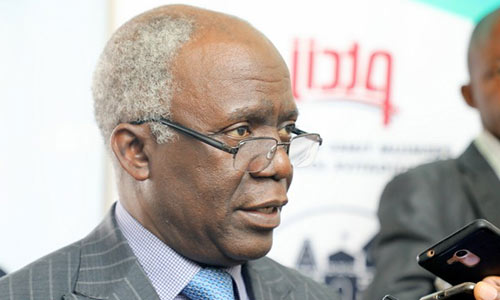
“The appointment of Nigerian judges is sufficiently transparent but…” Femi Falana, SAN

By Lillian Okenwa

Rights advocate and Senior Advocate of Nigeria, Mr. Femi Falana has said: “The appointment of Nigerian judges is sufficiently transparent.

Falana responding to an article by Law & Society titled: Adekoya’s call for transparency in Judges’ appointment echoes previous calls, held that: “The appointment of Nigerian judges is sufficiently transparent,. but the NBA has always colluded with the authorities to make a mockery of the process of appointing judges.”

He further stated that: “The names of aspirants are circulated to branches of NBA for comments. The comments are secretly written and sent to the authorities by bar leaders.

“The NBA has representatives in FJSC and NJC. Do the NBA representatives ever criticise the recommendations of both FJSC and NJC?

“The names of the Court of Appeal Justices recently recommended for the Supreme Court bench were published in the media. The Senate “confirmed” the 11 nominees without conducting any confirmation hearing.

“Did the NBA kick against the decision of NJC to restrict the nomination of Justices to Court of Appeal Justices? Did the NBA suggest to the Senate to subject the nominees to confirmation hearing in line with section 231(2) of the Constitution?

“What transparency are we talking about after the appointment of the 11 Justices has been “confirmed” by the Senate?”

Mrs. Funke Adekoya, SAN had through her her X handle questioned why appointment of judges is not as well publicised as at that of Senior Advocates.

Speaking via her X handle, Adekoya, SAN asked: “If elevation to SAN rank requires publication in the newspapers and comments on unfavourable candidates are requested, why is the appointment of judges who will be paid from public funds shielded from the public that they are expected to serve?”

On this issue, a former Chair of the National Human Rights Commission, Chidi Odinkalu, in his article A Captured Temple of Justice had written: “The judicial managers of the appointment process skew it deliberately to ensure pre-determined outcomes. This will not be the case if their children, spouses and mistresses (with whom they choose to fill many judicial vacancies) were that competitive. In 2020, for instance, the NJC advertised 15 vacancies for the FCT High Court but nominated 34 persons for appointment, with all of the non-advertised nominations going to the children or relatives of judicial insiders. It seemed clear that they were deliberately parsimonious with disclosure of all the vacancies, in order to be able to share those in an exclusive bazaar among judicial insiders…”

Previously, Justice Alaba Omolaye Ajileye of the High Court of Kogi State at his valedictory court session maintained that the process of appointing judicial officers in Nigeria is shrouded in secrecy and clandestineness.

Asserting that there are “evils associated with appointments”, Ajileye said: “Another evil is that recommendations of Honourable Judges and Honourable Justices don’t count. The act of calling for recommendations looks to me like a ritual, exercised merely to fulfil all righteousness. Those who would be appointed would still be appointed with or without recommendations.”

TIPS