Home Blog Page 670

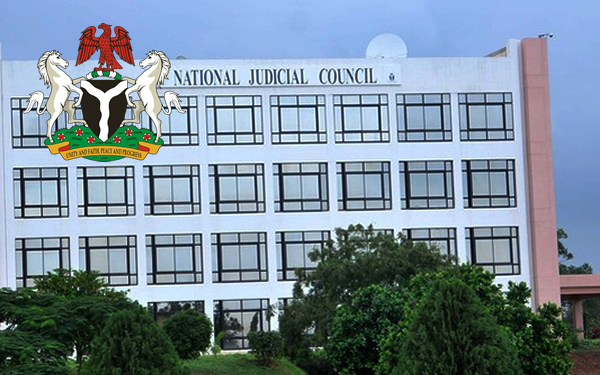
Now NJC budget has been increased to N341.63bn from N165bn, will judges welfare improve?

Amidst the cry from some quarters for an increase in the National Judicial Council’s budget, reprieve has come as the 2024 budget has been increased by the National Assembly lawmakers from N165bn to N341.63 billion. This is an increase of 107 per cent.

Previously, Daily Trust reported that the lawmakers increased the 2024 National Assembly budget from N197.93bn to ₦344.85bn, which had been approved and subsequently signed by President Bola Ahmed Tinubu.

It is hoped that this phenomenal increase will considerable improve the welfare of judges and judicial staff. This is considering the questions raised by a number of justices during their valedictory session about how the resources meant the judiciary is being utilised.

During his valedictory service in on 27 Ocober, 2023, Hon. Justice Musa Dattijo Muhammad, JSC (Rtd,) raised some posers.

“In 2015 when President Muhammadu Buhari became the president, the budgetary allocation to the judiciary was ₦70 billion. In the 2018 Appropriation Bill submitted to the National Assembly, the President allocated ₦100 billion to the judiciary.

“The legislature increased it to ₦110 billion; ₦10 billion above the ₦100 billion appropriated for the 2017 fiscal year. At the end of President Buhari’s tenure in May 2023, judiciary’s allocation had increased to ₦130 billion. That is an increase from ₦70 to ₦130 billion in 8 years. The present government has allocated an additional sum of 35 billion naira to the judiciary for the current financial year making the amount of money accessible by the judiciary to 165 billion naira. More than 85 percent of the amount appropriated by the 9th Assembly has so far been released to the judiciary. It is envisaged that the additional 35 billion naira will equally be released by the present government.

“Notwithstanding the phenomenal increases in the sums appropriated and released to the judiciary, Justices and officers’ welfare and the quality of service the judiciary render have continued to decline.”

In May 2022 when he was also exiting the court, Hon. Justice Ejembi Eko said: “The Heads of Court in the Federation have enormous budgetary resources from which they can improve the welfare of serving Judges” equally noted that: Nothing stops the office of the Auditor-General of the Federation, the Independent Corrupt Practices Commission (ICPC) and other investigatory agencies from ‘opening the books of the judiciary’ to expose the corruption in the management of their budgetary resources.”

Daily Trust reports that the NJC’s budget is higher than what eight teaching hospitals will be spending in 2024.

In the budget document seen by our reporter, the eight teaching hospitals will be spending just N190.8bn this year, about N151bn less than N341.63bn budgeted for the NJC.

Daily Trust reports that Nnamdi Azikwe University Teaching Hospital (NAUTH),  Nnewi budgeted N37.6bn to spend  this year;  University College Hospital, Ibadan: N27.2bn, University of Nigeria Teaching Hospital (UNTH) Enugu: N25.6bn and University of Uyo Teaching Hospital (UUTH), Uyo: N20.6bn.

Others are Aminu Kano University Teaching Hospitals (AKUTH), Kano: N20.5bn, Obafemi Awolowo University  Teaching Hospital (OAUTH), Ife: N19.9bn, University of Port Harcourt Teaching Hospital( UPTH) Port Harcourt: N19.8bn and University of Benin Teaching Hospital (UBTH), Benin: N19.6bn.

The NJC budget is also bigger than budgets of seven Nigerian Universities (N196.4bn).

University of Nigeria Nsukka (UNN): N36.6bn, University of Calabar (UNICAL): N29.5bn, Ahmadu Bello University (ABU): N29.2bn, Nnamdi Azikiwe University (UNIZIK): N26.3bn and the Nigerian Defence Academy (NDA): N26.9bn.

Others are University of Benin (UNIBEN): N24.2bn and University of Ibadan (UI): N23.8bn. Analysts say inadequate funding of health and education institutions in the country contributes to the decline of Nigeria in the poverty index list.

The most part of this report was was culled from Daily Trust and written by Zakariyya Adaramola.

New CJN, S/Court CR battle, governorship appeals to highlight judiciary in 2024

By Lanre Adewole

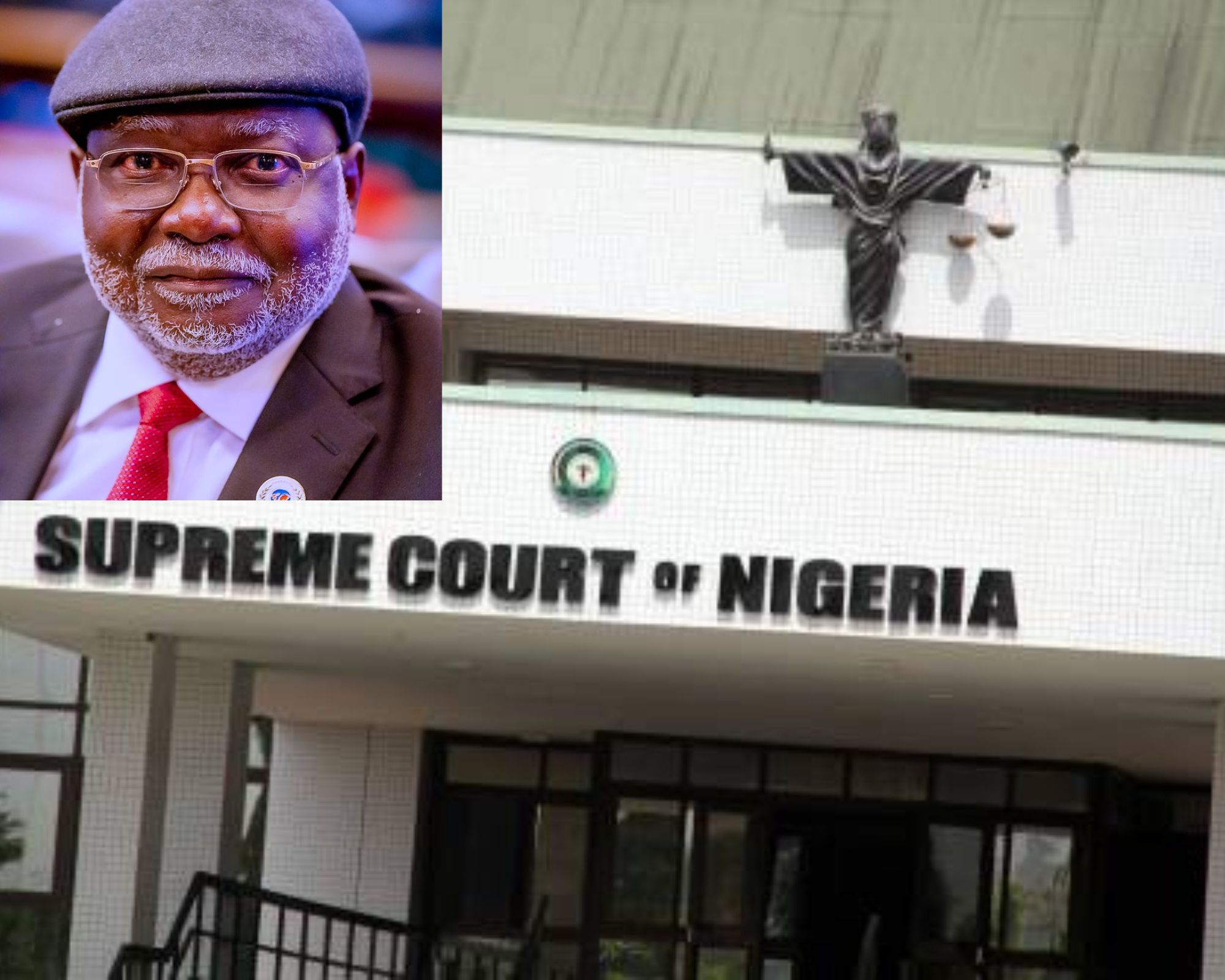
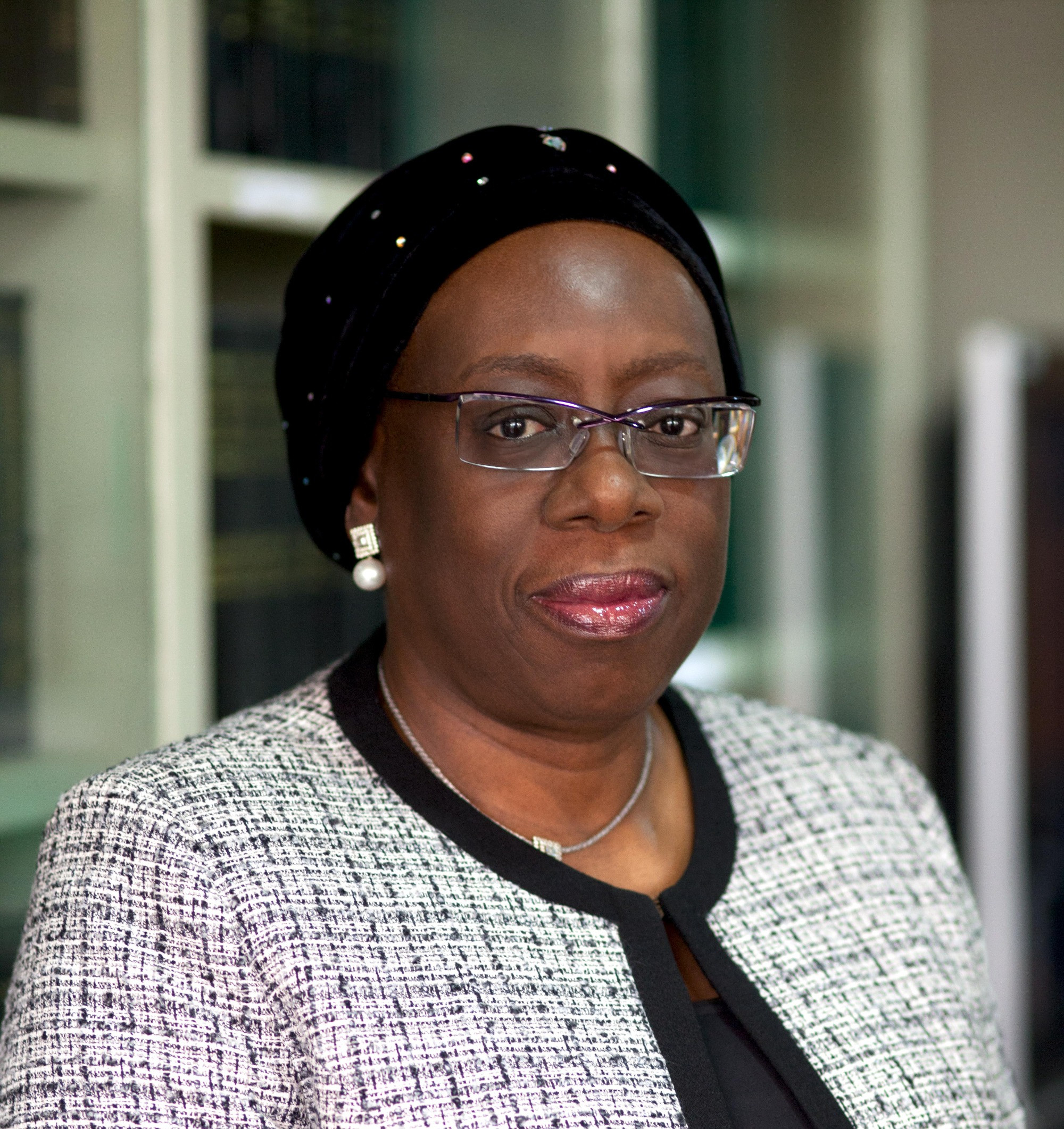
All things being equal, Nigeria is expected to have a new Chief Justice in August this year, when the incumbent, Kayode Ariwoola, is expected to retire at the current constitutional threshold of 70 years. Between now and then, the apostles of retirement age extension for justices of the Supreme Court are not likely to make any serious dent on the current arrangement, meaning that it is close to certainty that Ariwoola will leave on August 22 this year and the current most senior Justice of the apex court, after him, Kudirat Kekere-Ekun, from Lagos State, is expected to take over the running of the arm of government.

Kudirat Kekere-Ekun

She is expected to run the show till May 7, 2028, meaning that she would be in charge of resolving disputations arising from the 2027 general election and other outlier governorship elections which normally terminate at the apex court. Considering the outsize role the judiciary has been playing in election disputes and the many controversies that have trailed a lot of judicial pronouncements, all eyes are certainly going to be on the change of baton and the history-making second female CJN in the history of Nigeria’s judiciary.

Kano, Nasarawa, Plateau, Zamfara gov appeals

Considering that election cases are sui generis and can be statue-barred, a rash of decisions from the Supreme Court on governorship disputations are expected between January and February, when all cases related to the 2023 election are to be concluded according to extant laws governing the process in Nigeria.

Nerves are already frayed over the controversial pronouncements by lower courts, especially the Court of Appeal, with electorate’s mandates seen as being taken away in the court rooms. All eyes are now on the apex court, to restore the alleged tampering with the integrity of the judicial process in election adjudication. States on the edge include Kano, Plateau, Nasarawa, Zamfara, Ogun, Kaduna, among others. While Kaduna governor, Uba Sani, soundly won a unanimous victory at the Court of Appeal, following a majority decision at the tribunal, the sudden inclusion of a Senior Advocate of Nigeria (SAN) from the South West in the team of his opponent, solely for the Supreme Court resolution, is raising temperature in political and judicial circles. The Silk is widely seen as a close confidant of the incumbent CJN and his last-minute inclusion in the final appeal process is being interpreted as leveraging on his closeness to power to manipulate the process, though there isn’t any verifiable development to suggest the process is being compromised.

Again, each governorship appeal is handled by five justices of the apex court, to be chosen by the CJN. There isn’t also any verifiable information to suggest the said SAN is close to other justices of the apex court and his alleged influence in the system is said to be rupturing the hitherto chummy relational between the CJN and his colleagues.

New Chief Registrar for apex court?

Since the last quarter of last year, demands had spiked for the exit of the Chief Registrar of the Supreme Court, Hajo Sarki Bello, who is from Paiko, Paikoro Local Government Area of Niger State, though the battle to rid the lawyer of the topmost administrative position in the apex court has been largely fought within the system, so far. Bello assumed the position on August 9, 2021 and since it isn’t tenured like others within the system, the holder of the office is always at the pleasure of the CJN. Fortunately for Hajo, Ariwoola is reportedly in support of her staying on, though many justices of the apex court aren’t for her continued stay. A top source disclosed to The Jury that the stalemate over her fate is due to the reluctance of the authorities to make her a chief magistrate, because of performance issue. Following the disgraceful departure of the immediate CJN, Tanko Muhammad, whose tenure ran into headwind with his colleagues, with Hajo serving as his clearing house (CR), many stakeholders had expected her to leave with the terminated CJN, but she miraculously survived the Tanko scandal, with Ariwoola preserving her in the same office. Now, the daggers are again out for her, but she has survived so far and likely to, till the end of Ariwoola’s tenure, serving two Chief Justices. Kekere-Ekun is largely expected to debut in August with a new Chief Registrar. For now, the silent battle to “redeploy” Hajo is on.

Reforms

At the new legal year, Attorney-General of the Federation and Minister of Justice, Lateef Fagbemi SAN, said the Bola Tinubu administration is ready to support the reform agenda of the Ariwoola leadership and waiting on the judiciary to initiate the move, in what could be read as a sign of good faith on the part of the executive arm. Following the October 2023 outburst of now-retired Justice Dattijo Muhammad, then-the incumbent’s deputy, many stakeholders have been calling for a holistic reform of the system, though it doesn’t appear that the outgoing Chief Justice would be announcing any soon. Despite coming into office on the heels of Tanko’s disastrous outing as the CJN, Ariwoola has shocked many insiders by his lack of definable agenda for the system and it is doubtful if he would be announcing any again, just seven months to the end of his tenure.

But a lack of clear reform agenda would not diminish his leadership’s focus. To the credit of the Ariwoola era, the Supreme Court will, for the first time ever, be fulfilling the constitutional mandate on the full complement of the Bench, with 11 justices set to join the current 10, to meet the 21-Justice threshold. It must, however, be noted that the imminent exit of Ariwoola will bring the number down to 20, and Helen Ogunwumiju’s retirement in 2026 will further dip the figure. Hopefully, Kekere-Ekun, who currently chairs the appointment committee of the NJC as the vice chairman and presumed to know the process well, will keep faith with the Ariwoola threshold agenda.

Ariwoola’s exit may, however, prove a bit challenging for Kekere-Ekun’s leadership because the slot would have to remain in the South-West and expected to go to Osun State and most likely, Justice Olubunmi Oyewole of the Court of Appeal, but South-West retaining it would sustain the current four slots for the zone in the court. Apart from the CJN, Kekere-Ekun and Ogunwumiju currently represent the South West, with Justice Adewale Abiru also on his way.

There is likely to be contentions if South-West tries to retain the fourth slot after Ariwoola’s exit, though it could be argued that the CJN seat is national and not to be listed in the geopolitical consideration in slot allotment.

The financial storm that consumed Tanko also seemed to have petered out in the apex court, suggesting that Ariwoola has met the demands of his colleagues, especially on better work conditions, medicals, etc. It would appear that the main issue fraying the apex court is the Hajo saga.

Reducing CJN’s power

Dattijo’s claim that the powers conferred on the office of the Chief Justice are enormous, subject to abuse and should be reviewed, has captured the imagination of the pro-reform in the system, especially senior lawyers like a former president of the Nigerian Bar Association, Olisa Agbakoba SAN, who described the Supreme Court under Ariwoola as the worst in his 40 years of practising law, right in the presence of President Tinubu and Senate President, Godswill Akpabio. Before the Dattijo bubble, the ninth National Assembly under Ahmad Lawan, during a constitution amendment exercise, had attempted cutting the CJN off the chairmanship of some agencies of the judiciary like the National Judicial Council, the umbrella body for the arm of government. Senior lawyers who served as consultants to the National Assembly joint committee on constitution amendment had recommended that CJN should stop chairing the council, to allow for some independence and fresh breath.

Those currently agitating for the implementation have now moved an inch further, insisting that no judicial officer, regardless of office, or whether serving or retired, should be allowed to boss the council again. Their contention is that the council would be more effective having an executive secretary who will have the power to query spending by heads of court, who currently report to no one, once their allocations are released.

The argument is being extended to include the exclusion of Chief Judges as the overseers of spending in their courts, paving the way for the Chief Registrars, the original chief financial officers, to perform their statutory functions and be properly liable when funds are misapplied.

It is being further argued that many heads of court only got to the position by virtue of career progression with zero experience in human resource and fund management and the current arrangement allows them, to administer what they have not been prepared for, leading to a lot of discontent in the system.

Currently at the FCT High Court, there are appointed Chief Magistrates without official vehicles, contrary to what the guidelines prescribe. The incumbent Chief Judge of the court, Hussein Baba-Yusuf, alluded to the fund problem during the new legal year, despite continued flow of allocation from the NJC.

In a scandalous twist of events, Chief Magistrates in the FCT now rotate sitting, with some allocated the morning shift and others the afternoon shift, due to shortage of court rooms.

Another SAN award before August?

A story gradually getting a life of its own is the alleged move by the outgoing administration to rush through another round of Silk Award. Though still being discussed in low tones, the move, if given vent, is expected to ravage the judiciary like a plague, considering that outgoing incumbents who won’t be around for another legal year to swear in new Silk, usually leave the appointment to their successors. The last CJN who attempted it due to his feud with his eventual successor was stopped by the Attorney-General of that era. Stakeholders are waiting with bated breath to see if the Ariwoola leadership would conclude the SAN award for 2024, even when the incumbent won’t be around to swear the beneficiaries in. The move is likely to generate a crisis that may last the Judiciary till the end of the New Year.

2024: Reset Nigeria and avert the storm

By Punch Editorial Board

AS year 2024 gets underway, not even the staunchest optimists and the predatory political class can pretend any longer that all is well with the world’s largest agglomeration of Black people. In all sectors of national life–governance, the economy, security, infrastructure, social services, and national cohesion–confusion, decay and misery are prevalent amid unmistakable symptoms of state fragility. Nigeria barely survived 2023 and its severe stresses, this year offers a new opportunity for the leadership and people to arrest the spiral and reset the country to a sustainable path.

It is the collective responsibility of Nigeria’s 226.43 million persons (UN), but on President Bola Tinubu falls the major historic role of providing the visionary leadership to steer the country back to the trajectory of growth and ensure its survival as a going concern.

All aspects of the nation are headed south, some already in the mire and needing urgent salvage. Most of the existential challenges facing the country are foundational or longstanding, the result of poor leadership, poor choices, and corruption. There are both quick fixes, and medium to long term measures needed to save the union from implosion. Tinubu, everyone in leadership positions at all levels and every stakeholder should start the rejuvenation today.

The PUNCH strongly recommends that while not neglecting others, Tinubu should attach utmost priority and give his full attention to four areas namely; the economy, security, corruption, and restructuring, the last being the most crucial for Nigeria’s survival.

Never in Nigeria’s chequered history have so many people been afflicted by poverty, joblessness, hunger, insecurity, and hopelessness. There is also mass anger, which the politicians that created the mess are ignoring at their own peril. On the streets, in the villages and markets, and among the swelling ranks of the Nigerian Diaspora, resentment of the Fourth Republic politicians is mounting.

The Christmas massacre of 200 villagers across four local government areas by Fulani marauders in Plateau State is symptomatic of the bloodletting in the land. More killings have followed by criminals capitalising on state weakness and compromise. In the eight years to June 2023, figures from diverse sources indicate that 63,111 persons were killed by non-state actors.

The killers range from Islamist terrorists like Boko Haram and its spin-offs, Fulani herders/militants, bandits, ethnic and sectarian fanatics, armed robbers, separatist gunmen/terrorists, criminal gangs, cultists, and rogue security personnel. All these groups also engage in kidnapping for ransom. Everywhere is unsafe, including the Federal Capital Territory, military and police garrisons, schools, the farms, communities, and the highways.

The Nigeria Security Tracker reported that 1,228 persons were killed, and 844 others kidnapped in the first four months of 2023. For context, Britain suffered just 457 personnel killed in 20 years of deployment in Afghanistan. Official figures reveal that during the 30-year-long insurrection in Northern Ireland (1968-1998), 3,500 deaths were recorded, with 52 per cent being civilians, 32 per cent British security personnel and 16 per cent by the opposing paramilitary groups.

The economy is spinning. The naira exchanged officially at a record low last week at N1,043 to $1, and over N1,300 at the parallel market, with Bloomberg forecasting even sharper declines this year.

Inflation spiked to 28.20 per cent in November and food inflation to 32.84 per cent on the back of the collapsing naira, and prohibitive energy prices; petrol/diesel, electricity, and gas. The World Bank reckons that over 7.1 million more persons slid into poverty last year, while the UN Food and Agricultural Organisation said 25 million faced acute hunger.

Factories are shutting down faster, unemployment at 33.3 per cent and 53.4 per cent in the youth segment is rising, while foreign direct investment went negative to $-187 million in 2022, according to UNCTAD.

The latest approval by the NASS to securitise over N7.3 trillion of ‘Ways and Means’ borrowing underscore the precarious state of public finances where debt already stood at N87.91 trillion by September and servicing takes over 90 per cent of all revenue, while leakages, including the daily theft of 400,000 barrels of oil, widen.

Meanwhile, entrenched corruption subverts institutions, drains public resources, and weakens the ability of the state to combat existential challenges. Reports by diverse agencies reveal a deepening of corruption despite avowals by the government to stop it. Variously ranked “fantastically corrupt,” and “a vast crime scene,” corruption degrades democracy, and the economy, and undermines the very existence of the precarious union of over 250 ethnic nationalities.

Tinubu, the state governors, and the entire political class should stop living in denial; Nigeria is failing, ranked the world’s 15th most “fragile” country by the Fund for Peace. A study published in the London School of Economics Blogs series concluded that it failed to meet virtually all the basic conditions for development and was stuck “in the vortex of perpetual poverty.”

There is seething discontent, and the famously docile population could explode in rebellion.

Leaders should adopt radical policies to tame insecurity by immediately devolving policing, stop politicising criminality and inflict punishment against criminals.

Continuing with the single police structure and deploying over two-thirds of police officers to VIPs are dangerous. Tinubu should fulfil his promise to deploy the police to protect all Nigerians.

He needs new thinking to manage the economy. The PUNCH remains steadfast in its advocacy for a private sector-led economy triggered by reaching for the “low-hanging fruits,” of liberalising all sectors, corruption-free privatisation and concession of all state-owned commercial assets, and restriction of the government to regulation and policy.

Tinubu should immediately send a bill to the NASS repealing the Railway Act 1955, privatise the Ajaokuta Steel Company, concession the ports and airports and drastically improve the ease of doing business. Africa’s biggest economy must quickly erase the lead as reported by UNCTAD of Egypt ($11 billion), South Africa ($9 billion), and Ethiopia ($3.7 billion) in FDI inflows in 2022.

Tinubu should devise an emergency plan on power and radically improve the macroeconomic environment. He has to genuinely crush corruption.

But the game-changer will be a sensible reset into true federalism. Nigeria cannot realise its full potential – harnessing its human and natural resources – until it restructures its governance. All efforts, no matter how robust, can deliver only limited positives; the centrifugal forces inherent in a natural federation will ultimately act as a break.

From today, Tinubu and the entire political class should truly hit the ground running; delay is dangerous. Today’s security challenges urgently require devolution of policing as is practised by all the other 25 federations. This cannot wait; while other moves are initiated to replace the centralising 1999 Constitution, the “doctrine of necessity” should be immediately invoked to facilitate state policing.

Until like the defunct regions, the states become self-sustaining, productive units each with autonomous economic plans with sector-specific, job-creating targets and robust taxation and investment policies, poverty, unemployment, hunger, and insecurity will linger.

They must be unshackled to participate fully in mining, power, railways, and ports; the template of only one government (the centre) with implementable comprehensive economic plans negates the federalism principle. It is the aggregate of the production of the central and sub-national governments that drive the economies of the United States, India, Brazil, Malaysia, Australia, and other federal countries.

We repeat; Nigeria is fragile and insecure, privation and despair are palpable and beneath the seeming calm, is seething, and potentially explosive mass discontent. This year, Tinubu and other leaders should act responsibly and arrest the drift into state failure.

The Punch

Kidnappers sack ten Benue communities as FG relishes fresh borrowing abroad rather than tackle insecurity

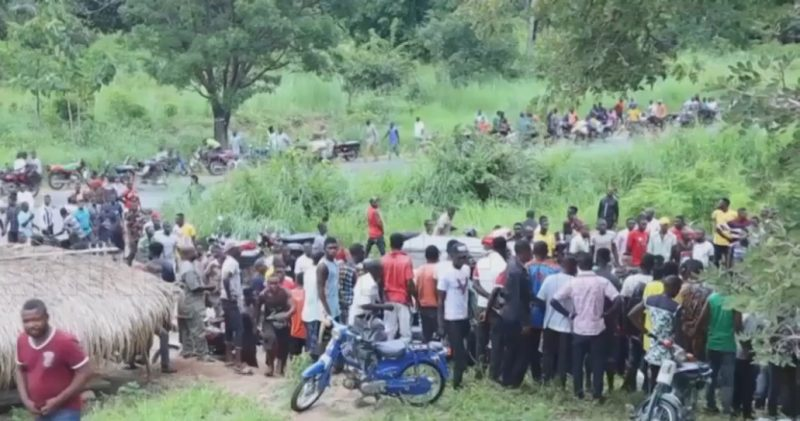
Less than two weeks after suspected herdsmen attacked and mowed down sleeping villagers in Plateau communities with abandon, there is distress in Owukpa, a district located in the Ogbadibo Local Government Area of Benue State, as it has transformed into a sanctuary for kidnappers.

Nigerians have shouted and screamed themselves hoarse while calling on the government of the day to tackle the relentless onslaught of insecurity on the country.

Reports obtained by Trojan News on Thursday morning said that no fewer than ten communities are currently being held hostage, as a group of kidnappers unleash terror upon the innocent residents.

Once peaceful areas such as Ankpa, Odobe, Umufu, Ubafu, Atamaka, and Ai-Fam, along with their surrounding regions, are now engulfed in fear due to the relentless criminal activities.

Reports said that even commuters were not exempted from the horrifying situation.

Within the past five months, no fewer than 100 individuals have fallen victim to kidnappings, with certain routes proving to be particularly dangerous. The Aho-Ankpa Road and Atakama-Ugbugbu Road are said to have gained infamy as hotspots for criminal activities.

Furthermore, the Orokam-Owukpa road and Okpoga-Aifam road have witnessed numerous incidents.

The developments have since raised concerns about the safety of travellers along these routes.

Not long ago, a family of eight was kidnapped on Atamaka road and their abductors have been threatening to kill them over the family’s failure to provide the ransom they demanded on time.

The survivors, who were held captive for an extended period, shared their harrowing ordeal.

Daily Post quoted Daniel, one of the survivors, to have revealed that the abduction took place at approximately 2 pm, and they were taken to the kidnappers’ hideout by 10 pm.

According to Daniel, the criminals were fluent in both Hausa and Fulani languages, which they used to communicate amongst themselves.

As a result of these incidents, the residents of Owukpa have become fearful and now travel in convoys for their safety.

During the festive season, a community member named John was kidnapped on his wedding night while returning from Aho Ogbo market. His family had to pay a ransom for his release.

Similarly, one Engr Raymond and his wife, Mrs Cordelia Agada, were also abducted on the Owukpa-Aifam-Okpoga road recently.

In an attempt to combat the escalating threat, the women of Owukpa invoked the deity Ekwuanya in 2023, hoping to deter any sons of Owukpa involved in kidnapping activities. However, it seems that this spiritual intervention has had minimal or no effect on curbing the prevailing menace.

Despite the presence of local community guards, kidnappers continue to carry out their operations without fear of consequences.

Speaking to journalists earlier, the traditional ruler of Ogbadibo, HRH Emmanuel Odeh, expressed deep concern about the alarming security situation.

Owukpa’s vulnerability was recognized by him, attributing it to its close proximity to Enugu and Ebonyi, porous borders, and expansive forest areas.

The primary factors behind the chaos were identified by him. Odeh expressed his disapproval of the government’s insufficient reaction, highlighting the scarcity of law enforcement personnel in Owukpa and the prohibition on civilian gun ownership.

This left the residents defenceless against heavily armed kidnappers.

He said, “The insecurity issue in Owukpa is well beyond our control, primarily due to our proximity to two neighbouring states- Enugu and Ebonyi.

“This leaves us vulnerable to external attacks, compounded by the extensive forest areas that provide cover for kidnappers.

“The crux of the matter lies in the insufficient efforts from the government.

“For instance, Owukpa lacks even six policemen, and critical areas like Eke Akpa, Aho Ogbo, Ipole Owukpa or Ai Fam have no police presence whatsoever.

“I have been requesting this for over 10 years, but the government claims they lack a sufficient number of police officers.

“This is a serious concern for a community with a population of over 139,000.

“Compounding the problem is the fact that those attempting to confront the criminals are armed only with Dane guns, a stark mismatch against the sophisticated weapons wielded by the perpetrators.”

The Commander of Constabulary Police in Ehaje II, Amos Agada, expressed deep concern about the situation, describing it as disturbing.

“As we speak, nowhere is safe in Owukpa again. At the moment, they are seriously operating in Ipiga Ai-Odu.

“In fact, just yesterday, they hijacked a fully loaded bus and kidnapped all passengers. They have not even contacted the families yet.”

He also lamented the lack of essential weapons for the vigilante group in the village to confront the kidnappers.

However, he stressed the need for more support from the government, particularly in the provision of weapons to enhance their effectiveness in tackling security challenges.

“We are doing our best with the limited resources available, but additional support, especially in the form of weapons, is crucial to bolster our efforts against these criminals,” he told journalists.

Speaking on the devastating insecurity and government’s nonchalance, Premium Times in its editorial of December 4, 2023 said: “Tinubu should listen to the Service Chiefs and free his government from Buhari’s double standards in fighting terrorism and the unabashed disregard for the rule of law. Nigeria would have by now smashed the terrorism financing ring fuelling its insurgencies if the 400 terror financiers that the United Arab Emirates (UAE), helped it to identify in April 2021 were prosecuted in tandem with anti-terrorism law…

“The Nigeria Extractive Industries Transparency Initiative (NIETI) says the country lost $46.16 billion to oil theft between 2009 and 2020, while the House has uncovered $9 billion in unremitted fines by oil companies for gas flaring. This is where it might unfortunately end. The Supreme Court’s $62 billion 2017 judgment debt due to Nigeria from joint-venture profit sharing and another $17 billion confirmed as the cost of stolen crude oil by some oil majors, which are yet unrecovered, underline our pessimism.

“Regrettably, Tinubu relishes fresh borrowing abroad, instead of using all the powers at his disposal to remedy all this. No matter all the diplomatic fizz his trips abroad generate on foreign direct investments, they will amount to nothing if the country is not safe and secure. Investors are like former President Bill Clinton, who told a joint session of the National Assembly during a state visit in 2000 about issues here: ‘I follow more closely than you might imagine.'”

The Conclave and Premium Times

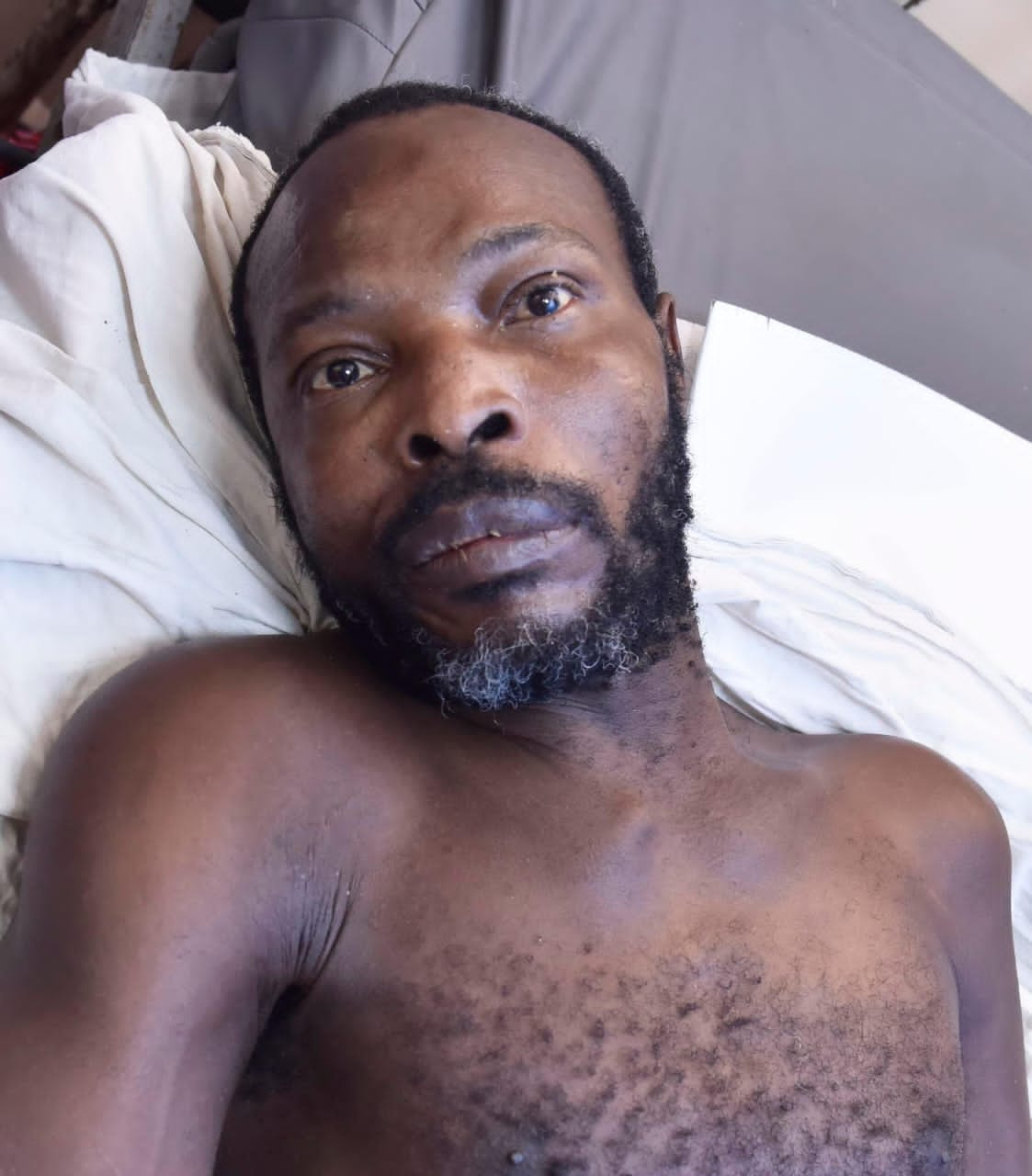
𝗔bandoned patient at 𝗨niversity of Benin 𝗧eaching Hospital

A Notice of abandoned patient by the management of Benin Teaching Hospital:

A 58 years old patient, male, was brought to the hospital by the wife and was immediately abandoned.

Patients name is Osuedi Sunday Christian and hails from Orogun, Ighoyobi Compound in Ughelli North Local Government Area of Delta State.

Patient is Urhobo by tribe and has two underaged children from his wife who is from Calabar, Cross river State.

Patients parents are deceased while patient has lost contact of his siblings since he claimed to have left his home town to Lagos State over 40 years ago.

We therefore use this medium to call on members of the public to help reach/contact his family members to come for him.

For more information, please reach us through our social media platform; Facebook, Instagram, Twitter, @ ubthng or UBTH Telephone Line +2348147772992.

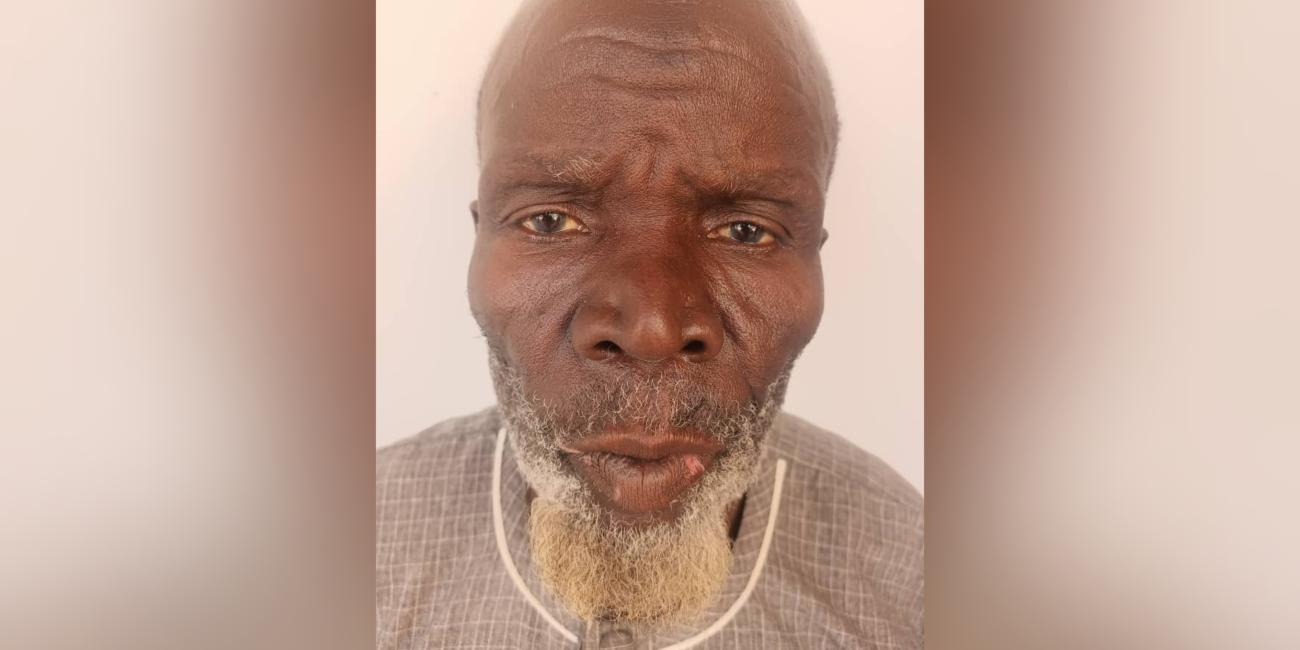
Dirty 67-year-old man tells police he gets ‘sexual satisfaction’ from little girls after defiling 3 in Adamawa

Mahmudu Adamu, a 67-year-old man has confessed to defiling at least three underaged girls by sticking his fingers in their private parts in Adamawa state, Northeast Nigeria.

Adamu who is currently in police custody, said he derives maximum sexual pleasure from inserting his fingers into the private parts of minors, ages between four and eleven.

Adamu was reported to have defiled the minors at his residence in Sabon Layi in the Ganye Local Government Area of the state, according to the police.

The spokesperson for the state police command, SP Suleiman Nguorje, while confirming his arrest to SaharaReporters on Thursday, said Adamu had confessed to the crime.

 “He has confessed to getting sexual satisfaction by inserting his fingers into the private parts of little girls. He said that he feels satisfied sexually whenever he fingers his victims.

“The accused was apprehended following a report from the parents of the third victim.

“The Commissioner of Police, Afolabi Babatola, has ordered for discrete investigation and prosecution of the suspect upon completion of the investigation,” Nguroje said.

Sahara Reporters

The judiciary in Nigeria at the moment suffers from an awful credibility and trust deficit — Odinkalu

In this interview with Vanguard’s Law & Human Rights, former Chairman of the National Human Rights Commission, NHRC, and university don, Prof Chidi Odinkalu spoke extensively on a wide range of legal issues including increasing cases of conflicting judgments emanating from all levels of court in the country, quest for the ‘unbundling’ of the S’Court and the need to unbundle the Office of the Chief Justice of Nigeria, salary of judges, election litigations and the quality and authority of the judiciary under Justice Olukayode Ariwoola with prescriptions on what Justice Kudirat Kekere-Ekun should do to reform the nation’s Supreme Court and the entire judiciary from August 2024.

Justice Kudirat Kekere-Ekun is the Deputy CJN. By virtue of the tradition of seniority on the bench, she is the next CJN. By way of setting agenda for her, what would you expect from her administration?

Strictly speaking, there is nothing like a deputy CJN. In practice, yes, the next senior-most Justice after the CJN deputises for him or her in the constitutional role on the NJC,  in particular and in running the Supreme Court if the CJN is indisposed or absent. The senior-most Justice at the retirement of a CJN has succeeded to the office since Sodeinde Sowemimo succeeded Fatayi Williams in 1983. So, this convention suggests that Justice Kekere-Ekun will become CJN at some point in this New Year.

Everyone, including the incumbent CJN, knows that the judiciary in Nigeria at the moment suffers from an awful credibility and trust deficit. He said as much when he inaugurated the new SANs at the end of November last year. Of all the branches of the government, none suffers as much from this kind of deficit as the judiciary. It is the only un-elected branch. The people can theoretically turn over politicians in the executive or legislative branches with whom they are dissatisfied, if the electoral process works. In Nigeria, many judges are unquestionably in cahoots with politicians to make sure that is frustrated. So, we are now in the crazy situation in which judges have the final votes in elections; political cases now dominate the judicial dockets; and the regular cases hardly get heard because the judges prefer to prioritise political cases in which the politicians will be chasing them around with blandishments and inducements.

The other day, the Chief Judge of the FCT left his office to go and genuflect for the Minister of the FCT in the office of the Minister. It was degrading beyond measure. But that is what the judiciary has allowed itself to be reduced to.

The new CJN will have to address the challenge of reforming judicial appointments for greater transparency and accountability so that credible people can have a pathway to judicial service. Above all, she will have to confront the issue of un-bundling that office of the CJN because it has become the biggest obstacle to restoring credibility to the judiciary. Justice Muhammad Dattijo made that point eloquently on his retirement. So, the new Chief Justice has a massive load of reconstruction to undertake. I don’t envy her. The good thing is she will have about four years in the office which is more than any of her recent predecessors since Justice Uwais. That should be long enough to leave a constructive legacy.

One of the challenges plaguing the judiciary today is the increasing number of conflicting judgments emanating from courts on similar legal issues. What is your advice?

Why would I have advice for judges on conflicting judgments? Like seriously? When you read most of these so-called conflicting judgments, you see that what is called conflicting, is willful, on the face of the record most of the time. It is not as if the judges don’t know what they are doing. The reasons for the conflicts in a good many cases are self-evidently extra-judicial. So, I really am not sure it is my place to advice people who are sworn to be judges as to how to ensure that their decisions are rational and sensible. You even see the highest courts in the land telling themselves that particular decisions are to be confined and not to be treated as precedents. Yet we are in a system governed by the doctrine of judicial precedent. When judges, for extra-judicial reasons, create manifestly avoidable conflicts in decisions or precedents, they don’t need advice. They need to be held accountable. 

Do you subscribe to the idea of unbundling the S’Court by way of setting up the apex court for each geo-political zone in the country?

I am not sure what the idea of “unbundling the Supreme Court” means. It sounds different from the idea of unbundling the office of the Chief Justice, which I referred to earlier. Let me explain the latter idea. The CJN is a complex of constitutional and statutory roles in one person at the same time. S/he is the head of the Supreme Court; the head of the judiciary; the Chairperson of the National Judicial Council in executive capacity; and chairperson of the Federal Judicial Service Commission (FJSC, which oversees appointments to all federal courts, including the Supreme Court, Court of Appeal, Federal High Court, the courts of the FCT, among others). The CJN also chairs the board of the National Judicial Institute (NJI), and chairs the Legal Practitioners Privileges Committee (LPPC), in addition to being a member of the National Council of State for life.

Many of these roles are not mutually aligned. As the chair of the FJSC, for instance, the CJN gets two bites at the cherry of judicial appointments. So, if you have an appointment to the Supreme Court or Court of Appeal, the CJN will preside over the FJSC to first consider nominations for recommendation to the NJC; then s/he will preside again over the NJC to decide on those recommendations. That just seems incomprehensible. The easiest thing to do is to confine the office of CJN to the FJSC and then have a retired senior figure of some weight or authority chair the NJC. You need some dynamic tension in those two roles. Merging them in one person is conducive to judicial capture. Essentially, the idea of un-bundling the office of the CJN is to split up the roles of judicial appointments and judicial discipline to ensure one person does not head both streams. If I may ask you: can you trust the Chief Justice who presided over the appointment of his own son to the judiciary to be able to discipline the same son if there is a serious complaint against him as a judge? 

Turning to the question about unbundling the Supreme Court, I confess that I have read about this idea of setting up a Supreme Court for each geo-political zone of Nigeria in a few places. Assuming you want me to be honest, I will simply say that the idea is silly. I could give you several reasons. First, if you have different courts of co-ordinate jurisdiction as is inherent in this idea, then it can no longer be referred to as “Supreme”. Second, the idea of creating Supreme Courts at the level of the six geo-political zones simply defaults to a classic Nigerian preoccupation with nativisation or bantustanization of everything. It is a confession of elite inability or unwillingness to build a country that can work for all who live in it.

Third, that idea subverts the promise of equality before the law. So, it will be our way of saying that the quality or colour of justice you can get in Nigeria is dependent on your location, ethnicity or post-code around the country and also that the only way to get justice is if your kinsfolk are the people sitting on the case. I bet you, after that, the next thing will be to devolve those courts to the level of the states and then to ethnic nativities. If I may add, you will then be writing the idea of conflicting judgments into the design of the court at that level. I have never heard a more risible idea to be honest with you. It is also a lazy approach to the evident fact that the present situation of making the Supreme Court an all-comers affair where appeals get filed in order to kill off any idea of justice is unworkable. 

So, clearly, the Supreme Court needs to be reformed. A docket of over 10,000 cases most of which will not be heard even by the next three generations of Supreme Court Justices, is not on. Even if you were to double the current rate of disposal of cases, the current docket of the Supreme Court will still take over 25years to clear up and that is without filing any more cases. That is unworkable. But surely it is rather easy to see a pathway to reforming the Supreme Court without going the way of this idea of nativising or Bantustanising it into extinction.

The tenure of the incumbent CJN, Justice Olukayode Ariwoola, is about expiring. How do you assess his administration?

2023 was a very difficult year for Nigerians on many fronts. The judiciary is one reason why it was so. Yes, it is indeed true that the incumbent Chief Justice of Nigeria, Olukayode Ariwoola, will attain the mandatory retirement age of 70 on August 22, 2024. There will be time then to examine his legacy properly. I don’t want to get ahead of the calendar on that. Some things are fairly clear at this point though: this CJN has massively corroded the quality and authority of the judiciary. His tenure has, in my view, been a boon to the project of judicial capture and it seems quite clear that he has enabled it in order to benefit himself and his close coterie.

For evidence, you only need to look at the appointments and preferment that have happened under him, including the appointment of his son as a judge of the Federal High Court; the preferment of the son-in-law of the President of the Court of Appeal and the CJN’s nephew to the Court of Appeal bench and some of the judicial insider-deals that took place under his watch, which will be much easier to get into when he is out of office. There will be time to connect the dots on his tenure and I am not sure the picture that emerges will be too pretty nor is it immediately evident to me that he can do anything in the eight months that he has got left to change that. I presume that he will spend much of the remainder of his term prioritising the construction of his retirement facility in Ikoyi. I wish him well. 

Salaries of judges at all levels are nothing to write home about. National Industrial Court gave an order recently for upward review but nothing has been done. How do you react to this? 

You are kidding me, right? Look, the Chief Justice just made his son a judge; the President of the Court of Appeal made her daughter a judge in 2021 in Plateau State and her son-in-law a Justice of the Court of Appeal in 2023; the Chief Judge of Ogun State got her nephew appointed a judge in 2023; the wife of the President of the National Industrial Court was made a judge not too long ago; the daughter of the immediate past President of the Court of Appeal was made a judge at the same time; as were two daughters of a recently retired Justice of the Supreme Court; as was the wife of a Justice of the Supreme Court who died recently.

Look, I could go on. So, let me ask you: you think all these people are putting their children and consorts in these positions because they hate their children and wives and want those children and consorts or spouses to suffer in these positions that give them hardship pay? Please, people should spare us this nonsense! If judicial positions are such hardship posts, why are those occupying those positions so keen to fill them up with their children, wives and mistresses? There are only two logical explanations: it is either there are pay-offs we don’t know or the position is corrupt. So, first, let us be clear what it is before we get further on this issue, please. There is clearly something that does not add up. 

Going by what we have seen lately, should election litigations end before governors and president are sworn-in, in future?

The simple answer to that is yes. The Uwais Electoral Reform Panel made precisely that recommendation in its final report in 2008. The politicians committed to election rigging did not see self-interest in enacting it. PDP was in power then. They believed they will be in power forever. If they had enacted it then, they would have secured themselves a better chance in opposition of returning to power by guaranteeing that the INEC would do a better job than it has let itself into under the current leadership. So, unquestionably yes. There is a way to do it: let the burden rest on INEC to prove substantial compliance before a court constituted to certify the credibility of the elections before the result is announced. So, the procedure can actually be fairly brisk. As a matter of design, it could be more inquisitorial than adversarial.

Culled from Vanguard

Doctors in UK commence longest-ever NHS strike over pay

On account of the breakdown of pay talks between the British government and British Medical Association (BMA), junior doctors on Wednesday started the longest-ever NHS strike.

Thousands of junior doctors, who make up nearly half the doctor workforce in the NHS, are expected to take part in the six-day walkout in England from 07:00 GMT.

There are fears that the strike will bring routine services to a virtual standstill in some areas.

The BMA says the profession needs to be better-valued.

Ahead of the strike, NHS England medical director, Prof Sir Stephen Powis, said the NHS was facing one of its most difficult year since 1948.

Sir Stephen said rising rates of respiratory illnesses, such as Covid and flu, and staff sickness were making this walkout “very challenging” in what is always one of the busiest times of the year for the health service.

Routine hospital services, such as planned operations, like hip and knee replacements and check-ups, will be hugely disrupted.

David Probert, chief executive of University College London Hospitals, said the “vast majority” of routine appointments would have to be cancelled.

This is because senior doctors are being moved across to provide cover in emergency care, according to BBC.

British doctors embark on strike over pay

There is particular concern among NHS bosses about some urgent areas of cancer care and maternity services, such as emergency caesareans.

An appeal by NHS Employers, which represents hospitals, for a strike exemption for urgent cases in these areas was rejected by the BMA.

NHS England is advising patients in a life-threatening emergency to call 999 as usual, but for everything else to use 111.

Patients who have routine appointments should attend as normal unless they have been told not to.

There is also expected to be some disruption to GP services.

Paul Farmer, of Age UK, said the timing of this set of strikes was particularly “alarming”.

“We are deeply concerned about the risk this poses to older people’s health – it will be difficult to guarantee safe and effective care for everyone who needs it,” he told BBC.

Junior doctors have taken part in 28 days of strike action in their pay dispute. The first walkout was in March last year.

Before that, other NHS staff, including nurses and ambulance staff, were involved in strike action.

Over the past year more than 1.2 million appointments and treatments have had to be cancelled because of industrial action.

The walkouts by doctors, which has also included consultants, has been by far the most disruptive.

Strike action in the NHS is also estimated to have cost more than £2 billion in planning, preparations and paying for cover.

Strike action was suspended in October to allow pay talks to take place between the government and the BMA.

But the BMA ended those talks after its deadline of early December passed without a resolution.

An offer of a pay rise averaging 3%, from January, was being discussed, which would have been on top of the average of nearly 9% junior doctors received in April.

But the BMA said that was too little – junior doctors had asked for an extra 35%, to make up for below-inflation pay rises since 2008.

Health Secretary Victoria Atkins said junior doctors should call off their strike and “come back to the negotiating table so we can find a fair and reasonable solution to end the strikes once and for all”.

BMA junior doctors committee co-chairmen Dr Robert Laurenson and Dr Vivek Trivedi said the government needed to come forward with a “credible offer”.

“Doctors would have liked to start the new year with the hope of an offer on pay that would lead to a better-staffed health service and a better-valued profession.”

Back in May, NHS staff other than doctors accepted a pay offer of 5% extra, plus a one-off lump sum, while strike action by consultants has been put on hold as they vote on a fresh offer from the government.

In Wales, junior doctors are due to take part in strike action later in January, while in Northern Ireland they are being balloted over action.

In August, a pay deal was reached with junior doctors in Scotland. It includes a 12.4% pay increase for 2023/24, in addition to a wage rise of 4.5% for 2022/23 with ministers also promising talks on future pay increases, BBC reported.

The Conclave

Never stop learning (1)

‘You shall love the LORD your God with all your … mind.’ Mark 12:30 NKJV

God has created us with the capacity to keep learning until the day we die, which is something we shouldn’t take for granted. The average brain weighs approximately three pounds, yet neurologists approximate that we have the ability to learn something new every second of every minute of every hour of every day until the day we die. Awesome, right? But it’s more than that. It’s an awesome obligation. Learning isn’t an indulgence; it’s a stewardship matter. Jesus said, ‘You shall love the LORD your God with all your heart, with all your soul, with all your mind, and with all your strength.’ (Mark 12:30 NKJV) It’s impossible to determine the percentage of our minds we use, but all of us have untapped potential. Your imagination is capable of considerably more than you can dream. Yet somewhere along the way, most of us stop living out of imagination and start living out of memory. We stop designing the future and start copying the past. And that is the day we cease living and begin dying. Why? Because we stop educating ourselves. Loving God with all your mind requires maximising your mind by learning as much as possible about as much as possible. Reconcile yourself with the reality that God is not an object of comprehension as much as He is a source of wonder. And that sacred sense of wonder ignites a holy curiosity to keep learning more about the Creator and His creation.

SoulFood: 1 Thes 4-5 Matt 2:1-12 Ps 90:1-6 Pro 1:1-4

Never stop learning (2)

‘A wise person will hear and increase in learning …’ Proverbs 1:5 NASB20

Loving God with all your mind means managing your mind and making the most of it. It means loving God logically and creatively, intuitively, and thoughtfully. Albert Einstein, one of history’s greatest minds, said: ‘The important thing is not to stop questioning. Curiosity has its own reason for existence. One cannot help but be in awe when he contemplates the mysteries of eternity, of life, of the marvellous structure of reality. It is enough if one tries merely to comprehend a little of this mystery every day. Never lose a holy curiosity.’ Downplaying his genius, Einstein said, ‘I have no special gift, I am only passionately curious.’ The Bible says, ‘The earth is the LORD’s, and all its fullness, the world and those who dwell therein’ (Psalm 24:1 NKJV). So, your curiosity should be boundless and without limits. The Latin word for ‘education’ means ‘to draw out’ rather than ‘to cram in’. Most academic programmes focus on force-feeding knowledge rather than releasing curiosity. The result? We know some things – but we lose what’s most vital: the love of learning. In one study of a top university, the highest scoring graduates were given their same final exams one month after graduation. All of them failed. When you attempt to cram the truth into your mind, it seldom gets past the short-term memory. And it assuredly doesn’t get into the soul. Sadly, sometimes that’s what happens in church each weekend. What’s the answer? Put God’s Word into practice every chance you get.

SoulFood: 2 Thes 1-3 Matt 2:13-18 Ps 90:7-17 Pro 1:5-9

The Word for Today is authored by Bob and Debby Gass and published under licence from UCB International Copyright 2024

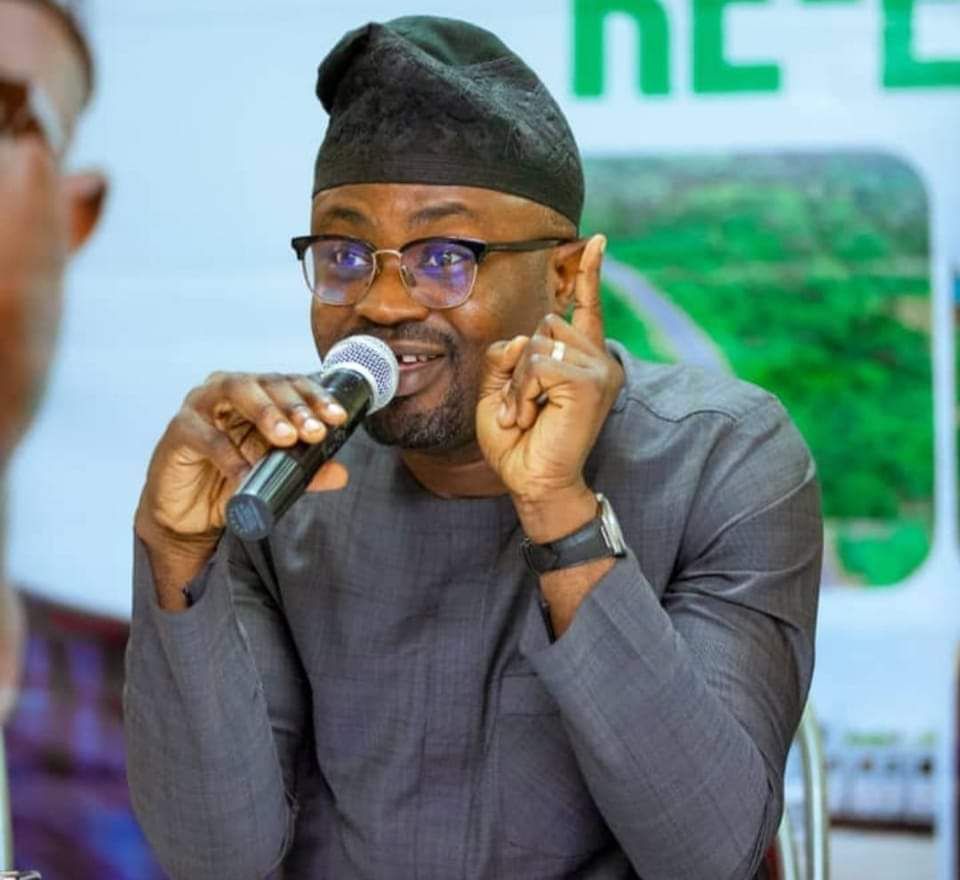
Minister of Interior queries why a married woman should come all the way to Abuja for name change

The Minister of interior Olubunmi Tunji-Ojo has questioned why a married woman is required to come to the headquarters of the Nigerian Immigration Service (NIS) to have her name changed on their passports on account of marriage.

Describing the exercise as “inhumane” the minister said women are not subjected to such degrading practices the basis of marriage anywhere in the world.

Tunji-Ojo spoke a recent dinner with members of the Asiwaju Bola Ahmed Tinubu ABAT Media Centre and some social media influencers in Abuja.

“There is one stupid thing I have seen and it is that a woman gets married, changes her name, and then she has to come to Abuja all the way from say Kaura Namoda or Enugu just to come and effect a change of name in her passport. It is absurd.

“I can’t just figure it that you want to change just your name and you have to be in Abuja. I have asked the immigration people, is it that immigration people in Abuja have more than one head than those in the states?” he asked.

Tunji-Ojo declared that the passport issue remains the least of his worries, adding that as of March, the new passport reforms he is putting in place would ensure contactless biometrics enrolment to allow Nigerians to do their enrolments from their comfort zones.

He, however, noted that he wanted more secure borders for the country.

“With the new reforms, you don’t need to travel to Abuja to change your data. Everything will be online,” the minister said.

The Conclave

TIPS