Home Blog Page 669

Maikyau’s NBA Presidency and the Crusade for Promotion of Federal Character and National Integration: My humble observation

By Sylvester Udemezue

Hon Benchers, Learned Silks, Profs, Seniors, Colleagues, and all TLCites, has anyone not observed that the NBA Presidency of Y. C. Maikyau, SAN, has from its inception, been diligent, devoted in observance of the principles of Federal Character and in promoting national integration through national spread of appointments? From my research, it appears there is not even one Committee or Panel constituted by NBA President Y. C. Maikyau, SAN, which does not, at least to a reasonable extent, meet requirements of national spread as is required by the Principles of Federal Character and National Integration.

QUESTION ARISING:

“Why hasn’t NBA President Y. C. Maikyau, SAN, in the typical Nigerian style, flooded all NBA Committees with only his Northern-Nigerian people, and offering on some flimsy excuses, as others have been seen to be doing?”, one would have been wondering! Yet, instead of indulging in such parochialism and myopism, it appears that from his Transition Committee in 2022, to all other committees and panels he has constituted or appointments he has made so far, Mr.President Y C Maikyau, SAN, has worked hard and effectively ensured that all segments of Nigeria are carried along in virtually every appointment he has made since his assumption of office in 2022, thereby ensuring there has been no predominance (in any committee) of lawyers from a few states or from a few ethnic or other sectional or religious groups to the exclusion of the others. Besides, and in order to promote national integration, Y. C. Maikyau, SAN has been seen to ensure that in all his appointments so far, there has been no discrimination shown against anyone on the grounds of place of origin, sex, religion, ethnic or linguistic association or ties. In this way, happilt, Mr Maikyau’s NBA presidency has promoted a feeling/sense of belonging and of involvement among lawyers from the various segments of Nigeria, thereby indirectly ensuring that loyalty to the NBA has overriden any sectional loyalties or loyalties to other divisive organizations within the profession.

I shall write further on this, to provide concrete facts (based on research) to buttress this assertion, as a way of encouraging current and future leaders to try to carry everyone along. Such is expected to also serve as an admonition to current leaders who are not doing well in the area of promoting national integration through faithful observance of the principles of federal character (an example is the current leadership of the NBA-SPIDEL) to retrace their steps in the interest of the NBA, the legal profession and of national unity and cohesion within the legal profession.
➖➖
POST SCRIPTUM
I read somewhere on the social media, one reaction to an earlier comment of mine, that principles of federal character (as enshrined in the Nigerian Constitution) do not apply to NBA because NBA is not a government agency or institution. With due respect, how I wish I didn’t hear such. However, there is a ready-made response, contained in the details of an article, by me, titled, “Concept Of Rotational Presidency In NBA National Elections And Burden On The ECNBA 2022 To Administer Applicable Rules Strictly And Firmly” (TheNigeriaLawyer: 13 March 2022). I am happy that segment 5 of that published piece was devoted entirely to discussions under the subhead: “Introduction of Federal Character into the NBA Constitution”, which commenced in the following words: “In recognition of the need to respect the federal character of Nigeria and to promote peace, unity, and oneness within the NBA, the Nigerian Bar Association keyed into the rotational presidency principle in the larger society….”.

Bottom line:
Observance of the federal character in all affairs and by all aspects, sections and arms of the NBA is not a matter of morality but of law and the Constitutions. Please, people should help me and read that humble piece.

Meanwhile, it’s sad, I say this with due respect, to see someone in Nigeria’s 21st-century’s 2024, still making such arguments as that “federal character doesn’t apply to NBA since NBA is not a government agency, institution”..

FURTHER QUESTIONS ARISING:

Are NMA (Nigerian Medical Association), ICAN, NSE (Nigerian Society of Engineers), PDP, APC government institutions or agencies? Has anyone noticed that each of them are experts in faithful observance of the federal character principles? Ironically, even the “famous” or “notorious” NURTW (an association of so-called “agberos”) are sticklers for observance of the federal character principles, in all its national affairs. Not to talk of national associations of tomato sellers, okada riders, and more recently even the National Association of Commercial Sex Workers — how all and each has made observance of the federal character their inviolable motto. Finally, Section 1(1) of the Constitution of the Federal Republic of Nigeria, 1999, that “This Constitution is supreme and its provisions shall have binding force on all authorities and persons throughout the Federal Republic of Nigeria”. Question: are NBA leaderships not among the “authorities and persons throughout the Federal Republic of Nigeria”? Yet, within the legal profession (those who should be the leading light) is seen someone who says, proudly, that the federal character principle doesn’t apply to the NBA. I leave it here but not like End-Of-Discussion. Noo! Discussions must continue. And as I said earlier in 2021, “we’d continue to shout from the wilderness, follow from the deserts, ruminate from the conclaves, analyze from the cubicles, wail from the rooftops, commend from downtown, assess from the upcountry, watch from the countryside and write from the hinterlands (everywhere and anywhere), until NBA…moves from good to better, and finally becomes the best”.
Respectfully,
Sylvester Udemezue (udems)
Proctor,
Reality Ministry of Justice (RMJ)
08109024556.
[email protected]. (05/01/2024)
➖➖

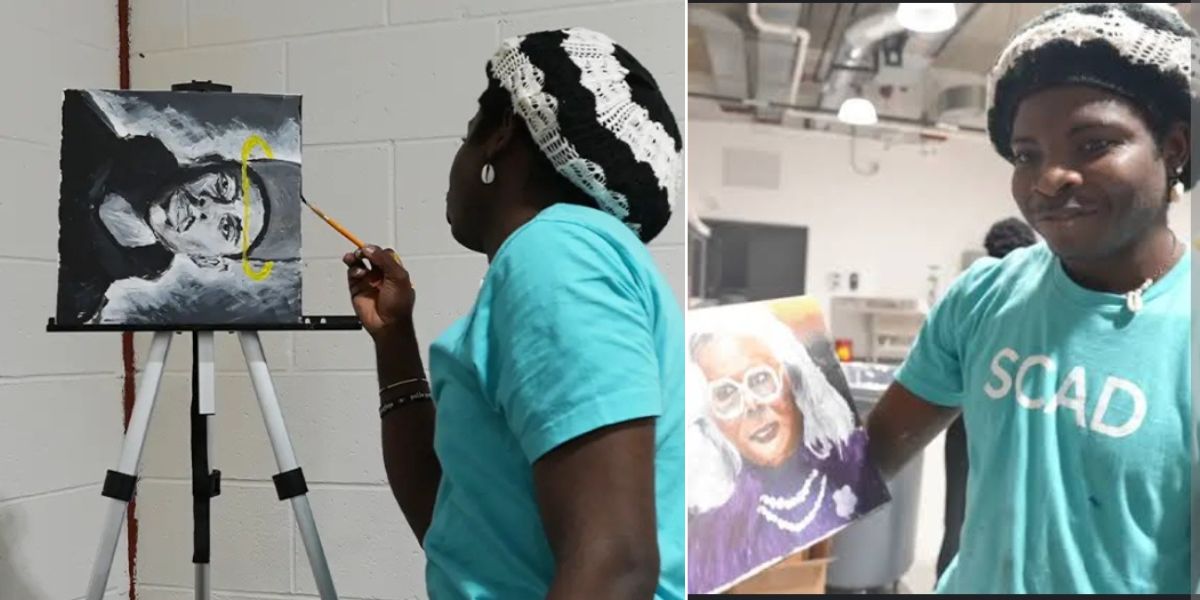
Nigerian man paints his way into Guinness World Records

Nigerian art student, Chancellor Ahaghotu, has broken a decade-old record for the longest painting marathon after painting for 100 consecutive hours, Guinness World Records (GWR), has announced on its website.

GWR said Ahaghotu, a sophomore at the Savannah College of Art and Design in Atlanta, Georgia, USA, broke the record of 60 hours which was set 10 years ago, by Roland Palmaerts (Belgium/Canada) in 2013.

According to GWR, for this record, the challenger can either work on one large painting or create multiple ones, but the painting(s) must be of a recognisable image not abstract painting.

GWR explained that over four days, Chancellor worked tirelessly to produce 106 pieces depicting all manner of subjects, including celebrities, food items, plants, animals, and much more.

According to GWR, Chancellor said he battled fatigue around the 88-hour mark, but was committed to reaching his target of 100 hours.

He initially planned to do one painting per hour, so before beginning the record attempt, he prepared 100 canvasses with sketches, ready for him to paint.

However, during his paint-athon, he completed them all with a few hours to spare, so he then

hen produced a series of impromptu still lives, before finishing with a painting of an exhausted person.

“I came to the United States to pursue my dreams and build up my career as a recognised artist.

“Breaking the record will boost my recognition as an artist both in my school and the world at large,” Chancellor told GWR before embarking on his record attempt.

“This record helps me feel a very high level of personal achievement, build up my career as a reputable artist, and pay a service to my school and country.

“One thing I love about the paintings I created is that they were representing my different moods and how I was feeling when I created them.

“There was joy and celebration when I completed the 100 hours,” Chancellor said.

According to GWR, as with all ‘longest marathon’ records, the challenger is permitted a

ive-minute rest break for every continuous hour of activity, these rest breaks can be accumulated if not taken.

GWR explained that those were the only times Chancellor could use the bathroom, eat or sleep.

The Conclave

Rights groups call for resignation and investigation of Betta Edu, as Accountant general denounces controversial disbursement

As the Accountant-General of the Federation (AGF), Dr. Oluwatoyin Madein, questions the ‘disbursement’ of N585,189,500.00 into a personal account, the Network for the Actualisation of Social Growth and Viable Development (NEFGAD), a public procurement advocacy group, has urged President Bola Tinubu to be impartial in the face of massive corruption allegations rocking the Federal Ministry of Humanitarian Affairs and Poverty Alleviation and the National Social Investment Programme (NSIP), while maintaining that the Minister of Humanitarian Affairs and Poverty Alleviation, Dr. Beta Edu should be suspended and investigated like NSIP CEO, Mrs. Halima Shehu.

Meanwhile, another Civil rights advocacy group, HUMAN RIGHTS WRITERS ASSOCIATION OF NIGERIA (HURIWA), has asked Dr. Edu, to resign or excuse herself from duty and report to the Economic and Financial Crimes Commission (EFCC) to explain how any kind of financial rules under operation in public offices, allows for public fund to be warehoused in a private individual’s bank account.

Minister of Humanitarian Affairs and Poverty Alleviation, Dr Betta Edu, in a viral document personally signed by her and directed to the Office of the AGF, instructed the payment of the funds to one Oniyelu Bridget Mojisola.

The document also showed that the payment of the N585.189 million grant, meant for vulnerable groups in Akwa Ibom, Cross River, Ogun and Lagos states, was made into Oniyelu’s account.

But reacting to the leaked document, Rasheed Zubair, Special Assistant on Media and Publicity to the Minister in a statement on Friday, said the payment for the vulnerable group followed due process.

According to Zubair, the payment of the grant to the account of Bridget was because the fellow currently serves as the Project Accountant of Grants for Vulnerable Groups.

However, the Accountant General of the Federation said she did not honour the request adding that it was not her responsibility to make payments for projects and programmes on behalf of Ministries, Departments and Agencies (MDAs).

Likewise, NEFGAD in a press statement signed and released in Abuja on Saturday through its head of office, Mr Akingunola Omoniyi, said ‘’the recent development in the Humanitarian office has provided president Tinubu a golden opportunity to tell Nigerians and the whole world that he is ready and willing to tackle corruption in a fair, just and impartial manner by also applying same disciplinary measure (suspension) meted on NSIP CEO, Mrs. Halima Shehu on the Minister for Humanitarian affairs and poverty alleviation, Mrs. Beta Edu.’’

Akingunola pointed out that ‘’apart from the fact that Dr. Edu and Mrs. Halima Shehu are from different geographical divide of the country, the tendency and pattern of the allegations involving the duo are too identical and should not have attracted diffrent approaches and measures in dealing with them by the president.

‘’Directing payment of public fund into private account by a public officer is a serious procurent and fiscal malfeasance that attracts serious penalty under extant laws, regulations and rules including the public procurement, Fiscal Responsibility, Independent Corrupt Practices and other offences (ICPC), Code of Conduct Acts and the Anti-mobey Laundering (prevention and prohibition) Act.”

Akingunola further stated that the Minister had serious questions to answer by Instructing payment of public fund into private accounts other than that of a legal entity who ha duly participated in a competitive selection process and or area that direct beneficiaries of a conditional grant scheme (in the case of vulnerable people as captured in the Ministry’s mandate).

“The act depicts pure nepotism, favouritism, undue advantage conferment and criminal diversion, he averred. Hence, the group implored President Bola Tinubu to direct the suspension of the Dr. Beta Edu for thorough investigation by relevant anticorruption agencies with immediate effect failure, which may call for massive advocacy and court action.

Recalling that the public sector financial regulations of 2009 prohibits the payment of public funds to the account of a private individual HURIWA noted that Section 713 of the law states: “Personal money shall in no circumstances be paid into a government bank account, nor shall any public money be paid into a private bank account. An officer who pays public money into a private account is deemed to have done so with fraudulent intention,” HURIWA said it was double standard if the president suspended his appointee heading the social investment coordinating office for exactly the allegations of paying in public funds worth over N34 billion as alleged by EFCC into private accounts but only for the cabinet level minister of Humanitarian Affairs and Poverty Alleviation to be going about the public space seeking justification for also directing that public fund be paid into a private account no matter the status of that account holder.

“HURIWA calls on the President and the EFCC to use a universal yardstick in the enforcement of the anti-graft laws since the law shouldn’t be made to be afraid of certain individuals because they are senior national figures in the ruling All Progressives Congress whereas all others are treated with severely adversarial yardstick just as their investigations suddenly become the main talking points in the public media.

“We are not Accusing the minister of Humanitarian Affairs and Poverty Alleviation of committing any infractions, but based on the media statements that her office has issued so far, the attempt to convince Nigerians that it is lawful to keep public fund in private account is just like the polemic promoted by one erstwhile civilian governor of Kano State in the second Republic that public fund can be kept in government House since government House is a publicly funded house. It is incongruous and indeed puerile to say that on one hand, the EFCC arrested one official of the same government over allegations of payments of public funds into private accounts but on the same breath, a cabinet level minister is inundating the public space with her submission that keeping public money in private account of someone heading a certain portfolio, is appropriate. This sounds illogical and fallacious and by the way, if as the Minister argued that under a certain civil service rule, public funds can be kept under private accounts, why then does the financial regulations Act governing public service in Nigeria say the exact opposite?”

HURIWA recalled that the Minister of Humanitarian Affairs and Poverty Alleviation, Dr Betta Edu, has cried out to Nigerians over what she described as “disgruntled elements” trying to stain her hard earned integrity following the Federal Government ongoing 44.8 Billion Fraud investigation in NSIPA.

The minister said these elements have been trying to link her to a phantom fraud and are behind this latest misadventure by displaying on social media a memo from the ministry to the Accountant-General of the Federation approving for payment, of the sum of N585,189,500.00 Renewed Hope Grant for Vulnerable Groups, (GVGs), for four states, which is currently being circulated in the social media.

Journalist 101 /The Conclave

We’re dismayed over leaked memo, everything went through due process —Humanitarian Affairs Ministry

The Federal Ministry of Humanitarian Affairs and Poverty Alleviation has said N585,189,500.00 Renewed Hope Grant for Vulnerable Groups for four states, was approved and went through due process.

The Ministry also expressed dismay over circulation on social media of the memo related to the fund.

This was contained in a statement signed by Rasheed Zubair, the Special Adviser on Media and Publicity to the Minister of Humanitarian Affairs and Poverty Alleviation, Dr. Betta Edu made available to newsmen on Friday in Abuja.

Zubair expressed dismay over what he described as the evil machination of disgruntled elements trying to smear the reputation of the Minister.

He said, “The Federal Ministry of Humanitarian Affairs and Poverty Alleviation notes with dismay, on a memo from the Ministry to the Accountant-General of the Federation approving for payment, of the sum of N585,189,500.00 Renewed Hope Grant for Vulnerable Groups for four states, which is currently being circulated in the social media.

“It is glaring that the same sponsored disgruntled elements in the past few days have been trying to smear the Honourable Minister, Dr Betta Edu, and stain her integrity following the Federal Government ongoing 44.8 Billion Fraud in NSIPA. These elements have been trying to link her to a phantom fraud and are behind this latest misadventure.

“However, this latest vile effort of theirs is another infantile blackmail doomed for evisceration.

“For the avoidance, the said N585,198,500.00 was approved, and it is meant for the implementation of Grants to vulnerable groups in Akwa Ibom, Cross River, Ogun, and Lagos states. We must, however, note that GVG was first launched in the Kogi state where recipients testified.

“Akwa Ibom and Cross River were launched in December 2023, Kogi in November, and others will be launched in the coming weeks.

“The public is invited to note that the Renewed Hope Grant for Vulnerable Groups is one of the social intervention schemes of the federal government, which is being implemented by the Ministry of Humanitarian Affairs and Poverty Alleviation.”

He added,”Oniyelu Bridget is the Project Accountant for GVG from the Department of Finance and it is Legal in civil service for a staff, the Project accountant to be paid and use same funds legally and retire same with all receipts and evidence after project or Programme is completed.

“The evil motive of the mischief-makers behind the circulation of the memo is well-known and should be ignored. Of note is the fact that since assumption of duty about Five months ago, the Minister has religiously visited different parts of the country like Borno, Zamfara, Niger, Kogi, Plateau, Nasarawa, FCT, Lagos Cross River among others and this is done to ensure she delivers on her mandate and she has remained focused, unbiased and committed to duty.”

The Conclave

What Time is it for Nigeria?

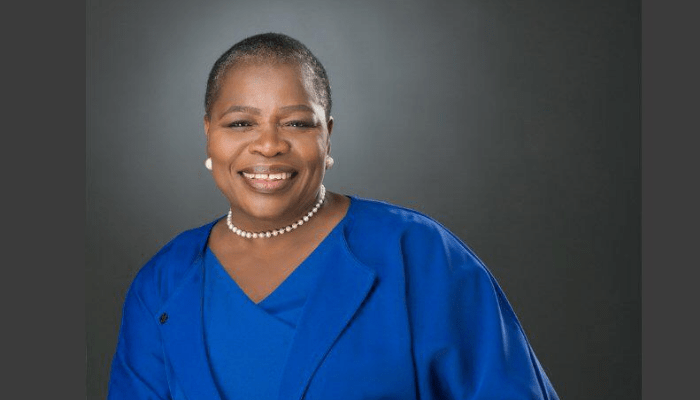
By Obiageli Ezekwesili 

There is Time for everything. Figuratively speaking, a person or country can be asked, “What Time is it?” with an intention to trigger a deep rumination from those who should know or care. The start of the New Year after a bloodied end of 2023 with yet another mass brutal killings of over 150 children, youth, women, and men during the Christmas week, in several villages of Plateau State did provide the context for one to ask. So, I ask first, those among my fellow citizens who have only always hoped against hope that our country will ultimately Become, “What Time is it for Nigeria?”  I next ask all those who have held and the ones currently holding political and public leadership positions in the country, “What Time is it for Nigeria?”

The blood of Fidelis Solomon and over one hundred and fifty other victims gruesomely massacred in the latest Plateau State carnage, and the blood of the hundreds of thousands of innocent Nigerians cumulatively killed in the North Central, Northeast, Northwest, Southeast, Southsouth and Southwest regions of our country are crying, “What Time is it for Nigeria?” What is your answer, fellow citizens? 

This really is the hardest question that all the people of goodwill in Nigeria must ask and answer candidly. Anyone who attempts to evade asking and confronting the inevitable tough answer to this question merely lives in delusion.

For me, it is the critical time to confront the hard conversations on how to create a viable Nigeria that transits from mere country to a nation of people who though diverse have collectively negotiated to unite themselves around a shared sense of nationalism to build a just, equitable, peaceful, orderly, prosperous, stable, resilient, and ethical society based on shared values, national vision and common identity. It is the most feasible way to avoid Nigeria becoming a truly bankrupt country with all her people.

Bankruptcy, an extremely scary word was recently used by Nigeria’s National Security Adviser (NSA), Mallam Nuhu Ribadu to describe the financial situation of the country. In his words: “We are facing very serious budgetary constraints. It is okay for me to tell you. It is fine for you to know. We have a very serious situation… We have inherited a very difficult country, a bankrupt country to the extent that we are paying back what was taken. It is serious”.

Bankruptcy in corporate use, means the death of an entity because it stops all operations and goes completely out of business. Death is the loss of soul. Like humans, a country also has a soul, and it contains the values and boundaries of what is acceptable or abhorrent behavior. For example, in Nigeria, there was a time when a certain modicum of values served as filters of what behaviors were rewarded and punished. The soul of our country began to die when public leaders became bad examples, disdaining values and rewarding vices. As the people either helplessly watched on or simply did not care and many chose to join the leaders in sliding the scale of values, the soul of Nigeria started to erode. The soul of the country has eroded to a degree where today, the value and respect for human life is closer to zero than to one.

The bankruptcy of a country and people which relegates the dignity of life is much more damaging than empty public coffers. Public leaders who do not value the life of their fellow human being bankrupt the soul of their country. The cyclical pattern of empty coffers in a country vastly endowed with the natural, human, and other resources to have emerged as a globally productive and competitive economy is a factor of Nigeria’s values bankruptcy. The Nigerian-State run by governments which are inured to the debasement of human lives is bankrupt of soul.

We shockingly arrived a time in our country when regardless of the number of mass abductions, maiming and killings of fellow humans being in our country, the Nigerian-State moves on without an iota of accountability and consequence for especially murderous criminals. We are in a time when Nigerians have normalized and accepted that their governments and leaders can conduct, enable, or ignore acts of impunity. A time in which the lines between reward and punishment are so blurred that the country exists without any form of deterring consequence for the most atrocious behaviors. 

So, even though evidence abound in our public finance data to support Ribadu’s assessment of the current state of the country’s finance, Nigeria’s reality is worse than mere financial bankruptcy. An empty treasury is the least of insolvencies that stymie Nigeria and Nigerians. The substantial and existential danger is that Nigeria as a country is totally bankrupt of values, void of soul and headed into a cataclysmic collapse of the kind that more money cannot change. What can more money do to reverse the callous acceptance of a brutish, short, and nasty existence into which majority Nigerians have now acculturated their minds? 

What will more money do for a people who no longer expect their leaders to take responsibility for basic duties including accountability for failure to produce results? What can more money do for a country that kidnapping of citizens grew into an industry nationwide? The Nigeria we all lament today is a sad example of what failure to agree and uphold a national integrity and values system can do to any people. Nigerians chose to be lethargic to how our country is governed, so our public leaders willfully distorted incentives and sanctions in our society.

Yes, the public coffers are empty, but the time now is to tackle the cause and not one of the symptoms of our national bankruptcy as a country and people. Nigeria must first overcome the existential sustainability question as our top priority agenda at this time. Is it not staggeringly alarming that Nigeria’s contemporary peer-countries are contending to lead the 21st Century by shifting global economic dominance while we in contrast are steadily regressing farther away from being a country? Nigeria’s multiple existential threats to retaining the status of country are fiercer than ever before. We now barely tick the boxes for the full status of a country, properly so called. 

A Nigeria that is fast losing most of the basic criteria that qualified us to be included in the United Nations list of recognized countries should alarm all patriots into action to save and avoid the tendentious pattern of our political class tunnelling our focus to addressing symptoms instead of their underlying causes.

Our evident state of affairs is that Nigeria now more than ever before ticks closest to the box of a failed state on the criteria of renowned Fund for Peace and Foreign Policy magazine. The index annually uses Economic, Political and Social factors to evaluate fragility and resilience of countries. Nigeria has every year over the last ten years remained within the group of 15 countries out of 170 that rank closest to fragile-failed country status. For example, on the economic front, Nigeria is entangled with endemic issues of systemic and widespread grand as well as petty corruption, “high economic inequality, economic development along group line, low growth, severe economic decline and rising extreme poverty”. 

In the context of the Fragility Index on the political front, Nigeria experiences “breakdown of capacity of government to function usually characterized by delegitimization of the state, deterioration of public services, suspension, or arbitrary application of law; widespread human rights abuses, security forces operating as a “state within a state” often with impunity, rise of factionalized elites, and rise of external political agents and foreign states”. 

On the social metrics, the index evaluates Nigeria’s “depleting social capital, loss of social cohesion, a squandering and poor management of its diversity, demographic pressures and tribal, ethnic and/or religious conflicts, massive internal and external displacement of refugees, creating severe humanitarian emergencies, widespread vengeance-seeking group grievances and sustained human flight” and such like. 

It will amount to a historical missed opportunity if Nigerians do not in 2024 collectively resist the syndrome of tunneling our focus to the lowest common denominator of our problems. The Federal Government in its current narrative about public financial distress is leading everyone down that path because even though it is true that Nigeria and Nigerians are faced with the severest fiscal distress ever experienced in recent history, our single-minded focus must be the battle for the Soul of Nigeria. No amount of money from higher oil prices, tax collections and more domestic and external debts can win this battle for us. 

More money cannot save a country and people that have lost their soul. Even then, the fact is that from all evidence available in the public domain, additional money earned by Nigeria now merely and mostly feed the avarice and voracious greed of Nigeria’s politicians anyway as the budget process has often revealed. The question that should therefore seize the minds of citizens of Nigeria and move all in the direction of the right actions is found in the timeless words of scripture; “Behold, what does it profit a man, nay, a woman and people of a country, to gain the whole world but lose their soul?” 

There is a raging battle for the Soul of Nigeria, a country which has turned into a massive killing field and mass graves overrunning with the blood of innocent children, youth, women, and men brutally murdered, battered or abducted without any consequence to the criminals. 

Every Nigerian of goodwill – regardless of ethnicity, religion, economic status, and political persuasion – knows that the Nigeria we once knew is gone. The collective momentum must now swiftly gather to the tipping point for Nigerians to compel a legally mandated National Conversation that will fundamentally negotiate and determine the value we place on our lives and the values that will uphold, preserve, and dignify a New Nigeria and Nigerians. Throughout history, dead countries commenced their dying when human life ceased to have worth. This is the kind of time Nigeria find itself, but we can by a collective will confront the demons that have dwarfed the realization of our country’s giant potentials and change the course of our checkered history. 

Could this be the ironic time a lethally flawed government of President Bola Tinubu which continues struggling with crisis of legitimacy, makes the urgent and historic choice to facilitate and enable a New Constitutional Process credibly co-led by citizens? Will the Tinubu administration surprise us and choose the good of Nigeria and Nigerians this Time? Will he take up the gauntlet at this Time and ask himself the question, “What Time is it for Nigeria?” Can Tinubu’s candid answer be that it is “The Time for me to do right by the Citizens of Nigeria?”.

There is indeed Time for everything, and Nigerians are anxiously waiting. It is Time. 

Obiageli “Oby” Ezekwesili, a former Minister of Education and Solid Minerals, is Founder and Chairperson of the Board of the School of Politics, Policy and Governance (SPPG) 

The dangers are real and are coming

By Hashim Muhammed Suleiman – Zaria, PhD.

Do you eat, at least, three times a day? Is there aroma of cooking still coming out of your house, at least, twice a day? Do you still wear washed and ironed clothes almost everyday? Do you still drive a car while attending to your daily needs?

If yes to the above posers, not all, or even some, then I have bad news for you and for me. The dangers are coming. Asides the usual dangers of bandits, kidnappers and insurgents, the new danger coming to town is danger from below.

What does ‘danger from below’ signify? Simply put, it means dangers from unexpected places and from unexpected persons.

Well, why do I become advocate of telling you and me that dangers are real and are coming?

Simple.

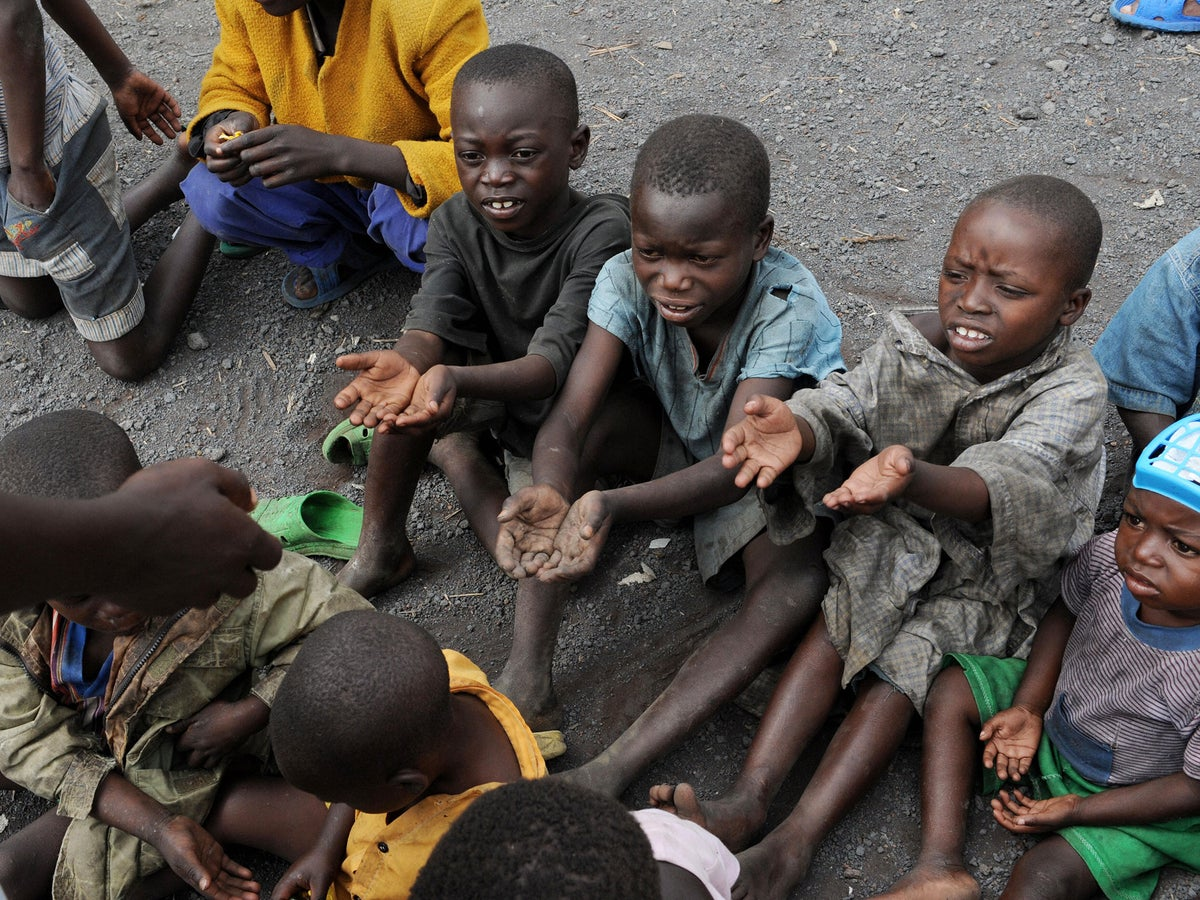
The hunger in town is unprecedented and has reached unpredictable levels. The hunger has become so pervasive that ordinary poor people are beginning to exhibit criminogenic tendencies. After all, a hungry, poor and angry man has already crossed the threshold of criminality. Particularly where the three vices of poverty, hunger and anger are third person induced. According to them, third person here are those in the real positions of power and also indirectly the ones that belong to the aforementioned category in terms of discharging daily needs, perhaps as working class or being privilege to have a particular smooth-running business.

The danger that’s real and is coming is the fact that these victims of third person induced hunger, poverty and anger cannot and do not differentiate between the third person that induced the vices on them from you and me. Once you look relatively ok and contented with life, they assume you are one of those people that brought the three vices on them. Hence, you’re at the mercy of their scornful looks and words for now, pending when they’ll explode their mob mentality on you and me, even though we are also victims like them.

In fact, out of the many anecdotal evidences denoting and painting a bad scenario becoming worst, I’ll use only four recurrences to justify my assertion that dangers from below are coming fast upon us.

  1. Recently, I was looking for place to park my car and to attend to some urgent things. I sighted a place by the road, near where motorcycle chaps were trading their business. I put on my right trafficking light, signalling I’ll park by my right. That single action became a trigger of unsavoury action by one of the motorcycle taxi riders. The man quickly began to push his motorcycle towards my car. I quickly dodged him by the whiskers. He wasn’t done with me. On top of his voice, he began to shout: “Kun sace kuɗin ƙasar, kun saka mu cikin bala’in yunwa, ɗan inda muke samu muyi achaɓar ma, mu samu na abinci cikin wahala, sai kunzo kun hana mu cin abinci.” That: “You people have stolen the country dry; you people have subjected us to extreme hunger such that even this small space that we used to source for the little we eat, you want to come and stop us from eating.”
    I didn’t respond to any of his invectives but instead, I simply drove off and find another place to park, a place far from them.
  2. Some days ago, I managed to muster courage to go and buy few litres of petrol for my old Tokunbo car. The petrol station was swarming with people, young and old, not buying petrol but waiting for any buyer to saunter in and they descend on that unlucky buyer with begging for alms. After I bought the few litres I could afford, to enter my car became a struggle because the beggars were between me and the car, begging. I silently ignored them and found my way inside the car. Then, a very old woman stood in front of the car until the petrol attendant shouted on her.

Indeed, rather than to leave the front of my car, the old woman walked towards the driver side. On reaching my window, in cold voice, she said: “Kun kwashe kuɗin ƙasar, kun bar mu da yunwa, yanzu muna roƙon ku abun da zamu ci amma kun hana mu. Wallahi, idan muka mutu da yunwa, sai Allah ya kama ku.” That: “You people have stolen the nation’s money and left us in hunger, now we are begging you for what to eat but you won’t give us. If we die of hunger, I swear God will never allow you free.” I refused to respond because I too was and is a victim of public embezzlement.

  1. Recently, a case of a man that used to visit the neighborhood of some averagely well-to-do people to cut their nails came to light. Normally, the services of the man hardly pass ₦200 per individual. However, the neighborhood took liking unto the man and we’re lavishing him with money, clothes, food and gifts. Not long after, members of the neighborhood began to receive calls from bandits demanding for large sum of money or they and their families suffer. After delicate security operations, that nail cutter was apprehended as the one giving scoops to the bandits as far away as in Kogi and Zamfara states.
  2. Yesterday, a waybill was given to a driver from Jos to bring to me in Zaria. By our calculations, the driver was supposed to be in Zaria around 5 PM. However, the driver only got in touch with me close to 10 PM. I reluctantly went out for the goods. When I met the driver, he lamented that there were no passengers, hence he had to wait to get some appreciable passengers before embarking on the journey. Well, I wanted to pick the goods from his car to mine but some young guys quickly picked the two bags and dropped them into the boot of my car and the painful drama started. “Ai sai ka sallame mu mu je mu ci abinci.” “Pay us for the services so that we’ll go and eat food.” In fact, it took the intervention of the driver to calm things down from the side of the young chaps because one of them quickly stationed himself in front of my car, one at the back while the third was with me. Meanwhile, I went out to collect the waybill with nothing on me, not even my wallet.

I just used the four stated anecdotes to explain why I am telling you that dangers, dangers from below are real and are coming faster than you and me have ever thought. In as much as you look different from those hungry, angry and poverty stricken laps, the danger is real and is coming.

Allah dai ya yi mana maganin wannan bala’in.

~~~ Hashim Muhammad Suleiman, PhD

Man in custody for stabbing wife to death in her sleep 

The Police in Yobe has reportedly arrested 43-year-old Abubakar Musa for allegedly stabbing his wife, Ammi Mamman to death in Damaturu.

DSP Dungus Abdulkarim, the Police Spokesman in the state said in a statement in Damaturu on Friday that the incident occurred at New Bra-Bra Estate at about 4:48 am on Thursday.

Abdulkarim revealed that the suspect was lying on the same bed with the woman when she was stabbed with an object on her neck resulting to heavy bleeding that led to her death.

According to the Police spokesman. Musa is being interrogated by police detectives to unravel the circumstances surrounding his wife’s death.

DSP Abdulkarim appeals to anyone with credible information on the incident to come forward so as to ensure justice to both the suspect and the deceased.

Journalist101

Re: Nigerian Lawyer says he is “working on Bill to amend the Marriage Act…”, Nigerian men speak

Reactions have trailed the announcement made by a Kwara based lawyer, Muhammed Adams that he is “… currently working on a Bill to amend the Marriage Act, Matrimonial Causes Act and Marriage (Validation) Act.”

Below are some of them.

United States based Attorney and Medical Doctor, Emmanuel O. Fashakin said: “Someone is finally waking up. It is good to see. I asked a friend in current House of Rep to introduce a bill allowing polygamy, an African tradition, in Nigerian law. He promised — and did nothing.

“The United States will recognize any marriage which is valid where contracted. American citizens from other African countries are allowed to file for and bring all their wives to the United States. But not Nigerians, because polygamy, though widely practiced, is essentially unlawful in Nigeria.

“We have dogmatically held on to the white man’s one man one wife policy, to our disadvantage in the land of opportunity.

“The most important lesson to be learned by anyone involved in management or administration is that one size does not fit all. We are so backward in our thinking, pardon by derogatory language, that when Oyinbo hand us something and it is not working for us, we conclude that something has to be wrong with us, and not with it.”

Another legal practitioner, Saka Azimazi said: “Polygamy is not unlawful in Nigeria. Polygamy is unlawful to only persons who contract any marriage under the Marriage Act. If you contract marriage under Islamic law or native law and custom, you have the right to be polygamous. Indeed, under Private International Law, a Muslim is automatically a polygamist unless you have only one wife on the date of death.

“Most polygamist have no business with international law. The same international law that seeks to recognize same sex relationships seeks not to recognize a natural union recognized by the three main religions in Nigeria. Africans, in particular, have refused to liberate themselves from slavery mentality.

“Our laws are dictated by succumbing to warped legal systems that have no connection with our nature and historical cultural values. We must break away from the Western legal system that has brought us more strife than peace. Why is democracy working in Europe, but is a monumental failure in Africa? We must recognize that all men may be equal, but they are not the same.”

Another lawyer who did not give his name said: ” The Country recognises polygamy but, simply not under the Act. The Act governs a different regime of marriage and is well defined, monogamy. Monogamy is defined under the Interpretation Act.

“You can marry 50 women, polygamy or 50 men polyandry under our esteemed and well revered customary marriage norms. You can have the certificates or licences of the marriage from a customary court or local government. Why is this state of affairs a cause for concern again?”

Adam known on X as Foundational Nupe Lawyer1 had on 2 January tweeted thus:

No Justice for the Common Man Under APC’s Government: The neglect of lower courts in Nigeria

  • What State Legislators should focus on in 2024

By Bayo Akinlade Esq

The Citizens Support for Lower Courts held its maiden zoom seminar on the 11th of December 2023 on the topic The Role of the Magistrate and Customary Court Judges in Nation Building, Safety And Security.

The seminar was held largely to find solutions to the problems faced by the lower courts in carrying out its constitutional role as part of the Judiciary.

It’s very saddening that after over 25 years of APC leadership in Lagos State and 8 years at the Federal level, very little has been achieved in granting citizens access to justice.

While we acknowledge the extension of the retirement ages of all superior court judges and the recent increase in budgetary allocation to the National Judicial Council (NJC), the various States (save for Osun State) have done very little in reforms that aim to increase productivity and capacity within the lower courts.

I therefore appeal to all State Judicial Service Commissions, Law Reform Commissions, Ministry of Justices in the State to take a closer look at the lower courts and apply some of the recommendations suggested below.

I will also strongly appeal to the legal community to partner with government in this regard. I therefore call on the leadership of the Nigerian Law Society (NLS), the Nigerian Bar Association (NBA), MULAN, CLASFON, Catholic Lawyers Association, FIDA, AWLA and other stakeholders to work collaboratively to ensure that we enjoy democracy, rule of law and justice for all.

Summary of, and Recommendations from the Seminar

Dr. Muiz Banire, SAN who was the lead speaker emphasized on the importance of the Lower Courts as being the grassroots’ court handling well over 70% of the nation’s disputes. He noted that the way and manner of appointment and the treatment of lower courts judges was well below the acceptable standards which need urgent reforms and a change of attitudes

Dr. Banire SAN suggested the following solutions:

  1. The Law providing for the qualification of Magistrates must be streamlined and specific to state that a person to be appointed a magistrate must be a person of integrity and good character who has substantial practice experience as a practicing lawyer.
  2. Review in the law establishing the customary court judges in the aspect of stating that a customary court judge must be a person with “adequate means” how do you determine adequacy and what has it got to do with the administration of justice
  3. Lower courts must be insulated from all forms of political interference – merit based appointments are crucial to ensuring that the lower courts are respected and effective
  4. The appointment process must be transparent and made public. Names of every applicant to the bench must be published in newpapers for all to see and comment on
  5. The working environment, court rooms, general facilities, working tools and technology must be improved upon. Lower court judges must have electronic law reports, computers, printers and stationary to work effectively
  6. Lower Court judges need cars, the need to be given homes under the government housing schemes where they can pay in instalments, access to health care and regular salary review
  7. The retirement age of lower court judges must be increased
  8. Legislation must be made to take them out of the civil service structure and be regarded as judicial officers
  9. Lower Court Judges ought to be given priority in the process of elevation to the higher bench
  10. National Judicial Council rules regarding the need to be a chief magistrate in order to be considered for elevation as a judge must be removed
  11. Appoint lower court judges based on the availability of infrastructure and increase their monetary jurisdiction considering the rate of inflation and other economic indicators. This will reduce the burden on Higher Courts
  12. Creation of a special appellate court for all disputes arising from Magistrate courts and appoint deserving magistrates to those appellate courts as final arbiters to some categories of disputes like tenancy

Justice Toyin Taiwo (RTD) a former Magistrate who was elevated and retired on the high court bench spoke about improving the relationship between judges of the high court bench and the lower bench. Justice Toyin Taiwo while agreeing with the lead speaker on most issues noted that the government may not be adequately able to provide for all the needs of the lower courts, at least not all at once. Her lordship agreed that there should be special focus on the welfare of lower court judges with a view to making it better and more in line with the realities of the current economic situation.

Her lordship agreed that there is a need to improve on the relationship between judges of the higher bench and the lower courts suggesting that they should meet more often in training conferences, mentoring sessions and other opportunities, creating an atmosphere where Magistrates can approach high Court judges for advice and other social issues.
Her lordship, in responding to the unsavory treatment meted out to lower court judges by judges of the high bench wherein the lower court judges are treated like subordinates, looked down upon and literarily treated like servants of high court judges; said that she had no personal experience with such behavior but condemned it as not being ideal and unacceptable.
His lordship noted that as a lower court judge, integrity is implied. “When you want to be an adjudicator, you must be above what is implicit in the job. So any magistrate, who is not performing efficiently and effectively, regardless of the remuneration, should be sent [out]. There is no excuse for corruption. After all, you knew what your salary was going to before you joined. Except you came in with a preconceived idea that, oh, I’m going there to make money. That is it. Except you came in with a preconceived idea that I’m going there to make money. So the issue of corruption should also be tackled head on”

His lordship on the issue of judicial officers or civil servants noted that in the magistrate court law of Lagos State, they are referred to as judicial officers. “In the constitution, they’re referred to as courts of inferior record. They are not referred to as judicial officers administratively. They are civil servants. Their salary is paid on a civil service scale. In the magistrate’s court laws, they refer to only chief magistrates and magistrates. So there is a confusion. They are saying that, look, we advocate on civil and criminal matters just like the high court. We are judicial officers. We are not civil servants. But the problem is this, their salaries are paid on a civil servant cadre level.”
His lordship noted that the issue of corruption is very deep and needs to be tackled holistically

His Honor Miakpo Emiaso is a retired President of the Area Customary Court of Delta State who has written many books including a book titled “Perceived Corrupt: Memoirs of a Nigerian Judge” His Honor largely shared his experiences as a judge in relation to the theme of the seminar.

He noted that the monetary jurisdiction for judges of the lower court in Delta State where he served is 50 Million Naira. On the issue of there being too many magistrates, he opined that considering the numbers of policemen in any given State, the State can make use of more lower court judges which they can adequately provide for

On the issue of how lower court judges are treated; his honor bore his mind and stated “…The idea of somebody being discriminated against just because he serves at a level of court which is low, which is described as magistrate, which is described as chairman of customary court, does not take away the risk, the very many risks that are involved in performing that kind of job, the risk of safety to his life, because he lives within the same society as the very many persons over whom he has to preside make pronouncements as to their fate. You as the magistrate, you as the high court judge, you do not necessarily recognize them when you meet them on the road or you attend a football match and he’s sitting next to you would never know that he once was before you in your court. And so there is need to make adequate provision, no matter how much it costs the State”.
He continued; “Adequate provision must be made for all judges, irrespective of at what level they are serving. They must be provided for. Their welfare must be looked into, their security must be looked into, how they live, the environment in which they live must be secured. There cannot be too many..”.

He noted that some lower court judges have better legal qualifications and are senior at the Bar than high court judges but some high court judges’ disrespect and disregard their colleagues in the lower courts….He appeals that these discriminatory and derogatory attitudes cease henceforth

His honor noted that “…when you look at the definition of a judicial officer for purposes of discipline and control, as provided in the code of conduct for judicial officers, he [lower court judge] is a judicial officer for that purpose, to be able to control him and discipline him, he’s a judicial officer. But when it comes to purposes for remuneration, especially post retirement, he’s not a judicial officer and he cannot benefit. So you find that in most states, whereas a high court judge retires and he gets his package on the last day of his retirement, I had, for instance, had to wait for five years before my pension, my gratuity was paid to me. What was the system expecting me to survive upon for that five years? And then I had worked, served the country as a judge”.
The Seminar ended with assurances that the campaign for better working conditions and welfare of the lower courts in Nigeria would continue and would advance in 2024

Implementing Section 66(3) of the Nigeria Police Act 2020 could minify frictions between lawyers and policemen

By Sylvester Udemezue

How implementing Section 66(3) of the Nigeria Police Act 2020 could minify frictions between lawyers and policemen over violation of human rights of Nigerians at police stations [see 14 other benefits]

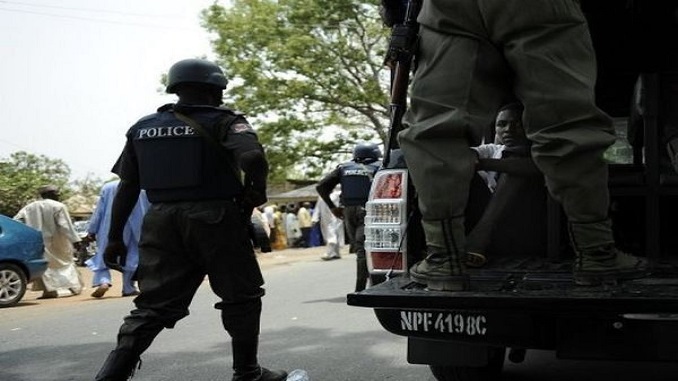
Section 66(3) of the Nigeria Police Act 2020 provides that “There shall be assigned to every police station at least one police officer: (a) Who is a legal practitioner in accordance with the legal practitioners Act; and (b) Whose responsibility is to promote human rights compliance by officers of the division.” There have growing calls for implementation of this provision of the Act, with a view to getting more lawyers into the Nigeria Police Force with attendant benefits. However, some lawyers and commentators appear to have a pessimistic view of  the provisions of Section 66 (3). A respected learned senior colleague recently declared as follows:

“Except for the benefit of reducing the number of unemployed lawyers (if we will consider that a benefit), I’m of the view that deployment of lawyers to police stations as DLOs/DHROs under S. 66(3) or under any other extant legislation will NOT scratch the problem of human rights abuses prevalent at the stations [–] not even on their surface. Anyone who has intimate knowledge of the command structure of the security forces where these abuses are perpetrated will be less enthusiastic to advance arguments in favour of deployment of lawyers to DLO/DHRO desks. Truth be told, our colleagues, as DLO/DHRO officers, will be no more than lame ducks pandering to the whims of superior officers of the forces and positioning themselves to get their cuts from the corruption that has eaten out the hearts of public officials. Will the promotion and or career advancements of the DLOs/DHROs not depend on the whims and caprices/recommendations of men of the forces? I can picture the lawyers buckling under in order to get promotions instead of asserting the principles that uphold human rights observance. We should be discussing ways of building strong institutions, abeg”.

With due respect to this learned colleague, the present author strongly believes that implementing Section 66(3) Nigeria Police Act 2020 is not just about putting more lawyers in the Nigeria Police Force. It is much more than that! Lawyers employed and posted to police stations across the country, pursuant to Section 66 (3) of the Np Act, 2020, are not put there to join regular investigations or to carry guns or to police join patrol teams or check-points or the operations section or to undertake other traditional work of the police, but solely to supervise and promote human rights observance by police officers serving in the police station. Thus, implementing Section 66 (3) is a special-purpose project aimed at promoting respect for human rights suspects and detainees, in line with international best practices and prevailing 21st-century benchmarks. Below are listed 12 probable benefits which this author believes are derivable from implementing Section 66 (3) of the Nigeria Police Act, 2020:

(1). Lawyers deployed to police stations pursuant to Section 66 (3), are on a statutorily delineated, special-purpose work: promotion and supervision of human rights observance by the traditional policemen in their respective police stations.

(2). Implementing section 66(3) of the NP Act, would signal the beginning of installation of a legal department/section in every Police Station in Nigeria, headed (or composed of) the Lawyer who may be designated the DLO/DHRO (Divisional Legal Officer or Divisional Human Rights Officer) just as we have DPO, DTO, DCO. No matter how pessimistic one is about implementation of the section, a police station without a legal section cannot claim to be exactly the same as one with one. Hence, while the problem of human rights violation at police stations may not completely abate with implementation of Section 66 (3), it is submitted that it would most likely be reduced. A reduction in cases of human right violations at police stations across the country is a step in the right direction.

(3) Implementing Section 66(3) would make it easier for the Nigerian Bar Association (NBA) and the Legal Profession in general to have someone, one of their own (the DLO/DHRO) to hold accountable in any Police Station where things are found to have gone wrong in the area of human rights observance. While there is no doubt that lawyers employed pursuant to section 66(3) have become members (albeit special-purpose members) of the Police Force, such lawyers are at the same time members of the Legal Profession, bound by Legal Ethics and rules of professional legal responsibility, about which NBA and other regulators in the legal profession would be in a position to hold them obliged to observe in view of the special nature of their assignment. The situation would therefore definitely improve because they’re like policemen on a special assignment on behalf of the legal profession and administration of justice.

(4). Implementation of section 66(3) would drastically reduce, cases of lawyer-police frictions/face-offs and incidences of police brutalization of lawyers in the course of Lawyers’ professional practice. With Section 66 (3) implemented, every lawyer who visits a police station would have on ground, his learned colleague (the DLO/DHRO), to relate with as the first point of call, and who more-or-less is in a position to see things at least (and even if slightly) different from the other (traditional) police men in the operations’ section, who are trained on use of force. Lawyers employed pursuant to section 66 (3) are Force men in theory, but professional NON-FORCE MEN in practice. Second, even when/where such face-off or standoff arises between a visiting lawyer and investigating police officers, at least there would now be someone [the Divisional Legal Officer (DLO) or Divisional Human Rights Officer (DHRO)] on hand to intervene to ensure things don’t get out of hand.

(5). Having lawyers permanently in a POLICE station, as the DLO/DHRO, will substantially reduce incidents of filing of FRIVOLOUS CRIMINAL CHARGES, which would in turn gradually, ultimately result in decongestion of the courts and the prison yards (Correctional Centres). Many charges, especially in Magistrates’ Courts in the South of Nigeria, are baseless, frivolous and ought to not have been filed in the first place. Presence of a DLO/DHRO in a police station would see many charges either drafted by the DLO/DHRO himself or at least scrutinized by him to ensure there is a prima facie case or some legal basis for criminal prosecution, before the charges are filed in Court. Having a lawyer’s advice before drafting or filing a criminal charge in Court, would go a long way towards curbing rampancy of frivolous criminal prosecution which contributes greatly to corruption, debasement of administration of justice and over-clogging of courts. Frivolous criminal charges/prosecution is a form of violation of the rights of defendants in such proceedings.

(6). With a DLO/DHRO in each Police Station, cases of badly-drafted criminal charges would reduce drastically. Currently, most so-called criminal charges in police stations are drafted by mostly law-ignorant lay police men, who are hardly aware of the horizons of the legal rules of drafting criminal charges: (1) the rule against duplicity, (2) the rule against ambiguity, (3) the rule against misjoinder of offences and (4) the rule against misjoinder of offenders, as well as of the legal structure of a standard criminal charge. Defects in charges could lead to striking out of the proceedings or acquittal of an otherwise guilty defendant.

(7). Having a DLO/DHRO in a Police Station would create an avenue for regular interaction between the DLO/DHRO on the one hand, and the regular policemen involved in criminal investigation and operations; this would help to promote awareness, enlightenment and enthusiasm in the areas of human rights observance and general effective discharge of police duties and responsibilities. Many cases of infringement of human rights by policemen and women in police stations, arise from ignorance and illiteracy on the part of defaulting police officers, aside over-zealousness, among others causes. A DLO/DHRO in a Police Station will help bring about some positive difference.

 (8). Having lawyers permanently in every Police Station would make it easier to provide feedback to the Nigerian Bar Association (NBA) on affairs of each Police Station, especially as they relate to human rights observance and promotion. The DLO/DHRO in each police station would to some extent play the role of a liaison officer, a sort of bridge-builder between the various NBA Branches on the one hand, and Police Station within their jurisdiction on the other hand. Sometimes, DLOs/DHROs within police stations under the jurisdiction of an NBA Branch could even be invited during the NBA Branch’s monthly meetings, to brief the NBA on efforts being made by their respective police stations, in the area of human rights observance and promotion.

(9). Flowing from point number 8 above, collaborations and relations between NBA branches and police stations within their respective domain will improve considerably and become even more fruitful. Such smoother relationships and collaborations will lead to tremendous improvements on the human rights records of each Police Station thereby helping to avert or reduce frequent frictions between lawyers and the police, or to quickly and more effectively resolve such frictions where they occur at all. Prevention of such frictions or an accelerated resolution thereof, is highly beneficial to the image of both institutions, no doubt. Recall Henry Ford’s famous words: “Coming together is a beginning, staying together is progress, and working together is success”, and of Booker T Washington’s too: “Alone we can do do so little; together we can do so much”. Finally, on this point, such collaborative efforts would help in building trusts and confidence, gradually, between members of the legal profession and of the police force. Being aware of what each side is doing, applauding their efforts, acknowledging their successes, and encouraging them in their pursuits and discharge of their responsibilities, is a greater form of collaboration that lead to greater progress for the rule of law and human rights promotion.

(10). Also important is the fact that implementation of section 66(3) would lead to many more unemployed lawyers being immediately employed, into the police force, not to do traditional police jobs, but special-purpose legal work: human rights observance and promotion; supervising arraignments, drafting or supervising drafting of criminal charges, and many more. Nigerian lawyers need the job. This would help reduce unemployment in the legal profession, to the advantage of the police force, the society, and the rule of law in general.

(11). The DLOs/DHROs at the various police stations would play the role of an on-hand/in-house Legal Advisers to the traditional policemen in each police station, beginning with the DPOs, DCOs, DTOs, SOs, rank and file. This would help to avert or reduce scandals against/involving the police, especially those arising from alleged violation of human rights of (vulnerable) members of the public.

(12). Compliance with International Standards: the tradition of having full legal sections/departments in police stations is the practice across the civilized world. Advantages of Lawyers working as in-house legal officers hand-in-hand with traditional policemen are innumerable. Meanwhile, gradually, from having just one lawyer (the DLO/DHRO) at each police station, the need to increase the number would arise leading to a full legal department/section being installed in each police station as earlier hinted in this work, with greater opportunities for assistance/support in the various assignments at each police station, requiring lawyers’ expert skills, knowledge and abilities.

(13) . Having lawyers permanently in every Police Station, may have ready Prosecutors sometimes courts (especially in inferior courts), thereby reducing incidents/domination of criminal prosecution by non-lawyer policemen with its attendant ugly effects on smooth, effective administration of criminal justice. I recall that in my humble intervention at a session during the 2019 NBA Annual Conference of the Nigerian Bar Association, held in August 2019, in Lagos, I had called for the establishment of legal sections at police stations across the country. Then, in a commentary circulated on social on September 01, 2019, and later published to the wider public on December 30, 2019, I had written thus in this respect:

“… if the Police Act is amended to provide for setting up of a legal section in every Police Area Command, and Divisional Police Office, each of such legal sections to be headed by a Divisional Legal Officer (DLO), just as we have Divisional Police Officer(DPO) as the executive head of the entire police division and then a Divisional Crime Officers (DCO) and DTO (Divisional Traffic Officer),etc. The DLO would become the head of the legal section in the police division, with mandate to advice the DPO, DTO, DCO, and other men and officers of each police station on observance of human rights requirements in treatment of arrestees (arrested persons) and detainees, to draft criminal charges and First Information Reports (FIR) for filing in relevant Magistrate Courts, advising the police on what offense to charge to court and on what to not charge, and on when to institute a charge and when to not, etc. This would in turn decongest our courts as fewer cases would be filed, because frivolous charges would have been weeded out at the investigation level. Besides, Lawyer-police officers from the various legal sections of police divisions would also participate in prosecution of cases in Magistrates courts. This has two more additional advantages:(a) There would be need to employ more lawyers into the police force to meet this high demand for prosecutors; and (b) With Lawyers as prosecutors at Magistrates Courts, defence lawyers would wake up and begin to take their cases at the Magistrates courts more seriously, seeing that they’re no longer dealing as prosecutors, with only police officers who have little or no knowledge of prosecutorial know-how/expertise or finesse…Besides, the ends of justice would be better realized since we now have only legal officers on all sides — Magistrates, Prosecutors, and Defence Counsel. Finally, with each police station having a LEGAL SECTION headed by a DLO, complaints of Human rights abuses at the police stations would reduce drastically as the level of police compliance with chapter 4 of the Constitution as well as other provisions relating to investigation and prosecution would increase.” [See: “Enlarging Job Space & Making Lawyers More Useful to Society: My Double-Edged-Sword Recommendation To 2019 NBA Annual Conference on How To Brighten The Future Of Nigeria’s Legal Profession” By Sylvester Udemezue (in: TheNigeriaLawyer; December 30, 2019)]

(14) Existing O/C LEGALs versus DLOs/DHROs: The O/C Legals at the various police command headquarters in Nigeria are traditional policemen, trained in investigation, etc, unlike lawyers who would be posted to each police station in the country, on a special-purpose assignment, pursuant to Section 66 (3). Again, as opposed to the current practice where the O/C Legals and few other lawyers are found only at police command headquarters, lawyers who would be employed pursuant to Section 66 (3), would be spread across all police stations in all police commands in Nigeria, on a clear-cut special-purpose statutory assignment, default or dereliction in which could attract penal and professional sanctions against them personally, in that the DLO/DHRO might be the first suspect in any case of violation of human rights within the police stations under his watch. Accordingly, it is in the best interest of each that he is up and doing; in each case of alleged violation, the DLOs/DHROs office/table is the first port of call by interested lawyers, the NBA, the Commissioner of Police, and human rights and civil society organizations, pressmen, etc and he would have responsibility to convince the public about efforts he has made to prevent occurrence of such lawyer-police frictions or alleged violation of human rights of suspects, detainees and arrested persons. A DLO/DHRO could be reposed, sanctioned or disciplined for established cases of dereliction of duty, misbehaviour or other lapses on his part. Furthermore,each DLO/DHRO is subject to both Police disciplinary procedures and the legal professional disciplinary processes; he could easily be proceeded against in cases of professional misconduct. The DLO/DHRO is therefore in a position/status different from that of an O/C legal or other his lawyer-policemen. Third, although the various O/C Legals ought to join in encouraging human rights observance in their respective police commands, and they also, being police men, have a responsibility to not violate human rights, yet it is common knowledge that O/C Legals at police commands are posted there primarily to represent and defend the Police Force, and not on any special-purpose assignment, unlike the DLOs/DHROs. While the DLO’s/DHRO’s primary assignment at a police station is to promote human rights observance by police stations, the O/C Legals and all the lawyers currently in the Police Force, are employed to work generally as policemen, and to defend the interest of the Police Force at all times, although policemen (including O/C Legals) are constitutionally obliged to respect human rights of suspects and detainees.

 Conclusion:

Based on the aforesaid, it could be seen that implementing Section 66 (3) of the Nigeria Police Act 2020 will be highly beneficial to efforts by stakeholders, at enthroning an efficient mechanism towards improving respect for human rights by policemen and women in Nigeria, thereby averting or, at least, reducing frequency of frictions between lawyers and policemen over violation of human rights of Nigerians at police stations across Nigeria. Implementing the section would operate more like the case of using one stone to kill many birds at the same time.

▪ To be continued.

Respectfully,

Sylvester Udemezue (Udems)

Proctor,

Reality Ministry of Justice (RMJ)

08109024556.

[email protected]

(04 January 2024)

TIPS