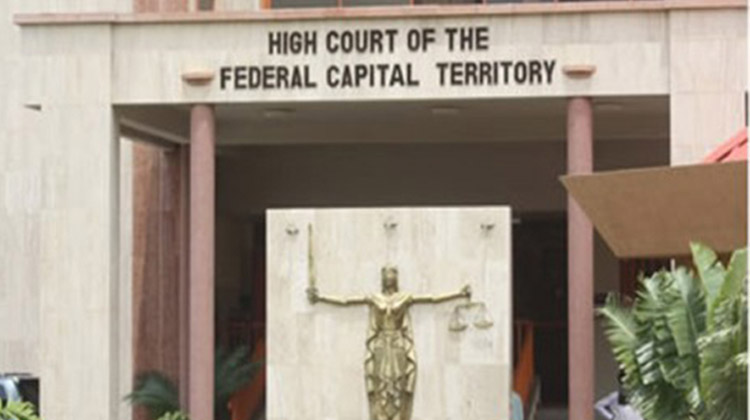
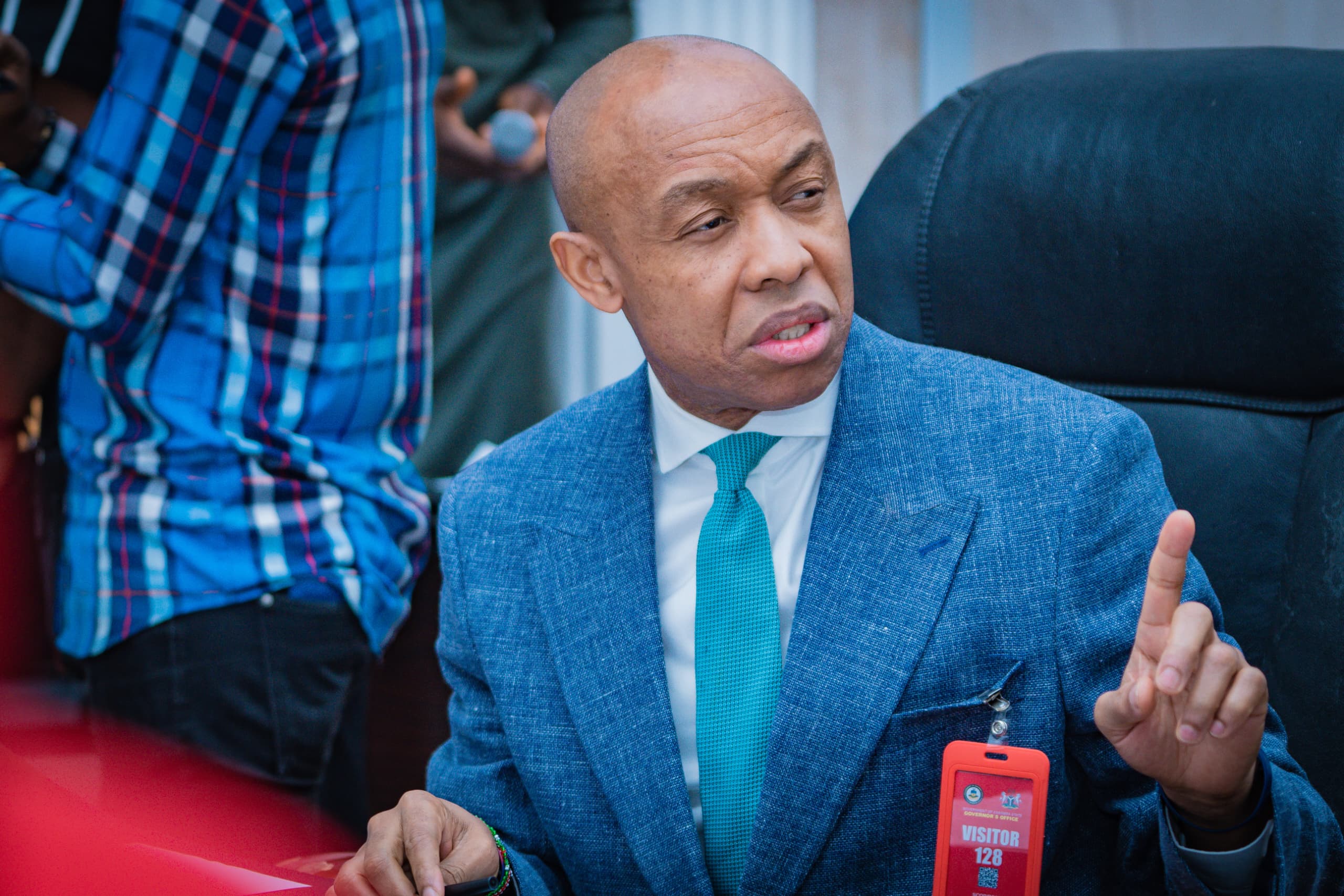
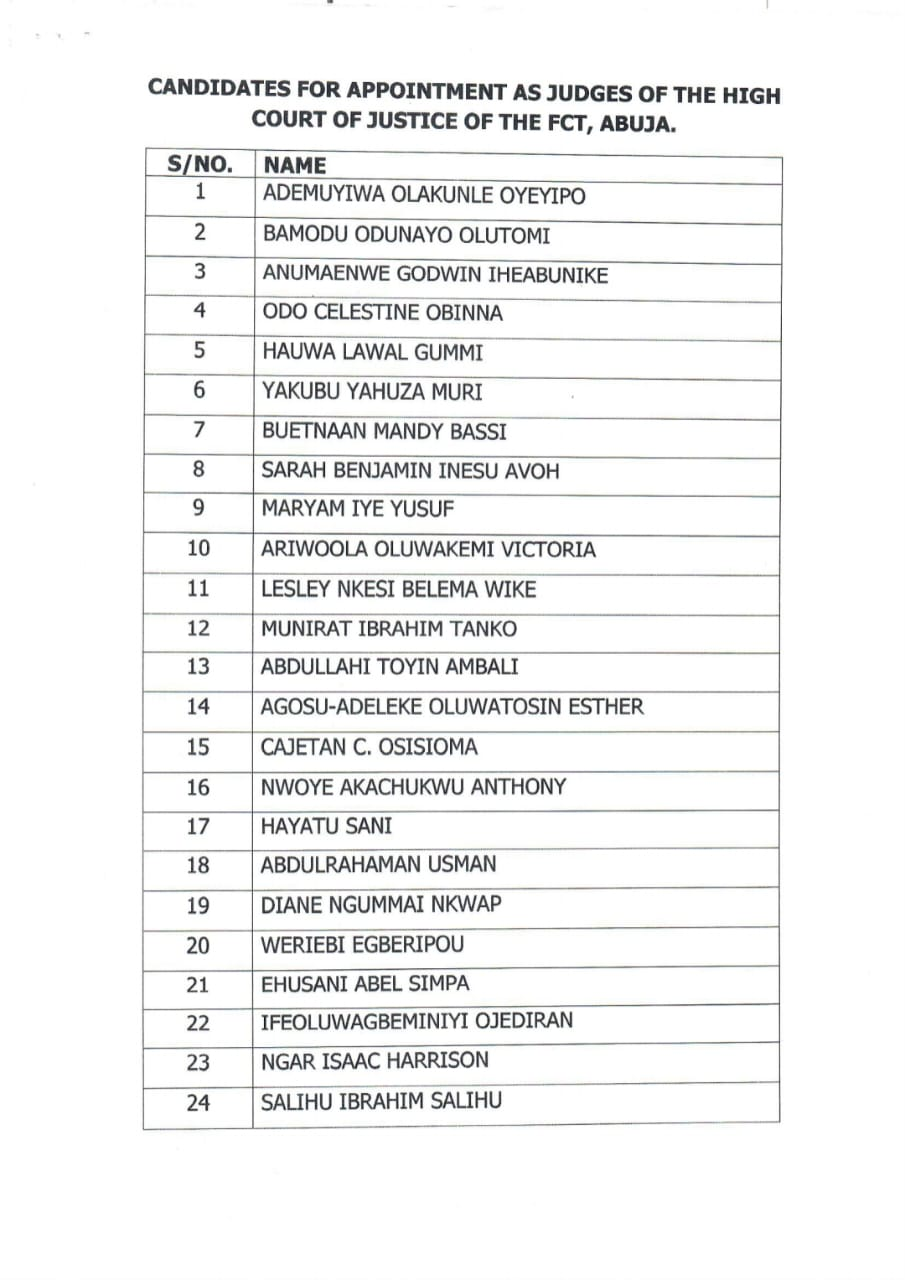
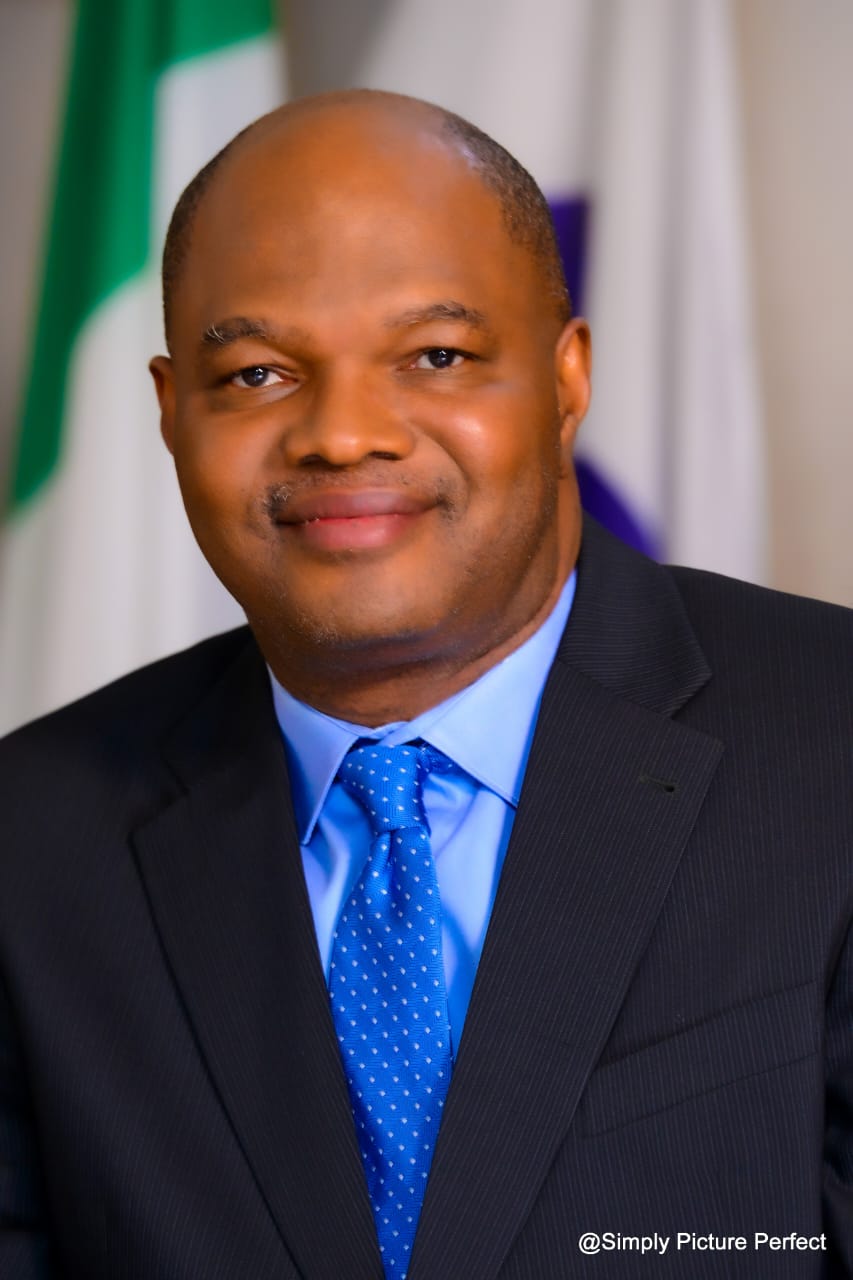
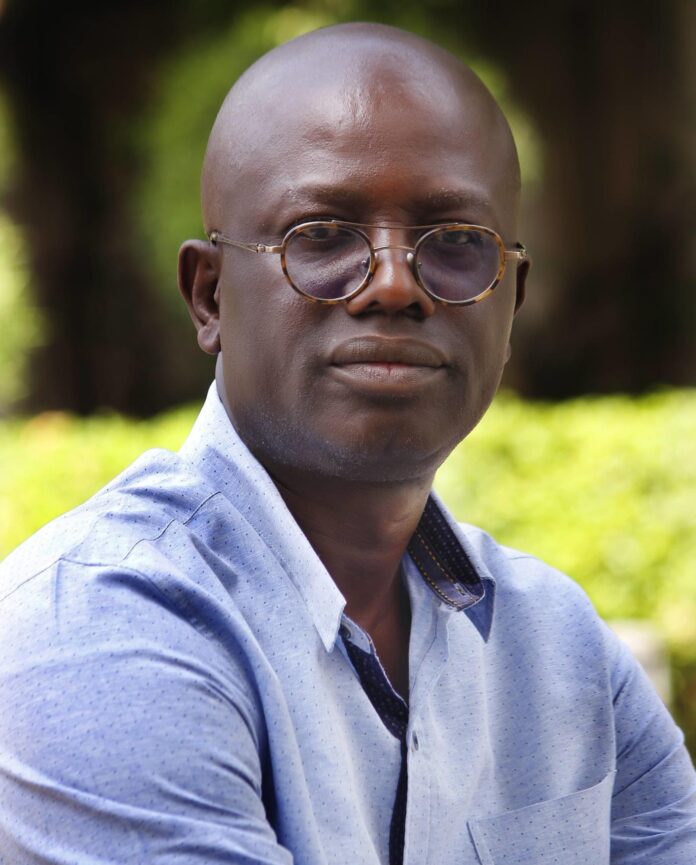
Law teacher and an ex-Chair of the National Human Rights Commission, Prof. Chidi Odinkalu has condemned the recently published list of nominees to the High Court of the Federal Capital Territory.
Speaking strongly against the short period within which stakeholders and interested members of the public are expected to respond to the list, Odinkalu on X (former Twitter) also remarked that the nominations “illustrates everything wrong with the Nigerian judiciary.”
Odinkalu
Odinkalu also expressed disappointment with NBA saying it aided the legitimization these “self-serving nominations” by publishing the list on a Friday during the Ramadan and Lenten periods, giving the public only two working days to provide comments.
“When I speak about filialization & genitalization of the Nigerian judiciary, this is an exhibit in that case,” Odinkalu tweeted, referring to the alleged nepotism and favoritism in judicial appointments.
Throwing his spotlight on candidates who seem to have close ties with current or former high-ranking judicial and government officials, Odinkalu said : “The kind of testicular fortitude required for this kind of perversion of high judicial office is good only for #organisedcrime. Ask urself the question: if this is about administration of justice, why convert judicial office into a family heirloom or a genital insemination?”
The kind of testicular fortitude required for this kind of perversion of high judicial office is good only for #organisedcrime. Ask urself the question: if this is about administration of justice, why convert judicial office into a family heirloom or a genital insemination?
Candidate No. 7, Buetnaan, is the daughter of the President of the Court of Appeal, who was appointed a judge in Plateau State in 2021, raising questions about the transparency of her potential transfer.
Candidate No. 11 is an in-law of Rivers State Governor Nyesom Wike, who appointed her as a Senior Magistrate last year, suggesting potential quid pro quo arrangements.
The list includes the daughters of the former and current Chief Judges of the FCT High Court (No. 5 and No. 9, respectively).
Candidate No. 10 is the daughter-in-law of the current Chief Justice of Nigeria, while No. 12 is the daughter of his immediate predecessor.
Last Friday, a Federal High Court, Abuja, dismissed an application challenging the appointment of 12 judges for the High Court of the Federal Capital Territory (FCT) on the basis that since 2017 Ebonyi State has not been represented in the FCT judiciary.
Justice Inyang Ekwo, in his verdict held that the plaintiff, Azubuike Oko, a lawyer from Ebonyi, lacked the legal right to institute the matter.
Justice Ekwo also upheld the objection raised by Akinlolu Kehinde, SAN, counsel for the Chief Justice of Nigeria (CJN), Justice Olukayode Ariwoola; the National Judicial Council (NJC) and the Chief Judge of the FCT High Court, Hussein Baba-Yusuf.
The News Agency of Nigeria (NAN) reports that Oko had, in the suit marked: FHC/ABJ/CS/205/2024, challenged the non-inclusion of lawyers from his state among the newly appointed judges of the High Court of the FCT.
He alleged that Ebonyi had been routinely excluded and marginalised with respect to the appointment of judges of the court by Baba-Yusuf, NJC and the Federal Judicial Service Commission (FJSC).
Oko claimed that it was the FCT chief judge who computed the names of qualified lawyers from selected states, which he sent to the FJSC for recommendation to NJC for appointment by the President of Nigeria as judges of the court.
He said the states from which the new appointment was made are Bauchi, Bayelsa, Enugu, Imo, Kogi, Kwara, Lagos, Oyo, Plateau, Rivers, Taraba, and Zamfara.
He alleged that currently, Oyo and Kogi “already had two serving judges in the FCT High Court, and the two states were given additional slots, to now have three judges, despite the fact that Ebonyi State has no single serving judge in the High Court of the FCT.”
Justice Ekwo, in the judgment on Friday held that the plaintiff was not saying that he had personal injury caused by the CJN, NJC and the Chief Judge of the FCT or any other defendant in the case for which he sought remedy.
He said that “the plaintiff only claimed that he is from Ebonyi, which had been routinely excluded and marginalised with respect to the appointment of judges of the High Court of FCT by the 1st, 2nd and 3rd defendants (the CJN, NJC and the Federal Judicial Service Commission (FJSC).
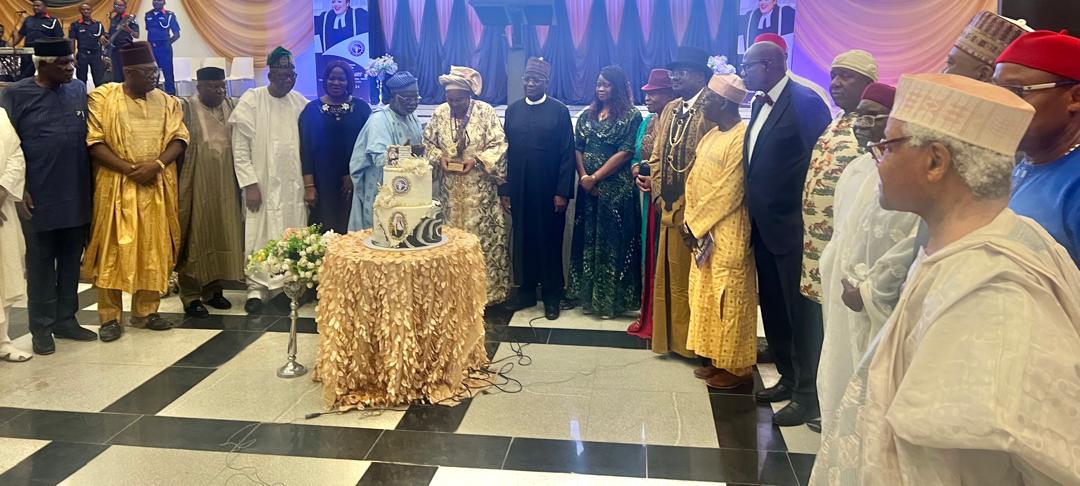
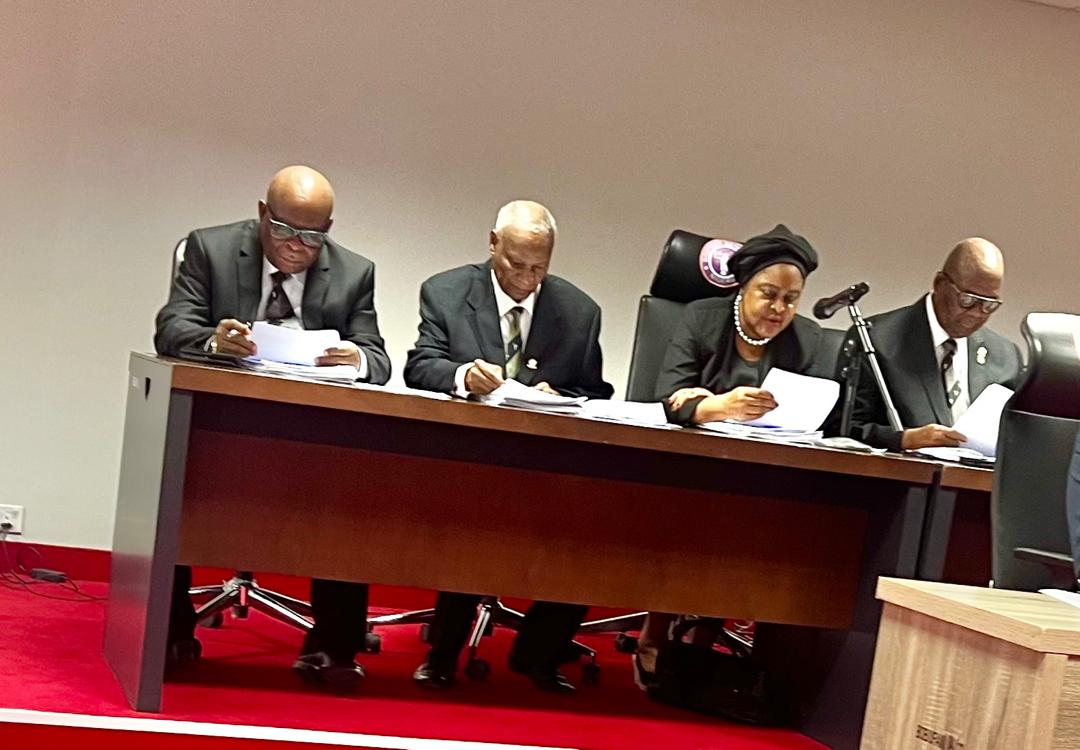
At the close of a send-off dinner hosted by the Body of Benchers in honour of Hon. Justice Mary Peter Odili, JSC (rtd) who concluded her tenure as Chair of the Body, Thursday night, the Chief Justice of Nigeria, Hon. Justice Olukayode Ariwoola announced that she has been appointed a member of National Judicial Council (NJC).
The appointment is with effect from 1st April 2024.
By the provision of Paragraph 20 of Part One of the Third Schedule to the 1999 Constitution of the Federal Republic of Nigeria, as amended. The National Judicial Council shall comprise the following Members:
the Chief Justice of Nigeria, who shall be the Chairman;
the next most senior Justice of the Supreme Court who shall be the Deputy Chairman;
the President of the Court of Appeal;
five retired Justices selected by the Chief Justice of Nigeria from the Supreme Court or Court of Appeal;
the Chief Judge of the Federal High Court;
the President, National Industrial Court of Nigeria;
five Chief Judges of States to be appointed by the Chief Justice of Nigeria from among the Chief Judges of the States and of the High Court of the Federal Capital Territory, Abuja in rotation to serve for two years;
one Grand Kadi to be appointed by the Chief Justice of Nigeria from among Grand Kadis of the Sharia Courts of Appeal to serve in rotation for two years;
one President of the Customary Court of Appeal to be appointed by the Chief Justice of Nigeria from among the Presidents of the Customary Courts of Appeal to serve in rotation for two years;
five members of the Nigerian Bar Association who have been qualified to practice for a period of not less than fifteen years, at least one of whom shall be a Senior Advocate of Nigeria, appointed by the Chief Justice of Nigeria on the recommendation of the National Executive Committee of the Nigerian Bar Association to serve for two years and subject to re-appointment: Provided that the five members shall sit in the Council only for the purposes of considering the names of persons for appointment to the superior courts of record; and
two person not being Legal Practitioners, who in the opinion of the Chief Justice of Nigeria, are of unquestionable integrity.
Says amendment of Legal Practitioners’Act will decongest LPDC dockets
Chief Awomolo, SAN takes over as Chair Body of Benchers, CJN as Deputy
The immediate past Chair of the Body of Benchers (BoB), Hon. Justice Mary Peter Odili, (JSC, Rtd.) has urged that the Legal Practitioners Disciplinary Committee (LPDC) consider having some its meeting outside the Federal Capital Territory to make proximity easier for the parties involved.
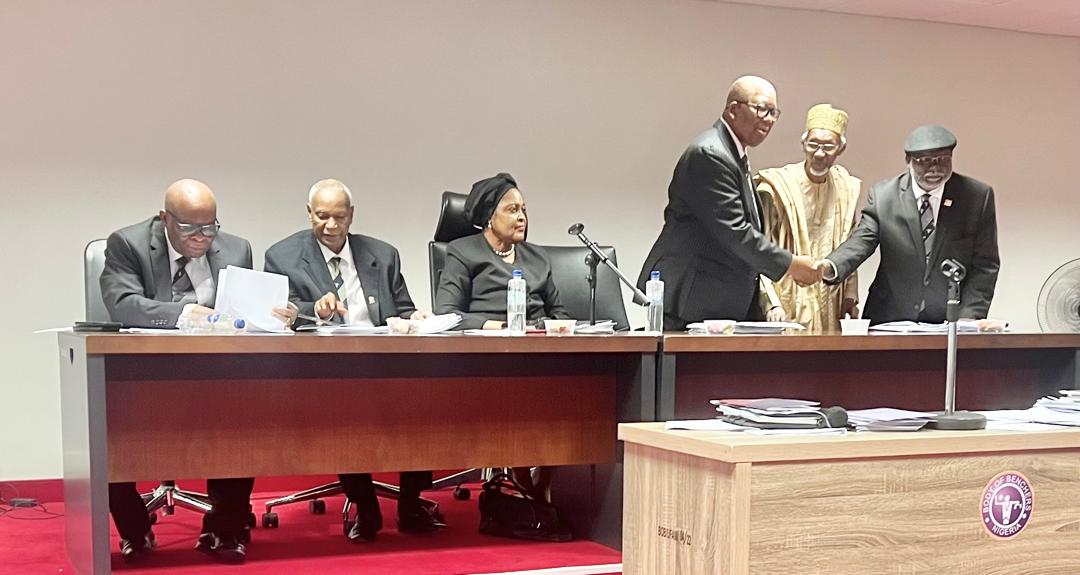
Awomolo, SAN new BoB Chair shaking hands with the CJN, Former CJN Mahmud Mohammed in the middle
Speaking at the send-off ceremony marking the end of her tenure as BoB Chairperson, Justice Odili said: “The Body should consider in the future the possibility of the Legal Practitioners Disciplinary Committee having some of its sittings conducted outside the Federal Capital Territory. This will give Petitioners and Respondents. across the country proximity. The Body should collaborate with either the Court of Appeal, State High Courts, Federal High Court or the National Industrial Court of Nigeria to use their facilities in this regard.”
She also expressed optimism that with the Legal Practitioners Act about to be amended, the difficulties encountered by the LPDC particularly in the area of decongestion of its dockets will be in the past.
“I am optimistic that when the Legal Practitioners Act is amended, the Legal Practitioners Disciplinary Committee will have more panels which will enable it decongest its docket. The issue of quorum will also be addressed since the proposal is to have a panel made up (3) members as against Five (5) which is currently obtainable.”
Justice Odili added: “Amajor milestone has been achieved in relation to the amendment process, having reached out to major stakeholders and the Bill transmitted to the National Assembly for enactment. I commend the leadership of the National Assembly especially the Chairmen of the Committees on Judiciary for their understanding and carrying the Body of Benchers along with other stakeholders in the amendment process. I hope the proposed bill will be passed into law in no distant time.”
On the success of the Body’s mentoring program for young Lawyers, Her Lordship had this to say:
“I am elated to note the successful completion of the maiden edition of the Body of Benchers Mentoring Program for all young lawyers (0-7 years post call). The Mentoring Program which concluded on the 15th of December, 2023 with a total number of three hundred and ninety-six (396) Mentees was a success story and I look forward to an improved experience going forward.
“1 urge all members of the Body of Benchers to actively participate as Mentors in this laudable program aimed at repositioning the Law Profession in the right direction. In this vein, I commend the Chairman of the Committee, Chief Joe-Kyari Gadzama, OFR, SAN.”
Justice Mary Odili at the close of the ceremony passed the baton of leadership to Ashiwaju A.S. Awomolo, SAN.
Chief Justice Olukayode Ariwoola is Vice-Chair of the prestigious body.
The Anti-Corruption Committee of the Nigerian Bar Association is inviting you to a a Zoom webinar.
Topic: AML/CFT Principles under the 2023 Rules of Professional Conduct: Walking the fine lines between confidentiality and regulatory compliance
The Rules of Professional Conduct for Legal Practitioners 2023 was made on the 6th of June 2023 to provide ethical standards for members of the legal profession in the nation and Chapter Two of the new Rules made provisions to address money laundering, terrorism financing and proliferation financing in lawyer-client relationships and the provision of legal services. The inclusion of these provisions is necessitated by the growing risks encountered in the financial sector and the prospect of using independent legal practitioners for the perpetuation of financial crimes, having regards to the fact that they often deal with client moneys.
The Money Laundering (Prohibition and Prevention) MLPP Act 2022 included Legal Practitioners in the categories of persons under the Designated Non-Financial Businesses and Professions (DNFBPs) that are saddled with AML/CFT obligations.
It is against this background that the new Rules of Professional Conduct for Legal Practitioners (RPC) was passed in 2023.
As such, this webinar aims to examine the provisions of the new rules in line with the global standards set out in the Financial Action Task Force Recommendations 2023 to address risks associated with the Legal Profession.
Date: Mar 22, 2024 Time: 11:00 AM West Central Africa
Register in advance for this webinar: Click on the link below to register.
If you educate a boy-child, you educate a man. If you educate a girl-child, you educate a nation. -African Proverb
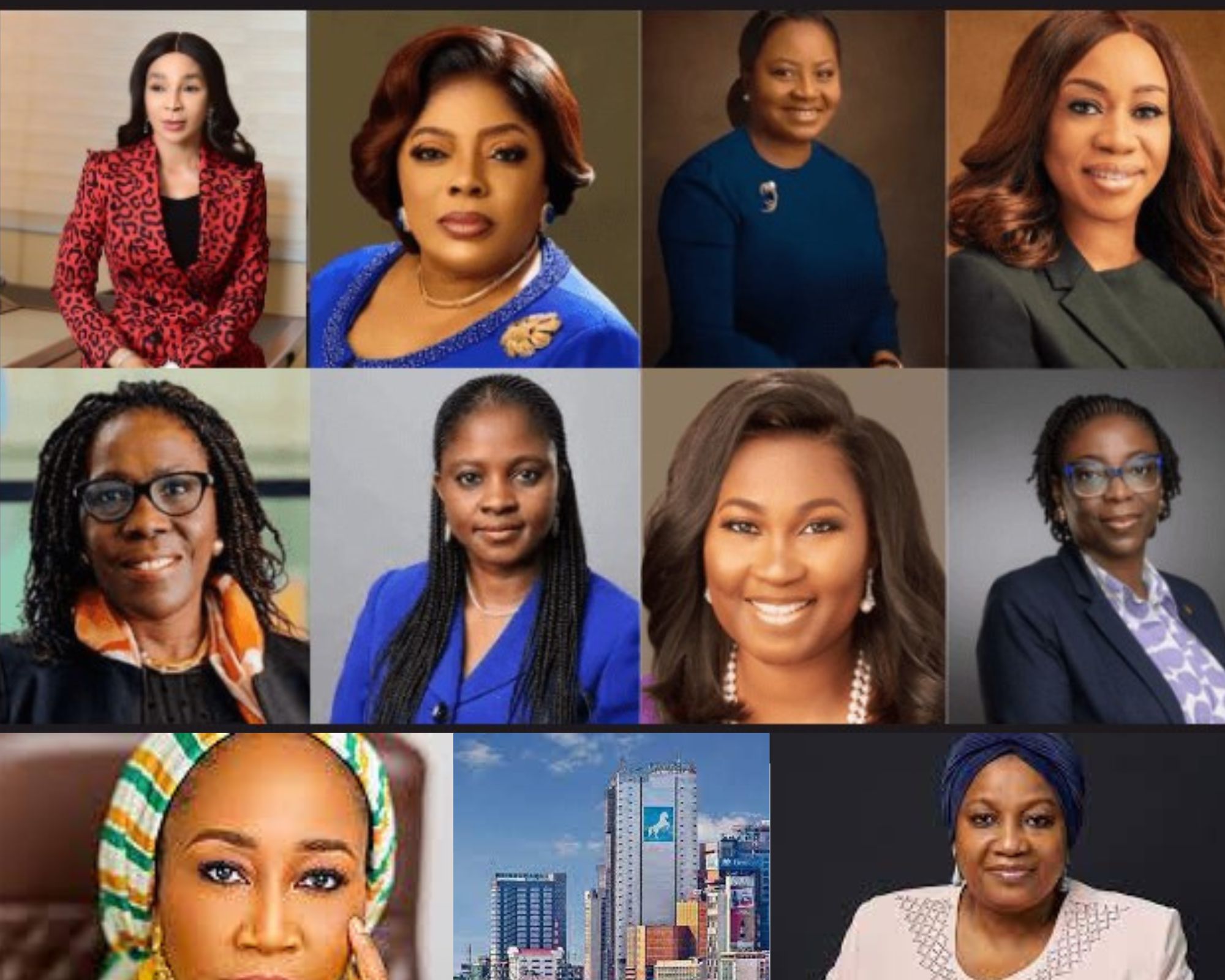
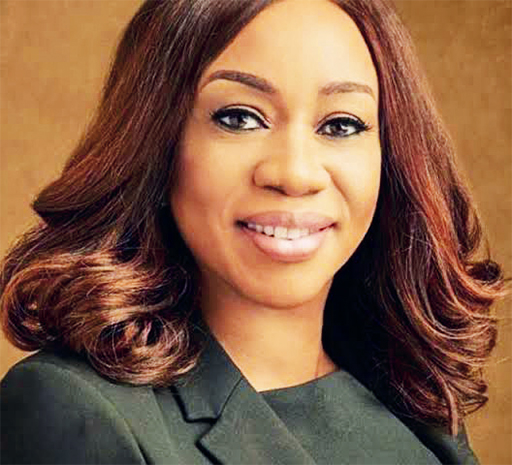
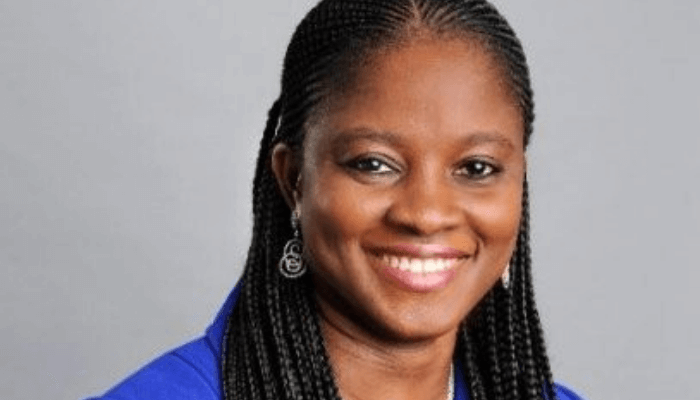
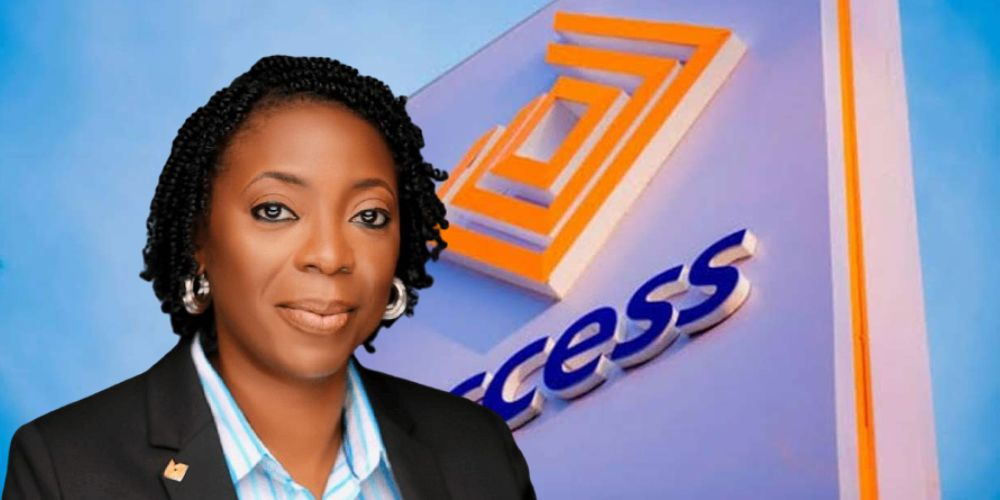
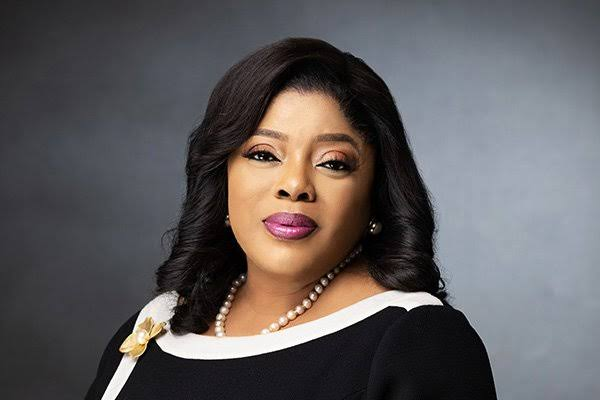
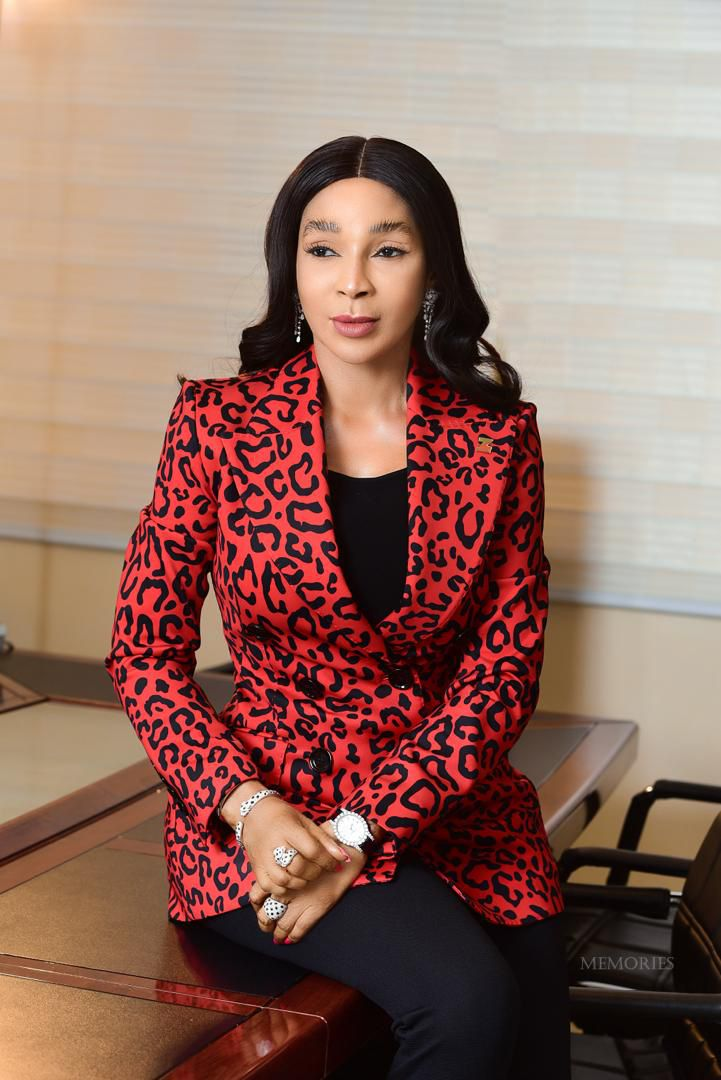
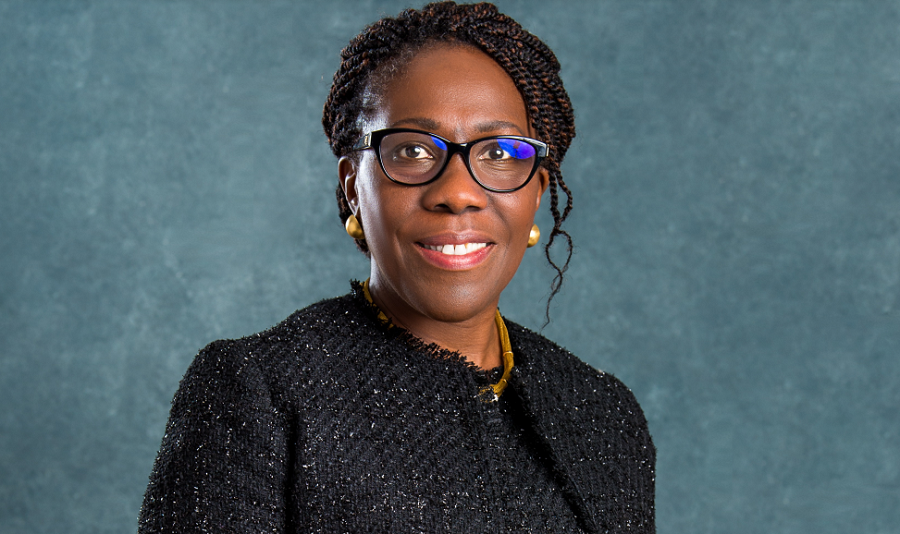
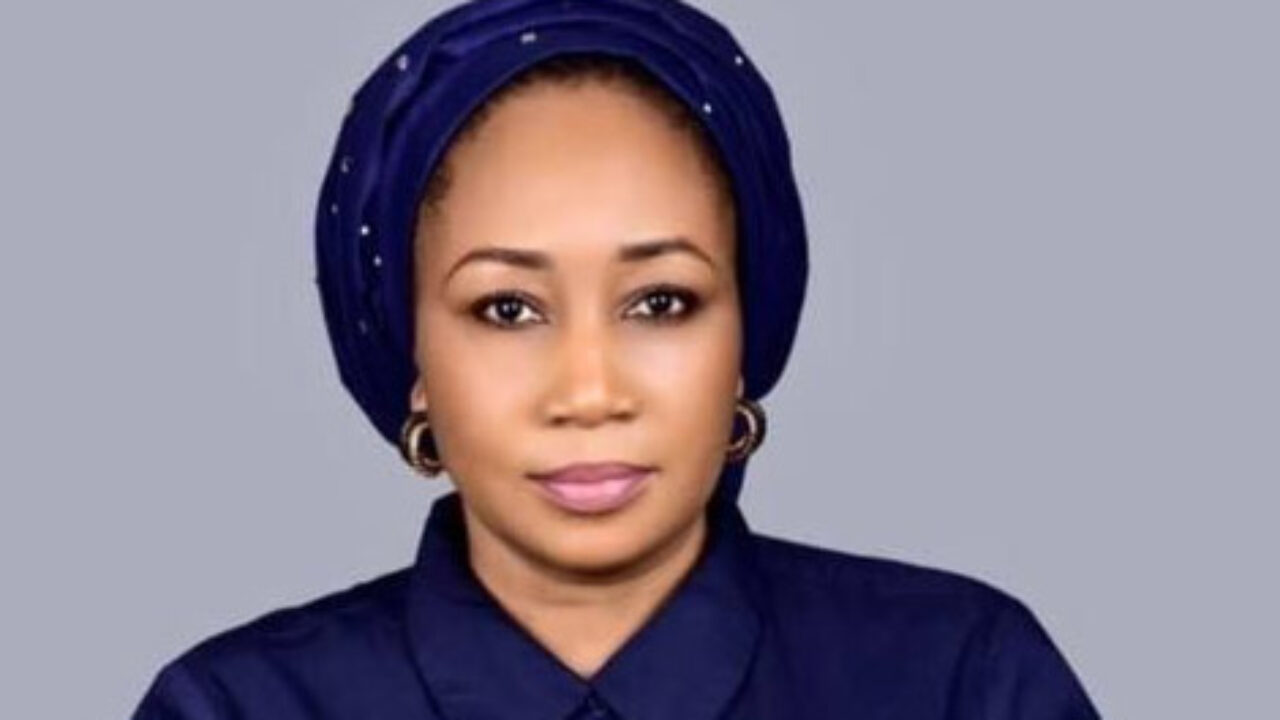
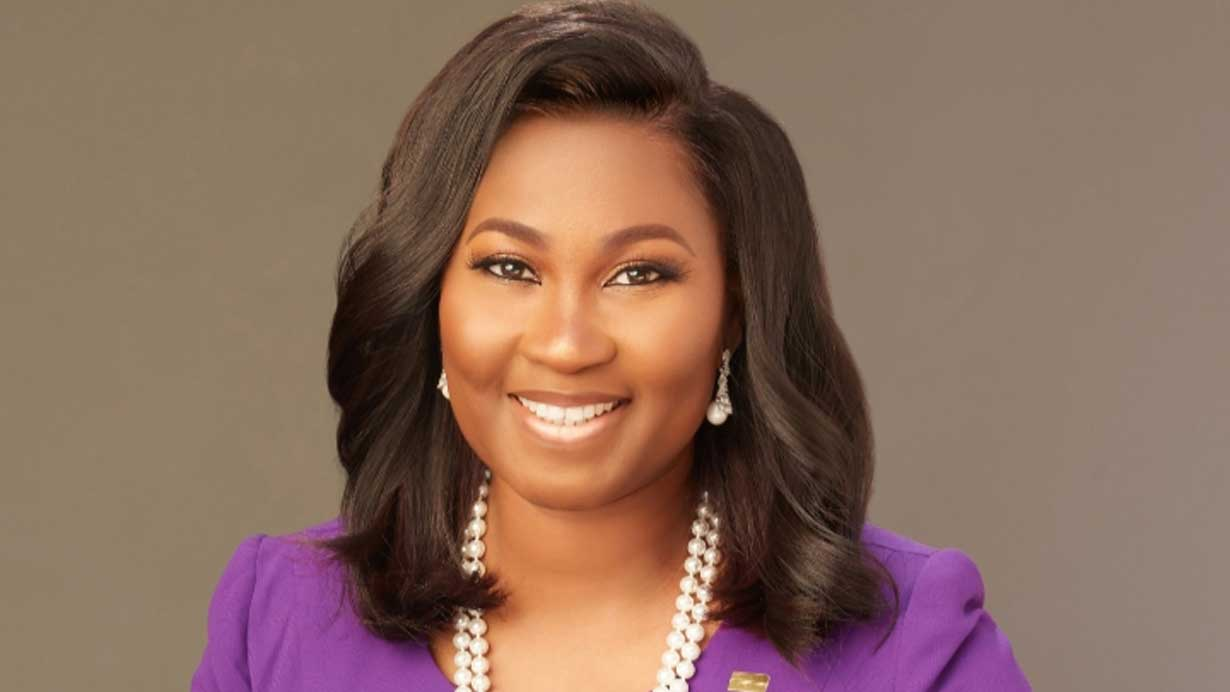
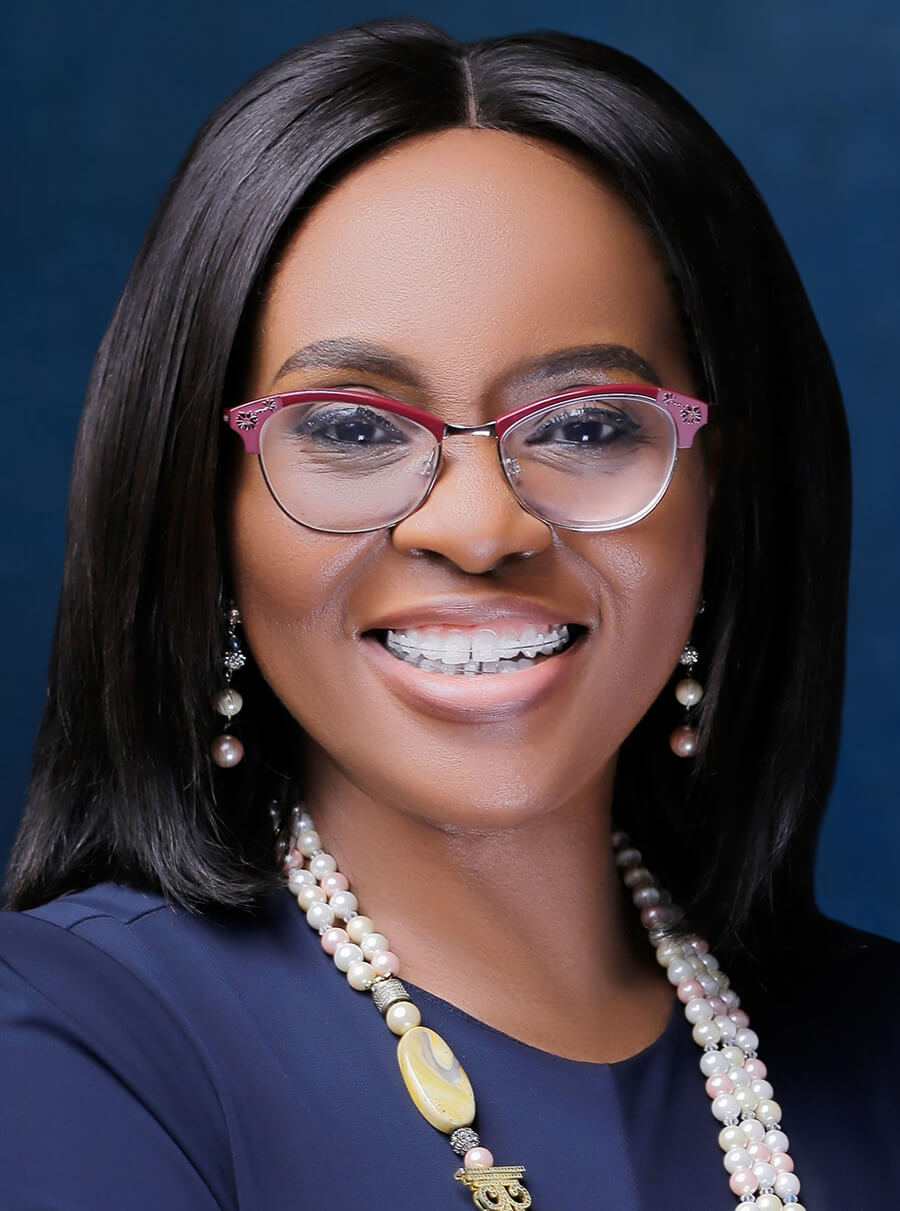
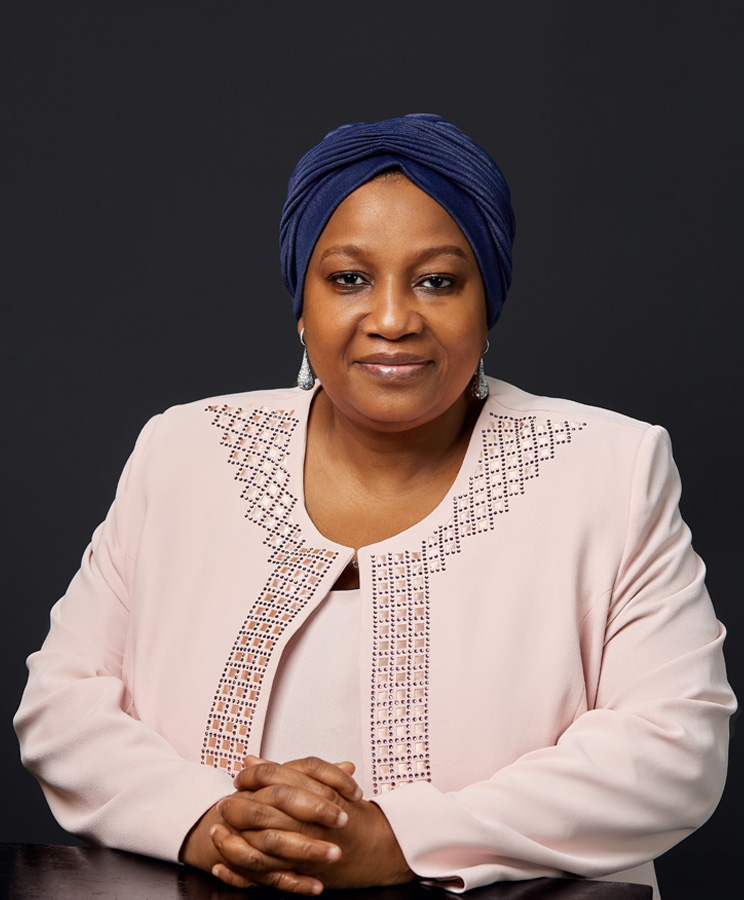
The announcement Dr. Adaora Umeoji as the first female Group Managing Director/ Chief Executive (GMD/CEO) of Zenith Bank Plc has been trending on the social media but with that also came the revelation that 11 women now head Nigeria’s top banks. Law & Society Magazine presents you with these 11 amazing amazons.
1. Miriam Olusanya, Guaranty Trust Bank
Olusanya is the first woman Managing Director of Guaranty Trust Bank. According to Wikipedia, the University of Ibadan graduate of Pharmacy, assumed the position in July 2021. She also holds a Master of Business Administration from the University of Liverpool. Miriam Olusanya joined GTB as an executive trainee in 1998. Until her appointment as Managing Director, she was an executive director at the bank.
2. Yetunde Bolanle Oni, Union Bank PlC
On 10 January 2024, Yetunde Oni became the first female Chief Executive Officer of Union Bank. Her appointment comes hours after the Central Bank dissolved the boards and managements of Union Bank of Nigeria, Keystone Bank, and Polaris Bank over alleged corporate governance infractions and non-compliance with regulatory requirements among others. A graduate of economics from the University of Lagos Yetunde Oni began her career with Prime Merchant Bank Treasury & Money Markets Group and in 1994 joined Ecobank Nigeria as a relationship manager. In January 2005, she joined Standard Chartered Bank Nigeria, assuming the Senior Account Relationship Manager role in the Local Corporations segment. In 2014, she was appointed Managing Director and Country Head of Commercial Banking in West Africa for Standard Chartered Bank. Oni underwent an executive training at Oxford University in 2016; obtained an MBA in Business Administration from Bangor University in 2020 and in 2021 became the first female Managing Director and Chief Executive Officer at Standard Chartered Bank in Sierra Leone.
3. Bolaji Agbede, Access Holdings Plc
By a letter dated February 11, 2024, the Board of Directors of Access Holdings Plc, announced the appointment of Ms Bolaji Agbede as the Acting Group Chief Executive Officer of Access Bank. Until her appointment, Agbede who over 27 years’ experience in Human Resources management, customer relationship management and banking operations was the company’s most senior founding Executive Director in charge of business support.. She commenced her professional career in 1992 at Guaranty Trust Bank and served in various capacities within the commercial banking and operations functions rising to the position of manager in 2001.
Agbede joined Access Bank in 2003 as an assistant general manager and was responsible for managing the Bank’s portfolio of chemical trading companies. She became the head of human resources for the Access Bank Group in 2010, overseeing the human capital development of the Group. She held the position until June 2022 when she was appointed the executive director of Access Holdings after the bank transitioned to a holding company. The University of Lagos alumnus began her professional career at Guaranty Trust Bank (GTB), where she rose from executive trainee in 1992 to a managerial position in 2001. She was once GTB’s relationship manager and vault custodian. Ms. Agbede also served as the Chief Executive Officer of JKG Limited, a business consulting outfit, in 2003.
4. Nneka Onyeali-Ikpe, Fidelity Bank
Mrs. Nneka Onyeali-Ikpe assumed office as Managing Director/CEO, Fidelity Bank on January 1, 2021. She was Executive Director, Lagos and South West, overseeing the bank’s business in the six states that make up the South West region. She led the transformation of the Directorate to profitability and sustained its impressive year-on-year growth, across key performance metrics, including contributing over 28% of the Bank’s PBT, Deposits and Loans. A consummate professional of over 30 years’ experience across various banks including Standard Chartered Bank Plc, Zenith Bank Plc and Citizens International Bank Limited, she held several management positions in Legal, Treasury, Investment Banking, Retail/Commercial Banking, Corporate Banking. Onyeali-Ikpe has been involved in the structuring of transactions in various sectors including oil & gas, manufacturing, aviation, real estate and exports.
As an Executive Director at Enterprise Bank Plc, she received formal commendation from the Asset Management Corporation of Nigeria (AMCON) as a member of the management team that successfully turned around Enterprise Bank Plc. She holds Bachelor of Laws (LLB) and Master of Laws (LLM) degrees from the University of Nigeria, Nsukka and Kings College, London, respectively. She has attended executive training programs at Harvard Business School, The Wharton School University of Pennsylvania, INSEAD School of Business, Chicago Booth School of Business, London Business School and IMD amongst others. She is also an Honorary Senior Member (HCIB) of The Chartered Institute of Bankers of Nigeria (CIBN).
5. Adaora Umeoji, Zenith Bank
She has nearly 30 years of cognate banking experience of which 26 years has been with Zenith Bank. An alumnus of the prestigious Harvard Business School where she attended the Advanced Management Program (AMP), she is also an alumnus of Columbia Business School with a Certificate in the Global Banking Programme. Ms. Umeoji holds a Bachelor’s Degree in Sociology from the University of Jos, a Bachelor’s Degree in Accounting, and a First-Class honors in Law from Baze University, Abuja. She holds a Master of Laws from the University of Salford, United Kingdom, a Master in Business Administration (MBA) from the University of Calabar, and also has a doctorate in business administration from Apollos University, USA. Umeoji holds a Certificate in Economics for Business from the prestigious MIT Sloan School of Management, USA, and has attended various management programmes in renowned Universities around the world including the strategic thinking and Management programme at Wharton Business School, USA.
She also attended the executive program in Strategic Management and has a Certificate in Leading Global Business all from Harvard Business School, USA. The top banker is a fellow of notable professional bodies including the Chartered Banker Institute, UK, Chartered Institute of Bankers of Nigeria, Nigerian Institute of Management, Institute of Credit Administration, Institute of Certified Public Accountants of Nigeria, Institute of Chartered Mediators and Conciliators, and the Institute of Chartered Secretaries and Administrators of Nigeria among others. In 2022, the Federal Government of Nigeria honored Dr. Umeoji with Officer of the Order of the Niger, as a recognition of her contributions to nation-building. She is a Peace Advocate of the United Nations (UN-POLAC).
6. Ireti Samuel-Ogbu, Citi Bank
Ireti Samuel-Ogbu became the first female MD/CEO of Citibank Nigeria Limited from September 2020. She was the Europe, Middle East and Africa (EMEA) Head, Payments and Receivables, Treasury and Trade Solutions (TTS) under Citi’s Institutional Clients Group (ICG) based in London, UK. She was on the Board of Citibank Nigeria Limited for 5 years before her elevation as a non-Executive Director. For the past 32 years, Ms. Samuel-Ogbu held various roles across Citi’s businesses in the UK, Nigeria and South Africa, having worked in each of these countries twice. As a champion of diversity and inclusion, she co-founded two impactful mentorship initiatives within Citi – the Sapphire Leadership Program for Middle East and Africa, and the Momentum Program in the UK. She is currently the EMEA co-Chair for Citi Women’s Affinity group and represents EMEA on the Global Affinity Steering Committee at Citi.
The Citi Bank CEO who holds a BA Hons in Accounting and Finance from Middlesex University, UK and an MBA from the University of Bradford, UK is a Lead Contributor and Thought-Leader in various Banking and Fintech forums across EMEA and has won awards in the UK and South Africa including Financial Service Leader of the year 2019 at Black British Business Awards, Innovate Finance Women in FinTech Power List, 2017 and Best Professional Executive, 2009, at the Nigeria Achievement Awards (presented in South Africa by the former President Goodluck Jonathan).
“
7. Halima Buba, SunTrust Bank
Adamawa state born Halima Buba graduated with a bachelor’s degree in Business management from the University of Maiduguri. She also holds an MBA from the same institution. She is an alumnus of the Lagos Business School, an honorary member of the Chartered Institute of Bankers and a Fellow of the Institute of Management Consultants. She was appointed as the MD/CEO of Sun Trust Bank in January 2021 after serving as a Deputy General Manager in Ecobank Nigeria.
8. Yemisi Edun, FCMB
In July 2021, the Board of Directors of First City Monument Bank (FCMB) Limited confirmed the appointment of Yemisi Edun as the substantive CEO/managing director of the bank. Edun was the Executive Director and Chief Financial Officer of the bank. She began her career with Akintola Williams Deloitte (member firm of Deloitte Touché Tohmatsu) in 1987, with main focus on Corporate Finance activities. She was also involved in the audit of Banks and Other Financial Institutions. Edun joined FCMB in 2000 as Divisional Head of Internal Audit and Control before assuming the role of Chief Financial Officer of the Bank.
She holds a Bachelor’s degree in Chemistry from the University of Ife, Ile-Ife and a Master’s degree in International Accounting and Finance from the University of Liverpool, United Kingdom. She is a Fellow of the Institute of Chartered Accountants of Nigeria and a Certified Financial Analyst, CFA Charter holder. Edun is also an Associate Member of the Chartered Institute of Stockbrokers; an Associate Member of the Institute of Taxation of Nigeria; a Member of Information Systems Audit and Control, U.S.A; and a Certified Information Systems Auditor.
9. Bukola Smith, FSDH Merchant Bank
Bukola Smith holds an MBA from Alliance Manchester Business School, University of Manchester, U.K, and a B.Sc. Economics from the University of Lagos. She is a Fellow of the Institute of Chartered Accounts of Nigeria (ICAN), Honorary Member of the Chartered Institute of Bankers and an Associate Member, Certified Institute of Pensions (Nigeria). She became the Managing Director/Chief Executive Officer of FSDH Merchant Bank in April 2021 and brings 29 years of progressive experience in the banking industry with a track record of strategic execution and leadership.
Before her appointment as Managing Director, she was the Executive Director, Business Development at FCMB and held several other leadership positions since joining in 2006. She was responsible for the banks over 200 branches across the country, Public Sector, Business Banking, Agriculture and Transaction Banking Divisions. Under her, the bank’s SME focused team in 3 years moved from 5th position in the industry to 1st position in 2019 (KPMG Customer Service Report 2020). In addition, she established the FCMB Women in Business Desk (branded SheVentures) which supports female entrepreneurs; and set up FCMB Trustees and FCMB Custody. Prior to joining FCMB in 2006, she worked with FSB International Bank from 1992 to 2000 and Fidelity Bank plc from 2000 to 2006 gaining experiences in several areas of banking including treasury operations, international trade services, foreign and local currency trading, bond trading, Correspondent Banking and relationship management of Non-Bank Financial Institutions and Private Banking Clients. Bukola currently sits on the boards of Women in Successful Careers (WISCAR), and the Toyin Oni Foundation (NGO for cancer awareness). She serves as a mentor to several young women within and outside these networks.
10. Kafilat Araoye, Lotus Bank
Kafilat Araoye obtained a first degree in History from the University of Ife, now Obafemi Awolowo University in 1985 and an M.Sc. in Industrial Relations & Personnel Management from the University of Lagos (1987),graduating as the best student in her class. She also holds Islamic Finance certifications issued by Ethica Institute of Islamic Finance, the Chartered Institute for Securities & Investment/Bahrain Institute of Banking & Finance, as well as the Islamic Research & Training Institute. She has attended various executive management courses at the Cranfield School of Management (UK), Lagos Business School, Institute of Management Development (Switzerland) and INSEAD (France). Ross business School, University of Michigan(USA). She is certified in specialized Banking courses ,conferences and Seminars, among them are the Structured Trade Finance Course by Euromoney U.K, Payments ,Clearing and Settlement Conference by National Association of Clearing Houses, USA2006, 2007, 2008, International Banker’s Seminar, USA, South Africa, Swift regional conference.
She started her career in 1988 at National Oil and Chemicals Marketing Company Plc (now Conoil Nigeria Plc), and moved in 1990 to Guaranty Trust Bank Plc, as the pioneer head of Human Resources .She was part of the GTBank team that went to Jordan for the implementation of its core banking application amongst other critical assignments executed for the Bank. She left with accolades in 2015 as General Manager but continued to consult for banks and other sectors through her consulting outfit until 2018 when she was appointed as the MD Designate for LOTUS Bank then in formation. Having put over 25 years into banking, Kafilat has expertise in virtually all areas of core banking, with emphasis on International and Domestic Operations, Payments, General Management, Business Development, Risk Management, Human Resources and Strategy.
She was part of several Central Bank of Nigeria (CBN) Implementation Committees on some Settlement and Payment solutions between 2002 and 2007 and represented Nigeria at the Banking Techniques and Practice committee of International Chamber of Commerce, between 2006 and 2011.She was member Chartered Institute of Banker’s Committee on Capacity building and Certification from 2014 to 2020 and is currently member, Advocacy & Strategy Committee of the Chartered Institute of Bankers of Nigeria.
11. Oluwatomi Ayodele Somefun, Unity Bank
Oluwatomi Somefun graduated from Obafemi Awolowo University, Ife in 1981 with a Bachelor of Education in English language. A Fellow of the Institute of Chartered Accountants of Nigeria (ICAN), she is an alumna of both Harvard and University of Columbia Business Schools. A member of various professional bodies, including the Bank Directors Association of Nigeria (BDAN), the Chartered Institute of Bankers of Nigeria (CIBN), the Institute of Directors (IOD), among others, her professional career spans about thirty-three years.
Between 1982 and 1986, she worked at KPMG as a Senior Audit Assistant; Arthur Andersen in 1986 as a Senior Auditor as well as Ventures & Trusts Limited, between 1989 and 1992, as an Associate. Prior to her current appointment, Mrs. Somefun worked at Credit Bank Limited and UBA Plc. She was also the MD/CEO of UBA Capital & Trustee Limited and the Founding Managing Director of UBA Pension Custodian Limited: two of UBA Group’s major subsidiaries. Mrs. Somefun also served as a Non-Executive Director on the boards of directors of UBA Foundations, UBA Trustees, UBA Nominees and UBA Registrars. On August 12th, 2015 she assumed the role of Chief Executive Officer of Unity Bank Plc; the first woman ever appointed to that position.
They were joyously returning home, calling friends and family members to share their joy. But their excitement was suddenly cut short and turned into sorrow….Elias Ugwu, a 60-year-old Enugu-based lawyer had gone to rescue his kidnapped cousin, Alexander Ugwu in Kogi State. The 53-year-old Alexander, a businessman at Akpanya, Benue State, was going back to his base in a commercial bus when they encountered heavily armed Fulani herdsmen who blocked the highway while kidnapping.
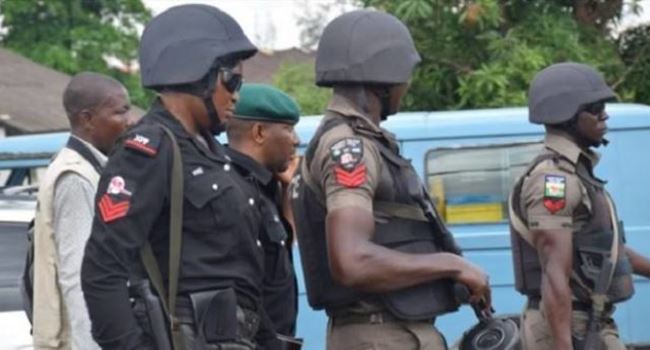
On their way back after paying the ransom, things went awry…. A team of policemen who were on the trail of bandits that earlier raided some police stations and banks at Anyigba, a nearby town, accosted them and the legal practitioner who was driving was shot dead. Alexander, the kidnapped victim, who was at the back of the car when his uncle’s life was cut short, in this interview, gave vivid details of how the heart-wrenching incident happened. Excerpts:
HOW I WAS CAPTURED
“To commence my travel from Iheakpu-oka village to Anyigba on March 2, 2024, I boarded a vehicle going to Ejule from an Army checkpoint situated between Aloma and Ejule. Precisely, the village called Iboko. While on our way, we encountered heavily armed herdsmen who were stopping vehicles, shooting and kidnapping people.
They kidnapped everyone in the car (six persons), including the driver. And we were all taken into the bush. The incident happened around 6:20 PM that Saturday, and I was there till Monday morning when they began to request for ransom.
RANSOM
Before my phone went off, the first relation that I could speak to over the phone was my cousin, Elias Ugwu, whose father is my father’s elder brother. I called him and told him the kidnappers were requesting for N10 million because, according to them, once an individual is from the Eastern part of the country, he or she must be wealthy. I explained to them that I didn’t have money. They countered, saying if I didn’t have money, my relatives had.
Meanwhile, they collected a ransom of N130,000 from the driver’s family. Also, they collected N200,000 as ransom from the family of a first-year student at Kogi State University, KSU, who is from Ogugu, in Kogi State.
Shocked by the ransom that they (driver and student) were asked to pay, I asked why my case was different. However, If anyone talked, they would beat the hell out of the person. They later reduced my ransom to N4million. I was given the privilege to communicate the ransom to my uncle, who informed all my relatives including Iheakpuoka community in Anyigba about their demand. When the money was finally raised, the kidnappers asked them to bring the ransom before they could rescue me.
Though my uncle was to come on Friday to pay the ransom and rescue me, he couldn’t make it. But when my captors finally called him at around 5 pm, he said he was at Ejule. The kidnappers then told him what to buy for them. They told him to buy Nkpurummiri (hard drug), water and N10,000 pack of energy drinks.
Around 7 pm on Friday, they called him, and he said he couldn’t come out at that time to Aloma, that he is an old man and he was afraid. They said he should sleep somewhere, that the next day they would tell him when and where to bring the ransom and the items.
On Saturday morning, 9th of March, we usually take long-distance walks with these kidnappers inside the bush barefooted. It is from one bush to another. On Friday night we moved to another village called Abeji…..I can’t remember the real name. In fact, we didn’t even know where we were till in the morning when we asked, they told us where we were. We started communicating with my uncle unknown to us that there was a bank robbery on Thursday in Ayingba and this was happening on Saturday morning. So, the villagers who saw my uncle and his friend that were coming to rescue me, driving around, were the ones that called the police informing them that there is a vehicle that is roaming around the community through an escape road behind the university.
So, the policemen came and and laid ambush. They parked their vehicle in the bush close to the road. When we were coming back, we saw a police vehicle packed distantly and we were happily approaching the vehicle. The next thing we heard was ‘stop’ and then the sound of gunshots and my brother was hit on his head. He lost control, the vehicle ran into the bush. That was when one of the security people said they are police officers. I used a cloth to tie my uncle’s head because he was bleeding profusely. They tried to pull out the vehicle but we could not. The police then used something to attach it to their Hilux to pull out the vehicle.
We already told them who we were, but it was already too late. They had finished searching the vehicle expecting to see a huge sum of money. The kind of clothes I wore made them realise that I was a victim of kidnap, they became tired. They took us to Maria Goretti Hospital in Ayingba. When we got to the hospital, the officer in charge told his men not to allow us to speak to anyone. They handcuffed and took us to the area command’s office. My uncle was admitted. It was on Sunday morning that he died. At about 11 am the following day, they came with their Hiliux and took us to Area one police Station, Lokoja. That was where we were tortured and questioned, and later wrote our statements.
They said we were armed robbers I said no, I am. a kidnap victim. The man who came with my uncle to pay ransom asked them to bring out the money they took from our vehicle, that the money was withdrawn from Nsukka, Zenith bank, not Anyingba. Luckily they brought out N300,000 from the vehicle, the teller zenith bank, Nsukka was boldly written on paper used in folding the money. I brought out the clothes that I wore all through my captivity in the kidnapper’s den, that was when they believed we were not robbers.
When we finished writing our statements, they took us into a cell. We slept in the cell till Monday morning when they started taking us from one office to another. They put on camera while interviewing us. Then, the officer in charge asked them not to put us inside the cell again. He then asked us to call our relatives to come and bail us. That was how we were bailed on Tuesday morning.
DID YOU PAY FOR BAIL? No, we didn’t pay a dime. because one of the people who came for my bail is very popular and was communicating directly with the Commissioner of Police.
WHILE IN THE HOSPITAL, WHAT DID THE WOUNDED BARRISTER SAY? Immediately the police shot him, he was unconscious, he was breathing heavily, he didn’t say anything.
POLICE SAID THEY STOPPED YOU PEOPLE BUT YOU FAILED TO OBEY THEM? The police ambushed us, they hid their vehicle inside the bush and laid ambush. If you see the barrister’s vehicle, you will understand better. The car glass was not rolled up and the shot that killed him was fired from that side. The man that released the bullets was being called Sampolo by his colleagues. They now asked us to take my uncle’s corpse and vehicle back to our place.
WHILE YOU WERE IN THE KIDNAPPERS DEN, WERE YOU BEING FED? They were not giving us food. We were eating only cashew for the eight days we were inside the bush. I could not go to the toilet for once. Every night, we must trek for three to four hours in the bushes.
HOW OLD ARE THE KIDNAPPERS? They are young men, who are under age thirty. If they slap you, you will think it is from a woman. They have sophisticated weapons.
HOW WAS THE RANSOM PAID? I don’t know when they arrived, but they released eight of us that morning. When my uncle came with his friend, Chidi Aneke, they asked him to kneel down. They ordered his friend to slap him. Chidi did. They corked the gun and told him to slap him very well and he did. When they came out from the vehicle, they carried the cash into the bush, my uncle knelt till they confirmed the cash. That was when they released and handed me over to him. It was after that, as we were coming home and making calls, happily informing our people that I have been freed, this incident happened.
Only the title of this article originally written by Emma Nnadozie and published by Vanguard was changed.
The Director General Abuja Chamber of Commerce and Industry, Agabaidu Chukwuemeka Jideani has commended the Minister of Industry, Trade and Investment for setting up the National Trade Intelligence Unit.
Speaking to stakeholders in Abuja today, Sir Agabaidu Jideani stated that the Trade Intelligence Unit (TIU) is very vital in enhancing effective decision-making and strategic planning both for the government and the business community about international and domestic trade and business.
He highlighted the desirability of the unit, stating that it would provide Market Insight by gathering, analyzing, and disseminating vital information about global markets and local markets, indicating emerging trends, consumer preferences, competitor activities, and legal and regulatory changes. Armed with this information, businesses and policymakers are enabled to make informed decisions.
He stated that such a unit if properly utilized would also help in driving Foreign Direct Investments, promoting economic growth, and enhancing job creation opportunities by providing potential investors with insights into market opportunities, regulatory frameworks, and investment climate assessments.
Mr. Jideani, however, noted that the membership of the coordinating committee needed to be expanded to include the business community and the organized private sector as well as the security and intelligence agencies as vital components of Nigeria’s economic security architecture.
In conclusion, he observed that the unit is indispensable for navigating the complexities of global trade, enhancing competitiveness, and maximizing economic opportunities for Nigeria and that It serves as a strategic asset to empower government and businesses to make informed decisions, mitigate risks, and capitalize on emerging trends in the dynamic world of international commerce, for the benefit of our society.
Come Wednesday, I will be in Asaba, Delta State as one of the faculties at the Nigerian Army Quarterly Media dialogue. With the theme, ‘The imperatives of military-media partnership for the attainment of national security’, it is part of their efforts to secure the buy-in of critical stakeholders as they tackle the challenge of insecurity in Nigeria. Incidentally, 12 years ago in the same Asaba, I was one of the speakers at the Chief of Army Staff Annual Conference under Lt General Azubuike Ihejirika (retd). Unfortunately, the mood will be different this time considering what happened last Thursday when some criminal gangs in Ughelli South Local Government ambushed troops of the 181 Amphibious Battalion after which the commanding officer, a Lt Colonel, two Majors, one Captain and 12 Soldiers were gruesomely murdered.
I join millions of Nigerians in commiserating with the families of the deceased and the Nigerian Army. As President Bola Tinubu rightly noted while granting full authority to the military high command to apprehend and bring to justice those responsible for the “unconscionable crime against the Nigerian people”, the unfortunate tragedy “demonstrates the dangers faced by our servicemen and women in the line of duty.” I also agree with the president that “As a nation, we must constantly remember and honour all those who have paid the ultimate price to keep our nation safe, strong, and united.”
From available reports, the CO and his troops did not die in a gun duel with the criminal gangs. They were ambushed and executed after which their bodies were cannibalised. No army in the world would allow such audacious barbarism against its officers and men to go unpunished. Meanwhile, I have read several posts either to excuse the bestiality as a ‘mistake’ because victims were taken for fake soldiers or provide justification on the pretext that the military had taken sides in the communal conflicts. For me, there is no defence for what happened. More worrisome is the recurrence of these killings of military troops by communal warlords in a nation where people who have lived together for centuries are now up in arms against one another.
Exactly three years ago (in March 2021 to be specific), a Captain and 11 soldiers were mowed down while trying to keep peace between the Bonta people of Konshisha local government and their neighbours, the Ukpute people of Oju local government in Benue State. As I explained at the time, both the Bontas (who are Tiv speaking) and the Ukputes (Igede speaking) are predominantly peasant farmers. The two groups have also cross settled in several villages along their boundary and even in some cases inter-married. Following a violent crisis at the time over the ownership of a parcel of land, troops were sent in to restore order only to run into an ambush orchestrated by one of the parties in the dispute. According to a statement by the army, not only were the soldiers brutally massacred, “the bandits proceeded to burn all the eleven soldiers and their officers beyond recognition while their weapons and ammunition were carted away.”
That the circumstances of the Delta killings bear similarities to what happened in Benue State three years ago is why the authorities must do more than perfunctory knee-jerk reactions. Between January 2018 and August 2022, according to a report by the National Boundary Commission, no fewer than 676 persons were killed in various communal land disputes across the country. In 2021, Patrick Okigbo’s ‘Nextier SPD’, a development research firm, also revealed that communal clashes accounted for 14 out of the 890 conflict incidents and 80 out of the 3,787 casualties that year. From north to the south, but mostly in the latter, many contiguous communities that have lived together for decades are at war over lands that are not put to any productive use. And it is the poor of our society, expendable ‘youths’ that do the fighting while those supplying the AK-47 and other deadly weapons are secure in the knowledge that they, and members of their immediate families, are far away from the theatres of war. And that nobody would ever try to fish them out for punishment.
In a January 2018 column, ‘When a Nation Becomes Funeral Home’, I used the chilling December 2023 report released by the United States-based Human Rights Watch, ‘Leave Everything to God: Accountability for Inter-Communal Violence in Plateau and Kaduna States, Nigeria’ to illustrate this point. In that report, authorities were indicted for “taking no meaningful steps to address underlying grievances” or bring to justice those responsible for “tit-for-tat killings” with victims targeted for extermination, “often in horrific circumstances”. What this has created is a serious national security challenge.
Ordinarily, restoring law and order is the primary responsibility of the Police. Not the Army. But in most communities across the country today, belligerents no longer fear the police. No incident perhaps demonstrated that better than what happened on 7th May 2013 in Nasarawa State. On that tragic day, 63 police officers and 10 state security service (SSS) operatives sent to restore law and order were gruesomely murdered. Today, in most theatres across the country, this recurring mayhem over land disputes is hardly ever quelled until military troops are drafted in. That is the genesis to the tragedy in Okuama.
However, even in this moment of anger and pain, the military should be methodical in their approach. Two things should happen. One, they need to investigate the circumstances under which the troops were in the area and get all the details as to what transpired. Two, they must fish out all the culprits and bring them to justice, however long it takes. In doing that, they should avoid anything that suggests applying collective punishment, especially on residents of Okuama community. On that score, those who trivialise the bestial killings by peddling dangerous narratives are not helping matters.
The most thoughtful intervention on this tragedy has been from elder statesman and leader of the Ijaw Nation, Edwin Clark, who knows the slain officers personally and admitted speaking to them on an unrelated issue shortly before their death. Describing what happened as “very shocking, very barbaric and wicked,” Clarke called for a collaboration between the military and the communities to fish out the culprits. “I was so sad when I heard that Lt Col. Ali was involved because on Thursday, 14 March (same day the troops were killed), I spoke to him about my younger brother, Col Bernard Clark (rtd), who died recently and was to be buried on (last) Friday,” said Clarke who defended the action of the military in the aftermath while at the same time appealing for restraint. “I had to contact him (the deceased CO). And he told me he was in a vehicle and that he would speak to me later, only to hear that he was among them. At that time, he was speaking to me from Agbor in Delta State.”
I am aware of the anger within the military and justifiably so too, given the barbaric manner the lives of their officers and men were terminated. But the application of Odi or Zaki Biam principle would be unhelpful in the circumstance. Both in international law and the laws of war, collective punishment is prohibited, based on the fact the actions of one or a few individuals should not attract punishment for innocent people. A cornerstone of justice systems worldwide, as one writer puts it, “is the presumption of innocence (while) collective punishment flips this principle on its head, presuming guilt by association.”
Let me make myself clear once again. The criminals who killed our soldiers deserve no sympathy. But I am also aware that those who committed such a heinous crime would have left the scene, knowing the gravity of their deed and what would follow. So, apprehending them (and their collaborators) would require intelligence gathering and painstaking efforts. Under an atmosphere of collective punishment that often reduces sense of remorse and heightens perceived grievances, the military will not get the requisite information they need. Besides, it could exacerbate the initial problem they were trying to solve, especially now that the two sides in the dispute are on the propaganda offensive in a bid to profit from the tragedy. The military should not fall for their tricks.
A Day at the Lekki Free Zone
During a recent encounter with Mr Haresh Vaswani, who I was meeting for the first time, a mutual friend said jocularly that he was sure I would have at least two of his (Aswani’s) company’s products in our house. I expressed my doubt. When the friend identified the company as Tolaram Group, a Singaporean family business to which I wasn’t familiar, I became even more curious. Until he mentioned Indomie Instant Noodles as one of their products. Indomie is without doubt one of the biggest brands not only of Noodles but also of any products in the country today.
Incidentally, Aswani, who chairs Tolaram Group in Africa has been in Nigeria for more than three decades and is also the Honorary Consul-General of Singapore in our country. As I would learn, Indomie is just one of the many premium household products either being manufactured by the Tolaram Group or in which they are the main distributor. Dano Milk, Colgate toothpaste, Power Oil, Hypo cleaner, Kellogg’s, Pringles, Coco Pops are some of the others. But what Aswani focused on that day is the Lagos Free Zone (LFZ), a project he described as Nigeria’s first privately owned free zone with a fully integrated deep-sea port, covering an area of 830 hectares. In Lagos a few weeks ago, I visited the LFZ. Fully equipped with world-class infrastructure, a single clearance window for ease of doing business, and integrated with the Lekki deep seaport spanning 90 hectares, I was dazed by what I saw.
Built in partnership with China Habouring Engineering Company (CHEC), the Lagos State Government and the Nigeria Port Authority (NPA), construction of the Lekki Port was commenced in 2012 when Babatunde Fashola was governor and is to date the single largest private infrastructure investment in the country. That such a significant investment of about $2.5 billion would be committed along the Lekki Corridor is an indication of the potential of that axis for the development of both Lagos and our country. The Lekki Corridor stretches from Victoria Island along the Peninsula to Epe with the Expressway serving as its primary artery. In my chat with the LFZ Managing Director, Dinesh Rathi who took me on a tour of completed facilities, what they are trying to create within the economic zone which entices businesses with tax breaks and simplified procedures, “is a ‘city within a city’ that integrates industries, residences, and commercial spaces, all functioning seamlessly together.”
The Lekki Corridor, as Rathi explained, is divided into four quadrants. The fourth quadrant is where the Lekki Deep Sea Port, Lagos Free Zone, Dangote Fertilizers & Refinery Complex are domiciled. “It is a dynamic region on the rise. It offers exciting opportunities for businesses and residents seeking a modern and vibrant environment,” said Rathi who reeled out the benefits of the Lekki Port equipped with modern facilities, including those not available in either Apapa or Tin Can Ports. For instance, the Lekki Port has five ship-to-shore (STS) cranes for loading and unloading intermodal containers from ships and 15 rubber tired gantry (RTG) cranes. Completed in April last year, the Lekki Port recently welcomed its first transshipment vessel and consistently receives an average of one vessel per week since its launch, according to Rathi.
I was also taken through the history of the Tolaram Group. Established in 1948, and structured as a holding company, it boasts a diverse portfolio spanning various sectors, including fintech ventures which, according to Rathi, “involves providing innovative solutions for financial services and transactions in emerging markets.” Additionally, their infrastructure and industrial projects contribute to building essential structures and industries that form the backbone of economic activity. Some of the facilities I saw include a modern fire station, an expansive truck park, the Colgate factory where I was taken through production processes, several warehouses, a medical facility, police station, residential tower, solid waste management centre, security command center, helipad and three banks. To ensure a reliable and cost-effective energy source for its tenants, as Rathi explained, the LFZ has secured a 20-year Gas Infrastructure Development Agreement (GIDA) that will connect it directly to the national gas transportation grid. To actualise this, a consortium already formed to develop the main pipeline and distribution network within the zone, ultimately delivering piped natural gas to each tenant. The agreement, I was told, also incorporates an LNG solution.
I left the LFZ feeling more optimistic about Nigeria and the prospects for economic growth with the right policies and incentives for investors, local and foreign. But on my way back to the Island, I spent several hours in traffic gridlock along the same Lekki-Epe highway. I can only imagine what would happen on that axis during the coming rainy season and the years to come. This is one of the issues that would have to be resolved by the Lagos State government for the dream of the Lekki Corridor, the LFZ and other big businesses along that axis to become a reality. The federal government can help resolve that if they expedite action on the Coastal Road that has been in the pipelines for years. But for the Tolaram Group, I believe they have taken a huge bet on Nigeria. I hope it pays off. Both in their interest and that of our country.
You can follow me on my X (formerly Twitter) handle, @Olusegunverdict and on www.olusegunadeniyi.com
Our site uses cookies. By clicking “Accept All Cookies”, you direct Law and Society Magazine to store cookies on your device and disclose information in accordance with our Cookie Statement: cookie policyACCEPTREJECT
Privacy & Cookies Policy
Privacy Overview
This website uses cookies to improve your experience while you navigate through the website. Out of these cookies, the cookies that are categorized as necessary are stored on your browser as they are essential for the working of basic functionalities of the website. We also use third-party cookies that help us analyze and understand how you use this website. These cookies will be stored in your browser only with your consent. You also have the option to opt-out of these cookies. But opting out of some of these cookies may have an effect on your browsing experience.
Necessary cookies are absolutely essential for the website to function properly. This category only includes cookies that ensures basic functionalities and security features of the website. These cookies do not store any personal information.
Any cookies that may not be particularly necessary for the website to function and is used specifically to collect user personal data via analytics, ads, other embedded contents are termed as non-necessary cookies. It is mandatory to procure user consent prior to running these cookies on your website.