Home Blog Page 622

Misconduct: Judge accused of telling barrister to ‘chill out’ and mimicking TV sitcom character

A London judge has been found guilty of misconduct after being accused of telling a barrister to “chill out” and mimicking a TV sitcom character.

Judge Nigel Gerald was “discourteous” to the lawyer “by raising his voice and making remarks which showed irritation and a degree of contempt for counsel’s submissions”, according to a disciplinary finding.

The judge, who has overseen civil disputes at Central London County Court, was found guilty of misconduct and given “formal advice”, the Judicial Conduct Investigations Office (JCIO) has announced.

In a notice about the case, the JCIO said judges are all expected to be “courteous, patient, tolerant and to respect the dignity of all” in order to protect the profession.

“A barrister, who appeared before HHJ Gerald in court, complained that the judge had behaved in a rude and aggressive manner towards him”, the notice read.

“The complaint included an allegation that HHJ Gerald had told him to ‘chill out’ and that he had mimicked him in the style of a character from a television sitcom.

“An investigation was carried out under the Judicial Conduct (Judicial and other office holders) Rules 2014. Whilst not all the allegations were made out, a nominated judge considered that HHJ Gerald had been discourteous towards counsel by raising his voice and making remarks which showed irritation and adegree of contempt for counsel’s submissions.”

David Brent, the boss at fictional paper merchant Werham Hogg played on The Office by Ricky Gervais, tells his staff in the second season of the show to “chill out” after making an offensive joke.

“Some of you seem to have got off on the wrong foot with me”, he says.

“You didn’t like some of the jokes I told earlier. You’ve got to chill out, yeah, trust me, this is what I do, all right?

“You will never work in a place like this again. This is brilliant. Fact. And you will never have another boss like me. Someone who’s basically a chilled out entertainer.”

The JCIO notice does not say which sitcom character was allegedly mimicked, when the exchange took place, and at which court.

The notice adds: “The nominated judge recommended that HHJ Gerald should be issued with formal advice.

“HHJ Gerald accepted the findings of the nominated judge and extended his apologies and regret for his behaviour.”

The JCIO also refused to say whether the ‘chill out’ allegation had been found proven.

DNA Fibs: Ex-Chelsea star drags wife to court after discovering two kids he raised were fathered by his wife’s ex

An ex-Chelsea star has filed for divorce — after DNA tests showed his two children were fathered by his wife’s ex.

Midfielder Geremi, 45, said the couple’s twins were born after wife Laure had a fling.

Court documents in his native Cameroon say she “destroyed the harmony” of their marriage “through her abject behaviour”.

They also mention her “repeated lies”, and add: “No children have been born from this union.

She claimed the twins born in June 2008 — four years before the couple’s marriage — were his, which motivated them to get married.

“But the discovery that the children were from her previous partner destroyed the couple’s harmony.

It caused him a huge emotional shock.”

He also said his wife psychologically damaged him.

Cameroon ace Geremi made 109 Chelsea appearances between 2003 and 2007, scoring four goals.

Geremi played for Real Madrid between 1999 and 2003.

He winning La Liga and the Champions League twice.

Geremi also previously played for Newcastle.

Except for the title, this article was written by Steve Goodman and first published by The SUN UK Edition

Green Economy Entrepreneurs: $200,000 Grant for 56 females in She Sustains Accelerator Programme

The Climate Gender Equity Fund (CGEF) of the US Agency for International Development and Amazon has announced a $200,000 (Two Hundred Thousand Dollars) grant for outstanding Nigerian females in the green economy. The win is expected to help them scale their businesses.

The funds are from the Climate Gender Equity Fund’s (CGEF) “She Sustains Accelerator Programme,” which supports and empowers pioneer climate-focused start-ups and early-stage green businesses through education, mentorship, and financing.

There will be 56 winners in total. The first two cohorts will each produce nineteen winners, while the third cohort will produce an additional 18 winners.

Clean Tech Hub, an Abuja-based alternative energy firm, manages the She Sustains Accelerator Programme. Interested entrepreneurs have until March 29th to submit their entries. Women-led green businesses can apply to She Sustains using this link: https://tinyurl.com/CTHSheSustains.

Ifeoma Malo, founder and CEO, stated that Clean Tech Hub oversees the process of ensuring proper representation of women and Nigeria in global climate and environmental discourse and activities. She stated that the winners would receive equity-free grants of up to $200,000, access to a global investor network, and long-term entrepreneurship opportunities.

Clean Technology Hub uses She Sustains to catalyse gender-responsive climate innovation by empowering female entrepreneurs to drive meaningful change while addressing critical environmental challenges in Africa and beyond.

The term “green economy” refers to an economy that operates on sustainability principles with minimal environmental impact. Renewable energy sources, such as solar, wind, geothermal, hydro, and biomass, are critical components of a green economy, as are energy efficiency and green infrastructure, such as green roofs, rainwater harvesting systems, and permeable pavements.

USAID says the Climate Gender Equity Fund “will increase access to climate finance for gender-responsive, women-led, and women-benefiting organisations that address climate change.”

CGEF is one of the first major activities of USAID’s Climate Finance for Development Accelerator (CFDA), a $250 million initiative aimed at mobilising $2.5 billion in public and private climate investments by 2030 to fund a variety of climate change mitigation and adaptation solutions aimed at speeding up the transition to an equitable and resilient net-zero economy.

The CGEF, which was launched with an initial $6 million commitment from USAID and Amazon, aims to raise at least $60 million in capital from corporations, foundations, bi/multilateral, and other funders. The CGEF will reach out to women climate leaders in the global emerging markets where USAID operates. Amazon has also committed to investing $50 million in women-led and women-founded climate technology companies as part of the Climate Pledge Fund’s Female Founder Initiative, which will help Amazon meet its net-zero carbon goals.

118 Years After Satiru

By Chidi Anselm Odinkalu

22.5 kilometres south-west of Sokoto, there used to exist a community called Satiru. In March 1906, it was extinguished from the face of the earth. Three years earlier, in July 1903, the British had massacred Muhammadu Attahiru, the 11th Sultan of Sokoto together with over 1,000 of his followers, decapitating him in Burmi (near Bajoga in present day Gombe State, north-east Nigeria) and then displayed photographs of “the beheaded Sultan of Sokoto throughout Northern Nigeria.”

Many among the faithful in the region at the time regarded Frederick Lugard and his lot as infidels. The fate of Sultan Attahiru inspired, as Lugard would later complain in his 1906 annual report, “a series of local ebullitions in favour of some Mahdi or reformer”, claiming a mission to rid the people of these infidels.

At the beginning of  February in 1904, Satiru’s district head proclaimed himself The Mahdi and his son, as Prophet Isa (Jesus). Sultan Muhammadu Attahiru II, whom the British installed the previous year after killing his brother, arrested and detained the Mahdist pretender, who tragically died in detention. His son, Isa, succeeded him.

In January 1906, an itinerant preacher, Dan Makafo, arrived from French Niger (Niger Republic) to boost Isa’s insurgent claims. The following month, when the neighbouring community of Tsomo were reluctant to accord him recognition as prophet, Isa and his followers attacked the village, reportedly killing 14 and declaring a Jihadist rebellion against the British infidels.

Unlike in 1904 when they encouraged the Sultan to deal with Isa’s dad, the British chose in 1906 to handle Isa’s impertinence by themselves. On Saint Valentine’s Day in 1906, the Acting Resident, Mr. Hillary; his assistant, Mr. AGM Scott, and a force of over 70 mounted infantry led by Lt. Francis Blackwood, approached Isa and his rebellious followers in Satiru. The absence of mutual intelligibility did not much help mutual suspicion. Communication quickly broke down between both sides and in the ensuing chaos, Isa and his followers killed Hillary, Scott, Blackwood and 29 of their troops, leaving the remainder to retreat in disarray.

On 10 March, Lugard’s forces returned to Satiru. They comprised 573 rifles, 70 armed police, a 2.95-inch gun and several Maxim guns. Confronting them were Isa and over 2,000 of his followers armed with traditional weapons. It was a mismatch. Lugard quotes what happened next: “someone gave an order, everyone fired, then a whistle blew, everyone stopped and there was no one left alive in the front.” 

According to Jonathan Dewhirst, “in total it was estimated that Satiru lost over two thousand men killed, with over three thousand women and children captured. By half-past two in the afternoon the mission had ended, and the town burnt to the ground. The Sultan destroyed the ruins utterly, and decreed that the town should never be rebuilt.”

Isa was killed in the massacre. Dan Makafo was apprehended with five remaining leaders of the rebellion. Sultan Attahiru II had the six of them convicted by the Sokoto Native Court for rebellion and murder before executing them.

Lugard wrote a racy account of the extermination of Satiru in his 1906 annual report, exulting that the situation “demanded a signal and overwhelming victory for the restoration of our prestige and the prevention of any such rising in future.”

Nine year earlier, in February 1897, General Harry Rawson led an expedition that massacred its way through the Benin, ransacking the city and its civilization in retribution for an incident recalled by Queen Victoria in her diary of 12 January 1897 as follows: “a number of English officers & civilians including doctors &c who went on a friendly mission, but imprudently not armed, were attacked & fired upon by the King of Benin.”

Satiru was almost assuredly the most egregious but by no means the only example of such punitive colonial expeditions. Lugard described the policy as one entailing  “a terrible retribution” with the stated goal being to “render any further appeal to arms unnecessary in the Sokoto Province for very many years.”

On the centenary of the extermination of Satiru, historian, Richard Gott, recalled that this was a vain hope, pointing out that “active Islamic resistance continued in Northern Nigeria until the 1930s, remaining a permanent concern and irritant to colonial officers.”

Some could argue with justification that this resistance continues until the present day. Not unlike the colonial period, martial retribution has not prevented assaults on uniformed symbols of the Nigerian state. Instead it has guaranteed it.

In the last week of October, 1990, youths in Umuechem, an oil-bearing community in Rivers State, protested against Shell Petroleum, alleging acts of pollution that had decimated their environment, livelihoods and wellbeing. Shell invited the police to quell the protests, which had been largely peaceful.

In the early hours of 31 October, a squadron of the Police Mobile Force invaded the community shooting at random “in a purported attempt to locate three of their members who had not returned the previous evening.” Over 80 members of the community were reported killed and nearly 500 houses destroyed or burnt by the police. A judicial commission of inquiry into the Umuechem Massacre later found “no evidence of a threat by the villagers and concluded that the Mobile Police had displayed ‘a reckless disregard for lives and property.’”

Umuechem did not quell restiveness in the Niger Delta. Instead, it appeared to inflame the region’s youths and radicalize them. The brutal murder by armed gangs of 12 police officers in Odi, Bayelsa State in November 1999, led to bloody reprisals on the orders of President Obasanjo “which may have killed hundreds of unarmed civilians.”

As Chief of Army Staff, General Victor Malu oversaw the reprisals in Odi. A mere two years later, in October 2001, the killing of 19 soldiers in his community, Zaki Biam, in Benue State, led to similar reprisals in which “more than 200 people died at the hands of the soldiers.” Over the three year period from 1999 to 2002 alone, CLEEN Foundation and the World Organization against Torture (OMCT), reportedover fifty separate and documented incidents” and “over ten thousand Nigerians have reportedly been victims of extrajudicial executions at an average of over 200 executions per incident.”

14 years later, the excuse for the Zaria Massacre was that an un-named member of the Islamic Movement of Nigeria (IMN), as the Shiites of Nigeria are mostly called, had desecrated the epaulette of an Army General. Full casualty count has never been established but the official inquiry acknowledged that it took nearly 50 soldiers using 14 lorries, over six hours to dispose the bodies in mass graves in Mando, near Kaduna.

Half a century ago, on Christmas Eve in 1974, a soldier was reported missing in Ugep, Cross-River central. Soldiers sent by the commanding officer to look for their colleague set upon the villagers “killing innocent men, children and raping their women who were eagerly waiting to celebrate Christmas.” 13 people were reported killed and over 100 injured. Days thereafter, the body of the soldier was found in a gutter in the village. An inquiry later showed that the soldier who was “given to drunkenness and suffered occasional epilepsy” had “choked on his sputum and died.”

There may be little comparison between the circumstances of the reported death of the soldier in Ugep in 1974 and what transpired in Okuama, Ughelli South in Delta State 50 years later. Remarkably, the Okuama incident occurred in the month of the 118th anniversary of the extermination of Satiru.

President Bola Tinubu has rightly communicated the revulsion of all right-thinking persons at the mass murder of three senior officers of the Nigerian Army with 13 men under their command, followed by the desecration of the remains. He has also given the armed forces a free hand to ensure that “the offenders will not go unpunished” and promised to honour the memory of the fallen soldiers.

A dispassionate Board of Inquiry must get to the root of how these soldiers met their unconscionable fate, who was responsible, and how they were deployed on the mission that consumed their young lives. It is time to turn the page on this cycle of escalation, retribution and bloody reprisal that has prospered for 118 years since Satiru.

A lawyer and a teacher, Odinkalu can be reached at [email protected]

Four Argentine footballers arrested for raping journalist

Agency Report

hree professional footballers in Argentina linked to the alleged rape of a sports journalist in a hotel room were placed under house arrest Thursday.

A judge ordered a 90-day house arrest for three of the four defendants, who all play for first-division club Velez Sarsfield. The fourth player was released on bail.

All four were also suspended from their team, which sits third in Argentina’s top league and features Atletico Madrid coach Diego Simeone among its former players.

The case arose after a 24-year-old sports journalist alleged she was raped after being invited by Uruguay international Sebastian Sosa to a hotel room in Tucuman, Argentina, on March 3, where she said the other three defendants were also waiting.

All four were also suspended from their team, which sits third in Argentina’s top league and features Atletico Madrid coach Diego Simeone among its former players.

The case arose after a 24-year-old sports journalist alleged she was raped after being invited by Uruguay international Sebastian Sosa to a hotel room in Tucuman, Argentina, on March 3, where she said the other three defendants were also waiting.

She said she felt dizzy after having a few drinks, laid down on a bed, and was raped.

Prosecutor Eugenia Posse is looking to bring rape charges against players Braian Cufre and Jose Florentin, while Abiel Osario is accused of sexual abuse. All three were held on house arrest.

Sosa, who was granted $57,000 bail and banned from leaving the country for 90 days, is being charged as a secondary participant.

The prosecution had asked for all four men to be placed in pre-trial detention to prevent interference in the investigation.

The players, who all testified in the hearing, could face prison sentences ranging from four to 20 years.

Football club Velez Sarsfield, based in Buenos Aires, said it had suspended the four players and ordered an internal investigation.

“The club reiterates its deepest concern about the reported events, which are clearly contrary to the principles and values of our institution,” it said in a statement Monday.

The hearing came in the same week that a Spanish court freed former Brazil international Dani Alves on bail of a million euros pending an appeal against his conviction for raping a woman at a Barcelona nightclub in December 2022.

Meanwhile, in Brazil, former Manchester City and Real Madrid player Robinho is seeking to delay the start of his nine-year sentence for taking part in the 2013 gang rape of a woman at a Milan nightclub.

If institutions of higher learning can not demonstrate leadership, sophistication, what sets them apart from motor parks? —Ezeilo, SAN

Following the tragedy at Nasarawa State University, Keffi, that left not less than two female students of the institution dead during a stampede on Friday morning at the convocation square where of bags of rice were going to be distributed as palliatives to the students, a Senior Advocate of Nigeria, ex-Dean Faculty of Law, University of Nigeria, Nsukka and former UN Special Rapporteur on Human Trafficking, Prof. Joy Ezeilo blamed the disaster on poor leadership.

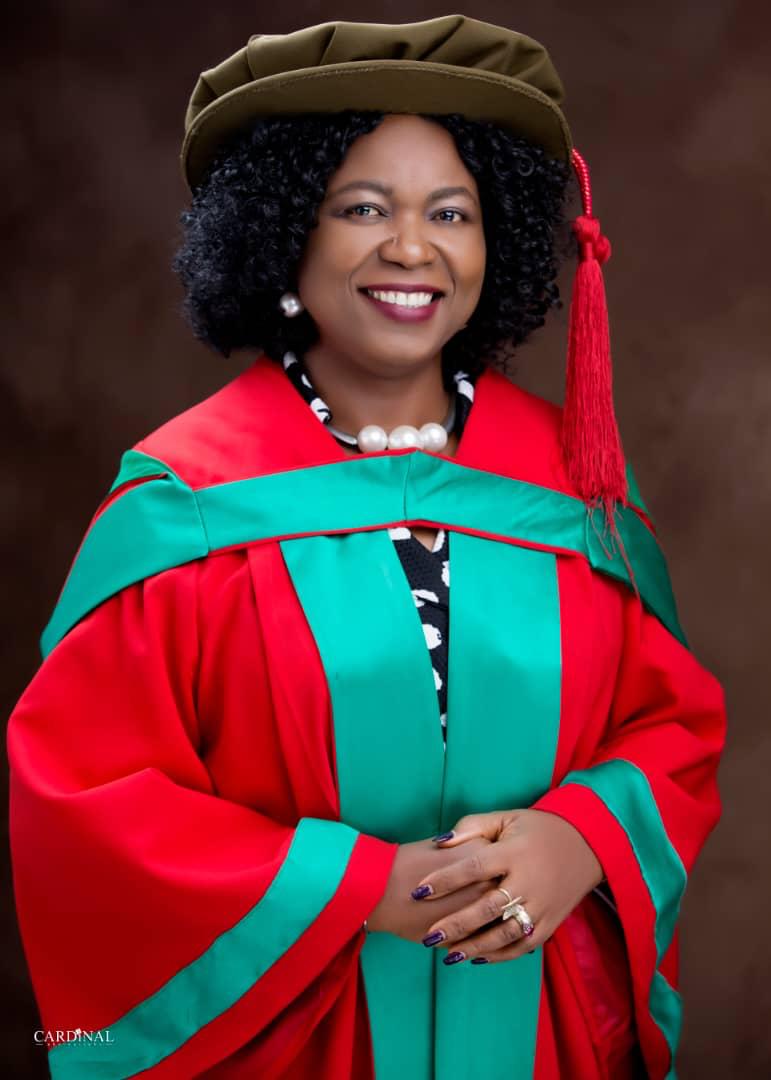
Joy Ezeilo, SAN

Ezeilo, SAN via a post on X (formerly Twitter) said: “It is a tragedy that two students from Nasarawa State University died in a scramble and stampede for palliatives. However, this could have been prevented if the university had distributed the palliatives using their databases of students, such as class lists and delineations by registration numbers, departments, and faculties. If our esteemed institutions of higher learning can not demonstrate leadership and sophistication, then what sets them apart from the marketplace and motor parks?”

One of the deceased students. Photo Credit: PUNCH Newspapers

It was gathered that the distribution of bags of rice as palliatives to the students by the Nasarawa State government aimed at reducing their suffering. A source within the university disclosed that at least 10 others were left with various degrees of injuries.

“What we are hearing now is that two female students have died. They were said to have been suffocated because of the crowd and they were later declared dead by the healthcare workers,” the source said.

Governor Abdullahi Sule recently distributed two 7.5 kg bags of rice and N5,000 to each student of the Federal University of Lafia, Isa Mustapha Agwai Polytechnic, Lafia, and the College of Education, Akwanga.

It was gathered that the state government had provided two 7.5kg bags of rice and a cash gift of N5,000 for each student at the state university’s convocation square but just before the official commencement of the distribution exercise, a crowd of students stormed the venue, carting away the items.

Confirming the tragic incident, the National President of the Nasarawa State Students Association, Yunusa Baduku, said that most of the students involved in the stampede were rushed to hospitals in the area for medical attention.

He said, “Seriously, what happened this morning at the Nasarawa State University, Keffi, is uncalled for, and very pathetic.

 “After our arrangement for the distribution of palliatives to the students which was to be held at the university’s convocation square, they (the students) suddenly arrived at the venue in their numbers and overpowered the security (agents).

“They broke through the gate into the convocation square where the bags of rice were to be shared. Unfortunately, most of our female students sustained varying degrees of injuries, while others suffocated because of the crowd at the venue for the distribution of the palliatives.

“Right now, I am at the Federal Medical Center, Keffi, where we brought some of our students for emergency treatment. Also, as the National President of NASA, I got an official report that one student died as a result of the unfortunate incident.

“For the numbers of those injured, I cannot confirm that at the moment because some of them are at the school’s clinic while others are here at the FMC, Keffi receiving treatment.”

Baduku, however, commended the university’s management, student leaders, and representatives of the state government for their prompt action in assisting the students to get quick medical attention.

While mourning the death of the students, Governor Sule, in a statement made available to newsmen in Lafia on Friday through his Chief Press Secretary, Ibrahim Addra, expressed shock over the incident.

He, therefore, ordered a detailed investigation to identify those responsible for the sad incident.

“The sad incident is reported to have occurred when suspected hoodlums and some misguided students forced their way into the school’s convocation ground to cart away the rice kept at the venue meant for distribution as palliatives to students.

“This misfortune happened only hours before the scheduled official commencement the same morning. Sule had come up with the widely applauded initiative to distribute rice and N5,000 cash to each student in all tertiary institutions in the state.

“Governor Sule deeply regrets the tragic death of two students of the institution in this needless stampede motivated by crime. The governor has since directed the authorities of the Nasarawa State University, Keffi, and security agencies to commence an immediate investigation into the unfortunate occurrence to unveil those behind it.

Speaking on the development in an interview with journalists, the Vice-Chancellor of the university Prof Suleiman Bala, said the state government had been prepared to provide palliatives for 4,000 students of the university, with each student expected to get two bags of rice with some money attached.

“But unfortunately, our students were not patient enough to follow the process of accessing these palliatives. There was a stampede, many of them got injured, and two of the students lost their lives.”

“The Deputy Governor of the state was here to commiserate with us on the matter. We agreed that the school management and the state government would set up high-powered committees to investigate the matter and come up with recommendations,” he added.

Nigeria: Darkest night of a distressed nation

By Richard Odusanya

My fellow compatriots, I bring you good tidings with an assurance that there’s a silver lining behind every cloud. Of course, it is well-known, that ominous clouds are rumbling across Nigeria; we should never feel hopeless, because difficult times always lead to better days – difficult times are like dark clouds and silver linings resemble the sun’s rays, meaning the path is beautiful ahead. In difficult times, we learn several things, we learn how to survive; the key is not to lose hope and never give up. Essentially, In my trajectory, I have faced very serious challenges in life. The fact that I have overcome so much adversity in my life helps me to have hope during tough times.

Although, to be brutally honest about Nigeria’s predicament, it appears, like a dark cloud as evidenced, by the testimonials of the Catholic Bishops’ Conference of Nigeria at the crucial convention a few years ago. In their postulations, the Bishops posited: “We are weighed down not only by uncertainties, but also by moral, economic and political problems … Our strength in adversity, Our health in weakness, Our comfort in sorrow” This is a Statement that reflects our current realities.

To put it bluntly, I am seriously concerned about us, Nigeria; our present predicament, our politics, our people, our economy, and our socio-cultural and infrastructural challenges. The Bishops’ prayers have never been more relevant than now. The “distress” and suffering caused by the exorbitant cost of living when it is becoming more and more difficult to secure even the bare necessities of life. The “distress” occasioned by increasing commodity prices and the accumulation of national debts must prove intolerable burdens for future generations to bear. Assuredly, the current multiple travails of Nigerians can be converted to positive uses, if we are so determined.

Again, the challenges of the darkest night are not peculiar to us in Nigeria, it is a global phenomenon. Nonetheless, our trust is in the words of salvation via the book Isaiah 60:19-22 “The sun shall be no more your light by day, nor for brightness shall the moon give you light; but the Lord will be your everlasting light, and your God will be your glory.” 20: “Your sun shall no more go down, nor your moon withdraw itself; for the Lord will be your everlasting light, and your days of mourning shall be ended.” 21: “Your people shall all be righteous; they shall possess the land forever, the branch of my planting, the work of my hands, that I might be glorified.” 22: “The least one shall become a clan, and the smallest one a mighty nation; I am the Lord; in its time I will hasten it.”

Throughout in His words, God tells us to choose joy in whatever we face, confident that He is working even through every trial and hard place, to bring us greater perseverance. We never gain greater strength and spiritual muscles simply by living an “easy” life. We can only build deeper faith by walking through the hard times that press us more closely into His Presence. Every biblical hero through the pages of the Word was tested and strengthened, not through simple, easy times, but through great times of suffering and difficulty. This should give us hope even today, that God knows our way, and the testing of our faith will produce endurance. It’s for far greater purposes than we may even realize.

To be honest, if there’s one thing our beloved country Nigeria needs right now it’s help from God. The good news–the great news–is that God is “a very present help in times of trouble.” (Psalm 46;1) This means God is a very present help in your times of trouble, the one you face right now. It also means his help is available for our nation. I think we can all agree we need it. ​As the saying goes, ‘No man is an island’ – everyone needs companionship and a shoulder to lean on. It is important to surround ourselves with family and friends for support and comfort in both times of joy and distress. Therefore, this is the time for support and sharing.

Additionally, in these uncertain times of hyperinflation and insecurities in Nigeria, all of us have been feeling disturbed, fearful, and anxious for a long time now. Hence, the a need to engage possible sources of resilience which is an orientation to promote good. An orientation to promote good is a disposition to take actions that contribute to the good of oneself and others across different circumstances, including challenging ones. This disposition combines two elements: an intrinsic inclination to act benevolently and in the interest of others and the goodness of will and disposition to conduct oneself in morally justifiable ways.

As a writer, I pen this contribution bearing in mind, that you can’t ask someone to chew meat for you and restrict them from swallowing a bit of it. This is where we need to strike the delicate balance between personal relationships and the expectations of transparency, accountability, and integrity that come with public service. Therefore, we all have joint responsibilities in rebuilding our beloved country Nigeria.

In conclusion, permit me to share with you the profound words of Michelle LaVaughn Robinson Obama, an American attorney and author who served as the first lady of the United States from 2009 to 2017, being married to former president Barack Obama. Michelle says ‘BECOMIMG’ is not about arriving somewhere but evolving. The former first lady, eloquently posited: “The very idea of a black woman as the First lady of the US was unthinkable. This is a classic masterpiece from Michelle Obama’s memoir ‘BECOMING’ reminiscing our current situation today as a nation.

The aforementioned underscores the very essence of ‘Truth, a country’s history which always reminded the inhabitants that the place for black women and white women are different makes it beyond the bounds of possibility to imagine such a thing happening. In history, while there was constant discrimination, ‘white lady restrooms’ within a building and a separate one for ‘colored women’, colored was not called out honorifically and looked down upon for generations — Becoming, came close to decoding the last decade where Michelle becomes the First lady with the weight of this demeaning history.

Then, of course, whenever there are challenges, It is a sign that something good is coming but if only you overcome it. Nigeria will be great again if we adopt the principles of eternal vigilance in distressed circumstances. Let me, therefore, sign off with the phrase ‘This Too Shall Pass’.

Richard Odusanya

[email protected]

The crux of leadership challenge in Africa

By Richard Odusanya

Leadership anywhere should be about serving humanity (the people). To put it bluntly, a lack of self-control, discipline, and foresight is the crux of leadership challenges in our contemporary African society. In highlighting the political and economic governance challenges and opportunities in sub-Saharan Africa (the focus of this contribution, and the point of reference when using the term Africa), engaging in some form of generalization becomes inevitable. 

Essentially, ‘generalization’ is done with great caution, understanding that country-specific nuance should always trump monolithic narratives, and without implying that all African countries face the same issues. For example, Nigeria is a country that has not shown sufficient good governance attributes given the recent revelations in the parliament (NASS), the Executive branch, and the Judiciary arms of the government. 

Nigeria runs a democracy where you cannot lock people up because they are undisciplined. Lawlessness in our society at all levels is such that the so-called leaders cannot but operate by the society from where they acquired the mandate. We need at least three generations to get the people into “Groove” because this requires training and indoctrination from kindergarten level. 

Not to be misunderstood, although fueled by corruption, in a society where materialism and unequal distribution of wealth is the order of the day (there is no society in the world where there is equal distribution of wealth, no doubt there are welfare programs but even this is being challenged now) both in the economic and the socio-political realms, and indicates their principal driving forces or logic, namely economic discrimination and development-mindedness. But more worrisome is the emergence and pervasive spread of corruption-inducing social norms across all ethnicities and religious divides. 

Most importantly, a leader should be able to plan adequately for the future. Yes, a leader from a society where people plan and patiently execute their plans – accepts failures as lessons and values those who don’t seek limelight or fame. When a Nigerian is published as having been appointed to a position overseas, you see our people reacting as if this is something out of the ordinary. For all intents and purposes if such people come to Nigeria to contribute, they are usually likely to fail. Therefore, it is about the ability to plan, based on current development, for challenges that are bound to occur occasionally. However, our leaders seem to have been unable to grasp this all-important aspect of their duties. 

More to the point, I have never seen a useless person who gets into a responsible position and starts being responsible. This is what we experienced with leadership in many African countries. It also happens in developed countries as well. Not to be misunderstood, please read the book “TRIUMPH OF THE AIRHEADS” authored by Shelley Gare. Many cannot fashion out any long-term plans for the development of their country. Many leaders only react to the present hoping that the future will sort itself out. They see politics as a business transaction. Many believe that they will not be in government forever. Therefore problems of the future should be addressed by governments of the future.

Likewise, genuine, authentically great leaders possess character. Yes, but as, drilled into them from an early stage of life. The word itself comes from a Latin root meaning engraved. In other words, a person’s character, etched with care and concern, shows their true worth. A character gouged or hacked out with recklessness might turn out wonderfully, but it might be a pile of rubble. The thing about character is it can’t be dressed up or cosmetically improved into something good. It must be intrinsically strong and positive. 

Therefore, the crux of the matter is: should we subject our political actors to DNA and Psychological tests? Even at our humble level, we had to undergo psych tests before being entrusted with the management of people!

Essentially, I would like to use some parts of Chief Obafemi Awolowo’s letter to Prof. Samuel Cookey in 1986. Awo, eloquently posited: “At the threshold of our New Social Order, we would see for ourselves that, as long as Nigerians remain what they are, nothing clean, principled, ethical, and idealistic can work with them. This challenges the foregoing on leadership and Nigeria!

“And Nigerians will remain what they are unless the evils which now dominate their hearts, at all levels and in all sectors of our political, business, and governmental activities are exorcised. We must stop passing the buck!

“But I venture to assert that they will not be exorcised, and indeed they will be firmly entrenched, unless God Himself imbues a vast majority of us with a revolutionary change of attitude to life and politics or, unless the dialectic processes which have been at work some twenty years now, perforce, make us perceive the abomination filth that abounds in our society, to the end that an inexorable abhorrence of it will be quickened in our hearts and impel us to make drastic changes for the better”. 

Following from the above, the question is why God and not individual Nigerians? The effort is for Nigerians to make by correcting their family, and neighbors and refusing to aid what we criticize. 

What is more, as a country, we deserve the quality of leaders we have. We are expert noise makers, long on barks, short on bites. We have political businessmen and women, not leaders. They are ruiner just like we don’t have bankers but exploiters. Expectedly, we have lost out on many fronts because of essential elements of development vis-a-vis the essence of time and diligence. It’s sad and a pity that Nigeria continues to miss developmental milestones for the simple reasons of our attitude to life.

In conclusion, it is important to mention that, the problem of Nigeria also comes from our abandonment of our cultures and traditions, and the ability to use religion to disguise evil. We are a confused people without realizing it. We want to live like other people in tune with their cultures and traditions; sorry, this would never happen. The cheetah is different from the lion, and so is the lion from the leopard and Tiger, though they are all big cats. They all train their young to kill for food, but in different ways and by their specific skills and innate characters.

Richard Odusanya

[email protected]

The legal profession must not be seen to be in conspiracy with darkness…

By Jibrin S. Okutepa, SAN

When I woke up this morning, I had a burden in my heart. It is the burden rooted in my genuine concerns for the legal profession of which I am a proud member. I am concerned as the other eminent members of the profession are concerned that all is not well with the legal profession and we must restore the dignity of the profession. It is a task that must be done and it has to be done.

The legal profession should be and ought to be a profession of light that should be visible in the purity of justice in the kingdom of darkness.Yes because darkness flees at the presence of light.
It is a profession that must be intolerant of wickedness and evil. It is the profession that solves problems. It should not be seen to be part of the problems of society. It is the profession whose members are regarded as priests in the temple of justice.

Those who accepted to go to the bench or who have been made to go to the bench are members of the legal profession and they accepted to do so as the chief priests of the temple of justice. The temple of justice is the temple of purity and conscience where evils are not allowed to permeate thereat.Those who accepted to go to the bench ought not and should not do so for monetary or pecuniary considerations.It is an honour to be on the bench.

The lawyers who appeared before the judges are ministers in that temple. In their conduct in courts and outside the courts these lawyers must exhibit the character of justice ministers whose sole aim is the doing of justice. In recent times, it appears, the priesthood and priestly ordinations of this hallowed profession have been under tremendous attacks.

Society now looks at us members of the legal profession as protectors and defenders of evils. People see us as people who have murdered justice and purity of the society. They have taken us members of the legal profession to the cleaners. Of course, the legal profession is unhappy for these attacks.

But can we really blame the society for looking down on members of the legal profession. I do not think so. No one respects a minister in the temple of justice who desecrated his priesthood and priestly ordination by going to brothels to patronizing people of easy virtues or by the type of conduct he exhibited before the public in the decisions he makes or the process he files and obstruction he engaged in to prevent justice being given in courts or in the services he rendered to the society.

Let me be clearer here, and no one should misunderstand me. No sane man or woman of conscience will attend any church or mosque where the preacher in charge does what the ecclesiastical codes prohibit him from doing. In other words, no one will take such a preacher seriously when he preaches against evils for which he himself deeply involved. That is the bane of the legal profession.

The damaged image of the legal profession can not be repaired by ganging up against the the people for their freedom of expression. No, it cannot. The battered image of the legal profession can only be repaired and restored when we, as members of the profession, decided to do what is right. We must avoid doing those things our code of ethics and conduct prohibit us from doing.

As a profession, we must have boundaries beyond which we can not cross. We must begin to do things that inspire confidence in the system of justice and practice we do. We must begin to do the very things our code of conduct enjoys us to do. We must promote and foster the cause of justice.

We must not create or set precedents that are anti-people and expect people to be happy. People will talk and take us to the cleaners if we do things that undermine the sovereignty of the people. People will talk about our practices and decisions if those practices and decisions do not promote the greatest good and happiness of the people.

Laws are made to promote the good and happiness of the people. We must not use law to keep evil men and women in power to oppress the people. The practice we do and the decisions we rendered must not bring hardships on the people. Laws are meant to serve the interest of the people. We cannot ignored the people in our practice and decisions as members of the legal profession.

As members of the legal profession, we must not render decisions that turn the laws on its heads and install those who violated the laws of the land as our leaders. If we do so, people will talk. No amount of intimidation will stop people from talking. The freedom to speak against bad decisions is a fundamental constitutional right that is an essential ingredient of democratic growth and development.

The legal profession hold the key to the growth and development of Nigeria if vast majority of the members both on the bench and at the bar decide to do what is right in the dispensation of justice in our land. I think the discipline for which the legal profession is known has been eroded by some characters in the profession.

The profession of law that I grew up to meet is a profession that does not allow appearances of improprieties. So it is my considered view that for society to stop attacking the legal profession, the legal profession must wake up and start doing what is right and must not be seen to be in conspiracy with darkness permeating every strata of the Nigerian society. That is my honest opinion.

Zenith Bank’s new MD and the burden of successful women

By Farooq Kperogi

It so often happens that whenever a Nigerian woman makes the news as having been appointed to a high position that is, has been or, in the minds of male chauvinists “should be,” the exclusive preserve of men, she becomes the object of (social) media slander, unconscionable belittlement, vile gossip, slut-shaming, and malicious smears.

That is the fate Zenith Bank’s Mrs. Adaora Umeoji Nwokoye has been suffering since her announcement as the first woman Group Managing Director and CEO of the bank. In what is supposed to be her moment of joy, she’s contending with an avalanche of mean, nasty remarks and misogynistic bullying from insecure men with fragile egos who, instead of being happy for her, choose to question her qualifications, obsess over her looks, and ascribe her rise to a reward for sexual favors.

The most egregious of this came from a widely shared Facebook post by one AzolikeNonsoAfemefuna who wrote that Mrs. Umeoji-Nwokoye looked “like a hook up [sic] girl” and that he would “NEVER take [Zenith Bank] seriously again” for appointing her its boss.

When he was challenged, he doubled down on his evidence-free moral stigmatization of the woman by insisting that she “knack her way to the top,” a Nigerian Pidgin English expression for she slept her way to the top, a sentiment one Nelson Chiduben Okoye re-echoed in another widely shared Facebook post.

As the father of three girls, these dreadful patriarchal putdowns and vilifications of a successful, high-flying woman by some idle worthless scum of men hurt me on a personal level. Mrs. Nwokoye embodies what every responsible parent should want their daughter to grow up to be. She got the job because she was more qualified than anybody for the position.

She has multiple degrees, including advanced ones, in sociology, accounting, business administration, and law—in addition to three decades of experience in banking. She was, in fact, the Deputy Managing Director of Zenith Bank in the last eight years that preceded her elevation to the status of GMD/CEO of the bank. In other words, she had functioned as the second in command of the bank.

What more does it take to merit her position? Plus, she achieved her career success while married to her husband, Emmanuel Nwokoye, said to be a medical doctor, with whom she has children. And that’s the more reason why the unprovoked besmirching of her moralintegrity is in such bad taste. Nigeria is supposed to a traditional society where the institution of marriage is supposed to shield women from these sorts of calumnies.

I honestly wanted to ignore the social media skunks who cast aspersions on her honor without a shred of evidence because, truth be told, the overwhelming majority of people, both male and female, exulted in Mrs. Nwokoye’s norm-bending, glass-ceiling-breaking elevation as the boss of Zenith Bank.

Nonetheless, when I read Chido Nwakanma’s article titled“Zenith Bank And Managing Dr Umeoji’s PR” on Thursday and sensed suppressed, even benign, but nonetheless significant signs of misogyny in the garb of professional public relations analysis, I felt compelled to intervene.

Nwakanma is a well-regarded journalist and public relations expert for whom I have a great deal of respect.  But his article on Mrs. Nwokoye’s promotion to the top of the ladder was a letdown.

He deployed what we call “blame-the-other-technique” to channel and validate patriarchal and misogynistic views of successful women, which basically consists of fixation on women’s dress and appearance, using discriminatory standards to assess women’s performance, and paternalistic condescension.

He said, “An observer noted that Zenith probably needed to prepare for the communication and PR challenge of showcasing an overly beautiful and over-educated female as MD.” “Overly beautiful and over-educated female as MD”! That’s classic patriarchal phraseology.

No serious analyst would ever talk of the handsomeness of a male bank CEO or describe a man with three bachelor’s degrees (in sociology, accounting, and law), two master’s degrees (in business administration and law), and a doctorate in business administration from a for-profit online American university as “over-educated.”

He would be described as “well-educated.” There is a tone of mild disapproval in the term “over-educated.” Over-education means having more education than is useful or needed. It’s as if she earned degrees above her gender station.

But it gets worse. He talked about concerns over her red dress, why she uses her maiden name as her middle name and then had this gem: “She is beautiful, no doubt, and parades an exciting Figure 8. Unfortunately, Figure 8 is not corporate. She must sacrifice the vanity of Figure 8 for the corporate essence.”

That’s someone’s wife and some people’s mother, not mention the CEO of one of Nigeria’s top banks, we are talking about. She’s being scrutinized for the shape of her body, not the content of her character (as Martin Luther King, Jr would say) or the quality of her ideas. Would any expert deserving of that name write about the sturdy, six-pack build of a newly appointed CEO of a band and then go ahead to dismiss it as “not corporate”?

Nwakanma mentioned “Figure 8” three times in three sentences. That’s extreme, unwarranted, and frankly, disappointing sexualization of a successful woman (not to mention someone’s wife!) who owes her rise in the corporate ladder to her brain, not her so-called Figure 8.

Nwakanma’s piece is merely a more intellectually sophisticated version of the crude misogynistic digs at Mrs. Nwoyoye by bitter, no-good social media lowlifes.

Look, I have zero personal or professional familiarity with the woman, but I have a personal investment in how men handle the success of women because I am also raising three potentially successful women. My first daughter is studying engineering at a top-three engineering university in the United States.

I would be concerned if insecure men attribute her success in life to factors other than her brilliance, grit, and her hard work. I would lose it if middle-aged men were fixate on her figure and choice of dress for analysis—things that are never done for men.

A similar scenario played out in 2017 when Mrs. Aisha Ahmad was appointed as one the deputy governors of the Central Bank of Nigeria. As I wrote in my October 14, 2017, column titled, “CBN’s Aisha Ahmad, Misogynistic Bullying, and Religious Hypocrisy,” two categories of (male) Nigerian social media users were disconcerted by her appointment.

“The first group,” I wrote,“said she is unqualified because her promotion as Executive Director by her bank was suspiciously co-extensive with her appointment as CBN’s deputy governor, suggesting that her promotion was done in anticipation— or as a direct consequence— of her appointment.”

I added: “The second group, made up of mostly northern Muslim men, said she was unworthy of her position—wait for it— because her formal western attire doesn’t conform to the Islamic dress code for Muslim women! One widely shared Facebook status update, in fact, defamed her as a ‘sex worker” on account of her dressing. That’s a prima facie case of libel.”

As is by now apparent, successful  women—be they southerners or northerners, Muslims or Christians—can’t catch a break. They are always judged more harshly than men. This culture has to stop!

TIPS