Home Blog Page 617

How magistrates in Cross River communities allegedly abuse office, commercialize litigation

By Archibong Jeremiah

On February 8, 2019, Mrs. Scholastica Bisong paid Mr. Isiaka Adeleke N1,855,000 for a Toyota Camry, 2009 model. When the car arrived she rejected it because it was a scrap. He went to Gboko in Benue State, refurbished the car, and sold it to Mr. Bassey Nsidieti Bassey, who was the Registrar of Magistrates Court Ikom for N1.4 million at the time.

When the balance of N455,000 was not forthcoming Mrs. Bisong arrested Mr. Isiaka, and he was charged to court. In suit No. IKM/1/2020, brought before His Worship, Solomon Ikongshul on Monday, 28 September 2020. The judgment went in her favor. Mr. Isiaka was instructed to pay the N455,000 and that N200,000 be paid as damages for breaching the contract, while N50,000 was the cost of action.

The Court further directed that the sum amounting to N705,000 should be paid in three installments: N235,000 per month, from October 2020 to December 2020.

After the execution of the judgment was overdue, on Monday, 22 March 2021, Mr. Isiaka (judgment debtor) filed a motion praying for an order for installment payment of the judgment sum of N705,000 only, in equal installments of N15,000 monthly. And an order for a stay of execution in KM/1/2020.

Presided by His Worship, S. O. Oji the court ordered the applicant to comply with the earlier judgment in suit No. IKM/1/2020 and pay the entire sum of N705,000.

The judgment debtor (Mr. Isiaka) received protection from Magistrate Bassey Nsidieti Bassey until an investigation by this reporter in 2021 exposed his nefarious activities. He was transferred on the 26th of February 2022, but he fought the transfer for two months before eventually yielding in May.

After the transfer of Magistrate Bassey whose villainous activities precede him, Mrs. Bisong had to pass through three lawyers and spent N380,000 to recover her money. Eventually, Isiaka paid N510,000 as of November 2023 and pleaded that the senior citizen write off the N195,000 balance left, and she accepted.

Mrs. Bisong’s journey to recover her balance has left a bitter-sweet taste in her but doesn’t kill her trust in the court of law. “I feel bad, the society is corrupt, if Bassey had not left Ikom I would have gotten nothing. I still have faith in the judiciary no matter how bad it is,” she told TheInvestigator.

In May 2023, after Magistrate Bassey left Ikom, Magistrate Egbai Oja Michael resumed as the Administrative Chief Magistrate. Four months into his resumption, an investigation by TheInvestigator showed that Magistrate Egbai flagrantly abused his office.

Magistrate Egbai upon resumption directed the Registrar, Mrs. Anne Asinya to always get his permission before carrying out directives from other Magistrates else, no action should be taken. The Registrar obeyed for fear of intimidation even if that is not part of her responsibility as outlined in Part 3, section 16 (duties of the Registrar) of the Cross River State Magistrates’ Courts Law.

Because the Registrar refused further instructions from Magistrate Egbai to move an industrial sewing machine and a set of executive chairs due for auction to a safe place for him to convey home and work out the paperwork to cover the trail, she was queried by him.

Previously, Magistrate Egbai had directed the Bailiff to take some items to his home, some of the items were due for auction. For one, the case was ongoing but the Administrative Chief Magistrate had decided its fate.

The item for which litigation was ongoing is a brand new Parson generator set in suit no. IKM/RTM68/2020. Others are a family-size foam in suit IKM/MISC26/2023, cooking pots in suit IKM/MISC89/2022, and some doors, windows, blinds, and buckets.

Her response to the query was exclusively obtained by TheInvestigator and contains more damning details of how far he has abused his office.

Commercialized Litigation

The Administrative Chief Magistrate of Ikom Magistrates Court sent four men to prison demanding N100,000 from each to have their bail conditions reviewed.

Ntufam Fabian Mkpa Etor, Fred Etor Mbeku, Roland Asu Mbeku, and Mbeku Etor spent a week at the Ikom Correctional Centre before jointly paying N200,000 to secure their freedom.

Magistrate Egbai used the powers of his office to coerce two staff to implicate the four of them. No investigation was done by the Police, they were never invited, and no statement of theirs was taken, but they were remanded.

It all began when they were served with a motion on notice for committal to prison, in MISC/104/2023, between them and Mr. David Etta Ekuri. The case was slated to come up on the 31st of July 2023, *Freedom Ekpo was present in court and he spoke to TheInvestigator.

Ekpo said, “Unfortunately, when they appeared in court a new charge was proffered against them, they were arraigned without prior information of being charged on a four-count charge, and no charge sheet was given to them.”

Barrister Kelvin Ogar, their lawyer petitioned Magistrate Egbai for misconduct to the State Chief Judge and Chairman of the Judicial Service Commission on the 12th September 2023, he cried for help.

In the petition obtained by TheInvestigator, Barrister Ogar alleged that the Chief Bailiff Mr. Francis Mbuse, and an ad-hoc staff, Friday Godwin were coerced by Magistrate Egbai to lie against his clients else he (Egbai) would ensure the Chief Bailiff who is almost due for retirement is transferred out while the ad-hoc staff won’t be pushed for permanent employment.

In his petition, TheInvestigator confirmed that Ntufam Fabian Mkpa Etor, Fred Etor Mbeku, Roland Asu Mbeku, and Mbeku Etor’s rights to a fair hearing were violated by not allowing due process take place.

Barrister Ogar wrote “I applied to the Magistrate to review their bail terms, but he said he was going to take the ruling in chambers; I met him in chambers and he told me that each defendant has to bring the sum of N100,000 before he would release them. Our clients had to pay N200,000 to the Magistrate for them to have their bail term reviewed.”

He further alleged that “As if that was not enough, I found out that the Chief Magistrate compelled the Chief Bailiff Mr. Francis Mbuse to tear his shirt as evidence of his assault which Mbuse reluctantly did when Magistrate Egbai threatened to cause his transfer out of Ikom before his retirement which act prompted IKM128C/2023.

“He also compelled the ad-hoc staff, Friday Godwin, to give false evidence in the open Court against the defendants, else he will not make an effort to have him employed as he has a hand to aid his employment as a full staff; thankfully Friday had avoided him and has since been scared to mention it for fear of losing his adhoc job, but confided in me to help him out of that situation.” an allegation staff in Ikom confirmed to TheInvestigator.

In another case involving Ogar’s clients in charge No: IK/230/C/2022, the 3rd Defendant, Elijah Effiong was not in court due to ill health, the court refused to listen to the explanation of his lawyer, the Chief Magistrate ordered the surety who was in court to explain the whereabouts of the absent defendant.

The surety did and promised to make efforts to produce the defendant in the next session, Magistrate Egbai being not satisfied ordered that the surety be arrested and remanded at police custody for 14 days unless the sum of N500,000 is paid as forfeiture before he could be released on bail. He was released when Barrister Ogar out of frustration approached the High Court in Etung.

In another incident on the “22nd of August 2023, while in court as a lawyer, my phone mistakenly rang court, the Chief Magistrate ordered that N2,000 should be paid, I did and was not receipted and so many other terrible and nefarious issues,” Ogar said.

Magistrate Transferred After Communities Protest

Magistrate Abam Ibiang Ikpi was transferred from Okundi in Boki to Akpet Central in Biase on the 26th of February, 2022.

One year later, the community raised the alarm about his crooked ways. When they couldn’t hold it anymore, on Tuesday, August 1, 2023, Ugbem, Ekpri Iko, and Iwuru Obio Ntan communities peacefully protested and demanded his immediate transfer.

The Chiefs and their subjects displayed placards with different inscriptions such as “Magistrate Abam is the Lawyer, Petitioner, and the Judge in all cases”, “transfer Abam from Biase, enough is enough”, “save us from the claws Magistrate Abam”, “Ekpri Iko, Ugbem, and Iwuru Obio Ntan demands justice, no to I. Abam,” and among others.

The Investigator learned that following the protest, twenty days later Magistrate Abam was shipped out to Obudu to extend coverage to Obanliku. Barrister Okpan Ozinko told this reporter over the phone that “the Chief Judge’s intervention and heard the cry of the people”.

*Joseph Adam, a victim of Magistrate Abam’s scheme told TheInvestigator that for what he knew nothing about just because there was a quest to make money at all cost he was held in custody.

According to him, “I won’t go into details so that he won’t know me and make my life unbearable because he can. There was no investigation, I was just sent to prison and told I needed to pay about N200,000 to be free, and the bail condition was too high. Because of the condition of things and as the breadwinner I had to pay something close to N100,000 before I was released.”

A Freedom of Information (FOI) request was made by TheInvestigator to the Chief Registrar, Cross River State Judicial Headquarters Calabar, dated 31st January 2024 with the reference number TI/JUD/FOI/001/JUDHQ01.

Two months after the 7-day window provided by the FOI Act of 2011 to respond after receiving the request elapsed, no reply has been given by the acting Chief Registrar.

This article was written by Archibong Jeremiah and published by Cross River Watch on April 2, 2024.

Source link : https://crossriverwatch.com/2024/04/investigation-how-magistrates-abuse-their-office-commercialize-litigation-in-cross-river-communities/

Mathematical Odegbami loses son, Oluwagbeminiyi

Oluwagbeminiyi Patrick Olusegun Odegbami, son of Nigeria’s ex-international is dead.

Odegbami, the 1980 Africa Cup of Nations winner with the then Green Eagles according to the Eagle Online reports on Tuesday, made the disclosure in a tribute to his son.

The soccer star popularly known in his playing days as: “Mathematical Segun Odegbami,” wrote: “Oluwagbeminiyi Omo Odegbami – the simple pilgrim returns home!

“It is completely impossible to think that I am writing about Oluwagbeminiyi Omo Odegbami in the past tense.

“One day to Good Friday, his message woke me up whilst I was in Accra, Ghana. He wanted my summary of the synopsis of the documentary project we were working on.

“I told him not to wait for me but to go ahead and apply his abundant creativity to the project. I was not exaggerating. Gbemi was an unknown and unappreciated G. He was a highly gifted, multi-talented young man. His writing skills, poetic literature in musical lyrics, rapping, elocution when he reads, and unique culinary skills, were all in this laid back young man whose life is simple, spartan and secluded, with no intention whatsoever to disturb the equilibrium of the chaotic world around him.

“Four hours after our exchange, I receive the first of endless phone calls that eventful day, last Thursday: Gbemi is not feeling well; Gbemi is being taken to a hospital; the hospital has referred Gbemi to another hospital.

“I direct that he be taken to a specialist hospital. His situation is critical. The hospital works on him for hours. Twelve hours after our first communication, and exactly 5 minutes past midnight, at the birth of Good Friday (a significant day in Christendom), the doctors call me for the umpteenth time that day to break my heart with the news that haunts me till now – Gbemi has passed on!

“Would it have happened had I not travelled? Would I have handled his situation better? It was a shocking, devastating, painful and incomprehensible news. Good people should not die! Why should this young man, at the start of a new exciting chapter of his life, die so suddenly? Except, of course, (and I now believe so) that it is part of a divine plot that his spirit catches up with that of the ‘dead’ on Good Friday, his sins and transgressions wiped away on the cross of Calvary through Grace at Easter. His soul must be resting peacefully now with the Creator of the Universe.

“This ‘sermon’ has become my consolation. This kind, gentle and simple heart, must no longer be tortured by the difficult challenges of his life in his world over which he had little control.

“Gbemi, until his death, was unfamiliar with the world’s complex ways. His easy going life was totally harmless to anyone. His love riveted on his little son, his mother, his sisters, his music, his cooking, his song-writing, his friends and his current work in the radio station – probably in that order.

“He finally found peace, plus the space and opportunity to express his multiple skills without the pressure of any external scrutiny, enjoying his productions in sights, performances and sounds.

“Then death comes like a thief in the night to steal all of that, snatch him away and leave us with a yawning space in the puzzle of life. Personally, this hurts real bad.

“I miss Oluwagbeminiyi Omo Odegbami, an absolutely brilliant mind that is encapsulated in the frail body of a simple and gentle pilgrim. He came to the world, played his part quietly amidst unbelievable challenges, and now departs leaving a legacy of love and kindness to all those he encountered on his journey.

“He told me some weeks ago that what he had missed the most in his life were the love, guidance and friendship of a father, but that he was happy to have finally found them in a relationship with me.

“Adieus Son, as you return (on the 4th day) to our Creator this morning!”

Kaduna’s debt and unEl-Rufaic silence

By Suyi Ayodele

Benjamin Franklin alias Mrs. Silence Dogwood (January 17, 1706-April 17, 1790), was one of the greatest statesmen of the United States of America. He was reputed to have signed America’s Declaration of Independence on July 4, 1776. He loved education. He was famously known as America’s Founding Polymath. He loved education and anything associated with letters. He also liked to document his life. When he was denied the opportunity of having his numerous letters published in his brother, James Franklin’s newspaper, The New England Courant, Franklin adopted the pseudonym of “Mrs. Silence Dogwood”. Under the name, the great American had 14 letters, which were first printed in 1722. His profile is as rich as the depth of his writings.

Franklin knew the value of documented works. So, he cautioned great men and women to always document their deeds in writing. Here is his famous quotable quote on that: “If you would not be forgotten, as soon as you are dead and rotten, either write things worth reading or do things worth writing.”  Many great men and women followed his injunction. They wrote about their deeds in private and public circles. One of such men is our own Nasir El-Rufai, the former and immediate past governor of Kaduna State. El-Rufai also served as a minister in the cabinet of President Olusegun Obasanjo. He equally was the pioneer Director-General of the Bureau of Public Enterprise (BPE). Taking heed of Franklin’s caution, El-Rufai wrote a book in 2013. He titled it: “The Accidental Public Servant”. It is a voluminous book of 627 pages without the lix (69) pages of introduction and prologues.

“The Accidental Public Servant” is written in the style of the author as an omniscient narrator. Such style allows for long tales. El-Rufai sticks to that underlying thisness of the style he employs. The book is no doubt a book of self-adulation. Self-adulation thrives on half-truths and outright lies. Only a few men of honour write their own accounts with dignity. Such value is lacking, to a greater extent, in the book under review here. My summary of “The Accidental Public Servant” is simple. Whatever the author lacks in physical appearance, he makes up for in the hyperbolic narrative of his deeds and worths, while in public service. I don’t have any problem with that. I learnt too early in life not to argue with a dwarf who claims to be tall enough to see whatever is happening around him. The training I got in dealing with such a person is to arrange his seat at the back row at the village square.

He will know his real height when the dance begins and all the tall people in front stand up to watch the masquerade dance. He will be forced to leave the arena in frustration. Nature is already putting a lie to most of the saintly claims of El-Rufai in his book. First, his terrible outings while he served as governor of Kaduna State run sharply in contrast to the self-righteousness of El-Rufai in his memoirs. Victims of his stay in office abound to tell their tales of woes under him. No doubt, there are others who see him as their hero, too. Life is like the proverbial gangan drum. While it backs some people, it faces many others. Posterity is the ultimate judge between the rulers and the ruled. So shall it be with El-Rufai and all our other leaders!

The inimitable Dr. Dipo Fashina (Jingo) taught us Introduction to Philosophy at Obafemi Awolowo University (OAU), Ile Ife. There was this story of Achilles and the Tortoise he told us. It is about the race between the fastest runner and the slowest runner. At the end of the race, Tortoise claimed victory on a simple logic: the quickest runner can never overtake the slowest because the fastest runner must always reach the point where the slowest runner who is being pursued, started from. For that to happen, the slowest runner must always hold the lead. So, it is with the truth and the lie. Lie may have the speed of light. It can also run for decades. It takes just a second for the truth to catch up with it. That is exactly what has happened to El-Rufai. All his claims to sanctimony are collapsing before him like a pack of badly arranged cards. Happily, enough, the home truth about him is being served hot by a member of his own political household. The governor of Kaduna State, Uba Sani, is not just a member of the El-Rufai’s political family; he is the heir apparent to the ex-governor’s political dynasty. Nobody knows the dirt of the buttocks more than the pants – kò sí eni tó mo ègbin ìdí ju ìbànté lo. Reading the revelation last Saturday by Governor Sani, I begin to appreciate the Parmenidian principle of “All is one”, which when broken down to simple understanding, shows that all claims to change are illogical. Nigerians have been deceived for too long by sententious leaders. The reality is here at home with us.

There is a naked truth released a few days ago about El-Rufai. According to the incumbent Governor Sani, his predecessor, El-Rufai, left a debt of $587 million, N85 billion, and 115 contractual liabilities for him to deal with. It is like throwing a monkey to your neighbour’s compound without a finger of banana – I owe the philosophy of monkey and banana to the Great Guru (GG) himself, Dr. Mike Adenuga Jnr, Chairman of Globacom. The indebtedness, the new governor said, is such that the state would no longer be able to pay salaries going forward. This, he added, was because of the N10 billion allocation the state gets monthly, N7 billion is used to service El-Rufai’s debt. After the deductions, what is left is a miserable N3 billion. With a wage bill of N5.2 billion, the state needs to borrow additional N2.2 billion to be able to pay its workers. Should the state succeed in doing that, it means that no other issue will be attended to. If the claims by Governor Sani are true, we all can conclude that Kaduna State is in a mess. Most states of the federation are in that gory state as Kaduna. We should not be surprised at this because this is what one gets when one’s plantation is yielded to the locusts.

Governor Sani made the explanation on Saturday at a Town Hall Meeting held in Kaduna. This piece was penned on Monday. As at the time I hit the sent button on my device, the man so accused had not uttered a word. That is strange of the famed rambunctious personage. That is unEl-Rufaic! I need somebody to nudge the volcanic former governor out of his slumber. If he doesn’t know, someone close to him should let him know that everything he laboured for is at stake. He cannot afford to be silent over this. This is not the time to philosophise that “silence is golden.” El-Rufai should speak and speak loudly too. In his handover note in May 2023, El-Rufai said he left debt of $577.32 million and N80.60 billion only, in addition to $2.05 million and N5 billion in the state treasury. El-Rufai has the responsibility of explaining the differences in the figures. He equally needs to tell citizens of Kaduna what he did with the debts. Granted, the blame game is the middle name of the All Progressive Congress (APC), the party which produced El-Rufai and his successor, Sani. The party blames the dead, the living and the unborn for its personal obvious failures. But this Kaduna issue is within the family, and it is more than the normal siblings’ rivalry. Nigerians need to hear the other side. Kaduna civil servants need to know why hunger and starvation will be their lots in the months to come. Did El-Rufai borrow that much? If yes, what did he do with the money? I know El-Rufai to be an Arógunmátìdí (the one who does not draw back from war). This is a war the man cannot afford to avoid. Nigerians expect every “Accidental” discharge from their Accidental Civil Servant. We are all set for the circus show. The word of the Lord is sure and comes to pass. Egyptians must surely rise against Egyptians. Other governors that are dying in silence should also speak up. I am waiting for the day my home state governor, Abiodun Abayomi Oyebanji of Ekiti State, would come to the public crying about the burden of the administration of the former governor, Kayode Fayemi. The little Baba Afe Babalola said the penultimate week has already brought out the other sides of former Governor Kayode Fayemi. Even without any direct mention of his name by the nonagenarian, Fayemi went haywire. Fayemi claimed that Baba Afe’s first child is far older than him, yet, he was not deterred from calling the old man names I dare not repeat here!

Kaduna State workers will go hungry soon. They are not alone. Pensioners in the state would have their own full share of the mess. The catastrophe will cascade to petty traders and children. There will be an increase in the number of who will drop out of school because parents and guardians will not be able to pay school fees. Small businesses will also fold up, just as the big ones will downsize. The overall implication is that many will suffer more. As it is in Kaduna, so it is in many other states. Nigerians are not having the best of times at the moment. I saw a video of two elderly fellows fighting over food. A man and his wife were recorded fighting over ‘chop money’. The wife, in her late 70s, was struggling with her husband, a man in his early 80s over feeding Allowance. “I’m hungry. Give me money to eat”, the old woman said in Yoruba. The husband responded that he had nothing to give her. Not letting go, the old grandmother recalled her woes in her marriage to her husband. She asked if the man had ever set up a business for her. She reminded the husband that even though she tried on her own and set up a table for trading in front of the house, the husband destroyed it. “Today”, she told the husband, “You will have to do that which you plan to do to me”, the woman intoned. Then she got up, tied her wrapper and announced: “I am hungry. My legs are shaking. Give me money to eat.” She made for the husband’s “wallet” and the struggle continues!

No matter how strong-hearted one is, nobody will watch that video without feeling so sad. I could not shed tears in my sadness. Unfortunately for me, the video was sent to me late at night. The rest of my night was ruined. These are people in their departure lounge. Senior citizens, no doubt. Somebody recorded that video. Someone posted it. I could not question our humanity after watching the video. We lost that long ago. But then, I asked: what about the children and grandchildren of these old folks? What about their relations, friends and neighbours? Again, where is the government which has the fundamental function of making life bearable for the citizens? Why do we, as a nation, subject our people to this kind of situation when we are not in Afghanistan or Pakistan; two countries that are in perpetual conflicts with themselves? Why would our leaders leave behind huge debts like the El-Rufai, the debtor of Kaduna did, without repercussions?

How long shall we continue to tolerate the malfeasance of the ruling class? How long shall we continue to be stranded on the road that leads to nowhere that our leaders have led us? We have laws. We have statutes that address the recklessness that the current Kaduna State governor painted of the financial health of the state. El-Rufai, and many other ex-this and ex-that are walking the streets with crass impunity because nobody will dare ask them to account for their stewardship. From the comatose legislative arm to the intimidated and compromised judiciary, Nigerians are at the mercy of a rapacious and unfeeling executive whose sole aim is inflicting more pain on us all. Our landscapes are dotted with a-heroic characters who rode to power on the chariots of change and hope but end up doing worse things. We chased away grasshoppers only to be replaced by locusts. Now, nothing is left on the field for us to harvest, not even the leftover for our Ruth to glean! When will this end?

Joy Ezeilo hails Air Peace, says —The aviation system should be audited thoroughly to ensure everyone is treated justly

Earlier this morning, I watched and listened to Allen Onyema, the CEO of Air Peace, as he spoke on Arise News TV. He discussed the internal and external challenges that Air Peace faces as it launches its inaugural flight from Lagos to London. It is disheartening to see the level of wickedness in the system, particularly among public servants who abuse their power to make things extremely difficult for local businesses instead of encouraging them as job creators and sources of national pride. Unfortunately, some of the issues that are blamed on Air Peace are caused by unscrupulous airport officials and other types of sabotage.

For example, during their inaugural flight from London to Lagos, Air Peace was asked to park almost two kilometres away in a deserted airport area, which would have required transportation of passengers to the terminals.  If you were a passenger who experienced such inconvenience, you would likely hesitate before repurchasing an Air Peace ticket for international travel. The aviation system should be audited thoroughly to ensure everyone is treated justly and held accountable for their unjustifiable and discriminatory actions. I commend Air Peace for their persistence. With the current ticket price, my recent salary increases, and four months of savings, I may afford an economy ticket to London. I long to attend my class reunion at Queen Mary, University of London, where I completed my postgraduate studies

long to attend my class reunion at Queen Mary, University of London, where I completed my postgraduate studies and graduated in 1996. 

Dear CEO Allen Onyema (if I may), I would like to express my gratitude for the services Air Peace provides. Your commitment to offering student rebates is admirable. As educators, we also play a crucial role in shaping our society’s future. It would be greatly appreciated if we could benefit from academic/teacher rebates as well, considering the travels we undertake for research and conferencing purposes.

I also miss having regular access to legal libraries, such as the Institute of Advanced Legal Studies in Russell Square, London, which we used then as graduate students of the University of London. As an alumnus, I am still entitled to unrestricted use of this facility, and I believe academicians worldwide enjoy similar privileges. The big deal is affording the prevailing high cost of international flight tickets. The purchasing power of our earned wages comes into play. 

How Body of Benchers member/ minister allegedly demolished Abuja properties without court order

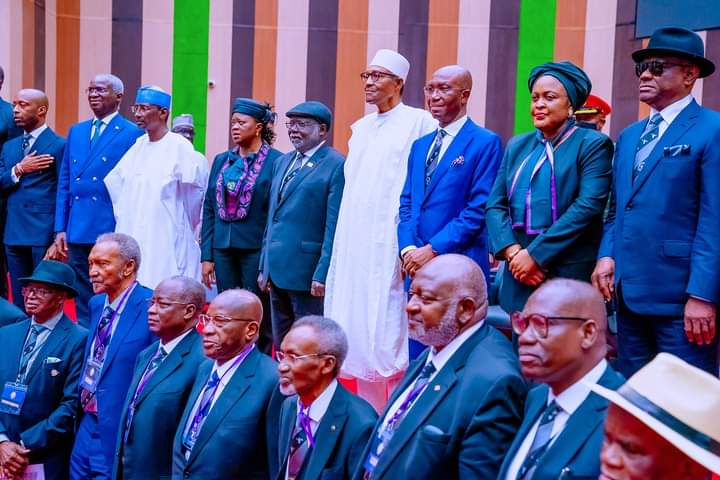
Wike on the day he was appointed Life Bencher

Although he never shies away from controversies, senior lawyer, Life Bencher and Minister of the Federal Capital Territory (FCT) Ezenwo Nyesom Wike is again in the middle of a controversy following his alleged link to the demolition properties to an Anambra politician and businessman, Chief Nicholas Ukachukwu in Asokoro, Abuja.

Nicholas Ukachukwu, the Chairman and Chief Executive Officer of the SNECOU Group Limited accused Wike of ordering the demolition of his investment on 214 hectares of land in the Asokoro district of the city centre.

He disclosed that the demolition was carried out without any court order, despite two pending valid court orders from separate courts restraining the minister and the FCT administration from interfering with the property.

Africa Independent Television (AIT) reported that the property sitting on 214 hectares of land was demolished on Wednesday 27 March, 2024 in the presence of heavily armed security operatives including soldiers, policemen and personnel of the Nigeria Security and Civil Defence Corps (NSCDC).

After about six hours, the buildings some of which had got to the window level and the fence had been pulled down and all that was left was a heap of rubble.

Speaking in an interview with the channel, the Anambra-born businessman called on President Bola Tinubu to intervene and save the multi-million-naira invested in the property.

He claimed that the property was demolished because it was owned by an Igbo man, and not because the company violated any law, as all legal titles had been sorted and obtained before commencing development of the property.

Claiming that the demolition was done in bad fate, Ukachukwu said: “Wike called for a meeting over the land, we went with our documents after seeing what we had with our lawyer and other company, Sunrise which they gave part of that land. Wike said that there is nothing on this that the court should take its effect.

“After going around the land, in his normal ways of behaviour, Wike started shouting; how will they take all this land and give it to an Igbo man? Then, the next thing we saw was the demolition of the buildings without a court order.”

According to him, all the legal titles of the property had been obtained including two ministerial approvals, and letters from the immediate past FCT Minister, Mohammed Musa Bello.

He said, “We went through all due process including ministerial approval. We have the full final title document, letter of offer and Certificate of Occupancy.

 “As I’m talking to you, we have not received any document revoking the property or even the reason for the demolition. The only thing we saw was the demolition, the title has not been revoked and we have not been served any notice.”

He insisted that the action of the minister ran contrary to two pending court orders restraining any action by the FCT on the land.

He said, “Two separate courts issued a different court order restraining him from tampering or doing anything in that property but all of sudden Wike now moved all the ‘caterpillars’ (bulldozers) in Abuja and went and started pulling those properties that we have invested billions into down.”

He called on President Tinubu to intervene in the matter to protect the rights of genuine investors and businessmen. “I am calling on Mr President, who I know has nothing to do with the tribe to call Wike to order or remove this man before he brings disdain to hisadministration. 

When SaharaReporters contacted the spokesman for the FCTA, Mr Tony Ogunleye, for a reaction on the demolition, he said he had no information about the demolition.

Ogunleye, however, noted that the FCT Administration doesn’t demolish properties based on the tribe, religion or section of the country the owner comes from.

He said: “The truth is that I don’t know the details of this particular case. I don’t have details at all, so I can’t comment from an uninformed position in terms of what happened. But rest assured that I will find out.

“However, definitely there’s no way properties will be demolished because the owner or purported owner is from one section of the country or the other.

“No! The FCT administration doesn’t operate in that manner. Before any property is removed definitely they must have gone through due process. And that property must have violated one Land Use Act or the other. But like I said, I don’t have details of this particular case.”


In a ceremony at the Supreme Court Complex, Three Arms Zone, Abuja on 24th January, 2019, Wike was appointed a Life Bencher by the Body of Benchers.

The prestigious Nigerian Body of Benchers is a professional body concerned with the admission of successful candidates at the Nigerian Law School Bar Final Examination into the Legal Profession.

CSOs write Chief Justice Ariwoola, hold that Nigeria’s judiciary has lost direction and in dire need of overhaul

A coalition of civil society organisations have called for a state of emergency in the Judiciary, alleging that “Nigeria’s judiciary, a once proud institution, has lost direction and is now barely a shadow of itself.”

In a 28 March 2024, letter to the Chief Justice of Nigeria (CJN) which was also copied to the Attorney General of the Federation and Minister of Justice, Prince Lateef Fagbemi and  Hon. Justice Kudirat Kekere-Ekun JSC, Deputy National Chairman, National Judicial Council, the group observed with concern that “notwithstanding the damning nature of these characterizations and warnings, the leadership of Nigeria’s Judiciary appears unruffled by them, nor by the Judiciary’s loss of esteem, and barely shows any signs of irritation or indignation.”

Citing cases of nepotism amongst other allegations, the coalition in letter signed by Joseph Otteh of Access to Justice on behalf of — Chairman, Human & Constitutional Rights Committee, African Bar Association, Sonnie Ekwowusi, Esq.; Fight Against Corruption in the Judiciary, Bayo Akinlade; FundELG Africa, Dominic E. Obozuwa; Open Justice Alliance, Prof. Chidi Anslem Odinkalu; Rule of Law and Accountability Advocacy Centre- RULAAC, Okechukwu Nwanguma and Sterling Law Centre; Adedeji Ajare pointed out that:

“The latest of these allegations came last month, after it was alleged that Your Lordship influenced the FCT High Court judicial recruitment process by requesting that a slot be reserved for Oyo State in the recruitment, at the expense of States which had no Judges in the FCT High Court, to ensure that   Your Lordship’s daughter-in-law, who is a Magistrate in the FCT Judiciary be selected for appointment as a Judge of the FCT High Court. These allegations are found in a plethora of media publications.  We have no record that Your Lordship denied these claims.”

The entire letter reads:

MOUNTING ALLEGATIONS OF UNETHICAL PRACTICES AGAINST HIS LORDSHIP WORSEN IMAGE OF NIGERIA’S JUDICIARY

As stakeholders in Nigeria’s justice system, the undersigned civil society bodies whose work is underpinned by, and relies on the rule of law and the integrity of Nigeria’s justice system, feel the strong weight of professional and moral duty to make these representations to Your Lordship concerning the state of Nigeria’s Judiciary under your leadership. Our aim is to call attention to the harm which continuing missteps, misuse of authority and a general failure to undertake effective reform, is doing to the Judiciary that has, over the years, borne the trauma of massive decline and destabilization, and to press Your Lordship to address these issues.

The Judiciary’s decline, to be fair, preceded Your Lordship’s appointment as Chief Justice of Nigeria (“CJN”) in 2022, but overlaps Your Lordship’s many years of judicial service. This decline is highlighted by a number of surveys, such as those by the ICPC (Nigeria Corruption Index: Report of A Pilot Survey) and the UNODC/NBS (Corruption in Nigeria Bribery: public experience and response (2017).

Your Lordship came into office at troubling moments of our Judiciary’s history. Recall that, in 2022, shortly before Your Lordships appointment, you led 13 other Justices of the Supreme Court in taking the unprecedented step of petitioning then CJN, Hon. Justice Tanko Muhammad CFR GCON, lamenting his manner of leadership, unresponsiveness, nepotism and maladministration in overseeing the business and welfare of the Supreme Court and  its Justices. Not long  after, Hon. Justice  T. Muhammad announced an early retirement from office. May we, in this regard, further note that Hon. Justice Tanko Muhammad’s predecessor also left office in even more tragic circumstances. These two cases were firsts of their kind, unprecedented in our judicial history.

May we note, however, that prior to these internal fissures in the Judiciary, there had been external incidents – also without precedent – whose impact on the Judiciary had been hugely staggering. Your Lordship will recall that in October 2016, Nigerian security operatives invaded houses and courts of judicial officers – including those of Supreme Court Justices – following allegations of corruption, and which subsequently led to indictments against a number of judges, alongside a Supreme Court Justice, although these indictments were quashed subsequently for procedural infractions. Many observers see these incidents as highly damaging of the Judiciary’s dignity, respect and public trust.

Following Your Lordship’s appointment as CJN, expectations were high that, with benefit of a long and instructive range of hindsight, Your Lordship would be acutely conscious of the extreme urgency of reforming the judiciary and its administration, arresting its downward spiral in public trust, and reinforcing its capacity to promote and protect the rule of law. May we say, very respectfully, that,  as of now, the Judiciary remains unreconstructed and its public perception has not improved since then. On the contrary, we are very concerned that it has steadily grown worse since Your Lordship assumed its leadership. Furthermore, Your Lordship’s personal actions – quite apart from the dysfunctionalities of the justice system – are harming the already fragile and enfeebled Judiciary, and whatever is left of its credibility.

We are not unconscious of the weight of this judgment, but have not reached it hastily or flippantly, believing they are justified by substantial evidence. Under Your Lordship’s watch, the Judiciary has suffered further reputational harm, mostly accounted for by:

A.  Reabsorption of dismissed/compulsorily retired Judges

The National Judicial Council (“NJC”) chaired by Your Lordship has reinstated two Judges removed by the NJC for serious misconduct without, at the very least, exhausting available legal avenues to keep these Judges out of the Judiciary, in order to safeguard against the huge embarrassment their reabsorption would cause to the perception of the Judiciary. Justice Gladys Olotu was compulsorily retired in 2014 for grievous misconduct by former President Buhari, following a recommendation by the NJC. Justice Rita Ofili-Ajumogobia was dismissed in 2018, after the NJC found that she had received monies from several persons and corporations using corporate accounts. It is conceded that these Judges won lawsuits for their reinstatement, but the judgments they got faulted the procedure of their removal and not the substantive merits of the case brought against them.

Given the overarching importance of upholding public trust in the judicial process, it is hugely disappointing that the NJC chose to not do more to vindicate and reinforce its original determinations against the two Judges. The Council could, for instance, have appealed the judgments and waited for a final opinion on the legality of its decision; or, given that no statute of limitation prevented it from re- exercising its disciplinary procedures against them, re-commenced proceedings to hold them ultimately accountable, ensuring they are not anymore in a position to harm the fragile image of the Judiciary. The NJC’s “surrender” to these Judges, counting the options available to it, is, in our respectful view, a profound demonstration of its lack of commitment to the institutional standing and reputation of the Judiciary and the Council’s ineffectiveness as an oversight body.

B. Turning a Blind Eye to Issues of Judicial Integrity

It may additionally be observed that Your Lordship is turning a blind eye to the importance of maintaining, as much as possible, integrity in the Judiciary, and that most of Your Lordship’s rhetoric in this regard may possibly be passed-off as lip service. Before the recent appointments of Justices into the Supreme Court, one of the signatories to this letter, Access to Justice, twice made representations to Your Lordship as Chairman of the NJC to investigate allegations made against one of the nominated Justices -Hon. Justice Chidiebere Uwa – following unresolved accusations of corruption and violations of the Judicial Code of Conduct against her as a Judge of Abia State. None of the two letters, dated 1/08/2022 and 30/11/ 2023 received as much as an acknowledgment. The same organization requested that the NJC investigate allegations made by Hon. Justice Dattijo Muhammed concerning deliberate delays in filling Supreme Court vacancies (details in para. D, below) in a letter dated 30th Nov. 2023. Up till this time, the NJC has refused to acknowledge or act on the letter.

C. Allegations of Nepotism and Illicit Influence Peddling

A number of appointments in the Judiciary since Your Lordship assumed office have triggered charges of nepotism and the illicit use of influence against Your Lordship. It is claimed that you improperly used your influence as CJN to promote the appointment of your family members into judicial and administrative positions in the Judiciary.

Those appointments include those of your son, Hon. Justice Olukayode Ariwoola Jr, (who was recommended by the NJC on July 14th  2023) for appointment as Judge of the Federal High Court; Your nephew (Hon. Justice Lateef Ganiyu) as Justice of the Court of Appeal and your junior brother, Mr. Adebayo Ariwoola as Auditor of the NJC in Dec. 2023.

The latest of these allegations came last month, after it was alleged that Your Lordship influenced the FCT High Court judicial recruitment process by requesting that a slot be reserved for Oyo State in the recruitment, at the expense of States which had no Judges in the FCT High Court, to ensure that   Your Lordship’s daughter-in-law, who is a Magistrate in the FCT Judiciary be selected for appointment as a Judge of the FCT High Court. These allegations are found in a plethora of media publications.  We have no record that Your Lordship denied these claims.

D. Manipulating Timing of Appointments of Supreme Court Justices

Speaking at his valedictory session at the Supreme Court in November 2023, Hon. Justice Dattijo Muhammed (rtd), accused Your Lordship of deliberately refusing to make additional appointments of Supreme Court Justices (even when the court was depleted to 11 Justices), implying, per force, that while the Supreme Court was suffocating under the pressure of acutely-reduced bench numbers, Your Lordship was, for whatever motive, preserving the stifling status-quo in order to achieve some ulterior objective. At least, this is the sense in which we understand rtd. Justice Muhammed’s allegations.  Your Lordship is not known to have denied the allegations too, even when there was ample opportunity to do so, lending credence to the view that the accusations are credible. Shortly after the Supreme Court decided the presidential election petition cases, we would note the coincidence that there was renewed traction in appointing new Justices to fill the vacancies on the Court’s bench.

E.  Worsening Strain on Judiciary’s Public Perception

The net effect of the forgoing is that Nigeria’s Judiciary has further lost the respect of Nigerians and the international community, and is, in fact, endangering its own legitimacy. The loss of dignity is increasingly observed in a variety of media platforms. Hon. Justice Dattijo Mohammed himself had, at his valedictory, warned that “public perception of the judiciary have over the years become witheringly scornful and monstrously critical”. Afenifere, the pan-Yoruba socio-political group recently delivered a stinging distress call, saying that it was worried  “at the dwindling image and increasing loss of confidence in the judiciary by the Nigerian people.” Former Minister of Education/World Bank Africa Region Vice President Oby Ezekwesili, recently called out Nigeria’s Judiciary as being “rotten”. Olumide Akpata, former President of the NBA, said not long ago that: “There is near- universal agreement that public confidence in the Judiciary … is at an all-time low”. Similar tropes are reverberating across broad spectrums of public opinion.

Unfortunately, notwithstanding the damning nature of these characterizations and warnings, the leadership of Nigeria’s Judiciary appears unruffled by them, nor by the Judiciary’s loss of esteem, and barely shows any signs of irritation or indignation. But the reputational harm is affecting and stigmatizing many conscientious Judges/Justices who serve honourably, and do not deserve the unfair tarring of the entire institution by the same brush, irrespective  of  the disposition of the Judiciary’s leadership to the embarrassment. No respectable Judiciary, we are persuaded, should afford to remain indifferent to the forms of public malignment and ridicule against it as we have witnessed in Nigeria.

F.  Office of Chief Justice of Nigeria, a Public Trust, not to Promote Personal Interest

At this time, Nigeria’s judiciary – as many believe – is bumping along the bottom, but Your Lordship’s actions have arguably exacerbated that already bad situation, plunging the Judiciary’s image further down the barrel. The office of Chief Justice of Nigeria is a public trust, and the holder of that office, we respectfully submit, is under duty to exercise that trust in the public interest and not in privileging the interest of family members over the interests of the larger institution. Moreover, as head of the Judiciary, Your Lordship’s actions carry very significant, far-reaching implications; they represent a frame of reference against which other actors might justify their own parochialisms, and, therefore, are bad precedents. Furthermore, where judicial officers or other heads of courts contravene judicial standards of conduct, or engage in unethical practices – such as nepotism – Your Lordship could not properly be in a position to sit over them in judgment.

G. Conclusion

Your Lordship, we are concerned that Nigeria’s judiciary, a once proud institution, has lost direction and is now barely a shadow of itself. Whatever remains of its credibility now lies hanging by a thread. Therefore, there is a certain “urgency of now” to pull the Judiciary from the brink of complete perdition, by avoiding actions that elevate that risk, as well as a dire need to overhaul the entire judicial system. Declaring a state of emergency in the Judiciary would be a good start. Ensuring that judicial selection decisions are transparently and verifiably merit-based, is a pressing need at this time.

Your Lordship, it has been said that “no system of justice can rise above the ethics of those who administer it”; Nigeria’s judiciary will not likely rise from the abyss unless its leadership exercises better and more selfless stewardship of their high responsibilities. This is what Nigerians want to see now.

In closing, we find it especially fitting to borrow our final words from a letter which Your Lordship co-authored (with 13 other Justices of the Supreme Court), to your predecessor, Justice Tanko Muhammad CFR, GCON (rtd) in June 2022. It is thus:

“Your Lordship, this is a wakeup call. Your Lordship must take full responsibility as our leader…. We will not wait for the total collapse of the institution. We must not abandon our responsibility … in the face of these sad developments that threaten our survival as an institution. We have done our utmost best to send a wake up call to Your Lordship. A stich in time saves nine.”

We thank Your Lordship for his kind consideration.

Yours sincerely,

Access to Justice                                                 Joseph Otteh

On behalf of:

Chairman, Human & Constitutional Rights Committee, African Bar Association       Sonnie Ekwowusi, Esq.

Fight Against Corruption in the Judiciary Bayo Akinlade

  FundELG Africa. Dominic E. Obozuwa

Open Justice Alliance Prof. Chidi Anslem Odinkalu

Rule of Law and Accountability Advocacy Centre- RULAAC Okechukwu Nwanguma

Sterling Law Centre Adedeji Ajare

Cc.

1.  The Attorney General of the Federation and Minister of Justice, Federal Ministry of Justice, Abuja

2.  Hon. Justice Kudirat Kekere-Ekun JSC, Deputy National Chairman, National Judicial Council

1 [See for example, Gazette newspaper and Arise TV reports (https://gazettengr.com/cjn-ariwoola-appoints-younger-brother- adebayo-ariwoola-as-new-auditor-for-national-judicial-council/; alongside https://gazettengr.com/cjn-ariwoola-strikes-againP-age | 4 daughter-victoria-oluwakemi-named-fct-high-court-judge-nominee/ https://www.arise.tv/huriwa-seeks-nullification-of-nigerias-chief-justices-son-as-judge/].

No Wheel Chairs Allowed! KFC, the cost of zero emotional intelligence & communication skills

  • But what’s the legality of FAAN’s sanction?

“Today, I felt less than human, like a guard dog not allowed into the house. Lonely and isolated…To be disabled in Nigeria is to be undesirable, unwelcome and unaccepted…” Adebola Daniel.

By Lillian Okenwa

The plight of persons living with disabilities in Nigeria made headlines and trended on social media for many days after Adebola Daniel, a son of an ex-Ogun State Governor, Gbenga Daniel and wheelchair user was told: “NO Wheel Chairs Allowed!” by a manager of a Kentucky Fried Chicken (KFC) restaurant at the Murtala Mohammed International Airport, Lagos on Wednesday 2, March, 2024.

Although the Federal Airports Authority of Nigeria (FAAN) has closed down the KFC outlet, Adebola Daniel’s humiliation and discrimination has sparked off debates and lively conversations.

Below are the contributions of some Nigerians in The Rule of Law-Nigeria (RoL) WhatsApp platform to the conversation.

Charles Okeibunor, Lawyer, relational skills and Managing workplace conflicts trainer:

 “NO Wheel Chairs Allowed!” The sentence above is costing KFC millions of naira daily at their MMIA Outlet in Lagos, Nigeria.

For starters, the value of a KFC franchise is about N45,000,000 and start-up cost of an outlet is in excess of N300,000,000 in addition to a 12% commission for all sales which go to the franchise.

Can you then imagine leaving this huge investment at the mercy of an unguided statement?

Emotional Intelligence and Communication Skills are not just courses, they are life skills. These two life skills also save organizations two things that determine whether they are in business or not.

1. Money

2. Reputation

If a business loses money and loses its reputation, what is left to lose? The story is that a gentleman in a wheelchair chose to hang out at KFC while awaiting his flight to London. Upon sighting him at the entrance, a supervisor exclaimed “NO Wheel Chairs Allowed.”

She followed her announcement with a defence that it was company policy and an insistence that they leave. Mr Debola the victim in this case, reported the incident on social media, leading to the shutdown of the outlet for being in violation of Lagos state laws for people with disabilities.

Ironically, the more demand increases for professionals to be emotionally intelligent, the less training they get. Thereby exposing the businesses, they represent to avoidable losses and sometimes irreversible reputational damage.

A few questions?

1. What is the business case of denying wheelchair users from using an eatery? I have never heard it before.

2. Assuming there was no law against discrimination of people with disabilities, is there a better way she could have communicated the policy?

3. What role would empathy have played in this case and if you were the supervisor on duty how could you have handled this situation? “

Read more: https://lawandsocietymagazine.com/discrimination-how-kfc-disgraced-ex-governor-gbenga-daniels-son-at-lagos-airport-for-being-on-a-wheelchair/

Kelechi Arikibe, a Chartered accountant:

This is a great write pointing out, especially the 2 key most important words. Emotional intelligence and communication skills and the total inclusion of disabilities in company policies.

Almost or most of the organizations abroad prioritize people with disabilities. Joining a new organization, the first thing is to undertake the company’s training, especially on the importance of recognizing people with disabilities. But in Nigeria, we see them as nothing.

I do not blame the supervisor because she is acting on the company instructions, otherwise, she would have lost her job. It is high time organizations begin to send and train their staff on emotional intelligence and communication skills. This also transcends to our homes. How we react to things, how we communicate when things happen. They are natural skills that everyone should possess.

The news went viral because it affected a highly placed son. Do, you know how many of these that have happened and nobody cared even at our airport? Nobody cares.

As per KFC, I think it is a Nigeria mentality. Anything goes. They can’t try this abroad. They will be heavily charged. But nobody cares attitude and anything goes is affecting the country.

You go to the airport and lifts are not working and no consideration for disabled people. Nobody cares.

Charles Okeibunor: I agree with you.

I bought a ticket to Abuja earlier in the month. It was to be the first flight because my meeting was for 9 am. The airline moved the flight to 10 am. I panicked and bought another ticket for 6.50 am.

When I returned from my trip, I requested a refund, they told me it would take 4 weeks! I asked why, the lady said “Company Policy” 😊

Why are Nigerians past caring about their rights?

1. Poverty

2. Ignorance

3. Laziness

4. Fear

5. Distrust in the justice system

6. Or what?

Saka Azimazi a lawyer:

The gross violation of human rights labelled company policy in KFC is a reminder of the weak human rights regime in Nigeria. Public buildings still lack disability access across board throughout Nigeria. And the institutions concerned are all asleep.

Just last week, we had a program to which persons with disabilities were invited as our organization’s policy. The hired hall was on the 2nd floor. The hotel had a lift that its doors were so narrow that wheelchairs couldn’t get into. Three such persons had to return home. After lambasting the hotel managers (which legally means nothing), I insisted those who suffered this indignity be refunded their cost of transport even before the programme ended. I also asked that a formal letter of apology be sent to them that very day. We need to grow up in Nigeria

Charles Okeibunor: I suppose it should be a showcase session at every conference.

Architects

Surveyors

Lawyers

Doctors

Managers

Developers

Town planners

Approving authorities

Etc

All such persons should know that you don’t build houses without taking persons with disability into consideration. If you don’t remember them, then, forget about approvals.

Dele Aloko, Lawyer and Business Executive:

I see 3 issues here.

1. The discriminatory action of the KFC (Franchisee) Employee

2. ⁠The appropriateness/legality of the sanction by FAAN.

3. ⁠General question of discrimination against PLWD in Nigeria and how they are protected.

On the first issue, excluding persons with disabilities from patronizing a business is clearly discriminatory and a breach of the Discrimination Against Persons with Disability (Prohibition) Act – AKA Disability Act. There is no circumstance under which that action can be justified. Emotional Intelligence is therefore not an issue at all.

The Disability Act clearly prohibits such acts and prescribes penalties for infractions.

On the second issue, I think FAAN, in a typical Festus Keyamoish fashion, rushed to do the right thing in the wrong way.

I am almost 100% certain that there is nothing in the Concession Agreement that empowers FAAN to shut down the outlet over an issue like this. Their intervention should have been tied to the Disability Act and involved the prosecution of the offending organization.

It was also an opportunity to educate the employee, her employers and the general public on the value of diversity and inclusion. The knee-jerk reaction works for the airport outlet, but that is all.

4. Protection for PLWD is still very weak in general in Nigeria. The Disability Act establishes a National Commission for Persons with Disabilities, but I have not seen any evidence that they have started operating in terms of advocacy, education, regulation, enforcement, receiving complaints, etc. FAAN should have referred this case to them (if they are working effectively). They should require KFC to introduce a policy in all their outlets (not just the one at the airport) and also provide training for their staff.

FG’s N90 billion Hajj politics

By Lasisi Olagunju

From Lagos, one Ayinde Salihu wrote to the Sardauna of Sokoto and Premier of the Northern Region, Alhaji Ahmadu Bello, on 19 January, 1964, describing the premier as the “Prophet of Nigeria.” The man wanted the Sardauna to take him to Mecca for Hajj. Buliyaminu Oladiti Fadairo wrote from Ibadan on 21 January, 1964, saluting the Sardauna as “Nigerian Holiest Father.” It was his way of massaging the big man’s ego so that he would make him a pilgrim in that year’s Hajj. Same day from Kabba, Aruna Agbana wrote begging the Sardauna to sponsor his pilgrimage to Mecca “in the name of Allah and Annabi Muhammadu, the Holy Prophet…and in the name of Usman Dan Fodio…” The Sardauna had a standard response for all of them: “Pilgrimage is not obligatory if one has no means…” American professor of history, Mathew M. Heaton, has all the above in his ‘Ahmadu Bello and the Politics of Pilgrimage’. It is a chapter in his book on ‘Decolonising the Hajj’ published in 2023.

What the Sardauna said about pilgrimage not being “obligatory if one has no means” is the correct injunction prescribed in Islam. But, the injunction might be canonically true in 1964, it is no longer so today. Never mind that John Bunyan in ‘Pilgrim’s Progress’ says “what God says is best, is best though all the men in the world are against it.” The poet just wasted words. There are egregious carts everywhere today for the pilgrim to ride in short-circuiting faith and its precepts. They say the times determine what law to keep. They say that at every point in time, what the world carries is the child the times birth for it.

The way we fart while pricing irú (locust beans) is not the way we should fart while buying salt. But now, there are no limits to misbehaviour. Everywhere stinks. We shit in holy places and receive effusive thank you from the guardian priests. If he were alive, the powerful Sardauna would not have resisted the pressure to pay today – and remain relevant. A multitude of Nigerians (Muslim and Christian) desire the bliss of paradise which may be in holy pilgrimages but everyone wants someone else to pay for it. And they get it.

‘FG bows to pressure, approves N90 billion subsidy for Hajj fares’ was how The Guardian headlined its report on a payment of subsidy for Hajj. I read it in other papers also. The payment is unprecedented in the hugeness of the figure. And the government has not said the media lied. Hajj is an obligation which applies under clearly stated conditions – these include financial and physical capability. But now, every year, pressure, threats, and blackmail are rained on presidents and governors to sponsor pilgrims. And they cave in to do what is wrong. They forget that they were elected to say no to irregularities; that sometimes, resistance may be politically inexpedient and tough, but in resisting wrong lies victory. “Dark clouds bring waters, when bright bring none” – Bunyan’s Pilgrim’s Progress again. Robbing the Peter of millions of Nigerians to foot the bill of elitist Paul is a mark of the beast. But it is the new normal. Governments sponsor thousands to Mecca and Jerusalem in exchange for political support.

I call the Nigerian elite culture which allowed this payment an ‘Aj’ìfà’ culture. Aj’ìfà is that person who grows fat reaping big where he sows little – or reaps without sowing at all. Someone else said elsewhere that Nigeria is an “Aj’òfé society.” That somebody is Ladun Anise, late professor of political science, who explains in a 1979 journal article that “the word Aj’òfé is a Yoruba word meaning ‘free-loader’ or ‘parasite.'” I nodded as I read his further explanation that “an aj’òfe society carries a parasitic culture; builds its expectations on what the government can and must do (for them) with no sense of individual or group responsibility…It is a culture in which people are determined to turn constrained privileges into fundamental constitutional rights or even the precepts of natural law.” I understand that some of the intending pilgrims are threatening to pull out of this year’s hajj unless the government pays the balance of N1.9 million for them. The country is a fallen elephant before a pack of cleavers.

We married a wife in the month of famine and in that same month of lack, she decided to use pounded yam to build a house. What name would you give that kind of wife? What baby would the woman birth, and what will the name be? The question is elegantly answered in the original Yoruba version of that proverb: Ìyàwó tí a fé l’ósù agà tí n fi’yán mo’lé, yóò-báa-ní’bè l’orúko omo rè yóo máa jé. ‘Yo-ba-nibe’ (e go meet am there), the reserved name for the expected product of the conjugal error, forebodes tragic delivery. I thought our husbands said the country was broke and all subsidies should go -and was gone. Now we know they lied. The Federal Government that said no to what benefitted 200 million Nigerians last May has released N90 billion to subsidise the purse of about 50,000 persons (or of their rich sponsors) so that they could make a personal religious journey to Saudi Arabia. It is a subsidy for politics.

What you value is what you invest your riches in. A wealthy man with a million slaves dies, but in his wardrobe is found one lone dress (Oun tó ndun ni níí pò l’órò eni. Ológún erú kú, aso o rè kù ìkan soso). That is my people’s proverb for otherwise wise men with deliberately misplaced priorities. We’ve always known that politics pays better than education in Nigeria. The N90 billion Hajj subsidy is higher than the combined 2024 budgets of the University of Ibadan (N23.4billion), Obafemi Awolowo University (N17.1 billion), Ahmadu Bello University (N29.2 billion) and the University of Lagos (N19.4billion). So, what is the matter prioritized here? The government did not spend that money for religion. It was for politics and the need to avoid the political consequences of hurting Nigeria’s powerful entrepreneurs of pilgrimage.

The Obafemi Awolowo government of the old Western Region set up Nigeria’s first Pilgrims Welfare Board vide Western Regional Gazette No. 39, vol. 7 of 5th June, 1958. The board’s existence was dictated by the need to attend to issues of welfare of hajj pilgrims from Western Nigeria. The northern region followed that example seven years later in 1965. Both boards were restricted by law to collecting Hajj fares from intending pilgrims, arranging passports for them, helping intending pilgrims to get visas and other consular interventions, assisting them with flight tickets and with vaccination, getting them comfortable accommodation and transportation in Saudi Arabia – all at their own expense. The limit of the responsibilities of the boards was the limit of government involvement in Hajj operations. Apart from one VIP Hajj flight per year involving the Sardauna and selected members of the northern elite, there are no records of any government-sponsored Hajj trip for anybody in any of the regions.

What is the official explanation (reason) for the Federal Government’s release of that subsidy for the Hajj? Each of the 48,414 intending pilgrims was initially supposed to pay N3.5 million, then it was jacked up to N4.9 million when the dollar raced past the strength of our sense. N4.9 million is a huge amount in this season of want. There was an outcry which the anti-subsidy government in Abuja heard and doused with a subsidy coolant which translated to N1.6 million per pilgrim. This N90 billion pilgrimage subsidy paid by this government I could not find anywhere in the 2024 budget of the Federal Government. Even in the pads and paddings, it is absent. So, where did the president conjure that humongous sum from?

Even after that intervention, there are further subsidies to pay. Because the forex crisis has set every plan ablaze, the total hajj fees payable is no longer N4.9 million per pilgrim. The hajj commission last week raised the fare by a further N1,918,032.91 blaming forex volatility. The amount is now N6.8 million per pilgrim. The arithmetic is well explained in a report by the Daily Trust some days ago which quoted a Hajj commission source: “By the previous calculation, the N90 billion given by the Federal Government can only subsidise 19,000 intending pilgrims by ₦3.5 million. But by spreading it on 50,000 pilgrims, it (the subsidy) reduced it (the shortfall) to N1.9 million. This means that the federal government has subsidised each pilgrim by ₦1.6 million…” There is still a shortfall of N1.9 million which each of the pilgrims has to pay. But they may not pay anything. Some state governments are paying it for them.

A friend asked when this culture of using public funds to fund private religious acts started. It is difficult to know but it didn’t start with this regime. When a head would go bad, it starts its descent gradually, unnoticed. What I know is that there used to be pride in people using their hard-earned money to go to Mecca. O.E. Tangban in his ‘The Hajj and the Nigerian Economy’ (1991) traces this tradition of going to Mecca and notes that at the very beginning “ordinary people went on Hajj by land routes across Chad to Sudan and then by boat to Jeddah” – with their hard-earned money. Even big men did. Dunama, the second Muslim Mai (king) of Kanemi – what we know today as Borno – followed that route. History says he was the first around here to go on pilgrimage to Mecca. He went the first time and came back. He went the second time and returned in peace. He went the third time and perished in an accident in the Red Sea. There is no record that he stole from the poor to fund his Hajj.

Nigerians are a very religious people. You would think being this religious coheres with piety. Some of those whose Hajj fees we’ve just paid have gone to Mecca in many and repeated times – like Abiku. Indeed, for some, it is business – legit and illegit. A lot goes with pilgrimages – to Saudi Arabia and to Israel – which mocks the reason and essence of pilgrimage. On the current Hajj list will be mistresses, paramours and concubines of some ‘pious’ persons of influence. I witnessed a case some years ago. We are using scarce funds to sponsor the good and the bad and the very ugly. Some of the officials particularly hate the smell of roses. It is a chain. The known faces are mere masks of the very big men of religion who preach fiery sermons of godliness. To them, pilgrimage is their soup pot, their business, and they always find one verse somewhere to validate what they do. It didn’t start today.

A big businessman from a wealthy family in Kano was arrested, tried, convicted and fined £7,000 in Sudan in April 1957 for currency trafficking. He was the sole agent in charge of the welfare and wellbeing of all Hajj pilgrims from Northern Nigeria. For that year’s Hajj – which many from the north did by road, the big man collected money from poor intending pilgrims and decided to do brisk business with it. He was arrested in Sudan “for illegally smuggling over 21,000 Egyptian pounds into the country.” Quoting several 1957 and 1958 editions of ‘The Nigerian Citizen’ newspaper, Heaton, in another chapter of his book referenced above (page 160), wrote that apparently the man “had been taking the deposits made by his Nigerian clients (pilgrims) and trading them for profit rather than forwarding them to the next location for dispersal. Deposits made in Nigeria in British sterling were traded in Beirut for Egyptian pounds” netting the man “a 50 percent profit on the original deposits that he could then pocket before delivering the funds to Sudan for distribution to pilgrims and his contracted agents…” His victims, the pilgrims, suffered and got stranded; two of them died of meningitis while waiting to be sorted out. The big man absconded to Nigeria and soon got into bigger trouble: His home was searched and found with “printing presses, currency moulds and £5,000 worth of forged £1 and £5 notes.” He was tried and, on 22 November, 1957, jailed for eight years. But if you are big here, no net will be big enough to restrain your fish. The man came out of prison earlier than ordered; he joined the ruling party and was elected into the House of Representatives in 1965.

End of story.

Develop clear communications strategy that will inspire, create timelines of expectations of results from policies — Bishop Kukah to FG

  • There is hope, even though we’re not where we want to be! — Joy Ezeilo, SAN

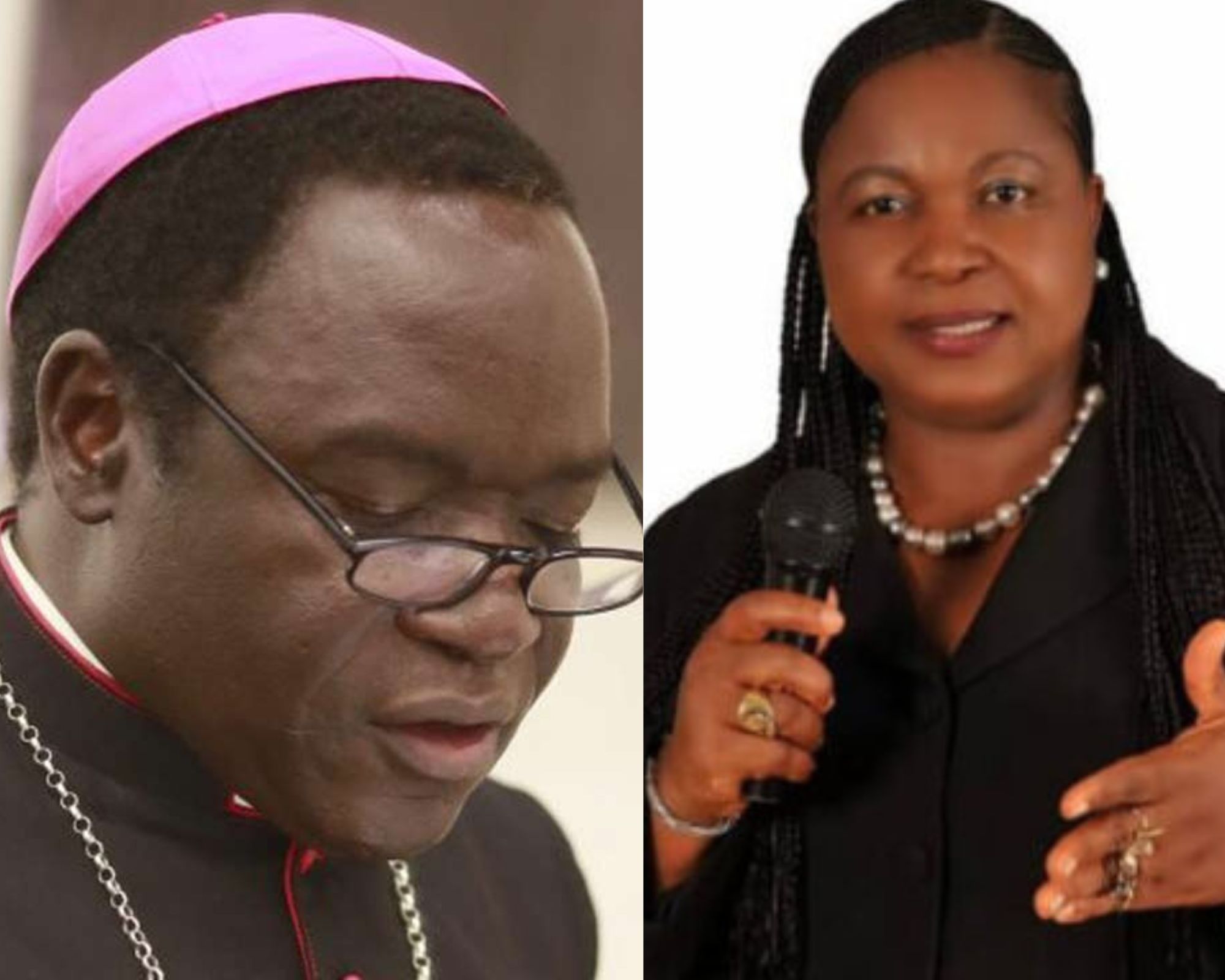
The Catholic Bishop of Sokoto Diocese, Matthew Kukah has called on the Federal Government to develop a clear communications strategy that will serve to inspire and create timelines of expectations of results from policies.

In his Easter message where he addressed the country’s troubles, Bishop Kukah said Nigeria is reaping what it sowed yesterday adding that the military’s extensive involvement in civilian affairs as disturbing.

The eloquent and audacious Bishop urged the Federal Government to devise a robust strategy to reverse the country’s course and lead it towards national healing.

“Our leaders chose the feast rather than the fast. We are today reaping what we sowed yesterday. For over 60 years, our leaders have looked like men in a drunken stupor, staggering, stumbling, and fumbling,” Kukah expressed.

He condemned pervasive corruption and its debilitating effects on the nation, describing Nigeria as being in a state of hangover that renders it comatose.

However, the bishop remained optimistic about Nigeria’s potential for greatness, urging citizens to journey together towards a new dawn of resurrection.

“The corruption of the years of a life of immoral and sordid debauchery has spread like cancer, destroying all our vital organs. The result is a state of hangover that has left our nation comatose.

“Notwithstanding, Easter is a time to further reflect on the road not taken. It is a time to see if this Golgotha of pain can lead us to the new dawn of the resurrection. Nigeria can and Nigeria will be great again. Let us ride this tide together in hope,” he stated.

Proposing urgent measures to alleviate economic hardship and hunger, Kukah stated the need for inclusive policies to eradicate nepotism and foster patriotism.

He called for transparent recruitment methods and a clear communications strategy to inspire accountability and achieve national goals.

“The government must design a more comprehensive and wide-ranging method of recruitment that is transparent as a means of generating patriotism and reversing the ugly face of feudalism and prebendalism

“There is a need for a clear communications strategy that will serve to inspire and create timelines of expectations of results from policies.

“There is a need for clarity over questions of who, what, when, and how national set goals are to be attained and who can be held accountable,” he said.

Asserting that prevalent security situation where the military has become deeply involved in civilian affairs is concerning, Kukah said it is important for the military to maintain its professionalism and integrity while addressing the root causes of insecurity.

On her part, Prof. Joy Ezeilo, Senior Advocate of Nigeria and former UN Special Rapporteur on Human Trafficking, stated that Nigeria might not be where it is expected to be but that there is hope.

Ezeilo on her X handle (Former Twitter) had this to say:

“In the context of Nigeria’s current situation, Easter serves as a potent reminder that we can transition from death to life, slavery to freedom, ethnic and religious divides to unity to salvage Nigeria, and suffering to abundance. It symbolises a new beginning and a beacon of hope in these challenging times. I fervently hope and pray that all Nigerians can share this transformational experience as we strive to overcome the dire economic situations and insecurity that seem to be engulfing us.

“May all old things pass away and everything becomes new! I claim this for our dear country, Nigeria.

“New things are already showing. On Good Friday, my salary alert showed a top-up of over 100k, but I need to figure out the percentage. Waiting for FGN and ASUU to confirm it. There is hope, even though we’re not where we want to be!”

Treasury looting and questions over Tinubu’s anti-graft drive

Premium Times Editorial, April 1, 2024

Every financial audit report of units of the federal government unfolds an overwhelming corpus of the reckless abuse of the public treasury that evokes benumbing feelings and the question of whether anyone is in charge of the country’s affairs. The latest revulsion is encapsulated in the Auditor-General of the Federation’s report that indicted 28 ministries, departments and agencies (MDAs) for spending N13.95 trillion illegally, or without authorisation, in gross violation of extant financial regulations.

The fiscal anomaly of the MDAs, which has just been released, covered 2020, and it came on the heels of a similar bizarre report, which revealed the
“unsubstantiated decline” of a staggering $8 billion from the Foreign Reserves under the custody of Central Bank of Nigeria (CBN), and failure of the apex bank to account for recovered funds from looters since 2015, up to the same period.

These sordid accounts are proof of a weak regulatory framework, inadequate oversight and vacuity of accountability in governance that led to the massive growth of corruption. Though the audit period predates the Bola Tinubu presidency, it is now its remit to clean the Augean Stables.

For context, the N13.95 trillion illegal expenditure by the MDAs arose from over-drawn accounts, meaning that they had negative balance sheets in stark violation of due process, as espoused in the Financial Regulation Act 2009. This states that “No government bank account shall be overdrawn, or any temporary advance obtained from a bank. In the event of an account being overdrawn, the officer responsible shall be made to refund any bank charges incurred thereon.” Instructively, N10.59 trillion was the approved federal budget for 2020 by the National Assembly. This was later slashed by N320 billion, guided by economic realities imposed by the COVID-19 pandemic.

The implication of this spending binge was that the country operated two budgets in 2020 – the official and the illegal one, bringing the total federal expenditure to N24.54 trillion. This was a period of a global downward spiral in economic activities attendant upon the lockdowns. The bank charges and interests to be paid on these over-drafts are elephantine, let alone the principal that equally needs to be repaid. This explains how Nigeria is being crippled by avoidable debts, which did not give any value for money.

With the Auditor General of the Federation (AuGF) Shaakaa Chirac’s audit report, it is therefore not difficult to fathom why a staggering N2.67 billion was purportedly spent on school feeding when pupils were in their parents’ homes during the total national lockdown. Interestingly, the Independent Corrupt Practices and Other Related Offences Commission (ICPC), under Bolaji Owasanoye, said the N2.67 billion was diverted and had been traced to a private account.

It is obvious that the resort to overdrafts is one clever device by the MDAs to negate the extant Treasury Single Account (TSA) system, fashioned out to track public revenues. This is brigandage, and a well-orchestrated sabotage, driven by corruption in high places. The framers of the 1999 Constitution, as amended, made provisions for extra-funding of the MDAs in the event of any shortfall in their expenditure in any given year through a Supplementary Appropriation Bill. To subvert this legal channel means there is more to it than meets the eye. The perpetrators of this mind-boggling abuse must be brought to book as it is the only way to strengthen public institutions.

The systemic fiscal mess, which the Tinubu administration inherited, cannot be addressed by blowing hot and cold on issues of corruption, as seems to be the case. As he rightly observed recently, during a Fraud Risk Assessment Project workshop for MDAs, organised by the EFCC, “We cannot be focused on growth and development and at the same time offer any breathing space to corrupt practices. No nation grows without breaking the fangs of corruption.” PREMIUM TIMES couldn’t agree more with this!

However, a government impervious to graft cannot be pussy-footing on the monumental acts of corruption that have become emblematic of the Humanitarian Affairs Ministry, where the EFCC proclaimed to have recovered N30 billion diverted to private accounts through a lien it imposed on those vessels of graft. A total of N37 billion was reportedly fleeced by some former public officers in that ministry. Why the EFCC is hesitant in initiating prosecution of culprits, despite its recoveries that could be evidential in the cases, beggars’ belief.

All eyes are, therefore, on Tinubu to see if he will overlook the evils of the immediate past political actors, or even those more remote, for political exigency. Suspension of public officials from office for alleged financial malfeasance, and hoping the misdeeds will peter out in the public consciousness is deceptive and deprecatory. An anti-graft machine that revs for altruistic goals must bring all errant officials in that ministry, both current and former, to book, to serve as a deterrent to others. As Dr Kingsley Moghalu, a former deputy governor of the CBN advocated in a recent public lecture, “We must knock the heads of criminals in this country,” regardless of how important they are, to fix our national mess.

Paradoxically, the National Assembly, which the constitution vests powers in to protect the treasury, indeed, is the most culpable in abusing it with its negligence of oversight. The AuGF’s annual reports, sent to it for consideration and government’s remedial actions, continuously rot away. It is an abuse of office that AuGF Samuel Nkura repeatedly cried out in respect of the 2007 to 2011 reports to the legislature, which were ignored for five years. And his successor, Anthony Ayine, expressed the same disappointment in 2019. As treasury predators observe this legislative inertia, and the absence of a national resolve to see the theft of public funds as cancer that must be excised, they operate with glee and impunity.

Consequently, Tinubu’s much-vaunted anti-graft programme, as an integral element of his Renewed Hope Agenda, is under scrutiny. It doesn’t resonate just yet; not with his aloofness in fighting the oil thieves, underscored by his silence over the recovery of the $17 billion worth of stolen crude by some oil majors between 2011 and 2014, under President Goodluck Jonathan’s administration. The immediate past Attorney General and Minister of Justice, Abubakar Malami, admitted it before the parliament and vowed to recover it. As he failed, it is over to Lateef Fagbemi (SAN), his successor, to do the needful. If that hefty amount of forex is recovered, it could put the country’s foreign reserves on the cusp of an even keel.

The EFCC has flaunted the recovery of N70.5 billion in three months, between October 2023 and January 2024, to prove its vigour, alongside 747 convictions to boot, mostly of cybercrime perpetrators. But the big masquerades are missing: the fuel subsidy thieves and the politically exposed suspects. The commission’s leadership must crack the N772 billion fraud cases of 13 former governors, which have been on hiatus since 2007. Some of these actors are now serving in the Presidency and Senate.

This is improper in jurisdictions where integrity and public morality matter. Enough public outrage is imperative for a paradigm shift here. For being mentioned in the famous Panama Papers, of global figures with offshore secret accounts, the Prime Minister of Iceland, Sigmundur Gunnlaugsson, resigned from office in 2016. Public indignation worked in that instance.

Treasury looters are the nouveau rich, who serve as perverse role models to our youths, who now despise the dignity of labour and hard work, and are more inclined to criminalities, including cybercrime and kidnapping, to measure up in the society.

Mr President, a clear-headed anti-corruption drive would not have condoned the mess in Nigerian Customs that led the EFCC to detain seven of its officials after N12 billion suspected bribe was traced to them late last year. One official alone had N9 billion in his account. They are back to their duty posts; an augury of a messier trajectory. This is antithetical to good governance and national redemption.

TIPS