Home Blog Page 616

Priscilla Usiobaifo bags U.S. Diplomatic Mission in Nigeria’s “Woman of Courage” award

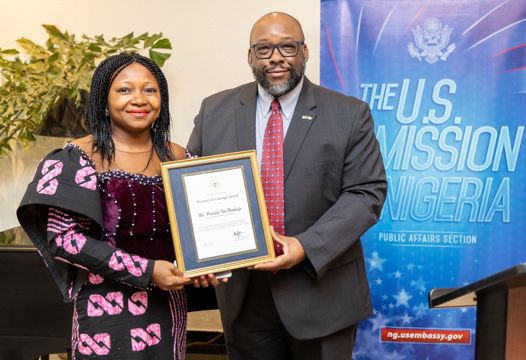
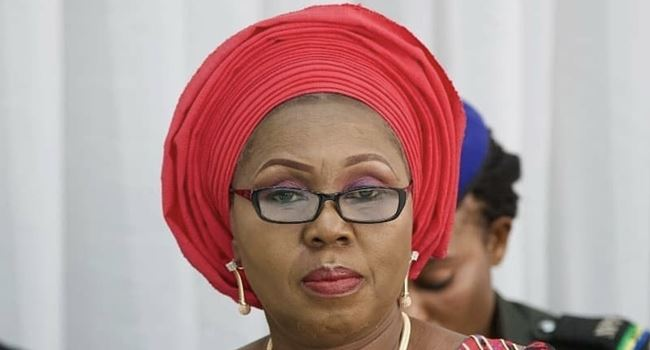
The United States Diplomatic Mission in Nigeria has named the Executive Director of Braveheart Initiative for Youth and Women (BHI), Ms. Priscilla Ikos Usiobaifo as its 2024 Woman of Courage.

This image has an empty alt attribute; its file name is image-9.png
Priscilla Usiobaifo

According to a statement from the embassy on Wednesday, the March 27 award ceremony in Abuja recognized Ms. Usiobaifo’s two decades of unwavering contribution to reforming laws and dismantling socio-cultural norms perpetuating gender-based violence in Nigeria.

In his remarks at the award ceremony, Art Brown, Acting Deputy Chief of Mission, said preventing and responding to all forms of gender-based violence is a cornerstone of the United States government’s commitment to promoting democracy and advancing human rights, as it works with Nigerian partners to dismantle the barriers and impediments to gender equality.

“This year’s theme for International Women’s Day is ‘Invest in women: accelerate progress.’ I’m proud of the United States government’s longstanding investment in women. Together with the government of Nigeria and our local partners, we’ve made significant investments in the lives of Nigerian women and girls, particularly in health, enterprise, and ending all forms of gender-based violence.”

The statement read: “The U.S. Embassy conferred the award as part of activities celebrating the 2024 Women History Month, in keeping with the U.S. government’s commitment to recognize and celebrate individuals who are advancing gender equality and equity.

“This year’s International Women’s Day theme calls on all stakeholders to prioritize women and girls. Ending all forms of gender-based violence requires a whole-of-society approach to address the deep-seated socio-cultural norms underlying gender-based violence in Nigeria. Today, we’re delighted to celebrate and amplify the work of a woman who is a fierce advocate for women’s rights,” said Brown.

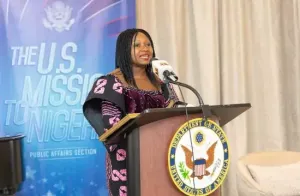
Awardee Priscilla Ikos Usiobaifo, in her acceptance speech, thanked the U.S. Mission for spotlighting her work and pledged to do more for women and girls: “Young women, especially those who work in rural communities, can be unrecognized because of the locality of the work that we do. But here I am today as a testament that no matter where you are and where you do your work, your work speaks, and it speaks very loudly. I want to see this as a spur to do more for women for girls, for children in marginalized communities in Nigeria. I hope that an award like this will inspire government to become more accountable to their citizens and to promote justice for survivors of gender-based violence in Nigeria.

Senate Committee Chairperson on Women Affairs, Senator Ireti Kingibe, commended the U.S. Embassy for the recognition, adding that it would motivate other young women to continue to do their best.

FCT Mandate Secretary for Women Affairs, Mrs. Dayo Benjamin-Laniyi, congratulated Ms. Usiobaifo for her courage and reiterated the commitment of the Federal Capital Territory to end gender-based violence.

The Woman of Courage award recognizes women who have taken unusual risks, surmounted significant obstacles, challenged harmful practices, and/or fought discrimination or disinformation in their efforts to defend and promote progress in their societies.

NIGERIA: The Black Rock

TIME Magazine Monday, Dec. 05, 1960 (Cover Story)

At five minutes before nine the warning bell clanged, and the chattering parliamentarians in the lobby began to file into the House to take their seats. Precisely on the hour, a voice raised the traditional cry “Mistah Speakah,” and the legislators froze as a bemedaled attendant solemnly descended the nine red-carpeted steps into the well of the House and laid a golden mace on the table separating the government front benches from those of the opposition. After a prayer calling down God’s protection on the nation and Queen Elizabeth II, the Speaker, in his English-accented English, called “Odah, odah,” and the debate began. Scarcely had it got into full swing when a proud, ascetic figure strolled slowly toward the government bench and all eyes converged on the ebony face of Alhaji Sir Abubakar Tafawa Balewa, O.B.E., K.B.E., C.B.E., LL.D., Prime Minister of Nigeria.

Along with its echoes of Britain’s Westminster, the legislature over which Sir Abubakar presided last week had some of the flavor of a Pan-African Congress. On its benches tall, haughty Hausas, splendidly robed in green and scarlet, sat amongst volatile Ibos draped in white and azure gowns. Across the aisle were Yoruba tribesmen wrapped in gold, yellow and orange with little porkpie beanies on their heads. Between them, they constituted one of the world’s noisiest Parliaments. Each speaker was greeted with cries of “Heah, heah” from his friends and derisory shouts of “Sit down, you wretched fool” from his foes; from the rostrum came the perennial plea for “Odah, odah!” But somehow, through the din, the nation’s problems got discussed and decided.

In the hurly-burly of 1960’s African avalanche of freedom, Nigeria’s impressive demonstration of democracy’s workability in Africa is too often overlooked. Next-to-newest of the 18 nations* to win independence this year (see p. 23), Nigeria entered the world community without noisy birthpangs or ominous warnings of its determination to avenge ancient wrongs. Since moderation and common sense are not the stuff that headlines are made of, the world’s eyes slid past Nigeria to focus worriedly on the imperialistic elbowings of Ghana’s Nkrumah, on the heedless plunge into Marxism taken by Guinea’s Sékou Touré and above all, on the bloody chaos in the Congo.

In the long run, the most important and enduring face of Africa might well prove to be that presented by Nigeria. Where so many of its neighbors have shaken off colonialism only to sink into strongman rule. Nigeria not only preaches but practices the dignity of the individual. And where such other islands of order in Africa as Liberia. Togo and the former French Congo lack the size and power to overbalance thrusting Ghana and Guinea (combined population: 8,665,000), the Federation of Nigeria stands a giant among Lilliputians; last October, when Nigeria’s 40 million people got their independence, the free population of Black Africa jumped 50%. Backed by such numbers, Nigeria’s sober voice urging the steady, cautious way to prosperity and national greatness seems destined to exert ever-rising influence in emergent Africa.

The Perfect Victorian. No man better symbolizes the strengths and hopes of independent Nigeria than Abubakar Tafawa Balewa (pronounced Bah-lay-wah). At 47, he is slight of figure (5 ft. 8½ in., 136 Ibs.), and his wispy mustache and greying, crew-cut beard make him look older than he is. Reserved and unassuming, he is a rare bird in a land famed for flamboyant politicians, was once described by an African magazine as a “turtledove among falcons.”

But for all his lack of drama, Sir Abubakar is an astute and impressive statesman. His rolling, resonant oratory and superb command of English have won him the nickname “The Golden Voice.”
For his crucial role in Nigeria’s advance to independence, Britain has heaped him with honors and his native admirers hail him as “The Black Rock of Nigeria.” (As a devout Moslem, the title he prizes most is that of alhaji—one who has made the pilgrimage to Mecca.) In his drive to lift his backward land into the 20th century, Balewa’s piercing eyes exude calm and sureness, and he rarely speaks in anger. “He is,” says a longtime British acquaintance, “perhaps the perfect Victorian gentleman. He simply will not be rushed.”

Hershey Bars & Chickens. Sprawled along 580 miles of the choppy Gulf of Guinea, Sir Abubakar’s Nigeria is a ragged rectangle the size of Texas and Oklahoma combined. Just behind the beach, guarded by a great green mangrove wall, lie sweltering swamps—and the mosquitoes whose deadly bite kept white men from settling Nigeria as they did Algeria, Kenya and the Rhodesias.* Beyond the swamps is the thick layer of tangled rain forest, where the natives pick cocoa pods for the world’s chocolate factories and gather oil palms for the big soap firms. Then comes the undulating grass country, rising in the north to the crusty, arid, mile-high floor and then to the hot Sahara’s edge, where by day nomadic cattle herders bow to Mecca and muffle their faces against the sun and grit-filled harmattan winds with robes that keep out the bitter chill when the sun goes down.

Scattered across this diverse land, Nigeria’s cities throb with the vigor of noisy commerce and the color of exotic dyes. In the federal capital of Lagos (pronounced Lay-gahs), where gleaming buildings rise among the slums, the streets are a cacophony of honking autos and a torrent of heedless jaywalkers. Lagos’ open-air market is a constant melee: picking their way through tall piles of blinding indigo or scarlet cloth, vast platters of red peppers on bright green leaves, and mounds of white salt, hordes of shrieking women peddle alum, alarm clocks, Hershey bars, live chickens, hair tonic—all from overloaded trays atop their heads.

Around the Y. But the central fact of Nigerian politics is not a clash between townsman and bush dweller. It is, instead, racial and religious rivalries pointed up by the mighty Y that is stamped across Nigeria’s face (see map) by two great rivers—the winding Benue that pours from the cloud-ringed Camerounian mountains in the east, and the majestic Niger that comes in from the west to join the Benue in a single mighty stream running south to the Gulf of Guinea.

Under the Y’s left arm, in the Western Region (pop. 8,000,000), live the most advanced of all Nigerians—the Yoruba tribesmen, who worship 400 different deities, including Shango, god of thunder, and boast a centuries-old tradition of political organization.
Under the right arm of the Y is the heavily forested Eastern Region (pop. 9,000,000), home of the Ibo. a fiercely independent people, half Christian, half pagan, and known, because of their get-up-and-go, as “the Jews of Africa.”

Black Africa’s first TV station and Nigeria’s first university are in the Western capital of Ibadan, where three-quarters of a million people cluster noisily under a sea of tin roofs. Between them, the Yoruba West and bustling Ibo East dominate Nigeria’s commerce and furnish most of the country’s bureaucrats. But the real weight of the nation rests on the top of the Y. Here, in the Northern Region, live close to 20 million people, mostly Moslems, who still remember the jihad (holy war), in which, 156 years ago, the Fulani horsemen of Imam Othman dan Fodio overwhelmed the original Hausa inhabitants. Though it is still an essentially feudal society in which Hausa-speaking masses are ruled by stern Fulani emirs, the North today, by sheer weight of numbers, controls Nigeria’s federal House of Representatives and, in the person of Sir Abubakar, lords it over the bright brats of the South.

To the New World. It was in the North too that Nigeria’s written history began—in the walled-caravan center of Kano, whose chronicles date back to A.D. 960 and whose big, modern airport today is one of the world’s busiest. For coastal Nigeria the ages passed without written record until the late 15th century, when Portuguese adventurers sailed and marched up the creeks to Benin, whose 16th and 17th century bronzes (some of which depict Portuguese traders) are now among Africa’s most treasured art objects. To the Portuguese—and the English who eventually displaced them—Nigeria’s most valuable commodity was its people. Between 1562 (when Sir John Hawkins carried Britain’s first slave cargo to Haiti) and 1862 (when the last Nigerian was sold in the U.S. South), Nigeria’s chiefs sold so many hundreds of thousands of their countrymen into slavery in the New World that Nigeria became known as the Slave Coast.

With slavery’s passing and the coming of the Industrial Revolution, Britain’s interest in Nigeria shifted from people to palm oil. To get the oil, British trading companies began to penetrate the interior of Nigeria—and after them came the Union Jack. By 1903, when Sir Frederick Lugard (later Lord Lugard) began his campaigns against the Northern emirs, British rule in Nigeria was an accepted international fact. But even yet no one conceived of northern and southern Nigeria as having anything but a geographical connection; the word Nigeria itself was coined by a London Times contributor named Flora Shaw—who later became Lady Lugard. Not until 1914, when Lugard, one of Britain’s great colonial administrators, took over as Governor General of both North and South, was modern Nigeria born.

A Matter of Chance. The man who rules Nigeria today is two years older than his country. He was born simply Abubakar, the child of Yakubu, a minor official in the regime of the emir of Bauchi. (According to northern custom, he later added to his given name that of his village—Tafawa Balewa.) Though Abubakar was not of the mighty Fulani—his family belonged to the Geri tribe—his father’s position won him the rare privilege of schooling in a region almost totally illiterate. After secondary school he was even able to get into Katsina Teachers’ Training College, normally open only to sons of the northern feudal elite.

Armed with his rare education, Abubakar returned to the windswept Bauchi Plateau and settled down on the staff of a Boys Middle School; he was a born teacher, and might have spent his life there except for a chance remark by a friend, who said that no northern Nigerian had ever passed the examination for a Senior Teacher’s Certificate. Piqued by this reflection on northern intelligence, Abubakar took the exam and, to the astonishment of southern colleagues, passed it with ease. Impressed, London University’s Institute of Education granted him a scholarship in 1945.

Ferment at Home. Uninterested in politics, Abubakar stuck to his books, never met such hot-eyed young nationalists as Ghana’s Kwame Nkrumah and Kenya’s Jomo Kenyatta, who were also in London then. When the BBC sought a Nigerian to read Nigeria’s new 1946 constitution on its overseas service, Abubakar willingly took the job but had, he later confessed, not the slightest idea what the document he had read was all about.

Back home, there were plenty of noisy young men who did. Noisiest was the flamboyant Nnamde (“Zik”) Azikiwe, a nimble Ibo spellbinder who had spent nine years in the U.S. working as a coal miner, professional boxer and gatherer of university degrees (Lincoln University, the University of Pennsylvania). Returning home, he became the loudest advocate of an independent, united Nigeria. Under the rising pressure, the British agreed to set up—as “advisory” bodies only—local Houses of Assembly in all three regions, plus a federal legislative council.

A Mere Intention. Abubakar Tafawa Balewa was hardly back from his year in London when the northern emirs, suddenly confronted with the need to find literate occupants for the northern seats in the federal assembly, pressed him into service. Like the emirs themselves, Abubakar started off with the fear that in a unified Nigeria the backward North itself would be swamped by the vigorous, better educated South. “Nigerian unity,” he told the assembly, “is only a British intention for the country. It is artificial, and ends outside this chamber!”

With Zik & Co. sowing the seeds of rebellion in the South, the days of British rule in Nigeria were clearly numbered. But at conference after conference, the bemused British could only sit apart and smile as the Africans themselves delayed independence by interregional quibbling. Not until 1951 did the shape of the ultimate solution begin to appear: in return for accepting a federal legislature with real power, the North would get as many seats as the East and West combined.

A Rebel’s Conversion. By then Nigerian politics had taken on a permanent three-way stretch. In the Ibo East, Zik’s National Council of Nigeria and the Cameroons held sway. In the West, the Action Group, headed by shrewd, stodgy Chief Obafemi Awolowo (pronounced Ah-Wo-lo-wo), spoke for the Yoruba people. Northern power then (as now) meant tall, solemn Alhaji Ahmadu Bello, the Sardauna (commander) of Sokoto and boss of the Northern Peoples Congress.

Since the Sardauna had no interest in settling in Lagos among the “southern barbarians,” Abubakar became the protector of northern interests in the capital. Grudgingly, he went along with federal unity to the extent of becoming Minister of Works. “From the start he was the best minister of them all,” recalls a British civil servant. “He did his homework and sent his paperwork through swiftly.” But he remained a northerner, not a Nigerian.

A Single Pride. His moment of enlightenment came in 1955, when Abubakar journeyed to the U.S. to find out whether what the U.S. had done to develop water transport on the Ohio and Mississippi rivers could be applied to the sand-clogged Niger. One night, as he sat in a Manhattan hotel room, he got to thinking about what he had seen in the U.S. His thoughts as he recalls them: ‘In less than 200 years, this great country was welded together by people of so many different backgrounds. They built a mighty nation and had forgotten where they came from and who their ancestors were. They had pride in only one thing —their American citizenship.” That night he wrote to a friend in Nigeria: “Look, I am a changed man from today. Until now I never really believed Nigeria could be one united country. But if the Americans could do it, so can we.”

Day of Freedom. With that, a united, independent Nigeria became only a matter of constitution writing and tidying up the details of transferring power. The British, their long and successful work of tutoring done, were ready. In 1957 Sir Abubakar stepped in as Nigeria’s first Prime Minister, to prepare the nation for full freedom. Last October 1, as drums rumbled, guns blared and exuberant citizens gleefully shuffled through the high-life dance, Nigeria’s green and white banner rose over Lagos in place of the Union Jack.

Along with independence. Nigeria acquired one of the most stable and genuinely representative governments in Africa. To ensure the votes necessary to push through his programs, Abubakar brought Zik’s N.C.N.C. into coalition with his own Northern Peoples Congress. As payment, longtime Firebrand Zik unpredictably accepted the ceremonial job of governor general. Chief Awolowo resigned himself to the role of Opposition leader.

Time & Tolerance. Despite the favorable omens under which Nigeria was born, the burdens on Sir Abubakar’s slender shoulders are awesome. The diversity that gives Nigeria’s government a kind of built-in system of checks and balances also poses the ever-present threat of fragmentation; to weld Nigeria’s 250 major tribes with as many languages into a single, indivisible nation will require not only time but tolerance. With only 175,000 pupils receiving secondary education, schools are desperately needed. In terms of university graduates, Nigeria is better off than the Congo, but there are still only 532 qualified Nigerian doctors, 644 lawyers, 20 graduate engineers. Awolowo and others are demanding that Abubakar throw out the British holdovers who still occupy half of Nigeria’s senior civil service posts; yet, as Abubakar points out, “Nigerianization” of the civil service cannot sensibly be completed until enough Africans themselves can be trained.

Economically, Nigeria is a “have” nation by African standards, is close to self-sufficiency in food. But with a per capita income of only $84, capital is lacking to move the economy beyond its present agricultural base. Tin, columbite (for jet-engine alloys) and coal are all being exported, but there is no money to develop the lead, zinc and iron ore that have been found in quantity. Abubakar dreams of building West Africa’s first steel mill and a huge dam on the Niger. But the big hope is oil. After 25 years, Shell finally hit a gusher in 1956, figures the Niger Delta swamps contain reserves of perhaps one billion barrels.

The Cold Stare. Within Nigeria’s brand-new government, corruption flourishes—to the chagrin of Sir Abubakar, who startles his colleagues by actually handing back the surplus of his expense-account money when he returns from a trip abroad. And where honesty exists, talent is often lacking. To get results, Sir Abubakar, normally mild and patient, hounds his ministers, occasionally displaying to inept underlings a towering temper never seen in public. An error can bring simply a long, cold stare; it can also bring an explosion, as it did recently when a minister tried to justify an obvious goof. “That is quite enough,” snapped the Prime Minister. “Shut up and get out!”
To avoid wasting time in the horrendous Lagos traffic—where auto trips are measured in the number of cigarettes consumed rather than in minutes—Sir Abubakar lives in a modern, two-story cement house near his office with his wife and nine children—plus the swarming families of his chauffeur and police orderly. In the Moslem tradition, his wife does not appear in public; for formal dinner parties, Abubakar borrows the Irish wife of a fellow minister to act as hostess. Up for prayers at 6:30, Abubakar breakfasts in time to arrive at his office precisely at 8:15, heads home again at 2:15 in the afternoon with enough folders full of state papers to keep him busy until bedtime. Once a heavy smoker, Abubakar swore off after his 1957 pilgrimage to Mecca, now combats the tensions of his job by chewing the bitter kola nuts that he keeps in the pocket of his long white riga.

The Christian Virtues. In his public contacts, Abubakar is quiet and self-effacing, but in Parliament he has lately begun to vary his usual restrained tactics. Fortnight ago, when the House of Representatives was debating a mutual defense pact that would allow Britain’s R.A.F. to retain facilities at Nigerian airfields, Opposition Leader Awolowo, intent on embarrassing the government, cried out in outrage that the proposed pact was a “swindle” that would automatically involve Nigeria in war if Britain got in trouble. In his rich, rolling bass, Sir Abubakar fired back: “I have always regarded the leader of the Opposition as a good Christian; in Christianity as in Islam, it is a sin to tell a lie.” While Awolowo stared grimly at the ceiling, the Assembly ratified the treaty by a vote of 166 to 38.
Last week, on the heels of the defense-treaty debate, the avant-garde of Nigeria’s young intellectuals were sneering at Abubakar’s open admiration and affection for Britain. And all across Black Africa, the smart set of extreme nationalism accused Abubakar of the African version of Uncle Tomism. They were distressed by the instinctive anti-Communism that prevents him from joining in the delightful game of giving the “colonialists” the shivers by cozying up to Moscow. (At Nigeria’s independence celebrations, when Russia’s Jakob Malik cheerily announced that the Soviets planned to open a Lagos embassy immediately, Abubakar bluntly told him: “As a diplomat, you must understand that things are not done that way. You must submit an application for diplomatic relations, and we shall judge it on its merits.”) Above all, the extremists are shocked that Abubakar can barely conceal his contempt for showboating Kwame Nkrumah and his schemes for Pan-African unification, instead urges that for the time being, African cooperation be limited to such practical steps as technical and cultural exchanges, a common U.N. front and, perhaps, economic agreements.
But for all of Ghana’s contempt for its bigger Johnny-come-lately rival, Nigeria, less than two months after winning its independence, is on its way to becoming one of the major forces in Africa. Nigeria’s dynamic U.N. Ambassador Jaja Wachuku is chairman of Dag Hammarskjold’s Congo Conciliation Commission. A number of African nations, notably those of the French Community, are beginning to sidle up to Nigeria in visible relief at the emergence of a counterweight to the firebrands of Ghana and Guinea. And Abubakar himself has begun the wheeling and dealing abroad expected of a sovereign nation’s leader; at last week’s end he headed for London to mull over Commonwealth problems with Harold Macmillan, stopped off en route to discuss the Algerian war with Arab leaders in Tunis.

Like everything else about him, Sir Abubakar Tafawa Balewa’s basic foreign policy principles are unpretentious: “We consider it wrong for the Federal Government to associate itself as a matter of routine with any of the power blocs . . . Our policies will be founded on Nigeria’s interests and will be consistent with the moral and democratic principles on which our constitution is based.” If Nigeria lives up to his words, Africa and the world will have cause to be grateful.

TIME

Betty Akeredolu’s ‘Remarriage’:Such traditional practices are fuelers of GBV –Priscilla Usiobaifo, Braveheart Initiative

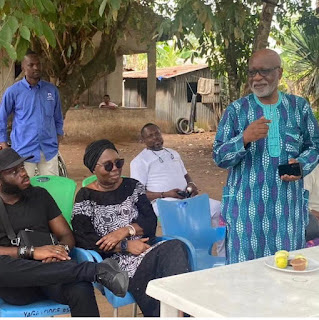
After the news made rounds that Mrs Betty Anyanwu-Akeredolu, widow of the late former Governor of Ondo State, Rotimi Akeredolu, has gotten married to her late husband’s younger brother, Prof. Professor Wole Akeredolu, a lot of clarifications have been made suggesting that the ceremony was not an actual marriage.

Sources close to the Akeredolus said there was indeed a ceremony at Betty Akeredolu’s village in Imo State where according to custom, the Akeredolu family formally notified the former First Lady’s family of her husband’s passage.  

“According to custom, the Akeredolu Family indicated to the Anyanwu Family that they still wanted Betty in their family. According to custom. Betty was then handed over to his immediate younger brother, Prof. Wole Akeredolu to take care of her.  

“⁠That is not the same thing as marriage. She has four children and grandchildren for the Akeredolu family. It was therefore prudent for the family to request that she remain in their family according to the custom of her people.”

However, the Executive Director of Braveheart Initiative for Youth and Women (BHI), Ms. Priscilla Ikos Usiobaifo maintains that such traditional practices are fuelers of GBV.

“Since we began our Ford Foundation Supported Project focused on PREVENTION of SGBV, we have become more exposed to sociocultural practices and norms that hinders the progress of women. While we often deal with the notorious ones as FGM, there are many other rites linked to Marriage and Burial Ceremonies that we MUST give away or refine if we we are to actually make progress in this country.

“A careful analysis of these practices show patriarchy at play. They deliberately misinform and disinform the citizens especially our women to believe that such practices are for their good but it is a LIE.

“Imagine me losing my husband and HIS family are made to DETERMINE if I will continue to live with them or not. That decision should be my prerogative and choice as his widow.

“We have a VERY LONG way to go with our women’s rights advocacy if we don’t begin the difficult engagement of our TRADITIONAL Systems.

“Sadly, when we talk about SGBV Prevention, many people talk about what WOMEN should do to avoid being assaulted e.g Dress Better, Don’t argue with Men etc. YET, Evidence shows that PREVENTING SGBV requires addressing social norms that frame and fuel such violations.

“Priscilla – BHI”

R

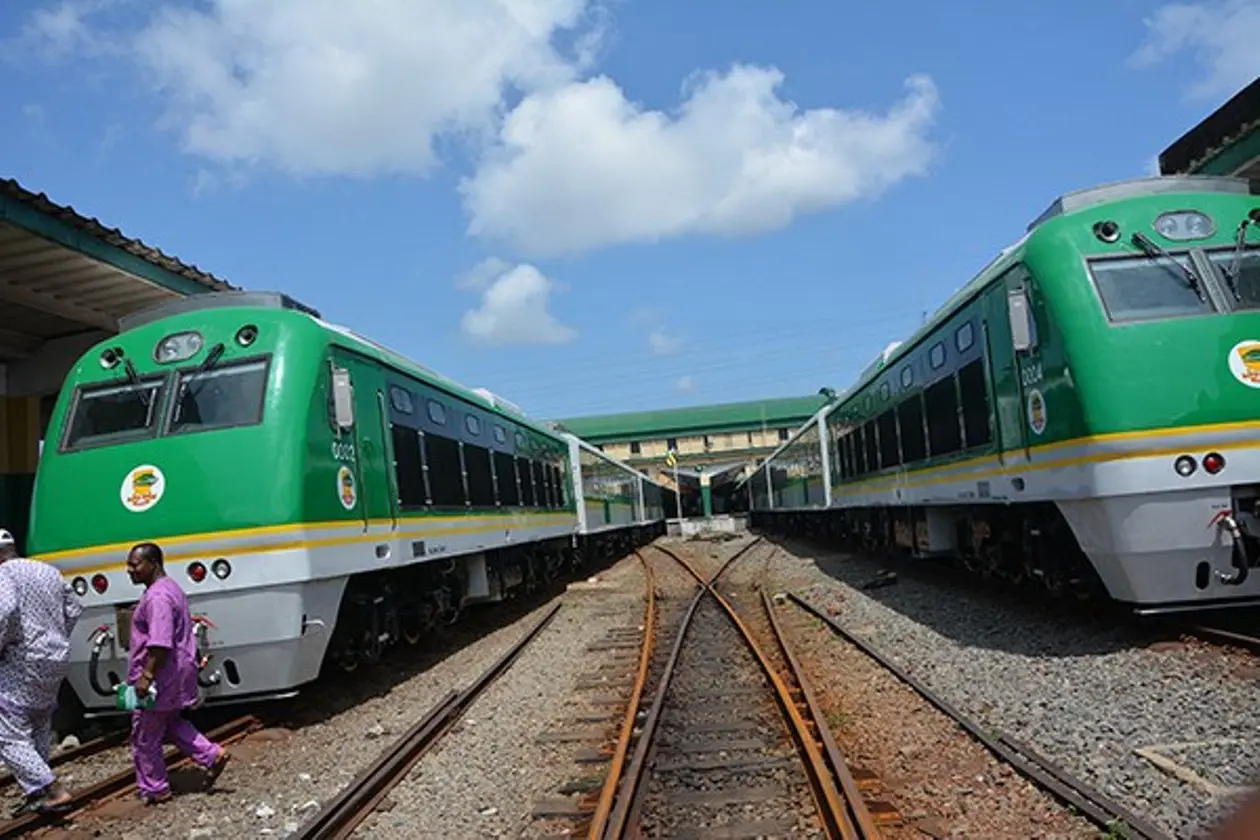
No medical team in the Kaduna-Abuja Train where police escort died

The importance persons in authority in Nigeria attach to medical emergency came to the fore on Thursday morning when a policeman who was one of the escorts attached to an Abuja-bound train died as there was no medical team in the train.

It is noteworthy that the coaches on the train have the capacity to take about 900/1000 passengers per trip and most times the train carries a full load.

For instance on 28 March 2022 when terrorists attacked an Abuja bound train from Kaduna about 970 passengers were on board.

Yearly, politicians allocate huge resources for the most mundane while sufficient allocation of financial resources to improve and maintain the general public’s health is trivialised.

A passenger, who witnessed the incident, said there was no indication that the deceased was ill when the train left Kaduna for Abuja.

The witness said the late officer later complained of chest pain and sought help before he died.

“A police officer, who was one of the escorts on a Abuja-Kaduna train just died. He left home in good health. But later during the journey, he complained of chest pain and asked his colleague to get him some glucose and water.”

“There was no emergency medical care on the train. Before a doctor, who was also a passenger, could come, the officer was already dead,” the passenger said.

After the officer died, his remains was moved to a side of the train, while his face was covered.

Videos seen by our correspondent showed passengers gathered discussing the fate of the deceased.

The train arrived at Kubwa in Abuja around 3:20pm after which passengers disembarked.

Security operatives on ground prevented passengers from recording the incident.

About 20 minutes after the arrival of the train, some police van drove into the station to pick the corpse to a mortuary.

Attempts to reach Mahmoud Yakubu, Public Relations Officer of Nigeria Railway Corporation, did not yield result at the time of filing this report as his telephone line was switched off.

Did Betty Akeredolu marry Aketi’s younger brother?

Mrs. Betty Anyanwu-Akeredolu, the widow of the late former Governor of Ondo State, Rotimi Akeredolu, has reportedly remarried.

Betty was reportedly handed over to her late husband’s younger brother, Professor Wole Akeredolu.

The decision was made by the Emeabiam Community in Owerri West Local Government Area of Imo State.

The ceremony reached its climax when the Umuegeolu kindred formally handed Betty over to Professor Wole Akeredolu, indicating the family’s desire to continue having her within their fold after her husband’s demise.

Prior to this symbolic gesture, customary offerings of kolanuts, palm wine, and a she-goat were presented to the Umuegeolu kindred by the Akeredolus, adhering to tradition.

In response, Professor Wole Akeredolu expressed gratitude to the Umuegeolu kindred and the entire Emeabiam Community for their hospitality.

He affirmed the Akeredolu family’s commitment to continue caring for Betty, acknowledging the support received during the mourning period and the interment ceremony held in Owo.

The Mgbafu Mkpe ceremony, a traditional Igbo practice, signifies the transition of a widow back to her husband’s family following his passing.

It involves the mutual agreement between both families, with rituals performed accordingly.

Mr. Oluwarotimi Odunayo Akeredolu SAN, popularly known and called Aketi by friends and admirers, died in a hospital near Hanover, Lower Saxony, Germany in the early hours of Wednesday, December 27, 2023 after a protracted battle with cancer at the age of 67.

The one-time president of the Nigerian Bar Association (NBA) was buried on Friday 23 February 2024.

Observer Times

Court orders EFCC to pay photographer ₦5 million over erroneous parade

Justice John Okoro of Court of a Federal High Court in Abuja has awarded a N5 million damages against the Economic and Financial Crimes Commission (EFCC) for wrongfully parading a photographer named Nasiru Saidu Ali (Kozzo) as a fraudster.

The incident happened in May 2019 when the photographer was wrongfully arrested from his Abuja home and his photos splashed on the social media accounts of the EFCC alongside those of other alleged internet scammers.

He was later released after his innocence was established but Ali dragged the anti-graft agency to court for criminal defamation of his character.

The photographer, through his lawyer, Pelumi Olajengbesi, had demanded N100m damages from the EFCC but after five years, the court, in a landmark judgment delivered on Friday, March 22, 2024, awarded a N5 million damages against the EFCC and ordered the anti-graft agency to tender a public apology to the photographer.

After the court ruling, Olajengbesi reiterated that it is unlawful and amount to abuse of powers for the EFCC to publicise images of individuals arrested for alleged crimes when such persons have not been convicted by court.

The lawyer said his firm, Law Corridor, took up the photographer’s case pro bono, and after extensive legal proceedings before the Federal High Court, Abuja, justice was finally served.

He said, “Following numerous legal arguments and delays orchestrated by the EFCC, Honorable Justice John Okoro of Court 8 of the Federal High Court, Abuja delivered a landmark judgment on Friday, March 22, 2024.

“The Court deemed EFCC’s actions unconstitutional, as they violated Ali’s right to human dignity, encroached upon his privacy, and a disregard to the noble and fundamental principle of presumption of innocence to have posted his picture on their social media.

“The Court awarded ₦5 million in exemplary, punitive, and general damages against the EFCC. Additionally, the EFCC was ordered to publicly apologise to the young photographer.

“Even though we asked for 100m, the court awarded N5 million and also grant perpetuate order against EFCC from arresting the photographer again.”

If e pain you go hug…: After approving N90 billion subsidy for Hajj Nigeria’s FG hikes electricity tariff by 300%

By Lillian Okenwa

After approving the sum of N90 billion as subsidy for Hajj fares, the federal government of Nigeria finally took counsel from the International Monetary Fund (IMF) which had earlier in the year said there was an urgent need for Nigeria to completely phase out electricity subsidy as part of measures to address its economic challenges.

The tariff increase amounts to over 300% and raises the tariff to N225 per kilowatt-hour from the previous rate of N66. Vice Chairman of the Nigerian Electricity Regulatory Commission (NERC) Musliu Oseni made this disclosure at a briefing in Abuja, adding that customers on other bands will not be affected by the tariff hike.

The N90 billion Hajj fares subsidy is three times higher than the 25 billion budgeted for universal healthcare that would carter for over 200 million Nigerians. It is higher than the combined 2024 budgets of the University of Ibadan (N23.4billion), Obafemi Awolowo University (N17.1 billion), Ahmadu Bello University (N29.2 billion) and the University of Lagos (N19.4billion) and more.

Nigerians are still reeling over the effect of fuel subsidy ‘removal’ since on 1 July, 2023. Life has become harder and hasher for citizens. IMF holds the same view on fuel subsidies.

But the Nigerian government has chosen the most essential. A holy pilgrimage! Far better it is to sponsor people to visit the holy land, so they can pray and make heaven than pander to the whims of irritant Nigerians! It’s better for them to die of hunger than reman alive and be a nuisance to the rich…

For countless times in the last few months, the national grid collapsed. Nigerian leaders refuse to see the correlation between power generation and prosperity. Our leaders appear to be more interested in bank credit alerts, printing more naira notes which will used to purchase the highly favoured US dollars.

After it was signed into law, the repeal and re-enactment of the Electric Power Sector Reform Act, 2005 (the ESPRA) also known as the Electricity Act 2023 (the Act) was seen as a major game changer in the Nigerian Electricity Supply Industry (NESI).

This is because amongst the comprehensive legal and institutional framework introduced by the Act, is that states now have constitutional authority to enact laws that allow them to generate, distribute, and transport electricity within its boundaries, including territories formerly covered only by the national grid. Why are state governors not exploiting this? So far only Abia has shown interest.

Our governors seem to be more interested in sharing grains, food for breaking of fast than creating an environment for citizens to provide for themselves. Otherwise, bandits cannot be controlling mines and farms, taxing communities while their governors look away; some receiving all manners of awards and others getting rewarded by transitioning to the National Assembly. Their pitiful records notwithstanding.

It’s all politics. The people do not really matter.

Lasisi Olagunju in his article, FG’s N90 billion Hajj politics said: “Each of the 48,414 intending pilgrims was initially supposed to pay N3.5 million, then it was jacked up to N4.9 million when the dollar raced past the strength of our sense. N4.9 million is a huge amount in this season of want. There was an outcry which the anti-subsidy government in Abuja heard and doused with a subsidy coolant which translated to N1.6 million per pilgrim. This N90 billion pilgrimage subsidy paid by this government I could not find anywhere in the 2024 budget of the Federal Government. Even in the pads and paddings, it is absent. So, where did the president conjure that humongous sum from?

“Even after that intervention, there are further subsidies to pay. Because the forex crisis has set every plan ablaze, the total hajj fees payable is no longer N4.9 million per pilgrim. The hajj commission last week raised the fare by a further N1,918,032.91 blaming forex volatility. The amount is now N6.8 million per pilgrim. The arithmetic is well explained in a report by the Daily Trust some days ago which quoted a Hajj commission source: ‘By the previous calculation, the N90 billion given by the Federal Government can only subsidise 19,000 intending pilgrims by ₦3.5 million. But by spreading it on 50,000 pilgrims, it (the subsidy) reduced it (the shortfall) to N1.9 million. This means that the federal government has subsidised each pilgrim by ₦1.6 million…’ There is still a shortfall of N1.9 million which each of the pilgrims has to pay. But they may not pay anything. Some state governments are paying it for them….”

After the bleak 8 years of the Buhari regime, Nigerians appear to having the Rehoboam experience. Let me explain. After the death of King Solomon, his son Rehoboam succeeded him.

…and the whole assembly of Israel went to Rehoboam and said to him: “Your father put a heavy yoke on us, but now lighten the harsh labor and the heavy yoke he put on us, and we will serve you.”

Rehoboam answered, “Go away for three days and then come back to me.” So the people went away. Then King Rehoboam consulted the elders who had served his father Solomon during his lifetime. “How would you advise me to answer these people?” he asked. They replied, “If today you will be a servant to these people and serve them and give them a favorable answer, they will always be your servants.”

But Rehoboam rejected the advice the elders gave him and consulted the young men who had grown up with him and were serving him. He asked them, “What is your advice? How should we answer these people who say to me, `Lighten the yoke your father put on us’?”

The young men who had grown up with him replied, “Tell these people who have said to you, `Your father put a heavy yoke on us, but make our yoke lighter’–tell them, `My little finger is thicker than my father’s waist. My father laid on you a heavy yoke; I will make it even heavier. My father scourged you with whips; I will scourge you with scorpions.'”

Three days later Jeroboam and all the people returned to Rehoboam, as the king had said, “Come back to me in three days.” The king answered the people harshly. Rejecting the advice given him by the elders. He followed the advice of the young men and said, “My father made your yoke heavy; I will make it even heavier. My father scourged you with whips; I will scourge you with scorpions.”

So the king did not listen to the people… 1 Kings 12, The Holy Bible.

It appears our leaders are telling us as they say in Naija parlance: “If e pain you, go hug transformer.” Will Nigeria ever be liberated?

Ibadan man who allegedly defiled toddler says “I was checking the function of my retracted manhood”

A suspected 22-year-old male paedophile named Farouk told security operatives in Ibadan that he sexually violated a three-year-old girl in course of trying to figure out if his retracted manhood was still active.

He was arrested last Thursday March 28 in Ibadan, Oyo State.

Tribune reports that the young man, living at Popo Yemoja, Ibadan, was arrested by the Amotekun Corps after they got information of his act from local security men in the area where they all live.

A source privy to the incident said while the toddler was beside her sleeping grandmother on a mat in a veranda trying to get fresh air on account of the heat in their apartment, Farouk sneaked in and picked her up.

He reportedly took her to a room where he sleeps with his neighbour, sat her on his private part and started thrusting until he ejaculated, despite the little girl’s feeble resistance and cries.

Relieved of the sexual tension he had had, Farouk dropped the hapless girl and asked her to return to her grandmother’s side.

With her body smeared with sticky liquid, later discovered to be sperm, the girl slept until her father came to wake up his mother and children, carrying his youngest daughter to take her inside their apartment to sleep.

However, the father noticed the stickiness on his daughter’s thighs and buttocks and was thrown into shock when he smelt the substance and discovered it to be sperm.

The toddler who was being taken care of by her father and grandmother, was said to have lost her mother in August 2023, five days after she delivered her fourth child, a son.

The distraught father of the victim said

“We don’t have light in our area, so we used to sleep in our veranda. That day, when I returned from my shop, I fed the children while grandma carried the baby. After that, I went to take care of the chickens I’m rearing. By then, they had all slept on the veranda. Since I was not feeling sleepy, I went to friends in our neighbourhood to exchange pleasantries and have general discussions with them.

I returned home a little after 11 pm and woke everyone up to go inside. As I picked my daughter to hold her to my chest as the youngest among the girls, I noticed my hand being smeared with a wet, sticky substance. Wondering what it was, I checked her underpants and exclaimed. I ran inside and showed my mother. It was sperm. I also called a female neighbour to check it and she confirmed it as sperm.

I couldn’t hold myself. I went out with my daughter to lodge a complaint with law enforcement agents but was sent back by local security men. I went out again but was still stopped until I showed my daughter to them and they were amazed.

They got a bike for me and on the way, we met Amotekun personnel. At first, they thought I stole a child until. I explained to them what happened. After informing their superiors and being given directives, they went to my residence and picked the males there to find out the culprit among them.”

When interrogated, the suspect confessed to committing the crime.

“I live with my parents but I used to sleep in the rooms of some men living in the compound. It is true that I slept with the three-year-old girl.”

When asked why he did it, he responded

“I don’t even understand myself. My manhood has not been functioning since about 10 years ago. I don’t have a girlfriend because of my condition. The girl was crying and I left her. It is true that I ejaculated and poured it on her. I slept in the room of one of the men before we were arrested at dawn on Friday. The girl pointed at me when asked to identify the person who touched her among the six of us arrested.”

Regrets of Missed Moments: A tribute to Victor Onwusika

By Gabriel Airewele

Sometime around noon on Wednesday, March 27th, 2024, I received a perfunctory message through WhatsApp from a friend with the words, “Is it true that this your classmate has died?” Blazoned above the message was a picture of Victor Onwusika, my former classmate, colleague, and friend.

As I read the message, a wave of shock engulfed me, leaving me numb. Cold sweat drenched my body, and my heart raced in my chest. Panic seized me as I frantically tried to confirm whether the news was true, clinging to a desperate hope that it was all a mistake, that somehow, Victor hadn’t really passed away.

I called the number I had for him, and the automated voice on the other end announced that the phone associated with the number was switched off. Never before had the simple act of a phone being turned off brought such a sense of foreboding, as if the owner had truly been switched off from this plane of existence. Fear lingered, casting a shadow of doubt over whether the news might indeed be true.

My phone rang again, and a friend I had reached out to confirmed that he saw a post on his Facebook page announcing Victor’s demise. In that moment, an unimaginable wave of shame gripped me. My sweat turned to tears, streaming in a torrent of regret. Regret that I had lost the good fortune it would have been to have seen him, perhaps for just one last time had I kept the promise I made to him.

I remember around August of last year when I saw his repeated posts of support for one of our other classmates who is vying for the presidency of the Nigerian Bar Association. I was moved to call him, probably the first time in the previous 10 years. When I did, I asked about him heartfully, joking that I now only hear of him and no longer see him. Memories flooded back of our early days of law practice, especially our early morning runs into the High Courts of Ikeja and Igbosere. I recall my first motion before Justice Alogba, and how Victor gave me a pep talk on how to present it. He advised me to end with “I urge the court to grant our prayers” after my arguments.

In the University of Nigeria, Nsukka, where we both studied law, I wasn’t particularly close to him. But circumstances brought us together for a brief stint in our bid to be admitted into a somewhat prestigious club. Victor and I would often share conversations about how we can do some good and fight injustice in the larger society. During the grueling process of the interview, Victor was a solid rock of encouragement. Although brief, the interaction with him during this period was deep.

It was therefore some sort of delight to find out that he had settled in Lagos after graduation to practice law. I yearned to reignite a relationship with him. So in the call to him this last August, I was determined to make it happen.

If I had, I would most likely have gone with my wife and kids to his house. We would have bantered over food and drinks. Our wives would have been introduced and our kids would have made new friends. I would have asked the question that had stayed in my mind for decades after; was the entire grueling process of joining and staying in the club worth it? I would have wanted his perspective on this much thought-about time of my life.

If I had arranged that meeting, we might have shared the prognosis of our health status and diagnosis. We could have exchanged tidbits about our experiences and knowledge of staying healthy. We might have been frank with each other about our secret health issues and found encouragement in each other to continue doing the best we can, leaving our ultimate fate to God’s grand timing of our stay on earth.

If we had met, we would definitely have discussed business and potential collaborations. I would have sought his views on the impact of our sluggish and mostly inefficient judicial system on his finances, knowing he was a courtroom lawyer. I imagine we would have engaged in some debate about our courts being able to apply the law to dispense justice.

We would have concluded our meeting with animated spirits, each of us carrying with us a sense of anticipation for our next encounter. The addition of new faces and the innocent joy of children would have infused our meeting with warmth and laughter, enriching not only my own experiences but also leaving a lasting impression on our children.

So when I heard the news of his passing unto greater glory, my family would have had context to properly grieve with me. They would have relived the experience of their meeting with Victor’s family and would understand my sadness. They would show some sadness of their own. The golden moments created by our meeting would have become some sort of oasis to douse my grief, even if a little. Those moments would have been a worthy gift for my soul.

But those moments never came. They did not happen because somehow, I got fooled by the powerful trickery of the idea that tomorrow as an opportunity will be available for us all. I had assumed that I had all the time to schedule and break bread with Victor who will always be present. Now as I mourn him, I am also left with the burden of mourning a missed opportunity to create golden moments. Moments that would have been transformed into an oasis in my heart to soothe the pain of losing someone who had more to give.

And even as Victor has closed the last chapter of his earthly life, may God Almighty open new vistas of hope and succor to his wife and children whom he left behind.

Gabriel Airewele is a partner at Union Attorneys in Lagos.

The Unholy union between Nigerian Labour Congress and the Labour Party

By Akintayo Balogun Esq. 


The recent occurrences between the Nigerian Labour Congress (NLC) and the Labour Party (LP), the demand for the resignation of the National Chairman of the Labour Party by the NLC, issues revolving around the legality or otherwise of the National Convention of the party and the involvement of NLC in the management of the party has raised issues as to the correctness or appropriateness of the involvement of NLC in the activities and management of a Political Party in Nigeria. Following the last general election, the nature of funds coming into the party, allegations of embezzlement of funds, suspension of national party officials, the attention the party is enjoying, and the alleged sidelining of the union, the NLC could not stomach their silence any longer. 

Over the years, since the creation of the Nigeria Labour Congress in 1976, the vibrancy of the NLC has had impacts (positive or negative) on government policies towards the welfare of the common man, especially the Nigerian worker. However, in a move I regard as a diversion from its core values and goals, the NLC in 2002, under the then leadership of now Senator Adams Oshiomole, created a political Party, known as “Labour Party”.

The party has since been in existence though docile existence most of the time. The prominent office occupied by the party was the office of the Governor of Ondo State, between 2009 and 2017, although the governor decamped to the Peoples Democratic Party before the end of his tenure in office as Governor. The party went predominantly soundless until in 2022 when former Governor Peter Obi joined the party and declared interest in contesting for the office of the President of Nigeria on the platform of the party. His popularity with a large segment of the youths, who were fed up with the old order birthed what is now known as the “Obidients Movement” – a youth-based political movement made of mostly the younger generation of Nigerians.

This heralded an era when the Labour Party moved from being just one of the several political parties in Nigeria to a third force in the political space. His coming into the party made the party a force to be reckoned with and one that shook the entire foundation of the political space in Nigeria. The unknown party suddenly had candidates for a good percentage of the seats contested in the general elections of 2023. The party in the said election eventually produced a Governor, several Senators, House of Representatives members, and several House of Assembly members. The party candidates also emerged as runners-up in many of the elections. Some of the elected persons were of no political germaneness or relevance in their political communities, but they rode on the goodwill of Sir Peter Obi to clinch their various seats.

The popularity and political dominance enjoyed by the Labour Party following the entrance of Sir Peter Obi into the party has brought up several issues as to the correctness or otherwise of the existence of a political party which is a creation of the Nigeria Labour Congress. 

  1. Should the Nigeria Labour Congress be involved directly or indirectly in the affairs of a political party in Nigeria?
  2. Does the activities of the Nigeria Labour Congress not conflict with their aims and objectives?
  3. Is the recent activities of the NLC not a distraction from its aims and objectives?
  4. Can a member of the NLC contest through the Labour Party? 
    In answering the above questions, the fundamental aims and objectives of the Nigerian Labour Congress as available on its website at www.nlcng.org are to protect, defend, and promote the rights, well-being, and the interests of all workers, pensioners, the trade unions, and the working class in general; and also to promote and defend a Nigerian nation that would be just, democratic, transparent and prosperous through the attainment of the objectives listed. The aims and objectives of the NLC have no direct bearing whatsoever on the forming and running of a political party. On the participation of members of the NLC in elections in Nigeria, it is interesting to note that despite being a creation of the Nigeria Labour Congress, members of the NLC cannot participate in the activities of the party, particularly in contesting elective positions. A member of the NLC cannot contest under the
    auspices of the party because that would contradict the provisions of the 1999 Constitution. By the combined effect of sections 66(1)(f), 107(1)(f), 137(1)(g) and 182(1)(g) of the 1999 constitution, a person shall not be qualified for election in Nigeria if the candidate is a person employed in the civil or public service of the federation or of any state and has not resigned, withdrawn or retired from the employment at least thirty (30) days before the date of the election. The simple interpretation of the above constitutional provision is that any employed civil servant or public servant intending to contest an election in Nigeria must have relinquished his or her position at least 30 days before the date of the election, which automatically means relinquishing his membership of the Nigerian Labour Congress. What then is the essence of forming a political party whose active members have extremely limited participation opportunities in the activities of the political party? Not a single elected Labour Party member is a member of the NLC. If civil servants cannot participate as candidates in an election, why then should they flaunt a party and allow outsiders who are not answerable to them to come and preside over the party? 

Furthermore, during the last electioneering year in Nigeria, the National President of the NLC and other top officers of the union were seen at political rallies of the Labour Party. There was also a directive by the NLC to all workers to work for the success of the Labour Party for the general election in line with
an earlier resolution of its National Executive Council and to vote for Labour Party candidates. Unfortunately, the Labour Party did not win many of the key offices that it had so desired particularly the office of the President. This has now placed a political unease between the NLC and the APC-led Federal Government. Since the inception of President Tinubu’s Administration, every action taken by the NLC has been seen by the administration as an action of the Labour Party (the opposition) against the government. The protests, the strikes, and the warnings have all been seen as the opposition fronting as NLC in fighting the government. This is why NLC should have no business being involved in a
political party. 

In my analysis of the issues between the NLC and Labour Party, I am of the view that the Labour Party being a creation of the Nigeria Labour Congress is a violent misnomer that should not have been allowed to exist in the first place by the Independent National Electoral Commission. When this issue was raised in some quarters, a school of thought said there is a Labour Party in the United Kingdom
and other European States which is a creation of their Labour Union.

The idea that the Labour Party in the United Kingdom was formed by the Labour Union in the United Kingdom gave a justification for the operation of a Labour Party in Nigeria. We must however note that the political structure in the United Kingdom varies a lot from what is applicable in Nigeria. In the United Kingdom, politicians serve on a part-time basis. Government workers are allowed to contest elections without necessarily resigning their positions. In Nigeria however, you are required to resign your position in public service before you can contest elections in Nigeria. The comparison is very unbalanced and unevenly considered. 

Recommendation 
There should be a total severance between the NLC and the Labour Party. The Labour Party should stand independent of the NLC. Their aims and objectives are parallel lines that can never meet. The process of trying to intertwine NLC and Labour Party is part of what has been causing the unending disputes between the two organizations. The scope of NLC goes beyond political parties. It cuts across several other facets of the Nigerian society. Seeing NLC at political rallies or demanding for the resignation of the party chairman or writing to the Independent Electoral Commission, protesting a National Convention and other involvements of NLC in Labour Party is a misplaced priority.

Their fundamental aims and objectives are being eroded. As a matter of fact, the Labour Party as it is currently constituted ought not to have been registered by the Independent Electoral Commission as a political party. The National Chairman and National Secretary of the NLC are Board of Trustees of the Party. This to my mind, is a distraction from duty.  

Alternatively, the Constitution of Nigeria and the rules guiding persons in public service should be amended head-on to allow persons who are still in active public service to participate in the Nigerian political space at all levels and stages. Political offices can also be made part-time just as it is applicable in the United Kingdom which Nigeria emulates. However, while the rules remain the same, NLC should concentrate on its core values in pursuing the interest of persons in public service and not allow itself to be distracted by the wears and tears of a political party and its structure. The entire involvement of the NLC in the activities of Labour Party in the past few months is a brash distraction from the aims and purports of the union. 

Akintayo Balogun Esq., LL.B (Hons), BL, LL.M, is a legal practitioner in private practice and based in Abuja, FCT. A prolific writer, public affairs analyst and commentator on national issues. [email protected].

TIPS