Home Blog Page 618

The Perils of a Chief Justice as political prayer warrior

By Chidi Anselm Odinkalu

“Some judges have achieved a considerable degree of expertise….in displaying an immunity from contemporary knowledge and concerns.” David Pannick, KC, Judges, p. 32 (1987)

Emmanuel Araka was 60 years old when Allison Madueke, then over 20 years his junior, a Navy Captain and military governor of Anambra State, terminated his judicial career in March 1985. At the time, Araka had been the Chief Judge of Anambra State for six years and a judge for double that. At the time also, the retirement age of judges in Nigeria was 65.

Araka’s crime was that he took the job of the judge too seriously and believed that a judge should be manifestly independent of political and executive influence.

Araka, was born in 1925 to a father from Onitsha who worked as head-teacher in a primary school in Agbor in present day Delta State, where he was born. His secondary education took him through Hope Waddel Institute in Calabar, now in Cross-River State, where one of his teachers was Eni Njoku (the famous “Teacher Nwanjoku”), who was to become the first Vice-Chancellor of University of Lagos.

Following successful studies at the Trinity College, Dublin, Araka was called to the Nigerian Bar in 1951. Over the next two decades, he built a formidable career in private practice and in politics. 12 years after becoming a lawyer, in 1963, he became Queens Counsel, the equivalent of today’s Senior Advocate of Nigeria, SAN.

Two years before that, in 1961, Chike Obi, who represented Onitsha Federal Constituency in the then House of Representatives, had to quit parliament after being convicted of the political crime of sedition. In his place, Onitsha people elected Araka to represent them in the Federal House.

The onset of military rule in 1966 interfered with Araka’s career in politics but did not entirely derail his availability for public service. At the end of the civil war, he returned to legal practice but not for long.

In 1972, Administrator of the East Central State, Dr. Ukpabi Asika, appointed Araka a judge of the High Court. When in 1976, the East Central State was split into Imo and Anambra States, Araka naturally became a judge in his home state, Anambra. Two years later, in 1978, Anthony Aniagolu, the first Chief Judge of Anambra State was appointed a Justice of the Supreme Court and Araka succeeded him in office, becoming the second Chief Judge of the State.

Around the time of Araka’s appointment as a judge in East Central State, something happened over in Lagos State which made an impression on many judges and judicial wannabes. The then military governor of Lagos State, Mobolaji Johnson, had extended an invitation to the Chief Justice of the State (as they were then known), John Idowu Conrad (JIC) Taylor, to attend a state dinner. It was reported that Chief Justice Taylor, “after reading it, endorsed a brief note to the governor at the back of the invitation card, informing him that he would be unable to attend, because the Lagos State government had several cases pending before him and it would therefore, in the circumstances, be most inappropriate for him to honour the invitation.”

In doing so, JIC Taylor didn’t just underscore the institutional value of judicial independence, he also underlined its reliance in large measure on the moral fibre of the individual judge.

This was the state of affairs when Araka arrived the Bench. 14 years later, Allison Madueke, a member of the First Regular Course at the Nigerian Defence Academy, arrived as military governor in 1984 with no hint of having received the memo. Having settled in, the military governor summoned the Chief Judge to a meeting in the government house in Enugu. Araka, demurred. Madueke later complained in his memoirs that he “had not reckoned that I was dealing with a law administrator that had a mind of his own.”

That was Araka’s crime. The invitation was renewed unsuccessfully twice, whereupon Captain Madueke “applied for his retirement.” Madueke narrates that he later met the then second-in-command to General Muhammadu Buhari, General Tunde Idiagbon, while the latter was on an official visit to Owerri and secured Idiagbon’s authorization to terminate Araka’s judicial career for being independent. In March 1985, Madueke fired Araka.

Madueke, who has just turned 80, whoops that this was “something of an earthquake in Anambra State.” It was more than that in the judiciary, where it established a norm that independence was costly. Judges re-calibrated.

Today, cavorting with the executive has become a judicial past-time. In his controversial memoirs, The Accidental Public Servant, former Minister of the Federal Capital Territory (FCT), Nasir El-Rufai, recalls that one of his first moves in that role was to visit the then Chief Judge of the Territory to secure the support of the judiciary. He exulted that thereafter, “the FCT judiciary supported us strongly throughout my tenure.”

In November 2023, the current Chief Judge of the FCT, Husseini Baba Yusuf, went one step further, corralling the FCT judiciary to visit the current Minister of the Territory, Nyesom Wike, to pledge judicial allegiance to his rule. There, the Chief Judge promenaded somewhat naked before the Minister, pleading that “[a]s a judiciary, we are part of the government and we should be able to do things that will make govt work.”

Three months later, the list of new nominees to the bench of the FCT High Court included an in-law of the Minister, Lesley Nkesi Wike, who only became a Senior Magistrate in Rivers State in 2023, appointed by the Minister when he was Governor of Rivers State.

One year earlier, in November 2022, Olukayode Ariwoola, the Chief Justice of Nigeria, had kicked up a firestorm when he traveled to Port Harcourt and at a reception hosted by the same Nyesom Wike who was then the Governor of River State, stepped into the political minefield to offer judicial support to Wike and four other governors who were at odds with their political party, the Peoples’ Democratic Party, PDP. The Chief Justice, a devout Muslim, was not under the influence of anything that he should not have consumed but, despite the febrile political season, many were willing to give him benefit of the doubt.

This past week, Chief Justice Ariwoola bettered himself. Under the guise of the traditions of the Muslim holy month of Ramadhan, he led the Nigerian judiciary supposedly to break the fast with the president. The team accompanying the Chief Justice included two of his immediate predecessors, each of whom left office under a cloud. Walter Onnoghen, one of the two, is Christian.

No one had ostensibly warned the Chief Justice about the perils of turning into a prayer warrior for politicians. At the visit, the Chief Justice took the microphone and under the guise of prayers offered to the president intoned: “May the Lord continue to bless you and your administration. Let your ship land and berth beautifully. We shall continue to pray for your administration because there are many good things in the pipeline for Nigerians.”

It is possible that Olukayode Ariwoola has always had a secret career as a clairvoyant which would equip him to know what will happen in future. What is clear is that after these lines, few people can approach the court that he presides over with any expectation of even handedness in any case in which the administration is party.

Lawyers and judges speak glibly about judicial independence, often treating it as something material, guaranteed by constitutional provisions and by large swathes of money. It is, of course, important that judges are provided for so that they have no excuses to fall prey to bribery or material importuning. Official emoluments are usually not enough competition, however, for the kinds of blandishments that can be deployed in pursuit of the favours of a senior judge.

For that reason, the job requires a lot of skill, patience, and balance. But more than any other thing, it requires persons willing to defend independence. Of all the many virtues that he surely must possess, being an Araka is not a charge that can be levied against the current occupant of the office of Chief Justice of Nigeria.

A lawyer and a teacher, Odinkalu can be reached at [email protected]

“We must not fail our people” Ibori looks back, tasks South-South govs, legislators, elders & leaders

Press Statement

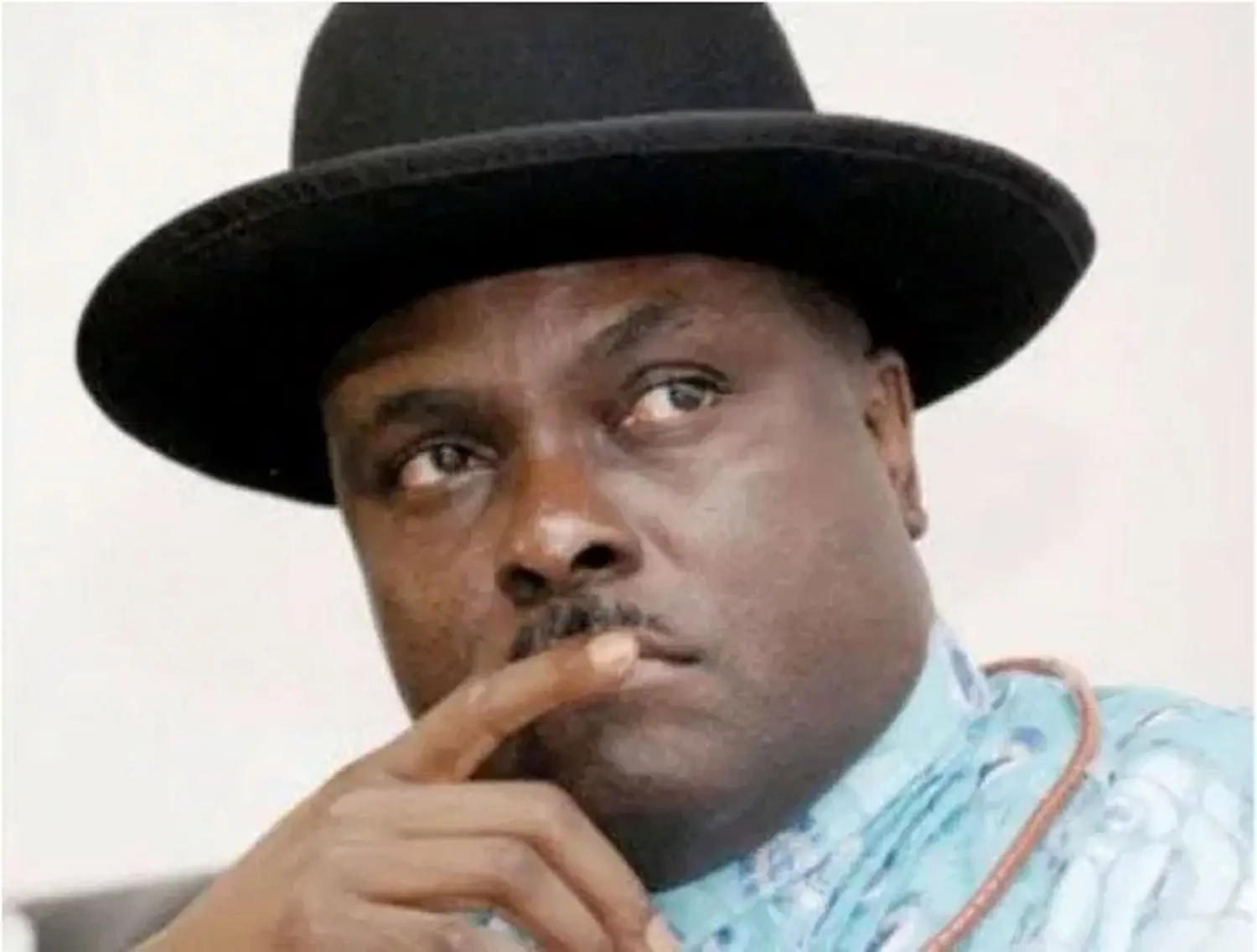
On the 24th anniversary of the South-South Governors, Legislators and leaders’ summit on March 31st, 2000 at Asaba, Delta state, Chief James Onanefe Ibori has tasked South-South leaders to be Apostles of fiscal federalism and see it as an unfinished business. The theme of that first meeting; “We Must Not Fail Our People” is very poignant today as it was yesterday.

He has reminded them that despite the mission which gained momentum on that Friday, 31st March 2000 and all the associated gains, much remains unaccomplished and new challenges have arisen.

In a press statement signed by Tony Eluemunor, Chief Ibori’s Media Assistant yesterday (30th March) Ibori, Delta state Governor 1997-2007, congratulated the South-South Governors, State legislators and National Assembly members on their elections.

To Their Excellencies, beginning with Delta state’s Sheriff Oborevwori, Edo State’s Godwin Obaseki, Cross River state’s Bassey Otu, Akwa Ibom’s Umo Eno, Rivers’ Sim Fubara and Bayelsa’s Douyye Diri, Ibori said the batons from the three sets of Governors before them in this Fourth Republic are now firmly in their hands. This baton bestows on them huge responsibilities beyond infrastructure.

The enthronement of true fiscal federalism is a higher calling for which they must respond and take charge, on behalf of, and for the benefit of their people.

He believes that ten months after inauguration, all the rancor, bitterness and disagreements occasioned by the politics of the last election is behind. Ibori said: “From where I stand, the question is what’s the trajectory of the Niger Delta Region? We must pull together to answer that question to the benefit of Niger Deltans”.

The concern for the well-being of the good people of the Niger Delta region prompted Ibori to convene that summit about a quarter of a century ago.

On that day, Ibori said in his welcome address: “As political leaders of the people of the South-South zone, given the sad and long history of our marginalisation, we should see and treat our various offices as held in sacred trust with corresponding obligations imposed by our conscience and oath of office to work for the redemption of the region from selfish exploitation of any form and colour, as well as our
people from injustice, in whatever form it may be expressed.

We must speak, when we must, and must act, when it is desirable, in the overriding interest of our states and the nation. Succeed we must. Failure will be disastrous not only to the aspirations of our peoples
but the nation as well”.

The Asaba meeting held exactly ten months into the Fourth Republic when the PDP Federal Government led by President Olusegun Obasanjo, a party Governor Ibori also belonged, refused to activate the thirteen percent derivation principle. Instead the Federal Government insisted on paying the one percent bequeathed to it by the outgone Military Administration.

Also the onshore and offshore dichotomy of oil and gas production was still being debated and the South-South was denied its divine right.

So, Ibori argued in his welcome address: “Section 162(2) then enacts the principles of allocation which include population density, equality of states, internal revenue generation, land mass and terrain, subject to an overriding proviso which states in part: ‘Provided that the principle of derivation shall be constantly reflected in any approved formula as being not less 13 percent of the revenue accruing to the Federation account directly from any natural resource.

It is unfortunate that this well-intended provision has been subjected to all manner of interpretations and administrative manipulations and needless politicization to unjustly deny the States of the South-South zone their respective constitutional dues from the federation revenue”.

He continued: “Your Excellencies and Distinguished Legislators, the people and government of Delta State are unequivocally unable to accept the view that the implementation of Section 162 (2) of the
Constitution is a condition precedent to giving effect to the payment of the minimum 13 percent principle of derivation in the interim system of revenue allocation enshrined in section 313 of the
Constitution for the allocation Federation Account until an Act of the National Assembly is passed.

“The section states that as from the commencement of the Constitution on the 29th of May, 1999, the system of revenue allocation in existence for the financial year, beginning from 1st January, 1998 and ending 31st December, 1998, shall be the approved revenue allocation formula subject to the provisions of this Constitution. This percentage is not Subject to any administrative or legislative change, except upward review of the percentage or through a Constitutional amendment.

“On the contrary and to the chagrin of the people and government of Delta State, the principle of derivation has been pegged at one percent under a revenue allocation formula different from the 1998
system since the 29th of May to date, leaving an outstanding balance of 12 percent each month of the 10 months in favour of the recipient states.

“Our call is justified even by the history of the principle of derivation, which is not a new factor in our fiscal federalism. In the 60s and early 70s the principle was fully recognized and in use. During the period the percentage weight of the principle was as high as 60 percent. Our nation was not less federal or poorer for it.

“Your Excellencies and distinguished lawmakers, you will agree with me that the continued withholding of this allocation means the continuous denial of our peoples the right to development and poverty
remediation”.

Ibori then attacked the onshore/offshore dichotomy of oil and gas production: “The time has come for us, of the South-South zone, to have a dream. A dream to translate our patriotism, energy, talents,
democratic wits and indeed all that is in us to free our people from every legislative shackle which is not in the socio-economic interest and aspirations of our people.

We must speak and must act. The dichotomy between onshore and offshore oil and gas deposit is
artificial and not in the best interest of our people. It is artificial because it is unnatural and not unconnected with the expropriation intention behind the Exclusive Economic Zone Act, as we
all may recall, the Act was passed in 1978, delimiting the Exclusive Economic zone of our country and extended it up to 200 nautical miles seawards from the coasts”.

Your Excellencies, South South Governors, legislators and leaders, year 2000, the dawn of the new millennium is 24 years ago into the past. Since then, a lot of water has passed under the proverbial
bridge. Many leaders of today are even unaware of the man-made challenges which faced the South South zone then.

It won the 13 percent derivation principle war and banished the Onshore and Offshore
dichotomy, whereby oil revenue from the seas was said to belong entirely to Nigeria and with nothing going to the given littoral states.

According to the statement, “For acting on behalf of the South-South many Niger Delta leaders faced
assorted obstacles and paid hefty prices. Four years later, Ibori organized a second summit in Asaba but the powers that be ensured that it never held; Chief A.K Dikibbo, the then National Vice-Chairman of
the Peoples Democratic Party was assassinated on his way to the summit”.

24 years after that first South- South leaders’ summit, Ibori wishes to encourage the present Governors and South-South national legislators, and in deed the entire people of the area to address the salient problems; old and new. Among the old is the Land and Environmental question and a higher derivation principle percentage.

Ibori said in his year 2000 address: “The land and environment are our natural patrimony. Any legislation that is aimed at taking our land rights from us should matter to us at all times at least for the sake
of our children and the generation unborn. It is against this note of serious concern that I humbly draw the attention of Your Excellencies and distinguished lawmakers to the land Use Act, 1978, which vested
ownership in the country in both the State and Federal Governments. To the unwary or uniformed, it does not take away the right of the people to use and occupy their land. But for the more informed, it is one of the instruments by which our people and States have been denied the right to their patrimony under and over land.

“This is more serious when we realize that little or no attempt is made to remedy the damage done to our environment through the massive exploitation of our underground and undersea natural resources for a ceaseless period of almost 40 years. We are witnesses to the evils of environmental degradation, impoverishment and displacement of our people from their homesteads, farmlands and fishing streams, poor industrial base, youth restiveness, communal conflicts and violence, high rate of criminal activities, physical underdevelopment, mass unemployment and the associated problems of insecurity that oil and
gas exploration have inflicted on our environment and people”.

New problems have cropped up. Ibori could not have, in year 2000, foreseen that Cattle Herders would seize the bushes of the entire South-South zone, killing farmers, raping women and kidnapping people while the Police remain comatose and the people frozen by fear.

This definitely brings to the fore calls for state and community policing. Now, the South-South has to go beyond the lip service some of our Governors paid to the establishment of state security agencies
and combine forces to raise a South-South zonal self-defence team and seek ways to enforce the law against open grazing enacted by most of our state legislatures.

Ibori said that the South-South states must cooperate even in providing social amenities as Delta and Edo states, under him and Gov. Lucky Igbinedion, collaborated in the Onicha-Ugbo to Uromi road construction, through Idumuje-Ugboko, Ubiaja and Ewohimi which sliced over an hour from Asaba to Abuja trip and opened once remote areas to commercial activities.

24 years ago, Ibori threw this open challenge at the summit: “Try we must to change things for the better for our people. This is the least we owe to ourselves and posterity. The land Use Act must be reviewed
through our concerted efforts and those of other patriots so that we will truly and fully enjoy the fruits of our land and environment for our sustenance and those of our children.

“As heads of governments and distinguished lawmakers, eminent sons and daughters of the South-South zone, we have a dream – to correct these pervasive symptoms of the high and systematic exploitation and neglect of our people. We are their hope. If we fail, they fail. We should loathe seeing ourselves being counted among failures by history”.

He thanked all those who were active in the struggle especially his former colleagues in the region, legislators, leaders like Chief E.K Clark, Prof Itse Sagay, Prof G.G Darah, Oronto Douglas, Prof Kimse Ekoko of Ijaw National Congress, Chief A. K Dikibo, Prof Omafume Onoge, Chief Gamaliel Onosode, Dr. Abel Ubeku, Chief James Obukowho Erhuero, some of have passed but their roles can never be forgotten.

I thank all members of the Delta State Executive Council, especially Prof Amos Agbe Utuama, my Attorney General, who individually and collectively worked tirelessly for the actualization of the objective. There are others too numerous to mention who sacrificed their time to support the struggle, I thank them immensely.

In conclusion, Ibori said: “That challenge still subsists” and wished tye South-South leaders God’s guidance as they face the task.

Signed: Tony Eluemunor

Media Assistant to Chief James Onanefe Ibori (Gov of Delta state 1999 – 2007).

Two medical doctors arraigned for alleged involuntary manslaughter in Lagos

The Lagos State Government recently arraigned two medical doctors, Michael Atiba and Michael Ugbeye, at an Ikeja High Court, for alleged involuntary manslaughter of a patient, Ejiro Ugorobi.

Both Atiba, a doctor at the Gbagada General Hospital and Ugbeye, a consultant with the National Orthopedic Hospital, are facing a count charge of involuntary manslaughter.

The defendants, whose residential addresses were not given, pleaded not guilty to the charge.

The State Counsel, Olalekan Azeez, asked for a trial date, following their not guilty plea.

The prosecutor told the court that Drs. Atiba and Ugbeye unlawfully caused the death of one Ejiro Ugorobi by neglecting the application of anaesthetics before surgery and after surgery.

He submitted that the defendants allegedly committed the offence on October 21, 2023, about 12:30 p.m. at No 20, Michael Adekoya St., Ilupeju, Lagos.

Counsel to the first defendant told the court that he filed a bail application dated March 22, and urged the court to grant Atiba bail on liberal terms.

“We are pleading that the first defendant be admitted to bail because he is a medical doctor and he is into the business of saving lives and not taking lives.

“He is not at any risk that he would not present himself for trial, I move in terms of the motion,” he said.

The second defence counsel, Mr A. O. Fayemi, moved the application for bail dated March 21 and urged the court to grant his client bail on self recognition.

Fayemi, in his 31 paragraph affidavits, said the second defendant had served the nation as a consultant orthopedic for over 30 years.

“The second defendant is a consultant who has served this nation as a consultant orthopedic with the national orthopedic hospital.

“He is not a young man that would not attend court.

“He is a consultant medical practitioner and he has a clinic at Ilupeju.

“He is a person who will present himself for trial and I urge your lordship to grant him bail on libra terms,” he said.

Justice Oyindamola Ogala in her ruling, granted the defendants bail in the sum of five million naira each with two sureties each in like sum.

Ogala said the sureties must be resident within the court’s jurisdiction.

She added that the sureties must present credible home and office addresses as well as credible financial status.

Ogala equally ordered tnat the sureties must present their BVN and NIN, evidence of tax payment to the Lagos State Government, and explain their relationship with the defendants.

She then adjourned the case until May 15 for commencement of trial.

According to the prosecution, the alleged offence contravenes Section 224 of the criminal law of Lagos State 2015.

NAN

Intimate Affairs: Japa, marriage, sex and money

By Funke Egbemode

Letty was a good girl who became a good wife. But the seasons changed and this once-upon-a-time choir leader, like Lot’s wife, looked back and right before the eyes of her Pastor and in the presence of her bewildered husband, is turning into a pillar of salt. The kind of salt no one wants to touch or taste. It was all the fault of this Japa syndrome.

Letty and her husband, Brandon, had decided that Nigeria, the way it was going, was going to ruin their plans for the future. As it was, their future was becoming more and more difficult to see, like a receding apparition. Rent was tough to come up with. Their two children were not attending the kind of school they had planned for them, yet they were owing school fees, term in, term out. Brandon as a civil servant could only hope for a sprinkle of naira notes every three years because that was all his promotion fetched.

The couple added two to three and decided that ‘Japa’ was the only available option. They added their savings to loans and sold as much valuables as they could find buyers for and Brandon was off to ‘the abroad’.

But we all know how ‘Japa’ itself can be like. The difficulties Brandon faced in the United Kingdom was like riding a second-hand Raleigh bicycle uphill a dusty road in the harmattan. One year became three years and Letty found herself really alone. Note that there’s alone and there’s really alone. Really alone is when you are married and sleeping alone, picking all the bills alone and crying alone into your pillows because you don’t want the children to hear you.

It was sad and bad. Brandon didn’t find it easy. Letty soon found out that the Christian walk is difficult when you are wearing shoes designed by lack. In the process of trying to cope, Letty started leaning on another man. Yes, one man who helped pick some of the bills. The guy also made her laugh, called her regularly, picked the children from school and soon, was picking Letty from work too.

Do I need to spell the journey out? You can guess it wasn’t going to end well. It didn’t.

Letty got pregnant now and confused. She will soon start showing and that will bring with it damning and damaging explanation. How will she explain to her in-laws or children that she got pregnant without her husband? How does a married choir leader explain her pregnancy to her pastor when everyone knows her husband is hustling in United Kingdom. Would she keep this pregnancy or terminate it? Is this the end of her marriage or what? If you were Brandon, would you accept Letty back or with a broken heart just let her and your marriage go? What will be the fate of the children who got caught up in the melee?

If you ask me, I’d say marriage is already a taxing business without you adding the Japa trouble to the mix. Couples who live together year in year out know how much work they have to put in to stay put. Japa is not for everybody and it is not all marriages that are subjected to Japa that will survive it.

For Letty and Brandon, it is not about the marriage breaking or being scarred only. It is also about a baby who didn’t ask to be born into confusion.

So, do you think it is Letty’s fault that this happened? I hear a resounding yes.

‘How could she get pregnant for another man?’

‘How could she open her legs for another man? ‘

‘She’s a married woman for God’s sake!’

‘What kind of Christian wife betrays her vows like that?’

‘No, she has to go.’

‘That marriage is over.’’

‘Yes, the church must excommunicate her. ‘

‘She has brought shame on everybody, herself, her family and the church. ‘

Our predictable reactions. If you align with any of those reactions, you must also align with me that Japa isn’t for everybody. You must also agree with the Yoruba adage that states that it is what you leave lying around that the goat eats. Ohun t’a ba fi sile ni enu ewure n to.

In other words, Brandon and Letty should have known that their marriage would become easy prey for predators. Sometimes, a farmland left unused, unattended will soon find itself at the mercy of weeds. At other times, a daring strong man may dare the real owner and vigorously begin cultivating the land.

We must also admit that this side of the Japa syndrome will leave the marriage institution panting. It takes away intimacy and companionship which are at the core of a true union. What Japa couples are not willing to admit is they are now in open marriages. According to Wikipedia, ‘open marriage is a form of non-monogamy in which the partners of a dyadic marriage agree that each may engage in extramarital sexual or romantic relationships, without this being regarded by them as infidelity, and consider or establish an open relationship despite the implied monogamy of marriage.’

In the case of Japa husbands and wives, there’s no written or discussed agreement of sexual and romantic relationships with other people. It just happens. That evil just creeps in with time, the time created by distance. Putting money above companionship and not considering the long-term effect of Japa on marriage is swelling the ranks of divorced men and women.

Look around you and sincerely appraise the lives of couples who have opted for love across the ocean.

I’ll really like to publish personal experiences of those in the living-apart boat. I promise to keep their real names out of print.

However, this does not mean there are no couples who have stayed committed to one another in body and spirit, even with the thousands of kilometres separating them. At least, the wives remain faithful. The men? I can’t vouch for them. They can’t vouch for themselves either. How these couples do the love across the ocean deal successfully is a matter for deep study.

A wife left behind in Nigeria or posted abroad is expected to be faithful. She must be of best behaviour, work hard to send money home to the man she left behind, even. If she dares to go on a date with her colleagues and one of them posts photos or videos, her in-laws and detractors will summon coven meetings to discuss this affront as if it’s a matter of urgent national importance.

Well, as this one-sided society is prescribing closed legs for the women, it pats the man on the back for keeping his fly open.

‘He’s a man now.’

Nonsense. Do women not also have libido? Women need love too. They crave the touch of their husbands. But all I can do is protest, right? It’s their world, according to some unwritten warped law. Men can have side-chicks, even mistresses or Nigerian wife while their wives are hustling or schooling abroad. But a wife must keep her legs close and stay on ice until God knows when. It’s not fair, totally unfair but it is what it is, until God knows when. If I protest from now till I go fully gray, nothing will change.

The summary of today’s homily however is this, if you are not ready for the full consequences of your partner Japa-ing without you, do not do it. Make sure you have all your facts. Hold a honest family meeting where all cards are laid on the table. Will he have girlfriends while she’s away? Will she be able to ‘hold body’ in winter and in summer? Will he wear condoms until he joins her? If she must ‘do anything’ can she be discreet? Both parties must be realistic, honest and be ready to forgive all trespasses. Yes, all trespasses because the chances that adultery will show up in marriage when husband and wife live 2,000 km apart are high. Do not just think of the money angle, the improved lifestyle, the regular supply of electricity and generally living where things work. Japa for couple goes beyond the accent and dollars and pounds. It is not a business transaction.

Marriage, its joy, future and fulfilment side should not be reduced to naira, dollars or any foreign currency. Think deep. Look far ahead. Consider all the angles and truthfully answer this question: is the step worth the sacrifice?

Ms. Egbemode can be reached on [email protected]

N1bn Fraud Allegation: National Steel Council levels accusation against its Executive Secretary, Ambassador Musafari

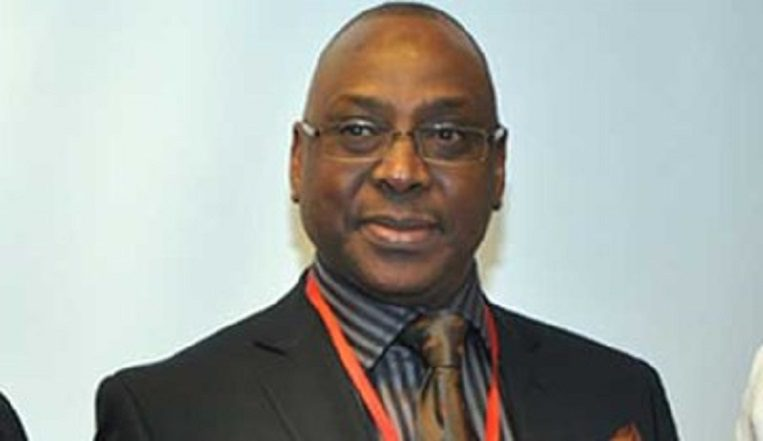
The National Steel Council (NSC), Abuja has notified the Minister of Steel Development, Shuaibu Abubakar Audu, about an alleged N1 billion fraud which was reportedly linked to its Executive Secretary, Ambassador Abdulqadir Musafari.

The council, in a March 15, 2024 letter, told the minister that Musafari had allegedly “failed, refused and/or neglected to avail the Council of any information concerning his activities on behalf of the council, if duly authorized.”

It advised that the Executive Secretary should be suspended from office pending the conclusion of the investigation of the allegations by a disciplinary committee.

The council’s recommendation followed a request by the committee that it set up on February 12, 2024, to investigate Musafari for, among others, financial impropriety and serious misconduct.

Documents obtained by SaharaReporters show that the committee’s terms of reference included investigating “several wilful and deliberate actions calculated to sabotage the lawful activities of the National Steel Council in the fulfilment of its mandated duties and responsibilities to the Nigerian people under the National Steel Council Act.

“Wilful and deliberate misappropriation of public funds to profit and/or benefits self and with intent to deceive or defraud the Federal Government of Nigeria (FGN) and its citizens.

“A recurring pattern of executive recklessness (both civil and criminal) and blatant disregard for established laws and council procedures and/or directives

“Communicating formally, conducting formal meetings and/or making formal outreaches to third parties on behalf of the council without knowledge or approval, and without consequently reporting the outcome of such to the council.

“Engaging persons (either directly or on secondment) for employment and/or to serve (particularly in strictly confidential positions) to act on behalf of the council without notice to, approval by, and/or subsequent report for the purpose of ratification by the council, in contravention of paragraph 5(2) of the first schedule of the national steel council act.”

The disciplinary committee, headed by a retired judge of the Federal High Court, Justice Taiwo O. Taiwo, submitted its preliminary report to the NSC Board on February 29, 2024.

Other members of the disciplinary committee are Prof. Sylvester Osuji, Hajiya Fatimah Hayatu, DIG David Folawiyo (Rtd) and Barr. Elvis Asoro (Secretary).

Specific allegations against Musafari that the committee investigated are: “The attempted illegal withdrawal of the sum of N726,477,654.21 from the Treasury of the Federal Government of Nigeria (FGN) without the knowledge, consent or approval of the National Steel Council (NSC).

“Payment of N5,000,000.00 (Five Million) as bank charges” that the National Steel Council said it was unaware of and did not approve.

“Payment of N6,253,000.00 as Insurance dues/claims. The Council is unaware of, and did not approve, any such Insurance agreement(s) for which this payment may be considered a responsibility of the Council.

“Payment of N961,000.00 for Publicity of which the Council is unaware of and did not approve or authorize.

“Expense of N310,060,500 as purchases/acquisition without the knowledge, authority, and/or approval of the Council.

“Expense of N38,418,530.75 as Local Travel and Transport unknown to, unauthorized by, unapproved by, and hidden from the Council.

“Another expense of N4,709,848.05 for Local Travel and Transport unknown to. unauthorized by, and unapproved by, the Council.

“Expense of N1,000,000.00 (One Million) on telephone calls without the knowledge, authorization, and/or Council approval.

“Expense of N1,000,000.00 (One Million) on the printing of security documents that are unknown to, unauthorized by, and unapproved by, the Council.

“Expense of N20,125,000.00 budgeted for staff training on persons unknown to, unauthorized by, and unapproved by. the Council.

“Payment of N24,371,000. as Honorarium and Sitting Allowances which are either unapproved or unreported by the Council.

“Payment of N9 Million for purchase of photocopy machines unknown to, unauthorized by, and unapproved by, the Council.

“Payment of N512,000.00 from funds budgeted for the purpose of National Steel Council, for privately accrued electricity charges by Ambassador A. Musafari on a private and/or personal property, without the knowledge, authorization, and/or approval of Council.

“Payment of N4,435,113.75 for Office Stationery/Computer Consumables without the knowledge, authorization, and/or approval by the Council.

“Payment of N166,000.00 for the purported maintenance of personal/private motor vehicles that the Council is neither aware of nor owns. This payment is without the Council’s knowledge, authority, and/or approval.

“Payment of N120,000.00 (One Hundred and Twenty Thousand) for the maintenance of personal/private Office Furniture for which the Council is not aware of ownership. This payment is without the Council’s knowledge, authority, and/or approval.

“Payment of N99,000.00 purportedly for the maintenance of Office/Residential Quarters that do not belong to, are unknown to, and/or authorized by Council.

“Payment of N470,000 for maintenance of Office/IT Equipment which ownership is unknown to, and/or does not belong to, the Council. This payment was not known to, authorized by, and/or approved by, the Council.

“Payment of N476,000.00 (Four Hundred and Seventy-Six Thousand) from public funds for maintenance of private and/or personal Plants/Generators. This payment was not known to, authorized by, and/or approved by, the Council.

“Payment of N107,000.00 for non-specific maintenance services that are not known to. authorized by, and/or approved by, the Council.

“Payment of N1,950,000 for cleaning and fumigation services for private and/or personal premises. This payment was hidden from, unauthorized by, and/or unapproved by, the Council.

“Payment of N4,995,287.50 for Motor Vehicle Fuel Costs for personal vehicles unknown to the Council. This payment was hidden from, unauthorized by. and/or unapproved by, the Council.”

The Council’s chairman, Murtala Aliyu, in a letter to the minister, described the suspension as necessary because Musafari had allegedly “failed, refused and/or neglected to avail the Council of any information concerning his activities on behalf of the council, if duly authorised.”

The letter noted that the Council could not investigate some of the allegations against the ES and advised that they should be reported to law enforcement agencies.

Aliyu said: “It is therefore necessary to forward the infractions which the disciplinary committee cannot investigate under the law beyond the documents presented, to the appropriate government agency e.g. the ICPC (Independent Corrupt Practices and Other Related Offences Commission) or the Police to act.

“The infractions against the Executive Secretary are too weighty being criminal in nature and therefore tainted with the commission of crimes which are also in violation of the Federal Government Financial Regulations Rules. These allegations should be reported to the appropriate law enforcement agency with investigative powers forthwith.”

He added, “With due respect and without prejudice to the powers of the Honourable Minister for Steel and the committee set up by him, we are of the opinion that these infractions have to be investigated as agreed by the Disciplinary Committee set up under the NSC Act.

“In view of these infractions which are to be investigated, there is the need to suspend the Executive Secretary as stipulated in the Act by the Appointing Authority, which must be informed of these infractions and the steps which the Council is taking in this matter.”

When SaharaReporters contacted Abdulkadir Musafari for a reaction, he declined to comment on the matter.

He simply told our reporter that “if you want to talk about the National Steel Council, please direct it to the Ministry of Steel Development”.

When asked what he meant, he said, “If you want to talk about steel council you should talk to the minister, please.”

Credits: SaharaReporters

Bianca Ojukwu, Debe Odumegwu Ojukwu and the doctrine of ‘a man’s first acknowledgement of a child born outside wedlock’

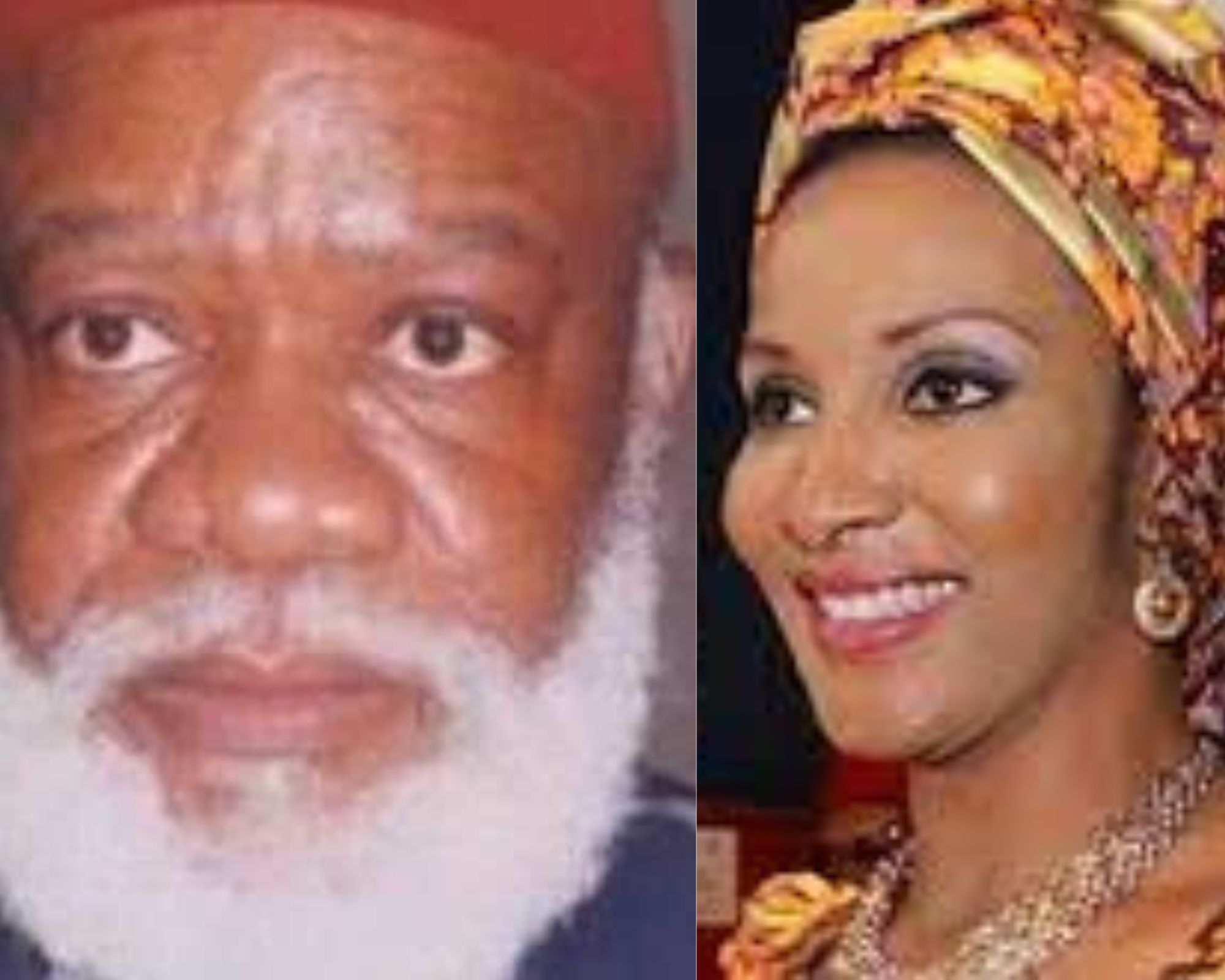
Debe and Bianca

By Lillian Okenwa

Not a few have contented that DNA would have been the strongest point for Debe Odumegwu Ojukwu and his lawyer to pursue in the matter which culminated in a High Court of Enugu holding on Wednesday, 27 March 2024 that the late Dim Chukwuemeka Odumegwu Ojukwu in the course of his lifetime did not acknowledge him as his biological son.

Public affairs analysts contend that a sample of Emeka Odimegwu Ojukwu’s DNA could have been easily obtained since he was known to socially ‘mix around’ easily. “Then, go after and voraciously attack the genuineness of the Will with everything you’ve got.”

It has also been argued that the doctrine of ‘a man’s first acknowledgment of a child born outside of wedlock’ was a proposition of law used when the law and courts did not know any better given that at that time, acceptance of paternity was based solely on whether the father acknowledged the child born outside of wedlock in his lifetime.

An attorney who spoke under anonymity was of the opinion that “in the 21st century case, they must have gone way back and plucked an old case law/authority, and the judge bought into it.

“I start with the caveat that I’ve not read the full judgment. That said, if the gist of what’s reported above is the crux/core reasoning behind the decision reached, I most respectfully, do not agree with the judgment [not that it matters in any case].

“I’m of the humble view that the germane issues for determination, in summary, are firstly, whether Debe Ojukwu is rightly an offspring and son [whether first son or not] of Emeka Odimegwu Ojukwu; secondly, whether the Will and Codicil said to have been executed by Emeka Odimegwu Ojukwu were genuine and/or duly executed by him.

Read more: You have not proved that Ojukwu recognised you as son —Court to Debe Ojukwu

“With respect to the first, all Debe Ojukwu needed was to prove by DNA evidence that he’s an offspring of Emeka Odimegwu Ojukwu [since obviously his split image and resemblance of Emeka Odimegwu Ojukwu eluded his lordship; or more appropriately, such is not one of those things the judge is allowed by the Evidence Act to take judicial notice of].

“If sequel to and in furtherance to that, Debe Ojukwu is able to prove by concrete evidence that the Will is not genuine and/or duly executed, then the Will ‘ought and should have been’ set aside and Emeka Odimegwu Ojukwu ruled and declared as having died intestate thereby entitling Debe to share in the estate of the late Emeka Odimegwu Ojukwu. Whether counsel pursued the angle of DNA is unknown. Probably, they did not.

“Now, to my main point. In my firm humble view, there is no place in this age, time and the advancement of science, for the proposition that Debe ‘ought to be first acknowledged’ by Emeka Ojukwu in his lifetime as his son. The proposition of law with respect to acknowledgement of paternity by a father is with due respect, outdated. It’s pre the emergence of DNA.

“Let me put it this way. Following the emergence of the science of DNA, the proposition of a father’s acknowledgment of a paternity of a child born out of wedlock is relic. In fact it is nothing but an attempt at giving life to ‘an artifact from long past historical times’. It has no place in the present day development and advancement of this specific area of our law.

“My humble take.”

Sadly, the DNA option even if the younger Ojukwu were to consider it today is way too late as the retired Police officer, lawyer and then President-General of Umudim Nnewi Union in Lagos slumped and died in his Lekki Phase I home on 1 November 2018 at the age of 62.

Two female prison officers sentenced after having sexual relations with the same inmate at same time

Two female prison workers who both had inappropriate relationships with the same inmate at the same time have been sentenced.

Prison officer Aleesha Bates, 30, sent naked pictures to the Casanova crook, saying she ‘wanted him 24/7’. Jodie Wilkes, 27, admitted striking up an ‘improper association’, but claimed nothing ‘sexual’ happened. Both women got to know the prisoner at HMP Buckley Hall in Rochdale, Bolton Crown Court was told.

Bates was the first to strike up a relationship with the man, who had been jailed for drugs trafficking offences and cannot be named for legal reasons, in December 2019, prosecutor Brian Berlyne said.


She became ‘completely infatuated’ with the man, sent him X-rated messages and naked photos, and even planned their future together once he was released, the court heard.

Over a period of seven months, Bates exchanged 4,500 messages and enjoyed frequent phone calls with the prisoner. In one message she said: ‘I want you 24/7. I can’t get enough of you. If I had it my way I would be on the phone to you every single moment.’

The women’s relationships with the convict came to light after a mobile phone was found in his cell in June 2020. Mr Berlyne said analysis of the handset uncovered calls and messages between the inmate and Bates, plus photos of them together.

‘The messages contained evidence of an intimate relationship between them, with Miss Bates expressing love for the prisoner and expressing plans for after his release,’ he said.

‘She also sent him sexually explicit images and videos.’

The phone also showed ‘dozens’ of messages to Wilkes, who was an operational support worker and began messaging the crook in April 2020.Both women admitted misconduct in a public office at a previous hearing.

Judge Elliot Knopf said Bates had committed a ‘gross breach of trust’.

Sentencing her to two years and eight months in prison, he said: ‘Yes, you were ensnared but he identified you as someone who could be approached and you did not have to accept that approach.’

He spared Wilkes jail and handed her a 12-month sentence, suspended for two years. She was ordered to carry out 200 hours of unpaid work.

After killing wife, Abuja man gets four years imprisonment

  • Another man allegedly beats wife to death in Lagos
  • Rivers man suspected to have strangled wife arrested

A high court of the Federal Capital Territory (FCT), Apo Abuja on Wednesday, sentenced one Ayedun Makanjuola to four years’ imprisonment for running over and killing his wife, Adenike.

The FCT police commissioner charged Mr Makanjuola with culpable homicide.

Justice Angela Otaluka held that the deceased’s act of throwing her husband’s food away and hurling a stone at the rear windscreen of his car while he tried to drive out was provocative.

Her Lordship said she did not consider Makanjuola reversing his car as retaliation but as a loss of control of his feelings.

“It was not a deliberate action but sudden. The prosecution has failed to prove the intent of the defendant but has proven the offence of culpable homicide.

“I find the defendant guilty of culpable homicide not punishable with death and convict him,” the judge said.

The defence counsel, Kolade Adeboyega, told the court that the defendant was a responsible man and was planning a trip to bring their two children home with the deceased before the incident.

Adeboyega urged the court to consider the children who are living with their maternal grandmother.

Justice Otaluka then, sentenced the defendant to four years’ imprisonment, including the two years and 10 months he had already spent in jail, citing sections 222 and 224 of the Penal Code.

Section 222 states that culpable homicide is not punishable with death if the offender, while deprived of the power of self-control by grave and sudden provocation, causes the death of the person who gave the provocation or causes the death of any other person by mistake or accident.

Section 224 states that whoever commits culpable homicide, not punishable by death, will be punished with imprisonment for life or any lesser term or with a fine or with both.

The prosecution counsel, Adama Musa, told the court that Makanjuola reversed his vehicle and ran over his wife, which led to her death on May 7, 2021, after a misunderstanding.

The prosecution counsel said Mr Makanjuola reversed his car and crashed the deceased into a concrete fence, which caused her serious injuries, and rushed his wife to the hospital, where she was pronounced dead.

In his defence, Makanjuola, said he put the car in reverse mode in anger and mistakenly crushed his wife. 

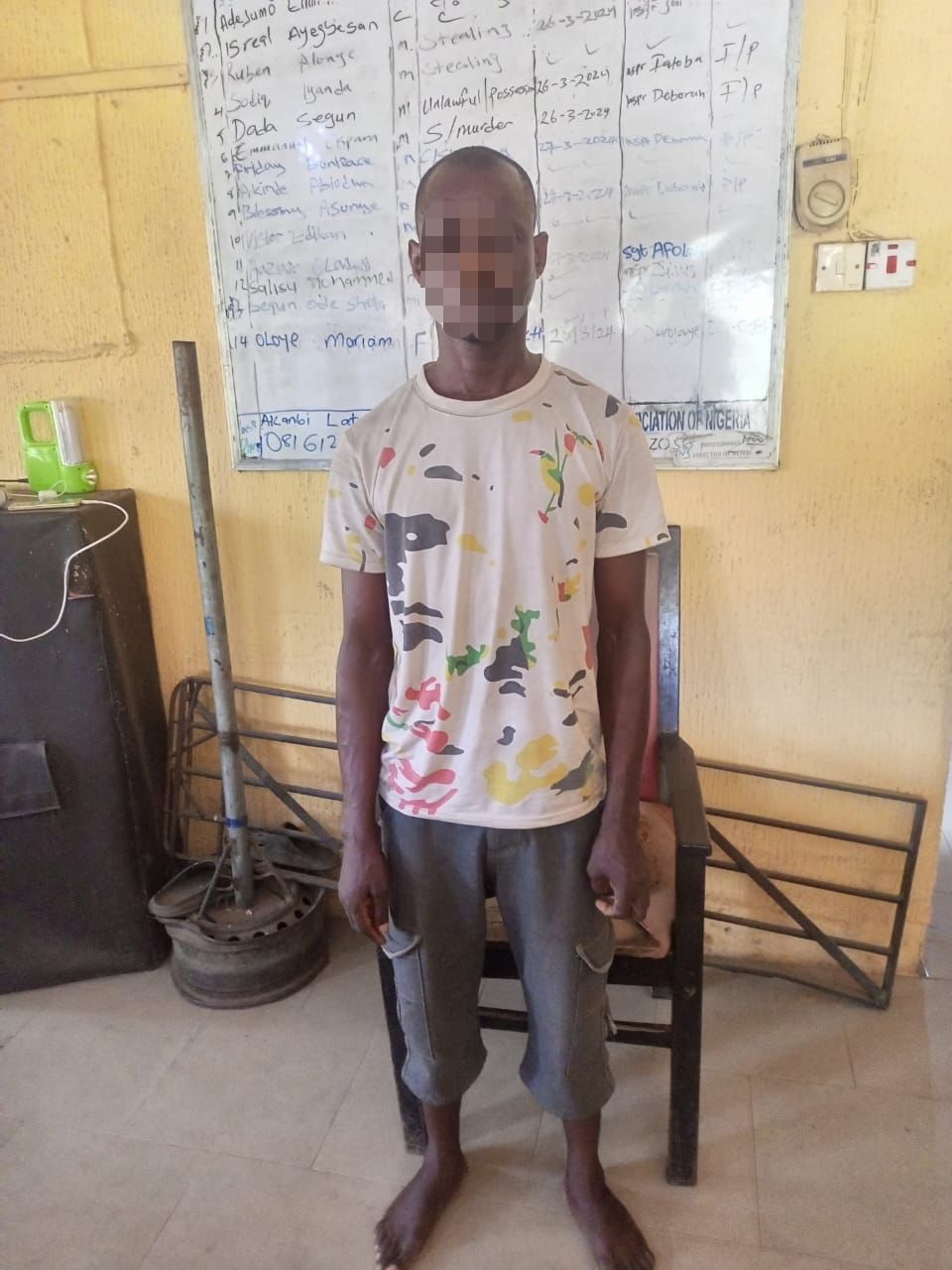
Meanwhile, the police in Lagos state has arrested a man named Emmanuel Okpara for allegedly beating his 40-year-old wife, Patience Johnson, to death.

The alleged wife killer

Police sources said the deceased’s son, Destiny, on March 26 visited the Elere police division to report that he received a call from a neighbor that his mother’s husband has severely beaten her, leaving her with serious injuries. 

The police said Destiny immediately visited his mum and found her badly injured and vomitting blood with the said Emmanuel nowhere in sight. Destiny is said to have rushed his mum to the Orile Agege General hospital where she was receiving treatment until she sadly passed away at about 6am today March 28.

The corpse of the deceased has been evacuated to the Mainland general hospital for an autopsy to be carried out on it.

Confirming the incident to LIB, the spokesperson of the command, SP Benjamin Hundeyin, said the suspect is currently in detention as investigation into the matter is ongoing.

Earlier in the month, the Police in Rivers State arrested a man, identified as Michael Chidozie, for allegedly beating his wife and strangling her to death.

It was learnt that the incident happened at their residence in Mile 4, near Port Harcourt, the state capital.

The couple’s children are aged 10, seven and five respectively; all boys.

A source in the area who spoke to PUNCH on the condition of anonymity said the victim and mother of three, Ufuoma Eriera Chidozie, who hails from Delta State, allegedly died after sustaining injuries from her husband’s assault in the early hours of Tuesday, March 5, 2024.

Ufuoma Eriera Chidozie

The source said Chidozie called his late wife’s brother to report an emergency at home but fled before his in-laws arrived.

He further revealed that the couple had been having issues before now, adding that the man had been complaining to some of his close friends.

The source said, “When the late woman’s brother arrived, the house was open and quiet. He then went in only to find the lifeless body of his sister. He shouted and called out the name of the woman’s husband.

“But he was nowhere to be found, and there was no trace of him. Since then they have been looking for him and even reported the matter to the police.”

Confirming the incident, the spokesperson of the State Police Command, Grace Iringe-Koko, said the suspect was arrested on Wednesday morning by the Agip Police Division, Mile 4, Port Harcourt, and investigation is ongoing.

Iringe-Koko further disclosed that following his arrest, the suspect was transferred to the State Criminal Investigation and Intelligence Department in Port Harcourt for discreet investigation.

She said, “The suspect has been arrested. He has been transferred to the SCIID for discreet and proper investigation.”

Her remains has since been deposited in the mortuary, as the police and the family had agreed on an autopsy as part of the investigation before she would be buried.

Credits: NAN/PUNCH/Linda Ikeji

You have not proved that Ojukwu recognised you as son —Court to Debe Ojukwu

Nigerian politician, diplomat, lawyer and widow of Dim Chukwuemeka Odumegwu Ojukwu, Bianca has secured another victory in a suit challenging her late husband’s will

On Wednesday, March 27, 2024, a High Court of Justice in Enugu , ruled in favour of the ex-beauty queen in a suit instituted by Chief Debe Odumegwu Ojukwu who had approached the Court seeking to be declared the first son of the late Dim Ojukwu.

Debe Odumegwu Ojukwu had also sought an order restraining the defendant, Mrs Bianca Odumegwu-Ojukwu from interfering with the administration of the estate of the late Dim Chukwuemeka Odumegwu Ojukwu as well as a declaration that the latter died intestate. He also claimed entitlement to letters of administration of the late Odumegwu-Ojukwu’s estate.

The Biafra leader, Odumegwu Ojukwu died on November 26, 2011. His wife, Bianca, who is the first defendant, as well as Mr James Ezike, the second defendant, had been named within his will, as trustees and executors of his estate.

This matter was brought before the court in 2013 challenging the validity of the late Ojukwu’s will by the plaintiff, Chief Debe Odumegwu-Ojukwu who though claiming to be the first son of the deceased, the late Ojukwu did not mention or acknowledge in his will as his son.

The issues before the court presided over by the Hon.Justice A.O. Onovo of the Enugu High Court, Enugu Judicial Division were; whether from the evidence adduced before the court, the plaintiff had adduced enough evidence to establish that he was a son of the deceased and had been acknowledged as such by the deceased in his lifetime; whether the deceased’s will was properly and validly made, and whether the plaintiff, and by extension the children of the plaintiff were entitled to benefit from the estate of the deceased, Dim Chukwuemeka Odumegwu Ojukwu.

The plaintiff, Debe Ojukwu died in 2018 while the matter was still pending in court. His two daughters, Nene Grace and Obianuju Sarah applied for substitution in the suit which, though challenged by counsel to the defendants, Messrs Emeka Onyemelukwe and Ngozi Abafor, was allowed by the court.

In delivering his judgement which lasted over two hours, the Hon. Justice Onovo held that from all the evidence presented before the court, the plaintiff was not able to prove that he was acknowledged by the late Dim Chukwuemeka Odumegwu Ojukwu in the course of his lifetime, as his biological son.

According to the judge, ‘it is the prerogative of a man to recognize a child born out of wedlock as his child.’ He maintained that acknowledgement of paternity could also be inferred from certain acts by a father towards a purported son, and these were not evident in the instant case .

The plaintiff had averred that he had been recognized by groups, associations and other members of society as a son of the late Dim Ojukwu but the Hon. Justice maintained, ‘ Can public opinion be the sole basis of determining the paternity of a child born out of wedlock? I do not think so.’

The Plaintiff also challenged the validity of the will of Dim Chukwuemeka Odumegwu Ojukwu, citing some typographical errors and signatories, and seeking for a declaration that Dim Chukwuemeka Odumegwu Ojukwu died intestate. The Court, with all the evidence presented before it, held that the will and codicil were properly and validly made, and therefore valid in the eyes of the law.

Regarding the right of the children of the plaintiff to challenge the Ojukwu will, the court held that “in order to have the locus to challenge the will they must first prove that they are the grandchildren of the late Dim Chukwuemeka Odumegwu-Ojukwu, and entitled to the benefits accruing therefrom.

“Since in the suit initiated by the plaintiff, their father, he was unable to prove himself to be a son of the Dim Chukwuemeka Odumegwu Ojukwu, then on what basis would the children of the plaintiff be challenging the will of the latter? Having failed to prove this, they have no beneficiary interest through their father Chief (Dr) Debe Odumegwu Ojukwu, in the estate of the late Dim Chukwuemeka Odumegwu Ojukwu, and there is therefore no merit to this case”, the judge concluded.

NERC to Eko DISCO Board Chairman — MD/CEO was sacked in error

The Nigerian Electricity Regulatory Commission (NERC) has clarified that its resolution on alleged ghost workers and crisis in the Lagos-based Eko Electricity Distribution Company Plc (EKEDC) which led to the removal of Dr Tinuade Sanda, as Managing Director/Chief Executive Officer and other management staff, was misinterpreted.

The chairman of EKEDC, Dr Dere Otubu, was said to have acted on her removal based on the resolution.

The EKEDC has been dogged by management crisis which started last year, with the discovery of alleged fraud and ghost workers on its payroll

The sudden announcement of the removal of Dr Sanda, as MD/CEO, further escalated the infighting amongst the shareholders.

But NERC intervened to clarify its previous directive to The Board of the company.

The Chairman of NERC, Sanusi Garba, provided further clarification to its resolution in a letter to Otubu dated March 27, 2024.

He said, “We write further to our letter Rel, No. NERC/REG/EKEDC/GEN/S432/T/36 of 21 March 2024 conveying the resolutions of the Commission to Eko Electricity Distribution Plc (“EKEDP”) on the alleged ghost workers in the company.

“The Commission has noted the strong public interest generated by the current events of EKEDP and the various interpretations of the resolutions conveyed vide the said letter, particularly with respect to paragraphs 4b and 4e. We therefore hereby provide further clarification as follows:

“Paragraph 4b- All staff of EKEDP, irrespective of their form of engagement, will be subject to the Conditions of Service of EKEDP. The Commission deemed it necessary to pass this resolution based on the submission of EKEDP, at the meeting of 20 March 2024, that the Condition of Service (“CoS”) of EKEDP was not applicable to Seconded personnel from third-party providers.

“Paragraph 4c – EKEDP Board is expected to conclude its review of its investigation into the allegation of Ghost workers to identify all personnel involved in causing the loss of revenues to EKEDP no later than 27th March 2024.

“In a case where the indicted parties are seconded from third-party providers and since they are reportedly NOT subject to the EKEDP CoS, they are to be recalled to their parent companies to avoid the risk of further losses to EKEDP.

“In closing, the Commission recognises the powers of West Power and Gas Ltd and the EKEDP Board of Directors on the deployment and redeployment of staff including changes to the management of the utility at any point based on a credible corporate governance framework and in furtherance of the fiduciary responsibility of directors.

“This letter only seeks to provide clarification on the Commission’s earlier communication on this subject to avoid varied interpretations and further to the overriding public interest. Please accept the assurances of the Commission’s best regards and consideration.”

TIPS