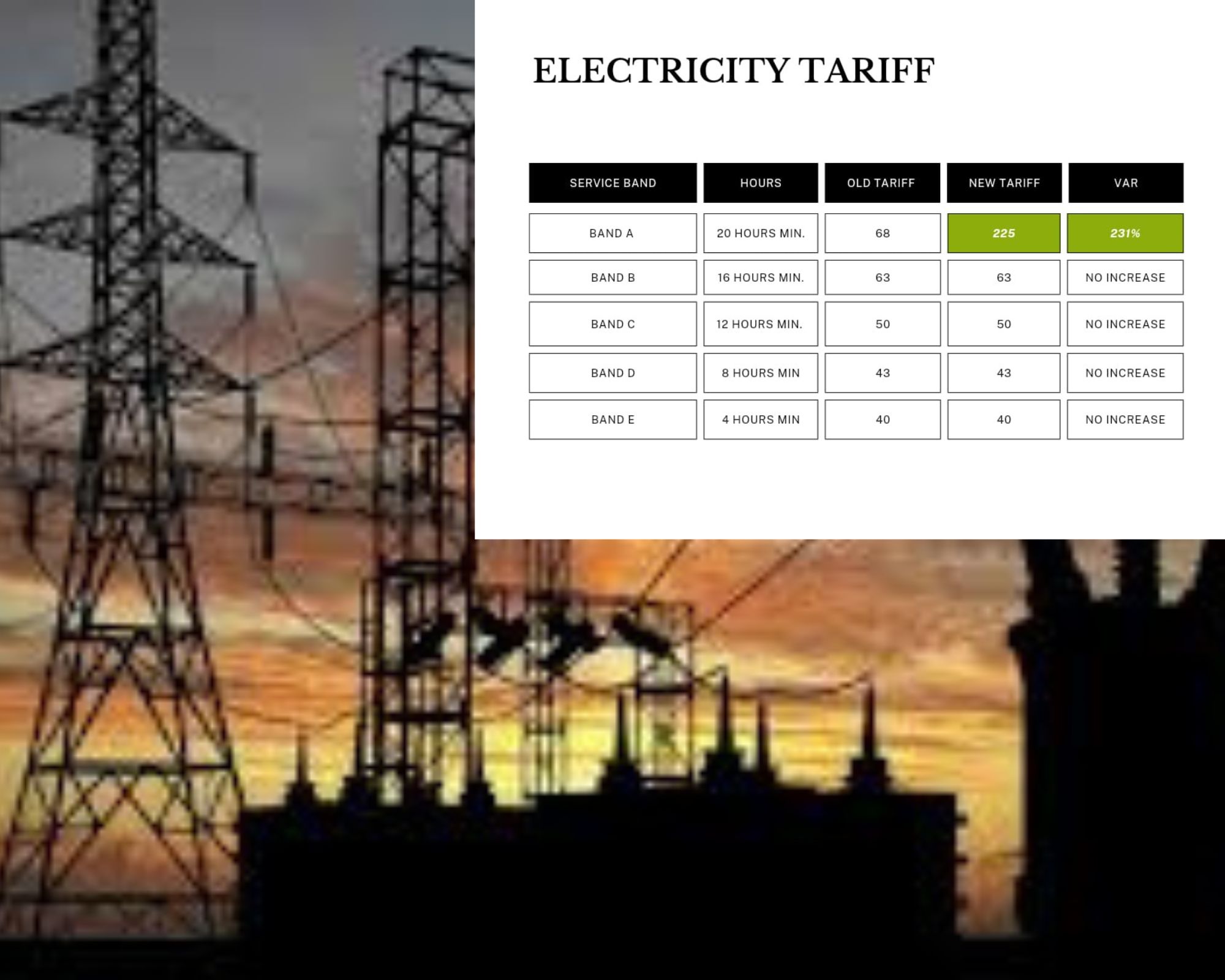
According to a new power distribution plan approved by the National Electricity Regulatory Commission (NERC), certain segments of the Nigerian population will henceforth have regular electricity and pay more, while the rest of society will see far less electricity supply and pay a lower tariff.
If this Orwellian electricity plan is followed through, the Nigerian middle class as well as urban and rural poor, who constitute the majority of the country, will most likely retreat into medieval darkness.
From a policy standpoint, below are 3 downsides to the new electricity plan:
IT PROMOTES SOCIAL INEQUITY:
Electricity is much more than cables, light bulbs, and switches. In developmental terms, electricity is a crucial thermometer by which we measure the quality of modern life. In fact, no definition of modernity can be complete without a people’s access to electricity.
This is why governments all over the world see the provision of electricity to their citizens as an important responsibility.
Therefore, any policy that segregates access to such a basic and essential service strictly on the basis of economic and social stratification of citizens is a short-sighted policy and needs to be reviewed.
The new electricity supply regime will deepen social inequity in the country and reduce the quality of life of the majority of Nigerians who are set to see far less access to electricity simply because of where they live.
This is social apartheid à la carte.
Rather than reduce supply to most citizens, the government and its private sector partners should increase, prioritize, and guarantee regular electricity supply to all citizens.
When Brazil faced an unprecedented economic and social regression in the late 1990s, the government of President Lula Da Silva (2003-2011) rolled out the most audacious and inclusive economic recovery plan that pulled millions of people out of poverty. The resulting economic recovery propelled Brazil ahead of Britain as the fifth largest economy in the world for the first time.
Nigeria needs an inclusive and robust economic and job creation plan that can increase people’s capacity to pay for social services and live a meaningful life.
NEW TARIFF REGIME WILL DEEPEN ECONOMIC WOES.
All over the world, reliable and uninterrupted electricity supply is seen as the ultimate tonic that spurs economic growth.
Nigeria has the largest informal sector in Africa, with micro, small, and medium-sized businesses accounting for over 40% of the country’s GDP and 70% of employment. These businesses range from subsistent fish farms in rural communities to vibrant, youth-led innovation hubs in informal urban settlements across the country.
A segregationist electricity supply policy that excludes this productive swathe of Nigeria’s population will spell disaster for an already beleaguered Nigerian economy.
In an age when Finland has made Internet access a constitutional right with a stipulated bandwidth guaranteed to every citizen, Nigeria can not afford to pursue an energy policy that is guaranteed to sentence majority of its citizens to live in darkness.
WHERE ARE THE METERS?
Nigeria generates an average of 5000 megawatts of electricity for a population of over 200 million people. This is grossly inadequate when compared to South Africa, which generates over 50,000 megawatts for its 60 million citizens.
Yet, Nigeria has perhaps the most unpredictable energy consumption audit systems in the world.
According to a recent report by NERC, only 44% of electricity consumers in Nigeria have metered connections. This means that 56% – a vast majority of energy consumers, are subjected to an opaque and extortionate “estimated billing” system that leaves consumers feeling duped.
The new electricity tariff regime does not address the important problem of inadequate metering and the systemic corruption that it breeds.
To address the crisis, the government and its private sector partners should keep the focus on generating sufficient and uninterrupted power supply to all citizens.
This can be done through a power consumption audit system that is universally metered, fair, accountable, and transparent.
Dr Austin Tam-George is a former Senior Executive Fellow at Harvard Kennedy School, Cambridge, Massachusetts.
“God”, they say, “works in mysterious ways, His wonders to perform”. That could be the only explanation for the Abuja-headquartered Christos International Worship Centre, deciding to open a Port Harcourt branch in 2024 after turning down the gift of a vast and free plot of land in the same city, and for the same purpose, last year.
Someone who has been watching Christos’ weekly Sunday and Wednesday services (plus the Friday night vigils whenever it is organized), on the Church’s Epiphany TV, out of the fullness of his own heart, placed a phone call from Port Harcourt to Abuja and made an offer of his sprawling plot of land to the church, totally gratis. The presiding Overseer of the Church, Bishop David Nwachukwu Ogudu, from Ebonyi state, thanked the person profusely, but said a firm “no” to the offer of free land. Then, barely a year later, he had his sights on Port Harcourt as a city to host the next branch of his Church.
Ogudu’s Church? He corrected me there; saying Jesus Christ owns the Church as the name implies; Christos is Greek for Christ the Anointed. Then the second correction; he said that he did not make the decision to accept or reject that land offer but that the owner of the Church, Christ Himself, told him then that it was not yet time to open that Port Harcourt branch. And when the time was ripe, the same Jesus Christ asked him to move to open the Port Harcourt branch. And as he put it, “I simply did what I had to do. I said yes. He is the master planer and I don’t question Him if he gives directives. He is the Lord of Lords and Saviour, the Greatest”.
The birthing of the Christos International Port Harcourt Worship Centre will not pass like a ship in the night; instead it will be an explosive invasion, or to give it the proper name as listed in the Church’s hand bill, it will be a “Prophetic Invasion” in two phases. Phase One will be a two-day 5 PM to 9 PM revival, on 12th and 13th April, in a place close to the church. Then on the 14th, the Port Harcourt Christos International Worship Centre at 99 Egrita Road, Eneka, Port Harcourt will be opened in grand style. Its theme? “WEEP NO MORE”.
Prophetic Invasion? That will not be an empty boast or just a crowd-pulling gimmick or claim. Bishop David Ogudu enjoys a high reputation as a real Prophet. He not only remembers the exact time and day when God first called him on June 11 when he was just 19 years old, he says anyone who has ever received such a call will never forget it. Also, because of his prophetic gift, he is on call for ministration across Nigeria and all across the globe. He speaks with amazing authority, and never gets tired of saying that “God reveals to redeem”. To him, “Thus says the Lord” is still a gift of the Holy Spirit that is still with Christians, even today.
At this “Prophetic Invasion”, he will bring something wonderful to Port Harcourt; the glorious power of God to heal and make whole, to comfort, bind and unbind all in a bid to give glory to the mighty name of God and bring solace, comfort and victory to the sons and daughters of God. And in all, what matters to Ogudu is to win souls for Christ; that, according to him, though his church members insist he has the prosperity mantle, trumps everything.
It happened exactly 24 years ago. On 31 March 2000, the then Delta state Governor, His Excellency Chief James Onanefe Ibori, unfurled his true colours. The Fourth Republic was all of 10 months old and here and there, its main actors were still settling down, learning the ropes. But Ibori was of a different sort; he had convened a summit of South-South Governors, Legislators and leaders, with the challenging theme; “We Must Not Fail Our People.”
Ibori, Delta state Governor, 1997-2007, had had enough of the duplicitousness of the PDP Federal Government led by President Olusegun Obasanjo, a party Governor Ibori also belonged, but which refused to activate the minimum 13 percent derivation principle enshrined in the Constitution. Instead the Federal Government was paying the one percent bequeathed to it by the outgone Military Administration. Also the onshore and offshore dichotomy of natural gas and oil production was still being debated and the South-South was being denied its divine right.
So, Ibori argued in his welcome address: “Section 162(2) then enacts the principles of allocation which include population density, equality of states, internal revenue generation, land mass and terrain, subject to an overriding proviso which states in part: ‘Provided that the principle of derivation shall be constantly reflected in any approved formula as being not less 13 percent of the revenue accruing to the Federation account directly from any natural resource. It is unfortunate that this well-intended provision has been subjected to all manner of interpretations and administrative manipulations and needless politicization to unjustly deny the States of the South-South zone their respective constitutional dues from the federation revenue”.
He continued: “Your Excellencies and Distinguished Legislators, the people and government of Delta State are unequivocally unable to accept the view that the implementation of Section 162 (2) of the Constitution is a condition precedent to giving effect to the payment of the minimum 13 percent principle of derivation in the interim system of revenue allocation enshrined in section 313 of the Constitution for the allocation Federation Account until an Act of the National Assembly is passed. The section states that as from the commencement of the Constitution on the 26th of May, 1999, the system of revenue allocation in existence for the financial year, beginning from 1st January, 1998 and ending 31st December, 1998, shall be the approved revenue allocation formula subject to the provisions of this Constitution. This percentage is not Subject to any administrative or legislative change, except upward review of the percentage or through a Constitutional amendment.
Our call is justified even by the history of the principle of derivation, which is not a new factor in our fiscal federalism. In the 60s and early 70s the principle was fully recognized and in use. During the period the percentage weight of the principle was as high as 60 percent. Our nation was not less federal or poorer for it”.
Ibori then attacked the onshore/offshore dichotomy of oil and gas production: “The time has come for us, of the South-South zone, to have a dream. A dream to translate our patriotism, energy, talents, democratic wits and indeed all that is in us to free our people from every legislative shackle which is not in the socio-economic interest and aspirations of our people. We must speak and must act. The dichotomy between onshore and offshore oil and gas deposits is artificial and not in the best interest of our people. It is artificial because it is unnatural and not unconnected with the expropriation intention behind the Exclusive Economic Zone Act, as we all may recall, the Act was passed in 1978, delimiting the Exclusive Economic zone of our country and extended it up to 200 nautical miles seawards from the coasts”.
Dear reader, Ibori enlisted in that battle on behalf of the Niger Delta when he summoned that summit. It is a question for debate if he knew, by then, the extent of the backlash. What is not debatable is the danger, the strings and arrows, the lies and innuendos, media attacks, international conspiracies and the persecutions painted as legal prosecutions that were heaped against him. He was even accused of coup-plotting and a Nigerian President declared him wanted – “dead or alive”; a death sentence.
Many people today, including even the leaders and intellectuals of the Niger Delta do not remember that summit. Nigeria has forgotten how Niger Delta won the 13 percent derivation principle war and banished the Onshore and Offshore dichotomy, whereby oil revenue from the seas was said to belong entirely to Nigeria and with nothing going to the given littoral states. Forgotten, too, is that Ibori started the fight for the gains, and remained in it till victory was achieved.
Yet, present commentators who wax magisterial in condemning the Governors of the Niger Delta state for not turning each of their states into an Eldorado, has not asked why Nigeria remains a veritable backwater despite all she has earned from crude oil sales. Worse still, the commentators usually tell one lie; that the 13 percent derivative principle kicked in from May 1999. They never mention that the 13 percent derivation principle was not paid by the Obasanjo administration until it had spent about a year in office. They also forget that someone fought for that payment to be made and that all sorts of persecutions were visited on that person; James Onanefe Ibori.
Perhaps, enough noticed was served that that the summit of 31 March 2000 which took place in Asaba was not only viewed as brazen, impudent and impertinent by those in authority and who had power over life and death (let alone the law courts), when Ibori organized the second of such summits in the first week of March, four years later (in 2004) very many Governors and legislators of the Niger Delta states were commanded to stay away from Ibori and his summit.
One of such men so commanded was the then National Vice President (South-South) of the PDP, the late Chief A. K. Dikibo. That no nonsense man who could never have been accused of having the soul of a slave, told any and everyone who raised the matter with him that he would attend the Asaba summit that Ibori was organizing because it would benefit the Niger Delta.
Attempting to attend that summit was Dikibo’s second “grave sin”. The first one was that Dikibo had already set in motion his campaign to become the PDP National Chairman come 2007. The meaning was clear to the top members of the Obasanjo administration; by that time those at the commanding heights of both the PDP and the administration knew that a tenure elongation bid was on – to change the Constitution to give Obasanjo a third shot at the presidency instead of just two terms. But if Dikibo was already preparing for his campaign to be PDP national Chairman, it means he did not support the third term bid.
Why? Oh, the answer is simply this; Nigeria’s political balancing act requires that both the National Chairman of the PDP and the presidential candidate will not come from the same geographical half of the country. One will be from either the South or the North. So, if Dikibo, from the South South geopolitical zone had his sights on the PDP chairmanship, it became obvious that he was not among the third term tenure elongation supporters.
And he was a Niger Delta rights adherent to boot; just like Ibori. On the 4th of March 2004, the day for the kick off of that second summit, Dikibo had just flown into Port Harcourt, and entered into a motor vehicle to get to Asaba by road. Calls were flowing into his phone, attempting to stop him from attending that summit. When verbal reasoning couldn’t stop him, adequate force was applied. Someone came to him as he was sitting on the right hand side middle seat of the Toyota Land Cruiser. That devil’s agent placed a gun under Dikibo’s right side jaw, and squeezed the trigger. Both the bullet and the Dikibo’s brain matter hit the roof of the SUV. It was murder most foul and murder most effective.
It was a bold statement sent to convince any doubting Thomas that a killer cell existed somewhere near the sit of power. So, when later the attempt to impeach and remove the then Anambra state Governor, Dr. Chris Ngige from office became protracted, the then PDP chairman, Audu Ogbeh wrote Obasanjo and open letter that a killer nest existed and that it should not be allowed to kill Ngige.
And when later Ogbeh himself was forced to relinquish the PDP Chairman’s office, he explained why he disregarded his teeming supporters who wanted him to disdain Obasanjo’s efforts to make him resign as they fully supported him. His explanation of why he resigned: “If A.K. Dikibo had a choice to be killed or to resign, he would have resigned”.
Unfortunately, it just didn’t end there for Ibori. First, there was a concerted effort to stop him from being reelected as Governor of Delta state in 2003. Then the same case to get his 2003 election victory over-turned went to the Supreme Court two or three times. When he won them, his traducers didn’t take a break until he was rail-roaded into jail.
Unfortunately, when Nigerians discuss the Ibori affair, they do not remember that it all started from Ibori’s fight on behalf of the Niger Delta. A simple love affair is all his woe; the love of his very own Niger Delta geopolitical region. Conversely, the President Obasanjo who headed the PDP Administration which willfully refused to pay the 13 percent derivation principle of mineral revenue to the deserving Niger Delta states for about a year, remains a hero. And when he agreed to pay the 13 percent derivative, his administration introduced another bottle neck; the onshore/offshore dichotomy. Still, this man, who couldn’t hold on to the Nigeria he received on May 29, 1999 but lost a large chunk of the country, the Bakassi Peninsula, is still a hero.
In 1999 the political party that the late Dr. Alex Ekwueme and the 49 wise men founded to save Nigeria from the ravages of tribalism by founding a non-ethnic political party, made Obasanjo Nigeria’s President. Then the man destroyed the PDP. He took full control of the party, his Man Friday, Col Ahmadu Ali (retired), became the garrison commander and the party began to weed out members. Many Nigerians may not remember that Obasanjo once said that he did not know who would succeed him, but he knew those who would not succeed him. Well, he succeeded so well in that assignment that since 2015, he has spent the whole time since 2015 plotting to build up a coalition; and that is a big joke – only politicians build political parties. Obasanjo could not even make himself president; Generals Ibrahim Babangida, T. Y. Danjuma, Aliyu Gusua and Abdulsalami Abubakar made him President.
Ah, poor Nigeria!
Well, Ibori should take solace in the fact that he is still alive – after President Jonathan declared him “wanted; dead or alive”. That he is still alive is a miracle.
Re: Betty Akeredolu’s ‘Remarriage’: Such traditional practices are fuelers of GBV –Priscilla Usiobaifo, Braveheart Initiative
I may be wrong, but I searched carefully and I did not see one instance throughout Mrs. Betty Anyanwu-Akeredolu’s highly publicized travails before, during and after the death of her husband when learned counsel or her Braveheart Initiative came to her defense against what must be the most extreme case of bullying of a woman based on her marital and domestic circumstances that Nigeria has seen in recent times.
She was publicly pilloried and grievously excoriated with nothing left sacred – from her looks, to her marriage to her children to her place of origin. She trended on X and other social media platforms as all sorts of characters, including popular influencers with massive reach joined in lynching her, tearing the dress from her body and then the flesh from her bones and left her, for a while, the most hated woman in Nigeria.
Her right to marry her husband and the validity of her marriage to him (never mind the decades that have passed under the bridge of the union), the true ethnicity of her children, even their paternity in some quarters, her alleged oppression of her in-laws and their alleged hatred of her, her so-called ‘power-hungriness’ in wanting to take over in Ondo from her dead husband (how that was expected to work out under our laws beats me hollow till this day) etc, nothing was off-limits.
She was thus well and thoroughly inducted by horrific ordeals into the exclusive club of Tura’i Yar’Adua and Hauwa Danbaba Suntai – women whose sin, it would appear, was being First Ladies whose husbands died in Office and left them defenceless before the wolves.
I did not hear Learned Counsel who authored this current denunciation, or her organization, come to Betty’s aid. Yet, hardly has she, supported whole-heartedly by the same in-laws who reportedly hate her, and with her eldest son by her side in solidarity, made a move to take back her personhood than I am reading, in print and in public, from a learned person no less, how she is the problem women face and an enabler of Gender Based Violence.
Is there to be no end to these weals, pray?
Yet, there was no traditional marriage, no payment of dowry, not even a demand to marry (or is it, remarry) Betty by the younger husband of her deceased husband, Prof. Wole Akeredolu. All there was, was just a formal notification to her people that our brother you entrusted her to is dead, but she still pleases us and we are here to tell you we still want, nay, need, her in our family and she will always be safe with us – and she becomes the subject of another round of denunciations?
There is a need to mull on who is really enabling GBV right now.
Whether you agree with me or not, I say, let Betty be. Don’t make her into a cause célèbre for VAW and subject her to another round of torture.
In January 2014, a coalition of advocates, including Femi Falana, a Senior Advocate of Nigeria (SAN); Jiti Ogunye and Tokunbo Mumuni, both senior lawyers; and I wrote to the Economic and Financial Crimes Commission (EFCC), inviting it to “to investigate the allegations of fraud detailed by the two committees set up by President Goodluck Jonathan in the wake of the 2012 fuel subsidy crisis.” It failed to do so. 10 years later, the EFCC is now preoccupied with chasing after cross-dressers. How it got so derailed bears attention.
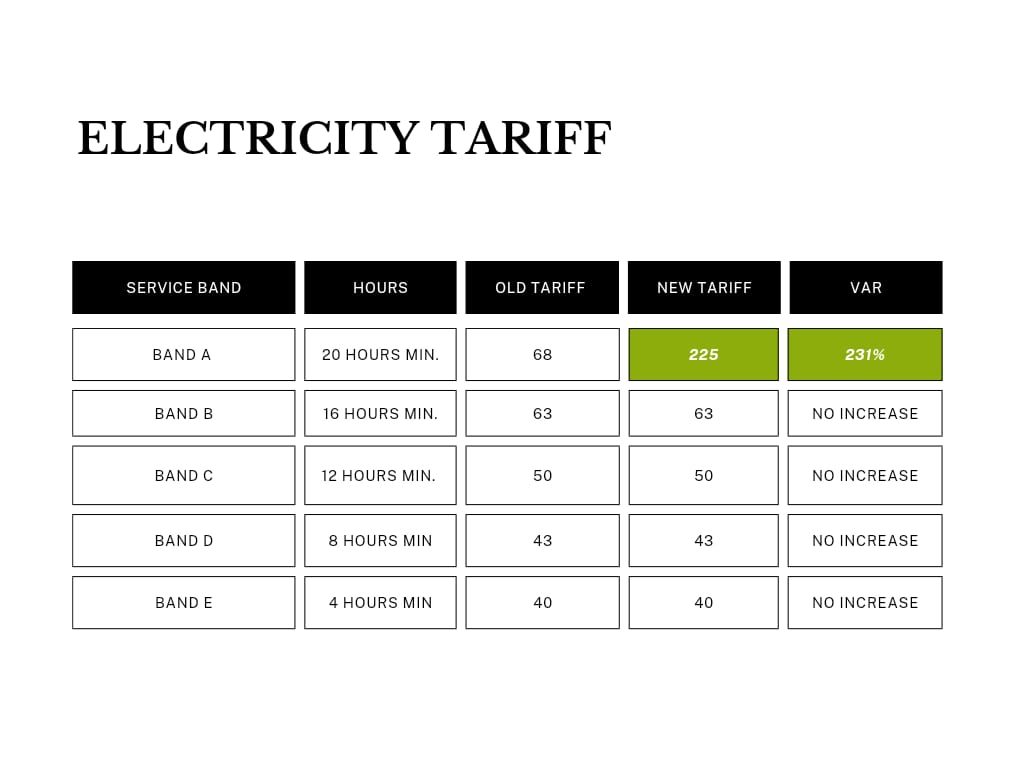
At the beginning of this past week, Nigerians woke up to the story that a demographic of energy users, described in the language of the industry as “Band A” and constituting roughly about 15% of the approximately 12 million official subscribers to electricity in the country, will have their energy tariffs raised by 230.8%. They claim the four other bands will be unaffected. That’s false.
Tariff regulation in the energy sector in Nigeria is the primary responsibility of the Nigerian Electricity Regulatory Commission (NERC), a body created originally under the Electricity Power Sector Reform Act in 2005 which was repealed and replaced in 2023 by the Electricity Act.
For some time prior to last week, various news media had sought unsuccessfully to confirm from the NERC the veracity of information suggesting that it had reached a decision to upwardly review the electricity tariff or that it had plans to do so. When it broke the story on 2 April, Bloomberg, a private and foreign news agency, credited “people in the presidency with knowledge of the matter”, suggesting not only a decision with a long gestation period but also one that had the active authorization of the presidency. The implication is that when it initially denied to Nigerian news sources that it had such plans, the NERC had dissembled.
The day after the Bloomberg Story, on 3 April, NERC confirmed the accuracy of the report. On the same day, it released the text of the applicable statutory instrument, dated 28 March, which designated the commencement date as 3 April.
The energy minister, Adebayo Adelabu, chimed in, explaining that the decision was because Nigerians keep their deep freezers plugged even when absent from home. This energy minister is so out of touch, he doesn’t know that deep freezers need constant electricity. But how could he when all he does is prance about in private jets.
For context, the Energy Progress Report issued jointly by the International Energy Agency, the United Nations, the World Bank and the World Health Organization, among others, in 2022, conservatively assessed over 92 million Nigerians as without access to electricity. This is at the very bottom of the global energy league. The NERC claims that one of its reasons for the secret energy tax is to “attract more investment into Nigeria’s power sector.” This is what one of my old teachers called “future speculative tense.”
For starters, the new tariffs fosters undue discrimination contrary to Section 116(2)(e) of the Electricity Act of 2023 in setting tariffs to “avoid undue discrimination between consumers and consumer categories.”
The principal crisis with energy consumption currently is not generation but transmission. The country is unable to evacuate anything close to what it generates. To achieve an increase in energy supplied to or enjoyed by any band, therefore, the Transmission Company will have to create energy hunger in a band somewhere in the consumption ecosystem.
So, to increase the quantity of energy supply that it guarantees to the Band A customers, NERC has to ensure reduction in what is transmitted to those at the bottom end of the bands. In other words, the increase of transmission to Band A customers is achieved by eviscerating supply to the roadside vulcanizer, the neighbourhood Mama-Put restauranter, the welder, all of whom will suffer denial of energy.
This pricing strategy is also poorly reasoned. The Band A users whom it supposedly favours are mostly in a position to transfer the burdens of the higher tariffs to consumers, most of whom are in the lower bands. This hits lower band consumers with a double whammy. By imposing energy hunger on them, it threatens the livelihoods of micro, mini and informal entrepreneurs and will put many of them out of business. At the same time, it will increase their costs of consumption. Unable to pay the new prices of goods and services, they will vote with their feet, which will hit revenues, profitability and viability of industry, leading to loss of jobs, loss of tax take and ultimately burdensome social costs.
What emerges is that the new tariffs are effectively a regressive energy tax on the poor. In a country already afflicted with prohibitive insecurity, even further rise in insecurity is foreseeable.
It became clear also during the week that NERC chose to adopt this most consequential of decisions for citizens, employers and consumers in utmost secrecy. To preclude predictable public furore about it, the NERC also garlanded the decision making with a bodyguard of lies. Not satisfied with this, the release of the statutory instrument coincided with a pattern of coordinated online behaviour which clearly suggested that the Commission had actively recruited a gang of digital influencers and bloggers in order to create maximum distraction from the measure.
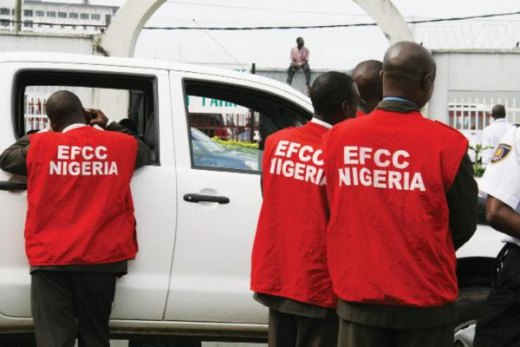
One source of such distraction was the EFCC. As the NERC rolled out this prohibitive energy tax on 3 April, the EFCC procured the high profile arrest of Idris Okuneye, a transactional transvestite better known as Bobrisky, on impressive charges of “abuse of the Naira” and alleged money laundering. With unremitting alacrity, the Commission first paraded Bobrisky, a practice that has repeatedly been declared unlawful by courts in Nigeria. Thereafter, they arraigned him before the Federal High Court in Lagos.
The law that establishes the EFCC defines “economic and financial crimes” to mean “non-violent criminal and illicit activity committed with the objectives of earning wealth illegally either individually or in a group or organized manner thereby violating existing legislation governing the economic activities of government and its administration.” At the court, the EFCC dropped the two counts relating to money laundering, ultimately charging Bobrisky only with crimes connected with so-called “abuse of the Naira.”
Having dropped the only charges that could remotely fall within the purview of economic or financial crime, the EFCC forfeited any claim to acting within law or in the public interest because abuse of the Naira, whatever that means, is outside the statutory scope of crimes that it can prosecute. Yet, in a mere 48 hours, the EFCC processed Bobrisky through the entire gamut of criminal justice from arrest to conviction, setting a Nigerian record in prosecutorial diligence.
It becomes evident, therefore, that the charges against Bobrisky were an artifice for persecuting a person whose life choices are a tad unusual. The EFCC lent itself to this despite the fact that Lagos, where Bobrisky lives, decriminalized the Victorian crimes of “unnatural offences” long ago in 2011. Nor does the leadership of the EFCC remember that over half a century ago, Uzoma Odimara freely promenaded as a cross-dresser and entertainer around the country under the name “Area Scatter”.
In the week in which the EFCC bungled and threw the biggest corruption case in the country in a quarter of a century, it takes unique institutional commitment to frippery to reduce its core business to chasing cross-dressers. In targeting Bobrisky as it has, the EFCC arguably sought to achieve the twin objectives of distracting Nigerians from the NERC’s steep and unlawful energy tax while at the same time pressing home a blinkered wedge advocacy.
In so doing, the leadership of the Commission clearly abused the sacred instrument of prosecutorial prerogative and showed itself as either idle or misguided, if not both. When this was brough to their attention, they descended into threats, bluster and cringe-worthy trade in mangled adjectives. One concerned citizen responded that “EFCC has gone rogue.” 10 years ago, citizens looked to them as part of the solution. Today the EFCC has become part of the problem.
A lawyer and a teacher, Odinkalu can be reached at [email protected]
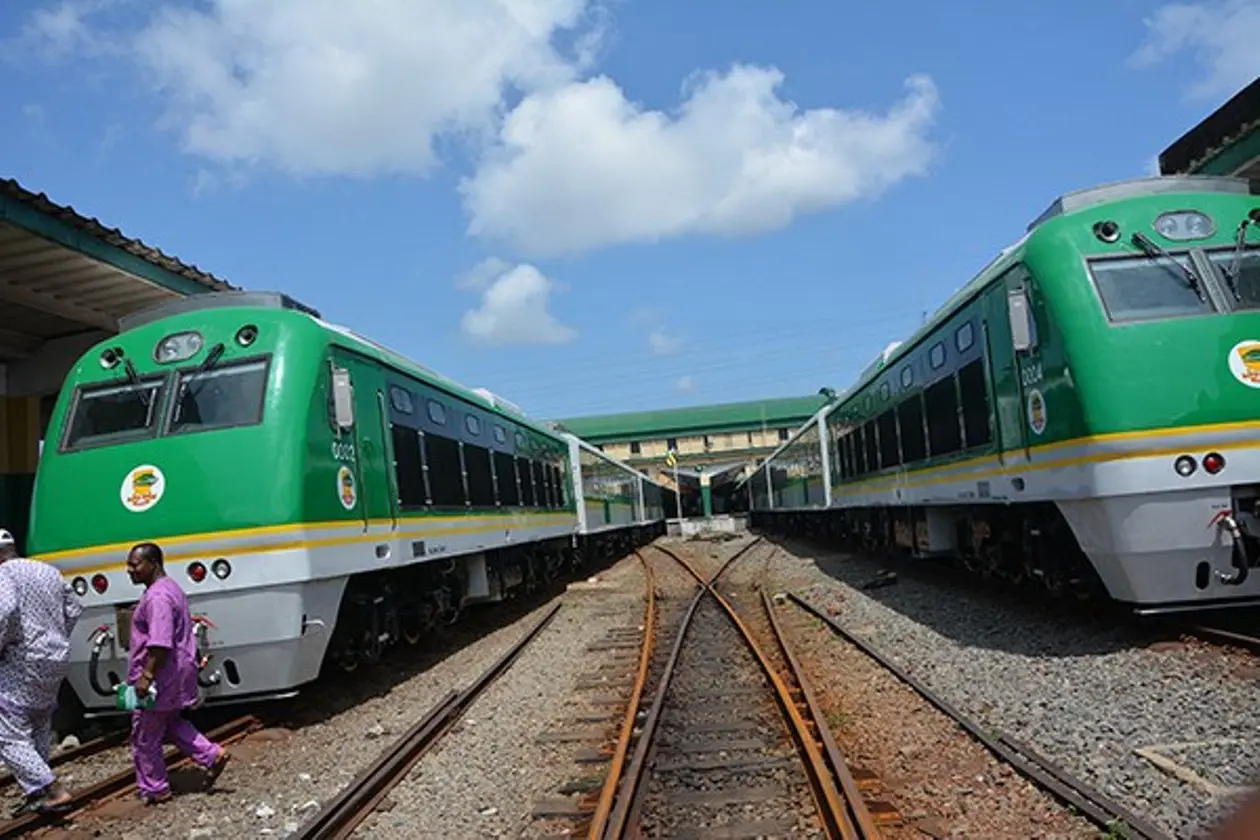
Emmanuel O. Fashakin, Attorney at Law & Medical Director, Abbydek Family Medical Practice, P.C. We are asking the impossible, and the unreasonable. No medical team on the trains anywhere in the world. What people have is effective communication between trains and next station, and effective ambulance service to evacuate anyone needing medical attention immediately to the hospital after pickup from the station. There are not enough medical personnel to deploy on trains, where no medical emergency occurs 99.99% of the times. It would be sheer waste to put medical personnel on each train.
It is totally unattainable and wasteful. What we need are:
Good communication between train and nearest stations
Good ambulance services, ready to be deployed to the stations at short notice
Good state of the art Healthcare facilities
All three are wanting in Nigeria. You live in Naija at your peril.
Dele Aloko, Lawyer and Business Executive
Is there a requirement, anywhere in the world, to have a medical crew on board every train for a 3-4 hour journey?
What’s the frequency of medical emergencies on such trains?
Methinks what is required is to train the attendants on the train in the administration of first aid
It is sad that the police escort died in this case, but I would not put the blame on NRC. There should rather be questions about his routine healthcare services – when last he had a medical exam, whether he was on routine medication, etc.
Moses Okezie-Okafor an Abuja lawyer added: “Sad that somebody fell ill and died, but no negligence is disclosed against NRC or Government. Beyond basic first aid, it is not best practices to have a mobile clinic, with doctors on board transportation vehicles, not even intercontinental airplanes with hundreds of passengers. This report should not make it seem strange the Abuja-Kaduna train did not have one. What specific private sector operators do is up to them. Here’s a helpful report:
What medical facilities can I avail during my travel in Indian Railway, and How?
For example, on the Indian Railway trains there are no doctors on board, except a few trains like Duranto, which has doctor on board and can provide the immediate medical help to any passenger in need. Otherwise in any train, if any passenger in need of the medical help, can inform the train conductor, the ticket checking staff or the Guard on duty in the train. They send immediate message to the next station, with Railway hospital and the medical doctor facility, who will attend the patient passenger, and if required the passenger can be deboarded from the train and taken to the hospital, accompanied by the railway doctor.
Normally in the reservation chart available with the ticket checking staff in the train, the detail of any doctor travelling in the train as a passenger is available, and hence in emergency any such doctor on board can also be called for any emergency assistance.
“Certainly the railway staff on duty in the train are sensitized enough to respond and take necessary steps and action to extend any possible emergency medical help to any a passenger in need of medical help. In your case, as you suggested it’s a critical situation, I will suggest, as a safe side, to travel with a doctor, so that you can manage any contingency safely.
Following a statement issued by the Head of Media and Publicity, Economic and Financial Crimes Commission, (EFCC) Dele Oyewale, warning Prof. Chidi Odinkalu to desist from “some reckless commentaries” or prepare to face “appropriate legal action”, the professor of law announced via his X handle that the commission has proved him right that it is indeed “shameless, idle & involved in manifest #AbuseOfPower.”
— Chidi Odinkalu, CGoF (@ChidiOdinkalu) April 5, 2024
The EFCC’s Publicity Lead in the April 5, 2024 press release titled: “Chidi Odinkalu’s Reckless Commentaries on EFCC” said:
“The attention of the Economic and Financial Crimes Commission, EFCC, has been drawn to some reckless commentaries made by a former Chairman of the National Human Rights Commission, Chidi Odinkalu on the arrest of Idris Okuneye(a.k.a Bobrisky) by the Commission, describing it as evidence of idleness or an abuse of power .
“The Commission views such commentaries from Odinkalu as unbecoming of a former head of a major government agency. Okuneye was arrested and arraigned by the Commission on the basis of clear cases of abuse of the Naira to which he has pleaded guilty.
“Odinkalu has a right to free speech as a Nigerian but such a right should be exercised with decorum and responsibility. The Commission would not hesitate to take appropriate legal actions against such uncouth commentaries against its lawful mandate by anyone.
“Odinkalu is warned and advised to ventilate his rascally opinions more responsibly in future situations.”
But Odinkalu in a response sighted in the Open Bar Initiative (OBI) WhatsApp group remarked thus:
“What am I supposed to say?
“Whatever it is, I am flattered to the point of loss of SoH. I consider this lot there undeserving of any adjectives or multiple syllables from me. So, I will not be retaliating in kind to their doubling down on manifest preoccupation with abuse of power.
“That the EFCC is so devoid of a sense of priorities that they consider themselves useful only as a tool for persecution of people on the margins of society or that they are so idle they consider my opinion deserving of their entire Friday (or both) should bother all responsible citizens.
“It is interesting that the EFCC abandoned the only charges that cld remotely have implicated their raison d’être, which supports the idea that this is idle abuse of power.
“It is just so tragically unfortunate that they consider it their statutory duty at the EFCC to be fiddling while the country burns. If that is not idle abuse of power, I don’t know what is.
“Enjoy the week-end.
“Always
“CAO”
Earlier, the fiery Professor in his X handle made some profound observations.
These former governors will ruin their states & then seek refuge in Abuja where they seek to create a literal #HomeCourt advantage within the federal court judicial system with their judicial satraps. @officialEFCC's only problem meanwhile is #Bobrisky.https://t.co/2uxGBM2VHL
— Chidi Odinkalu, CGoF (@ChidiOdinkalu) April 5, 2024
Law teacher and rights advocate, Prof. Chidi Odinkalu has countered the reports that Mrs. Betty Anyanwu-Akeredolu, widow of the late former Governor of Ondo State, Rotimi Akeredolu, has married her late husband’s younger brother, Prof. Professor Wole Akeredolu.
Proffering clarifications on the matter, Odinkalu in a WhatsApp group, Open Bar Initiative (OBI), said:
It is sad & tragic that people & groups issue these boilerplate things on stories they have not bothered to read or events which they are incapable of understanding or respecting.
Let’s be clear what this is not.
First, there is no suggestion of “widow inheritance” here.
Second, there is no suggestion of “re- marriage” here.
Third, there is no “hand-over” either of Mrs. Akeredolu, which wld infantilise a very capable grand-mother of over 70.
In African cosmology, however, marriage is a relationship between the parties to it and between family & peoples too.
The symbolism, I believe, is that the Emeabiam in-laws are content with their Owo in-laws & the Owo in-laws are happy with their wife.
Although death symbolically ends the marriage, both sides agree that they are beyond that here & Prof Akeredolu guarantees to his in-laws in Emeabiam that that is indeed the case & that they will continue to treat her well.
These young people can talk concepts they don’t understand but when a widow – young or old – is at odds with her in-laws or late husband’s family, life for her can be very hard.
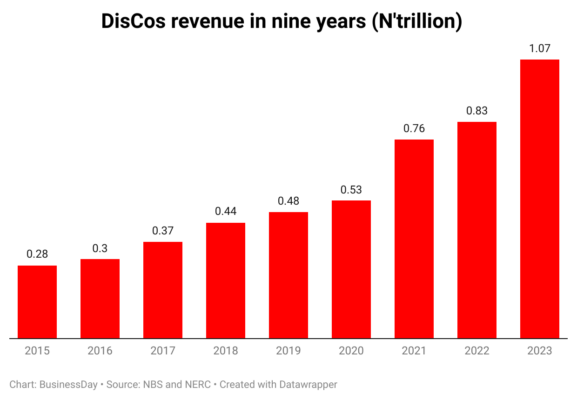
AsDisCos’ rake in highest revenue in ten years amid power outages
Electricity subsidy removal would send manufacturers out of business — Manufacturers
Professor of Law and Senior Advocate of Nigeria, Joy Ngozi Ezeilo has added her voice to that of manufacturers and the organised Labour in condemning the Federal Government’s 240 per cent hike in the tariff payable by electricity users enjoying a 20-hour power supply.
Manufacturers and the organised Labour insist on the electricity subsidy, warning that its removal would send manufacturers out of business and worsen inflation. But the Federal Government has aligned with the International Monetary Fund (IMF) which earlier in the year said there was an urgent need for Nigeria to completely phase out electricity subsidy as part of measures to address its economic challenges.
For Ezeilo who expressed concern through her X (former Twitter) handle, “NERC needs to provide more sophisticated explanations for the hike in electricity prices.”
Meanwhile Abubakar Ibrahim & Faith Esifiho in an elaborate report in BusinessDay disclosed that: “The eleven electricity distribution companies (DisCos) in Nigeria’s electricity supply industry have amassed N1 trillion in revenue in 2023, representing the highest collection recorded in the period in the past ten years.”
In her X treatise, Prof Ezeilo said: “Nigeria’s problems can significantly impact one’s sleep and mindset. Last night, I dreamed of forgetting to switch off my AC and freezer, but then I ran out of credit. I woke up to find that there was no power, despite being in B and A, which promises 20 hours or more of power supply. I woke up to find that there was no power, despite being in B and A, which promises 20 hours or more of power supply.
“As the famous writer Chinua Achebe captured in his book Things Fall Apart, ” Eneke the bird says that since men have learned to shoot without missing, he has learned to fly without perching”. Therefore, I refuse to spend 50% of my hard-earned professorial salary on electricity tariffs. Depending on house occupancy, I currently spend between 100 and 120k a month.
“With the new increase in tariff being put at between 240 and 300 percent, my estimated expenses will come to at least 300k. More than 50 percent of my new salary – for what? I reserve the right to not only explore alternative energy but also refuse to switch on to the damn costly power. Band ‘A’ is not my choice, but by house location (GRA) and three-phased connection. If they give me 20 hours, I will cut my household user hours to 8 hours. After all, we are used to suffering and smiling. I hope that will keep me under 150k a month whilst I start researching and planning for total disengagement from grid connections and subsidising darkness, corruption, and inefficiency.
“Why are there divisions and discriminatory treatment regarding people’s right to access electricity equitably? In Nigeria, people are divided into categories A, B, and C. But we are all equal, and I stand for inclusive development and leaving no one behind. Poor and less privileged Nigerians should also enjoy equitable access to electricity. A former Communication Minister once said telephones were not meant for the poor. I hope that’s not what this electricity user categorisation meant.
“A NERC official recently appeared on Arise News TV to explain that the new electricity tariff is still cheaper than running a generator on diesel or fuel. However, this justification seems too simplistic. NERC needs to provide more sophisticated explanations for the hike in electricity prices.
“More importantly, we need to introduce competition and new policies that prevent DISCOs/GENCOs from operating in multiple states. Nigerians should have access to cheaper energy options. Electricity should be affordable for everyone, and the rates should correspond to the minimum wage. This is what is justifiable in a democratic society where everyone should have access to basic necessities. Again, I stand for inclusive electricity distribution.”
Nigeria's problems can significantly impact one's sleep and mindset. Last night, I dreamed of forgetting to switch off my AC and freezer, but then I ran out of credit. I woke up to find that there was no power, despite being in Band A, which promises 20 hours or more of power…
— Prof. Joy N. Ezeilo (SAN, OON) (@NgoziEzeilo) April 5, 2024
Another concerned Nigerian gave a breakdown of the tariff increase in this manner:
“Electricity tariff increase from N66 to N225, see your living condition, if you don’t want to use lantern:
24 hours electricity per day is N5,400 for a day, 30 days is N162,000 and 365 days is N1,971,000.
For 10 hours a day, you will spend N2,250 per day, for 30 days is N67,500 and 365 days using 10 hours electricity is N821,250.
For 5 hours electricity per day, it is N1,125, 30 days of 5 hours electricity is N33,750 and 365 days of 5 hours electricity is N410,625.”
This development marks a pivotal moment in the sector, highlighting the growing significance of the electricity distribution industry in the country.
The recent electricity report from the National Bureau of Statistics (NBS) discloses a revenue of N294.95 billion in the fourth quarter of 2023, contributing to a cumulative total of N1.07 trillion for the full year.
In 2022, the revenue of DisCos reached N842.42 billion, according to the Nigerian Electricity Regulatory Commission (NERC). Information extracted from NERC indicated that the combined revenue collected in that period by all DisCos witnessed a substantial 91 percent growth, rising from N442 billion in 2018.
Analysts say the notable increase in revenue for DisCos can be attributed to advancements in metering technology monitoring, enhanced regulatory oversight, a tariff hike, substantial infrastructural investments, a growing customer base, and improved collection efficiency.
“This development has been facilitated by two key factors,” said Pedro Omontuemhen, Partner, West Market Area, Energy, Utilities & Resources Leader at PricewaterCooper (PwC). “These factors include enhancements in customers’ onboarding processes and the mitigation of commercial and technical losses.”
According to Omontuemhen, the momentum behind this positive trend will only continue if Distribution Companies (DisCos) persist in enhancing power supply and minimizing losses.
“To sustain this progress, DisCos must ensure the comprehensive connection of all customers and the reduction of both technical and commercial losses. Achieving these goals will result in a continual increase in their revenue numbers,” he said.
The Aggregate Technical, Commercial, and Collection (ATC&C) Loss for the year exhibited a notable improvement of 8.9 percent from 2022, averaging 41.4 percent in the initial three quarters of 2023.
ATC&C loss encompasses billing losses incurred by the DisCo due to its inability to bill 100 percent of delivered energy to consumers (technical and commercial losses), along with collection losses arising from the DisCo’s inability to collect 100 percent of the invoices issued to consumers.
The Commission highlighted the significance of ATC&C loss as a critical performance parameter for tariff determination, representing the efficient losses that DisCos are permitted to recover from customers.
For James Akwaji, a professional in the energy industries, the three key factors of an uptick in the estimated number of customers, a rise in the adoption of prepaid meters among customers, and enhanced collection efficiency are driving the revenue increase.
“This resulted in a higher recovery of funds, approaching or matching the amount billed to customers,” Akwaji said.
As of September 30, 2023, the Nigerian Electricity Supply Industry (NESI) has metered 5,707,838 customers out of the registered total of 12,825,005.
Throughout the third quarter of 2023, 148,389 end-user customers were successfully metered. “Ikeja, Abuja, and Ibadan DisCos led in meter installations during this period, accounting for 27.35 percent, 20.78 percent, and 17.53 percent of the total installations, respectively.
“By the end of the third quarter of 2023, the metering rate witnessed a 0.35 percentage point increase from the previous quarter, reaching 44.51 percent.
“Five DisCos demonstrated improvements in the number of meter installations, with Benin and Abuja leading in progress,” NERC said.
However, Yola and Eko experienced the most significant decline in meter installations during the third quarter compared to the second quarter of 2023.
According to NERC, the overall decline in the number of meters installed during this period (-18.04 percent) can be attributed to Meter Assets Providers (MAPs) facing challenges in procuring meters due to a substantial deviation between the macroeconomic indices used to determine allowed prices under MAP and market realities.
Addressing this issue, the Commission took action to ensure fair and reasonable pricing of meters for both MAPs and end-user customers.
The Commission stated, “To ensure the fair and reasonable pricing of meters to both MAPs and end-use customers, the Commission reviewed the prices of MAP meters based on the prevailing economic realities vide the Order NERC/2023/020 effective September 6, 2023.”
Clearly, Nigerian leaders do not see the correlation between power generation and prosperity.
“To me, rivalry between men over the affection of a woman should not be grounds to justify provocation; I consequently find the defendant guilty of murder charge against him and therefore convicted as charged. The judgment of this court upon you is that you, Ayodeji Alomoge shall be hanged by the neck until you die.”
An Ado Ekiti High Court on Thursday sentenced a 28-year-old man, Ayodeji Alomoge to death by hanging for killing his wife’s lover.
The convict was arraigned before Justice Jubril Aladejana in April 2023 on one count charge of murder.
Delivering judgment, Justice Aladejana said:”to me, rivalry between men over the affection of a woman should not be grounds to justify provocation;
“I consequently find the defendant guilty of murder charge against him and therefore convicted as charged.
”The judgment of this court upon you is that you, Ayodeji Alomoge shall be hanged by the neck until you die “.
According to the charge, Alomoge on June 21, 2022 at Ikere-Ekiti within the jurisdiction of the court did murder Ayomide Ogunleye for having an affair with his wife.
The police said the offence is contrary to the provisions of Section 234 of the Criminal Law of Ekiti State, 2021.
In his statement to the Police, father of the deceased, Ige, said:” my wife called me on phone around 12:30 a.m. crying profusely.
”She told me that my son was attacked and beaten by Alomoge and his gang, I rushed down to the place, I met my son in a pool blood.
” I saw Alomoge and asked him the reason for his action, he said, Ayomide has been having an affair with his wife and he told me that he warned my son to stop or else he will kill him.
“I took him to a nearby hospital and later to the University Teaching Hospital, Ilorin, Kwara where he later died”.
To proof his case, the prosecutor, Kunle-Shina Adeyemo called five witnesses and tendered the defendant statements, pictures of the deceased and medical report of cause of death as exhibits.
The defendant spoke in his own defence through his lawyer Adeyinka Opaleke who pleaded to court to temper justice with mercy, he called no witness.
Our site uses cookies. By clicking “Accept All Cookies”, you direct Law and Society Magazine to store cookies on your device and disclose information in accordance with our Cookie Statement: cookie policyACCEPTREJECT
Privacy & Cookies Policy
Privacy Overview
This website uses cookies to improve your experience while you navigate through the website. Out of these cookies, the cookies that are categorized as necessary are stored on your browser as they are essential for the working of basic functionalities of the website. We also use third-party cookies that help us analyze and understand how you use this website. These cookies will be stored in your browser only with your consent. You also have the option to opt-out of these cookies. But opting out of some of these cookies may have an effect on your browsing experience.
Necessary cookies are absolutely essential for the website to function properly. This category only includes cookies that ensures basic functionalities and security features of the website. These cookies do not store any personal information.
Any cookies that may not be particularly necessary for the website to function and is used specifically to collect user personal data via analytics, ads, other embedded contents are termed as non-necessary cookies. It is mandatory to procure user consent prior to running these cookies on your website.