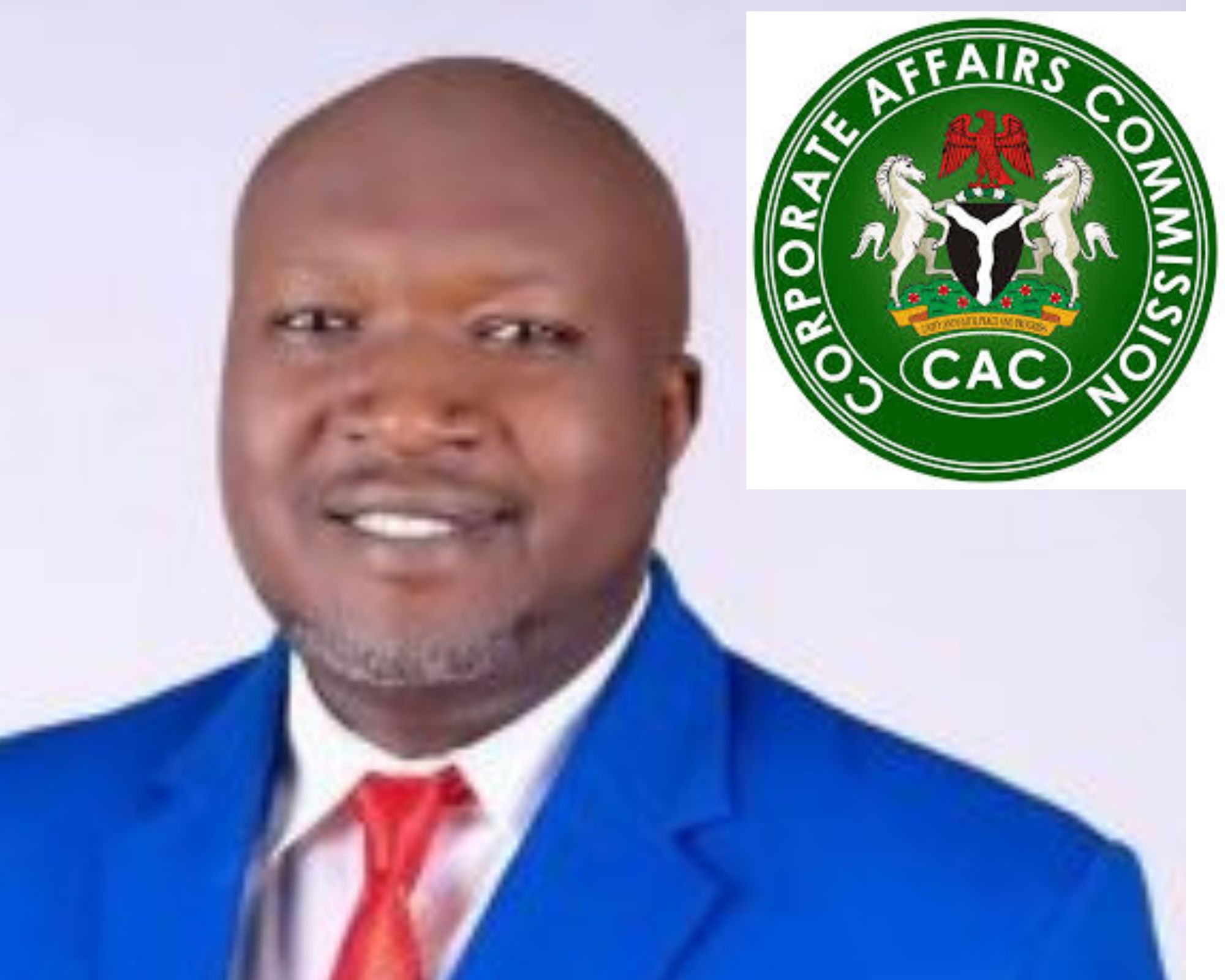
It all started in November 2022 with a written examination. Eight vacancies for the Director cadre were duly declared and budgeted for in the exercise. Twenty-two Deputy Directors competed for the 8 vacancies. The Examination and Appraisal were all concluded. The exercise was 80% concluded and remained Oral Interviews which carries 20% of the exercise. The new Registrar-General (RG), a Senior Advocate of Nigeria, Hussaini Ishaq Magaji sought and obtained Ministerial approval to conclude the exercise.
Then without consultation with the Commission’s Examination Committee/Management, although he is the Exams Committee Chair, the RG unilaterally and without the management’s approval reduced the declared vacancies from 8 down to 5.
The Exams Committee, a standing Committee of the Management responsible for conducting promotion exercises in the Commission is said to be responsible to Management and not to the Office of the Registrar General.
The cut-off mark for promotion was pegged at 75%. Upon conclusion only 5 Candidates were issued letters of promotion. Three of the Deputy Directors who all scored over 83% and above and were ranked 6th, 7th and 8th in order of merit felt cheated.
They believed that the RG’s unilateral action amounted to shifting the goalpost while the match had commenced. They appealed to the RG to revisit his baseless and unilateral decision and release their letters of promotion, but the RG has not been forthcoming.
The appeal has been escalated to the supervisory Ministry– Federal Ministry of Industry, Trade and Investment of Nigeria; Office of the Secretary to the Government of the Federation (OSGF), and Head of Service of the Federation for necessary intervention.
Meanwhile, Law & Society Magazine made several attempts to hear the CAC Management’s version of the account but the management was not forthcoming.
The decision to reduce the declared vacancies has been faulted even by other Management Staff including Directors.
Not too long ago the erstwhile RG of the CAC was removed on a similar account of highhandedness and abuse of office. The new RG is barely 6 months in office. The Commission cannot afford to be embroiled in such a crisis, as it is yet to recover from the loss of quality human capital that followed the 3 and half-tortuous years of the immediate past RG.
As of Press time, the Supervisory Ministry had not intervened to get the issue resolved. Law & Society Magazine reached out to the Ministry of Trade & Investment but could not confirm the steps so far taken on the matter as the Minister’s Chief of Staff who promised to revert to the magazine’s inquiry on the matter failed to do so despite efforts to get the ministry’s view.
This unfortunate development has created a lot of uncertainty as many more members of staff are overdue for promotion and another promotion exercise cannot be proceeded with until the last exercise is concluded.
Meanwhile, Law & Society learnt that more vacancies exist at the Director’s cadre as between 2022 to date more Directors had either retired or resigned from the Commission.
At the Management level decisions like this have far-reaching implications for the future of the Organisation because if not well handled, Management Staff may not put in their best.
Curiously, after issuing promotion letters to only 5 successful candidates in the Directors cadre contrary to the 8 vacancies declared since 2022,the RG again unilaterally, increased the vacancies of other cadre as follows:
Deputy Directors from 10 to 15 (Additional 5)
Assistant Directors from 12 to 20 (Additional 8)
Principal Managers from 23 to 35 (Additional 12)
Senior Managers from 34 to 40 (Additional 6)
The new CEO and RG of CAC, Hussaini Ishaq Magaji, SAN appears to have gotten entangled in a promotion scandal that has left many wondering how a member of the inner bar could allow such injustice.
Before you we prostrate,oh God of creation.Today,in favour of your handmaid we place sincere serial supplications,rolling out drums to testify to her goodness.May our hearty prayers on her behalf touch you in productive measures.
You,alone are the talent giver;You led her to discover same at the fullest of time to the glory of God.With the Law she garnished same in protection of the society where we,all are proud benefactors,her pinging voice soothing our itchy ears as the Nightingale does.
Today, the voice of the Bar graciously marks her birthday anniversary throwing well articulated, coined words in tabloids of the Bar.We, the living Saints of the Bar add to the length and strength of the Pen which readily distinguishes her from her emulators.The Pen, powered by God shall forever be your strength.
Voice of the voiceless,the Lord will continue to make your enemies your footstool.He’ll continue to bless,keep and preserve you.He knows your heart desires and will favourably answer all your secret prayers.
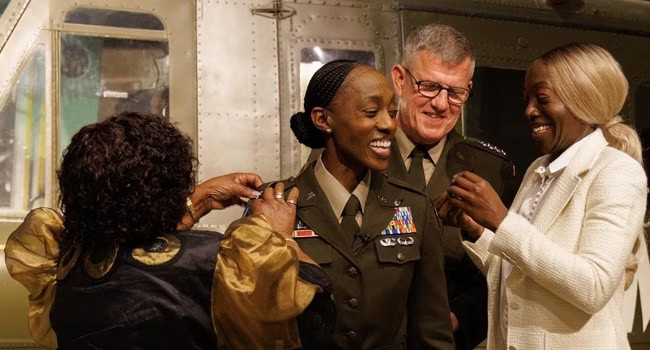
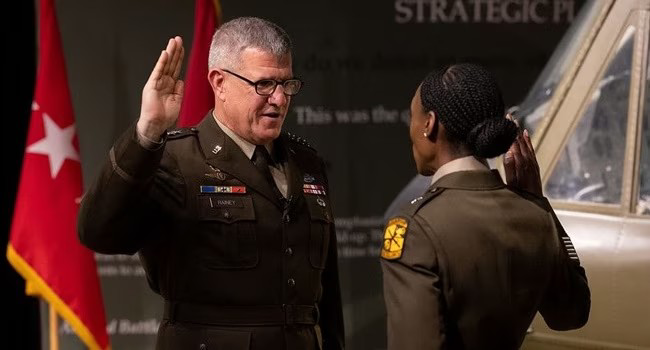
In 2021 Lieutenant Colonel Chimamanda Azubuike was one of the highest-ranking female officers in the US Military and by the following year, 2022 she was decorated as a Brigadier General.
Born in the UK to a Nigerian father and Zimbabwean mother, Chimamanda who abridged her name to Amanda enrolled in the US Army in 1994, becoming an aviator after passing the Army Aviation Basic Course.
She studied Mass Communication/Media Studies at the University of Central Arkansas between 1989 – 1993 and also has a Master of Professional Studies, Public Relations/Corporate Communications from Georgetown University.
In the video below, the US Army General tells how she joined the US Army and worked her way up to become a General!
It is with regret that I find myself unable to agree with the views expressed by Chidi Udekwe Esq in his article captioned as above
Let me unequivocally state, right from the onset, that the caption itself is innocuous in that it pushes a narrative agreeable to every right thinking member of the Bar . Clearly we all want a free and fair election and we urge the NBA Unity Bar Electoral Committee to deliver one
Having said that, let me State that a perusal of the article in question, is indicative that the author’s main grouse seems to be the cost of the EOIs Forms. To that extent this writer is of the view that same tantamounts to an unfair critic of the NBA Abuja Electoral (Unity Bar) Committee, which committee had set out guidelines towards the conduct of the 2024 Unity Bar Branch polls . pursuant the powers granted by its enabling instruments.
Here is half a dozen reasons why this writer respectful disagrees with my Colleague Chidi Udekwe and would tag his bulletin as a hatchet job
Firstly contesting elections into an elective office in the NBA whether at Branch level or National is not a Fundamental Right but merely a privilege contingent upon meeting other criteria to be decided by the Electoral Committee itself
Secondly the Electoral Committee has powers to make Guidelines for the conduct of said elections and this is revised from year to year as allowed by statute of each of the NBA branches, if Mr Udekwe feels unhappy with thee extent of the powers granted to the Electoral Committee he should propose an amendment to the relevant statute or seek in judicial interpretation o the relevant statute , Regulation or Guidelines mutatis mutandis.
Thirdly the argument that the Expression of Interest form for the office of Chairman ought to be.free as that of NBA National is lame, banal, outlandish and ludicrous because the laws and stipulation governing NBA National Elections is different from those of branches and there’s no basis for comparison at all.
Fourthly if, as it is suggested, the Expression of Interest form were to be purchased free of charge , it would have opened a Pandora Box of sort and the number of EOIs would have been large and unwieldy as it would have been an all comers affair leading to a. onerous and. cumbersome process .
Fifthly, by fixing the price for EOI Forms at. N250,000 , only serious candidates would bother.to throw their hats into the Ring .
Sixth reason for my disagreement with the article is that NBA elections is not part of legal practice neither is it a career path that one must willy nilly pursue. Anyone who is qualified to run must. comply with the stipulations set out by the Electoral Committee and not heat up the polity with this sort off unfair criticism. Much as a fair, balanced and constructive criticism are laudable and should be encouraged , from where I’m standing, this one has not made the cut
These sort of crurusm is not necessary at this time at all , if Mr Chidi finds the NBA branches elections too expensive, he. has the option to wait for the national elections where he can pick the Expression of interest form for free .
Chief Nkereuwem Udofia Akpan Constitutional Lawyer and Human Rights Activist, writes from Abuja
The Vatican has recently released a declaration unequivocally denouncing, among other things, lesbian, gay, bisexual, and transgender (LGBT) issues, surrogacy, and gender ideology as grave violations of human dignity. Entitled “Dignitas Infinita” (Infinite Dignity), the 20-page declaration, officially released by the Prefect of the Vatican’s Dicastery for the Doctrine of the Faith, Cardinal Victor Manuel Fernandez, on Monday, April 8, 2024 (even though it had been in the works since 2019), denounces the aforementioned transgressions as against God’s teaching and God’s plan for human life. While invoking the words of the prophet Isaiah, “Woe to those who call evil good and good evil, who put darkness for light and light for darkness,” “Dignitas Infinita” bluntly lambasts the aforementioned practices as gross violations of human dignity. “Dignitas Infinita” is rooted in the underlying principle that a human person is a unity of body and soul, and that “the dignity of the body cannot be considered inferior to that of the person as such.” The sexed body has a “natural order” that is part of the natural ordering of creation, which, as Pope Francis has emphasized, should be received as a “gift.”
Coincidentally, I happened to be in Rome in the very week in which “Dignitas Infinita” was released. I was in Rome delivering two papers: “Surrogacy: A Tragedy for Africa” and “The Place of the International Court under the African Court of Human and Peoples’ Rights in Combating Surrogacy,” at an International Conference of Jurists at Lumsa University, which is a stone’s throw from the Vatican. “Dignitas Infinita” was awaited with bated breath. Prior to the release of the declaration, speculations were rife in Rome and across the world that the new declaration would send shockwaves across the world and throughout the Church. Specifically, many feared that it would spark an intolerable revolution in the entire Church doctrine and teaching. Why? Because the Dicastery that would issue “Dignitas Infinita” was the same Dicastery that issued “Fiducia Supplicans,” approving non-liturgical blessings for same-sex “couples,” which caused worldwide controversy in Christendom just four and a half months earlier.
When Dignitas Infinita eventually berthed on April 8, 2024, it was the opposite of what many had feared it would contain. For me, it is impressive and fascinating that the new declaration denounced surrogacy in the same manner as the International Conference of Jurists. If you ask me, I would say that Dignitas Infinita is a compelling read. It is a rearticulation and a reaffirmation of the age-long Church’s teaching on human dignity and a timely application of those principles to some of the most controversial issues of our age. Dignitas Infinita is applauded not for being a Catholic document but for being the most natural law-friendly document grounded in human nature and the ontological dignity of the human person.
Age upon age, Emmet John Hughes wrote on October 20, 1958, the city of Rome “has affected the destiny and trial of the Church in profound and ever new ways. No matter who sits on the throne of St. Peter in Rome,” continued Hughes, “he can know but one heritage, one purpose and, in G. K. Chesterton’s words, ‘one scheme…bestriding lands and ages with gigantic arches, and carrying everywhere the high river of baptism upon an aqueduct of Rome.’
These seemingly prophetic words of Hughes have somehow come to fulfilment in Dignitas Infinita. The new declaration merely affirms the longstanding Church’s teaching on LGBT, surrogacy, and gender ideology as a grave violation of human dignity. For example, in the 2008 document “Dignitatus Personae” on bioethical questions, the Congregation for the Doctrine of the Faith reaffirmed the Church’s opposition to the use of surrogate mothers. It confirmed what “Donum Vitae” had stated some 20 years earlier. In that document, the Church explained that any birth technique involving people other than the married couple is unacceptable as it is “contrary to the unity of marriage and to the dignity of the procreation of the human person.” It also stated that it is a denial of “the child’s right to be conceived and brought into the world in marriage and from marriage.” The nature of the bond between a husband and a wife means that they have “the exclusive right to become father and mother solely through each other,” it added.
In law and ethics, surrogacy is denounced for bringing together both the objectification of women’s bodies and the commercialization of childbirth. Such practice takes away the humanity of the woman who bore the child, and it also denies the intense bond between a mother and her child that develops during pregnancy. Even if a woman is paid, as most U.S. surrogates are, what she did is a great commercialization of childbirth that takes away her dignity and diminishes her intrinsic worth. Given the predominantly commercial nature of many surrogacy arrangements, children born through surrogacy are at risk of being sold and/or exploited.
Surprisingly, surrogacy has gained ground in Nigeria. I remember last year, a man and a young girl walked into our law firm. They wanted me to draw up a surrogacy agreement whereby the girl would rent out her womb for the man so that the girl would bear a surrogate baby for the man. Of course, without a second thought, I rejected the legal brief. I told them that even though I was desperately in need of money at that time, I would not facilitate an illegal agreement to carry out an illegal action. Surrogacy is illegal in Nigeria. Sections 30 of the Child Rights Act, sections 13 and 21 and 82 of the Trafficking in Persons (Prohibition) Enforcement and Administration Act (TIPPEA Act), and articles 8 and 31 of the African Charter on Human and Peoples’ Rights denounce all forms of surrogacy.
As regards transgenderism, I consider it as the new madness of the 21st Century. It is considered a phenomenal madness because it challenges the natural law and human nature, which are fundamental to every human civilization. Human nature is an unchanging reality that transcends time and history. No amount of surgical procedures or hormonal treatments can change a person’s biological sex. Transgenderism undermines the traditional socialization of boys into men and girls into women by denying the biological basis of manhood and womanhood. It teaches that gender is a social construct rather than a natural or biological one, suggesting that individuals are free to choose any gender that suits their preference, regardless of their natural and biological gender. We now live in a new era where being homosexual, lesbian, or transgender is synonymous with international civility.
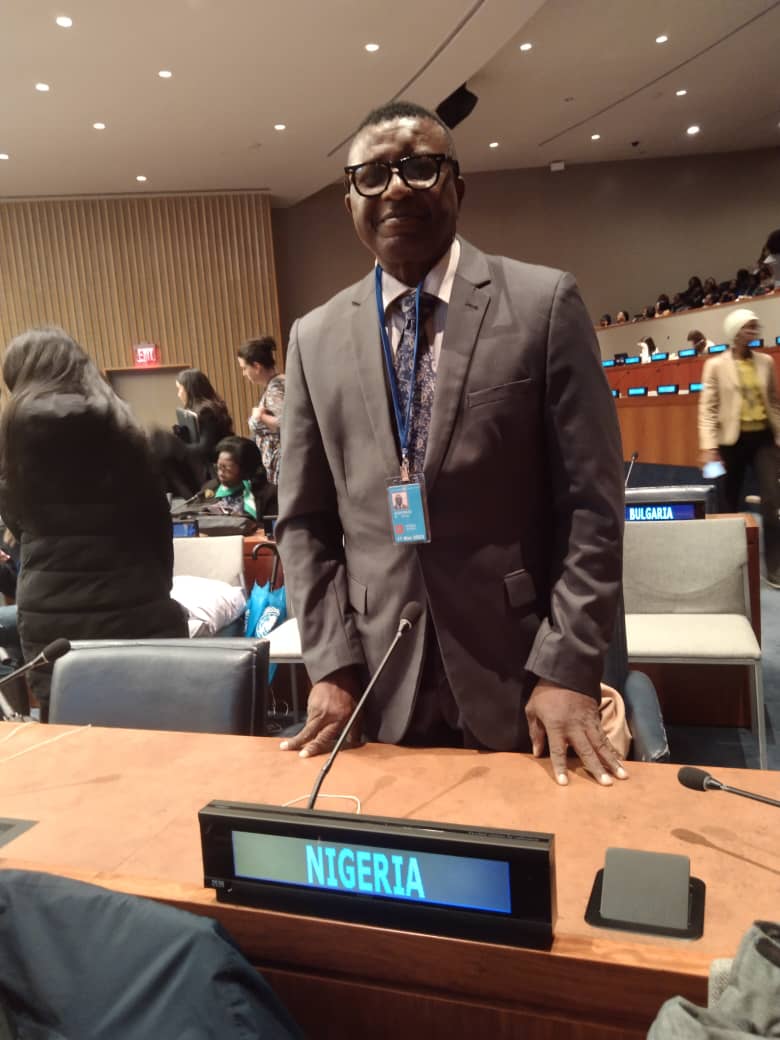
A few years ago, I attended a United Nations Session at the United Nations Headquarters in New York, United States. During the session, a young man was caught by some ladies in a female toilet. When questioned, he claimed that although he appeared outwardly as a man, he felt like a woman inside. This incident reflects the new challenges we face. However, the fact remains that transgenderism is not innate; it is not determined by genes. It is an acquired madness. No matter the efforts, one cannot change one’s chromosomes. One may succeed in altering one’s appearance through makeup, but one cannot change one’s biological sex. This is why Dignitas Infinita teaches that any attempts, whether medical or non-medical, to alter one’s sexual appearance are inconsistent with human dignity. Additionally, the use of language that obscures the reality of sexual difference is also considered inconsistent with human dignity.
Perhaps the most remarkable paragraph of Dignitas Infinita, in my humble view, is the paragraph denouncing modern-day gender ideology. The paragraph draws a clear distinction between “sex” and “gender.” It states that God created man and woman as biologically different, separate beings, yet some people are denying their sex, essentially playing God. Pope Francis fervently believes that the idea that gender is fluid “rather than helping to recognize dignity, impoverishes the vision” of man and woman coming together to create new life. He denounces “gender theory” as the “worst danger,” an “ugly ideology” facing humanity today.
Pope Francis is correct. The notion of “gender” has become a Trojan horse. “Gender” no longer simply means two sexes—male and female—as traditionally understood. It has become a social construct instead of a biological one, encompassing homosexuality, lesbianism, transgenderism, and abortion. The phrase “gender equality” no longer signifies the ontological and radical equality between man and woman that we cherish and subscribe to. Instead, it has become another euphemism for the legalization of homosexuality, lesbianism, transgenderism, and abortion. “Gender equality” seeks to mainstream homosexuality and lesbianism into all spheres of society, including schools, businesses, churches, and beyond. Currently, there are at least seven different genders recognized at United Nations proceedings and deliberations: male, female, gay, lesbian, transgender female, transgender male, and bisexual.
The list is endless, which is why the phrase “gender equality” raises a red flag at United Nations negotiations. Many countries’ delegates oppose the phrase because they know it connotes LGBT, trans, and gender-diverse people. Attempts to pass the Gender Equality Bill into law in Nigeria and other countries have failed for the same reason. So, the appropriate word to use is “sex,” not “gender.” For example, section 42(1) of the 1999 Nigerian Constitution, which provides for equality between male and female in Nigeria, uses the word “sex,” not “gender.” “Sex” means “male” or “female,” whereas “gender” connotes LGBT, trans, and gender-diverse people and so forth. Section 42 (1) of the 1999 Nigerian Constitution stipulates that no citizen of Nigeria should be discriminated against on the grounds of his or her sex, ethnic group, place of origin, religion, or political opinion. On the contrary, South Africa, the first and only African country and fifth country in the world to legalize LGBT, has retained “gender” in the South African Constitution. So, for a country that does not want to legalize LGBT, the appropriate word to use is “sex,” not “gender,” because “sex” simply means “male” or “female,” whereas “gender” connotes LGBT, trans, gender-diverse, and all sorts of nonsense.
As expected, the liberal and ultra-liberal media – CNN, BBC, Washington Post, New York Times, and others – have rejected Dignatas Infinita. For example, the Washington Post has dubbed Dignatas Infinita as “something of an olive branch to church conservatives.” In the same vein, the LGBT community worldwide has rejected Dignatas Infinita. They argue that the declaration is a big setback and a big disappointment because they thought Pope Francis was in support of LGBT and gender theory. They criticize the new declaration as outdated, harmful, and contrary to the stated goal of recognizing the “infinite dignity” of all of God’s children. They complain that the Vatican is again supporting and propagating anti-LGBT ideas that lead to real physical harm to transgender, nonbinary, and other LGBTQ+ people. They warn that it could have real-world effects on trans people, fueling anti-trans violence and discrimination.
Studies on the rise and fall of human civilizations show that most have collapsed due to a combination of factors, including the collapse of objective moral standards, which serve as the superstructure for constructing societal ethos. For example, empires such as Greece under Pericles, Rome under Caesar, France under Napoleon, and Germany under Hitler collapsed due to a combination of political and moral corruption. The West has experienced two world wars and has seen the rise of ideologies such as Communism, Fascism, and Socialism, as well as leaders like Mussolini, Stalin, and Hitler. Now, it is facing challenges from movements like LGBT and gender activism, which some argue threaten the very foundation of human society. History shows that societies that go against natural law often face consequences, as nature has a way of reasserting and rebalancing itself.
For this reason, the gender hypothesis is seen as a potential catalyst for anthropological cataclysm. The LGBT movement, proponents argue, will eventually face strong natural resistance that will lead to its demise. Every society derives its meaning and purpose from some unchanging, self-evident natural truths, which form the superstructure for building societal ethos. By seeking to abolish this truth and promote an absurd taxonomy of LGBT and gender ideologies, the West is not only tearing itself apart but also potentially hastening its final collapse. The Roman Empire, for instance, collapsed under the weight of moral corruption. Similarly, some argue that Western civilization is crumbling under the influence of LGBT and gender ideologies.
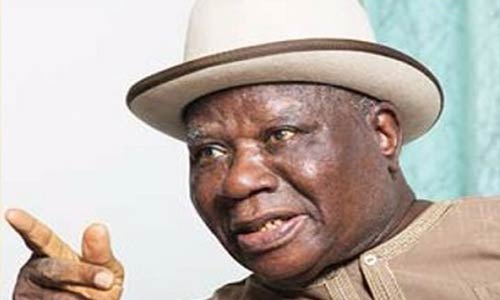
Foremost Ijaw Leader and First Republic Federal Commissioner for Information, Chief Edwin Clark on Monday revealed how politicians and Boko Haram appologists in Jonathan’s govt frustrated efforts to rescue the Chibok girls.
Revealing how he and then Comrade Shehu Sani, before he was elected into the Senate, met with a Boko Haram member who tried to cover the atrocities of the terrorist organization, Chief Clark also called on President Bola Tinubu to appoint a Special Task Force to travel at any time to Sambisa forest to search for the Chibok Girls, Leah Sharibu and others still held in Boko Haram captivity.
Clark made these disclosures in Abuja during a just-concluded press conference on the 10th anniversary of the the Chibok Girls, saying it is a shame that till date, the children haven’t been released.
Clark said, “In 2009, President Umaru Yar’ Adua was to visit Brazil, but the upsurge of Boko Haram in Borno State affected his travel because they had to send security men to Maiduguri. There was no serious effort made but the little effort made by President Jonathan was thwarted and sabotaged by the state government in the North East.
“President Buhari sent his Chief of Army Staff, General (Tukur) Buratai to the war front in Borno State to rescue the Chibok Girls. But the story was different; the Chief of Army Staff diverted the resources to build a University in Biu. There was no serious effort made by the little effort made by President Buhari again.
“I was also disappointed that President Bola Tinubu in his inaugural speech did not mention anything about the Chibok Girls and infact, he has not done anything to set up a Special Task Force, whose duty is mainly to search for the Chibok Girls and rescue them.
“Some of us have played our part in the rescue of the Chibok Girls; it is a national tragedy which must not be ignored.”
According to him, the refusal of government to rescue the girls has worsened the pain of their parents.
He said, “I took part in the efforts of rescue the Chibok Girls. I met with Boko Haram people with Shehu Sani but it was buried by the government and saboteurs. When Jonathan said there was Boko Haram in his government and office, he was telling the truth. He was frustrated, he suspended three governors in the North East. But they were not interested and frustrated him. One of the Boko Haram members was seen in the residence of one Governor.
“The then governor of Borno State and now Vice President Kashim Shettima was told not to hold examination for the children in Chibok but Maiduguri. But he said he would provide security and he never did. The Boko Haram people came for shopping and took away the girls.
“I believe that Tinubu should appoint a Special Task Force, transparent, brave with a time limit to travel at any time to Sambisa forest to search for these girls and Leah Sharibu.
“No government has given the Chibok Girls a priority. For one of the rescued girls to say she wants to go back to the bush means something is wrong.”
There is no love lost between His Royal Highness Eze Stanley Pius Iwu, Omeudo, Ugwumba Umuokrika II, of Umuokrika autonomous community in Ahiazu Mbaise local government area, Imo State, and his cousins, children of late Chief B.A. Iwuh, no doubt.
And the bad blood dates back to 1998 when after the death of the traditional ruler, Eze Pius Oguledo Nwoga, a Minister in the Eastern Region in the First Republic, prominent sons of the community, including Dr. Sylvester Ugoh, former Governor of the Central Bank of Biafra and Minister of Education in the Second Republic; late Chief Donatus Onu, Agbachiaka I of Umuokrika and first chairman of Ahiazu Mbaise LGA; Dr. Dom Okoro, then President General of the Umuokrika Town Union for ten years prior to SP Iwu’s emergence as Eze Umuokrika, late Chief I.D. Nwoga, mni, former Minister of Establishments, and second son to Eze P.O. Nwoga; Dr. Sir Clement Nwigwe, KSM; among others, unanimously settled for the young S.P. Iwu, a banker, as his successor.
“It was a unanimous decision. There was no dissent. Every who is who in Umuokrika then agreed that Eze Nwoga’s successor would be SP Iwu or no other,” someone who was privy to that decision told TheNiche last week.
But when the community leaders gathered at the market square, Nkwo Ala Umuokrika, on April 13, 1998, to pick Eze Nwoga’s successor, SP Iwu was conspicuously absent. His uncle, Chief B.A. Iwuh, was mandated to fetch him from wherever he was having decided that the crown was his.
But there was a snag.
SP Iwu, then a Principal Manager with the Union Bank had until April 1, 2001 to retire and he was not going to sacrifice his illustrious banking career on the altar of the royal stool.
So, he accepted the honour on the condition that the coronation will not take place until after his official retirement. Fair deal. The community accepted. And his coronation as Omeudo, Ugwumba Umuokrika II didn’t take place until August 17, 2002, a year and four months after his retirement.
But ironically, just like the Biblical admonition that “there is no Prophet without honour except in his own country, and among his own relatives, and in his own home,” SP Iwu’s selection and eventual coronation was rejected by his cousins, children of the same man, Chief B.A. Iwuh, Onyekuma Onyekuma 1 of Umuokrika, who presented him to the leaders of thought on April 13, 1998.
Accusing him of betraying their father, who apparently nursed the ambition of succeeding Eze Nwoga before the community leaders made their choice, they declared war.
On November 15, 1998, eight months after the community took the momentous decision, seven children of Chief Iwuh – Nicholas Ben Iwuh, Cajetan U. Iwuh, Jude Ben Iwuh, Peter Ben Iwuh, Charles U. Iwuh, Nonye Nzeh (Iwuh) and John Ben Iwuh – in a scathing letter titled, “Ezeship and ultimate betrayal” poured invectives on their cousin.
“Stanley, shooting our father in the foot and betraying him,” they wrote.
“This action actually validated what we have felt about you… a betrayer and back stabber! Obviously, we have finally realized how vicious you can be. You cannot be trusted… You ought to be ashamed of yourself for being a traitor, a back stabber, a dangerous, heartless, vicious and poisonous individual! Congratulations for being Eze and the way you acquired it! Eze Judas.”
The embittered siblings didn’t stop there. “You have profoundly polarized that family with common hatred and we will help you to carry it on more destructively. Believe me, we are not mincing words. You have permanently institutionalized hatred and division among us… You have declared a war against us and we will fight you. We have taken our gloves off for the fight because it is a war,” they further wrote.
“So, whatever joins all of us together, please cut it off because we have cut ours… You should stop celebrating for your momentary victory because it is going to be a very long fight. We will keep fighting no matter how long it takes. One thing you and your collaborators forgot is that we all belong to the same compound and we will live to see how it plays out in the long run.
“We are officially making it clear that as from today: We cease to exist as relatives; We do not want to have anything to do with any of you; Anyone of us who chose to have any relationship with any of you is doing so at his/her own risk. Again, this is from the bottom of our hearts and we do wish for you all to respect our wishes.”
That was a declaration of war, literally. Members of the community who knew how SP Iwu resisted his being drafted to become the traditional ruler were taken aback by the turn of events in the extended Iwu family and the venom dripping from the letter.
Having vowed not to recognize SP Iwu as the traditional ruler, they started prefixing their names with “Prince.” It was a deliberate act of provocation. Not only that, they started, unilaterally, to appropriate the family compound, popularly called Mbaraezi Tutu which serves as the family arena for social functions and gathering. Because the land also directly faces “Ovu Tutu” it became an arena where the family convokes for attending to pressing family issues.
But when they made an attempt to fence off the compound, the monarch went to court on September 21, 2023, seeking “a declaration of the Honourable Court that the defendants resort to self-help by forcibly entering the land in dispute and digging a foundation preparatory to erecting a fence/wall thereon without any order of court of competent jurisdiction is reprehensible and amounts to an act of lawlessness.”
The plaintiffs that included Eze SP Iwu’s son, Dr. Nnamdi Iwu, a lawyer, and Nze Leo Agomou Iwu, one of the surviving sons of Tutu, their grandfather, in the case that has Nicholas Iwuh, Mrs. Ellen Iwuh, Onyedi Iwuh, Kelechi Iwuh and Chuchu Iwuh, for themselves and as representing members of Chief B.A. Iwuh family as defendants, also sought “an order of perpetual injunction restraining the defendants either by themselves, privies, agents, servants, personal representatives or those claiming or deriving title from them from further act(s) of trespass over the land in dispute.”
Then, while the case was still pending, Nicholas Iwuh, one of the defendants died on December 7, 2023 at the age of 75 years.
Attempt by his siblings to bury him on the disputed land – Mbaraezi Tutu – on Thursday, April 4, 2024, without waiting for a court pronouncement almost led to a breakdown of law and order, necessitating the police to step in.
But rather than seeking an amicable resolution, Chief Iwuh’s children took their case to the media, disparaging the traditional ruler and doubling down on their 1998 threats.
Younger brother to the deceased, Cajetan Iwu, one of the seven who signed the November 15, 1998 letter vowing not to have anything to do with the monarch blamed him for the crisis.
“Eze S.P. Iwu is claiming that the burial site is part of his land which is not true, the kinsmen have tried the matter and advised him to desist from the claim. The burial site doesn’t belong to him. He is using his position to cause havoc, intimidate and create confusion in the family. The youths are threatening to cause mayhem but we are pleading with them. Members of the community are not happy over the high handedness of the traditional ruler. He doesn’t want to obey justice. He’s a sadist.” he alleged.
But a Palace source who spoke to TheNiche said nothing can be farther from the truth. He accused the children of Chief Iwuh of not getting over the disappointment of their cousin being preferred to their father for the throne.
“That was the decision of the community and it had nothing to do with Eze S.P. Iwu, Omeudo, Ugwumba Umuokrika II. Like they noted in their infamous letter, SP, then a thriving professional banker “never made any form of contribution financially or otherwise” in that enterprise. He neither personally lobbied to be Eze nor delegated anyone to do so on his behalf. In fact, he was cajoled to accept the offer,” one of the palace chiefs who pleaded anonymity said.
“They should grow up and move on with their lives. Their father, a great son of Umuokirika, is long dead. But while he lived, he never begrudged his nephew his good fortune. Instead, he was the person who presented SP to the elders of the land on that fateful day of April 13, 1998 at Nkwo Ala. So, what are they talking about?”
Eze S.P. Iwu said he would not speak on the matter because it would be subjudice.
“But that said, let me emphasise that they know what they are doing. They are playing politics with the graves of their folks. And that is rather unfortunate. They want to use the graves to lay a claim to Mbaraezi Tutu. They are the only people who are defacing the entrance to our family compound with graves.
“The question that people are asking is this: How come they are the only ones that have turned Mbaraezi Tutu into a burial ground? All the graves that confront you as you drive into the compound belong to them – an eyesore for first time visitors to the Iwu compound. All other members of the family bury their dead in their own compounds. I have lost my father, mother and wife and they were all buried within and not outside.
“So, why are they not doing same? That is the issue which they are not addressing. Instead they are using the social media to malign me. But, like I said, the case is in court. We will see what happens.”
The question concentrating the minds of peace loving indigenes of the community is this: now that the children of Chief B.A. Iwuh, in spite of the pending court case, have buried their sibling, Nicholas Iwuh, on the disputed land, what happens next? Again, all eyes are on the judiciary.
Date was Monday, August 29, 1955. Oba Isaac Babalola Akinyele, the Olubadan of Ibadanland, sat on his throne. There was an august visitor to be received by the monarch. He had in attendance some of his prominent chiefs like the Otun Olubadan, Chief Kobiowu, and the Ashipa Olubadan, Chief Akinyo. From the political class, Oba Akinyele invited the colourful Adegoke Adelabu of the Penkelemesi fame. It was an important occasion for Oba Akinyele. One of his subjects, a woman of no mean repute, had requested to see the monarch. Adunni Oluwole was not just an Ibadan indigene. She was a force among the political elite of her time. Her pint-size notwithstanding, Adunni was a political juggernaut; she had her own political party, the Nigerian Commoners Party (NCP). The clamour for independence was at its highest then.
Adunni Oluwole was futuristic. She suspected that if given independence, majority of Nigerians would suffer in the hands of the few that would take over from the colonial masters. So, while others were asking for independence, Adunni was of the opinion that the British should not hand over power until the masses were bold and educated enough to confront the monsters that the political class represented. To achieve her aims, she moved from one palace to the other: from one town to another, canvassing and mobilising the people against the clamour for independence. The Yoruba called her party Egbe K’Oyinbo maitiilo.
In the course of her crusade, Adunni wrote to Oba Akinyele, seeking the permission of the Olubadan to come and address Ibadan people on why they should not support those asking for independence. On her arrival, Adunni told Oba Akinyele and the people gathered that if the whites were chased away and the politicians took over from them, the common people would suffer untold hardship. To avoid that, she asked the Olubadan to use his influence and mobilise his subjects not to support the transfer of power from the British colonial masters to the Nigerian slave drivers. But she was not allowed to finish her message.
Chief Adelabu (Penkelemesi) was reported to have interrupted her abruptly, almost to the point of physical assault before Oba Akinyele restrained him. Oba Akinyele recognised the toughness of Adunni’s resolve but nevertheless asked that Adunni should be taken out of the palace and banished her from ever entering the palace. The late Professor Kole Omotoso recorded Adunni’s encounter with Adelabu in a more dramatic form in his book, one of the most authoritative documentations of the Nigerian politics, Just Before Dawn (page 200-201). Omotoso called the book faction (fact and fiction). But the Adunni story is fact. Though she died before Nigeria gained independence, events after the 1955 episode have since justified Adunni’s prediction that after independence, a few would become masters and dictators over the majority.
The Yoruba political, social and cultural setup is egalitarian in nature. It is a race known to have given equal opportunities for both sexes to actualise their potential. In the traditional setup, the position of Iyalode (leader of the women folks), has been as prominent as that of any male chieftaincy title. In some Yoruba towns and villages, occupants of the Iyalode chieftaincy play important roles in the selection of Obas. This also underscores the respect accorded women on esoteric matters because the women folk are regarded as an important part of the tripod which governs an average Yoruba community (Oba-in-council, the awos and the owners of the night- our mothers). It is therefore not out of place for women in Yorubaland to rise and speak whenever occasion demands.
The likes of the legendary Efunsetan Aniwura, the Iyalode of Ibadan (1829-June 30, 1874), Efunroye Tinubu (1810-1887),; Iyalode Bisoye Tejuoso (1916-1996); Chief (Mrs.) Funmilayo Ransome-Kuti (1900-1978); Mama Hannah Idowu Dideolu Awolowo (1915-2015), who after the passing of her husband, Chief Obafemi Awolowo in 1987, held the Awolowo political dynasty and the entire Yorubaland intact, and the most recent, Iyalode Alaba Lawson (1951-2023), came to mind as some Yoruba matriarchs who used their positions, positively, to project the Yoruba nation to the world.
With the rich culture of decency that the Yoruba women folk have attracted to themselves and the race, one cannot but be worried that in the 21st century, a Yoruba woman can afford to wage a senseless war against her land under the guise of fighting for an independent nation for the Yoruba race. I am talking here about the last Saturday invasion of the Oyo State Secretariat by some miscreants who claimed to be soldiers fighting for the actualisation of an independent Yoruba nation. More appalling in the whole meshugaas, is the claimed declaration of the Democratic Republic of Yoruba (DRY), by Modupe Onitiri-Abiola, one of the widows of MKO Abiola. Shortly after the invasion of the Oyo State Secretariat, Onitiri-Abiola’s video of the declaration of her fanciful DRY hit the internet.
In the four minutes and forty-two seconds video (the version I got), the woman said among other things, in plain Yoruba Language: “We are indigenous people. We are sovereign people; we are ethnic nationalists. We have decided to secede from Nigeria on November 20, 2022. And today, April 12, 2024, we decided to finally leave Nigeria. I, Modupe Onitiri-Abiola, proclaimed the sovereignty of the Democratic Republic of Yoruba today, Friday, April 14, 2024. From today henceforth, Yorubaland has commenced its own republic. By that virtue, it is now become the newest nation in the world…” The video was obviously recorded a day before the invasion of the secretariat. After watching the video, I have been trying to situate what actually prompted her and her backers to embark on such a mission at this point. I have been trying to fathom which Yoruba nation she was talking about. I checked her pedigree; the only thing I could get is her conjugal relationship with the late MKO.
No doubt about the fact that Nigeria, as it is composed now, needs restructuring. Nobody, especially anyone who has been following the political trajectory of Nigeria since the collapse of the First Republic on January 15, 1966, will be comfortable with the way things are in the country. The current political dispensation, has, since its inception on May 29, 1999, foregrounded, more than any administration before it (civilian or military), those things that divide us more that any hope of unity.
As much as we agree that we don’t have the best of structures at the moment, it is unthinkable that the solution will be a broad day-light secession! The truth is that the last set of nationalists that have ever traversed the Nigerian political landscape were those lofty politicians of the last five years of colonial rule and the first three years after independence in 1960. Before the January 15, 1966, coup led by the late Major Chukwuma Nzeogwu, it was obvious to all discerning minds that Nigeria was “a mere geographical expression”, as espoused by Chief Awolowo in 1947. There is nothing to show that the country has grown into nationhood. Fifty-four years after we fought a needless civil war that claimed over two million lives from both sides, all in a bid to “keep Nigeria one” in spite of the glamourous insertions in our various constitutions- the affirmative cliche of Nigeria being “one indivisible and indissoluble Sovereign State”- we have demonstrated that we have not learnt anything from our history.
Every person of good conscience will agree that Nigeria cannot continue the way it is now. Something must be done to address the various agitations across the nation. When a Fulani man is at the centre, the Yoruba man is not happy. When it is the turn of the Yoruba man, the man up north feels that he is being short-changed. Yet, the third leg of the tripod, the Igbo race, is left in the cold to suffer its fate. We fought a war for 30 months. We ended the war and affirmed that: “there is no victor; there is no vanquished”. Over five decades after the ‘affirmation’, we still see the Igbo as “those who attempted to break away’, and as such, not fit to be number one in the country. This is the kind of feeling that emboldened last Saturday’s thoughtless action. However, we cannot but caution Onitiri-Abiola that this is not how to be a heroine. She could read more about how Mrs. Olufunmilayo Ransome Kuti led the Egba women on October 5, 1946, and how Nwanyereuwa, led the November 18, 1929, Aba women’s riots. Those were great women in their own right.
My greatest concern in the current matter is that it happened in Yorubaland. With our sophistication, cosmopolitan outlook and enlightenment, it beats one’s imagination that a group of people would wake up, arm themselves and march to the Oyo State secretariat to “take over” the place. One of the things that came to my mind is that if, for instance, those DRY ‘soldiers’ had succeeded in taking over the Oyo State Secretariat, what follows? Would that have meant that their gang members in Ekiti, Ondo, Osun, Ogun and Lagos States would replicate the same? How many men do they have? What is the size of the arsenals? What a joke! But who do we blame for this charade? How long have we been asking that the Yoruba elders should put their house in order? How long have we been clamouring that Afenifere should detach itself from the apron of Yoruba political marauders- the very ones who believed in restructuring before they got to power but would not touch the same ideology with a 10-foot pole while in government?
Above all, the last Saturday incident in Ibadan is a wake-up call to the nation’s leadership. They should be worried that that type of thing can happen in Yorubaland. Whether it resembles ‘gate’, or it does not resemble it, one is advised to set a trap for it (Ó jo gàté kò jo gàté àwòn laa dee de). Who knows who has copied the template? How many of us in Yorubaland ever thought that something close to that could happen in our backyard? When the Indigenous People of Biafra (IPOB) started its agitations, what name did we not call them? The nation must do something before we have a conflagration in our hands. Beyond punishing those behind the Ibadan saga -, and I think they should be thoroughly punished- we must address the factors that are responsible for such a reprehensive behaviour. It should not be dismissed as one of those things. It is obvious that Nigeria needs restructuring in all aspects. Any further delay will bring more of Onitiri-Abiola’s type of ‘proclamation’. Truth is, many are waiting in the wings to follow suit. It was the Igbo the other time. It is Yoruba now. Who knows who is next?
Kaduna State was once the most cosmopolitan city in the Northern Region, followed by Jos. As the regional capital and having close to one hundred and twenty ethnic groups within 250 kilometers radius, it was indeed a mini-Nigeria.
Only Lagos, which was the Federal Capital, surpassed the city in terms of ethnic diversity – until the Federal Capital moved to Abuja. It was the epitome of religious, ethnic and political tolerance under the late Premier of Northern Nigeria, Alhaji Ahmadu Bello, 1910-1966.
A more tolerant and even-handed ruler in a multi-ethnic society would be hard to find. For instance, the Premier was a Fulani, Muslim from Sokoto. His Private Secretary (now called Chief of Staff) was Chief Awoniyi, an Okun/Yoruba man, Christian from Mopa in what is now Kogi State.
It spoke volumes for the Sardauna of Sokoto, that he trusted the government’s topmost secrets to someone who was different in everyway from him. He did it, not because there were no Fulani or Muslims capable of handling the assignment. He did it because it was the right thing to do then. They were together until the bitter end.
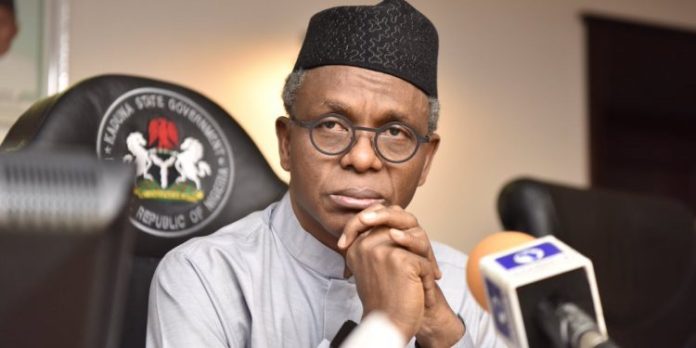
What is now called Kaduna State has been fortunately ruled by Governors, military and civilian, who understood right from the start that political justice, cooperation and avoidance of open bias was the way to achieve peace and prosperity in the state. They never faltered – until El-Rufai became Governor. He came to power with an ethnic and religious agenda; and, he was biased even in his religious objective. He was a Sunni Muslim; and was determined to wipe out the Shi’ites from the face of Nigeria.
For that purpose, he formed an unholy alliance with President Buhari and former Minister of Justice, Abubakar Malami to have the Shi’ites proscribed as a terrorist group and to have their leader, El-Zakzaky and his wife arrested and detained as terrorists under the hastily written law signed by Buhari – another Fulani, Suni Muslim.
Till today, there has been no legal proof of Shi’ite terrorism as alleged by those who embarked on abuse of power, ably supported by a biased Justice of the Federal High Court, undoubtedly a Suni Muslim, who proscribed a religious sect without asking the accused persons to refute the allegations against them. Nigeria’s judiciary lost its respect and integrity long ago. It was not surprising that those who wanted to could always procure the judgment they desire. To the best of my knowledge, nothing has changed even now.
ETHNIC GROUPS OF KADUNA STATE
Last week, in my article titled Four Wonders of Adamawa State, it was pointed out that about 30 ethnic groups in Adamawa live in peace because they have a leader Governor Fintiri who takes seriously the matter of equitable distribution of resources to all the people. Fintiri runs an all-inclusive government.
However, apart from the mounting evidence of financial misappropriation, under El-Rufai, which has turned the state into a basket case, which might not be able to pay the next minimum wage, the greatest damage the former Governor has brought upon the state will ultimately be the destruction of the ethnic harmony based on balancing, which hitherto made Kaduna State so peaceful and alluring.
Today, it is Nigeria’s most dangerous state. Even its closest neighbours, Katsina, Kano, Plateau, Niger and Zamfara wish it was not so close. It was not by coincidence that the students kidnapped in Kaduna were rescued in Zamfara. From my trips to Niger state, the state most often accused of exporting hoodlums to the state is Kaduna State.
The obvious question is: how did Kaduna State become the hell-on-earth that it is now between 2015 and 2023? For the answer it is necessary to ask another question: which ethnic groups are indigenous to Kaduna State? In other words, which ethnic groups can trace their ancestral home to any part of the state before the colonialists arrived?
Again, to the best of my knowledge, gained from over forty years of travelling through all parts of the state, the following ethnic groups were already established before Usman Dan Fodio or the British invaded them. The list is not in alphabetical order and it is not presumed to be complete.
But, it serves as a starting point in order for all Nigerians to understand how El-Rufai wrecked a finely-tuned political entity by destroying its balance. Like Adamawa, I lived, worked in Kaduna state and had a farm along the Kaduna-Birnin Gwari expressway—when it was a place in which to invest.
I have also entered and exited the state from every motorable road ever built. It breaks my heart each time I realise how much destruction one man can bring about in a short time. Here are the major and minor groups known to me – meaning that I have/had at least a friend belonging to that group during my active travelling days.
Adara, Bajju, Atyap, Kamantan, Gwong, Ham, Gbagyi, Gwari, Hausa, Agworok, Jju,Katak, Shamang, Ada, Akurmi, Bakulu, Asholyio, Anghan, Atakad, Terri, Atsam, Atuku, Idu, Aninka, Nisam, Gbantu, Ndun, Numana, Doka and Sambe. Some of the ethnic groups might be differentiated by minor differences in dialect – like the Ijebu, Ijesha, Egba, Awori, Ondo etc in Yorubaland. Notice that there is no Fulani. Authentic Northern history has revealed that the Fulani came as conquerors and settled where they chose. Even now, years after Usman Dan Fodio entered the North, the Fulani, though the dominant group don’t constitute the majority in the state. No group does. That was why this other Nigerian Tower of Babel had been extremely fortunate to have been governed by people who wisely entrenched fairness in governance.
GOVERNOR AHMED MAKARFI – THE BRIDGE BUILDER.
One incident remains evergreen in my memory. I was interviewing former Governor Ahmed Makarfi, in 2006, in the Governor’s mansion, when Tudun Wada in the city erupted in violence. Makarfi received a call and apologised to me for cutting short the interview. Without changing his casual attire, he moved to the car park, summoned his driver and two aides. They got into a car and drove into the night. I could not resist waving them down to ask Makarfi the only question possible under the circumstances. “Your Excellency, are you not afraid of being attacked?”
He bestowed a knowing smile on me before answering. “These are my people, many will die if I don’t act. I have only one life to risk.” I could not believe that this was a Nigerian leader talking. I could not sleep; and as early as possible made a call to his Chief Press Secretary. “How is the Governor?” I have never felt so relieved to know that another human being was alive after risking his life – in order that others might not die unnecessarily.
It was doubtful if El-Rufai could have tried that as Governor; more than anybody, he knows that he will not last ten minutes if recognised without a battalion of soldiers today.
Makarfi in Kaduna State, exemplifies the sense of fairness, all-inclusiveness, which all elected officials must deploy in other to create the conditions for peace; and without which nothing they do would matter. At the moment, Kaduna is in the grips of destructive violence which was fostered by ethnic/religious exclusion for eight years. Because it is easier and faster to destroy than to build, it might require up to eighty years for peace to return.
Nigeria is lurching towards the Kaduna situation. I called up a few friends while in Yola; and, it was remarkable how people who never met and were unaware of each others existence, unanimously felt that the present Federal Government has totally excluded them from the dividends of democracy. That was exactly the same feeling expressed by people in Warri and Uyo – when I was there in November last year.
STATES ARE BROKE; SITUATION ABOUT TO GET WORSE
“Exchange rates are down, why are prices not coming down?”
I have been asked that question countless times in March and April this year after the Central Bank of Nigeria, CBN, decided to crash the exchange rate – at all costs. As an economist, and unlike most people, I know that success or failure of economic reformation is not determined in one or two months. Regardless of what we think, it is too early to undertake a comprehensive review of what has been achieved.
On one aspect, however, there is no need to wait. Lower exchange rates will impact federal allocation of revenue negatively at a time when inflation is still in the region of 30 per cent. The minimum wage negotiations increasingly appear like an exercise in futility. Most states will simply fail to pay; and damn the consequences – whatever those might be.
The Nigerian Society is one that being plagued by several maladies. Before now accounts of Citizens used to be freezed by letters or by Bankers’ Order a document issued by Magistrates that have been found to be illegal , being just a permission to inspect the accounts of suspects and not one to freeze .This was enunciated in the celebrated GTB PLC v Adedamola (2019) 5 NWLR (Pt. 1664), 30 at 45.The case also stated that while freezing an account with an Ex Parte Order , the filing of the Ex Parte must be done along side that of the motion on notice, which must be served on the bank customer along side the order freezing the account. This is to allow the customer to be afforded fair hearing .
The Police , the EFCC and other security agencies some times get court orders to freeze accounts of citizens with out giving them an opportunity to be heard .Their reason sometimes is that payments came from suspicious sources , as if mere business transactions between Citizens is a crime. Mere payments of money into accounts of individuals is not proof of money laundering or the alleged plot to destabilize Nigeria.
In these days of International Commerce and International Co-operation ,there is a preponderance of International Transactions.
The sudden freezing of accounts by security agencies has killed would be investors interest in Nigeria. It presents Nigeria as a country where your investments are not safe .How can International Investors bring their money to a Country they are not sure the Government will wake up one morning walk up to a Court ,with out the Owner of the Money being given an Opportunity to be heard ,the Court Grants an Order freezing your account in this 21st Century. This sounds ludicrous!
Section 1(1) of the Constitution of the Federal Republic of Nigeria, 1999 (As Amended )* provides thus:
This Constitution is supreme and its provisions shall have binding force on the authorities and persons throughout the Federal Republic of Nigeria*
This means that Sections of the CBN Act and Sections of the EFCC Act respectively from where the CBN and the EFCC respectively purportedly derived their powers to clamp down on the Finances of Citizens of this Country with out given them Fair Hearing as guaranteed in Section 36 (1) of the Constitution of Federal Republic of Nigeria ,1999 (As Amended), are null and void to the extent of its inconsistency with the Constitution.This is Trite Law ,as there is a plethora of Authorities on this score !
The use of an Ex Parte Order to freeze the Accounts of Freeborns of this Country are in all intents and purposes against the Principle of Fair Hearing as Guaranteed by the Constitution.Citizens have a right to be heard before any such freezing of accounts can occur .This is a Constitutional Provision that supercedes any purported Law ,that gives the Security Agencies powers to carry out the freezing of accounts. In any case the Law now is that motion of notice should be served on the bank customer after the freezing of the account.
Section 36(1) of the Constitution of the Federal Republic of Nigeria, 1999(As Amended )* boldly asserts that : In the determination of his civil right and duties, including any question or decision by or against any government or authority, a person shall be eligible to a fair hearing within a reasonable time by a court or other tribunal established by law.
The Principle of Fair Hearing which is one of the twin pillars of the Principle of Natural Justice emanates from the Garden of Eden ,when even the Almighty God that is all knowing and all present still asked Adam to defend himself and give him time and an Opportunity to do so .
In establishing the inalienable nature of the Principle of Fair Hearing, the Court of Appeal of the Federal Republic of Nigeria in the Watershed case of Uzowolu (Oduah) & Ors. v. Akpor & Ors. (2014) LCN/6777 (CA) per the Hon .Justice Mohammed Musa Saulawa (JCA ),succinctly and rightly so stated thus:
Characteristically, a party’s right to fair hearing is of fundamental and constitutional significance, thus cannot be compromised or whittled down by the court for whatever reason. Thus, as cherishingly enshrined in Section 36 of the 1999 Constitution (Supra) et al, the fundamental right to fair hearing is sacrosanct. Thus, any decision of court thereby reached consequent upon breach or denial of fair hearing tantamount to a nullity, thus liable to be set aside. As aptly held by the Supreme Court. A hearing cannot be said to be fair if any of the parties is refused hearing or denied the opportunity to be heard or to present his case… Any Judgment or ruling based on a breach of the Constitution will not be allowed to stand on appeal. See FBN PLC 15 NWLR (Pt. 1216) 247 @ 303 paragraphs A – H.
Thus, flowing from the above dictum of the Apex Court, a hearing can only be seen to be fair indeed when all parties to the dispute are accorded an adequate opportunity of a fair hearing. As such, if one of the parties is denied an opportunity of hearing, the hearing (of the matter) cannot in any way be qualified as fair; denial of fair hearing is undoubtedly antithetical to the well cherished indomitable principles of natural justice. See OTAPO VS. (Pt. 58) 587 @ 605; OGUNDOYIN VS ADEYEMI (2001) 13 NWLR (Pt. 730) pg. 403; U.B.A. LTD V. ACHORU (1990) 6 NWLR (Pt. 156) pg. 254; MOHAMMED V. KANO NATIVE AUTHORITY (1968) 1 ALL NLR pg 424; SALU V. EFEBON (1994) 6 NWLR (Pt. 348) pg 23; MOHAMMED V. OLAWUNMI (1990) 2 NWLR (Pt. 133) pg. 458; UNION BANK OF NIGERIA V. NWAOKOLO (1995) 6 NWLR (Pt. 400) pg. 127; BAMGBOYE V. UNIVERSITY OF ILORIN (1999) 10 NWLR (Pt. 622) pg. 290; OKAFOR V. A.G., ANAMBRA STATE (1991) 6 NWLR (Pt. 200) pg. 659. See Page 303 – (2010) 15 NWLR (Pt. 1216).
The Position above aptly encapsulates the the illegality being perpetrated by Federal Government Agencies in Freezing the Accounts of Citizens with out fair hearing . The Owners of the Accounts should have been allowed to defend themselves. They are entitled to punitive compensations and damages against the Federal Government and Public Apology.
The Court of Appeal Per Helen Moreneke Ogumiwunju has further questioned the Powers of Government bodies to clamp down on Citizens’ Finances and Businesses by Ex Parte Orders even in tax related matters in the case of *Independent Television/Radio v. Edo State Board of Internal Revenue (2015) 12 NWLR (PT. 1474) 442
There is no other Judicial Precedent that says otherwise. In other words ,the Law as it is in Nigeria today is that you can not freeze an account that is not an established proceed of crime by Ex Parte Orders .The CBN has not told us the crime those victims whose Accounts were frozen have committed.We see the Treasury Department of the United States freezing funds meant for terrorism in the United States and before they do so they show the trail of Transactions that establishes the facts that those funds are terrorism funds.
To have a clearer picture of the issue ,see the case below:
Whether A Bank Can Obey The Directive Of The Economic And Financial Crimes Commission To Freeze The Account Of A Customer Without A Valid Court Order
CASE TITLE: GUARANTY TRUST BANK PLC v. ODEYEMI OLUYINKA JOSHUA (2021) LPELR 53173(CA)
JUDGMENT DATE: 26TH FEBRUARY, 2021
JUSTICES: OYEBISI FOLAYEMI OMOLEYE, JCA
JAMES SHEHU ABIRIYI, JCA
FREDERICK OZIAKPONO OHO, JCA
COURT DIVISION: LAGOS
PRACTICE AREA: Banking Law- Banking Business
The Respondent who was a customer of the Appellant Bank (Guaranty Trust Bank) contended that his account with the Appellant was frozen by the Appellant without his knowledge or consent. That the Appellant placed his account under caution and deactivated his ATM card pursuant to a letter dated 13th February, 2017 from the Economic and Financial Crimes Commission (EFCC) without any valid Court order permitting either the EFCC or the Appellant to do same. All efforts by the Respondent to get the Appellant unfreeze the account yielded no fruit.
The Respondent subsequently initiated an action against the Appellant Bank in the High Court of Lagos State wherein he sought for: a declaration that the freezing of his account without a Court Order is illegal; an order directing the Appellant Bank to unfreeze his account, an order of perpetual injunction restraining the Appellant Bank from further freezing his account; general damages and costs of the action.
Both parties agreed that the matter should be determined by the Special Case Procedure under Order 31 of the High Court of Lagos State (Civil Procedure) Rules 2019 without the calling of witnesses although Counsel for both parties filed and exchanged written addresses.
In its considered judgment, the trial Court entered judgment in favor of the Respondent and granted the reliefs sought by him
Aggrieved, the Appellant appealed to the Court of Appeal.
ISSUES
The appeal was determined upon consideration of the following issues:
Whether Sections 34 (2 & 3) and 38 of the Economic and Financial Crimes Commission (Establishment) Act 2004, impose any other obligation on the Respondent beyond strictly complying unconditionally with the order/directives of the Economic and Financial Crimes Commission (EFCC) served on it in respect of a Customer’s account? Whether the doctrine of privity of contract was among the issues submitted to the Court below in the Special Case, and if not, whether the Court below was right in raising the issue, and relying on the doctrine in finding the Appellant liable to the Respondent, without calling on the Appellant to address the Court on same iii. Whether the matter determined under the Special Case Procedure where trial was not conducted, the Court below is entitled to presume and/or speculate on the existence of an UNPLEADED fact (that EFCC did not obtain a Court Order before issuing the Appellant a directive to freeze the Respondent’s account), and to rely on such unpleaded fact in giving judgment to the Respondent.
Whether the Court below should set aside the award of damages made by the Court below in favor of the Respondent in view of the errors in law made by the Court below in arriving at its findings. COUNSEL SUBMISSION
Learned Counsel for the Appellant Bank submitted that the trial Court did not interpret Section 34 (3) of the EFCC Act in arriving at its conclusion that the Appellant was wrong in freezing the Respondent’s account without an order of Court. That the wordings of Section 34 (3) of the EFCC Act expressly mandate the Appellant to comply with the directives of the EFCC without having to verify whether EFCC complied with the Act before issuing the directive.
It was submitted that the Section does not require the bank to investigate EFCC’s compliance with the Act before complying with the EFCC’s directive and that the section ought not be interpreted to impose that obligation on the Appellant Bank as that would amount to an interpolation or amendment of the law which the Court must not do. That Section 34 (3) of the EFCC Act does not impose any other obligation on the bank beyond simply complying with the EFCC directive.
Learned counsel for the Appellant submitted that even though it is desirable that banks be satisfied that the EFCC has complied with the Act on the issuance of any directive before proceeding to obey the directives, that there is a lacuna in the Law relating to whether the banks must ascertain the validity of the directive issued.
On the other hand, Learned Counsel for the Respondent contended that the Appellant breached the contract agreement and fiduciary relationship between it and the Respondent by freezing the Respondent’s account without following the due process of the law thereby denying the Respondent his legitimate and hard-earned funds. That the EFCC Act provides for a procedure that must be followed by EFCC in directing a bank to freeze a customer’s account where there is suspicion of crime against a customer, When the law provides through an Act, a procedure to be followed in carrying out any duty, anything done in respect to that which negates the provisions of the law runs afoul of the law and is therefore an illegality.
By virtue of this, the Appellant’s action of freezing the Respondent’s account without recourse to the guideline provided by the law in Section 34 (1) of the EFCC Act is illegal. That while there is nothing that preludes a bank from verifying from EFCC whether a Court order was obtained, Section 34 (3) of the EFCC Act only applies where Section 34(1) and (2) of the Act has been complied with.
Furthermore, that the Appellant had an obligation to investigate if EFCC complied with the Act since it owed a duty of care to the Respondent.
DECISION/HELD:
In the final analysis, the Court of Appeal dismissed the appeal and the judgment of the trial High Court was affirmed.
RATIOS
BANKING LAW- BANKING BUSINESS: Whether a bank must obey a directive from the Economic and Financial Crimes Commission to freeze the account of a customer without a Court order – “…In G.T.B. PLC v. Adedamola (2019) 5 NWLR (pt. 1664) 30 at 43 this Court stated as follows: Before freezing customer’s account or placing any form of restrain on any bank account, the bank must be satisfied that there is an order of Court. By the provisions of Section 34(1) of the Economic and Financial Crimes Commission Act 2004, the Economic and Financial Crimes Commission has no power to give direct instructions to banks to freeze the account of a customer without an order of Court, so doing constitutes a flagrant disregard and violation of the rights of a customer… Our financial institutions must not be complacent, reticent and toothless in the face of brazen and reckless violence to the rights of their customers… It is clear from a reading of the entire Section 34 of the EFCC Act that the Commission if satisfied that money in the account of any person is made through the commission of an offence may apply to the Court ex-parte for the power to freeze the account.
The EFCC may by an order issued by the Court direct the freezing of the account. The bank shall then take necessary steps to comply with the requirements of the order. “Order” rings a loud bell in both Subsections (2) and (3) of the said Section 34 of the EFCC Act. This is not surprising because the freezing of the account of a person will be done if the money is reasonably subjected by the Court to have been made through the commission of an offence. It is then that the Court makes the order sought by the EFCC. Without that order the EFCC cannot direct the freezing of the account of any person. Without the order the bank or any financial institution cannot freeze the account of any person. The order of the Court is the basis for any other action under the section as allegation that money is made through the commission of an offence is a serious allegation. It is for this reason that the bank must ensure that there is an order of Court before it proceeds to freeze the account of any person. That is what Section 34(3) means by the bank taking necessary steps to comply with the order. In my view, a bank fails to enquire whether or not EFCC had obtained an order of Court at its peril. I agree with learned counsel for the Respondent that the procedure set out in Section 34 of the EFCC Act must be followed by the EFCC and the bank or other financial institution.” Per ABIRIYI, J.C.A
BANKING LAW- BANKING BUSINESS: Effect where a bank freezes the account of a customer without a Court order “I do not agree with learned counsel for the Appellant that the Appellant was being punished for the sin of EFCC and that the Act did not give the Appellant the option of disobeying EFCC. With respect to learned counsel for the Appellant, the Appellant had no business obeying an unlawful directive of the EFCC. The Appellant is only expected to comply with a lawful directive of the EFCC otherwise the rights of customers to their money in the bank would be arbitrarily interfered with. This would be contrary to the safeguards provided for under Section 34 of the EFCC Act. Section 34 of the EFCC Act is intended to prevent the EFCC from interfering arbitrarily with the rights of customers of the banks or other financial institutions to their funds. That purpose will not be achieved if the banks aid the EFCC as in this matter to illegally get their customers’ accounts frozen through the back door. I agree entirely with learned counsel for the Respondent that the Respondent was entitled to damages for failure of the Appellant to ensure that the provisions of the EFCC Act were complied with before freezing the Respondent’s account. I agree with learned counsel for the Respondent that if the Appellant kept the EFCC company in its breach of the law, the Appellant cannot escape liability for the illegal freezing of the account of the Respondent.” Per ABIRIYI, J.C.A
I call for the immediate defreezing of those accounts and payment of compensation to the victims .Our Courts should stop giving Orders that are against our Constitution. The Courts are protectors of Liberties not an Official Arm that rubber stamps every action of Government ,some which are not in conformity with our Laws.
About the Author .
Douglas Ogbankwa Esq., ([email protected]) , a former Publicity Secretary of the Nigerian Bar Association’,Benin Branch-the Lion Bar , is the Convener of the Transparent Bar Initiative and Vanguard for the Independence of the Judiciary.
Our site uses cookies. By clicking “Accept All Cookies”, you direct Law and Society Magazine to store cookies on your device and disclose information in accordance with our Cookie Statement: cookie policyACCEPTREJECT
Privacy & Cookies Policy
Privacy Overview
This website uses cookies to improve your experience while you navigate through the website. Out of these cookies, the cookies that are categorized as necessary are stored on your browser as they are essential for the working of basic functionalities of the website. We also use third-party cookies that help us analyze and understand how you use this website. These cookies will be stored in your browser only with your consent. You also have the option to opt-out of these cookies. But opting out of some of these cookies may have an effect on your browsing experience.
Necessary cookies are absolutely essential for the website to function properly. This category only includes cookies that ensures basic functionalities and security features of the website. These cookies do not store any personal information.
Any cookies that may not be particularly necessary for the website to function and is used specifically to collect user personal data via analytics, ads, other embedded contents are termed as non-necessary cookies. It is mandatory to procure user consent prior to running these cookies on your website.