Home Blog Page 609

Concerns taint Lagos-Calabar Coastal Highway

PUNCH Editorial

Under the radar for a lengthy period after its conception, the Lagos-Calabar Coastal Highway is finally taking off under a storm of controversy. A 700-kilometre turnpike infrastructure, the project has attracted commendation and condemnation in equal measures since the Bola Tinubu administration approved it in February. For a country with a legacy of woeful infrastructure, it is an ambitious undertaking. Rather than being combative, Tinubu and Works Minister David Umahi should lay out the bare facts to reassure Nigerians that the LCCH is a worthwhile venture.

The project is chequered, having gained traction under Goodluck Jonathan and Muhammadu Buhari, the two presidents who preceded Tinubu. From a four-lane double carriageway, it has been expanded to a 10-lane highway. It will run from Lagos and end at Calabar, the capital of Cross River State.

So far, it is the largest single infrastructure in Nigeria and will traverse nine states, including Delta, Bayelsa, and Rivers with two spurs to the North. To be constructed in stages, starting with the 1.3km Lagos end and the Calabar end in July, the duration of the construction is eight years (the tenure of Tinubu, according to Umahi), and will gulp N4 billion per kilometre or N15 trillion-plus.

This is where the controversy begins. Politically speaking, Umahi is jumping the gun. Elections are due in 2027 and for now, the political horizon is still hazy.

Property owners along the route are protesting the notice of demolition of the properties on its right of way; several communities are to be affected.

The major one is Landmark Beach, a high-end resort located on Victoria Island. The owner says the company has invested $200 million in the centre, which reportedly attracted one million customers in 2023, employs 4,000 workers, and paid N2 billion in annual taxes. Paul Onwuanibe, the CEO, says the demolition would scare away international investors.

This should be carefully handled, and compensation paid to all the other properties to be demolished. Umahi says Landmark will be spared.

There are other concerns, especially in ecology and the environment. Critics point to the cost and the alleged failure to adhere to due process, that the bidding was not competitive. In addition, the owners of Hitech, the company that won the bid, reportedly have ties to Tinubu. Under Jonathan, the LCCH was to cost $12 billion, and $11.1 billion under Buhari. Umahi says the cost has jumped to $13 billion-plus.

Already, organised labour has taken Umahi to task after the minister said the toll fees would start at N1,500 for a car and up to N3,000 per truck.

To attain the LCCH, the funding plan should be radically different. The 127.5km Lagos-Ibadan Expressway is still under construction after 20 years. A presidential infrastructure audit committee listed about 8,000 abandoned projects across the country. The turnpike Badagry-Sokoto Highway mooted in the Second Republic, is grounded.

On the positive side, the LCCH can put Nigeria on the global infrastructure map. As it will be tolled, the income from users will pay for the cost in 15 years, Umahi said. It is a plus that there is a provision to build a rail system in the middle of it.

If completed on schedule, it will alleviate Nigeria’s huge infrastructure deficit. The African Development Bank calculates that Nigeria requires $100 billion annually over 30 years to bridge the deficit.

Turnpike infrastructure projects are common. A major one is the 1,056km Pacific Coast Highway in the United States, which cuts across several states. It is the longest state route there. There is also the 306km El Salvador Coastal Highway Project, primarily targeted at evacuating large agricultural resources.

Ultimately, Nigerians will appreciate the project when their government moves with the same speed to construct the slew of abandoned projects currently making their lives miserable.

Punch Editorial Board

Family in Edo state reveal how two kidnapped deaf and dumb girls were abused, released after payment of N5.5m ransom

By Ozioruva Aliu

The sleepy community known as Oke Old in Sabongida-Ora, Etsako West local government area of Edo State was thrown into mourning and anxiety as kidnappers suspected to be criminal Fulani invaded a feed mill plant for their criminal activity and at the end of their operation, two deaf and dumb girls were abducted but the trainee manager identified as Elisha Udejei was not so lucky as he shot to death at close range. The community has a school and a church.

While Udejei, a young graduate of the University of Ibadan was killed, an eye witness who is also a worker on the farm and identified as Emmanuel Atafo abandoned his motorbike and ran to safety when he heard the gunshot fired at Udejei.
While Udejei was buried a few days after the incident, the kidnapped girls spent eight days in their abductors’, abused and were only released after N5.5m ransom was paid by their parents. They are 33 and 28 years old

The owner of the farm who did not want his name mentioned for security reasons said he took the girls to Lagos where they were trained in a special school in Oyo State before going back to the community to work in the factory after they graduated.

He said the kidnappers used the phones of the girls to contact their parents and negotiated for their release. They were kidnapped in Sabongida-Ora and released somewhere along Afuze road in Owan East local government area.

There is a strong suspicion that an insider may have led the kidnappers to the facility and that from the negotiation with the kidnappers, they claimed that they had sponsors who insisted that they must not collect less than N5 million.

The kidnap

The father of the one of kidnapped girls (name withheld) narrated the situation to Sunday Vanguard “It was on the 1st of April that they were attacked in their place of work and one of them was shot dead then one escaped but two of the females who are physically challenged were abducted by the kidnappers and taken into the bus, they were with them from Monday till Monday, they were calling for ransom, they started by saying that it is N10 million each that is N20m for the two of them then during the negotiation, we begged and they finally agreed on N5m per person but we said we don’t have this money and they finally accepted N5.5m for the two of them and that was the ransom that we finally paid before they were released. You know what it means for two physically challenged people to be in the midst of hardened criminals in the bush for eight days.

Security

“When this thing happened, one of them that managed to escape got to a place where you have a military checkpoint, he got to them, but he said they didn’t show much concern about the story he was telling them, they were just questioning him here and there so he sad he left them and went to tell the people what happened. The following morning, everybody went there, the soldiers said their Commandant was coming and he never came. We were there as early as 8: am and we were there till 6: pm, there was no effort from them whatsoever even the police did not do anything, they were busy extorting money from the people, go and do this, go and bring that, let us go to the mortuary to go and see the person that you said they killed.
“The annoying part of it is that it was on Friday, this thing happened on Monday that they now said they want to go and comb the bush and it was like, what are you combing, something happened on Monday and it is now Friday that you want to go for bush combing?”

“When they were released after we paid the ransom, we took them to the hospital that very Monday then by Tuesday they were discharged, they are fine just that they were traumatized. We are just trying to console them and anytime they ask after their colleague that was killed we were initially telling them he was fine but we have to let them know that he died and that increased their trauma.

From medical reports, the issue of abuse could not be ruled out. Imagine small beautiful girls though they are physically challenged being in the midst of hardened criminals, drug addicts, for eight days in the bush so that couldn’t be ruled out.”

Release

“That was another funny aspect of the whole thing, one person has to go with the money to go and pay ransom in cash. We searched here and there to raise the money then the person who wanted to go and pay the ransom was told to go to Afuze area, at a time they will tell him go to a particular location, you will see police checkpoint there, they were giving him directives so he finally got to the place where they finally sighted him and directed him to ride the motorcycle into the bush with his bike then they got to a place where he met four of them and then the two girls.

“When they were going to pay the ransom, they instructed that when we are coming with the money, we should come with one pack of predator, one pack of malt and one pack of fearless drink so we bought the three items added to the money for them. They handed over the two girls to the man who went to pay the ransom. It was traumatic.”

Aside from the heading, this article was culled from Vanguard.

Intimate Affairs: Dear Husband

By Funke Egbemode

Have you been wondering why things are not the way they used to be between you and your wife? Is she giving you cold shoulders instead of warmth? Hugging her pillows instead of you? Ah, you should worry. Do you have more one-word answers from her instead of full sensible sentences? She spends more time on the phone talking to people than you, her husband. She spends more time on Netflix, African Magic and Zee World than she does with you. She sits with the children in their room while you also watch football or play video games in another part of the house? Then, she waits for you to sleep off before crawling into bed. Trouble is brewing. A storm is gathering and you should worry.

You are steadily, totally becoming your wife’s flat mate. You are losing her. She has simply stopped arguing with you. She agrees with everything you decide, instead of trying to state her points or correct your errors or mistakes. You are in trouble and you know it. She is leaving you while living with you. Your relationship is now on silent mode, and trust me, if you value that marriage, you will swallow your ego, eat your pride and roll up your sleeves to repair⁹ what’s left of your home.

Let’s look at some little foxes that trouble homes and marriages quietly, smoothly, silently until everything is all done and gone. Let us be frank, there are old fashioned wives, raised by traditional mothers who deal with bad husbands and bad marriages without raising their voices. Today, we will not focus on their old-school ways. No. Today is about the type of husbands who push their women and marriage into the silent mode.

The Mean Landlord
This is the husband who bullies and threatens his wife with quit notice at every turn. Here are some of his favorite refrains;

“I’ll soon send you back to your parents. “

“Keep talking to me like that and you will be needing another accommodation soon”.

“In my house? Do you want me to kick you out”?

“If you close from work late tomorrow, don’t come back here.”

There are husbands who stop at just the threats. But there are those who go all the way. These are the ones who lock their wives out, throw their wives belongings in the rain at every opportunity, after every quarrel.

If you, dear husband, treat your wife like this, any number of things can happen to you, and believe me, the silent treatment is the least of them. Remember, not all wives are brought up to nicely stay on their lane in a bad marriage.

The Unprotective Lover.
This one wants to be called “Lord” but can’t protect his clan and family. He just doesn’t know that being called husband goes beyond whisking out your whip and giving your woman the best time in-between the sheets. He’s clueless when it comes to shielding his wife from the elements, and I don’t mean the rain, wind and sun.

Bro, your mother loves you to bits and this is the first time she’s sharing you with another woman, your wife, that is. She will lovingly want to continue to protect her son, because that is what she has always done. It’s part of her job description. She will lovingly try to elbow your beautiful wife out of the way, even out of her kitchen. She may even want to continue to shop for you, pick your ties and sit with you for hours after work. She does not hate your wife, she is just being Mummy. But your wife is the Lady of the Manor, this new manor. Not your mum, not your sisters. Nicely, gently tell your family that your wife is the First Lady. Do not allow her in-laws to frustrate her, talk down on her, make her feel like an alien in her own space. Be the crown that you ought to be. Don’t let her withdraw into her shell. Don’t let her re-channel her love into her job or business. Don’t let her stop being the girl you married. You won’t like the other version of your wife. Protect the version you married, please.

The Financial Bully
This one starves his wife and family of comfort, just to prove that he’s the boss and breadwinner. Every quarrel has financial implications. Heard of a man who went to lock up his wife’s shop and shut down her business because she was beginning to do well and could pick her bills herself. The guy felt he was losing his grip on her. So he shut her business. After all, he set it up. The financial bully if offended meted out such punishment as going to work with the keys of all the cars in the house. His wife must jump “okada” and “Keke NAPEP”. That’s her punishment for being rude, for talking back, not getting dinner ready on time or allowing the house-help to make his soup.

The “Pagan’ Husband
This one leaves all things spiritual to his wife. All he wants to do is make money and provide comfort for his family. He believes money answers all things. Good guy. Good provider. He’s lucky if his wife is “spiritual” and always around to raise the children the right and godly way. But if the wife is like him, the children are left to societal vagaries and peer pressure. Then he just wakes up one day and finds out that the child he named ‘Samuel’ is now an Atheist. The one he named Kabir has 10 piercings, wears lipstick and hides to eat and smoke during Ramadan. This husband is simply unavailable and his comeuppance, his amen junction is usually very traumatic later in life. Because he throws money at his problems, his wife and children tend to seek comfort far from him, many times in places and people he’d never touch with any kind of pole.

There are many things a man should know before going into marriage. There are many things fathers should teach their sons, little things mothers must impress on their boys. Though they may look little, however, they are lessons that must be leant because they can make or mar the best of marriages and good intentions.

For instance, the financial bully most likely will find out that his wife, after years of frustration, has built four flats somewhere and has a secret business. The mean landlord may one day kick his wife out and find out she does not come begging with her friends and family. She just moves out and moves on.

So which of these groups do you belong? Which of these sins are you guilty of?

Funke Egbemode can be reached on [email protected]

Comparing Chibok and Yazidi Girls: Ten years after, the freed and not freed

By Magnus Onyibe

It is at times like these, that I give serious consideration to thoughts that often cross my mind. It is then that I contemplate delving into my archive of articles, dusting off those that bear resemblance to current realities, and contemporizing them. Thereafter ,I would notify readers that these are old narratives, perhaps a decade or even three decades old, yet their content and context remain largely unchanged.

The justification for this nagging thought process is the realization that déjà vu moments, such as the kidnapping of school children for ransom or as sex slaves, will continue to make headlines in the mass media for the foreseeable future. That is because little , if anything, has fundamentally changed in Nigeria’s security landscape since the Chibok girls were taken hostage a decade ago.

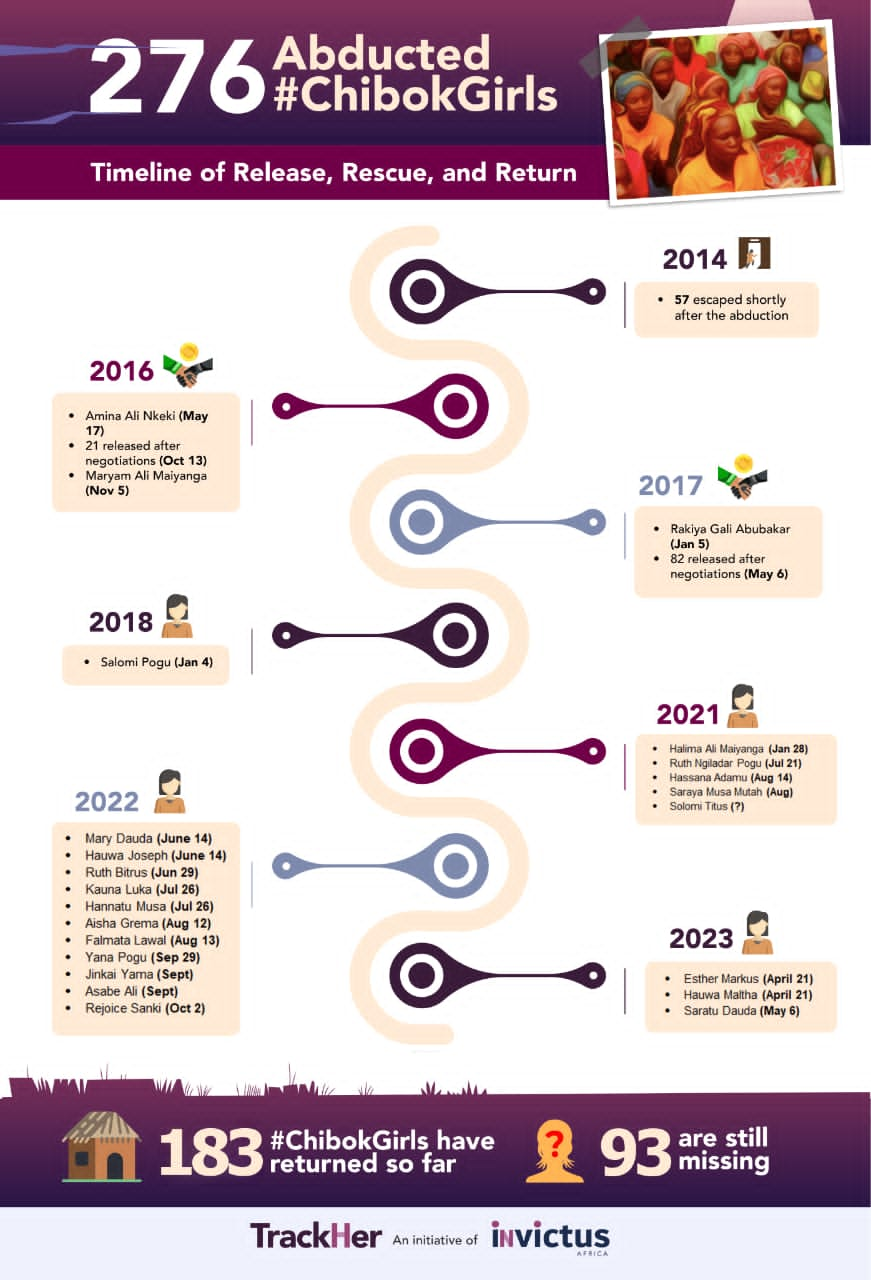
The assertion above is underscored by the fact that on October 27, 2015, when I wrote and published a piece entitled “ON TERRORISM: COMPARING CHIBOK AND YAZIDI GIRLS.” I did not imagine that ten years after the abduction of the 276 girls from their hostel on April 14, 2014, nearly 100 of the kidnapped Chibok girls would still be in captivity or remain unaccounted for.

But the sad reality is exactly that, and the parents of the 91 (82 by some account) girls whose fate remains in the hands of Boko Haram are still grieving as they lament the fact that their beloved daughters are still languishing in the den of the obnoxious non-state actors -Boko haram who have been wreaking havoc on the Nigerian polity. In fact, due to the heartbreak triggered by their loss, about 45 of the parents are said to have also met their untimely death while grieving.

Worse still, since the Chibok schoolgirls’ kidnapping happened, approximately 1400 schoolgirls and boys have been stolen by kidnappers for ransom, bringing the total number in ten years to about 1680 in over 70 attacks on schools.

Sadly, 180 of the children and 14 of the 60 staff kidnapped lost their lives. Thats is according to recent Human Rights Watch statistics, which also states that between February and March of this year, 200 school children have been kidnapped from schools in Kaduna and Sokoto states.
But thank God they have been released to their parents.

To contextualize the dire situation in insecurity in our counry, I’d like to request readers’ indulgence to allow me to reproduce a significant portion of a decade-old article comparing the similar fate of the kidnapping of both Chibok girls in Nigeria and Yazidi girls in the Kurdistan region of Iraq. This comparison feels fresh as not much seems to have changed in the lives of the victims and the parents who suffered the misfortune in Chibok a decade ago, while Yazidi girls appear to have been rehabilitated.

Here is the view that l expressed and published in the mass media on 27 October, 2015:
———————————————
“Just as about 300 Chibok girls were rudely woken up and yanked off their bunk beds in Maiduguri, Northeast Nigeria by Boko Haram terrorists, hundreds of Yazidi girls from Iraq, on the other side of the world were also similarly seized by the terrorist group, ISIS, under comparable circumstances.

Long after, the unfortunate incidents sent the chill down the spines and cuddled the blood of rational humans worldwide, both victims and families have remained overwhelmed by the sad experience of sorrow, tears and blood that have become the regular trademark of terrorists.

Memories are made of images of CNN footages of the rescue of some of the Yazidi girls from Sinjar mountain where some of them fled, when ISIS invaded their homes. Very remarkable and commendable are the rescue efforts by Western powers backed International Coalition Forces and the determination of the girls to flee into safety, demonstrating both the human spirit to survive and the sacrifice of men and women in uniform, who put themselves in harm’s way to save fellow humans.

The assertion above is given fillip by the fact that some efforts at rescuing victims have resulted in helicopter crashes that led to fatalities of military men.

Although both sad consequences of terrorism in Nigeria and Iraq have the common denominator of terrorism inflicted anguish and the sad consequence of human tragedy, the event in Iraq seem to be having a sort of happy ending as some of the Yazidi girls are being rescued and rehabilitated (some have undergone training in photo journalism etc and are being integrated into society as currently being depicted on CNN) while the Nigerian situation remains unresolved as the hopelessness in the prospect of the Chibok girls re-uniting with their families becomes more remote.

The simple reason for the situation described above is the intervention of coalition forces put together by Western powers, leading to the situation of some Yazidi girls being liberated from the clutches of their captors while lack of international intervention has left the Chibok girls in captivity.

So in a nutshell, the difference between the salutary outcome in Iraq and the unsavory result in Nigeria is the level of efforts and time invested by the super powers who posses the financial resources and military muscle to take on the increasingly sophisticated terrorists in Iraq and the lack of interest or commitment by the same Western powers to the cause of the rescue of Chibok girls in Nigeria.

Curiously, the catastrophe that befell humanity and particularly the Chibok girls, that were abducted from their school dormitory, reverberated across the globe, with celebrities like Michele Obama, wife of the U.S. President, Gordon Brown, former prime minister of Britain and Malala Yusuf-Zai, (Pakistani victim of the Taliban terrorists) as well as the movie super star, Angelina Jolie, amongst a host of other high profile personalities campaigning against the dastardly act with the hashtag ‘BringBackOurGirls’ that went viral in the social media.

Conversely , after the CNN dedicated television coverage that revealed the pathetic conditions of the Yazidis and the nerve raking and daredevil rescue missions by coalition forces, the superpowers made concerted efforts such as bombing ISIS locations to rescue and rehabilitate the Yazidis but not so for the Chibok girls despite equally high publicity blitz elicited by the involvement of celebrities and desperate efforts made by Nigerian authorities to seek Western powers assistance in military intervention.

The reason lies partly in the double standards in the U.S. application of the ubiquitous Leahy Law and the lack of value of the Blackman’s life viz-a-viz his or her white counterpart.
So very often, the color of a man’s skin and not the content of his character, as the foremost USA human rights activist, Martin Luther King once posited, determines the level of adversities or tragedy he or she faces in life.

The situation persists, whether in the USA where black discrimination has thrived as reflected in the white police officers rampant killing of black people for flimsy reasons or the hypocrisy of the Japanese, when a girl of mixed Japanese and black American descent won the Miss Japan beauty pageant and she is being shunned for being of a mixed race.

Another disturbing anomaly in the issue of foreign relations and human rights, is the Leahy law prohibiting the sale of lethal military hardware to countries whose military have human rights abuse records.

What happens is that while countries like Nigeria that are deemed to be in breach, are denied access to such weapons to rein in rampaging Boko Haram terrorists and rescue the Chibok girls, countries like Egypt and Israel whose military have far more horrendous human rights records-Egyptian army under General, Abdel Fattah el-Sisi overthrew democratically elected government of Mohamed Morsi, killed and jailed politicians and the Israelis have practically razed down most Palestinian cities with massive human casualties using American weapons.

The fact is that Egypt and Israel are the U.S. strategic partners in the Middle East, hence the U.S. applies preferential standards by looking the other way when they engage in the obnoxious human rights abuses that have become a sort of emblem of both countries.

The U.S. excuse would be that Israel needs to survive in the light of the threat of annihilation by its violent Arab and Persian neighbours and Egyptian army needed to nip in the bud the extremist tendencies of the Islamic jihadist Muslim Brotherhood that had seized sovereign power in the hitherto moderate Islamic country.

While those excuses offered by U.S. for buffeting their Middle East allies may be germane, equally altruistic is the fact that Nigeria -the most populous Black Country in the world is also under the threat of becoming another Iraq or Libya if terrorists like Boko Haram are allowed to continue their reign of terror on innocent victims.

Worse still, the U.S. Army records of human rights abuse stinks to the high heavens as evidenced by the recent bombing of a hospital in Kunduz, Iraq killing 22 patients and medical personnel comprising of 12 staffers of the humanitarian group, MSF popularly known as Doctors-Without-Borders.

If you add that and a previous fatal drone attack on a wedding party (mistaken for a gathering of terrorists) to the Guantanamo bay prison atrocities , the Black Hawk (US defense contractors) wanton killing of Iraqi civilians and the so called ‘rendition’ in Europe whereby (against United Nations, Geneva convention on prisoners of war), many suspected terrorists were tortured, in some cases to death, the U.S. stance against selling arms to Nigeria becomes hypocritical and a case of the pot calling the kettle black as they lack the moral authority to pontificate.

Just like the U.S. could make a mistake like she did in the unfortunate and sad incident in Kunduz hospital of which President Barrack Obama has now apologised and the U.S. defense authorities have suspended military support to the Syrian freedom fighters,(perhaps in the true letter and spirit of Leahy law) what’s the justification for her hard stance against Nigeria’s occasional human rights infractions , given the difficult conditions under which the military is also operating ?

In the wisdom of the philosopher, Carrie P. Snow

“When you think of the long and gloomy history of man, you will find that more hideous crime has been committed in the name of obedience than have ever been in the name of rebellion”

This perhaps underpins President Muhamadu Buhari’s presumption in his address to USA law makers during his maiden state visit to Washington DC, USA, that Western superpowers who fail to assist in providing weapons to rout Boko Haram are vicariously guilty of collusion with or are acquiescing with terrorists to kill and maim innocent Nigerians.”

—————————————-Now, as readers might have noticed from the content of the reproduced article, I have always placed the religious insurgency crisis in an international context.

Therefore, it is necessary to contrast what has happened to the Chibok girls with the hopelessness of Nigeria receiving necessary help to rein in the religious insurgents tormenting Nigerians, such as Boko Haram, which has now metastasized into the Islamic State of West Africa Province (ISWAP), violent herders/farmers, bandits, etc., to the current status of the Yazidi girls of Iraq. As would be revealed in the latter part of this article, Yazidi leaders made frantic efforts to liberate the girls, and most have largely been set free from their captors, ISIS, and rehabilitated.

From the narrative based on reporting by NewsHour, a broacast of American Public Broadcasting Service, PBS, it can be seen that while there have been huge improvements in the plight of the Yazidis in the Kurdish region in terms of freedom from captivity, conversly ,the condition of the Chibok girls and the kidnapping and abuse of girls have worsened in Nigeria.

In a piece titled “Freed And Not Freed” by NewsHour special correspondent for PBS,Marcia Biggs,readers can gain a deep insights into how the Yazidi girls in the Sinjar Mountains in the Kurdish region of Iraq, who suffered a similar fate of kidnap and escape as the Chibok girls in Nigeria at the hands of religious extremists, have fared.

Like in the case of the Chibok girls, militants from the Islamic State ISIS group attacked a small ethnic group called the Yazidis. Men taken from the tribe were executed, and thousands of women and girls were abducted as slaves. To put things in perspective, it is proper to give a brief background on the Yazidis.

They are a small community of less than a million people, found primarily in northern Iraq. A private and conservative community, they practice an ancient religion. At about the same time that the Chibok girls were abducted in 2014, members of the Islamic State group, also known as ISIS , attacked the Yazidis, whom they consider heretics.

Like the case of the Chibok girls, images of Yazidis trapped on Sinjar Mountain stunned the world.
Narrating their harrowing experience, below is what one of the girls told PBS NewsHour Special Correspondent Marcia Biggs: “They brought everyone to a school, put the women upstairs, and drove the men away. I didn’t want to let my mother go, but they were pulling us from our mothers and beating us. The children were all put in cars. They said, “We’re going to sell you to others, and you will have sex with them.”
Does the narrative above not resemble what happened to our Chibok girls?
Could our 91 Chibok girls (some say 82), who are still unaccounted for, have been sold to buyers outside the African continent? According to NewsHour’s Marcia Biggs, in the months that followed the kidnap, a network of activists sprung up throughout Northern Iraq, an underground railroad of sorts, coordinating rescue efforts.

Their phone numbers quickly spread among captive girls, who used smuggled phones to call for help and give their location. She further stated that: “At times, the Kurdish regional government has stepped in to grease the wheels. She added that KRG envoy, Dr. Nouri Othman told her about two girls who escaped their captors in Raqqa and ran to a nearby house but were turned away by the owner, too scared to take the chance.

Continuing, she pointed out that Dr. Nouri Othman, Envoy to Internally Displaced Persons, Kurdish Regional Government, called the person and pleaded with him to keep the two girls at his home for a couple of days. At first, he refused. But he had to promise to pay him. “Nobody is going to risk their life without getting something in return. You have to pay them.”

He then revealed how: “Some families are raising money to buy back their girls, racking up thousands of dollars in debt”. As for whether the government is funding a program to buy back the girls, Dr. Nouri Othman responded thus: “I’m not buying them, no. Maybe I’m paying some people. They are helping me get them back… The important thing is, I want these people to be back. They are my responsibility.”

Can we say that our leaders before the incumbent administration, under whose watch schoolchildren were abducted in Kaduna State and all were recovered within a short period,have been as dynamic and determined to bring back the Chinok girls as the Kurdish people and authorities have been with Yazidi girls?

Dr. Nouri Othman further told PBS that his government has spent over $1.5 million to rescue the girls. Asked if there are no ethical issues considering the fact that the money that he pays to liberate the girls might somehow get into the hands of ISIS fighters, he responded: 
 “Well, I’m not—not paying ISIS fighters. This is one. Second thing, these are Kurdish citizens. And I don’t care where the money goes personally. I care how to rescue the people.”

Clearly, he is applying a non-kinetic approach, which is obviously more cost-effective, as evidenced by the number of girls rescued (400), as opposed to the kinetic method that Nigeria has relied upon and which has gulped trillions of naira in military hardware in the past fifteen (15)years of the intrusion of religious extremists into Nigerian polity.

According to Marcia Biggs’s reporting, about 400 Yazidi women and girls are now free.
Compare that number to the mere 187 Chibok girls that have been rescued, according to the Punch Newspaper of April 15th.

If the story shared by a 15-year-old Yazidi girl is anything to go by, our Chibok girls may no longer be on the African continent. The assertion above is derived from what the young girl told Garcia Giggs about how “she and her siblings were captured, separated, and, for four months, she was shuttled between towns and cities hundreds of miles apart, even being sent to Syria.”

What that chilling revelation suggests to me is that if our yet-to-be-accounted-for Chibok girls are still alive, they may be very far from the African continent. Otherwise, they could have returned like the ones that have come back home from Cameroon and other neighboring countries.
Hopefully it would not take another decade to get the tragedy to a closure.

■ Magnus Onyibe, an entrepreneur, public policy analyst, author, democracy advocate, and development strategist, who is an alumnus of the Fletcher School of Law and Diplomacy at Tufts University, Massachusetts, USA, and a former commissioner in the Delta State government, sent this piece from Lagos, Nigeria.
For further conversation and more, please visit www.magnum.ng.


Use the gift God gave you

By Bob and Debby Gass

‘God put all the parts…in the body as he wanted them.’ 1 Corinthians 12:18 NCV

A respected Bible teacher says: ‘Because my family’s so large, we draw names to see who we’ll buy presents for.

One Christmas when I opened my present, I was disappointed…then I looked at my twin brother who got two nice gifts. Sensing my disappointment, my wife came over to me and said, “Don’t worry. When we get home, we’ll exchange it for something you like better.”

The same thing happens in the Body of Christ. We open the gifts God has given us and immediately run to someone else to see what he or she received…When we look at our gift…we’re unhappy…and immediately think…“I know…I’ll swap it for something I like better.” That’s why there are so many people running around claiming to be an apostle or a prophet or a teacher…They’re gift-swapping.’ You don’t get to decide what gift God gives you.

God ‘put all the parts…in the body as he wanted them’. Sometimes it takes years for you to recognise your gift and start operating in it. Instead of coveting another person’s gift, be thankful for your own and ask God to use it to bless as many people as possible.

And if you have questions about it, search the Scriptures. Paul says, ‘God’s gifts and his call are irrevocable’ (Romans 11:29 NIV); ‘God has given each of us the ability to do certain things well’ (Romans 12:6 TLB); ‘Each of you has your own gift from God; one has this gift, another has that’ (1 Corinthians 7:7 NIV); ‘The Spirit decides what to give each person’ (1 Corinthians 12:11 NCV). So, use the gift God gave you.

Judges 16-18, John 7:28-53

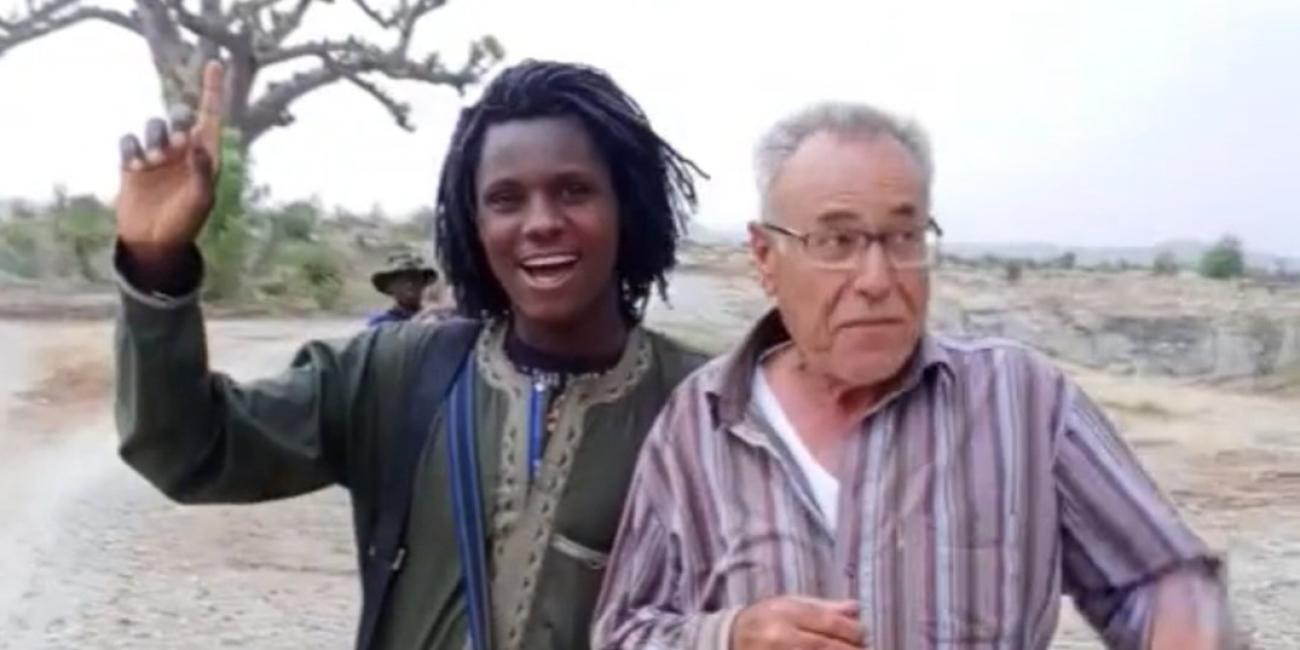
Video: How terrorists openly escorted exchange greetings with expatriate working on Gusau-Sokoto road

A video showing terrorists, locally dubbed as bandits cracking jokes with an expatriate in an open field, has gone viral.

The location, names of the bandits or the identity of the white man could not yet be verified but Zagazola Makama, a counter insurgency expert, identified the spot as Gusau – Sokoto road.

“Dreaded bandit kingpin Mai-Jakka is shown cracking jokes freely with one of the construction company’s engineers handling Gusau – Sokoto road,” he tweeted.

The gang repeatedly said, “Hasbunallahu wa ni’mal Wakeel’, meaning, “Sufficient for us is Allah, and (He is) the best Disposer of affairs.”

One of the bandits in dreadlocks, who seemed to be the leader of the gang with a rifle hanging from his right arm, was seen joking and holding the white man from behind.

One of them said, “Here is a white man in the flesh,” as the white man jokingly urged the deadlocked gang leader to hold him well.

“Allahu Akbar! The deadlocked man was not killed. It’s a fat lie. He was not killed.”

The video was posted by Daily Trust on its X page.

What Happened to Integrity? As soldiers allegedly steal cables at Dangote refinery

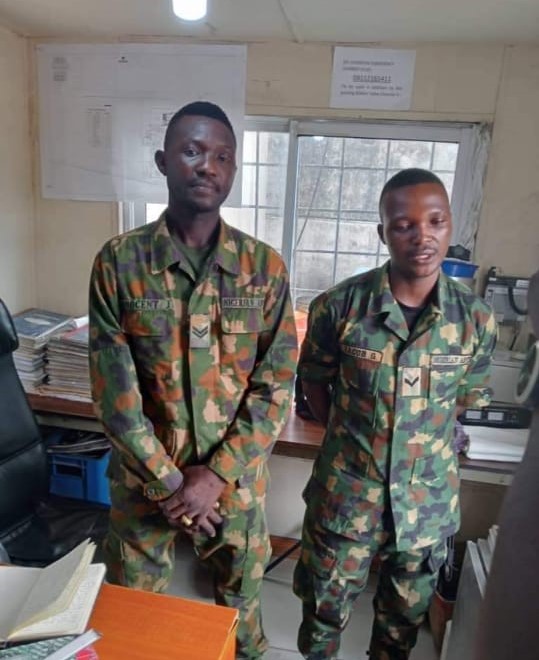
Integrity, courage and loyalty are the hallmarks of a soldier. But these qualities are currently being interrogated as two soldiers have been arrested and detained by the Nigerian Army for allegedly stealing armoured cables at Dangote refinery.

Speaking about the incident on Wednesday, the Director, Army Public Relations Maj. Gen. Onyema Nwachukwu disclosed that the soldiers had entered the facility on Sunday in an Acura SUV but were caught at the company’s main gate with 897 armoured cables that had been cut to size.

Nwachukwu in a statement described the incident as “totally unacceptable and highly regrettable.”

The statement read, “The Nigerian Army is deeply concerned about the alleged involvement of two of its personnel in a reported case of theft at the Dangote Refinery in Lagos.

“This act of criminality, which was prevented by the proactive intervention of vigilant troops and private security operatives on duty at the refinery, is totally unacceptable and highly regrettable. It does not, therefore, represent the ethics and values of the NA. The two suspects have been identified and are currently under custody.”

Onyema said the soldiers were hired by a contractor identified as Smart.

He noted that a preliminary investigation conducted in the incident revealed that Smart informed the soldiers that he needed to retrieve some cables that had been left behind at the facility.

Onyema added that when they got there, Smart sensed trouble, then excused himself and left the scene.

He said, “Preliminary investigation reveals that the two suspects were hired by a civilian contractor simply identified as Mr Smart, who claimed he wanted to recover some armoured cables he had left behind on the refinery’s premises. Unknown to the soldiers, the said contractor, sensing trouble as they approached the security post, excused himself from the vehicle and bolted away, leaving them behind.”

Onyema added that further investigation was underway to determine the extent of the soldiers’ involvement in the matter.

He said, “Further investigations are ongoing to fully ascertain the depth of culpability of the apprehended soldiers. Additionally, the stolen cables have been recovered and are in safe custody.

“The NA is working closely with the management of the Dangote Refinery to ensure a thorough investigation into this unfortunate incident.

“The NA wishes to reassure the general public that appropriate disciplinary measures would be meted out to the culprits, as no act of criminality will be condoned amongst its personnel.

 He maintained that the Nigerian Army remained steadfast in ensuring that the key values of discipline and integrity were adequately entrenched amongst its personnel promising to also continue to “cultivate and promote dedication and a culture of accountability and ethical behaviours within our ranks.”

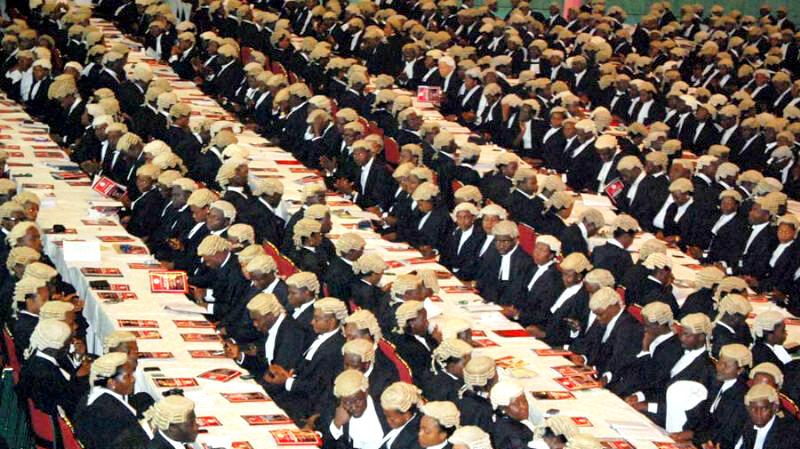
Tinubu directs Law School to admit NOUN graduates

Amidst the scandal rocking a law graduate of the National Open University of Nigeria (NOUN) who claimed to have obtained a BSc in Law instead of an LL.B which is awarded to Law graduates in Nigeria and lawyers calling on the Body of Benchers (BoB) as well as other legal bodies to look into the BSc in law award by NOUN (although their recent graduation brochure indicated LL.B), Nigeria’s President, and Visitor to the National Open University of Nigeria (NOUN),  Bola Ahmed Tinubu, has directed that NOUN students be admitted into the Nigerian law school.

NOUN has been criticized for producing “low quality” graduates while the National Universities Commission (NUC) has also been called out for not taking its quality control function over universities seriously.

President Tinubu also directed the Federal Ministry of Education (FME), to formulate the necessary modalities for the inclusion of NOUN graduates in the National Youth Service Corps (NYSC) framework, particularly those within the service age bracket as allowed by the law.

“With the changing demographics of our great nation the government has recognised the importance of allowing NOUN graduates to participate in the NYSC scheme,” he said.

The President announced the directive in his speech at the 13th Convocation Ceremony of the university on Saturday, April 13, 2024 at the university’s convocation arena, university headquarters, Jabi, Abuja.

Represented by the Deputy Executive Secretary, National Universities Commission (NUC), Dr. Biodun Saliu, president Tinubu also disclosed the resolution of the longstanding issue regarding the admittance of NOUN law graduates to the Law School.

“The doors of the Law School are now open to the graduates, ensuring equal opportunities for all. Any remaining concerns or uncertainties should be promptly addressed by the Federal Ministry of Education,” he said.

The President said the gathering signified not only the academic achievement of the graduates but also underscored the pivotal role Open and Distance Education (ODL) plays in the nation’s educational landscape.

The visitor said his administration would continue to promote Open and Distance Learning (ODL) to improve access to higher education in the country, stressing that the deployment of the ODL was a key to achieving the 2030 Sustainable Development Goals (SDGs).

 “We will continue to do this in order to improve quality, access and affordability.

“Government is, therefore, committed through the Federal Ministry of Education and the NUC to provide the enabling environment to ensure a good delivery of this mode of education in Nigeria,” Tinubu said.

While expressing his enthusiasm with the fact that the university, which was initially conceived as a means of providing education for the working class, has evolved through persistence and focus, and has now emerged to be providing education access for the teeming youth population.

The president stated that he was not unaware that a large number of school leavers are unable to secure admissions into conventional universities, adding that as a result there was need for research efforts in technology to be enhanced for NOUN to increase its admission of young school leavers, and enhance improved social safety nets of the people.

The president said he was elated that NOUN had become the main pivot driving government’s resolve in the attainment of those learning deliverables through ICT.

He stated that in the next six mpnths, NOUN would begin to provide access to government functionaries to be admitted into the various ICT programmes most especially the postgraduate programmes in ACETEL.

He encouraged NOUN to admit qualified government functionaries into postgraduate programmes offered by the Centre of Excellence, as government was embarking on a transformative journey with the deployment of Artificial Intelligence (AI), in all Ministries, Departments, and Agencies, to enhance decision-making processes and efficiency in government operations.

Tinubu also tasked the World Bank-sponsored Centre of Excellence on Technology Enhanced Learning (ACETEL), hosted by NOUN, to engage in research outcome that will enhance the use of ICT tools for improved learning in Nigeria.

Additional report from NOUN News

Describing EFCC as idle is an abuse to idleness — Odinkalu

  • Says EFCC lacks powers to prosecute naira abuse

One-time Chairman of the National Human Rights Commission (NHRC), Prof. Chidi Odinkalu, has said the Economic and Financial Crimes Commission (EFCC) lacks powers to prosecute naira abuse.

Odinkalu had earlier condemned the commission’s arrest and six months jail of crossdresser Okuneye Idris Olanrewaju popularly known as Bobrisky on the abuse of naira.

The rights advocate and professor of law maintains that spraying of the naira does not fall within the anti-graft agency’s prosecutorial purview.

Odinkalu via his X handle said: “The law that establishes the EFCC defines ‘economic and financial crimes’ to mean ‘non-violent criminal and illicit activity committed with the objectives of earning wealth illegally either individually or in a group or organised manner thereby violating existing legislation governing the economic activities of government and its administration.’”

“Having calculated that the cost of running a Laundromat for the Naira is too much for it, the @officialEFCC has decided to become an environmental organization committed to keeping the Maria clean. Describing them as idle is an abuse to idleness. The money launderers roam free,” he said.

This is coming after popular socialite and celebrity barman Pascal Chibuike Okechukwu, also known as Cubana Chief Priest was arraigned on Wednesday at the Federal High Court in Lagos for the same offence.

The Cubana Chief Priest is set to challenge the charge filed against him by the EFCC, having pleaded not guilty. He was granted bail in the sum of N10million.

‘Pregnancy is not a disease’: why do so many women die giving birth in Nigeria?

Photo Credit: heliumhealth.com/

By Kasia Strek in Lagos, The Guardian UK

Despite having the largest economy in Africa, Nigeria also loses more women to death in childbirth than most other countries in the world. In 2020, about 82,000 Nigerian women died due to pregnancy-related complications, a slight improvement on the previous year, but an increase on previous decades.

The causes of death included severe haemorrhage, high blood pressure (pre-eclampsia and eclampsia), unsafe abortion and obstructed labour. Doctors and activists say high maternal mortality rates reflect a lack of trust in a broken public healthcare system and little political will to fix it.

The World Health Organization recommendation for a functioning healthcare system is one doctor for every 600 people; in Nigeria, the ratio is one for every 4,000-5,000 patients. The federal budget for healthcare in 2024 is 5% , a record high, but far short of the 15% suggested by the UN.

Most Nigerians live in areas without well-equipped medical centres or have to pay upfront for treatment. During pregnancy, women skip prenatal check-ups, choose traditional healers and often don’t resort to seeking professional medical help until it is too late. Nigeria’s rate of 1,047 deaths per 100,000 births in 2020 is the third-highest maternal mortality in Africa and far from the UN goal of 70 deaths per 100,000 to be reached globally by 2030.

The patient

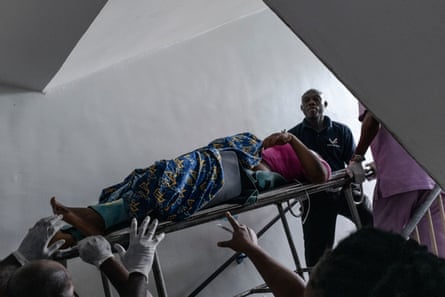
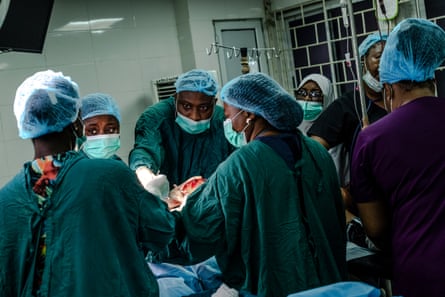
Lawal Arinola, 31, arrived at the Lagos Island maternity hospital early in the morning. Her uterus was not contracting after a caesarean section at a private health centre the previous day. She was losing blood and had acute renal failure. The hospital lifts had been broken for months and ground-floor theatres were unavailable, so as she went into cardiac arrest she was carried on a stretcher to a second-floor operating room. An anaesthesiologist started heart massage, shouting for adrenaline to be delivered as the machine monitoring Arinola’s heart bleeped out a flat line.

A woman being brought up to the surgery room on a stretcher.
Lawal Arinola being brought up to surgery at Lagos Island maternity hospital

It was five minutes before she was resuscitated and Dr Olusola Togunde and his team could perform an emergency hysterectomy. The room was hot and several times a nurse wiped sweat from Togunde’s forehead. He was checking for remaining sources of bleeding when the lights went out for the third time that day. In theory, every theatre in the hospital has a constant supply of energy from a generator, but this time the connection failed. The machines monitoring Arinola’s vital signs fell silent and the lights went off. Togunde made the post-operative stitches using the torch from a phone held by one of his assistants.

Despite all efforts of hospital staff, Arinola did not wake up from the surgery. The septic shock that she arrived with turned into multiple organ disfunction. She died in the hospital’s ICU eight days later.

The doctors

“The road to maternal mortality is filled with delays,” says Togunde, obstetrician and gynaecologist, and the head resident of the Lagos Island maternity hospital. In his 17 years of working he has seen tragedy after tragedy. He describes women being brought to the hospital unconscious after waiting for hours or even days before seeking medical help, because they fear the costs, or have to wait for husbands or male family members to take action.

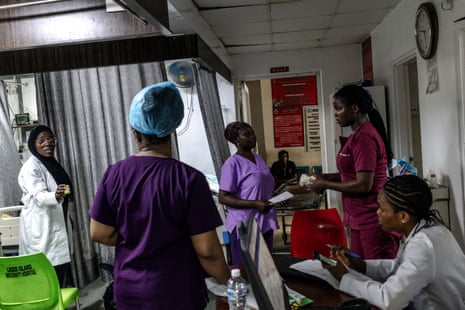
A team of five doctors and nurses in action on an emergency ward
Doctors and nurses during the morning shift at the Lagos Island maternity hospital’s emergency unit

Accessing healthcare is a problem around the country. In densely populated Lagos, with its unreliable public transport, even ambulance sirens don’t make the heavy traffic move.

There are delays too in the hospital itself. Togunde deals with patients shifted from one facility to another due to lack of space. The Lagos Island hospital has rigorous protocols. It has reduced the number of maternal deaths in the past 10 years from 93 in 2013 to 38 in 2023.

Where an emergency caesarean is required, the patient has to reach surgery within 30 minutes. Posters outlining the hospital rules and its efforts to fight maternal mortality adorn the walls of the hospital. Medicines are kept ready in the emergency room, so relatives do not need to go to a pharmacy to buy them, as often happens in other hospitals; and there is an emergency fund for the poorest, paid for by donors and sometimes doctors too. Yet, still the hospital struggles.

The dire state of healthcare prompts many medical professionals to emigrate, exacerbating the problems.

Dr Olusola Togunde and his team performed an emergency hysterectomy for Lawal Arinola
Dr Olusola Togunde and his team perform an emergency hysterectomy on Lawal Arinola. Togunde had to carry out some of the procedure using the light from a phone torch

“Manpower is a problem,” says Togunde. “We have space, but sometimes we don’t have people to operate. The hospital does not employ staff [they are employed by the government], it is beyond our competence, and doctors emigrate. The young ones don’t even stay. Sometimes people just leave without notice, so you cannot guarantee the number of staff you will have the next day.”

The problem is too vast for doctors alone to handle. It takes political will to say that our women will not die

“I understand that people are dying from lethal diseases, but pregnancy is not a disease,” says Dr Moses Olusanjo, a senior consultant at the maternity ward of Lagos State University teaching hospital, the principal referral centre for patients in Lagos with complications. Olusanjo has worked there and at Lagos Island hospital for more than 11 years, but is now planning to continue his education – and possibly his career – abroad.

“When you go to countries like the UK, women don’t die like here,” he says. “The problem of maternal mortality is a reflection of how our society works. Until the standard of life increases, this will not go away. The reduction of maternal mortality is solely within the power of our leaders. The problem is too vast for doctors alone to handle. It takes political will to say that our women will not die.”

The activist

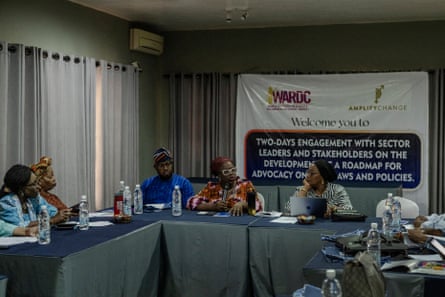
Abiola Akiyode-Afolabi runs the Women Advocates Research and Documentation Center (WardC), an organisation aimed at combatting maternal mortality and gender-based violence. She had two very different experiences giving birth to her own children, one in the US and one having an emergency caesarean in a public hospital in Lagos.

“After the surgery in Lagos, I was left on a bed in a corridor while I was still bleeding,” she says. “For two hours, I was screaming for help.”

A conference in Lekki, Lagos, organised by Abiola Akiyode and WardC.
A conference in Lekki, Lagos, organised by Abiola Akiyode and WardC

When Akiyode was finally taken by her brother to a post-delivery room, she was forced to switch beds and bathe alone just hours after the surgery. There were no sanitary products. Some of the women she shared a ward with were taken for emergencies at night, and never returned.

“I believe that they died,” she says. “This was the first time that I realised how often women were dying in this country. I saw it firsthand. It was like a mortality centre, this ward called Ward C.” Later, she named her organisation after the place of her traumatic experience.

Akiyode believes much greater political commitment is required. In 2014, her organisation and several others filed a petition to the African Commission on Human and Peoples’ Rights, charged with ensuring that African states comply with human rights obligations, to reaffirm Nigeria’s duty to end preventable maternal mortality. “We hope it will help to increase budgets, establish a national plan and take the matter seriously on a national scale,” she says.

The survivor

In the post-delivery unit of Lagos State University teaching hospital, Torkwase Umoru, 26, was discharged in time for her daughter’s first birthday. A month earlier, she started having abdominal pains and went for a scan at a private hospital in Lagos where she learned she was pregnant and that the foetus had died.

She underwent an evacuation, but over the next few days the pain became unbearable. By the time she was brought to the emergency unit, she had sepsis, a perforated bowel, and her life was in danger.

A woman shows her abdominal scar.
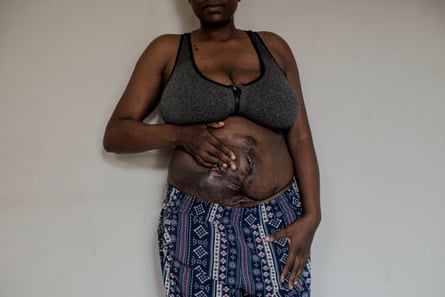
Torkwase Umoru shows her scar. ‘After all I went through, I don’t think that I want more kids,’ she says

Umoru is still not sure what lead to the development of such a severe condition, whether it was uterine fibroids already present before the first pregnancy, or the way her stomach was sewn after an emergency caesarean when her daughter was born; was it a poorly performed evacuation of the dead foetus days earlier, or a lack of a proper diagnosis?

Even after surgery she did not feel better. She could not eat or drink, a colostomy bag had been attached to the side of her stomach and was burning her skin. Her husband stopped going to work and visited her every day to clean her wound.

“I felt depressed, ashamed, worthless,” she says. “But I was not afraid of dying. In fact, at that point I wanted to die. My husband told me later that he was hiding all sharp objects from my sight. He knew that I could try to hurt myself, that I was thinking about that

“Now, after all I went through, I don’t think that I want more kids. We will maybe try to adopt,” she adds.

The foster mother

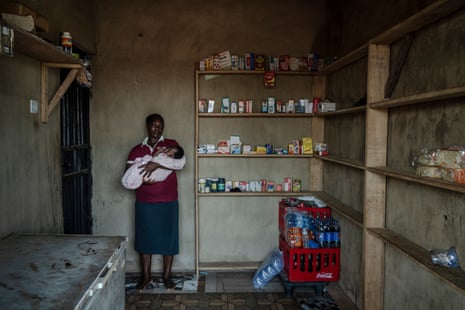
In a chemist shop in rural Ota on Lagos’ outskirts, Damilola Ayomide, an auxiliary nurse and mother of three, sells basic medicines such as painkillers, as well as children’s clothes and bread. Otherwise, the shelves in her store are almost empty.

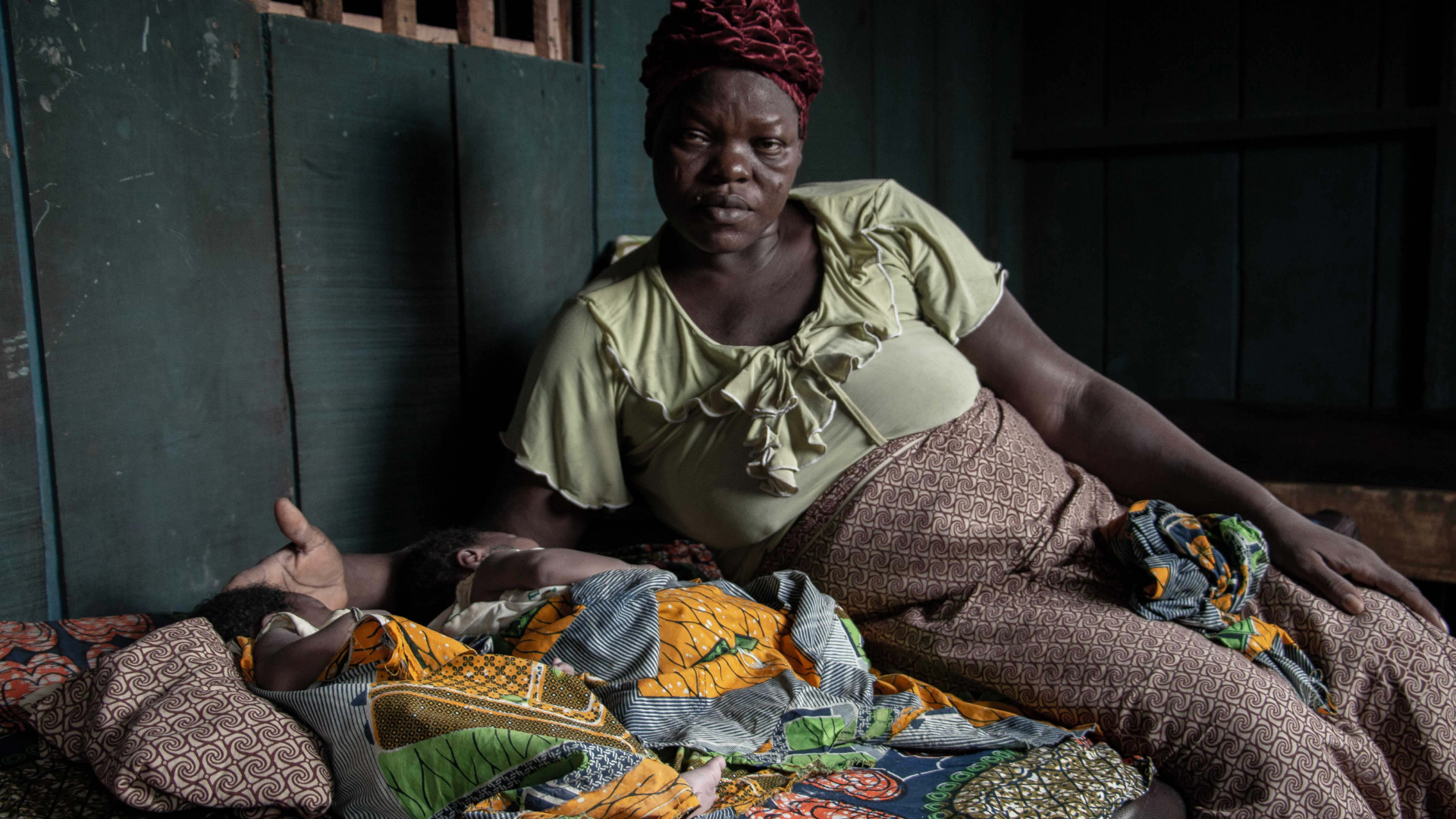
She keeps an eye on the baby asleep in a basket on the ground. It is her younger brother’s son, Oluwaremilekun, which means “God wipe my tears” in Yoruba.

A woman stands in a small room with medicine on the shelves.
Damilola Ayomide in her small chemist shop

His mother, Seun Fadipe, 27, died three days after his birth at a local hospital. During pregnancy she was often sick, her legs were swollen and she fainted several times. Ayomide says the family would take her to a hospital each time, but she was always discharged within a few hours after being put on a drip and medication.

When the time came, Fadipe was so weak that the family raised money for a caesarean section. It went well, they were told, and Ayomide visited her in a hospital the day before she died.

“The hospital just called my brother to tell him that his wife was dead,” says Ayomide. “We don’t have any documents; we don’t know what exactly happened. They said that she was complaining of a headache and abdominal pain, but died before the nurses came to check.

“We could not believe it. It was so painful for my brother, I’ve never seen him like that. We all cried so much, but what could be done? It was God’s will to take her.”

Afterwards, the family decided it was best for Ayomide, with her nursing experience, to look after the baby. “I now go everywhere with the baby. I put him in a chair or in a bed and attend to my patients. Sometimes, I have to stop the visit if he cries. Last time, when I left him with a friend for a few days, he got a fever. He does not like being anywhere else. I’m his mama now. But it affects me a lot, I have my own children to take care of,” she says.

A baby in a crib.
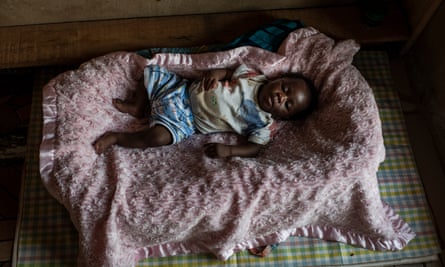
Oluwaremilekun, which means ‘God wipe my tears’ in the Yoruba language, in his basket

In Nigeria people depend on their extended families, especially the women who hold communities together. Every time Togunde loses a patient, he wonders about her family. He sees the pain of her parents or partner but thinks of the consequences that go further.

“Each time with a death of a mother, a household, a community, is destroyed,” he says. “The children she had don’t have their primary carer – some drop out of school, most are sent to distant relatives; siblings are separated. Once the mother is gone, her family is scattered. Their home no longer exists.”

 Additional reporting by Olaoluwa Olowu

 This article was produced with support from the International Women’s Media Foundation

Culled from The Guardian UK

TIPS