Home Blog Page 587

Of Suicides and Democracy

Of Suicides and Democracy

BY Uju Aisha Hassan Baba

An old Latin legal term for suicide “Felo de se” (Felon on himself) paints a grim picture of eternal condemnation! Attitudes to suicide and suicidal behaviors have changed over time and at different times, in different places. In Nigeria, the Suicide Research and Prevention Initiative (SURPIN) which partners with the Association of Psychiatrists in Nigeria (APN), has found that about one-fifth of suicide cases seen at its affiliate institution are those aged 13-19 years of age and that the majority of the callers were aged 20-39 years, and 63.5% of them were having thoughts of suicide at the time of calling. 28.2% were students.

These are grim statistics highlighting the crisis point we have reached in Nigeria. As we commemorate 25 years of uninterrupted civilian governance, and for the purpose of my thoughts on the subject at hand, I will focus on our nation’s social development as it pertains to the promotion of social health in Nigeria. This social challenge is, in recent years, being stimulated by global and national concerns on the burden of mental health and mental illness on the society.

I am a strong proponent that the role of democracy is a foundational determinant of social health and on mental health in particular. Democracy should give every citizen of Nigeria the feelings of social inclusion and support. The repeal of the Lunacy Act 1958 is a starting point. Its provisions did not promote the mental health of Nigerians. The National Mental Health Act 2021 now places human rights protections on the front burner for those suffering from mental health conditions.

The National Suicide Prevention Strategic Framework 2023-2030 and the National Mental Health Policy 2023 provide roadmap for reducing the prevalence of suicide in Nigeria. The new law and policies shine the spotlight on access to mental health care and the rights of people living with mental illness…However, these lofty objectives cannot be attained so long as attempted suicide remains entrenched as a criminal offence in our statute books and resides within the provisions of section 327 of the Criminal code and section 231 of the Penal code. In this regard It is my fervent hope that within the parameter of the declared commitment of the Attorney General of the Federation last April in his support for the implementation of the FMOH laws and policies, there will be a corresponding commitment towards the decriminalization of attempted suicide in Nigeria to achieve the objectives of the Mental Health Act and its policies.

In March 2024, I was invited by Professor Taiwo Lateef Sheik, professor of Psychiatrist/Psychopharmacology, Ahmadu Bello University, to join the “Suicide prevention advocacy working group” platform as an advocate for suicide prevention in Nigeria along with 84 members selected from across different professional disciplines and social hierarchy across the country and the diaspora.

In his welcoming statement, Professor Sheik stated: “The purpose of the advocacy platform is to deepen awareness about the scourge of suicide in our society, bring to the fore the futility of making suicide attempt a crime towards addressing the “ suicide crisis” ( especially among the youth) and pursue the decriminalization of attempted suicide in Nigeria” The group experience is reminiscent of my access to justice days as the Director General of the Legal Aid Council of Nigeria.

Up until 60 years ago suicide was a crime in England and Wales and people were persecuted and prosecuted for attempted suicide. Now it would be unthinkable to punish someone for attempting suicide because in 1961, the Suicide Act of the UK parliament decriminalized the act of attempted suicide. What an irony of history! The Lunacy Act of 1958 (as amended by the National Mental Health Act 2021 was the first mental health legislation in Nigeria) was a sad legacy of British colonial administration that foisted criminalization of attempted suicide in Nigeria.

Nigeria is at a legislative reform crossroad where significant debate and advocacy, nationally and globally is championing the notion that criminalization of attempted suicide is retrogressive, calling for change in attitude that is no longer regarded as being relevant or is at odds with evidence-based prognosis that mental health assessment and support and not legal deterrent is needed.

In my long sojourn as a government legal practitioner in both state and federal ministries of justice, I do recognize the difficulties government faced and still faces in matters of law reform and repeal in criminal cases, the reform of which is predicated on moral or religious validation. The law is the law if it satisfies the formal requirement of validity though repugnant to the evidence- based assertions of those that advocate for change.  Happily, the above personal observation is not  in tandem with the current global and national advocacy ambassadors strategies that reflects and emphasizes that the true intentions of the clarion call to decriminalize the offence of attempted suicide, stem from the premise and recognition of the need of  government to transfer responsibility for the control of a deviant behavior, from the criminal justice jurisdiction to a medical jurisdiction in the interest of establishing a more effective remedial intervention, prevention and support. 

In this regard, the engagement, and views of members of our national and state Assemblies, their collective stance on the decriminalization of attempted suicide must be elicited within their legislative competences as set out in the 1999 Constitution (as amended).

Their views are evidently mute!!

Uju Aisha Hassan Baba, OON  A lawyer of over four decades, Ms. Aisha Hassan Baba, OON, has served in very senior and sensitive positions in both federal and state public service, notably as Deputy Director Public Prosecution, Director, Legal Services under the Federal Ministry of Justice, Federal Ministry of Education, Federal Ministry of Industry, Trade & Investment, Chief Executive Officer (CEO) of the Federal Legal Aid Council (now Commission), Executive Secretary, Nigerian Investment Promotion Commission (NIPC), and as the Attorney General and Commissioner for Justice, Anambra State.


From execu-thieves to judi-sharing

By Eddie Iroh

It was not long after the return to ‘civilian’ democracy in 1999 that wags went to work. They named the new rule ‘DEMONCRAZY’. Another group of wags termed it “DEMALLCRAZY’. That of course had nothing to do with the fact that the President in the new dispensation was a retired five-star Army General. In any case, that was something the politicians judged to be a good bridge between the military on one hand and the civilian politicians and the populace on the other.

However, 25 years after the military relinquished power, democracy has been on a very rocky and dangerous path. Fortunately, the recklessness of the political class has not led to yearnings for return to military rule even though there are some who might prefer the devil they know in military fatigues to the one who hides his carnivorous claws behind a civilian robe.

Meanwhile, the problem with Nigerian Democracy can easily be traced back to its foundation–the Constitution. This is a document skewered to benefit some and displease the others. In a country with 250 ‘tribes and tongues’, the Constitutions lamely agreed on the recognition of the Federal Character of
the country and the establishment of Federal Character Commission which is for all intents and purposes a toothless bulldog. The drafters of the constitution appeared to have focused attention on the presidency and thus gave it more power than is appropriate in a true federation.

The most attractive of these is presiding over the money collected by the national oil corporation from crude oil sales of which Nigeria is the eighth largest producer in the world. The principle of derivation, which would mean that a state controls what is produced from their backyard with them paying an agreed amount to the centre is not the case thus negating one of core principles of true federalism. Thereby within the federal system exists financial arrangement which has made the quest for the presidency a quinquennially do-or-die affair.

Only once in the 25-year history of the current dispensation has the losing candidate, who was the incumbent president, vowed that he would not go to court because his continuing in office was not worth the death of a single Nigerian! He gracefully bowed out and urged his supporters to keep the peace. Thus, the president-elect who had vowed on behalf of monkeys and gorillas would rise in their thousands to fight for him was left carrying the empty can.

That was the only time in 25 years the presidential election was not decided by the courts that have also become part of the problem. Time was when Nigeria’s supreme court boasted of men of character like Justice Adetokunbo Ademola and Justice Anthony Aniagolu who placed the law above thing else.
Alas that era is gone. The wags now regard the judiciary as ‘JUDISHARING’ where the cases are decided before they reach the Bench! No judgement by the judiciary has gone against the Executive, or ‘EXECUTHIEF’, as the wags would name it.

But I explain this with what foreign observer felt about African political rulership in general. He said: “African governments has fallen into the hand of elite politicians who have succeeded the colonial masters and pretty much sucks the life out of the wealth of the countries and about 70 to 80 percent
of these lie in banks in the capitals of Western countries.” In the Legislative arm they did not escape from the tongue lashing of the wags who nicknamed them the ‘LEGISLATHIEVES’.

And the Senate President Godswill Akpabio was caught red handed announcing to the whole
house on the eve of departure for their Christmas break that the Clerk of the National Assembly has put some ‘little amount’ in their bank accounts to enable them a full enjoyment in the festive season. On his desk as he was speaking were microphones of several radio and television services carrying his announcement to millions of hapless Nigerians who were wondering where the Naira would be found for their next cup of garri!

This brings to my mind a Second Republic cartoon by Owolabi, aka Owoblow. He drew a man who had stepped out of a Lagos bank carrying a sack of money. He was suddenly confronted by an armed robber. The armed thug pointed his gun at the head of the man with the sack of money and snarled “Give me that money or I’ll blow your brains out”! The man with the money looked at the gun and looked at his sack of money and said to the armed man “Listen you can live in this country without brains but not without money. So, if you want to shoot, shoot!”

So, as the inimitable Chief Zebrudaya Okoroigwe Nwogbo of ‘The New Masquerade’ would say, ‘Take your choose’!

Struggle between political and traditional realms, pathway for resolution

By Emman Ozoemena

Struggle for supremacy between the political leaders and traditional institutions is as old man. Both realms constantly lay claim to being the sovereign representative of the people. Exceptedly, this usually results in deposition of the natural rulers by the government in the contemporary era, where political leaders hold sway as the sovereign.

Beginning from the colonial administration, deposition of traditional rulers has remained an instrument deployed by by the colonial administration and their successors in post independence Nigeria to control the natural rulers. The British Colonial government used it to quell opposition to the high handed style of governance. Oba of Benin, Jaja of Opobo,Oba of Lagos, Emir of Bauchi, Emir of Ningi, among others.

The post independence Nigerian leaders continued since 1960, has sustained this under hand practices to ensure their relevance. From North to South of Nigeria, there is section that has not experienced deposition most times on mere political differences and opinions.

Recent events in Kano has brought to the fore this instrument of control deployed by political leaders.

The challenge before the nation now, is how to safe guide the future of traditional institutions in Nigeria. It is rather precarious given the corrosive influence of partisanship in the state especially by the governors who are are like overlords. How do we insulate the institution from from politics and politicians. The future of this rational institution may be on the brink, if care is not taken by the stakeholders, the Nigerian people.

Emman Ozoemena, a public policy consultant wrote in from Abuja, Nigeria.

Don’t drag my kids into your web of lies, make the DNA result, hospital public — footballer Olanrewaju’s Wife

Sequel to the ongoing marital battle and paternity question between Nigerian striker Olarenwaju Kayode and his estranged wife, Dora Ezinne Kayode, the latter has called out the soccer star challenging him to make the DNA results he claimed to have obtained indicating that their children are not his, public. She also demanded that the hospital where the test was conducted be made public too.

Ezinne Kayode had instituted a legal action against her husband for allegedly claiming to be in possession of the negative DNA results of their three sons, Jason, Jayden and Jamin, SUNDAY PUNCH reports.

A furious Ezinne who is demanding the immediate issuance of a disclaimer, said she had to finally toe that path after Kayode’s claim about their children’s paternity went viral on various social media platforms on Saturday.

She buttressed her stance with a letter from her legal representatives dated May 24, 2024, titled ‘Re: Dissemination of false allegations concerning purported DNA test results of the three children of marriage’ and addressed to Kayode at 14, Tulip Road, Peacock Beach Estate, Lekki, Lagos.

The letter read in part, “It has come to our client’s attention that since May 24, 2024, various blogs and online platforms have been disseminating salacious stories about alleging results of a DNA reveal that none of the three children born during your marriage to our client belong to you.

“This scandalous and defaming story has spread rapidly, causing severe embarrassment to our client and children. Our client has reason to believe that these baseless, humiliating allegations were contrived and strategically planted by you across various media outlets with the malicious intent of tarnishing her reputation and causing irreparable harm to innocent children.”

The purported report allegedly made available to the media accused Ezinne of fraud, cheating on him with Pastor Tobi Adegboyega, stealing his two Mercedes SUVs to finance the pastor’s lifestyle, and abducting their three sons.

The allegations were extensively trashed by Ezinne in a subsequent post on Instagram, decrying the purported DNA test results and asking Kayode to make them public and state the hospital where they were conducted.

She wrote, “Honestly, I am so tired of this man’s nonsense, and it has to stop now. I knew he was not mentally stable when he pulled out a knife on me some months ago, but to go as far as ruining the lives of innocent kids is way too far. Kayode, I didn’t think you would go that low.

“I have kept quiet on all the rumours you have been spreading because they are baseless, childish, and false. But do you include innocent children? No, now I must speak.

“I have never sold any of my properties or cars and given the proceeds to any pastor, bishop, or imam in this world. In fact, all the rumours this mentally disturbed young man, Kayode, is sharing online are all false.”

Ezinne added, “The last couple of years in this marriage have been like hell on earth. I am so drained and in pain, and I just honestly pray this ordeal is all over soon. I do not wish this kind of abuse and oppression on any woman anywhere in the world. If your story is similar to mine, run away from that man and leave that marriage; you are not stuck! And I pray that God will heal you and send helpers your way like he has for me.”

Ostensibly trying to empty her heart on the issue in one day, the lawyer, who in her Instagram profile describes herself as a fierce queen, strong, unstoppable, exuding power, and elegant, wrote in the third post on Friday, “Olarenwaju Ayobami Kayode, my silence is enough. Don’t ever drag my kids into your web of lies. I urge you to provide the result of the DNA to the public and the hospital where it was conducted, as we are willing to give you the DNA. You traumatised my kids by detaining us in DSS custody.”

Another word for Emir Sanusi

By Jaafar Jaafar

While the hyperbolic lyrics of the legendary Sarkin Kotson Kano Abdulrahman’s magnum opus – Sir Sanusi Sarkin Yaki Zakin Daga Na Abashe – turned the late Sir Sanusi’s inborn hubris into believing that he was above his peers and superiors, his grandson chose to take inspiration from a tribe of cyber buskers cheering him to banishment.

Barely three years after his ascension to the Kano throne, the present emir of Kano, Muhammadu Sanusi II, has dumped a set of etiquettes laid down by Muhammad Al-Maghili during Emir Muhammadu Rumfa’s reign in the 1480’s to inspire awe and instil respect for leaders; demolished the century-old Soron Ingila built by Emir Abbas and used by colonialists shortly after Kano conquest in 1903 and; squandered at least N4billion bequeathed to him by Emir Ado Bayero in 2014.

Let me make it clear to people who think I was paid to write against Emir Sanusi that my conscience is the mainspring of my actions.

For the sake of making a point, on Wednesday last week a notable personality who marvelled at my last article on Emir Sanusi sent me a ‘gift’ of N200,000.

I declined to accept the gift in order to clear my conscience that I have NEVER collected money from anybody to write against the emir.

Well, I really do not bother about the effete challenge of a clan of Internet meerkats, tying to challenge an armadillo of a journalist.

What I am more concerned about is setting the records straight with fairness but without fear or favour.

There are certain traditions a traditional office holder is expected to adhere to.

That is the reason it is called traditional institution.

Traditional rulers are chief image-markers of their people, chief custodians of culture and traditions, ambassadors of their people, etc.

But Emir Sanusi chose to drift from this tradition.

I have never heard an Eze saying the Igbos are 419ers or drug-traffickers, nor heard an Oba denigrating the Yoruba people.

While I have my reservations about Ganduje’s light rail project, Emir Sanusi’s conclusion that tens of thousands of enterprising stall owners in Sabon Gari Market, industrious traders of Yankura, dutiful traders at ’Yan Lemo, resilient vendors of Kurmi, venturesome grain dealers of Dawanau, billionaire merchants of Singer and Kantin Kwari Markets are all there to attend “wedding and naming ceremony” is abusive.

And I am being charitable.

Emir Sanusi’s Financial Recklessness

About six weeks after becoming emir, Sanusi began the butchery of the emirate council’s life-time savings in fixed deposits in First Bank, UBA, Zenith, FCMB, AfriBank, Access, etc.

On July 24, 2014, the sum of N400m fixed by his predecessor was first broken from First Bank to the transaction account of the emirate council at the same bank.

Less than three weeks after, on August 13, 2014, another fixed deposit of N200m was recalled to the main account.

The recall of the fixed deposits continued steadily until December 8, 2016 when about N4billion he inherited were drawn into the main/transaction account and mercilessly exterminated.

Following his visit to former President Goodluck Jonathan on July 24, 2014, and subsequent release of his travel documents by the SSS, the emir began criss-crossing the world.

On August 1, 2014, Emir Sanusi approved the payment of N152,624,723 to a now sanctioned bureau de change operator, Dabo Gate Ideal.

Twelve days after, on August 13, 2014, the same company was again paid N15,458,660.

On December 10, 2014, Western Union Travels and Tours Limited, a travel agent to DELOITTE, was paid N6,993,203.

Three weeks after, precisely on December 31, 2014, the same company was paid N5,566,235 from the emirate council account.

Two weeks after, the company was again paid N9,071,000 from the emirate council account on January 14, 2015.

This payment trend to Western Union Travel and Tours and Classic Air Service for chattered flights and foreign travels continues till date.

Contrary to reports that the emir’s expensive cars were gift from friends, documents available to me show that on August 27, 2014, Nigeria’s famous exotic car dealers, Triple K Investments, were paid N142,800,000 from the First Bank account of the emirate council for the supply of exotic cars.

Still on August 27 and October 16, 2014, Emir Sanusi approved the payment of another N154,873,000 and N36,223,000 respectively to the same Triple K Investment for the supply of exotic cars.

Again, the same company was paid N5,060,000 on December 17, 2014.

In my last article, I hinted that the emir spends a lot on Internet bills.

Now to prove this assertion, here is the breakdown of his expenditure on calls and Internet.

On June 29, 2015, Airtel was paid N2,639,185.19;

on July 22, 2015 (N1,471,163.49);

on August 31, 2015 (N4,954,883.61);

on September 29, 2015 (N2,638,626.18);

on November 9, 2015 (N1,012,077.36);

on December 21, 2015 (N8,697,900.09);

on March 11, 2016 (N3,640,356.14);

on April 26, 2016 (N1,000,000);

on August 22, 2016 (N3,000,000)

on September 21 (N2,000,000);

on December 19 (N5,000,000) and;

on February 9, 2017 (N2,000,000).

I couldn’t believe when I once heard the emir once spent N7m on Internet in ONE month !

Now imagine this: The total amount the emir spent on Airtel from June 29, 2015 to February 9, 2017 is N37,054,192.06.

This amount alone could build a modest school or a cottage hospital with equipment as a way of matching his words with action.

While the salary bill of the emirate was in average of N7million (usually defrayed by the interests accrued from over N4billion fixed deposits Emir Ado Bayero made), the emirate received a steady grant from local government deductions of N127,898,110.07 every quarter – about N42m monthly.

While he buffeted the savings on his expensive lifestyle, to be fair to him, he increased the salary to N17,078,441.56 in September 2014.

The salary bill further ballooned under Sanusi to about N23m after the emir put his distant cousins, uncles and other relatives on salary.

When recession bit harder, grants decreased and balance in the account fell to as low as N800,000 at a point, the emir now slashed the salary to the status quo ante, but he never stopped lavish spending on foreign and local travels, Airtel data/calls, questionable NEFT transfer of about N12m monthly, cars, sartorially hyped up outlook, etc.

In monthly grants, the emirate council received between July 30, 2014 and March 1, 2017, the sum of N1,672,953,660.

While the total debit from June 8, 2014 to April 11, 2017 is about N6 billion, the current balance in the account as at April 11, 2017 is N23,487,406.12.

For someone who is preaching the gospel of economic management, financial prudence, I wonder why he woefully failed set example in his tiny fief.

Let me, as obedient subject, once again remind my emir, a monarch who does not mind deposition on the alter speaking the “truth”, that when certain Sanusi Lamido Sanusi escaped firing squad by whiskers and jailed for about two and half years under Abacha’s Decree 2 in Sokoto Prisons for “inciting violence”, his rights to both movements and free speech were trampled.

I hope somebody will take some lessons.

My Lord, the Felon

By Chidi Anselm Odinkalu

Mohammed Ladan Tsamiya probably believed he was a commodities trader who happened also to moonlight as a Justice of the Court of Appeal. To him, both vocations seemed to provide mutually reinforcing revenue streams. Sometimes, he transacted business as one while doing the other. In keeping with this tendency, it was an unsuccessful transaction in the sale of beans that brought his vocation as a judge to an untimely end.

The story began with the 2015 elections. In Abia State, south-east Nigeria, the parliamentary elections in 2015 were not without controversy. Nnamdi Iro Oji, a losing candidate in those elections, filed a petition with the National Judicial Council (NJC) in January 2016 levying serious allegations of misconduct against Ladan Tsamiya. What follows is from the 19-page report of the NJC Investigation Committee into these allegations. Sunday Akintan, a retired Supreme Court Justice, chaired the NJC’s investigation committee into Mr. Oji’s complaint. The other members of the Committee were Hakila Yalla Hemman, then Chief Judge of Gombe State; and Aloy Nweke Nwankwo, Chief Judge of Ebonyi State.

Mr. Oji complained that around 12 October 2015, after the conclusion of first instance proceedings in his case at the Abia State Election Petition Tribunal in Umuahia, the capital of Abia State, he got introduced to someone “who was in the system”, who took him to a house in Sokoto, north-west Nigeria, where they met with Ladan Tsamiya. After condemning the election petition tribunal as having been “influenced”, Ladan Tsamiya advised Mr. Oji to write a petition to the President of the Court of Appeal requesting a change in the composition of the Court of Appeal panel in Owerri. His application was granted but he was “shocked when he saw that Hon. Justice Mohammed Ladan Tsamiya was one of those sent to Owerri Judicial Division to handle the appeal.”

Over a sequence of encounters which occurred in Sokoto, Gwarimpa (Abuja), and Owerri in Imo State, according to Mr. Oji, Ladan Tsamiya requested him to provide N200 million “to enable him discuss with the three (3) Justices who were to handle the appeal to influence the court’s decision in his favour.” When he seemed reluctant, the Justice of Appeal warned Mr. Oji that failure to deliver the requisitioned sum or a substantial part thereof “may bring a shocking outcome to the appeal.” Specifically, Ladan Tsamiya advised Mr. Oji that “the funds which should be in foreign currency should be brought to him in his private residence in Owerri, Imo State, which was where they met.” Despite having a strong case on the facts, the decision in Mr. Oji’s appeal went the way that Ladan Tsamiya had predicted after he failed to deliver the funds demanded.

These allegations may have been staggering in their substance, but Ladan Tsamiya’s response was not lacking in invention or audacity. According to him, this was a tale of a sale of beans gone awry. Sometime in November 2015, he said, three persons “one Hausa and his two Igbo friends met him in Sokoto and the Hausa man introduced himself as a buyer of beans and ginger which His Lordship said he had in commercial quantities.” He reportedly “assumed that the two Igbos were also interested in buying the commodities.” It was in the course of these conversations, according to Ladan Tsamiya, that “one of them” reportedly asked for his assistance in connection with a pending case at the Court of Appeal. He claimed he declined, telling them that he could not help because he was not their lawyer. The discussions over the sale of beans – according to Ladan Tsamiya – subsequently broke down and could not be consummated.

Unsurprisingly, Ladan Tsamiya’s story of mixing commodity trading with judging proved to be unconvincing. In their report delivered on 22 September 2016, the committee of investigation found the case against Ladan Tsamiya to be “credible” and recommended sanctions against him. Eight days later, on 30 September 2016, the NJC announced its decision to compulsorily retire him from judicial service.

12 years earlier, it was arguably their inclination to do what Nigerians call “chopping alone” that ultimately ended the careers of two other senior Justices of Appeal, Okwuchukwu Opene and David Adeniji. In 2004, the NJC recommended the dismissal of both Justices of Appeal after they collected sundry items of bribery, including N15 million and N12 million respectively to award the contest for the Anambra South senatorial constituency in the 2003 general election to Ugochukwu Uba, who was not a candidate in the contest. James Ogebe, the senior Justice of Appeal then who headed the Court of Appeal panel drafted to Enugu to replace them after the scandal broke recalls in his memoirs that “there was clear evidence of bribery…. They brought a bag containing the money that was not properly closed. A cook who was cooking for them inside the official house even saw it. He was the one who carried the bag inside. They just gave him N10,000 from it.”

Eight years after the end of Ladan Tsamiya’s experiment in occupational cross-dressing ended his career, in May 2024, the NJC announced that they “cautioned” Amina Shehu, a judge of the High Court of Yobe State “for issuing Writ of Possession Conferring Title on the Defendant in Suit No YBS/HC/NNR/1cv/2020 when there was no subsisting judgement (sic) of any Court to enable His Lordship issue the Writ.” In ordinary parlance, the issuing of a writ of possession in the absence of an underlying judgment would be a felony crime of burglary, theft, conversion, or stealing. If committed by an ordinary citizen, such a crime would almost certainly have an additional element of fraud. Any person who can commit such an act surely should have no place in any judicial service worth its name. By concluding that the appropriate sanction in such a case is a mere “caution”, the NJC makes it difficult to distinguish a judge from the criminals whom they are supposed to hold to account.

These three cases discussed here hardly differed in terms of gravity. Instead of accountability, the judiciary especially under the outgoing Chief Justice, Olukayode Ariwoola, has converted the myth of judicial independence into a charter for judicial impunity. In the case of Ladan Tsamiya, the Independent Corrupt Practices Commission (ICPC) did launch an investigation after the conclusion of the disciplinary process by the NJC, leading to his arrest. He was later arraigned for trial before the High Court of Imo State in Owerri in July 2019. Five months before the trial, however, in February 2019, the National Industrial Court of Nigeria (NICN) in Abuja presided over by the recently deceased Noelita Agbakoba as judge, set aside the decision of the NJC for having been reached in violation of relevant provisions of the Judicial Discipline Regulations. Under Olukayode Ariwoola – as a discerning tweep has pointed out – “Someone who sprayed Naira got 6 months. Someone who issued a warrant of possession without a preceding judgement got a warning.”

Over the 20-year period that separates the disciplinary cases concerning Okwuchukwu Opene and David Adeniji in 2004; Ladan Tsamiya in 2016; and Amina Shehu in 2024, the sanction issued by the NJC for judicial misconduct of a criminal nature became attenuated from dismissal through compulsory retirement to a mere love letter, signalling the collapse of judicial discipline and accountability in the country under Olukayode Ariwoola as Chief Justice of Nigeria.

Over that time horizon, judicial process in the public perception became somewhat tarnished to a mere transaction in which outcomes are more likely than not to be determined by a quid pro quo between litigants and the presiding officers, and not by the strength of the evidence or a fair and dispassionate application of the norms. At the special session of the Supreme Court to usher in the new legal year organized on 27 November 2023, Ebun Sofunde, SAN, who addressed the court on behalf of the Body of Senior Advocates of Nigeria (BOSAN), captured this well when he warned that judicial reputation “is at an all-time low… to a point where it may no longer be redeemable.” This sums up the state of Nigeria’s judiciary 25 years into elective government.

A lawyer and a teacher, Odinkalu can be reached at [email protected]

Ibadan Lawyer’s son to serve three years jail term for impersonating, fraud

A young man, Abdulgafar Ayanrinde, who claimed to have dropped out of the University of Ibadan where he studied Law, has been sentenced to six years imprisonment for impersonating a legal practitioner and committing fraud.

The 25-year-old Ayanrinde was arraigned at a Magistrate’s Court sitting in Osogbo, Osun State, by the Nigerian Security and Civil Defence Corps (NSDC) and slammed with a two-count charge bordering on impersonation and fraud.

He reportedly impersonated a legal practitioner and duped a Point of Sales operator.

When Ayanrinde was arrested and paraded by the corps in Osogbo recently, he said he went into crime to spite his father who he claimed to be a prominent Senior Advocate of Nigeria in Ibadan, Oyo State.

He had disclosed that he dropped out of the university at 200 level (Faculty of Law), owing to lack of money.

He confessed to have paraded himself as an SAN and deceived unsuspecting litigants into hiring him.
The NSCDC prosecuting counsel, T. J. Ayayi, had informed the court, upon arraignment, that Ayarinde paraded himself as a lawyer at the premises of the Osun State High Court on May 22, 2023 and also defrauded a female PoS agent of the sum of N150,000 at INEC Area, Osogbo on May 18, this year.

Ayanrinde had also admitted to having presented himself as an SAN to dupe five unsuspecting members of the public of their hard earned money.

He also confessed to stealing an iPhone worth N450,000,00.

The charge had read, “That you Ayanrinde Abdulgafar on the 22nd day of May, 2023, at the Osun State High Court, Oke-Fia, Osogbo, Osun State, in the Osogbo Magisterial District, willfully represented yourself to one Abdulsalam Adbulhafeez Abiodun that you are a legal practitioner and did pretend that you are qualified to act as a legal practitioner, representation which you knew to be false and thereby committed an offence contrary to Section 22(1) of the Legal Practitioners Act, Cap L11, LFN 2004 and punishable under the same section.

Legaldeskng

Train your brain

By Bob and Debby Gass

‘The joy of the LORD is your strength.’ Nehemiah 8:10 NKJV

Anytime you substitute positive thinking for faith in God and obedience to His Word, you’re on dangerous ground! But don’t throw out the baby with the bathwater. As a believer, you’re supposed to train your brain to trust God and think positive thoughts that are founded on His Word.

A study conducted in the Netherlands found that people who are optimistic have healthier hearts than those who are grumpy. Self-described optimists died of cardiovascular disease at a lower rate than those of pessimists. Dr Becca Levy of Yale University conducted a study which concluded that ‘ a positive attitude towards ageing was greater than physiological measures such as low blood pressure and cholesterol,’ each of which is believed to add a maximum of four years to a person’s life.

The same study discovered that optimistic people live longer than people who always worry, and that a positive attitude can add more years to life than exercising or refraining from smoking. Additionally upholding the mind-body connection, a 2005 Associated Press article reported, ‘New research suggests that once Alzheimer’s disease robs someone of the ability to expect that a proven painkiller will help them, it doesn’t work nearly as well.’ Isn’t that remarkable? When people are able to think painkillers work, the medicines seem to help. Our minds are amazing!

The Bible says, ‘ The joy of the Lord is your strength.’ And that’s not just spiritual strength, but physical, mental, and emotional strength . If you want to have a healthy life, you must have a healthy mind, and that starts with thinking positively instead of negatively. So, train your brain.

1 Kings 16-18, Acts 7:1-22

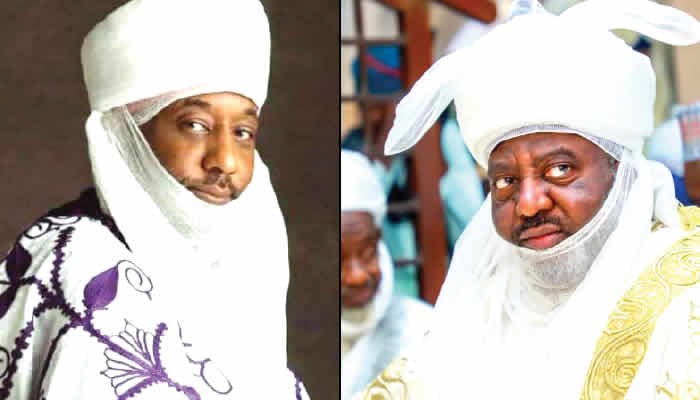
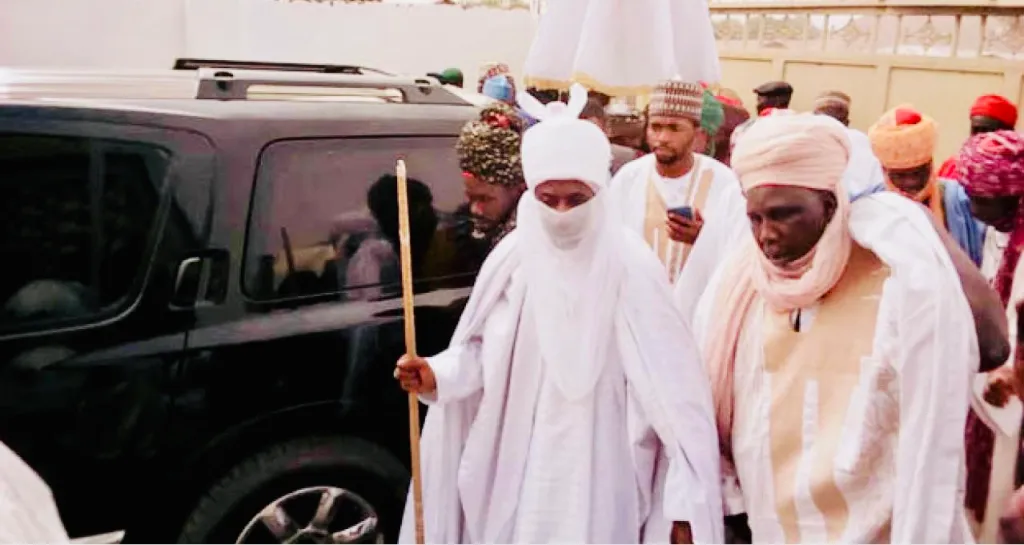
How BBC reported Sanusi’s return to the throne: Pomp and drama as deposed Nigerian emir returns to throne

By Abubakar Maccido,
BBC News, Kano

As he returned to the throne in a colourful ceremony, Nigeria’s influential Emir of Kano addressed the people who deposed him four years ago.

Those who expelled Muhammadu Sanusi II from his role as a traditional Muslim leader in the northern state of Kano were not worth talking about, he said on Friday.

Mr. Sanusi was ousted in 2020 for showing “insubordination” to the authorities there.

His supporters believe he was sacked as he opposed the re-election of Kano’s then governor.

Mr Sanusi, an ex-central bank chief, was reappointed by current Governor Abba Kabir Yusuf at the Kano State Government House on Friday.

During his 2023 campaign to become governor, Mr Yusuf pledged to bring Mr Sanusi back as emir.
He said that by dethroning Mr Sanusi, the authorities had violated Kano’s centuries-old tradition of emir rule.

Traditional leaders in Nigeria hold few constitutional powers but are able to exert significant influence as they are seen as custodians of both religion and tradition.

At Friday’s ceremony, Mr Sanusi expressed his gratitude to the state governor, state legislators and the people of Kano as a whole.

Of those that deposed him in 2020, Mr Sanusi said: “Those who did that are not worthy of me talking about what they did.”

But just hours before the event, it was unclear whether Mr Sanusi’s reinstatement ceremony would actually go ahead.

The Federal High Court had issued a last-minute order stopping the state government from abolishing all five emirates created during the administration of former Governor Abdullahi Ganduje and returning to the system where only one emir ruled Kano.

The ruling was a response to an application from Aminu Babba Dan Agundu, a Kano emirate official who opposed moving back to the old system.

However, Mr Yusuf said he did not recognise the ruling.

Referencing reports that the High Court judge was based in the US, Mr Yusuf said at the ceremony: “Imagine a judge in America ordering us to halt the coronation of the Emir of Kano, Sanusi. Our laws are in place and they will not change.”

Mr Sanusi became the 14th Emir of Kano in 2014 after the death of Ado Bayero.
From 2017 onwards, he had frosty relations with then-Governor Ganduje.

He was sacked in 2020, with the government accusing him of “total disrespect” towards the local institutions.

The government then created five new emirates in the state and appointed Alhaji Aminu Ado Bayero as the new emir in Kano.

On Thursday, the day before Mr Sanusi returned to the throne, the Kano State House of Assembly abolished the five former emirates.

That same day, Governor Yusuf signed the law and gave the emirs of the abolished emirates a 48 hours to vacate their palaces.

On the streets of Kano, the reaction was mixed.

Resident Idris SR Dawanau told the BBC on Friday: “I am extremely happy about the reinstatement of [Sanusi] today.

“I wish him well and hope he continues to contribute positively as he always has.”

But fellow resident Lawal Najeef criticised the move: “In my opinion, leaving all the emirs in place without removing any would have been better because it makes things easier.

“For example, if you have an emir nearby, people can go to him with their issues without having to travel far.”

A nation that budgets N10bn for car parks and N1bn for hostels in 12 tertiary institutions not normal

  • Donates N10m to nursing school

The Labour Party’s 2023 Presidential Candidate, Mr. Peter Obi, has again condemned the federal government’s obvious financial recklessness and misplacement of priorities in funding allocation.

Obi condemned the continued allocation of public resources to non-essential areas of development.

The LP standard bearer condemned Nigeria’s poor and embarrassing position in the global average in school enrollment while expressing consternation over the government’s budget of N1 billion for the construction of hostels in 12 tertiary institutions in Nigeria, while N10 billion is allocated to the construction of parking lots and recreational facilities.

Writing on his X platform, the former Anambra State Governor said
“As Africa’s economic powerhouse, I am still concerned about our country’s fiscal indiscipline.
“Consider the situation in our education sector, where the global average for secondary school enrollment is more than 80%, but Nigeria’s is only 28%.”

“The global average for tertiary school enrollment is greater than 55%, while Nigeria has less than 15%.
“Our budget for National Assembly Car Parks is N6 billion. The National Assembly Recreational Facilities have a budget of N4 billion.

“The total amount approved for the construction of hostels in 12 tertiary institutions is N1 billion.
It is time to put an end to this financial indiscipline and embrace financial discipline by allocating resources to critical areas of human and national development.

In another development, the Head of Department of Nursing in Anambra State. Mrs. Mary-Michael Ezenwuba reports that Obi’s ongoing support for the School of Nursing in Adazi, both as Governor and as a private citizen, has propelled the school to world standards.

She spoke on Monday evening, when Mr. Obi paid a visit to the school and presented a cheque for N10 million in additional assistance.

Ezenwuba praised Obi’s dedication to the school, stating that it is now on track to become a world-class nursing school with his support.

“The college’s history would be incomplete without mentioning his contributions. These include: he donated two coaster buses and one 18-seater bus to the school; he constructed two-story administrative and academic buildings, as well as a two-story student hostel.”

Mrs. Ezenwuba continued, “With Obi’s assistance and the school’s efforts, the college is now a full-fledged college of Nursing Sciences that has scaled accreditation by the National Board for Technical Education and the Nursing and Midwifery Council of Nigeria and now awards Ordinary and Higher National Diplomas in addition to professional Certificates by the Nursing and Midwifery Council of Nigeria.”

Pleading with Obi to bring more students to the college, the 2023 Presidential aspirant promised to continue his support to the school.

He described healthcare as the most important aspect of development, and no discussion of it could be complete without mentioning nurses and midwives.

Obi said, “I will return. We are investing in a brighter future. If we do not train our children, including Almajiris, they will pose a threat to us tomorrow. “I will return this year to support what you are doing,” he concluded.

The Catholic Bishop of Awka, Most Rev. Pius Chukwuemeka Ezeokafor, who accompanied Obi to the College, stated that Obi has been very helpful to society and the church since before he became Governor.

Bishop Ezeokafor stated that Obi has done so much for the church that he has yet to see an equal in that regard, and that even though he is no longer governor, he continues to do so.

He stated that Obi is the best candidate for the presidency of Nigeria and apologised on behalf of Nigerians who had their hopes dashed by the Independent National Electoral Commission (INEC) following voting counting in last year’s election.

However, he believes that God is still at work. Obi was surrounded by enthusiastic students who freely approached him during the event.

TIPS