Home Blog Page 586

Children’s Digital Rights vs. Parental Control: Striking a balance on Children’s Day

By B.C Obilor Esq.

As we approach this year’s Children’s Day celebration in Nigeria, it’s important to reflect on a crucial aspect of modern childhood: the balance between children’s digital rights and parental control. In an increasingly digital world, children are exposed to a plethora of opportunities and risks online. Understanding how to navigate these waters is essential for both parents and children.

Children’s Digital Rights:

Children’s digital rights encompass the right to access information, the right to privacy, and the right to freedom of expression online. These rights are protected under various international and national laws. For instance, the United Nations Convention on the Rights of the Child (CRC), which Nigeria has ratified, emphasizes the importance of protecting children’s privacy and their right to access appropriate information.

In Nigeria, the Child Rights Act 2003 aligns with these international standards, ensuring that children’s rights are protected in all spheres, including the digital realm. This act underscores the importance of protecting children from exploitation and harmful content while promoting their right to participate in digital spaces safely.

Parental Control: A Necessary Measure;

Parental control is essential for safeguarding children from the potential dangers of the internet. These dangers include exposure to inappropriate content, cyberbullying, and online predators. Parental controls can take various forms, such as monitoring software, setting time limits on internet usage, and educating children about safe online practices.

It must be noted that the importance of recognizing and protecting children in the digital space, cannot be overemphasized. However, the necessity of parental supervision to protect children from online harm cannot be ignored. Thus, it is humbly submitted that while children have rights to access digital information, these rights must be balanced with the need for their protection.

Finding the Balance:

Balancing children’s digital rights with parental control requires a nuanced approach. Here are some steps to help strike this balance:

  1. Open Communication: Encourage open and honest discussions about internet use. Children should feel comfortable sharing their online experiences with their parents.
  2. Education and AwarenessBoth parents and children should be educated about the benefits and risks of the digital world. Schools and communities can play a significant role in this education.
  3. Setting BoundariesEstablish clear rules and guidelines for internet use. These rules should be age-appropriate and evolve as children grow older and more responsible.
  4. Using Technology Wisely: Utilize parental control tools and software that allow parents to monitor and manage their children’s online activities without being overly intrusive.
  5. Respecting Privacy:While monitoring is necessary, it is also important to respect children’s privacy. Trust and mutual respect are crucial in maintaining a healthy relationship.

Legal Framework and Court Decisions:

The Nigerian legal framework provides a robust basis for protecting children’s digital rights while allowing for necessary parental control. The Cybercrimes (Prohibition, Prevention, Etc.) Act 2015 also plays a role in ensuring the safety of all internet users, including children, by criminalizing cyberbullying, online harassment, and exploitation.

Conclusion:

As we celebrate Children’s Day this year, let’s remember that children’s digital rights and parental control are not mutually exclusive but rather complementary. By fostering open communication, educating both parents and children, and using technology wisely, we can ensure that children enjoy the benefits of the digital world safely and responsibly.

This Children’s Day, let’s commit to protecting our children’s digital rights while providing them with the necessary guidance and supervision to navigate the online world.

For further discussions or to collaborate on child rights advocacy, please reach out to me at [email protected] or call 08069395552. Together, we can create a safer digital environment for our children.

Happy Children’s Day!

Moving away from kakistocracy

By Sonnie Ekwowusi

It is sad that the Nigerian democracy has been churning out undisciplined rabble and entrusting them with the sacred duty of governing the affairs of their fellow men and women. Whether we admit it or not, Kakistocracy (government by the least suitable or incompetent citizens) has triumphed in the land. This tragedy cannot lead to human flourishing. Until we reinvent Nigerian democracy or refashion it to suit our peculiar circumstances, we are simply wasting our time by creating opportunities for those who would steal political power and wreak havoc on the country.

If Nigerian democracy must yield the so-called democratic dividend, then it must have a national character that establishes the parameters and moral high ground on which it should operate to promote the well-being of the people. Devoid of character, politics and political activities in Nigeria, in the words of Frederic Bastiat, the French political economist and philosopher, are legalized plunder.

In all democracies, especially in presidential democracies, sovereignty resides with the people. At periodic elections and through other intervening periods, the people determine who should govern them and how they should be governed. Unfortunately, in Nigerian democracy, the reverse is the case: the people are at the receiving end, and mostly unfit leaders determine how they should be governed. Worse still, the people’s votes do not always count at periodic elections.

Democracy rests on many assumptions. One of those assumptions is that men have enough wisdom and virtue to pursue the promotion of the welfare of the people. However, viewed against the backdrop of history, men often lack the necessary wisdom and virtue to achieve this goal. Democracy is challenged from within by sheer ignorance and the pursuit of personal interests at the expense of the common good and welfare of the people.

Plato, in particular, was hostile to democracy because he feared that such powers and institutions would be imperiled under the watch of men with unruly passions and appetites. In his often-cited classic work, ‘Democracy in America’, French political scientist, historian, and diplomat. Alexis de Tocqueville writes that democracy bereft of equality of conditions is bound to gravitate towards despotism. To these thinkers, democracy is not synonymous with instant political and economic prosperity. That democracy liberates all men assumes that there are political leaders with high moral principles ready to navigate democracy to a safe harbor. Unfortunately, most democracies, including the Nigerian democracy, are not run by men with high ethical principles.

If Nigerian democracy is to yield democratic dividends, those communally binding ideals must hold sway. Alexis de Tocqueville once stated that a country cannot escape destruction if the moral tie is not strengthened in proportion to the political tie. Simply put, if we want to strengthen our democracy in Nigeria, we must first strengthen the moral tie because the latter gives rise to the former. In her essay, ‘A Disposition of Delight,’ Elizabeth Covey, an assistant professor of political science in the Honors College at Baylor University, writes that when the religious and social traditions of society wither, we are left “with nothing but a dry and gritty residue.”

We should understand that the political enterprise is not an end in itself; it is a process to render service to the people and promote the common good. The separation of culture from politics or public life in Nigeria has led to a palpable moral bankruptcy that has been hindering progress over the years. We say we are a democratic society, yet we have been steadily excluding from our policies those cherished values that make democracy thrive and lead to human flourishing. Gradually, we are building a country of people who may be materially rich but who are culturally very poor.

Totalitarianism is present in constitutional democracy as much as it is in military despotism. Simply put,

Africa’s Infrastructural Revolution/May ’29

  • Watch Video

By Richard Odusanya

Across the continent of Africa, economic growth and development have gained significant momentum in recent years. But with growth comes a challenge: building and funding the infrastructure to support it. Therefore, it throws-up some pertinent question: the first question which is where will the funding for Africa’s infrastructure come from? 

Secondly, with the Fourth Industrial Revolution (4IR) underway, another question that remains largely unanswered pertains to the extent to which Africa has positioned itself to take full advantage and the implications of the 4IR for Africa, given the capacity of the Fourth Industrial Revolution to change and shape the continent of Africa?

Third and most importantly, in all honesty, does Africa appear like investment destination of choice without Infrastructural Revolution? The three questions and perhaps many more are likely to be agitating the minds of our compatriots home and abroad.

Undoubtedly, Africa is in dire need of modern railway infrastructure to propel the continent to rapid development. In addition, transportation costs keep rising due to fluctuating fuel prices. Therefore, for the purpose of maximization in infrastructure, it is clear that there is a need for massive investment in key transportation areas, particularly, the rail sector in Africa. Railways are critical to creating continental value chains and trade corridors. 

As such, failure to achieve the set goal will be considered failure of leadership in Africa. Because railroads provide a means for goods to be transported from one location to another, as well as allowing for the transfer of information and knowledge across different countries in the continent.

Furthermore, efficient rail transportation in Africa, particularly, in these era of the Fourth Industrial Revolution (4IR). Railways has the potential to transform Africa’s economy, increase its productivity and enhance its global trade. In doing so, it would dramatically improve the wellbeing of African citizens. Study shows that the lack of physical infrastructure in Sub-Saharan Africa is still keeping many investors at bay. Let me share an example: the cost of transportation in Africa is on average 50 – 175% higher than other parts of the world as a result of poor infrastructure. 

Additionally, about 60,000km and 100,000km of new roads are required to provide effective intra-continental connectivity in Africa by 2030. The current pace of infrastructure development in Africa cannot keep up with rising demand from communities and markets, subsequently having an impact on Africa’s competitiveness and participation in global markets. Particularly, in these era of the Fourth Industrial Revolution (4IR).

Consequently, the poor state of infrastructure has led to the reduction of national economic growth by 2% annually in most African countries and as much as 40% reduction in industrial productivity. This means that with proper arrangements, railroads can help create regional integration, which in turn accelerates inclusive economic growth through increased efficiency and lower costs as the continent takes advantage of the 4IR.

Let me at this point reminiscence and flash back to May 29, 2023. In my contribution through an article that was specifically dedicated for the inauguration of the new government then with the title: “Nigeria We Hail Thee’ or ‘Arise O Compatriots” of which was widely published by local and international media organizations, the contribution was targeted at reawakening our consciousness as a people and as a nation. Thankfully, it received the attention of the government and a few days ago was passed to law by the Federal House of Representatives (HoR). 

Also, as a patriot, my prayers for President Bola Ahmed Tinubu (PBAT), which goes thus: “Today as the destiny of Nigeria is handed over to President Tinubu. I join my faith with millions of our compatriots home and abroad in praying for the wisdom of king Solomon, knowledge and understanding to pilot the affairs of the nation to heal the wounds, embrace all entities for a feel of inclusiveness and to move the nation to a progressive development” in this vein,   it is important to join hands together for the purpose of rebuilding hope and trust in ourselves.

Before I proceed, I need to be clear: Nigeria is currently experiencing its worst economic crisis in a generation, this is based on empirical evidence. One year down the line, Nigerians may still not have experience significant change. But, it is not all doom and gloom for Nigeria. For example, Nigeria’s Gross Domestic Product (GDP) grew by 2.98% (year-on-year) in real terms in Q1 2024. This growth rate is higher than the 2.31% recorded in the Q1 2023 and lower than Q4 2023 growth of 3.46%. ~ Nigerian Bureau of Statistics (NBS).

Lest I forget, Nigeria, at some point in history, was a country where foreigners used to come for medical and educational tourism in the 60s and 70s, has now become a shadow of its old self. Long-story-short: the foundation of where we are today, as a nation was recklessly laid by successive administrations through profligacy recklessness and corruption. Obviously, It didn’t start on May ’29, 2023. Yes, we made mistakes, but there’s no point in crying over spilled milk. We’ve got to move on, rebuild our nation from the ruins of the past. This is where the campaign about Mind Restructuring becomes inevitable.

Undoubtedly, Nigerians are going through tough times. However, the situation that we found ourselves, in all honesty are basically self inflicted. Yes! The nation is bleeding and there is hunger in the land. Somehow, there is great advantage for nations that produces good citizens and leaders, but, sadly, becomes a pipe dream for Nigerians. The attributes of good citizens and leaders are a combination that has eluded Nigeria for very long time. Even those who are not yet Presidents want to live in opulence without the commensurate effort at earning what is required for such a life! 

Therefore, it is time, for us to begin to interrogate issues with open minds. Somehow, those who are not Presidents, or governors, when making choices, mostly gravitate towards what they condemn. Those who live on others, as many Nigerians like to do, would live on the State if they get the opportunity. Because majority of our people want to live rich without the resources to do so, and then we complain about so-called leaders, who are nothing but a reflection of the society that raised them. This is the sad realities of our beloved country Nigeria.

In conclusion, and to further drive home the point of the Fourth Industrial Revolution, AFRICA’S INFRASTRUCTURAL REVOLUTION and the Nigerian DEBACLE. Permit me to share with you the profound words of Orji Uzor Kalu, the senator representing Abia North Senatorial District. Speaking on the floor of the Senate chamber, a couple days ago. OUK, eloquently posited: “If we don’t revamp the steel industry in Ajaokuta, Kastina, Alaja, Jos and Aluminum in Akwa Ibom, there’s no way we can talk of industrialization in Nigeria.”

OUK continued: “Aba and Nnewi has the human resources to engage in any form of manufacturing but the steels are not available. There is nothing that can stop Nigeria from dedicating a one year budget to rebuild our steel industries. The job creations we are always talking about lies in the steel industries.The country can be great if we do the right thing”

In my view, one of the right things is to improve upon the content and quality of our human capital especially at the low-income levels because, in the final analysis, they are the ultimate users of this infrastructure and can make or break them

Finally, I like to make specific reference to the speech of Yoweri Kaguta Museveni, president of the Republic of Uganda, who in an address to the ‘AFRICA HEADS OF STATES SUMMIT’ in a 19:06 video clip Museveni succinctly captured the essence of the Fourth Industrial Revolution in the African context and how best to reason and think developmentally.

Also, on this’d 25 May, ‘Africa day 2024.’ I am privileged and honoured to dedicate this article “Africa’s Infrastructural Revolution..” a day which commemorates the historic event in 1963, when African nations came together to form the Organization of African Unity, the precursor to the African Union (AU). It is a day to celebrate the many successes and progress made throughout the continent while recognizing each nation’s challenges.

Watch the video below.

Richard Odusanya, [email protected]

Edo State High Court jails man for life over rape

  • Remands another for allegedly defiling 11-year-old
  • Three to die by hanging for armed robbery, kidnapping and murder

A High Court of Justice in Benin City, Edo state has sentenced one Enaho Odigie to life imprisonment for rape.

In the matter prosecuted by S. E Okojie, M. I. Akhabue and E. Okunrobo, Her Lordship, Hon. Justice Mary Itsueli, of Criminal Court 4 delivered Judgement last week in charge No: B/CD/24CV/2021, State Vs Enaho Odigie and convicted Odigie.

Meanwhile, another Benin High Court on Monday ordered the remand of one Osasumwen Vincent, who allegedly defiled 11 years old in 2022.

Adjourning the case to June 10 for hearing, Hon. Justice Efe Ikponmwonba ordered that the suspect who was arraigned on one count charge bordering on rape be remanded at the correctional custodian centre, in Benin.

Vincent pleaded not guilty.

The state prosecutor, Hamma Iyamu, had disclosed that sometime in October 2022 at Ohovbe Quarters in Benin Juridical Division, the suspect forcefully had carnal knowledge of an 11-years old girl.

According to the prosecution, the suspect committed an offence contrary to section 4 and punishable under section 5 (1)of the Edo State Violence Against persons (prohibition) law, 2021.

“The suspect committed the offence in October 2022 at Ohovbe Quarters in Benin Juridical Division forcefully raped an 11-years old girl.

“The suspect committed an offence contrary to section 4 and punishable under section 5 (1)of the Edo State Violence Against persons (prohibition) law, 2021,” she said.

Also, three persons, Solomon Abuede, James Monday and Kelvin Edward, have been sentenced to death by hanging for armed robbery, kidnapping and murder in Edo State.

The sentence was handed over to the trio at the High Court in Benin by Hon Justice R. Irele-Ifijeh for the kidnapping and murder of one Ephraim Akhere in Ihumudumun Quarters, Ekpoma, the headquarters of Esan West Local Government Area of Edo State, on June 13, 2014.

The court also sentenced one Oviasogie Sunday to life imprisonment for receiving an Infinity Jeep with registration number EFR 218 FB, property of the late Akhere, which was stolen after his murder.

The offences are punishable under Section 3 of the Kidnapping Prohibition Amendment Law of Edo State 2013 and the Armed Robbery and Fire Arms Act.

They were among the six persons arraigned before Justice R. Irele-Ifijeh in suit number HEK/25c/24 on a six-count charge of armed robbery, kidnapping, conspiracy and receipt of stolen property.

Two others, David Williams and Monday Ozomo, were discharged for lack of evidence linking them to the armed robbery and kidnapping.

In a 91-page judgement made available to journalists on Wednesday, Justice Irele-Ifijeh said that the confessional statements of Solomon Abuede, James Monday and Kelvin Edward that they participated in the armed robbery were corroborated by the evidence of one Sandra, a prosecution witness who was in the same vehicle and kidnapped with the late Akhere.

Giving judgment, the judge said, “The kidnappers rode on a motorcycle, armed with dangerous weapons, kidnapped their victims and asked Akhere, the driver and Sandra to move to the back seat, and lower their heads, while Abuede took over the driver’s seat.

“They then drove to the bank; two of the kidnappers stayed with their victims inside the car, and the other went to the bank with an ATM card from Akhere to withdraw money from his account.

“From there, they were said to have driven to an uncompleted building where Abuede threw Ephraim into a well after giving him rat poison to swallow, while the girl was given the option of jumping into the well or eating the rat poison given to her.”

Solomon, who provided the rat poison, later spared Sandra’s life but raped her after she pleaded with him.

James Monday who was said to have provided the gun used for the operation and Monday Ozomo took the Infinity Jeep to Kano, where Oviasogie paid N420,000 for the vehicle out of the agreed N500,000.

The See-finish-ism Afflicting the Legal Profession

By Chinedu Agu

(Lecture delivered at the Monthly General Meeting of NBA Owerri Branch on Saturday, 25th May, 2024)

Every profession in the world has an element of mysticism which sets it apart. In that its arcane nature strongly lies the respect, honour and prestige that is accorded that profession. The legal profession is not an exception. This is the reason it has been said in some quarters that the legal profession is a conspiracy against the laity.

In this sense, the legal profession shares a lot in common with the priestly vocation. Both are callings that require a deep commitment and dedication beyond just a job or career. Priests are called by God to serve the Church and humanity, while lawyers have a duty to uphold justice and the rule of law. A priest is a minister in the temple of God. A lawyer is a minister in the temple of justice. So, practitioners in both fields are expected to exhibit the highest standards of ethical conduct.

While the priesthood and legal profession have distinct roles, they share the common threads of upholding the highest ethical and moral standards.

As a young lawyer doing pupillage in Ama Akalonu & Co. my principal, in preaching about the ethics of the Legal profession would always draw this analogy, and would believe that both professions/vocations are, in terms of ethics, very similar.

Just like the priestly Vocation, the legal profession commands huge respect both from other practitioners and lay people. The reason for this huge respect is not only because we are social engineers, but because of the way lawyers have been trained to behave – carrying themselves with remarkable grace, infectious comportmemt, and royal nobility of conduct.

Unfortunately recently, the legal profession has fallen flat from that dizzying height of prestige. The legal practitioners themselves, much like the proverbial Lizard that foiled his own mother’s funeral, is culpable for this decline.

I will resist the temptation of highlighting the culpability of the Nigerian judiciary in this slump. This is a gathering of lawyers, so I shall rather wait for the day of hunting, so I can hunt in the habitat of the Grasscutters.

The relationship of a lawyer with the society/public, his relationship with the court, his relationship with his fellow lawyer, his conduct while he discharges his duties as a lawyer, his comportment, now leave much to be desired, and have contributed to the odium with which the legal profession is now viewed by the members of the public.

Lawyers by themselves have lifted the veil of sanctity of the profession to expose the glory of the profession to members of the public. This is what I refer to as the See-finish-ism: the members of the public have “seen us finish.”

Over familiarity they say, breathes contempt. An Igbo adage also has it that when a man overly familiarises himself with his in-laws, then they begin to roast for him Beetles-infested yam.

How has the Nigerian Lawyer allowed the members of the public to see us finish?

In various ways, lawyers have, in their relationship with members of the public, conducted themselves in ways unbecoming of a lawyer, bringing the legal practice into disrepute and scorn. The following are worthy of note:

  1. Dressing/appearance and comportment:

It is a popular saying that the way you dress is the way you will be addressed. Regrettably, many lawyers dress very shabbily.

The dress code for male lawyers is dark suits, white shirts (not wing-collar), white bib, black socks, black shoes.

But often, you find Lawyers dressed in weather-beaten, threadbare suits that are averse to washing. Some dress in very dirty shirts, which you can only identify as white if you had seen them few years ago; shirts that had seen better days.

Some lawyers find it very hard to polish their shoes, iron their trousers and their bib. Some lawyers don bibs that are ragged, stained and creased. Some lawyers’ bibs and white shirts have the capacity to trigger vomit. Such clumsy looks lower the respect members of the public accord lawyers.

In my years of pupillage, Mr. Akalonu taught juniors in his chambers that a Lawyer’s bib must be clean and crisp, standing elegantly on a well-ironed immaculate white shirt, tucked inside another well-ironed, prim trousers, which sits gracefully atop a resplendent, well-polished black shoes, akin to that of J.T.U Nnodum, SAN. In a frank admiration, I have had course to ask learned Silk the equipment that polishes his shoes, as they would always glean like a piece of china in the tropical sun, suggestive they were not polished by human efforts. I am sure I am not the only lawyer in Owerri that has observed that. Not any day have I seen a fleck of dust on any of his shoes, regardless time of the day and location.

It does not take affluence to maintain a clean appearance, it takes rather conscious discipline, vigilance and awareness. A lawyer who must not visit the dry cleaner should have the discipline of washing his white shirts and bib by himself every weekend, starching and ironing them. A white shirt must not be repeated. A bib can, after use for the day, tucked back into its leather. It is not like a piece of handkerchief that can be snapped out from the pocket and doned when needed.

Sadly, it has become fashionable for lawyers – mostly of my generation – to wear shoes without socks. Some prefer half-cut socks, which are meant for jeans and sneakers, meaning that their skin is exposed when they are walking or sitting in court.

When some would wear socks to court, it is a bizarre, garish socks. We can also observe some wearing what looks more like a blanket or towel than socks.

Some lawyers also have made the queer choice of doning trousers that appear to be in rift with their shoes, so that instead of the tip resting gorgeously on their shoes, it stands high above their ankles, cutting a Michael-Jackson-esque image. Others have the audacity to wear chinos or jeans under their gown to appear in the High Court.

Some (both young and very senior) make the inexplicable choice of wearing sandals to court without a doctor’s report, leaving one unsurprised that the young ones learned how to chew chord from the She-goat.

For female lawyers, it is dark jackets, black skirts, black shoes, white colarette and bib. The female lawyers are not insulated from this, either. Some wear Mary-Kay-stained and creased colarette to court.

The comportment of some lawyers both within and without the court, is thuggish, coarse and savage. The comportment of a lawyer in court conduces to the magnitude of respect a litigant will pay to both the judex, his colleagues, and officers of court.

Before Hon. Justice A.C. Onyeukwu a couple of months ago, two very senior lawyers, in the full glare of both junior lawyers and litigants nearly exchanged blows.

In another court few days ago, two lawyers were dragging a file and pouring vituperations and invectives on each other, while litigants watched on shamefacedly. Have they not seen us finish?

When a lawyer is discouteous or disrespectful to the court, or to a coleague in court, you would not expect any better from the litigant.

For some lawyers, being on the other side of a case suggests they are at war with the colleague on the other side, or doing a matter against a colleague automatically makes them their enemies.

While conducting cases, lawyers should be quick to reprimand their client who, in attempt to answer counsel’s questions during cross examinations, insults counsel on the other side. Unfortunately, some lawyers derive pleasure in seeing their clients deride and scorn the counsel on the other side. This is unethical and must not be encouraged. It conduces to see-finish-ism.

Some lawyers also forget that the lawyers’ bib and collar are to be worn only in the court premises. It makes a very ridiculous sight to see a lawyer wearing his collar and bib in a public transport, or while walking from his house to the road to catch a bus. Some also engage in this for showmanship, forgetting that they cut a ridiculous image.

Some walk into supermarkets, banks, eateries, markets and public places with their bib and collar. This is simply nauseating.

Just last Monday, I cringed to watch a very senior member of the Bar lumbering out of a UBA in Mbari in his bib and collar.

Same day, I saw another lawyer in his bib and collar, his court files on his left, his glory on his right, urinating along a busy road, just beside Dreamland Hotels, World Bank, Owerri.

During pupillage, we were taught that you could only wear your bib and collar from the office if only you are driving in your car, or driven by another in a private car.

We were taught that you must not enter an eatery with your collar and bib, or eat or drink in a public place with them on. But you will see a lawyer eating in a sleazy buka with his bib and collar, oily crumbs of vegetables dropping on his creased bibs, making legal submissions raucously, in an attempt to impress the lay people.

Sometimes, you may find a lawyer in bib and collar, tightly packed inside Bus Imo like a sardine, making legal submissions at the top of his voice to impress other passengers. This is a see-finish situation. A lawyer who must take a commercial vehicle must not wear his collar and bib.

  1. Another see-finish scenario is the preparation of processes and lawyers’ documents in a public business centre.

Gardenpark is now the office of most lawyers (both young and old). When you walk into the computer section of GardenPark, you would hear one lawyer, sitting beside a typist, bellowing corrections, “Donee, Donee, D-o-n-e-e, not done, wepụ that ‘E’ itinyere there,” while the other lawyer is at the other end shouting, “Ngozi, it is the Claimant, not Clement. Remove ‘E’ and put ‘AI,’ then wepụ that other ‘E’ itinyere after ‘m’ and put ‘A’” This situation is always laughable.

I have heard a computer operator tell a lawyer, “Barri, that woman dropụụrụ gị 10k for that Pawa of Atọni.” Some lawyers have condescended to using some of the staff in GardenPark as their office secretary.

Some lawyers maintain sensitive folders in the systems in public business centres, thus increasing the risk of proliferation of Power of Attorney and some sensitive precedents. There is no worse see-finish situation than this.

Part of the glory of a herbalist is not only the nzu that he smears on his body and his red, long skirt, but in the way he handles his client envelopes his conduct in secrecy and mysticism.

A Herbalist who wants to prepare charms and herbs for his client, enters into his private chambers to do so. He does not do that in the presence of his client, otherwise, he will see him finish.

But it is the opposite for lawyers. Some lawyers sit with their client before the public computers, while the computer operators prepare Power of Attorney. And this is why a client will price a lawyer ten thousand naira, saying, “The Bar, naranụ m 10k. Onwekwerenu ihe nọ na Pawa of Atọni. Ihe a umu aka na aprịpa na Gardenpark.” That’s the level we are now.

Some though they prepare it in the office, but do the franking, stapling, binding and packaging in the presence of the client. Let the client see only the finished product. Let there be some air of esoterism around it – documents you prepare for clients.

  1. Engaging in agbata-ekee with police, milling around police vehicles in the Magistrate Court like a dog who trails a toddler that has defecated without cleaning his anus, contributes to the lack of respect which lawyers suffer in the hands of police and other security agencies. This will not stop until our image before the police improves. Police have seen us finish, and that contributes to the reason for the spate of victimisation of lawyers in the hands of security agencies.
  2. It was the training during my pupillage that appearance fee is collected a day before hearing date, and must be paid in the chambers. If a client fails to comply, the lawyer will not attend court for that matter. it is not pride. It is part of the dignity one accords to himself and to other colleagues, by extension.

But lawyers now choose to do this the other way round. In the high court premises last month, a fully-robed lawyer grabbed his client by the scruff of his neck because of non-payment of appearance fee. It was a very ridiculous sight, as other litigants watched on.

  1. While I was the Secretary of NBA Owerri from 2020 – 2022, I was inundated with petitions against legal practitioners bordering on diversion of clients’ monies.

In those eventful two years, no day passed without the administrative secretary of the Bar not handing me two to three letters on this subject matter. In most cases, the lawyers would challenge the clients to do their worse. This offends Rule 23(2) of the RPC, “Where a lawyer collects money for his client, or is in a position to deliver a property on behalf of his client, he shall promptly report and account for it, and shall not mix such money or property with, or use it as his own.”

For most clients, ndị lawyers wu ndị oshi. It is because of this see-finish.

  1. While I was looking for accommodation in 2019, it was a difficult task for me, as many landlords are very reluctant to lease their property to lawyers.

The reason is not far-fetched. In the property we occupy at both homes and offices, many lawyers do not pay their rents, as though Call to Bar Certificate is an exemption certificate from payment of rent. Other than pay their rent, some lawyers institute legal action against their landlords in a bid to frustrate him from ejecting them from their property. Lawyers who do this bring bad name to other law-abiding ones, because when one finger picks up oil, it diffuses to other fingers. This impugns the integrity of lawyers.

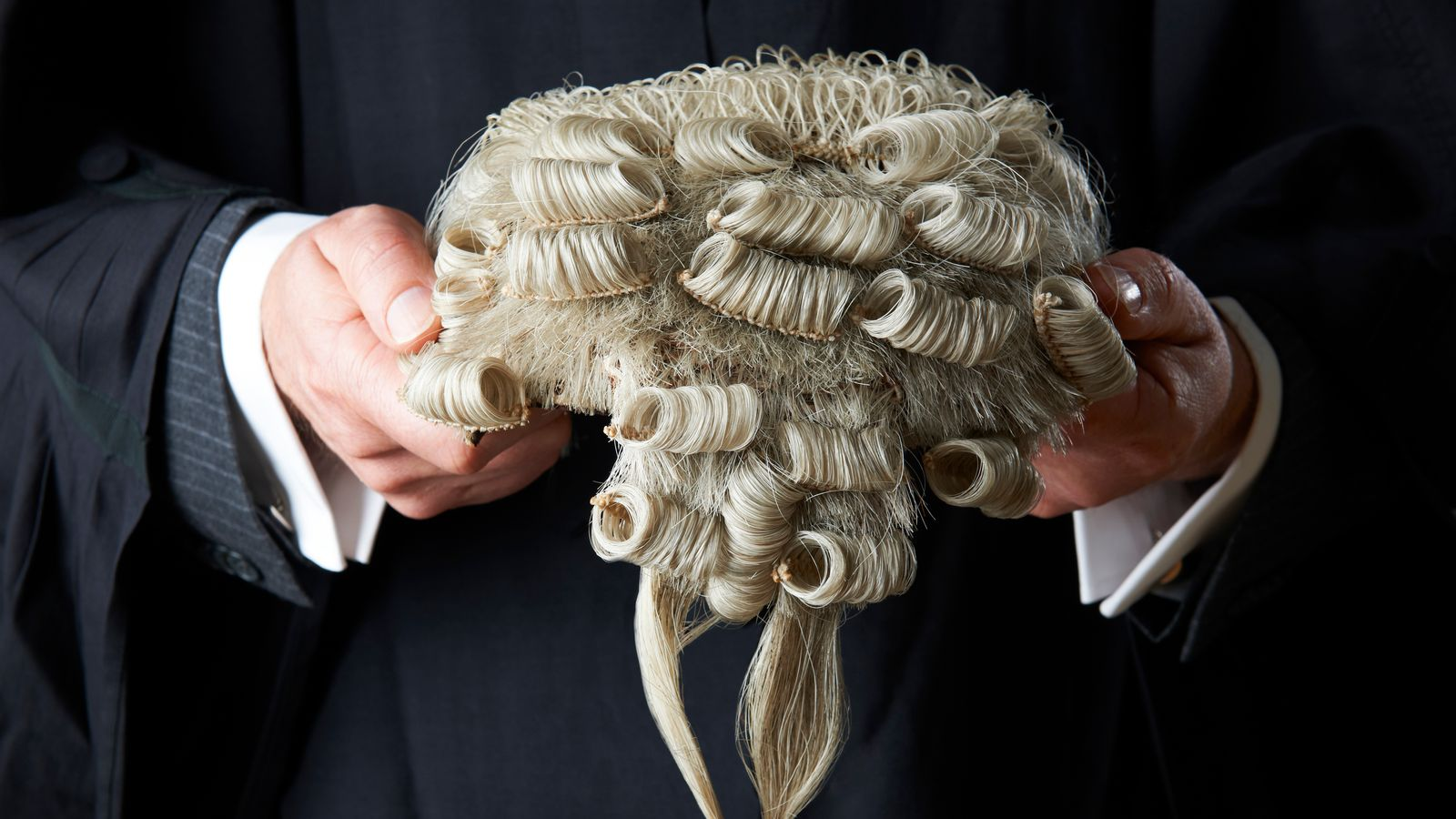
  1. There is a growing trend of abuse of wig and bib. Wigs now adorn the dashboard of most lawyers’ cars, while bib hangs on the Rear-view mirrors of their cars. This is an abuse of the lawyers’ accoutrements.
  2. We have seen cases of lawyers posing as conduit pipes for reticulation of bribes to the Judex, to the knowledge of their clients. Some lawyers would encourage their client to reach out to the judex in charge of their matters for the purpose of influencing its outcome. This does not bode well for the legal profession.

The legal profession is a noble one. It is such that has some flavour of esoterism. That arcane and recondite nature is fast evaporating due to the worrying spate of professional misconduct, and this does not bode well for the integrity of the profession and the professionals. This lecture is a clarion call for legal practitioners to recoil to their shell of inscrutability and integrity.

Thank you for your rapt attention.

Chinedu Agu
[email protected]

Female Lawyer kidnaped by bandits in Sokoto

  • Sokoto Police Command arrests 3 in connection with the kidnap

In the early hours of Sunday 2 May, 2024 suspected bandits abducted a female lawyer, Rukayyat Mustafa from her residence located at Bado area of Sokoto and took her away to unknown destination.

A Notary Public and Principal Partner of the law firm where Mrs Mustafa works, Fadinand Okotete told journalists that she was kidnapped by bandits at about 1 am in the wee hour on Sunday.

“The bandits stormed her house and kidnapped Rukayyat along with a young man. After they trekked to a vehicle that was parked far away from her residence. The kidnappers told the young man to go back or they would shoot him. The man rushed back for fear of being shot by the bandits,” Okotete said.

He further told journalists that the matter has been reported to the police for possible rescue of the kidnap victim.

Rukayyat’s younger brother, Khalid Mustafa, who corroborated Barrister Okotete’s account, added that the traumatised young man was not able to provide full details of the incident.

Khalid however said that the police had requested them to report later in the day to know the progress of their investigation.

Meanwhile, the Nigeria Police Force, Sokoto State Command has confirmed that no fewer than three persons have been arrested in connection with the kidnap.

The suspects were nabbed for allegedly giving information to bandits which resulted in the kidnapping of the lawyer in the Bado area of the state metropolis.

Confirming the incident, the spokesman of the command, ASP Ahmed Rufai, said the incident happened in the early hours of Sunday.

Kano’s midnight kingdom

By Lasisi Olagunju

Their victims are taking sides. I shake my head for them. May I never be found on either side of siblings feuding over whose turn it is to loot me.

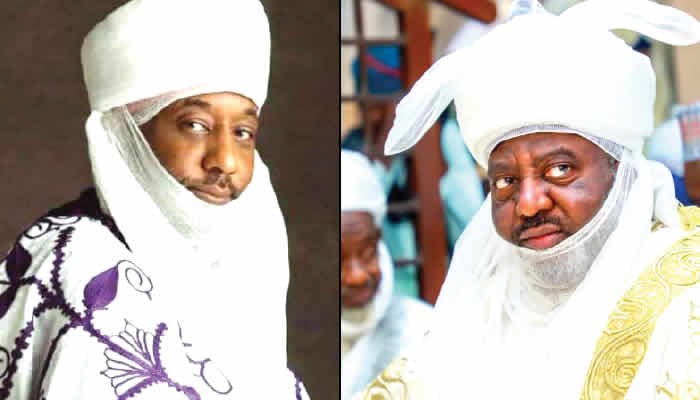
“Emir Sanusi II should be referred to as the 59th Emir of Kano (and) not the 16th – unless the history of Kano started after Dan Fodio’s Jihad and imposition of Emir Sulaimanu in 1807.” With these words, Journalist Jafaar Jafaar on Friday started an online war which is still raging as I write this. So, two wars are being fought simultaneously on and over Kano. The first is the game of thrones between brother and brother over the city’s kingship and its pricey palace. The second war is on social media being fiercely fought between a conquered people and their conquerors over when the history of the city started.

Jafaar, a Hausa, maintained that “from King Bagauda in the 10th century to Muhammadu Alwali in 1805, there were at least 42 Habe/Hausa rulers documented by history that ruled Kano.” He went on to claim that most of the symbols of authority of today’s Emir of Kano predated the Jihad and the ascendancy of Fulani rulership of the city. The charge and the pushback have been enormous online. Whatever is the fate of the Hausa of Kano today was foretold and it is recorded in their history.

Kano’s monarchy has a very well documented history. The best known by historians is ‘The Kano Chronicle’ – a list of rulers of Kano since the establishment of the Bagauda Dynasty in 998 AD. Long before Bagauda and his tribe of adventurers entered Kano, history says the founding ‘chief’ was a man called Barbushe. He was credited with enormous strength and spirituality – a man who could look very far and see tomorrow. The Kano Chronicle describes this strange man’s own ancestor, Dalla, as “a black man of great stature and might; a hunter who slew elephants with his stick and carried them on his head about nine miles…”

One day, spirit-possessed Barbushe told his people that in the coming years they would lose everything they had to a stranger.

“A man shall come to this land with an army and will gain mastery over us,” he told the people of Kano.

If it was today, those people would snap their fingers over their heads and reject the prophecy. Barbushe’s people did not snap any finger, but they voiced their rejection in their own way. They told him: “Why do you say this? It is an evil saying.”

The seer kept his peace; he ignored them. Then continued. He told the people that if their conqueror “comes not in your time, assuredly, he will come in the time of your children, and will conquer all in this country, and forget you and yours and exalt himself and his people for years to come.”

The Kano Chronicle said the people were exceedingly downcast because they knew their leader told the truth of a future of slavery awaiting them. They believed him and asked: “What can we do to avert this great calamity?”

He replied them: “There is no cure but resignation.” Then “they resigned themselves” and have remained in that state of resignation till today.

It is a long story. My source is H.R. Palmer’s ‘The Kano Chronicle’ published in 1908. The prophecy is on page 64. You may read that portion and others and match that history with whatever is happening to these people today.

I remembered Barbushe’s prophecy when I saw the Hausa journalist and his online army asking questions and referring to their own ancestors as the ‘Habe’ rulers of Kano. The 19th century Fulani (and their successors) called any people they conquered ‘Habe’.

The Hausa think the altered, contemporary king list of Kano city is rigged against their ancestors. They think it robs them of their royal and cultural essence. The people who enslaved them reset the calendar and the clock of their history. Their existence started with their defeat. Their fate is classic in how not to surrender to fate. Could the 1804 Jihad of Dan Fodio and its spread to Kano be the fulfillment of that promise of eternal subjugation; a rulership which history predicted would misgovern them “till they become of no account”? The prediction, and everything around it, even its myth and legend, appear to have come with a fatal ring of prescient finality wound around these people. Their resignation is proof that there is no medicine against destiny and no armour against fate.

Students of Kano history would have no problem identifying successive emirs of the city as snacks of power. In some cases, governors munch, chew, and swallow them. Some other times, they try and fail. On January 1, 1954, Premier Ahmadu Bello installed his “close personal friend”, Muhammad Sanusi, as emir of Kano. The man succeeded his father, Abdullahi Bayero. But in August 1963, the friendship was over. Sanusi was dethroned even despite opposition from the federal. On June 8, 2014, Sanusi’s grandson, Lamido, became emir despite opposition from Abuja and its forces. He was there for six years and was dethroned by a governor who was deputy governor when he was enthroned. Last week, Lamido’s destiny brought him back to the throne even in the face of a blitzkrieg from federal forces.

Emirs are riverside reeds, precarious at all times. In 1982, Governor Abubakar Rimi had a big issue with the Emir of Kano and, in an interview, he described the emir as “nothing, nothing, nothing but a public person.” He said the emir was “holding a public office” and was “being paid from public funds” and his “appointment is at the pleasure of the governor of the state.” He said the emir “can be dismissed, removed, interdicted, suspended if he commits an offence.” Rimi said there was “nothing unique about Ado Bayero, the Emir of Kano… believe me, if he commits any offence which will make it necessary for us to remove him, we will remove him and we will sleep soundly.” His listeners shivered. The PRP governor proceeded from there to plot the sack of the emir “for failing to fulfill government orders or to show due respect to the State Governor.” There was opposition from the streets with thousands shouting: “we don’t want the governor; we want the emir.” Ado Bayero survived that coup and soon ate the exit cake of Governor Rimi. The opposite appears to be the case now with Bayero’s son, Aminu.

Perhaps, more importantly, the Kano case has just confirmed to us that the country now has judges without borders; they sit anywhere -in the air and at sea, in their wives’ beds and on their concubines’ laps. They work 24 hours; they operate with the speed of light such that cases can be filed at 11pm and judgment delivered at 12 midnight while the other party is sleeping. Whatever they do is valid. It stands. There is no control again; the steering wheel is rusted and stiff. The state backs its carefully selected judges with everything it has –guns, threats, excuses, lightning and thunder.

The case should strengthen us to double down on our insistence that Nigeria is a federation and must be so governed. A Nigerian Federal High Court sat in the United States of America and plunged a knife into the tendons of Kano chieftaincy. And we are excusing the perfidy with lexis and structure of e-judiciary. You would think under our laws, chieftaincy matters are state and local government matters. That is what our law says but the offshore judge did not think it was necessary to respect that law. Popular comedian, Mr Macaroni, would ask: “Are you normal?” We are not.

Section 251 of our constitution clearly states what areas the Federal High Court has jurisdiction over. The section has three subsections. Subsection 1 gives that court jurisdiction on matters relating to the revenue of the government of the federation and allied matters. It lists those matters. Subsection 2 gives it “jurisdiction and powers in respect of treason, treasonable felony and allied offences.” Subsection 3 gives the court powers to hear cases “in respect of criminal causes and matters in respect of which jurisdiction is conferred by subsection (1) of this section.” Nowhere in that section or anywhere in the constitution is the Federal High Court empowered to sit over chieftaincy matters. Yet, a judge who was not even in the country, assumed jurisdiction under the cover of midnight darkness in the Kano emirship tussle and, aided by candies of impunity, signed an injunction. That judge is, very soon, going to the Court of Appeal on promotion. One day, he will become the Chief Justice of Nigeria.

Power and its allure rob society of order. In William Golding’s ‘Lord of the Flies’, we see how man with power enjoys the anonymity conferred on him by darkness. We see how control is lost and he strays calmly from goodness to savagery. America’s second president, John Adams, in March 1801, stayed up till midnight of the eve of his last night in office creating courts and signing appointment memos of his friends and supporters as judges to fill his freshly minted courts. US history remembers those judges harshly as “midnight judges.” The court ruling at the centre of Kano’s emirship logjam walked in from the United States at midnight on Thursday. The reinstated emir, Muhammadu Sanusi II, jogged into the palace midnight on Friday. The deposed emir, Aminu Ado Bayero, sneaked into the city under the canopy of darkness before dawn on Saturday. The security forces of the federal government soon filed out and took embarrassing positions. The hinge of their involvement was the tokunbo court order from a midnight judge who sat across the seas. Our courts no longer dread darkness and its forbidden fruits; they have become like hired killers, their fingers stained with the blood of justice.

Yet, the judiciary had seen better days – even in the so-called dark days before the white man came with his civilisation. There was a time in Kano when what distinguished judges were learning and piety. Sulyman, emir of Kano from 1807 to 1819, had a very tough mother and an upright alkali (judge). The emir’s mother was found on a particular day ill-treating a private citizen. She was charged for it at the court of Alkali Yusuf al-Hausi. The court found the queen mother guilty and pronounced corporal punishment. Emir Sulyman could neither shield nor save his mother – she served her sentence.

Thirty-six years later, Emir ‘Abd Allah Maje Karofi took over the throne of Kano and was there till 1882. At a point during his reign, the emir bought a horse from a Tuareg and refused to pay despite repeated demands. The Tuareg took his case to court and Alkali Ahmad Rufa’i found the king guilty. The king’s punishment was an order that the emir’s confidant named Kasheka, who represented him in court, be seized and sold into slavery to settle the debt. A shaken Emir Karofi quickly arranged for the money and paid his creditor, the Tuareg. My source for these stories is Professor Tijjani Naniya’s ‘The Dilemma of the Ulama in a Colonial Society’ published in the Journal of Islamic Studies in 1993.

The period of those judgments was a time when kings feared and respected the law. It was an era when judges knew the law and applied it as they should, entertaining neither fear nor favour. Today’s judge would jail the creditor and shout rankadede to the debtor-king. The jungle of our judiciary has matured and the beasts grown in all departments.

In my moments of devotion and meditation, I watch wild animals on TV channels. Right before me is a vulture, hyena and lion sizing one another up over a banquet of skunked meat. What we witnessed between Thursday and Saturday night in Kano was exactly that. Beastly fights over meals are a natural feature of life in the jungle. Bayero was dethroned and Sanusi enthroned. Enthronement and dethronement are not strange with monarchies. It didn’t start today in Kano and elsewhere; it won’t end with this Kano matter. How did Sanusi become emir in June 2014? Was he the favourite of the kingmakers? Aminu Ado Bayero, the dethroned emir, how did he get the throne four years ago? General Ibrahim Babangida once said that the moment you get into power through a coup, you should expect that a coup would be staged against you one day. It is delusional not to accept this. It is like Napoleon thinking his revolution would be the last.

Russian writer, Yevgeny Zamyatin, says exactly this in his novel ‘We’ – described by a reviewer as “a prediction of the natural conclusions of totalitarianism.” It was from ‘We’ that George Orwell pinched the whole idea of his monumental ‘1984’. In “We” is the warning to all who stand but who think their stability is forever: “How can there be a final revolution? There is no final one. The number of revolutions is infinite.” One era will be succeeded by another era just as one preceded it. There is no goodnight in power politics. Sanusi is back; Bayero is out, but may yet come back. There is no end to snatching and running away with power.

Mentally unstable woman jailed 13 and half years for killing her 4-year-old by feeding her diet of Mountain Dew

An Ohio, USA woman has been jailed after admitting to killing her four-year-old daughter by feeding her a diet of baby bottles filled with Mountain Dew.

Tamara Banks, 41, was sentenced to up to 13 and a half years in prison this week after pleading guilty to involuntary manslaughter over the death of her daughter Karmity Hoeb in January 2022.

Karmity passed away in hospital after suffering complications related to diabetes, as a prosecutor described  how the child’s teeth had rotted away by the time she died.

Mom is jailed for killing her 4-year-old daughter by feeding her diet of of Mountain Dew


The little girl’s father, Christopher Hoeb, 53, also pleaded guilty to involuntary manslaughter and will be sentenced on June 11.

Banks pleaded guilty in March, after prosecutors indicted both her and Karmity’s father with a number of charges including murder and child endangerment.

Karmity died at the Cincinnati Children’s Hospital Medical Center after being rushed there when she began showing symptoms related to  type-1 diabetes.

Mom is jailed for killing her 4-year-old daughter by feeding her diet of of Mountain Dew

The girl reportedly suffered horrific neglect throughout her life, and was denied medical care and proper nutrition despite showing signs of severe medical complications.

According to the Cincinnati Enquirer, days before her death, prosecutors said Karmity suffered from a ‘serious medical issue’, but her parents failed to call for help or take her to an emergency room.

Her symptoms deteriorated until she turned blue and stopped breathing, and only then did Banks call 911.

Mom is jailed for killing her 4-year-old daughter by feeding her diet of of Mountain Dew

By the time Medics tried to briefly revive her, scans showed she was brain dead.

Karmity’s cause of death was listed as diabetic ketoacidosis which spread to her brain, with prosecutors condemning Banks and Hoeb as her death could have been prevented if they helped her untreated diabetes.

‘This child did not have to die,’ concluded Clermont County Assistant Prosecuting Attorney Clay Tharp.

Prosecutors also showed howTamara Banks took efforts to meet her own medical needs but ignored her daughter’s.

This included regularly refilling her own prescriptions and scheduled doctors to visit her apartment for various illnesses.

Alongside the four-year-old’s diabetes, Karmity also suffered from a condition that caused her teeth to dissolve because her mother would feed her almost exclusively Mountain Dew from a baby bottle.

Note that a regular 12-ounce can of Mountain Dew contains almost 50 grams of sugar.

Prosecutors added that Karmity was continually fed through baby bottles long after she should have been weaned off them, and there was no evidence that Banks ever took her to see a dentist.

Alarmingly, Karmity’s online obituary includes a tribute written by Banks and Hoeb, where they spoke of their love for their daughter and wrote that she had a happy childhood despite the evidence of abuse and neglect.


‘Our precious daughter Karmity Faythe Hoeb that we nicknamed Boogie which suited her personality because she loved to be silly,’ the grammatically-incorrect obituary read.


‘She also loved looking at herself in the mirror because she knew how beautiful and special she was.


‘Smart and Vibrant. The camera loved her almost as much as she loved smiling real big and saying cheese. Each day she woke up full of joy and love.


‘Every day she was playing with her Mickey buddies and racing her cars. She touched everyone that ever laid eyes on her or spent any time with her. She will always be remembered as our daughter, our guardian angel now.’

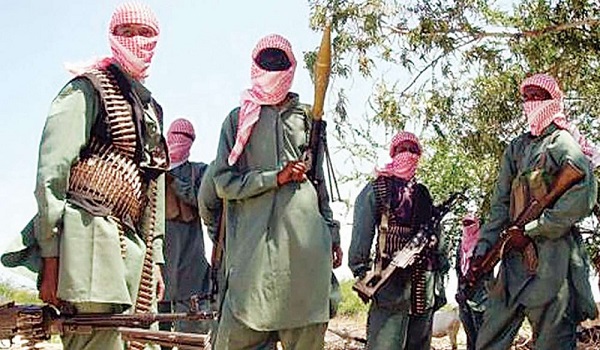
Bandits abduct 200 villagers, kill seven in Niger state community

Bandits have killed seven persons and kidnapped 200 villagers in Kuchi community, Munya Local Government Area of Niger State. 

It was gathered that the bandits invaded the community on Friday night, May 24, 2024. 

Among those killed were four members of the Joint Security Taskforce stationed in the area and three villagers who attempted to escape into the bush.

It was gathered that the bandits numbering about 300, invaded the community at about 7:00pm and operated under the heavy downpour for over three hours without resistance.

“They went from house to house and selected those they wanted to go away with, including women. They looted all the shops in the community and went away with all the goods and drinks,” a source told journalists.

“They overpowered the security agents; there was no way they could have withstood the bandits because they (bandits) came in about 100 motorcycles, each carrying at least three people. They were all heavily armed.

“Again there was no reinforcement for the security agents on ground until this morning (Saturday) when some security people came, but the havoc had already been done. They operated all through in the rain,” the source added.

The Chairman of Munya local government, Mallam Aminu Najume, who confirmed the attack on Saturday, May 25, said that the gunmen invaded the community at about 7:00pm in groups, numbering about 300, adding that “they move from house to house dispossessing people of their belongings.

“They also abducted about 150 villagers, including women and went away with them inside the rain. Throughout the operation, no assistance came from anywhere.

“Honestly the Council is overwhelmed with the current situation. I am not thinking straight as I speak with you because my people have lost their sleep; they have been forced out of the community.”

He blamed the continuous bandits’ onslaught on communities on what he called the failure of the Kaduna State government to take concrete actions against them, stressing that “if Kaduna State is doing what Niger State is doing, the situation would have been addressed.

Killed by bandits

“These people usually come from Kaduna State to operate and return back. They move in their hundreds and yet the security agents don’t see them; even when the villagers alert them, no action is taken.

“Look at yesterday’s attack, for over three hours, there was no reinforcement from anywhere. They outnumbered the Joint Security Taskforce and succeeded in killing four of them, including some villagers.

“We cannot ascertain the number of people that were injured because some are still in the bush; they slept there,” he added. 

Still On Akpabio And The Police

By Mon-Charles Egbo

Recently, two incidents openly challenged Nigeria’s quest for a policing regime where peace and order or the overall safety of the citizens would take pre-eminence.

While one was the maiden edition of the Nigeria Police Awards and Commendations Ceremony, the other was the one-day National Dialogue on State Policing, organized by the House of Representatives. Vice President Kashim Shettima represented President Bola Tinubu at both events that were held in Abuja.

Sequel to the first, Hon. Eseme Eyiboh, authored a piece titled The Police and Akpabio’s Sermon on the Mount. Although Eyiboh, the media adviser to the president of the senate, described it as one targeted at “reputation management” and “constructive stakeholders’ engagement”, the outing was rather an impetus to a national discourse which will remain endless until there is a Nigeria Police Force that embodies the ideals and aspirations of an enlightened democracy.

Buoyed by his composite knowledge of the private and public sectors of the economy, Godswill Akpabio intervened from a broader perspective.

He was blunt, but truthful, that “in this country we have had a deficit of heroes. Not because Nigerians are not heroic but because we do not celebrate our heroes. Yet heroes play a vital role in society through the provision of inspiration, motivation, and hope and serving as representations of values and character. Celebrating heroes could bring the much-needed change we need in the fabric of our society and make our country a better place”. Also, he was unequivocal that Nigeria deserves a police force that is defined by “internal ethical regeneration, restoration of professional standards, and the enhancement of the anti-corruption drive”.

Then as one of the pathways to this vision, he acknowledged that “recognizing the gallant, selfless, and patriotic contributions of individual officers, will not only motivate them for higher performance but also reinforce the new policing agenda of the force”.

Furthermore and putting on the garb of a quintessential representative of the police, Akpabio made a strong case for them. His first argument was that “the ever-evolving landscape of crime and the increasing sophistication of criminal gangs pose significant obstacles” for the force.

He therefore called for concerted efforts in this regard, stressing that “we must address these issues and work together to find solutions. The police need the support and cooperation of all stakeholders, to overcome these challenges and build a stronger and more effective police force”.

Again, Akpabio defended the force against prejudice by declaring lamentably that “many have sought to hang the police to dry for all our many vices. But the truth of the matter is that the police are all members of our society. Down the ages the popular philosophical thinking was that man could not be better than the society because the society makes the man, socializes man, and orients him with a sense of right and wrong”. In other words, the police are what the citizens and the government make of it.

Not done, he reassured the force that “as the leader of the National assembly, I pledge our full cooperation and support to the better policing of Nigeria. We recognize the importance of a well-equipped and motivated police force in ensuring the security and well-being of our citizens. We will continue to work tirelessly to provide the necessary legislative framework and resources to enable the police to carry out their duties effectively”.

Incidentally, the Nigeria police force and the national assembly are the two most vilified institutions in the country. Deliberate misinformation and disinformation about them abound and grow unabated by the day. It is such that despite the laudable accomplishments of the ‘present generations’, these critical institutions of governance continue to suffer the inherited image and reputational crises occasioned by certain misdeeds of their predecessors.

Thus, apart from his leadership and governance antecedents, and also, having variously been a victim of uncritical judgement, Akpabio is well versed in the implications of collective labelling or stereotypical views. So, his empathy with the police is not far-fetched after all.

Nonetheless and typical of a dispassionate advocate, the senate president in concluding his homily, acknowledged the existence of bad eggs in the force. He therefore counselled that “as we honour the good officers, let us weed out the bad ones because a chain is as strong as its weakest link” adding that “the police must uphold the highest ethical standards in carrying out their duties”.

Empirically, the takeaway from “Akpabio’s Sermon on the Mount” is three-pronged. One, while the police should be strategic in their overall conduct starting from recruitment through training and operations to the general management of their affairs, the society should not be subjective in their engagement and assessment.

Two, the moral lecture was an agenda-setting intervention or a catalyst in the perennial quest for a police force that Nigeria and her citizens can be proud of.

Then lastly, it was a clarion call on the need to reward excellence in every aspect of our national life.

Undoubtedly, these messages are worth internalizing towards our dream police force!

Akpabio was to take his advocacy to the second event.

Reiterating his support for the establishment of state police, which according to him “is a complex issue with no easy answers”, he re-echoed that “security is not a privilege, but a fundamental right of every Nigerian”. He thus warned that “if we are to set up state police departments, we must ensure that they are free from the shackles of politics, religious extremism, tribalism, and ethnicism. We must empower them to serve and protect, without fear or favour.”

Then of paramount note “let us never forget that the power of the state police should never be used as a tool of oppression or witch-hunting. Let us ensure that political powers do not manipulate the state police to silence dissent or target their enemies. Let us ensure that the influential do not exert undue influence over the state police and that justice is blind to wealth, power, politics, or status. Let us build a system that is fair, just, and equitable for all”.

Instructively, these expressed positions have nothing to do with his current status.

Godswill Akpabio has been a regular voice in the national quest for an effective and efficient police force. He only stood up to be counted for the umpteenth time.

As governor of Akwa Ibom State, he had in 2012, advocated that “state police remains an answer to the numerous security challenges facing Nigeria. It is the solution to resolving most of the intra-conflicts in the country. He was emphatic that “if Kogi had state police, Boko Haram probably would not have reached the state. In the Niger Delta, kidnapping would not have reached the level it had reached at that time because the indigenes that would make up the force know the criminals among them and would fish them out. Every family knows who is who. That is why I say state police remains the answer”.

Again, it is noteworthy that towards efficient and effective policing, the Akpabio-led Senate has since hastened actions on the Police Pension Bill, having passed the Police Trust Fund budget in addition to resolutions bordering on manpower and hardware.

Perhaps, these interventions informed President Bola Tinubu’s proclamation, of his administration’s commitment to transforming the police into “a modern, professional, and accountable institution that mirrors the aspirations and values” of Nigeria. He was precise that “our idea of a modern police force goes beyond superficial changes like repainting office buildings and residences or simply procuring firearms. True reform of our security doctrine and its architecture necessitates recognising the importance of administering justice and adhering to our ethical values to foster stability and order in the nation. The transformation we seek must transcend mere policy and infrastructure; it requires a fundamental overhaul of our institutional mentality and memory.”

These words, though reassuring, still face a high level of scepticism.

With hindsight, some of the critical questions include:

Would the police sustain this laudable initiative to improve the welfare of its workforce? Can there be a police force that thrives in “internal ethical regeneration, restoration of professional standards, and the enhancement of the anti-corruption drive”? Can the federal government deliver on its promise (s)? Is the police ready to reinvent themselves even with these anticipated supports, especially given the results of other previous interventions such as the Police Trust Fund and Police Equipment Foundation? Will Nigerians support the national assembly with viable ideas, through the already kick-started constitution amendment processes, to reposition the force, particularly concerning the raging state police debates?

These are some of the cardinal items on the agenda set by Akpabio as the conversation continues.

However, a police force that is alive to its roles and responsibilities might sound utopian, but it is attainable if strategically approached. It only requires sustained citizens’ actions. And gratifyingly, Senator Godswill Akpabio has offered direction and also shown resolve to lead from the front.

So the ball is now in the court of Nigerians, and primarily, the police force itself.

Egbo is a parliamentary affairs analyst

TIPS