Home Blog Page 579

The wife-beater from Kenya

By Reuben Abati

It is always very embarrassing to read stories of Nigerians who go abroad to give the county a bad name. Nigeria became known as a country of internet scammers and fraudsters not because all Nigerians deserve to be so labelled, but when a few bad eggs behave wrongly in other countries, it is every Nigerian that suffers from the profiling that results and the reputational damage to the country. It got so bad at a point that the Nigerian green passport became a badge of dishonour at many international airports where special attention was always paid to any flight from Nigeria. And yet this is a country of very talented and distinguished persons who have excelled in virtually every field of human endeavour. Those who bring disgrace unto the nation may get sanctioned for their offences or crimes, but that is hardly ever where the matter ends. 
A violent and abusive man

 The latest story in this regard is that of a certain John Nwankwo Noko who was deported from Kenya on Saturday, May 4 by the Kenyan authorities, for beating his partner, identified as Ms. Pauline who happens to be a Kenyan. The story is all over the media in Kenya with the headline: “Nigerian man captured on CCTV assaulting Kenyan woman on wheel deported.”  The Nigerian was caught on a surveillance camera assaulting a woman sitting in a wheelchair. Two ladies were shown trying to restrain him, but he refused. The footage has since gone viral, generating outrage. The woman looked helpless. It was later revealed that John Nwankwo Noko even threatened to kill her and her domestic servants if any word about his actions got out, and in the event of a court case, if they dared testify against him. It was not the first time that Ms. Pauline would be subjected to such violence by her partner. She has children for the Nigerian who has been living in Kenya for years, and has a work permit.

Somehow, the video got out to the public. The matter was taken up by Senator Gloria Orwoba who reported it at the Karen Police Station. Kenyan policemen are like Nigerian policemen. They tried to slow down the case, quoting technicalities. Many would be familiar with what happens in Nigerian police stations. There is that story, probably apocryphal about a woman who had gone to a police station to lodge a complaint against her husband. 

The uniformed man at the counter listened carefully to her, only to ask her: “Madam, did you say this man is your husband?” The woman answered in the affirmative. 

The question was repeated. The woman again affirmed. 

“This your husband, he paid your dowry?” 

“Yes”, the woman replied. 

The policeman reportedly drew himself to full length and said: “Madam, this is a police station, we don’t inquire into husband-and-wife matters here. Go back home and settle with your husband, or call your in-laws make dey settle your quarrel. Person don pay dowry, put you for house, you dey come report am for station.” 

Kenyan policemen are probably like that too. But for the tenacity of Senator Orwoba who took up the matter with higher authorities. The matter went to court. The Ministry of Gender got involved. The Ministry of Interior too. 

However, the Kenyan authorities didn’t bother to spend too much time on the case. John Nwankwo Noko was treated with the utmost contempt that he deserves. Assault and threat to inflict bodily harm or kill, as well as domestic violence are serious offences in Kenya as they are in Nigeria. Section 251 at Chapter 63 of the Penal Code of Kenya prescribes a penalty of five years imprisonment for “assault causing bodily harm”. Section 74 of the 2010 Constitution of Kenya explicitly protects both men and women from any form of inhuman treatment. Taking Nwankwo through a court process would have meant using the Kenyan taxpayer’s money to engage lawyers and the court system, and having to battle with “technicalities”.  

A quick decision was taken to expel him from the country. He was thus sent away as a persona non grata, in the fashion of a good riddance. But there are questions: what then happens to the innocent children he has left behind, and the woman in a wheelchair that he has traumatized? He has also given his home country, a bad name. Nigerians are not particularly popular in Kenya. Quite a number of our compatriots have been implicated in money laundering and drug trafficking cases in that country. From Central. Africa to the South, Nigerian men are also not popular with the male folk: they are accused of competing for the attention of local women and acting superior towards their hosts. Whatever may be the legitimate reason for this, the very picture of a man assaulting a woman in a wheelchair is horrendous. Violent behaviour of any sort is unacceptable. Hitting a defenceless person is clearly animalistic. Even animals sometimes behave better.    

This is why I think the wife-beater of Kenya should not just slip into Nigeria and feel relieved that he has escaped the wrath of the law in Kenya. He may have escaped lightly also because as in Nigeria, women in Kenya in a marital situation may refuse to testify against their husband in court. Women often imagine that the man will turn a new leaf, and may generally not want the marriage to end. See for example, Piah Njpoki Kagwai vs. Jackson Kagwai, High Court of Kenya, Civil Case No 1897 of 1986 where a husband gorged out his wife’s eye. Church teachings and local traditions have also not helped. But I think here in Nigeria, anybody that disgraces the country and misbehaves in diaspora should upon return to Nigeria either by deportation or relocation be made to face sanctions.

The rule about double jeopardy should not apply to such persons. Our laws should be amended where necessary to make sure that any Nigerian in diaspora who becomes a persona non grata in his or her place of domicile abroad, also gets sanctioned in Nigeria for bad conduct. This is perhaps the only way we can send a strong message to those Nigerians abroad who give the entire country a bad image. We are quick to celebrate Nigerians who do well abroad, including those who may have taken up the citizenship of their host countries, in any case, the Nigerian Constitution allows dual nationality. By the same token, Nigeria must begin to name and shame those who bring shame to the country abroad. 

Thirty-four states in Nigeria have domesticated the Violence Against Persons Prohibition (VAPP) Act of 2015. Two states, Lagos and Ekiti have domestic violence registers where they list the names of those who have been found guilty of gender-based or domestic violence.  I don’t know John Nwankwo Noko’s state of origin but here at home, his name should be in the black book containing the names of wife-beaters in states where such exists. Mrs Abike Dabiri-Erewa, Chair of the Nigerians in Diaspora Commission (NIDCOM) interacts regularly with Nigerians in Diaspora across the world and whenever she holds one of her interactive sessions, she always tells her audience that Nigerians have an obligation to respect the laws of the countries where they live. And of course, she always cautions against illegal migration. But there are persons in diaspora who will never listen or accept that they are Nigerian ambassadors abroad. The way to address the matter is to ensure that anybody that breaks the law abroad also faces the full wrath of the law in Nigeria. 

John Nwankwo Noko was deported from Kenya on Saturday. He is probably walking free in a part of Nigeria today. There is no way the Kenyan authorities would not have contacted the Nigerian Embassy in Nairobi to report his conduct before taking a decision to deport him. We have various desks at our embassies abroad: Immigration, Nigeria Intelligence Agency (NIA) etc. On arrival in Nigeria, Nwankwo Noko must have passed through a Nigerian airport. He should have been detained at the Nigerian end, and subjected to serious interrogation. Kenya sends away a violent man, and he would just walk into Nigeria like that? His name should be at every immigration post in Nigeria.

Persons like him must never be allowed to go out of this country again. In some other countries, he will be closely monitored. There is the argument about the freedom of movement and how Nigerians are free to choose wherever they want to live in the world, but if anybody is found to have shown a tendency to disgrace this country abroad, such persons must also enjoy the status of a persona non grata inside Nigeria.  Whoever finds himself or herself in such circumstances may go to court to seek enforcement of fundamental human rights, and that is why we need to firm up our laws. Rights under the law are not absolute. We must strengthen our sanctions to re-build the national ethos and value system. 

The big problem we face however is the enforcement of laws. Nigerian state officials choose which laws to enforce and the ones that they would rather ignore. Our law enforcement officials routinely break the law. It is not that they do not know what is right, or their job, but there is an established culture of impunity that creates a crisis of moral turpitude. This is why civil servants will break the law and have the temerity to boast about it in the media; it is also why all kinds of men and women flaunting dubious wealth are among some of the most influential persons in society. The people of Kenya are happy that the problematic Nigerian who battered a Kenyan woman has been expelled from their country. They see the case as a milestone in their country’s fight against gender-based violence.

Senator Orwoba who fought for the enforcement of Ms. Pauline’s right to dignity has been praised deservedly for her    intervention: a good case of a woman supporting another woman in distress, and a parliamentarian standing up for one of her constituents. Nigerian women in general have lessons to learn from her example, and all those SUV-riding lawmakers in Abuja and the states who only remember their constituents when they need votes should see what it means to be a lawmaker.     

II: Togo, Faure Gnassingbe’s Dictatorship and Chad

One of the biggest problems we face in Africa is the sit-tight attitude of African leaders. We have seen leaders who turned the Presidency of their countries into chieftaincy positions and have worked hard to rule till death separates them from the office. We have also seen African leaders who change or manipulate the Constitution to extend their stay on power perpetually as in Guinea in 2001 and Togo in 2002, Gabon in 2003 and Uganda in 2005. They cling to power not to promote the people’s interest but to satisfy their own greed and in some of the worst manifestations we have seen emergence of dynasties in some of the countries: sons taking over from their fathers as in Gabon, Chad and Togo or watching in the wings to do so as we have seen in Equatorial Guinea. Democracy continues to suffer the hands of these leaders who plan coups against the people thus making Africa’s democratic consolidation a permanent work in progress. Some of Africa’s living dictators include Teodoro Nguema Mbasogo in Equatorial Guinea (44 years in power), Paul Biya in Cameroon (42 years), Dennis Sassou Nguesso in the Republic of Congo (38 years), Yoweri Museveni in Uganda (39 years), Paul Kagame in Rwanda (24 years) and Isaias Afewerki in Eritrea (33 years).  Most recently, President Macky Sall of Senegal attempted a “Constitutional coup” in Africa’s most stable democracy. He was stoutly resisted by the people and the Constitutional Court. The lesson of the Senegalese experience is that the people’s will prevails if the people take ownership of their democracy. 

The people of Togo are however not so lucky. They have failed to resist Faure Gnassingbe’s impunity. Last Friday, the ruling party of Togo, the Union for the Republic (UNIR) was declared winner of 108 out of 113 seats paving the way for President Faure Gnassingbe to extend his rule in Togo.  He became President in 2005, after his father’s death.  He has done more or less what his own father did in 2002, by changing the constitution. The Gnassingbe dynasty has been in power in Togo since 1967.  In March, President Gnassingbe introduced a parliamentary system of government, which means he would be elected by parliament rather than through popular elections. The legislative elections were delayed twice because of protests by the opposition. Now Gnassingbe has had his way. He could remain in power till 2033, if he is re-elected in 2025, which is certain. It is most unfortunate what has befallen the people of Togo and if the Togolese opposition thought that their protests would make any difference, it did not. Unfortunately, dictatorship in African countries has never translated into prosperity for the people, rather, it has served as an ugly vehicle for stagnated growth, kleptomania and the abuse of the people’s potential. Zimbabwe under Robert Mugabe was a place of misery. The Democratic Republic of Congo continues to be the theatre of one of the world’s most terrible conflicts.

Faure Gnassingbe needs to be reminded of the fate of Ali Bongo Ondimba of Gabon. His father, Omar Bongo Ondimba ruled Gabon from 1967 until he died in 2009. Ali Bongo seized power and was President for 14 years. In 2023 he was forced out by a military junta. The international community condemned the coup in Gabon, but the underlying consensus was that Ali Bongo deserved no pity. It is good to report history but African leaders appear to be tone-deaf. The next major theatre of power play is most likely to be Chad where interim President Mahamat Deby Itno confirmed his interest in the country’s Presidential election, and indeed was on the ballot in the presidential election in that country that took place yesterday. Chad has been under military rule since the death of Deby Itno’s father in 2021. The late President was President for more than 30 years. He was killed on the war front, fighting rebels. His son seized power and declared himself interim President.  Deby Itno is expected to win yesterday’s election thus creating another dynasty in Chad. He too will get away with it. Chad is about the only ally of France and the United States in the Sahel, Burkina Faso, Mali and Niger having turned against the two countries.  Deby Itno may pretty much do as he wishes and the world will look away. Those who tried to stand in his way ahead of yesterday’s election were either co-opted or they died mysteriously. Sad.     

FIDA Abuja educates Gwagwa community on VAPP and Child Rights Acts

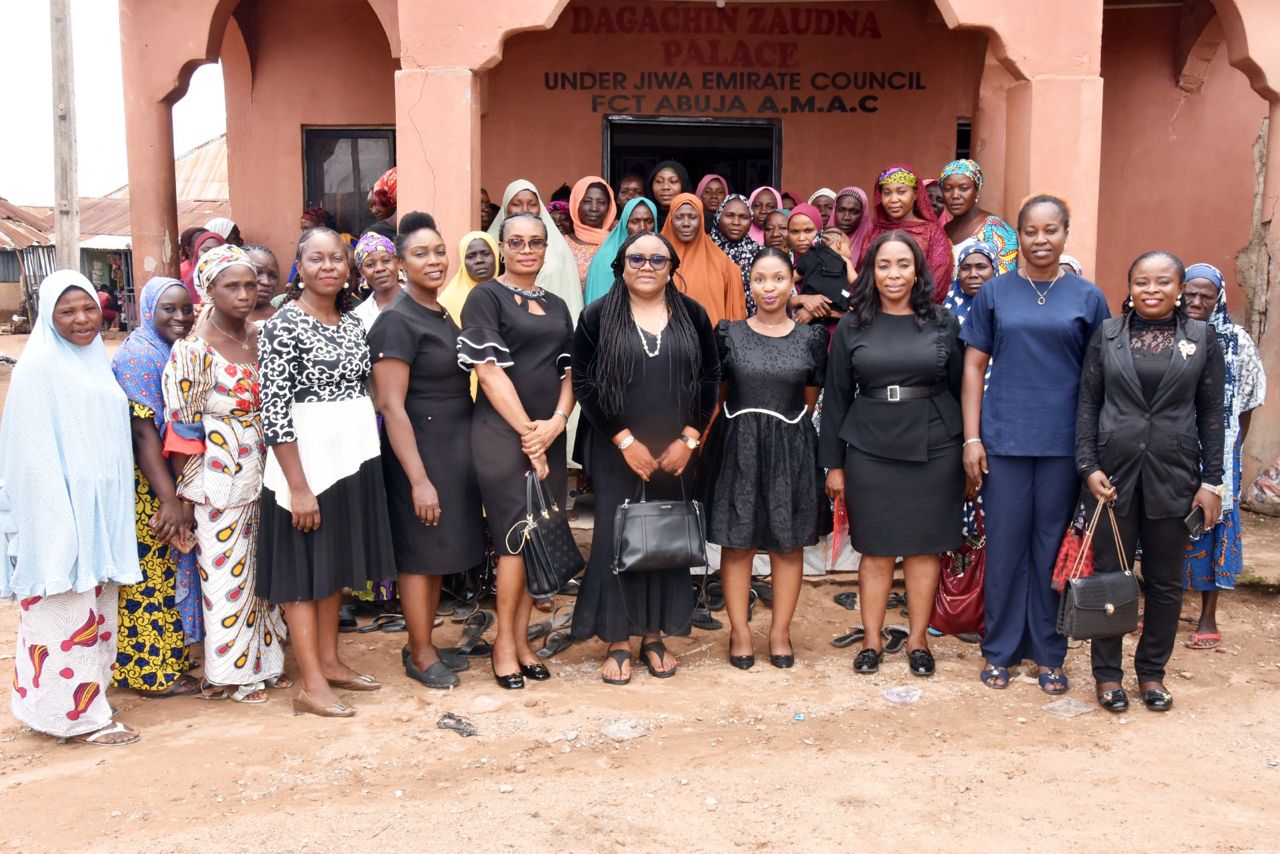
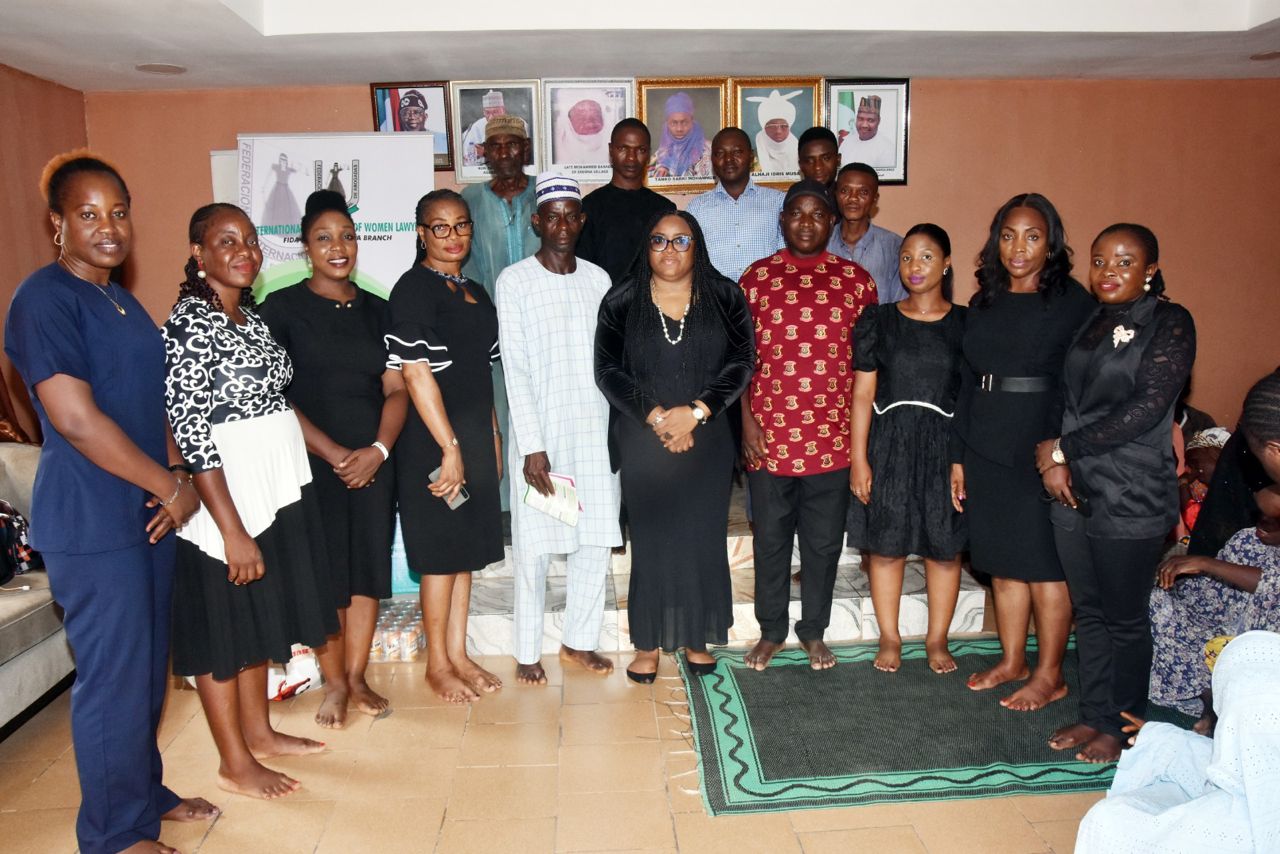
As part of their activities in the International Children’s Day celebrations, International Federation of Women Lawyers, FIDA Nigeria, Abuja branch took its enlightenment campaign to Gwagwa community in the Federal Capital Territory (FCT), Abuja.

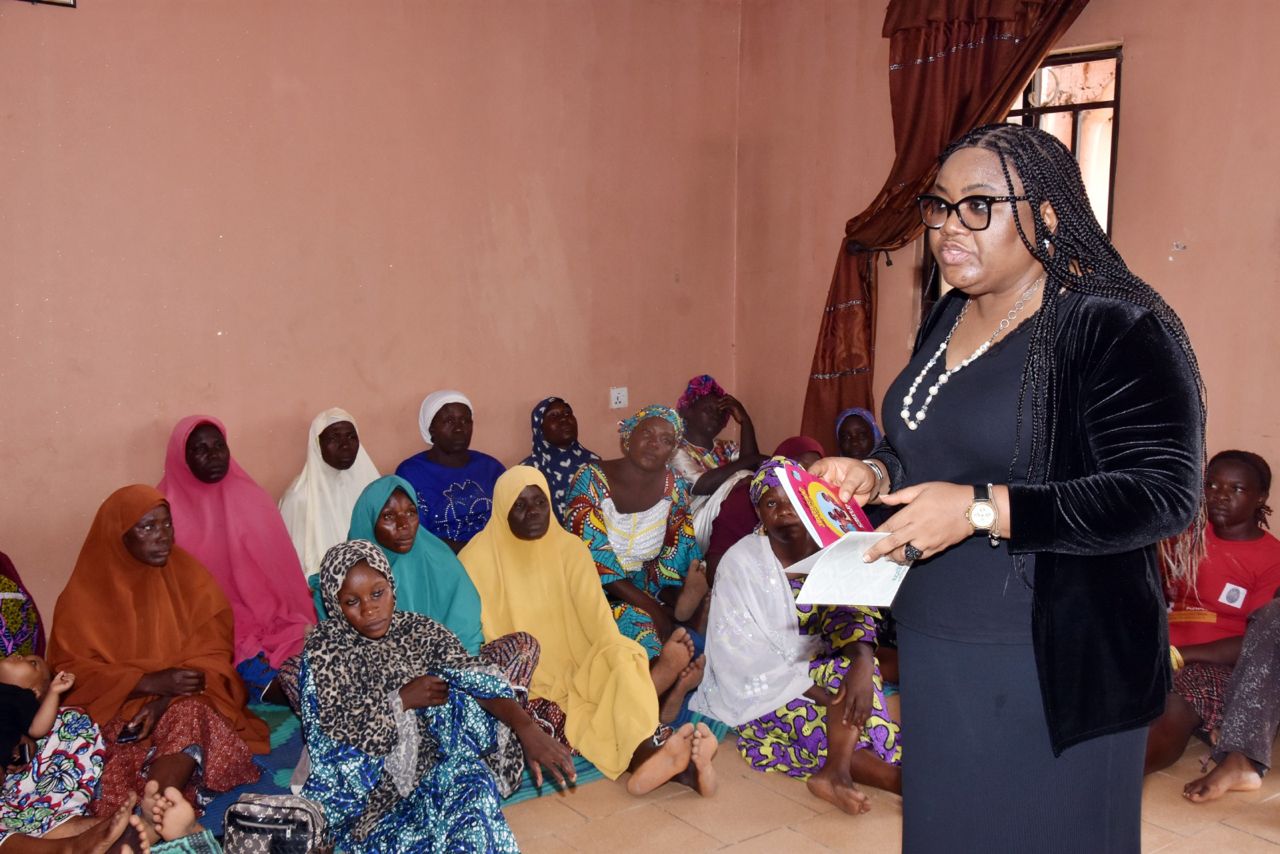
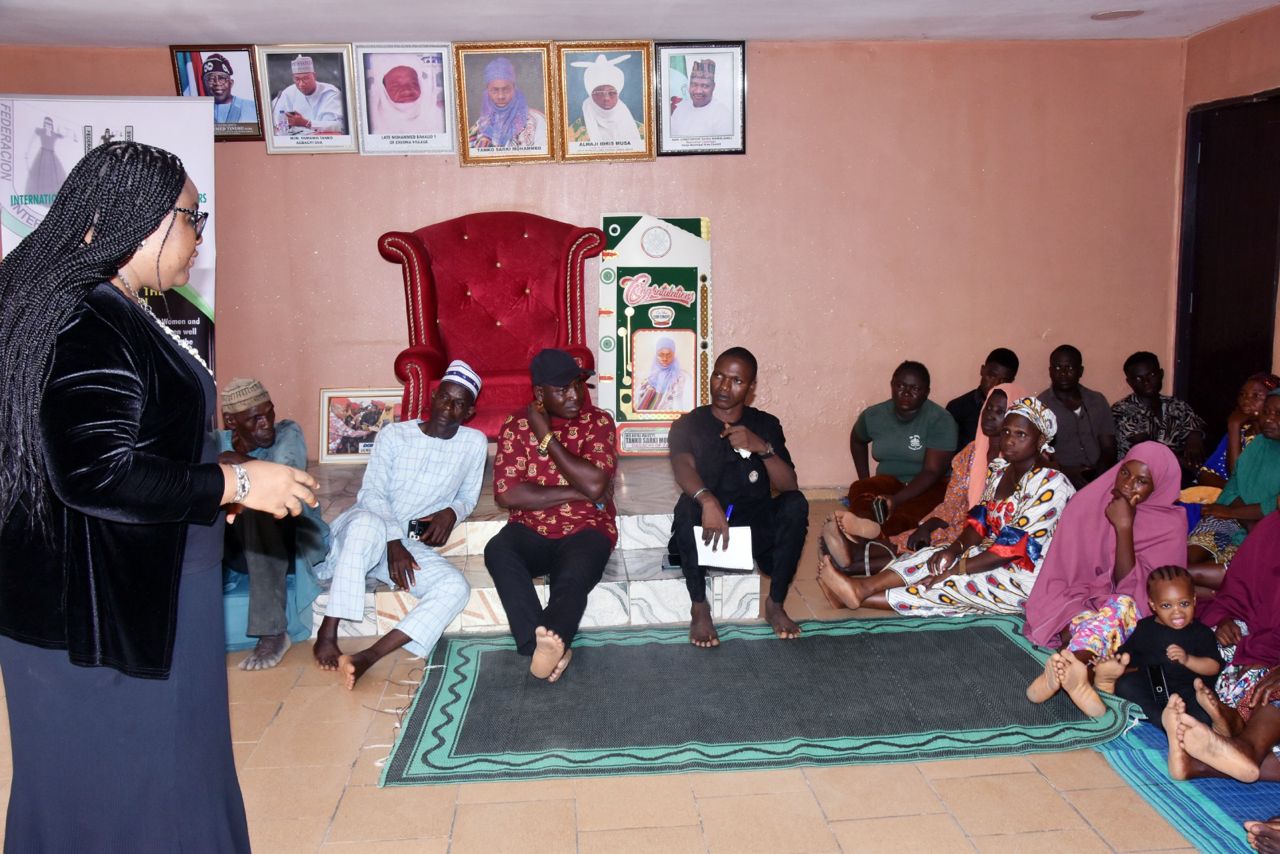
FIDA Abuja Chair Ms. Nwosu addressing the community members

FIDA Abuja led by its Chair Maureen Chibuzor Nwosu and her Vice, Francisca Akaniro Opara educated its audience on the rights of their children to free, compulsory and universal primary education as enshrined in Section 15 of the Child Rights Act 2003.

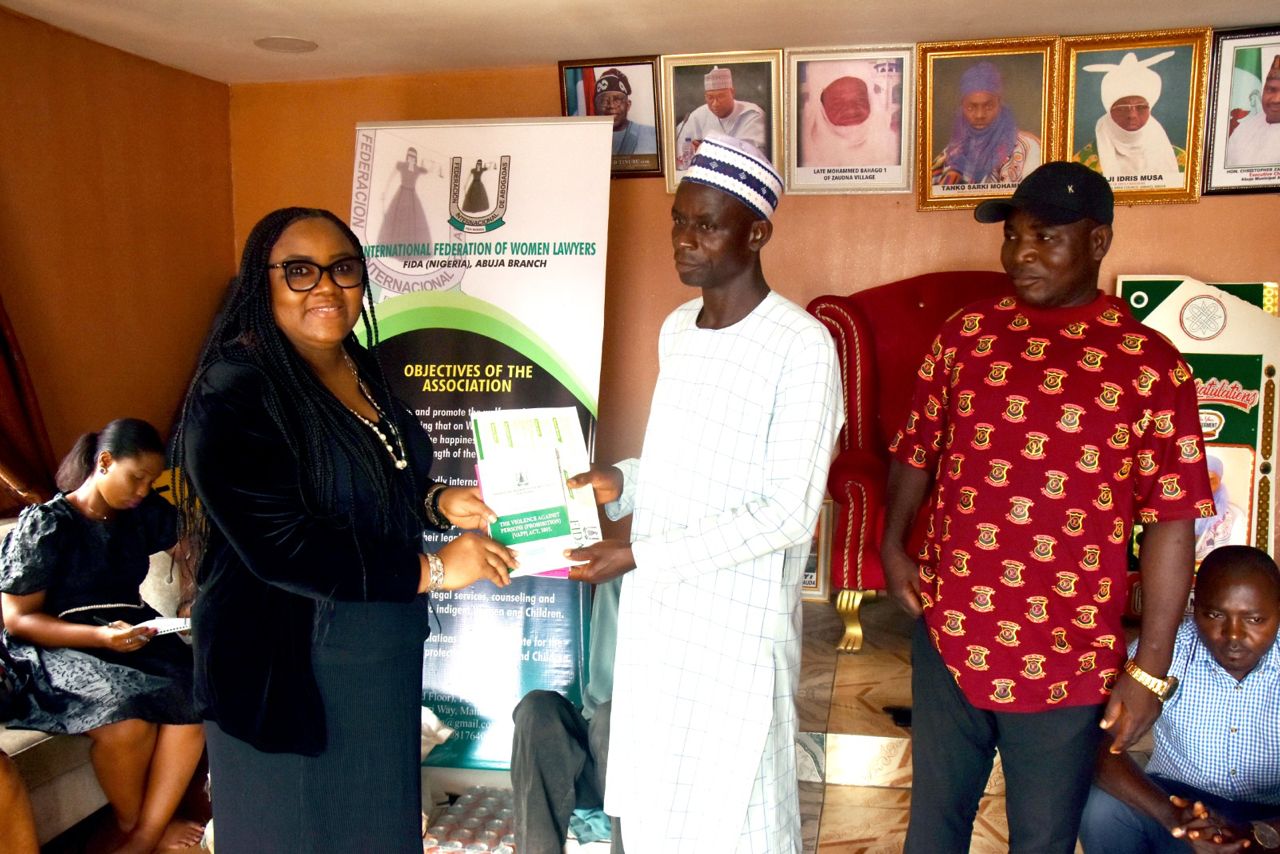
Presentation of the VAPP and Child Rights Act

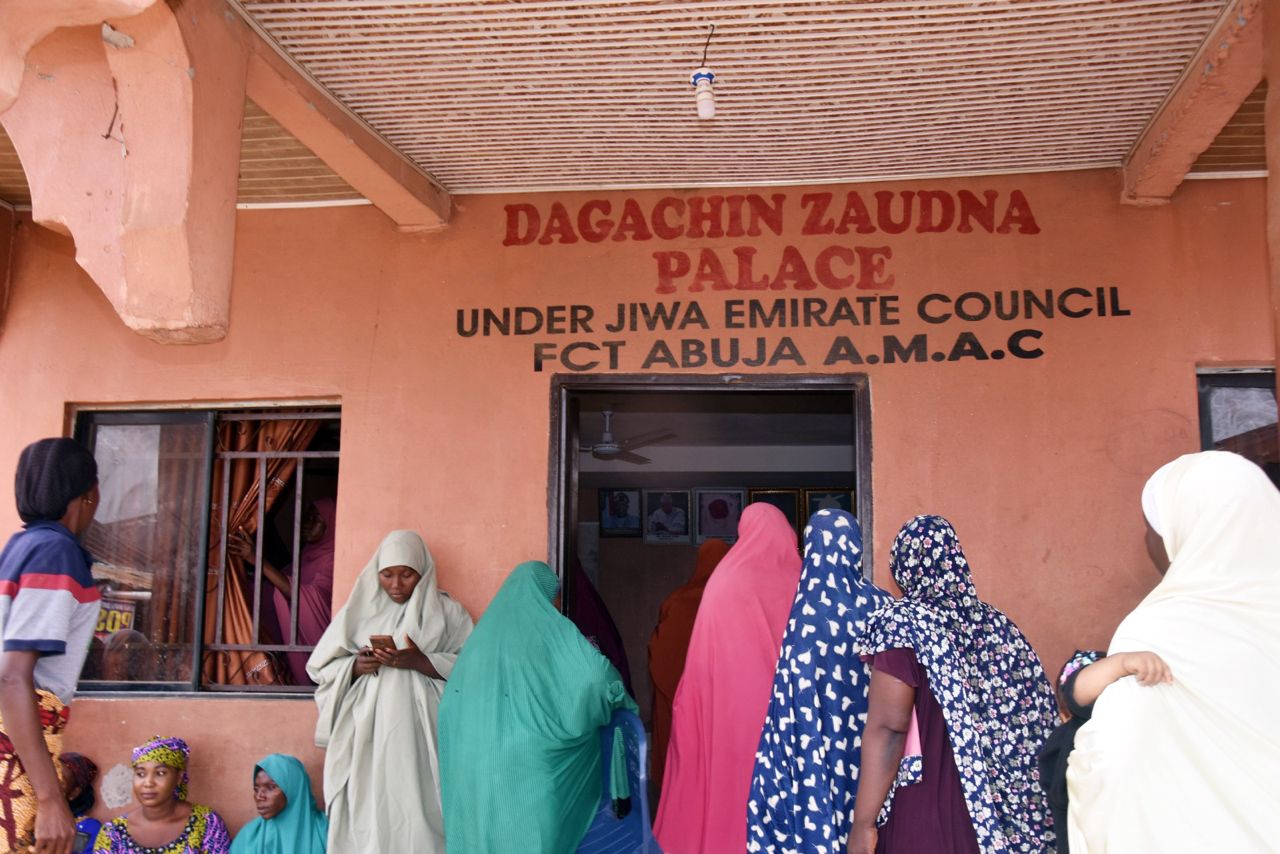
Addressing palace officials and locals at outreach held at the Dagachin Zaudna Palace, FIDA Abuja Chair, also harped on rape and its damaging effect on a child while advising the parents not to condone or cover up cases of rape and incest on the basis of tradition and/or cultural beliefs,. Ms. Nwosu maintained that such acts should be reported to FIDA, NAPTIP, or the Police.

She urged members of the community to desist from acts that run foul of the VAPP Act, such as Spousal battery; forceful ejection from home; incest and harmful widowhood practices. It was also noted that cases bothering on the domestic front, can be brought to FIDA for mediation and reconciliation (where appropriate) free of charge.

FIDA Abuja delegation and palace officials

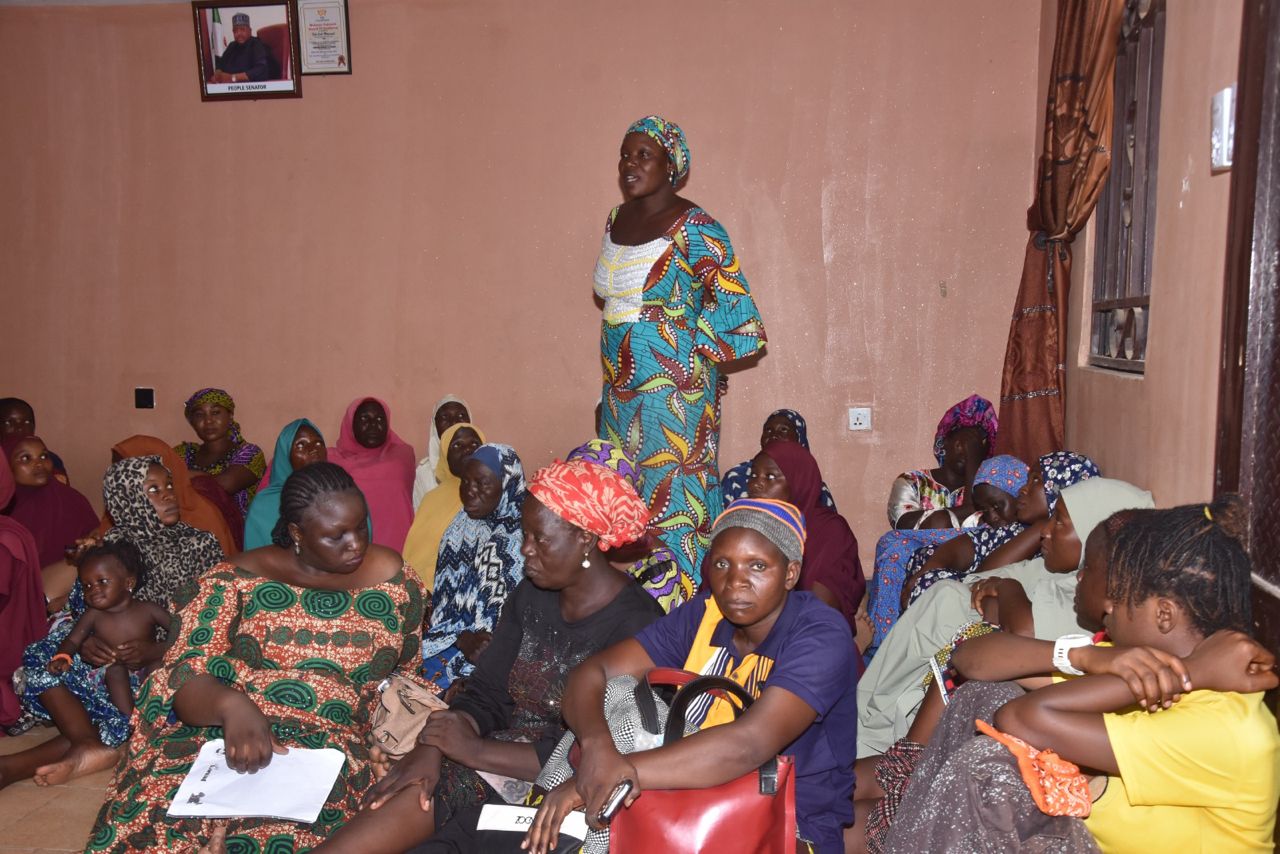
The highlight of the visit saw the people ask questions on the applicability of the Child Rights Act in view of the free and compulsory primary education of children in the primary and junior secondary school; Rape and the Sustainability of a relationship with the community.

One of the women who was unaware of the said provision, asked why they are made to pay the sum of N3, 200 in School Fees for primary and junior secondary levels. In response, the Chairperson who asked to be sure whether the amount paid is actually school fees or for some other levy, said the provision in Section 15 of the Child Rights Act on the right to free education is very clear. She however promised to make further inquiry in this regard.

On the issue of rape and other sexual violence, raised by a male member of the community, the Chairperson stated that the VAPP Act was carefully drafted to address the issue of rape which not only protects women and girls but men as well.

Expressing appreciation on behalf of the Palace, Mr. Adamu Zakariah who is the Miagwa of the Palace, thanked FIDA for bringing educational development to the community pointing out that they have been kept in the dark prior to the visit,.

FIDA Abuja equally presented gift items to the community while also leaving copies of the VAPP Act, Child Rights Act and FIDA flyers with the Palace Chief.

Other members of the FIDA delegation include: Olosen Victoria Ibiezugbe (Publicity Secretary), Dooshima Abege (Assistant Publicity Secretary), Ifeoluwa Johnson (Welfare Secretary), June Idang Etim (Welfare Secretary Emerita), Uwamusi Ikhisemon-Oje Ezeonara and Naomi Abeji Kpenosen.

Late Governor Akeredolu’s family announces scholarship fund for lawyers

  • NBA Ibadan commissions Bar centre to immortalise him
  • CJN says he deserves the honour

The family of the late former governor of Ondo State and onetime President of the Nigerian Bar Association (NBA) Arakunrin Oluwarotimi Akeredolu, SAN has announced the establishment of an annual law scholarship in his memory.

The scholarship fund named Oluwarotimi Akeredolu Scholarship Fund for Lawyers is geared towards supporting aspiring lawyers in the Nigerian Law school.

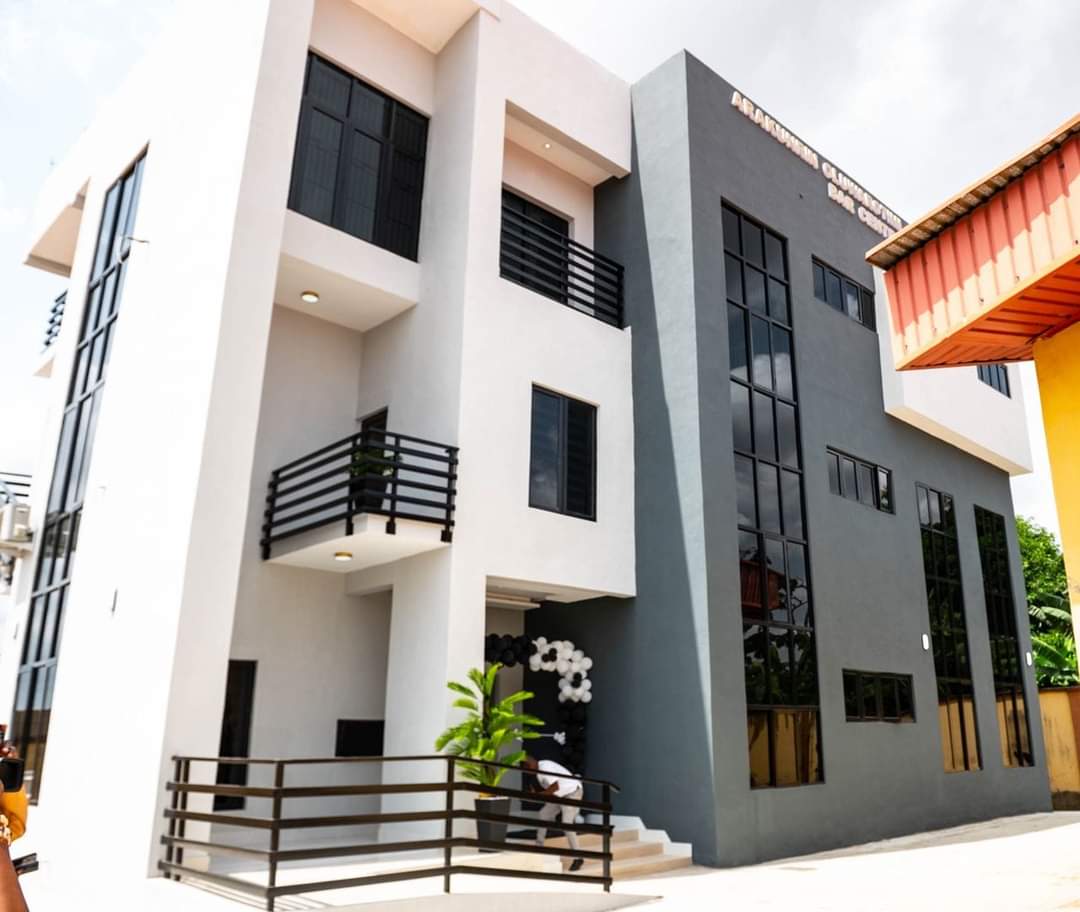
Also, in recognition of this legacies, the NBA Ibadan branch, on Wednesday commissioned a Bar Centre annex, to immortalise him.

In her opening remarks, the NBA Chairman of the branch, Mrs. Folasade Aladeniyi noted that the project, which was envisioned to serve as a source of income to the bar association was named after late Governor Akeredolu being a promoter of the rule of law, advocate of justice and for his outstanding leadership style in Nigeria.

She extolled the unalloyed support of the late former NBA President and former chairman of the Ibadan branch towards the establishment of the Bar centre annex, noting that, although he’s dead, his legacies remained unforgettable.

Announcing the establishment of the Oluwarotimi Akeredolu Scholarship Fund for Lawyers, his widow, Chief Mrs. Betty Anyanwu-Akeredolu, who spoke on behalf of the family informed that the Scholarship was in recognition of his love and immense contributions to the legal profession in Nigeria and to appreciate his legacy of excellence.

“This scholarship will be awarded annually to aspiring lawyers who have been admitted to the Nigerian Law School, and who demonstrate academic merit, leadership potential, and financial need. The scholarship will cover the full tuition and living expenses of the recipients for the duration of their studies at the Nigerian Law School. Details of its takeoff
will be provided in due course.

“The aim of this scholarship is to honor the memory and the vision of Aketi, and to support the development and advancement of the legal profession in Nigeria. The scholarship is also a way of expressing our gratitude to the Nigerian Bar Association, and especially to the Ibadan branch, for honoring my husband and our father with this naming ceremony. We hope that this scholarship will inspire and empower the next generation of lawyers, who will uphold the values and principles that Aketi embodied and exemplified”, she asserted.

While eulogising her late husband, the Akeredolu’s matriarch described him as a fearless critic of injustice, corruption and tyranny who was committed to fighting for the rights and interests of the marginalized and oppressed Nigerians.

She further described him as the father of the modern Ondo state who prioritized good governance through implementation of developmental policies and programmes that touched lives, including empowerment of women and girls.

Her words: “He was a defender of the rule of law, the independence of the judiciary, and the separation of powers. He was a promoter of national unity, regional integration, and continental cooperation. He was an advocate who spoke truth to power, and who stood for the common good.

“As a philanthropist, he gave generously to various causes and organizations that supported education, sports, religion, and social welfare. He was a benefactor of many individuals and groups who needed financial or material assistance. He was a patron of many associations and clubs that fostered professional development, social interaction, and community service.

“As a family man, he was a loving and faithful husband, a caring and supportive father and grandfather, a loyal and protective brother, and a kind and generous uncle. He was a pillar of strength, a source of joy, and a fountain of love for his family. He was a family man who cherished and nurtured his family, and who made them proud”.

She therefore, appreciated the NBA Ibadan branch for the decision to celebrate him by immortalising him with the edifice.

The Chief Justice of Nigeria, Hon. Justice Olukayode Ariwoola GCON, who commissioned the centre, affirmed that Aketi was a great Ibadan Bar man who indeed, deserved the honour done to him by the branch.
He added that the honour would serve as a good memory for Aketi’s family, and as a testament of his commitment to the Bar, hinting that the late Governor had promised to come back to the Bar after politics before his demise.

“Akeredolu deserved what the Ibadan branch has done for him. There’s no reason this could not be done for him. He will not forget you because he sees us, I thank you very much and I’m sure Aketi’s family and his children will be happy”. He said.

Also speaking, the Honourable Attorney General of the Federation and Minister of Justice, Prince Lateef Fagbemi, SAN, said the Late Akeredolu left indelible and visible legacies that people derived joy in.

The event which was held at Aare Afe Babalola Bar Centre, Iyakangu quarters Ibadan, the Oyo State capital, had the deputy governor of Ondo State, Chief Olayide Adelami, Chief Folake Solanke, SAN, Chief Judge of Oyo State, Hon. Justice Iyabo Yerima, Prof. Wole & Ifeoma Akeredolu, Pastor Kola & Prof. Alero Akeredolu, Mr Kunle and Yejide Runsewe, Engr. Babajide Akeredolu, members of the Breast Cancer Association of Nigeria, BRECAN, led by its national President, Amb. Tolu Taiwo, Aketi Friends and Associates, amongst others n attendance.

Ogun man kills mother of eight-months-old twins over solar light debt

One Saheed Olawale a resident of Abeokuta, the Ogun Sttate capital city allegedly shot and killed a nursing mother during a disagreement over solar light debt.

The deceased’s husband, Dauda Jolaosho, who resides at Alako Nla village, along Kobape Road, Abeokuta, alleged that his neighbour shot and killed his wife.

 Jolaosho, 44, who is a fish farmer, alleged on Wednesday, June 5, that his neighbour and friend, Saheed Olawale, a timbre operator, shot him and his wife but while he survived with a gunshot wound on his arm, his wife died instantly.  

Narrating the tragic incident, Jolaosho stated that the incident which occurred on Wednesday, April 2024, had left him completely shattered, as his wife left behind eight months old twins, and three other children aged 13, 10 and 5.  

He said, “This incident actually started on April 23, 2024. I was about to go out when the people that we bought solar lights from came to my house.  

“We actually bought these solar lights from them last year, in March; we made a deposit of N10,000 after which we are now paying N1150 every week, the total money is around N67,000. 

“And I have been paying what is due for this solar light every week, in fact, what I have left to pay is N3,000. So when these people came to my house, they said that they wanted to check on Olawale too, who is also popularly called Komaye.  

“They said that Olawale has stopped the weekly payments and that even when he is called he won’t pick his calls. They said they are left with no choice than to go back with the solar light to their office and they left a phone number with which he can connect with them whenever he’s back from work.”

Jolaosho added that immediately after Olawale got back from work and found out that they had taken his solar light back to their office, he got into a verbal altercation with him and wasn’t ready to listen to his explanation.  

He said, “The following morning, which was Wednesday, April 24, Olawale came to my house, picked up my phone and left.  

“The next thing, I saw him coming with the local gun and while my wife was on her knees begging him not to shoot, he suddenly pulled the trigger and I was hit on my arm, but when I looked back I found my wife of almost 18 years in the pool of her blood, she was dead.”

The fish farmer said the incident was first reported at Kemta police station, Abeokuta, after which it was transferred to the Ogun State police command, Eleweran, Abeokuta.  

He added that his late wife was buried on Tuesday at Alako Nla, Abeokuta.  

While demanding justice for his wife, he implored the Ogun State government and Nigerians to help him care for the five children left behind.  

The Divisional Police Officer of Kemta, CSP Wale Famobuwa, in a conference call with the spokesperson of Ogun State Police Command, SP Omolola Odutola confirmed the incident.  

The DPO said, “The incident was reported to our station between 12 and 2pm on that day and we went to the scene of the crime.  

“What happened was that the husband of the woman who was shot dead was engaged in a fight with the alleged killer of the woman.  

“He was said to have threatened to stone the man who later killed his wife, but this alleged killer warned him not to do that and that if he should stone him, he would shoot him.  

“Jolaosho, however, reportedly went ahead to stone Olawale after which he (Olawale) drew out his dane gun and shot at Jolaosho and his wife who was trying to broker peace.”  

The police added that Olawale was still at large and vowed to bring him to book.

Linda Ikeji

Water scarcity in Nigerian communities, its complex challenge and uncaring political leaders

By Lillian Okenwa

On 24 May 2024, Saudi Arabia was nominated to host the 11th global water and sanitation community forum. The forum has been held every three years since 1997 and the next will hold in 2027.

Meanwhile, as communities in oil rich Nigeria grapple with lack of portable water, Saudi’s Ministry of Environment, Water and Agriculture has announced the allocation US$ 80 billion towards water projects within the coming years. This falls in line with the United Nations Sustainable Development Goals (SDGs) which is to enable equal access to clean and safe water globally.

Also, Saudi Arabia’s wastewater treatment services market is growing at a steady pace; and according to a recent study, the dizzyingly rich Arab nation built 133 wastewater treatment facilities in 2021 an increase of 14.66% over the previous year. Last September, the Crown Prince and Prime Minister announced the establishment of a Global Water Organization headquartered in Riyadh.

In 2022 after accusing traditional rulers in the state of abetting banditry, the then governor of Zamfara State, Bello Matawalle, and Nigeria’s current Minister of State for Defence proceeded to distribute 260 luxury cars including several 2019 Cadillac models to them.

Many of these communities which are mostly rural and agrarian have been under intense bandits attack and even pay protection taxes to these gunmen. Those who fail to pay for whatever reason are attacked, their livestock rustled, farms destroyed and residents either killed or abducted. The state government’s effort to check these incessant harassments, degradation and abuse of human rights remains to be seen. The bandits operate both at night and in broad daylight unchallenged.

Strangely, in this state where traditional rulers were gifted with luxury cars running into millions of dollars, the state government has been unable to provide the over 500,000 residents of the state capital with potable water not to talk of the local communities. Several news reports reveal that Gusau, the state capital has recorded many boat accidents as a result of the struggle by the inhabitants to get water from a river close to the town.

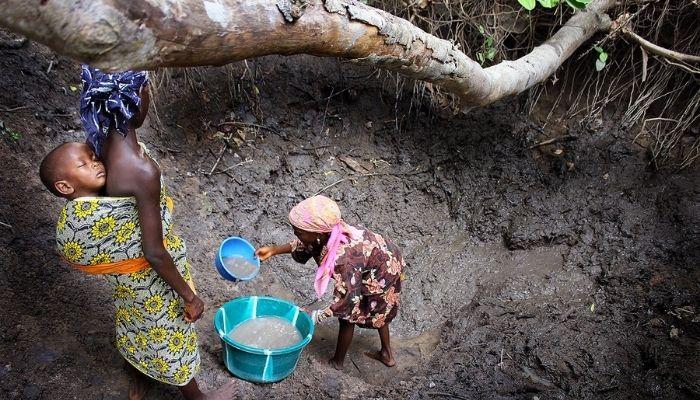
Residents particularly women and children have to sail in canoes to fetch water for domestic purposes. Although many boat accidents had occurred previously in the capital city, that of 7 May 2023 when seven persons and a prospective bride lost their lives was the most disturbing. The victims mainly women and children include an 18 year girl called Zainab Yusuf who was about to get married. Her younger brother Aliyu Yusuf was also among those who lost their lives.

The parents of the late Zainab and Aliyu who are said to be poor, depended on them for drinking water as they could not afford to buy water from vendors who sell a Jerry can of water at  N150 at the time.

Speaking after the incident, the late Zainab’s father, Lawal Yusuf described the tragedy as the worst thing that ever happened to him. “I will never forget this throughout my life. I was not at home when the incident happened. I was away from home when my neighbour called me on the phone and told me that both my daughter, Zainab and my son Aliyu had died in boat accident. I nearly fainted but managed to come home where I met the two corpses lying on the floor. You see, we have to send our wards to the river to fetch water for our domestic purposes because that is the only alternative as the government failed to supply us with drinking water,” he lamented.

According to Yahaya Yusuf, the community leader of the Albarkawa area where the incident occurred,  “Our children don’t go to school whenever there is water scarcity. Many of them have to go to the river to get water for their parents, despite the danger involved in the process.”

The State government officials insist that government is doing its best to provide portable water across the capital city but the residents of Gusau who bear the brunt disagree.

In the face of water scarcity in neighbouring Sokoto State, residents of  Rafinduma village located in Kadadi and other communities in the Gada Local Government Area of the state are forced to travel over seven hours on donkeys to draw water from wells in a neighbouring town in the Niger Republic. Rafinduma is a community of over 17,000 residents.

Notwithstanding that Sokoto is classified among the poorest state in Nigeria with citizens wrestling with penury, its then governor, Aminu Bello Tambuwal in 2017 allegedly spent N700 million to buy a residential building in Abuja for the Sultan of Sokoto. Curiously, the house reportedly belonged to the Sultan before the state repurchased it for him.

This dependence of some Sokoto indigenes on Niger Republic towns for water underscores the absence of key essential social amenities. In spite of being mostly farmers, according to a PUNCH Newspaper report, the villagers’ farming activities have been severely hampered by the unrelenting water scarcity. Each year, they are forced to contend with this challenge that is hindering their ability to fully engage in their livelihoods.

Garba, a member of the community, told PUNCH that: “For over two decades, our village has been devoid of any accessible water source – no wells, no boreholes, not even a river to fetch water – we must trek to a neighbouring village in the Niger Republic, enduring a grueling journey just to meet up with our basic needs.

“The lack of water has had a profound impact on our daily lives. Basic hygiene practices like bathing and washing clothes become luxuries, and even drinking water is scarce for us.”

The 56-year-old father of six further revealed that: “The daily struggle for water forces our children to undertake arduous journeys to the Niger Republic, over six kilometres away from Our community, just to quench our thirst. Despite the hardships, the residents remain steadfast in our commitment to the village’s development but the fear is that abandoning our community would leave it vulnerable to becoming a ghost town or a potential hideout for bandits and kidnappers.

“So, our determination to stay is rooted in the peaceful nature of our community. Unlike other areas plagued by insecurity, Rafinduma has remained safe, free from the incursion of herdsmen or other threats. However, our urgent need for water remains unaddressed.”

Likewise, the Corporate Accountability and Public Participation Africa (CAPPA) declared days ago that over 8 million Lagos residents currently lack access to clean drinking water. CAPPA stated this during the ‘Our Water Our Right Coalition’s’ press conference marking World Water Day 2024 themed ‘Water for Peace.’ 

This according to the organization, was despite the State’s reputation as a megacity. CAPPA also spotlighted the persistent issue of water access across Africa, highlighting Nigeria’s struggle to provide safe drinking water to its citizens. 

Emphasizing on the issue of water scarcity as a general challenge in Africa, the Executive Director of CAPPA, Akinbode Oluwafemi, said: “In Nigeria alone, a staggering 113 million people suffer from painful hardship and crippling deprivation of water. This saddening neglect is not due to a scarcity of resources but rather a consequence of the profit-driven logic adopted by state authorities in managing water supply and amenities.

“The relentless pursuit of commodifying public resources, at the expense of community welfare, has led to the deterioration of vital public utilities and social services. While this plight is widespread across the country, the situation in Lagos State is particularly alarming for us.

“Despite the state’s reputation as a lodestar and mega-city, over 8 million of its residents—equivalent to roughly 60 percent of its population—grapple with limited access to potable water.”

PUNCH in another special Interview reports how people, mostly women of Asa, a community in Ogun State, travel to neighboring Benin Republic to access potable water in the absence of boreholes and reliable wells.

In desperate search for water, Asa residents are forced to fetch contaminated water from nearby streams and rivers or embark on arduous journeys across the border to the Benin Republic in search of clean water.

The Conversation in a report made some disclosures. “Our findings showed that women face water scarcity and climate change challenges. They are vulnerable to water-borne diseases and gender-based violence. We also found that women’s participation in water management and decision-making was limited, which affected their ability to influence policies and strategies related to water governance…

“The intersection of gender, climate change and water scarcity creates a complex challenge that demands a comprehensive and inclusive approach. There are steps that would improve the situation. They include governments, civil society organisations and local communities tackling the underlying causes of water scarcity. And involving women in water management and decision-making.”

Water shortages, contaminated water and poor sanitation are interrelated and linked to the spread of diseases such as cholera, diarrhoea, dysentery, and typhoid. 73 percent of the diarrhoeal and enteric disease burden in Africa is linked to poor access to adequate water, sanitation and hygiene (WASH), with the greater proportion occurring in poorer children. Reports show that 115 people in Africa die every hour from diseases linked to poor water and sanitary conditions.

The federal and state governments must rise to the challenge of addressing poor water and sanitary conditions as a crucial pathway to achieving universal health coverage. Ultimately, for these objectives to be achieved, much will depend on the political will to actualise them.

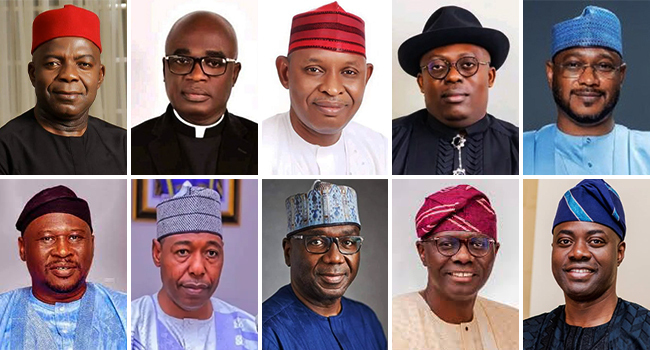
Meet the 30 govs. who spent N968.64bn on refreshments, others in three months

By Damilola Aina

No fewer than 30 state governments of the federation spent N986.64bn on recurrent expenditures, including refreshments, sitting allowances, travelling, utilities, etc., in the first three months of 2024, The PUNCH reports.

The states’ budget implementation reports, which were obtained from Open Nigerian States, a website supported by BudgIT that acts as a repository for public budget data, were analysed.

For the first three quarters of the year, our correspondent examined budget implementation data from thirty states; data for six states was not available.

Benue, Imo, Niger, Rivers, Sokoto and Yobe States were the ones without Q 1, 2024 data.

A breakdown showed that the 30-state government spent N5.1bn on refreshments for guests, N4.67bn on sitting allowances to government officials, N34.63bn on local and foreign travel expenses, and N5.64bn on utility bills, amounting to N50.02bn in the first three months of 2024.

The general utilities include electricity, internet, telephone charges, water rates, and sewerage charges, among others.

The sub-nationals also paid N405.77bn as salaries to their workers.

Other recurrent spending items covered in the report included the amount spent on foreign and domestic travel, Internet access fees, entertainment, foodstuff, honorarium/sitting allowance, wardrobe allowances, telephone bills, electricity charges, stationery, anniversaries/special days, welfare, aircraft maintenance, and more.

In the first three months of 2024, Abia State spent N10.92bn on its recurrent expenditures, including N165.38m on refreshments and feeding, N39.26m on utilities, N214.57m on sitting allowances, N127.1m on local and foreign travels, among miscellaneous expenses.

During this period, Adamawa State expended N23.7bn on recurrent expenditures with N287.61m spent on refreshments and feeding, N109.62m on utilities, N79.57m on sitting allowances, N768.77m on local and foreign travels.

For Akwa Ibom State, recurrent expenditure gulped N46.85bn, which included N4.46m on refreshments and feeding, N223.32m on utilities, N6m on sitting allowances, N214.61m on local and foreign travel.

Anambra State disbursed N9.91bn for recurring expenses with N78.18m on refreshments and feeding, N32.52m on utilities, N42.09m on sitting allowances, N188.39m on local and foreign travel.

Also, recurrent expenditures cost Bauchi State Government N35.75bn with N397.58m going to utilities, N50.8m on refreshments, N287.11m on allowances, and N413.56m on trips.

Bayelsa State spent N35.1bn on recurrent expenditures, comprising N28.4m on utilities, N156.14m on refreshments and N279.99m on trips.

Adamawa plans N55.5bn supplementary budget
Similarly, Lagos State disbursed N189.62bn for recurrent expenditures, including N1.21m for refreshments, N383.12m for utilities, sitting allowances costing N52.79m and N633.37m on travels.

Borno spent N18.79bn, Cross Rivers (N17.44bn), Delta (N68.68bn), Ebonyi (N14.95bn), Edo (N32.32bn), Ekiti (N32.8bn), Enugu (N7.51bn) and Gombe with N20.89bn.

Within the same period, Jigawa State spent N15.52bn on the recurrent expenditures, Kaduna expended N34.69bn, Kano (N34.41bn), Katsina (N21.87bn), Kebbi (N11.67bn), Kogi (N37.4bn), Kwara (N24.34bn), Nasarawa (N18.61bn), Ogun (N47.12bn), Ondo (N31.12bn), Osun (N24.39bn), Oyo (N40.12bn), Plateau (N24.70bn), Zamfara (N13.46bn), and Taraba (N20.93bn).

Government spending has come under increased scrutiny in recent times, particularly in light of the country’s worsening economic challenges.

At different fora, financial experts have also raised concerns about states’ spending on recurrent expenditure, highlighting the need to embrace financial innovations.

A development economist, Aliyu Ilias, said many states had yet to fully develop themselves as industrialised and marketable to attract investors.

Ilias urged governors to develop an area of strength they could leverage to attract foreign investments.

He said, “Going forward, what they could do is identify one area of strength. For instance, Bayelsa has oil and should be able to attract investments. I think it is about policy. They should give the policy a chance that would allow people to come and invest. They should also create an attraction and develop an economic summit that will make sure they showcase and attract investors.”

An economist and former Vice-Chancellor of the University of Uyo, Prof. Akpan Ekpo, urged the states to increase their revenue by improving service delivery.

On his part, a Professor of Economics at Babcock University, Segun Ajibola, stated that the enduring problem of high governance expenses had persisted at the state level, with inadequate oversight and accountability resulting in minimal economic benefits for grassroots citizens.

The former president of the Chartered Institute of Bankers lamented that state assemblies had also abandoned their oversight duties, leaving the state governors to operate with no iota of transparency and accountability.

He said, “The first issue is the perennial complaint about the high cost of governance in Nigeria and at all levels. When you look at these issues, attention is often concentrated on the Federal Government, so the searchlight is always more on the central government. Most often, nobody cares about what is happening in the states and local government, and that is where the problem is.

“There are so many institutional frameworks in place to look at what is happening at the federal level but who cares about the states? The cost of governance in relative terms is even much higher in states than the federal and that is why you hardly feel the impact of governance in most states.

“Only a few states can boost a significant presence in the lives of their people in our states. The state assemblies are expected to conduct oversight functions on the activities of the executives in their respective states, but in reality, how many states are doing that, leaving the executives to be all in all in incurring high costs?”

Culled from PUNCH

Senate gives a nod to 300% pay increase for CJN, judicial officers

Nigeria’s Senate has passed a bill seeking to prescribe improved salaries, allowances, and fringe benefits for Judicial office holders in Nigeria.

The bill was read the third time yesterday and passed.

The passage of the bill by the Senators was a sequel to the consideration of the report of the Senate Committee on Judiciary, Human Rights and Legal Matters presented by the Chairman, Senator Mohammed Monguno, APC, Borno North.

In his presentation, Monguno who noted that stakeholders at the public hearing of the bill were unanimous in their support for its passage, said that the purpose of the bill are sacrosanct to the justice sector reform initiative of the present administration.

According to him, the bill was in consonance with the Constitution of the Federal Republic of Nigeria and the standing rules of the Senate.

He said, “The proposed legislation is apt and timely as the increase in remuneration of judicial office holders is long overdue in light of the present economic realities and high inflation in the country

“The bill was “quite innovative”, aside the increment in the basic salary, it also took cognisance of certain peculiarities of the administrative structure and operation of the judiciary.

“Generally the bill, if passed will birth an appropriate and commensurate remuneration that will ensure judicial independence and integrity.

“That no doubt adequate remuneration will allow judicial officers to focus on their professional development without worrying about financial constraint; hence it will improve their professionalism and decision making skills.

“That fair compensation for judicial officers is crucial for maintaining public trust in judiciary’s impartiality and integrity.

“When Judges are adequately compensated, it demonstrates a commitment by society towards the important role they play in upholding justice”.

Monguno who noted that the increase in remuneration for judicial office holders became imperative in order l to attract and retain highly qualified and experienced professionals who possess the necessary skills, knowledge and integrity to serve on the bench, adding, ‘That certainly, the bill if passed will give financial security to retired judicial Officers after years of dedication in the profession and allowing them to remain comfortable during their retirement”.

He said the increment under consideration has been captured in the 2024 Appropriation Act.

“We can no longer fish…” Dashed hopes as Ibeju-Lekki locals accuse Dangote refinery

By Lillian Okenwa

It’s been nine years since the All Progressives Congress (APC) took over governance in Nigeria. Yet, the escalating cost of living and diminishing quality of life in Nigeria has left many groaning.

Nigerians at various times in different forums have called on government at all levels to save them from hunger-induced death; as prices of commodities keep soaring as the days go by. The high cost of petrol, cooking gas, armed herdsmen attack on farmers with no buffer from government for afflicted farmers and a myriad of other poverty inducing challenges in Nigeria has left many perplexed. But that is not all.

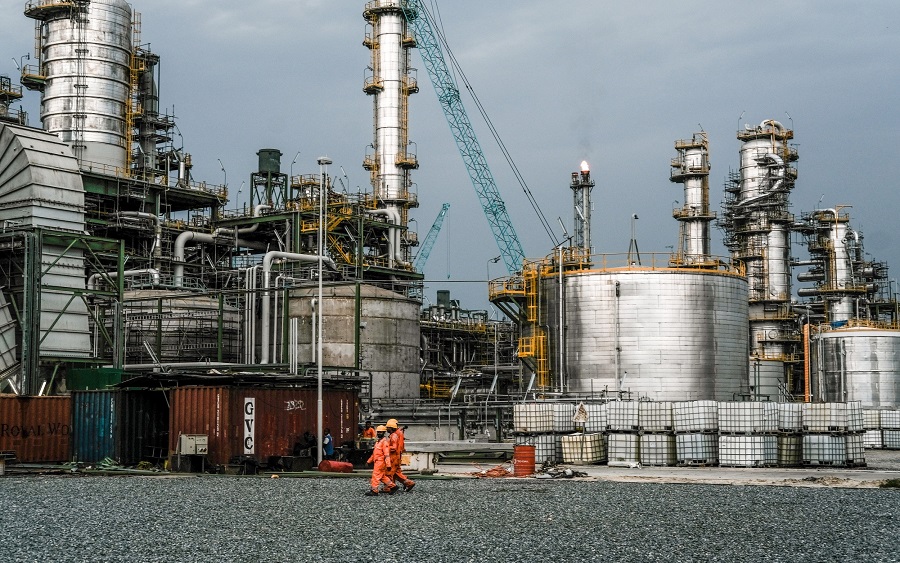
When an ambitious refinery project in the Ibeju-Lekki suburb of Lagos, Nigeria, took delivery of the world’s largest single crude distillation column in December 2019 Nigerians were divided. Some greeted it with fanfare believing that Nigeria’s petroleum problems was finally coming to an end. Another group comprised of the locals in Ibeju -Lekki viewed it with suspicion.

Recently there was a news report about how Dangote Cement Company shunned mining law, refused to sign a Community Development Agreement and proceeded to contaminate water through its mining activities in Yewa communities in Ogun State.

ICIR Nigeria reports that in the 150-year-old community a chemical analysis of the water sample not only revealed the presence of calcium but that “lead and cadmium from cement kilns infused to Ibese soil and air could cause cancer for children and adults. They either breathe in the polluted air or consume contaminated crops.”

But The Guardian‘s 3 June 2024 article titled ‘There is nowhere to fish any more’: life in the shadow of Nigeria’s biggest industrial complex’, painted an even scarier picture of impoverishment, hopelessness and environmental abuse.

During a 5 August 2023 dialogue between between Dangote Refinery officials, youths and women leaders in Ibeju Lekki on how they are impacted by the refinery, Wosilatu Apena, a woman leader and Community Development Committee (CDC) official, said: “We are typically fishermen in this community. Unfortunately, since the construction work on the refinery started, we have continued to record low fish and snail catch because the fishes have retreated to safer waters. Because of this, we must go further into the Atlantic Ocean to catch anything. It is getting more dangerous to even do so because our boats can no longer withstand the strong waves of the sea.”

Arepo Azeez, a youth leader, said “Vibrations from the seaport and the refinery are affecting us,” even as members expressed worry over possible accidental discharges of oil products into the environment over time.

These fears expressed in 2023 have been confirmed by The Guardian report below.

“Owned by Dangote Industries, a multinational conglomerate founded by Aliko Dangote, Africa’s wealthiest person, the compounds are in the Lekki free trade zone, abutting the Atlantic Ocean about 30 miles outside Nigeria’s commercial capital. The zone was designated by the federal government to develop industry and jobs.

“The $2.5bn (£2bn) urea and ammonia plant opened in 2022 and the $21bn refinery opened last May and began production in January. Dangote and the government, which has a 20% stake, hope this will make Nigeria less dependent on expensive imported petroleum “and stop, once and for all, the dumping of substandard petrol products in our markets”, Dangote said in a televised speech last year.

“People living near the site were happy about the developments when they were first mooted a decade ago, says Tajudeen Ismaila, 35. But the mood has changed. ‘We prayed for development, and we didn’t expect it to come in this form,’ he says.

“Thousands of people from the Ilekuru, Idasho, Okesegun, Okeiyanta and Magbonsegun communities have been evicted from ancestral lands by state authorities to make way for the development.

“Local people say they were promised new schools, electricity, boreholes, jobs and compensation agreed in an MOU signed between the Lagos state government, the Ibeju Lekki local government, the trade zone managers and 12 community groups in 2007, which they understood covered all development in the area. But those the Guardian spoke to say they have received school textbooks, school tuition fees, and less than 81,000 naira (£43) in compensation.

“Lives and livelihoods have also been affected. A large expanse of forest has been removed to make way for the construction of the plants. Some rivers and streams have been dredged to accommodate vessels and pipeline networks. Some swamplands and creeks have been sand-filled to lay foundations. Crayfish and shrimp fishers have seen their catch reduced.

“’A fisherman got up to four baskets in a day in the old days, but today, a basket in one week is a miracle,’ says Ola Tunde, a youth worker in Lekuru. A wet market that attracted buyers from Epe and Lagos has seen customers disappear since 2017, when building the refinery began.

“Those evicted now live on a patch of land a tenth the size of their former homes, says one, Alhaji Majeed Lateef. “There are no more farms. There is nowhere to fish any more.”

“The fertiliser plant, planned to produce 2.8m tonnes of granulated urea a year, with ambitions to be the west African hub for production, is part-funded by a loan from the World Bank’s International Finance Corporation (IFC). A 2014 environmental impact report submitted by Dangote to the IFC said any impact on the biodiversity, health or livelihoods would be minor, but a “livelihood restoration plan” would be developed to compensate people for displacement and loss of resources.

“Producing 650,000 barrels of petroleum a day at full capacity, the refinery will, according to its website ‘meet 100% of the Nigerian requirement of all refined products and also have a surplus of each of these products for export’. In April, the refinery began producing diesel and jet fuel for the domestic market.

“Wumi Iledare, a professor of petroleum economics at Louisiana State University’s Center for Energy Studies in the US, says the refinery could galvanise regional trade and meet energy needs across west Africa. ‘For me, energy poverty is as dangerous as global warming. Energy is very critical to economic growth. It is important, not just for Nigeria’s energy security but also for Africa’s energy security,” he says.

However, Yakubu Bununu, an associate professor of regional planning at Nigeria’s Ahmadu Bello University, says people are not in a position to challenge such developments. “The communities are poor and lack the resources to organise themselves better,’ he says. ‘So they were not aware of what was coming. The issue has become more complicated.’

Prof Orish Ebere Orisakwe, of Nigeria’s University of Port Harcourt, has studied the toxic effects of oil pollution in the Niger delta for decades. He warns of health risks associated with living near a refinery.

“’Proximity to an oil refinery is associated with a statistically significantly increased risk of multiple cancer types,’ he says. ‘It has also been found that people who resided within up to 10 miles showed an increased risk of more advanced disease compared with persons residing 21 to 30 miles from an oil refinery.’

“Philip Jakpor, the executive director of the Renevlyn Development Initiative, which supports the rights of Indigenous groups, says ‘there is no doubt” that noxious emissions from a refinery could be on a similar scale to that in the Niger delta.

“My worry, however, is that this project might slow the country’s transition from fossil fuels to clean and affordable renewables and Nigeria’s target of reducing carbon emissions,’ he adds.

“Nigeria has pledged to cut emissions by 20% by 2030 and be carbon neutral by 2060.

“The Lagos State Environmental Protection Agency appears to be taking residents’ complaints seriously. Earlier this year, it took soil, water and air samples around the fertiliser plant and refinery, and commissioned an independent researcher to do the same. Dangote also took samples for analysis. The agency has not said when results may be published.

Adebayo Solanke, a researcher in environmental micropaleontology at Florida A&M University, says it wouldn’t be too late to make changes. ‘What is the benefit of economic stability that comes at the expense of people’s lives and health? Only living and healthy people work. So, the government and companies should find a balance between economic stability and the health of the people and their environment,’ he says.

“Eighteen ultrasonic flare gas meters have already been installed on large pipelines around the refinery, to measure the gases being burned off and to monitor emissions.

“Solanke says the flared gas could also be trapped and converted into different forms of energy that could power homes or industries. Jobs created by the plant could bolster the local economy, he adds. He called on regulatory agencies to continually collect, analyse, and publish data from the area so residents are kept informed of any change in circumstance.

“Walid Sheriff, who lives in Idasho, says he is struggling. ‘I have three kids, and I can’t send them to a good school. I am struggling to provide food and shelter for them. Look around the community and see how impoverished the people look. Does this look like a community hosting a big refinery?’ he says. ‘I was doing well as a fisherman. Now, I have to beg around for a job. The government should hear our voice and help us. We need help.’

“Dangote refinery did not respond to requests for comment. The Nigerian government responded only to confirm that the environment agency had taken samples for analysis.”

Most part of this article was culled from the story, ‘There is nowhere to fish any more’: life in the shadow of Nigeria’s biggest industrial complex, written by Orji Sunday and published by The Guardian of 3 June 2024.

Police arrest suspected mentally sick woman for attempting to cut husband’s manhood

Habiba Ibrahim, a Kaduna housewife who appears to be mentally ill has been arrested by the police in the Zaria, Kaduna State over an alleged attempt cut off the penis of her 40-year-old husband, Salisu Idris.

Although no reason has been adduced for her action, her husband who is still in a state of shock stated that they have been living peacefully since they got married four years ago.

The strange incident occurred on May 26 after Salisu Idris returned from the mosque where observed the early morning Muslim prayers.

Narrating his ordeal, the commercial motorcyclist explained that he was lying the bed when his wife who was beside him suddenly pounced on him with a sharp knife and nearly cut off his manhood.

But for providence he said, Habiba, who he married four years ago, would have succeeded in completely cutting off his manhood.

Idris said he was shocked by his wife’s action adding that there was no misunderstanding before her action.

After the incident, Idris was reportedly rushed to the General Hospital in Makarfi from where he was later referred to the Ahmadu Bello University Teaching Hospital, Zaria.

“I’m more concerned about my health right now and not thinking of remarrying shortly,” he said.

Idris’ mother, Rabi Salisu, who is taking care of him at the hospital, according to a PUNCH Metro report said he had never complained to her about his wife.

“Her parents are worried and are willing to settle his medical bills,” she added.

The Kaduna State Command’s Police Public Relations Officer, ASP Mansur Hassan, could not be reached for comments.

In July 2023, the Police Command in Katsina State, confirmed the arrest of a woman in her 30s, Tinene Isa, for allegedly cutting off her husband’s manhood.

The Police Public Relations Officer, ASP Abubakar Aliyu, who confirmed the arrest in an interview with the News Agency of Nigeria (NAN), said the incident occurred in Kafur Local Government Area of the state.

Aliyu, who did not disclosed the name of the victim, said that he was in a critical condition receiving medical treatment at General Hospital, Malumfashi.

He said the suspect allegedly used a razor blade to perpetuate the act. “I told you, we are making investigation into the matter.

“She is a bride of over 30 years of age, may be she took long time before she marry, or it is not her first marriage.

“I don’t have much details, we will find out all these in our investigations,” he said. He said the suspect would be charged to court for prosecution after investigations.

Similarly, in March 2022 the Police in Agbor, Delta State arrested Blessing Ndidi, a housewife, for attempting to cut off her husband’s manhood over allegation of infidelity at Alisemien community in Ika South Local Government Area of the state.

Nigerian Tribune gathered that Ndidi, a native of Akokwa in Imo State had on several occasions inflicted injuries on her husband.

On the fateful night, it was further gathered that the man, a bricklayer was said to have been drunk before the attack.

After the attack, he was later rushed to a private hospital in Boji Boji Owa in Ika North East Local Government Area where he is recuperating.

The report said that the couple had been married for about three years without children even as the wife had been accusing the husband of infidelity.

It was alleged that the woman had in the past attacked the man with a pestle and knives at any provocation, warning to chop off the husband’s manhood if she ever discovers that he has a child with another woman.

Confirming the story, the state Police Public Relations Officer, DSP Bright Edafe, said the victim was not helping in the investigation as he insisted that charges should not be preferred against her “because she is my wife.”

Senator who couldn’t Pay minimum wage, renovate hospital in his community as governor donates 600 rams to constituents— Nigerians react

Nigerians on social media platform, X, have tackled a former governor of Zamfara State and current senator, Abdul’aziz Yari for donating 600 rams to his constituency. 

SaharaReporters learnt that the former governor gave the rams to his neighbours and underprivileged families in the Zamfara West Senatorial District in honour of the Eid-El-Kabir festivities coming up on June 17.

The Coordinator, Zamfara West Senatorial District Constituency Office, Sha’ayau Sarkinfawa made this revelation to journalists on Tuesday in Talata-Mafara.

He said, “You know, this is an annual gesture from our leader, Sen. Yari, aimed at assisting the less privileged households to celebrate the Eid-El-Kabir with ease.”

However, this act by the lawmaker has attracted negative reactions from Nigerians who considered it as misplaced priority. 

According to them, Yari should have channelled his good gesture towards improvement of his state. 

An X user, kingkhone wrote: “This is someone that couldn’t pay the minimum wage throughout his tenure as a Governor.”

Zubair Abdullahi wrote:  “Though a good venture but he should have empowered them than sharing the rams to them. Some of them would prefer the 100k to start up a little business than the ram.” 

Saleeem also added: “Meanwhile, this is the current situation of the General Hospital Talata-Mafara, his hometown. He couldn’t renovate it, let alone upgrade it to standard, all these years until recently when Governor @daudalawal_ visited the hospital and ordered its total reconstruction. They would rather spend lavishly and unnecessarily than empower, educate, and build the masses. I’m glad that Governor Dauda is already shaping the system of governance and leadership in the state.” 

SaharaReporters had also reported how a member of the 10th National Assembly representing  Bassa/Dekina Federal constituency in the 10th National Assembly, Paul Gowon Haruna donated a traditional well to his constituency. 

Haruna is a member of the ruling All Progressives Congress.
 

SaharaReporters

TIPS