Home Blog Page 574

Tinubu’s ‘Taste’ Gerontocracy

By Lasisi Olagunju 

The University of Ibadan is 75 years old. Chief Bisi Akande celebrated his 85th birthday on January 16 this year. He was made Secretary to Oyo State Government 45 years ago at the age of 40. He was Deputy Governor of Oyo State 42 years ago. He was elected Osun State Governor in 1999 – 25 years ago.

He left the office of governor 21 years ago. Last Friday, the 85-year-old man was appointed by President Bola Tinubu to serve the University of Ibadan as its pro-chancellor and chairman of council. When you heard Chief Akande’s name as the appointee, you were almost as sure as I was that the old warrior would reject it in a jiffy.

I told myself that he would tell his friend, the president, that his choice for UI’s top job must be an error; that only today’s hound can successfully chase today’s hare. But today is Monday – four days after, Chief Bisi Akande has not rejected the ‘juicy’ job. We have no business rejecting it for him.

An elephant chooses how he wants the forest to address him. If you schooled at the same time as I did, you must have read the poem ‘Salute to the Elephant’. It is there that you meet Elephant – “possessor of a savings-basket full of money” who is “huge as a hill, even in a crouching posture.” The Elephant is that mighty one “who carries mortar and yet walks with a swaggering gait…, animal treading ponderously.”

The Elephant, more importantly, is that “mountainous animal, the huge beast who tears a man like a garment and hangs him up on a tree.” The sight of the Elephant, the chanter-hunter says, “causes people to stampede towards a hill of safety.” Now, imagine that elephant coming down from the height of his high reputation to mingle with deers in a scavenge-rush for forbs.

An elephant would do that if it does not see itself as an elephant. It is his choice. I am not qualified to tell Chief Bisi Akande’s Elephant not to eat what common goats eat. But if I were his son, I would beg him to say “No, thank you.”

Chief Akande is not alone on that geriatric podium of self-diminution. With him is General Ike Omar Sanda Nwachukwu (Rtd) who was made chairman of the University of Nigeria governing council. The University of Nigeria is 69 years old. It was founded in 1955 but formally opened on October 7, 1960. General Nwachukwu will be 84 years old on September 1, this year. He has been everything anyone would ever want to be in Nigeria.

As a soldier, he rose to be Major-General and General Officer Commanding. He was governor of Imo State 40 years ago. He was Minister of Labour 39 years ago. He was Foreign Affairs Minister 34 years ago. He was elected senator 25 years ago. He is back from the bench in this season of renewed past.

Must it be them? Don’t they have around them, in their political party, sleek-headed young people with knowledge and ideas who can handle these assignments? They have them, but those ones are useful only as aides and bag carriers.

Writing in May last year for US’ satire newspaper, The Onion, grand old Dianne Feinstein satirized America as “an out-of-touch gerontocracy” where “the average age of a senator is 65” – and the president eighty-something years old. She said she was “glad” not to live and get stuck in that country of “dementia-addled” leaders “who keep a stranglehold on power” and “who prioritise their own careers and bank accounts over the common good.”

Then she wondered, angrily “How selfish you’d have to be to cling to power when you’ve long since ceased to understand the needs of ordinary people.” I will be shocked if I am the only one who thinks strongly that Feinstein wrote about Nigeria of today.

I read a sonnet of William Shakespeare where he deplores “age” staying “too long.” In his ‘The Passionate Pilgrim’, Shakespeare explains why “crabbed age and youth cannot live together.” Shakespeare sings of “Youth like summer brave, age like winter bare.” He says “Youth is full of sport, age’s breath is short; Youth is nimble, age is lame; Youth is hot and bold, age is weak and cold; Youth is wild, and age is tame…” Yet, our country’s vote is for the old and cold; the lame, the tame.

We have more of them. Our universities are now a rest home for the ancient. There is also 72-year-old Alhaji Yayale Ahmed who was announced as the chairman of 62-year-old Ahmadu Bello University, Zaria. He was appointed Head of Service of the Federation in the year 2000 – 24 years ago. He occupied that post for seven years, retiring in 2007 to be appointed as the Minister of Defence.

He left the office of minister in September 2008 to be appointed as the Secretary to the Government of the Federation. He held sway there till May 2011. He left 13 years ago. He is back from retirement to preside over ABU’s highest governing body.

These king-size men and others on that long list will be interfacing with a 70-year-old minister. Professor Tahir Mamman is our minister of education. If he had remained in the university system, he would be due for retirement in three weeks’ time. The minister reports to a president who is officially 72 years old. Essentially, these 20th century men are the drivers of the 21st century vision of Nigeria’s knowledge industry. That is the way we roll. The National Universities Commission (NUC) regulates Nigeria’s university system. Who is NUC’s substantive executive secretary? Check if it has. And, who presides over its board?

As I write this today, Sunday, 16 June, 2024, the commission in charge of our universities has on its website, Emeritus Professor Ayo Banjo as the chairman of its board. Baba Professor Banjo died last month – he was 90 years old. NUC has not remembered to update its website – or it is reluctant to let go of the late Professor Banjo.

Beyond the dead, shall we ask the new octogenarian appointees where they hope to start from in this digital age? With their appointments, Nigeria is asking its Gen Z students to use fatigued eyes of tired men to prepare their journey into the future. May God help them.

A leader must know when to say enough to seeking power. Someone (I can’t get their name) said knowing when to walk away is wisdom. He also said being able to walk away is courage. Yet, there is a third line: walking away with your head held high is dignity. Why would an eighty-something-year-old man want to be a baggage carrier – porter – to the youth of his land? Someone said it is the love of service. I replied that it is simply a case of an Egungun, because of perks, dancing itself into irrelevance.

Apart from them being his friends, are there patriotic reasons why the president posted these men to those schools? We may not know the real reason why our president made those geriatric choices – unless he tells us. Raul Magni Berton and Sophie Panel in 2017 did a paper on why non-democratic systems produce older leaders. They postulate that leaders’ “ruling styles” are “partly shaped by the rules that brought them to power.” They ask why anyone, even the old, would want to be ruled by aged people. They dissect types and motives of gerontocratic rule. They speak on what they call ‘taste’ gerontocracy “which is based on genuine preference for old leaders.”

This government’s choice of yesterday’s men for today’s work has natural consequences. You know menopause, its complications and implications. That is what the University of Ibadan, UNN and ABU and some others in their geriatric shoes are now married to. Escaping the schools’ climacteric suitors and their creaky beds looks futile.

When Humphrey Hawksley wrote his 2009 book, ‘Democracy Kills’, he probably had our case in mind. There is hardly anything which today’s democracy inherited that it has not fed to the dogs. While we fantasised on what the textbook says democracy is, the leaders have unitised the benefits in it; they’ve warehoused the gains in their family silos – for the comfort of their generations and for their friends’.

I am wasting my time writing this. The same applies to you raising complaints about how our planes are being run aground. The government does not care about the public and its opinion. You can’t blame it. There is a problem with winning all bouts all the time. It intoxicates the winner, making them look down on the street and disdainful of even their fans. “At being humble, I’m the greatest”.

A Minnesota, United States mother in about 1970, was horrified to hear her young wrestler-son say this as he recorded wins after wins. The woman described that statement of her son as “silly” – but that was hubris at work. We read such ‘humility’ in the insults the Nigerian leadership rolls out almost daily. Everything points at the end of sanity in the conduct of our affairs. Yet, long before this present darkness, there had been eras of rationality and hope.

There had been an age when leaders insulted not the people’s sensitivities and the people bowed in respect of fair leadership. We had a past of values which even those who colonised us acknowledged in their own moments of sobriety.

Between the last days of 1927 and the early weeks of 1928, a group of United Kingdom’s Members of Parliament visited Nigeria. They moved from the coasts in Lagos through the hinterland forests to the grasslands of the North. They thoroughly toured the East of Nigeria and the creeks of the Niger Delta – then went back to London through Lagos.

At a dinner of the African Society in London on 13 March, 1928, leader of the delegation, Major Walter Eliot, presented his team’s report. In that report, Major Eliot said while in Nigeria, his team saw an “honest attempt” by the black man to build “a house” for his soul; a house “where the black man could find a shelter” against the impact of a strange alien culture; a house “from which in years to come, he may take his own share as a partner in the progress of the world – not as an inferior and certainly not as a serf…” Eliot’s optimism – expressed in that report 96 years ago – was hasty and misplaced. If the Briton visits Nigeria of today, he will meet 200 million people shuffling and struggling not to be serfs of power.

That is not all from Eliot. Everywhere they went, his team said they saw a people who had very high regard for their leaders and who had their leaders’ respect. He disclosed that his team members were surprised (and impressed) and were of the conviction that “the black man should look to the black ruler as the keystone in the arch of rule; that the white man should not be the keystone…that the rule should be of the black man by the black man and – as far as we can devise it – for the black man.”

They are long dead, those proud, upright people who were met in Nigeria by the British in 1927. About a hundred years after the Eliot team experience and the positive testimony from London, and 64 years after foreign rule, a virulent strain of disdain for the ruled – and disgust for the ruler – reigns. Our democracy is a despicable bazaar; the classic “every man for himself and God for us all.” What the 1927/28 visitors envisioned as the rule “of the black man by the black man” has turned out not “for the black man.” The rule serves the strongman and his clan whose ways are decidedly not necessarily the ways of their people.

They take the benefits; their children take. Their concubines and mistresses also pick theirs while your own portion is tucked away in their pouch. It is the reason they can’t reason with us when we say Nigeria cannot survive as a unitary presidentialism. They take our call for federalist sanity as a threat to the advantages they enjoy. They think a truly federal Nigeria would be too tight to structurise into personal fiefdoms.

They work that federalism won’t happen. Not now, not tomorrow. And they are winning. They spring on us federal surprises everywhere. They set up institutions and make appointments that are designed to unitarise our lives under the Big Brother. Because they are smart, they easily know that they can’t compete and feed their greed in a Nigeria that is properly structured. The result of their knowing is that we can’t breathe without their permission.

A restructured Nigeria has the prospect of not surrendering to Comrade Napoleon’s unitary dictatorship in the Animal farm. Less than one week into this democracy, Professor Bolaji Akinyemi, in the Friday, 4 June, 1999 edition of the Nigerian Tribune, warned that Nigeria was on the way to a most destructive form of unitarism. “The road to the hell of unitarism is paved with good intentions. They should be careful…”, he warned the inheritors of the gains of the struggle for this democracy. They ignored him. We were too hopeful to hear him. But, words of elders, if they don’t come true in the morning, they will in the evening. The evening of Nigeria is here.

Ohuruogu’s legacies would continue to serve as exemplary steps worthy of emulation —Gov. Mbah

Enugu State governor, Dr. Peter Mbah, has lauded the legacies bequeathed by a foremost professor of Law and development consultant, Chris Chijioke Ohuruogu, saying the consummate teacher lived an impactful life.

Mbah, however, said that he could only recall the last moments of Prof Ohuruogu with great pain, as he died at a time the society needed his wealth of knowledge, experience, and wisdom.

He stated these in his funeral oration during the funeral service of the late academic at Akabo, Owerri, Imo State, on Friday.

Describing the late professor’s passing as a great loss to not only the deceased’s immediate family, but also to him as a person as well as Imo State and the entire country, Mbah explained that their relationship spanned decades from the point he met him as a lecturer at the Lagos State University during his postgraduate studies.

He lauded him as a disciplined, accomplished and consummate scholar, adding; “Let me say this; I was fortunate to have drunk from the Prof Chris Ohuruogu’s fountain of knowledge as he taught me in the Lagos State University during my postgraduate studies in Maritime and Commercial law.

“So, the death of Chris, as we fondly called him, is not a loss that is exclusive to you, his family. It is a loss to me personally. So I’m also mourning. When I received the news of Chris’ death, my first reaction was a flurry of emotion and one of outright denial and plain anger over how cruel the hands of fate could be sometimes,” the governor said.

The Governor who expressed regret that all the courageous efforts made to save the deceased failed noted that it was the time apportioned to him by God to return to him. He then enjoined the deceased’s family and the people of Imo state to bear the loss as such was the will of God.

He stressed that death remained the ultimate price awaiting all mortals, adding, however, that Ohuruogu’s legacies would continue to serve as exemplary steps worthy of emulation.

In his sermon earlier, the Archdeaconry of St. Andrew’s Anglican Church, Ven. Peter Duruaku, said the death of Prof Ohuruogu was not without hope as he had lived a godly and virtuous Christian life.

He called on the living to always remember that death was inevitable for every living being and that each person would be called to give account of the stewardship by God.

Appreciating the governor for remaining faithful to a friend even in death, the traditional ruler of Akabo Ancient Kingdom, HRM Eze Evans Njoku Nwasi, said governor Mbah had re-echoed his love for the bereaved family, the people of Imo State people and humanity.

Africa’s Continental Criminal Court can no longer wait

By Chidi Anselm Odinkalu

Less than a decade ago, the detention centre of the International Criminal Court (ICC) in Scheveningen on the outskirts of The Hague could easily have been mistaken for a committee meeting of leaders of the African Union. One of its long-term guests was Laurent Gbagbo, a former president of Côte d’Ivoire. From neighbouring Liberia, Gbagbo’s contemporary, Charles Taylor, kept up a punishing schedule on the tennis courts of the facility. With them there also was former Vice-President of the Democratic Republic of the Congo (DRC), Jean-Pierre Bemba.

At about the same time, Kenya’s President, Uhuru Kenyatta; and his Deputy and future successor, William Ruto, were suspects on trial before the ICC. For over five years before that, since 2009, the Court had an arrest warrant still outstanding for Sudan’s President Omar Hassan Al-Bashir.

Even as the ICC advanced towards an arrest warrant for Sudan’s then dictator, the African Union (AU) complained somewhat vainly that “abuse and misuse of indictments against African leaders have a destabilizing effect that will negatively impact on the political, social and economic development of States and their ability to conduct international relations.”

The month before the ICC authorized the arrest warrant against Omar Al-Bashir, in February 2009, the summit of the African Union’s Heads of State and Government requested the Commission of the African Union “in consultation with the African Commission on Human and Peoples’ Rights, and the African Court on Human and Peoples’ Rights, to examine the implications of the Court being empowered to try international crimes such as genocide, crimes against humanity and war crimes, and report thereon to the Assembly in 2010.” In the wake of the onset of the crisis in Libya, the African Union decided that the ICC’s focus on the African continent was “discriminatory.” In Malabo, the capital of Equatorial Guinea, in June 2014, the AU adopted a treaty to confer on the court jurisdiction over international crimes. This treaty is known as “the Malabo Protocol”, after the city where it was adopted.

It was the assessment of the AU then that the Bashir arrest warrant would “seriously undermine the ongoing efforts aimed at facilitating the early resolution of the conflict in Darfur.” More than five years after Omar Al-Bashir’s ouster and one and a half decades after the ICC’s arrest warrant for him, the current metastasis of atrocities in Darfur provides reason to reassess the African Union’s fears.

At the time when the AU first voiced its fears and suspicions about the ICC in the first decade of this millennium, they were largely greeted with derision. This attitude was foundational to the existence of the ICC. At the adoption of the statute establishing the court in 1998, then UK Foreign Secretary, Robin Cook, infamously sniffed that “this is not a court set up to bring to book Prime Ministers of the United Kingdom or Presidents of the United States.”

This colonial superciliousness did not preclude African countries from recognizing the opportunities in the ICC. The continent was the single largest source of resilient support to the project and process that culminated in the creation of the Court. With 33 of the 124 member states of the ICC, Africa provides over 26.6% of the signatories to the Statute establishing the Court, the largest single bloc of any continent. In January 2004, when few trusted the Court to exercise its functions with skill or responsibility, Uganda’s President Yoweri Museveni voluntarily referred the situation in the country to the court, yielding up the first case received by it. By the end of the first decade of its operations, the prosecutorial docket of the ICC read like a political geography of Africa: Central African Republic, Côte d’Ivoire, DRC, Kenya, Libya, Mali, Sudan, Uganda.

A senior lawyer practicing at the ICC accused it of being “a vehicle for its primarily European funders, of which the UK is one of the largest, to exert their influence and, particularly, in Africa.” For a long time, fundamentalists of the ICC dismissed this view as lacking in credibility.

As the current prosecutor of the Court, Karim Khan, prepared to turn his attentions to the atrocities in the ongoing crisis in Gaza earlier this year, however, all the suspicions about the targeting of Africa by the court were confirmed. In a high profile interview with the Cable News Network (CNN) last month, Mr. Khan disclosed that an un-named senior Western official seeking to dissuade him from seeking an arrest warrant against Israel’s Prime Minister, had told him that the ICC was “built for Africa and for thugs like Putin.”

At about the same time, it emerged that the head of Israel’s much feared foreign intelligence agency, the Mossad, had “allegedly threatened a chief prosecutor of the international criminal court in a series of secret meetings in which he tried to pressure her into abandoning a war crimes investigation.” According to The Guardian in London, this was part of “an almost decade-long campaign by the country (Israel) to undermine the court (ICC).” In the wake of these disclosures, those who issue gratuitous lectures to Africa about the impunity and accountability have seen nothing and said even less.

The Prosecutor whom they threatened was Fatou Bensouda, Gambia’s current High Commissioner to the United Kingdom whose courage in defending the independence of her office as the second Prosecutor of the ICC made her the subject of punitive sanctions by the United States.

In the Malabo Protocol, the African Union, tired of protesting the pigmented project of the ICC, decided to endow an African Court of Justice and Human and Peoples’ Rights with jurisdiction over 14 crimes of an international or transboundary nature on the continent. These include aggression; war crimes; crimes against humanity; genocide; trafficking in persons, in hazardous wastes or in drugs; terrorism, corruption; money laundering; mercenarism; piracy; illicit exploitation of natural resources; and unconstitutional changes in government.

Despite the truly capacious scope contemplated by this treaty, a sustained international campaign frightened most African states into losing their sovereign nerves about the establishment of the court. The current scandal around the skullduggery and double standards in relation to the ICC’s efforts to address Afghanistan and Palestine have finally persuaded African countries to return attention to the project of an African competence on international crimes.

On 31 May, Angola became the first country to ratify the Malabo Protocol. That leaves 14 more to do so before the African Court of Justice and Human and Peoples’ Rights can be established. That cannot happen too soon. When it does, the new court will have 15 judges who will sit in three sections. The General Affairs section will handle cases on mostly trade, regional integration and continental institutions. The section on Human and Peoples’ Rights will focus on human rights cases. There will also be a section on International Criminal Law which will have a pre-trial, trial and appellate chamber. The new Court will house one prosecutor and also one registrar.

Fundamentalists of the ICC mock the idea of an international crimes instance for Africa. In truth, in the period of just over two decades of its operations, the record of the ICC has been largely underwhelming. It can do with all the help that it can get. The continental criminal instance proposed by the AU should be seen as a paydown by Africa on precisely that kind of assistance. Ten years after the its adoption, there is no longer time to wait; Angola’s leadership in the push to bring the Malabo Protocol into force deserves to be quickly complemented by other African countries.

A lawyer and a teacher, Odinkalu can be reached at [email protected]

Minimum Wage: Nigerians have made enough sacrifices, let NASS members and political office holders lead

By Lillian Okenwa

The National Assembly has reportedly resolved to ensure that states, local governments, and the Organised Private Sector stop defaulting in the payment of the approved minimum wage. It is said that they may even consider seizing allocations of states and local governments that fail to comply with the new minimum wage.

The national legislators also announced plans to include a clause that will provide clear sanctions for defaulters of the new minimum wage bill that will be passed after receiving the Wage Award Bill from President Bola Tinubu.

Senate spokesperson, Yemi Adaramodu, explained that lawmakers would expedite the passage of the Wage Award Bill once President Bola Tinubu sent it but the question of when the National Assembly will reduce its humongous earnings and stop wasteful expenditures remain uncertain.

Speaking last year when he was featured on Channels Television’s Politics Today, Kingsley Moghalu, a former deputy governor of the Central Bank of Nigeria (CBN) recommended a 50% cut in salaries and allowances of political office holders and members of the National Assembly (NASS) owing to the economic hardship in the country. 

Moghalu, an economist expressed concern that despite the hardship facing Nigeria in the wake of the petroleum subsidy removal, the country’s governance culture encourages extravagance among political leaders and appointees.

The President and his supporters have been demanding understanding and patience from the people and calling for sacrifices.

“The culture of governance is a very important issue that needs to be addressed and the tone has to be set from the top – from the presidency down. It has to include the National Assembly because a lot of resources go there and they are supposed to be independent of the executive,” Moghalu said.

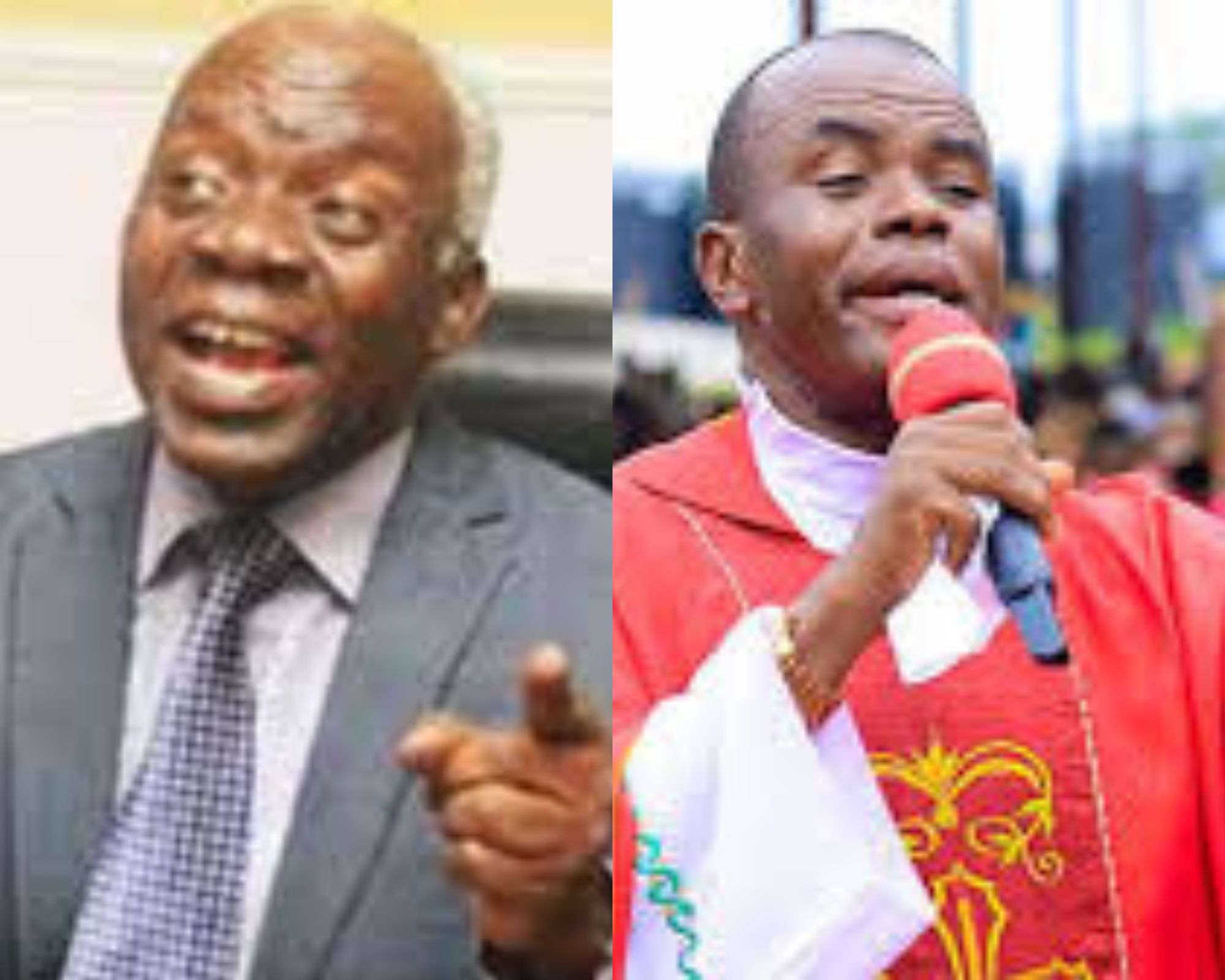
During the week, rights advocate and Senior Advocate of Nigeria, Femi Falana, remarked that Federal and State governments can pay the national minimum wage if looted monies are recovered. In a related development, Catholic priest, Ejike Mbaka in an interview with AIT, stressed that governors and members of the national assembly should also earn the N62,000 minimum wage proposed by the federal government.

Writing for The Vanguard in the article, Fuel scarcity: When greed, corruption and sabotage form an alliance, Abdullahi Gambari said: “Without a doubt, there exists in the country today an unholy alliance between the trio of greed, corruption and sabotage. And they are wreaking monumental destruction on the economy by inflicting needless psychological trauma on the people’s psyche, strangulating productive processes at micro and macro levels,… The bottom line is that the current traumatic situation in the country is largely orchestrated by greedy, corrupt saboteurs who are only profit minded…”

Despite a national outcry amidst intense suffering and poverty, members of Nigeria’s 10th Assembly took delivery of Special Utility Vehicles (SUVs) worth a whopping N200 million each. Although Akin Rotimi, spokesman for the Chairman of the House Committee on Media and Public Affairs who confirmed the news explained that the vehicles were utility operational vehicles tied to their oversight functions in the discharge of their duties in the standing committees, no consideration was given to over 100 million citizens that are caught in the pitiable pit of extreme poverty, and the country’s debt that has escalated to over N800 trillion.

Not even the suffering in the land and new waves of crime connected to the high level of unemployment deterred the legislators from being immoderate in their lifestyle considering the pressure on the nation’s lean resources and the resultant effect on ordinary Nigerians that they represent.

Prior to this, Peoples Gazette reported that Senate President Godswill Akpabio and Speaker Tajudeen Abbas had dipped their hands into the N500 billion palliative funds earmarked to cushion the harsh impact of fuel subsidy removal on poor Nigerians.

A preview of the N500 billion subsidy palliative expenditure seen by Peoples Gazette showed that Akpabio ordered four Lexus L600 VIP 2023 models worth N1 billion to upgrade his personal garage, while Abbas budgeted N500 million for the “construction of block of three classrooms with furniture and toilets” in 12 wards and N200 million for the “reconstruction and refurbishment of Zazzau Emirate guesthouse” in Kaduna. 

Some angry lawmakers had reached out to The Gazette with materials and details about how the fraud was being carried out. The lawmakers spoke under anonymity to avoid being censured by the leadership. Deputy Senate President Barau Jibrin, emboldened by Akpabio’s order for the latest Lexus vehicles, allocated nearly N4 billion for the installation of solar streetlights in certain local governments in Kano, a project deemed inconsequential for a state known as Nigeria’s poverty capital because there are over 10 million poor people there.

How the streetlights and guesthouse remodelling will improve the quality of life of the millions of underprivileged Nigerians in those states remains to be seen, particularly because President Bola Tinubu said the N500 billion taken from the supplementary budget was for the purpose of relieving the economic hardship caused by the subsidy elimination.

Nigeria is rated one of Africa’s worst-governed countries, ranking 37th of 52 countries on the Ibrahim Index of African Governance 2021, and 12th out of 15 West African states. Mauritius, Cape Verde, and Botswana were the top three in Africa. 

Sunday Ogidigbo in his piece, Nigerians: A People United By Suffering said: “The political space appears to be one place where our “Nigerian-ess” turns from positive energy to a depressing and passive one. Nigeria shows profound leadership in all other fields of human endeavour, except when it comes to politics. It will appear like we end up having the worst of us leading the rest of us. The paradox here is when we elect successful businessmen who built great businesses into public office, with the expectation that they will transform public service delivery, they tend to turn around and say they are not magicians or miracle workers. One begins to imagine if there is a force in public service that corrupts and makes smart people clueless.”

As the new minimum wage imbroglio continues with President Tinubu saying he would approve what is affordable, Nigerians remain hopeful that the sacrifices they have been continually asked to make would include National Assembly members and political office holders cutting their large salaries.

Gangrape of 13-Year-Old by Herdsmen: To the supporters of open grazing, where has our humanity gone?

  • Watch video of a cattle farm in Netherlands

By Joy Ezeilo, SAN

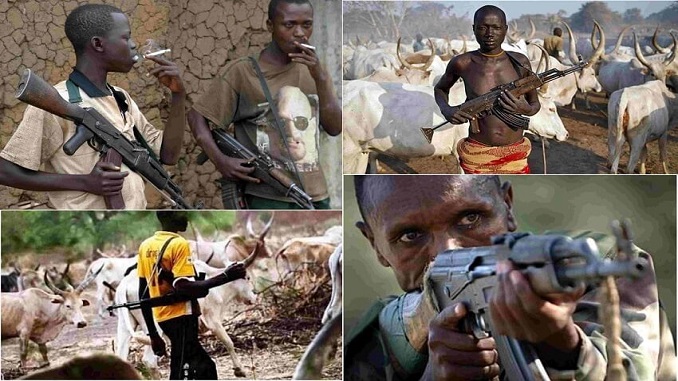
The herder’s gang rape of a 13-year-old in the Aku community of Enugu state and the killing of Mr. Emma Nnadi, that tried to rescue the victim, is evil and should be an open wound to the conscience of those still opposed to ending this madness of open grazing that have gone on in Nigeria for far too long.

Where has our humanity gone? What happened to our conscience? Why does this impunity persist? If they’re not terrorists who else is?

Why can’t we find solutions to this ongoing problem? These nomadic herders continue to commit serious crimes against humanity without accountability.

This has led to massive loss of lives, insecurity and food crises, as farmers can no longer work and walk peacefully in their communities.

Support the bill to end open grazing. The time is now. May those who have lost their lives not die in vain.

Emma Nnadi was a hero, and may his death not be in vain.

To the child -victim, we will work to ensure you receive the help, support, and justice needed to heal and survive this dreadful experience.

Again, support the National Assembly’s current initiative to end such mayhem and bring back peace to farming communities and beyond.

Watch the videos below.

A cattle farm in Netherlands
Cows eating up crops in Nigerian farms

Man jailed for non-consensual condom removal in a unique legal case

A Met-led investigation has resulted in a man being jailed after taking his condom off during sex without consent.

Guy Mukendi, 39 (29.11.1984) of Stockwell Lane, Brixton was sentenced today (13, June) to four years and three months in prison.

Non-consensual condom removal is sometimes referred to as ‘stealthing’ and is classified as rape under English and Welsh law. Prosecutions for this type of crime are very rare due to under-reporting.

On 9 May 2023 Met officers responded quickly to a report of sexual assault made by a young woman in Brixton. The woman had consented to sex with Mukendi on the condition that a condom was used. During sex, the man removed the condom without the victim’s knowledge.

From the first report officers supported the victim at what was an extremely difficult time. Throughout the course of the investigation and court process, a specialist officer continued to help the victim, while offering her further support from expert charities such as Rape Crisis and Survivors Gateway.

Local Brixton officers secured a detailed and impactful statement from the victim and began investigating the suspect, looking at text exchanges and forensic evidence.

This milestone case comes as the Met continues its pledge to be more suspect-focused in their approach to crimes that disproportionately affect women and girls.

Officers worked with the victim to obtain screenshots of messages from Mukendi in which he apologised for taking the condom off, explaining it was because he had not had sex in a long time. He then deleted the messages. This evidence contributed to securing Mukendi’s conviction.

Detective Constable Jack Earl, who led the investigation, said: “Throughout this investigation Mukendi denied any wrongdoing – but our officers built a compelling case against him to leave no doubt in the jury’s mind.

“We were dedicated to securing justice for the victim and will continue to raise awareness that this crime is a form of rape.

“The victim did the right thing to call the police straight away and her bravery should not be overshadowed. If you have been a victim of sexual violence and not yet reported it – please contact your local police service and we will do all that we can to help and bring you justice.”

As part of the Met’s commitment to improving its service to victims and protecting women and girls, officers work closely with expert charities, such as Survivors Gateway, to ensure victims receive the care and support they deserve.

Kate Holmes, Head of Sexual Violence Helplines at Survivors Gateway, said, “Survivors of sexual violence in London can contact the Survivor’s Gateway on 0808 801 0860 to be connected with support. Our Navigators provide a confidential, non-judgemental space, and can make referrals for counselling as well as practical advocacy support.”

Background:

Mukendi was found guilty on 2, April 2024 at Inner London Crown Court and got sentenced under category 3B of the sentencing guidelines for Rape. He has been sentenced to four years and three months imprisonment.

The victim has been granted a restraining order for five years

Pay minimum wage with recovered loot — Falana to FG and states

  • As Father Mbaka Govs, lawmakers should also earn N62k minimum wage

Rights advocate and Senior Advocate of Nigeria, Femi Falana, said Federal and State governments can pay the national minimum wage if looted monies are recovered.

This is even as Catholic priest, Ejike Mbaka in an interview with AIT, stressed that governors and members of the national assembly should also earn the N62,000 minimum wage proposed by the federal government.

Speaking on Channels TV, Falana said 

“The state governments that are saying they have no money to pay, the money is there. All they need, including the Federal Government, is to muster the political will to collect and recover money either looted or withheld from the federation account,”

Recall that the organised labour and the federal government have yet to reach an agreement on the new minimum wage with the latter rejecting the former’s N62,000 offer.

peaking on the development, Mbaka said salaries of members of the national assembly had been shrouded in secrecy, eliciting speculation and debate from Nigerians.

Mbaka said, “We can push these poor Nigerians to the point of rebellion. That is my fear. All of us were in Lagos that day, we couldn’t come back.

“Just like a joke the labour people entered into the airport and stopped every operation and if this happen again it might tantamount to what nobody dreams or what we dream but out of fear we cannot release to the public.

“If we decide to give labour N60,000 or N62,000, why not generalise it to the house of assembly members, senatorial members, house of representative members, and governors?

”All of them are civil servants. So, are the others slaves? I cannot imagine why somebody can be amassing billions and billions as sitting allowance, wardrobe allowance, newspaper allowance, vehicle allowance and what they call suffering allowance.

“The people that should have such allowances should be the poor masses in the villages.

“As teachers, how much are they being paid? Our nurses and doctors, how much are they being paid? Let us be realistic, our civil servants that work from Monday, Tuesday, Wednesday, Thursday, Friday, Saturday.

“They wake up early and return late. How much are they being paid. And look at the level of inflation in the country.”

Mbaka asked the government to “speedily” address the minimum wage issue with the organised labour to avoid another strike.

The cleric said it was a matter of taking the bull by the horns tactfully but very speedily because “if they are not careful, this crisis of a thing can be hijacked and nobody knows the ripples effect.”

During the last meeting held by the Tripartite Committee on the New Minimum Wage on Friday in Abuja, labour reduced its demand to N250,000 from N494,000, while the Federal Government increased its offer from N60,000 to N62,000.

The proposed minimum wage may have to wait until 2 July because the National Assembly is currently in recess. 

Did you know Saudi Arabia imports sand, camels?

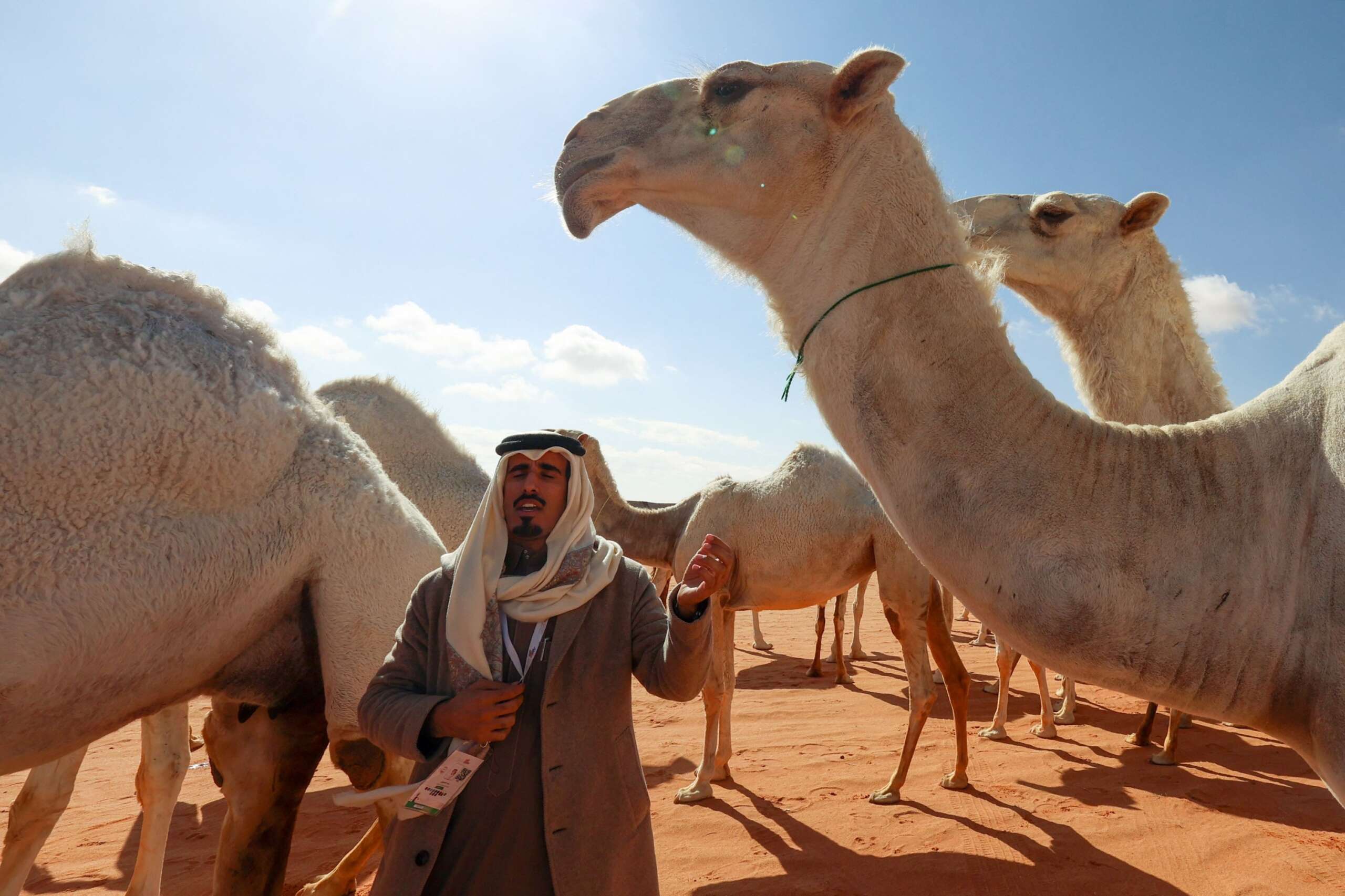
Saudi Arabia, a desert country with 95% of its land covered in sand, surprisingly imports sand and camels.

The sand in Saudi Arabia is not suitable for construction due to its fine grain and rounded edges, making it difficult to bind with other substances. Therefore, the country imports sand for construction purposes.

Additionally, camels are imported from countries like Australia, which has the largest population of camels, due to disease, drought, and political instability in traditional suppliers like North Africa.

Camels are valued in Saudi Arabia for their milk, meat, and increasingly for racing and entertainment purposes.

PUNCH

Pastor gets life for drugging, raping Minor

“The saddest thing about betrayal is that it never comes from your enemies; it comes from those you trust the most.~ Anonymous

A High Court of Justice in Ekiti State sitting in Ado Ekiti on Thursday convicted and sentenced Enoch Gbinyiam, a pastor of Winner Chapel situated at Omuo- Ekiti to life imprisonment on a single count charge of rape of a minor.

The survivor who is the daughter of one of Gbinyiam’s church members was said to have been raped by the pastor during one of her visits to the vicarage.

The young survivor is said to regularly visit the mission house to help the pastor’s wife with house chores, teach and help his young children in their school assignments.

It was during one of her visits to the vicarage that the convict offered her a laced bottle of Fanta. The girl took the Fanta, slept off and woke up to find herself bleeding profusely from the vagina.

The convict was arrested and charged to Court. He was charged with the offence of Rape contrary to section 2 of the Gender–Based Violence (Prohibition) Law,2019.

The learned Director of Public Prosecutions, Julius Ajibare, who prosecuted the case for Ekiti State called four witnesses and tendered two exhibits to float his case.

The convict who spoke through his counsel, Adeyinka Opaleke, gave evidence in his defence and called one other witness.

In its judgement, the Court held that the Prosecution proved the offence of rape against the defendant beyond reasonable doubt.

Justice O.I.O Ogunyemi then convicted sentenced him to life imprisonment.

HIV-positive man rapes daughter for rejecting his sexual advances, jailed 20 years

After her refusal to be intimate with her, father, a man who is HIV-positive, physically assaulted and raped his 18-year-old daughter

It was the teen’s stepmother who reported the crime, leading to the man’s arrest.

A Harare magistrate sentenced the man on June 12 to 20 years in jail for sexually abusing his 18-year-old daughter despite knowing that he was HIV positive. 

HIV-positive man raped his daughter after she declined his request to be intimate with her; sentenced to 20 years in jail

Magistrate Donald Ndirowei convicted the man after prosecutor Shambadzeni Fungura proved that on March 2 this year, the man went to Epworth and told his sister who was staying with the daughter that he wanted to take her home.

Fungura told the court that the man and his daughter boarded a commuter omnibus and disembarked near Coronation Avenue in Greendale, along the Harare-Mutare Highway, where he touched her private parts. They later walked to his friend’s house, where he drank whiskey before proceeding home with the daughter. 

Fungura also told the court that while at his house, the man told his daughter that he wanted to be intimate with her, but she declined. She said the daughter, noticing her father’s unbecoming behaviour, recorded the conversation using her mobile phone.

The court further heard that the father, who did not take his daughter’s rejection well, attacked her before raping her.

The daughter contemplated suicide and her stepmother convinced her to go for counselling.

The stepmother then reported the teen’s father.

In sentencing the man, Ndirowei applauded the daughter’s stepmother, who reported the case to the police after the girl sent her the recording.

He described the offence as gruesome, adding that the man deserved to be punished for the crime because he emotionally damaged the teenage girl.

“The victim was seriously psychologically injured at the hands of her father that she even contemplated committing suicide. She only changed her mind after counselling was administered to her at Parirenyatwa Group of Hospitals when her stepmom managed to convince her to take the sessions,” Ndirowei said. 

He said the man had to be “crucified” for his crime as the medical report submitted during trial revealed that despite knowing that he was HIV positive, he raped his daughter.

“During the pre-sentencing hearing, it was revealed that the offender was HIV positive and was aware of his status. 

“The victim fortunately received post-exposure prophylaxis (treatment) within 72 hours since she reported early and tested negative for the virus,” he said.

Ndirowei sentenced the man to the presumptive penalty of 20 years imprisonment despite the girl’s plea to sentence her father to life imprisonment.

TIPS