Home Blog Page 573

Chieftaincy Matters: Sanusi vs. Bayero, Federal High Court and National Industrial Court have no legal right — Falana

By Femi Falana, SAN

In the last one week, the Federal High Court and the National Industrial Court have separately conferred jurisdiction on themselves to determine chieftaincy matters. Both decisions are highly erroneous as they cannot be justified under sections 251 and 254(C) of the Constitution. As will be demonstrated anon, both courts conveniently overruled the judgments of the Supreme Court and the Court of Appeal on the subject matter.

The intervention of the Federal High Court in the dispute arising from the deposition of Emir Ado Bayero & co as well as the restoration of Emir Sanusi Lamido Sanusi is a brazen repudiation of the decision of the Supreme Court in the celebrated case of Tukur v Government of Gongola State (1987) 4 NWLR (117) 517 where it was held that “The question raised in this claim is not a fundamental right question. As in the first prayer, the right to be Emir is not guaranteed by the Fundamental Rights provisions of the Constitution and the Federal High Court has no jurisdiction whatever in the matter. The Court of Appeal was therefore not in error of law to hold that the Federal High Court has no jurisdiction to grant the two reliefs.”

Before then the Supreme Court had made it categorically clear in the case of Olaniyi V. Aroyehum (1991) 5 NWLR (Pt. 194) 652 at 660 that the right to be a traditional ruler is not a fundamental right that can be enforced under the provisions of the Nigerian Constitution. Speaking for his judicial brethren, Karibi-White JSC: “I agree entirely with Mr. Otu for the 8th defendant/Respondent that first, plaintiff did not claim that any right of him under chapter III of the Constitution, 1960 was violated. He also did not seek any redress under the chapter. Secondly, chieftaincy is not a matter of Fundamental Rights and cannot be enforced under the provisions of section 31 of the Constitution. It cannot be seriously argued that there is a fundamental right to be a ‘Chief’. It is not a human right even though it is a privilege claimed by human beings in an organised society to bring order to their mutual relationship. It is not such right which the law can enforce by virtue merely of the claimant being a human being.”

Since the apex court has said that the right to be an Emir is not a fundamental right under chapter four of the Constitution, the Federal High Court sitting in Kano ought to have declined jurisdiction to continue to entertain the dispute over the chieftaincy matter in Kano. In any case, the allegation of infringement of the fundamental rights of the Applicants is an ancillary claim to the substantive reliefs emanating from the deposition and reinstatement of the embattled emirs.

In FCMB Plc v Nyama (2014) LPELR-23973 AT 19-20, the Court of Appeal held that: “Now it is settled that where an application is made under the fundamental Right (Enforcement Procedure) Rules, a condition precedent to the exercise of the court’s jurisdiction is that the enforcement of fundamental rights of the securing of enforcement thereof should be the main claim and not the accessory claim. Where the main or principal claim is not the enforcement of fundament right, the jurisdiction of thecourt cannot be properly exercised under Fundamental Rights (Enforcement Procedure) Rules.”

In the same vein, the National Industrial Court held last week in the case of Jonathan Paragua Zamuna v The Governor of Kaduna State & Anor. (Suit No: NICN/KD/13/2023), that the deposition of the Claimant as a traditional ruler was illegal and ordered his immediate reinstatement. In justifying the jurisdiction of the Court to determine the case, the presiding Judge, Alkali J. held that “the payment of the monthly salary to Jonathan Zamuna upon his appointment as the chief of Piriga Chiefdom or as an officer in the public service of Kaduna State who received salaries from the coffer of the State Government of Kaduna State brings the termination of his appointment to the realm of the jurisdiction of the Court.”

I submit, with profound respect, that section 254(C)(1) of the Constitution of the Federal Republic of Nigeria 1999 as amended has not conferred jurisdiction on the National Industrial Court to hear and determine chieftaincy matters. Section 254C (1) (k) of the Constitution provides that the National Industrial Court shall have jurisdiction in matters relating to or connected with dispute arising from payment or non-payment of salaries, wages, pensions, gratuities, allowances, benefits and any other entitlement of any employee, worker, political office holder, judicial officer or any civil or public servant in any part of the federation and matters incidental thereto.

The deposition of a traditional ruler cannot by any stretch of imagination be said to be connected with a “dispute arising from the entitlement of an employee, worker, political office holder, judicial officer or any civil or public servant in any part of the federation and matters incidental thereto.” The payment of stipend to a traditional ruler by a state government cannot turn him into an employee or a public officer.

Indeed, the controversy over whether traditional rulers are public officers was laid to rest in the case of Chief John Eze v Okechukwu 2002] 14 SCM 105, where the Supreme Court held that “The definition of ‘public officer’ in section 277(1) of the 1979 Constitution, which was then applicable, was very wide. Even so, it did not include the office of traditional rulers…Therefore, even if the Appellant had been a traditional ruler, there is nothing that could be relied on to regard him as a public officer and accordingly, I hold that he was not entitled to the pre-action notice under the said section 11(2).”

Since section 277 of the 1979 Constitution and section 318 of the 1999 Constitution are in pari materia, a traditional ruler cannot be said to be a public officer whose removal from office can be challenged at National Industrial Court. In Efa v Efa (2018) 18 WRN the Court of Appeal held that it is apparent that traditional offices do not fall into any of the categories of public service of a state. The Court further held that: “These are not persons who can be held accountable to the high office and demands of a public service of a State and that they are persons versed in traditional matters and whose assignment is to guide the State or Local Government council on such related matters.” In the case of Makaan VS. Hangem & Ors. (2018) 32 WRN 47, the Court of Appeal equally held that since traditional rulers are not public officers, the provision of Section 2(a) of the Public Officers Protection Law of Benue State, 2004 have no application in an action involving them.

It ought to be pointed out that the payment of salaries to traditional rulers from the funds of local governments has not conferred jurisdiction on the National Industrial Court. In Bauchi State House of Assembly v Honourable Rifkatu Samson Danna (2017) 49 WRN 82, the appellants contended that the suit challenging the purported suspension of the Respondent was wrongly instituted in the High Court of Bauchi State. As counsel to the Respondent, we submitted that by virtue of section 318 of the Constitution, our client was not staff of the House of Assembly and therefore the National Industrial Court was not competent to determine the case. The Court of Appeal concurred with our submission when it held that “An elected member of a State House of Assembly is not in the “public service of a State.” The phrase, means the service of the State and includes service as -(a) clerk or other staff of the House of Assembly.”

However, a traditional ruler who was deposed by a state governor without fair hearing is not without a legal redress. But in challenging deposition or removal from the throne the appropriate court to seek redress is the state high court. In Chief Joseph Odetoye Oyeyemi v Commissioner For Local Govt., Kwara State & Ors. (1992)2 SCNJ 266, the appellant sued the defendant at the Kwara State High Court where he challenged the withdrawal of his recognition as the Bale of Oro without affording him the right to make a representation. He won at the High Court and lost at the Court of Appeal.

In the further appeal to the Supreme Court, the judgment of the Court of Appeal was set aside while that of the trial court was restored. It was held by the apex court that the withdrawal of the recognition of appellant was illegal on the ground that he was not accorded the right of a fair hearing enshrined in section 33 of the 1979 Constitution. Consequently, the court ordered his reinstatement and payment of his outstanding arrears of salaries and allowances by the Kwara State Government.

The summary of the existing judicial authorities is that the Federal High Court lacks the jurisdictional competence to entertain any matter pertaining to the deposition of a traditional ruler unless the complaint is limited to his banishment or detention. In Sanusi Lamido Sanusi v Attorney-General of Kano State & Ors (Suit No: FHC/ABJ/CS/357/2020) the Federal High Court declared illegal and unconstitutional the banishment of the Applicant to Nasarawa State by the Governor of Kano State. The Court also ordered the immediate release of the Applicant from illegal custody and reparation of N10 million.

In conclusion, judges and lawyers should realise that disputes arising from chieftaincy and other local matters are within the exclusive jurisdiction of the High Court of each state of the Federation notwithstanding that the country is operating a distorted federal arrangement. Therefore, having regards to the facts and circumstances of the controversial decisions of the Federal High Court and National Industrial Court on the status of traditional rulers in Kano State, it is pertinent to draw the attention of judges to the case of Tukur v Government of Gongola State (supra) where Otutu Obaseki JSC (of blessed memory) cautioned that “Courts in this country, without exception, have no power to prescribe jurisdiction for themselves. Neither do they have power to expand or reduce their area of jurisdiction.”


Twenty-three sets of twins graduate at Massachusetts school

In an unprecedented turn of events, twenty-three sets of twins graduated from a US middle school, making up about 10% of the eighth-grade year group.

The identical and fraternal twins graduated from Pollard Middle School in Needham, Massachusetts, on Wednesday.

Headteacher Tamatha Bibbo described the event as “quite unusual.”

“We typically have anywhere from five to 10 sets at most.

“Given our numbers, we have approximately 450 to 500 children in each grade so this was extraordinarily high.”

The school gave a special shout-out to the 23 sets of twins during the so-called “moving up” ceremony.

The Pollard Middle School graduates must all have completed up to 10 hours of service learning in their communities and every year the Needham Exchange Club offers five community service awards.

For the first time this year a set of twins – Lukas and Sameer Patel – won an award and a donation to their charity, Ms Bibbo said.

Another student, who is also a twin, graduated but her brother attends a different school.

Twins account for around 3% of live births in the US, according to the National Centre for Health Statistics.

Sky News

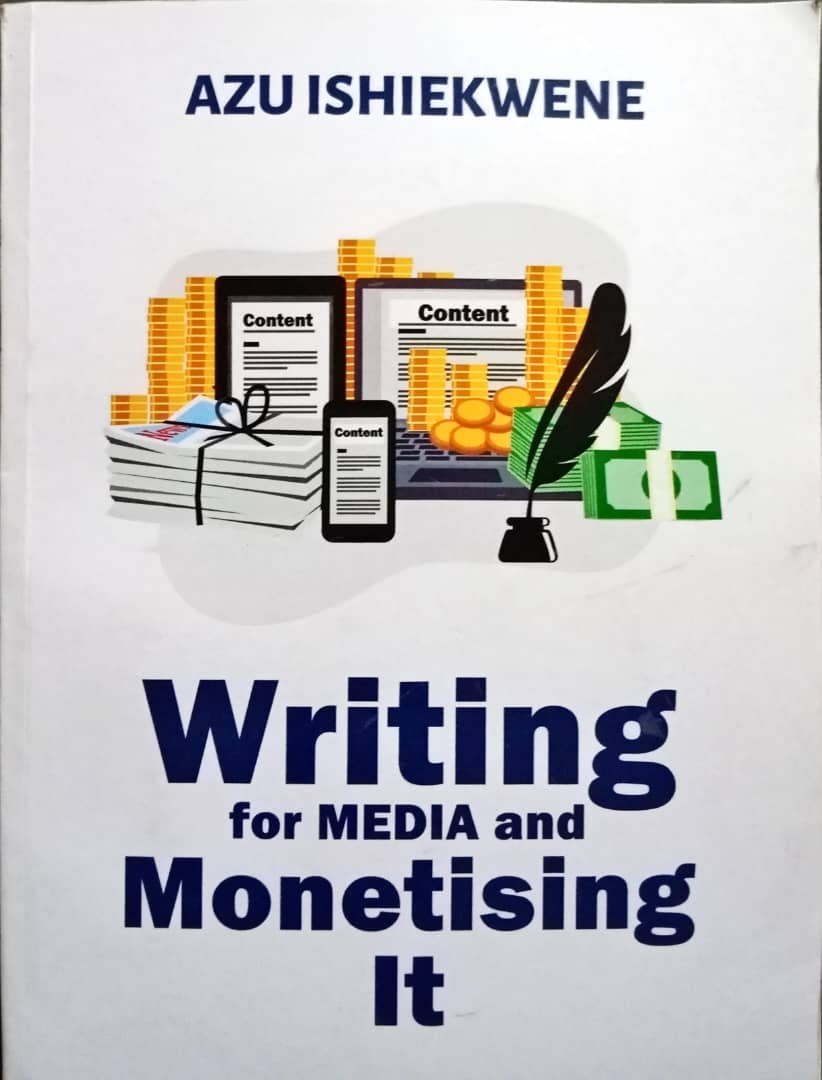
Azu’s book on monetising media writing: An entrepreneur’s perspective

By Max Amuchie

In December last year on my last day of work before Christmas I sat alone in my office in Abuja reflecting on my life’s journey. I thought about my years in the media especially the few years since one ventured into entrepreneurship. I remembered my post on Facebook in June 2015 announcing my resignation as Managing Editor at Leadership Newspaper and the planned unveiling the following month of Sundiata Post as an online newspaper. I thought about the people whose paths I have crossed in the media. I reflected on the statement made by Colonel Abubakar Dangiwa Umar (Rtd) when as Military Governor of Kaduna State in the late 1980s he said he could follow then Military President Ibrahim Babangida to war blindfolded. That was a deep statement of loyalty. Never mind that Col. Umar recanted after the annulment of the 12 June 1993 election in which the late MKO Abiola won. I thought about the people that have made so much impact on my life and wondered if there was any of them I could follow to war blindfolded.

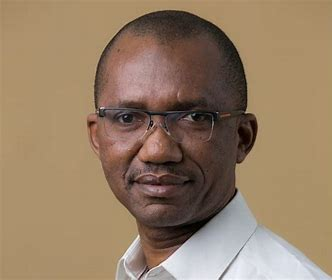
Book Reviewer, Max Amuchie
Author, Azubuike Ishiekwene

Mr. Azubuike Ishiekwene, known to many of us his admirers as  Azu, came to my mind. He is a man that has had profound impact on the career of many media practitioners that have crossed his path and I have been a major beneficiary of his generosity. In Lagos where I was for a number of years features editor at ThisDay, Azu was setting the pace at The PUNCH, a place he rose through the ranks to become editor and later, editorial director.

Our paths crossed fully in 2013 in Abuja when he signed me on as Managing Editor at Leadership Newspaper, where he was Group Managing Director. No one would would want to miss Management meeting on Mondays, not necessarily because of sanction but because of Azu’s leadership style. I always left the Monday Management meeting at Leadership enriched with deep insight into newspaper management and it paid off for me when Sundiata Post was set up.

When Sundiata Post was unveiled on 7 July 2015, in Abuja, Azu, ever supportive,  was the moderator at the panel discussion on ‘New Media and the Future of Newspaper in Nigeria.’ The panel discussed the paper delivered by Malam Mohammed Haruna, then a syndicated columnist. Malam Haruna is currently a national commissioner at the Independent National Electoral Commission (INEC). 

But Azu is better known for his writing. A hugely respected syndicated columnist, week after week he writes about Nigeria, it’s history, state of the union and it’s place under the sun.

His commitment to excellence is well known to anyone who has worked with him. But I never knew that he has also been concerned about how journalists and content producers can earn money and live well from the work they do. This has been of great concern to many media practitioners especially in the age of Internet when content is available almost free of charge or even stolen.

When I first got a hint about his book, Writing for Media and Monetising It was in his column a few weeks ago when he told his readers about his visit to the publisher of Vanguard Newspapers, Sam Amuka in Lagos.

Getting paid for content is an issue media practitioners have been grappling with. Online publishers have been most hit by this as they have no physical copies to sell. In the craze to push for traffic they put up all kinds of content without getting reward for it. Public relations consultants send press releases and articles for publication with no plan to pay platform owners for the use of these stories.

From strategy meetings to publishers’ conferences across Nigeria how to earn money from work done is an issue that won’t go away.

It is in this regard that this book is an idea whose time has come. No other person is suited to write this book than Azu, media management guru, content producer and columnist that has made his mark nationally and internationally.

 At a time when the media landscape has been hit by financial crisis what will the media owner do to remain relevant and financially stable. Put another way, in these turbulent times what will the media entrepreneur do to keep head above water level as we say in Nigeria? When I picked a copy of Azu’s book these were the thoughts that flashed through my mind.

True, Azu didn’t set out write a book for entrepreneurs. He is clear about the purpose of the book. He could no longer ignore suggestions from admirers to share his experience in a permanent form having been writing for more than 35 years. His words: “I thought perhaps it might be useful to combine my speaking experiences with decades of reporting, editing and writing a weekly column now enriched in both audio and visual formats, to serve the needs of a younger generation of content providers, especially students and those in the earlier stages of their career, trying to find their way and also trying to make an honest living while doing so.”

Without having that as his primary purpose Azu has, however, written a handbook for media entrepreneurs especially online publishers. I have, therefore, elected to look at the book through the prism of online media entrepreneurship. The Nigerian media landscape is inundated with several online newspapers most of them in the general news category financially challenged and struggling to carve a niche in a way that can guarantee their continued operations.

The critical issue in online publishing is content. It is what makes the difference between one platform and another. Other issues like search engine optimisation, digital marketing, website friendliness and social media presence are also very vital for the success and sustainability of an online media business. But the factor that binds all these and make a platform stand out is content. That is why in the online business environment we agree with Bill Gates that content is king.

For an online publisher or one who is planning to go into online publishing the relevant chapters are 2, 3, 4, 7, 9, 13 and 14. In these chapters the author gives prescriptions that if followed religiously can lead to tremendous success. Apart from content, here the author discusses choice of subject, style, audience, staying out of trouble, etc.

He mentions his lecturer, Dr Olatunji Dare, who, for sometime, was Chairman of the Editorial Board of The Guardian. Dr Dare, Azu writes, had written an article in the mid 1980s in The Guardian on stalactites and stalagmites and people were wondering what he meant. Azu explains that the words mean formations that grow inside a cave; the first from the top down, and the second from the floor up.

He says he remembers that the article generated controversy. “While some readers welcomed it as a refreshing literary exploration of the wonders of nature”, Azu recalls “not a few were upset that Dare ignored what they thought were very important social issues of the time for cave tourism”.

For online publishers who have not been paying attention to subject this will blow their minds or change their perspective. Subjects that are rare give attention to a platform. While political and social issues may become stale over time, content on subjects that are rare is a good way to make Google algorithm smile on a platform and it will have a positive impact on the news website’s domain authority. Imagine if online publishing was in vogue at the time The Guardian published Dr. Dare’s article. It would have guaranteed the platform unique visitors.

Style is important in online publishing. For the entrepreneur who desires that his platform gains traction, style of presenting stories or content is important. Azu says it is important for the writer to create their own style. Stretched further, it is important for an online media platform to create its own style.

In the traditional media, every newspaper has what is called a house style normally compiled into a stylebook given to editorial staff as they are employed in the organisation. The Guardian had its style when it started. Everyone’s title was Mr. It didn’t matter whether the person was a Chief, High Chief, Otunba, Mazi, Dr or Prpfessor. When their correspondents, Nduka Irabor and Tunde Thompson, were to be jailed under then Head of State Muhammadu Buhari’s Decree 4 of 1984 and the legendary lawyer, the late Chief FRA Williams was to defend them in court there was a dilemma. Frederick Rotimi Alade Williams, the most decorated legal luminary of his era, would not accept being referred to or identified as simply ‘Mister’.

Champion newspaper too had its own house style. Champion insisted that Ota in Ogun State had to be spelt with one ‘’t’ as Ota even when Otta with double ‘’tt’ was generally accepted as correct spelling.

Most newspapers generally in their rstylebooks emphasise short headlines, short sentences devoid of verbosity, short paragraphs, balancing of stories in addition to more specific details peculiar to each stable.

However, in Writing for the Media and Monetising It, Azu expands the scope as he delves into the distinction between style and substance. His takes the reader through the efforts he made to create his own style from a long list of writers he admired from acclaimed journalists like Dele Giwa, Ray Ekpu and Yakubu Mohammed to literary writers like Chinua Achebe and Mark Twain before he settled on his own unique style.

In online publishing, a platform can create its own style and I know some online news platforms have their style of presenting news or commentaries. Knowing one’s audience is as important for the writer as it is for a news platform. Even in the traditional media identifying one’s audience is important. Some publications target the mass market; some, the political class business elite. Some others go for high society while others are for gossip, etc.

Azu deals with the subject of knowing one’s audience in Chapter 4. He writes: “Not everyone is interested in what you have to say. For those who follow you, however, you have to find valuable ways of connecting with them in a world of many, often noisy and confusing voices.”

The author gives tips on how a writer can build their audience and earn money from content provided for that audience.

In online publishing, a platform can adapt the tips given by the author, carve a niche, focus on that niche and earn money from that niche.

Not a few writers and publishing outlets have been found on the wrong side of the law on account of what they wrote or published. In Chapter 7 Azu looks at the debate between free speech and responsible speech. This chapter is very important as the author examines the different laws covering free speech and press freedom like the Official Secrets Act, Seditious Offences Act, Cybercrime Act, Copyright Act and the Freedom of Information Act.

For any content provider, whether as a writer or a media entrepreneur, to earn from the work they do they have to find a way to navigate the minefield of constricting or militating laws. But the author gives tips that can help the content provider. These include Truth, Qualified privilege, Fair comment and Fair use. The book discuses these in detail.

The media has not been spared the invasion of Artificial Intelligence. This is a disruptive technology that is changing the media landscape and Azu deals with this subject admirably.

 The author discusses content in detail. It has been said that content is king. It is what makes the difference between success and failure. Even when there is success, content determines, to a large extent, the degree of success whether for a writer as an individual or a media entrepreneur.

Azu looks at four case studies as success stories namely Linda Ikeji, the blogger; Abdulsalam Idris, who has recorded tremendous success sharing content on X (now Twitter); Adeola Fayehun, producer of ‘Keeping It Real with Adeola’, and Tunde Olaoluwa Adekunle, blogger, comedian, entertainer and musician.

Writing for Media and Monetising It is easy to read. I hardly put it down when I started reading it. The strength of the book lies in the practical examples the author uses to explain the issues discussed. He tells the reader his own experiences, the challenges he encountered along the way and the steps he took to overcome those challenges.

The sentences and paragraphs are short. There are exercises a reader can do to engage or explore each subject further. In addition, each chapter has boxes, tips and reading lists for easy reading.

Whether one is a mass communication student, a journalist, a journalism teacher, a media entrepreneur or just a New Media enthusiast there is something in the book for everyone.

I looked for errors of spelling or poor editing and I could not see any. Instead the graphic design is top notch and the font used is big enough for anyone with a challenge reading tiny pointsize. All these add to make the book reader friendly.

On Wednesday, 26 June 2024, Azu will roll out drums to present Writing for Media and Monetising It to the Nigerian and global public at the Musa Yar’Adua Centre, Abuja.

•Max Amuchie, Founder/CEO of Sundiata Post Media Ltd, is a Member, Nigerian Guild of Editors and the Guild of Corporate Online Publishers. He is the Immediate Past President of the Rotary Club of Abuja CBD and outgoing Vice President, Public Relations, Unity Toastmasters Club, Abuja.

FIDA has become more purposeful in recent times —Chief Edwin Clark

FIDA Abuja celebrates Elder Statesman at 97

Press Release

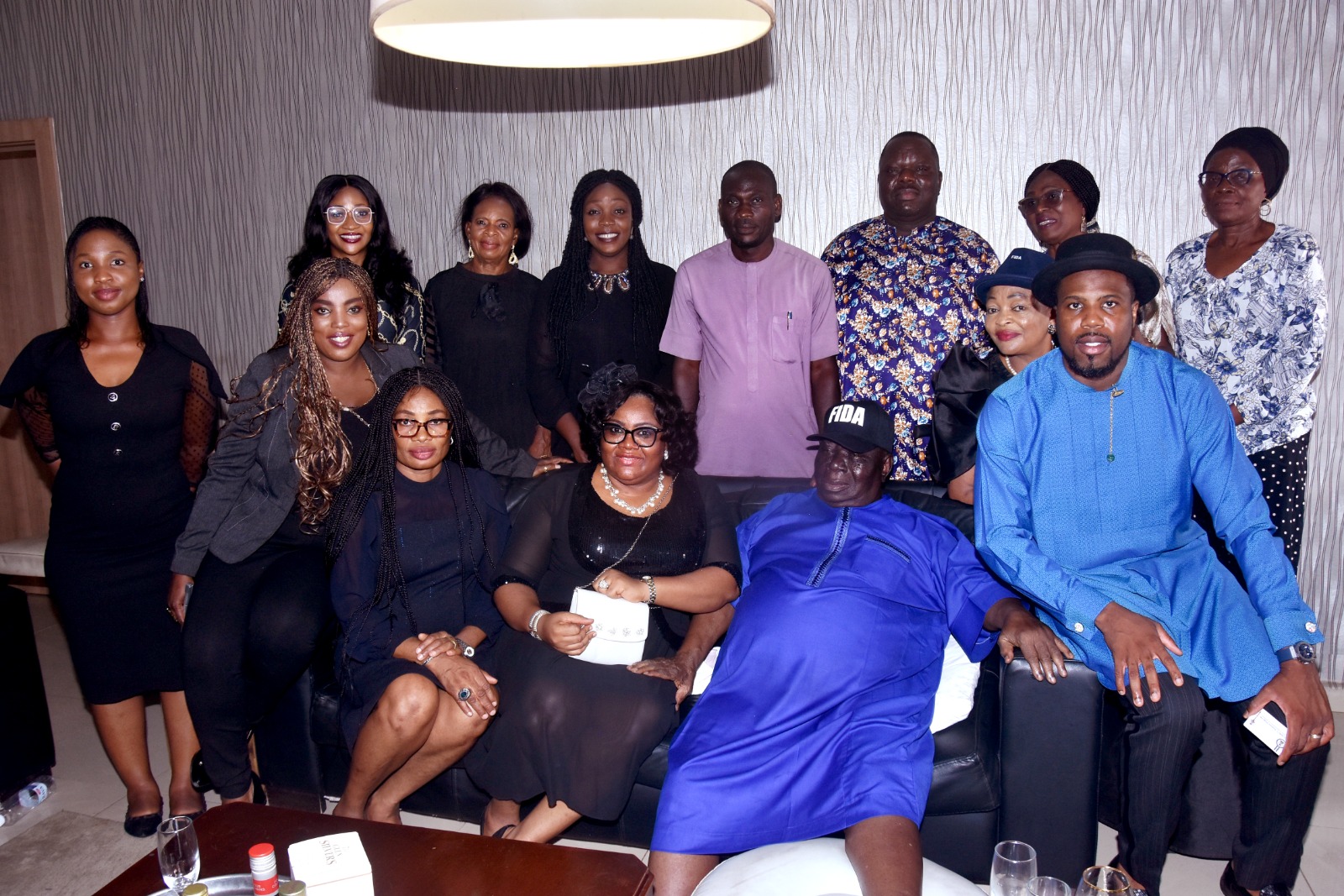
On the 18th of June, 2024, the Branch led by the Chairperson, Chibuzo M Nwosu, in company of her EXCOs and members, paid a courtesy visit to the former commissioner of information and Elder Stateman, Chief Edwin Clark.

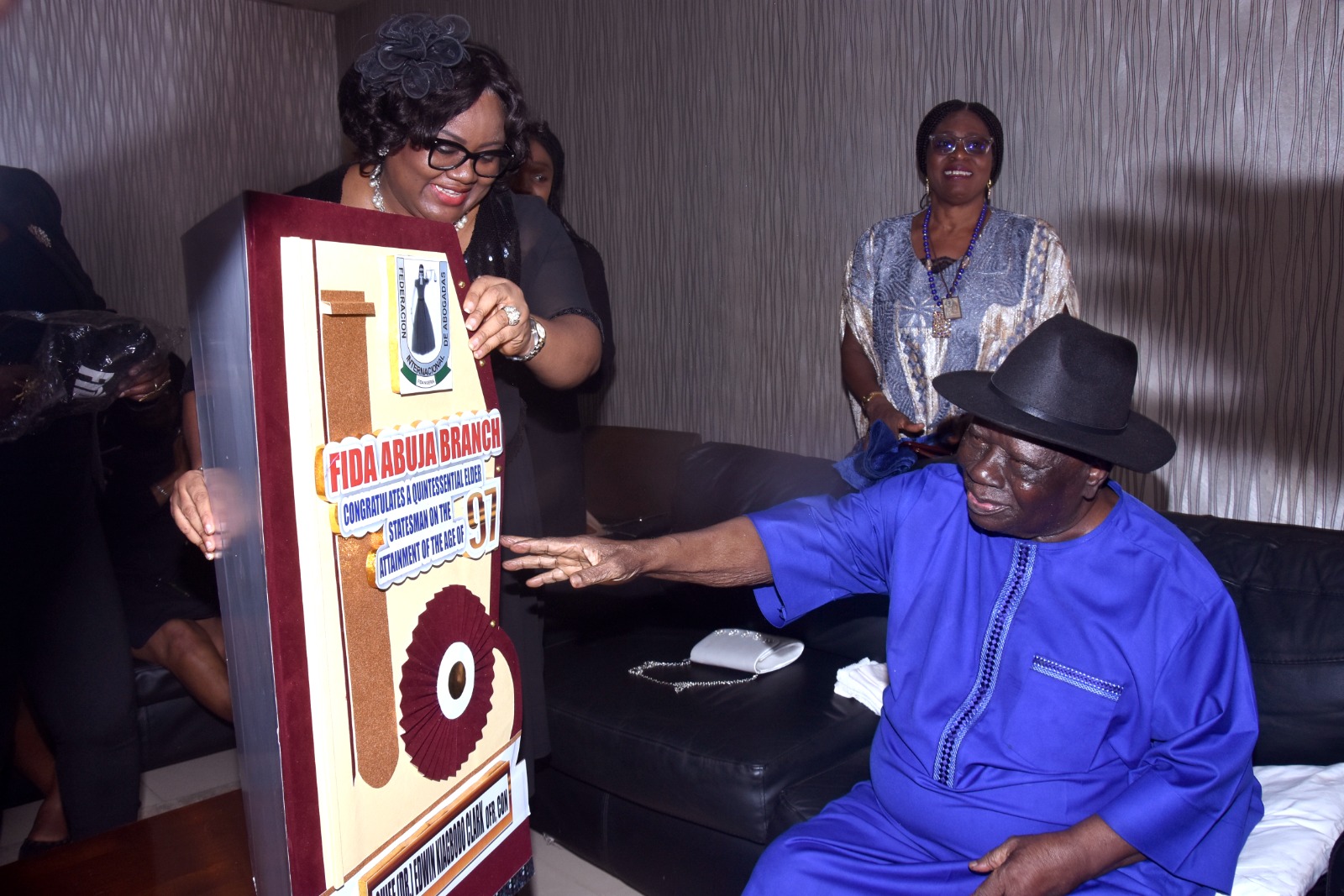
Chair of FIDA Abuja , Maureen Chibuzo Nwosu presenting a birthday card to Chief Clark

Chief Edwin Clark is a Nigerian Statesman, Ijaw leader and politician from Niger Delta State who is renowned for his patriotism and human rights advocacy.

The visit was arranged to celebrate the Elderstateman who turned 97 years on the 25th of May, 2024.

Welcoming the branch on behalf of the elderstateman who was present, was Barr. Dickson Sofia and other orators (Otota) of his Palace including Mrs. Dorothy Charles Koko, the Principal Secretary to Chief Clark, Hon. Dr. Stella Dorgu, former member House of Representative; Chief Ominimini Obivwhibi, the Otoro/Orator of the Chief’s Palace, Barr. Dickson Sofia and Michael Jonathan Numa (SAN), Managing Partner M.J Numa & Partners LLP.

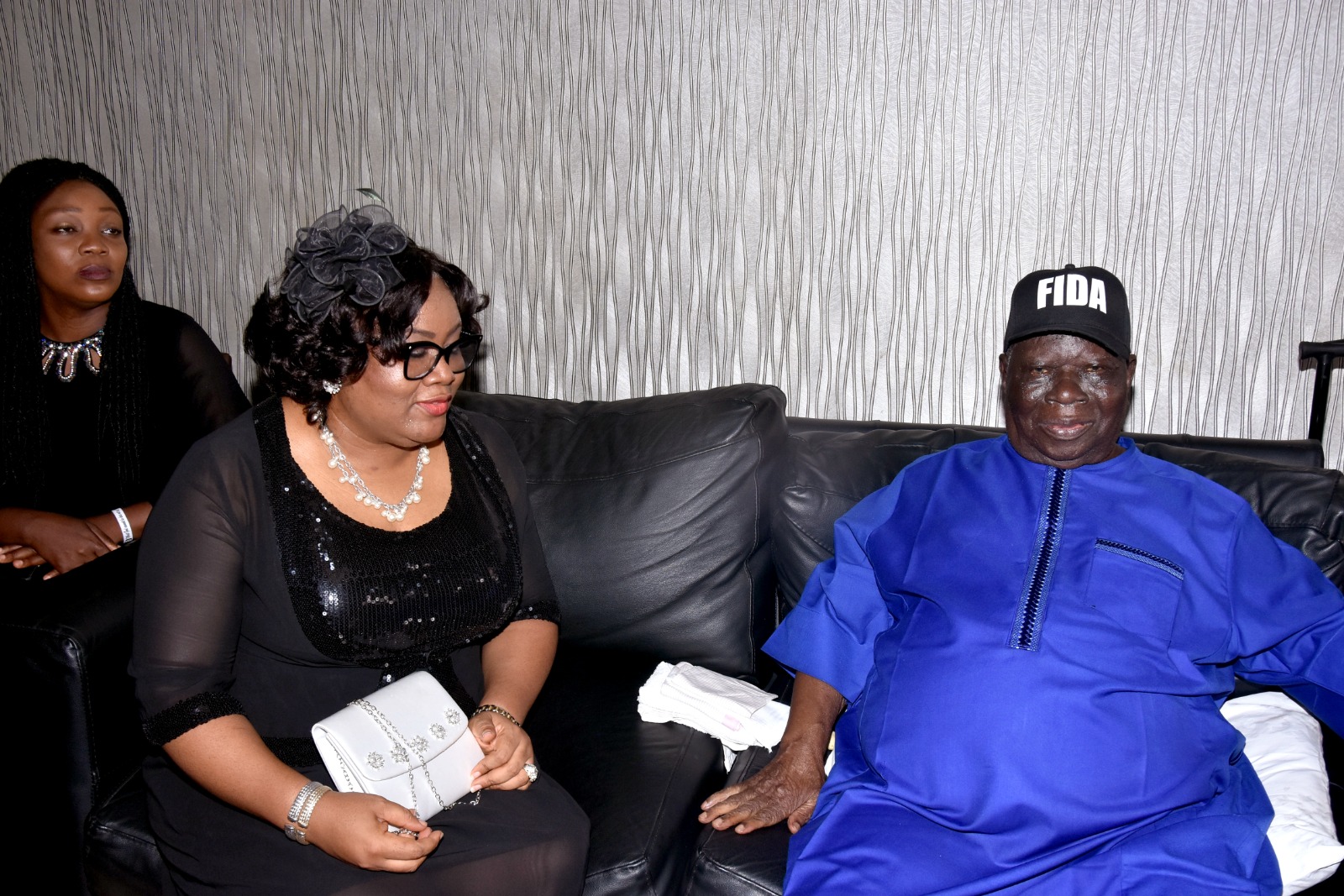
Maureen Chibuzo Nwosu and Chief Clark

Thanking the Chief and his Orators for the privileged visit, the Chairperson introduced the branch and members present while intimating the gathering on the core mandate and score cards of the branch since the start of her tenure. She pointed the privilege to celebrate a man who is highly revered and respected and who has been a blessing to the Niger Delta Region, Nigeria and the world at large.

On the achievements of the Branch, the Chairperson highlighted key programs initiated under the leadership of the branch to include the SGBV enlightenment through Paralegal Trainings, the Student/Paralegal-Associate membership, and the imminent launch of the Training of Teachers as Paralegals in the depths of the Federal Capital Territory.

FIDA Abuja team with Chief Clark and his associates

In his welcome address, the Nigerian statesman commended FIDA for her active role in the course of justice while noting his longstanding relationship with the branch. In his words, “FIDA has become more purposeful in recent times”. Taking a trip down memory lane, the Nigerian statesman who is also a senior member of the Nigerian Bar Association, with 60 years post call, recalled his early days in the noble profession as the first Secretary of the NBA, Warri Branch in 1966. He however bemoaned the state of affairs of the NBA and the Judiciary and expressed concerns over the welfare of young female lawyers and urged FIDA to focus more on the welfare of her female members. While assuring his support for the branch, he expressed hope that FIDA can make a huge impact in the NBA and the Judiciary.

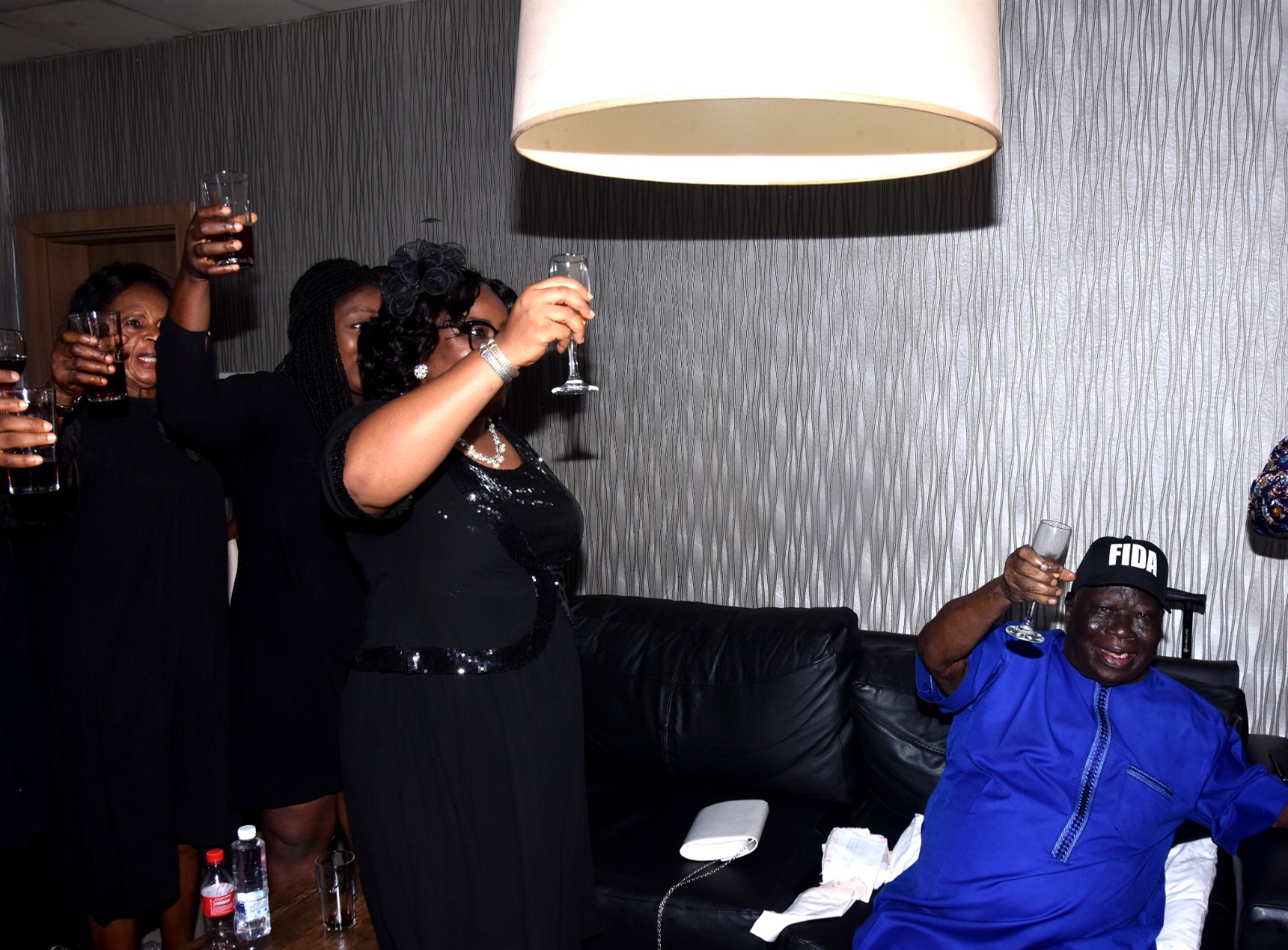
A toast to Chief at 97!
Hearty cheers to Chief Clark at 97!
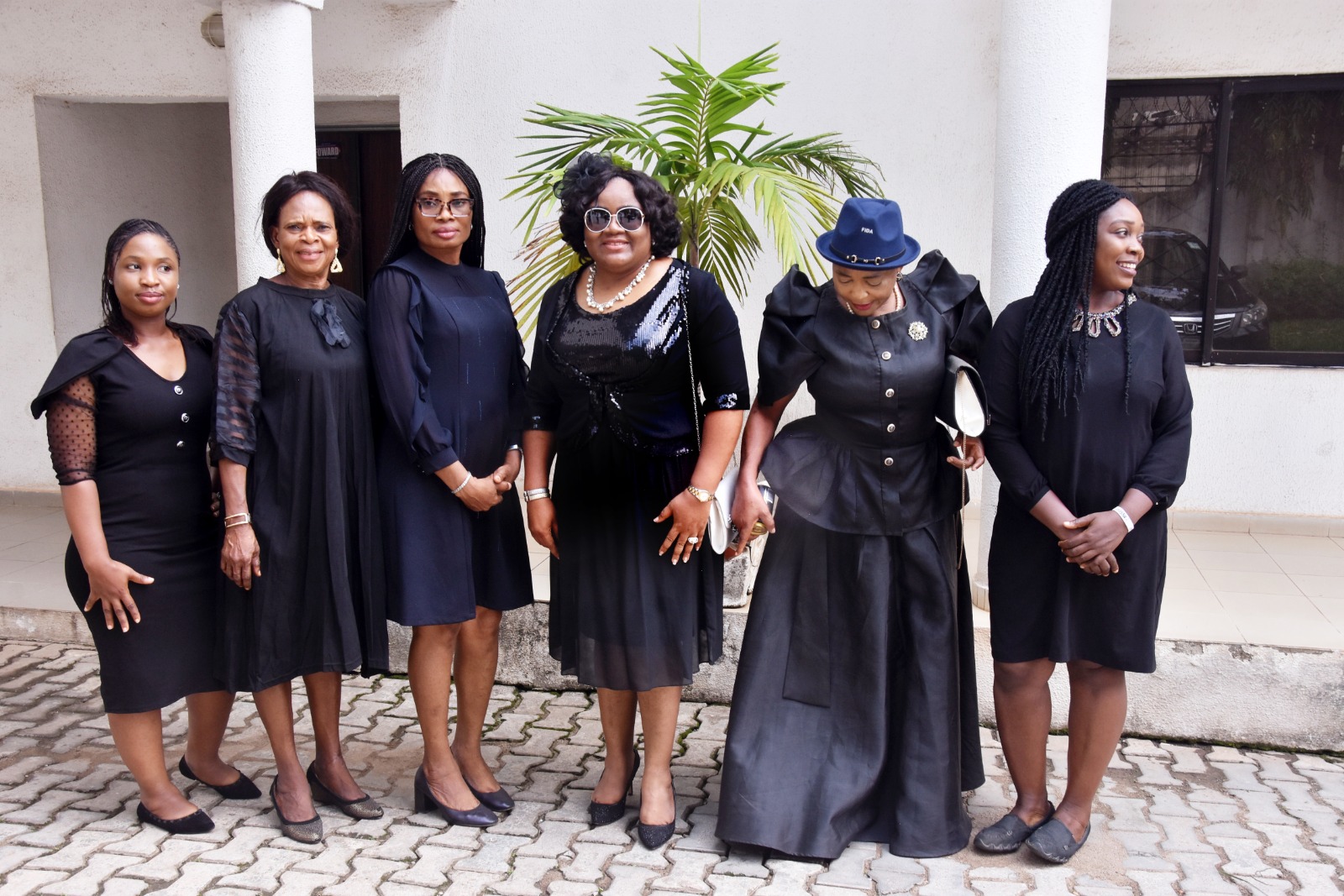
FIDA Abuja team

The Principal Secretary to Chief Edwin Clark, Mrs. Dorothy Charles Koko, in a remark, commended FIDA for the laudable initiative of the student associate membership while stressing the need for the replication of the same at the Edwin Clark University, Warri, Delta State. The Chairperson in response, promised to liaise with the Chairperson of the FIDA Warri Branch in this respect.

Also, in appreciation, Barr. Dickson Sofia commended the branch for the new initiative of the student chapter as being a great work and sued for collaboration with ministers to support the noble cause of FIDA.

In the spore of the moment, the elated group serenaded the celebrant with songs of praise and presented the branch’s birthday card embedded with warm wishes and prayers, and thereafter adorned the Elderstatman with the FIDA hat, symbolizing an honorary associate membership of the branch.

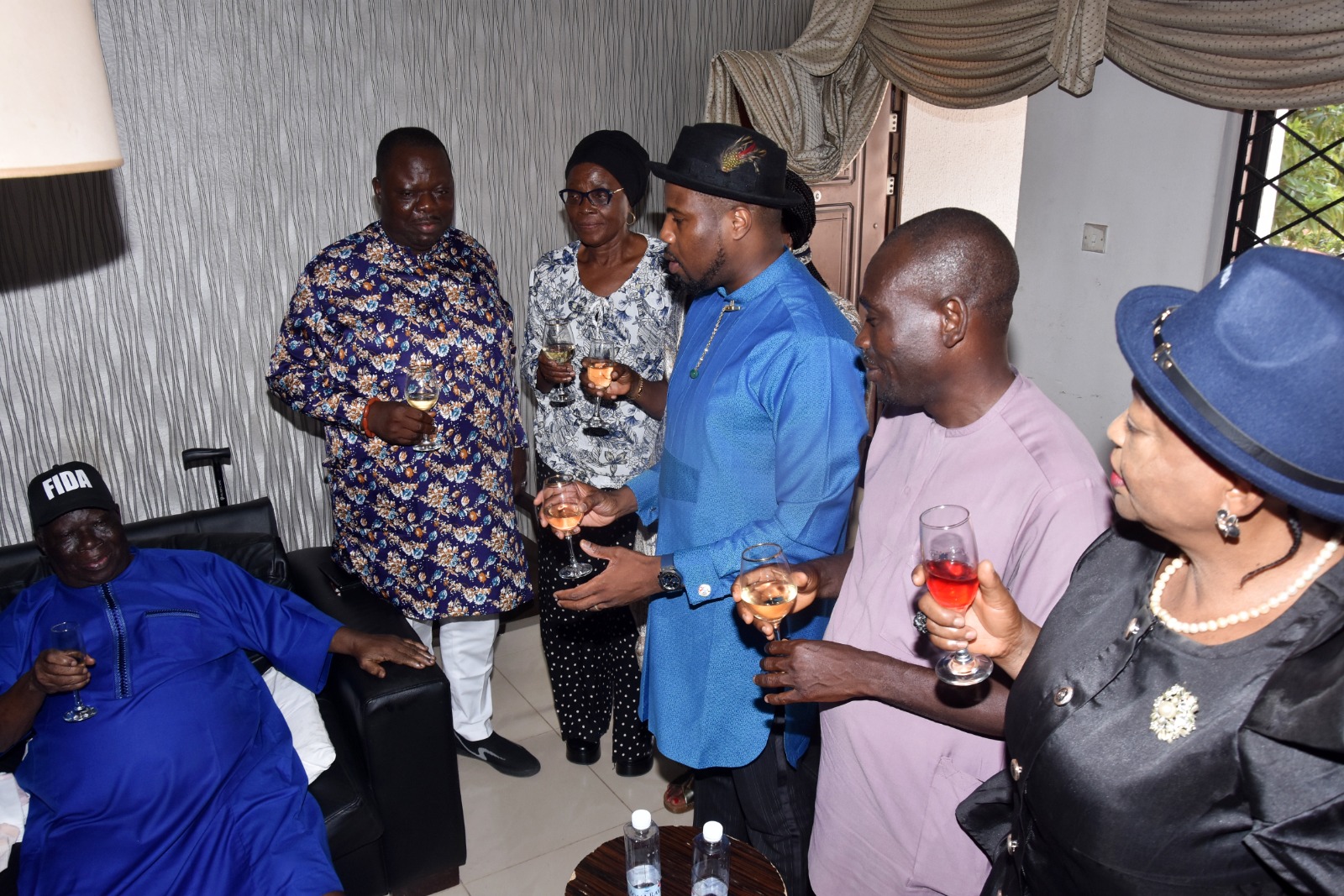
In closing, Mr. Michael Numa (SAN) proposed a toast in honour of the celebrant while Dr. Stella Dorgu gave a vote of thanks, admonishing the group to adopt the Elderstateman as a role model and replicate his ethics in the discharge of her core mandate and to ensure that the indignities of women are ameliorated.

Bringing the day’s event to a close, the Vice-Chairperson offered a prayer for the celebrant, family members and the branch.

Please see below, pictures from the visit for your viewing pleasure.
In attendance:

  1. Chibuzo M. Nwosu (Chairperson)
  2. Francisca Akaniro-Opara (Vice Chairperson)
  3. Mojirayo Ogunlana-Nkanga (General Secretary)
  4. Roseline Obiakor (Financial Secretary)
  5. Olosen Victoria Ibiezugbe (Publicity Secretary)
  6. Ifeoluwa Johnson (Welfare Secretary)
  7. Cordelia Otuya

Thank you.

Olosen Victoria Ibiezugbe
Publicity Secretary

The continued detention of Barr. Pius Awoke versus the silence of the Bar

By M. O. Idam, Esq.

Since the 27th day of July 2021 that a member of the Nigerian Bar Association, Pius Awoke was arrested along Abuja -Lokoja highway while returning to his Abakaliki base after attending a matter in the Federal High Court Abuja, he has been pepertually kept in the custody of the Department of State Security Service (DSSS) till date, without trial. Sadly, very little or nothing has been done regarding his ordeal by the Nigeria Bar Association (NBA) where he pays dues as a member, despite the alarm that has been consistently raised by concerned individuals since 2021 over the incident.

Similarly, not one of the current aspirants to the office of NBA President has thought it dutiful to champion the cause of Pius Awoke’s freedom even as the news have continued to make round the legal community. Interestingly, all the aspirants appears to be in agreement (by conduct) to only engage in issuing farewell messages to bereaved families of deceased members and congratulatory messages to birthday celebrants as their campaign strategy other than advocate for Pius Awoke’s freedom or similar issues affecting members. I, am sincerely concerned that Nigerian Lawyers are yet to form or have an association that prioritises the welfare of its members.

In light of the foregoing, I have today taken the decision that my vote will not count in the forthcoming NBA election, except Pius Awoke and other lawyers illegally held in detention are released or until I see any of the aspirants show readiness to champion this cause.

I hereby respectfully call on all the well-meaning members of the Bar; the Learned Silks, Elders of the Bar, Seniors and Colleagues to demand the immediate release of Pius Awoke from DSSS custody or that he be tried without further delay if there is a primafacie offence made out against him.

Those aspiring to lead NBA must be ready to speak for its members and not just to use the platform to pursue fame and personal ambitions.

M.O.Idam.

As you leave your country for any reason, consider safe migration options — Ezeilo, SAN

The recent BBC TWO documentary “Dead Calm: Killing in the Med” (http://bbc.com/news/articles/…) has brought to light the atrocities and acts of murder committed by the Greek Coast Guard in the Mediterranean in their effort to prevent irregular migrants from entering the country. This documentary serves as a warning to the youth in Nigeria, Africa, and beyond to avoid unsafe migration.

In my global role as the United Nations Special Rapporteur on Trafficking in Persons (2008 to 2014), I encountered numerous victims and impacted families. For instance, I met a young African woman in an Italian migrant detention centre who had lost two brothers while they were trying to cross the Mediterranean Sea to reach Europe.

Life is precious, and the sanctity of human life must be preserved and respected. We must not harm those in vulnerable situations seeking to escape for a better life as part of combating irregular migration. I hope the Government of Greece takes urgent action to prosecute perpetrators and that other favoured destination countries of the ‘West’ advance zero tolerance for such inhuman acts of pushing vulnerable migrants to their deaths in the seas.

As you leave your country for any reason, consider safe migration options. Avoid using migrant smugglers or falling prey to traffickers.

Why the rule of law is Failing

By Worgu Boms

We have seen, again and again, heavy men in Jurisdictions outside here, committed to prison by their own regular, national courts.

The recent Convictions of a former president and a sitting president’s son, by ordinary men and women called Jury, make this point more powerfully.

Here, the Police cannot even invite an ordinary Local Govt chairman for questioning.
A Court cannot even dare.

Not to talk of daring to touch ministers and governors and then, the almighty President.
Not here.

Sometimes we even call on the Int’l community to come and help us. And then now, there is a Stand Alone International Criminal Court to help.

Instead of championing and encouraging it, we are providing support for its weakening by resorting to that old Throwback.

Curiously, it is the very people who are most likely to be the Defendants in that Court, that are championing the racist blackmailing of the Court to weaken it, providing us with the facts and grounds in that.

If Oyibo, with regular light and water and highly well taken care of citizens allow their own to be shielded, (and of course they can punish them in their municipal Courts) we who have no lights and no water and whose many citizens are beggars arising from atrocities of few, should also shield them.
Are we reasoning at all.

Africans, Ronu!

Kunle Edun rights lawyer adds:

And for more than a month, a former State Governor has refused to appear in Court to answer criminal charges and being shielded from the law by a sitting Governor. The Police, DSS and the government are all silent. They all know where the former Governor is.

I was stripped naked, assaulted sexually by police, detained overnight with 8-year-old daughter —Lagos businesswoman

Princess Bunmi Blessing, a Lagos-based businesswoman, has given a chilling account of the sexual assault, inhumane treatment, and imprisonment of her eight-year-old daughter at the hands of Lagos police.

With tears welled up in the eyes of Bunmi Blessing, one would imagine the excruciating trauma that the mother of two had gone through in trying to get back her property from the hands of her tenant Hajara Inusa, who had allegedly vowed to use all in her powers to possess them.

Bunmi Blessing who majors in clothing materials and jewellery had been subjected to a series of beatings and torture by thugs and land grabbers over her property rented to an acclaimed retired police officer Hajara Halimah Inusa attached to the Monitoring Unit at the Force Headquarters in Abuja.

Bunmi who owns a property at No. 4 Texaco Estate, Mowokekere, Ladegboye Road, Ikorodu, Lagos rented eight out of 10 shops in 2019 to one Hajara Inusa for a total sum of N736,000 for two years including agreement and commission.

On meeting with Hajara in person to issue her receipts, she (Hajara) reportedly informed her of her desire to acquire the property outright for the sum of N25 million to which she declined.

“I stood my ground, told her I wasn’t interested in selling my property. I gave her the receipt that I went to give her and left,” she said.

This episode will become the albatross of an unsuspecting Bunmi who had no idea that her ‘insubordination’ would subject her into what she now refers to as ‘four years of emotional torture and pain’.

Recounting the several times she was beated, dehumanised and tortured over her own property, she said, “During the lockdown, I received a call that Hajara Inusa said I had sold my property including the virgin land (on the same premises) I had yet to develop to her. I quickly denied such.

“I was told she had even erected two structures on my virgin land and even put two her employees in Uba and Hope Emeka there. My virgin land was all fenced. So I wondered how she gained entrance.”

Bunmi immediately went to her property to verify the claims and found that it was true, to her amazement.

She called her tenant Hajara to find out why she did that despite her insistence that she wasn’t selling. She said she instructed her to pull them down immediately and move out of her property upon the expiration of her tenancy in 2021.

However, Hajara reportedly apologised that she thought Bunmi would eventually sell her property.

The matter was reported at the police station but they never looked into it as they saw her as a powerful and influential woman, Bunmi said.

But Who Is Hajara Inusa?

Her identity is shrouded in secrecy but she reportedly paraded herself at the time to be a police officer at the monitoring unit in the Force Headquarters in Abuja.

She also claimed to be a wife of a former Inspector General of Police, MD Abubakar.

Hajara has never been seen in police uniform but her romance with the high and mighty in the police force leaves much to be desired.

By December 9, 2021, Bunmi who had just lost a 3 months pregnancy said two men and a woman who claimed to be police officers from Force HQ in Abuja came into her shop while she was attending to a customer who had come to buy fabrics and gold requesting that she should follow them to Abuja.

She declined as the visitors had failed to identify themselves.

“I asked them to show me their arrest warrant and an identity card to prove they were officers of the law. They couldn’t. They took my N300,000 and my iPhone at that time and have not returned them till today,” she said.

Bunmi who at this time was allegedly subjected to a barrage of slaps and forcefully dragged out of her shop was saved by the intervention of her neighbours and passers-by who had requested to know why she was being manhandled that way.

The visitors were later identified to be thugs and land grabbers in Ladegboye and not police officers as claimed. They were identified to be Lampard and the other one as Odofin Adeoye.

They claimed they were sent by their boss Abass Bawa who was then the Commander of Area N at Ijede Police Station.

Bunmi and her lawyers went to Area N the following day to lay complaints over what she had gone through.

But to her surprise, she said she met her tenant Hajara Inusa, her partner Ogbonna Onugbu wining and dining with the commander, along with the thugs who assaulted her the previous day.

This time Bunmi sensed danger but was determined to report the matter regardless.

“I went directly to the Commander’s office, Abbas Bawa who in turn accused me of assaulting his officers. I was confused and told him the reverse was the case and that they even took away my personal belongings.

“All of a sudden, this man handcuffed me like a common criminal and told his boys to take me away to an uncompleted building where I was beaten black and blue and stripped naked.

“Something like an electric shock (taser) was used on my waist. My tenant Hajara brought out a pistol threatened to kill me and nothing will happen to her. The thugs who giggled said they would prepare a document and sign it as a handover of my property to Hajara.”

Bunmi who had gone to Ijede Police Station to report a case of assault and robbery said she ended up being the victim.

She was eventually released same night at 10 to reunite with her families.

The 37-year-old Bunmi with her lawyer Eleto Yakubu decided to file for fundamental human rights in court. However, that reportedly opened a new chapter of terror faced at the hands of Hajara and her alleged thugs.

“I wrote a petition to then the Commissioner of Lagos CP Hakeem Odumosu at the State Command and all the people involved were all served for hearing to begin in January 2022,” she said.

But just a few days to the hearing, Bunmi was yet again visited by four armed men at her shop. They requested she followed them for the sake of reconciliation. She was beaten there again like a child upon her insistence and taken away first to Igbogbo police station. She was reportedly rejected there by the DPO. And later driven away that night to Ijede to meet Abass Bawa.

“That day I was even tear-gassed and bundled into a waiting van to Ijede. One of the thugs fondled my breasts and inserted his fingers into my private parts. I couldn’t do anything since I was in handcuffs. I could only cry and beg them to stop.

“Upon arrival, I was given another round of slaps. My legs were chained and I was dragged on the floor. They cut my hair, stripped me naked again and put me in a male cell. But thankfully, my fellow inmates did not touch me or molest me to which I’m still grateful for,” she said.

Despite pleas by Bunmi’s family members that she should be released, Abass Bawa, the commander allegedly ordered that she should be taken to a secret cell at the State Criminal Investigation Department Panti at Yaba. She was rejected there by the commander and ordered to be taken to the hospital as she was still bleeding.

Bunmi was at this time accused by her tenant of theft and destroying her property. She was also accused of beating up one of the police officers. Something she found amusing and denied.

A distraught looking Bunmi then said she was ordered to be taken to the hospital for treatment and asked to go back home for recovery with the promise to look into the allegations at the scene of crime once she was ready.

“Two weeks after, officers from Panti followed me to my property where Hajara rented and found out that her accusations that I stole her CCTV worth N10 million, generator worth N9 million were all but false. They found me innocent and ordered her to remove the illegal structures on my land,” she said.

As expected, Bunmi said the case died a natural death.

Continuing, Bunmi said she closed her business and left Ikorodu for a while, to seek refuge rest of mind.

Upon her return and resumption of business. Bunmi was yet again visited by her abusers at her shop. According to her, her eight-year-old daughter wasn’t spared this time. She was reportedly dragged alongside her mum to Alagbon police station in Ikoyi.

Bunmi’s crime this time was that she allegedly stole an air conditioner worth N3 million and goods worth millions of naira from Hajara’s shop. All of which she denied again.

She said, “My eight-year-old daughter slept with me overnight in the cell. She was accused of videoing me while they came for my arrest. They deleted every single picture and video from her phone and mine and erased every trace of their atrocity against me.

“We were released the following day. Two men from the X-squad Akogun Jonah and Abdullahi followed us to the scene of crime to verify the claims of Hajara and found nothing on me yet again. I was even beaten and manhandled by Hajara’s boys at the scene. She chased me with a gun in car while I ran for my dear life. She kept screaming that no one will stop her from acquiring my property. I noticed I was bleeding from my private parts and had to visit my village for proper care.”

Bunmi’s travails were far from over. Her drive and insistence may have taken a dig at her normal life, but her doggedness in her fight for what truly belonged to her remained legendary.

She returned from her travels and filed a petition with human rights lawyer, Femi Falana (SAN) to seek justice.

And not too long, the then AIG Usman Balele called her over the phone suggesting a reconciliation with her tenant.

To Bunmi’s amazement, she was slammed with a six-count charge by Hajara for defamation.

She went to court for the hearing and was granted bail to appear at a later date.

Bunmi said while she was fulfilling her bail conditions after the court session, she was forcefully taken away again and dumped in the cell by police officers on the orders of Hajara.

“When the magistrate heard I was taken away, he ordered my return immediately to the court where I eventually perfected my bail and left with my family,” she said.

She said at a later hearing in court where both the defendant and complainant appeared, Hajara failed to identify herself before the judge when asked for her position in the police force. She subsequently stopped honouring court sessions and the case was struck out in 2022.

She said, “My life honestly has never been the same. I filed a repossession of my property when her rent was due. Hajara was served but refused to send her solicitors. I got a favorable judgment in July of 2022. Angered by this, Hajara went to my property and utterly vandalised them to ruins.”

Although Bunmi reported the matter again to Ladegboye police station. They allegedly declined to intervene and advised she approach the state police command.

She wrote a petition to the command where three of Hajara’s thugs were reportedly eventually arrested. They reportedly confessed to the crime and singled out Hajara and her partner Ogbonna Onugbu as the brains behind their actions.

Sensing danger, Hajara fled Lagos to Abuja for refuge.

“At least three commissioners of police had sent signals to Hajara to appear before them. But she refused. And while at Abuja, Hajara filed another petition against me on defamation at Apo High Court, FCT. I was summoned to Abuja. So I went on the 9th of May 2024,” Bunmi said.

Bunmi then approached Apo police station in Abuja to report that she had sighted Hajara and her partner Ogbonna who were earlier declared wanted in Lagos by the state police command and Ikeja High Court.

She said she was subsequently taken away on the orders of Hajara to an unknown destination.

The DPO of Apo was helpless when calls came to his phone to release Bunmi by five armed police officers who had come for her on the orders of CSP Danko from the Force HQ.

“I was rushed into a waiting van, driven away with no idea where I was been taken to. And almost 2 hours into our journey, I sighted a military checkpoint. I hit the side glasses screaming for help. The soldiers sensing I was in danger ran after us, stopped us and requested for their identity. They claimed to be from the Force HQ and were heading there. The soldiers told them they were taking a wrong route and ordered that they should turn back. They escorted us to the Force HQ ensuring I was safe then left afterwards,” she narrated.

When officers at the Force HQ realised what was happening, they asked Hajara who requested her to bring Bunmi to the Force HQ. According to Bunmi, she kept on mentioning different names including the Force Police Public Relations Officer ACP Olumuyiwa Adejobi.

Bunmi said all of the names mentioned denied any involvement in the issue. She said Hajara at that time was deceitfully using a wheelchair to whip up sentiment.

She said, “Coincidentally I had sent the Force PRO text messages on this matter that I needed his help. But he kept indulging Hajara, making it look like the self-proclaimed police officer Hajara Inusa could not be arrested.”

This time, Bunmi said she filed a petition at the Force Criminal Investigation Department. Luckily for her, Hajara was invited and arrested by the police and subsequently transferred to Lagos where her case was originally instituted.

Bunmi fears that the case could be swept under the carpet owing to Hajara’s influence and affluence.

According to her, nothing has so far been heard about her case.

“I want Nigerians and the media to help me get justice. I want my property back from this terror of a woman. I want my life back. I still feel unsafe. I fear this case might be swept under the carpet. I am not safe,” she said.

SaharaReporters made efforts to reach out to Hajara Inusa and her partner Ogbonna Onugbu to give their own side of the story.

Hajara didn’t answer calls nor reply to the several messages sent to her. In his reply on WhatsApp, Ogbonna initially said he would get back to our reporters but days later sent a message saying, “Wait for police.”

When SaharaReporters contacted the Lagos State Public Relations Officer Benjamin Hundeyin over the matter, he said he was not aware of the issue.

Replying to messages sent to him, he simply said: “News to me.”

The Force Police Public Relations Officer ACP Olumuyiwa Adejobi was also quizzed on the matter but referred our reporter back to the Lagos police command spokesperson in a WhatsApp message, saying: “I can’t remember, Pls ask Ben, Thanks.”

Sahara Reporters

As Bill to Ban Open Grazing Scales Second Reading: Eko, JSC says, neither animal husbandry nor ranching captured in exclusive legislative list

  • Fulani herder in fluent English suggests solution to farmer-herder crisis (video)

On account of the destructive activities of rogue herdsmen on farms across communities in Nigeria, a Bill which seeks to ban open grazing and establish  a national agency for the regulation and management of ranches in Nigeria has passed second reading in Senate.

The Bill is titled: “A Bill to establish a National Animal Husbandry and Ranches Commission for the regulation, management, preservation and control of ranches throughout Nigeria; and for connected purposes, 2024” 

However, while condemning the activities of the murderous herders and the resultant effect on food security in Nigeria, a retired justice of the Supreme Court, Hon. Justice Ejembi Eko maintains that laws should be rightly enacted and deployed.

Eko, JSC in a chat with Law & Society Magazine said: “You can find neither agriculture, nor Animal Husbandry or Ranching, in either the Exclusive Legislative List(ELL) or the Concurrent Legislative List(CLL). Item 29 of ELL is only about Fishing and fisheries in littoral waters: international coastal waters, other than inland waters, rivers, lakes, ponds etc.

“Items 17(c)&(d) and 18 of the CLL relating to establishment of agricultural research institutes, or bodies for the promoting or financing agricultural development of the State.

“Of course, Item 20 of the CLL defines agricultural to include fisheries. Items 17 & 18 of CLL cannot be violently stretched, by any cannon of interpretation, to include Animal Husbandry and Ranching.

“A House of Assembly referred to in Item 19 of CLL means House of Assembly of a State, by dint of Section 318 of the Constitution.

“Neither Animal Husbandry nor Ranching of animals is a substance or matter within either the ELL or CLL that the Constitution, in section 4(2)-(4) thereof, empowers the National Assembly (NASS) to legislate on.

“Animal husbandry and ranching, appearing to be Residual matters, fall within the exclusive legislative competence of the House of Assembly of a State to legislate on, by virtue of Section 4(6)&(7) of the Constitution which, in section 1 thereof, is binding on the NASS.

“If, therefore, the NASS enacts any law outside its devolved legislative powers or competence such an exercise, being ultra vires its constitutional powers, shall be null, void and unconstitutional. The Bill on Animal Husbandry and Ranching before the NASS, which is generating a lot of emotions, seems to be heading in the direction of an exercise in futility as the NASS lacks the necessary constitutional mandate or legislative competence to enact it.”

Although some ranking Senators from the northern part of Nigeria objected to a part of the bill which says pastoralists should establish ranches in their state of origin, rights lawyer, Kunle Edun noted that: “Ranched cows are healthier and safer.”

Edun in a WhatsApp chat posted on the platform of Human Rights Defenders said: “Ranching can be done by any businessman. Local Governments in Nigeria can even go into the business of ranching of cows and other animals. The business is not confined to any particular region, tribe or religion. Imagine at least 3 States in the SW, SE and SS investing heavily in ranching business. That will change many things.

“Let us think out of the box. Government should encourage other regions, States and businessmen to start ranching businessmen.”

Watch video of the herder’s speech below.

13-year-old girl sexually abused by teacher in Ogun

  • As Police arrest two for alleged robbery, rape in Anambra

One Femi Onayemi has been arrested by the Ogun State Police Command for breaking into his 13-year-old female student’s home and sexually abusing her in the Obada-Oko area of the state.

PUNCH Metro reports that a police source in the state command on Sunday said Onayemi had earlier been hired by the girl’s parents to tutor her at their home in 2023.

The survivor’s parents were said to have been shell shocked to discover that the suspect scaled the fence of their home to gain access to the 13-year-old’s room to commit the horrid crime.

The spokesperson for the state command, Omolola Odutola, confirmed the incident, adding that the suspect has been arrested.

She said, “The parents of the minor approached our division at Obada Oko on June 12, 2024, to report the incident. The suspect was employed in 2023 to help the survivor with her studies at home.

“However, on June 9, 2024, the suspect was caught committing the crime after he had jumped over the fence of the house. Our men swung into action immediately after the matter was reported.

“The suspect was also believed to be attending the same church that the survivor attends every Sunday. He confessed to the crime after we arrested him.”

In September 2023, PUNCH Metro reported a similar incident involving a 43-year-old teacher, Joshua Olufemi, from the Heritage Group of Schools in Ofada Town, Obafemi Owode Local Government Area of Ogun State, who allegedly assaulted a 13-year-old male pupil.

Olufemi was believed to have been allegedly having carnal knowledge of the minor through the pupil’s anus no fewer than six times at different times inside his room before his arrest.

In the meantime, the Anambra State Police Command said it had arrested two persons for armed robbery and rape.

Making the disclosure in a press statement issued by the state police spokesman, SP Tochukwu Ikenga, on Sunday., the Command said they recovered locally made guns, six live cartridges, and a motorcycle from the suspects.

According to Ikenga, the suspects were arrested on Saturday by the police operatives from Abagana Division in Njikoka Local Government Area of the state.

He said, “In the early hours of 15/6/2024, police operatives attached to the Abagana Division arrested two serial offenders wanted on a case of alleged rape and armed robbery, recovered two locally-made double barrel guns, one locally-made single barrel gun, six live cartridges, and one Q-link motorcycle.

“The suspects are Chukwuma Diji ‘M’ a.k.a Sympathy or Chi-boy aged 35 years of Obinagu Umudun Village, Abagana, and Michael Edochie, ‘M’, a.k.a. Mikel aged 31 years of Eziabunabu Umudun, Abagana, sometime in 2023, allegedly raped a married woman at Obinagu Abagana and fled the community when security operatives attempted to arrest them.

“Also on 6/6/2024, the suspects broke into an apartment belonging to a young lady and raped her and her friend at gunpoint.

The criminals later forced one of the victims to transfer money to his account after they took turns of sex with them. Chukwuma and Michael both confessed to the crime.

“The Commissioner of Police, Anambra State Police Command, CP Nnaghe Itam, has ordered the immediate transfer of the case to the State Criminal Investigation Department for a comprehensive look to get justice for the victims of the alleged crime.”

He added that the suspects would be arraigned in court after the investigation is concluded.

TIPS