As police in Kano police arrests man who kidnapped neighbour’s 2-year-old and demanded N2m ransom
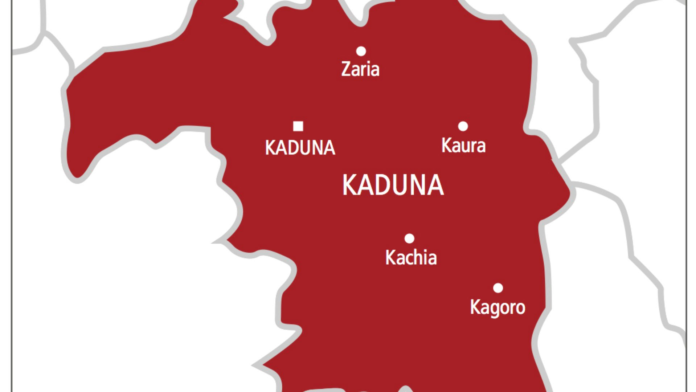
After their 14-year-old elder brother, Victor, was shot dead by terrorists who abducted them and their mum from their home, the three remaining children of Her Worship, Janet Galadima, a Customary Court Judge in Kaduna State have been released.
They spent 15 torturous days in captivity.
Although the Police have not issued any statement on the development, Chairman of the Kaduna State Branch of the Nigerian Bar Association (NBA), Barr. Godwin Ochai said the children were released on Tuesday.
He thanked God and everyone who stood by the family.
ASP Mansir Hassan, the PPRO of the Kaduna Police Command had earlier confirmed the killing of 14-year-old Victor by the terrorists.
The terrorists had also, released the judge after killing her son, but kept the remaining children in captivity.
It was, however, not clear how the children were finally released, as family members kept mum.
The abductors, numbering up to 15, invaded the home of the judge at night when her husband, a medical doctor, was away on duty.
The bandits were said to have demanded N300 million ransom for their release and threatened to start killing their victims one after the other if payment was delayed.
In the meantime, operatives of the Kano State Police Command have arrested a suspected kidnapper, Zakariyya Muhammad who abducted his neighbour’s two-year-old daughter and demanded N2m ransom for her release.
The spokesperson of the command, SP Abdullahi Haruna Kiyawa, who disclosed this in a statement on Tuesday, July 9, 2024, said that the toddler was rescued 16 hours after she was kidnapped at Sabuwar Gandu Kwarin Barka Quarters.
According to the PPRO, the suspect was arrested on Friday, July 5, following a report made by the victim’s father.
“On 04/07/2024 at about 4pm, a report was received from a resident of Sabuwar Gandu Kwarin Barka Quarters, Kano that he received a phone call from an unknown person who claimed to have kidnapped his 2½-year-old daughter, Amina and demanded a ransom of Two Million Naira (N2,000,000:00) for her release,” the statement read.
“On receipt of the report, the Commissioner of Police, Kano State Command, CP Salman Dogo Garba raised a team of Anti-kidnapping Squad led by SP Aliyu Muhammad Auwal and directed that the victim be rescued within 24 hours, and to ensure the arrest of the suspect.
“Consequently, the squad swung into action. Sustained efforts, coupled with intelligence-led technical operations, led to the arrest of the suspect, Zakariyya Muhammad, ‘m’, aged 22 years old, of Sabuwar Gandu Kwarin Barka Quarters, Kano on 05/07/2024 by 8am, i.e. 16 hours after the kidnap incident.
“The suspect who happens to be a neighbour to the victim confessed to having singlehandedly committed the offence and led the detectives to where she was kept hostage.
“The victim was rescued unhurt in an isolated area in their neighborhood and was rushed to Murtala Muhammed Specialist Hospital, Kano where she was examined, found healthy, and discharged.
“The Commissioner of Police assures the public that this despicable act will not be tolerated and the Command will continue to leverage all its available assets to forestall all criminal activities and bring the perpetrators to justice/
“The Commissioner of Police while appreciating the law-abiding people of the State, urges the community to remain vigilant and cooperate with the Police in preventing and reporting criminal activities to help create a safer environment for all.
“In case of emergencies, Kano State Police Command can be contacted through the following mobile phone numbers; *08032419754, 08123821575, 09029292926,* or login to the NPF Rescue Me Application available in the Play Store, or through the following Online Media Platforms.”
The leaders of Otu Oka-iwu in Nigeria (Igbo Lawyers Socio-Cultural Association) on Tuesday visited Mazi Nnamdi Kanu at the Department of State Services (DSS) headquarters of the DSS in Abuja.
The delegation led by Hon. Obi Aguocha, the House of Representative member representing Ikwuano/Umuahia North/Umuahia South Federal Constituency of Abia State had Mazi Okechukwu Unegbu, President Otu Oka-iwu Lagos, Mr. Chidi Udekwe and Mr. Chukwuma Obi, the President and Social Welfare Secretary of Otu Oka-iwu Abuja, Mr. Ugo Ugoji, President of Otu Oka-iwu Kaduna, Prophet and Mrs. Williams Onuoha among others.
Hon. Obi Aguocha, House of Representative member representing Ikwuano/Umuahia North/Umuahia South Federal Constituency of Abia State
The visit was in view of the permutations surrounding a new dimension in the case of Mazi Kanu in respect of the ongoing discussion relating to the release of Mazi Kanu. The delegation discussed with Mazi on the possible lasting solution to his continued detention at the DSS despite several Court Orders for his release.
The delegation advised Mazi Kanu on the need of considering an olive branch which the Federal Government might extend to him to secure his release subject to his fundamental rights.
Mr. Chidi Udekwe, President Otu Oka-Iwu in Abuja
Mazi Kanu during the visit maintained that his right to seek for self determination is sacrosanct and cannot be compromised and stated that he is waiting to be approached for any further discussion regarding his incarceration.
Mazi Kanu expressed gratitude to the delegation particularly to the Igbo Lawyers Association, Otu Oka-iwu, for identifying and pleading his cause for freedom.
Mazi Okechukwu Unegbu, President Otu Oka-iwu Lagos
The leaders of Otu Oka-Iwu hereby lends a voice to the call to His Excellency, Sen. Bola Ahmed Tinubu, GCON to expedite any political solution open to both parties and appeals that same be extended to Chief Nwajagu held in Lagos over similar charges like Mazi Kanu.
Otu Oka-iwu, an Association of Lawyers of Igbo extraction in Nigeria hopes that the political solution will be soon identified and agreed on as well as seriously considered by the Federal Government and be implemented immediately.
Mr. Ugo Ugoji, President of Otu Oka-iwu Kaduna
Otu Oka-iwu is worried that the continued deprival of Nnamdi Kanu’s right to freedom of movement and Association against the Constitution of Nigeria is responsible for the menance of sit at home in the South-East Region which have drastically affected its economy.
Otu Oka-iwu is using this opportunity to call on the South-East governors and leaders to form a common front, to intervene amd lend a voice to this new opening for the.benefit of Nnamdi Kanu because the political solution sought can also be achieved through government relations.
The Federal Law makers from South-East have shown leadership by example in their intervention and by lending a voice to the call to free Mazi Kanu. However, it is expected that if the State Governments in the South-East engage in the discussion, more will be achieved.
Notwithstanding the fact that the Federal Government has provided some details about a $150 billion Samoa Deal it signed recently, Christian and Muslim organizations and supporters of indigenous culture and traditions are up in arms. Their query is why the Federal Government should sign an agreement with clauses that require underdeveloped and developing nations to support LGBTQ rights as a condition for receiving financial and other forms of support.
This very provision of the Samoa agreement looks very much like a reincarnation of Biden’s Presidential Memorandum released shortly after he took office. In that Memo, he threatened to sanction countries which were still reluctant to make laws to promote, accommodate and expand the rights and privileges of Lesbian, Gay, Bisexual, Transgender, Queer and Intersex (LGBTQI+) people. With the specific provisions on gay rights in the Samoa Deal, and given Biden’s antecedents, it is easy to see why many are asking why sexual orientation should be part of the condition for financial and other support. Is this an underhand way of bringing back something that our National Assembly has outlawed?
The controversial agreement was signed at the Organisation of African, Caribbean, and Pacific States (OACPS) Secretariat in Brussels, Belgium on June 28. Details of the agreement indicate that the partnership is between the EU and its Member States, on one hand, and the members of the OACPS on the other. Negotiations on the agreement began in 2018, as a tangential engagement at the 73rd United Nations General Assembly. Then it was signed in Apia, Samoa, on the 15th of November 2018 by all 27 EU Member states and 47 of the 79 OACPS Member states.
The African Regional Protocol on this matter consists of two parts, namely: (1) The Framework for Cooperation, and (2) Areas of Cooperation, containing Inclusive and Sustainable Economic Growth and much more. The government has since said, in response to the uproar, that the signing was done after extensive reviews and consultations by the Interministerial Committee, convened by the Federal Ministry of Budget and Economic Planning (FMBEP) in collaboration with the Ministry of Foreign Affairs (MFA) and Federal Ministry of Justice (FMOJ).
It says that (1) None of the 103 Articles and Provisions of the Agreement contravenes the 1999 Constitution as amended or laws of Nigeria, and other extant Laws, (2) Nigeria’s endorsement was accompanied by a Statement of Declaration, indicating that any provision that is inconsistent with the laws of Nigeria shall be invalid. This is what the government has to say on the issue of same sex marriage: “,,, there is an existing legislation against same sex relationship in Nigeria enacted in 2014. It is necessary to assure Nigerians that the President Bola Tinubu Administration, being a rule-based government, will not enter into any international agreement that will be detrimental to the interest of the country and its citizens”.
Fair enough, but let us recalibrate, in order to maintain perspective and thus be extra vigilant. Everything about human relations, and even the actual essence of a human being, coming from the US during and after the Obama administration is open to question for me. This very matter, as well as the antics of the current US government to drive it down our throat, came up for scrutiny on this page on February 22, 2021. That was shortly after Biden became president and gave clear indications about some of the ways in which he would further globalize the LGBT project. Take a read.
“America is back,” said Biden about a week ago (second week of February 2021). But which America, and whose America, is back? The answer to the question was given the aforementioned Presidential Memorandum, wherein he promised hell to non-compliant developing nations. That Memorandum was all about a worldwide plan to strengthen the protection of LGBTQI+ rights, in such a way that it would be taken for granted that humanity must now collectively drive a new global priority under this umbrella of rights.
Should all mankind tremble and fall in line because an American president has announced that his country would roll out sanctions against other countries which do not subscribe to America’s preferred values? Can he even do that in US states which are yet to fall in line in this regard? Can he do anything about the legislative federalist orientation of the American State, despite a respected Supreme Court?
What warrants Biden’s presumption? By what universal standard was Nigeria classified a “homophobic” country; as was done under Obama, because of the country’s anti-gay law? Surely a US president who was Vice President when the Nigerian anti-gay law was passed, despite great pressures from the Obama government where he was Vice President, would be out to “call Nigeria to order?”
The article continued: “So, watch out! The drama is only just beginning. With Nigeria deemed an anti-LGBTQI+ country, Biden’s threat of “…financial sanctions, visa restrictions, and other sanctions” targeted at “…foreign governments” that “restrict the rights of LGBTQI+ persons…” applies here.
When Biden says: “The United States belongs at the forefront of this struggle – speaking out and standing strong for our most dearly held values”, does he consider that “our most dearly held values” in Nigeria are not American values? Since when did America start speaking for all climes? When Biden speaks of “…enforcing freedoms and promoting tolerance,” does he consider that he is the President of the US, rather than the earth? Does he even look at the overall impact of the US on “rights” with regards to global peace, climate change and morality? Less than two months into the Biden presidency, what are we seeing and what do the things we are seeing portend?
On November 23, 2020, this column carried a piece with the title “Biden and the Global Gender Crisis.” That article observed as follows: “The Obama Government threatened Nigeria with official sanctions, when the National Assembly passed a law against same-sex marriage. The Obama government also refused to sell arms to Nigeria to fight Boko Haram. It also discouraged other countries from selling arms to Nigeria; even as thousands were being slaughtered every day. The argument, then, was that the Nigerian government was not respecting the human rights of the terrorists! …The Obama Presidency stood out in its promotion of gay relationships under the LGTBQ+ movement.”
The same piece raised the following questions: “Why are world leaders, especially of the nations classified as “developed,” desperate to “level humanity” and deny any core values? Why are many “globally significant” individuals working towards the globalization of all manner of lifestyles and a values pyramid with a controlling few at the top holding sway with skewed values? Why are most world figures speaking of freedoms and rights, but not of knowledge and true humanity? Why are they talking of making people happy but saying nothing about the true meaning of happiness?” Does Biden’s Presidential Memorandum, wherein he seeks to “… further repair our (America’s) moral leadership…” which also seeks to “reinvigorate our (America’s) leadership on the LGBTQI+ issues internationally…” not showcase a national megalomania that verges on the incomprehensible?
My Exclusive Commentary of December 5, 2020, in the Houston-based USAfrica, titled “Will Biden Impose Alternative Lifestyles on Africans?” spoke of the “dangers” of a Biden presidency for non-enthusiasts of gay marriage and anti-gay advocacy. The publication began thus: “On January 2021, upon being sworn in as president of the United States, Joe Biden will begin to reconnect with many “globally significant” individuals towards the globalization of new (alternative) lifestyles and values pyramid. ‘The Return of all the freedom enjoyed under Barrack Obama’ is already the mantra of many who are cheering the November 2020 election of Joe Biden as president. The Obama administration – where Biden served as vice president for eight years, 2009 to 2017 – threatened Nigeria with sanctions for passing a law against same-sex marriage. That presidency diligently promoted the same sex agenda and Gay relationships with the LGBTQ+ movement and created a new world for the exercise of those ‘rights’ when in 2016, Donald trump barged in bared teeth and all.”
Continuing, the write-up in question said: “I believe that the Biden Presidency, itself a reincarnation of the Obama Presidency, will still use soft and strong tactics to deny any core values. They will speak of freedoms and rights, but not of knowledge and true humanity. They will speak of making people happy, but say little about the true meaning of happiness… Welcome to a world that will provide much funding and orchestrated media support for every endeavour that promotes and protects all manner of rights, without asking whether the rights in question add positive values to our humanity.” No matter how innocuous and uncoordinated it might seem, it is all well planned and well-choreographed.
Speaking in predictive terms, and this is being confirmed as I write, the article under reference here noted as follows: “Biden is likely to drive the growing insistence that LGBTQI+ be allowed in the military service of many nations. He will catalyze the progressive inclusion of LGBTQI+ history and themes in public education, as well as the deliberate projection of new identities and lifestyles that encourage heterosexuals to go into homosexual relationships…
His plan to seek and obtain special treatment for homosexuals and interfere with gender distinctions, which are all in line with the LGBTQI+ campaign spelt out in Marshal Kirk and Hunter Madsen’s 1987 Essay, “The Overhauling of Straight America,” is well known. This work, which urged Gays to project themselves in ways that would make the world to think of them as normal people who prefer to do certain things differently, was updated years later, in the book “After the Ball: How America will Conquer its Fear of Gays in the 90s.” The latter work mapped out a public relations strategy for the movement. And it is working.” Yes, it is!
Which is why, as I said in the USAfrica article: “Oklahoma Senator, Tom Coburn, in 2004, saw the gay movement as a more pressing danger than terrorism. In 2005, James Dobson, Director of Focus on the Family, described the homosexual agenda as including “universal acceptance of the gay lifestyle, discrediting of scriptures that condemn homosexuality, muzzling of the clergy and Christian media, granting of special privileges and rights in the law, overturning laws prohibiting paedophilia, indoctrinating children and future generations through public education, and securing all the legal benefits of marriage for any two or more people who claim to have homosexual tendencies.” Watch out for those tactics. Wait a minute, they are already here with us!
The concerns raised in the aforementioned USAfrica article include the following: “Can someone wake up one day, declare himself a camel, and demand that we accept his new identity and allow him to graze in the public park; or in his neighbour’s garden? Was the Obama Presidency guided by a fundamental distortion of the very concepts of human nature and human freedom? Does a redefinition of what it means to be human, and of what “gender” means, not also mean a redefinition of the notion of “human” rights and new notions of right and wrong, etc.?
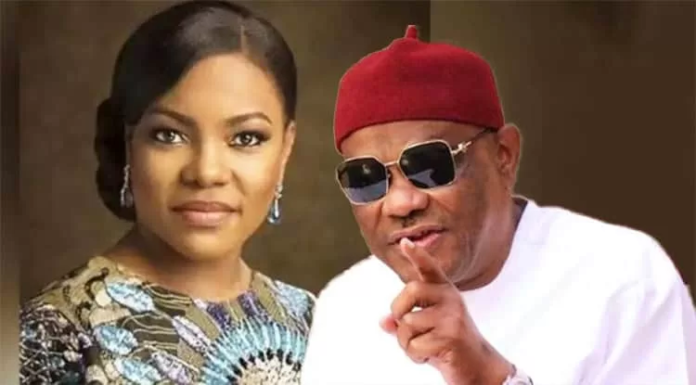
It is a celebratory season for the family of Nyesom Wike, Minister of the Federal Capital Territory (FCT) as the Chief Justice of Nigeria, Hon. Justice Olukayode Ariwoola, will tomorrow swear in his wife Eberechi Suzette Wike and his cousin Lesley Nkesi Belema Wike as justices of the Court of appeal and High Court of the FCT respectively.
The event which will take place Wednesday at the Supreme Court’s ceremonial hall will also see 21 other justices including Nnamdi Okwy Dimgba, Isaq Mohammed Sani and Eleojo Enenche elevated to the Court of Appeal.
The CJN will also swear in 12 legal practitioners as judges of the FCT High Court including his daughter-in-law Victoria Oluwakemi Ariwoola (Oyo State), Buetnaan Mandy Bassi, daughter of the President Court of Appeal, Hon. Justice Monica Dongban-Mensem (Plateau State), Maryam Iye Yusuf (Kogi State) CJ FCT’s daughter, Ademuyiwa Olakunle Oyeyipo (Kwara State), a scion of an ex-Chief Judge of Kwara State, Hon. Justice Timothy Oyeyipo, Hauwa Lawal Gummi (Zamfara State), daughter of ex-CJ FCT, Hon. Justice Lawal Hassan Gummi, Ibrahim Tanko Munirat (Bauchi State) daughter of former CJN Tanko Ibrahim.
A statement made available to journalists by the Director of Information & Public Relations at the Supreme Court, Dr. Akande Festus, identified those who will be inaugurated into the bench of the Court of Appeal as Abdullahi Muhammad Liman from Nasarawa State; Abiodun Azeem Akinyemi from Ogun State; Olukayode Adegbola Adeniyi from Oyo State; Zainab Bage Abubakar from Kebbi State; Isaq Mohammed Sani from Kaduna State; Lateef Babajide Lawal-Akapo from Lagos State; Ngozika U. Okaisabor from Imo State, Donatus Nwaezuoke Okorowo from Enugu State; Ruqayat Oremei Ayoola from Kogi State; Polycarp Terna Kwahar from Benue State; Eberechi Suzzette Nyesom-Wike from Rivers State; Fadawa Umaru from Borno State; Oyewumi Oyejoju Oyebiola from Oyo State; and Ntong Festus Ntong from Akwa Ibom State; Nehizena Idemudia Afolabi from Edo State; and Nnamdi Okwy Dimgba from Abia State.
Others are Abdu Dogo from Federal Capital Territory, Abuja; Abdulazeez M. Anka from Zamfara State; Owibunkeonye Onwosi from Ebonyi State; Asma’u Akanbi-Yusuf from Kwara State; Victoria Toochukwu Nwoye from Anambra State; and Enenche Eleojo from Kogi State.
The others to be sworn in as judges of the FCT High Court are: Bamodu Odunayo Olutomi (Lagos State); Iheabunike Anumaenwe Godwin (Imo State); Odo Celestine Obinna (Enugu State); Sarah Benjamin Inesu Avoh (Bayelsa State); (Kogi State); and Abdulrahman Usman (Taraba State).
The President of the Court of Appeal, Hon. Justice M.B Dongban-Mensem had requested the appointment of 22 new Justices to the Court of Appeal.
At no stage in Nigeria’s history has the judiciary witnessed such high level of constant and sustained bombardment as has been at this time.
Very recently a very senior Judge of the Federal High Court, Abdullahi Liman faced the worst type of excoriation and castigation for assuming jurisdiction in a matter, the crusaders believed was outside of his jurisdiction. Last week had a publication on the online news of Vanguard and that of Premium Times among others and titled ‘Abdullahi Liman, and the making of a judicial scandal…’ The story was that the judge entertained a Fundamental Rights matter which had the effect of nullifying the re-appointment of Muhammadu Sanusi II as the 16th Emir of Kano.
It is said that Liman made it clear in his ruling that the orders do not affect the validity of the Kano Emirates (Repeal) Bill 2014 which was passed by the Kano State House of Assembly. But the orders, nonetheless, were perceived as having an effect and indeed had an effect on the issue of the offices of the Emir of Kano. The critics further asserted that the judge delivered a 22 paged ruling purporting to nullify every step taken by the Kano State government under the Kano State Emirate Council (Repeal) Law assented to by the Governor on 23 May 2024. Part of what was emphasized as the grouse with this order of Liman was that it was made virtually and that his court does not have jurisdiction in chieftaincy matters.
In all of these narratives there is no word mentioned on the illegality of virtual orders of the Federal High Court. We know that from covid 19 times, many courts adopted the rules permitting judges to hear cases virtually. Nothing in all of the objections has clearly asserted that virtual hearing was no longer part of the procedure of Liman’s court, nor has it been clearly shown that the rules dictated what must be the limits of the Judges geographic location at any such virtual proceedings. Therefore, when it is simply stated that the Judge was not present in court, it may seem that it is to offer through the powers of suggestion to the public that virtual proceedings were not permissible in our courts and such an assertion must be less than ingenuous.
The criticisms seem to suggest also that if we consider a judgment of the court to have been tainted with any vice, then we should go ahead to disregard it. It was the highly respected Lord Denning in a case called Macfoy v. UAC Ltd that once said that “if an act is void, then it is in law a nullity…there is no need for an order of the court to set it aside…” Yet this prosaic statement of Denning has been roundly rejected, both in England and in Nigeria. An English case of Isaacs v. Robertson in 1984 said that Dennings statement was made per-incuriam, a nice latin word used by judges to say that something was ‘made in neglect’. Yes, indeed because Denning made the statement in neglect of a 1846 case called Chuck v. Cremer where a then English Lord, Lord Cottenham had said that if a party knows of an order “…whether null, invalid, irregular cannot be permitted to disobey it..”
Here in Nigeria, our courts adopted the same approach. Our dear Supreme Court in a 1993 case called Rossek v. African Continental Bank Ltd enjoins us to obey decisions of courts and treat them as binding upon us until the courts say otherwise. One of the Justices of that court said ‘to hold otherwise is to clothe a party …with the discretion to decide, in his wisdom, that the judgment is invalid… an invitation to anarchy’. Does this not make sense?
And again, to put it out to the public that there was no jurisdiction of the Federal High Court in Chieftaincy matters was stating a correct statement of law in a context that misleads the reading public to conclude that the proceedings were a chieftaincy claim for which the Federal High Court indeed had no jurisdiction.
Personal jurisdiction and subject matter jurisdiction are known to be the two main factors that give courts anywhere the powers to sit over cases. The court’s power over the persons or entities who were parties in the case has not been called to question. And so, the problem was not with the in-personam jurisdiction of Mr. Justice Liman. Therefore, what must have been left to debate was his subject matter jurisdiction. And yet the subject matter in that case for all that we know was a fundamental right application.
Our courts have said it time and time again that what determines subject matter of the case is never the effect of the decision but the claims that is presented to it. It is indeed the specific kind of claim that has been brought to the court, presided over by Liman that determines the jurisdiction and not the effect which the claim may have. A claim, for instance, that a legislation violates a fundamental right under the constitution does not translate to anything else merely because the said law deals with a subject matter that is outside the jurisdiction of a court. The requirement that a court have subject matter jurisdiction simply means that the court can only assume power over a claim which it has authority to hear under the law.
Unlike the High court of our states, the law limited the subject matter jurisdiction of the Federal High Court and that is why lawyers say it is not a court of general jurisdiction. For that reason, whenever they approach the Federal High Court, they do not approach it with the same general presumption as they do with the state courts, because they know that the law has limited that court’s jurisdiction to specific matters. This is no lecture to the judges of that court; they know this too well and know the limits of their jurisdiction. If the subject matter of the case before Mr. Justice Liman were a fundamental Rights claim, which is agreeably within his jurisdiction, what difference then would it make that incidental to the claim is a chieftaincy matter? Judges have always used as a best indication of their subject matter, the complaint and the claims as providing the strongest indication of the subject matter and not the appendage issues. The statute under which a claim is made is also another strong indication.
We do not deny altogether that the effect which a judgment would have may be an indication of subject matter jurisdiction but it is not always so. Judges still interrogate with these effects on a case-by-case basis and there has never been any martinet rule on this.
Doubtlessly, as one must expect in real life situations, there come times when a case before a court of limited jurisdiction such as Justice Liman’s court may be so intertwined with other subject matters which are not within its jurisdiction. Such situations can present real dilemma to a judge. In a certain appeal case in the early 2000s, dealing with the jurisdiction of the Federal High Court and which involved oil spillage, Justice Aboyi Ikongbeh had asked what would be the outcome if an oil company stored a tank with two compartments, one holding oil and the other holding water and it falls mixing both water and oil and spilling unto the plaintiff’s farm. Then he asked what court in such circumstance would have jurisdiction and whether the plaintiff would carry the burden of ascertaining the damage caused by the oil and take that to the Federal High Court and that caused by the water and reserve it for the State High Court under the tort of Rylands v. Flethcer. As dramatic as this poser may have seemed, it underscores the dilemma which judges sometimes face in jurisdictional problems where the subject matters are interwoven.
Other legal systems, such as the United States have evolved solutions to these types of problems by creating supplemental jurisdiction for federal courts which allows them to hear claims for which it would not have had subject matter jurisdiction if they arose out of a common nucleus of operative facts as the one in which they have jurisdiction.
I do not here mean to suggest that Mr Justice Liman was actually faced with intertwined subject matter situation nor that he had any dilemma in the Fundamental Right Case that confronted him and I can’t find one, but just to say that even if it was such an occasion, he does, like all other of our judges, deserve support and guidance from the depth of the resources which we may have as lawyers and scholars. Our duty should be to help and not to castigate.
The truth remains that excessive criticism of our judges and their decisions may not have yielded much benefit to the system. Those who criticize court’s decisions unduly do more harm to society by fostering suspicion and lack of confidence in judicial process. They think, perhaps in good faith, that they serve as watch dog for inappropriate judicial behaviour but they indeed hurt society’s psyche and trust in the legal system. And they serve to ominously intimidate judges and cajole them to decide with the greatest trepidation and anxiety.
Independence of the judiciary would be greatly undermined, if each individual man and woman who sits on the bench must after clearing that his or her decision passes the legal test, further self sensor to be sure it will not draw to him or to her any personal attack. A judiciary is not independent if it cannot freely decide cases without first being sure that its decision would be appreciated by the more vocal pundits, ever ready to pick holes with their decisions, howsoever industrious it may be, but as long as it does not fit into the most usual mould to which the society have been accustomed.
Even if the Liman decision seemed unfamiliar, yet unusual and iconoclastic decisions have never been a taboo in a common law system. And so, while we critique such decisions, we must be fair to insert for public enlightenment, stories like the Mareva injunction which were not jurisdiction conferred by parliament but which was created out of expediency in in the United kingdom’s case of Mareva Compania Naviera S.A. v. International Bulk Carriers S.A. That the English court developed this form of interim injunction which prevents a defendant to an action from dealing with or dissipating its assets so as to frustrate a potential judgment has today become widely recognised in all civilized legal systems and yet no charge was ever made on that 1975 court in England for absence of a clear black and white letter law, conferring such an enormous jurisdiction. No doubt the court laid claim to the 100year old Judicature Act of 1873 giving courts power to grant interlocutory orders where it appears just or convenient. Nevertheless, that is so general in terms for bright line jurisdictional purposes. Today Mareva is in the English Civil Procedure Rules 1998 titled as Freezing Order. So much thanks to the ingenuity of the Judges in the Mareva Case.
A departure from the mould of what we imagine to be the law was not limited to England alone, it was part of the judicial method in Nigeria and continued even after independence. Judges recognised their unique roles as common law judges and implicit in common law tradition was not only to be bound by precedent but to extend it, where it is expedient.
As far back as in 1898, when Cole v. Cole was decided, the law was that the inheritance of the estate of a person who, though subject to customary law but contracts marriage under the Marriage Ordinance will be governed by section 36(1) of the Ordinance. Cole was subject to customary law but did marry under the Ordinance rather contracted a “Christian Marriage” in Sierra Leone where he domiciled. Even though his marriage was not under the Act, Justice Griffitt said he would base his decision on “broad grounds which will cover all cases of native persons in Lagos who have since 1876 contracted Christian marriages outside the colony”. Reasoning that a man who had married in the Christian way clothes his offsprings with a status unknown to native law said that it will be contrary to the principles of justice to decide his inheritance according to such Native Law and therefore held that English Law would apply. There is no record that the Protectorate of Lagos was agog with agitation for Griffith’s head for assuming a jurisdiction with which he had not been specifically clad by the Marriage Ordinance. And yet Cole’s case became a principle in Nigeria’s law of intestacy.
In 1957, Sir Mbanefo as a High Court judge in Ikeanyi v Adighogu, ordered annual tributes by customary tenants for the first time without clear cut jurisdiction in that behalf. It is today part of our land law.
We do not propose that judges may act without jurisdiction, that will be whimsical. But we must always in all sense of decency approach judgments and orders of the court with an unbiased view and a presumption that even if a judge was mistaken, that he was so mistaken in good faith and that his decision, strange as they may be, must have been a product of his conscientious effort to do justice. We must believe that judges do their best in good faith to do justice and that must involve interpreting their jurisdictional powers. Should they be mistaken, we must be comforted that at any rate, the system also has the appellate process as its own internal mechanism for checkmating any infusion of adverse judicial opinions.
In other words, that the judiciary is sufficiently self cleansing. And that we must balance the benefits, if any, of our vitriolic criticisms against the harm they do to the public faith in the judiciary. And when we must publicly criticise courts’ decisions, we must be fair enough to present to the public a cocktail of views on the issue and not just the views which we favour. For all judicial methods that judges adopt, there are many theories supportive of them. To be able to advance alternative theories and perspectives to a legal situation is to me the glory of academia. If there is any discipline in which there is no one answer to a situation, the law is one ready example.
The effort here has not been to do a eulogy for judges nor to justify any particular judgment which may have come under the bombardment of critics nor to provide any exoneration. The effort is to invite a deeper reflection on the new but inimical culture of subjecting decisions of the courts to undue censure and disparagement with the apprehension of the greater harm that inheres in it.
It is beautiful to be loved and pampered, spoilt with gifts and attention. We just celebrated Valentine’s Day and I think love is in the air, still. So, did you get a dozen roses, purple prose, candle-lit dinner and ended up on a rose petal strewn bed in a scented room? Ah, I won’t go beyond there. Savor it all. For many women, it’s a once-in-a- year treat. For most, it’s a non-event. Some men are just dry from here to Sokoto. They don’t even compliment their wives, which is the easiest arm of romance.
They don’t buy the occasional suya on their way home or offer to take madam out to dinner once in a while so she can enjoy someone else’s cooking. No. it’s just ‘where-is-my-food?’ and ‘is-the-table-set? all year round. How sad and boring! You would think that men would grab every February 14 with both hands and do something special for their women, their relationships but no, they have loads of reasons why they can’t do simple soft stuff to make their partners feel on top of the world just once a year.
‘What’s special about February 14?
Sweetie, would you prefer February 15?
‘Valentine is alien to our culture.’
Cool, pick another day and fill it with roses.
‘Roses are not our thing?’
Pray tell, what’s our thing?
‘So, a man who is not romantic is a bad man?
Nicely put, dear. A man who forgets all about romance as soon as his woman says ‘yes’ to him is bad, boring, a bully too. Yeah. I will think of more adjectives later. If you did not do something special for or with your woman on February 14, I’m scoring you an F. You may re-sit this course on any day of your choice in the next two weeks to redeem what’s left of your reputation in the Relationship Department. I have spoken!
Now, to the business of the day.
Women like to be loved. Men like to own. There is a thin line between being loved and being owned. Men do not joke with their women, whether wife or side chick. A friend of mine put it like this; greedy men are stingy. Meaning; men who want other men’s women do not want other men to want their women. Greedy and stingy, you must agree. Very protective of their territory too, that’s men for you. Not that being territorial is bad in itself, it’s just that a woman should not be so befuddled by love and gifts that she forgets herself and let her life become another person’s property.
Don’t misquote me, I‘m all for submission to one’s husband and treating him with respect. Some men, like Abraham in the Bible, should even be addressed as lord. Sincerely, I know men who are that precious. But I still insist that a woman should not lose herself, her personality, who she is, because a man is all over her. It can be fatal. And anyway, good men do not absorb their women, they nurture them so they can enjoy the fruits of their labour and I‘m not talking about the fruits they grab with both hands when no one is looking or behind closed doors.
I know you know a woman or have heard the story of women who suddenly find themselves moving from wealthy or comfortable lifestyles to poverty all because their husbands died. Tales of stranded widows are everywhere. Widows whose husbands pampered. One day they are queens, ladies of the manor, the next they are bewildered widows with blood-thirsty in-laws baying at their doors and wicked business partners chasing them in their dreams. Because of properties, estates tied up in legalese, encumbered by bank loans or outright absence of a Will. I am sure you have heard stories of widows who had to withdraw their children from schools abroad or move from five-star residential areas to near slums all because they forgot themselves in the laps of luxury. Their husbands provided everything from school fees to spa tickets and holidays abroad.
They were wives whose most tasking duties was to groom themselves to an inch of their lives. Well-manicured and pedicured lives. No jobs. No passive or active income. Mr husband assured them he was working hard for his family or making too much money for his wife to be bossed around by another man. Sweet as that sounds, tomorrow is not promised and every woman, every smart woman who loves her man must know that and protect her family because you see, even good men die unannounced and are buried with their good intentions. In other words, it is possible for a wealthy man to die suddenly and after that, reality, stark, harsh reality sets in for his pampered widow.
We all pray for men who are prosperous and properly raised, men who know the true definition of manhood and how to be real heads of their homes. Girl, when God blesses you with a man like that, the only way to be ungrateful to God is to unscrew your head and forget yourself. If, as you read this, you are a blessed wife of a blessed man, 5-star full-time housewife, get off your fancy butt and get a life. If ‘Chief’ does not want you to work in another man’s office or stress yourself going to a shop, it’s fine. Buy properties and sell. Call an investment banker to advise you on passive income. Buy gold, diamonds and keep in bank vaults. If you are stranded after seeing all that wealth you are sitting on right now, who will you blame? If you suddenly lose your cover and you can’t afford a lawyer and your children have to suffer the indignities of losing a whole academic year because you couldn’t pick their bills, it will be because you were a property, owned, maybe loved but still owned.
For the side chicks, the girlfriends, I’ll tell you Kiki’s story. Pretty, shapely Kiki met one of those money-miss-road half-educated Yoruba men who treated her like a beautiful acquisition. She was a business development executive in a bank when they met. Alhaji must have felt on top of the world that a girl with two university degrees would look his way much less accept to be his woman. He fawned and fussed over her. He bought her a nice SUV and got her a tastefully furnished apartment in a choice part of the city. He even got her a driver. For three years, Kiki was ‘Orente’, Alhaji’s favourite. She basked in her nice life. But she knew she had no intention of becoming Alhaji’s third wife. She secretly started seeing a younger man with whom she planned to settle down.
Alhaji heard of Kiki’s ‘unfaithfulness’ and in a fit of rage repossessed her SUV in the office. She simply got to the car park and found a goon who asked her to take her personal effects from the car because Alhaji had instructed him to take the car to his office. The car was registered in Alhaji’s name. Kiki’s greatest shock was when she got home and all the locks had been changed. There was also a man at the gate with instructions that she would be needing alternative accommodation. It took passionate entreaties for Alhaji to even allow Kiki pack her clothes and other very personal effects. The house lease agreement was also in Alhaji’s name. Carless and homeless Kiki had to start from the scratch. The embarrassment, the rumours, the trauma led to her seeking a transfer from the Ibadan branch of her bank.
Do all side chicks hear me loud and clear? If you did not, I’ll break it down. Do not let a man buy or lease a house for you in his own name or in his company name. Do not let him buy a car for you in any name except yours. If he’s big and rich enough to want you to be his kept woman, he should release funds for you to buy whatever you want, please. If he wants to set up a business for you, let the money go into your account, otherwise one angry day, he will lock up your business premises just for hugging an old school mate.
A man has the right to want to love and own you. You owe yourself a duty to draw a clear line of demarcation between being owned and being loved.
JUNE 2024. Festivity was in the air. Professors and students, staff and high class visitors were in attendance. The highlight was a first class dinner. Africa’s book factory, Professor Toyin Falola, flew into the country to deliver the farewell lecture. It was all in honour of Professor Abd-Rasheed Na’Allah, out-going Vice Chancellor of the University of Abuja, UNIABUJA. But, trust spoilers.
They are never far away from festivities. As the wining and dining went on with fine speeches seeing off the VC at month end, students of the university were lamenting the N500 daily they pay to charge their cell phones. It was the second week the university had been plunged into darkness. It was not that the university is new to power outages, but this particular one had lengthened to pay farewell to Professor Na’Allah.
UNIABUJA claims it is “the model University in Nigeria (and) a pride of Nigerians and in the provision of higher education”. I am amazed it achieved these and attained such lofty heights while enveloped in darkness.
UNIABUJA students are quite measured: they can live under any condition. But not so the students of the University of Benin, UNIBEN. Confronted with the same circumstances, they took to the streets, blocking the busy Benin-Ore Highway to protest weeks of electricity cut. The students were two weeks away from their examinations, yet had no electricity to study after lectures. They demanded a 24-hour electricity supply. The authorities could not meet the demand, so they shut down the university.
While professors in other countries are professing and advancing the frontiers of knowledge, their counterparts in the Ahmadu Bello University, ABU, are lamenting the lack of electricity to do basic work. So, 40 of them signed a petition last week asking the Visitor, President Bola Tinubu, to intervene given the centrality of electricity supply to the operations of the university. They stated what appears to be the obvious. That a university with an average total annual budgetary overhead grant of N150 million, cannot pay an electricity bill of N3.6 billion. The egg heads calculated that if the bill were to be transferred to the 50,000 students of the institution, charges would need to be hiked by over 500 per cent.
The professors suggested alternatives. Government could pay for the cost of electricity as part of its overhead grant or, use its 49 per cent shareholding in the electricity companies to direct them to supply universities uninterrupted power supply in exchange for tax credits. A third suggestion is to mandate the electricity companies to introduce a dedicated social tariff band with rates the universities can afford.
The government’s response is uncertain, but I assume that the university still has many moons to go: producing first class materials without the benefit of electricity supply. Is it for nothing our national anthem proclaims ‘Nigeria, we hail thee’?
The University College Hospital, Ibadan, founded in 1952, is the pioneer teaching hospital in the country. Its 1,000 beds makes it one of the biggest hospitals in the country.
The legendary UCH proclaims, like Ozymandias: “We are the flagship tertiary healthcare institution in Nigeria, offering world-class Training, Research and Services.” It even has a Department of Nuclear Medicine, that branch involved in the use of radioactive substances in the diagnosis and treatment of diseases, including nuclear imaging. Short of witchcraft, how can the UCH perform all these, including blood storage and endless operations, with power outages and even conscious power disconnections? The Ibadan Electricity Distribution Company had for several days, disconnected UCH from the electricity system for owing N400 million.
Six years ago, the College of Medicine, University of Lagos, Idi-Araba decided to check power cuts by imposing an N11,000 electricity levy on each student. When the students refused to pay, the tertiary health institution reduced power supply to four hours daily. But mass protests led the authorities to seek other ways of reducing the power outages.
The first generation University of Nigeria, UNN, was by 2018 producing about 10,000 first degree graduates and 3,000 higher degrees. But its power outages were between 48 and 120 hours weekly. Sometimes, power cuts lasted a whole week. So, small or micro generators began to pollute the campus.
The Federal University Kashere, FUK, Gombe State is in an area with sweltering temperatures. So, the authorities supply the hostels two hours of electricity daily. The students in most cases pay commercial centres to charge their phones and laptops.
But these power cuts to universities, lasting weeks at a stretch, is like child’s play when compared to the case of the Kaduna State University, KASU. The Academic Staff Union of Universities, ASUU, branch Chairperson, Peter Adamu, who made a diagnostic analysis, said the situation, like advancing cancer, had gone from intermittent and epileptic to a total blackout. It became so bad that the Kafanchan campus had no electricity supply for over seven months! Adamu described the atmosphere in the university: “There is a feeling of pessimism, hopelessness, despair, despondency and dissent premonition that if the management of the university did not redouble their efforts, the end to this ugly situation might not be palatable.”
The miracle is that KASU, which is like a patient on life support, is still breathing and giving birth to new graduates and post- graduates!
Power failures, I must say, is not just a disease of public universities, the private ones also suffer it. For instance, the students of the American University of Nigeria, AUN, on April 24, 2024 staged peaceful demonstrations against persistent power cuts. To assuage the students anger, school authorities gave an assurance of a minimum five-hour power supply daily until public power supply is restored. They also shifted the commencement of examinations and, agreed to halt regular teaching to give the students more time to study.
Anybody who does not believe academics, staff and students can perform miracles, should visit Nigerian universities.
Electricity is central to the operation of universities, polytechnics and technical institutions. It is necessary for the running or functioning of equipment. It is fundamental to learning, industrialisation and development. So, running tertiary institutions with little, epileptic or no electricity, is nothing short of the miraculous . But it is not a lesson other institutions outside Nigeria want to learn from or experiment.
Do our universities deserve what they are getting having failed to find solutions to the country’s problems, including electricity generation and distribution? Or, does the country deserve the universities it has for not providing even the most basic needs like electricity? On the other hand, do they deserve themselves? But this is no time to trade blames. Rather, it is the time to put our hands on the plough and let there be light.
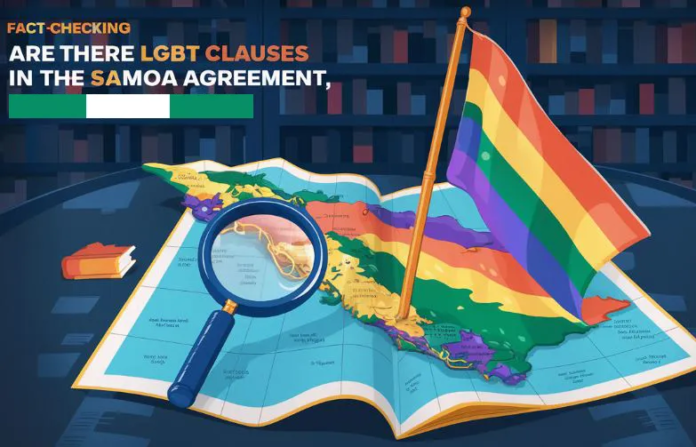
The controversial Samoa Agreement has become a topic of discussion for many Nigerians as they wonder what it entails since the news that Nigeria has signed.
On November 15, 2023, the European Union and member states came together to sign one new partnership agreement, which was referred to as the Samoa Agreement.
The member states that signed the agreement are called the Organisation of African, Caribbean and Pacific States, also known as OACPS.
About 27 member states from the EU signed the agreement and 79 African, Caribbean and Pacific countries came together to also sign the agreement.
A newspaper organisation (Not The PUNCH) had reported that the Samoa Agreement signed by the Nigerian Government contains clauses that mandate Lesbian, Gay, Bisexual, and Transgender rights.
The newspaper’s report was premised on an opinion article by a Lagos-based lawyer, Sonnie Ekwowusi, that articles of the agreement systematically legalise LGBT.
However, PUNCH Online has reviewed the 172-page document and found out that the agreement does not contain LGBT clauses, as claimed by the lawyer.
According to the reviewed document and EU press statements, the Samoa agreement focused only on addressing global challenges.
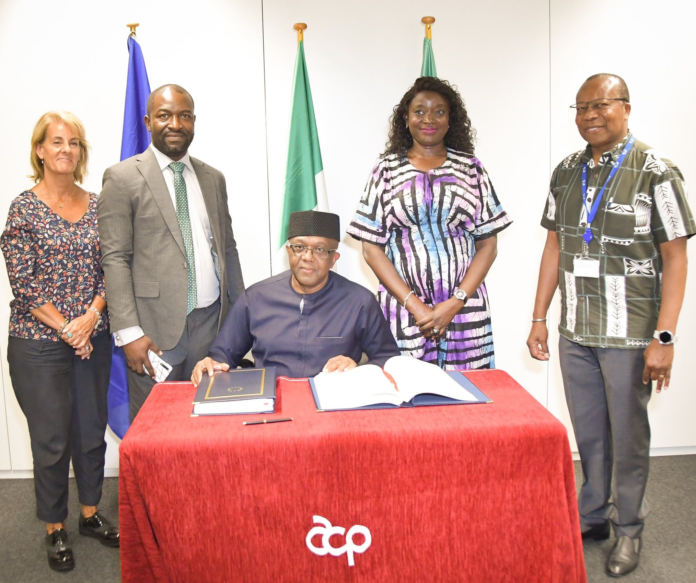
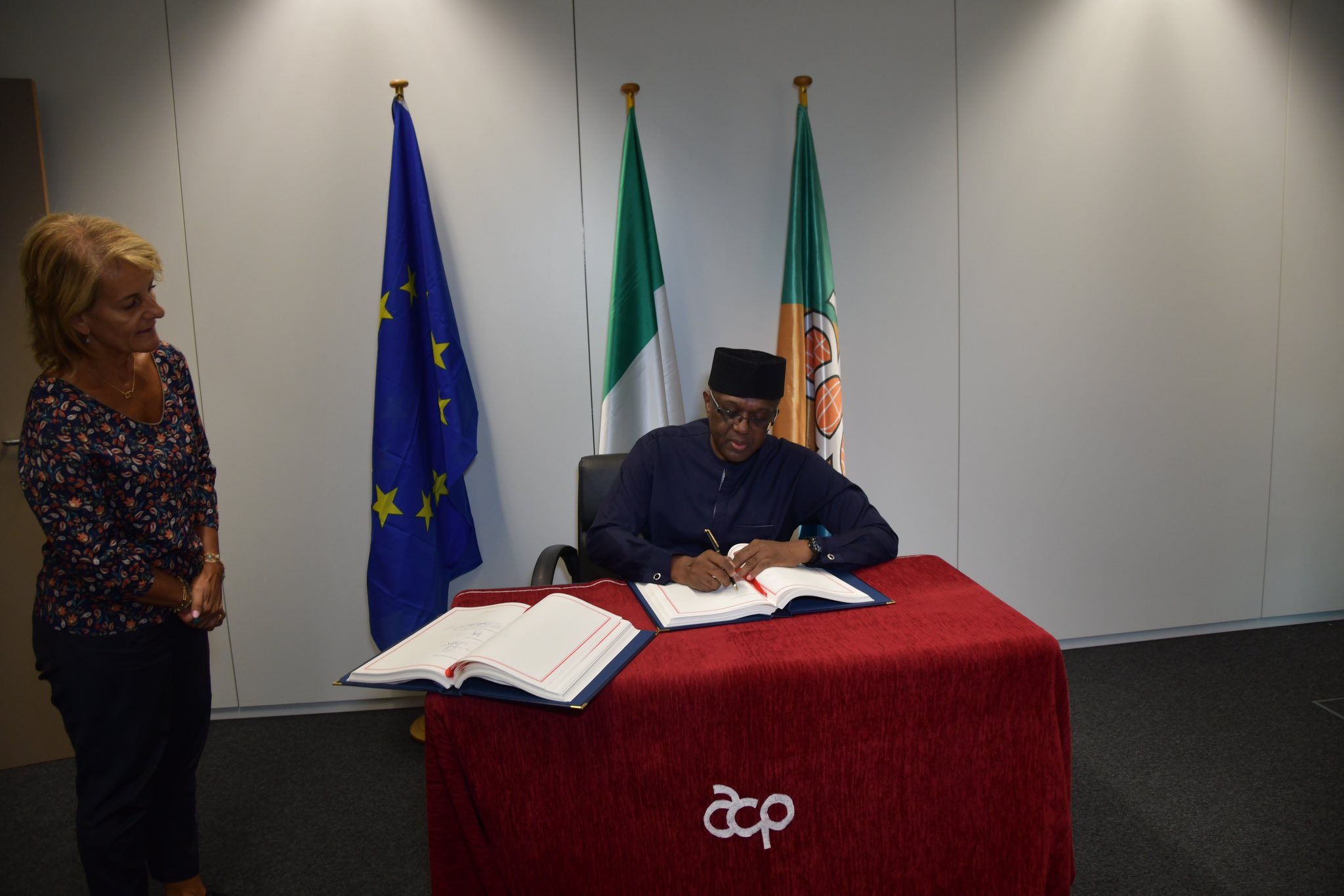
Nigerian Ambassador to the Kingdom of Belgium, Grand Duchy of Luxembourg and the European Union, Obinna Onowu, signing the agreement. (Photo: OACPS/X)
In a post via its official X page on June 28, 2024, the OACPS confirmed that Nigeria has joined other member states to sign the Samoa agreement.
The post reads, “Nigeria today signed the Samoa Agreement, joining 72 fellow members of the Organisation of African, Caribbean, and Pacific States (OACPS), in a pledge to enhance OACPS-EU relations international cooperation.
“Ambassador Obinna Chiedu Onowu represented his country to sign the Samoa Agreement at the OACPS Secretariat in Brussels. The majority of the 79 OACPS member states signed the agreement in Apia, Samoa, on November 15, 2023, which has been provisionally applied since 1 January 2024.
“The Samoa Agreement serves as a vital legal framework for cooperation between the OACPS and the European Union, with the aim of promoting sustainable development, fighting climate change and its effects, generating investment opportunities, and fostering increased collaboration among OACPS member states at the international stage.”
Below are quick facts about the Samoa Agreement
1. The Samoa Agreement is a partnership agreement and a vital legal framework for cooperation between the EU and its member states, on the one hand, and members of OACPS on the other.
2. The multilateral agreement is colloquially called the ‘Samoa Agreement’ because its signing took place on the Island of Samoa in Oceania during the 46th session of the ACP-EU Council of Ministers.
3. The agreement, signed by Nigeria and other members of the OACPS, is based on six key priorities to tackle the main challenges in the member countries over the next two decades.
4. The Nigerian Ambassador to the Kingdom of Belgium, Grand Duchy of Luxembourg and the European Union, Obinna Onowu, signed the agreement on behalf of the Nigerian Government at the OACPS Secretariat in Brussels on June 28, 2024.
5. The priorities include human rights, democracy and governance; peace and security; human and social development; inclusive, sustainable economic growth and development; environmental sustainability and climate change; and mobility/migration.
6. An important principle of the agreement is that ‘’the Parties shall make decisions and undertake actions at the most appropriate domestic, regional or multi-country level’’.
7. No Lesbian, Gay, Bisexual, Transgender and Queer clause in the agreement.
8. The EU and all its member states signed the agreement on November 15, 2023. Out of the 79 members of the OACPS, 74, including Nigeria, signed before the deadline of June 30, 2024.
9. The Samoa Agreement is a veritable instrument for Nigeria’s development cooperation with the EU beyond aid. The OACPS–EU Partnership is one of the most diverse and multifaceted development pacts in the international system.
10. The agreement is to be ratified after due consideration and approval by the Federal Executive Council, National Economic Council, and the National Assembly.
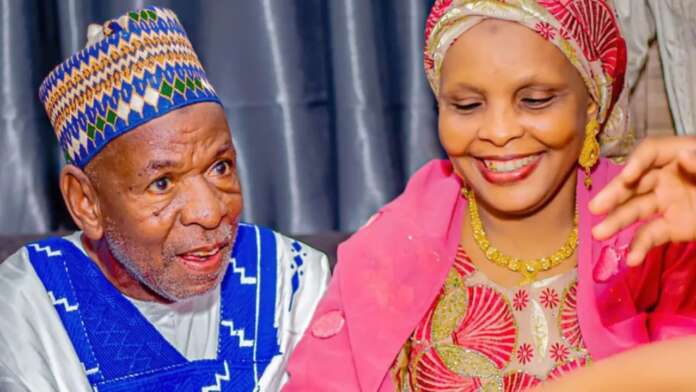
A Kano based couple who live in the north western state adjudged to be Nigeria’s “divorce capital” are being eulogized for their long standing relationship having recently celebrated their 50th marriage anniversary.
Mahmud Kabir Yusuf and Rabiatu Tahir spoke to the BBC about the secrets of their happiness, and about why so many marriages fail in the northern city of Kano, in a video that has generated much comment.
Yusuf puts it down to his wife’s generous nature.
“She is a very unselfish person and she overlooks a lot which has contributed to the success of our marriage,” the 76-year-old told BBC Hausa.
Mahmud Kabir Yusuf and Rabiatu Tahir knew each for 12 years before they married
This prompts a smile from Ms Tahir, who is in her late sixties. Together the couple have had 13 children – and she praised her husband’s ability to remain calm in the face of the difficulties all families confront.
“He is a very patient man and I feel that was also key to our success,” she said.
The pair say they love and respect each other – and they clearly enjoy each other’s company, breaking off to laugh several times during the interview.
For Hassana Mahmud, it is a revelation. The 39-year-old divorcee has been married five times and is impressed by the couple and their evident contentment.
“In all my marriages I have only spent four years with a spouse – so to see them on social media celebrating this milestone was refreshing,” she said.
“My husbands were all nice and caring during courtship but changed after the wedding,” said the mother of four. I feel bad whenever I hear people call Kano ‘the divorce capital of Nigeria’, I hope things will change,” she added.
Kano gained the epithet after divorce rates began to rise in the 1990s and it has not been able to shake off the unwanted label.
Hundreds of marriages collapse each month in Nigeria’s most populous state, whose capital, Kano city, is the commercial hub of the north.
In 2022 research done by the BBC in collaboration with the local government disclosed that 32% of marriages in Kano state only survive between three and six months.
It also showed that some people aged between 20 and 25 had already gone through three marriages.
The scale of separations is a concern – especially for the Hisbah, a Kano state-funded Islamic agency that deals with moral issues and enforces Sharia, or Islamic law in the state.
It has a police unit that enforces things like segregation in public places and an alcohol ban for Muslims, who make up the majority of residents. It also has a counselling service mainly to help struggling married couples.
Long lines of women can often be seen queueing outside its offices to complain that their ex-husbands are not helping with maintenance for their children.
People tend to marry young in Kano – often before the legal age of 18.
Others feel Islam’s easy method of divorce might be a factor as husbands can simply tell their wives: “I divorce you” or write that on a piece of paper and it is over. Nowadays a message sent on social media is enough to end their marriage.
Aminu Daurawa works for the Hisbah to address the high divorce rate. One of their solutions is to offer a second chance to people and better prepare them for married life.
The agency organises mass marriages, known as “Auren Zawarawa”, mainly for divorcees – acting as a matchmaker on a giant scale.
The hundreds of newly wed couples, who are treated to a big wedding ceremony, are also offered a small sum to help them set up a business and other household goods.
This initiative began in 2012 – though Mr Daurawa acknowledges divorce rates are still high.
“We know about that problem – that is why we set up a committee to check on each couple after the marriage so we don’t get the former [same] results,” he said.
But Hadiza Ado, founder of non-governmental organisation Women and Children Initiative, says the number of divorces continues to rise.
“At the moment we get up to 30 marital cases daily in our various offices,” she told the BBC.
“The troubling Nigerian economy is the number-one reason at the moment. Husbands go out to make ends meet and sometimes come back home empty-handed, which causes rifts.”
The practice of using matchmakers is common in Kano because in a Muslim society single people do not mix, so it is difficult to meet potential partners.
The only place that the sexes mix would be at university or other tertiary institutions, which most people do not attend.
When people are matched together they often get married hardly knowing each other.
In fact Mahmud Kabir Yusuf and Rabiatu Tahir were introduced as youngsters by an older woman in their neighbourhood.
She was the one who felt they would be a good match – but they did not tie the knot for another 12 years, giving them ample time to get to know one each other
One man with a reputation for making successful matches says that is key.
“A lot of investigation needs to be done before marriage to know the persons involved,” Rabiu Ado told the BBC.
He set up as a matchmaker 10 years ago. The 46-year-old had not intended to become a marriage broker, though it had been the job of his mother.
He was working as a truck driver when he was approached by friends complaining about the difficulty of finding a partner.
After making some successful introductions, he realised he had a knack for the family business.
He now has billboards advertising his services – and gets between one and five clients each day. He interviews them and gets to know their attitudes and expectations. Often men want a woman who can make money and women want rich men.
“A lot of people go into marriages with the wrong mindset, which is why they get disappointed after some time.”
He says he has organised around 500 marriages over the last decade, with a success rate of more than 90%.
He counsels couples to always take time to know each other well before marrying.
Mr Ado, who has the nickname “Mai Dalili” meaning “He who makes it happen”, says the high number of divorces means some people don’t take marriage seriously.
“I feel why divorce is high in Kano is because people feel I can always get another person after a divorce.”
Mahmud Kabir Yusuf and Rabiatu Tahir knew each for 12 years before they married.
Islamic cleric Abdullahi Ishaq Garangamawa defends the ease with which Muslims can get a divorce.
“Islam is merciful and made marriages and divorces not hard so that people will not be caged when things aren’t going right,” he told the BBC.
“In the past we didn’t have this many divorces as our parents were married for decades. It was in recent times that people started abusing the process for selfish interests,” he says.
“But in essence, unlike in some religions where it’s till death no matter the situation, Islam legalises divorce when things get out of hand.”
Mr Yusuf, who used to work for the now-defunct Nigeria Airways, says sharing life’s difficulties and helping one another has been crucial to his enduring partnership with Ms Tahir.
“Love is also key because when you love each other genuinely you tend to stay together.
“My advice to people getting married is not to get into it for selfish reasons but go into it with genuine intentions.”
His wife agrees, adding: “My own advice is that people wanting to get married have to be patient with each other – if one partner is angry, the other should be calm.”
Meanwhile, Rep. Abdulmalik Zubairu (APC-Zamfara), on Saturday, sponsored the mass wedding of 105 orphans and underprivileged brides in his constituency.
The News Agency of Nigeria (NAN) reports that the wedding fatiha and ceremony took place in Bungudu Town in Bungudu Local Government Area.
Zubairu is representing Bungudu/Maru Federal Constituency in the house of representatives.
The 105 brides selected from the 21 political wards of Bungudu/Maru Federal Constituency were daughters of deceased victims of banditry.
In a speech at the event, the lawmaker said that all the beneficiaries were assisted with household materials, including beds, mattresses, wardrobes, bed sheets and pillows, among others.
He said: “We paid N100,000 for each of the 105 brides as dowry.
“You know, during our campaign, we promised to support families affected by banditry.
“Alhamdulillah, today, I am fulfilling one of my campaign promises by sponsoring 105 brides for marriage to their suitors.”
Zubairu also said that most of the brides lost their parents to banditry, while a few others were selected from less privileged families.
He also said that, in addition to the payment of the dowry, each groom received N100,000, while each bride got N50,000 to start any business of their choices.
The Chairman of the occasion, Sen Abdulrahman Kawu-Sumaila (NNPP-Kano South), commended the lawmaker for the kind gesture.
Kawu-Sumaila urged the constituents to appreciate, support and pray for the lawmaker.
He advised the couples to be patient with each other, saying that marriage is part of Ibadat (faith).
He also announced a personal donation of N20,000 to each of the couples.
NAN further reports that the event was attended by traditional rulers, Islamic scholars, community leaders and politicians, among other important dignitaries from the constituency.
As part of his constituency project, the Speaker of the Niger State House of Assembly, Abdulamlik Sarkindaji, sponsored the marriage of 100 female orphans in the state as part of his constituency project two months ago.
Sarkindaji said he was “concerned with” their growing number as a result of activities of banditry.
Hon. Justice Deinde Isaac Dipeolu of the Federal High Court, Lagos has ordered a former Minister of Humanitarian Affairs, Disasters Management and Social Development, Sadiya Umar-Farouq, to account for payments of N729bn to 24.3 million poor Nigerians for six months.
The court also ordered the former minister to provide the list and details of the beneficiaries who received the payments, the number of states covered, and the payments per state.
His Lordship delivered the judgement in June following a Freedom of Information suit number: FHC/L/CS/853/2021, brought by the Socio-Economic Rights and Accountability Project.
The certified true copy of the judgement was obtained last Friday by the organisation.
Justice Dipeolu in his verdict held that “The former minister is compelled by the provisions of the Freedom of Information Act to give information to any person, including SERAP. I therefore grant an order of mandamus directing and compelling the minister to provide the spending details of N729 billion to 24.3 million poor Nigerians in 2021.”
Justice Dipeolu ordered the minister to “provide SERAP with details of how the beneficiaries have been selected and the mechanisms for the payments to the beneficiaries.”
The judge also ordered the minister to “explain the rationale for paying N5,000 to 24.3 million poor Nigerians, which translates to five per cent of Nigeria’s budget of N13.6 trillion for 2021.”
She ruled that “the minister did not give any reason for the refusal to disclose the details sought by SERAP. SERAP has reeled out the relevant sections of the Freedom of Information Act 2011 that the minister contravened and has, in line with sections 20 and 25(1) of the Act, prayed this Court for an order of mandamus to direct and compel the minister to provide the information sought.”
Justice Dipeolu dismissed the objections raised by the minister’s counsel and upheld SERAP’s arguments.
Consequently, the court entered judgement in favour of SERAP against the minister.
Reacting to the judgement, SERAP’s Deputy Director, Kolawole Oluwadare, said the ruling was a victory for transparency and accountability in the spending of public funds.
He said, “This ground-breaking judgment is a victory for transparency and accountability in the spending of public funds.
“Justice Dipeolu’s judgment shows the urgent need for the Tinubu government to genuinely address the systemic allegations of corruption in the Ministry of Humanitarian Affairs, Disasters Management and Social Development and other ministries, departments and agencies, as documented by the Auditor-General of the Federation.
“We commend Justice Dipeolu for her courage and wisdom and urge President Bola Tinubu to immediately obey the court orders.”
In the letter dated July 6, 2024, sent to President Bola Tinubu on the judgement, and signed by SERAP Deputy Director, Kolawole Oluwadare, the organisation asked him to direct the Ministry of Humanitarian Affairs, Disasters Management and Social Development and the office of the Attorney General of the Federation to immediately compile with the ruling.
The organisation also asked the President to order the release of the spending details of the N729 billion as ordered by the court.
It reads, “We urge you to demonstrate your expressed commitment to the rule of law by immediately obeying and respecting the judgment of the court.
“We urge you to direct the Ministry of Humanitarian Affairs, Disasters Management and Social Development and the office of the Attorney General of the Federation to immediately compile and release the spending details of the N729 billion as ordered by the court.
“The immediate enforcement and implementation of the judgment by your government will be a victory for the rule of law, transparency, and accountability in the governance processes and management of public resources, including the N729 billion.”
Our site uses cookies. By clicking “Accept All Cookies”, you direct Law and Society Magazine to store cookies on your device and disclose information in accordance with our Cookie Statement: cookie policyACCEPTREJECT
Privacy & Cookies Policy
Privacy Overview
This website uses cookies to improve your experience while you navigate through the website. Out of these cookies, the cookies that are categorized as necessary are stored on your browser as they are essential for the working of basic functionalities of the website. We also use third-party cookies that help us analyze and understand how you use this website. These cookies will be stored in your browser only with your consent. You also have the option to opt-out of these cookies. But opting out of some of these cookies may have an effect on your browsing experience.
Necessary cookies are absolutely essential for the website to function properly. This category only includes cookies that ensures basic functionalities and security features of the website. These cookies do not store any personal information.
Any cookies that may not be particularly necessary for the website to function and is used specifically to collect user personal data via analytics, ads, other embedded contents are termed as non-necessary cookies. It is mandatory to procure user consent prior to running these cookies on your website.