Home Blog Page 562

Otu Oka-Iwu, Abuja calls for representation of Ebonyi State in FCT Judiciary, congratulates new Justices of Court of Appeal and FCT High Court

Press Release

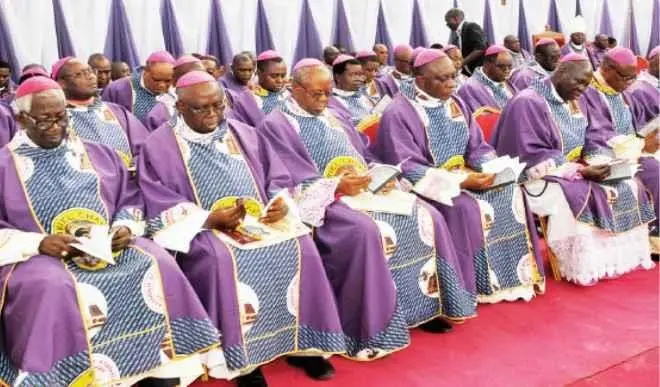
Otu Oka-Iwu, Abuja congratulates the Judges of the FCT High Court and Justices of the Court of Appeal sworn in today by the Chief Justice of Nigeria; Hon Justice Ariwoola.

The appointment is commendable because the increase in the number of Judges and Justices will help with the challenges of work load and the time lag it takes to conclude a case in the respective courts.

While we felicitate with the appointees, we note that in the FCT High Court, each State is represented at the Bench. However, our attention is drawn to the fact while other states are represented, Ebonyi State has no representation to reflect the federal character system as required in the composition of the Judges of the FCT High Court.

Ebonyi State undoubtedly has produced fine legal minds in the country. We are therefore concerned that the state is not represented in the FCT High Court. For fairness and equity, we hereby appeal to the National Judicial Council to consider this oversight and call that Ebonyi State quota be filled in the FCT High Court.

Going forward, fortunately or unfortunately, the appointment of the Judges and Justices that were sworn in today comes at a time when all eyes are on the Judiciary. Recent publications have all criticised the judiciary as corrupt and the major part of the problem faced in Nigeria.

It is believed that if the Judiciary is independent and had stood its ground particularly in political cases that some of the atrocities in the country would not be, as so many persons would be imprisoned for derailing Nigeria and misappropriating our common wealth.

Indeed, all hope may not be lost because at this time in our beloved country, the clamour for the independence of the judiciary can not be over emphasised. The Executive and the Legislature can not lie siege on the third arm of the government. We strongly condemn the interference of lobbyists and their likes in judicial affairs, particularly in cases that are pending in our various courts.

The judiciary should particularly not be politicised. Rather, there should be an improvement in the welfare of judges and judicial officers. We also advocate for state of the art Court rooms because the conditions of some of our courts across the country are not befitting for the tedious work judges are subjected to. The method of recording by hand ought to have been fazed out decades ago. Judges need improved health care packages as well as sufficient wages to avoid temptations that come with gratifications.

The Nigerian Judiciary is rated as one of the best in the world, but meddlesome interlopers abound, and everything required to be done should be done to rescue the last hope of the common man.

Chidi Udekwe, Esq.
President,
Otu Oka-iwu Abuja

Hailing the Supreme Court on LG allocation judgment

By Prof Mike Ozekhome, SAN,CON, OFR

The supreme court judgement today, July 11, 2024, directing the Federal Government to pay allocations due to Local Government Areas directly to their account thereby abolishing the old practices of State-Local Government Joint Account,is timely and courageous.

What the judgement has done is more like interpreting section 162 of the Constitution, which provides for a joint State-Local Government Account. In which case, money is normally paid to state governors’ accounts and then for them to disburse to the local governments for them to share. But what has been happening is that, as I noted in 2020,over three years ago, the state governors, have been behaving like ”bandits”, waylaing local governments funds along the way and thus impoverishing them leaving them with nothing to work, just a little for salary. And nothing to actually work for the people whom they represent.
I agree totally with the judgement of the supreme court to grant full financial autonomy so that money is released and paid directly to the 774 local government councils which constitute the third-tier of government,to develop their places because the LGAs are grassrooted and nearest to the people. Rather than allow overbearing state governors throw their weight around and muzzle the local governments and seize their purse,they will now allow LGs breath some air of freedom.

If you take a look at our situation, Nigeria is operating a very lopsided federation,more like a unitary system of government. Where the federal government is supposed to be a small government,it is controlling 67 items on the exclusive legislative list. That is why the federal government gets the lion share of the federation account , the lion share of the money that comes to the federation account to the tune of 52.68%. The states get 26.72% while the entire 774 local government councils in Nigeria get just 20.60% of the monthly allocation by the Revenue Mobilization Allocation and Fiscal Commission, RLASMC.

The question is, what is the federal government doing with almost 53% of the national income? That is because it is a government that is behemoth.That is elephantine. A government that intrudes and intervenes in areas that should not concern it at all. What is the federal government’s business with licensing cars and trucks for states? What is its business with the Marriage Act, dealing with how people marry and wed in Nigeria and how they live together as husband and wife and separate or divorce? What is the federal government’s business with unity schools? A whole FG operating secondary schools? What is their business? Why is the FG not allowing states generate their own power, operate their own railway stations, if they have the capacity? Why should the federal government not allow states have their own police force? Even for the local governments to have their own police force as we have in the United States and other advanced countries of the world where even tertiary institutions have their own police?

The truth is that the federal government is overbloated and overpampered. That is why it is using too much money and make the centre become too attractive,eating deep into funds that ought to be meant for the states and local government areas. The states take not only that which belongs to the states, but also waylays at source that which is meant for the local government areas. No Nation grows that way.

So, I see this judgment as epochal,having far-reaching effect because money will now be made available directly to the local government areas who will no longer be subservient, like fawning slaves to state governors. In fact, the judgement even went further to say that no state government has the power henceforth to dissolve local government areas. This is because we have been seeing cases where inspite of the provisions of section 7 of the 1999 constitution that give autonomy to local government areas, states normally go ahead and dissolve local government areas ND appoint caretaker committees for them.This is whimsical and capricious.The Supreme Court has said this can no longer go on and that henceforth, no state government should ever be able to dissolve any local government area in Nigeria for any reason whatsoever and howsoever.

The judgement is salutary, timely and regenerative. It should be upheld by all governments and people in Nigeria for better democratic dividends.I see this as victory for our wobbling democracy, even if we are far removed from true fiscal federalism where the federating units control and utilize their God-given resources while paying royalty or tax to the central government. This case is one big plus for tested court room gladiator, Prince Lateef Fagbemi, SAN, the Attorney General of the Federation, who initiated the case at the apex court, invoking its original jurisdiction.Surely,to jaw-jaw is better than to war-war. God bless Nigeria.

Police and Contributory Pension Scheme

Ikechukwu Amaechi

By Ikechukwu Amaechi

The Senate, on July 4, 2024, passed for a second reading a bill that seeks to remove police retirees from the Contributory Pension Scheme (CPS). Promoters of the bill, which seeks, among other things, to replace the Nigeria Police Force Pensions Limited (NPF Pensions), the pension fund administrator (PFA) charged with the exclusive administration of police pensions, with the Nigeria Police Pensions Board, aver that it will correct the inequality in the pension benefits paid to police retirees vis-à-vis their counterparts in other security agencies.

Let me state from the onset that it will not. Instead, the exit will make the lot of an average police retiree more precarious. Exiting police from the CPS is an ill-advised gambit, the same way the idea of replacing the high performing NPF Pensions Limited with a nebulous Nigeria Police Pensions Board is harebrained. I will explain shortly.

Leading the debate, the sponsor of the bill, Senator Binos Yaroe, who represents Adamawa-South in the Red Chamber, lamented the poor pension of retired police officers.

“The inclusion and continuous stay of the NPF in the PenCom has placed them on the wrong end of the post-service emolument life, even though the Nigeria Police is saddled with the responsibility of not only protecting the lives and property of the citizenry but detecting crimes,” Yaroe said.

On the face value, his argument is very seductive but it was all déjà vu because the issues he raised are as old as the CPS itself. Numerous public hearings have been organized by both chambers of the National Assembly on the issue of exemption. For instance, on February 22, 2022, the House of Representatives Committee on Pensions held a public hearing on two bills for the amendment of the Pension Reform Act 2014, with the first bill sponsored by Hon. Francis Ejiroghene Waive, seeking “to amend the Pension Reform Act 2014 to provide for the exemption of the Nigeria Police Force from the Contributory Pension Scheme and for related matters.”

To be sure, nothing is wrong with calling for an enhanced retirement package for the police because when it comes to issues of welfare and salaries, they hold the wrong end of Nigeria’s emolument stick.

But the low pension is neither the making of National Pension Commission (PenCom) nor NPF Pensions Limited. The pension is paltry because historically, police salaries remain embarrassingly measly. Therefore, the solution lies outside the exemption paradigm.

Today, NPF Pensions is the most thriving police-affiliated institution because it is run by professionals from outside the police establishment, and not manacled by the asphyxiating police bureaucracy. Not only that, PenCom has carved for itself the niche of being the most efficient regulator in the country’s fiscal space.

When the Pension Reform Act 2004 was enacted, the idea was to have a new scheme that is not only contributory and fully funded but also privately managed, with funds and assets based on individual accounts under third party custody. The overarching goal was to ensure, unlike in the Defined Benefits Scheme (DBS), that everyone who has worked receives retirement benefits as and when due.

But the government, which modelled the country’s CPS after the Chilean scheme that exempted all its armed forces, retained the police while exempting the Army, the Nigeria Intelligence Agency (NIA) and the Department of State Security (DSS).

The subsequent agitation for exit led to the incorporation of NPF Pensions on October 21, 2013, as a mono-clientele PFA exclusively responsible for the pension assets of all police personnel in Nigeria. It started operations a year later, making it the 21st PFA in accordance with the 2014 Pension Reform Act (PRA 2014).

The PFA became a roaring success instantly. Today, not only is it the most successful police investment entity, it has become the measuring rod in the pension industry with Assets under Management (AuM) crossing the N1 trillion threshold, making it the fourth biggest PFA.

Yet, the success has not deterred the exemption protagonists who seek to amend section 5 (1) of the Pension Reform Act of 2014, to include officers of the NPF as part of the categories of persons exempted from contributory pension.

But exiting the CPS will not serve the ultimate goal of enhancing the welfare and wellbeing of officers and men of the Nigeria Police because that route will lead, once again, to the Defined Benefits Scheme which was abandoned in 2004 because of its impracticability.

Exemption as being canvassed will also ultimately lead to the dismantling of the institutions, systems and processes that government has put in place towards the implementation of the pension reform scheme, in addition to upsetting government’s fiscal policy.

Data from PenCom reveals that as at January 31, 2024, Nigeria’s pension fund assets stands at N19.531 trillion, which represents more than ten per cent of the country’s Gross Domestic Product (GDP). When contrasted with Federal Government’s budgetary pension deficit, estimated at N2 trillion as at June 2004 under the Defined Benefits Scheme, it will be suicidal to hearken to the exemption calls.

Therefore, since the elephant in the room is the abysmally low pension of police retirees, which has to do with ridiculously low salaries, rather than legislating for exemption, the government should administratively address the issue of low wages through upward salary adjustment, maximizing the opportunity of the ongoing new minimum wage negotiation. As Aisha Dahir-Umar, PenCom director-general, once noted, “Pension is a function of salary, and as long as the salary of officers continues, then there is no need to exit.”

What needs to be done?

At a three-day investigative hearing by the House of Representatives Committee on Pensions in March 2020, measures were articulated by Dr. Sule Wuro Bokki, former Managing Director of NPF Pensions, which if taken, will holistically address the plight of police retirees and mitigate the constant clamour for exit.

The first is a presidential approval of special gratuity for police retirees at the rate of 300 per cent of their last annual gross pay so that the balances in their Retirement Savings Account (RSAs) will be channeled towards their monthly pension payments. This will be in accordance with Section 4 (4) of the Pension Reform Act which provides that an employer, notwithstanding the provisions of the Act, may agree on the payment of additional benefits to the employee upon retirement. The second is treatment of retired police officers from the rank of AIG and above as public officers who should retire with their full benefits, as it is the case with permanent secretaries.

Besides, the major challenge faced by pension managers is the backlog of accrued rights owed by the Federal Government. Pension is made up of the accrued rights, which is the service rendered by policemen to the Federal Government from the time they enrolled in the CPS in 2004 and only payable when the officer serves notice of retirement, and the contributions from both the employee and employer.

But because the accrued rights are huge, the illiquid Federal Government opted to pay in instalments every year. But the snag is that unless that is received, the PFAs cannot pay the portion that is with them because the account has to be consolidated. Right now, the accrued rights have not been paid in over 15 months, which means that no policeman that retired in almost two years has been paid pension. The government may find a way of paying the accrued rights of retired officers separately to mitigate the delay.

These issues should be addressed administratively by the government. The National Assembly is in a pole position to facilitate the process rather than legislating for the exit of the police from the CPS, a move that will destroy not only the thriving NPF Pensions Limited but also dismantle the entire contributory pension infrastructure and take Nigeria back to the impracticable Defined Benefits Scheme era. It will also orchestrate a fiscal disaster when the federal government, once again, is saddled with the sole responsibility of shouldering the burden of paying police pensions. Not only is such a prospect not feasible given the terrible state of the country’s economy, it will amount to shadow-chasing.

· Ikechukwu Amaechi, a journalist, is the publisher of TheNiche online news platform

LGA Caretaker Chairman in Rivers State appoints 100 special assistants weeks into his appointment

  • As Supreme Court declares it’s unconstitutional for Govs to hold LG Funds

The chairman of Obio-Akpor LGA of Rivers State, Chijoke Ihunwo, has approved the appointment of 100 special assistants. 

In a statement released on Thursday, July 11, Ihunwo said the appointees must work with the vision of the state Governor, Siminalayi Fubara.

“As the caretaker chairman of Obio-Akpor local government area of Rivers state, I have approved the appointment of one hundred special assistants. While congratulating the appointees, I charged them to work effectively and key into my developmental agenda, and in line with the vision of Governor Siminalayi Fubara.”

He gave the names of some of the appointees as Clement Ifelen Nwaru, Augusta Dafugbo Jaja, Bariasa Juliet Doba, Chigozie Emmanuel Esinuelo, Stella Nkechi Worlu and Ogbonna Ezinne Stella.

Others are Charity O. Amadi, Ejekwu Theresa Nkiruka, Ijeoma Wosu, Orlu Grace Oluchi, Emilia Seibidor, Silverline Oluchi, Blessing Worlu, Blessing Ndidi Chinda and Wosu Elizabeth Obinuchi.

The appointment comes weeks after his appointment as caretaker chairman on June 19.

Meanwhile, the Supreme Court of Nigeria on Thursday, declared that it is unconstitutional for state governors to hold onto funds meant for Local Government (LG) administrations.

The Supreme Court also barred governors from dissolving democratically elected Local Government councils in the country.

The apex court, in a landmark judgement on Thursday, said doing so, would amount to a breach of the 1999 Constitution.

In the lead judgement read by Justice Emmanuel Agim, the apex court observed that the state governments’ refusal of financial autonomy for local governments has gone on for over two decades.

Justice Agim said local governments have since stopped receiving the money meant for them from the state governors who act in their stead.

He noted that the 774 local government councils in the country should manage their funds themselves. He said only democratically elected local government administrations are entitled to these funds and not caretaker committees.

He dismissed the preliminary objections of the defendants (state governors).

Long Walk To LG Autonomy

There are 774 local government areas in the country but the efficiency of the third tier of government has been hampered by the weight of some controlling and overbearing governors who have been accused of mismanaging funds meant for the administration of local governments.

In the last few months, calls for local government autonomy have increased in Nigeria. President Bola Tinubu also supported the calls. In May, the Federal Government, through the Attorney-General of the Federation (AGF), Lateef Fagbemi, sued the 36 state governors over alleged misconduct of local government funds.

Currently, the Federal Government gets 52.68%, and states get 26.72%. In comparison, LGs get 20.60% of the country’s monthly revenue allocated by the Revenue Mobilisation Allocation and Fiscal Commission (RMAFC) which operates under the Presidency, and disbursed by the Federation Account Allocation Committee (FAAC).

Interestingly, LG funds are paid into a joint account operated by state governments and local governments in their domains.

In the suit filed by AGF, the Federal Government sought an order preventing the governors from arbitrarily dissolving democratically elected councils. The suit by the AGF was on 27 grounds.

The 36 state governors, who are defendants in the suit, opposed the AGF for instituting the case.

The Verdict

In his judgement, Justice Agim said the AGF has the right to institute the suit and protect the constitution.

The apex court consequently directed that Local Government allocations from the Federation Account should be paid directly to them henceforth, and not to state government coffers.

Justice Agim pointed out that the state governors’ retention of the monies meant for the Local Governments truncates the latter’s activities.

Agim ordered the immediate compliance of the judgement, stating that no state government should be paid monies meant for Local Governments.

80-year-old Bayelsa man arrested for allegedly having sex with minor

The Police in Bayelsa State has arrested an 80-year-old known as Pa. Stephen for allegedly defiling a 10-year-old girl at Otuokpoti community in the Ogbia Local Government Area of the state.

PUNCH correspondent gathered from some gender advocacy groups including Dise Ogbise Foundation, Reigneth Foundation, Starrz Safety Initiative and Collins Cocodia Foundation that the suspect was identified by indigenes of the community as a serial paedophile.

Pa. Stephen was taken to the Divisional Police headquarters at Ogbia Town on the insistence of the gender advocacy groups but Metro PUNCH reliably gathered that he was eventually transferred to the state police headquarters in Yenagoa on Tuesday.

A statement from the gender advocacy groups on Wednesday disclosed that the foster mother of the victim said that she noticed that the girl was showing signs of illness and absent-mindedness while performing domestic chores.

The suspect was alleged to have been carrying out the dastardly act for about a year and neighbours told the victim’s foster mother that they had seen him giving some money to the young girl.

The statement said: “Many of the neighbours warned the foster mother that they noticed that the elderly accused gave some money to the kid and warned the foster mother to be alert. They warned her that the elderly accused was a serial paedophile.

“On the fateful day, a concerned community member noticed the child entering the old man’s house on her way from school. She immediately raised an alarm and they forcefully rescued her. The victim admitted that the defilement started last year.”

Founder of the Dise Foundation, Dise Ogbise Goddy Harry, told newsmen that it took joint efforts of the gender advocacy groups to ensure the accused was arrested and remanded in police custody.

Dise said the Medical Women Association of Nigeria, Bayelsa State Chapter, also assisted in providing support and examination but noted that she would also undergo a psychological examination.

According to her, the victim had been placed in protective custody under the Bayelsa State Government through the Ministry of Women Affairs.

She said, “Sadly, such is happening. It is a red flag to all of us.”

The state Police Public Relations Officer, Musa Mohammed, was yet to confirm the development as he did not pick his calls or reply to a text message to that effect as of the time of filing this report.

PUNCH

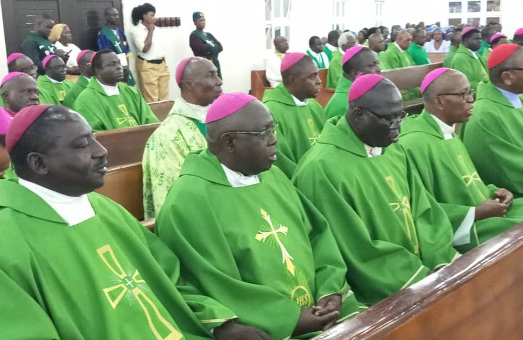
Catholic Bishops call on FG to swiftly commence amendments to the Samoa Agreement or withdraw from it

The Catholic Bishops Conference of Nigeria (CBCN) has called on the Federal Government to promptly commence amendments to the Samoa Agreement or withdraw from it.

The full text of the message reads:

CBCN-on-Samoa-Document

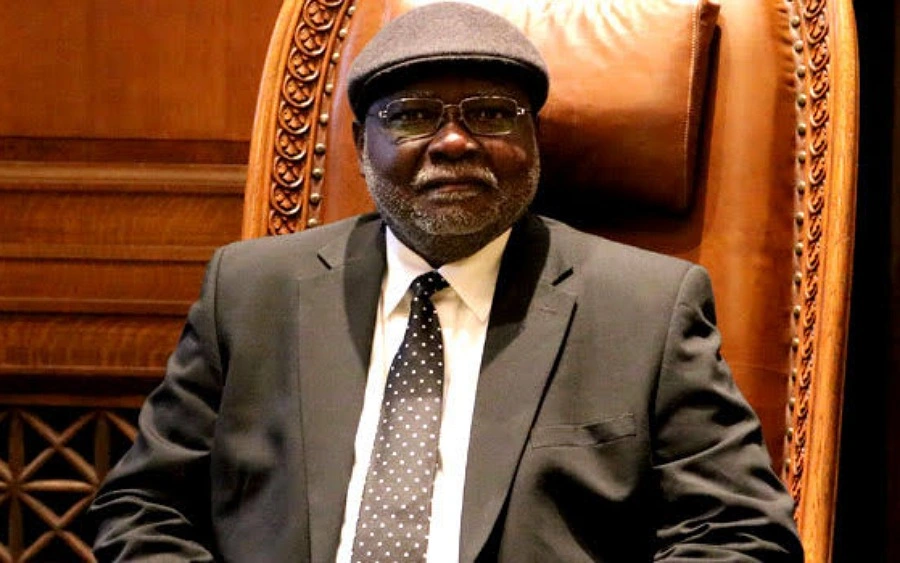
Your judgments must not be tainted by sentiments, emotions, or clandestine considerations —CJN to 22 New Appeal Court Justices

Chief Justice Olukayode Ariwoola, on Wednesday swore in 22 new justices of the Court of Appeal with a charge, that they must be upright in the delivery of justice to Nigerians without fear or favour.

This is the highest number of appointments in one fell swoop to the Court in recent time.

When 25 High Court judges were sworn-in as Justices of the Court of Appeal on 10 December 1998, they were dubbed— The Russians (Rushians)— after the the Union of Soviet Socialist Republics (USSR) which was the largest country that ever existed. Russia was its capital. That appointment (25 judges) at the same time was unprecedented

Addressing the new appellate court justices at the Supreme Court’s ceremonial hall in Abuja, the CJN said they must always deliver right judgments that will not be tainted by sentiments, emotions, or other clandestine considerations

Pointing put that the Judiciary has been treated to a distasteful cocktail of misleading and conflicting judgments as well as frivolous interlocutory orders emanating from courts of coordinate jurisdictions, Justice  Ariwoola said these have literally attempted to make a mockery of the judicial system and flagrantly desecrate the revered temple of justice.

“Several cases of such abound across the length and breadth of the country. This is, largely, an embarrassment to our jurisprudence, and we will never handle it with levity. Punitive measures must definitely be meted out to such erring Judges,” he said.

Counseling the justices to be alert and responsive, the CJN said many incomprehensible crimes are being committed in the country, aside from the usual political matters that have made litigations go on the alarming rise, and that no court in the country is spared of the litigation deluge.

He said Nigeria is fast emerging as a frontline crime-infested country that needs to be curtailed urgently and added that, the enormous task of cleaning the Augean stable rests squarely on the Justices, “So, you must hastily fasten your belt and roll up your sleeves to face the challenges head-on.

“In other words, you should hit the ground speeding at a supersonic velocity and not just running, you must redouble your pace to catch up with the expectations of the sprawling community of litigants”.

As judicial officers, he said the Justices have a divine mandate on earth to discharge their judicial functions with unveiled honesty and sincerity, give good accounts of themselves, and justify their elevation to the Court of Appeal.

The CJN said, the Edo and Ondo state governorship elections will be held in the next couple of months and that, the courts will be besieged with plethora of petitions and added that, “It is our statutory duty to hear all matters that come before us and adjudicate according to the laws of the land.

“We must not falter and we must not tread the path of infamy. Yes, it is true that we cannot please everyone through our actions and work, but with the right application of the law and the Constitution of the land, which we all have collectively pledged to uphold, we can go a long way to do those things that our conscience will be very proud of and the generality of the Nigerian citizens will equally be happy about”.

He charged them not to rest on their oars, as the onus now lies more heavily on them to discharge their judicial duties more dispassionately, discretionally, and transparently.

The CJN, also swore in 12 newly appointed Judges of the High Court of the Federal Capital Territory (FCT), Abuja, with a charge for them to discharge their judicial functions in accordance with the Constitution.

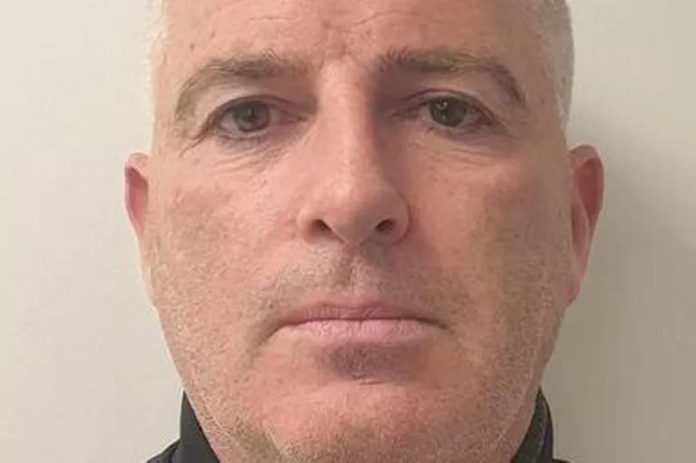
Top international drug dealer arrested in butcher’s shop

A big-time drug dealer has been jailed after a simple police visit to a butcher’s shop unmasked him. Dean Cooper, 51, supplied £3.68m of cocaine, £900,000 of heroin and other drugs, including ketamine, amphetamine and 50kg of cannabis resin in his major criminal operation.

He was finally brought to justice thanks to Operation Venetic, a long-running investigation into communications between criminals on EncroChat. For years, the totally legal EncroChat service allowed 50,000 users around the world – 9,000 of them in the UK – to communicate in the knowledge none of their texts would be uncovered by law enforcement.

That ended when investigators hacked into EncroChat’s server in Roubaix, northern France, in April 2020, sending bogus updates to devices across the globe which effectively mined the incriminating data criminals wanted so much to conceal.

Cooper, who flooded Manchester with the drugs, is the latest criminal to be brought to justice. He used the handle Berrystar on EncroChat… Click here to continue reading.

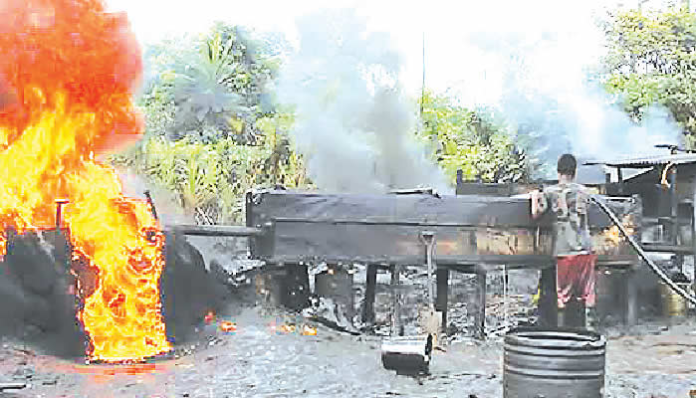
More revelations emerge on how illegal local refineries supply diesel to filling stations

It has been revealed that about 90 percent of diesel sold in filling stations in Nigeria are produced by local refineries operating illegally in different communities of the Nigeria Delta.

This disclosure was made by the Executive Director, Operations & Technical, Tantita Security Services (TSS) Ltd, Capt. Warredi Enisuo.

Tantita is owned by the Niger Delta warlord, Government Ekpemupolo, who is known as Tompolo. His company was contracted to check illegal crude oil theft some years ago.

According to Enisuo who spoke on the occasion of the Nigeria Oil and Gas (NOG) summit held in Abuja recently, most of the diesel sold in filling stations in Nigeria is refined by local communities in the Niger Delta.

Enisuo in a news report published by Thisday Newspaper, said almost all the oil companies patronise those who illegally refine crude oil.

Speaking on the theme “ Exploring Nigeria’s Content Solutions to Meet Energy Demand”, he however said the reason cheap, illegal diesel was no longer available was as a result of the hard work that his company, Tantita, has done to stop oil theft in the Niger Delta, adding that oil communities must no longer be ignored.

He said, “Why is there no scarcity of diesel (right now)? There is scarcity of PMS (petrol). The story is simple. Most of the diesel you buy is brewed (refined) by the communities.

“Don’t let any fuel station deceive you, 90 per cent of the diesel in fuel stations are produced by the communities. It will also interest you to know that even the oil companies, they patronise the local diesel refineries. Don’t let anybody deceive you.

“But they do it illegally and behind the doors. So, as we go with the local content, the board has a lot to do with people with this skill and character. I’m not too sure how much your act has done to establish infrastructure, but to be honest with you, we might need to focus more on the communities.

“The reason why the price of diesel is high today is because of the work of the private security companies like my company, because we have been able to somehow cut down on a lot of the business, a lot of the illegal refining going on. That is why you see the cost of diesel going up.

“Let the communities take on the responsibility of ownership, a sense of belonging. This is why we are making progress. If you give them that sense of responsibility, you should not forget what happened in Niger Delta. But if you put them somewhere where you feel you can outsmart them…these guys will out-greed you.”

The Nigerian National Petroleum Company Limited has discovered a total of 122 illegal oil refining sites in the past week across the Niger Delta region.

The NNPCL said a filling station was sealed for selling illegally refined fuel to motorist in Akwa Ibom State.

According to a documentary released by the NNPCL on Tuesday, 65 illegal pipeline connections were uncovered and removed within the past week in Rivers and other states in the oil-rich Niger Delta.

“310 incidents were recorded between May 18 and 24 across the Niger Delta region,” the NNPCL disclosed while reeling out its efforts in fighting oil theft and vandalism.

Our correspondent gathered that the filling station selling illegally refined fuel was uncovered at Grey Creek in Akwa Ibom State.

The 122 illegal refineries were spotted at Tomble II, III, IV, Umuajuloke, Rivers State as well as Oporomor III, Eduwini, and Ajatiton in Bayelsa State.

Vandalised well heads were reportedly discovered in Tomble IV, Rivers and Egbema in Imo State.

Five illegal storage sites were sighted with oil stored in sacks, pits, cans and a filling station, the energy company stated.

Twenty vehicles, including a tanker, were seized in Delta and Imo states, while 29 boats transporting crude oil or illegally refined products were confiscated across several creeks in Bayelsa and Delta states.

It was said that 33 suspects have been arrested in connection with the incidents.

Recently, The NNPCL Group Chief Executive Officer, Mele Kyari, emphasised the need to fight insecurity in the oil and gas sector to increase production.

Businessman bags life for defiling 12-year-old daughter; NSCDC officer, 72 year-old man also earn life terms for sexually abusing minors

A 34-year-old businessman, Oluwafemi Asekeji was on Tuesday sentenced to life imprisonment for defiling his 12-year-old biological daughter by an Ikeja Sexual Offences and Domestic Violence Court.

Hon. Justice Abiola Soladoye, in her judgment, also held that the prosecution proved the three legs of the charge of defilement against Asekeji.

Soladoye said that the convict’s act of having unlawful sexual intercourse with his own biological child was against the law of nature; a case of incest which should never be heard of.

She also pointed that the father of the convict, who is 75 years old, testified that Asekeji defiled his granddaughter, by having unlawful sexual intercourse with her.

“The victim, in her testimony, told the court that she was 14 years old but her father defiled her when she was 12 years old,” the judge said.

“She testified that she was at home with her father, who was drunk on June 11, 2020 and he instructed her to enter the room and lie on the bed.

“She told this court that her father asked her to take off her clothes and then had sex with her.

“She said and I quote ‘he laid on me and put his penis in my vagina, then he took videos of me and threatened to show the video to people if I tell anybody what has happened.”

The court held that the survivor testified that her father instructed her to drink salt water after he had defiled her.

The judge said the survivor told the court that she could not tell anyone earlier because the convict had threatened to kill her if she told anyone that he had been sexually abusing her before the last incident of June 11, 2020.

The judge also held that the medical report revealed that the survivor had been defiled as the report showed the hymen had been broken.

The convict’s mother, a petty trader, in her evidence, also told the court that she returned from the market and saw blood on the panties of her granddaughter and then asked her what happened to her. 

She said her granddaughter told her that she was having stomach pain and her father gave her something to drink and then told her the incident that occurred.

The survivor’s grandmother said that a report was made at the Meiran police station and the convict was arrested.

The convict’s brother in his testimony also told the court that the convict had been causing problems in the family and had been arrested before.

The convict who testified as the sole witness in his case denied having sexual intercourse with his daughter.

He said that he did not live with his parents but that he had access to the house, adding that his daughter lived with his parents.

According to the court: “Apart from identifying Asekeji as her father, other witnesses confirmed the evidence of the victim.  

“Circumstantial evidence and also medical report, evidence of the grandmother, the evidence of the grandfather and evidence of her uncle all points to the convict.

“Oluwafemi Asekeji, you have been found guilty as charged and you are hereby sentenced to life imprisonment.

“The convict is to have his name registered in the Lagos State sexual Offences register.”

The News Agency of Nigeria (NAN) reports that the convict was arraigned before the court on a charge of d!filement.

The State Counsel, Ms Abimbola Abolade, told the court that the convict committed the offence on June 11, 2020, about 11.00 p.m at Ilupeju Street, Araromi Bus Stop, Meiran in Lagos.

The prosecution called five witnesses while the convict testified as a sole witness. 

On Monday, Her Lordship had also convicted and sentenced a septuagenarian, David Jackson, to life imprisonment for defiling his neighbour’s seven-year-old daughter.

She sentenced the 72-year-old security guard after holding that the prosecution proved the three ingredients of defilement against him beyond reasonable doubt.

In her judgment, Justice Soladoye held that the victim was seven years old at the time of the incident but was eight years old when she testified before the court and identified Jackson as a gateman in one of the houses on her street.

“A brother of the survivor sent her on an errand on this day and when she passed and greeted the convict, Jackson, he dragged her inside the room and she shouted but he used his handkerchief to cover her mouth.

“The testimony of the survivor was clear, consistent and coherent under cross-examination.

“The second prosecution witness was a teacher who identified the survivor as her student and she testified that one of her classmates had reported to her that the survivor was not feeling well and that she was walking in a funnily way.

“The teacher, in her evidence, stated that she made an inquiry and discovered that the survivor was complaining of pains on her private parts and that someone had sexually assaulted her,” She said.

Justice Soladoye also disclosed that the teacher invited the survivor’s parents but they did not come show up, hence she reported the case leading to the survivor being referred to the Mirabel Medical Centre in Ikeja.

The medical report from the centre was forwarded to the police.

The judge further held that the testimony of the survivor’s father was credible and also corroborated the evidence of the other two prosecution witnesses.

Soladoye noted that attempts of the convict to shy away from the charge did not hold water.

She said: ”The father of the survivor who testified identified Jackson as a security guard around his neighbourhood and that he was with his wife, who was ill in the hospital when the incident happened.

“The testimonies of the prosecution witnesses were credible, convincing, compelling and the prosecution proved the case of defilement against Jackson.

“First, the survivor was a child as she came to the court to testify. Secondly, Jackson had sexual intercourse with her and there was no consent as the survivor is a minor.”

“Jackson is consequently found guilty as charged for the defilement of a seven-year-old child contrary to Section 137 of the Criminal Laws of Lagos State 2015 and he is hereby sentenced to life imprisonment.”

She equally ordered that the name of the convict be registered in the Sexual Offences Register as maintained by the Lagos State Government.

The state prosecution counsel, Abimbola Abolade, called three witnesses during the trial while the convict testified as the sole witness.

Abolade said that the convict committed the offence on May 16, 2022, at Oyedele Close, Ojodu, in the Berger area in Lagos State.

Likewise, an Ekiti State High Court, Ado Ekiti Division, on Tuesday, July 9, sentenced an officer of the Nigerian Security and Civil Defence Corps (NSCDC) to life imprisonment for raping a minor.

Olukayode Dayo, 39, was arraigned on May 13, 2022, on a count charge of rape. 

The charge read, “That Olukayode Dayo on December 25, 2021, at Ado Ekiti did rape a 13 years old girl. The offence is contrary to Section 31(2) of the Child’s Rights Law, Cap. C7, Laws of Ekiti State, 2012.” 

In her statement to the police, the victim who was living with her grandmother, said, “I was sent home to go and bring banana and kolanut. On my way, one man called OluKay (the defendant) crossed me with his motorcycle, he dropped the banana and kolanut on my head.

“He dragged me to a fenced uncompleted building. He did not bother despite my cries. He removed my pants and started having sex with me. It was when a passerby who heard my voice came there that OluKay took to his heels. The man attempted to chase him, but he escaped. The man later took me to my grandmother.”

The prosecutor, Mr Julius Ajibare, called six witnesses and tendered the defendant’s statement, photographs of the victim and medical report as exhibits. 

The defendant, who spoke in his defence through his counsel, Oluwaseun Oyebanji, denied committing the offence but pleaded with the court to temper justice with mercy.

Delivering his judgment, Justice Lekan Olatawura said, “In this event, the victim consistently, unequivocally and unshakenly stated that the defendant, who was well known to her, was the person who raped her”. 

The judge, who said that the prosecutor proved beyond reasonable doubt that the defendant raped the minor on December 25, 2021, said, “In all, I find him guilty as charged. Consequent upon the foregoing, the defendant is sentenced to life imprisonment.”


TIPS