Home Blog Page 564

Britain is Nigeria’s ‘bad’ teacher, By Lasisi Olagunju

Number 10, Downing Street has been home to Britain’s prime ministers since 1735 AD. Why would a hugely popular new prime minister move into a 289-year-old mansion without spending good pounds on it to buff it up to today’s taste? Keir Starmer, the new British prime minister, moved into that official residence soon after he was appointed last Friday. There was neither a renovation of the building nor a sanctification of the rooms by clerics and priests. Red candles, white tapers were not lit; neither was turari (incense) assigned a role.

“I’ll teach you differences,” Shakespeare wrote in King Lear. He also wrote about “sweet fool” and “bitter fool” and how they are not the same. Britain used the last election to teach us the difference between good and bad; sanity and madness. The British held their elections on Thursday, declaring neither a public holiday nor a restriction of movements. Schools opened, businesses flourished, votes were cast and counted, results were announced without shots fired and machetes wielded. There was no election tribunal, no lawyer to hire and no judge to bribe. Those who lost simply agreed they lost, offered thanks for past favours and apologies for failing their people. Wearing regrets as lapels, the defeated went quietly into the night counting their loss under the dim light of their mourning moon.

You would think that the British who always hailed the way we elected our leaders would copy our ways. This past weekend, the teacher didn’t do the nonsense they taught their students. Their dog refused to follow our monkey to do what locusts do to grain farms. They chose those they wanted as leaders without our usual fireworks and water cannons. For the winner, it was straight from the polling booth to the Government House; there was no interlude, no respite, no recess. There was even no transition committee; neither was there a budget for new furniture and new cars for the prime minister’s family. The Prime Minister took over almost immediately after the sun set for the man whose party lost in spectacular detail. Ministers were appointed the same day and portfolios assigned them on the spot, leaving us to wonder why the haste. We didn’t hear of the parliament grilling the appointees and asking them to sing ‘God save the King’ – their national anthem. Was the head of government even sworn in? Who did?

There is nothing they do in the husband’s bedroom that does not happen in the concubine’s bedchamber. We have rats here that eat vital documents and get presidents sick. The British have over there too. But the PM’s residence in London has a simple solution to the problem: a mouser, a celebrity cat is in firm control of the rodent issues there. The cat’s name is Larry; for the past 13 years, it has been helping heads of government in that country to fix what our cowardly presidents run away from here. We’ve not heard that Labour’s Starmer aims at sacking the cat from the residence because the conservatives took it there.

Since his appointment on Friday last week, Starmer, with his family, has settled in properly in 10 Downing Street.

Our own President Muhammadu Buhari moved into our Presidential Villa late in June 2015 – three weeks after he was sworn in. The old man needed to be sure that the residence was properly fumigated of the sacked party and be rid of rodents and cockroaches – visible and invisible. Despite all his carefulness, impudent rats still ran the ramrod General out of the building and out of the country. He was away in London for months suffering from what could be anything. He came back and, again, got run out of the office part of the building by the same rats. We forget things here. Seven years ago (August 2017), one of Buhari’s spokespersons announced (with uncommon sensation) that rodents had damaged furniture and air conditioning fittings in the president’s “official” office while he was in London receiving treatment. The gentleman said our leader wouldn’t, therefore, be seen working in the president’s office until the damage was undone. And that was it. The big boss stayed off work until the rats accepted his sacrifice and said he should come in.

In his own case, President Bola Tinubu has been more attentive to details. The Yoruba man is well acquainted with the functional relationship between the rolling eyes of the crab and its delicate head. He was sworn in on May 29, 2023, made a rash of careless policy pronouncements but was careful about where he would be accommodated. Unlike Starmer who rushed into the PM’s mansion like a hungry cat, Tinubu rushed nothing and overlooked nothing. Sixty-three days after he took over power, a reluctant Tinubu gingerly detoured into a villa building called the Glass House on Sunday, July 31, 2023. It was there he hibernated until the main residence begged him to come and occupy it. Perhaps because he is the Capone, we have not heard stories about ratty encounters in the nation’s most secure edifice.

In his inaugural speech, Starmer spoke of “the gap between the sacrifices made by the people” and “the service they receive from politicians.” He said when this grew “big,” the heart of the nation became infested with “weariness”. He spoke about that and about the “draining away of the hope, the spirit, the belief in a better future.” That is today’s Nigeria. To hope here is to be stupid – if not downright silly. Starmer could be speaking about this Nigeria where those who preach sacrifice overeat and belch, and the people hunger and yawn.

‘Equal distribution of pain’ is the title of a piece written by good old Nosa Igiebor in the January 13, 1986 issue of Newswatch magazine. It was his panting analysis of the 1986 budget of this country which required “Nigerians to live with less of everything.” Today is a degeneration of what was bad with us yesterday. Here, now, we not only roll in the mud of a regime of unequal distribution of pain; we are daily left to live with less of nothing.

A very senior professor sent to me a text two weeks ago: “Olagunju, I was granted permanent residency in the US in 2017. I have not taken it up. Most of my friends and colleagues believe I’m stupid. I keep hoping against hope that things cannot get worse here. I had my first offer of appointment after PhD in the UK in 1988. I declined because I didn’t apply. My supervisor was asked to source for a good candidate. He called me and told me of the offer. It was a guaranteed position. Instead, I chose to return to Nigeria. My friend, an Englishman who is now a professor at … University told me I was making a mistake returning to Nigeria. I said he was wrong. I did not realise he is the grandson of Nostradamus.” My prof is not the only one who now agrees that things can always get worse here.

The parliament is supreme in the United Kingdom; in Nigeria, the president is the supremo before whom nothing existed and after whom nothing will. The heroes of the past didn’t bargain for this when they were fighting for independence for Nigeria and for democracy. We lost it, and it is sad. How easy is it now for our leper to pick up his slipped needle? (The Yoruba say abéré bó l’ówó adétè, ó d’ète). The British gave us a system designed to make it easy for us to live in peace, punish insults and reward good behaviour. They gave us a constitutional arrangement which allowed us to engage and to throw out our husbands when they went mad. We messed it up within five years of independence. In 1979, after 13 years in the wilderness of the military, we went for the most expensive of the systems in the books – presidential democracy. It may have worked in all other places, but, here, it has steadily evolved into a most fiendish monarchy – a kábíyèsí system where the legislature and the judiciary are the king’s phlegm eaters.

In the opening lines of his ‘Two Thousand Seasons’, Ghanaian writer, Ayi Kwei Armah, warns our spring water to stop “flowing to the desert.” He says “there is no regeneration” where it flows. It is there in the Bible (and in the Quran) that the Lord restored Job’s fortunes only after he changed his course and did as he ought to do. “In fact, the Lord gave him twice as much as before” – Job: 42:10. The afflicted got reprieve because he cooperated with his Maker. Here, we cling to what will never work and pray for increased blessings. When we talk about restructuring of Nigeria, it is because we want Nigeria to regain what it lost to unitary presidentialism. We saw how simple the UK elections were last week. There was no movement of ballots across constituencies. The man who emerged as prime minister contested for votes only in his Holborn and St Pancras constituency. It was exactly like that with the December 1959 election which ushered us into independence in 1960. Prime Minister Abubakar Tafawa Balewa did not have to break the bank to contest that election. His constituency was his Tafawa Balewa locality.

For 99 years (1861 – 1960), the British were officially here working hard on their broth of strange ingredients. With the magical deft and expertise of the enchanter, they came up with an arrangement that should work for the happiness of all. They gave each region a constitution and the country itself a super constitution. And, so, Nigeria started on a note of globally expressed optimism. At the British House of Lords on Thursday 28 July, 1960, while debating the bill that granted Nigeria independence, the then Earl of Swinton said “Nigeria has proved how diverse peoples can combine in successful union while maintaining their own individuality.” Indeed, the whole House – and the other one, the House of Commons – hailed our negotiated federalism and expressed confidence in our commitment to constitutional parliamentary democracy.

But, in less than six quick years of that constitutional arrangement, we tore it and plunged ourselves down beyond ground zero. Today, the country is centralized – unitarized – and atrophied. The central government owns and controls everything with an imperial presidency summoning governors to its presence for daily obeisance.

“It is easy to go down into Hell,” Virgil, Roman poet (70 BC – 19 BC), warned. He added that “night and day, the gates of dark Death stand wide; but to climb back again, to retrace one’s steps to the upper air – there’s the rub, the task.” We have a very complex structural issue which we have not managed well. We continually subvert our federalism because it is suicidally sweet to do so. But how long will the leaky titanic remain afloat? The way to regeneration is for our river to stop flowing towards the desert of unitarism. Nigeria is not irredeemable if it chooses redemption. Britain has as much complicated structure; but it is a delicate balance well managed. We read of a kingdom of four countries – England, Scotland, Wales and Northern Ireland – and the kingdom is paradoxically a working democracy. We saw it last week.

Will democracy ever work for Nigeria? Or, will Nigeria ever allow democracy to work for Nigerians? Multi-genre performer, Tar Ukoh, was engaged at the Eagle Square in Abuja on 29 May, 1999 for the inauguration of President Olusegun Obasanjo. Everyone around him exuded joy at the dawn of that new day. They were sure the exit of the military after so many years meant the good times had come. Tar Ukoh was asked by The New York Times how he felt about Nigeria’s brand new democracy. He cautiously told the American newspaper that he feared that the joy of that moment might be misplaced or short lived. The New York Times still has the report of that encounter on its website. The man said: “I hope this event is not a re-awakening of illusions of freedom, or a Eureka, like we had during independence in my youth.” Tar Ukoh, who was 46 years old at that time, concluded that “having returned to civilian rule, we now have to fight for democracy.” Nothing can be truer than his fears and his conclusion. The “fight for democracy” entered its 25th year this year. It is still on. But, the battle will be lost unless we ‘borrow’ ourselves sense and go back to “the way.”


Our farm in buckets

By Kirsten Okenwa

Growing up, my siblings and I utilized every little soil space in our backyard to plant corn and vegetables. They thrived because we nurtured them with youthful zeal. When our family moved to a bigger house in another city, we enjoyed fruits and vegetables that grew accidentally in our backyard.

It happened that as we continually threw out waste water after washing peppers and tomatoes, we discovered months later that the discarded seeds germinated and gave us a rich harvest of peppers and tomatoes. This also happened with grapes and pawpaw. We would throw out the seeds of these fruits carelessly in our backyard and find that they grew into very big trees. We didn’t set out to plant a home garden but in the 17 years my family lived in that house, we accidentally grew tomatoes, peppers, various fruits and vegetables all from discarded seeds.

Imagine what excellent gardens we can have in our homes if we intentionally plant. Living in the city can sometimes make us feel distant from food production. Many of us live in urban apartments with little gardening space hence the rise in bucket farming, or container gardening as some people call it. This is where crops are planted in containers such as buckets, cut gallons, sacks, and even old tires. Smart and affordable container gardening has made farming in urban areas very possible. We do not have to buy everything from the farmers market when we can produce some of our own food effectively and profitably in very little space. Growing food in these containers is a creative and sustainable solution for food security.

You don’t need much acres of land to start farming. Containers are a good alternative for proper space management and land utilization in urban areas. All you need do is to buy the nursery of any plant of your choice and transplant into your sack or bucket. Container farming in homes is not only because of food scarcity but also about inflation. The price of food is on a daily increase in Nigeria. We are facing tremendous hike in cost of feeding and many people are unable to afford the basic foods for healthy living. Self-sufficiency and sustainability is paramount today.

I visited the home of my sister Phyllis who has a green thumb for farming. I saw that she had a flourishing bucket farm in her urban apartment. Rows and rows of thriving tubers and vegetables like yam, oregano, thyme, rosemary, hospital-too-far (Chaya leaves), bitterleaf all planted in large buckets with good soil and arranged to maximize space in her veranda and small backyard. These plants are regularly monitored and yields splendidly all year round. My sister preaches to all who care to listen that if in a community we plant various crops in our small spaces including the use of sacks and buckets, we will be able to share our harvest or at least sell our crops at reduced prices to our neighbors in need.

A friend sent me a text message saying that she harvested fresh tomatoes and peppers from her bucket garden and she won’t have to buy from the market for a while. Every few days she gets 10 to 15 tomatoes and peppers from farming in just two old paint buckets. This season’s yield have been very good.

Another friend who started growing food in buckets said that when he tasted the lettuce and tomatoes he grew in containers, he was amazed at the unique and pleasant taste which he attributes to the lack of chemical fertilizers.

Here are some of the benefits of using our small urban spaces for container farming:

– Regular crop yields while reducing land use and water consumption.

– Provide year-round production and reduce the impact of seasonal changes.

– Improve crop quality and reduce the risk of contamination.

– Reduce transportation costs and increase access to fresh produce in urban areas.

– Create new opportunities for urban agriculture and local food systems.

Growing potatoes works in buckets or sacks too, just like growing them on land. The budding plants also helps in greening and beautifying our backyard or veranda.

Creating a sustainable bucket farm in a small urban space can be very rewarding. By using colourful containers for different plants, we add beauty to our environment.

Here are quick steps to begin:

  • Get buckets or sacks
  • Drill small holes in bottom
  • Put some rocks or broken pottery in the bottom for drainage
  • Add soil mix
  • Plant your crop
  • Water the plants twice daily: early in the morning and evening
  • Expect a good harvest

Kirsten Okenwa is an Industrial Chemist, Food Systems and Agriculture Expert.

Samoa LGBT agreement and freedom of expression

Samoa LGBT

By Funmi Adebayo

It is sad that the Tinubu government has resorted to intimidating, threatening, and blackmailing individuals and the media for exercising their constitutional right to freedom of expression by commenting on the Samoa LGBT Agreement, which Nigeria has unfortunately signed. The Tinubu government is reportedly either threatening to sue or has sued the Daily Trust Newspaper over its fair comment on the Samoa LGBT Agreement. Blinded by misplaced sycophancy, Doyin Okupe was quoted as saying that “deliberate misinformation” on the Samoa Agreement is treasonable. This is very childish. No reasonable Nigerian takes Doyin Okupe seriously. Mr. Okupe used to be the Labour Party spokesman, but now he is the spokesman of the ruling party simply because of money. He speaks from both sides of his mouth depending on where the money is coming from.

There is an ARISE TV video clip that has been trending on WhatsApp and social media platforms. It is the clip wherein Sonnie Ekwowusi, a lawyer and Chairman of the Human and Constitutional Rights Committee of the African Bar Association, explained the Samoa Agreement and the implications of Nigeria signing the Agreement. Commenting on this video clip, the government or its agents tried to blackmail Sonnie Ekwowusi by alleging that he is a member of the pro-Peter Obi campaign and that there is no provision for any LGBTQ rights in the Samoa Agreement.

This is untrue. I have just finished listening to a Channels TV video clip which is also circulating on social media. In the clip, Sonnie Ekwowusi explained the Samoa Agreement and the implications of Nigeria signing the Agreement. He stated that the Samoa LGBT Agreement contains Articles 2(5), 29(5), and 36(1)(2) promoting LGBT, Comprehensive Sexuality Education, abortion, and transgender issues, which violate Nigerian cultural and religious heritage and Chapter 2 of the 1999 Nigerian Constitution, and Articles 2, 8, 17, 18, 28, and 29 of the African Charter on Human and People’s Rights, which are now part and parcel of Nigerian law. Barr. Ekwowusi also said that during the negotiation stages of the Agreement, which he attended, the European Union was requested to expunge the aforesaid offensive articles from the Agreement, but it refused. Instead of doing so, the European Union went about bribing different African government officials to sign the Agreement. He also mentioned that the Samoa Agreement has no glossary or interpretation section to define the words and phrases in the Agreement.

He further said that the Agreement is like giving an open cheque to the European Union because, in the coming months and years, the European Union will be making dangerous decisions binding on Nigeria and other countries that signed the Agreement. He said that the European Union does not care about the ratification and domestication of the Samoa Agreement by Nigeria and that since Nigeria has signed the Agreement, the European Union will be sending their envoys to Nigeria for the implementation of the Agreement.

So, how can the Minister for Information and the Minister for Budget and Planning go about denying that the Agreement contains the aforesaid offensive provisions? He who asserts must prove. If the two Ministers are asserting that the copy of the Agreement signed by Nigeria does not contain the offensive provisions, they should make it available for the public to see. Merely blackmailing someone or threatening the Daily Trust for speaking the truth is in bad taste. The difference between our political officeholders and those abroad is that the latter admit the truth when they err. For example, look at the humble manner in which the British former Minister Rishi Sunak came out in public to apologize to the whole world for the failure of his government. Can this happen in Nigeria? No. Can any Nigerian political officeholder come out in public to admit failure? No. Most political officeholders in Nigeria are arrogant and proud. They want to always appear in a good light in public even when they are wrong.

By virtue of section 39 (1) and (2) of the 1999 Constitution, every person in Nigeria is entitled to freedom of expression, including the freedom to hold opinions and to receive and impart ideas and information without interference. Since 1859, when Rev. Henry Townsend’s Iwe Irohin Yoruba (the first newspaper in Nigeria) made its debut, the print media has effectively performed its traditional function as a societal watchdog in Nigeria to the best of its ability. Given its role in constitutional democracy, the press is dubbed the Fourth Estate of the Realm, after the Legislature. In common parlance, the press is simply referred to as the watchdog of society. Therefore, the press is not a societal nuisance. Nigerian journalists come within the purview of the law, and their activities are governed by law.

Therefore, any individual in Nigeria can freely express his or her opinion in public. Under the law, he or she can freely criticize the government. Similarly, a newspaper or a publisher of a newspaper cannot be punished for commenting on matters of public interest. In Akinrinsola v. A.G. Anambra State (1980) 2NLR 17, the court held that a publication of a general comment on a matter related to a court proceeding presided over by a judge cannot be held to be contemptuous of the court. Remember the case of Tony Momoh? Tony Momoh, a lawyer, journalist, and Editor of the Daily Times from March 1976 to May 1980, ran a column in the Daily Times named “Grape Vine.” On February 4, 1980, Momoh published in his column a story entitled “MPs, Senators, and Cards.” In the story, Momoh insinuated that some members of the National Assembly were taking advantage of their privileged position as MPs to enter government offices and obtain contracts. The story caused a significant stir at the National Assembly. After exhaustively debating the matter, the Senate resolved to invite Momoh to come to the Senate and disclose what he knew about the members of the National Assembly who were abusing their privileges, as well as disclose the names of the legislators referred to in his “Grape Vine.” On February 11, 1980, this resolution was communicated to Tony Momoh.

On February 18, 1980, Momoh went to court to challenge his invitation by the Senate. His lawyer, Chief Gani Fawehinmi, argued that the invitation by the Senate was a complete violation of his fundamental rights, including the right to express his opinion. In his ruling, Justice Candidate Johnson (then Chief of Lagos State) granted Momoh’s prayer and agreed that the Senate’s invitation violated Momoh’s right to freedom of expression. The judge also emphasized the importance of the freedom of the press in Nigeria. He stated that any attempt to force a person like Momoh, who disseminates information through the medium of a newspaper, to disclose the source of his information apparently given in confidence is an interference with the freedom of the press. The Senate got annoyed and appealed against the ruling. While ruling that the Senate had no power to invite Momoh, the Court of Appeal said that the Senate could only invite a member of the public to the Senate when they wanted to gather facts for the purpose of enabling them to make laws on a matter.

More importantly, the Freedom of Information Act is aimed at placing information in the public domain. The major value underlying freedom of information is society’s need for the maximum flow of information. It is the duty of the press to keep the citizens informed of the different opinions being expressed and what is happening in the seat of government so that the citizens will be able to make better political decisions. With the Freedom of Information Act, a journalist can walk into any government office and demand information or documents exposing any corrupt public servant.

What this translates to is that the people enjoy the freedom to express themselves as well as criticize the government in our constitutional democracy. A government that does not accept criticism or opposition is an irresponsible government. The Tinubu government must understand that the people are the sovereigns in our presidential democracy. Power belongs to the people. Our political office holders are mere servants of the people and should be accountable to the people for all their deeds and misdeeds.

Under the different military dictatorships and totalitarian regimes in Nigeria, the people and the Nigerian press suffered emasculation, intimidation, suppression, and proscriptions. However, with the restoration of democratic government in Nigeria since May 29, 1999, the fundamental human rights enshrined in sections 33-46 of the 1999 Constitution are enforceable. The 1999 Constitution is rooted in national ethos. The government cannot blackmail anybody or any media outlet for exercising their right to freedom of expression. Freedom of expression is not negotiable.

Mrs. Adebayo, a criminologist, writes from Ogun State.

Detention, trials and disobedience to court orders: Press Release by Otu Oka-Iwu Abuja on the State of the national; 3rd Quarter of 2024

Recently, the news about the incarceration of Pius Awoke, Esq. became a media frenzy and saturated social media, particularly in the legal cycle.

Firstly, Otu Oka-iwu wants to appreciate the lawyers who made the sad situation of Awoke known and those who persistently called for the intervention of NBA.

We appreciate the President of the Nigerian Bar Association for his intervention in ensuring that Awoke and his cousin were released from the DSS.

Now, despite that our brother has been released, one unfortunate issue that needs to be addressed is the fact that he was arrested and detained since 2021. Assuming that his arrest and continued detention and perhaps persecution were not made known to the public, he would still be a prisoner under DSS. Without a doubt, this might be the fate of other people who do not have anyone to cry out about their conditions under the DSS and probably under other security agencies in the country.

It is no news that court orders are flagrantly disobeyed and persons perceived as political enemies or threats of some sorts are unconstitutionally detained at the mercy of DSS or other security agencies, a knowm case in point is that of Nnamdi Kalu.

Indeed, the renewed call for his release by the Concerned Federal Lawmakers for Peace and Security in the South-East is a welcomed development. Otu Oka-iwu Abuja is in full support of that call and hereby lends a voice and appeal to his Excellency, Asiwaju Ahmed Balo Tinubu that indeed, the only solution left to the Nnamdi Kalu situation is political.

In the same vain, we extend this plea on behalf of other persons that might be held on trumped-up charges or without charges at all. In this instance, we further appeal to His Excellency to look into the case of Chief Frederick Nkemdilim Nwajagu, Eze Igbo of Ajao Estste. Chief Frederick was arraigned on nine- count charges bordering on terrorism, supporting a proscribed entity, terrorism financing, etc.

But, it must, however, be known that we are not supporting any clandestine activity by anybody. Our stand is that in every case, there is a peculiar circumstance that can avail the accused. As a renowned and sagacious politician, we have no doubt that His Excellency will understand the need for the release of Nnamdi Kalu and Chief Fredrick.

At this point, we want to emphasize that the independence of the judiciary is paramount. We want a judiciary that it’s Orders are obeyed and a common man who relies on it as the last hope will benefit from speedy trials as in political cases.

INSECURITY
We condemn the incessant kidnapping and killing of innocent citizens by any group of persons under any appellation. As the chief security officer of the Nation, we demand for the reform of the security agencies in the country particularly the Nigerian Police and state that State Police is over due for the proper policing and provision of domestic security in the country.

We particularly submit that there is a huge essence of having adequate security in most parts of the South-East; being a commercial hub for forstering investment. The industrial evolution being witnessed in most parts of the South-East should be encouraged through a robust and efficient security architecture.
A situation where an industry has been built but yet to commence business because of security threat is unacceptable.

In view of the economic situation of the country, there is an utmost need for industrialization to promote made in Nigeria goods and services.

Further to this, we call on the Southeast Governors to lead from the front and drive the ancient Igbo economic development philosophy of AKU RUE UNO (THINK HOME) by providing maximum security and ease of doing business.

RESTRUCTURING
We also demand from Mr. President to, as a matter of urgency, and for the sake of Nigeria and Nigerians, take urgent steps, aimed at reverting to True Fiscal Federal system; where regions/states will constitute pure and true Federating Units, controlling their resources and contributing to the National purse.

We, therefore, state that the call for restructuring Nigeria is also a welcomed development that is long-overdue.

We strongly advocate that it is paramount to urgently create an additional state in the South-East Region of the Country for the sake of equity and fairness, even as the advanced step is anticipated.

MINIMUM WAGE
The vexed issue of salary increase touches not only those who are pushing for it but most importantly on those that it is pushed for. We support the agitations of the Nigerian Labour Congress (NLC) ably led by Comrade Joe Ajero to ensure that a labourer receives what is adequately due for his labour. We note that the economic situation in the country is not friendly and is not at per with what is proposed by the Federal and State Governments. A minimum wage above the sum of N100,000.00 (One Hundred Thousand Naira) can not kill Nigeria if the looting that has gone on and unabetted for so long has not killed it.

CONCLUSION
There are multifarious issues faced in this country and all hands must be on deck with sincerity of purpose. The increased human capital flight out of the country, both professionally and otherwise, is very unfortunate. The spirit of greed and misappropriation that has brought this country almost to its knees has put it under siege, and the casualties are the common man. Nigeria is for all of us, and we have to make it work one way or the other.

Chidi Udekwe ESQ
President
Otu Oka-iwu Abuja

The Rivers State Assembly imbroglio and duty of lawyers to defend rule of law and constitutional democracy in Nigeria

By Sylvester Udemezue

(1). Please read this brief piece of commentary by me: RE: “COURT OF APPEAL NULLIFIES EXPULSION OF 25 RIVERS STATE LAWMAKERS, CITES LACK OF JURISDICTION BY HIGH COURT” (published on 06 July 2024 by TheNigerianVoice, TheNigeriaLawyer, among others).
As I have hinted, I agree with the Court of Appeal’s position that a State High Court does not have jurisdiction in lawsuits bothering on whether the seat of a state lawmaker has become vacant. I am waiting for a CTC of the 04 July 2024 CA judgement, to do a full analysis.

(2). That is not focus of the current commentary. The current commentary is a word of caution to lawyers in Nigeria generally. Permit me to respectfully say that unless we as lawyers stand up to defend constitutional democracy in Nigeria, democracy, rule of law and Nigeria may collapse upon us, and lawyers would be held responsible for destruction of both democracy and Nigeria. That the brouhaha in Rivers State has lingered till today is largely because Nigerian lawyers generally have refused to face the truth, play their role and discharge their primary duties to the state and professional responsibilities to the course of justice and the rule of law. I have some questions to ask all lawyers involved either as Counsel or as interested parties in the imbroglio. But before then, please forget whose ox is gored, forget which side you belong to or you represent as a Lawyer, and just check out these, dispassionately and objectively:

(3). I had watched media coverage of the open defection of Martins Amaewhule and 25 other Honorables on the floor of the hallowed chambers of the Rivers State House of Assembly on 11 December 2023. Martins Amaewhule and his group of 25 Honorables had read their letters of defection on the floor of the House in full glare of the world. The reports and VIDEOS are all over the place for all to see. Examples:

(A). Below is a YouTube live video of Honorable Martins Amaewhule leading 25/26 other members of the Rivers House of Assembly to defect on 11 December 2023. This happened on the floor of the House. Please watch it: https://youtu.be/5uX-E3yxvs0?si=tzawr3xv8aN9ncy5 Accessed 07 July 2024

(B). Below is a YouTube live video of Honorable Martins Amaewhule and 25/26 other members of the Rivers House of Assembly after the 11 December 2023 defection, being warmly received/welcomed by the leadership of their new political party:
https://youtu.be/8LS_VTc7YBo?si=RiBPcSGsuCXVit44 Accessed 07 July 2024

(4). I have read several times, the Press Release issued thereafter by Hon Martins Amaewhule affirming their defection, defending their defection, and even openly bragging about the defection, saying they defected because (a) there was “division” in the state chapter of PDP and in the House of Assembly, and that (b). they were defect in deference to the Renewed Hope Agenda. Eagleonline reports: “Speaking after reading the letters signed by the defected lawmakers, Amaewhule directed the Clerk of the House to convey their resolution to Fubara and other relevant authorities. ” (See: “Rivers: Why we defected from PDP to APC — 27 lawmakers”; Eagleonline; 11 December 2023). Platforms Africa reports: ‘The 26 lawmakers of the Rivers State House of Assembly have said that their defection from the Peoples Democratic Party to the All Progressives Congress was tied to President Bola Tinubu’s “Renewed Hope Agenda”. The factional Speaker, Martins Amaewhule, who led the mass defection, adduced the reason.’ (“Why We Dumped PDP For APC — 26 Rivers Lawmakers”; Platforms Africa; 19 December 2023). Sahara Reporters report: “Video Confirms Defection Of Rivers Former Speaker, Amaewhule, Colleagues From PDP To APC Despite Court Case” (24 May 2024). Vanguard reports: “The factional Speaker of the Rivers State House of Assembly, Rt. Hon Martins Chike Amaewhule said the twenty seven lawmakers decided to defect from the People’s Democratic Party, PDP to the All Progressives Congress, APC because of the crisis rocking the state chapter of the PDP. Amaewhule also said that they left their former party because President Bola Ahmed Tinubu is doing very well with the appointments of Rivers indigenes into various key positions in his government.” (See: “Rivers Factional Assembly Speaker, Amaewhule Lists Reasons for Defection”; VanguardNgr; 17 December 2023).

(5). I’ve read news reports that the group of 27 Honorables later deposed to an affidavit filed at the Federal High Court, admitting on oath, that they’d defected from their own.

(6). I have read Section 109(1)(g) of the Constitution of Nigerian,1999. I’ve researched and researched and researched to see if there was any division or merger in the PDP at the National level, as of the date of the defection. I have seen no such evidence of division in the party; or, can there exist a hidden division in a political party, not reported anywhere in the news? Also, I have not found any evidence of a merger or merger plans involving the PDP as of 11 December 2023.

(7). I’ve read, from top to bottom, the case of DAPIALONG V. DARIYE (SC 39/2007) [2007] NGSC 181 (27 April 2007) (Supreme Court) where the Supreme Court held that the 14 members of the Plateau State House of Assembly who had defected from their political party to another political party when there was no division in their own party, had thereby AUTOMATICALLY lost their seats in the Plateau State House of Assembly.

(8). I have read the case of A.G. FEDERATION v. ABUBAKAR (2007) 10 NWLR (PT.1041) 1 AT 178, where the Supreme Court of Nigeria (per Aderemi, JSC at page 178) held as follows:
A.G. FEDERATION v. ABUBAKAR (2007) 10 NWLR (PT.1041) 1 AT 178, the Supreme Court of Nigeria (per Aderemi, JSC at page 178) stated thus: “Members of the Senate and House of Representatives were elected by the people…. I have no doubt in my mind that the legislators have made it manifest that if any of these elective members after winning an election on the platform of a political party, later, on being a member of the Senate or of the House of Representatives, defects to another political party, he is deemed, in law, to have automatically vacated his seat in the House of which he is a member. No other interpretation can be given to the above provision. A similar provision was fashioned out for members of the State House of Assembly, Section 109(1)(g) of the Constitution which is the relevant provision…. It is manifest from the above quoted constitutional provisions that the lawmakers intended to and indeed made punishable the defection of an elected member, from the political party that sponsored him, to another political party before the expiration of the period for which the House was elected by declaring his seat vacant.”

(9). I have read the case of ABEGUNDE V. ONDO STATE HOUSE OF ASSEMBLY & ORS (2014)LPELR-23683(CA) (pp. 78-79 paras. B)(CA), where the Court of Appeal (Per MSHELIA, J.C.A) held as follows: “Appellant has violated the provisions of Section 68(1)(g) of the 1999 Constitution. The consequence is that appellant has to mandatorily vacate his seat as member in the House of Representatives. The case of A.G. FEDERATION v. ABUBAKAR (2007) 10 NWLR (PT.1041) 1 AT 178 is relevant and instructive on this issue. The Apex Court per Aderemi, JSC at page 178 stated thus: “Members of the Senate and House of Representatives were elected by the people as were the President. Applying the well known principles of interpretation to the above provision of the Constitution, I have no doubt in my mind that the legislators have made it manifest that if any of these elective members after winning an election on the platform of a political party, later, on being a member of the Senate or of the House of Representatives, defects to another political party, he is deemed, in law, to have automatically vacated his seat in the House of which he is a member. No other interpretation can be given to the above provision. A similar provision was fashioned out for members of the State House of Assembly, Section 109(1)(g) of the Constitution which is the relevant provision. His Lordship further stated: -“It is manifest from the above quoted constitutional provisions that the lawmakers intended to and indeed made punishable the defection of an elected member, from the political party that sponsored him, to another political party before the expiration of the period for which the House was elected by declaring his seat vacant. No similar provision was made for the Vice-President or even for the President.”*_

(10). I have searched and researched and researched to see whether there is any evidence that anyone or group had coerced or otherwise compelled Hon Martins Amaewhule and his 25-member group of Honorables into the defection that happened on 11 December 2023. I have not seen any sign of coercion or compulsion. This means that Martins Amaewhule and his group had deliberately, voluntarily, intentionally and willingly, without legal justification, defected from PDP to another political party on 11 December 2023.

(11). I have read and researched much about the principles of Volenti Non Fit Injuria, and of a person having to be legally responsible for the necessary legal consequences of his deliberate acts.

(12). I have read the immutable pronouncement of Hon Justice PIUS OLAYIWOLA ADEREMI, JSC in CHIBUIKE AMAECHI V. INEC (2008) 1 SCNJ 1; (2008) 5 NWLR (Pt.1080) 227 to the effect that “in all countries of the world which operate under the rule of law, politics are always adapted to the laws of the land and not the laws to politics. Let our political operators allow this time-honoured principle to sink well into their heads and hearts” and also the declaration in the case of MILITARY GOVERNMENT OF LAGOS STATE V EMEKA ODUMEGWU-OJUKWU* (1986) 1 NWLR (Pt.18) 621, (2001);
(2001) FWLR (Part 50) 1779 at 1800, to the effect that “The Nigerian Constitution is founded on the rule of law, the primary meaning of which is that everything must be done according to law. Nigeria, being one of the countries in the world which profess loudly to follow the rule of law”.

(13). I have researched and written extensively on what the role of a lawyer and a law reseacher should be in his society towards the sustenance of the rule of law and promotion of constitutional democracy. Among relevant write ups in this regard are: (A) . “Has the Recent Supreme Court Decision in DAUDA V. FRN changed the System of Criminal Justice Administration in Nigeria?”* By Sylvester Udemezue (18 November 2018; barristerng.com); and (B) . “The Lawyer`s Place In Mismanagement Of Media Misinformation In Democratic Nigeria”* By Sylvester Udemezue (05 November 2016; thenigerialawyer.com). In the latter of the two, I had cited numerous works among which is an article titled, “Role of Lawyer in the Society: A Critical Analysis,” and published in The Clarion: A Multidisciplinary International Journal, (2012) I(I)148-52, wherein the author, Balin Hazarika, has this to say:

“In democratic societies, lawyers surely fill an important role that no other professional fills: the lawyer is the guardian of the rule of law, the ideal that all people stand equally before the law and neither expect nor receive special treatment from it. In emerging democracies, this role is especially important for lawyers, who have the potential to become the great levelers between the powerful and the less so. A lawyer’s function therefore lays on him a variety of legal and moral obligations toward:…the public for whom the existence of a free and independent profession itself is an essential means of safeguarding human rights in face of the power of the state and other interests in society.”

(14). I can remember Mahatma Gandhis shining example of what the role of lawyer should be in society. On page 4 of the book, THE LAW & THE LAWYERS (by M.K Gandhi), it is reported thus about Mahatma Gandhis love of truth and justice:

“If there was one characteristic more than another that stamped Gandhi as a man amongst men, it was his extraordinary love of truth. The Mahatma was an ardent and inveterate votary of truth. Truth, like nonviolence, was the first article of his faith and the last article of his creed. It was therefore no wonder that in his practice of the law, he maintained the highest traditions of the profession and did not swerve by a hair’s breadth from the path of rectitude and integrity. He was always valiant for truth, bold in asserting it in scorn of all consequence, and never sold the truth to serve the interests of his clients. He never forgot “that if he was the advocate of an individual, and retained and remunerated, often inadequately, for his valuable services, yet he had a prior and perpetual retainer on behalf of truth and justice.” It may truly be said of him that he practiced law without compromising truth.”

(15). In several writings, I’ve recalled Mr. Justice Crampton’s admonition to legal minds in the case of R. v. O’Connell et al. (1844), 7 I.L.R. 261 at 313, “[the lawyer] will ever bear in mind that if he be the Advocate of an individual, and retained and remunerated (often inadequately) for his valuable services, yet he has prior and perpetual retainer on behalf of truth and justice; and there is no Crown or other license which in any case, or for any party or purpose, can discharge him from that primary and paramount retainer.”

(16). Now, in my writeup, “THE PLACE FOR “KICK-BACKS” & “BRIBES” IN OUR EFFORTS TO KICK BACK CORRUPTION & KICK-START RESPONSIBLE GOVERNANCE IN NIGERIA” By Sylvester Udemezue.
23 October 2018, I tried to paint a picture of what the role of Lawyers and legal researchers should be in a democracy:

“A major duty legal researchers and rule of law campaigners owe society in the practice of constitutional democracy for promotion and sustenance of responsible and responsive governance is to constantly offer legal opinions on issues of law to guide our leaders and institutions in the discharge of leadership responsibilities”

(17). It is in view of the aferosaid that we have decided to ask ask the following questions:

(A). What are all these lawsuits in re Rivers State House of Assembly, all about?

(B). Are we trying to prove that Martins Amaewhule and his group did not defect on 11 December 2023?

(C). Are the lawsuits trying to change the fact of the defection or are the lawsuits going to manufacture a fact to show that there was a “division” in the PDP on 11 December 2023? Or are the lawsuits going to rewrite the provisions of Section 109 of the Constitution or change the decisions in the cases of DAPIALONG V. DARIYE (SC); A.G. FEDERATION v. ABUBAKAR (SC); and the Court of Appeal decision in ABEGUNDE V. ONDO STATE HOUSE OF ASSEMBLY & ORS?

(D) Are the lawsuits trying to prove that the 24 Honorables were compelled to defect?

(E) What are the lawsuits and brouhaha all about? Can someone educate me? Do we want to operate democracy or to kill democracy? Do we want to stand the law on its head or to turn the law upside down? What are we doing? What his the brouhaha all about? Some group of people who knew about Section 109(1)(g) of the Constitution and who knew there was absolutely no division in the PDP, woke up from sleep and defected to another political party whereupon they lost their seats and accordingly ceased to be members of the Rivers State House of Assembly. Instead of them going home to prepare for fresh elections, lawsuits are flying all over the place, in all directions. Why? Who did this to nigeria?

(18). MY HUMBLE OPINION:
The 25/27 Honorables who defected from their political party to another on 11 December 2023, have lost their seats and are no longer members of the Rivers State House of Assembly. Unless we call a spade by its name, we’d not make any progress in our claim to practice Constitutional democracy. The defected Honorables well know, or ought to have known the legal consequences of their said defection at a time when there was absolutely NO form of division in the political party on whose platform they were elected. I think perhaps the defected lawmakers had thought (unfortunately erroneously) that since they were in the majority, then NO SHAKING. That’s why, perhaps, they had felt so confident in flagrantly flouting the Constitution of the Federal Republic.

(19). My people, it’s the rule of law that governs constitutional democracy, not majority rule. Any majority rule that fails to comply with the rule of law is void ab initio, the rule of law being the inviolable foundation of constitutional democracy. I accordingly submit that being no longer members of the Rivers State House of Assembly, the defected Honorables may no longer be able to take any action in the name of or on behalf of OR as the Rivers State House of Assembly. I think that, as things stand stand today, if they purport to do otherwise, any person or group who possesses relevant locus standi could go to Court, relying on DAPIANLONG V DARIYE, etc, to have their actions set aside on grounds that they are now impostors.

(20). NOTE: My humble opinion is without prejudice to whatever the courts will say in the end.As I wrote in one of my commentaries, “All in all, mine is a mere opinion, respectfully and disinterest offered, without prejudice to the wisdom of the Supreme Court of Nigeria, which has the final say. The Supreme Court is a court of law, possessing appellate, original and supervisory jurisdictions. It has also been described as a court of policy. I respect their Lordships. The ball is now in their court, to do justice to the case, according to law. We are bound by their decisions. ‘Let rule of law prevail’ is my prayer”*_ (SEE: “Does Nigeria’s Supreme Court Have Original Jurisdiction to Entertain the Case Filed by the Senate Over CJN Onoghen” (By Sylvester Udemezue; 03 February 2019; thenigerialawyer.com)

(21). BOTTOM LINE:
Speaking generally, Rule 1 of the Rules of Professional Conduct for Legal Practitioners (RPC), 2023 imposes on every Legal Practitioner in Nigeria a perpetual duty “to uphold and observe the rule of law,” and to “promote and foster the cause of justice.” Also, in Rule 15, RPC, a lawyer is barred from asserting any position when he knows or ought reasonably to know that such “would serve merely to harass or maliciously injure another.” He must also not make a false statement “OF LAW OR FACT.” Generally, the lawyer is not expected to “aid or participate in conduct that he believes to be unlawful even though there’s some support for an argument that the conduct is legal.”

(22). Honestly, I think much of the challenges some Legal Practitioners in Nigeria encounter in this respect have more to do with their difficulty in being able to draw a clear line being between their duties as lawyers in society and their responsibilities to their clients or to political, social, religious or ethnic organisations or other interest groups to which they belong or whose interests they represent. Some Legal Practitioners easily overlook the fact that, irrespective of their political leanings or cultural, ethnic, religious or social predilections, they have a primary responsibility as lawyers to uphold the truth, and promote the rule of law irrespective of whose ox is gored. This duty is overriding and supplants the lawyer`s duty to his clients and/or any desire on his part to protect or advance the/any provincial interests he represents. It could therefore be concluded that promoting the truth, justice, and rule of law, is the most obvious and fundamental role for lawyers in a constitutional democracy, although this duty is not necessarily such a simple one. Nevertheless, let it be known that if Nigerian lawyers for whatever reasons fail in these core duties, our hope of building, sustaining and advancing true constitutional democracy and democractic constitutionalism would become a mirage.
Respectfully,
Sylvester Udemezue (udems)
Proctor,
The Reality Ministry,
(A Non-aligned, Nonprofit Public Interest Law Advocacy Group)
08039136749.
[email protected].
(06 July 2024)

Expensively Fiddling as Country Careens (EFCC)

By Chidi Anselm Odinkalu

In the last week of April 2024, Pastor and Chairman of Nigeria’s Economic and Financial Crimes Commission (EFCC), Ola Olukoyede, swore that he would “resign as EFCC chairman if embattled former Kogi State Governor, Yahaya Bello, is not prosecuted.” Unaccompanied as it was by any calendar or deadline, this undertaking cannot be regarded as having been made with any intention that it should be taken seriously.

Mr. Bello lost his constitutional immunity from legal process when his tenure as governor of Kogi State ended three months earlier on 27 January. In the third week of April, Yahaya Bello’s successor as Governor of Kogi State, Usman Adodo, accompanied by a retinue of state-sponsored security assets, swooped on Abuja from neighbouring Lokoja, capital of Kogi State to spirit him into fugitive-dom under the hapless gaze of EFCC personnel deployed to arrest him.

Since then, the Inspector-General of Police has reportedly ordered withdrawn security details previously protecting Mr. Bello; the EFCC has declared him wanted; and the Nigerian Immigration Service has placed him on a watchlist, directing that if seen at any entry or exit point, he should be arrested and referred to the Director of Investigation….” Despite this synchronized hyperventilation by the combined leadership of Nigeria’s leading security agencies, Mr. Bello appears to have vanished into thin air. The completeness of his erasure from the combined radars of Nigeria’s security capabilities beggars belief.

Back in Abuja, repeated efforts by the EFCC to arraign Mr. Bello in court on multiple counts of plunder of public assets valued at over N80 billion have met with his absence. On the most recent court date at the end of last month, Mr. Bello’s counsel taunted the Commission with an application seeking to relocate the venue for his trial from Abuja to Lokoja in Kogi State, where, according to Mr. Bello, the alleged crimes occurred. One notable columnist laments with a touch of acid that “to the chagrin of many, a fugitive like Mr. Bello, transmitting from under the rock where he is hiding, is the one attempting to dictate the terms of how the case against him should be prosecuted.”

Yahaya Bello’s request for his case to be transferred to Lokoja would presumably give him home-court advantage against the EFCC. In his estimation, the people of Kogi State whose patrimony he is accused of having plundered, would nevertheless embrace him as their own home-grown bandit and avatar in the contest for their share of the national loot. The lawyers who make this application on his behalf appear to have secured the complicity of the court in playing along with a script in which they represent a ghost-client who transmits instructions to them through a spirit medium.

If all of this makes the EFCC under its current leadership sound like a cruel joke on the consciousness of Nigerians, it is because that is exactly what the Commission has chosen to become. The week before it embarked on its vain pursuit of Yahaya Bello, the EFCC recorded what in the public imagination has been its most notable success under its current leadership when it got the Federal High Court in Lagos to convict professional transvestite, Idris Olanrewaju Okuneye – better known as Bobrisky –, for the rather ostentatious crime of “Naira abuse”.

The money that Bobrisky supposedly abused was his own. Unlike Yahaya Bello, the Commission did not accuse Bobrisky of having stolen from anyone or institution. Yet, despite pleading guilty, the Court sentenced Bobrisky, a first offender, to six months in prison without option of fine. Upon securing this conviction, the leadership of the EFCC celebrated what was in fact a deployment of the Commission in pursuit of bigoted persecution.

While throwing the kitchen sink at Bobrisky, the EFCC Chairman was busy offering private assurances to Yahaya Bello to accord him the status of an upmarket outlaw. Under severe public criticism for its unconcealed weaponization and duplicities, the EFCC got hot under the proverbial collar and embarked on what looked like high profile feints. In addition to the case of Yahaya Bello, it also went after former Minister of Aviation, Hadi Sirika, and increased motion on its part in the case concerning former governor of Anambra State, Willie Obiano. These cases have, however, become performative distractions from the institutional accident that this EFCC has turned into.

Forty-eight hours before it confronted Yahaya Bello’s application to afford him home-court advantage in the trial over multiple counts of rapine he committed as governor, the Federal High Court in Lagos entered a rather curious verdict in another case of “Naira abuse” instituted by the EFCC with the design to show that its pursuit of Bobrisky was Kosher. The accused this time was celebrity bartender and impresario, Pascal Okechukwu, better known as Cubana Chief Priest. Arraigned in the immediate aftermath of the conviction of Bobrisky on 17 April, Mr. Okechukwu – unlike Bobrisky – was able to afford the services of a highly priced Senior Advocate of Nigeria (SAN).

In this case, Mr. Okechukwu and the EFCC reached a deal under which he agreed to pay N10 million into the Consolidated Revenue Fund of the Federation; undertake “intensive and rigorous sensitization” against Naira abuse, and “bi-monthly post on his various social media handles a minimum of two video clips of his sensitization/campaign against abuse of naira and sundry offences.”

After taking cognizance of this deal, the trial court reportedly cautioned Mr. Okechukwu and thereafter “struck out” [the] charge against the celebrity bartender. How a court can possibly have jurisdiction to caution a suspect in a case that it has struck out, only the judge and the EFCC can divine. The design, it seems clear, is to ensure that Mr. Okechukwu, a well-connected Nigerian unlike the much-maligned Bobrisky, doesn’t end up with a criminal record. There is only one word to describe the kind of settlement that the EFCC engineered in this case; it was egregiously corrupt and the Commission knows it.

The fact that a Commission created to fight network corruption and racketeering has now degenerated into dealing in the currency it was supposed to liquidate is something Nigerians had suspected, but most people did not expect such brazenness about it. As if to gloat about its evolution into an institutionalization of misadventure, personnel of the EFCC have recently been caught in different states around Nigeria rampantly assaulting poor citizens who were going about their lawful work and lives.

In response to these, some citizens thought about mobilizing to protest against the commitment of the EFCC to the abuse of public trust. Rather than welcome this as an act of concerned solidarity, the Commission defaulted characteristically to bluster and intimidation, and went public to proudly advertise its credentials as a threat to constitutionally entrenched rights of Nigerians. In a release during the past week, it bloviated that it “will not tolerate any breakdown of law and order anywhere in the country especially around its office locations across Nigeria.” Not done, the EFCC also warned that  it was “in concert with sister security agencies,…. taking necessary measures to deal with possible threats to the peace and security of Nigeria.”

Evidently, the EFCC under its current leadership has made a mission of fiddling while the country careens. The tragedy of their latest statement was clearly lost on the leadership of an institution that seems incapable of looking at itself in the mirror. If they were able to do so, they would have seen quite easily that the self-imposed incapacities of the Commission have now become one of the biggest threats to Nigeria’s peace and security. It’s time to remind Pastor Olukoyede of his promise to resign.

A lawyer and a teacher, Odinkalu can be reached at [email protected]

Re: “Court of Appeal nullifies expulsion of 25 Rivers State lawmakers, cites lack of jurisdiction by High Court”

By Sylvester Udemezue

After reading news reports about the grounds for the ruling of the Court of Appeal on 04 July 2024, which forms the subject of the breaking news reported by TheNigeriaLawyer under the title, “Court Of Appeal Nullifies Expulsion Of 25 Rivers State Lawmakers, Cites Lack Of Jurisdiction By High Court,” (See:thenigerialawyer; 04 July 2024), I hold the respectful view that the Court of Appeal may be right in this instance in holding that the Rivers State High Court does not have jurisdiction in determining the question whether the seat of a State Assembly member has become vacant. My conclusion, expressed as far back as 2021, has been that there appears to exist an Error of Transposition in Section 272(3) of the Constitution of the Federal Republic of Nigeria, 1999, and (in my respectful view) this error may only be corrected by a Constitution amendment. Until such a Constitution Amendment, the State High Court may not have jurisdiction in any lawsuit dealing with (1) whether the seat of a member of the House of Assembly of a State has become vacant or (2) whether the tenure of a member of the House of Assembly of a State has expired. Please, see my full discussion on the matter — my opinion was written in 2021 under the title, “In Re Federal High Court Versus State High Court: Who Should Correct This Error Of Transposition In The Nigerian Constitution?” By Sylvester Udemezue; ( 19 MARCH 2021; BarristerNG). In the said article, I had concluded thus:
“The option of Constitution amendment appears to be the most viable option, unless we wait for a live dispute to arise thus providing the cause of action needed to confer jurisdiction upon a court, which could now deliver a pronouncement to resolve the controversy. One thing cannot be denied: an error exists, which has distorted the intentions of the makers of the Constitution…”

Fortunately, while there has been NO Constitution Amendment touching on the matter, the “live dispute” I talked about (I anticipated) in 2021 has now come in the Rivers State House of Assembly imbroglio “thus providing the cause of action needed to confer jurisdiction upon a court [in this instance, the Court of Appeal],” which has today, 05 July 2024 delivered “a pronouncement to resolve the controversy”.

It’s humbly submitted that it’s now official, by virtue of this pronouncement; unless (a) this 04 July 2024 pronouncement of the Court of Appeal is reversed on further appeal or otherwise set aside, or (b) the anticipated Constitution amendment happens, only the Federal High Court possesses jurisdiction in lawsuits dealing with (1) whether the seat of a member of the House of Assembly of a State has become vacant or (2) whether the tenure of a member of the House of Assembly of a State has expired.

NOTA BENE:

(1). For the avoidance of doubts, it’s respectfully submitted that the 04/July/2024 pronouncement of the Court of Appeal has nothing to do with the MERIT of the raging controversy regarding:

(a). Whether the said 25 members of the Rivers State House of Assembly actually defected on 11 December 2023 — there are media reports suggesting that the embattled 25 Honourables have beat a retreat and are now singing a different tune);

or

(b) Whether the said 25 members of the Rivers State House of Assembly have by virtue of their own, acknowledged, defection on 11 December 2023 automatically lost their seats in the House and accordingly ceased to be members of the House — recall that apart from that the said defection was covered by the media and evidence of it is everywhere, the leader of the group of 25 had later in a widely-circulated Public Release admitted and even justified and bragged about their defection. Further, the embattled 25 Honorables had thereafter reportedly deposed to an affidavit, filed at the Federal High Court, acknowledging that they had actually defected on 11 December 2023.

Until these (now controversial) questions are resolved, the Rivers State imbroglio appears far from over, judging by prevailing developments.

It’s finally respectfully submitted that the following appellate Court Judgments are central and critical and might accordingly serve as authoritative guides towards a final and conclusive resolution of the raging brouhaha:

i). DAPIALONG V. DARIYE (SC 39/2007) [2007] NGSC 181 (27 April 2007) (Supreme Court);

ii). A.G. FEDERATION v. ABUBAKAR (2007) 10 NWLR (PT.1041) 1 AT 178, the Supreme Court of Nigeria (per Aderemi, JSC at page 178); and

iii). ABEGUNDE V. ONDO STATE HOUSE OF ASSEMBLY & ORS (2014)LPELR-23683(CA) (pp. 78-79 paras. B)(CA), the Court of Appeal (Per MSHELIA, J.C.A).

(2). Shortly, I shall write an opinion to analyse the practical implications of the directive by the Court of Appeal to parties on maintenance of status quo ante bellum. But before then, I shall write to advise Nigerian lawyers on their role in developing Constitutional democracy and promoting the rule of law and an orderly society.
Respectfully,
Sylvester Udemezue (udems),
Proctor,
The Reality Ministry of Justice, Nigeria.
(A Nonaligned, Nonprofit Public Interest Law Advocacy Group)
08039136749.
[email protected].
(04 July 2024)

Re: Decision of Ekwo, J, in the PDP’s 381 Delegates case: A Legal Opinion, by Edoba Omoregie PhD, SAN

I do not agree with those arguing that the Supreme Court has decided that matters of this nature are internal affairs of a political party. Electoral matters are sui generis. It’s hard to stick to precedents when the facts are entirely different and the laws canvassed are also different.

I note that in most if not all matters in which the SC established the principle of “internal affairs” of a political party, it’s either that another party was pokenosing into the affairs of its opponent party, or the law canvassed were not helpful. Here, the main parties are members of the same political party, PDP. The laws canvassed or applicable are different from those previously canvassed to establish principle of internal affairs of political parties.

The principle of “internal democracy” is what’s relevant in this dispute, in my humble view. The Constitution (section 228 (a) and (b)) is clear that rules or guidelines of political parties especially on party primaries are meant to promote “internal democracy”. If a party fails to adhere to its own guidelines, would it be promoting internal democracy? Would it be proper for it to benefit from the failure to promote internal democracy?

I have read arguments that the relevant section of the Electoral Act is section 84 (14) in respect of locus standi to institute action in respect of party primaries. What about section 84 (13) that provides that if a party fails to comply with the Electoral Act with regards to conduct of primaries, the party shall not be included on the ballot? From the way it’s drafted, section 84 (14) of the Electoral Act does not expressly prohibit 🚫 other interested persons from ventilating their rights in respect of compliance with the guidelines of a political party. It only allows an aspirant to commence action to ventilate grievance.

Can we say that the legal principle ubi jus ibi remedium is no longer applicable even when a statute does not expressly prohibit its application?

This is the crucial question in this dispute: Are these aggrieved delegates to be left without remedies, simply because they’re not aspirants as provided by section 84 (14) of the Electoral Act? I think that’s not the spirit of section 228 (a) and (b) of the Constitution or section 84 (13) of the Electoral Act. That’s most definitely not the spirit behind the PDP Constitution which provides guidelines for selection of delegates for party primaries.

In conclusion, I think the plaintiffs stand a very good chance of success if they urge the Court of Appeal (if they decide to appeal or cross appeal) to ignore all arguments on internal affairs of political parties. Instead, the court should focus on the principle of internal democracy to nullify the primary election which produced Asue Ighodaro because the plaintiffs were excluded from the primary in violation of the Constitution, the Electoral Act, and the PDP Constitution and guidelines.

Professor Edoba Omoregie, SAN

Nota Bene:

The obvious error which those who are contending lack of standi on the part of plaintiffs easily run themselves into is their lack of discernment to draw the clear distinction which exists between rights as an aspirant and others as a delegate. Whereas the case of the aspirant who goes to court is that he has been shortchanged in the exercise of his right to pursue his goal to be a candidate, that of the delegate is that he has been shortchanged in exercising his legal rights to take part in the selection process, as ordained by legal prescriptions, be it law, regulations or rules.

In each case, legal rights exist but of different characteristics. Where there is a breach in each case, there is a remedy to be pursued on the time-honoured legal principle that there can be no wrong without a remedy. In this instance, I’m of the view that plaintiffs are invested with standi to institution the action. In any event, the court has already decided the point, and we now await the opinion of the CA. I do not see a different outcome. Over and above the foregoing, the Constitutional leverage for strict adherence on the internal democracy by the political parties is not to be taken lightly. That is not to be breached, but if breached, it is done at the breacher’s peril.

Nigeria is at a tipping point, we must amend our ways —Agabi, SAN

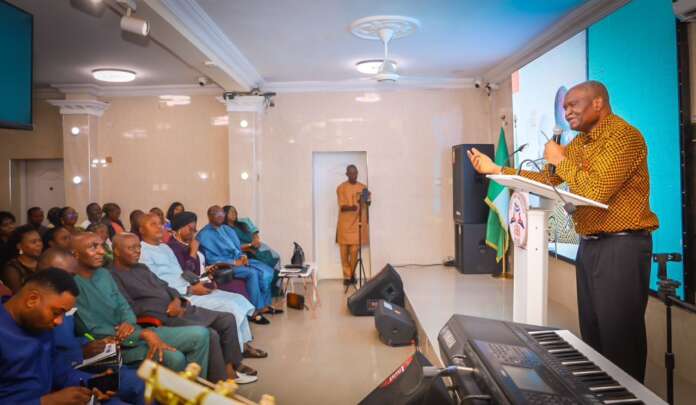
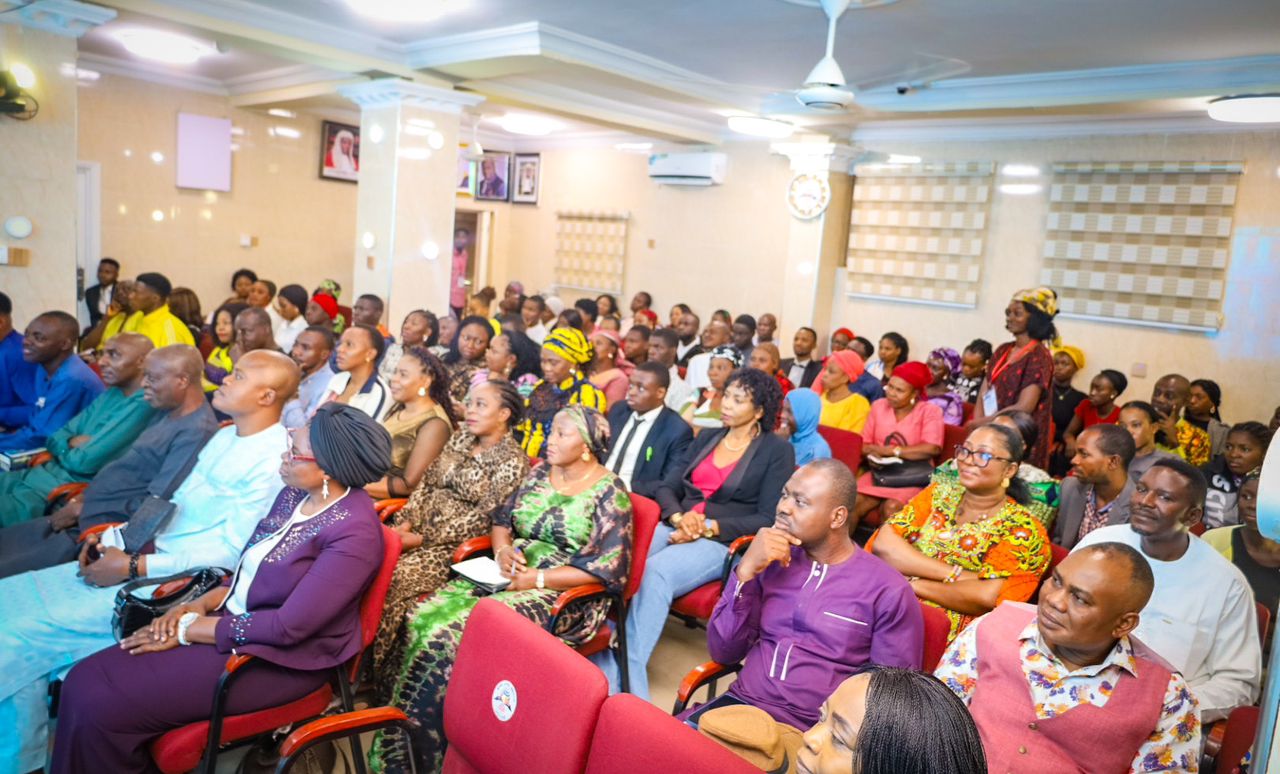
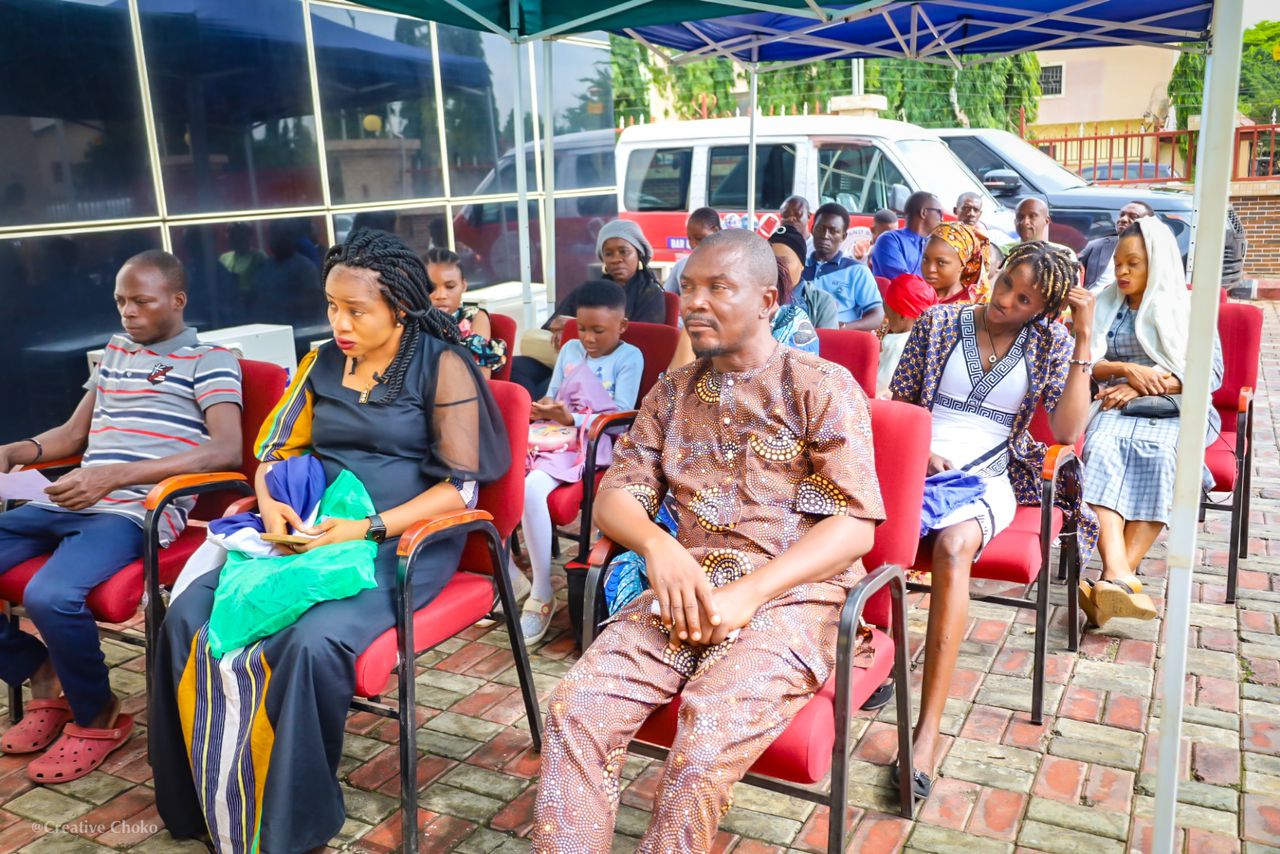
A former Attorney General of the Federation (AGF) and Minister of Justice, Chief Godwin Kanu Agabi, SAN has called on lawyers to conduct their affairs with the fear of God.

Chief Agabi who was guest speaker at the July prayer meeting of Dr. O.J. Onoja, SAN & Associates,’ Bar and Bench Chapel held at Bar and Bench House in Wuye, Abuja counselled that lawyers by their conduct as learned people must practice with the fear of God and that “we must prove to the nation that we are not liars as we have been called.”

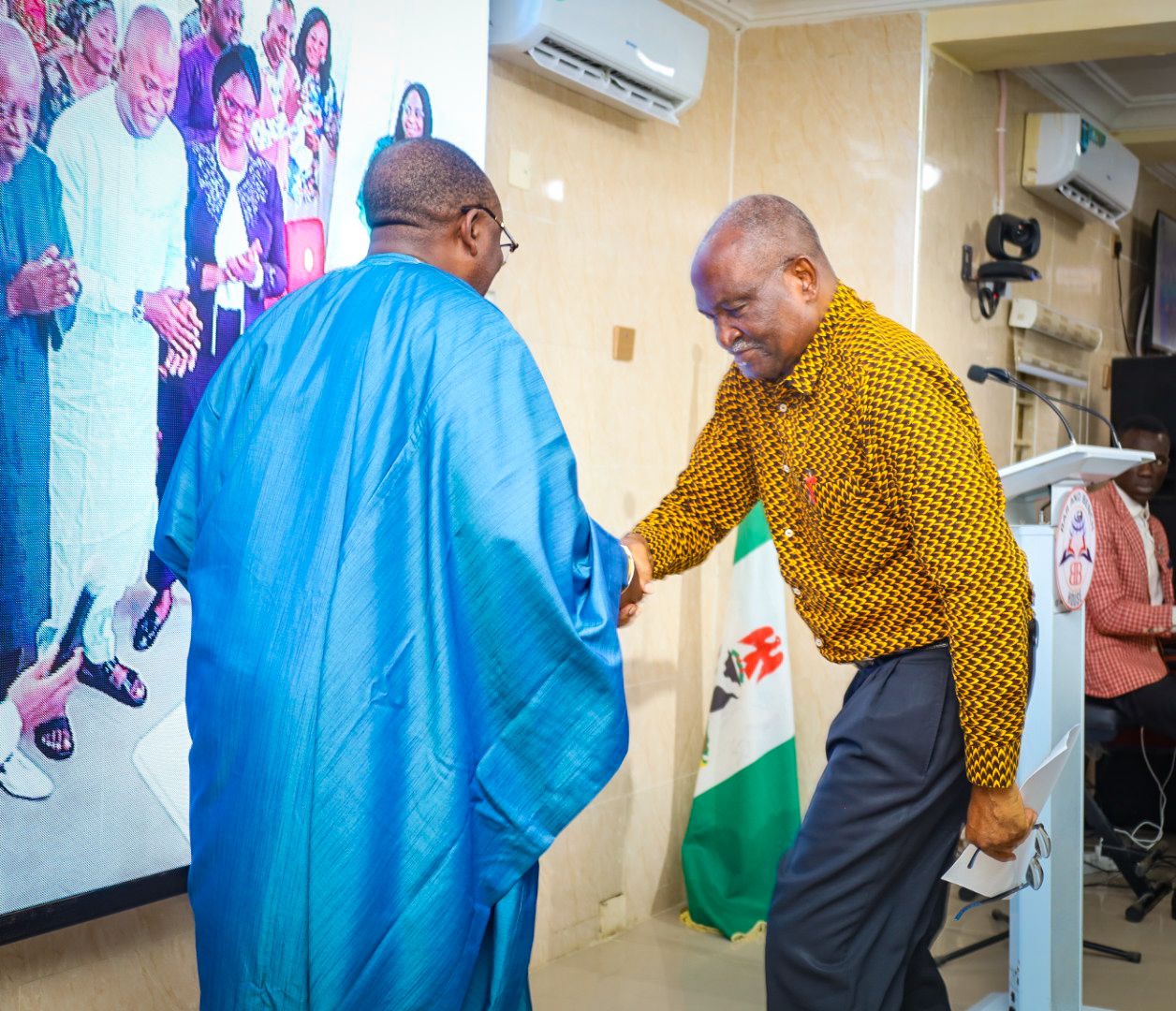
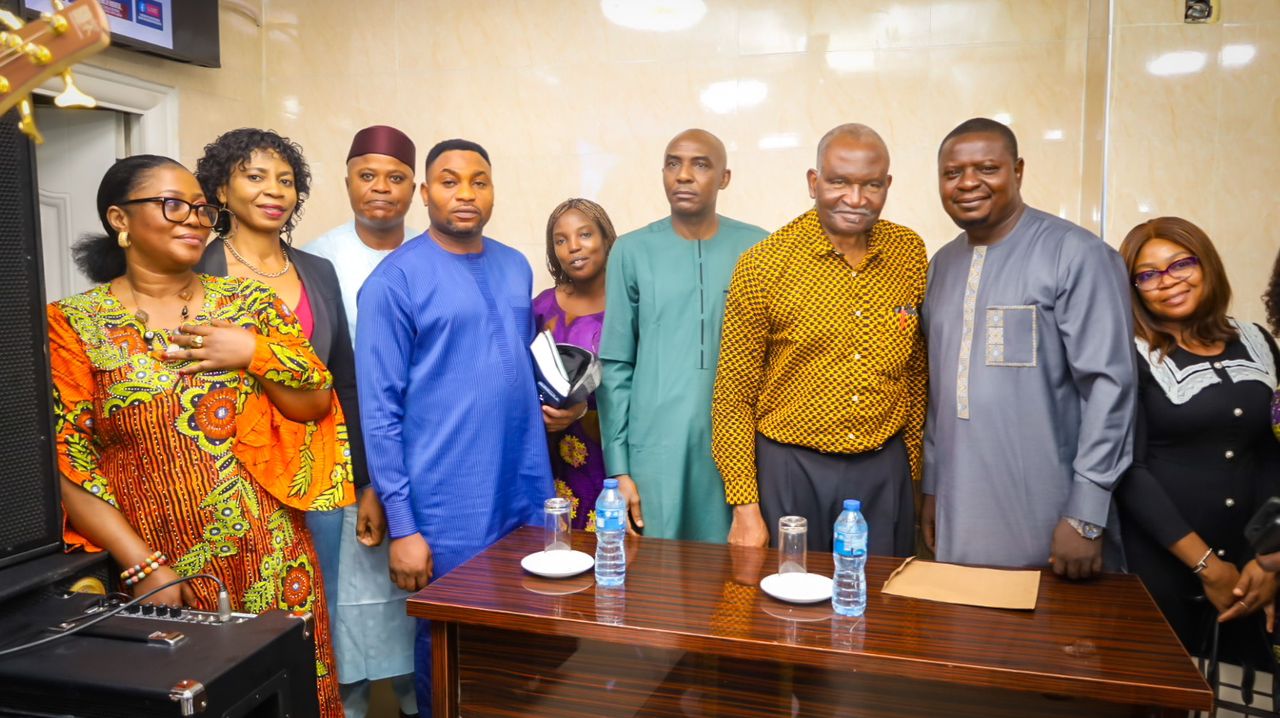
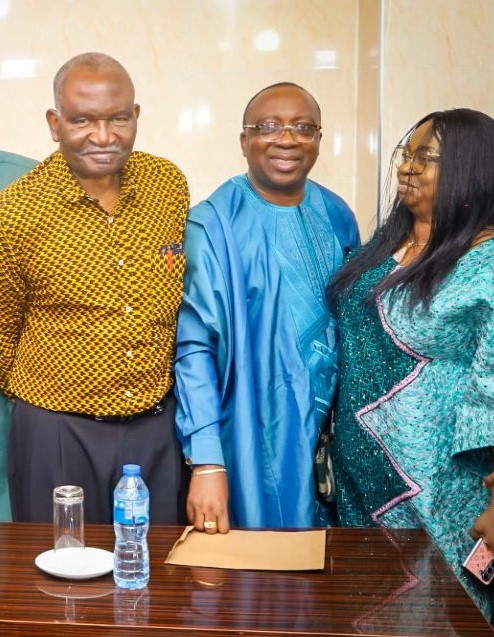
Dr. Ogwu James Onoja, SAN and Chief Kanu Agabi, SAN

Alluding to the spate of insecurity in Nigeria, the one-time AGF noted that: “Whatever remnant of peace we are enjoying today is not owed to the government,” but to God fearing men and women that are continually interceding for the nation.  

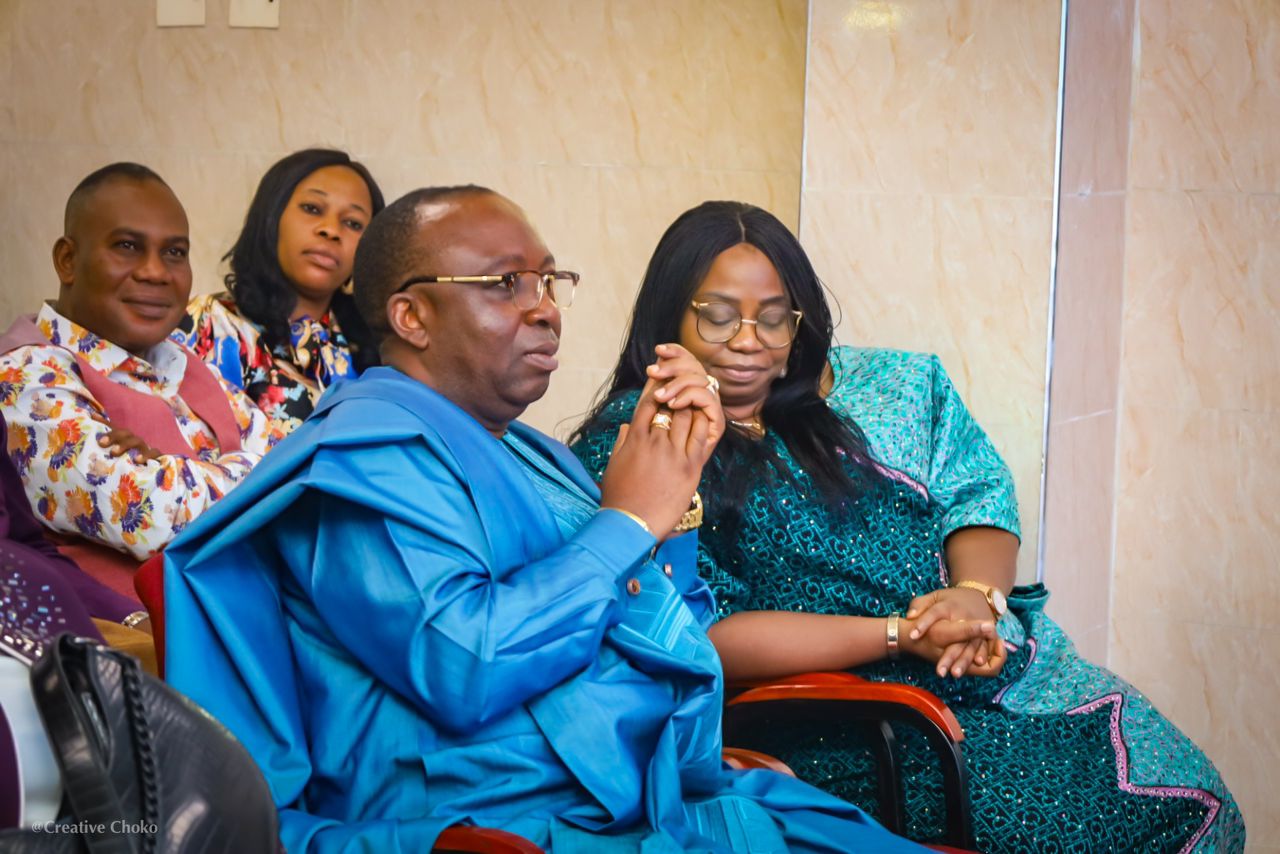
Dr. Onoja, SAN and Mrs. Rosemary Onoja at the prayer meeting

Citing the example of biblical Towel of Babel which at its zenith came tumbling down because men according to him valued bricks more than human life and even thought they could construct a tower that reached heaven, Chief Agabi warned Nigeria is at a tipping point, with leaders who have placed power and money above the lives of their citizens.

L-R: Her Worship, Mrs. Yvonne Oputa, Lillian Okenwa (Publisher of Law & Society Magazine) Mr. Jonson Ojogbane, George Ibrahim, Esq. Mojirayo Ogunlana (FIDA Abuja Gen. Sec.), Moses Ebute, SAN Chief Agabi, SAN and other guests

Calling for repentance, the Senior Advocate who will be 78 years on 9 July said it is time to seek God in repentance like the thief on the cross who at the last minute obtained entry into paradise through Jesus Christ after seeking and obtaining forgiveness for his sins.

Former Chair, NBA Abuja (Unity Bar) Moses Ebute, SAN

He stressed that Nigerians and their leaders in particular must amend their ways and seek God’s forgiveness so that everyone will prosper and live in peace.

Mr. Jonson Ojogbane, Lillian Okenwa and Chief Agabi
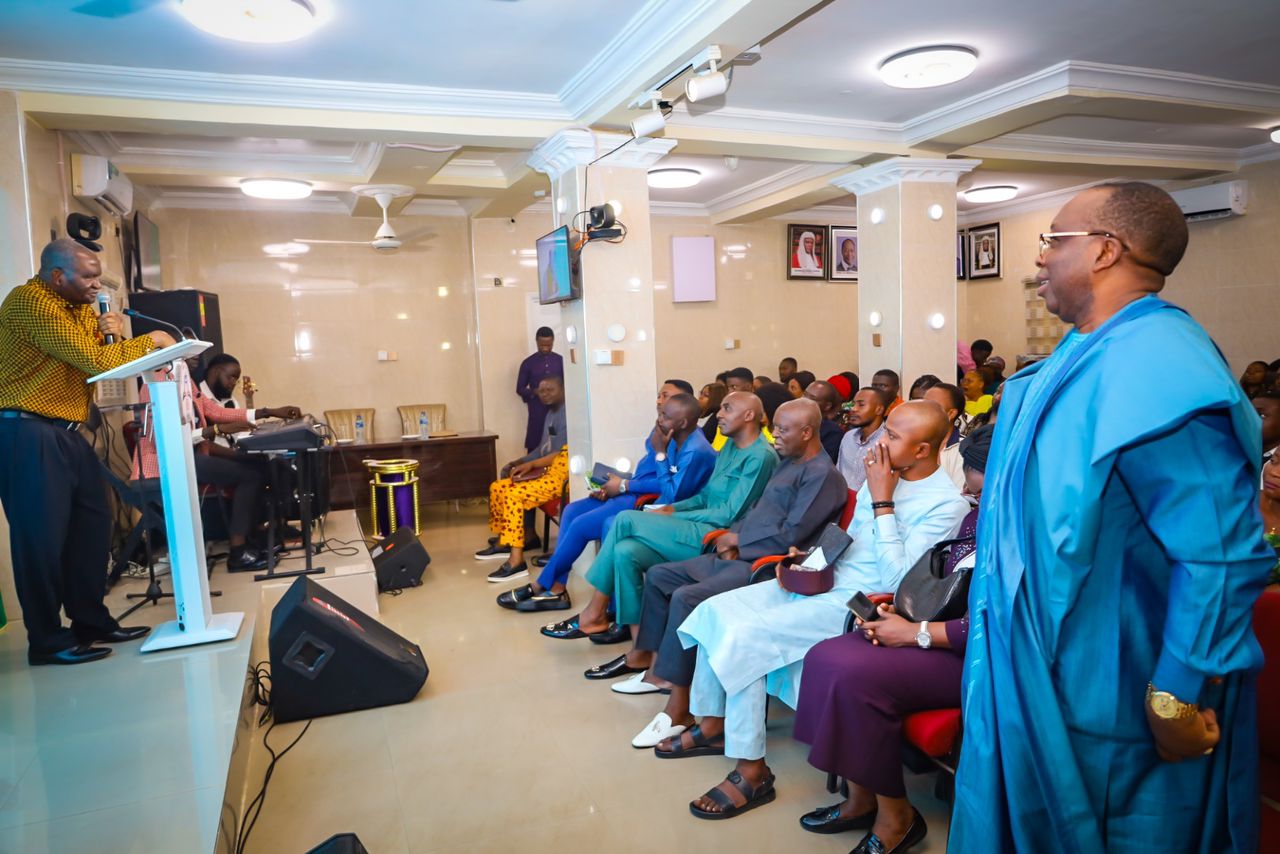
Participants in the overflow of the meeting

Noise Over “Petitions” Filed Against Fellow Candidates During NBA Electioneering Campaigns: Unbecoming, much ado about nothing

By Sylvester Udemezue

(1). Please what’s wrong with a petition by a candidate against another candidate during NBA electioneering campaigns?

(2). Are petition during NBA elections not similar to preelection lawsuits in traditional electioneering campaigns for general elections? In 2023, as part of preparations for the 2023 elections, NO fewer than 1,800 preelection lawsuits were filed, with each all all seeking to DISQUALIFY either an aspirant or a candidate! See “NBA TACKLES NATIONAL ASSEMBLY FOR BURDENING 77 JUDGES WITH 1,800 PRE-ELECTION SUITS” (12 December 2022; premiumtimesng.com)

(3). I am not part of any petition against anyone anytime, and I’ve never written one against anyone. However, let us face truth and the law by speaking as the lawyers that we are: with due respect, just as with filing preelection lawsuits in traditional political party pre-elections, filing a petition against a fellow candidate during NBA preelection is not illegal, nor unethical nor unbecoming nor irresponsible nor malevolent. It’s a right which candidates, etc enjoy to ensure the upholding of the law and due process and democracy. It is normal, to ensure compliance with extant laws, guidelines and promote transparency and accountability. It’s not a big deal.

(4). Accordingly, if a candidate files a petition against another, let the Election Umpire offer the person against whom the petition is writen an opportunity of being heard, after which the election umpire should dispassionately examine the petition and the response to it vis-a-vis the facts, the law and the circumstances and finally deliver a verdict accordingly while electioneering campaigns continue. If the petition is meritorious, so be it. If not, dismiss it and let electioneering campaigns continue. Why would anyone be castigated or bullied or maligned merely for exercising his or her legitimate right to demand accountability and the rule of law by writing a petition?

(5). Is it not a stipulation of the NBA Election Guidelines Pursuant to the NBA Constitution, that NBA members, and candidates during electioneering campaigns, should in everything and at all times, and in all cases FIRST explore all existing internal mechanisms for dispute resolution and grievance remedial, before resorting to court? So, how can/may ECNBA (the NBA election umpire) be in a position to remedy any perceived grievance or to resolve any live dispute relating to the elections, if the same is not first brought to its attention? How else would a candidate bring to the attention of the ECNBA any perceived grievance or dispute if not by a petition? Why then castigate one who has done the right, legitimate thing, who has only followed due process of law by filing a petition?

(6). What is a “petition”? In the context of NBA elections, a ” Petition” is nothing more than a formal written request to have a legal matter heard and decided by the appropriate authority (in the preelection, the appropriate authority is the ECNBA). The terms petition and complaint are often used interchangeably. The person filing a petition is known as the Plaintiff, or Petitioner or the Complainant, and the responding party is known as the Respondent or Defendant. Most commonly, a petition or complaint is filed when a party feels they have been wronged in some way, and is seeking a redress or when a party wants perceived injustice or a perceived wrong to be corrected.

(7). In my opinion, it’s unreasonable, childish, unprofessional and idiotic for any lawyer to be seen castigating or maligning or insulting a learned colleague on the sole ground that the said learned colleague who is a candidate in an upcoming NBA election, has written a petition against a fellow candidate. Why are we not castigating a candidate who files a preelection lawsuit during electioneering campaigns for inter-political party elections? The truth is that instead of castigating such party candidates, we lawyers are known/used to even taking up such preelection lawsuits on behalf of our clients (who are usually candidates or aspirants in the elections), and representing either the Plaintiffs/claimants or the Defendants.

(8). All the over 1,800 preelection lawsuits in 2023 were filed and prosecuted and defended by lawyers — we lawyers. Yet, when a candidate in an NBA election files a mere petition (which is the equivalent of preelection lawsuits), the same lawyers turn around, for their selfish, parochial reasons, to start insulting, castigating, maligning and trying to intimidate the petitioners. Such a conduct amounts to blowing hot and cold at the same time, giving dissimilar treatments to similar situations, which is a breach of the principle of Quod Approbo Non Reprobo.

(9). I repeat that it’s quite irresponsible, absolute-idiotic, and outright unbecoming for a lawyer who has been filing and prosecuting or defending preelection lawsuits in party political campaigns, to be seen castigating a candidate in an NBA election, who has only filed a petition over a matter of law or due process or a perceived breach of guidelines, during NBA electioneering campaigns. Filing a petition, just like filing a preelection lawsuit, is not tantamount to disqualification of the affected candidate against whom the petition is filed. The ECNBA would still look into every petition dispassionately and resolve the same according to law and the election guidelines. In my village, it’s said that it’s not the person who first calls the police, that always wins.

(10). A person who files a petition is a lover of the rule of law, due process and maturity. Which would we prefer?

(a) a candidate filing a petition to call for rule of law and due process or equity or to call attention to perceived grievance; or

(b) a candidate taking the law into his/her hands?
◾TO BE CONTINUED!!!
Respectfully,
Sylvester Udemezue (udems),
Proctor,
The Reality Ministry (TRM),
+234(0)8039136749.
therealityministry@gmail com
(05/July/2024)

TIPS