Home Blog Page 561

Sokoto Govt. speaks on why law was made to reduce Sultan’s Powers

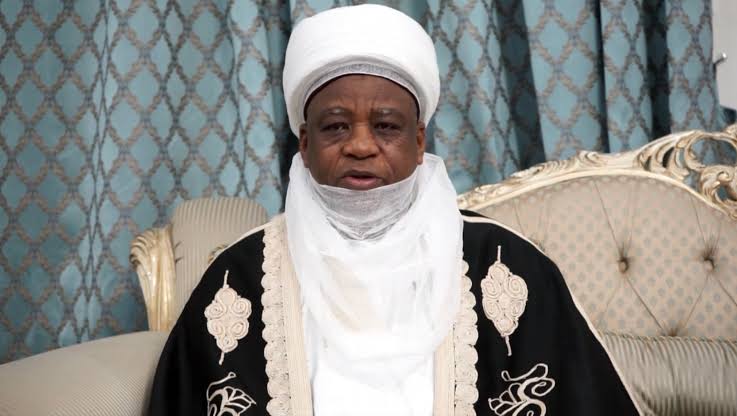
The government of Sokoto state has explained why the State House of Assembly made a law that stripped the Sultan of the power to appoint anyone.

Nasiru Binji, the state commissioner for justice, said there is no constitutional provision for the Sultan of Sokoto to make appointments, adding that the existing chieftaincy law in the state contravened the constitution of Nigeria.

Daily Trust reported that Binji made this known while speaking at a public hearing on the Sokoto Local Government and Chieftaincy Law 2008 on Tuesday, July 2.

Sokoto law that contravenes Nigeria constitution

The commissioner maintained that section 76(2) of the state law contradicted section 5(2) of the 1999 Constitution as amended. His statement reads in part: “Section 5(2) of the constitution stipulates that the executive power to appoint in the state is vested on the Governor directly or through his deputy, commissioners or any government agent assigned by the Governor.” He stressed that the above indicated that the Nigeria constitution did not empower the Sultan to appoint, but 76(2) of the Sokoto and local government and chieftaincy law gave the power to appoint district and village heads in the state to the Sultanate council.

MURIC raise alarm on plot to depose Sultan

The Muslim Rights Concern (MURIC) raised the alarm over Governor Ahmed Aliyu of Sokoto state’s alleged plot to depose the Sultan of Sokoto. Prof. Isiaq Akintola, the executive director of MURIC, expressed concerns over the state government’s possible move to depose the Sultan. The development also followed ongoing controversies trailing the removal of five monarchs in Kano state.

Sultanate crisis: Court issues restrain to government

Legit.ng earlier reported that Governor Ahmed Aliyu of Sokoto state has been issued a restrained order by the state high court over the appointment of removal of district heads. Justice Kabiru Ahmed issued the order to the state governor, pending the hearing of the interlocutory injunction before his court. This revelation was made amid the report that the state government was plotting to remove the Sultan of Sokoto, Alhaji Sa’ad Abubakar III.

Legit.ng

Kenya’s Police IG goes into hiding, resigns following criticisms over protests

Following weeks of violent protests against proposed tax hikes that left over 40 people dead, Kenya’s police chief Japhet Koome has resigned.

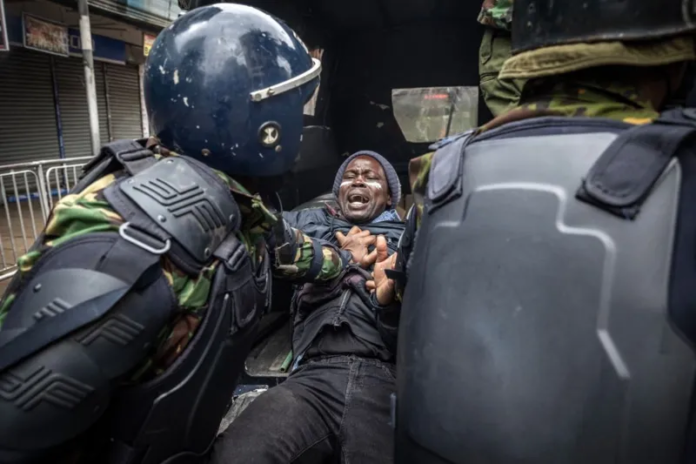
Human rights groups have accused police of shooting dozens of protestors, some of them fatally, and abducting or arbitrarily arresting hundreds more.

The resignation comes a day after President William Ruto sacked most of his cabinet, following pressure from the protest movement which is largely coordinated online by young Kenyans.

Two weeks ago protesters stormed parliament, shortly after legislators passed the controversial finance bill. Police responded by opening fire on demonstrators in the streets.

President Ruto later withdrew the bill but that has failed to satisfy the demonstrators, who want him to step down and are planning more protests to demand further reforms.

Deputy police chief Douglas Kanja takes over running the force with immediate effect, the Kenyan presidency has said.

Mr Koome’s resignation has been welcomed by Kenyans, yet police officers who caught on film firing at protesters remain at large.

Last week during an unprecedented discussion on X, formerly Twitter, President Ruto promised Kenyans he would take action against those police officers once he received video evidence. It is not clear whether this has happened.

On Friday at least 11 dead bodies, some of them dismembered, were found at a rubbish tip in the capital, Nairobi, after residents raised the alarm. It is not yet clear whether their deaths have any connection with the protests.

President under pressure

In the midst of the biggest crisis of his two-year presidency, Mr Ruto earlier this week met opposition leader Raila Odinga and announced plans to form a 150-member dialogue panel to help find a solution to the country’s problems.

After sacking key cabinet members on Thursday including the attorney-general, the president said he would now consult widely in order to set up a broad-based government.

The proposed tax measures were intended to help ease the country’s debt burden of over $80bn (£63bn). About 60% of Kenya’s collected revenues goes to servicing debt.

But protesters have insisted the government should first cut spending, saying there was too much waste and corruption. In response to this demand, the presidency last week announced a number of austerity measures.

Kenya has seen weeks of unrest in which protesters stormed into parliament on June 25 after a finance bill was passed that proposed tax increases. More than 40 people died in the protests, which have morphed into calls for the president to resign.

There are allegations regarding the killing of dozens of demonstrators by the police, which has been fueling the protests.

Credits: BBC/ AfricaNews

Tinubu and the “Yoruba Emir” of Kano

By Farooq Kperogi

The contest for royal supremacy between Muhammad Sanusi II and Aminu Ado Bayero took an explicitly ethnic turn a few days ago when Hashim Dungurawa, the Kano State chairman of the New Nigeria People’s Party (NNPP), said President Bola Ahmed Tinubu was protecting Bayero from deposition and humiliation by Kano’s NNPP government because of Bayero’s “Yoruba lineage”!

“If the President thinks he will use a few of his kinsmen in Kano and the alleged Bayero’s Yoruba lineage to continue to keep the deposed Emir Aminu Ado Bayero in the State, let him wait for 2027, we will show him that those people will not help him,” Dungurawa said.

By Dungurawa’s  ethnic supremacist logic, Kano had a Yoruba emir from March 2020 to May 2024 since “lineage” means line of descent, which is traced patrilineally in most Nigerian societies, including Kano.

By the way, it was actually Muhammad Sanusi II who first covertly caused this whispering campaign to be created and amplified in 2020 in Kano in the aftermath of his deposition and the installation of Bayero as his successor in order to delegitimize him.

Nor is this sort of atavistic ethnic baiting Sanusi’s first. For example, after former presidential spokesperson Garba Shehu characterized his Fulani supremacist, anti- Hausa (and anti-anyone who isn’t Fulani) article titled “The Fulani Factor in Nigerian Politics” as “Sanusi’s racist rubbish” in July 2000, he was so enraged that he lied in an Arewa House lecture that Garba Shehu’s parents were from Edo, as if Edo people were lesser human.)

But what’s the basis for the astonishingly counterintuitive claim that Aminu Ado Bayero is a Yoruba man even though he is the spitting image of his later father, Ado Bayero?

Well, it’s because his mother, Hajia Maryam, who died in 2021, was the daughter of Zulkarnain “Sulu” Muhammadu Gambari, the 9th emir of Ilorin who died in 1992. In other words, she was the older sister of the current (11th) emir of Ilorin.

Although no Yoruba person regards the Ilorin ruling family as anything but Yoruba-speaking Fulani people, Sanusi and his ethnic supremacist supporters regard the family’s locational, linguistic, and possibly genetic, association with Yoruba people as a “stain” on the “purity” of their Fulani identity.

Never mind that Sanusi himself—and all emirs in the Northwest—have locational, linguistic, and genetic association with Hausa people, just like the Fulani emirs in Nupeland have locational, linguistic, and genetic association with the Nupe people. Or that ethnic cosmopolitanism is central to the originative imagination of the Dan Fodio caliphate.

The notion that Aminu Bayero is of “Yoruba lineage” because his mother was a Yoruba-speaking Ilorin Fulani princess is utter, misguided, counterproductive identitarian essentialism, that is, the pretense that there is such a thing primordial ethnic purism that is “unblemished” by interconnectedness with other identities.

The claim that Tinubu is protective of Aminu Ado Bayero (which, by the way, I resent because it has no basis in law since only governors can enthrone and dethrone traditional rulers) is particularly ironic because Ado Bayero was one of only a few traditional rulers (the other being the Sultan of Sokoto) who had the courage to tell Tinubu that his economic policies were strangulating the people.

In February this year, he told First Lady Remi Tinubu to let her husband know ordinary people were in pain. “Although, we have several means of communicating to the government on our needs and requests, you are the surest way to tell the President the happenings in the country,” he said. “We get information daily that essential commodities and cost of living are high, and people are suffering, although it didn’t start with this government.”

How about the self-proclaimed “pure-bred” Fulani Sanusi who has encouraged his minions to play up the Yoruba ethnic “contamination” of Bayero as the reason Tinubu isn’t supporting him? Well, he is delighted with the current state of the economy and patted Tinubu on the back for removing subsidies from petrol.

“It’s injustice for anyone to blame the Tinubu administration for the current economic hardship because there is no other alternative than the removal of the fuel subsidy,” Sanusi said. “After all, Nigeria cannot even afford to pay the subsidy.”

He even went so far as to claim that the economy is in the toilet because Muhammadu Buhari resisted his counsel to “firmly and unequivocally eliminate fuel subsidies.” “The economy was poorly managed, and they [were] not willing to take advice,” he said.

A “Yoruba” emir was empathetic toward the suffering of his people and told a “fellow” Yoruba man, who is the president, the truth about the anguish his policies have caused people without fear of consequences, but an “undiluted” Fulani emir told the Yoruba president that his mass pauperization of people and the obliteration of their means of livelihood was all fine and dandy.

Yet the toadyish, sadistic “Fulani” emir who cheers while the people incinerate in infernal economic policies is causing his underlings to whisper that the truth-telling emir is being favored by the president out of a sense of ethnic solidarity.

May be the Sultan of Sokoto also secretly has tinctures of Yoruba (and possibly Kanuri) blood freely flowing in his veins that caused him to be defended and protected by the Tinubu presidency against a planned deposition by Sokoto’s APC government for his alleged sympathies for the previous PDP government of Aminu Tambuwal.

“And to the Deputy Governor of Sokoto, I have a simple message for you: Yes, the Sultan is the Sultan of Sokoto, but he is much more than that; he represents an idea, he is an institution that all of us in this country need to jealousy guard, protect, promote, preserve and project for the growth of our nation,” Shettima said at North-West Peace and Security Summit in Katsina State on June 25.

The truth Sanusi and his defenders don’t want to confront is that he is a deeply unpopular person in Kano. He is the only past emir in living memory whose appointment as an emir sparked a violent, spontaneous mass revolt because he wasn’t on the shortlist of princes recommended for emirship by the kingmakers. Sanusi Ado Bayero, Aminu Ado Bayero’s older brother, was the choice of the kingmakers.

Most people know that one of the central pillars of support for Aminu Ado Bayero is a scion of old money in Kano who detests and resents Sanusi and who is extremely close to Tinubu. The NNPP people know this. They know that Bayero’s Ilorin maternal identity (which Tinubu and his people don’t recognize as “Yoruba”) is incidental to the issues.

They also know that Rabiu Musa Kwankwaso and Tinubu had struck a deal that required Kwankwaso to spare Bayero in exchange for a favorable Supreme Court judgment and a chance to serve as a minister in Tinubu’s cabinet. His betrayal of this deal by dethroning Bayero hurts Tinubu deeply.

More than this, though, the dangerous game of reactionary ethnic purism that Sanusi is playing and that his minions in the political arena are trying to instrumentalize for national political machinations would inflict incalculable injury on identity formation in the North.

The North, even the Muslim North, is an intricate tapestry of multiple ethnic identities. These identities are united by a higher, overarching glue. In the case of the Muslim North, that glue is Islam, which is causing an ethnogenesis to emerge from a mishmash of identities. To delegitimize or alienate a Kano emir because he traces maternal ancestry to the geographic fringe of the North communicates to the people from that place that they are unwanted, that they don’t belong.

It reminds me of the grave error of judgment that northern Muslim elites made during the Olusegun Obasanjo presidency, from which the North has not recovered.

Obasanjo threw an opportunity for the North to really live up to its “one North, one people” mantra and it failed. Of all Nigeria’s former regions, the North is the only region that was ruled as one and that was unbroken until the regional structure was disbanded. Suddenly, because of Obasanjo’s appointments, a northerner who was a Christian was no longer a “northerner.” Even a northerner who was a Muslim (such as Ibrahim Ogohi) wasn’t a “northerner” unless he came from the Northwest or the Northeast, like you’ve just shown here.

Obasanjo was clearly smarter than northern leaders because he destroyed the myth the North cherishes about itself by testing it. Tinubu may be inadvertently doing the same thing to the emirate system.


53-year-old Nigerian woman welcomes quadruplets

A 53-year-old Nigerian woman, Adeleke Ajoke and her husband have welcomed quadruplets, two boys and two girls.

A UK based family member, Fola, announced the exciting news on X last weekend.

“Guys, my aunt and her husband just welcomed quadruplets. My aunt is 53. I ‘m all tears,” he wrote.

53-year-old Nigerian woman gives birth to quadruplets

Credits: Gist New Today

Instead of Libel, Try Privacy: Justice Olufunke Sule-Amzat Makes History, Identifies ‘publication of private embarrassing facts’ as invasion of privacy

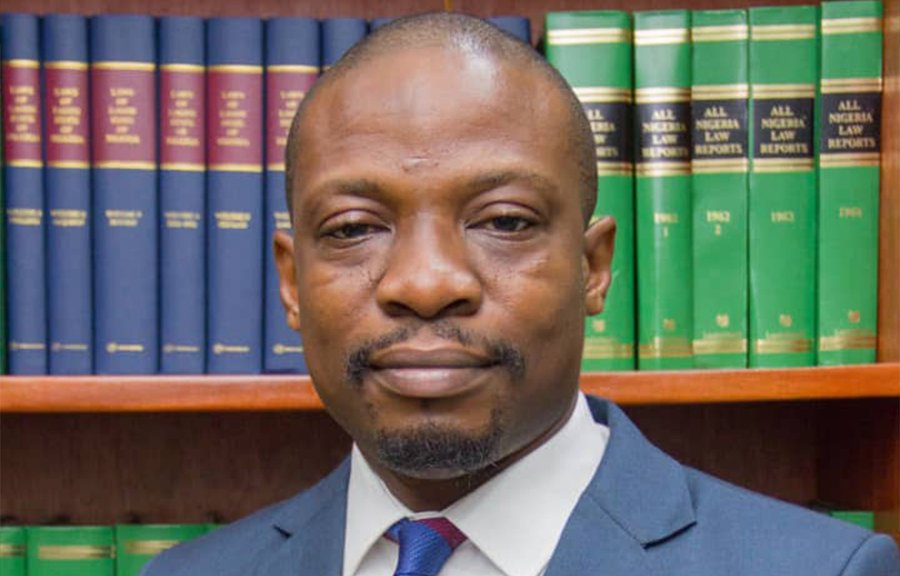
By Olumide Babalola

About 7 years ago, I engaged the highly cerebral Folabi Kuti,SAN on a discussion bordering on the technicality of libel suits especially the tricky nature of “reputation” and the potency of justification/truth as a defence. Many cases where the victims’ feelings and emotions have been severely hurt by others’ reckless publications have been lost or won on the defence of truth. Hence, once the author of an allegedly libelous statement can establish truth, then they are let off the hook and the subject of such statements are left in the cold even where such intrusive stories do not benefit the public.

In my ongoing research at the University of Portsmouth, I have discovered that it is the Nigerian Lawyers’ (understandable) widespread fixation on defamation as the only civil cause of action addressing reckless statements that has stunted the growth of other relevant viable causes of action. For context, our jurisprudence on the right to privacy remains so underdeveloped that the courts have (un)consciously declined to expound the law of privacy on some few occasions presenting such opportunities. (See Nwachukwu v Nwachukwu (2018) LPELR–44696 (SC) where the Supreme Court dismissed an alleged invasion of privacy of home as a matrimonial cause; Madu v Neboh (2001) FWLR (Pt. 52) 2271 where a tenant’s claim of invasion of home by the landlord’s reprehensible removal of his roof was squarely dismissed as a tenancy matter etc.

Privacy inherently protects four interests to wit: (a) intrusion upon seclusion (b) appropriation of name or likeness (c) publication of embarrassing private facts (d) publicity in a false light, but the Nigerian judiciary has only had the opportunity to pronounce on two. Publication of embarrassing facts and false lights have never (to my knowledge) been introduced to the Nigerian courts until last year when my Firm attempted altering the status quo by filing some suits on invasion of privacy by publicity in a false light. This privacy interest is violated when a defendant publishes a statement which: (a.) Gives the plaintiff an unwanted publicity

(b.) The publicity is reckless and false (c.) A reasonable person will find it offensive (d.) injurious to self-respect, dignity and individual integrity. Expectedly, two of those suits were dismissed by the same judge who (understandably) expressed bewilderment at the “strange” cause of action thus:

“I do not understand how the applicant and her counsel were able to arrive at the action filed and the arguments canvassed in support of the action. In any event, the action is totally misconceived, and it is lacking in merit and substance…”

There are no existing Nigerian precedents, hence it will take more than the usual “My Lord, it is trite law” arguments to convince a court of first instance to identify such an unused cause of action under the law of privacy given the terse provision of section 37 of the Constitution. Suffice to add that we have gone ahead to appeal the two decisions and we have already filed our appellant’s brief in one of them.

Happily, in Suit No. LD/14893MFHR/2023 between Adewale v Olamilekan, judgment was delivered on the 2nd day of July 2024 when Justice O. Sule-Amzat of the High Court of Lagos State historically ruled that:

“The right to privacy protects an indivudual from the invasion of his/her privacy by anyone., it protects an individual from the public disclosure of embarrassing facts and it also prevents the appropriation of an individual’s name or likeness for commercial use. The kernel of the provision of section 37 is in my considered view, that the privacy of a citizen of Nigeria shall not be violated. It can be said to mean the right to be free from public attention or the right not to have others intrude into one’s private space uninvited or without one’s approval. It means to be able to stay away or apart from others without observation or intrusion.”

In the case, a blogger published a false story about a movie actress’s relationship using her name and and picture. Instead of suing for defamation, we opted for invasion of privacy by publicity in a false light and thereby invited the court to make the pronouncement above.

Conclusion

This decision (to the best of my knowledge) represents Nigerian court’s first identification of publication of embarrasing facts as a form of invasion  of privacy. It is hoped that such a progressive decision forms the basis for the further development of our privacy jurisprudence both by lawyers and the judex.

Why the Nigeria Diaspora Investment Summit prioritises Nigerian MSMES for direct investment

By Kachi Okezie


The question has been posed to members of the organising committee of the Nigeria Diaspora Investment Summit (NDIS) on several occasions: why does NDIS prioritise NIGERIA-based Micro, Small and Medium Enterprises (MSMEs) for direct investment from Nigerians in diaspora? Implicit therein is the assumption or myth that NDIS is exclusively geared towards supporting MSMEs to the exclusion of other types of business structure.

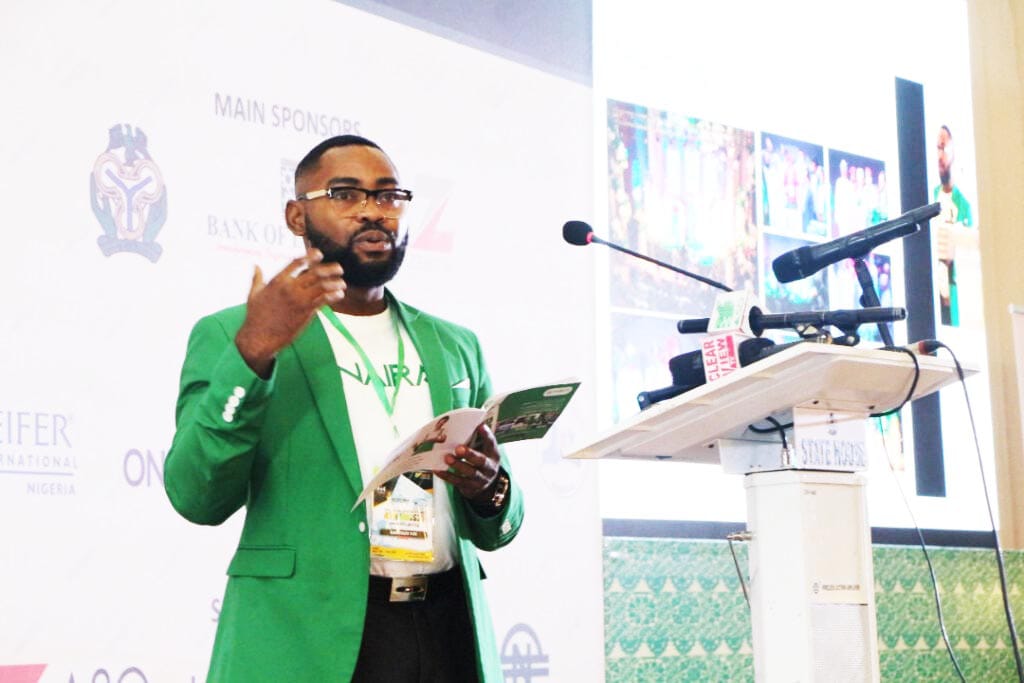
Pitching Nairaxi taxi hailing service at #NDIS2021

This article attempts to clarify the issue by underscoring that although NDIS is a platform for businesses of all kinds, ages and sizes, MSMEs and non-profits tend to predominate at the summit. This is due to being historically and statistically more in need of and best suited, among other considerations, for inward direct investment from Nigerians in Diaspora.

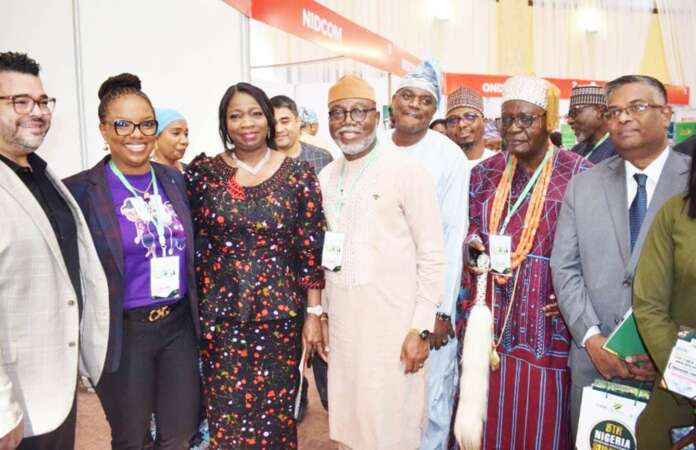
The Nigeria Diaspora Investment Summit (NDIS) is an annual business matchmaking event which brings together investors mostly from the Nigerian diaspora seeking to invest in Nigeria and the Nigerian-based MSMEs, start-ups and non-profits offering such opportunities. The summit, funded through sponsorships, advertising and event ticket sales, has attracted on average 2,000 participants yearly, comprising investors, pitchers, exhibitors, business leaders, general participants and the media.

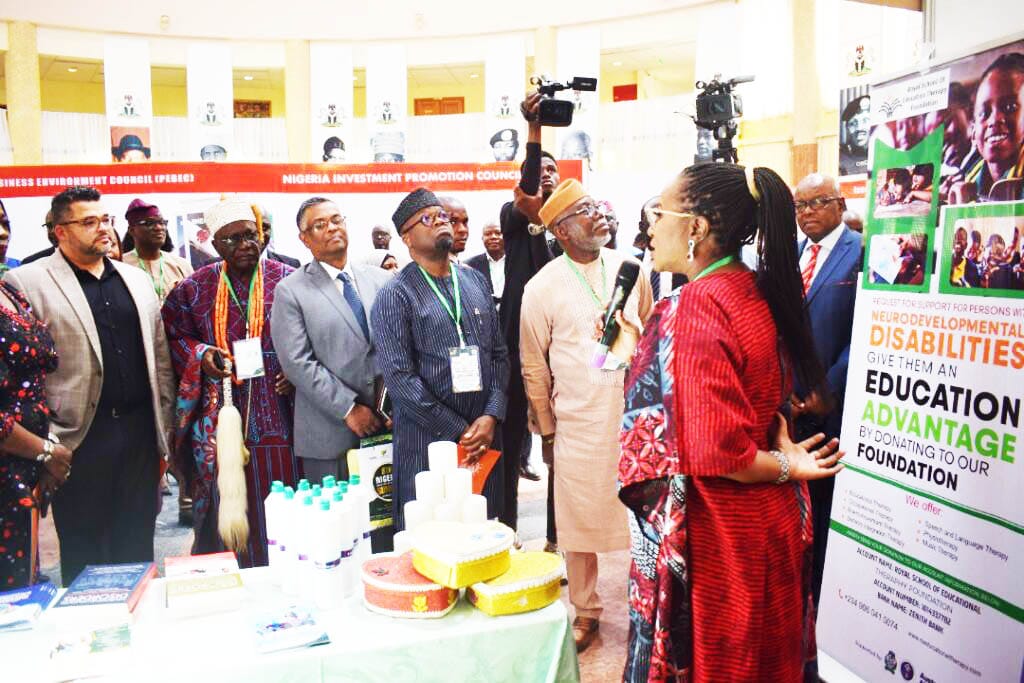
Participants and exhibitors tour the stands at #NDIS2022

A key feature of NDIS is the expertly facilitated pitching segments whereby pre-qualified and coached businesses (mostly MSMEs and non-profits) present their investment opportunities to prospective investors, mostly from the diaspora. NDIS also features interactive sessions where diaspora investors, business leaders and government officials connect, engage and network with Nigeria-based founders, exchanging ideas and doing deals.

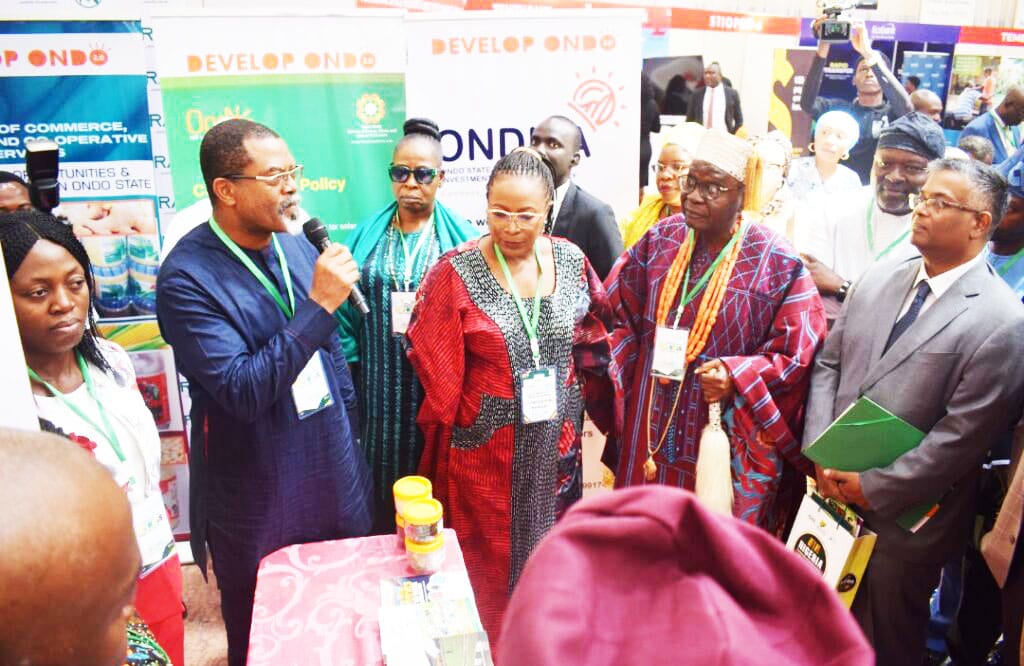
An exhibitor explains his product to participants and guests at #NDIS2022

In choosing to prioritise MSMEs for investment, the organisers of NDIS – the Nigeria Diaspora Summit Initiative (NDSI) and the Nigerians in Diaspora Commission (NIDCOM) – were persuaded by the fact that MSMEs were historically and statistically best placed to receive inward direct investment from Nigerians in Diaspora. This approach aligns with several key reasons that highlight the potential benefits for both the diaspora investors, who are typically impact investors, and the MSMEs.

Perhaps, the first consideration would be that of economic development and job creation. It is well established globally that MSMEs are vital contributors to economic development, often serving as engines of job creation. MSMEs constitute over 90% of businesses in Nigeria and contribute about 48% to the national GDP, thus playing a crucial role in economic diversification, reducing reliance on oil and gas by promoting activities in agriculture, manufacturing, and services. MSMEs employ over 80% of the labour force in Nigeria, making them essential for job creation and poverty alleviation. Consequently, prioritising them for investment can have a significant impact on employment opportunities within the country.

Also persuasive was the fact that diaspora Nigerians are motivated significantly by their strong emotional connection and sentimental attachment to their homeland, coupled with their deeper understanding of local needs. These combine to propel their desire to contribute to the country’s development. Compared to the nominal foreign investor, a typical Nigerian in the diaspora, having grown up in Nigeria, is familiar with local needs, cultural nuances, and market dynamics. Investing in MSMEs allows such an investor to leverage this knowledge effectively to make informed and impactful investment decisions that can lead to sustainable growth.

Another factor which informed the decision of the summit organisers to prioritise MSMEs for investment by Nigerians in diaspora is the need to support and foster entrepreneurship in the country. Many MSMEs are founded and led by local entrepreneurs with innovative ideas. Supporting these businesses through diaspora investments not only fosters entrepreneurship but also encourages a culture of innovation within the country.

The need to foster and encourage inclusive growth is a further consideration. Inclusive growth, according to the International Monetary Fund (IMF) is growth that “embodies the principle that wealth creation, economic freedom, and equal opportunity can coexist.” It is also economic growth that raises living standards for broad swaths of a population concurrently.

Proponents of inclusive growth have warned of the dangers of inequitable growth, prominent of which are adverse political outcomes, a particularly high risk for a country like Nigeria with very high levels of multidimensional poverty, youth unemployment and a large population. MSMEs are often deeply rooted in local communities. Therefore, investments in such businesses can help distribute wealth more equitably, thereby contributing to inclusive economic growth and reducing geographical disparities.

A fifth consideration in opting to prioritise local MSMEs for investment by Nigerians in diaspora is their flexibility and adaptability. MSMEs are generally more agile and adaptable to changing market conditions. Diaspora investors can capitalise on this flexibility, helping these businesses navigate challenges and seize emerging opportunities.

A further factor that persuaded NDIS to prioritise local MSMEs for investment by Nigerians in diaspora is technology and innovation. Many MSMEs operate in sectors where technology and innovation play a crucial role. Diaspora investors, often exposed to global trends, are in a vantage position to leverage in expertise and capital to fuel technological advancements, propelling MSMEs to compete on a broader scale.

Also in consideration as a factor that persuaded NDIS to prioritise local MSMEs for investment by Nigerians in diaspora is diversification of investments. Prioritising MSMEs for diaspora investments allows for a diversified investment portfolio. This reduces the risk associated with concentrating investments in larger enterprises and sectors, contributing to a more resilient and dynamic economy.

Social impact was equally considered in the decision to prioritise MSMEs for diaspora investments. Investing in MSMEs can have a direct and positive social impact on the local community, aggregating to the wider society. These businesses often engage in community development, supporting local initiatives and creating a positive ripple effect throughout society.

Yet another factor that informed the decision to prioritise MSMEs for inward direct investment from Nigerians in diaspora is the prospect of a decent return on investment (ROI), which is the primary motivation of most investors. Diaspora investors are likely to witness a tangible and quicker return on their investment in MSMEs. The nimbleness of these enterprises enables them to scale faster, leading to a more immediate impact on the investors’ portfolios.

And, finally, the need to strengthen the national identity and pride was not only persuasive, but a key consideration. Diaspora investments in MSMEs often contribute to a sense of national pride and identity on the part of the investor, who views it as a way of “giving back” of “helping out.” To that end, the satisfaction of knowing that their investments directly support local businesses and communities can create a stronger emotional connection for the diaspora to their home country.

All in all, prioritising Nigerian MSMEs for investment by the diaspora is a strategic move that aligns with broader economic development goals by leveraging the unique knowledge, experience and experience of diaspora investors. It can also foster a symbiotic relationship that can drive sustainable growth, create jobs, and contribute to the overall prosperity of Nigeria. For the diaspora investor, being able to deploy capital in ways that benefit society, whilst also achieving financial growth and high returns is key. As for the MSMEs and non-profits – the recipients of such inward direct investment – their agility and ability to scale faster and make an immediate impact on the investors’ portfolios, makes them ever more attractive to such investors.

The next NDIS, a hybrid event, will take place in Abuja, 12-14, November, 2024. For details about participation or sponsorship, please visit www.ndisng.com

Kachi Okezie, Esq, chairs the media and publicity sub-committee of NDIS and can be reached on 0813017013 (WhatsApp only) or [email protected]

Nigerian Army Women Commander spotlights effectual role of female personnel in security operations

Brigadier General MI Amatso, Commander of the Nigerian Army Women Command (NAWC), affirmed that female personnel in the Nigerian Army were not only actively involved in but were also proving their operational and professional effectiveness at addressing the nation’s security challenges.

According to Acting Assistant Director Army Public Relations, Nigerian Army Women Command Lieutenant, Maureen David Ogbuka, this statement was made during a courtesy visit by the Acting Commanding Officer of the 167 Special Forces Battalion on July 11, 2024.

During the reception, Brigadier General Amatso emphasized the significance of collaboration in promoting esprit-de-corps and teamwork among military personnel.

He praised the 167 Special Forces Battalion for their operational successes and assured the NAWC’s continuous support to the battalion whenever necessary.

He also expressed gratitude to the Chief of Army Staff for establishing a women-oriented command, which has empowered female soldiers to fully utilize their potential and demonstrate their capabilities in their duties.

Major SS Jatau, Acting Commanding Officer of the 167 Special Forces Battalion, congratulated Brigadier General Amatso on his appointment and acknowledged the pivotal role of NAWC in the Nigerian Army’s activities.

He explained that his visit aimed to familiarize the Commander with the battalion’s operations and to affirm their readiness to respond promptly to any emergency calls.

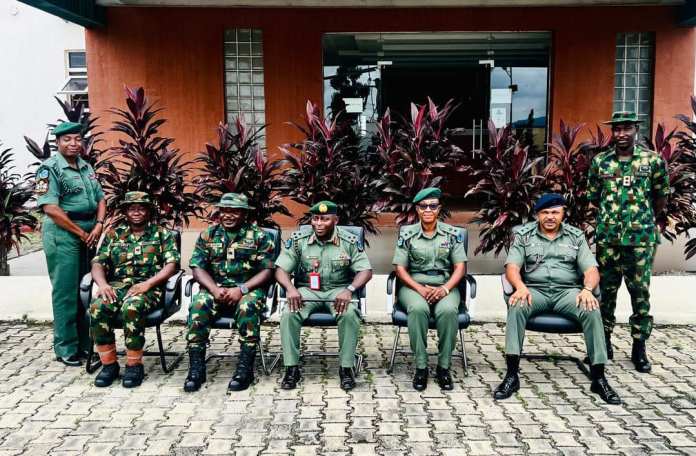
The visit included the signing of the visitor book, an exchange of souvenirs, and a group photograph.

The Conclave

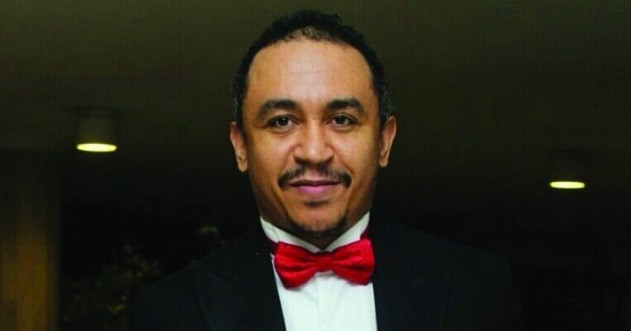
Appeal Court says Daddy Freeze must pay N5m adultery fine

Notwithstanding his bid to overturn the 18 February, 2021 judgment of a High Court in Port Harcourt, Rivers State, the Court of Appeal Port Harcourt division has upheld the N5m fine imposed on popular Nigerian On-Air Personality, Ifedayo Olarinde, also known as Daddy Freeze, for committing adultery.

The High Court had earlier ordered social media influencer Freeze to pay the money to Paul Odekina for committing adultery with Benedicta Elechi who was married to Odekina at the time the adulterous act was committed.

“The sum of N5,000,000 is awarded against Ifedayo Olarinde (the 2nd Cross Respondent to the Cross Petition) as damages for depriving the Cross Petitioner of the amiable consort of his wife (Petitioner/1st Cross Respondent) and for injury suffered as a result of his adultery with the Petitioner/Cross Respondent,

The court also dissolved the marriage contracted between Paul and Benedicta due to her adulterous act with Daddy Freeze. https://punchng.com/high-court-fines-daddy-freeze-n5m-for-adultery/?amp

Unhappy with the lower court’s verdict, Daddy Freeze approached the appellate court for redress.

His main plank of appeal was that Odekina did not attempt to serve him personally before applying for substituted service, which violates Order 7 Rule 2 of the Rules of the Trial Court.

He also held that the purported service by substituted means i.e., by courier was not effective as shown in the affidavit of service, adding that the non-service violates the twin pillars of the principle of natural justice.

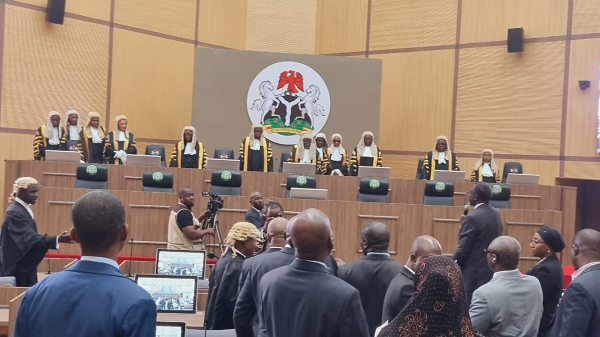
In the Certified True Copy of the judgment, dated June 26, 2024, and obtained by our correspondent on Friday, the three-man panel of Justice Abubakar Talba, Danlami Senchi, and Hannatu Balogun dismissed Daddy Freeze’s appeal for lack of merit.

The court ruled that if the appellant wanted to overturn the trial court’s judgment due to non-service, he should have filed a counter-affidavit against the affidavit of service and then sought to set aside the trial court’s judgment.

It partly read, “Affidavit evidence can only be countered by a Counter Affidavit. As such, I found the procedure adopted by the Appellant alien to our jurisprudence.

“Where the Appellant wants the judgment of the trial court to be set aside for non-service, he ought to have approached the trial court by filing a Counter affidavit against the affidavit of service he seeks to set aside and consequently set aside the judgment of the trial court. Thus, as it is in the instant appeal there is nothing filed by the Appellant to counter the affidavit of service of the Process Server filed in

“Hence, therefore I resolved the sole issue for determination against the Appellant and in favour of the Respondents. The appeal therefore lacks merit and it is hereby dismissed

“Accordingly, the judgment of the Rivers State High Court in Suit No. PHC/403MC/2012 delivered on the 18th February 2021 by J. Akpughunum, is hereby affirmed. I make no order as to costs”.

The CTC of the judgement reveals that Ola Faro and Ikobah Hilton appeared for the appellant while N.A. Naenwi and Wilcox Abereton (SAN) represented the first and second respondents respectively.

Video: Odinkalu, R.A.C.E Achara says Supreme Court’s verdict on LG autonomy changes nothing

While Prof. Mike Ozekhome, SAN, described Thursday’s Supreme Court Judgment on local government autonomy as “epochal,” Ex- Chair of the National Human Rights Commission (NHRC), Prof. Chidi Anselm Odinkalu maintained that the issue of local government accounts are more complex than people think it is.

Odinkalu addressing a press conference

Odinkalu spoke during an interview on Channels Television’s Politics Today.

Also Prof. R.A.C.E Achara questions what happens to the explicit provisions of the constitution on the joint account.

Ozekhome had in his Thursday article, Hailing the Supreme Court on LG allocation judgment held that the verdict has “far-reaching effect because money will now be made available directly to the local government areas who will no longer be subservient, like fawning slaves to state governors. In fact, the judgement even went further to say that no state government has the power henceforth to dissolve local government areas.

“This is because we have been seeing cases where in spite of the provisions of section 7 of the 1999 constitution that give autonomy to local government areas, states normally go ahead and dissolve local government areas ND appoint caretaker committees for them. This is whimsical and capricious. The Supreme Court has said this can no longer go on and that henceforth, no state government should ever be able to dissolve any local government area in Nigeria for any reason whatsoever and howsoever.”

Prof. Achara however puts it this way. “

“Sentiment as judgment? What happens to the explicit provisions of the constitution on the joint account? Constitutionalism is an attitude of mind. Fidelity to the rule of law demands respect to the constitution and thus the law, until such a time as they are amended by the strict regimen of law!

Prof. Achara

“Unless one of these recent alterations to the constitution has removed the constitutional prescription for payment of all federation monies due to LGAs through the State-LG joint account, this SC decision would be an unfortunate dent on our journey towards a proper attitude of constitutionalism in Nigeria.”

Odinkalu in the video below shares his thoughts.

As Famine Looms, by Pat Utomi

The trauma of a faltering economy on many, resulting in suicides and dramatic protests, finally indicates our crisis of now is an existential one. Can politics now give way to truth and let thinking take front row in how we face our major policy challenge of the moment.

The desperation of removing duties on some food imports and turning to imports to feed the people is an approach-avoidance conflict that needs to be managed carefully lest it spell doom for the future. Why?

Right now things are as bad as we have been pointing to and bad enough for a rush to food imports which may be an imperative of reality but is quite capable of damaging future capacity to produce and grow the economy.

Think of this. What killed the Cocoa, Palm produce and Groundnut exports in which Nigeria led the world at Independence? Poor trade policy manifested in exchange rates made Naira income for cash crop farmers in the early 1980s unappealing.

So the people left the farms to become messengers in NNPC and construction workers. When oil price volatility meant construction companies could not be paid on time or paid at all they retrenched workers. These laborers who were former farmers could not return to the farms. That’s how we became a monoculture economy. Academic analysis of that would say Dutch disease came with those farmers moving to the then more attractive none-tradable goods sector like construction.

Other sectors suffered atrophy and we became dependent on just Oil revenues. By the way Indonesia managed similar circumstances differently back then and benefitted from being more sensible.

For several years the fear of herdsmen has kept many from going to farm. Even as they are losing their farming skills as a result of this long lay off we begin to consume the drug of food importation when we lack the foreign currency to pay for the imports. We will borrow to buy imported food. So we not only risk unsustainable food provision strategy but the further compounding of our looming debt crisis.

As the current account deficit grows with our importing more and not earning foreign currency we become more vulnerable to currency speculators and the Naira will go the way of the Zim dollar, Ask Zimbabweans. Or when George Soros went after Malaysian Ringit (RM) in 1997. So do we let our people starve because the famine we predicted is now real?

I do not write as a theorist or armchair critic but as an actual player.

I have lost whole farm output three times over the last decade to herders in Delta State. On one occasion the farm which bloomed such that the Uduaghan government PR documentary to showcase agriculture, by Lola Alakija, filmed it, was burnt by the herders after feeding their cattle fat. I took my losses with no insurance and moved from where Obasanjo farms now got allocated to a location around my hometown. Last year I sold Tomatoes and other vegetables as I will this year. Many who suffered loss as I did then did not try again.

I followed the politics of the strategic grains reserve and knew they were a joke and shared same with Prof. Murtala Sagagi who was assisting then Minister of Agriculture Sani Nanono. The bright economist was so frustrated, he quit the Advisor job.

I tried a market response to what was a beckoning food, agricultural export and value chain development from our factor endowments crises by designing an integrated produce city.

The concept was to create an aggregation point where produce from several states could arrive into this Commodities Exchange with a preservation park that can be an alternative strategic reserve of the type they call licenced Warehouses in Turkey. The central market point there being the wholesale produce market that aggregates the produce from these farmers saving them much of the 60 percent post harvest loss of their effort. Added to the concept was an Industrial park where some added value to the produce could take place. That rounded up the IPC value intervention. But corruption meant we were proceeding from our savings as reckless disbursement of monies to grow the sector went to cronies. Millions of Naira in business plans failed to produce the loans or development support agency grants.

I knew this day of food shortages was coming and hoped my commercial response could add social value but alas the day had come before our efforts got the needed traction. I can either live in the selfish mode that I can at least feed myself from my farm or be a citizen and broach the truth of the challenge I saw from afar.

So how do we solve the famine crisis that confronts us now without damaging the future?

In January I had suggested we create local armies, Forest Rangers to police fertile areas where legumes that are harvested in three months would be grown as a national emergency. The rangers would provide assurance of safety to farmers who will receive inputs as loans with incentives so that by now harvesting would be taking place.

In addition to this support to local farmers I proposed an Operation Feed the Nation (OFN) type scheme where young graduate farmers would get one hectare each with input loans and a farm management company provide extension support with training in new farm methods.

Had good judgment moved us in this direction we could have averted the emerging emergency. If we throw our gates wide open to imports now it will take our Asian friends little time to dump produce in a way that we may never recover.

Now that our hardness of hearing has brought us here the option may be to have a controlled opening up to ease the pressure and move rapidly to sensible industrial policy to stimulate agriculture for food security and the value added exports in value chains in which we aim to be dominant players.

In all this the biggest problem is corruption.

In a soon to to published State of the Motherland report the new tribe collating work of its policy cohort, health care, infrastructure, public accountability and Ubuntu cohorts deepens the conversation on how to deal with the grandmother of cripplers of progress in Nigeria, corruption. Prescriptions there may include how to dismantle and rework our most corrupt institutions, the Customs Service, the FIRS, and the Police. It will contain insights into how corruption compounds the food crisis.

Consider how many food and produce export companies are filing for bankruptcy because of Customs activities at the ports; or how much is lost in a trailer bringing food from the Manila to Lagos because of police checkpoints and you see how values punish us as a people. Until we admit that values shape human progress and that we are in a collapse of culture we may journey from one panic policy to another as we increase poverty and deepen misery.

Patrick Okedinachi Utomi, Political Economist and Professor at the Lagos Business School is servant of the servants of the Chiefs of the New Tribe.

TIPS