A Lagos State High Court sitting in Ikeja has discharged and acquitted Ibrahim Usman, who spent about 10 years in custody without conviction, after ruling that the prosecution failed to prove the charge of defilement against him beyond reasonable doubt.
Justice Rahman Oshodi, who delivered the judgment on Tuesday in Charge No. ID/4091C/2017, held that the prosecution’s case was manifestly weak and failed to establish the essential ingredients of the offence under Section 137 of the Criminal Law of Lagos State.
The court also faulted both the prosecution and custodial authorities, describing the prolonged detention as a grave institutional failure within the criminal justice system.
Usman was arrested on June 14, 2016, over allegations of unlawful sexual intercourse with a 13-year-old girl in February 2016 at Ipaja, Lagos. However, the prosecution did not file charges until March 2017.
The court noted that when the case came up for arraignment, authorities at the Kirikiri Maximum Security Custodial Centre repeatedly failed to produce the defendant before different judges despite several production warrants.
This persisted between October 2017 and February 2020, leading to the case being struck out on February 13, 2020, by Justice Sybil Nwaka (now of the Court of Appeal) for want of diligent prosecution after the defendant could not be produced in court.
It later emerged that the prosecution was unaware that the defendant remained in custody.
Even after the case was reassigned, custodial authorities again failed to produce him between December 2023 and January 2024, despite fresh court orders. He was eventually brought before the court on March 14, 2024.
Justice Oshodi described the conduct of the custodial authorities as persistently deficient.
“A production warrant issued by a High Court is a lawful command. The custodial authorities’ failure to comply with it in this case is a matter of grave institutional concern,” the court held.
At trial, the prosecution called only one witness, a medical doctor who merely interpreted a report prepared by another doctor who neither testified nor tendered the report in evidence.
Under cross-examination, the witness admitted he did not personally examine the alleged victim.
The court held that, in the absence of the medical report and testimony of its maker, the evidence could not sustain the charge.
Justice Oshodi further ruled that the prosecution failed to establish the age of the alleged victim and did not provide evidence linking the defendant to the offence, noting that key witnesses, including the complainant, were not called.
“The prosecution’s evidence was so manifestly insufficient that it required no answer,” the judge held.
The court also found that the defendant’s decision to rest his case on that of the prosecution was justified, as no prima facie case had been established.
Justice Oshodi emphasised that the delay was not caused by the court but by the prosecution’s failure to diligently pursue the case and the custodial authorities’ disregard for court orders.
He noted that systems such as the Lagos Criminal Information System were created to prevent such occurrences by tracking defendants across the justice system.
“The fate of this defendant illustrates what happens when such systems are not effectively utilised. He was detained at public expense for years without trial,” the judge said.
Justice Oshodi subsequently discharged and acquitted the defendant, ordering his immediate release from custody.
“The defendant is not guilty. I discharge and acquit him. He is to be released forthwith,” he ruled.
After denials that German authorities rejected Femi Fani-Kayode as Nigeria’s envoy, Ambassador-designate, following accounts such as a reported verbal insult directed at the UK High Commissioner during a 2026 Ramadan dinner, erratic behaviour, divisive past statements, specifically ethnocentric and tribalistic comments, he has now been reassigned to South Africa as Nigeria’s High Commissioner by President Bola Tinubu.
After descibing the allegations as “a lie from the pit of hell”, Fani-Kayode vehemently denied being “rejected” by Germany, labeling the reports as “total fabrication” and “fake news”.
By May 7, 2026 when he had been reassigned, he claimed he requested the redeployment to South Africa for “personal reasons,” citing a preference for its pan-African outlook and strong ties with Nigeria.
This was disclosed personally by Fani-Kayode on Thursday afternoon via a post on his verified Facebook page.
Weeks ago, the Federal Government announced Fani-Kayode’s posting to Germany. Since then, he couldn’t resume at his duty post with reports suggesting that he was rejected by the country.
However, the Ambassador-designate has now claimed that he personally rejected the Germany posting because he was ‘not comfortable with Germany for a number of personal reasons’ and given the fact that he had lived in Europe most of his life.
He wrote: “It gives me pleasure to announce the fact that Mr. President has graciously approved my posting as Nigeria’s Ambassador-Designate to South Africa.
“This came a few days after the initial posting to Germany was announced and after I made a formal representation to the then Minister of Foreign Affairs, Ambassador Yusuf Tuggar, that I was not comfortable with Germany for a number of personal reasons and given the fact that I had lived in Europe most of my life I would prefer to go to South Africa which is a country that I had never been to and for which I have so much interest.
“I also expressed the fact that I would rather serve in a country that shares some of my convictions, beilefs and values when it comes to world affairs, that has the biggest economy in Africa, that has closer ties to Nigeria and that is more proximate to my political thinking when it comes to foreign affairs and a pan African vision.
“I therefore made an application for a redeployment to South Africa two days after the initial announcement was made and I am pleased to say that after the then Foreign Minister (H.E. Ambassador Yusuf Tuggar) heard my reasons he considered them favourably after which he conveyed the request to Mr. President who graciously approved it.
“I will be eternally grateful to Ambassador Yusuf Tuggar and President Bola Ahmed Tinubu for this favourable consideration.
“I also take this opportunity to thank Senator Sam Enang, who was originally posted to South Africa and who was pleased to go to Germany instead, to agree for a straight swap.
“I take this opportunity to once again confirm that this was my choice and that Germany NEVER formally rejected me, which was a fake report that was published in an irresponsible online magazine that thrives on sensationslism, lies and blackmail.
“Their story was not only irresponsible and insulting but was also a total and complete fabrication based on hearsay, beer parlour talk and cheap gossip and designed to embarass my goodself, the Federal Government and President Bola Ahmed Tinubu.
“Worse still they listed a number of clearly outlandish and absurd reasons for this purported and fake “rejection” which they patched together and concocted reflecting the malevolent condition of their perverse imagination.”
He said their ‘findings’ after a preliminary investigation was that the story was not only sponsored but was also written with malicious intent and designed to hurt and destroy his career and bring him into both national and international opprobium and disrepute.
“We have reported the online magazine and the individuals that are behind it with a petition to the relevant security agencies for necessary action.
“I have also briefed my lawyers to take up the matter and we shall be suing them in a civil action for defamation.
“What actually happened was that the day an “agreement” was sent to South Africa by the Ministry of Foreign Affairs, which was on March 13th, it was leaked to them and they falsely and maliciously reported that it was sent only because I had been formally rejected by Germany which they knew to be false.
“They attempted to establish falsehood as fact and this is unacceptable and far below the par of professionalism and proper journalism.
“If there was such a formal rejection I challenge them to bring the proof with documentary evidence.
“I repeat this never happened and I urge the media to be far more circumspect with such reports.
“This statement has been made necessary due to the concern that many of my friends and loved ones have expressed over the matter and in an attempt to set the record straight.
“God-willing, I look forward to serving as Nigeria’s Ambassador to South Africa, a nation that I admire and respect given its remarkable and inspiring history,” Fani-Kayode stated.
Fresh controversy has erupted inside Nigerian Bar Association after the Court of Appeal in Abuja adjourned a politically sensitive case challenging the association’s refusal to release materials used in its disputed 2024 presidential election.
The Instituted by Tobenna Erojikwe, the first runner-up in the July 2024 NBA presidential poll, is rapidly evolving into a broader test of transparency, internal democracy, and accountability within Nigeria’s most influential legal body.
But what unfolded in court on Thursday only deepened suspicions.
After the appellate court rejected an adjournment request from NBA lawyers, who claimed they could not make it to Abuja due to travel difficulties, the hearing took an unexpected turn when key legal documents, including parts of the respondents’ filings, were reportedly missing from the justices’ case files.
The development forced the court to postpone proceedings until May 11.
Now, lawyers across the country are asking an uncomfortable question: What is the NBA trying to keep hidden?
At the base of the dispute is a constitutional provision many lawyers argue should make the matter straightforward.
The Second Schedule, Part II, Paragraph 8 of the NBA Constitution requires the association to provide election materials—including databases and other relevant records—to any interested party upon request, in the interest of transparency and openness.
Erojikwe says that after finishing second in the July 20, 2024 NBA presidential election, he requested access to the materials used for the electronic vote audit—but was denied.
He subsequently approached the High Court of the Federal Capital Territory seeking an order compelling the NBA to comply with its own constitution. The trial court however, sided with the NBA.
The court held that releasing the records could violate data privacy protections and ruled that Erojikwe would first need the consent of all lawyers who participated in the election before accessing the materials. To critics, the ruling was extraordinary.
Supporters of the appeal argue that the judgment ignored clear exceptions contained in Nigeria’s data protection laws and created what they describe as an impossible standard for electoral accountability.
One lawyer familiar with the dispute compared the logic to asking a presidential candidate to obtain consent from every Nigerian voter before Independent National Electoral Commission could release election results sheets or voting records.
But NBA insists that the “evaluation of the evidence before the court as per the dictate of the provisions of Section 133 of the Evidence Act, 2011 and the decision on Oyovbiare v Omamurhomu (1990) 10 NEWLY (PT.621) 23 AT 34 Paragraphs F-G, the Appellant has not put anything on his side of the scale held by Lady Justice to enable this court interfere with the judgment of the lower court. No perversity has been shown to warrant disturbing the finding of the learned trial court judge. “
Delay Tactics or Due Process?
The atmosphere around the appeal has become increasingly tense.
According to Erojikwe’s legal team, the NBA has repeatedly delayed proceedings despite the urgency of the matter, especially with another NBA election expected in July.
During Thursday’s proceedings, counsel to the appellant, Okechukwu Umemuo, opposed the NBA’s adjournment request, accusing the association of deploying procedural tactics to frustrate the hearing.
He urged the court to invoke Order 6 Rule 8(2) of the Court of Appeal Rules 2021, which allows applications to proceed even when a party fails to appear after filing its processes.
Order 6 Rule 8 (2) of the Court of Appeal Rules 2021 which provides that:
(2) Where the parties have filed written address and other relevant process in relation to an application, any of the parties or their legal representatives do not appear on the day fixed for hearing of the application, the application will be treated as having been duly argued; provided that the application will still be treated as argued even where a party has failed to file his processes and the time limited for filing has expired.
The court agreed and dismissed the NBA’s request for adjournment.
But just as proceedings appeared set to move forward, another complication emerged: several key filings, including the respondent’s brief of argument, were nowhere to be found in the justices’ files, despite reports that court registry officials had confirmed their presence earlier that morning.
The missing documents abruptly halted the hearing.
Growing Questions Inside the Legal Community
The dispute is now triggering broader scrutiny within the legal profession over how the NBA conducts its internal elections—particularly its electronic voting system.
For many observers, the controversy is no longer just about one candidate’s request for documents.
It is about institutional credibility.
“If the process was clean and transparent, why should it be difficult to audit?” one Abuja-based lawyer familiar with the matter asked privately after Thursday’s proceedings.
The NBA, however, insists the lower court’s judgment was legally sound.
In its filings, the association argued that the appellant failed to provide sufficient evidence to justify overturning the trial court’s ruling and maintained that no perversity had been established warranting appellate interference.
Still, critics say the association’s resistance to releasing election materials risks undermining confidence in the credibility of its own democratic processes.
And with another election cycle approaching fast, pressure is mounting for answers.
d man k!lls domestic worker’s toddler daughter ‘because house wasn’t cleaned properly’
A 21-year-old man has been arrested in Driekoppies, Schoemansdal, Mpumalanga, South Africa for the murder of a domestic worker’s three-year-old daughter.
The suspect allegedly killed the toddler on account of the worker not cleaning the home properly.
Mpumalanga police said the incident took place when the child accompanied her mother to work.
Provincial police spokesperson, Brigadier Donald Mdhluli, said it is alleged that the child’s mother, a domestic worker at the residence, left her daughter sleeping on a couch.
“When she later could not find her, the suspect directed her to the garage, where she discovered the child’s lifeless body with head injuries,” Mdhluli said.
Police and Emergency Medical Services (EMS) were dispatched to the premises.
Upon arrival at the home, medical personnel confirmed the child had died.
“When questioned about the incident, the suspect allegedly stated that he was angry because the mother did not clean the house properly,” Mdhluli said.
According to police, the suspect resides with his grandmother, who employed the victim’s mother.
A case of murder has been opened for investigation.
The suspect is expected to appear in the Nkomazi Magistrate’s Court on Thursday, May 7, 2026.
In a moment that underscores the global impact of Nigerian intellectual leadership, renowned human rights lawyer and academic Chidi Odinkalu has been named the 2026 recipient of the Fletcher School’s prestigious Paddock Teaching Award.
The award, established in 1993 in memory of Professor James L. Paddock, recognizes exceptional teaching, deep subject mastery, and a sustained commitment to students. It is one of the most respected honours at The Fletcher School of Law and Diplomacy, Tufts University, a leading institution for global affairs.
Odinkalu’s selection carries particular weight because it is driven by student nominations and endorsed by the Student Council, making it a direct reflection of classroom impact rather than administrative preference. In academic circles where metrics often overshadow mentorship, this distinction signals something rarer: genuine influence on the intellectual and personal development of students.
Colleagues describe Odinkalu as a scholar who does not merely teach law and policy but challenges assumptions, confronts uncomfortable truths, and equips students to engage critically with global justice systems. His work, rooted in decades of advocacy across Africa, brings lived experience into academic discourse, bridging the gap between theory and reality.
The recognition comes at a time when questions around governance, human rights, and accountability continue to dominate global conversations.
For many observers, Odinkalu’s award is not just a personal achievement but a broader statement about the value of voices shaped by real-world struggles entering and reshaping elite academic spaces.
At Fletcher, where future diplomats, policymakers, and global leaders are trained, the impact of such teaching extends far beyond the classroom. It influences how the next generation understands justice, power, and responsibility.
For Nigerian observers, the honour also carries symbolic significance. It highlights a recurring paradox: while some of the country’s brightest minds are celebrated globally, their expertise is often underutilized or contested at home.
Still, moments like this serve as a reminder that excellence, even when challenged locally, resonates unmistakably on the global stage.
The Fletcher School of Law and Diplomacy at Tufts University is one of the oldest and most prestigious graduate schools for international relations in the United States. Located in Medford, Massachusetts.
Under new guidelines caning will only be used in schools for male students aged nine and above
Male school students who bully others, including through cyberbullying, will face caning as a “last resort” under new guidelines introduced in Singapore.
Male students can face up to three strokes of the cane under the new rules, which were discussed in parliament on Tuesday.
International groups such as Unicef, the UN’s agency for children, oppose the use of corporal punishment for children, saying it harms their physical and mental health, and increases behavioural problems over time.
The education minister, Desmond Lee, told lawmakers that caning would only be applied “if all the other measures are inadequate, given the gravity of the misconduct”.
“They follow strict protocols to ensure safety for the student. For instance, caning must be approved by the principal and administered only by authorised teachers,” he said.
“Schools will consider factors such as the maturity of the student and if caning will help the student learn from his mistake and understand the gravity of what he has done.”
The measures follow a year-long review that focused on bullying, and come after several high-profile school bullying incidents drew public attention last year.
Caning will only be used as a punishment for male students in upper primary levels (age 9-12 years) and above, said Lee, who pointed to the country’s criminal procedure code, which prohibits the caning of women.
After the caning is imposed, the school would “monitor the student’s wellbeing and progress”, including providing counselling, Lee said.
Female students, he said, would receive punishments “such as detention and/or suspension, adjustment of their conduct grade and other school-based consequences”.
Judicial caning, first introduced by British colonialists in the 19th century, continues to be used in Singapore for male offenders under 50. This includes crimes such as robbery, scamming or overstaying a visa by 90 days.
A report released by the World Health Organization last year said that corporal punishment remained “alarmingly widespread” globally, adding that it caused significant harm to children’s health and development.
Globally, an estimated 1.2 billion children aged 0-18 years are subjected to corporal punishment at home each year, according to WHO.
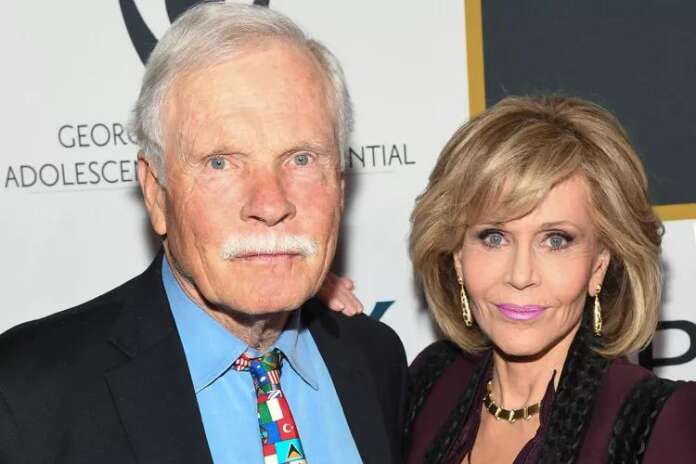
The actress and the media mogul, who died on May 6 at 87, were wed from 1991 to 2001. “Life is too short to be fighting,” Fonda once said of their relationship.
Jane Fonda and CNN founder Ted Turner shared a bond that endured long after their divorce.
The billionaire entrepreneur and noted environmentalist died on Wednesday, May 6, after a 2018 diagnosis of Lewy body dementia. He was 87. Fonda, 88, and Turner were married from 1991 to 2001.
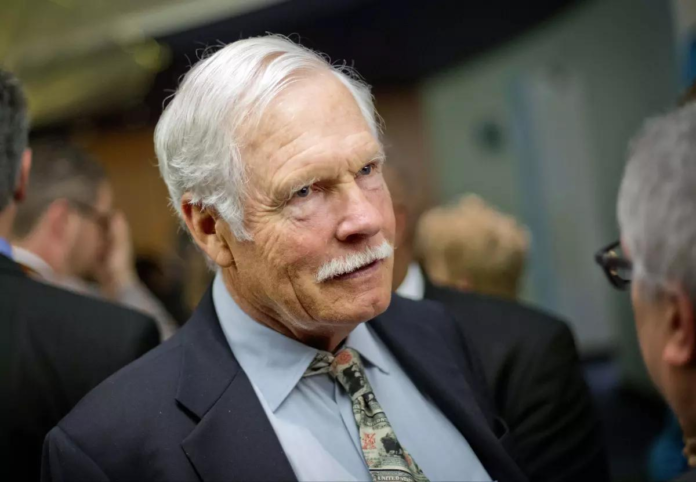
Ted Turner, the media maverick and philanthropist who founded CNN, a pioneering 24-hour network that revolutionized television news, died peacefully Wednesday, surrounded by his family, according to a news release from Turner Enterprises. He was 87.
The Ohio-born Atlanta businessman, nicknamed “The Mouth of the South” for his outspoken nature, built a media empire that encompassed cable’s first superstation and popular channels for movies and cartoons, plus professional sports teams like the Atlanta Braves.
Turner was also an internationally known yachtsman; a philanthropist who founded the United Nations Foundation; an activist who sought the worldwide elimination of nuclear weapons; and a conservationist who became one of the foremost landowners in the United States. He played a crucial role in reintroducing bison to the American west. He even created the Captain Planet cartoon to educate kids about the environment.
But it was his audacious vision to deliver news from around the world in real time, at all hours, that really made him famous – once his idea finally took off.
In 1991, Turner was named Time magazine’s Man of the Year for “influencing the dynamic of events and turning viewers in 150 countries into instant witnesses of history.”
Turner eventually sold his networks to Time Warner and later exited the business, but continued to express pride in CNN, calling it the “greatest achievement” of his life.
“Ted was an intensely involved and committed leader, intrepid, fearless and always willing to back a hunch and trust his own judgement,” Mark Thompson, Chairman and CEO of CNN Worldwide, said in a statement. “He was and always will be the presiding spirit of CNN. Ted is the giant on whose shoulders we stand, and we will all take a moment today to recognize him and his impact on our lives and the world.”
Just over a month before his 80th birthday in 2018, Turner revealed that he had Lewy body dementia, a progressive brain disorder. In early 2025, Turner was hospitalized with a mild case of pneumonia before recovering at a rehabilitation facility.
Turner is survived by his five children, 14 grandchildren, and two great-grandchildren.
Launching a TV news revolution
Turner began his media career at the age of 24 when he took over his father’s billboard company, Turner Outdoor Advertising, in the wake of the elder Turner’s suicide. He buried his shock and grief in work – but Turner wasn’t content to push other people’s products forever.
He bought up radio stations, then branched into television in 1970 by acquiring a struggling station in Atlanta known as Channel 17. He tried to boost the ratings by airing old sitcoms and classic films, at one point even hosting “Academy Award Theatre” himself.
After turning the family business around and renaming it the Turner Communications Group, Turner purchased two independent UHF television stations — in Atlanta and Charlotte, North Carolina — in 1970. He named them WTCG and WRET, after his company and himself. WTCG eventually became WTBS, television’s first “superstation.” It used satellite technology to carry its signal nationwide. TBS
Turner wasn’t interested in news yet. He decided to invest in sports instead, acquiring the rights to Atlanta Braves baseball games. Viewers and advertisers flocked to the channel, and as Turner turned a profit, he started to think bigger about TV.
In 1976 he beamed Channel 17’s signal up to a satellite and it became cable TV’s first superstation, reaching cable subscribers across the country.
Turner bought the Braves, and then the Atlanta Hawks basketball team, partly to keep the long-term rights to the TV programming, and partly because it was just plain fun.
As he built the Superstation WTBS, he set his sights even higher – a 24-hour news channel.
Turner was harshly critical of broadcast TV and establishment news judgments. “Part of the reason America had so many problems, he believed, was because his fellow Americans were so ill-informed,” former CNN journalist Lisa Napoli wrote in “Up All Night,” a book about the creation of CNN. Turner recognized “there was no better place to promote a variety of opinions than on allmighty television. With a news channel, he could quite possibly help save the world.”
A lot of people thought Turner’s idea was crazy. But he saw a huge opening in the marketplace.
“I worked until 7 o’clock, and when I got home the news was over,” he once said, referencing the 6:30 evening newscasts on the big networks. “So I missed television news completely. And I figured there were lots of people like me.”
Turner wanted to dramatically widen the aperture of television news, envisioning shows about business, health, sports and other subject matter. He admitted he knew “diddley-squat” about the news business, but he recruited the right people who did, like Reese Schonfeld, CNN’s founding president.
Turner, right, talks on the set of an early CNN broadcast. TBS
On June 1, 1980, CNN – the first 24-hour news channel – went live and has been on the air ever since.
Turner quickly expanded, adding a second 24-hour news network CNN2 (later renamed Headline News, then HLN) in 1982 and CNN International, which broadcast around the world, in 1985. He later added non-news cable channels including Turner Network Television (TNT), Turner Classic Movies (TCM) and the Cartoon Network.
In the mid-1980s, he acquired MGM’s library of more than 4,000 old films and stirred up controversy in the film community for colorizing many black-and-white movies, including “Casablanca.”
Out of all his networks, CNN was always his “baby,” but the network’s early years were marked by technical snafus during its long stretches of live broadcasting. Some critics dubbed it “Chicken Noodle News.”
Yet, Turner and his deputies knew they were creating something revolutionary.
“I lived for 20 years in my office,” Turner said. His office was inside CNN’s broadcast building in Atlanta. “I lived on a couch in my office the first 10 years.”
Longtime employees recall Turner sauntering into the newsroom wearing a bathrobe.
Turner speaks on stage outside of the Techwood Campus promoting the launch of CNN on June 1, 1980 R. Cotton Alston, Jr/CNN
“He was one of us,” former CNN president Tom Johnson recalled. “He would be in his housecoat down having breakfast in the Hard News Café (the company’s cafeteria).”
When the Persian Gulf War broke out in 1990, the importance of a 24-hour news channel became clear. It was the first time a war was broadcast live – and it was only on CNN.
“What Ted made happen was just as important as the Internet revolution,” said former Turner Broadcasting CEO Terry McGuirk.
Turner was hailed as a visionary and earned TIME Magazine’s “Man of the Year” in 1991.
In 1996, Turner sold his networks to Time Warner for nearly $7.5 billion. He stayed on as a vice-chairman of Time Warner, heading up the company’s cable TV networks.
Shaped by family tragedies
Robert Edward Turner III was born in Cincinnati, Ohio, on November 19, 1938. At the age of 4, shortly after his sister’s birth, his parents sent young Ted to a boarding school, which he didn’t like.
“I wanted to be home,” he said.
Robert Edward “Ted” Turner III was born in Cincinnati on November 19, 1938. Turner Family Collection
Turner had a difficult relationship with his father, who had a weakness for alcohol and disciplined his son with a leather strap or a wire coat hanger.
“It wasn’t dangerous or anything like that,” Turner once recalled. “It just hurt like the devil.”
The family later moved to Savannah, Georgia, and his sister Mary Jean contracted a rare form of lupus when she was 12. The illness left her with brain damage and in severe pain for years until her death.
“She was sick for five years before she passed away. And it just seemed so unfair, because she hadn’t done anything wrong,” Turner said. “What had she done wrong? And I couldn’t get any answers. Christianity couldn’t give me any answers to that. So my faith got shaken somewhat.”
Turner was sent to several strict Southern military schools and his father had hopes of him getting accepted to Harvard. He attended another Ivy League school – Brown University – but his father cut off his tuition because he disapproved of his major, as he made clear in a letter he wrote to his son.
“My dear son, I am appalled, even horrified, that you have adopted Classics as a major,” the elder Turner wrote. “I am a practical man, and for the life of me I cannot possibly understand why you should wish to speak Greek. With whom will you communicate in Greek?
“I think you are rapidly becoming a jackass, and the sooner you get out of that filthy atmosphere, the better it will suit me.”
After his father’s suicide, Turner took over the family business, Turner Advertising Co. Turner Family Collection
Before long, the money ran out and he dropped out, returning to Georgia to work for his father’s billboard company in Macon.
Turner was just 24 when his father shot himself and died in the upstairs bathroom at the family’s home near Savannah. It was March 5, 1963, and the elder Turner was under the influence of alcohol and pills, battling depression and worried he had overextended himself with a $4 million purchase that expanded his company, Turner Outdoor Advertising, into the South’s largest billboard company.
“He went against everything he taught me: ‘Be courageous and hang in there,’” Turner said.
Ted meets Jane
At the peak of his career, Ted Turner – twice divorced with five grown children – began dating actress Jane Fonda in 1989. The two would marry in 1991 and become one of the nation’s most storied couples.
“At first they didn’t get along at all,” recalled friend and former President Jimmy Carter. “In fact, they didn’t like each other. I heard this from both of them. It was months later before they decided to try again. And they evolved into one of the nicest romances that I’ve ever known about.”
Turner and Jane Fonda arrive at the 62nd Annual Academy Awards on March 26, 1990. Hal Garb/AFP/Getty Images
Ted and Jane stayed together for 10 years and, when they split, his anger at her conversion to Christianity was blamed, but the truth was more nuanced. She simply could no longer take a back seat to his larger-than-life personality or sustain his need for her constant companionship as they shuttled between his 28 properties. She was pushing 60 and no longer interested in living out of a suitcase.
“I would never love anyone like I love him,” she said. “But I just couldn’t keep moving in his world, along the surface for the rest of my life. I knew that I would get to the end of my life and regret not doing the things that I also needed to do for me.”
He was devastated when she left him and, as his marriage ended, Turner’s media empire began slipping away.
Time Warner had agreed to be purchased by Internet provider AOL in 2000 with the hopes that the merger would help the legacy media company survive and prosper during the dot-com boom.
In 1996, Turner sold his company to Time Warner for $7.34 billion. He became vice chairman after the merger. TBS
But the Internet bubble burst in 2001 and the following year the new AOL-Time Warner sustained a record $99 billion loss, resulting in countless job cuts. It soon became known as the biggest mergers and acquisitions failure in corporate history.
Turner resigned as AOL Time Warner’s vice-chairman in 2003, and three years later announced he would not seek reelection to its board of directors.
He lost control of Turner Broadcasting, CNN, the Atlanta Braves, the Hawks – and his fortune, consisting mostly of company stock, was hemorrhaging – more than $7 billion in three years.
“I lost Jane. I lost my job here. I lost my fortune, most of it. Got a billion or two left. You can get by on that if you economize,” he told CNN’s Piers Morgan in May 2012. He said he was “brokenhearted.” He tried to win her back, but it was obvious the relationship was beyond repair. “We were so far apart philosophically, we couldn’t do it.”
Despite the breakup, Fonda and Turner always maintained a close friendship, speaking on the phone regularly and showing up at each other’s charity events.
“Just because people get divorced doesn’t mean they stop loving each other,” she said. “It may be hard for two people to live together, but I can’t ever forget the reasons that made me fall in love with him.”
Turner explained that he had “loved many people” but only been “in love” twice – once with Fonda and once with someone he wouldn’t name. Being “in love” implies permanence, he said – something he hadn’t experienced in all of his relationships.
A media mogul turned philanthropist
Turner gave the US government $31 million to pay off a debt to the United Nations in 2001. Years earlier, Turner had donated $1 billion to the United Nations. United Nations Foundation
Turner always had a philanthropic streak, but it began to move to the forefront in 1997, the year after he sold Turner Broadcasting to Time Warner. That’s when he pledged $1 billion to the United Nations. Making good on that pledge took a while longer than he had anticipated – he made his final payment to the UN in 2015 – thanks to the beating his fortune took after the 2001 merger with AOL.
When it was over, he was still a billionaire, but just barely.
Turner didn’t do anything in a small way, including reinventing himself. He was the second biggest landowner in North America, with 2 million acres spread over 28 properties, including 19 ranches in Nebraska, Colorado, Kansas, Montana, New Mexico and South Dakota, as well as in Argentina. The first of his Ted’s Montana Grill restaurants opened in 2002, and now there are more than 40 in 16 states. He managed to bring bison back from the brink of extinction; he had the world’s largest private bison herd, with approximately 51,000 head.
His five children – Rhett Turner, Laura Turner Seydel, Jennie Turner Garlington, Teddy Turner and Beau Turner – serve on the board of the Turner Foundation. His other foundations include his United Nations Foundation, Nuclear Threat Initiative, Captain Planet Foundation and the Turner Endangered Species Fund.
Half a century ago, his father’s suicide thrust a $1 million billboard company into his hands. He often said that his father, who was 54 at the time he died, ran out of things to work toward. As a result, Turner was driven – relentlessly moving forward, never looking back.
Yet no matter how successful he became, Turner was often still trying to prove himself.
Fonda recalled how she cried when Turner told her about his childhood on their second date. They were driving around his 60,000-acre ranch in Montana, and he was passing the time, talking as he drove. Tears ran down her face.
Turner at his Flying D ranch in Montana in 2011. Elena Cizmaric
“He literally couldn’t understand why I was crying when he told me stories about what his father did to him,” she said. “Children can’t blame their parents. ‘It’s always my fault; it’s being done for my own good. I must not be good enough.’”
“Given his childhood,” Fonda said, “he should’ve become a dictator. He should’ve become a not nice person. The miracle is that he became what he is. A man who will go to heaven, and there’ll be a lot of animals up there welcoming him, animals that have been brought back from the edge of extinction because of Ted. He’s turned out to be a good guy. And he says he’s not religious. But he, the whole time I was with him, every speech – and he likes to give speeches – he always ends his speech with ‘God bless.’ And he’ll get into heaven. He’s a miracle.”
This story has been updated with additional information.
CNN’s Elise Zeiger, Kimberly Arp Babbit and Dan Q. Tham contributed to this story
Advocacy requires disciplined civility. A brief should address the court with deference, treat opposing parties and counsel with respect, and (in appellate contexts) avoid any pejorative description or innuendo aimed at the trial judge. The advocate’s voice should be cool, tolerant, temperate, and measured.
Brief-writing aims not to slay an enemy but to persuade a legally trained reader. Harsh attacks on the lower court are especially risky because appellate judges may instinctively identify with the judge whose decision is under review. Unfair criticism can therefore provoke judicial impatience or solidarity rather than agreement.
The same restraint applies to opponents, opposing briefs, parties, and witnesses. Nasty, derisive, or mocking comments seldom help. If the opposing side’s conduct or argument is genuinely defective, judges can usually see that without counsel’s theatrical assistance. Denunciation may even arouse sympathy for the target. Ridicule is particularly dangerous because an argument that seems absurd to counsel may appeal to the judge or may only seem absurd because counsel has not fully understood it.
Humor is equally hazardous: its success depends on the recipient, and judges may receive jokes unpredictably or resent them altogether. A brief is not a forum for comic experimentation, sarcasm, or literary display.
Candor is equally important. Justice Ginsburg’s advice to be scrupulously honest is especially forceful when describing what the lower court decided. Appellate judges often read the decision below before reading the briefs. If counsel then mischaracterizes that decision, the court is likely to distrust counsel and become impatient with the argument. Accuracy, fairness, and professional self-command strengthen credibility and preserve judicial attention.
The advocate should avoid diatribes, immature polemics, ad hominem attacks, condescension, sarcasm, insult, and pettiness. Such tactics distract from the merits, suggest weakness, and may even invite sanctions. Gerry Spence’s advice captures the point: avoid scorn and ridicule, use humor cautiously, withhold insult, and respect the opponent.
Litigation is adversarial, but advocacy need not be belligerent. Counsel may contend without being contentious and disagree without being disagreeable. Words such as “obviously,” “clearly,” and “preposterous” often sound like table-pounding substitutes for reasoning. True persuasive strength lies in substance, restraint, accuracy, and respect.
Summarized from Chinua Asuzu, Brief-Writing Master Plan (Partridge, 2022), 366–369.
Hon. Justice Daniel Osiagor of the Federal High Court in Lagos has stopped the National Broadcasting Commission (NBC) from “using its recently issued ‘Formal Notice’ to threaten, sanction or punish broadcast stations and presenters for expressing personal opinions as facts, bullying or intimidating guests, or failing to maintain neutrality.”
The judge granted an order of interim injunction following arguments on an ex parte motion filed by the Socio-Economic Rights and Accountability Project (SERAP) and the Nigerian Guild of Editors (NGE).
The ruling followed a lawsuit filed by SERAP and NGE challenging what they described as “an arbitrary and unlawful attempt by the NBC to sanction broadcasters for allegedly expressing personal opinions as facts” , “bullying or intimidating guests,” or failing to maintain “neutrality.”
In April, the NBC in a statement released said it had observed a rise in violations of the sixth edition of the Nigeria Broadcasting Code across news, current affairs and political programmes. It warned that presenters who express personal opinions as facts or bully guests on air will face sanctions.
SERAP and NGE had, in the lawsuit, asked the court “to determine whether the various provisions of the Nigeria Broadcasting Code relied upon by the NBC to threaten broadcasters are inconsistent with the Nigerian 1999 Constitution (as amended) and the country’s international human rights obligations.”
In his ruling, Justice Osiagor ordered that the NBC, its officers, agents, or any affiliated persons be restrained from imposing sanctions, fines, or other penalties on broadcasting stations based on several contested provisions of the 6th Edition of the Nigeria Broadcasting Code, pending the hearing and determination of the substantive suit.
The case has been adjourned to June 1, 2026 for the hearing of the motion on Notice.
Our site uses cookies. By clicking “Accept All Cookies”, you direct Law and Society Magazine to store cookies on your device and disclose information in accordance with our Cookie Statement: cookie policyACCEPTREJECT
Privacy & Cookies Policy
Privacy Overview
This website uses cookies to improve your experience while you navigate through the website. Out of these cookies, the cookies that are categorized as necessary are stored on your browser as they are essential for the working of basic functionalities of the website. We also use third-party cookies that help us analyze and understand how you use this website. These cookies will be stored in your browser only with your consent. You also have the option to opt-out of these cookies. But opting out of some of these cookies may have an effect on your browsing experience.
Necessary cookies are absolutely essential for the website to function properly. This category only includes cookies that ensures basic functionalities and security features of the website. These cookies do not store any personal information.
Any cookies that may not be particularly necessary for the website to function and is used specifically to collect user personal data via analytics, ads, other embedded contents are termed as non-necessary cookies. It is mandatory to procure user consent prior to running these cookies on your website.