Home Blog Page 554

The new minimum wage does not cover domestic workers

By Imoleayo Oyedeji

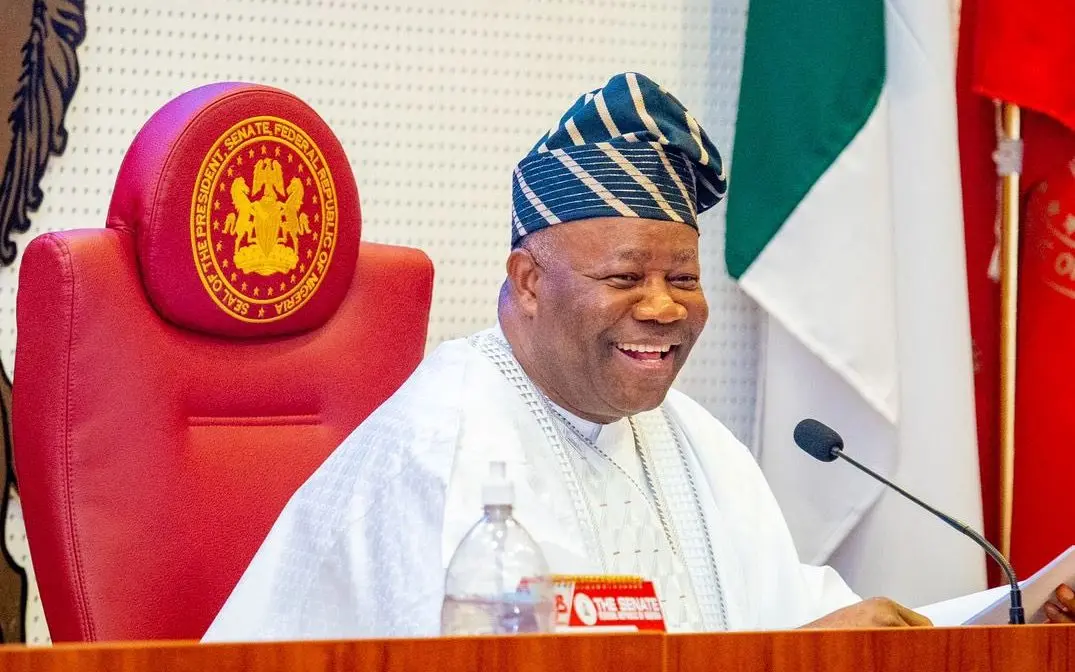
Claim: Speaking during a plenary session at the Red Chamber on Tuesday, Senate President Godswill Akpabio announced that the newly approved minimum wage applies to all workers across both public and private sectors, including maids and other domestic staff.

He said, “If you are a tailor and you employ additional hands, you cannot pay them below N70,000. If you are a mother with a newborn child and you want to hire a housemaid to look after your child, you cannot pay the person below the approved minimum wage. It is not a maximum wage. It applies to all and sundry. If you hire a driver or gateman, you cannot pay them below N70,000. So, I’m very delighted that this has been passed, and we now look forward to employers of labour improving on what has been set as a benchmark for all to follow.”

Findings

The Senate passed the 2024 National Minimum Wage Amendment Act Bill after President Bola Tinubu transmitted the new wage bill to both chambers of the National Assembly, seeking expeditious support from the lawmakers for its passage.

The new bill replaces the National Minimum Wage Act, No. 8, 2019, which approved a N30,000 minimum wage with five years to negotiate a new wage.

The 2024 wage review pegged the new minimum wage at N70,000 and reduced the number of years for the next minimum wage negotiations to three years.

While leading a debate on the bill, the Majority Leader of the Senate, Opeyemi Bamidele, said N70,000 was agreed upon by all the parties after negotiations as “part of the Federal Government’s short-term measure to mitigate the situation in the country.”

However, both the 2024 National Minimum Wage Amendment Act Bill and the National Minimum Wage Act of 2019 did not include domestic workers in the payment of the monthly minimum wage for employees in the country.

Section 3(1) of the 2019 Act states that “Every employer shall pay a national minimum wage of not less than N30,000 per month to every worker under his establishment, except as otherwise provided under this Act,” while Section 4(1) of the Act states that, “Section 3(1) does not apply to establishments in which workers are employed or paid on a part-time basis and commission or piece rate, an establishment employing less than 25 persons, workers in seasonal employment like agriculture, and any person employed in a vessel or aircraft to which the laws regulating merchant shipping or civil aviation apply.”

Meanwhile, the explanatory memorandum of the 2024 minimum wage amendment bill showed that the 2019 National Minimum Wage Act was amended with the insertion of only two new sections 3(1) and 3(4). Both were silent on domestic workers.

Similarly, the Information System on International Labour Standards on the ILO website revealed that the Domestic Workers Convention No. 189, which clearly stipulates that domestic workers should be included in the payment of the national minimum wage in every country, is part of the 49 conventions of the global labour body that have not been adopted by Nigeria.

Chapter 8 of the ILO Minimum Wage Policy Guide said, “Domestic workers are amongst the lowest paid and often among the most informal group of wage employees. They are also frequently excluded from minimum wage protection. An estimated 21.5 million domestic workers have no minimum wage that is applicable to them, although they exist for other workers. Among those who are covered, many are entitled to a rate that is lower than the minimum wage for other workers.”

A lawyer and founder of Nigerian Regulations, a newsletter that tracks legislative, regulatory and policy developments in Nigeria, Jesutooni Ajiboye, said the Senate President’s claim was inaccurate.

He explained, “Section 4 of the extant National Minimum Wage Act, 2019 is clear about exemptions which include establishments with less than 25 workers, or where workers are employed on a part-time basis, among others. Essentially, employers of labour with less than 25 employees are not bound by the Minimum Wage Act. Suffice it to mention that even the current bill, which has been transmitted to the President for signing did not amend the position under the 2019 Act, and the exemptions still apply under the 2024 Minimum Wage Bill.”

The Head of Public Affairs of the Nigerian Labour Congress, Benson Upah, said, “Inasmuch as we want every worker to be captured, the making of the law at the moment excludes certain categories of workers. But if the number of workers is up to 25, of course, they automatically belong to the minimum wage bracket.”

Verdict: The Senate President’s claim is false

PUNCH

Dangote refinery: Suffering amidst plenty Nigeria’s oil wealth

By Aare Afe Babalola, OFR, CON, SAN, LL.D (Lond.)

Nigeria is a hydrocarbon-rich nation. It is ranked by the Organisation of Petroleum Exporting Countries (OPEC) as the top crude oil producer in Africa as at May 2023, producing up to 1.4 million barrels of crude oil daily (this has reduced to below 1.2 million barrels per day as at May 2024). Nigeria is also one of the 10 largest producers of the crude oil in the world and owns the second largest crude reserve in Africa. By the estimation of Worldometer, Nigeria still has more than 230 years’ worth of crude oil reserve at current consumption. The Crude oil deposit in Nigeria is mostly comprised of Bonny light crude, a high-grade crude oil ranked one of the best in the world and is highly prioritized by refiners.

Nigeria’s infrastructure deficit and the appalling dependence on importation

There are over 6000 by-products of crude oil. One of these and the most widely consumed is the Premium Motor Spirit (PMS). Nigerians consume above 80 million litres of PMS daily. 

However, Nigeria’s combined functional refineries produce less than 500,000 litres of PMS daily. The obvious implication of this is that Nigeria grossly under-produces to meet its daily consumption need of PMS, even after Nigeria has explored crude oil for nearly seven decades.

Consequently, Nigeria heavily depends on the importation of PMS and other bye-products of PMS to forestall the deficit of the production of PMS. For ease of understanding, Nigeria imported about 12 billion litres of PMS in the first half of 2023 at N234 per litre. The price has since gone up since then.

The vision of Dangote Refinery and the clog in its wheel

Aliko Dangote, African richest man, saw the lacunae and sought to remedy it. After nearly seven years and $19 billion in expenditure, Dangote refinery and Petrochemicals Plant (the world’s largest single-train refinery) was completed. Aliko Dangote assured Nigerians that the refinery will start rolling out PMS and other products in June. This refinery would greatly reduce the rate of dependence on importation of PMS in Nige-ria. Unfortunately, Dangote had to revise the schedule for the availability of PMS and related products from June to July and then to August because he was unable to procure feedstock (crude oil) for his refinery in Nigeria. The NNPC promised Dangote refinery 300,000 barrels daily, while he is to procure the deficit from the lOCs. In other words, he could get all the crude oil he needed in Nigeria. Dangote never got what was promised, even though Nigeria produces about 1.2 million barrels of crude oil per day.

Below are a few reasons why:

1. Nigeria has developed an appetite for oil-backed loans: Oil for cash is a loan scheme which uses future crude oil as prepayment plans. Since the lender is borrowing in advance, it gets certain concession in the price of the crude oil. The loan is also given with interest. On August 16, 2023, Nigerian National Petroleum Company (NNPC) Limited secured a $3.3 billion oil for cash deal with the African Export-Import Bank at an interest rate of 11.85 per cent per annum. Nigeria pledged 164.25 million barrels of crude oil (at 90,000 barrels per day from 2024) to repay this debt. The NNPC is only entrusted with 455,000 barrels of Crude oil produced in Nigeria as their share of the production. With its refinery needing close to 500,000 barrels of crude oil per day (not including Dangote Refinery needs), the oil-backed loans have further hampered Nigeria’s ability to supply domestic refinery.

This equates to more dependence on importation of refined oil. Unfortunately, the NNPC is contemplating a fresh $2 billion loan. It is so sad that Nigeria prioritises immediate funds to sustainable future trade. The implication is that Nigeria is undervaluing its future oil under the pre-sale deal. This has also increased the fuel crisis in the nation since there are reduced number of crude available for local refineries.

2. Reluctance of the IOCs to sell to local refineries: IOCs are struggling to supply crude to local refineries. This is because some of these lOCs have their own refineries outside Nigeriaand would prioritise supplying their own refineries with their own share of the crude oil explored from Nigeria. Consequently, some of the IOCs offered higher prices above international prices and cost of logistics as concessions to supplying crude to local refin-eries. On the available facts, it could be inferred that many of the lOCs intentionally want to frustrate Nigerian refineries since the refined products purchased are purchased from their home countries.

3. The menace of oil theft and oil pipeline vandalism: Nigeria loses between 100,000 to 120,000 barrels of crude per day to oil theft and vandalism. This means that Nigeria has only 355 000 barrels of crude oil (or less) left to trade with and to refine. Nigeria has not been able to effectively plug this leak in almost 70 years of refining activities in the nation. This has therefore impacted the availability of crude oil to Dangote refinery negatively.

4. Exit of the lOCs and the Problem of Asset Transfer:The onshore and shallow water fields where majority of the NNPC’s quota of crude oil are mined has been abandoned byThe IOCs. The reason for this is that most of the major players are diversifying into cleaner energy in line with the mandates of the various international agreements to reduce global carbon emission, as well as the global collapse of oil price in 2016.Some IOCs have also complained about policy concerns which have negatively affected the ease of doing business in Nigeria. This is creating lacuna which has led to the reduction of daily production rate of crude oil in Nigeria.

Dangote Refinery has no alternative but to turn to the international markets to curb the dearth in the availability of crude oil in Nigeria. So far, Dangote Refinery has concluded arrangements to import 9 million barrels of crude oil from the USA and is set to import 11 million barrels more. It has also concluded deal to import 1 million barrels of crude oil from Brazil and has plans in motion to purchase from Angola, Senegal and Libya. The Federal Government has however promised that there would be sustainable supply of crude oil to local refineries.The Nigerian Upstream Petroleum Regulatory Commission (NUPRC) has insisted that IOCs meet local demands first, before exporting to other African countries. However, whether these promises will translate to crude availability in local refineries is the concern. This is because Nigeria has very little say on what the IOCs with their own oil and the NNPC’s share is not sufficient to supply local refineries.

Conclusion

In view of the revelation above, it is not surprising that Dan-gote Refinery and Petrochemicals Plant suffers lack amidst plenty. It is however puzzling that Nigerians are not asking the right questions on how the wealth of the country is spent, especially since all the figures of what is made is available on the internet. Countries like Qatar, the United Arab Emirates, Iran, Russia, Saudi Arabia, China and the United States of America have used proceeds from crude oil exploration and refining to bolster their national economies. However, the same natural resources have been very loosely referred to as a “curse” in Nigeria. The Nigerian crude industry made above $394 billion from 2011-2022. Nigeria’s total debt is $108.23 billion.

The implication is that Nigeria has enough revenue to pay its debt, and to build a functional refinery to reduce the dependence on importation. Sadly, Nigeria cannot account for the whereabouts of all these revenues. Also, an individual built a refinery bigger than what Nigeria could build. In 2023, Saudi Aramco (the world’s largest oil company)declared above $124billion as dividends for its shareholders. On the contrary, the NNPC is declaring deficits and mortgaging future oil productions for immediate resources. Nigeria has a long way to go, and it starts from asking the right questions and holding our leaders accountable to the electorate. (Please send your contribution/ comment to my email: [email protected]. ng)

South East Development Commission: Otu Oka-Iwu Abuja commends President Tinubu, Okezie Kalu

Press Statement

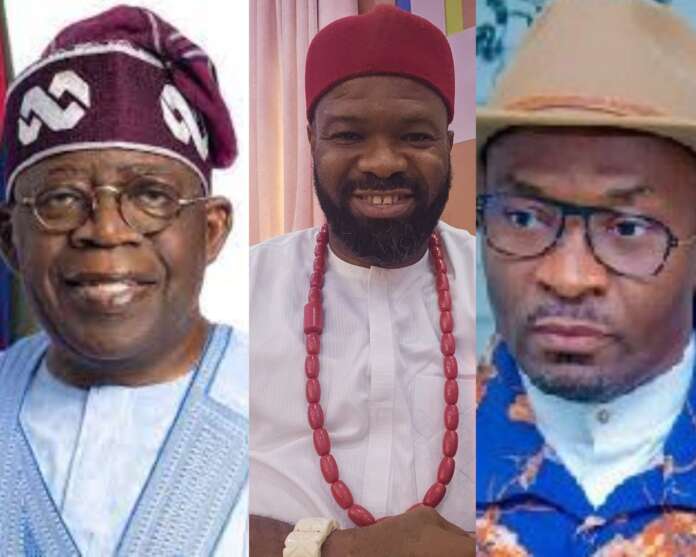
Otu Oka-Iwu Abuja commends, Mr. President Bola Ahmed Tinubu, Deputy Speaker House of Representatives, Rt. Hon Ben Okezie Kalu, for the efforts put together in achieving this significant milestone.

The establishment of the South East Development Commission (SEDC) in Nigeria’s Southeast region has brought a sense of hope and optimism for progress and development.

OTU OKA-IWU ABUJA, a prominent advocacy Igbo Lawyers Abuja group, commends the Deputy Speaker of the House of Representatives, Rt Hon Ben Okezie Kalu, for his commendable efforts in achieving this significant milestone. The organization also applauds President Bola Ahmed Tinubu for his support, commitment, and assertion in ensuring the successful passage of the SEDC bill.

The South East region of Nigeria has long been yearning for attention and investment in its infrastructure, economy, and social development. As a result, the establishment of the SEDC marks a monumental step towards addressing these concerns and catering to the needs of the people in the region.

OTU OKA-IWU ABUJA praises the Deputy Speaker for his dedication, perseverance, and hard work in pushing for the establishment of the SEDC. His relentless efforts and commitment to serving the people have not gone unnoticed. With his leadership, the Deputy Speaker has demonstrated a genuine concern for the development and progress of the Southeast.

President Bola Ahmed Tinubu’s unwavering support for the bill also deserves recognition. By leveraging his influence, he ensured that the SEDC bill received the attention and consideration it deserved. His endorsement further highlights the importance of the commission in fostering regional growth and providing better opportunities for the people of the Southeast.

The South East Development Commission (SEDC) represents a turning point for the region, as it is expected to tackle various challenges and promote socio-economic advancement. With a focus on infrastructure, agriculture, education, healthcare, and job creation, the commission will play a vital role in uplifting the people and improving their quality of life.

The establishment of the SEDC aligns with the Nigerian government’s commitment to equitable development across all regions of the country. It signifies an inclusive approach to governance, aimed at narrowing the development gap and fostering social cohesion.

OTU OKA-IWU ABUJA firmly believes that the creation of the South East Development Commission will bring significant improvements to the region. The organization extends its heartfelt gratitude to the Deputy Speaker, Rt Hon Ben Okezie Kalu, for his tireless efforts in ensuring the establishment of the commission. His visionary leadership and determination have paved the way for a brighter future for the people of the Southeast.

In conclusion, the South East Development Commission represents a milestone achievement and a beacon of hope for the region. This remarkable development would not have been possible without the commitment and support of some other leaders whose face can only be seen in the camera. As the SEDC begins its work, it is essential for all stakeholders to collaborate and support its endeavors, ensuring that the commission fulfills its mandate of fostering inclusive growth and sustainable development in Nigeria’s Southeastern region.

Chief Chidi Udekwe
President
Otu Oka-iwu Abuja

Otu Oka-Iwu Abuja mourns Emmanuel Iwuanyawu

Press Release

Otu Oka-Iwu Abuja hereby commiserate with the family of Chief Emmanuel Iwuanyawu on the demise of the colossus.

We also extend our condolences to Ohanaeze Ndi Igbo, ndi Igbo at large and Nigeria in General.

Chief Emmanuel Iwuanyawu “Ahaejiagamba” took up the mantle of leadership of Ohanaeze Ndigbo as the President General and repositioned it being an astitute leader, an erudite scholar, researcher, media entrepreneur, sports enthusiast and financier, business mogul and ultimately a philanthropist.

His death at this time means a lot, the gap maybe difficult to fill particularly as he was in the forefront of contributing to education, healthcare, and infrastructure development which transformed countless lives and most importantly, his fight against injustice.

We join other stakeholders to charge the Governors of the South-East, Members of the State Houses of Assembly, Federal Representatives, Senators, and the succeeding President-General of Ohaneze Ndigbo to uphold and advance Chief Iwuanyawu’s legacy particularly in his vision for the economic integration and development of the Igbo Nation.

May the Soul of the patrich Rest in Peace, Amen.

Chief Chidi Udekwe
President
Otu Oka-iwu
Abuja

Julius Ihonvbere, Opeyemi Bamidele and this prostitute of a parliament

By Chidi Anselm Odinkalu

“….economic mismanagement, rabid corruption, irresponsible political behavior and squandermania, the near abandonment of the state by its very custodians weakened it and made it largely irrelevant to the daily lives of the people. The state was now seen and treated as enemy by the people, a force that was to be avoided, hated, attacked, and subverted as opportunity permitted. Such a state had no room for the development, rule of law, social justice, human rights, and constitutionalism. All these were sacrificed on the altar of political expediency, political rascality, the hunger for raw power, and the arrogance of a political elite with only a tenuous relationship to real production.”

Julius Ihonvbere, (2002)

When he uttered these words in October 2002, Julius Ihonvbere was a distinguished Professor of political science about to make the transition from exile into public office. He spoke as a guest of the Institute for Governance and Development (IGD) at the Ambrose Alli University in Ekpoma, Edo State, whose academic community were his audience. The topic of his lecture was the timeless subject of “Constitutionalism and Democratisation in Africa.” His focus was Nigeria.

Nearly 22 years later, Professor Ihonvbere has logged an impressive public service resume in both the executive and legislative arms of government as well as at both federal and state levels. Among other things, he has served as an intimate adviser in the presidency; Secretary to the State Government in Edo State and also as a federal legislator. As the Majority Leader in the House of Representatives today, Professor Ihonvbere is the undisputed manager of legislative business in that chamber.

The progressive credentials of his opposite number in the Senate, Michael Opeyemi Bamidele (MOB), are just as intimidating. A lawyer with transboundary qualifications, Òpé, as he was known back in the day, was a firebrand president of the National Association of Nigerian Students (NANS) under whom the association logged an impressive record of resilient and effective opposition to the worst excesses of military rule.

This coincidence of enlightened and progressive credentials was – until this parliament – unknown in the annals of parliamentary floor management in Nigeria. It was entirely natural, therefore, that the public was willing to suspend credulity and heap a burden of high expectations on this 10th National Assembly (NASS). What they have reaped in return has been nothing short of a dis-spiriting anti-climax.

In its first year, this 10th National Assembly compiled a record that makes Professor Ihonvbere’s 22 year old Ekpoma declamation sound rather damp. To be sure, they signaled their direction very early, handing the administration the largest cabinet in the history of elective presidentialism in Nigeria in return for a scandalous harvest of four-wheel drives for every member.

The National Assembly of Professor Ihonvbere and Opeyemi Bamidele will go down in history as the one that casualized the National Youth Service Corps (NYSC) programme by clearing for appointment, ministerial nominees who manifestly had not fulfilled that requirement. Their handling of appropriations will deserve special treatment on its own. But it is their treatment of constitutive national symbols and institutions that will probably define the legacy of this 10th National Assembly.

On the first anniversary of the regime of President Bola Ahmed Tinubu in May 2024, the NASS altered the National Anthem and secured presidential assent for the change even before the record of Votes and Proceedings could have been compiled or transmitted, an essential requirement for presidential assent to bills passed by the National Assembly. This uniquely symbolic event occurred without as much as notice to Nigerians or an opportunity for public participation in the process.

The speed of parliamentary business under the joint floor leadership of Professor Ihonvbere and Opeyemi Bamidele has been nothing short of disconcerting, to the extent that it routinely catches many of their own conscientious colleagues entirely unawares. This has led to accusations of legislation by ambush. They have indeed been described as “worse than a rubber stamp…. A copy-and-paste arm of the executive.”

The latest example of legislation by copy-and-paste was the swift decision in the past week by both chambers of the National Assembly to amend the Nigeria Police Act of 2020, in order to extend the tenure of the present Inspector-General of Police (IGP) for a transparently political hit-job in 2027. As with the National Anthem, this also blind-sided the country.

The Nigeria Police (Amendment) Bill, 2024 is one of the shortest pieces of law-making in Nigeria’s parliamentary history. It comprises three sections which, together with the marginal notes, add up to a mere 100 words. The only substantive provision in the new law proposes to insert into the Nigeria Police Act 2020, a provision to the effect that “any person appointed to the office of Inspector-General of Police shall remain in office until the end of the term stipulated in the letter of appointment in line with section 7(6) of this Act.”

The Police Act provides for a tenure of up to four years for the Inspector-General of Police. However, all police officers are also liable to retire on attainment of the age of 60 years or 35 years in service whichever occurs earlier. Under this rule, Dr. Kayode Egbetokun, the current IGP, will retire on 4 September when he turns 60.

As the rumours of a tenure extension for him built up in the past few weeks, the police authorities were forced at the beginning of this month deny allegations that IGP Egbetokun “made moves to influence the National Assembly to pass a bill seeking to raise the retirement age of officers.” Those denials have proved to be worthless.

There are two possible scenarios. One is that Egbetokun was appointed in 2023 with a clear tenure stipulation in his letter of appointment. If that is the case, however, then the new amendment is an irresponsible waste of parliamentary bandwidth. This throws up an alternative explanation: that this amendment is intended to extend Egbetokun’s tenure, keeping him in office until after the 2027 presidential elections. As a matter of law, that should be impossible under the terms of legislation that is clearly not retrospective in its text or ordinary effect.

On either of these readings, IGP Egbetokun has to go on his 60th birthday on 4 September. If a letter materializes on that date granting him longer tenure, it would almost assuredly be a lawless forgery. That is not to say that the regime may not attempt it.

The Constitution and the Police Act together empower the president to appoint the IGP. They place only three constraints on this. One, the person must be from the ranks of serving police officers. Two, only officers on or above the rank of Assistant Inspector-General of Police are eligible for consideration for the position of IGP. Third, the president is obliged to consult with the Police Council in the appointment but the decision is ultimately the president’s alone to make. On 4 September, Kayode Egbetokun will no longer be eligible to be appointed IGP because he would no longer be a Police Officer as a matter of law.

The perversely targeted amendment of the Police Act by the National Assembly of Julius Ihonvbere and Opeyemi Bamidele is the latest curiosity from a Parliament whose only aspiration appears to be the transformation of the NASS into presidential plaything. The objective of this amendment is rather transparent. That is not surprising: in a previous life, the Kayode Egbetokun served for a long time as Aide-de-Camp to Bola Ahmed Tinubu.

The enthusiasm of Julius Ihonvbere and Opeyemi Bamidele in readily enabling this prostitutes the National Assembly. To reprise the thoughts of Professor Ihonvbere from over two decades ago, this NASS under the joint enterprise of himself and Opeyemi Bamidele manifestly has “no room for development, rule of law, social justice, human rights, and constitutionalism.” Instead, it has become “a place where all these were sacrificed on the altar of political expediency, political rascality, the hunger for raw power, and the arrogance of a political elite with only a tenuous relationship to real production.” Who would have thunk it?!

A lawyer and a teacher, Odinkalu can be reached at [email protected]

How states abandon deplorable roads, pump scarce funds into never-ending airport projects

By Amarachi Okeh

AMARACHI OKEH writes on how state governments have spent billions on poorly executed and often abandoned airport projects, leading to financial waste and raising concerns over corruption and mismanagement

Under the guise of attracting economic activities, state governments have attempted to map the skies.

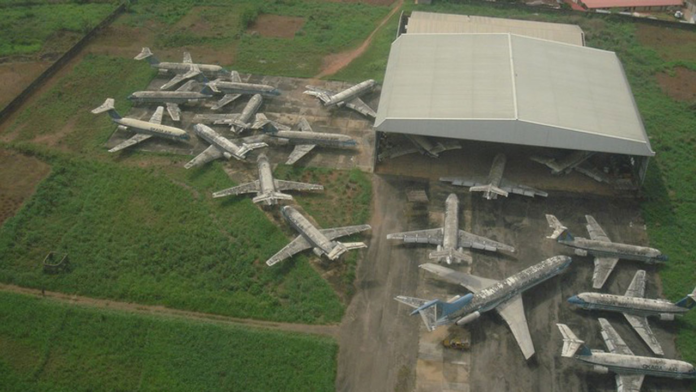
Billions of naira have been allocated and spent in the construction of airports, yet many of these projects remain unfinished while those completed are said to be unfit for flights. Despite the financial strain and a populace that largely cannot afford air travel, these ambitious ventures continue to sprout, only to be abandoned after completion or even before laying the foundation.

These gargantuan projects have gulped billions of state funds without materialising or ended up becoming an unaccountable waste of state funds that goes unsanctioned but burrows holes into the state’s funds.

Ebonyi’s badly done airport needs repairs months after completion

In April 2023, a month before he was due to hand over to the incoming government, former Ebonyi State Governor Dave Umahi inaugurated the Chuba Okadigbo International after spending N36bn on its construction. But barely seven months after the supposedly ‘new’ airport was commissioned, with two Air Peace aircrafts landing at the airport on the inaugural day, it needed repairs.

Airlines wouldn’t fly the route or land at the airport due to safety concerns.

The refusal of airlines to land at the airport was said to be due to a badly built runway.

It became a stirring puzzle that a new airport that gulped billions of state funds was already be in an unusable state. This calls into question the quality of contractors contracted for the job and if indeed the project was made with the interest of travellers at heart or just another way by which state officials siphon funds from the state.

Stakeholders in the state expressed shock that a pristine project would be in such a state to need repair for something that was barely used.

But then, during the conception of the project, Umahi had assured residents in the state and stakeholders that the project would have a positive impact on the state by increasing its economic viability. Since the finishing of the colourful airport, economic yields have yet to be recorded.

It was gathered that the challenges with the airport began with the runway, which was reportedly constructed with concrete technology.

The Federal Ministry of Aviation then recommended that the runway be overlaid with asphalt to fix the defects, the new Ebonyi State Governor, Francis Nwifuru, said.

This was to gulp an additional N13.7bn.

Nwifuru admitted last year that the construction of the runway was not properly done. He even enumerated the issues that the runway had. He said, “A governor called me and we discussed at length the approval of N13.75b for the airport that is deemed to have been completed and handed over.

The question that the governor asked me is the question every reasonable Ebonyi man is asking. The truth is that the mindset of those who started the airport is germane; but did we get it right?

“In the area of the runway, we didn’t get it right because the runway is jumping and it is destroying aircraft tyres,” Nwifuru admitted.

“Initially, we thought the problem was caused by the expansion joints. That’s what we believed initially and we said, okay, let us close all the expansion joints and know why it is jumping but it is still jumping and it has spoiled a lot of aircraft and that is why many airlines have refused to land there.

“And for us to get it right, we approached the Federal Ministry of Aviation and asked them what we could do. They told us that we needed to do certification, put thyroids and start laying asphalt. I said wow, we are in trouble. When you look at the amount that was sunk into that airport, it is not something you get up and say you want to abandon.”

Some stakeholders criticised the project as a white elephant and also described the sinking of billions of naira into it as a waste of taxpayers’ money.

To some others, like a former Commissioner for Information in the state, Chief Abia Onyike, the building of the airport was a ploy to siphon funds from the state.

In an interview with The PUNCH, he stated, “Former governor Umahi’s airport project in Ebonyi was not embarked upon by him for the genuine development of the state. It was one of his white elephant projects for looting the treasury of the state. It has already been proven by facts available on the ground.

“Umahi claimed to have spent N36bn in the construction of the airport but not up to two months after the airport was commissioned, a major engineering fault had been discovered. The tarmac of the airport is very terribly defective. That is the way anything constructed by Umahi always ends up being. All the bridges and flyovers he constructed using concrete technology have developed faults here and there. But he has already achieved the aim of embarking on the projects, which was for self-aggrandisement.”

Several opposition political players in the state described the project as a monumental waste and expressed shock that a project that hadn’t made any impact was going to gulp another N13 billion.

An opposition and All Progressives Grand Alliance senatorial candidate for Ebonyi South Zone, Ifeanyi Eleje, denied that the building of the airport would serve any benefit to the state. In his words, “It is not of any benefit to the people. It is an elephant project, ill-conceived and dubiously executed.”

Despite the opinion of the naysayers, at his one-year in-office celebration this past May, Nwifuru revealed that a total of N17.3 billion had been spent on major repairs in some areas of the airport that were barely used before it was due for repairs, promising that flight operations would commence shortly.

While the state had yet to showcase the benefits of owning an airport, it announced that it was acquiring four aircraft to float its airline, thereby towing the line of the Ibom Air.

The state commissioner for Aviation and Transport Technology, Mrs. Ngozi Obichukwu, said, “We will soon start floating our aircraft. When flight operations start at the airport, we have investors who are ready to give us three extra planes. We have already agreed with them, and very soon it will start happening.”

The commissioner believes that the airport will not just boost the economic base of the state but also showcase Ebonyi State to the world.

Ebonyi State is bordered by Cross River, Abia, and Enugu. There are mighty hopes that the situation of the airport in the state would boost economic activities in terms of drawing Cross River-bound tourists and business-minded travellers headed for Abia and Enugu by offering alternative arrival points despite these states having airports that are closer to them.

Abia’s ghost airport

When shoddy work is not done, funds are allocated but not utilised for the purpose it was budgeted for.

This is the case of Abia State, where the former governor, Okezie Ikpeazu, said he was building an airport for the state despite the state being surrounded by three airports: the Port Harcourt International Airport, Victor Attah International Airport, Uyo, and Sam Mbakwe International Cargo Airport, Owerri, which are all less than two hours away.

After he announced the beginning of the construction of the airport and his tenure was over, clouds of dust were raised when it came to light that Ikpeazu allocated N10bn for a yet-to-be-seen airport in the state.

After a forensic audit of the state account by the current governor, Alex Otti, it came to light that the former administration reportedly withdrew the sum for the airport and disbursed it to 32 accounts for the building of a non-existent airport in the state.

For a state where the workers were owed salaries spilling into years, pensioners’ wages were slashed, and roads were in deplorable conditions, it was unfathomable that it would prioritise the building of an airport over the welfare of its citizens.

The elephant project generated a crossfire of accusations and denials by Otti and Ikpeazu, respectively.

Otti, speaking at an event, remarked that a forensic audit of the state account found that billions of sums were allocated for unexecuted projects which included the airport.

“Some N9.3 billion was paid to seven contractors for contracts that were not executed at all up till today. Another N15.9 billion was paid to 63 contractors with no supporting documents anywhere in the state. Another N12 billion was paid to two contractors for contracts that do not exist.

“Out of this figure, N10 billion was on September 25, 2020, paid to some contractors for the construction of the Abia State Airport.

“We have spent time trying to locate the airport and up till now have not been able to locate it. So, as we continue to look for our airport, we have also involved the security agencies to help us search.”

But Ikpeazu responded by claiming that the funds were diverted to the repairing of roads after some traditional rulers appealed to him that building an airport was not a priority project.

He further claimed to have used the money to build roads in the commercial capital of the state. “I am happy that today, I finished Eziukwu Road from that airport fund, I finished Faulks Road from that fund, Ngwa Road is okay, Osusu Road is okay. So, today you can connect with Ariaria through Osusu Road to Eziukwu Market and connect Eziukwu Market to Ngwa Road Market.”

In another interview, Ikpeazu stated that what he wanted to build was a trade port, not an airport. But so far, no one has seen either the air or trade port he spoke about.

But then in February of 2020, the former state commissioner for lands and survey, Suleiman Ukandu, pledged to commence payment of compensation to land donors in parts of Ikwuano and Isiala North Local Government Areas where the proposed airport was to be situated.

Ekiti’s elephant parting gift?

A day before he left office in October 2022, the governor of Ekiti State, Kayode Fayemi, inaugurated the N20b Ekiti State Cargo Airport.

After a military aircraft landed on the airstrip on the inaugural day, the airport was left to waste and abandoned.

Two years in, there has been no justification for the construction of the airport save for the massive land that turned into a rusty taste of what could have been but is not.

Even after supposedly guzzling billions from the coffers of a state that had a total state revenue of N80.6 billion then, an Ekiti-based media house, Development News Nigeria, who visited the site last year, reported that “construction workers were still working on the flooring in front of the arrival lounge, the air traffic control was still uncompleted, and untrimmed weeds still surrounded the arrival and departure building. No commercial activity was taking place in the environment.”

In stark contrast to the reality on the ground, Special Adviser on Media to the current state governor, Biodun Oyebanji, Yinka Oyebode, insisted to the reporter that the construction of the airport was completed and that it was only waiting for certifications to begin commercial operations.

“Before the governor left, the facility had been completed and an aircraft landed there but to make it an airport where commercial aircraft can land and take off, there are a lot of certifications that need to be done and that is what we are currently doing. These additional certifications with the NCAA and some other agencies are additional costs. The facility is ready but we can’t begin commercial operations there until the certifications are done and it is not cheap,” Oyebode said.Related News

This is worsened by the fact that farmers whose lands were taken over by the state for the construction of the airport were yet to get their rightful compensation, up to N429m.

Back then in 2017, Fayemi stated that the new ‘Agro-Cargo Airport’ would have a long-term positive impact on agriculture and investment. The ground-breaking ceremony was conducted with embattled former Minister of State for Aviation, Hadi Sirika, in October 2019.

Despite redundancy challenges, Oyebanji recently declared that the airport would soon be ready for commercial use as it was undergoing certifications. “Once we have the certifications from NCAA and FAAN, then access to Ekiti State will be sorted out, at least through the air. I don’t want to give a timeframe but at least before the end of this year, commercial airport operations will begin at the Ekiti State airport,” he promised.

Billions splashed on Zamfara’s one new airport by two administrations

At the tail end of June, the governor of Zamfara State, Dauda Lawal restarted the construction of a new international airport in the state’s capital city of Gusau.

Just like other governors of other states, he declared that the economic benefits of the airport would be enormous, adding that “The airport will have a tremendous impact on the ease of doing business and other social interactions.”

For a state that is one of the poorest in the country, this is not the first time the state would be building a new airport. Lawal’s new ambition is to make the airport a ‘smart’ airport, dusting off from where it was  abandoned by the former governor.

During the tenure of the immediate past governor, Bello Matawalle, now the Minister of State for Defence, he also began the same project but abandoned it.

The spokesperson for the current governor, Sulaiman Bala Idris, claimed that Matawalle’s administration mismanaged state funds and ignored due process in its attempt to build an airport.

The allegations against Matawalle were that he withdrew N1 billion from the Local Government Joint Account in October 2021 and paid N825 million to contractors without valuation. He was also accused of reducing the airport project cost from N28 billion to N11 billion without a corresponding reduction in the scope of work, raising doubts about the integrity of the bidding process.

Other allegations were that he made an advance payment of N3.47 billion to contractors without proper project approval. Matawalle’s administration was also accused of approving an additional “loan” of N2.31 billion to contractors without significant work progress or proper certification, and also misreporting the project’s completion status and financial expenditures.

Across many various states, rickety airport projects lay around after billions of state funds have been allocated to them.

This behaviour by governors has been interpreted by many as one of the means through which corruption and misappropriation of state funds is being done without any consequences to the actors. Last year, it was gathered that the Nigeria Civil Aviation Authority had granted Benue and Ogun states approvals to construct civil aviation airports.

Other airports in the making

Last year also the former Benue State Commissioner of Information, Culture and tourism, Michae Inalagwu revealed that 12 states including Benue had secured licences and approval from the NCAA.

After 17 years, having passed through two governors and billions of naira blown, Ogun State, an important economic hub of Nigeria, has announced that its cargo airport is near completion. This is in spite of the outrage over the bad roads in the state.

Last December, the Minister of Finance and the Coordinating Minister for the Economy, Wale Edun, expressed confidence that the Ogun Agro-Cargo Airport would add value to the lives of the people and contribute to the rapid growth of the state and the country’s economy.

“It is the type of investment that grows the economy, creates jobs and reduces poverty and it is good for the people of Ogun State in particular as well as Nigeria in general that new economic life is being breathed into the area,” the commissioner said.

However, the airport is yet to commence flight services despite the state governor, Dapo Abiodun in April announcing that it would begin scheduled and non-scheduled flights in the next few weeks.

Abiodun had stated that the approval process to get the airport running had reached an advanced stage, with the approval expected in a few days but three months down the line, nothing has been heard of the airport.

Only three airports are profitable – NCAA

While several state roads are in bad shape, kidnapping of citizens travelling the roads rampant and citizens’ crowdfunding to pay for their release, some states have taken up charting the skies whereas the economic reality of the country has made air travel nearly unreachable for the average Nigerian.

There are about 32 airports in Nigeria with five of those also serving as international airports.

Over the years, the cost of flying around the country has been steadily rising. This is even made worse by the monstrous inflation that has suddenly made affording flight only for the rich, who still complain of the current soaring cost.

A few years ago, one-way flights within the country cost about N18, 000 but now it is over N120, 000 with land transport giving an airline a run for their money despite the bad shape of the nation’s road network.

According to The Guardian, the number of air journeys taken in 2022 fell from 16.17m to 15.89m. What is more stunning is that passenger traffic is concentrated in just three airports which account for 92 per cent of all passenger journeys countrywide in 2022, the Nigeria Civil Aviation Authority revealed.

The profitability of these airports remains an issue. Recently, the Managing Director of the Federal Airports Authority of Nigeria, Olubunmi Kuku disclosed that of all the 22 airports that the agency manages, only three are profitable.

While states take up navigating the skies instead of making roads accessible, she advocated that rather than constructing new airports, they should focus on boosting manufacturing, trade, and tourism activities in their domains to increase passenger traffic and revenue.

In her opinion also, it is “economic activities in states where airports are built that drive passenger traffic and not the construction of new airports.”

States need approval to build airports – NCAA

A typical method of operation by the states that have claimed to build an airport is to commission an inaugural flight after which nothing is heard of the airport anymore.

Building an airport is subject to the approval of relevant agencies in the industry, but some states do not acquire the approvals before starting construction, the former director general of the Nigeria Civil Aviation Authority, Dr Musa Nuhu, said in a PUNCH interview.

Some airports end up being abandoned because they hadn’t carried out feasibility studies before construction started.

The first process is the policy phase, where a committee, including the Aerodrome department, NCAA, Federal Airports Authority of Nigeria, and Nigerian Airspace Management Agency, conducts a feasibility study and site visit after a letter has been written to the Minister of Aviation and Aerospace Development. If the business case is sound, the minister approves the project, and it goes to the NCAA for construction

Nuhu disclosed that “There are quite a few airports…that are built and they have not even met the requirements. So much money has been spent, but they have not reached the minimum requirement. The unfortunate part that people don’t see is that many a time these state governments hand over the airports to FAAN, this is because there are many and the NCAA needs more aerodrome inspectors….And these airports do not even generate money; some airports have one or two flights a week. Some are even executive flights. Honestly, we must collectively find a way to deal with that.”

Experts react

Even if airports are eventually built in all states, there is still the need for good road networks to move from point A to point B within the state.

An aviation expert and the Chief Executive Officer of Selective Securities International Limited, Ayo Obilana said states building an airport should be a reaction to economic developments in it.

They should also consider its viability first.

He also highlighted that some states build airlines as status symbols not necessarily as an economic bridge.

“Most of these governors, I believe, are trying to build airports for what I would call status symbols for their states, which I believe is not right. Most of the airports we have in the country are not even viable. They don’t have much traffic, at least 70 per cent of them and also some of the airports are close to most of the existing airports.

“Take for example, Osun state is close to Ibadan or Akure and some in the east too, the same thing. So, I can’t just see the rationale of building another airport when you have them closer to some existing airports. That is just my own opinion.”

He believes investment should be poured into building better road networks, railroads and the seaport and also taking better care of the citizens rather than building airports that would take billions of naira to maintain.

Furthermore, he questioned the sensibility of building airports when they have failed to live up to their basic responsibilities to the residents.  “When they have not paid workers, people are suffering, hospitals lack medical facilities, the roads are bad, no pipe borne water, schools are dilapidated states and yet they want to build an airport, it doesn’t make sense,” he protested.

But another aviation expert, Olu Ohundayo said passengers are not dwindling from using the airports, rather “It is the lack of capacity, lack of competition, innovation that has made the passengers not travel. It is stagnated and this is further stunted by lack of capacity.”

He describes the use of road transport when passengers cannot get a seat on a flight as a ‘risk’.

Ohundayo added that it is the airlines that are making the airports inefficient and bad.

He however suggested that states who choose to own airports should begin small instead of building big airports at first. He suggested that operations could be started with flights with less than 100 seating capacity first and increase as demand increases instead of starting big and incurring losses in billions.

To Ohundayo, airports are social responsibilities not necessarily economic ones. “It is along the line they begin to move along the line of economics. It always starts as a social responsibility”

However, they pointed out that most states’ airports are used as covered by administrations to siphon money out of the states.

They also called for stronger measures to be put in place to ensure transparency in the allocation and use of funds.

The desire for states to build airports can only be achieved when the focus is on enhancing economic activities that naturally drive the need for airports, rather than constructing airports hoping they will attract economic activities.

This article was originally published by PUNCH on 21st July 2024

Study reveals sweet drinks raise bowel cancer risk in young adults

You must have heard it said that too much sugar is dangerous to your health. But did you know that sweet drinks can raise bowel cancer risk in young adults?

Well, a scary new research sheds light on a hidden danger for young adults. A recent study reveals a worrying link between sugary drinks and a significant increase in their risk of bowel cancer.

The study, conducted by a team of dedicated researchers, found that consuming just two glasses of sugary drinks a day – that’s roughly one small can each – more than doubles the risk of developing bowel cancer before the age of 50. This risk jumps even higher, reaching a staggering 33 percent increase, for teenagers who regularly indulge in these beverages.

The study, published in Gut, analyzed the effects of various sugary drinks, including sodas, fruit-flavoured beverages, and sports and energy drinks. Each daily serving of eight ounces (around one small can) was found to increase the risk  by 16 percent in adults, rising to a worrying 33 percent for teenagers.

It is the first study to associate them with a heightened risk of bowel cancer in mid-life. Cases of early-onset colorectal cancer have been climbing over the past two decades – but it’s not clear why.

Corresponding author Dr Yin Cao of the University of Washington, St Louis, said: “These drinks have steadily risen in popularity – particularly among teens and young adults.”

She called for campaigns aimed at reducing consumption among adolescents and young adults, saying, “It may serve as a potential strategy to alleviate the growing burden.”

Substituting them with artificially sweetened beverages, coffee or semi-skimmed or whole milk slashed the risk by 17 to 36 percent. The findings are based on 95,464 female nurses in the US aged 25 to 42 who were tracked for up to 24 years.

They reported what they ate and drank using validated food frequency questionnaires every four years – starting in 1991. And 41,272 also recalled what – and how much – they between the ages of 13 and 18.

During the study period, 109 participants were diagnosed with bowel cancer before they reached 50. Fizzy drink intake was linked to significantly higher rates – compared to those who rarely touched the stuff.

This was after accounting for other factors including health, lifestyle and BMI (body mass index) as teenagers, use of aspirin, other NSAIDs (non-steroidal anti-inflammatory drugs) or vitamin supplements and family history of the disease.

The “biologically plausible explanations” for the results in clude fact that sugary drinks suppress feelings of satiety – which can lead to piling on the pounds.

They also prompt a rapid rise in blood glucose and insulin secretion – triggering inflammation, obesity and type 2 diabetes. Emerging evidence also suggests glucose and high fructose corn syrup – found in most fizzy drinks – boost intestinal tumours. Further, they weaken the gut barrier – providing an environment for them to thrive.

Cao said: “A recent study demonstrated high-fructose corn syrup treated mice had substantial colon tumour growth with aggressive grade. This was independent of obesity and metabolic syndrome – which lends additional support to the link between sugar-sweetened beverages and colorectal cancer risk.

 “Considering the well-established, adverse health consequences and the highest consumption being characterised in adolescents and young adults under age 50 years, our findings reinforce the public health importance of limiting intake for better.

Vanguard

50-year-old Osun native doctor paraded for killing friend to make ritual soap for ‘Yahoo Boys’

The Police Command in Osun State has arrested a 50-year-old native doctor, Kehinde Ganiyu, for the murder of his Ghanaian friend, Emmanuel Collins.

Ganiyu was said to have killed Collins by cutting his throat to make a ritual soap intended for internet fraudsters, commonly known as ‘Yahoo boys.’

The incident took place last Thursday in Oba-Oke, located within the Olorunda local government area of Osun State.

Parading the suspect, the Osun State Police Command with Police Public Relations Officer Yemisi Opalola revealing that Ganiyu was found in possession of four blood-stained knives, a chisel, two gourds, a wooden traditional pot containing black soap, two sponges with black soap, a traditional tray (Opon Ifa), and local charms.

During a press briefing on Friday, July 26, Ganiyu confessed to the gruesome act, admitting that he killed his close friend to make ritual soap.

“I visited my friend, Emmanuel Collins, because he was sick. While he was in bed, I took a kn!fe and cut his throat. I used the part to prepare ritual money soap for Yahoo boys,” Ganiyu explained.

Ganiyu, who described himself as both an herbalist and a farmer, further confessed, “I used to make such rituals for Yahoo boys, but they usually brought the human parts. This time, I sourced the part myself. I regret my action because I also attended his burial, but suspicion and police investigation led to my arrest. I can’t believe I killed my longtime friend.”

The black market called marriage

By Funke Egbemode

To many, marriage is about love and passion. To others, it is an investment and to someone like me, it is all of that and also black market.

You can love all you want and not be able to keep the glow. You can be as passionate as you can and still not be able to keep the fire burning or your spouse in your bed and within your vows.

As an investor, we all know you can’t get it right all the time. Some investments are just not destined to last long or become blue chip. Many just fizzle out. You watch your profit margin diminish as the operations cost soar until you are in the red, bankrupt and then you go into receivership if you are lucky.

Some women get a second chance to re-invest, others have to live sadly forever thereafter with their first bad investment choice.

Whatever your description of marriage – passion, love, investment or even a divine call, what is common to all marriage is, it is about flying blind with only faith, providing the wind for your wings. Think about it, even when two pastors marry, they are not sure of anything except their faith that tomorrow will be all right and God will see them through. You just set out on this long journey, hoping for the best, not sure what tomorrow will bring or if tomorrow will come at all.

Let’s look at the investor-bride for instance. There are women who for reasons of background, or whatever, are clear-eyed when choosing a husband. He’s either rich or not. There is no middle road. May be not Dangote-rich but he must be able to afford the good things of life. This bride is not turned on by humble-beginnings or aroused by let’s-start-together-from-the-scratch pitch. The soup must not only be cooked and ready to be served, there must also be a servant to serve it. But what is the guarantee that that is a wise choice, that the soup will not go sour one year down the road?

There are dozens of cases of once-upon-a-rich men who are today barely picking their bills. There are tons of women who used to be pampered silly but are now breadwinners. You see what I mean by flying blind? You just take off and hope you’ll land safely, with faith and determination as your wings and wheels.

A dear friend once told me to take a census of women; wives driving choice cars in and out of Banana Island, Lagos. His point? That I’d see they are the ones in their 40s to early 50s in Mercedes Benz G-Wag, Lexus, Porsche etc. They are not overly dressed or wearing heavy make-up. According to my friend, “these are women who made the right choices years ago. They saw prospect in certain young men and married them and today they are reaping the fruits of their labour in the lap of luxury.”

What do you think? I didn’t, still don’t agree with my friend. First, his theory credits women with clairvoyance, the ability to see tomorrow. Yeah, women have uncanny intuition but we are not always on point, our choices and prediction not always on the money. In other words, not all gambles on prospect in a ‘toaster’ pan out.

Some just peter out into near penury. Many times, the rich fruits expected are so late in coming, some wives lose faith and sight of what they saw and married. Some women give up and move up the road in search of ripe fruits waiting to be harvested. However, there are scores of women whose predictions paid off and are indeed living in mansions, being waited on by uniformed stewards and ferried around by liveried chauffeurs.

I read in the City People magazine the interview of a man who used to sell rat killers, rat gum, local insecticides, then planks and later cows. For years he suffered. His wife, whether she saw the millions in his future stood by him. Until four years ago when he hit it big with an herbal drink that is now raking in the big bucks, with choice automobiles packed on the premises of their mansion.

I once watched a movie that got me thinking, again, about the import of the choices we make when it comes to marriage and the staying-power we all must have to wait for our dreams to come true, as women. I’ll not reveal the synopsis of the movie so I don’t spoil the fun in case you have not seen the movie. I’d tell you another story you and I can relate with.

Benita and Joe met when they were in their final year in the University of Benin at the graduation party of Joe’s roommate. Joe read Geology, Benita read Biochemistry. It was that kind of relationship that graduated smoothly into marriage plans. The two surely wanted to be together forever. They knew the number of children they’d have, where and what they would be and live in 20 years.

Benita was sure Joe would be rich, even if not filthy rich. He’s a geologist and his eyes were on any of the oil companies.

Twenty years ago, when they both graduated, those oil company jobs were not as scarce as they are now. Joe promised Benita they’d have a huge fifth year wedding anniversary since he couldn’t afford a big wedding. Their wedding ring was from roadside shop. Each time she came home with an ‘Okada burn’ or torn skirt from alighting from a moving bus, he promised to buy her the latest Range Rover.

The couple had non-stop landlord trouble because they were never able to pay their rent as at when due even though they lived on the outskirts of the city.

Joe applied to every international oil major, then he scaled it down to oil service companies, yet nothing happened. Benita had a teaching job which could barely keep them fed and clothed. They made two babies in four years and life just got harder. She took on private teaching and selling ‘this and that’ to her fellow teachers and neighbours.

She moved from wearing old dresses to second-hand dresses. Her kids too. Joe’s promises and reassurances began to sound like unrealistic dreams. She began to be irritated by his consolation.

She simply got tired of the ‘I will make it, just be patient’ stories. She was perpetually tired and stressed from being breadwinner, running around. Joe’s golden fleece didn’t seem like it would ever materialize.

Yet, Benita trudged on, living on hope, though her determination was waning by the day. Then her second child, her beautiful daughter died in her arms because they got to the hospital too late. The poor girl had been running temperature for days and she had been giving her the anti-malaria she bought down the road. She told herself that she would take her to the hospital for test and better treatment when she got her salary the following week. Then the baby started convulsing. She barely made it into the consulting room before the beautiful girl took her last breath.

Benita went berserk. Her daughter died because her husband didn’t have a job, they were poor. She was just tired of the struggle. She needed a man to take care of her. She was done with this life of dream and promises. Joe just brought her bad luck. The doctor already told her she might not be able to have a third child. Now she was left with one. She was not going to risk losing the remaining one to ‘this poverty-infested life’.

And so Benita moved out, left Joe to sort himself out. It was over, she said. She filed for divorce. Joe was disconsolate. He couldn’t even insist on the custody of his son. He loved his wife and could see her in pain. It was a sad end.

Then barely 18 months after Joe and Benita parted ways, fortune smiled on Joe. A friend called him to supply diesel to a company. It was the beginning of open doors. One supply led to dozens and then several. In less than six months, he was able to rent an office, move into a decent apartment.

Long story short, all those good things of life that he promised Benita went to another woman, Joe’s new wife who seemed to have arrived just in time for prosperity. She was the one who got the diamond ring, the society wedding, the G-wag and the beautiful house on rich people’s island. She got it all.

Benita’s investment did not lead to harvest. Her stress, pain, and loss were just seeds for another’s comfort.

Was she impatient?
Was she right to leave after her daughter died?
Was she wrong when she saw Joe’s prospect all those years ago?
Why did fortune smile on Joe when Benita had lost a child and her space?

My conclusion? Only God knows the dreams that will come true, the prospect that will materialise. The bride can only gamble, fly blind and hope she lands safely and not on her bare buttocks.

CNN lists Trump’s 10 false claims about Kamala Harris in a single rally speech

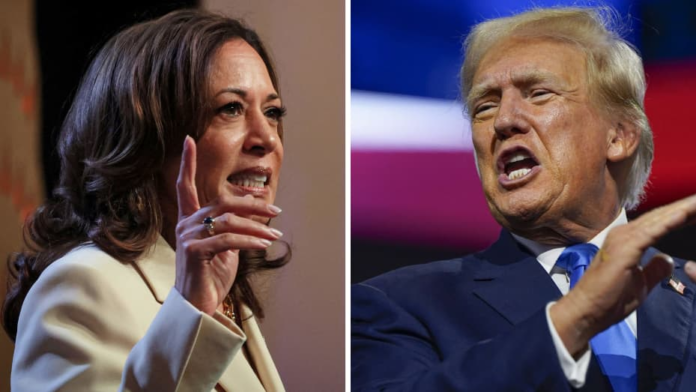
Former President Donald Trump made at least 10 false claims about Vice President Kamala Harris in his first campaign rally since she became the presumptive Democratic presidential nominee.

Trump, speaking in North Carolina, attacked Harris at length with a flurry of assertions about her personal and political past, her record as vice president and her policy stances. We’re still looking into some of his claims, but at least 10 were wrong.

Here is a fact check.

Harris and the retirement age

Discussing Social Security, Trump claimed of President Joe Biden and Harris: “They’re talking about, he was talking, she’s talking about – lifting the retirement age.”

Facts First: This claim is false about Harris. She has not spoken in favor of raising the age for receiving Social Security retirement benefits. (Biden did, as a US senator in the 2000s and prior, express support for or openness to raising the retirement age, but he has been a vocal opponent of the idea as president.)

Harris has supported increasing, not reducing, Social Security benefits. In 2019, about two years before she became vice president, she co-sponsored a bill from Sen. Bernie Sanders of Vermont, called the Social Security Expansion Act, that would boost Social Security benefits by raising payroll taxes on high earners.

Harris and abortion

Trump said, “She wants abortions in the eighth and ninth month of pregnancy, that’s fine with her, right up until birth, and even after birth – the execution of a baby.”

Facts First: Trump’s claim that Harris supports the execution of babies after birth is false. She has never said anything to endorse post-birth murder, which is illegal everywhere in the country; Trump has frequently claimed that some Democratic states allow such post-birth executions, but that claim is false, too.

Harris, a vocal supporter of abortion rights, has declined to endorse specific limits on how late in a pregnancy an abortion should be permitted to occur. According to data published by the US Centers for Disease Control and Prevention, just 0.9% of reported abortions in 2020 occurred at 21 weeks gestation or later. Many of these abortions occur because of serious health risks or lethal fetal anomalies.

Harris has called for legislation restoring the protections of the Roe v. Wade decision that was overturned by the Supreme Court in 2022; Roe allowed states to restrict abortion after the point of fetal viability, often considered to be around 23 to 24 weeks gestation, with exceptions for abortions necessary to protect the patient’s life or health. As a senator and vice president, Harris has supported a bill that would, like Roe, ensure abortion was available at least until fetal viability – and would also prohibit various state policies that make the process of providing or obtaining an abortion more onerous.

Asked about Trump’s comments, the Trump campaign provided various examples of Harris taking liberal positions on abortion policy and declining to endorse specific limits – but nothing to substantiate the claim that she supports “the execution of a baby” after birth.

Harris and red meat

Trump claimed, “Kamala even wants to pass laws to outlaw red meat to stop climate change.”

Facts First: This is false. Harris has never expressed support for passing laws to outlaw red meat. At a CNN climate change town hall in 2019, when she was running in the Democratic presidential primary, she expressed support for changing dietary guidelines to try to encourage Americans to reduce their consumption of red meat, but she also said “I love cheeseburgers from time to time” and that she favored using “incentives” and education to encourage healthy eating.

After mentioning sodas and foods with copious sugar, Harris said in this same town hall answer that “the balance that we have to strike here, frankly, is about what government can and should do around creating incentives and then banning certain behaviors.” The phrase “banning certain behaviors” opened the door to claims that she wants to ban red meat. But she immediately proceeded to her comments about how she enjoys cheeseburgers and favors incentives to prod changes in behavior – making clear in context that she was expressing support for incentives rather than bans.

Asked about Trump’s claim about Harris wanting to outlaw red meat, the Trump campaign provided two citations that did not substantiate it: a YouTube video of Harris’ comments that was correctly titled “Kamala Harris Wants The Government To Create ‘Incentives’ For Americans to Eat Less Meat” and an article headlined, “Flashback: Kamala Harris said she would support eating less meat if elected president.”

Harris and Trump’s legal cases

Trump has claimed for months that Biden secretly orchestrated his criminal and civil legal cases. This time, he directed the claim at Harris. He said, “But it was all headed up by her. Because she’s a prosecutor.”

Facts First: This is false. There is simply no basis for claiming that Harris “headed up” the legal cases against him. Trump has never presented any evidence for this claim that Biden was the hidden hand behind his cases, let alone for suddenly switching the claim to make it about the vice president after months of saying it about the president.

There is no sign that Harris had any role in bringing charges against Trump in Manhattan, New York (where he was convicted of 34 felony counts of falsifying business records) or Fulton County, Georgia (where an election subversion case against Trump is on hold); those prosecutions have been led by elected local district attorneys. Trump’s two federal cases, one dismissed by a judge earlier this month, were brought by a special counsel, Jack Smith. Smith was appointed by Attorney General Merrick Garland, a Biden appointee, but that is not proof that Biden orchestrated the prosecutions – and certainly not proof that Harris did.

Harris’ immigration role

Trump claimed of Harris: “She was the border czar, but she never went to the border.”

Facts First: Trump made two false claims here. First, Harris did go to the border as vice president, in Texas in mid-2021; many Republicans had criticized Harris prior to the visit for not having gone, and some later argued that she didn’t go frequently enough, but the claim that she “never” went has not been true for more than three years. Second, Harris was never made Biden’s “border czar,” a label the White House has always emphasized is inaccurate. In reality, Biden gave Harris a more limited immigration-related assignment in 2021, asking her to lead diplomacy with El Salvador, Guatemala, and Honduras in an attempt to address the conditions that prompted their citizens to try to migrate to the United States.

Some Republicans have scoffed this week at assertions that Harris was never the “border czar,” noting on social media that news articles sometimes described Harris as such. But those articles were wrong. Various news outlets, including CNN, reported as early as the first half of 2021 that the White House emphasized that Harris had not been put in charge of border security as a whole, as “border czar” strongly suggests, and had instead been handed a diplomatic task related to Central American countries.

A White House “fact sheet” in July 2021 said: “On February 2, 2021, President Biden signed an Executive Order that called for the development of a Root Causes Strategy. Since March, Vice President Kamala Harris has been leading the Administration’s diplomatic efforts to address the root causes of migration from El Salvador, Guatemala, and Honduras.”

Biden’s own comments at a March 2021 event announcing the assignment were slightly more muddled, but he said he had asked Harris to lead “our diplomatic effort” to address factors causing migration in the three “Northern Triangle” countries (he also mentioned Mexico that day). Biden listed factors in these countries he thought had led to migration and said that “if you deal with the problems in-country, it benefits everyone.” And Harris’ comments that day were focused squarely on “root causes.”

Republicans can fairly say that even “root causes” work is a border-related task. But calling her “border czar” goes too far.

Harris and the number of migrants

Trump claimed that Harris “allowed 20 million illegal aliens to stampede into our country from all over the world.”

Facts First: Leaving aside Trump’s claim about Harris’ own responsibility for migration levels, the“20 million” figure is false, a major exaggeration. The total number of “encounters” at the northern and southern border from February 2021 through June 2024, at both legal ports of entry and in between those ports, was about 10 million – and an “encounter” does not mean a person was let into the country; some people encountered are promptly sent away.

Even if you added the estimated number of Biden-era “gotaways” (people who evaded the Border Patrol to enter illegally), which House Republicans said in May was nearly two million, “the totals would still be vastly smaller than 15, 16 or 18 million,” Michelle Mittelstadt, spokesperson for the Migration Policy Institute think tank, said in late June after Trump used those figures.

The “encounters” figures can’t be described as figures on people successfully entering the US. Some encounters involve people who are deemed inadmissible at legal ports and are refused permission to enter. Also, the same person can be “encountered” multiple times if they keep returning to the border to try again – which is what happened in many cases under Biden when the Title 42 rapid-expulsion authority invoked by Trump during the Covid-19 pandemic was in place into May 2023.

Harris and fentanyl deaths

Shortly after claiming there is a “Kamala Harris invasion” of the border, Trump said, “We’re losing 300,000 people a year through fentanyl that comes through our border.”

Facts First: Trump’s “300,000” claim is false. The number of US overdose deaths in 2023 involving synthetic opioids, including fentanyl, was approximately 75,000, according to estimated and provisional data published by the US Centers for Disease Control and Prevention. The CDC said in May that roughly 107,500 people in the US died from a drug overdose involving any kind of drug in 2023; even that larger number is nowhere close to Trump’s “300,000.”

When Trump made similar “300,000” claims earlier this year, Dr. Andrew Kolodny, medical director of the Opioid Policy Research Collaborative at Brandeis University, said “I have no idea where Trump is getting ‘300,000’ from and called it “a made-up number.”

While Kolodny said it’s likely that the number of US overdose deaths is undercounted, there is no apparent basis for Trump’s insistence that the real number is nearly triple the reported number. And Kolodny said the undercount issue is centered not on overdoses from illicit fentanyl smuggled across the southern border but on seniors’ overdoses from accidentally taking too much of their legal prescription medications.

It is also worth noting that fentanyl is largely smuggled by US citizens through legal ports of entry rather than by migrants sneaking into the country.

Harris and the Jewish community

Trump criticized Harris for not attending Israeli Prime Minister Benjamin Netanyahu’s Wednesday speech to Congress (though Trump’s running mate, Sen. JD Vance of Ohio, also did not attend); Harris, who is planning to hold a meeting with Netanyahu on Thursday, traveled to Indianapolis on Wednesday to give a previously scheduled speech to a historically Black sorority.

That’s fair game for criticism. But Trump said after criticizing Harris’ absence: “Even if you’re against Israel or you’re against the Jewish people, show up and listen to the concept. But she’s totally against the Jewish people.”

Facts First: Trump’s claim that Harris is “totally against the Jewish people” is nonsense. Harris has been married to a Jewish man, Doug Emhoff, for nearly 10 years – and she has repeatedly denounced antisemitism, expressed fondness for the Jewish community and its traditions, complimented Israel at length, and endorsed “America’s ironclad commitment to the security of Israel.” Though she has sometimes been pointedly critical of the actions of Israel’s government during the war in Gaza, drawing criticism from conservative Jews and others, there is no evidence she has a general antipathy toward “the Jewish people” as Trump claimed.

The Jewish Telegraphic Agency news service reported this week: “Over the course of her life and career, she has been surrounded by Jews, from her schoolmates to her colleagues to her closest family members. That background has given Harris, 59, an easy familiarity with Jewish spaces, say those who have interacted with her. She has also encouraged Emhoff to embrace his Jewish identity as the second gentleman; for the first time, mezuzahs have been installed at the vice presidential residence, and Emhoff has taken a leading role in the administration’s efforts to fight antisemitism.”

Harris and the bar exam

Trump claimed that Harris, a lawyer who was elected as San Francisco’s district attorney and then as California’s attorney general, “failed her law exams.” Then he continued, “You know that? She couldn’t pass her bar. She couldn’t pass her bar exams…Does anyone know that? … But she’s gonna be a great president, right? No, she couldn’t pass her bar exams. She couldn’t pass anything. Couldn’t pass everything. She couldn’t pass anything.”

Facts First: It’s not true that Harris “couldn’t pass anything.” She did fail on her first attempt to pass the bar exam, according to The New York Times, but then succeeded. She was admitted to the California bar in 1990, the year after she graduated from law school.

Trump could fairly say that Harris couldn’t initially pass the bar exam, but his rally comments made it sound like she never passed at all.

CNN

TIPS