The 76-year-old lady scientist who killed her doctor husband and hid his body for seven months while collecting his University of Connecticut paychecks was found dead on Wednesday, 24 July, hours before she was to be sentenced for the murder.
Linda Kosuda-Bigazzi had insisted she killed her husband in self defence.
Police found her body after being called to her Burlington home for a welfare check shortly after 10:30 a.m., state police said.
The convicted killer was due in Hartford Superior Court at 2 p.m. to be formally sentenced to 13 years in prison for the 2017 death of her husband, Dr. Pierluigi Bigazzi, 84.
Her lawyer, Patrick Tomasiewicz, said her death was “not anticipated,” but insinuated that Kosuda-Bigazzi may have had a hand in her fate.
“We were honored to be her legal counsel and did our very best to defend her in a complex case for the past six years,” he said in a statement.
“She was a very independent woman who was always in control of her own destiny.”
When Kosuda-Bigazzi died and what caused her death are still being probed, but troopers described the incident as an “untimely de@th investigation.”
She pleaded guilty to manslaughter and larceny in March 2024 in connection to the killing of Bigazzi, a professor of laboratory science and pathology at UConn Health.
Kosuda-Bigazzi, who was a scientist and worked with her husband, was arrested after his body was found in February 2018.
However, she had been free on home confinement after agreeing to wear a monitoring ankle bracelet and posting a $1.5 million bond.
In writing found in their home, Kosuda-Bigazzi admitted she killed her husband with a hammer in July 2017, but claimed she was acting in self-defense.
Bigazzi ran at his wife with a hammer during an argument that was ignited after she told him their backyard deck needed repairs, she wrote. Kosuda-Bigazzi claims she wrestled the weapon away before smashing it against his skull.
“I hit him just swinging the hammer in any direction. Then he was quiet for a few seconds. Then he stopped breathing,” she wrote, according to investigators.
“I just wanted to slow him down. I sat on the floor by the kitchen cabinets across from the stove — next to him for a long time.”
Kosuda-Bigazzi wrapped her husband’s body in plastic and stashed it in the basement of their home until it was discovered seven months later during a wellness check ordered by his UConn Health colleagues.
The doctor had not been seen since the summer, but his checks were deposited into the couple’s joint account until his body was found, investigators said.
As Brain Jotter visits iconic singer behind viral “Gwo Gwo Gwo Ngwo” hit
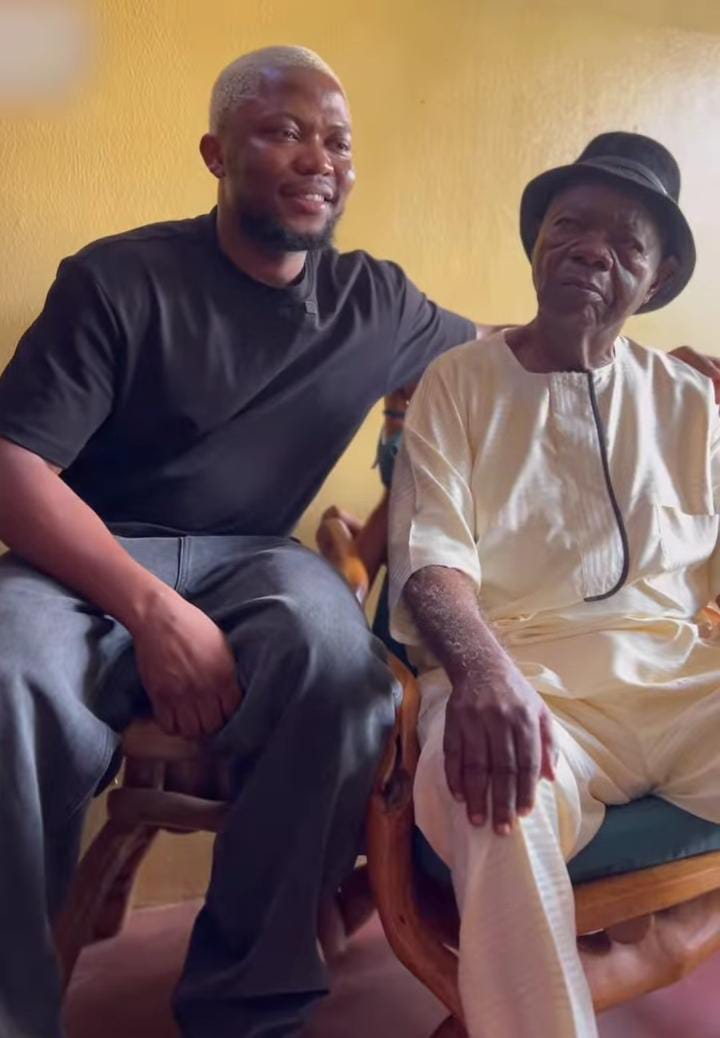
On Monday, Nigerian skit maker, Brain Jotter, paid a visit to the legendary storyteller and highlife singer Mike ‘Gentleman’ Ejeagha after his viral dance moves to Ejeagha’s iconic song “Ka Esi Le Onye Isi Oche,” gained widespread popularity.
The song, part of the Akuko Na Egwu album, Vol. 1, narrates how a clever tortoise tricked an elephant to win a princess’s hand in marriage.
Mike Ejeagha and Brain Jotter
The princess had declined numerous proposals until her father, the king, enquired as to why. She informed him that she was in search of a groom who would present her with an elephant. Next, the tortoise tricked the elephant by pretending to be the chairman of a ceremony. However, the cunning tortoise—a common figure in Igbo mythology—only succeeded in tricking his friend, which infuriated the giant.
Brain Jotter’s initial Instagram clip of the dance, shared on July 5, garnered nearly one million likes by July 21.
Similar videos on TikTok have been viewed massively, with over a thousand recreations and many Nigerians, including celebrities, joining in.Brain Jotter on Monday shared a photo with the highlife legend where he was seated beside Mike Ejeagha with his hand across his shoulder, on Instagram, expressing his joy over the meeting and hinting at a forthcoming story.
He captioned the photo, , “So happy I did this. Story coming soon.”
Meanwhile, public affairs analyst Charles Ogbu tells the story of how the musical giant is living in penury despite a subsisting court order.
“Before I start, let me make it categorically clear that the sole purpose of this piece is to provide FACTUAL information to the millions of Mike Ejeagha’s fans regarding the TRUE STATE of what the Omekagu crooner is earning from his music management company as royalties.
“In the 1960s, the legendary folklorist, songwriter and guitarist, Michael Nwachukwu Ejeagharibe popularly known as Gentleman Mike Ejeagha entered into a music management contract with Phillips West Africa Records, a music company established in 1963 which later changed its name to Phonogram Records and later to Polygram Records before its current name; Premier Records Limited.
“Then, the company was managed by White people and everything was rosy between them and the Ezeagu born songmaker. The latter was getting his royalties as at when due. Matter of fact, it was LARGELY from royalties paid him on his songs by the music company that Ejeagha built the house he is currently living in, in Abakpa, Enugu, built another house in his home town, Imezi owa, Ezeagu local government area of Enugu state, bought a coaster bus for his music group, bought a Station Wagon, repeatedly upgraded his musical equipment and trained his kids.
“‘LARGELY’ because Ejeagha had other streams of income having worked with the Nigeria Television Authority (NTA), Anambra Broadcasting Service which later became Enugu State Broadcasting Service where he was in charge of a programme known as Akuko N’egwu series (telling stories in music) before and after the Biafra war.
“The story completely changed in the 1980s when indigenous Nigerians took over management of some enterprises after the Indigenization Policy of the 1970s. Royalties almost stopped coming and in the rare times they did, the process was never transparent.
“On the 5th day of June, 2006, the company took Ejeagha to court, accusing him of trying to make a video version of one of the songs signed to them. The case lasted over 13 years which saw Ejeagha being dragged from one court to another. In late 2018 when the global Igbo language and culture advocate, Amarachi Attamah introduced me to him, Ejeagha’s only prayer to Amarachi and I was to save him from the company.
“Showing us injuries he sustained from three falls he had on the roads while attending court sittings, a frustrated Ejeagha told us he was willing to relinquish his rights and whatever royalties over those songs if that would make the company allow him live out his old age in peace.
“That same day after meeting with his family, Amarachi and I would reach out to our then governor, Ifeanyi Lawrence Ugwuanyi who gave us full access to the state ministry of justice with a view to ensuring Ejeagha didn’t stand alone. The following day, I travelled to Lagos for a meeting with the then chairman of Premier Records, Mr Eyutche who assured me they would de-escalate the court case. Sadly, he would later succumb to Covid.
“To cut the long story short, on the 11th day of April, an Enugu Federal high court presided over by Honorable Justice I.N Buba entered a consent judgement in suit No. FHC/EN/CS/96/2006 between Ejeagha and Premier Records which clearly mandated the plaintiff (Premier records) to amongst other things:
Review the royalty rate every three (3) years;
Send to Ejeagha a statement of account indicating all royalties accruing from the exploitation of his musical works;
Prepare royalty statement on quarterly basis and payment made 30 days after the end of the quarter;
Increase Mike Ejeagha’s royalties from 8% of the total earnings to 10%;
Pay the defendant (Ejeagha) 20% of earnings on all sales accruing from digital downloads/music streaming and Ring Back Tune platforms and 50% on synchronization rights;
“As I type, this is five (5) years since that consent judgment was delivered but Premier Records HAS NOT reviewed the royalties payable to Ejeagha as ordered by the court neither has the company sent any account statement indicating how much they are making from his songs and how his royalty percentage is arrived at. No transparency, no nothing.
“Even more painful is the fact that Premier Records HAS NEVER PAID EJEAGHA MORE THAN N30,000 (Thirty Thousand Naira only) on quarterly basis and even this 30,000 which no one knows how they arrive at, hardly come as at when due.
“Since 2018 till date, Ejeagha trends almost every year starting from when we renovated his Abakpa home to when the then state governor and other dignitaries visited him to when we organized a massive 91st birthday party for him and when the Limpopo crooner kcee visited till now that the popular Skit maker, Brain Jotter made one of his song a global internet sensation.
“And each of these trends is more traffics to his songs in all online and streaming platforms. A quick search reveals his songs is among the top searched. The numbers are there and as they say, numbers don’t lie. TikTok will pay handsomely for the traffic generated by Brain Jotter and millions of others using that Ejeagha’s trending “gwo gwo gwo” sound.
“Yet, what Ejeagha keep getting from his music company is LESS THAN N30,000 per a quarter which is not even up to N10,000 a month.”
For refusing to join in a murder and money ritual plot, a sinister plot pulled Ismaila Lasisi into a maze of evil that saw him spend 24 solid years in jail.
Although narrated in Yoruba language, the video is subtitled in English.
President Bola Tinubu has recently been quoted as saying that Nigeria is not the only country in the world afflicted by poverty. Mr. President made this statement when he received a delegation from the National Assembly who came to felicitate with him on the occasion of the last Eid-el-Kabir celebration. In other words, President Tinubu believes that the widespread public outcry about Nigeria’s high poverty rate is unnecessary because Nigeria is not the only country in the world affected by poverty. President Tinubu had earlier stated at the 55th International Conference, Exhibition, and Emerald Anniversary of the Chartered Institute of Personnel Management of Nigeria that poverty is not a shameful thing, albeit it is unacceptable under his administration. Because of this, President Tinubu is contemplating acquiring a new presidential jet to join his fleet of presidential jets.
However, the Labour Party has criticized Mr. President over his statement and his move to acquire a presidential jet. The Labour Party (LP) says it is disappointing that despite the excruciating poverty which Tinubu’s administration’s policies have unleashed on Nigerians, Mr. President is still underestimating Nigeria’s increasing poverty rate. The Labour Party implored the president to uphold the constitution he swore to protect, stating that under the 1999 Constitution, the security and welfare of the populace are the primary purposes of the Tinubu government. The Labour Party presidential candidate in the 2023 election, Peter Obi, has reprimanded Mr. President for contemplating purchasing a new aircraft to add to the existing presidential fleet. Mr. Obi described the move as unacceptable and a clear show of insensitivity to the suffering of the Nigerian people. “With rising insecurity, poverty, hunger, and homelessness, this decision highlights the disconnect that is apparent between the government and the people. It is unacceptable,” said Obi.
Mr. Obi also criticized the Tinubu government for completing the official residence of the vice president with $15 million at a time when the country’s dire economic situation is deepening. According to Mr. Obi, “the value of the official residence of the American vice president stands at about $7.5 million even though that country is the world’s largest economy. To elucidate further, despite dropping down to the fourth-largest economy in Africa, with a GDP of $252 billion and a per capita income of $1,080, with huge debt burdens and borrowing to service debts, we are spending $15 million for our Vice-President’s residence, while the USA, the world’s largest economy with a GDP of $25 trillion, about 100 times our GDP, and a per capita income of $80,000, about 80 times ours, still houses their Vice President in Number 1 Observatory Circle, a house built over 100 years ago, and whose value is less than the $15 million we are spending on our VP’s residence.”
It is obvious that President Tinubu, like his immediate predecessor in office, Mr. Muhammadu Buhari, is not in touch with the economic hardship in Nigeria. That explains why he is downplaying Nigeria’s burgeoning poverty rate and contemplating acquiring a new presidential jet. In case President Tinubu does not know, it is no longer news that Nigeria has overtaken India as the poverty capital of the world. What is perhaps news today is that Nigeria’s frightening poverty statistics, rather than diminishing, are increasing in large proportions day by day across the different states of the federation. The previous survey carried out by the National Bureau of Statistics (NBS) had acknowledged Nigeria as the poverty capital of the world with about 87 million “extremely poor people.” But in November 2022, the Multidimensional Poverty Index (MPI) survey carried out by the same National Bureau of Statistics revealed that no fewer than 133 million Nigerians, representing 63 percent of the population, were currently living in multidimensional abject poverty.
A breakdown of the poverty ratios in different geopolitical regions of Nigeria reveals that 65% of the Nigerian poor (86 million people) live in the North, while 35% (nearly 47 million) live in the South. Multidimensional poverty is higher in rural areas, where 72% of people are poor, compared to 42% of people in urban areas. Regarding the proportion and intensity of poverty, the poorest states in Nigeria are Sokoto, Bayelsa, Jigawa, Kebbi, Gombe, and Yobe. Sokoto State accounts for 91 percent of the multidimensional poverty in Nigeria, while Ondo State accounts for only 27 percent.
It is disheartening that while the citizens of Nigeria, who should ideally be the bedrock of a flourishing society, are finding themselves navigating a landscape marred by adversity amid the reckless expenditure of the Tinubu government, President Tinubu is contemplating increasing the fleet of his presidential jets. Those who argue that Tinubu inherited a worse economy from Buhari forget that government is a continuum. It is the same APC still in power. Even if Tinubu inherited an economic liability from Buhari, it cannot be cured with reckless expenditure. The pervasive and prolonged hardships that the people endure not only paint a bleak picture of a nation grappling with numerous challenges but also depict the failed hopes and dreams of the people. At the moment, the wasteful spending of the Tinubu government erodes public trust in the government. The citizens have become cynical about the government’s ability to address their needs and provide essential public services such as healthcare, education, and infrastructure development. This is sad.
In fairness to President Tinubu, he never promised to fix Nigeria upon coming to power. He merely stated that it was his turn to assume the presidency and follow in Buhari’s footsteps. Like Buhari, President Tinubu is ruling Nigeria as if it were his personal fiefdom. Instead of appointing his ministers to reflect the federal character of Nigeria and promote national unity, as stipulated in section 14(3) of the 1999 Constitution, President Tinubu prefers to surround himself with the same wheeler-dealers with whom he executed many shady deals during his stint as Lagos State Governor. Like Buhari, Tinubu is not subject to the checks and balances of the National Assembly. Why? Because the current National Assembly is also a mere rubber-stamp assembly. It cannot refuse Tinubu anything. For example, Senate President Godswill Akpabio (off the mic) is Tinubu’s man. Akpabio cannot refuse President Tinubu any deal. Like Buhari’s daughter, Tinubu’s son, Seyi Tinubu, flies the presidential jet. In their first 100 days in office, President Tinubu and Vice-President Senator Shettima have been indulging in an overspending spree. For example, the Federal Government spent a gargantuan sum of $507,000 on hotel accommodation for President Tinubu at the 78th session of the United Nations General Assembly. The irony of it all is that the same Federal Government, which cannot pay Nigerian workers a livable minimum wage, has spent a gargantuan N90 billion sponsoring the Hajj pilgrimage. I tire.
Amidst scarcity and economic hardships in the country, the Federal Government has purchased 360 exotic cars, each costing about N160 million, for the 360 members of the House of Representatives. You may recall that in August 2023, it was reported that the Buhari government was spending a huge sum of N16 billion to purchase exotic cars for Buhari’s 48-member cabinet, the largest cabinet in Nigeria since 1984. It is preposterous that amid the economic hardship in Nigeria, President Buhari retained a bloated cabinet, a bloated number of Special Advisers, and bloated special aides, among other things.
Like the Buhari government, the Tinubu government is also overspending and overborrowing money from abroad with little or no thought on how to repay the accumulating debts. Similar to Buhari, President Tinubu is also giving out subtle bribes, otherwise called palliatives, to the people in a bid to silence them. The Tinubu government plans to spend a whopping N3.27 trillion on palliatives alone. Like the failed Buhari palliative policy, the Tinubu palliative policy is already a failure. The policy is a drain, dishing out free money and bags of rice and beans to APC stalwarts and election riggers.
Meanwhile, prices of goods and articles in the Nigerian market are prohibitive. For example, ordinary shoe polish now sells for between N1,500 to N2,500. The most tragic is the simmering soaring prices of foodstuffs in Nigerian markets at the moment. When was the last time you went to the market to buy foodstuffs such as garri, rice, tomatoes, tubers of yam, egusi, pepper, eggs, and so forth? A mudu of yellow garri sells for more than N280, while a bag of yellow garri goes for N22,000. A mudu of beans now sells for N1,300. The price of sachet water, popularly known as pure water, is now N300 per bag. Meat is unaffordable. Ditto for fish. A long loaf of bread sells for N1,200. The smallest Agege bread sells for N35. Primary health delivery is in disarray. Essential drugs and medications are now so scarce and exorbitant. A bag of cement costs no less than N10,000. Some hospitals have shut down as most medical doctors continuously flee the country in search of a livable medical practice abroad. A bag of rice now sells for N88,000.
The logical question in light of the above is: why should Nigeria be entrapped in circles of endemic poverty despite her abundant natural and human resources? There is no doubt that failed leadership is the bane of economic development and growth in Nigeria. Therefore, to mitigate the consequences of the humongous wasteful expenditure, it is essential for the Tinubu government to adopt responsible fiscal policies, ensure transparency and accountability in financial management, and prioritize investments that contribute to sustainable economic development and the improvement of the well-being of the people. A nation’s greatness is measured not only by its economic and political standing but also by the well-being and contentment of its people.
The paradox is that, having finished squandering the national treasury in wasteful expenditure, the government is now desperately trying to borrow more money. Whereas if all the money squandered in reckless expenditure had been saved, they would have been enough more to pay workers a livable minimum wage and fix ailing Nigeria. Only prudent financial management contribute to the overall well-being and contentment of the people of Nigeria. Nothing else. During his tenure, Mr. Buhari had promised that his administration would “lift 100 million Nigerians out of poverty” but ended up putting more than 100 million Nigerians into excruciating poverty. Therefore, in the coming months, the Tinubu government is urged to implement and adhere to fiscal responsibility measures. It should identify and prioritize essential expenditures over non-essential ones. Anything short of this is carrying irresponsible government too far.
Hesiod the ancient Greek poet once said: “The man who does evil to another does evil to himself, and the evil counsel is most evil for him who counsels it.”
Centuries ago, American politician and writer, Benjamin Franklin (1706-1790) asked: “If men are so wicked with religion, what would they be if without it?
And so when a clergyman who should be pointing men towards the path of righteousness is accused of sexually molesting a child from age 10, people do a double take.
It was pin drop silence at an Akure Magistrates’ Family Court in Ondo state when a 14-year-old secondary school girl told the story of how she had abortions thrice for her 55-year-old school principal and clergyman, Adetunji Obatayo.
Narrating her ordeal, the minor said Obatayo began to have sexual intercourse with her since she was 10 when started living with him.
“Four years ago, my parents released me to live with a pastor due to his desire to train me.
“On my first day in his house, he forcefully had sexual intercourse with me and told me not to tell anyone about it.
“He had impregnated me thrice and he gave me N5,000 to buy some contraceptive drugs to abort the pregnancy after many preventive drugs.
”But during the third pregnancy, he refused to give me money for the drug, and I stole his money to buy the pills.
”Pastor later accused me of stealing his money for my boyfriend which led to the arrest of a boy in our school and I informed my parents about his ordeal.”
The accused person has been remanded to prison custody.
In 2020, the victim’s parents handed her over to Obatayo who doubles as Principal of the school she attends. He had assured her parents that he would help train her in school.
He was arraigned before an Akure Magistrates’ Family Court on three counts charge of defilement, unlawfully prescribing drugs to procure abortion thereby killing an unborn child.
His pleas, were however, not taken.
The offences, according to the charge, contravene Sections 218, 230 and 328 of the Criminal Laws of Ondo State, 2006.
Presiding Magistrate, B.A. Alphonso, ordered the defendant to be remanded to the Olokuta Correctional Centre and directed the case file sent to the Directorate of Public Prosecutions (DPP) for advice.
The trial Magistrate, Alphonso, thereafter, ordered the victim taken in for rehabilitation and adjourned the case to August 29, 2024 for mentioning.
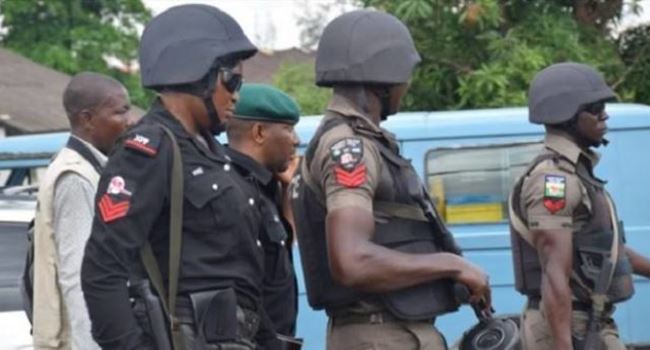
Not a few Lagosians stood in shock as a Mobile Police officer attacked an e-hailing driver at Wempco Road in the Ogba area of Lagos State on Monday.
PUNCH Metro reports that the driver while in transit along the area slowed down on getting to a Zebra crossing for a pedestrian who made use of it.
The police officer who also crossed the road at the point however hit the car’s bonnet, accusing the driver of attempting to hit him.
Reacting, the driver asked why he wanted to damage his car.
A resident who witnessed what transpired, Johnson Sule, told our correspondent that the question irked the cop who forcefully opened the car door, dragged the driver out and started throwing punches at him.
He said, “The driver waited for the pedestrians to take the Zebra crossing, but the Mopol just rushed and accused him of trying to hit him. That was how it all started. He dragged him out of his car and started to beat him up.
“It got to a point that the driver could no longer bear the assault again and while trying to resist him, he injured the policeman on his arm and he started to bleed.”
The encounter was said to have attracted other Mobile Police officers who stopped by and supported their colleague.
The driver was said to have been arrested in the process and dragged to the station.
Another E-hailing driver who gave his name only as Abayomi, who was also privy to the incident, told our correspondent that it took the intervention of the rider who offered to pay for the treatment of the injured police officer before the driver was released.
He said, “The driver only tried to defend himself while the Mopol officer punched him. The officer even almost hit the driver’s head on the culvert and he intentionally did that to make him unconscious. He could have died as a result of that. Other officers who intervened were less concerned about how the altercation started. They only supported their colleague and accused him of fighting with a police officer in uniform before they took him to the station.
“It was the rider who had tried to settle the matter that had to pay for the treatment of the police before the driver was released.”
A former Chairman of the Nigerian Electricity Regulatory Commission (NERC) and Associate Professor of Law, Dr Sam Amadi, has called for an overhaul of Nigeria’s legal education particularly in light of the recent Bar elections where Mazi Afam Osigwe emerged as President.
Speaking on Arise TV, Sam Amadi highlighted the decline in the Nigerian Bar Association’s (NBA) relevance and prestige since the days of military rule. He stated, “Some would say it’s still relevant and strong. Lawyers, anywhere in the world, even in a banana republic, are a strong group because lawyers are central to a lot of things in society. But again, one clear thing was, under the military mostly, there was clarity around what the bar stood for… they stood for the freedom of the people, they stood for democratic freedom, they stood for the rule of law. It impacted the Supreme Court”
Amadi criticised the current state of the NBA, noting, “Now, the NBA became a status institution, a government institution. In fact, in previous elections, State Governors have financed candidates to emerge. Even this election, towards the run-up to the election day, there were rumours around support. The presidency had to issue a statement debunking it, that the presidency kind of provided support for somebody.”
He further lamented, “So we are not seeing routinised, bureaucratised, and governmentalised NBA. Today, the latest report by NBS itself shows the Judiciary is the highest per capita in terms of corruption… the biggest. So that corruption now, and this fact of collapse of rule of law and perception index from Afrobarometer, about 77% of Nigerians have no confidence in the judicial system.”
Amadi urged the new executive to rethink their approach, stating, “It means that a new executive has to retool and rethink how they do NBA. I used to… I always… I speak at NBA, I was a council founding member of the Section on Public Interest and Development Law (SPIDEL). Olisah Agbakogba commissioned a study on institutional law and economics, the initial framework for economic growth. I did a paper for NBA. Since then, the NBA has produced nothing in my view, substantive enough for government to drive development.”
Amadi criticised the current form of legal education in Nigeria, arguing that it plagues the profession with mediocrity. He stated, “The law school is, in my view, useless because what, I ask, is the law school a master’s degree program? This is a professional programme, it’s neither too technical nor academic. People go to law school after first degree and spend one year cramming things and do exam first class second class but it’s not a professional school.”
He concluded by calling for a focus on economic development, “Finally, I think they should think around economic development as it is the main challenge of this country now. NBA should have a law and economics group or forum where lawyers also draft laws about economic development. Without the requisite knowledge of the principles of economic development, how can those laws work? We need to get back and say if lawyers are going to be the people drafting laws for the economy, then they should have the opportunity to understand the principles and the workings of the economy.”
Amadi suggested that the NBA could learn from the USA, where lawyers often have advanced degrees in other fields, such as economics, before pursuing a JD. “That’s why the USA has lawyers who had PhDs in economics, go to do JD. So when you see these lawyers who are writing, they didn’t just go and study contract law, they had a first degree in political science or a first degree in economics, so they are now better equipped,” he explained.
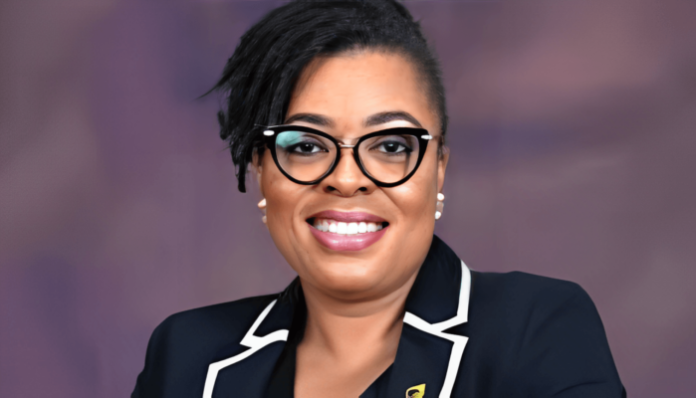
As Nigeria battles, unarguably, its worst financial crisis since independence, it is only apposite that the most pragmatic way to pull the country’s chestnuts out of the raging economic inferno, to borrow a cliché, is to put round pegs in round holes. The appointment of Ms. Omolola Oloworaran as the new Director-General of the National Pension Commission (PenCom) ticks that box.
To understand why her appointment matters, there is need to appreciate what is at stake and the centrality of the pension industry in resolving Nigeria’s extant economic quagmire even if not wholly, at least partially.
Prior to the introduction of the Contributory Pension Scheme (CPS) by President Olusegun Obasanjo in 2004, daunting problems, including inadequate and untimely budgetary provision, beset the discarded Defined Pension Scheme (DBS). With rising life expectancy and poor implementation, particularly in the private sector, it was not surprising that government’s budgetary pension deficit climbed to over N2 trillion by June 2004. That was unsustainable and at that point, the pension industry had collapsed, literally.
So, the 2004 Pension Reform Act, which established a uniform contributory, private sector managed and fully funded pension system for both the public and private sectors, was a bold fiscal policy to cure the malaises in the industry. Being mandatory, the Contributory Pension Scheme (CPS) compelled employees and employers in the public and private sectors to collectively save a minimum of 18 per cent of an employee’s monthly emolument – 10 per cent by the employer and 8 per cent by the employee – into a Retirement Savings Account (RSA), from where employees will be paid retirement benefits.
The Act established the National Pension Commission (PenCom) as the body to regulate, supervise and ensure the effective administration of pension matters in Nigeria. The result was phenomenal. National savings increased dramatically leading to a jump from a N2 trillion budgetary pension deficit two decades ago to a N19. 787 trillion Assets under Management (AuM) as at April 30, 2024. Not only that, data from PenCom indicated a record total monthly inflows of N8.18 trillion. With the proportion of total pension assets to Nigeria’s Gross Domestic Product (GDP) standing at 8.39 per cent as at March 31, 2024, the success of the CPS is staggering.
Today, PenCom is the most thriving government’s fiscal agency and it is imperative, particularly at a time like this, that the chief regulator must be someone with the axiomatic Midas touch.
This is where Ms. Oloworaran steps in. Reputed for her visionary leadership, analytical mindset and strong work ethic, she is a financial expert. An accounting graduate from the University of Ilorin, she not only holds a Master degree in Business Administration (MBA) from the Manchester Business School, she is also a member of the Chartered Institute of Securities and Investment (CISI) and a Fellow of the Association of Chartered Certified Accountants (ACCA). She recently completed the Transforming Business Using AI (TBAI) program at the Institut Européen d’Administration des Affaires (INSEAD), a non-profit graduate business school that maintains campuses in France, Singapore, and the United Arab Emirates.
With over 20 years of cognate experience in the financial services industry, she began her career at Citibank and subsequently worked at Renaissance Capital (RenCap – an investment bank), FDHL Limited (a consulting firm), and Stanbic IBTC Bank before joining First Bank of Nigeria Ltd, where she is currently the Group Head of First Shared Services (FSS).
In all these institutions, she carved a niche for herself as a strong advocate for business growth through innovation, process reengineering, and client service reimagining by instituting strategic business solution-based operations. Whether it is establishing startup operational processes or managing internal, industry, or regulatory-driven initiatives in the banking industry, she has the knack for excellence.
For instance, she is reputed for strengthening collaboration with stakeholders, playing a pivotal role in several industry and Central Bank initiatives at the various banks she worked, including the introduction of federal government’s bonds and treasury bills trading in 2006, implementing internal policy documents for margin trading in 2008, developing market guidelines and accounting entries for repo trading in 2013, deploying the improved Real-Time Gross Settlement (RTGS) SWIFT-based settlement system, the Scripless Securities Settlement System (S4) in 2013, and the introduction of the e-Naira, among other initiatives.
In doing all this, she demonstrated vision and leadership, overseeing the effective, efficient, and optimal utilisation of resources – human and capital – in responding to competitive pressures and in the process, earning for herself nomination and subsequently winning the First Bank Group CEO’s Award – 2022 and the Beyond Excellence Award in Stanbic IBTC.
With good industry experience encompassing regulatory compliance and operational risk, inflow management including pension receipts, strategic planning and policy development, client services, transaction banking operationalisation, treasury and investment banking operations, document and records management, she spearheaded initiatives that enhanced various innovation and automation projects, including Straight Through Processing (STP) initiatives, Robotic Process Automation (RPA), Client Services Transformation, records digitisation, and system/process redesign.
These skill sets will, no doubt, serve her well at PenCom. As someone who is very passionate about people and has been involved in mentorship programmes and direct interventions, nurturing exceptional talents and enabling an empowered workforce in the banking industry, Omotola, will indubitably bring her strategic thinking skill, visionary leadership, strong work ethic, integrity and ethical standards to bear on her new job.
Notwithstanding the successes already recorded by her predecessors – Muhammed Ahmad (pioneer DG), Chinelo Anohu-Amazu and Aisha Dahir-Umar – Oloworaran, who has the advantage of two decades cognate experience in Nigeria’s financial sector, has her job cut out as so much is expected of her.
The pension industry has become the bulwark of the country’s flailing economy and has the capacity of providing answers to most of Nigeria’s economic woes because pension funds contribution has significant positive effect on the Gross Domestic Product (GDP). Besides, the scheme mobilises long term savings for investment thus providing capital for infrastructure projects, business expansion, and job creation. By stimulating entrepreneurship and creating jobs, the Contributory Pension Scheme is the only recipe for economic stability and development.
Not only that, experts aver that pension funds serve as a buffer against the corrosive impact of inflation, with diversified investment portfolios outpacing inflation over the long term. At a time when headline inflation is 34.2 per cent, a 28-year high, the resilience of the CPS ensures that retirees maintain their quality of life despite economic fluctuations.
The tasks before Oloworaran, therefore, include deepening the market by pulling more people into the pension net. In October 2023, the Chartered Institute of Personnel Management disclosed that out of 73 million Nigerian workers, only 10 million have enrolled in the CPS leaving out about 63 million workers.
There is also need to review the contribution rates in accordance with the Act to ensure that retirees maintain their desired standard of living. Though the Pension Act stipulates a minimum contribution of 10 per cent by the employer and 8 per cent by the employee, presently the employers only contribute 7.5 per cent, same with employees bringing the total to 15 per cent.
The issue of non-payment of accrued rights by government is one problem that has deleterious impact on the scheme. Right now, the government is owing almost a two-year backlog of accrued rights, which means that no worker who retired within same period has been paid retirement benefits. While the issue remains a slippery slope, the incoming DG must deploy all her skills in persuading an obviously illiquid government to timeously release the accrued rights to mitigate the sufferings of retirees.
To blunt the edge of the incessant agitation by the police for exit, Oloworaran must seek, urgently, presidential approval of special gratuity for police retirees at the rate of 300 per cent of their last annual gross pay so that the balances in their Retirement Savings Accounts (RSAs) will be channeled towards their monthly pension payments. Fortunately, all stakeholders in the industry are agreed on this and the request letter has been on the presidential desk since the time of Muhammadu Buhari.
Managing the country’s huge pension assets is no mean feat. The good news is that Ms. Omolola Oloworaran has what it takes to excel. All she needs do is apply herself to the job. Fortunately, she has a solid reputation for doing just that. Nigeria’s economy and her longsuffering retirees will be better for it.
Each time the issue of cutting costs is governance is raised, most attentions go to the public officials’ salaries and allowances, including their retinue of aides and vehicles. Another popular area of focus is the Steve Orosonya Report which recommended pruning down the number of ministerial departments and agencies by scrapping or merging some of them.
No doubt, these two instances are valid, especially given the prevailing dire economic situation in Nigeria. But there is yet another critical aspect that is mostly overlooked.
That is the menace of abandoned projects. It is largely downplayed in national discourse yet it portends a great threat to the infrastructural and economic development of any nation.
Among other several causes, lack of funding, poor budgeting, litigations and corruption account for project abandonment. Similarly, its numerous effects include creating avenues for economic wastage, providing hide-outs for insecurity or criminality as well as breeding grounds for dangerous animals and then propagating poor environmental aesthetics and hygiene. Abandoned health facility projects are a threat to the lives of the citizenry. Abandoned educational projects deprive the citizens of the opportunities to develop and enhance their living standards. Then, of course, the implications of abandoned roads, housing and electricity as well as industrial developmental projects are numerous.
Put succinctly, abandoned projects constitute wasted opportunities for national development.
Hence, a responsive government does not play politics or pay lip service to this issue of great concern. A people-oriented government is dispassionately concerned about employment and wealth creation opportunities including in some cases, lives, lost due to the absence of these basic amenities. It is not certainly about politics or about who initiated the projects. It is about the intentions and inherent benefits for the economy or end-users.
This is the reason well-meaning Nigerians lauded the recent decision of the 10th Senate to set up an ad-hoc committee to investigate the reported case of 11,866 projects abandoned by the federal government since Nigeria’s independence in 1960. Not just, perhaps, since this republic, but since 1960!
The question on every lip was: why would successive governments allow such a humongous waste of public resources to grow to this alarming level?
One can only imagine the amount of money that will be saved and invested productively if only the government can deploy sufficient will to make a policy against initiating fresh projects in sectors where there are existing abandoned ones.
For instance, a forward-thinking governor should identify and seek to complete abandoned projects in their domain that are of strategic socio-economic importance. It does not matter whether they were initiated by the federal government or previous state governments. This they can do either through partnership or requesting a refund upon completion. In an extreme case, they can approach the federal government with a request to convert such abandoned projects to state use, depending on their natures.
Hence, the governor of Enugu State, Peter Mbah, recently earned widespread approvals for demonstrating a high level of strategic thinking and prudence in governance. He offered to collaborate with the Nigerian Communications Commission to see to the completion of the Digital Bridge Institute which was abandoned for over a decade along the Ibagwa-Ugwuogo-Opi-Nsukka Road in the state.
This project was proposed to become the South-East training centre for manpower and expertise in the communications industry.
It was facilitated by Senator Gilbert Nnaji. Motivated by emerging superior opportunities, he sought to make it the Southeast campus of the first African University of Information and Communication Technology. A bill on his name to that effect was ongoing before the termination of the 8th Senate.
Meanwhile, this visionary initiative received an impetus from the Muhammadu Buhari administration. The then Minister of Communication, Adebayo Shittu, had announced that “we already have the Digital Bridge Institute, which is for short-term training programmes in six locations across the country and we will transform this institute into the ICT University of Nigeria. This unique university will, by God’s grace, take off effectively in September 2017 and will be run as a Public Private Partnership with the best business and entrepreneurship models.”
He added, “I have engaged with several stakeholders at the international level – Facebook, Motorola and Ericson – and I am still talking to more stakeholders. We are encouraging them to come and adopt the respective university campuses as their own. I am happy to report that this project is receiving a global boost and endorsement. The committee set up has been working round the clock on the realisation of this objective, and has indeed submitted its final report. A vice chancellor and other senior officials will soon be appointed”. He was later to visit Enugu to ascertain the viability of the project.
Nine years down the line, nothing has happened. Again, after eight years of Ifeanyi Ugwuanyi and one year of Peter Mbah respectively as governors of Enugu State, the project remained abandoned, despite being almost completed. Instructively, the project got to its present stage of completion when Sullivan Chime was concluding his second term in office.
This informed the accolades that trailed Peter Mbah’s display of uncommon will and acumen. As a progressive-minded leader, he saw the overriding need to recover the wasted opportunities and create more, for the oncoming generations by extending a hand of fellowship for the ultimate realization of the dreams of the project.
After he met with the executive vice chairman of the Commission, Aminu Maida, the governor announced that “our discussions focused on strategic initiatives to enhance collaboration for the advancement of Enugu State and the nation at large. We deliberated on several key projects, including the completion of the Digital Industrial Park in Enugu State, which is poised to become the South-East’s innovation hub. We also discussed ensuring that the Digital Bridge Institute is finalized and commissioned, subsequently exploring plans on transitioning it to a digital skills university or institute of technology”.
It is also noteworthy that Mbah has since commenced works at the International Conference Centre which was initiated by the government of Chimaroke Nnamani and abandoned in 2007.
This is a rare mix of leadership, pragmatism and patriotism at play. It is an open challenge for the other governors to look around their states for possible avenues for collaboration with the federal government, in the overall interests of the masses. Similarly, it is a statement to the effect that legislators should be true agents of meaningful development for their constituencies and states. In their core functions of representation, law-making and oversight, their focus should be on the things that offer life-enhancing opportunities for the people.
In this regard, Senator Gilbert Nnaji stands out and deserves commendation for thinking home. He has since left public office but the products of his visionary leadership are still visible and impactful.
Apart from the DBI project and quoting from a credible source, “as Chairman of the Senate Committee on Communications, Nnaji contributed immensely towards Communication Technology development and advancement in the country. Through his legislative interventions and in furtherance of his ideology that it is through qualitative technology education that Nigeria can attain a knowledge-based economy, he sponsored a motion on the Integration of ICT in the Secondary School Curricula and also a bill for an Act to Establish the Information and Communication Technology University of Nigeria”.
Records also reveal that “added to his numerous landmark investments in human capital development, Senator Gilbert Nnaji” ensured that all the tertiary institutions in Enugu State, both private and public, including the teaching hospitals, are equipped with various kinds of ICT facilities for qualitative teaching and learning. He used 58 post-primary schools to demonstrate the efficacy of ICT laboratories in technology education.
Commenting on this initiative by Peter Mbah to complete the DBI project, Senator Nnaji said “I am not only happy but my heart is full of joy. It is with a sense of fulfilment that I received the good news. Although I am not surprised that my brother and governor, Dr. Peter Ndubuisi Mbah, is making this positive move. When you see a true leader, nobody will tell you. If you have an opportunity to listen to his dream and vision for our Enugu State, you will agree with me that he is indeed on a rescue mission. So, I am overjoyed and grateful to God that the dream behind the project is becoming a reality”.
On why the previous state governments could not look in that direction, he added that “our people say that God’s time is the best. So, there is no need to go back to history. Peter Mbah has done the needful and the people of Enugu State and Nigeria will never forget him for this singular show of wisdom and foresight. That is how governance should be. Am sure that other legislators will now be encouraged to bring more developments home”.
Indeed, the joy of post-public service life is to sit and see how your legacies are serving the interests of the people.
So once again, as we celebrate Governor Peter Mbah for his display of visionary leadership and prudence in governance, Senator Gilbert Nnaji, with this and many other legacy accomplishments, deserves our commendation.
But this is just to wish him a happy birthday as he turns 58.
Professor of Law and ex-UN Special Rapporteur on Human Trafficking, Joy N. Ezeilo, SAN has commended Senate President Godswill Akpabio for tendering an open apology to Kogi Senator, Natasha Akpoti-Uduaghan; adding that the action demonstrates humility, understanding of leadership responsibilities
Tendering his apology during Tuesday’s plenary, Akpabio said he would never intentionally denigrate any woman. “I will not intentionally denigrate any woman and I always pray that God will uplift women. Distinguished Senator Natasha, I want to apologise to you…, he said.
The former Dean Faculty of Law, University of Nigeria Nsukka (UNN) and 2022 BBC 100 Women of Global Impact who wrote on her X (formerly Twitter) page said:
“The Senate President’s apology to Senator Natasha Akpoti Uduaghan is very welcome and demonstrates humility and understanding of leadership responsibilities. Thank you for being a responsive leader.
“Politicians and other figures in authority need to be mindful of their language and eliminate gender biases and stereotypes against women. We must stop objectifying women and using derogatory language, especially in politics and leadership.
“Unfortunately, there have been instances of mistreatment of female members of the National Assembly, as well as inappropriate questioning of appointees.
“I recall a specific incident during President Obasanjo’s time when a minister was publicly questioned about her child’s paternity during screening. Other women have also been degraded and intimidated by male colleagues. Such behaviour should be condemned, and we should advocate for respect and dignified treatment for everyone.”
The Senate President's apology to Senator Natasha Akpoti Uduaghan is very welcome and demonstrates humility and understanding of leadership responsibilities. Thank you for being a responsive leader.
Politicians and other figures in authority need to be mindful of their language…
— Prof. Joy N. Ezeilo (SAN, OON) (@NgoziEzeilo) July 24, 2024
Akpabio had told Akpoti-Uduaghan not to speak without him recognizing her to do so and went further to add that the Senate is not a “nightclub.” This was even after the Kogi Senator had apologised for speaking without him giving her the consent to do so.
Our site uses cookies. By clicking “Accept All Cookies”, you direct Law and Society Magazine to store cookies on your device and disclose information in accordance with our Cookie Statement: cookie policyACCEPTREJECT
Privacy & Cookies Policy
Privacy Overview
This website uses cookies to improve your experience while you navigate through the website. Out of these cookies, the cookies that are categorized as necessary are stored on your browser as they are essential for the working of basic functionalities of the website. We also use third-party cookies that help us analyze and understand how you use this website. These cookies will be stored in your browser only with your consent. You also have the option to opt-out of these cookies. But opting out of some of these cookies may have an effect on your browsing experience.
Necessary cookies are absolutely essential for the website to function properly. This category only includes cookies that ensures basic functionalities and security features of the website. These cookies do not store any personal information.
Any cookies that may not be particularly necessary for the website to function and is used specifically to collect user personal data via analytics, ads, other embedded contents are termed as non-necessary cookies. It is mandatory to procure user consent prior to running these cookies on your website.