Home Blog Page 539

Nigeria’s 1st Olympic medalist dies

Nojim Maiyegun Nigeria’s first medalist at the Olympics Games died on Monday, August 26, 2024.

According to information gathered from multiple sources, Maiyegun, aged 85, died of natural causes in Vienna, Austria, where he had been living for years.

Known to be visually impaired for years, he was reportedly in and out of hospital in the past six months before his death, which was confirmed by another Nigerian, Stephen Ogboh, who is an acquaintance of Pa Nojim in Austria.

Maiyegun’s death came just a few days after the 60th anniversary of his feat of winning a bronze medal in boxing on 10 August 1964 at the Olympics in Tokyo.

He shared the bronze medal with Józef Grzesiak of Poland in the Light middleweight category.

At the time, the two losers in the semifinals were traditionally awarded the bronze medal, as there was no third place bout.

It was the first time since Helsinki 1952 that Nigeria had won a medal.

He thus ended Nigeria’s 12-year winless streak at the Olympics.

It is interesting to note that Maiyegun died in an Olympics year and just weeks after the Paris Olympics.

Sportsvillagesquare.com

What drove a respected border patrol agent, to become a serial killer?

It sounded like something out of bad fiction: a cop asked to investigate murders that he himself had committed. It was 2019, and I was writing about a series of vicious killings that had taken place in the border city of Laredo a year earlier. Over a period of twelve days, two sex workers had been picked up from what were known as “the prostitute blocks” on San Bernardo Avenue, taken to remote areas northwest of the city, and shot in the head. After another potential victim made a daring escape from the killer’s white pickup truck, she led police to his house. Two more women would be shot and killed before he was apprehended. The man turned out to be a U.S. Border Patrol supervisor, Juan David Ortiz, who was part of the law enforcement team that had been assigned to hunt for the killer. This week, after more than five hours of deliberations, a jury found Ortiz guilty of capital murder; he was sentenced to life in prison without parole.

As I reported on the murders, everyone I spoke with who knew Ortiz, then 35, was flabbergasted. A former emergency medical technician for the U.S. Navy who had done a tour of duty in Iraq, Ortiz had joined the Border Patrol in 2009. One of his buddies from the Marines told me that “Doc”—that was Ortiz’s nickname—genuinely cared about the migrants crossing the border. “He wanted to use his medical skills to help migrants who had been traveling for days in the desert,” the Marine buddy said.

Texas Monthly; Ortiz: Danny Zaragoza/The Laredo Morning Times via AP; Laredo landscape: Getty

Ortiz was indeed a respected agent—dedicated and hardworking. There was only one complaint ever filed against him: a migrant accused Ortiz of stealing one of his cigarettes. But after an internal investigation, the complaint was dismissed. By 2017, Ortiz had been promoted to the position of “intelligence supervisor” at the South Texas Border Intelligence Center, in Laredo. In his spare time, he earned a master’s degree in international relations at St. Mary’s University, in San Antonio. He seemed destined for bigger and better things at the agency.

What’s more, people who knew Ortiz told me, he seemed to be such a good man. He and his wife, Daniella, were happily married. They and their two young children lived in a newly built, beige-colored stucco home. On Sundays, the family attended the First Assembly of God.

I did hear one story about Ortiz that perplexed me. One of his Marine buddies said that Ortiz would occasionally send him texts about the rigors of the job. He wrote that he felt like he was back in Iraq, going to war every day. The Marine buddy suspected Ortiz was experiencing long-repressed PTSD. He suggested Ortiz get some help. And Ortiz did, at least for a while, go to Laredo’s VA clinic, where he was prescribed medication.

Still, none of his coworkers sensed Ortiz had any sort of dark side. No one had ever heard him say anything about a hatred of sex workers. In fact, according to the Webb County district attorney, Isidro “Chilo” Alaniz, the lead prosecutor at Ortiz’s trial, just before the killings began in 2018, Ortiz was told he was being considered for another promotion at the South Texas Border Intelligence Center.

So why did such a seemingly decent, successful man suddenly begin killing women who worked as prostitutes? I was hoping that his trial, which began on December 1, would provide an answer.

Alaniz had the jury watch a video of Ortiz being interrogated for nearly ten hours by a Texas Ranger and a captain with the Webb County sheriff’s department. (It was the first time the interrogation had been made public.) For a few hours, Ortiz denied everything. Finally, in a matter-of-fact voice, he acknowledged he had done the killings. He said that when he drove along San Bernardo Avenue, “the monster came out” and urged him to “clean up” the avenue by getting rid of the prostitutes, whom he called “trash” and “so dirty.”

But Ortiz also openly acknowledged that he had been a customer of most of the women he killed. According to one woman who testified at the trial, Ortiz was a regular customer. She liked him. He was “nice, smart, funny, a normal guy.” He would give her money to buy narcotics, drive her to a drug house, and then have sex with her in his pickup on the side of a road, or at a park, or even at his home when his wife and children were out of town.

It didn’t make sense. On one hand, he enjoyed the company of these women. Then he wanted to kill them?

During his interrogation, Ortiz said that he did indeed suffer from PTSD from his deployment in Iraq and that he did take prescription medication for depression and anxiety. Sometimes, he said, when he downed the concoction of medications with alcohol, he would black out completely. It was during those blackouts, he seemed to be implying, that he unknowingly did the killings.

But district attorney Alaniz said Ortiz knew exactly what he was doing. He not only plotted out the killings, Alaniz claimed, he did his best to hide his behavior from his fellow investigators who were trying to hunt down the killer. At one point, Alaniz told me, one of the investigators called in a request to the South Texas Border Intelligence Center, asking for help in finding a veteran sex worker named Claudine Luera, who occasionally worked San Bernardo Avenue and who had told others that she had an idea about who was behind the killings. The next day, Luera was found murdered.

Alaniz asked the jury: Did Ortiz, who was on duty that day, hear about the call asking about Luera? Did he hunt her down and kill her before she got a chance to talk to the other investigators and perhaps identify Ortiz? “Or was it coincidence she died that day?” said Alaniz. “I don’t think it was.”

Following the verdict, family members of the victims were allowed to take the witness stand and speak to Ortiz. They told him that he was the personification of evil. Ortiz kept his head down, and when the trial was concluded, he was escorted out of the courtroom by bailiffs.

Alaniz told me that he thinks Ortiz’s murder spree will always remain a mystery. “There are times when you find out why someone committed a crime, and there are times when you don’t,” he said. “All I know is that I’m thankful Ortiz was caught. He could have gone a long time killing women and hiding the evidence that implicated him. He was a brutal, relentless killer, and he wasn’t going to let anyone stop him.”

Culled from TexasMonthly

Tinubu: Overfed father of starving children

The unfailingly abiding emotional investment I have in the wellbeing of common people springs forth from my experiential and mediated identification with the twinge of hunger and misery that poverty breeds.

As people who read my columns know, my father, who died on December 31, 2016, was an Arabic/Islamic Studies teacher at a government-owned primary school for almost  four decades. His salary was modest and often not guaranteed both during military regimes and civilian administrations. So, my siblings and I grew up in relative deprivation.

But there were choices he made as a father that earned him our unalloyed filial respect, loyalty, and love in spite of our lack. He never ever ate outside for any reason. Even when he was invited to preside over naming or wedding ceremonies, as Malams of his stature often were, he didn’t eat the food he was offered at the venues of the ceremonies. He would always bring it home to us.

When his colleagues would ask him why he didn’t eat outside, he would tell them that he couldn’t bear to luxuriate in outside culinary treats when the children for whom he lived stayed hungry at home or ate inferior food. He thought it was unjustifiably selfish.

He also never had more meat on his plate than we had when we had lunch or dinner. Each time our stepmother gave him more pieces of meat than she gave us children, like clockwork, he would consistently share the extra pieces with us and would watch us like a protective mother hen as we ate.

If he didn’t have enough money to buy new clothes for us, he never bought for himself. In fact, he would often buy clothes for us at the expense of donning threadbare clothes. His fellow Malams were often better dressed than he—because of us.

And he always ensured that, no matter the circumstance, our school fees were paid—even if we couldn’t afford to buy all required textbooks.

We didn’t need to be told that he loved us with the entire fiber of his being. We could feel, even touch, his pure, total affection.

So, on days we had no food, or had food but without meat, and on festive occasions when we didn’t have new clothes like our agemates did, we were never resentful. We knew we would have anything if he could afford it. And even when he disciplined us severely—and he was a strict, stick-wielding, no-nonsense disciplinarian—for our youthful transgressions and indiscretions, we forgave him easily. As young as we were, he made us understand the concept of tough love without articulating it.

That’s why I miss my father sorely every single day, and why he continues to be my most important role model.

There is a parallel between being the father—or mother—of children and being the president of a country. Just as selfless, responsible parenting automatically inspires filial respect and love, compassionate, responsible governance engenders patriotism and makes possible national self-sacrifice from citizens.

The more I read stories of President Bola Ahmed Tinubu’s profligate expenditures and vain acquisitions amid the once-in-a-generation cost-of-living crisis that ordinary Nigerians are going through as a direct consequence of his economic policies, the more I think of my late father.

If my father had splurged on himself while his children starved, would we have been as emotionally attached to him as we were—and still are posthumously? Would he have been able to persuade us that we didn’t have the fine things of life because he lacked the means to buy them for us?

Nigeria has one of the world’s highest poverty rates. Most Nigerians now live in way worse poverty than I lived in when I was growing up. Yet Tinubu’s economic reforms consist basically in denuding citizens of some of the subsidies we had taken for granted—relatively cheap petrol (which leads to affordable transportation and food costs), subsidized education (which allows the son of a primary school teacher like me to go to university), etc.

The justification for these “reforms” is that Nigeria is too poor to be able to sustain programs that help the poor to survive and thrive. So, sacrifice is required to rejig the economy. Money saved from the (temporary) withdrawal of the state from the lives of the people will be invested to ensure a greater, brighter, more prosperous tomorrow. Untrue, but fair enough.

But why is the sacrifice a one-way traffic? At the time that everyday folks have been told to contend with unsustainably extortionate petrol price and electricity prices, which have had a domino effect on all aspects of life, President Tinubu bought for himself a new presidential jet worth $150 million, which is the equivalent of more than N150 billion!

This is aside from the fact that the sum of N12.7 billion has been allocated in the 2023 supplementary budget for the maintenance of the presidential air fleet. A country too poor to provide much-needed subsidies for its poor shouldn’t have a president who flies in an expensive plane or an air fleet that guzzles that much money to maintain.

The UK is a much wealthier country than Nigeria, which gives its citizens the sorts of subsidies that Nigerians have been blackmailed into accepting that they are unworthy of, but the UK Prime Minister had no dedicated aircraft until 2016 when a plane was purchased for the Prime Minister (and “other ministers and senior members of the royal family when they travel on official engagements”) at the cost of $15 million.

UK government officials, including the Prime Minister, used to charter commercial jets for official travels. Until 2016, the “United Kingdom was, in fact, the only one among the Group of Seven industrialized countries without a dedicated government VIP jet,” according to the Points Guy website.

Recall that Tinubu caused a well-deserved national stir when he ordered the purchase of a presidential yacht worth N5 billion sometime in 2023. It also came to light that he bought for himself a bulletproof Escalade SUV worth N1.5 billion, among other examples of indefensible epicurean lavishness.

In response to my last week’s column, a government apologist (who knows if he is a government appointee?) pointed out to me that, “The price of petroleum [in Nigeria] was the second lowest in the world (in dollar terms) by the time the subsidy was (partially) removed.”

He said this as an indictment. He is miffed that Nigeria had the second lowest petrol price in the world. I doubt this is even true, but even if it were true, what’s wrong with that? It’s like a wealthy but stingy father who splurges on himself telling his starving children that they don’t deserve the crumbs he throws their way because there are poorer neighbors with way hungrier children than they.

So, the rich but penny-pinching father stops the crumbs to the children but continues to luxuriate in conspicuous opulence while telling his children to learn to sacrifice for a greater tomorrow. That’s not a father worth respecting or obeying.

A president who indulges in the kind of primitive acquisitiveness and conspicuous consumption that are becoming the trademark of President Tinubu at the expense of subjecting the broad masses of the people to the most extreme deprivation that Nigeria has witnessed in living memory has no moral right to expect patriotism or willing sacrifice.

If President Tinubu and members of this government are serious about “sacrificing,” in light of the fact that Nigeria is “broke,” they should first give up their own “subsidies.” There is neither honor nor dignity in being the overfed father of starving children.

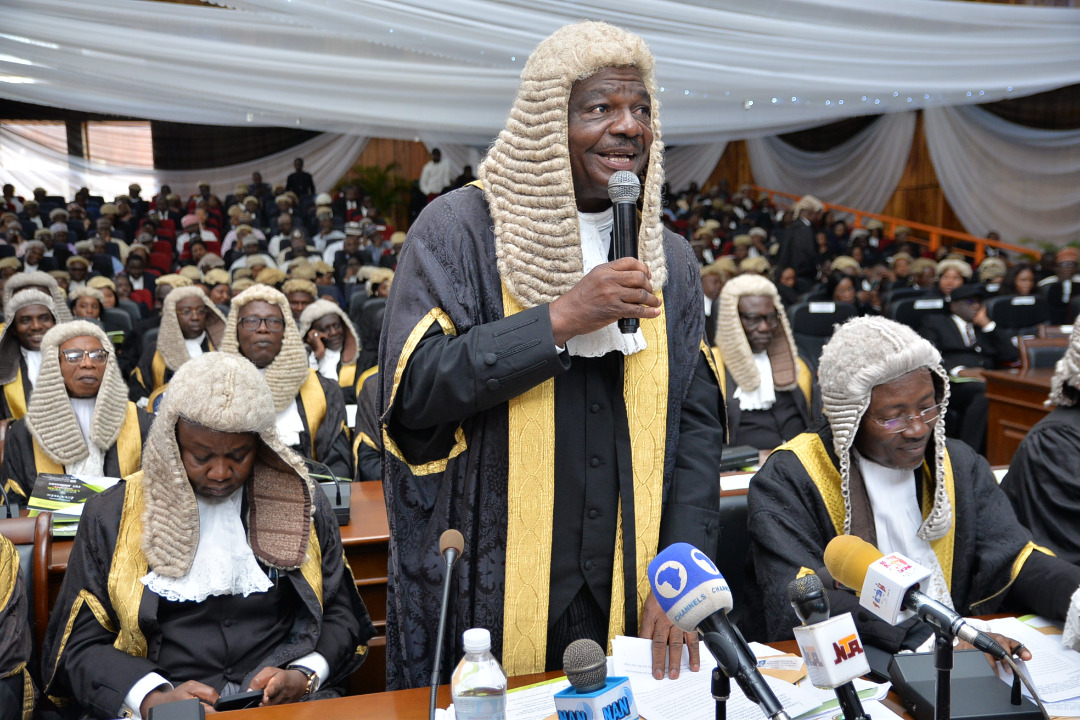
The Supreme Court of Nigeria as a Court of Law and Policy: A-G Federation vs. A-G Abia State & Ors. (A.K.A Local Government Autonomy Case) Revisited by Dr. Alex Aigbe Izinyon, SAN, PH.D, OFR

On 11th July, 2024, the Supreme Court of Nigeria delivered a landmark Judgment relating to what is now commonly referred to as the Local Government Autonomy suit.  Indeed the Supreme Court in this epocal and jurisprudentially laden judgment made far reaching pronouncements on many issues relating to the Federation, the States and Local Government Area Councils in relation to accessibility of funds statutorily provided for the Local Government Areas.  The joint account for the State and the Local Government Areas and the economic conundrum that have befallen the disbursement since 1999 was another thrust of the suit.  This is the case of A-G FEDERATION  VS. A-G ABIA STATE & 35 ORS (UNREPORTED) SC/CV/343/2024 DELIVERED ON 11TH JULY, 2024.

As expected the decision attracted several accolades from  laymen, jurists, scholars, legal pundits and legal practitioners.  However, as expected also there is the other side of the divide who differ entirely. Their contention primarily, is that it amounted to judicial legislation and making pronouncement against the principle of Federalism.  Even politicians also had their day and say.

_____________________

Dr. Alex A. Izinyon, SAN, Ph.D, OFR is a Senior Advocate of Nigeria and practicing in Abuja.

This is quite understandable and permissible in jurisprudence as it allow for various schools of thoughts for and against.  Afterall, these are the thesis and the antithesis which produce the synthesis in any society which crystalize into new proposition.   Apologies to the German Philosopher Friedrich Hegel’s dialectics of a thesis that leads to its reality, an antithesis that contradicts the tension between the two and is resolved by a synthesis.   Thus in common parlance there cannot be joy without sadness, laughter without cries, bad without good etc.  It would be a miserable world and monotonous, if it is just one way traffic – positive without negative following the Hegelian construct.  Therefore there must be argument for and against.   It is in this light, that the beauty of those in support and against this suit can be appreciated. This is the beauty of democracy in a balanced society.

However, this write up has taken up on another dimension, the synthesis, to wit: the perspective of the Supreme Court as a court of law and policy in the course of balancing the socio-economic and political issues, in reaching the final decision in the interest of justice.

The Supreme Court of Nigeria indubitably and constitutionally remains the final court of the land.  They are final in all ramifications of finality in any dispute that are brought before it. This is because there is no other Appeals after their Judgment, except to God Almighty, where no mortal can file processes and argue same and return to us mortals, alive.

This brings to mind the words of the famous Jurist and legal icon Hon. Justice Oputa, JSC of blessed memory, quoting the American jurist Hon. Justice Robert Jackson in ADEGOKE MOTORS LTD V. ADESANYA & ANOR (1989) 3 NWLR (PT.109) 250 AT 274, PARA G  on the finality of the Supreme Court’s Judgment where he puts it pungently thus:   

“We are final not because we are infallible; rather we are infallible because we are final.”

The Supreme Court of Nigeria as a court of law and policy, over time even though final, have taken into consideration social, economic and political factors or called it the reality of time in arriving at certain decisions as a policy court.  These are decisions that have a larger touch on the society as a whole, like the Nigerian citizens as a whole.

The Supreme Court of Nigeria over the years had given laudable Judgments as a policy court.  These can be located in books and articles which are not the task of this space.  I shall however pick a few to drive home this issue – the Supreme Court as a policy Court.

We are grateful to providence that since 1999 the boat of democracy is still on course at the high sea despite its short comings.  However, among the three tiers of Government, the Federal, the State Governments and the Local Government Are, it seems only the Federal and the State Governments are visible so to speak in many respects.  The Constitution makes provision for 774 Local Government Areas under the Constitution of the Federal Republic of Nigeria, 1999 (as amended) in the First Schedule and they are expected to be autonomous.  It is no longer news that apart from the few State Governors who had kept to this autonomous nature of the Local Government, others have swallowed them up as part of their departments and in most cases dissolved the democratically elected Local Government Area Councils and appointed Caretaker Committees.  Are we not as Nigerians eyewitnesses to these happenings in the last 25 years of democracy?    No soothsayer or Prof. Peller of blessed memory is needed, to tell us so.

It was only during the military regime that Local Government Area Councils were visible by reason of developments.  From 1999, these Local Government Councils after dissolution by the Governors, are replaced by their lackeys and surrogates to carry out their whimps and caprices.  We cannot pretend about that.  Have we forgotten despite the Supreme Court’s pronouncements on the illegality of such practices – that the Governor of a State cannot dissolve a democratically elected Local Government Council and appoint Caretaker Chairman when the tenure of the office holder as Chairman has not expired – their song and beat continued non-stop? 

Have we forgotten so soon that apart from some few States, no election has been held in many of the Local Government Areas, but run by Caretaker Committees in Nigeria for over 10 years.  Indeed have we forgotten the case of A-G LAGOS STATE VS A-G FEDERATION  (2004) 18 NWLR (PT. 904) 1 where despite the clear provision of Schedule 1 of the Constitution of the Federal Republic of Nigeria, 1999 (as amended) which listed out 20 Local Government Areas for Lagos State, the then Governor of Lagos State created additional Local Government Areas which prompted the then President to withhold the entire Lagos State allocation, which included the Constitutionally 20 Local Government Councils and the additional created Area Councils?  The Supreme Court in that case on ground of policy as a policy Court held that the President had no power to withhold the State allocation or suspend it and that the State was entitled to the said allocation to be so released but tied to the 20 Local Government Councils created by the Constitution and not the additional Local Government Areas created.  The decision was unanimously on this issue. 

The court from 1999 has never kept quiet on this.  Under the 1979 Constitution, one of such reported cases to be first delivered by a State High Court was the case of SENATOR VICTOR AKAN & ANOR V. A.G CROSS RIVER & 7 ORS. (1982) 3 NCLR 881 where Esin J. held that a Governor has no power to appoint any person or body of persons into a Local Government Council where a law by the State House of Assembly provides for Local Government Councils that are democratically elected.

Indeed under the Constitution of the Federal Republic of Nigeria, 1999 the courts have never hidden their disdain for the unconstitutional acts of the State Governors dissolving democratically elected Local Government Chairmen and appointing Caretaker Committees in their stead.  The cases are numerous. 

Let us pick some of them to drive home this point.  One of such cases is EZE & ORS. VS. GOVERNOR OF ABIA STATE (2014) 14 NWLR (PT. 1426) 193.  Recall in that case, the Plaintiffs were elected democratically as Chairmen and Counselors for their respective Local Government Areas for a period of three (3) years.  However in June, 2006, the Governor dissolved the Local Government Councils and appointed Caretaker Committees.  The Plaintiffs sued and Judgment was given by the High Court on the 10th October, 2007 in their favour.  The trial court substantially granted their prayers but refused to return them to finish their tenure as their remaining tenure had elapsed during the pendency of the suit, but only entitled to be paid their salaries and allowances. They were not satisfied insisting the trial court should have declared that they finish the remaining part of their tenure.  They therefore appealed to the Court of Appeal which said Court allowed the appeal, granted all their reliefs but refused relief 8 relating to their reinstatement.  Still dissatisfied, they appealed to the Supreme Court.   Judgment was delivered on 11th July, 2014 (about 8 years of litigation).  The Supreme Court allowed the appeal, declared that the dissolution was unconstitutional, illegal and void.  In one of his pronouncements, Hon. Justice Akaahs, JSC, painted the ugly scenario thus at page 220, Paras. C – H:

“The frequent dissolution of Local Government and appointment of Caretaker Committee by State Governor in the country is not only illegal but highly undemocratic as section 7(1) of the Constitution of the Federal Republic of Nigerian guarantees the existence of democratically elected Local Government Councils.” (Emphasis mine)   

For lack of better expression, here are some of the excerpts of the Judgment.  At Page 214, Paras. E – F:

On a careful reading of the above it becomes clear that it is the duty of the Governor to ensure that the system of Local Government continues unhindered. Dissolving Local Government councils and replacing them with caretaker committee amounts to the Governor acting on his whims and fancies, unknown to our laws, clearly illegal. It is the duty of the Governor to ensure their existence rather than being responsible for destroying them”

At page 215 – 216, Paras. G-A:

“All courts in the land are courts of law and equity. Elected persons for a fixed term of years can only be removed from office if found to be in breach of the rules governing the office or for infamous conduct. If such a person is removed from office in a manner the court finds to be wrong, he shall be entitled to all his entitlement, to wit: salaries, allowances etc. A court of equity will not allow the executive to get away with wrongful acts rather it would call the executive to order and ensure that justice is not only done but seen to be done. Judges are expected at all times to decide according to the justice of the case and what is right, and always lean towards equity instead of strict law.”

This was justice according to law and policy and the Supreme Court acted as a policy Court in this regard.  Imagine after 8 years, when other set of Local Government Area Council Chairmen and Councilors would have been elected and tenures running, it would be a setback to sack those democratically elected to vacate their seats, without being paid their salaries, allowances, etc for the 23 months which were the remainder of their tenure of office but for the illegal dissolution. 

The Governors never took heed to these pronouncements despite their respective States being manned by Attorneys General and Commissioners of Justice. 

Again on the 7th May, 2021, same issue, same Governor’s illegality and unconstitutionality in the dissolution of Local Government Area Councils came for adjudication in the case of APC  V. E.S.I.E.C (2021) 16 NWLR (PT. 1801) 1.  Excerpt from the apex Court at Page 59, Para. A, per Hon. Justice Kekere, Ekun, JSC (as he then was) puts it pungently thus:

A Governor who occupies his office as a result of a democratic exercise has a bounden duty to preserve, in all its ramifications, the existence of democratically elected Local Government Councils. It boggles the mind that the product of a democratic exercise would seek to deny others the benefit of the same process.”

Page 62, Paras C – D it was held further thus:

In view of the powerful and authoritative pronouncements of the Court of Appeal and this court on this same point; I should think the option available to the respondents’ counsel, as officers of the courts, was to have, guided by rule 32(2)(j) & of the Rules of Professional Conduct for Legal Practitioners, 2007, tried fervently and honourably, in aid of administration of justice not be seem to promote a case which to their knowledge was false. Such display of professional courage and candour would have saved costs to all concerned, including the courts (from the trial High Court through the Court of Appeal to this court).”

Other cases decided by the Court of Appeal and the Supreme Court maintaining the said sacrosanct positions that no Governor has the Constitutional right to dissolve democratically elected Local Government Council and appoint Caretaker Committee were cited by the Supreme Court in the case under discussion.  They cited all these cases before arriving at this position.  These are the cases of AJUWON  V. GOV. OF OYO STATE (2021) LPELR 55339 (SC); GOV. OF EKITI  VS. OLUBUMO (2017) 13 NWLR (PT. 1551) 7; EZE  V. GOV. OF ABIA STATE & ANOR (2014) 14 NWLR (PT. 1426) 191, FRIDAY V. GOV. OF ONDO STATE (2022) 16 (NWLR) (PT. 1857) 585 AT 642; BARR. ENYINNE ONUEGBU & ORS.  V. A.G IMO STATE (2012) LPELR 19691 (CA).  

With all these before us, if the Hon. Attorney General of the Federation on behalf of the Federal Government decided to approach the Supreme Court, would it serve the interest of the generality of Nigerians to throw away this case because of strict legalism since the constitution provides for the said joint account and that it is only the National Assembly that can legislate to remedy if there is any wrong and therefore throw away the case?  That cannot be justice 

In all these years, where is the National Assembly after the Supreme Court decision in A-G LAGOS STATE VS. A-G FEDERATION (SUPRA) to correct by legislation or amendment that the joint account referred to are for the State and the Local Government Areas, created by Schedule 1 of the 1999 Constitution.  Despite the pronouncements of the Supreme Court on the unconstitutionality of the Governors’ sacking duly elected Local Government Chairmen and their Counselors in the cases just cited over these years, has the National Assembly risen to the challenge urgently to remedy this situation? They did not and may never. 

The Supreme Court of Nigeria, in exercise of its powers as a court of law, must also take into consideration as a policy court where there is need for the protection of the interest of generality of Nigerians, take into consideration, social, political, economic and other exigencies of the time to give justice a humane face instead of hiding under any façade of “law is law” and that “their hands are tied”.  The Supreme Court in such circumstances must untie its hands in the interest of justice as alluded earlier in those cases that had been decided by the Supreme Court particularly relating to the illegality of the sacking of democratically elected Local Government Council which decision with respect, were phyric victory.  This is because in most of those cases their tenure had long expired due to years of litigation except for the monetary compensation that may have been awarded.  In this circumstance, the essence of justice in the case has been defeated.  They never enjoyed the office they were elected into.  Therefore in the face of these lapses, when the issue of the Local Government Autonomy came before the Supreme Court, it would have been a traversy of justice to throw the baby and the bath water away on the altar of sheer legalism or judicial usurpation of legislative power or judicial restraint.

Are we saying that the Supreme Court cannot adopt one of their enumerated approaches when construing the Constitution by giving it both liberal and purposive approach in order to attain justice?  This they can, and they did so clearly in this judgment and stated so unequivocally.

The Supreme Court possesses the legal imprimatur in the prevailing circumstances, having regard to previous antecedents, social, economic and political factors, in giving purposive interpretation instead of waiting for the National Assembly to do the needful in such a time that will never come. Apologies to Lord Denning MR that such days may never come. Whether by judicial activism or usurpation, the bottom line is on ground of policy (public policy though an unruly horse but the rider can tame it), it was in the interest of grass root democracy which is rooted in the Local Government Areas of Nigeria, that the Supreme Court of Nigeria had to give flesh and life to, on this issue of joint account which have unleashed untold deprivation on the 774 Local Government Areas of the country for over two decades. 

The Supreme Court as a policy Court in this particular case went into their legal archive and decisions where they had declared that the dissolution of a democratically elected Local Government Council by a Governor of a State is unconstitutional and illegal.  It was not therefore surprising that the Supreme Court went into details to review the antecedent of what had been happening.  It interpreted the provision of Section 162(3) of the 1999 Constitution, and that it cannot mean that the State Governors would hold and disburse the funds on behalf of the Local Government Council the said money coming from the Federation account, as sub sections (6),(7) & (8) of the said Constitution stipulates that all monies belonging and due to Local Government Council from the Federation Account,  should be distributed to the Local Government Council in the State.  This view is to cure the mischief by judicial fiat as a policy court, the incurable injury that has been done to the Local Government Area Councils for two decades without the National Assembly doing the needful.

The Supreme Court eloquently re-echoed it long line of decisions on the provision of Section 7(1) of the Constitution that expressly provides for democratic elected Local Government Council and if that is the case, it should be Local Government Council that should control and manage this fund including allocation from the Federation belonging to the said Local Government Council for the wellbeing and development of the said Local Government Area.  It was on this platform the Supreme Court referred to its earlier decisions where they held that a Governor of a State cannot dissolve a democratically elected Local Government Council. 

Let it be said that the Supreme Court has always risen to the task when it involves policy as a policy court, to make decision in the interest of justice by adopting a more purposive approach in the interpretation of any provision of the law especially the Constitution.  In 1979, the Supreme Court in AWOLOWO VS. SHAGARI (1979) 6-9 SC 51 adopted a more liberal and purposive approach in statutory interpretation by adopting the pronouncement of Lord Reid in JONES V. DPP when it said.

“The construction that two-thirds of 19 States in the Federation is 12 2/3 States may be correct in the abstract but in relation to the Constitution and the Electoral Decree, it is unreal. Certainly, in relation to the Presidential Election now the subject of appeal, the Fedeco did not delimit any two-thirds State, whether in Kano or elsewhere. Fedeco used 13 States as a criteria for voting and calculated two-thirds of the total votes cast in the 13th State to ascertain whether the votes cast for the 1st respondent in the whole 13th State was up to 25% of two-thirds of the total votes cast in the whole State. This is a departure from justice in mathematics and is a serious violation of the Electoral Decree 1977 as amended. It constituted a flight from the truth and it is the truth the Court seeks in all matters in dispute. Where there are two possible meanings conveyed by the words of a statute, it is the most reasonable one that should be adopted. Where the other meaning leads to absurdity or evinces internal contradiction, that meaning should be dropped for the first as the legislature never intends to be absurd or contradictory. The word ‘each’ in the Sub-section (1)(c)(i) of Section 34A qualifies a whole State and not a fraction of a State and to interpret it otherwise is to overlook the disharmony between the word “each” and the fraction “two thirds”. Two-thirds of nineteen, to avoid any disharmony, gives thirteen.”

In 2022, when Nigerians were groaning under harsh economic hammer following the redesign of the Naira by the Central Bank of Nigeria as ordered by the Federal Government of Nigeria, the Supreme Court of Nigeria as a court of law and policy came to the rescue and made notable pronouncement having regarding to the economic situation of the hour. That is the case of ATTORNEY GENERAL OF KADUNA STATE VS. ATTORNEY GENERAL OF THE FEDERATION (2023) 12 NWLR (PT. 1899) 537.  It threw away all the legal technicalities that, according to law, would have defeated the substance of that case.  Legally speaking how can only the Governors of 10 States as Plaintiffs on behalf of 36 States and all Nigerians be suing the Attorney General of the Federation and two other States who were joined as co-Respondents?  Indeed the Supreme Court in this case held that sovereignty belongs to the people of Nigeria and as a policy court granted the Plaintiffs’ reliefs.  Those reliefs were not only for the Plaintiffs’ who were 10 States but for the generality of 36 States of the Federation and the FCT and indeed all Nigerians, which were all under the prevailing economic hardship of the notorious Naira redesign.

In other jurisdictions, the Supreme Court has made pronouncements as a policy Court.  In GEORGE BUSH VS. ALBERT GORE 531 US 2000, as a policy court it refused the strict adherence to recount of ballot manually. There is no doubt that the Supreme Court of Nigeria in delivering its Judgment in the suit at hand, has taken into account that even though the constitution provides for this joint account and its modality involving the National Assembly in view of what has been canvassed, it must do the needful in the circumstance.    After all, the cases referred to this piece where the Governors have been sacking unconstitutionally, the democratically elected Local Government Councils of the States, nothing had happened to correct these illegalities for many years by the National Assembly.  Would it have served the interest of justice to allow the perpetual bastardisation and economic iniquities against Local Government Area Councils by these Governors?  The emphatic answer is a NO.  The Supreme Court as a policy court indeed considered this issue rightly. 

What is left is for the National Assembly to proceed with the enabling legislation to give teeth to this profound decision and make other adequate safeguards by legislation to ensure proper accountability and the relevant authorities to beam their search light in case the Local Government Councils fall short of this golden opportunity.

Dr. Alex A. Izinyon, SAN, Ph.D, OFR

How Mariah Carey lost mother, sister same day

Popular American singer-songwriter, record producer, and actress, Mariah Carey, has announced the tragic passing of both her mother and sister on the same day.

The singer shared the devastating news on Monday, expressing profound sorrow over the sudden loss of her loved ones.

“My heart is broken that I’ve lost my mother this past weekend. Sadly, in a tragic turn of events, my sister lost her life on the same day,” she stated

The singer expressed gratitude for the time she recently spent with her mother, adding, “I feel blessed that I was able to spend the last week with my mom before she passed. I appreciate everyone’s love and support and respect for my privacy during this impossible time.”

As of now, the causes of death for Patricia, 87, and Alison, 63, remain undisclosed.

However, Alison’s close friend and carer, Dave Baker, revealed to The U.S. Sun that Alison had been under home hospice care in her final weeks, struggling with health issues, including problems with her internal organs.

“Beneath a tough exterior, Alison was a highly intelligent, warm, and sensitive person.

“I have known her for nine years and as her friend and, in recent months, her carer, I will miss her greatly. Farewell, Alison. May you now find peace, your tortured soul forever free from earthly pain,” ” Baker shared

The Fantasy singer’s relationship with her mother, Patricia, was known to be complex.

Patricia, a former opera singer trained at Juilliard in New York City, also worked as a vocal coach and was previously married to Alfred Roy Carey, who passed away in 2002.

The couple divorced when Mariah was just three years old.

In her 2020 memoir, The Meaning of Mariah Carey, the pop legend opened up about the complicated dynamics with her mother.

“Like many aspects of my life, my journey with my mother has been full of contradictions and competing realities .

“It’s never been only black-and-white — it’s been a whole rainbow of emotions. Our relationship is a prickly rope of pride, pain, shame, gratitude, jealousy, admiration, and disappointment. A complicated love tethers my heart to my mother’s,” Mariah wrote.

Dometv.net

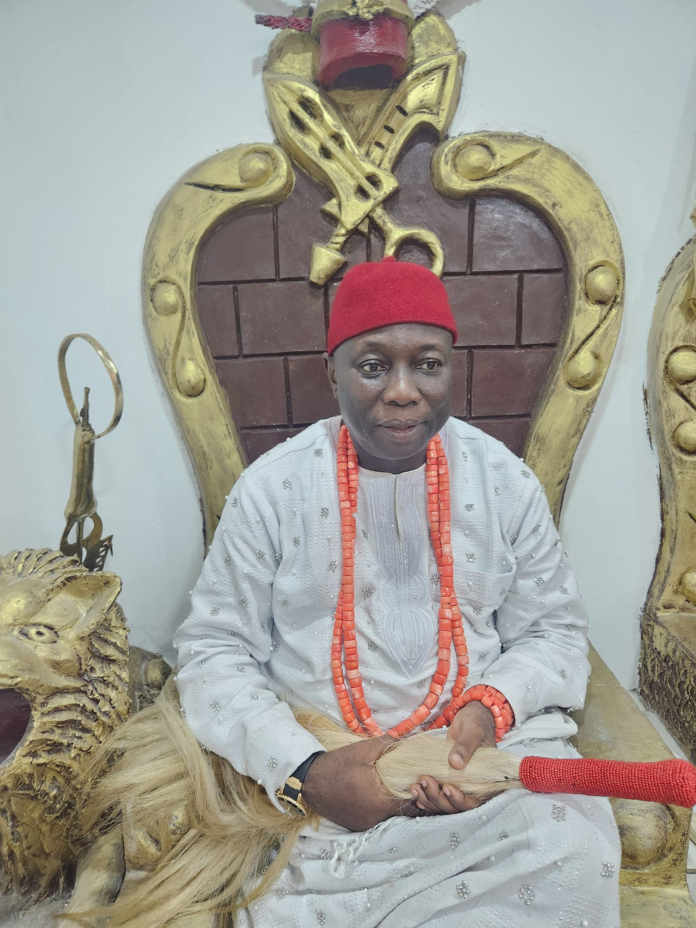
Azinge coronated the 14th Asagba of Asaba

By Austin Ndubuisi Biosah

Erudite scholar and professor of law, Obi Professor Epiphany Chigbogu Azinge , a Senior Advocate Of Nigeria SAN; a recipient of the presidential merit award of Officer Order of the Niger OON ; a former Director-General and Fellow, Nigeria Institute of Advanced Legal Studies FNIALS and President of the Commonwealth Arbitrary Tribunal sitting in London was on the 24th of August coronated the 14th Asagba of Asaba in an elaborate oath taking cum Ima Nzu ceremony that saw him visit two of Asaba sacred groves, the Opechi and Orji Ogbeafor.

The oath taking processes which were anchored by Ogbueshi Agbalanze Ikediashi of Umu Opechi and Obi Ubaka Attoh ,the Onihe of Asaba respectively was witnessed by ndi Eze, ndi Olinzele, Otu-Ihaza, Ochokolome, Okwulagwe and Umuada. It was an epochal and historical experience as 80% of umu Ahaba present at the events have never witnessed the processes of the coronation of an Asagba. With the coronation and the official salutation of ‘Nna Agu’ three times by all classes of ndi Ahaba, Obi Azinge traditionally becomes the oldest and most revered man in Asaba as Asagba and Agu na eche obodo.

He will henceforth be referred to as Asagba Professor Epiphany Chigbogu Azinge SAN OON FNIALS, the Asagba of Asaba, with the official greeting of Nna Agu !!!

It is the prayer of ndi Ahaba of all classes both home and the diaspora that the reign of Nna Agu Azinge will bring good tidings to our land, peace and development as never seen before. It is also our prayers that the Almighty God shall grant him sound health, wisdom and the grace to carry on the task of leading ani Ahaba to greater heights, in Jesus name…AMEN!!!

Nna Agu !

Nna Agu !!

Asagba Ahaba Agu ooo !!!

Viral Video: Ibadan taxi driver explains why he wore wife’s outfit to drive passengers

An Ibadan based taxi driver, Afeez Adedigba, who went viral for wearing his wife’s clothes while operating a ‘Micra’ taxi in the Oyo State capital city has revealed the reason behind his surprising choice of apparel.

Adedigba was spotted in a viral video driving while wearing his wife’s clothing.

In an interview with a media personality, Ayo Adams, on Monday, the driver explained that his clothes were soaked by the rain, so the quickest solution was to wear his wife’s dress, which was readily available.

He said, “This is not the only cloth of my wife that I have. They are about two. The first time I took the dress, it was raining heavily, and all my clothes were drenched. I had no choice but to take hers since I was still interested in working that day.

“So now, I wear the dress when it rains and put on mine when it stops. That’s why it is always in my vehicle.’

He revealed he was unfazed by passengers’ comments, adding that he was focused solely on earning money and delivering it to the vehicle’s owner.

“It has been quite an age I’ve been driving this micra. And I only seek God’s favour on the job. I moved to driving when I couldn’t raise funds to start the sales of tyres that I learnt at a tender age,” he said.

Adedigba also shared that he has one wife and four children, who motivate him to work hard to provide for their needs.

Watch the video on X.

Vanguard

#AGC2024: Defending Champions, NBA Abuja female team wins 2024 NBA Presidents Cup

The defending champions, Nigerian Bar Association (NBA) Abuja branch female team retains the NBA Presidents trophy 🏆.

They played their first match on Saturday against Lagos branch and won with a lone goal.

Their second match was against Owerri and it ended 2 nil against Owerri.

Finally , they played the Benin branch on Monday morning and won by 2 goals to clinch the trophy for the second consecutive time.

The Abuja branch female team scored a total number of 6 goals without conceding any.

Congratulations to the reigning Champions 🏆 🏅

External borrowing masquerading as domestic (bond) loan

By Louis A koko, Esq (PhD, ACA)

Recently, the Debt Management Office ( DMO), a government agency established pursuant to the Debt Management Office ( establishment) Act 2003 and the provisions of the Presidential executive order No 16 of 2023 on Foreign currency denominated financial instrument local issuance programme and related matters order, 2023 offered for subscription US$500 million, 5 year 9.75 per annum series 1 Domestic FGN US Dollar Bonds due in 2029 on behalf of the Federal Government of Nigeria.

The eligible investors are :

**Nigerian residents
**Nigerians with savings abroad.
**Nigerian Diasporans
**Qualified Institutional investors.

The coupon rate ( interest rate) is 9.75% annually, payable twice yearly and the debt redemption date at maturity is 2029.

The analysis of this so-called domestic bond revealed that the country will be paying US$4.875million as interest annually to the bond holders for a period of 5 years which translates to an aggregate of US$24.375million. At the bond redemption date in 2029, FGN would have incurred a cash outflow in dollars of approximately $525 m assuming no tax deductions.

The fact that the domestic bond would be issued in dollars, a foreign currency makes it an Eurobond, hence a type of external borrowing or creation of external( public) debt at a time when the country is currently in a debt trap. Nigeria is in debt trap because over 97% of the country’s revenue is use in debt servicing alone and only 3% is left to fund the other items in the federal government budget.

The negative impact of debt service is worst when it is denominated in foreign currency as in the recent US$500m domestic dollar bond or other forms of external borrowing because it will require the outflow of resources either in cash or other form of assets such as crude oil and gas for repayments of the debts to the creditors.

The repayment of external debt at the expense of critical sectors like education, health, power, agriculture and other physical infrastructure is partially responsible for low real sectors outputs and the poverty in the country.

The fact that Nigeria is in a vicious circle of poverty due partly to high unsustainable external debt which stood at $43.5 billion dollars in June, 2023 is a major concern for all those who truly appreciates the enormity of the debt burden of the country. Therefore, it is imperative that FGN prioritise her public expenditures to align with the budget items that are not only necessary but urgent.

It is equally important for FGN to to avoid the mismatch of debt type and its application ( use). It does not make economic sense to use external debt like this current $500m Eurobond whose maturity date is just five years to fund long-term projects like the Lagos to Calabar coastal Highway whose gestation period (10years) is twice the redemption period for the dollar denominated domestic bond. It amount to a mismatched public investment incapable of yielding positive economic outcomes that may enhance private and public investments in the country.

However, every year the FGN is expected to pay interest of about $5m dollars less tax for this (domestic) dollar denominated bond. Where will the revenue to fund the repayment come from at a time debt services takes more than 97% of our revenue? I pray Nigerians are not plunged into escalated tax burden as a wayout.

Eternal debt, in whatever mask and costume it wears, be it dollar denominated bond or concessionary loans from international financial institutions like IMF, World Bank, AfDB and the Paris club leads to outflow of resources from our country during debt repayments. Therefore, it is deleterious to the economy in terms of missed economic opportunities , especially when misapplied, hence must be discouraged. FGN of Nigeria should engineer more prudent means of financing economic programmes and projects that have immediate and direct impact on our economy and has the potential to enhance economic growth and revenues of government.

Destiny and enemies of the state

By Lasisi Olagunju

Nothing we do or say now will change Nigeria unless it turns back from its present plunge. Nothing. “No spring changes the desert. The desert remains; the spring runs dry. Not one spring, not thirty, not a thousand springs will change the desert…” That quote is from ‘Two Thousand Seasons’, a tumultuous novel by Ayi Kwei Armah. Remember he also wrote ‘The Beautyful Ones Are Not Yet Born.’

We won’t stop asking that this country be rebuilt on the foundation of its beginning. Nothing will shoo away the present birds of hunger and thirst. Not this government; not the next. You don’t turn your back on your destiny and be well.

Grandfather of Nigerian theatre, Hubert Ogunde, sang a prayer which must be the prayer point of those in power today: “If I have a good head, may I also have good legs (Bí mo l’órí ire, Elédàá jé n l’ésè ire).” Orí (head) is destiny; Esè (legs) are the tyres that propel destiny to its realisation. Right there in the mix is ìwà (character) which helps man do what Karin Barber describes as “picking his way, aided by his Orí, between a variety of forces, some benign, some hostile, some ambivalent…” If your head gives you a throne, rule well; do not let your character open the door to forces that blow off roofs. 

We become what we choose to become. I have two destiny stories to tell. They are from the earliest times’ tray of knowledge. The first is about a serially failing young man who asked questions and was told by the oracle that he wouldn’t amount to anything in life unless he became a thief. The second story is about another who was told that he wouldn’t ever be rich unless he was cruel and bloodthirsty.

The young man who must sell cruelty to be rich thought fate was not fair to him. A precondition of wickedness before wealth would sound alarming to whoever had that (mis)fortune. But this man did not have to wait long before an accident of fate created a trade for him. He became the pioneer maker of tribal marks. In the palace in Oyo, he got royal contracts to beautify princes and princesses with eyo marks. To the noble of Oyo, he slashed horizontal marks on each cheek and called it àbàjà. He went to Owu where he etched six incisions on each of the cheeks. In Ogbomoso, he gave straight and curved lines and called it kéké. He dashed down to the courtyard of the Osemawe in Ondo and, with generous thanks, inflicted one pronounced stroke below each eye. To the Ijebu, Ife and Ijesa he made the marks perpendicular and called what he offered pélé with variants of his offering dropped across other clans and towns of Yoruba land.

The man took his trade to the Tapa (Nupe) where he gashed the young there with the beauty of below-the-temple cruelty. He was called and invited to virtually all kingdoms around to come and sell the pretty pain he was hawking. They all looked at the work of his hand, pronounced it beautiful and paid him handsome sums. The ‘wicked’ grew rich and famous. His descendants today answer a praise name that valourizes his trade in brutality. Adebayo Faleti, in one seminal piece, said this man’s offspring are children of “he who stabs people and gets paid for doing so/ The one for whom it was divined that he must be brutal for him to be wealthy (Omo A-sá-mo-l’ógbé gb’owó/ Tí wón ní ìkà ni yí ó se là).”

The one who was to become a thief rejected the prophecy the way Pentecostal Christians reject bad portions. But nothing the man tried his hands on prospered until one day hunger pushed him to go dig his neighbour’s yam. At the very point of his being caught by the farm owner, his cutlass fortuitously killed a big snake coiled up by the yam heap. To the thief’s horror, the farm owner leapt out of a thicket. Among the Yoruba, death is always preferable to shame. If the ground would open its mouth and swallow the yam thief, he would kneel in eternal thankfulness to his Creator. But, there was neither a place to hide nor a wand to transport him out of the mess. This was, however, the point at which destiny took over. To the thief’s shock, the farm owner shouted for joy on seeing the big snake’s death. The farmer did not see a thief in the trespassing gentleman; what he saw was a benefactor who had delivered him from a dreadful reptile that had almost sacked him from his farm and barn. The yam farmer thought he owed the killer of his nemesis some token of appreciation. Fate pushed him to give the thief enough field and yam seeds that forever weaned the wretched of his poverty. The ‘thief’ was to become rich and famous. That is fate’s cultural explanation for the prosperity of the ‘unworthy.’

In both stories, the two gentlemen enjoyed their good fortune till the end of time because they had character (ìwà). Early this year, I told the mythical story of one poor, old prince in Ofa who owned neither calabash nor plate (kò ní’gbá, kò l’áwo) yet he became king because he had a good head. Then his enemies said “this one will not be long before he dies and another will take his place.” But the old man became king and refused to die. Because he had character in addition to his good head, he ruled well; his people enjoyed him and prayed for his reign to last forever. He reigned long and died well. Why do you think Baba Opalaba in the Mainframe master play, Saworoide, asks the long dead Alaafin Abiodun to come back? You remember that solemn request? It is because the living oba has failed.

Thomas Hardy, in his novel, ‘The Mayor of Casterbridge’, says “character is fate.” He adds that “fate and character are names for a single idea.” It was as if Hardy was born a Yoruba with their very elaborate concept of destiny. My people put destiny at the mercy of character. They say if you have good destiny, pray also to have a character that is desirable because a bad character will most certainly destroy your good head. We see in ‘The Mayor of Casterbridge’ how fate propels someone from the gutters of life to wealth and to the position of mayor; we watch as the man loses his good character and consequently declines progressively in public estimation and respect. We see how he finally loses his authority and wealth and life – all to his bad character, his awkward ways.

A person’s calling is their destiny. It is my job to write what I feel. The right to hold opinion is a fundamental one which neither state nor its operatives can alienate. I am neither an enemy of the state nor hater of those in government. One funny coward who lives abroad is sending notes, with names, across WhatsApp groups suggesting exactly that about some of us – newspaper columnists. The idler may not be the only one with that pastime. Were they sent that errand of slaves? I am not sure. They just think they are inciting power against the bard. They forget that no matter how early a child gets to the farm, he will always meet Kùkùté there. Fishers of attention from corridors of power do what they are doing to please their palate. They tie the forehead to the occiput; they sit back and laugh. They are Esu, the one whose eyes cry blood while the bereaved sheds mere tears.

We warn because we notice not just the beak of the fowl; we see the whole bird. The seed we offer our soil is of the day; we offer none that is of the night. That is a line of invocation from the Bakongo. If you want more of the words, read J. Van Wing’s ‘Bakongo Incantations and Prayers’ (1930). It tells how trauma invokes the elements, seen and unseen.

The world is sick; even the sky weeps. Anyone who tells this government that things are alright is an enemy of the state and a hater of the president. It is probably the abroad fellow’s destiny to live away from the hassles of home. But, we live here. And, I do not know how to thank or ignore the ones to whom we are victims. We gave some people chickens to rear for us; we turned and they started peeling yam and washing their soup pot. And you think we should be deaf and dumb. To their own teeth, they feed the softest of meat; for the teeth of others, they give the toughest of tendons. Eyín eléyín ni wón fi nj’eran tó l’éegun. We write so that the prowling wolf shall see our sheep and goats and cows and have its teeth on edge. Van Wing again.

Businesses are bleeding; the rich are crying. Weevils have taken the barn; weasels have overwhelmed the pen. Right on the road to the stream are wolves of thirstiness. We can join the Alleluyah chorus and feed from the gatehouse of power. But if we do and everyone keeps quiet, and this desert completes its encroachment, the hill will lose its trees and leafy glade; the valley will be shorn of its verdancy; the abroad will have no home to return to. We keep talking and warning because it is almost midnight. Nothing works – except mindless gluttony. Nothing is available – except long queues at petrol stations. In places that have sanity, electricity is called power; here, it has same value as the shit of the masquerade – very unavailable. On special nights when grace brings light, it is quickly switched off because its price is dagger to the heart of homes. So, shall we not talk in the midst of all these bad news? We get abused for putting our mouth into that which ‘friends’ of power think should concern us not. It is Fatwa they have not pronounced. We are fighting for Oja’s sake; Oja is asking who is fighting at his backyard.

Arise News founder, Nduka Obaigbena some days ago received Tinubu’s media/public relations managers in his office. They were there to seek his understanding and support. I watched them; they looked sober. Then, with acrid calmness, Obaigbena told them the truth: “People say you’re not communicating – you are communicating, you are here. But the communication you are not doing is communication by example.” Obaigbena said the way people in government live, “the way they conduct themselves, does not show that we are in trouble.” Candid words.

There is always a problem anywhere the palace feasts while the people yawn. Filthy, festy ostentation and mindless show-of-force degrade authority. Freedom curtailing, extra-legal actions shame democracy; they put a lie to all its lofty claims. They drag democracy back to be at par with where we were before May 1999. Copying what the military did that made it lose the people will post a tag of regret on our struggles that birthed this era. Perhaps, everything takes us back to the need for a restructuring of this cracked structure.

When Obaigbena said his words, I would have loved to see how his guests took the shot. The visiting ones are not the problem. They have a difficult job to do which is increasingly made more difficult by the real culprits, the cats in opulent offices. Those ones are too big to care about what image they etch in the psyche of the city. They don’t go out to seek help; they are too big to crawl out of the vault. You can’t be feasting and telling the people to fast. I am fasting for your sake, you are flaunting mid-day meals (A ngbààwè nítorí won, àwón nj’òsán). That is what this government and its big men do. They feast and fart; the people fast and faint. They say it is patriotism. The government is wise; the people are stupid.

Starving workhouse inmates of Charles Dickens’ ‘Oliver Twist’ never prayed for the housekeepers. Friends of this government in the media are daily embarrassed by its aberrant ways. One of my old university teachers wrote a warning in a Lagos newspaper some weekends ago. The professor told the government that “creating a zone of affluence in circumstances of bewitching poverty or a new breed of billionaires in a condition of appalling deprivation will produce a toxic effluence which can overwhelm the entire society.”

I hope ‘they’ listen to the advice from the prophets and tell the big boss to clean up his government. A government that won’t go with the winds will do what the eyes do. The eyes, in utter humility, lower their gaze, and because they are humble, they are allowed to see the nose. Hubris is a government speaking the words of Archibald MacLeish’s poet persona: “We have learnt the answers, all the answers. It is the question that we do not know.”

TIPS