Home Blog Page 540

Insecurity in Nigeria and need to for urgent action

By Sulaiman Aledeh

The recent wave of kidnappings and security challenges in Nigeria has once again brought to the forefront the urgent need for a comprehensive overhaul of the country’s security apparatus. The reunion of 20 medical and dental students with their families, as well as the release of corps members held captive by Boko Haram for a year, have all confirmed the severity of the security crisis facing Nigeria.

One of the most glaring issues is the apparent inability of Nigeria’s intelligence and telecommunications agencies to effectively track and intercept communications between kidnappers and their victims’ families. This failure is particularly concerning given the technological advancements available in the modern era. The Minister of Communications, Innovation and Digital Economy, Bosun Tijani, despite being touted as a tech expert, has yet to demonstrate significant progress in addressing this critical gap in our national security infrastructure.

The resignation of Ahmed Rufai Abubakar as the Director-General of the National Intelligence Agency (NIA) raises questions about the effectiveness of our foreign intelligence service. While the NIA should ideally function as Nigeria’s equivalent to the CIA, its performance has been lackluster compared to other security agencies like the Military and the DSS actively dealing with national issues.

The frequent use of the phrase “no ransom was paid” in official statements following the release of kidnap victims has become a predictable script, raising doubts about the transparency of these operations and the government’s strategies in dealing with kidnappers.

It is imperative that President Bola Tinubu takes immediate and decisive action to address these security challenges:

  1. Review and overhaul key appointments: The President should critically evaluate the performance of ministers and heads of agencies, particularly those in charge of security, intelligence, and telecommunications. Those who have failed to meet expectations should be replaced with competent individuals capable of delivering results.
  2. Empower effective leaders: Identify and support officials who have shown promise and effectiveness in their roles, providing them with the necessary resources and authority to implement robust security measures.
  3. Enhance technological capabilities: Invest in and deploy advanced tracking and surveillance technologies to support the efforts of security agencies in combating kidnapping and other criminal activities.
  4. Improve inter-agency coordination: Foster better collaboration between various security and intelligence agencies to ensure a more cohesive and effective response to security threats.
  5. Address root causes: Implement comprehensive policies to tackle the underlying socio-economic factors contributing to the rise in kidnapping and banditry.
  6. Increase accountability: Establish clear performance metrics for security agencies and government officials, with regular public reporting on progress made in combating security challenges.

The time for half-measures and empty rhetoric has long passed. President Tinubu must demonstrate strong leadership by taking bold steps to arrest the tide of kidnapping and banditry, enhance the protection of lives and property, and restore the faith of Nigerians in their government’s ability to ensure their safety and security.

The Nigerian people deserve a government that can effectively utilize its resources to protect its citizens. It is time for action, accountability, and tangible results in the fight against insecurity in Nigeria.

Sulaiman Aledeh, renowned broadcast journalist and News Anchor of Arise TV, writes from Abuja

Bandits storm Sokoto again, kidnap over I50 people

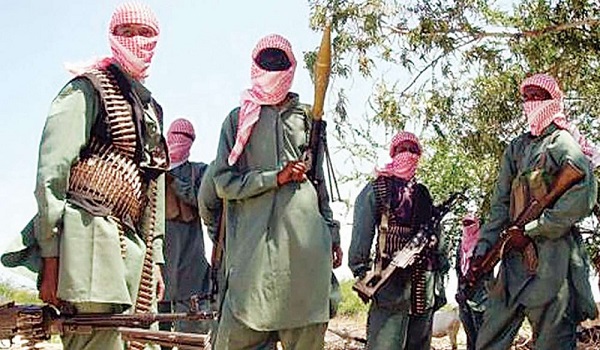
While the people of Gobir in Sokoto state were mourning the death of their Emir, Alhaji Isa Muhammad Bawa who was murdered by bandits, the hoodlums have reportedly invaded the community again and kidnapped over 150 people.

A University Don, Prof Bello Bada disclosed this in an interview with Radio France International(rfi)Hausa Service monitored in Kaduna on Sunday, alleging that the scary activities of bandits in the area was due to certain lapses from many quarters.

He said it was such lapses that made the bandits had the effrontery to even threatened to Kidnap Former President Buhari when he was in power.

According to him, ” this is not the first time a prominent monarch was attacked, but this is the first time a prominent monarch was murdered.”

Professor Bada who said the murder of the Emir of Gobir was a humiliation to all Nigerians, added that now is the time for Nigerians to have a rethink on the nefarious acts of these bandits who have continued to kill people intermittently.

” The bandits had made a similar attempt on the life of the Emir of Potiskum while he was on the way to Zaria but he narrowly escaped. The Emir of Kauran Namoda escaped death by whiskers, but members of his entourage were killed by the bandits.”

“In Zuru community, a monarch was slaughtered by these bandits, but after some few days, these heinous acts would be completely forgotten as if nothing ever happened, until the bandits strike again. “

The University Don said such acts should not be left unchecked and allowed to become a recurring decimal, alleging that ” where these bandits are coming from is well known but the appropriate action against them is not well taken. “

Meanwhile, a security analyst, Dr Yahuza Getso  has said that the security operatives who were complacent and allowed the late Emir of Gobir to be murdered by bandits after spending over 3 weeks in captivity, should be punished.

He warned that there was palpable tension in Gobir community after the gruesome murder of the Emir, as the activities of the bandits have caused deep division among the native Gobirawa, Hausa and the Fulani people in the area.

” The leaders of these bandits terrorising the Northwest region are well known, their places of origin are known, their parents and these who supply them with means of logistic are all known.”

” We all have agreed that the security operatives have the expertise to face this problem head on and bring it to an end. It appears the political leaders are not giving them the support they need to overcome this menace,” he alleged.

Vanguard

An agenda for the new Chief Justice of Nigeria

By Ernest Ojukwu, SAN; Sam Erugo, SAN; Chidi Anselm Odinkalu; & Mbasekei Martin Obono

Amid the greatest crisis of judicial authority since Nigeria’s independence in 1960, President Bola Ahmed Tinubu on 23 August 2024 swore in an Acting Chief Justice of Nigeria (CJN). For the new Chief Justice, this challenge is also an opportunity to articulate an agenda for reform that can restore public trust in the judiciary. Such an agenda must address the following:

(a) ensuring merit-based judicial appointments;

(b) addressing the problem of abuse of interim injunctions, ex-parte orders, and conflicting judgments;

(c) enhancing judicial discipline and accountability;

(d) addressing the crisis of political cases, election petitions, and judicialization of politics; and

(e.)reform of the Supreme Court.

  1. JUDICIAL APPOINTMENTS

The National Judicial Council (NJC), which oversees judicial appointments and is led by the CJN, has been severely criticism for mishandling judicial appointments. In 2020, for instance, it authorised 15 vacancies for the Federal Capital Territory High Court but nominated 34 for appointment. The NJC has also been accused of retrenching its Procedural Rules for judicial appointments, thereby undermining merit-based appointments; compromising judicial integrity; and breeding a loss of confidence in the judiciary. Against this background, it is of the utmost importance that the new CJN commits explicitly to a policy of restoring integrity and merit to judicial appointments through the introduction of transparent processes of advertisement of vacancies; nomination of candidates, interviews, short-listing, and selection.

2. CONFLICTING JUDGMENTS AND ABUSE OF INTERIM INJUNCTIONS

Rule 3 (3.5) of the Judicial Code of Conduct provides that “a Judicial Officer must avoid the abuse of the power of issuing interim injunctions, ex parte.” Although the standards governing interim injunctions are very well established in Nigeria, these are often either disregarded or abused without consequences. Equally, courts of co-ordinate jurisdiction routinely issue conflicting orders that seem almost calculated to damage the institution of the judiciary. It is suggested that:

(a) Priority should be accorded to monitoring and reporting interim or ex parte orders by trial judges. There should also be clear consequences attached to a breach of the Judicial Code of Conduct.

(b) Judicial appraisals should be both quantitative and qualitative. Accordingly, they should proactively address evidence of ethical deficits in the work or output of judges, focusing on adherence to ethical guidelines and the quality of judicial decisions.

(c) There should be clear Practice Directions on the management of jurisdictional overlaps. The structure and scope of such overlaps should be discussed at the All Nigerian Judges  Conference and the Practice Directions should be uniform across all the court systems in the country.

(d) The NJC should establish a central database or easily searchable platform for judges to share information on ongoing cases.

3. DISCIPLINE AND ACCOUNTABILITY

Preserving the dignity and integrity of the judiciary hinges on upholding discipline and accountability which is in turn essential for preserving the institutional authority of the judicial branch. If the judiciary lacks credibility, its authority suffers irredeemably. Tragically, this eventuality may already be upon us. A recent survey by the United Nations Office of Drugs and Crime (UNODC) and the National Bureau of Statistics (NBS) finds the judiciary as the recipient of the highest per capita rates of bribery, ahead of both the Nigeria Police Force and the Nigerian Customs Service. The damage that this does to the institutional credibility and authority of the judiciary is incalculable. To reverse this, it is suggested that:

(a) Disciplinary processes within the judiciary should be both prompt and decisive and dispositions should be calibrated to be proportionate to the seriousness of the misconduct found.

(b) Reports on disciplinary investigations by the NJC should routinely be transmitted to law enforcement agencies for follow-up.

(c) The CJN should initiate public consultation leading within six months to an announcement of measures designed to address the escalating patterns of judicial corruption as documented by the UNODC-NBS Corruption in Nigeria Report 2024.

4. ELECTION PETITIONS AND POLITICAL CASES

Political cases and election petitions now increasingly threaten the foundations of fairness on which the judicial system should be anchored. Of 248 judgments issued by the Supreme Court in the last judicial year, 74 or about 30% were “political cases.” At a similar occasion only two years ago, his predecessor reported that the court’s portfolio of 269 appeals disposed of included 139 civil appeals, 102 criminal appeals, and 28 “political cases”. The volume of election petitions has become an adverse charge on the credibility of the judiciary and an intolerable burden on both judges and non-political court users alike. Underlying this burden is a judiciary that has installed itself as the sole dispenser of electoral mandates, with judges routinely substituting their views for the votes of the people contrary to the considered recommendations of two presidential panels on electoral reform led respectively by former Supreme Court Justice, Bolarinwa Babalakin in 1986 and by former Chief Justice Mohammed Lawal Uwais in 2008. It is suggested that:

(a) The Chief Justice should initiate reform of the election dispute resolution system to ensure the implementation of the Babalakin Commission and Uwais Panel recommendations concerning the need for Courts to respect and not subvert the will of the people in elections.

(b) The category of “political” cases should be reviewed and court systems should be encouraged to establish Alternative Dispute Resolution (ADR) mechanisms for political disputes.

(c) Consideration should be given to utilizing retired senior judges for the administration of election dispute resolution, so that serving judges may be preserved for regular court work.

(d) Election petitions should be disposed of before inauguration. The current practice whereby candidates are sworn in despite pending petitions against them facilitates judicial capture.

5. REFORMING THE SUPREME COURT

The Supreme Court is overburdened and its Justices are paying for this with their lives. In the 30 months from the beginning of 2021 to the middle of 2023, three Justices of the Supreme Court tragically died in service. This period coincided with a revolt by Justices against the conditions of work and judicial well-being at the Supreme Court. These two developments underscore very clearly the urgent need for reform of the Supreme Court. As the apex court, the Supreme Court should settle the most rarefied questions of law and legal policy in Nigeria. Instead, it is burdened with inconsequential appeals and crippled by priority to political cases. The result is a court with an ungovernable docket which also endangers the constitutional promise of fair trial “within a reasonable time.” Structural and procedural enhancements needed to improve the efficiency and effectiveness of the Supreme Court will include:

(a) The National Assembly should review and re-enact the Supreme Court Act and amend the Constitution to limit the kinds of cases or appeals that can be introduced to the Supreme Court.

(b) The full digitization of the Supreme Court is overdue. Judgments should be publicly available on the day they are delivered and it should be possible to do filings at the court remotely.

(c) The Court needs to implement a structured system of judicial clerkships which would help to relieve Justices of some of the tedium of research and writing.

CONCLUSION

Far from being exhaustive, this five-point agenda only highlights pressing priorities for the incoming CJN. There remain important issues, such as the question of whether the NJC has continuing relevance; what should be its composition (if it continues to exist), and whether or not it should continue to co-exist as it presently does with the Federal Judicial Service Commission (FJSC).

As the African Commission on Human and Peoples’ Rights declared in 2009: “Courts need the trust of the people to maintain their authority and legitimacy. The credibility of the courts must not be weakened by the perception that they can be influenced by any external pressure.” Success in judicial reform will depend on engaging a broad constituency of stakeholders, especially citizens, civil society, and court users. By fostering a collaborative approach to judicial reform, the CJN can construct the foundations for reclaiming public trust.

The measures suggested here can reverse inefficiencies; retrench renegades from the system; and reposition the judiciary as an institution fit for the changing landscape of a complex political economy. By implementing these changes, the new CJN can rebuild public confidence; put the judiciary on track towards credibility; and guarantee a legacy that will be evergreen at the end of her tenure.

Prof. Ernest Ojukwu, SAN is former Deputy Director-General of the Nigerian Law School

Prof. Sam Erugo, SAN is former Dean of Law, Abia State University

Prof. Chidi Anselm Odinkalu teaches at the Fletcher School of Law and Diplomacy at Tufts University

Mbasekei Martin Obono, a lawyer, is Executive Director of TAP Nitiative

The full text of this agenda can be downloaded here.

Nigeria’s undeclared fuel subsidy conundrum

By Punch Editorial Board

THE last word on subsidies has not been heard after former President Olusegun Obasanjo declared recently in a viral interview that the petrol subsidy abolished by President Bola Tinubu in his inaugural speech in May 2023 is back. Obasanjo’s assertion contradicts the Tinubu administration’s “fuel subsidy is gone” mantra, which has also been challenged by economic commentators, the IMF, and the World Bank. The key to resolving the subsidy conundrum lies in solidifying the domestic refining industry.

The former president suggested that the Nigerian government should have implemented specific measures to cushion the economic impact before removing the subsidy, which he blamed for the inflation topping 34.19 per cent in June, the highest rate in 30 years. Inflation eased to 33.40 per cent in July.

In his August 4 broadcast in response to the 10-day #EndBadGovernance protests, Tinubu ruled out the possibility of reviving the petrol subsidy, which was one of the protesters’ key demands. The President insisted that the cancellation was “painful but necessary,” emphasising that it had been a major economic obstacle. He likened it to a “noose around the economic jugular of our nation.”

Undoubtedly, the fuel subsidy is back in force. Fuel importers, under the aegis of the Major Energies Marketers Association of Nigeria, asserted that the landing cost of imported petrol was N1,117/litre as of July 16. The NBS put the average price of petrol in June at N750.17/l, while the average price of diesel was N1462.98/l in the same period. The pump price at NNPC retail stations in Lagos is N568 per litre with an implied subsidy of N549 per litre.

During the June Federal Accounts Allocation Committee meeting, the Minister of Finance, Wale Edun, said the Nigerian National Petroleum Company Limited is seeking a refund of N4.71 trillion from the Federal Government to cover outstanding debts incurred for importing petrol.

The demand is based on exchange rate differentials and joint venture taxes related to petrol imports between August 2023 and June 2024. In effect, the NNPC is bleeding from bearing the cost of importing and selling petrol well below market rates. This questions NNPC’s status as a commercial entity.

The situation reinforces notions that little thought was given to the petrol subsidy removal policy from the outset. Prices are at a record high, yet subsidy costs have risen in the real term.

The government is in a fix as a complete removal of petrol subsidy will send pump prices well above N1,000, worsening the punishing inflationary trend with a real risk of triggering chaos and public disorder. Fuel imports cost $600 million monthly.

The situation demands domestic refiners to fill the gap. The Dangote Refinery, with 650,000 barrels per day capacity and the four NNPC refineries under refurbishment, can easily meet Nigeria’s daily fuel consumption requirements.

Dangote has exported fuel cargoes to Europe, and industry watchers have acknowledged that the refinery’s operations have put pressure on European refiners, with about 90 under threat of closure as they lose their West African markets. Nigeria must benefit substantially from this and other refineries, even if it means leveraging state power. The Federal Government needs to minimise the impact of forex on domestic petroleum product prices.

Nigeria will save $7.32 billion yearly selling crude oil and buying refined products from Dangote Refinery at local currency as proposed, a 94 per cent decline from the actual spending.

The government must stick to its commitment to supplying domestic crude to local refiners while all efforts must be focused on ramping up crude production. OPEC figures showed that Nigeria produced just 1.3mbpd in July, much lower than the 2024 budget benchmark of 1.78mbpd despite a potential for 2.2mbpd. Oil theft and pipeline vandalism remain a major drain on the economy and a threat to domestic crude availability for local refiners.

PUNCH

The only offence without punishment is killing Christians – Bishop Kukah

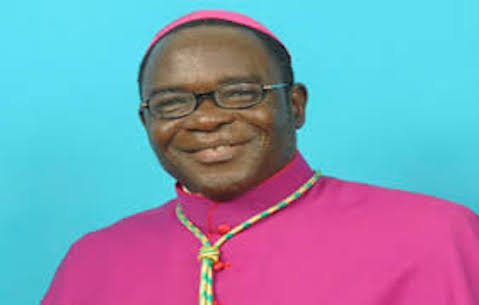
Fiery social commentator and Catholic Bishop of Sokoto Diocese, Matthew Hassan Kukah, has condemned the continuous killing and persecution of Christians in the North, saying perpetrators are allowed to move freely without facing punishment.

Bishop Kukah said notwithstanding the extremely harsh ill-treatment experienced by Christians in Northern Nigeria in recent years, not one individual has been charged to court for those incidents.

The bishop stated this virtually during the Silver Jubilee Anniversary of the Order of the Knights of St Mulumba Nigeria, Eko Subordinate Council, themed: ‘Christian Martyrdom in Nigeria…a Building Block or Stumbling Block to Salvation or Patriotism,’ held in Lagos.

He also decried the ethnic colouration that was being given to the Christian faith in Nigeria, stressing that such attitude must be jettisoned.

“If you look at our country – Nigeria, the issue is that, in Northern Nigeria, Christians constitute some of the groups that you can kill without consequences. You can ask yourself has anybody ever been charged for burning churches or for destroying Christian properties.

“A pastor was slaughtered openly in Adamawa. People, priests were killed in Benue. Priests have been killed in Kaduna.

“It seems as if killing Christians is the only thing the world can do without consequences. That means that if you are serious as Christians, Catholics, what happens to the church in Ikwerre, what happens to the church in Sokoto, what happens to the church in Onitsha, what happens to the church everywhere in this country should affect us.

“Tragically, you know, Christianity has become largely subordinated to ethnicity.

“Many people today still have a caliphate mentality that those who are not part of us must be against us. And this is the fate of Christians and Christianity in many parts of Northern Nigeria today, where Christianity is being tolerated.

“Christians are being denied lands to build churches, and it is not seen as a problem. In a place like Kenya, I have a problem of that nature right now as we talk.”

Speaking on, Bishop Kukah said they must preach the gospel, whether welcome or unwelcome, adding that it has no political and ethnic boundaries.

“It is not about friendship. If it is about friendship, Jesus would have said to Peter, get behind me. When we are confronted, martyrdom is not just about being killed. Because, of course, in the end, you are killed for speaking the truth.

“I remember in the days of Abacha, many times people used to say to me, oh Bishop, if you don’t keep quiet, you will be killed for nothing.

“I am saying so because we now need to come to terms with the essence that every day of our lives as Christians, we are challenged to martyrdom. Martyrdom because a sword is dangling before us,” he said.

Daily Post

US border agent dragged to court for ordering 4 women to show their breasts before letting them into the country

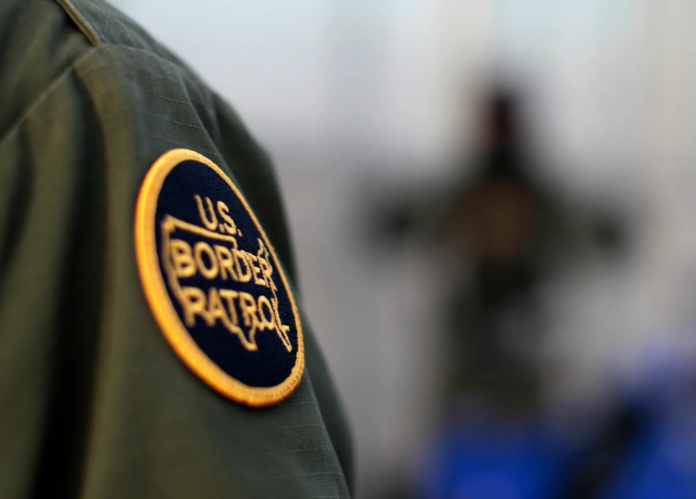
A United States Border Patrol agent has been charged after being accused of ordering women to show him their breasts during the admissions process to enter the country, federal authorities said.

Shane Millan, 53, was charged with four misdemeanour counts of deprivation of rights under colour of law, federal prosecutors in the Northern District of New York announced in a news release.

He willfully deprived four different women of their constitutional right to be free from unreasonable searches, the prosecutors said.

During virtual processing concerning their admission into the U.S., Millan told three women to “expose their bare chests” to him over webcam and a fourth woman to unveil her breasts to him while her bra remained on, according to the prosecutors.

Millan made the demands “for his own gratification” and lied to the women by saying he was conducting legitimate searches, prosecutors said.

The Border Patrol official was arraigned on Thursday, August 22,  before a federal magistrate judge in Syracuse and released pending trial.

SCUML Requirements: Commercial banks begin compliance with court order, exempt Lawyers

As a sequel to Hon. Justice Obiora Egwuatu’s nullification of the provisions of the Special Control Unit Against Money Laundering (SCUML) Act, 2022 which required lawyers to disclose the financial transactions of their clients to the Economic and Financial Crimes Commission (EFCC) in July, Nigerian commercial banks have started complying with the order.

This is in accord with the verdict of Federal High Court, Abuja which nullified the provisions for lawyers to reveal their clients’ financial transactions to certain law enforcement agencies.

On account of the judgement, commercial banks wrote to customers notifying them they were now exempt from restrictions previously imposed on lawyers by the SCUML.

An August 2024 letter from a commercial bank to its customer reads: “Following the recent judgement in Suit No: FHC/ABJ/CS/25/2023 Abu Arome Vs CBN & 3 Ors, we are pleased to inform you that you no longer need to provide SCUML certificate to operate your account.

“Consequently, the restriction on your account has been lifted and you can now resume transacting seamlessly.

“We appreciate your understanding and look forward to providing you with uninterrupted banking service.”

An Abuja-based lawyer, Arome Abu Esq filed the suit in January 2023, seeking to void aspects of sections 6, 7, 8, 9, 11, and 30 of the Money Laundering Act 2022 as they relate to lawyers.

Abu argued that similar provisions were contained in the 2011 amendment of the Money Laundering Act but were voided after it was challenged by the Nigerian Bar Association (NBA) in 2013.

He further contended that the SCUML provisions established under the Money Laundering (Prevention and Prohibition) Act as it relates to legal practitioners are unconstitutional, null and void.

He added that the inclusion of ‘notaries’ and re-inclusion or re-categorisation of ‘legal practitioners’ in the definition list of designated non-financial businesses and professionals in Section 30 of the Money Laundering (Prevention and Prohibition) Act 2022 is null, void and unconstitutional.

The NigeriaLawyer

Court grants order for 60 days remand of 124 #EndBadGovernance protesters

A Federal High Court in Abuja has granted applications filed by the police to remand 124 arrested #EndBadGovernance protesters for 60 days pending the conclusion of investigation.

Justice Emeka Nwite, in separate rulings on ex-parte motions moved by Ibrahim Mohammed, counsel for the Inspector-General (I-G) of Police, granted the interim order to remand the suspects until conclusion of investigation.

Justice Nwite equally ordered that the suspects, who are minors in the applications, be remanded in Borstal Home of the correctional centre pending the conclusion of the investigation.

In the first motion ex-parte marked: FHC/ABJ/CS/1154/2024, moved by Mohammed on August 14, but with a certified true copy (CTC) of the order obtained by NAN, the judge directed that the suspects be remanded for 60 days pending the conclusion of investigation and legal advice from the Attorney-General of the Federation (AGF).

The I-G, in the motion dated Aug. 8 but filed Aug. 9, sued 75 protesters with ages ranging between 14 and 34 years.

They include Abubakar Ibrahim (18), Abubakar Adam (19), Suleiman Ali (16), Mubarak Mas’ud (23), Umar Musa (19), Aminu Hussaini (20), Umar Kabir (23), Ibrahim Musa (24), Abba Usman (30), Umar Inusa (18), Tasi’u Lawan (17), Ibrahim Rabi’u (16), and Jamilu Haruna (16).

The suspects also include Muktar Yahaya (17). Abdulbasit Abdulsalam (34), Salisu Adamu (16), Bilal Auwalu (15), Abdul’aziz Adam (15), Sadiq Sunusi (15), Muhd Musa (14), Usman Amiru (14), Abdulganiyu Musa (15), Muhd Yahaya (19), and Sunusi Nura (14), among others.

They were alleged to have committed acts of terrorism, treason, and treasonable felonies, including arson and terrorism.

The police said the offence was contrary to Sections 2(1) and (3), 24 and 26 of the Terrorism (Prevention and Prohibition) Act 2022; Sections 41 and 42 of the Criminal Code Act; Sections 410, 411, and 412 of the of the Penal Code Act; and Section 4 of the Miscellaneous Offences Act CAP M17 Laws of the Federation of Nigeria 2004 and other enabling statutes.

Miss Elizabeth Ogochukwu, a Litigation Secretary of Legal and Prosecution Section, Intelligence Response Team (IRT), Police Force Headquarters, Abuja, deposed to the affidavit in support of the motion.

She said the I-G’s office, through the office of the National Security Adviser (NSA), received a damningly credible intelligence report of a planned violent uprising against the government of the states and the Federal Republic of Nigeria.

Ogochukwu averred that “the planned violent insurrection was believed to have been orchestrated by terrorist groups both within and outside Nigeria to unleash terror against the sovereign states of Nigeria, scheduled to start from the 1st day of August, 2015.”

She said, “Despite serious security measures intensified by the various law enforcement agencies, the planned protest took place as scheduled and seriously intimidated the populace and seriously destabilised or destroyed the fundamental, political, constitutional, economic, or social structures of some parts of Nigeria.

“That the violent protest causes death and bodily harm to citizens of the country and led to arson and wanton destructions of government or public and private facilities, transport systems, and infrastructural facilities in Nigeria.

“That the suspects were arrested in the actual act of rampage and reasonably suspected to be complicit in the crime, which calls for district investigations.

*That the suspects/defendants herein were found to have been carrying Russian flags, banners, placards, and slogans agitating for sovereign invasion of Nigerian territory to destabilise or overthrow the sovereign state of Nigeria by the Russian government.”

Ogochukwu said the suspects were arrested in Abuja and various states in possession of many Russian flags and other incriminating exhibits, while others are still at large.

She said investigations into the matter had commenced, and the defendants made voluntary statements, mostly admitting the crime, which reasonably suspected them to be members of proscribed terrorist groups.

She said the investigators had to travel to various states to discover and apprehend the sponsors of this heinous crime for effective prosecution, and the same would not be completed within the time frame contemplated by the constitution, which necessitated the application.

She said that “time is required to complete investigation thoroughly and obtain legal advice from the office” of the AGF as most of the prime suspects are still at large.

Ogochukwu averred that the suspects admitted the commission of the offence.

According to her, the suspects/defendants are now in detention in police cells, which are congested and pose serious health challenges to the inmates, and possibility of attack or escape will be ruled out.

Also, in the second ex-parte motion marked: FHC/ABJ/CS/1223/2024, moved by Mohammed on Thursday, Justice Nwite ordered another set of 49 defendants to be remanded for 60 days pending the conclusion of the investigation.

“That an order of this Honourable Court is hereby made committing the defendants to a correctional centre pursuant to Section 299 of the Administration of Criminal Justice Act (ACJA), 2015,” he said in the CTC of the order sighted on Saturday in Abuja.

The judge, who directed that the underage defendants be remanded in Borstal Home of the correctional centre, adjourned the case until Oct. 23 for mention.

The motion, dated Aug. 20, was filed on Aug. 21.

Giving four grounds why the application should be granted, the lawyer said that the defendants engaged in the offence of terrorism financing in order to overthrow a democratically elected government.

Mohammed alleged that the defendants were supporting some disgruntled elements that were flying the flag of another country in Nigeria.

He alleged that the defendants conspired with some foreign nationals to take over the sovereign nation, which is a treasonable felony.

A detective attached to the Force Criminal Investigation Department, Abuja, Gregory Woje, in the affidavit in support of the ex-parte motion, deposed that preliminary investigation revealed that some suspects arrested were being recruited by some financiers to cause mayhem and destroy life and property.

“That preliminary investigation further revealed that the financiers were sending money to recruit the indigents and other vulnerable individuals to carry banners and overthrow a democratically elected government.

“That preliminary investigation further reveals that some foreign nationals were the heads in the unscrupulous act of treasonable felony and promoting terrorism financing in Nigeria,” he averred.

Woje said the acts of the accused persons are akin to the offences of criminal conspiracy, terrorism financing, treasonable felony, cyberstalking, and cyberbullying.

He said it is the function of the police to stop the act by appending the offenders as offences to one, which is an offence to all.

Some of the defendants include Comrade Opaluwa Eleojo, Michael Adaramuye, Musiu Sadiq, Buhari Lawal, Love Angel Innocent, Suleiman Yakubu, Yunusa Aliyu, Ahmad Nasir, Muhammed Sani, Iliyasu Anas, Abdullahi Sani, and Gaddafi Muhammed.

They also include Jibrin Abdulhakim, Mahmud Umar, Kabiru Rabiu, Aminu Muhammed, Sagir Hassan, Lukman Abubakar, and Ahmed Isah.

Others are Abdullahi Abdulwahab, Hassan Muhammad, Abdullahi Salisu, Sabo Murtala, Fahad Ibrahim, Umar Yakubu, Zakari Yakubu, and Ahmed Haruna, among others.

NAN

Late Wigwe University Registrars’ mum to Jude Ezeobi: Keep away, stop parading yourself as my daughter’s husband or face aggressive litigation!

The mother of Ulonna Inyama, the Registrar of @WigweUniversity who died tragically in Abuja on Monday 29 July due to complications from a wrong blood has written to Jude Ezeobi, Esq. warning that he desists from parading himself as Ulonna’s husband making any attempt to extort monies from well-meaning well wishers under the guise of condolences.

In the letter dated 20th August 2024, signed by Mrs. Scholastica Inyama on behalf of the family, Ezeobi, Esq. was warned to steer clear of the family affairs or face an aggressive legal action.

Part of the letter which was accompanied by a copy the judgment detailing the annulment of the marriage reads:

RE: YOUR  FALSE REPRESENTATION AND INVOLVEMENT IN ULONNA’S BURIAL  PLANS

I write to you on behalf of the Ulonna’s entire family as the matriarch, in connection with your recent actions following the tragic death of my beloved daughter,  Ulonna lnyama.  It is with great displeasure and deep discomfort that we observe your attempts to involve yourself in her burial plans, presuming to assume the position of a chief mourner and presenting yourself as her husband.

To be unequivocally clear, your conduct is not only false but also a gross misrepresentation of the true state of affairs between you and Ulonna at the time of her passing. As you are well aware, your union with Ulonna was nullified by the Honourable Justice A.  Nasir in Suit No. PET/144/2021 on October 17, 2023, on the grounds that you were still legally married to one Chiamaka Marilyn Ezeobi at the time you purported to marry Ulonna. This nullification underscores the fact that you committed bigamy-a  serious offense that has far-reaching implications for your legal career and personal standing.

Your persistent attempts to assert yourself in matters relating to Ulonna’s burial are causing our family considerable distress. We find it particularly painful that even in death, you continue to torment Ulonna, just as you did during her life. It is important to note that Ulonna would not have wanted your involvement in her affairs, especially not in such a sacred and personal matter as her burial.

Furthermore, during the court proceedings, you made several baseless accusations against Ulonna, all of which were thoroughly discountenanced by the court. Your unfounded  claims were seen for what they were: desperate attempts to deflect from the truth. The judgment, which we have attached as an annexure to this letter, speaks for itself.

Please  be  advised  that the  entire family  has consulted with  legal counsel regarding  your recent actions. We  have  been fully  informed of the  legal implications and effects of  the  court’s nullification order. Accordingly, we demand that you immediately cease and desist from any further involvement in Ulonna’s burial plans or any matters concerning her.

Should you continue to parade yourself as Ulonna’s husband and /or involve yourself in her affairs or set attempt to extort monies from well-meaning well-wishers under the guise of condolences or pretending to be involved in her burial preparations or conduct yourself in any way that further misrepresents your position, you will leave us no choice but to pursue aggressive legal action to ensure you maintain a civilized composure. The family will not hesitate to take every necessary step to protect the dignity of our daughter and ensure that her final rites are conducted in peace and respect.

We trust that you will heed this warning and act accordingly. We expect no further disturbances or misrepresentations from you in this regard.

Due regards,

Mrs. Scholastica lnyama

For the Family

The-Inyama-family-speaks

Meanwhile, the office of the Deputy Commissioner of Police, Criminal Investigation Department (CID) in Abuja has invited Felix Ashimole, Esq. the Publisher of Kubwa Express following a petition against him by Jude Ezeobi on alleged “Criminal Defamation, Conspiracy, Cyber-Bullying, Publication of false/Malicious Statement and Threat To Life.”

Read the full letter below.

PETITION-TO-THE-COMMISSIONER-OF-POLICE-FCT-AGAINST-ONE-FLEX-ASHIMOLE-OF-KUBWA-EXPRESS.-COM-FOR-CRIMINAL-DEFAMATION-CONSPIRACY-CYBER-BULLYING-PUBLICATION-OF-FALSE-MALICIOUS-AN1

It’s not about swearing in!! It’s about whether we will finally see radical reforms — Agbakoba

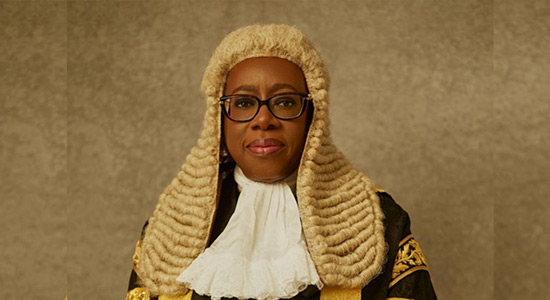
Following the swearing-in of Hon. Justice Kudirat Kekere-Ekun as Chief Justice of Nigeria (CJN) by President Bola Tinubu on Friday, rights lawyer and one-time President of the Nigerian Bar Association (NBA), Dr. Olisa Agbakoba has taken a swipe at what he termed “yet another ritual of handing over of the Judicial baton.”

Speaking with Law & Society Magazine, Agbakoba said:” It’s not about swearing in!! It’s about whether we will see radical reforms finally.

“The last great reform CJN was the Late Dahiru Musdapher!!! I was his consultant on Speed of Justice. Unfortunately CJN Musdapher only had six months in office. He set up a high powered 29 person committee that produced a transformational report.

“The Late CJN led a team to the then president of the senate, David Mark, to present far reaching reforms to the constitutional structure of the Judiciary. As soon as the CJN turned his back everyone forgot about it !!!

“The legacy of potential legacy of the new CJN is transformational and radical reform with the fundamental objective of case management driving how the courts work

“We are witnessing yet another ritual of handing over of the Judicial baton with the swearing in of Justice Kudirat Kekere-Ekun. But it’s not about swearing in!!”

TIPS