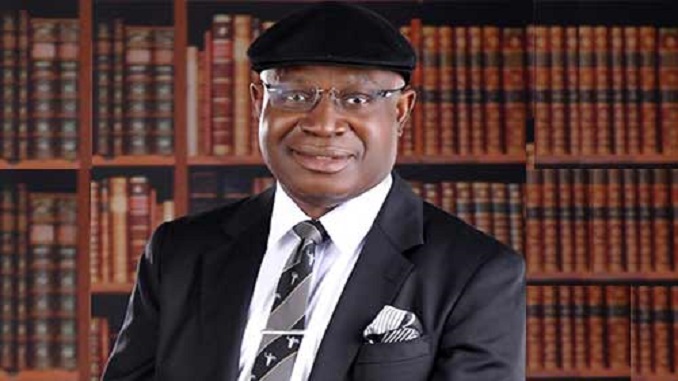
The Council of Legal Education has approved the commencement of law degree programmes in five private universities even as it announced the failure of 35.98% of participants in the June 2024 Re–sit Bar Final Examinations.
This was contained in the extracts/ resolutions of the Council of Legal Education hybrid meeting of September 27, 2024, obtained by Law & Society Magazine.
Below is the full text of the resolution.
The third quarterly meeting of the Council of Legal Education (CLE) for the year 2024 took place on Friday 27th of September, 2024 at the Council’s Chambers, Nigerian Law School Headquarters, Bwari, Federal Capital Territory, Abuja and virtually, under the distinguished Chairmanship of Chief Emeka Ngige, SAN, OFR, DSSRS.
At the end of the meeting, the following, among other resolutions, were adopted:
The results of the June 2024 Re–sit Bar Final Examinations.
A total of 1, 287 students participated. The breakdown of the results is as follows:
Absent -19 representing 1.48% of the participants
Conditional Pass -6 representing 0.47% of the participants
Fail – 463 representing 35.98% of the participants
Invalidated – 1 representing 0.08% of the participants
Pass- 796 representing 61.85% of the participants
Withheld – 2 representing 0.16% of the participants
The accreditation reports presented by the Board of Studies chaired by the Director-General, Prof Isa Hayatu Chiroma, SAN, DSSRS for the commencement of law degree programmes in the following universities were approved:
University on the Niger, Umunya, Anambra State. The University was given approval to commence with a quota of fifty (50) students at 100 level. The university would be revisited by the Accreditation team at the appropriate time;
University of Ilesa, Ilesa, Osun State. The University was given approval to commence with a quota of fifty students at 100 level. The university would be revisited by the Accreditation team at the appropriate time;
Maduka University, Ekwegbe-Nsukka, Enugu State. The University was given approval to commence with a quota of fifty (50)students at 100 level provided that the University’s Faculty of Law puts in place a Staff and Student Common Rooms;
Alex Ekwueme Federal University, Ndufu-Alike, Ebonyi State. The University was given approval to commence with a quota of fifty (50)students at 100 level. However, the University is not to admit students for the next two (2) years as a sanction for the infraction of admitting students before the facility verification by the Council of Legal Education. The University would be revisited by the Accreditation team at the appropriate time;
Arthur Jarvis University, Akpabuyo, Calabar, Cross River State. The University was given approval to commence with a quota of fifty (50)students at 100 level. However, the University is not to admit students for the next two (2) years as a sanction for the infraction of admitting students before the facility verification by the Council of Legal Education. The University would be revisited by the Accreditation team at the appropriate time;
2b. In the same vein the faculties of law in the following Universities were not granted approval to commence studies:
Tansian University, Umunya, Anambra State. The University was directed to stop the admission of law students immediately until when all the issues highlighted in the Faculty of Law are addressed and the Council re-invited for verification.
Wesley University, Ondo, Ondo State. The University was equally directed to address the multi-dimensional issues highlighted in the Faculty of Law and thereafter re-invite the Council for verification.
The Council approved various sanctions in respect of referred admission cases as well as students involved in various forms of examination malpractice and other misconduct.
The Council approved the report and recommendations of the Appointments, Promotions and Disciplinary Committee (AP&DC) headed by Mazi Afam Osigwe, SAN (the President of the Nigeria Bar Association), for the promotion and discipline of some academic and non-academic staff of the Nigerian Law School.
The Council approved the appointment of Ms. Aderonke O. Osho who had been serving in acting capacity as the substantive Secretary to Council and Director of Administration of the Council of Legal Education and the Nigerian Law School for a five (5) year tenure, subject to the existing revised Public Service Rules (PSR), 2021.
The Council also approved the appointment of Mr. Oluwabamigbe Gbenga who has been serving in acting capacity as the substantive Director of Finance and Accounts Department of the Nigerian Law School.
On the letters of appeals by Lead City University, Ibadan and Baze University, Abuja, respectively requesting for review of the moratoriums imposed on their law faculties, the Council directed the Management of the Nigerian Law School to reply them stating that the moratoriums on the admission of students still stand and that the Universities would be revisited by the Accreditation team at the appropriate time to ensure their compliance with the Council directives.
Dated at Abuja this 28th day of September, 2024
A.O. Osho (Ms.)
Secretary to the Council& Director of Administration
The National Bureau of Statistics (NBS) has disclosed that although Borno State received about N816.34 million from the Ecological Fund between January and June 2024 only N20 million was been spent on flood control in the first half of 2024.
The receipt of the N816.34 million Ecological Fund is according to the Federation Account Allocation Committee (FAAC) data published by the NBS.
The Ecological Fund in Nigeria is a dedicated fund set up by the federal government to address various environmental challenges and natural disasters across the country.
It was established to manage the country’s ecological problems, particularly those arising from soil erosion, flood control, desertification, and other environmental degradation issues.
The fund is sourced from a percentage of the Federation Account, and it is meant to be distributed to states and local governments for ecological projects aimed at mitigating the impact of environmental hazards.
N20 million spent on flood and erosion control in H1 2024
Nairametrics observed that only N20 million has been spent on flood control in the first half of 2024, representing just 2.45% of the total ecological allocation.
This amount was only spent in the second quarter of the year, as nothing was spent for this budgetary allocation in Q1 2024.
Borno’s budget allocation for erosion and flood control remains underutilized. The 2024 revised budget earmarked N1.653 billion for flood control, yet only 1.2% of this has been spent, raising questions about the state’s preparedness and commitment to addressing this recurrent issue.
Also, despite Borno State allocating N1.042 billion for flood and erosion control in 2023, no funds were disbursed or spent for this budgetary allocation throughout the entire year. This reflects a worrying trend of underutilization of funds meant for critical infrastructure projects, especially considering the region’s vulnerability to severe flooding.
Increase in total Ecological Fund to Borno
The FAAC data for Borno State between January and June 2024 shows monthly disbursements totaling N816.34 million, compared to N749.68 million for the same period in 2023. This reflects a year-on-year (y-o-y) increase of about 8.89%, with fluctuations in monthly allocations.
In January 2024, Borno received N139.89 million, a decrease of 7.21% compared to N150.76 million in January 2023.
However, the allocation in February 2024 stood at N154.99 million, marking an increase of 39.37% from the N111.20 million received in February 2023.
In March 2024, Borno received N127.99 million, reflecting a 22.31% increase from N104.64 million in March 2023.
April 2024 saw a disbursement of N119.52 million, which is a 9.57% increase compared to N109.07 million in April 2023.
The allocation for May 2024 reached N142.28 million, reflecting a growth of 12.36% over the N126.63 million allocated in the same month of the previous year.
In June 2024, Borno received N131.67 million, a decrease of 10.65% compared to N147.37 million in June 2023.
Despite receiving a total of N816.34 million from the Ecological Fund, the state’s 2024 budget implementation report reveals a stark contrast between the allocated funds and actual spending for flood and erosion control.
What you should know
This underfunding has drawn significant attention, especially in light of the devastating floods that have claimed at least 30 lives in Borno. The flooding has left hundreds of thousands displaced, with many residents describing harrowing experiences as they sought refuge.
National Emergency Management Agency (NEMA) said the flood began after the Alau Dam overflowed following heavy rains leading to the town’s worst flooding in 30 years.
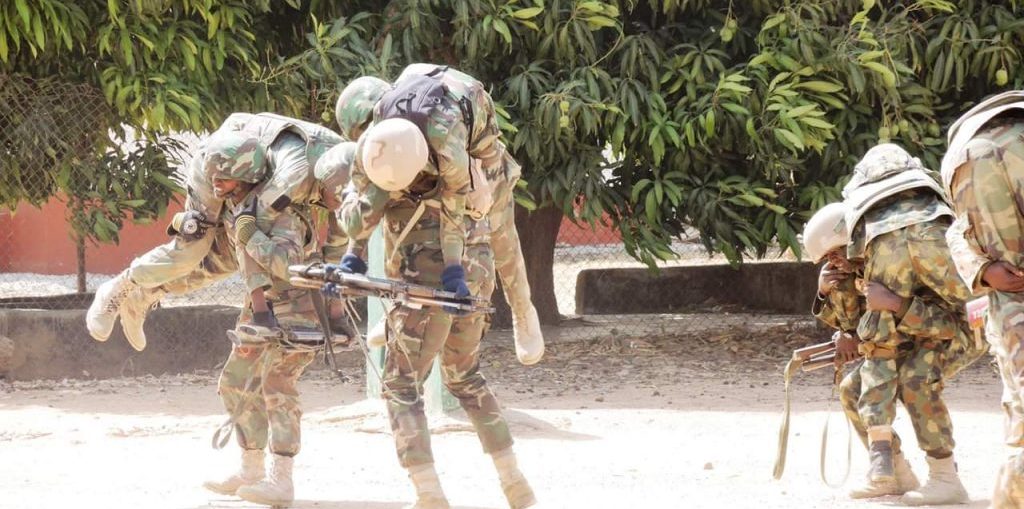
The ongoing flood disaster has seen a coordinated response from the military and emergency agencies, with over 719 residents rescued from flood-hit areas.
The Governor of Borno State, Babagana Umara Zulum, earlier said that a preliminary assessment conducted by the government showed that more than a third of Maiduguri was flooded, which affected an estimated one million people following the heavy flooding.
The governor also announced that cash distributions of N10,000 per household have been made to flood victims, adding that N3 billion flood intervention fund has been received from the federal government and would be used to provide immediate support to the communities affected by the flood.
The flood highlighted the critical need for flood control measures. However, the complete lack of expenditure in 2023, coupled with minimal spending of just N20 million in 2024 (only 1.2% of the revised N1.653 billion budget), raises serious concerns about the state’s disaster preparedness and response under Zulum’s leadership.
An ex-minister of Communications and Digital Economy, Prof. Isa Ali Pantami, has disclosed that despite the federal government’s humongous security funding, soldiers on the battlefield receive only a small percentage.
Responding to questions on NIN-SIM linkage and factors contributing to insecurity at the Young Professionals Colloquium held recently in Katsina State, Prof. Pantami said the country’s major insecurity setback is not related to intelligence gathering but to the failure to act on the intelligence collected.
He explained that the bulk of the federal government’s security funding remains with top officials and does not reach the soldiers on the frontline.
Pantami noted that sending soldiers to the battlefield to fight terrorists without life insurance or proper death benefits demoralises them, adding that they are aware that if they die on the battlefield, the future of their children will not be secure.
He further emphasised that Nigeria will continue to experience setbacks in security as long as the government fails to take care of the families of soldiers who are sacrificing their lives to protect the country.
He, however, urged the government to establish a mechanism to ensure that a larger portion of the security budget reaches those on the battlefield.
He said, “I admire the effort of our security institutions. Intelligence institutions like DSS and NIA. I commend their efforts because they usually intercept Intelligence but intercepting Intelligence is one thing, acting on it is another thing.
“Most of the setback we are having is not about Intelligence gathering, it is about utilising it to take action. Furthermore, based on my experience with what I did in the ministry of increasing salaries. Let me give you an example, the government is spending huge amounts of money on security. Unfortunately, an insignificant percentage is the one that is reaching our security officers who are on the battlefield. More than 90% is on top. Very insignificant is reaching them.
“You ask a soldier to go and fight kidnappers or terrorists but if he dies today, his death benefit is less than 10 million and he has 10 children at home. Who can sacrifice his life for 10 million naira? In some situations, they are getting less than 2 million naira as a death benefit. No compensation, if he dies no one will take care of his family. The system is not effective to take care of his family. Who is willing to go and sacrifice his life while his children will be out of school because of that sacrifice?
“We must work on the system to the extent that whatever is budgeted will reach the people on the battlefield. If they die on the battlefield, the system must take care of their children from where they are until they graduate from the university. If they are into business until they are successful.
“As long as our system will not take care of the families of those sacrificing their lives to protect our country, then definitely we will continue to have many setbacks in our security architecture, and there is no doubt about this. Whatever is budgeted, there should be close supervision so that it will come down to the people on the battlefield, and they should be the highest earners in Nigeria.”
There was a time in this country when professors earned more than federal permanent secretaries. That was before Nigeria happened to itself. A professor in 1973 was on a consolidated annual salary of £3,000; permanent secretaries earned £2,800. Today, the most senior professors do not take home N450,000 per month; federal permanent secretaries gross N1.3m monthly. From that gross, they pay this tax, and pay that rate and then net between N900,000 and N950,000 – more than twice the pay of the longest serving professors in Nigeria.
My source of those perm pec figures is a retired permanent secretary. He couldn’t have lied against himself. This ex-civil servant and his colleagues in service are likely to see the comparison I just made here and say my judgement or logic is perverse, that they suffer too. If such is said, I would borrow a proverb from my Fulani friend and retort that brides cry, hyena’s victims cry too but their tears are not of the same taste.
I am not the only one who has read a viral text on professors queuing for N35,000 loans to buy food rations in UNILAG. I forwarded it to some of my ogas in Ibadan and Ife last week. I also sent it to serving and retired professors in other places, fishing for gists. They all replied confirming the deflation of their tyres. One of them texted me: “I retired this year (from a federal university) after 40 years and six months, 20 of those years as a full professor, and on a monthly salary of N403,000. Today, you know what a bag of rice costs, not to talk of petrol which sells at N1,200 per litre. Now, how would one sustain a modicum of decent existence and not borrow?” I didn’t know what word of consolation to give. Another professor wrote me: “I will retire shortly and for people like me who focused on serving the system, it is good to hear these stories of post-retirement deprivation, obviously worse than pre-retirement poverty, even if close to Armageddon!”
I wrote in the first paragraph above that before 1974 in Nigeria, a professor earned £3,000 per annum. Today, my professor’s monthly salary of N403,000 translates to $243 per month. In one year, his pay would be $2,900 (or £2,169). A quick check: the purchasing power of £100 in 1973 is that of £1,242.24 today. At parity with the British pound sterling, £3,000 (Nigerian pounds) of 51 years ago equals £37,267.2 of today. How much would that be in naira terms? N83,129,657.16 per annum or N6,927,471.43 per month. If poverty reigns in places we call the ivory tower, those figures offer some explanations. If crisis and restlessness define industrial relations in our universities, it is because the teachers there are paid slave wages.
How did our smart university teachers get left behind? The English man calls female goats Does. In the very unfair, iniquitous political economy of traditional goat keeping, productive Does never belong to the absent. The goat of the one not present must always be male, the unprofitable specie that neither replicates nor multiplies itself. Varsity teachers had no seat where the knife portioned out the collective yam in the 1970s. They still do not in 2024 – although the system humours some of them as hirelings. They engage them as night soil men, services which Roman orator, Cicero, described as “vulgar” and which “incur people’s ill will.” They are never there where real actions take place. And, if you are not present or represented where decisions that affect you are being taken, your portion of pounded yam will always be smaller than the smallest. And because teachers are perpetual outsiders, their fowls get randomly eaten by weasels of power; their sheep by leopards of advantage.
There was a time in the United States when university teachers were like they lived in today’s Nigeria. They were forced by their economic circumstances to remain less than they should be. “In every teacher, a struggle for survival is going on.” Donald W. Rogers, who authored that line, started his February 1948 journal piece with this sad quote: “one can’t get rich at teaching.” My headline above was the headline he wrote. I took mine from his. Rogers wrote about teachers and two kinds of poverty which he said shared causal relations: “One can become so poor in goods while teaching as to become poor as a teacher.” But a society that pauperizes its teachers pulverizes its future. I agree with Roger’s position that the “quality of a college’s product is a function of its teachers.” Quality stands with teachers, quality falls with teachers. And it will fall where teachers struggle to live, because, as Rogers wrote, “greatness of vision and the capacity to fulfill it rarely flourish in privation.”
Between 1948 when Rogers wrote his article and now, a lot that is positive has happened to teachers in the United States. Teachers there now eat their eggs, yolk and albumin. Their “struggle for survival” of 76 years ago has been replaced with competition for excellence. Here, the stories we hear and read distress daily. The latest is the spectacle of professors and other PhDs at the University of Lagos shown on cooperative queues seeking access to loans of N35,000 to buy Ounje Eko, a psychedelic name for IDP rations. They need the money to feed their needy families. The war of survival is not being fought on the Lagos front alone; there are battlefields anywhere you see signboards that suggest schooling and lecturing. A senior professor of medicine at the University College Hospital, Ibadan, told me early this year that what Nigeria loses daily to the outside are not just young doctors and nurses, but also the senior ones, the trainers. The ones healthy enough to escape are almost all gone. But why? Why not? We may be ignorant of so many things but not the knowledge that the indentured is resource poor.
This rain beating the vulture of the Nigerian academic started a long time ago. As a university undergraduate almost four decades ago, I had a lecturer who repeatedly described his job choice as “an oath of poverty.” As a Marketing student at the polytechnic some 40 years ago, I had a young teacher who would pause his Economics lecture midway, throw away the chalk in his hand and shout “I need money!” He died shortly after I left that school. And, it wasn’t that he was an unsteady character. It was his material condition that ailed his balance.
I encountered all the above years and years ago. The experiences are as fresh as now; the cancer has metastasized. To mark the 50th anniversary of the University of Ibadan in 1998, IFRA-Nigeria organized an international conference on ‘The Dilemma of Post-Colonial Universities’. Professor Ayuba Hudu of Ahmadu Bello University delivered a paper at that conference on the working conditions of staff of Nigerian universities, using his ABU environment as his field of study. Sobering as Hudu’s findings and conclusions are, they are what we’ve always known to be true. In one instance, he discovers that as of the time of his study, “Ahmadu Bello University continues to pay N800 as night allowance to senior lecturers on research trips while officers of the same rank in the civil service are paid N7,000.” He quotes a lecturer: “Both my remuneration and working facilities are grossly inadequate. A hungry man can’t enjoy his work. As at now, lecturers do not have any living conditions. A group of people whose work demands great mental work should be properly paid so that undue external pressures for survival, decent appearance, transportation problems etc. are not allowed to distract their concentration. Until such is done, it will not be fair to talk of their work output – especially when the facilities and working environment are non-existent.”
That was 26 years ago. The situation is worse today – especially with education becoming of less importance on the scale of preference of our governments. But, what can the teachers do to cleanse the clogged arteries of their vocation? The best of them do not belong to where hard decisions that impact their lives are taken. Even if their log plunges into the depth of power and stays for ages in that water, it will never become a crocodile. And the Nigerian establishment is a mix of crocodiles and sharks.
So, will this tragedy continue till resurrection day? Sometimes a problem charts more than one road to its solution. In Jane Watson’s ‘Three Hungry Men and Strategies for Problem Solving’ (1988), we encounter a mathematical problem that offers so many avenues for possible solution. Watson gives the problem: “Three tired and hungry men went to sleep with a bag of apples. One man woke up, ate 1/3 of the apples, then went back to sleep. Later a second man woke up and ate 1/3 of the remaining apples, then went back to sleep. Finally, the third man woke up and ate 1/3 of the remaining apples. When he was finished there were 8 apples left. How many apples were in the bag originally?” Those who were asked to answer the question varied in age and social status. Some of the examined worked backward (or forward) with fractions, some without fractions and the two groups were right. One attempted the solution with a diagram, another used algebra, yet another used the ratio concept, and all came up with what they believed solved the problem. The correct answer is 27 but the examiner got from his ‘students’ 24 different strategies. In the end, some got it right, some got it wrong but all participated in finding a solution to a common problem. That is the approach I recommend here. The issue with our university system must be seen as a troubling nut that must be cracked. And, all stakeholders, including the government, must be willing to come to the table with whatever key they have for the iron door.
At the core of this problem is funding. Why can’t our country’s government accord education very high funding priority as it is giving the Lagos-Calabar coastal road? Adequate funding of the universities is a must if we will exit poverty and create equal access for children of the rich and those of the poor. The Tinubu government has a student loan programme. It will get it right if it fulfills a number of ‘ifs’: if the programme is widened to accommodate all who need and want the loans; if greed, cronyism and corruption are not allowed to kill it; if the loan consistently and adequately finances a student’s education till graduation; if repayment is not expected to come from a graduate’s joblessness; and, if it is adequately funded, public universities will, with peace of mind, charge appropriate fees. And, if the universities charge reasonably for services they render, they will be free and solvent enough to meet their obligations to staff, students and the society. Otherwise, we roll from one crisis into another.
We must avoid another season of disruption in our public university system. It will add to the poverty of the poor. ASUU has issued another strike notice and, you can’t ask the teachers who suffer willful deprivation not to go on strike. It is the only tool they have. Cries and yells cannot move a government that feigns loss of hearing. The union said last week that it had extended the 21-day ultimatum it earlier gave the government on August 18 by 14 more days within which it expected all the lingering issues to be addressed to the satisfaction of the union and its members. What are those issues? They are about adequate funding of the universities to enable them perform their duties as catalysts of development. ASUU’s demands include better working conditions for staff of the universities, release of their withheld three-and-a-half months’ salaries due to the 2022 strike action; release of unpaid salaries for staff on sabbatical, part time, and adjunct appointments affected by the Integrated Payroll and Personnel Information System (IPPIS) and release of outstanding third-party deductions such as check-off dues and cooperative contributions.
Yet, we cannot discuss and achieve national development without tackling the rot in our universities. Derek Bok, author of ‘Higher Education in America’, writes that the universities “have assumed an importance far beyond their role in earlier times.” He writes that in the modern world, colleges and universities help “to strengthen our democracy by educating its future operators.” He adds that the universities are “the country’s chief supplier of three ingredients essential to national progress—new discoveries in science, technology, and other fields of inquiry; expert knowledge of the kind essential to the work of most important institutions; and well-trained adults with the skills required to practice the professions…” The most prosperous state in the United States is California; with a nominal GDP of $3.987 trillion in 2024, it is the world’s fifth largest economy. It owes its prosperity to its wise investments in education. It is home to 35 of the world’s 50 leading AI companies. That California is “home to the most Fortune 500 companies” is a function of its creation of a robust knowledge-based economy baked by its universities.
The Nigerian system would, instead, wonder why we, at all, need professors and the universities that habour them. It would justify its stance using the law and common sense. Is it not true that the constitution which provides the framework for the government and all it does with us does not recognise colleges and universities as trainers and producers of leaders? Education “up to school certificate level” is all you need to be president of Africa’s most populous country and one of the continent’s largest economies. It will therefore be wasteful, even suicidal, to empower the universities and the heretics within their walls. Is it not historically true of our context that higher education is a pollutant of the mind? Does it not create an irreverent citizenry that asks too many questions? Do the universities not produce a population of critics who frown when knees of democracy are made to bend deep into the ground in supplication to raw power?
“How painful it is to have to go on living, despised by all, even by yourself, and at the same time keep up a brave pretence that you not only think well of yourself, but even regard yourself as a decently useful public servant.” Raphael O’Leary wrote that passage of pain and put it under a piece he entitled “Pity the Poor Teacher.” O’Leary’s “poor” speaks of a different kind of poverty – not the slave-wage or wage-slave burden crushing the Nigerian professor. Where I come from, we say what-shall-we-eat comes first before what-shall-we-do. A hungry, ill and deprived professor will profess nothing positive. His teaching will be an any-how teaching. And, if “how we teach is what we teach” as said by John H. MacArthur, a former dean of Harvard Business School, then it means we can’t use our schools to kill poverty or get our own Silicon Valley nor shall we ever escape the present dank, dark cave of negativity.
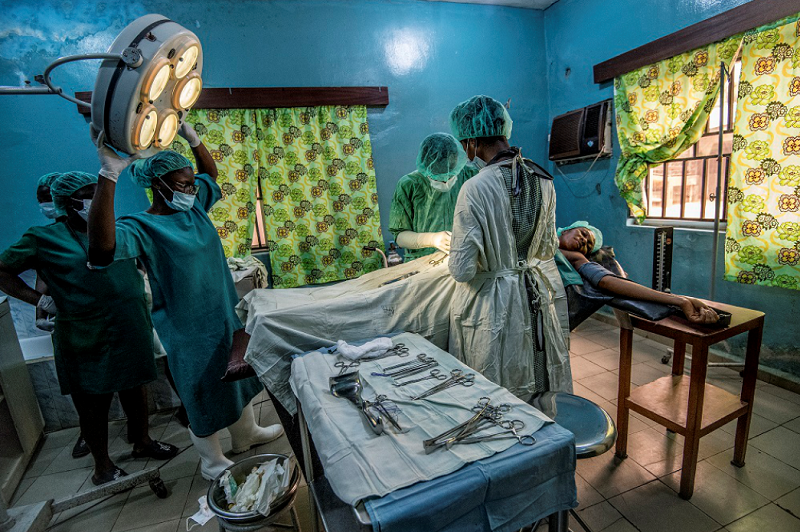
Anita Nathaniel lay tethered to the surgical table, captive between life and death. There, beneath the stern glare of fluorescent lights, inside the City of Salvation Hospital, Egbeda, Lagos, a frantic opera unfurled, echoing the sombre notes that would cast her fate in a dark shroud.
Inside the medical theatre, an electronic speaker belched gospel song that whirled like a dirge through the air. “I surrender to you! I surrender to you!” the speaker blared.
Amid the cacophonous peal of faith and surrender, Anita stirred to the sharp intrusion of a knife cutting through her belly. Barely one minute into the caesarean section that would bring her child into the world, the haze of anaesthesia receded, and the cutting pain of the surgeon’s blade sliced through her body. As the scalpel grazed her abdomen, the world around her faded into a hazy abstraction, leaving only the visceral torture of the procedure.
With every thrust of the surgeon’s hands, gobs of flesh and innards were yanked aside in reckless abandon. And the theatre erupted in a carnage of blood and gore, as the colour red splattered in stark contrast against the sterile white of the sheets.
Anita gasped. Then she wailed: “Aargh! What are you doing to me? Stop! Don’t do that! Please, don’t do that! Jesus, please save me. I am in pain! Aargh! Aargh!” Her voice, ragged with agony, was met with chilling indifference. A voice, detached and careless, tossed a dispassionate word back into the abyss of her suffering: “Sorry.”
Yet, the knife did not pause. The hands of Dr. Okusanya Abimbola pressed on, pulling and tearing, parting her flesh roughshod, scraping through her insides as though her pain was no more than the distant chirp of a cricket at dawn. As the surgeon’s hands dug deeper, Anita’s wails faded, swallowed by the clatter that enveloped the room like a funeral shroud, leaving only the refrain of the gospel song playing jarringly in the background: “I surrender to you, I surrender to you.” But in that theatre, it wasn’t Anita’s soul surrendering to divinity, the 32-year-old surrendered to the brute spunk of negligence.
In the aftermath of that grisly ballet… As the surgeon extracted the child from the ruins of the mother’s body, the air grew thick with a haunting stillness. Anita lay there, a broken vessel. Silence fell over her, like a shroud more tangible than the bloodied sheet that lay across her lifeless form. Was she gone? Or was she merely suspended in the throes of death, her spirit fighting to escape surgical torture? These questions lingered, unanswered, in the hushed theatre.
To the casual observer, the tableau was unthinkable—a macabre circus of sloppiness, where the doctor and his nursing assistant plowed Anita’s innards and tore through her flesh. A large wad of cotton wool was shoved into her gaping wound, and recklessly pulled out, in a futile effort to stanch the torrents of blood that gushed from her belly.
“I saw a nurse bring out three big bowls of blood during the operation,” recounted Evwiarivi Nathaniel, Anita’s husband, his voice quaking with unbearable grief. “I asked her what she intended to do with it, and she said she was going to pour it away,” said the chef and native of Ikeresan, Sapele, Delta State.
From the moment the theatre doors swung open, what followed was a scene bathed in confusion. Nurses scurried out of the operating room, their faces tense, yet they assured Nathaniel that, “Everything is fine.” But their restless feet told a different story. The minutes stretched into hours, each one more suffocating than the last, until finally, one of the nurses emerged with the fruit of Anita’s labour: her child, Jaden.
Nathaniel enquired about his wife, and the nurse replied that she was fine. “She said that I should just hold on to my new born baby,” he said, revealing his disappointment that the hospital had no baby cot to keep the child. Nathaniel’s heart clung to the newborn in his arms, but his wife’s absence gnawed at his spirit. “She’s fine,” resounded the assurance, hollow in its echo.
Time passed, too much time, and then, the truth hurtled from a nurse’s lips, like a dagger through his chest. Anita was gone. His beloved wife had bled out, distressed and lonely, on the surgical table.
Under the blade of silence Until her death, Anita had cut a perfect picture of good health. Her antenatal checkups had shown no sign of complications even as her vitals echoed with promise of a safe delivery. “She couldn’t wait to birth our first child,” disclosed Nathaniel. But fate, draped in the sterile white of a surgical gown, had other plans.
Indeed, the City of Salvation Hospital was no stranger to Anita. Its cold halls had witnessed her belaboured plod through the delicate dance of pregnancy, each antenatal visit a rehearsal for the grand performance of birth. Yet when her water broke at 1:00 am on August 15, 2023, the future shimmered with hope and an undercurrent of unease. Nathaniel called the hospital but a nurse’s voice, seemingly draped in the sluggishness of night, urged him to wait till daybreak before he brought Anita in. But spurred by excitement and first-time naivety, Nathaniel spirited his wife to the clinic at 4:30 am. His heart heavy with anticipation and a subtle, creeping dread.
On getting to the hospital, a scan was conducted on Anita to determine the progression of her labour. But the 32-year-old was far from the image of fragility one might expect. She walked, she climbed stairs, did squats, guided by the nurse’s calm instructions. Her body, full of life, seemed ready for the gruelling birthing process ahead.
“At 9:00 am the nurse took my wife to run a scan, when the result was out, I took the result and scanned it to my brother, Amos Evwiarivi, so he could show his doctor friends to ascertain if everything was alright. My brother thereafter confirmed to me that his doctor friend said from the scan, everything was okay,” said Nathaniel. But this was a temporary salve to his growing unease – for soon, Ifedolu Oreitan, a nurse playing the role of a “resident doctor,” cast a shadow over the morning with his sudden suggestion of a caesarean section. Oreitan subsequently admitted in a court deposition that he examined Anita and concluded that the baby would be best delivered via a caesarean section. “I made my recommendation for c-section around 9:00 am that same day of August 15, 2023.” This was yet another interesting episode in the build up to the tragedy as Oreitan, being a nurse, lacked the professional and ethical capacity to recommend a procedure that was best determined by a qualified obstetric surgeon.
Anita died in severe painsPhoto Credit: The Nation
Nathaniel refused, stressing that he and his wife wanted her to have a normal vaginal delivery. Neither the innuendo of complicated labour or death scared Anita, in particular. And so, they waited. Anita, though now tethered to the hospital bed by a drip, seemed a pillar of strength. But as time stretched, her moans of discomfort grew intense, the pain writhing in her like a snake coiled in her belly.
Oreitan returned, more insistent now, his words ringing with an urgency that Nathaniel could not ignore. With his wife’s agony more evident, Nathaniel relented and paid N150,000 of a N300, 000 surgical bill. “After making the payment, I was assured that the surgeon would join them shortly. But my wife had to wait for well over eight hours before the surgeon arrived,” said Nathaniel.
The attending surgeon, Dr. Abimbola did not appear until late in the afternoon, he said. And when he finally did, it wasn’t with the air of urgency or in the careful assembly of a skilled team, but with Nurse Oreitan, and two auxiliary nurses. This was a flagrant violation of medical personnel specifications for a caeserean section: One obstetric surgeon, one assistant surgeon, an anaesthesiologist, a paediatrician, and two qualified nurses.
In the City of Salvation Hospital’s medical theatre, the crucial figure of an anesthesiologist was missing, an omission that would become the linchpin in the unfolding tragedy.
Although, Anita walked into the theatre by herself, hoping to reemerge hale and hearty with her baby, she didn’t. After waiting for a while one of their nurses came out and broke the sad news of her death to her husband. “It was traumatising for me. I became miserable and heartbroken, knowing my child had become motherless and left without motherly love,” said Nathaniel.
By the time his wife breathed her last, however, the dubious gear of deception was in full swing. A death certificate, hastily issued by the Ogun State Health Board—hundreds of miles from where Anita drew her last breath was handed to her husband, Nathaniel. The certificate, a pale slip of paper meant to account for Anita’s sudden death, raised more questions instead. Why an Ogun State death certificate, when Anita had died in Lagos? The answers lay in a cover-up meticulously crafted by the hospital.
What Anita experienced in her final hours In Anita’s final moments, the anaesthesia evidently failed to maintain the necessary depth of unconsciousness, thus causing her to wake feel intense pain as the surgeon cut into her abdomen and manipulated her internal organs. Her body’s natural response to such extreme pain was to activate the fight or flight mechanism, increasing her heart rate, blood pressure, and stress hormone levels. However, in a patient weakened by childbirth, this physiological response can be dangerous. The massive loss of blood and initial surge in blood pressure (hypertension) could have caused damage, but as the surgery progressed and her blood loss increased, her blood pressure would have dropped dangerously low (hypotension). This hypotension reduced blood flow to vital organs, including the heart, kidneys, and brain, leading to potential organ failure, and subsequent death, argued an obstetric surgeon with a Lagos based university teaching hospital, who pleaded anonymity.
In other words, as the cold blade of the scalpel pierced the thin veil of Anita’s flesh, she should have been lost in the deep, dreamless sleep that “general anesthesia” promises—a twilight where pain and fear do not tread. But the anesthetic, meant to keep pain at bay, had thinned away, leaving her vulnerable to the sharp, unsparing stab of the surgeon’s blade.
When her eyes fluttered open on the surgical table, Anita must have felt like a lamb betrayed by its shepherd, waking to the jaws of a ravenous wolf. The searing agony that coursed through her veins was not just the sting of the incision, but the excruciating sensation of her flesh being parted, layer by tender layer, while her consciousness was trapped in a body that could not cry out, that could not flee. The nerves in her abdomen screamed in violent protest, sending shockwaves of unbearable pain into her spine, her limbs, her very soul. Her mind, swimming in the confusion of half-wakefulness, must have wrestled with the agony of it all—unable to comprehend how she could still feel, still hurt, while the very essence of life bled away from her. Hence her initial plea and wailing of being in pain.
Anita’s final moments were not just a medical catastrophe—they were an unutterable violation of the sanctity of life, a tearing of her soul from her body while still tethered to the torturous sensations of mortality. The surgeon, while doubling as an anesthetist, evidently lacked the competence to shield her from pain. Thus on his watch, Anita’s body, once a vessel of life and creation, became a crucible of unimaginable torment and death.
The grim statistics Anita’s tragic fate unfurled as yet another thread in the fabric of Nigeria’s maternal mortality conundrum, a grim statistic that haunts the hospital corridors of a nation grappling with the spectre of death. Nigeria holds the tragic title of one of the highest maternal mortality rates in the world. In 2020 alone, around 82,000 women succumbed to the perils of childbirth—each death a cruel reminder of a broken healthcare system, marred by neglect and incompetence.
Amidst this tragedy, the statistics loom ominously. Nigeria’s maternal mortality rate stands at a staggering 1,047 deaths per 100,000 births, a haunting figure that casts a long shadow over the aspirations of countless mothers.
“The causes of death included severe hemorrhage, high blood pressure, unsafe abortion, and obstructed labor,” reports the World Health Organization (WHO, 2020), illuminating the harrowing reality that women like Anita face daily. With only one doctor available for every 4,000-5,000 patients, the lack of care transforms the act of childbirth into a roll of the dice—a gamble where the stakes are life and death.
Anita, in her tragic demise, further illustrates the chaos emblematic of Nigeria’s deathly maternity wards – nurses scurrying in disarray, desperately seeking medications that never arrived, leaving her vulnerable and alone in her hour of need.
How City of Salvation Sought to Bury Anita Nathaniel’s Death An autopsy conducted by the Lagos State University Teaching Hospital (LASUTH) unveiled chilling truths. While the medical team sought to attribute Anita’s death to heart failure, it was discovered that the records had been manipulated. Blood pressure readings, once steady, were altered in a desperate attempt to cover the traces of malpractice that led to his wife’s demise.
The ink marks on the charts, a testament to the deceit, revealed the extent to which the medical personnel conspired to obscure the truth. “The blood pressure initially recorded for my late wife was 110/70,” he noted with bitter clarity, “but upon her death, it was changed to 170/120.”
Investigators from the Nigeria Police Force, led by Investigating Police Officer (IPO), SP Hauwa Idris Adamu, visited the hospital in search of the truth. What they found, however, was a litany of anomalies— there was no anesthesiologist, no pediatrician, no assistant surgeon. Dr. Abimbola had conducted the surgery without a qualified team.
“Instead of referring the deceased to a General Hospital for better care, the suspect (Dr. Abimbola) made a trial-by-error approach. The issuance of an Ogun State Health Board Death Certificate instead of one from Lagos State, where the hospital is located, raised concerns,” according to the IPO’s report.
The hospital itself became a scene of concealment. Key documents, including Anita’s antenatal records, vanished into thin air. The files that remained had been tampered with, manipulated in a desperate attempt to erase the hospital’s role in her death.
The hospital management claimed they were safeguarding the files, which further deepened the investigators’ concerns. The management, when confronted, offered nothing but vague explanations.
Although the hospital was sealed by the Health Facility Monitoring and Accreditation Agency (HEFAMAA), in the wake of the incident last year, findings further revealed that HEFAMAA conveniently turned a blind eye as the City of Salvation Hospital resumed operations amid a frantic makeover of its hitherto derelict facilities. Evidence crucial to the investigation of Anita’s death disappeared. When the police returned for a second inspection, the scene had been tainted, the clues to Anita’s death now swallowed in a haze of hasty renovation.
In the aftermath of Anita’s death, the police arrested Nurse Oreitan, whose role in the operating room was deemed inappropriate and illegal. And then, there was Dr. Abimbola—the man whose hands had wielded the scalpel and whom the police identified as the principal suspect. He came forward, but not as one burdened with guilt. He arrived at the police station on October 19, 2023 (almost two months after the incident) flanked by lawyers. He was subsequently charged and made a voluntary statement.
Attempts to speak with Dr. Abimbola have so far been unproductive. Since Tuesday, September 24, he has repeatedly spurned attempts to interview him, ignoring five successful calls to his phone at 12:10 pm, 12:11 pm, 12:27 pm, 12:29 pm and 13:24 pm, respectively. At the fifth try, he switched off his phone, and subsequently ignored a message and request for an interview over late Anita’s botched C-section.
On Friday, September 27, more calls were placed to his second phone number, but having answered the call, he ended it abruptly, just after identifying that he was Dr. Okusanya Abimbola. Subsequently, five successful calls were placed to his line at 9:30 am, 9:31 am, 9:32 am, 9:33 am and 9:38 am, respectively. Then a message was sent to his line – which also bears an associated identity with Atlas Medicare – via normal SMS route and WhatsApp at exactly 9:42 am, establishing that he had repeatedly ignored the news medium’s calls.
To this he sent the terse response: “Good morning Sir/Ma. I have received your message. Will respond to you shortly via WhatsApp.” Even though The Nation sent him a couple of questions, urging him to respond to allegations made against him by Nathaniel and the City of Salvation Hospital, Dr. Abimbola failed to respond.
However, a perusal of his court deposition revealed that Dr. Abimbola, like his former employer, the City of Salvation Hospital, seeks absolution from liability for Anita’s botched surgery and subsequent death.
Abimbola, who until his sack, was the Medical Director of City of Salvation Hospital, held that late Anita presented with high blood pressure (170/120 mm Hg), eclampsia. And that despite the doctor (Nurse Oreitan)’s advice for an elective caeserian section, she and her husband declined, opting for a vaginal delivery based on their faith. “They also declined admission saying that they will apply their faith and pray for a vaginal delivery,” he said.
Dr Abimbola claimed that he already booked for an anaesthesiologist but the couple’s delay in agreeing to a C-Section prevented the former from being part of the surgery – thus establishing that the hospital had no in-house anaesthesiologist.
He said, “When I weighed the consequences of a further delay, I decided to go ahead with the C-Section in the hope of saving the life of the mother and her baby. I opted for a mild general anaesthetic since there was no one to give the deceased spinal anaesthesia. The dosage was subliminal since I did not want her BP (Blood Pressure) to shoot up. The baby came out very weak and floppy but responded to resuscitation. Suddenly SPO2 (Saturated Percentage of Oxygen) was noticed to be dropping and the deceased stopped breathing. CPR (Cardio Pulmonary Resuscitation) was commenced immediately. All efforts at resuscitation proved unfruitful and abortive. I pronounced her dead at about 4pm. In my opinion, the cause of death was intra op of complications of eclampsia which resulted from the delay in performing the CS due to the delay in giving consent.” Dr. Abimbola, however, claimed that he performed the C-Section on late Anita “professionally and diligently” to the best of his ability and training as a medical doctor.
Hospital ducks liability, accuses sacked surgeon of culpability At The Nation‘s visit to the City of Salvation Hospital in Egbeda, it was discovered that Dr. Abimbola, has been sacked. The nursing staff murmured that the very nurse who stood by him in that fatal surgery had also been dismissed as if their mere presence could resurrect the spectre of their errors.
Speaking with The Nation, the hospital’s current Medical Director, Dr. Adeyiwolu Damilare, hinted at the failures of his predecessor. In a subtle disclaimer, he stated that, “A doctor must approach and recognise each case as a peculiar one. He must be cautious in handling cases. What if the patient is his blood relative, he would take extra care, won’t he? If the woman (late Anita) walked in with her two legs, are you, as the doctor saying you don’t know when to intervene and how to intervene? If you take the vitals and you see that you don’t have the facilities to manage her case, the next thing for you to do as the doctor is to get a quick intervention,” he said.
According to him, immediately a doctor realises that a patient’s case is beyond his facility, he must seek emergency intervention from a more equipped facility. “That is when you know a good doctor. We know when a patient’s case is going to deteriorate. We know if we have the equipment to manage it or not. When you give an anaesthetic agent, you factor in the weight and body mass of the patient. This would determine the degree of anaesthesic agent that will be used on the patient. Someone with greater body fat or mass would require greater quantity to prevent it from wearing off earlier. Once it wears off on your patient and you see that you are not done with the surgery, you look at the blood pressure and it is hitting the roof, you shouldn’t administer anaesthesia on the patient again, because if you do, it’s going to cause a hypertensive emergency.”
With a pastoral calm that belied the tragedy, Pastor Abel, the hospital’s spiritual overseer, argued that, “This is not between the hospital and the Nathaniel family. The matter lies between Dr. Abimbola and the Nathaniels,” he said. His words, like a feeble prayer, sought to absolve the hospital of guilt against the weight of the facts: the surgery, the negligence, the tragic end—all that transpired under the hospital’s roof.
The standard practice for caeserian section Dr. Habeebah Ishaq, a UK-based Consultant Paediatrician and former staff of Reddington Hospital, explained that Anita’s death likely resulted from a broken or damaged blood vessel, possibly due to accidental ligation of a blood vessel. She emphasised that a proper caesarean section requires at least two doctors—one lead surgeon and an assistant—along with a qualified anaesthetist, an assistant anaesthetist, and one or two trained nurses, not auxiliary nurses. She described it as criminal negligence that only one doctor, one nursing assistant, and auxiliary nurses performed Anita’s surgery, arguing that an anaesthetist could have alleviated Anita’s pain instead of relying on one person acting as both surgeon and anaesthetist.
She clarified that the surgeon’s role is to operate and ensure the mother’s safety, while managing pain and anesthesia is the anesthetist’s responsibility, and that Anita’s waking up during surgery indicated a failure in proper anesthesia administration.
Dr. Ishaq explained that the standard practice for caesarean sections is to use spinal anesthesia, which numbs the lower body without putting the patient to sleep. General anesthesia is only used in cases of complications during labour where there is an immediate threat to the baby’s life. Proper general anesthesia would have kept Anita unconscious throughout the surgery and into recovery, preventing her from waking prematurely, she said.
The shortage of skilled anaesthesiologists in Nigeria is a significant contributor to the country’s high maternal mortality rate, especially among women undergoing Caesarean sections (CS). Anaesthesiologists play a vital role in ensuring the safety of women during surgery by managing pain and preventing complications.
Anaesthetists have knowledge of acute physiology and are adept at fluid management, invasive monitoring and other aspects of intensive care, thus, they are an integral part of the team managing obstetric complications, including the critically ill mother with obstetric haemorrhage, sepsis or eclampsia, according to Prof. Elizabeth Ogboli-Nwasor, of the Department of Anaesthesia, Ahmadu Bello University Teaching Hospital, Zaria, Kaduna.
On her part, Dr. Bisola Onajin-Obembe, the President of The Global Alliance of Surgical, Obstetric, Trauma, and Anesthesia Care (G4 Alliance), emphasised the need to address the critical shortage of anesthesia providers in Africa. Though the continent houses nearly 17% of the global population, most people lack access to safe anesthesia services due to a dire shortfall in trained professionals. For instance, while the U.S. has around 20 anesthesiologists per 100,000 people, Nigeria averages only 0.58. This disparity, according to her, highlights the global anesthesia workforce crisis, with sub-Saharan Africa particularly falling far below the recommended four anesthetists per 100,000 population. By 2030, the region will need more than 300,000 additional anesthesiologists.
Drawing from her extensive experience as a lead consultant anesthesiologist at the University of Port Harcourt Teaching Hospital and her involvement in Nigeria’s National Surgical, Obstetrics, Anaesthesia, and Nursing Plan (NSOANP), she advocated recently, for an in-depth understanding of regional healthcare systems, emphasising the need for strategic planning, collaboration with established institutions to create effective training programs. She noted that partnerships with entities like the University of Global Health Equity and the G4 Alliance are crucial to enhancing health equity and leadership in anesthesia.
But that is in the longrun, in the shortrun, thousands of pregnant Nigerian women will continue to prowl the dim corridors of private medical facilities, like the City of Salvation Hospital – where they may be subjected to the mercy of arbitrary elements.
One year after, the hospital’s corridors stay dimmed by the veil of silence hastily drawn over sordid details of the newly married bride and first-time mother’s tragic demise.
The truth, however, is as fragile as the 32-year-old’s final breath, and stays buried beneath layers of excuses. As Nathaniel, the deceased’s widower, grapples with her loss, he is bent on securing justice against the hospital and the medical personnel deemed liable for her botched surgery. So doing, he hopes to inspire many who had suffered a similar fate to seek redress. Besides filing a petition for an inquest into the suspicious death of his wife, he has also instituted legal action against the hospital and the personnel deemed complicit.
To Nathaniel, Anita’s death was no mere happenstance of fate, but a grievous wound carved by mortal hands—by a system that cloaked itself in promises of sanctuary, only to surrender her to death’s unfeeling embrace. It was not nature that claimed her, but negligence draped in white coats.
For the 37-year-old, moving forward is a pilgrimage through grief and struggle. He fights for justice with trembling resolve, even as he shoulders the weight of fatherhood alone, tending to his 13-month-old son, Jaden, who knows nothing of the motherless world he has been born into.
Each day without her is a chasm that swallows Nathaniel whole—a void no measure of time can fill. And in the quiet shadows of the night, as he cradles his son to sleep, the echoes of that fateful day return to haunt him. He recalls the nurse’s hollow reassurance, the cruel illusion of safety, even as Anita lay bleeding out—her life ebbing away beneath the surgeon’s blade, her body cooling on the sterile altar of failed care.
When he died at 80 in June 2008, Lamidi Aribiyi Adedibu was one of the best known political godfathers of his generation and certainly one of the most disruptive in Nigeria. In Ibadan, Oyo State in south-west Nigeria, where he held sway, Adedibu was reputed to have “made a governor of a mere chairmanship aspirant; a deputy governor of an alleged vulcanizer; a senator of a carpenter; a Reps member of a motor boy – all through the instrumentality of force and subterfuge.” About his politics which was described as ‘violently democratic’, Adedibu argued that it was all designed to render the line of succession to high executive office both predictable and devoid of needless drama, just as you have with succession to the monarchy in England.
Succession in an elective system is, of course, not supposed to replicate the predictability of monarchical entitlement. In Nigeria today, however, the one recognized exception to this is succession to the high office of Chief Justice. In the week in which the Senate concluded the confirmation of a new Chief Justice of Nigeria (CJN) in supersonic fashion, it may be useful to recall that succession to that office was not always devoid of drama.
Until this week, there had been 22 occupants of the position of Chief Justice since the Amalgamation in 1914. Edwin Speed occupied the office for four years from 1914 to 1918. Ralph Combe succeeded him until 1929. Donald Kingdon, who functioned as Chief Justice of colonial Nigeria until 1946, remains the longest-serving occupant of the office, having held it for nearly seventeen years from 1929. John Verity succeeded him for eight years until 1954 and he was followed by Stafford Foster-Sutton, the last of the colonial Chief Justices who served until 1958.
By 1957 it was clear that Sir Stafford would vacate the position the following year. The jockeying to succeed him began in earnest for the historic role of Nigeria’s first indigenous Chief Justice. At the time, Olumuyiwa Jibowu a lawyer since 1923 and High Court Judge since 1942 was presumed to be in pole position for the role. He was also the first Nigerian Justice of the Federal Supreme Court. Sir Olumuyiwa preceded his closest competitor, Adetokunbo Ademola, to the Bar by 11 years and to the Bench by seven. His credentials seemed impeccable. At the time, Sir Adetokunbo was Chief Justice of the Western Region.
At the parliamentary session in 1957, the member of the House of Representatives representing Owerri, Dennis Abii of the National Council of Nigeria and Cameroons (NCNC), tabled a motion calling on the Governor-General to “pray Her Majesty the Queen to remove Mr. Justice Jibowu from his office as a judge, on the ground that he has taken sides in party politics as disclosed in the letter written by him to one Mr. Savage.” Written three years earlier in 1954, Sir Olumuyiwa’s letter allegedly said some uncomplimentary things about Dr. Azikiwe and his NCNC.
Dr. Nnamdi Azikiwe was a leading figure in Nigeria’s anti-colonial politics who would later emerge as Nigeria’s first post-colonial leader. Following Dennis Abii’s motion, the NCNC printed and disseminated the alleged letter by Sir Olumuyiwa to make their point that he was too partisan to be Chief Justice. This controversy gave legs to the then distant ambitions of Sir Adetokunbo, who eventually emerged on 1 April 1958 to become the first indigenous Chief Justice of Nigeria.
Over the next two decades, the office of the CJN evolved only incrementally, never losing its essential character as a first among equals. In that period too, appointment to the position always offered some drama and unpredictability. When Sir Adetokunbo retired in 1972, the Federal Military Government appointed as his successor Taslim Elias, an academic whose tenure as Attorney General of the Federation paralleled Sir Adetokunbo’s as Chief Justice for all but seven months over the period since Independence in October 1960.
When Professor Elias abdicated the office of CJN in 1975, the military appointed in his place Sir Darnley Alexander, a legal draftsman of Caribbean origin and, at the time, Chief Justice of the South-Eastern State. Sir Darnley naturalized to become Nigerian while occupying the office of CJN.
In somewhat controversial circumstances in August 1979, the departing military government appointed Atanda Fatayi Williams to the office of CJN in succession to the retiring Sir Darnley. Thus began a convention which subsists to date of designating for the office the senior-most serving Justice of the Supreme Court.
Given this convention, it was entirely predictable that Kudirat Kekere-Ekun would succeed Olukayode Ariwoola to become the 18th indigenous CJN. As the senior-most serving Justice of the Supreme Court, her march to the office seemed inexorable. Under the constitution, the president makes the appointment following confirmation of the nominee by the Senate.
In this case, the Senate concluded the confirmation hearing in a perfunctory process scheduled without public notice or participation. Quite apart from affording confirmation to the nominee for the exalted office of CJN, this process also sadly confirmed the capture of the office by a narrow tribe of self-indulgent politicians.
In this most recent confirmation, the politicians appeared only intent on securing from the nominee guarantees to assure the political appropriation of the office of CJN and the preclusion of public accountability by the judicial branch. Senate President, Godswill Akpabio, threw her the softball of a question about how to shut down public discussion about incredible judicial decisions like the one that made Akpabio and his predecessor, Ahmad Lawan, candidate(s) for the Senate from primaries that they did not participate in.
The response was fulsome: “I want to assure you that as chairman of the Legal Practitioners’ Privileges Committee, we will ensure that those who should be disciplined, those who are in the habit of speaking on social media, condemning the judiciary, commenting on cases that are sub judice, will not have anywhere to hide. They will be dealt with decisively.”
The Senate President beamed with characteristically contumelious corpulence.
The outcome was never in doubt. The politicians got the assurances they wanted that they would continue to own the judiciary. In return, the nominee sailed through to confirmation without incident.
Access to the office may now follow a pattern that Lamidi Adedibu would have enthusiastically prescribed but the fate of her three immediate predecessors must hold immense lessons for new CJN.
First, the Chef Justice may have become somewhat of a constitutional potentate but the lesson from the fate of Walter Onnoghen as CJN is that this potentate has feet of clay. The same politicians who have contrived to put the CJN above the constitution can decapitate the occupant when it suits them.
Second, the Chief Justice may well be more than merely a first among equals these days but one lesson evident from the fate that befell Tanko Muhammad as CJN is that a Chief who neglects the wellbeing of his or her peers may not last in the role.
Third, a Chief Justice must think of their legacy and one who behaves with the abandon of a drunken political sailor, like Olukayode Ariwoola – the immediate past occupant of the office – may inherit the material world but lose the soul of the judiciary.
For the moment, we must welcome to this high office only the second woman ever to occupy the office of CJN. There will be time for her to decide whether (like the first woman to occupy the office) she chooses to see this as a high responsibility or, as her immediate predecessor, she prefers to see it as an office.
A lawyer and a teacher, Odinkalu can be reached at [email protected]
Daisy was born beautiful. Her mother received her with misty eyes. Her father felt so proud. After three boys, Manny was beginning to doubt his ability to make a female baby. And now along came Daisy from his loins. He’s a complete man, after all. Right? There was so much to eat and drink at the naming ceremony of Daisy. She got a name from every member of the family. Quite a list, but the one that stuck was the one her paternal grandmother gave her, Gift.
Mama had five sons herself. No daughters. She had had to make do with her daughters-in-law. But Daisy Gift is her own, God’s gift to her. She was beside herself with joy. So happy was she that she came to Lagos with some of her most expensive ‘abada’ and beads and her few gold jewelry. She handed them over to Bella, Daisy’s mum to keep in trust until her little Gift was ready to use them.
Daisy grew into a fine young lady, very intelligent too. She was a delight in every way. Well, except she hated having to clean the kitchen. She could cook up a storm but someone else had to wash the plates and generally do the rest. She was called to the Nigerian Bar at 22 and got a really cushy job in an oil service company. Her beauty and brains, of course, made her double attractive to men – old and young. She enjoyed the attention until she fell hard for Mofe, an Engineer. He proposed after six months and they were married six months later. Their wedding ceremony was huge. Manny beamed from ear-to-ear as he walked his Daisy down the aisle, and in fact all through the ceremony.
However, it wasn’t long before things started going south in the love nest. Marriage brought goodies for Daisy. She was promoted at work and with the new responsibilities came bigger perks. She travelled more and worked late many days. With a nine-month-old baby, it was tough for Daisy. She wanted to breastfeed her son for at least a full year. She was that old-fashioned. She wanted to continue to run her kitchen and do her shopping but she was ever so tired. She struggled hard until she succumbed to the idea of a housekeeper. That was when the monster she had always thought was lurking somewhere inside Mofe came roaring.
“You can’t bring any stranger into this house.
“I will not eat food cooked by one dirty thing from God-knows-where.
“I’ve taken your BS job for too long. What kind of woman works till 9pm?
“In fact, it’s either your job or me. If you want to keep this marriage, you will quit that job.
“How did you get promoted so quickly, anyway?
“Why am I even asking, you must have been sleeping with the bosses?”
“How do I even know that child is mine…?”
Daisy had always suspected that Mofe was keeping a tight rein on his violent part. He had screamed at her, pushed her into bed, threw her against the wall more than once. At a public event once, he had grabbed her arm and dragged her into the car ‘because she was flirting with every male around’. Truth be told, Mofe had slapped her twice while she was pregnant because his meals were late.
“Are you the first woman to be pregnant?”
“Don’t you see other women working and still cooking?”
But the day Mofe said he doubted the paternity of their son, Daisy flipped, screamed right back at her husband. Oh boy, did she get what was coming to her? He beat her into a daze. He dragged her on the floor, beating her as she fell and ran around the house. Not even the distressed cries of their son could stop Mofe’s rage. Fortunately, that fully-violent-Mofe-day was a Friday and Daisy didn’t break a thing. She took strong pain killers and on Monday she did her best with the make-up brushes and concealers, and wore a trouser suit. She winced and smiled all through work as she wept inside.
But that was the beginning of full-blown violence. Daisy moved from denial to blaming herself for Mofe’s demons. She kept a supply of pain-killers everywhere, her office drawer, her purse, her car glove compartment. She hid it all from her family and friends. Until the day her parents paid an unscheduled visit because they wanted to surprise the couple. They were in the neighbourhood for a wedding and wanted Daisy and Mofe to accompany them. You know how parents like to flaunt their successful children in the gatherings of other ‘successful parents’, right? Only that Saturday morning, Daisy’s lips were double, she had a plaster on her arm and only one of her eyes was open. Now, that kind of get-up was not the one you blamed on falling in the bathroom or walking into a door.
For how long had this been going on?
The length of time did not matter. Daisy’s parents hauled her into their car along with their grandson and left a terse note for Mofe. Of course, he went begging and promised to be of good behaviour thenceforth. Daisy went back. Mofe’s demons receded for a while but returned worse. Daisy lied, ran, returned, lied, ran and returned… the evil cycle went on for five years. Until the day the driver found Daisy at the foot of the staircase, cold, dead, her neck broken. Her son was beside her, crying; ‘mummy, get up, I’m hungry.’ Mofe was missing. The doctor said Daisy must have been dead for at least six hours before the driver found her.
Daisy died while her son was asleep. His daddy had pushed her mummy down the staircase and stormed out of the house. He was arrested, charged for murder. The case is in court. Daisy has been buried, beauty, brains and all. Richie, their son still wakes up screaming ‘mummy get up’.
The lawyer said he will ensure the family gets justice. Justice, that is that they call it. Some even said the family will find closure when Mofe is sentenced. Really? For me, if it is justice, Daisy will come back to life and the day that family finds closure is the day they wake up from the nightmare Mofe brought upon everybody. How exactly does a court case heal the pain of an only daughter so brutally murdered?
I once I ran a piece ‘Planning your escape from an evil husband’, I got torrents of mails, all of them from men who think I’m evil. How could I tell women in abusive relationships to abandon their marriages? Isn’t marriage forever? Was I not supposed to be encouraging women to stay in their marriages? Seriously? Me, encourage a wife-beater to continue to have full access to his prey? Would that not make me a sicker person than the abusive man?
Now, I’m tempted to think that every man who wrote that I had no business telling battered women to run for their lives, is sick. If you think a violent man should remain violent and a woman subjected to his violence should remain in a violent marriage, you need to see a psychiatrist before this day is done. A wife-beater is a sick person. I’d rather he gets treated for his sickness than get sentenced for murder. I’d rather put an abusive marriage on hold while both wife and husband get help than end up attending a funeral or going to court. How exactly does an abusive marriage benefit the children, the parents of the couple or the society? What kind of men want wives being beaten by their husbands to continue to be beaten? Are they even thinking at all or are they wife beaters, abusive husbands themselves? Are they even fathers? Do they have daughters?
Take a look at your daughter as you read this…
Remember your joy as she was placed in your arms for the first time, her thumb or forefinger in her mouth, the first tottering steps. Can you still remember how she looks in her first school uniform, her precocious questions? Think of how proud you were (or you will be) at her graduation, and then her wedding. And God forbid, how you will feel if one day, one phone call from the hospital, police station announces that she’s dead because she stayed just one day longer in an abusive marriage.
May we not know the pain of burying a child in Jesus name but I’d really like to know what you will do if your son-in-law beats your daughter. Let’s share.
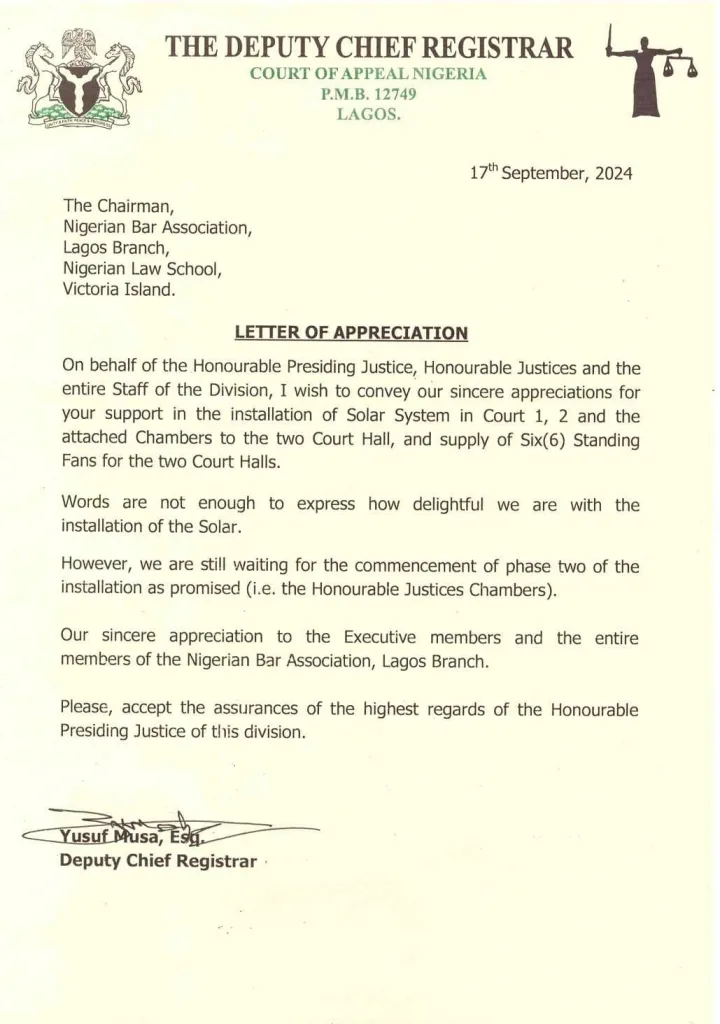
The Court of Appeal has expressed its appreciation towards the Nigerian Bar Association (NBA) Lagos Branch for the donation of a solar system and 6 standing fans to its Lagos Division.
The intermediate court a commendation letter signed by its Deputy Chief Registrar, Yusuf Musa Esq., said: “Words are not enough to express how delightful we are with the installation of the Solar (system).”
Likewise, The Court in another ‘Thank you letter’ praised the Chairman, Council of Legal Education (CLE), Chief Emeka Ngige SAN who moved the motion for NBA Lagos Branch to undertake the project.
The Court of Appeal has reportedly had funding challenges for its energy needs especially following the hike in electricity tariffs, leading to shortened sitting periods and delays in justice administration.
Read the full text of the letter dated 17th September 2024 and titled “Letter of Appreciation below.”
Despite Nigeria’s deeply conservative and religious fabric, where sex is often a hushed topic, the sex toy industry is booming — and dildos are flying off the shelves, reflecting a surprising surge in this unconventional market as more citizens boldly embrace erotic pleasures amid economic hardships, Victor Ayeni reports
Most days of the week, Niniola (surname withheld) is as busy as a bee, catering to the diverse clientele who frequent her adult entertainment store. Her well-lit store features a spa parlour alongside a wide array of intimate products and sex toys, including lingerie, sexual enhancers, lubricants, vibrators, dildos, and BDSM kits.
The microbiology graduate from a state university in the South-West, ventured into the sex toy business in 2020, a year after completing her National Youth Service Corps.
The 28-year-old believes her store’s location on an estate in the Ogudu axis has been a core selling point for her pleasure-enhancing business as most of her clients preferred a high degree of anonymity.
Niniola admitted that she sells more of her products via social media platforms and messaging apps to meet the demand for professional discretion.
“My customers don’t have to come down here physically, this business has evolved beyond that,” she told Saturday PUNCH.
“They can contact us, tell us which of their products they want, we give them a catalogue to make their choices and they pay for the services including delivery and we get it across to them.
“From time to time, I get nice feedback. Some of those who patronise us are married, some are single, some divorced, some have spouses outside the country, some of our clients are women and some are men. Their maximum pleasure is our goal,” she said, smiling brightly.
On her X and Instagram accounts, Niniola regularly showcases a variety of sex toys available in her store.
She also includes her WhatsApp number, encouraging potential clients to reach out to her through private messages.
In a recent post, she announced the arrival of new dildos, assuring women that they would provide “long-lasting pleasure.”
When our correspondent inquired from her about the patronage of dildos and whether the economic situation has affected its demand, she giggled.
“I started this business in the middle of COVID-19 and I can tell you that we made a lot of sales during that period. You know, the lockdown and social distancing affected many relationships. Many lovers were stranded and people sought sexual fulfilment from our adult novelty products.
“Even now, I can’t say the economy has affected our business because we still make good sales. We even receive orders from outside Lagos. No matter the economic situation, people will always have enough to attain sexual satisfaction because it’s important,” Niniola added.
‘I’m helping my husband’s weakness’
When Mrs Bunmi Awoyemi (not real name) was first introduced to sex toys a few years ago, she felt a tinge of shame, reflecting the influence of her strict religious upbringing.
The mother of two explained that she arranged for the delivery to a location slightly away from her home, ensuring that no one in the neighbourhood would recognise her or guess the contents of the package she was picking up.
“My husband was the kind of man who downloaded even before the play began. Within a minute or two, it was over. He is a lovely man and a good husband but that’s just our only problem.
“I wasn’t satisfied and rather than cheat on my husband, I decided it was time to try out sex toys. I ordered a vibrator and a dildo and so far, I can say they have made up for my husband’s weakness,” Awoyemi told Saturday PUNCH.
Like Mrs Awoyemi, Saturday PUNCH gathered that many married women and ladies in relationships use sex toys such as dildos to satisfy themselves.
Single ladies who have been jilted by men or have not yet found a man to warm their beds also use artificial penises to pleasure themselves.
“It’s safer to use dildos than to sleep around and get infected with venereal diseases. I would rather pleasure myself with dildos than allow men to lie to me, cheat on me, and break my heart like they like to do,” a hairstylist who gave her name as Cynthia, told Saturday PUNCH.
Dildo varieties
Dildos are adult sex aids that are often used to attain sexual climax for women and also for men.
“While they are sometimes meant to feel like a penis, they don’t have to look like one. They come in different materials, shapes, and sizes. Some dildos are curved to stimulate the prostate or G-spot,” according to WebMD.
Findings by Saturday PUNCH revealed that there are different kinds of dildos based on their structure or designs.
Some dildos are made to look like a penis with testicles while some are made to be strapped on with a harness.
Some dildos are made with a suction base to adhere to a surface, others vibrate to stimulate the user while some, known as double-sided dildos, are designed for two partners to use at once.
The materials with which these dildos are made also vary. There are glass, silicon, rubber, plastic and wooden dildos, some of which are also sold by traditional herb vendors.
Phalluses as old as time
Far from being a novelty dreamed up by the Western mind, dildos have a rich history spanning centuries.
In 2005, German scientists uncovered what The Register described as “one of the world’s oldest sculpted phalluses, measuring 20cm and meticulously crafted from polished siltstone about 28,000 years ago.”
Egyptian paintings from 3,000 BCE also showed women wearing large phallic objects around their waists to pay tribute to Osiris, a major Egyptian god.
The ancient Greeks – the architects of Western civilisation – also made stuffed dildos out of leather, which men often gifted to their wives when they left to go to war.
During the Renaissance, elite members of society reportedly had dildos custom-made from materials like silver and ivory. Later in the 17th century, English men who were fearful of how artificial phalluses could pose a threat to their sexual prowess passed some laws that prevented women from making them.
Following England’s steps, America banned the sale of rubber dilators, medical devices that help stretch the vagina, leading to the creation of an underground sex toy market. It was during the sexual revolution in the 1960s that dildos were, once again, widely accepted as tools for pleasure and sexual liberation.
A booming business
In the conservative Nigerian society where an open discussion of sexual issues is often frowned upon, checks by our correspondent revealed that some vendors are heavily patronised and make millions of naira from sex gadgets.
Although frowned upon by Christianity and Islam, many patrons, both online and offline, frequently patronise adult entertainment stores to make up for what is missing in their bedrooms. Sandra, a sex aid vendor whose store is located in Lekki, told Saturday PUNCH that dildo prices vary based on their sizes, colours and structures.
“The cheapest we have is N11,000 and that is for size 7. We also have size 10 which is N50,000. We have the one made with silicon, N85,000 and strap-on, N25,000.
“The bigger the size and the more realistic the dildo is, the more expensive it is. We have a strap-on dildo that uses a remote control also. That one is N40,000 and we get good patronage on all our products,” Sandra said.
Another vendor in Surulere who gave her name simply as Faith, noted that although there are still some states where sex toys are sold “under the counter,” they have many clients from across the social strata.
“I won’t give a specific figure, but we rake in millions of naira in an average of six months, give or take. We get both male and female customers across different social classes, ethnicities and religions. We don’t discriminate.
“Our products are mostly imported and their prices have risen over the last year due to the forex issues, but yet people still contact us daily for their needs,” Faith disclosed.
An estimate by Statista showed that “the global sex toy market is expected to grow steadily between 2019 and 2026, from approximately $27.17 billion to around $52.7 billion in that period, reaching a value of $80.7 billion by 2030.”
A 2022 survey in the US revealed that approximately 82 per cent of female consumers own some form of sex toys. Additionally, the findings indicated that these toys are most prevalent among individuals aged 25 to 29.
In a video which went viral in February 2022, a lady in Warri, Delta State, expressed astonishment after she found out that a shop which had restocked about 7,000 dildos of different kinds, sold them out within three days.
“They carry 7,000 dildos, different sizes: long, medium and small. They stocked the dildos at the woman shop on Friday and by Monday, we reached there, that place don empty. Who buy them? Who buy the dildos, na mama Destiny?” the woman asked some men in Pidgin English.
Women’s sexual awareness
In September 2022, a Nollywood actress, Nkechi Blessing, caused a stir online after she distributed sex toys and dildos as souvenirs at an event in Lagos.
According to a short video of the actress recorded at the event, she said, “I am not saying men are scum because I have a man, but you need to have one (dildo) for yourself in case you don’t have a man.”
Responding to the widespread criticism which greeted her gesture, Blessing revealed that some of her critics begged her on WhatsApp messenger to have the dildos despite lampooning her on social media.
Similarly, in March 2020, popular vlogger and media entrepreneur, Toke Makinwa, advised ladies to please themselves by using sex toys.
“Why is it that we think that sex is something that men are meant to enjoy and something that we are meant to give to men? You deserve orgasms, you deserve a good time, and you deserve less shyness and more boldness.
“I think every female should have a vibrator. I mean, are you crazy, you don’t have one in 2020. Like, dude, how do you even know what your body needs? There are three types of vibrators I will advise every lady to get,” she said in the video clip shared on her Instagram page.
A 2017 study published in the Journal of Sex and Marital Therapy took a survey of 1,000 women aged between 18 and 94 and most of the respondents admitted that they could not reach their orgasms without clitoral stimulation.
An online sex toy store, Erotic Planet, in its Instagram post highlighted some of the common types of adult novelty toys used by women.
It listed vibrators such as wand, clit suction toys, rabbit and finger vibrators and wireless panty sets.
Others include anal toys such as butt plugs; nipple toys such as nipple clamps and penetrative toys which include dildos of various sizes.
Speaking on underlying medical conditions that could make men and women seek out the use of sex toys, the director of the first online adult novelty store in Nigeria, Iheoma Obibi, said, “This can be for individuals being treated for epilepsy and high blood pressure. There are, of course, other pre-existing conditions but individuals must make attempts at discussing with their medical professional as well as with their partners.
“The business has always had room for growth; the issue has been if we can ensure that we do not dump on the unsuspecting public badly made Chinese fake products which are cheaper; getting staff who are willing to learn the special nuances of understanding what sex toys are and can speak about them without the conversation degenerating to gutter talk.”
Clients in same-sex relationships
When our correspondent contacted a sex toy vendor, Tunde (surname withheld) who resided in Lagos, he indicated that only seven-inch dildos were available in his stock.
This, he noted, was due to the high patronage that he receives, especially from clients who identified as gay and lesbian, adding that he had other pleasure gadgets such as poppers, enema bulbs, fleshlights, and different brands of ejaculation delay cream.
“Seven inches is a medium size penis. It’s not too big and not too small. I have the N23,000 one and the N25,000 one. Dildos are a necessity for lesbian ladies. Many queer guys like it too,” Tunde said.
On his X account and WhatsApp status, the vendor regularly posts videos of various male models to illustrate to clients how these gadgets are used.
“There is virtually no area inside Lagos that people have not requested for dildos, lubes and other products. The truth is, many young people today are more sexually explorative and are willing to try new things in the bedroom,” Tunde added.
One of his clients, who pleaded anonymity, told Saturday PUNCH, “I prefer using my dildo whenever I am horny and I need it in my anus. It’s safer than being ‘kitoed’ (set up by blackmailers) or being infected. This is my way of pleasuring myself.”
Sharing a photo of himself posing with several dildos, another client, Seun (surname withheld), who identified as bisexual, confessed that he uses dildos to pleasure himself whenever his girlfriend travelled out of the city.
A dildo patron, identified simply as Desola, who identified as a lesbian, noted that not only does the dildo help her attain sexual climax, it also protects her from exposure to sexually transmitted diseases.
“I use it often and it goes a long way to reduce my rate of exposure to STDs. It’s really no different from those who climb penis, so there’s no issue with it,” she told our correspondent.
Medical experts have noted that dildos can provide internal stimulation to the G-spot, a sexually sensitive area in the vagina, prostate, or other parts of the vagina or anus.
This sexual arousal has been noted to help the body release the feel-good hormones dopamine and oxytocin.
“Every man has a male G-spot. Stimulating the man’s G-spot will give a man the wildest orgasm he has ever experienced. Sadly, most men will never experience this in their lifetime.
“You have to pass his anus to get to a man’s G-spot. A lot of men who felt this probably had this weird feeling first in a hospital when they were getting their prostate checked by a doctor,” the co-founder of Priv Health, Dr Olusina Ajidahun, noted.
Pros and cons
A healthcare practitioner, James Lekwauwa, in an interview with Saturday PUNCH, explained that dildos provide new and different sensations and offer experiences that manual stimulation alone may not achieve.
He further stated some sexual medicine experts have recommended sex toys as part of therapy.
“Sex toys are not high maintenance and only need a battery change. They are generally not harmful as long as you make sure they are properly cleaned, used for the intended activities and are also the right size for you,” Lekwauwa added.
However, he disclosed that sharing sex toys can spread sexually transmitted infections and advised that “it’s best used by the owner and not to be shared.”
“Furthermore, if you use a dildo that is too big or goes too hard, it might hurt. Always make sure to take it slow and see what feels right. Its psychological effect is that over-reliance on dildos might make it somewhat difficult to enjoy sex without them.
“There is another urban myth that if a sex toy is made with a platinum-grade material, it won’t harm. This is a myth that is often perpetrated,” he noted.
Also commenting on the negative side effects of the use of sex toys, a mental health expert, Kelechi Okwaraji, stated that overt users may not feel encouraged to socialise with other people because they have the option to fall back on.
“They tend to give users an unrealistic expectation of partner-to-partner sex. Some of these sex toys are powered by batteries and can last longer and faster than a human male. Once the mind gets used to this, it can make natural intercourse pale out.”
Experts urge caution
On her part, a psychologist, Olubunmi Onipede, explained that she did not personally buy the idea of the use of sex toys due to their nature of disrupting social interactions.
“I need to let people understand that sex toys make people feel anxious, asocial, and even terrified to go back and be amongst people later on. It affects social relations and it also leaves certain consequences on sex life.
“As much as people enjoy these items, it is a medium-risk activity for most sexually transmitted infections if you share them with a partner. Its prolonged use also damages the skin.”
While noting the social stigma attached to the use of dildos, Onipede further explained that a lot of dildos and other penetrative toys might be harmful to human health.
“They are made from rubbers and plastics which may be harmful to human health. Bacteria can grow in there, and they might never be fully sanitised. Toys that contact other people’s fluids are inherently unsafe,” she added.
Responding to questions about the dangers sex toys could pose to the human body system, Ajidahun, in a post shared on his X account in November last year, warned that a research study indicated that certain harmful particles are present on the materials used.
“Amongst the materials that were noted to have come from the friction of the toys were small particles known as ‘Micro and Nano plastics.’
“A critical analysis showed one in particular ‘Phthalates’ which is a known substance that has the potential to disrupt the organ in our body called the pancreas which produces insulin which can increase the risk of diabetes.
“They also noted that some of these particles had great potential to cause damage to our nerve cells increasing the risk of brain damage. Since this study might not be fully representative, it linked the risks and made recommendations for more research to be done to understand more,” he wrote
Says any attempt to gag lawyers from criticizing the judiciary in the media spells danger
By J.S. Okutepa, SAN
When his lordship the newly appointed and confirmed Hon. Chief Justice of Nigeria (CJN) was being confirmed, it was reported that his lordship promised to deal with senior lawyers who engaged themselves in criticizing courts and judiciary on social media and television stations. His lordship promised to deal decisively with these sets of lawyers to bring sanity and respect to the judiciary.
These answers, it was reported, came in response to questions said to have been posed by the president of the Senate Senator Godswill Obot Akpabio. For me, the first steps to take are for judicial authorities to engage the lawyers that engage in such conduct in respect of bad criticisms through appropriate channels that offer fair hearing and hear them. They may have their reasons for doing so.
Be that as it may, it is my view that no senior lawyer whether he be Senior Advocate of Nigeria or not and who is worth his professional salts in the legal profession should recklessly criticize judges and processes pending before the courts of law. It is wrong to do so, and it will be both contrary to the code of conduct and contemptuous of the court to do so.
But we must be very careful not to gag lawyers from expressing their opinions and offering criticisms of the judiciary on social media and national media platforms. It is constitutional for lawyers, either senior or junior to to express their feelings to the press. There are many reasons we need to be careful and avoid gagging lawyers from criticizing judges and judiciary on social media and other media platforms.
First, while it is true that there are channels to challenge judges and judicial misconduct, there appears to be inadequate and no prompt remedies for judicial abuse of power under our system of disciplinary procedures. The new Hon. CJN is respectfully urged to look at the disciplinary processes of discipline of judges both at the trial and in appellate courts and ensure that no judicial officer that is seen to have abused judicial discretion and powers is given a pat on the back by light punishment ditched out upon complaints.
Secondly, it is also recommended that there should be no sacred cows in the judiciary. When the complaining public or lawyers are led to believe that a judge has become so much untouchable or that such judex has godfathers within the disciplinary institution and nothing can come out of complaints, a tendency exists for ventilation of bottled grievances vide media discussions that are intended to expose such judicial officers that danced naked in adjudications.
Thirdly, the new Hon. CJN should do something about lawless judges who, under the guise of adjudications and performing judicial duties, engage themselves in lawlessness in adjudications. A judge it is submitted, engages in lawless adjudications when he decides matters contrary to express provisions of law and takes the law into his hand by deciding otherwise than as required by law and or deciding contrary to his judicial oaths.
Such judges allowed themselves to be influenced by factors other than purity of justice. One instance of such a lawless judge is where the judge ignores expressed provisions of law and engages in interpretations that frustrate the reception of evidence in support of pleaded facts or where judicial decisions are not rooted in the substance of justice but in the caricatures of it which is not justice, in other to support a predetermined conclusion already agreed by the judge.
I think there are huge burdens on the shoulders of the new CJN. These burdens cannot be discharged effectively and efficiently if there are already inherent agreements to gag lawyers from criticizing judges on social media and other traditional media platforms. I see nothing wrong in offering constructive criticisms of the judiciary on social media in respect of judgments and rulings that have been delivered.
Such responsible criticisms, in my view, are allowed to check judicial excesses. The judiciary should have units that monitor such views and see the substance in them and modify their stand in the interest of justice. There is also nothing wrong in criticizing judicial actions or inactions in the most appropriate and civilized ways with temperate languages that exposes evil inherent in any decision so that judiciary can get feedback from the public that it was set up to serve.
That is why I am not an advocate of judicial isolationism from criticisms. After all, judges are appointed to serve the interests of the public and where the interests of the public are not been served, anyone who is led to believe that justice has been battered and murdered should not be gagged up to speak on it.
Finally, for me, the only way he-goats must avoid fornication in public places is for those who are responsible for rearing she-goats to train the she-goats to cover their nakedness and for the she-goats not to go about naked in public places. The huge burdens on the shoulders of the new CJN therefore, in my view, for his lordship not to assume a set mindset to start with gagging lawyers from offering public criticisms of the judiciary but let his lordship lead by example and to instil in the judiciary the proper orientations so that they render judgement and decisions that are sound and above board or such decisions that are not being seen as products of a lawless judge.
Our site uses cookies. By clicking “Accept All Cookies”, you direct Law and Society Magazine to store cookies on your device and disclose information in accordance with our Cookie Statement: cookie policyACCEPTREJECT
Privacy & Cookies Policy
Privacy Overview
This website uses cookies to improve your experience while you navigate through the website. Out of these cookies, the cookies that are categorized as necessary are stored on your browser as they are essential for the working of basic functionalities of the website. We also use third-party cookies that help us analyze and understand how you use this website. These cookies will be stored in your browser only with your consent. You also have the option to opt-out of these cookies. But opting out of some of these cookies may have an effect on your browsing experience.
Necessary cookies are absolutely essential for the website to function properly. This category only includes cookies that ensures basic functionalities and security features of the website. These cookies do not store any personal information.
Any cookies that may not be particularly necessary for the website to function and is used specifically to collect user personal data via analytics, ads, other embedded contents are termed as non-necessary cookies. It is mandatory to procure user consent prior to running these cookies on your website.