Home Blog Page 527

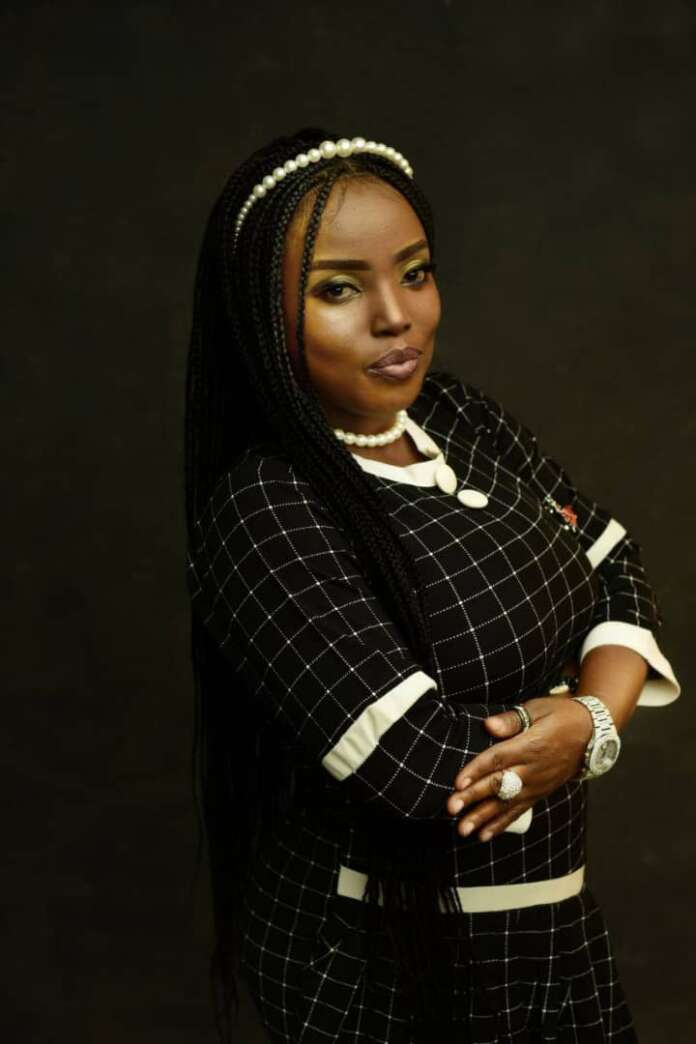
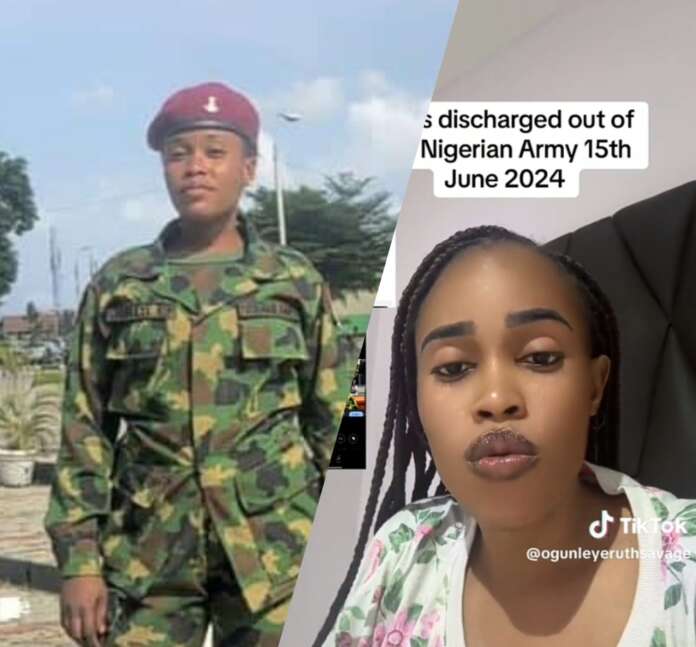
Ruth Ogunleye: A tragic reflection of human rights violations and gender injustice in the Nigerian Army

  • Watch Arise News video analysis on the victim

Mabel Adinya Ade’s reflections

The recent dismissal of Ruth Ogunleye, a female Army officer who reported being raped by a senior officer, is a chilling reminder of the pervasive culture of gender-based violence, impunity, and human rights violations in Nigerian. Her case, where she was not only dismissed from service but also branded as “mentally unstable,” sheds light on a much larger and deeply entrenched issue within the armed forces and beyond one that continues to plague women and girls across Nigeria, particularly in conflict-affected regions like Plateau, Benue, Kaduna, Borno, Adamawa, and Yobe.

The Betrayal of Justice

Ruth Ogunleye’s case is not an isolated one but rather part of a grim pattern in which women in the Nigerian Army and other security forces are subjected to sexual violence, harassment, and mistreatment. The fact that Ogunleye, who bravely reported the assault, was dismissed instead of being offered protection and support is not only deeply distressing but also an affront to justice. This treatment reflects an abuse of power and a systematic failure to protect vulnerable individuals who risk their lives in service to the nation.

This is compounded by the fact that military personnel, especially women, have long faced sexual harassment and assault in the line of duty. In conflict zones, where violence is rampant, there have been multiple allegations of security forces including the army argeting women and girls for sexual exploitation. In some cases, the mere presence of a gun is enough to coerce victims into silence, forcing them to submit to sexual abuse or intimidation. The victims, many of whom lack the courage or support to speak out, often suffer in silence.

A Kangaroo Investigation: No Justice in Sight

The army’s response to Ogunleye’s complaint appears to reflect a disturbing lack of accountability. Instead of ensuring that an independent and transparent investigation was conducted, the army swiftly moved to discredit her, labelling her as mentally unstable. This knee-jerk response only deepens the culture of impunity and gender-based violence that already exists within military structures.

When allegations of sexual violence are made within any institution, there should be an independent body tasked with investigating the complaint one that is impartial, transparent, and respectful of due process. The use of a military-led internal investigation, without external oversight, serves only to protect the perpetrators and further victimize the survivors. In Ogunleye’s case, the denial of justice, combined with her public humiliation, amplifies the trauma she has already endured.

The Far-reaching Consequences of Gender-based Violence in the Military

The repercussions of this case are not just felt by Ogunleye but reverberate through the broader spectrum of female soldiers and women in Nigeria. This reflects a larger issue of systemic gender-based violence within the military and across Nigeria’s security forces. Women are often regarded as expendable commodities either sexually violated in conflict zones or silenced when they report abuse. This deprives them of their basic human rights, and their dignity is stripped away by those who should be protecting them.

For women serving in conflict areas, the fear of sexual violence and harassment by their own comrades in arms is ever-present. This erosion of safety and respect for women creates an environment where victims of violence are not only denied justice but are further stigmatized and humiliated. The painful irony is that the very institutions entrusted with defending the country become the perpetrators of harm, particularly against women and girls.

The Call for Justice and Accountability

It is crucial that the Nigerian Army, and indeed all institutions, learn from Ruth Ogunleye’s tragic experience. Whether or not Ogunleye’s allegations are true, dismissing her without due process, while branding her as mentally unstable, is deeply problematic. Every individual deserves a fair investigation, regardless of their status or gender, and the rights of victims must be protected. If she lied, there should be legal avenues to address it, but this should not justify her humiliation or further harm.

The military and other security forces must be held accountable for the abuse of power and gender-based violence, both within their ranks and in the communities they serve. The government must ensure that robust systems are in place to protect victims and that those found guilty of abuse are prosecuted to the full extent of the law and I hope strongly the Federal Ministry of Women Affairs charged with the reasonability of advocating for women and girls and indeed women and well-meaning Nigerians will act right to protect Ruth Ogunleye.

A Wider Call to End Gender-Based Violence in Nigeria

This incident calls for a broader societal reflection on the prevalence of sexual violence and harassment in Nigeria, particularly in conflict zones. Women in the military, women in communities, and girls in schools must be afforded the respect and protection they deserve. This case underscores the urgent need for legal and institutional reforms that prioritize gender equity, safeguard women’s rights, and ensure that those in positions of authority, including within the military, are held accountable for their actions.

Indeed, the tragic case of Ruth Ogunleye highlights a pressing need for the National Assembly to reconsider its stance on the Violence Against Persons Prohibition (VAPP) Law, which is currently at risk of repeal. This law, which was designed to provide a comprehensive legal framework for the protection of individuals from all forms of violence, particularly gender-based violence, stands as a critical tool in the fight for justice and equality in Nigeria.

The VAPP Law has already proven to be a step in the right direction by recognizing various forms of violence, including sexual harassment, domestic abuse, and harmful traditional practices, and providing victims with legal avenues for redress. However, the threat of repeal sends a dangerous signal, not only to survivors of violence like Ruth Ogunleye but to all Nigerians especially women who rely on the law for protection in the face of abuse.

If this law is repealed or undermined, it would be a grave setback for gender equality and human rights in the country. This case underscores the urgent need for robust legal frameworks that protect women and girls from abuse, particularly within institutions like the military, where gender-based violence has long been a silent epidemic. By repealing or weakening the VAPP Law, the National Assembly would not only fail to support survivors but also enable the continuation of impunity, where perpetrators of sexual violence can act with little fear of legal consequence.

The National Assembly must stand firm in its commitment to protecting the rights of women and girls in Nigeria. Repealing or weakening the VAPP Law would undermine years of advocacy and progress made to hold perpetrators accountable and ensure that victims receive justice.

This case should serve as a wake-up call for lawmakers to not only preserve but strengthen the VAPP Law. They must act decisively to send a message that gender-based violence in all forms, whether in the military or society, will not be tolerated. It is time for the National Assembly to ensure that their laws reflect a true commitment to human rights and justice for every citizen, especially women who have long been marginalized and victimized

Conclusion: Justice for Ruth Ogunleye

Ruth Ogunleye has selflessly served her country, and it is imperative that she is afforded the dignity and justice she deserves. The Nigerian Army’s actions against her, if unchallenged, will only contribute to the ongoing culture of abuse and impunity in the country. We must demand an independent investigation into her case, and if true, those responsible must be held accountable. At the same time, society must come together to challenge and dismantle the systems that perpetuate gender violence, both within the military and across Nigerian society.

The true measure of a nation’s commitment to human rights is how it treats its most vulnerable citizens, and in Ruth Ogunleye’s case, Nigeria has failed. Let us stand for justice, for accountability, and for the rights of women who serve their country with dignity.

Written By:

Mabel Adinya Ade,

Gender Equality Advocate and Executive Director,

Adinya Arise Foundation (AAF)

8 Eket Close, Area 8,

Garki Abuja- Nigeria

[email protected]

Let’s teach the next generation

My son . . . keep my commands in your heart. Proverbs 3:1

Sophia Roberts witnessed open heart surgery for the first time when she was around eleven years old. While that might seem a bit young for a child to view such a medical procedure, you need to know that her dad, Dr. Harold Roberts Jr., is a heart surgeon. In 2022, Sophia—now thirty years old and a surgery resident physician—teamed up with her dad to perform a successful aortic valve replacement. Harold said, “What can be better? I taught this kid how to ride a bicycle. . . . Now, to get to teach her how to operate on a human heart is pretty mind-blowing.”

While few of us will teach surgery skills to a child, Solomon describes the importance of instructing something else to the next generation—to honor God and His ways. The wise king passionately shared with his child what he’d learned in his relationship with God: “My son, . . . trust in the Lord with all your heart” (Proverbs 3:1, 5), “fear the Lord” (v. 7), “honor the Lord” (v. 9), and “do not despise the Lord’s discipline” (v. 11). Solomon knew that God “loves” and “delights in” His children who willingly receive His correction and guidance (v. 12).

Let’s teach the next generation what it means to trust, revere, honor, and be humbly molded by our awesome, amazing God. To partner with Him in doing so is a vital privilege and, well, pretty mind-blowing!

Why is it vital for you to share what you’ve learned about God with the next generation? What will you pass on today?

Dear God, please help me to share Your loving ways with both young and old today.

INSIGHT
When she faced “the tree of the knowledge of good and evil” (Genesis 2:9, 17), Eve saw that its fruit was “desirable for gaining wisdom” (3:6), so she took it. The wisdom humans gained in their rebellion set them in opposition to God. Now they could decide for themselves what was good and bad, but that didn’t mean they had an accurate perception of the world.

The book of Proverbs—especially chapter 3—reorients humanity, telling us that human wisdom is never enough. In verses 5-6, the author emphasizes that we’ll find the correct path when we trust God and not our own understanding. Trusting Him alone will make our way straight. In Eden, we gained worldly wisdom; it’s only in trusting submission to God that we can learn to use it well.

Read: Proverbs 3:1-12 | Bible in a Year: Song of Songs 6-8; Galatians 4

The epidemic of sudden death in Nigeria

By Sonnie Ekwowusi

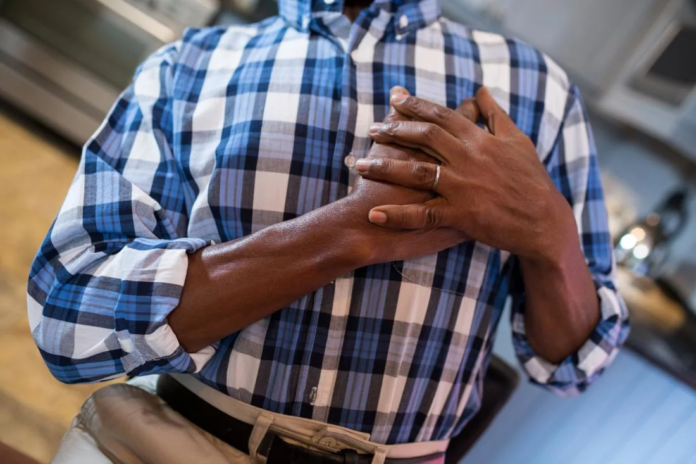
I just got the sad news of another friend, in his 50s, who was hale and hearty last night but who suddenly collapsed and died in his house this morning

He was pronounced dead on arrival at the hospital.

I would advise we pay attention to our medical health at these times. Please observe your routine medical check up. Endeavour to get a 7 hour Grade A sleep at night as medical doctors advise. Do not omit your drugs. Check and monitor your BP regularly at home. Eat very well. Engage in regular sporting activities that suit your age

Anyway I am not a medical doctor.

Don’t mind me

Sonnie Ekwowusi

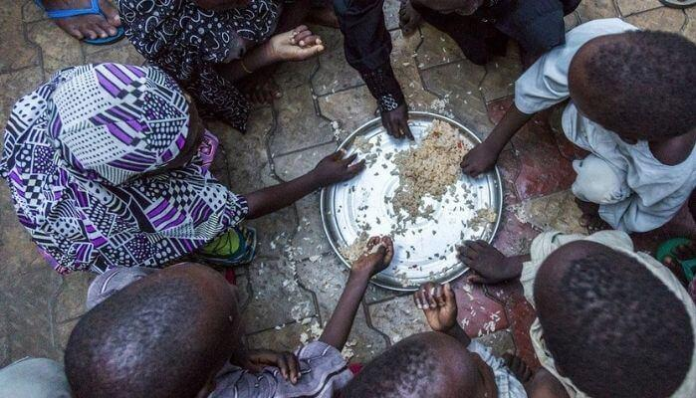
There’s hunger in Nigeria, crash prices of petrol, electricity, Christian Elders to Tinubu

There’s hunger in Nigeria, crash prices of petrol, electricity, Christian Elders Tell Tinubu

Elder statesmen in Nigeria under the aegis of the National Christian Elders Forum (NCEF), have called on the Federal Government led by President Bola Tinubu to alleviate the suffering of Nigerians, including reviewing the price of petrol and electricity.

They therefore called for improved security, particularly for farmers in rural areas who are crucial to the nation’s food security.

The Chairman of NCEF and former Deputy Governor of Taraba State, Dr Samuel Danjuma Dani, made the recommendations in a statement issued after their meeting to deliberate on the current state of the nation.

Apart from Gani, other members of NCEF are Pastor Bosun Emmanuel (Secretary), Dr. Saleh Hussaini, Vice Chairman (North); Elder Shyngle Wigwe, Vice Chairman (South); Mrs. Osaretin Demuren, Hon. Treasurer; Prof. Joseph Otubu, Dr. (Mrs) Kate Okparaeke, Dr. Ayo Abifarin, Gen. Zamani Lekwot (rtd), Hon. Justice James Ogebe, JSC (rtd); Elder Moses Ihonde, Hon. Justice Kalajine Anigbogu (rtd), Elder Nat Okoro, Mr. Solomon Asemota (SAN) and Elder Matthew Owojaiye.

Others are DIG P. L. Dabup, Sir John W. Bagu, late Dr. Chukwuemeka Ezeife, Dame Priscilla Kuye, Prof. (Mrs) Deborah Enilo Ajakaiye, HRM Oba Dokun Thompson, Dr. Taiwo Idemudia (Diaspora), Elder Minso Gadzama, Apostle Bulus Musa Kewa, Admiral Peter Adeniyi (Rtd), Hon. Justice Goddy Anunihu (Rtd) and Chief Sir Ferdinand Anikwe.

The statement said, “Following our discussions, we wish to present the following recommendations to the President and Government:

“Review of Petrol Prices: We urge the Government to reconsider the recent increase in petrol prices, which have led to a significant rise in the cost of food and other essential commodities.

“Addressing the Impact of Protests: It is important to acknowledge that the recent protests by some Nigerians were because of the increase in petrol prices and aggravating hardship faced by the populace. We recommend a downward review of petrol prices to alleviate the suffering of the people.

“Reduction in Electricity Costs: We advocate for a reduction in electricity tariffs to enable Nigerians to produce goods and services more economically. This measure will enhance productivity and create employment opportunities for our burgeoning youth population.

“Enhanced Security Measures: We call for improved security, particularly for farmers in rural areas who are crucial to the nation’s food security. While we recognize the Government’s efforts in this regard, we urge for more immediate and effective actions.

“We firmly believe that these straightforward recommendations will significantly alleviate the current hardships experienced by many Nigerians. We trust in the Government’s wisdom and political will to implement these measures.”

If I were Asue Ighodalo

Ikechukwu Amaechi

By Ikechukwu Amaechi

I had very instructive discussions with two A-list Nigerian politicians before and after the Edo State governorship election; the first being on Wednesday, three days before the poll. Both men have held positions of responsibility in government both at the state and federal levels.

The first politician dismissed the optimism of those who believed that given the pedigree of the 18 candidates and sophistication of the Edo electorate, the odds favoured the Peoples Democratic Party (PDP) candidate, Dr. Asue Ighodalo.

A chieftain of the All Progressives Congress (APC), he was unequivocal that the result of the election had already been written. “I don’t know why Nigerians are so naïve. They don’t seem to know what they are up against. Which election are they talking about? The same election which result had already been written?” he asked.

That was incredulous. I reminded him how the Edo electorate stepped up to the plate in the 2020 governorship election. He riposted that times have changed and INEC has become more brazen, emboldened by the unscrupulousness of the new kids on the leadership block.

We left it at that, but I hoped to prove him wrong. It turned out on Saturday that he was spot on and I was wrong. On Sunday, at exactly 2.33 pm, when INEC’s deviousness was on full parade, he sent me a text message: “I told you.”

Earlier on Sunday, at exactly 9.37 am, the second politician called to lament. What he said was spine-chilling. “Have you seen what is happening in Edo? These guys have become so brazen. This is unbelievable. What this means is that anyone contesting elections in Nigeria today will be doing so at his own risk.” He was hoping to run for the governorship of his state in 2027. Not anymore after the Edo electoral heist by the APC, he said.

None of them is from Edo. So, they had no dog in the fight, so to speak. But as stakeholders, they are as worried as every other well-meaning Nigerian. But I am more worried now because of what they said.

Before now, the risk we faced as a result of the insufferable duplicity of INEC was voter apathy. Over the years, as people came to the realization that their votes never counted, voter enthusiasm waned.

According to INEC records, only 28.63 per cent of all eligible voters participated in the 2023 Presidential and National Assembly elections. That was a new low in what has become a steady decline in the turnout of voters during elections. For instance, while as in 2011, voter turnout was an impressive 53.7 per cent, it dropped to 43.7 per cent in 2015 and 34.75 per cent in 2019.

After the 2023 elections, it was apparent that the voter apathy will intensify and the Edo governorship election where only about 22 per cent of the 2,629,025 registered voters voted has confirmed that. One would have thought that such embarrassing statistics will make the electoral umpire have a rethink. No! Instead of thinking of how to clamber out of the putrid hole of electoral malfeasance, the hardened enablers of electoral fraud are still digging.

Now, the consequence stares us in the face. Even politicians no longer have faith in INEC and if things remain the way they are, no credible Nigerian will waste his time and resources contesting elections again. The implication is that going forward, certificate forgers, age cheats, drug barons and sundry fraudsters will have the electoral field all to themselves.

The Edo election has confirmed what every discerning Nigerian knows: the Mahmoud Yakubu-led INEC is a fraud with no moral fibre to conduct free, fair and credible elections.

But by this brazenness, INEC has also finally overreached itself. As the legendary Chinua Achebe said in his book, A Man of the People, Yakubu now epitomizes that vile character, Josiah, the local shopkeeper, who tricked a blind beggar and stole his walking stick. As one of the villagers said, “Josiah has taken away enough for the owner to notice.” In the same vein, Yakubu and the INEC gang have crossed a line with the conduct of the Edo poll and longsuffering Nigerians have noticed.

Already, director of the Abuja school of social and political thought, Dr. Sam Amadi, has called for the disbandment of INEC as presently constituted, insisting that evidence abounds the electoral umpire was to blame for every bad election conducted in the country.

I agree in toto! And I make bold to say that the APC candidate, Senator Monday Okpebholo, didn’t win last Saturday’s Edo governorship election. He lost woefully to the PDP candidate, Asue Ighodalo, no matter what the fraudulent INEC says. And this is not a speculation. Results announced at the polling booths confirm Ighodalo’s victory to the eternal shame of those who toy with the sovereign will of the people. What INEC did was a perpetuation of the electoral fraud that has made Nigeria a laughing stock in the comity of democratic nations.

If you are still in doubt, consider the fact that all the accredited civil society organizations (CSOs) that observed the poll have rejected the result, insisting that it lacks integrity. The problem, as it has always been the case, started at the point of result collation from the ward, local government to the state level, which flew in the face of the Electoral Act 2022.

A coalition of civil society groups, including Advocacy for Quality Leadership and Health Awareness Foundation; Grassroots Development and Peace Initiative; Citizens Rights and Leadership Awareness Initiative, etc., alleged on Sunday that INEC used two sets of result sheets — one used in the field and another that favoured the APC – during the collation in specific senatorial districts.

The Nigeria Civil Society Situation Room and some of its accredited member organisations, including Centre for Democracy and Development (CDD-West Africa), Yiaga Africa, Kimpact Development Initiative (KDI), Nigerian Women Trust Fund (NWTF), and TAF Africa, were even more scathing in their report.

In a statement on Monday, they noted that while as “the voting process was concluded in a relatively peaceful atmosphere, the results collation process in some LGAs were not peaceful and did not meet electoral integrity standards.”

Concerned that the Electoral Act and INEC guidelines on collation were wilfully compromised, particularly in Egor, Ikpoba Okha, Oredo, Esan West and Ovia South-West LGAs, they said: “Our observation of the collation process shows that it was neither transparent nor opened to representatives of the various candidates in some cases. In addition, it lacks transparency in the application of the provision of the Electoral Act and the INEC Guidelines on over-voting and cancellation of results from polling units.”

Bemoaning the over-voting that was reported from more than 370 polling units across the State, they returned a damning verdict: “It is our observation that the Edo State Governorship election 2024 failed to fulfil the requirement of the conduct of credible elections, and again, raises questions about election credibility in Nigeria. As with recent polls, INEC’s ability and willingness to conduct credible elections in Nigeria remains questionable.”

The big elephant in the room has always been collation and Yakubu knows. As a history professor, he is most likely aware of the admonition of the Soviet dictator, Joseph Stalin, to his party apparatchik in 1923 thus: “I consider it completely unimportant who in the party will vote, or how; but what is extraordinarily important is this — who will count the votes, and how” because, “Those who vote decide nothing. Those who count the vote decide everything.” The devil in Nigeria’s elections is always in the counting.

So, INEC allowed the electorate to vote in Edo and then willfully manipulated the counting to decide the “winner.” What is even more worrying is the impunity. For instance, as at 8:40 am on Sunday, results from 4455 out of the 4,519 polling units where elections were held – 98.58 per cent – had been successfully uploaded on the INEC Result Viewing Portal (IREV), which means that Nigerians knew as a fact who won the election. Yet, bypassing its own portal, the self-same INEC had the audacity to collate results from only God knows where that was totally at variance with what was uploaded.

Those who want to be diplomatic have called for calm, asking those holding the short end of the electoral stick to follow due process in seeking redress.

Due process would mean going to court. That will be foolhardy because it is another layer of the fraud. As Mr. Jibrin Samuel Okutepa, a Senior Advocate of Nigeria (SAN), noted recently, “No matter the volumes of evidence, the judiciary appears to have taken stand and seems to be siding with the people who have no regard and respect for the sovereignty of the people.”

To be sure, no petitioner can successfully sidestep the daunting legal banana peels starting from dubious concepts of demonstration of documents, dumping of documents and calling of agents polling unit by polling unit, to the requirement that certified true copies of public documents must be tendered by the makers and the new, albeit impossible proviso that no subpoenaed witness can testified unless his or her frontloaded statements on oath are filed along with the petitions within 21.

Here, Okutepa’s advice, for me, suffices. “It is my proposal to all ‘losers’ of elections in Nigeria not to waste time and resources to file election petitions because it is easier for an elephant to go through the eyes of the needle than for anyone who was robbed of victories in our elections to get immediate remedies and electoral justice.”

If I were Asue Ighodalo, the latest victim of Nigeria’s soulless electoral mafia led by Prof Mahmoud Yakubu, I will not go to court. The matter will be settled on the streets of Edo. If that is what those inclined to being politically correct call anarchy, so be it.

Truth be told, unless and until Nigerians show the capacity to resist the malfeasance of INEC and their enablers on the streets, not in courts, this impunity will not stop.

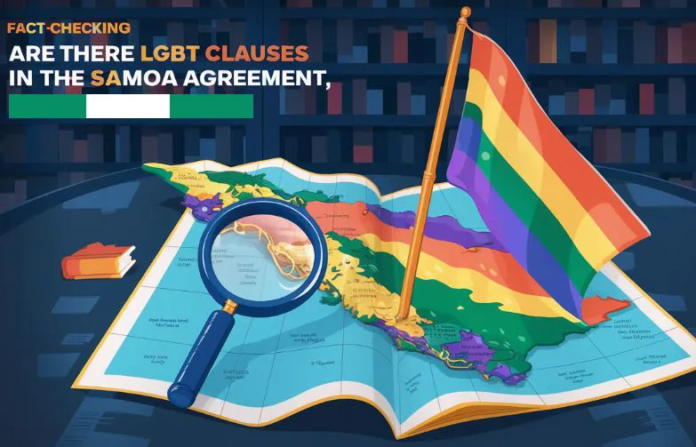
African Bar Association writes Speaker, alleges ‘deceptively drafted’ LGBT provisions in Samoa Agreement

While the National Media Complaints Commission (NMCC), also known as the Ombudsman has asked the Daily Trust to issue an apology over the inaccuracies in its report on the Samoa Agreement, the African Bar Association has written Nigeria’s House of Representatives, highlighting purportedly deceptive LGBT provisions in the recently signed Samoa Agreement.

The Ombudsman in the 19-page report of its investigation into a complaint made to it against the Daily Trust by the Federal Ministry of Information and National Orientation said the newspaper’s report complained about, which was published on July 4, 2024, was found to be inaccurate, particularly in suggesting that the Samoa Agreement contained provisions relating to the LGBTQ (lesbian, gay, bisexual, transgender and queer) rights.

But, in the letter to Tajudeen Abbas, the House Speaker, dated September 12, 2024, and titled, “Re: Identification, Analysis And Implication of Deceptively Drafted LGBT Provision In The Samoa Agreement”, the association identified twelve specific provisions within the Samoa Agreement that “contain embedded references to sexual orientation and gender identity promoting LGBT agenda”.

The agreement, signed by Nigeria on June 28, 2024, sparked public outrage for its implications on Nigeria’s stance regarding LGBT rights, especially since the country previously delayed its endorsement. But Nigerian authorities denied such provisions.

Abubakar Bagudu, the minister of budget and economic planning had stated that LGBT references were absent from the agreement.

“Nowhere in the documents were LGBT or same-sex marriage mentioned even remotely, and emphatically stating that it would be wrong for anyone to imply that Nigeria had accepted those tendencies”, he had said in response to public outcry.

Yakubu Chonoko Maikyau, president of the Nigeria Bar Association had weighed in, stating that: “I wish to state that there is no provision in the SAMOA agreement that requires Nigeria to accept or recognize LGBTQ or gay rights, either as a precondition for a loan of $150 billion or at all.”

Yet critics, including the Catholic Bishops Conference of Nigeria, expressed concerns that the agreement might inadvertently recognize international LGBT rights, thereby conflicting with Nigeria’s longstanding stance against such ideologies.

In response, the African Bar Association’s Family Law Committee said it decided to analyze and research the context of the SAMOA agreement in depth.

“The Family Law Committee finds that LGBT affirmative language is by content, context and implication deceptively embedded in the provisions, programing and implementation of the SAMOA Agreement”, the letter read.

These provisions, they claim, include vague language around “sexual orientation” and “gender identity,” which could undermine Nigeria’s laws and cultural values.

Among these are implications regarding non-discrimination clauses and the requirement for comprehensive sexual and reproductive health education, which the association interpreted as supporting LGBT agendas.

The Committee also raised concerns that grant recipients for the treaty’s implementation will include NGOs and agencies that actively support LGBT initiatives. It warned that this could lead to a gradual acceptance of these ideologies under the guise of international obligations.

“There is a seriously overlooked problem, one of which ACP countries likely don’t have on their radar at all, and that is the fact that many of the grant recipients for implementing the treaty will be LGBT-supportive NGOs, businesses and UN agencies that are, even now, working to advance the LGBT agenda in Nigeria with EU funds.”

This Association noted that its report does not provide an exhaustive list of problematic provisions, adding that there are too many to address including the treaty’s assault on the national sovereignty of ACP countries with its supremacy clause, its requirement for ACP countries to hold joint positions and voting in international fora, and its mandated stakeholder approach for implementing the treaty, among others.

The association however said its report would provide enough material for the House of Representatives to pronounce itself on whether the SAMOA Agreement contains LGBT-promoting provisions.

Read the letter and the full report here.

The-letter-and-Report

How Falana in 2022 revealed Nigerian prison officials arrange for young people to serve jail terms for convicts

  • As FG orders probe, suspends senior prison officials over Bobrisky allegations

Although the Federal Government has suspended some senior officers of the Nigerian Correctional Service over bribery allegations regarding controversial crossdresser Idris Okuneye, widely known as Bobrisky, the April 2022 allegations of rights lawyer, Femi Falana (SAN) that Nigerian prison officials arranged for young people to serve jail terms for criminals, is a clear indication that deeper investigation should have commenced in the prison sector long ago.

Below is a reproduction of that report.

Speaking on 8 April 2022 at a media session titled, “Forget the past, forfeit the future: A nation seceding from humanity” in Lagos, Falana revealed that criminals who have been convicted of a crime are allowed to walk freely on the streets after warders connive with convicts to pay youths willing to serve jail terms on behalf of criminals.

According to him, some of them who have been condemned to prison terms in Kirikiri hardly get there as the exchange is made at Mile 2, a few kilometres to the prison.

He also said that there were some convicts who don’t seek a replacement or representation in prison but simply pay court officials after which he goes from the court to his house.

He noted, “This will surprise you, when a judge pronounces a jail term, sir, before getting to Kirikiri, at Mile 2, warders have an arrangement whereby some prepared young persons will replace the convict. That is the person that will enter the prison, he’s paid.

“The second one, in the court premises, there’s a syndicate by the defence counsel, prosecutors, warders and court clerks. Once the judge turns his back, the convict will arrange and pay them and the convict will walk back home.

“There’s a study in Lagos, I think 2005/2006, 199 people sentenced for drug trafficking, none of them made it to the prison. It’s a very serious crisis we are facing. If you want to discuss the security of our country, it goes beyond calling for mercenaries.”

A blogger, Martins Otse known as VeryDarkMan, had alleged in viral videos that some officers of the Economic and Financial Crimes Commission (EFCC) collected ₦15 million from Bobrisky for the anti-graft agency to drop money laundering charges against him during his naira spraying ordeal in April after which a court sentenced him to six months’ imprisonment.

The blogger also alleged that Bobrisky paid some millions of naira to secure a choice place in prison.

Bobrisky has since denied the allegations while the EFCC and the Nigerian Correctional Service (NCoS) had ordered investigations into the allegations by the blogger.

In a statement on Thursday, the Civil Defence, Correctional, Fire and Immigration Services Board said the suspension of the officers followed a viral video on alleged infractions against them.

The statement which was signed by Ja’afaru Ahmed said the suspension of these officers is to allow for further investigation of the various allegations while assuring that the outcome would be made public when concluded.

The officers are “Michael Anugwa, Deputy Controller of Corrections (DCC), in charge of Medium Security Custodial Centre (MSCC), Kirikiri, Lagos State; and Sikiru Adekunle, Deputy Controller of Corrections (DCC), in charge of Maximum-Security Custodial Centre (MSCC), Kiri-kiri, Lagos State.”

The Board has suspended ASC II Ogbule Samuel Obinna, serving at the Medium Security Custodial Centre (MSCC), Afikpo, Ebonyi State, for allegedly accompanying a convicted inmate out of the Custodial Centre to a location outside the facility.

“In another related development, the Board has equally suspended another Senior Officer of the Service, Iloafonsi Kevin Ikechukwu, Deputy Controller of Corrections (DCC), In-Charge of Medium Security Custodial Centre (MSCC), Kuje- Abuja, for allegedly receiving monies on behalf of an inmate.”

Breaking The Silence: Digital rights for women and girls in Nigeria

Mojirayo Ogunlana

Imagine logging into the internet, eager to explore opportunities, only to be shut out—not because of your abilities, but because of your identity. This is the reality for many Nigerian women and girls, who face a growing digital divide that limits their access, opportunities, and safety online.

Though the Nigerian Constitution enshrines digital rights—like privacy (Section 37), freedom of expression (Section 39), freedom of peaceful assembly and association (Section 40)—these rights remain elusive for many women and girls. Discriminatory barriers in the digital space continue to silence their voices and limit their potential.

Amina, a 19-year-old aspiring writer from Kano, represents this struggle. She has a phone but limited internet access due to a family that believes a woman’s place is at home. When she manages to access the internet, she faces harassment and pressure to conform to traditional gender roles. 

Women across Nigeria face not just limited access, but disproportionate levels of online abuse. According to Paradigm Initiative, 55% of Nigerian women have experienced online violence, including cyberbullying and image-based abuse. These attacks silence women, stripping them of the internet’s potential to provide education, career growth, and political participation.

Access to technology is another hurdle. Despite Nigeria being one of Africa’s most connected nations, only about 35% of internet users are women, according to the International Telecommunication Union (ITU). This digital divide is most severe in rural areas, where financial barriers prevent women from affording smartphones or laptops. In urban areas, even where access is greater, cultural and economic obstacles persist, leaving many women without the necessary digital literacy.

Blessing, a young entrepreneur from Lagos, had hoped social media would help her grow her fashion business. Instead, she encounters lewd comments and threats, not because of her work, but her gender and appearance. This kind of objectification and sexualization discourages women from participating in digital economies, turning platforms of empowerment into spaces of disempowerment.

Judicial Precedents: A Path Forward for Nigeria

To address these issues, judicial activism and legislative reform are essential. A landmark case from India provides a framework for advancing women’s digital rights. In Anivar A. Aravind v. Union of India & Ors (2021), W.P.(C) No. 21485 of 2020, the Kerala High Court ruled that restricting internet access disproportionately affects women and marginalized groups, violating their fundamental rights to freedom of expression.

The court recognized that access to the internet is essential for full participation in modern society and emphasized the state’s duty to ensure equitable access to technology.

This ruling offers valuable lessons for Nigeria. By recognizing the unequal impact of digital restrictions on women, Nigerian courts could play a proactive role in safeguarding women’s constitutional rights online. 

The Anivar case illustrates that courts can challenge socio-cultural norms that limit women’s access to the internet and push governments to address digital inequality through targeted policies.

Recommendations for Legislative and Judicial Reform

1.  Strengthen Legal Protections Against Online Harassment

Nigeria’s Cybercrimes Act (2015) criminalizes online harassment, but it fails to address the gendered nature of such violence. Legislative reform should introduce provisions specifically targeting online abuse that disproportionately affects women. Inspired by the Anivar ruling, Nigeria’s laws should recognize the unique barriers women face in accessing the internet and ensure stronger legal protections for women’s digital rights.

2.  Enact Digital Equality Legislation

Nigeria needs legislation focused on promoting digital equality, including universal access to affordable internet, particularly for women in rural areas. Following the precedent set in Anivar, the Nigerian government should prioritize digital inclusion programs to ensure women and marginalized groups can fully participate in the digital space.

3.  Judicial Activism and Public Interest Litigation

Nigerian courts should follow the example of Anivar by recognizing digital access as a fundamental right. Public interest litigation could be an effective tool for advocacy groups to challenge digital inequalities. A proactive judiciary, which acknowledges the unique barriers women face online, could drive stronger legal protections and hold the government accountable for providing equitable access.

4.  Expand Digital Literacy Programs for Women

Digital literacy programs must be designed specifically for women, particularly in rural and underserved areas. These programs should go beyond basic internet skills, teaching women how to safely navigate online spaces and leverage technology for education and entrepreneurship. Empowering women with digital skills will help break the cycle of exclusion and foster greater participation in the digital economy.

A Call to Action

Nigeria must act decisively to ensure women and girls can fully participate in the digital age. Judicial activism and legislative reform are crucial in dismantling the socio-cultural and economic barriers preventing women from accessing and benefiting from technology. As demonstrated in the Anivar case, courts can drive legal changes that recognize the unique challenges women face online and hold governments accountable for addressing the digital divide.

For women like Amina and Blessing, the internet should be a tool for empowerment, not another space where gender inequality is reinforced. Protecting women’s digital rights is not just essential for their personal empowerment but also for Nigeria’s democratic future. It’s time to break the silence.

Mojirayo Ogunlana is a Digital, Media, Gender and Human Rights Advocate

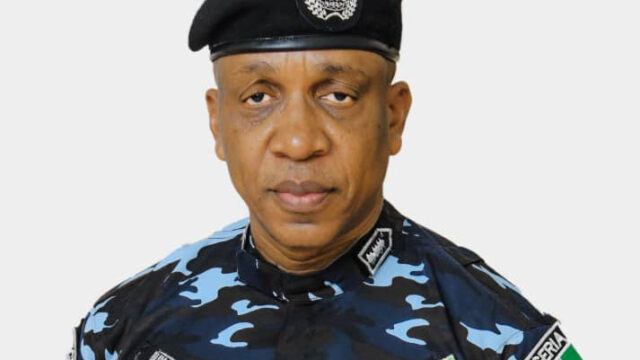
Otu Oka-Iwu Abuja congratulates CP Peter Opara

Press Release

The Otu Oka-Iwu Abuja extends its heartfelt congratulations to our esteemed member, CP Peter Opara, on his well-deserved promotion to the rank of Commissioner of Police.

We equally commend his deployment to the Federal Capital Territory (FCT) Command as the Commissioner of Police, albeit for a brief period, and now celebrate his redeployment to the Delta State Command.

As a distinguished lawyer and a proud member of Otu Oka-Iwu, we are confident that CP Opara’s legal expertise, leadership experience, and unwavering commitment position him as the ideal leader for the Delta State Police Command.

However, to ensure his immediate effectiveness, we call upon the Inspector-General of Police to facilitate the formal handover ceremony between CP Opara and the outgoing Commissioner, who has now been redeployed to Rivers State. This critical step will enable him to hit the ground running and execute his duties without delay.

We trust that with the right support and by God’s grace, CP Opara will lead the Delta State Command with wisdom, integrity, and strength.

Once again, we offer our congratulations and best wishes for your success.

Chidi Udekwe
President, Otu Oka-Iwu, Abuja

The Femi Falana angle in the Bobrisky prison-tales controversy

By Sylvester Udemezue

(1). While we await report of the “investigation” said to have been “launched” by the EFCC, I need to humbly offer my opinion on an aspect of this video which, in my view, smacks of crass ignorance of the law on the part of the presenter of the video clip.

(2). Assuming it’s true that Femi Falana, SAN, had indeed advised Bobrisky to apply for pardon (prerogative of mercy pursuant to Section 175 ,CFRN, 1999), does this fact bring any taint upon Mr Femi Falana or in any way make Femi Falana complicit in any alleged or seeming perversion of justice or encouragement of corruption?

(3). The answer in my opinion is NO.

(4). MY REASONS:

(a). With due respect, there is absolutely nothing wrong in a prisoner approaching a lawyer for legal advice. If Bobrisky had indeed contacted FALZ and FALZ got his father, the respected learned silk Femi Falana to offer legal advice, that if Bobrisky wished to come out before the end of his jail term, one option open to Bobrisky was to apply for pardon pursuant to Section 175 of the CFRN, 1999, I see absolutely nothing wrong in the advice.

(b). Also, such a piece of advice by the learned silk under the circumstances, does not mean the learned silk was encouraging corruption; from the facts Bobrisky wasn’t convicted of with corruption but of spraying money, which in my view, is a very minor offense that has nothing to do with corruption or money laundering. I was even shocked that Bobrisky was sent to prison over such a minor breach of the law, especially considering he had pleaded; payment of fine should have been enough punishment for such minor infraction. Every right-thinking person should be surprised, as I am, especially considering we are in an era when restorative justice is being encouraged.

(c). Finally, it’s possible that as of the time Mr Falana offered the alleged legal advice, Mr Falana was not aware that Bobrisky wasn’t serving the jail term in any prison but at a lodge near prison. There is no evidence showing in the video clip, that Bobrisky disclosed such fact to Mr Falana. Hence, Mr Falana was entitled to assume that Bobrisky was speaking to him from the prison yard. After all, more often than not, prisoners are allowed even by prison wardens to use phones imfrom inside the prison.

(4). Conclusion: In my opinion, if this story is true, then the evidence available from only the video clip exculpates learned silk Falana from any wrongdoing and from any unprofessional conduct. With due respect, the presenter of the video has unjustifiably called out Mr Falana, out of his (the presenter’s own) ignorance of the extant law. He accordingly owes Mr Femi Falana, SAN, an apology for this smear campaign, founded upon ignorance, against Mr Falana. He should additionally retract this false allegation and false representation against the learned silk.
Respectfully,
Sylvester Udemezue (Udems),
Proctor,
The Reality Ministry (TRM).
08109024556.
[email protected].
(25/09/2024)

TIPS