Home Blog Page 524

Modernizing the Judicial Process: Innovations of the Supreme Court Rules 2024

Download the New Supreme Court Rules

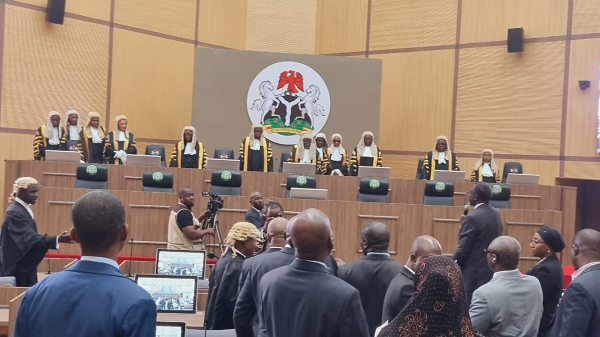
Prior to his retirement in August 2024, and in line with modern trends and evolving technology in the administration of justice, the former Chief Justice of Nigeria, Hon. Justice Olukayode Ariwoola GCON, signed off on the new Supreme Court Rules 2024 (the New Rules).
The New Rules, which repealed the Supreme Court Rules 1985, is in line with current legal practice trends in Nigeria, which is necessary to have a seamless judicial process, especially relating to the court’s procedures and practice. The New Rules contains numerous innovative changes all geared towards improving efficiency and ease in the administration of justice by the Supreme Court.

The new Supreme Court Rules have the following highlights:
Extension of the hours when the Registry will be open and the formal introduction of a comprehensive e-filing system;

the introduction of the service of most processes by electronic means.

The virtual hearing protocols have been set out in detail;the electronic case scheduling and management system will be put in place.

In the near future, a Nigeria Case Management System (NCMS) e- filing portal would be available to
Counsel and the Court. The newly created Electronic Unit of the Court has been given the capacity to provide assistance to all practitioners in this regard. More duties have been imposed on the Bar to aid the speedy hearing of appeals.

Where service is effected on a Legal practitioner who has ceased to appear for any party, failure to inform the Court expeditiously would be deemed an act of professional misconduct.

Service on the Attorney-General of the Federation or an Attorney-General of a State is deemed sufficient service where the Federal or State Government of Nigeria is a party.

Parties are now mandated to file notice of non-contention when they do not intend to contest an application.

Most applications for leave shall be heard in chambers pursuant to Section 233(3) of the 1999 Nigeria Constitution (as ammended).

One of the most important innovations in these rules is the execution of the policy to reduce the volume of applications for extension of time which have been abused over the years. Now, time provided by the rules is automatically extended for the same period in the first instance, it is also further extended for the period provided with payment of penalty for default and no application for extension of time shall be entertained thereafter except in an appeal against a death penalty. This simply means that if you have seven (7) days to file a process, and you do not do so, you have another seven (7) days automatically to do the needful. After the cumulative 14 days, you have another seven (7) days in which case you will pay penalty for default within that 3rd seven (7) days. After twenty-one (21) days, there is more extension of time. Importantly no application would be entertained by this Court.

The time to file briefs have been reduced. A section of the Registry has been created to manage electronic processes including the electronic copies of the Record of appeal.

It is now mandatory for the Appellant to pay costs awarded by the Court below into an escrow account. To ensure diligence in appeals against monetary judgments, the Court would require a guarantee or bond from a reliable financial institution as a condition to hear the appeal.

Where the appeal relates to land, an undertaking to pay damages where the appeal fails.

The Court will not grant a stay of proceedings in an interlocutory appeal brought before it.

Where the appellant fails to comply with the conditions of appeal, the Court will suo motu dismiss the appeal.

With regards to costs, the Court will now adequately award costs to compensate the Respondent for the time and expense in coming to Court.

Also, where Counsel engages in an abuse of the process of the Supreme Court, punitive costs will be awarded personally against such Counsel including a Counsel representing a Federal or State government or an institution.

Counsel who fails to pay costs awarded personally shall not have right of audience in any Superior Court in Nigeria. There are provisions made to fast-track criminal appeals relating to terrorism, rape, kidnapping, money laundering, corruption and human trafficking.

The procedure in election matters have been elevated and incorporated into the Rules with enhanced guidelines to ensure speedy dispensation of justice. Learned Senior Advocates may appear with not more than 5 learned friends. Where more than one Senior Advocate appears in a matter, the total number of Counsel shall not be more than eight (8) for the party.

Click here to download the new Supreme Court Rules.

Supreme-Court-Rules-2024

Odinkalu unveils Nkem Okoro’s excursion on judicial breach

Fiery law teacher and rights advocate Chidi Anselm Odinkalu has revealed that the lawyer who issued a 7-day ultimatum for him to write an apology to then CJN Olukayode Ariwoola, CJ FCT, Hon. Justice Husseini Baba-Yusuf and Justice Sylvanus Oriji or face court action has had brushes with the Legal Practitioners Disciplinary Committee (LPDC) and even received a warning from the Committee over a judicial breach.

Odinkalu made the revelations via his X (formerly Twitter) handle.

Read also: Concerned Lawyer issues a 7-day ultimatum for Odinkalu to write an apology to CJN, CJ FCT, Justice Sylvanus Oriji

Read also: In the matter of the yam eating division of the FCT High Court

Below are the warning issued Nkem Okoro by the LPDC and a report of the matter extracted from the Nigeria Weekly Law Report (NWLR).

Click here for the warning letter and here for the full report in Aroh v Ngwoke, [2024] 2 NWLR.

LPDC-Warning LPDC-NWLR

Federal High Court forbids VIO from confiscating vehicles, imposing fines on motorists

In what appears to be a new dawn for motorists who have faced undue harassments from officers of the Directorate of Road Traffic Services and Vehicle Inspection Officers (VIO), the Federal High Court, Abuja has barred the VIO from confiscating or imposing fines on motorists.

Hon. Justice Nkeonye Maha in the judgement held that no law empowered the VIO to stop, impound, confiscate, seize or impose fines on motorists for any violation.

The judgement followed a suit marked: FHC/ABJ/CS/1695/2023, which was filed by a public interest lawyer, Mr. Abubakar Marshal.

Justice Maha, while granting reliefs that were sought by the plaintiff, specifically restrained the Respondents, either through their agents, servants and or assigns, from impounding and confiscating vehicles or imposing a fine on any motorist as doing so would be wrongful, oppressive and unlawful.

The court also issued an order of perpetual injunction restraining the respondents, whether by themselves, agents, privies, allies or anybody acting on behalf of the 1st Respondent (Directorate of Road Traffic Services), from further violating the rights of Nigerians to freedom of movement, presumption of innocence and right to own property without lawful justification.

Justice Maha held that only a court of competent jurisdiction could impose a fine or sanction any motorist who was found to have acted in breach of any extant law.

It declared that the 1st to 4th Respondents in the matter, which are under the control of the Minister of the Federal Capital Territory (5th defendant), are not empowered by any law or statute to stop, impound or confiscate vehicles and or impose fines on motorists.

Egowure Anyanwu-Okahia: A mother-in-law like no other

By Ikechukwu Amaechi

When I came home on Saturday, August 31, 2024 to meet my wife, Chioma, lying on the bed with bloodshot eyes, I was alarmed. When I asked what the problem was, she retorted, “Check your phone.” She accuses me of bad telephone etiquette – not reading text messages and responding timeously – with a warning that if I don’t change, sooner than later, I would miss out on an information that needed urgent attention. From the tone of her voice, I had a hunch that foretold day may have come.

I quickly checked my phone and froze. “My mother is no more,” was her pithy message at exactly 4.01pm, more than five hours before I came back. I was shocked because we had spoken to the old woman the previous day and she was not only in high spirit but also, typically, prayed for everyone. There was no premonition whatsoever which explains why the news hit me like a thunderbolt, even when we all knew that at her age, she was at life’s departure lounge.

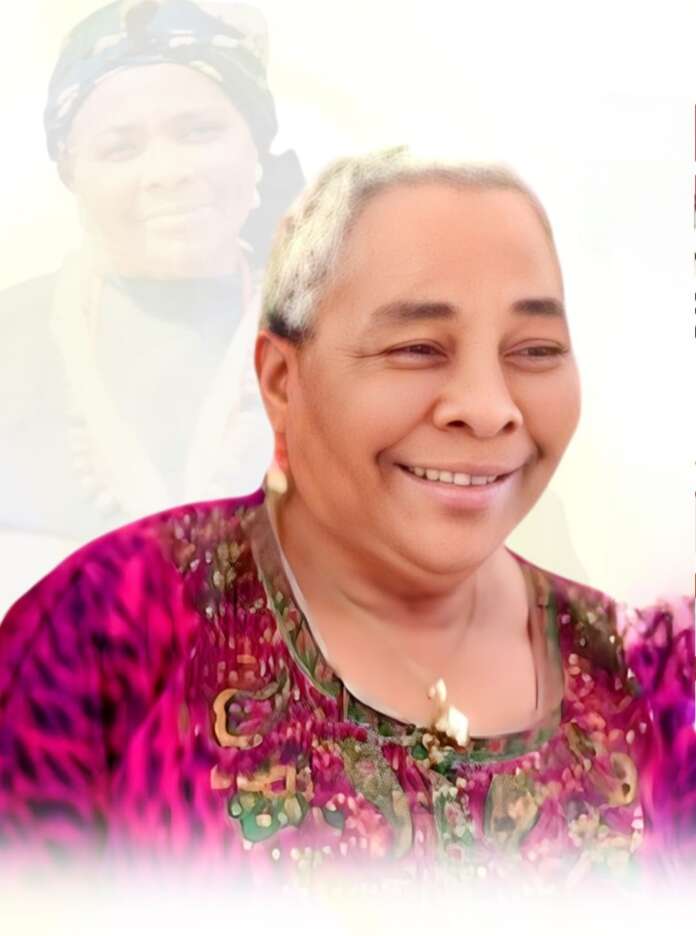
Born on January 21, 1929, my mother-in-law, affectionately called Nmaekwuahu because of her breath-taking beauty, was blessed with longevity in very good health. Throw into the mix the fact that she is survived by eight children, 35 grandchildren and 41 great grandchildren who doted on her till the very end, her blessings were extraordinary.

The only daughter of her parents, her enthralling beauty ensured that she was not only the darling of her parents and doting male siblings, but also the cynosure of all eyes in her Onicha community and beyond. It was, therefore, not surprising that suitors started knocking on her parents’ doors early. But she gave none consent until an equally handsome young man, Raymond Anyanwu Okahia, from neighbouring Eziudo community came along.

She was not quite ready for marriage at the time, because as she recalled: “I was too young to marry, still climbing trees but I was told that I would learn from my new home.” And, indeed, she learnt a great deal in her new home after her wedding on May 11, 1949 at the Catholic Mission Ahiara, a Eucharistic ceremony officiated by Rev. Fr. Edward Darcy.

Ndigbo have a saying that every mother’s delicacy is the most delicious to her children. But when I say that Ezinne Eunice Egowure was a mother-in-law like no other, it is not in that sense. It is a statement of fact. She was an extraordinary being in every sense. Though she didn’t acquire formal education, something she regretted, her knowledge of prevailing issues was profound. But even at that, she once vowed to me: “In my next life, I will read everything there is to read.” But to make up for the vacuum which she insisted the lack of formal education created in her life, she and her husband ensured that their children acquired as much formal education as they wished.

Beyond that, Mama embodied all the values that defined womanhood in the classical sense: she was virtuous, extremely devoted to her husband all through her lifetime; compassionate with overflowing milk of human kindness and carried herself with unparalleled dignity. Her native intelligence, sense of humour, warmth and infectious smile made her a natural leader. But she was also a very resolute, assertive and firm person, who never sacrificed honesty and integrity on the altar of wayward exigencies.

As at the time the husband died in 2011, they had lived together for 62 years and true to the advice that she would learn a lot in her new home, Mama had learnt quite a great deal in those values that make for a successful married life – communication, compromise and commitment – making her a marriage lodestar of sorts. For over six decades, she was a devoted wife, who, in an uncanny sense, was also modern in her ways. Long before it became a fad for women to join their husband’s names to their marital names, she boldly inserted her husband’s first name, Anyanwu, into the family name, Okahia, hence Ezinne Egowure Anyanwu-Okahia.

She was a quintessential marriage counsellor, always inundating intending couples on the principles of nurturing their fondness and admiration, always turning toward each other, letting their spouse influence them, solving their solvable problems, overcoming gridlock and creating a shared sense of meaning.

As a son-in-law, I am a beneficiary. When I married her daughter, she gave her an invaluable advice on how to ensure that the integrity of her marital home remained inviolable, an advice which Chioma divulged to me inadvertently. I was very grateful to the old woman, knowing that she had handed me, to borrow a cliché, her daughter’s “mumu button.” Ever since, whenever my wife was inclined to “misbehaving,” all I needed do to dissuade her was a casual reminder of her mom’s counsel, to which she will retort with a frown, “Because I told you, I will never tell you anything again.” But seconds later, she will behave accordingly.

I will forever remember my mother-in-law with affection. Ever since I went to her home to seek her daughter’s hand in marriage in 2002, Mama showered me with undiluted love. Chioma, whom she affectionately called Nwa God was her adorable last child and I was her son-in-law who could do no wrong. I will always cherish the four-hour discussion I had with her in her son’s Texas home in 2010. She was vacationing in the U.S. at a time I was attending the annual Mbaise convention and I went to see her in Dr Linus Okahia, her first son’s home in Dallas. She let me into secrets I will share with no one else.

Though unlettered, she was, nevertheless, a community and church leader who everyone looked up to for guidance. Even in her old age when she was no longer able to attend community and church engagements as she used to, most of those meetings were hosted in her home.

Her love for the underprivileged was incomparable. She was generous to a fault and constructed such an ennobling support system that became part of the community’s social architecture. A fantastic cook, nobody ever left her house hungry and nothing offended her more than rejecting her offer of food.

Because most of her children and grandchildren live in the Diaspora, her interment has been slated for January 3, 2025 when most of them will be around to pay their last respects to the matriarch of the Okahia family, a woman who was not only physically beautiful and elegant but radiated warmth, love and kindness from inside.

Even at 95, her death hurts and I will miss her dearly. But I am not mourning. She lived a good life and impacted positively on all who had the good fortune of making her acquaintance. In death, her memory is already a blessing. I am not mourning, knowing full well that she is already resting in the bosom of her creator because my mother-in-law, through her exemplary life, echoed St. Paul’s testimony in 2 Timothy 4:6-8 thus: “I have fought the good fight, I have finished the race, I have kept the faith. Now there is in store for me the crown of righteousness, which the Lord, the righteous Judge, will award to me on that day.”

As we prepare to bid her final farewell, Ezinne Eunice Egowure Anyanwu-Okahia, nee Osuagwu-Onuoha, was, indeed, a mother-in-law like no other. She was a good woman. May her soul rest in peace.

Five more FGN errors and how they could have been fixed

Ogebe, Esq. gives Independence Day advice to FGN on salvaging Nigeria                                                       

Media veteran Martins Oloja’s piece on Tinubu’s five tactical errors is scintillating as usual. I don’t know that any journalist in Nigeria has achieved the mastery and understanding of how government runs like him (unless of course Azikiwe but he was just a titular president.) He’s certainly a top governmental expert ironically from without.

I am highlighting a few more errors of my own in the spirit of helping a nation in doldrums especially as they were not addressed in the president’s broadcast.

1. THE DAM DAMAGE                            The Minister of Budget and Economic Planning, Alhaji Atiku Bagudu, says the Federal Government under Renewed Hope Infrastructure Fund has approved over N350 billion to support dams and expansion of facilities across Nigeria.

However the government didn’t provide funding to build a dam in Nigeria to curtail perennial devastating flooding from Cameroun as agreed in the 1980s!

”The flooding is a dramatic change, it is a global challenge, and we saw what happened in Borno, among other states.

”If you watch footages coming from around the world, particularly in Europe, you will see a lot of flooding incidences.

”Climate change is real, lucky enough, President Ahmed Bola-Tinubu, recognised it, and took proactive steps where money was given to states.”

The minister lied about the floods claiming it was a global problem when it was actually government corruption, ineptitude and recklessness. The Borno flood was act of man/misgovt NOT act of God. The annual flooding of about 11 vulnerable states coming from Cameroun is Inaction of man/misgovt NOT act of God.

”The federal government allocated N3 billion to each state of the federation to mitigate the effects of flooding.

Bagudu also revealed that the council had approved N900 billion on the Kebbi component of the Sokoto- Badagry High Way, saying, “It is the single biggest contract awarded under the current administration.”

According to him, there is another approval for construction of Zaria Kala-Kala road.

Why share 3B to each state (over N1Trillion) instead of build a preventative dam?

Why award N1Trillion on a road in Kebbi/Sokoto rather than build a dam?

Nigeria’s topmost infrastructure need is power not roads so why should the largest such contract be for yet another road like the dubious Lagos-Calabar white elephant highway?

In building a dam, Nigeria protects its citizens from avoidable flood deaths and destruction while harnessing power generation. It’s a win win!

The 900B road contract is not the largest award by this govt. The minister is either lying, ignorant or incompetent. Lagos-Calabar coastal fraud way is over N1Trillion.

I guess this is why all the road contracts because the contractor friend of the president doesn’t know how to build power plants and dams. So we must eat roads through the nostril. They will soon award a contract to build a highway from Lagos to France!!!

RECOMMENDATIONS

According to the Internal Displacement Monitoring Centre, most internal displacements in 2022 were associated with disasters, as the worst floods in a decade hit the country. The floods triggered over 2.4 million displacements, the highest disaster displacement figure in sub-Saharan Africa in 2022. Half of the displacements were reported in the southern state of Bayelsa in the Niger river delta, but the states of Anambra and Kogi were also heavily affected. Displacement camps in the north-eastern state of Borno were also flooded, forcing thousands of people already displaced by conflict and violence to flee again. The floods limited humanitarian access by damaging roads, bridges and infrastructure.

Only 148,000 internal displacements were from conflict and violence in 2022.

The figures are:

  • 2.4 million displacements
  • 3.6 million IDPs
  • over  676,000 hectares of farmland were destroyed,  worsening food insecurity.

The total number of people internally displaced by conflict and violence as of the end of 2022 was the highest since records began in 2013, pointing to a persistent lack of durable solutions.

Fixing the flooding has national security, food security, social security as well as infrastructure security in addition to hydro-electric economic transformation.

Nigeria’s Dasin Hausa Dam must be built to buffer the effects of the release of water from Cameroun’s Lagdo Dam!

2. JETTING WHILE MASSES ARE TREKKING                                      

Nigeria, formerly Africa’s Biggest economy is now 4th and 3rd biggest debtor to the World Bank. Eight of the world’s poorest nations are in West Africa and Nigeria is one.

Jeff Bezos the Richest man in the world bought a new plane for $80 million. President of Venezuela bought a presidential jet for $13 million. Nigeria poverty capital of the world bought a 14year old new plane for at least $150 million to replace a 19 year old presidential jet. Yet America’s Presidential jet is 34 years old!

Venezuela and Nigeria have the lowest oil output in OPEC but them because of sanctions and we because of sabotage but we’re living large buying big 300-seater passenger airplanes like USA the world’s top economy for the president.

Billionaire Bezos (who earns $1 million per hour) now has four aircraft while the Nigerian presidential fleet has about 20 aircraft at the president’s disposal (including helicopters.)

UAE donated food for Borno victims but the plane landed in Abuja and dropped it there and not In Maiduguri airport.

Then Tinubu took his new presidential jet from the same Abuja airport and flew to Maiduguri airport but he didn’t take the donated food aid there either.

Rather, he flew his presidential Limo to Borno to use there!

RECOMMENDATIONS

The fact is that Tinubu had multiple options that did not involve buying a new presidential jet:

A. Two jets were purchased by the  Obasanjo regime – one for the president and one for the VP. The VP’s plane is newer than the 19 year old plane that is being replaced and could have been reassigned to him. Generally VP’s don’t have their own planes. They use presidential planes when available but in Nigeria even senators and presidents’ children use and abuse presidential jets.

B. Tinubu reportedly has two private jets of his own and on top of that borrows Gilbert Chagoury’s jet as well. In other words, he has no shortage of access to planes that justifies a huge chunk of scarce forex to buy one.

C. Similarly Nigeria has reclaimed a private jet purchased by a corrupt oil minister. That aircraft could have been repurposed as a presidential jet. Dan Etete, the former Nigerian Petroleum Minister, had his luxury private jet seized due to its connection to the infamous $1.3 billion OPL 245 oil block scandal. The jet, a Bombardier 6000 with tail number M-MYNA, was purchased for $57 million and was confiscated at Montréal-Trudeau International Airport in Canada.

D. If Nigeria must buy a new jet why not buy what Bezos bought? Jeff Bezos’ brand-new Gulfstream G700 can travel at nearly the speed of sound, reaching speeds of up to Mach 0.935.  At $80 million,it’s the premier long-range business jet of 7,500 nautical miles, making it perfect for Bezos’ globe-trotting adventures. It’s  ultimate in luxury, with features like: – *Master Suite*: complete with a fixed bed, private en-suite bathroom,- high-speed WiFi,- *Flexible Layout*: with up to five living areas, including a private stateroom, dining area, lounge, and crew rest area.

3. PRESIDENTIAL YACHT                    One of the most bizarre purchases is a presidential yacht while there is no body of water in the nation’s capital for which the president will require sea transport. Is the president going to use it for relations in Lagos or inspection in the creeks? It is disheartening that the overstretched military who complain of inadequate equipment to fight terror and piracy would waste millions of dollars on a luxury boat that has no combat value.

Worse still, the US Justice Department’s kleptocracy team seized $145 million worth of assets purchased for a former oil Minister’s benefit, including a $50 million apartment in New York, properties in California, and an $80 million yacht. Again if a yacht truly was needed by Nigeria, it had one already it could’ve repurposed as a presidential yacht without buying another.

A visionary Tinubu in Lagos placed barges on the Lagoon to provide electricity to the state. This yacht falls flat  in comparison.

4. ESTABLISHING RUGA ENCLAVES IN CONFLICT ZONES AND EXCLUSIVE LIVESTOCK MINISTRY                       

The Federal Government said it would commence the Pulaku Initiative, “a large-scale resettlement programme to address the causes of clashes between farmers and herders in various flashpoints nationwide” in seven states. They are Sokoto, Kebbi, Benue, Katsina, Zamfara, Niger, and Kaduna states. According to the programme, Houses, Schools, Hospitals and other basic amenities will be provided for Fulani herdsmen.                      Security and Food Security is more critical than housing estates.

Rather than rehabilitate over 1,000,000 displaced farmers in the middle belt so they can farm and crash food prices, Tinubu is taking their land to build estates for Fulanis who destroyed and displaced them. There are 160,000 rehabilitated terrorists but no single rehabilitated farmers. Why this logical incongruity?               

Implanting vast Fulani enclaves distorts election maps in the states – granting Tinubu sympathy and stronghold amongst the Fulani caliphate whom he successfully excluded from the presidency for the first time since the 1999 return to democracy.  However, it is a recipe for disaster as the creation of Jos north, an enclave for settlers, which bred perennial conflict in Plateau state shows us.

RECOMMENDATION

Until every Nigerian displaced by Fulani terrorists is rehabilitated, there should be no discussion of imposing RUGAs or any enclaves on anyone’s lands.

If they must, why isn’t the government building these infrastructure for the Fulanis in their own land? Well because these are foreigners who have no villages here.

They were invited here by Buhari and co to occupy Nigeria and have refused to withdraw with Buhari’s tenure over.

The government can negotiate with Fulanis to settle in Sambisa forest which was designated by the British colonial government as a game reserve (after all VP Shettima governed Sambisa) but it must not take the lands of any Nigerian.

When Jonathan used our collective wealth unconstitutionally to build hundreds of Almajiri schools in the north, he didn’t do it on lands of the middlebelt. Why is it now that they want to take other people’s land for the Fulanis?

If RUGAs must be built for indigenous Fulani (not foreign fighters) FGN can utilize the existing and abandoned almajiri schools instead of exacerbating Nigeria’s humongous debt profile.

During his visit to Nigeria, the UN  Sec Gen thanked Nigeria for helping rebuild their bombed office; Nigeria begged UN to build facilities for ex-terrorists and UN begged Nigeria to help IDPs return to their homes safely. This is a no brainer.

5. FOREX FARCE                                 

 As highlighted in  an Amicus brief in the Bagudu Abacha loot case in the USA recently, Nigeria borrowed $ 10 billion using our future oil ($3B) and future gas ($7B) earnings. The loans were not tied to any project except shoring up the naira but the currency even reached over 60% devaluation. A banker friendly with Tinubu made $ 66 million from the $ 3 billion loan transaction which will cost an estimated $ 12 billion to repay. The terms of the $ 7 billion can only be imagined.                                            Brazil’s Petrobras reported a net profit of $25 billion in 2023, Petronas in Malaysia reported $19 billion, Russia’s Gazprom reported $14 billion, while the NNPCL reported a paltry $2 billion at the current ₦1,600/$ exchange rate used by the NNPCL in December 2023.” ~ Source: SBM Intelligence

Yet NNPCL is acquiring more debt than its revenues and thus the world’s only national oil company that is operating at a loss.

RECOMMENDATION

Shockingly, the Governor of the Central Bank of Nigeria (CBN), Olayemi Cardoso, has called for an urgent increase in oil production and a broader economic diversification strategy to stabilise the country’s volatile exchange rate while addressing journalists at the end of a two-day Monetary Policy Committee (MPC) meeting in Abuja.

The bank chief emphasised that while efforts to boost foreign exchange inflows through various initiatives, including liberalising diaspora remittances, have shown promise, these measures cannot substitute for addressing the fundamental structural issues in the Nigerian economy.

“We must recognise that without resolving the underlying economic fundamentals, we will continue to sub-optimise.

“Oil production must be ramped up to levels that can support the economy, and we need to diversify beyond our current status as a monolithic economy reliant on oil. Until this happens, the strong exchange rate we all desire will remain out of reach,” he said.

The question now is, if he was aware of this as the only solution to the naira being one of the worst performing currencies in the world, why did FGN borrow $10 Billion to “defend the naira”? More importantly where is the $10 Billion now?

I advised on Diaspora Day 2023 thus, “Disruption of Diaspora $22Billion Remittances

I am concerned at recent policy reversals that threaten to negatively impact Diaspora remittances which have become a staple stabilizer of the Naira value.

As stated in my prior letter to you, “Nigerians in Diaspora have in recent times remitted more money to the national economy than Nigeria’s oil production.

Besides that, the Diaspora’s multi-billion dollar annual remittances have historically been a stabilizing factor that mitigate the capital flight induced by corruption over the years. In short, our forex remittances is the life blood transfusion that has stemmed the financial haemorhagging by lootocrats…

Similarly the (Buhari) regime in which you serve introduced a policy to incentivize more forex influx from Diaspora by CBN paying five naira for each dollar sent. This temporary policy was so lucrative that the Central Bank extended it indefinitely and remittances even exceeded oil export revenues. In February 2022, Central Bank of Nigeria claimed that diaspora remittances surged by 1,566.6%,  accounting for a sizable portion of the CBN’s daily dollar receipts, from $6 million weekly to $100 million since the launch of the Naira-to-dollar promo

Yet Tinubu administration CANCELLED the CBNs Naira-for-dollar incentivization policy effective July 1, 2023.

If Diaspora remitted $21.9 Billion in 2022, that means our recipients in Nigeria received roughly N100Billion ($65million) based on the 5Naira-for-1dollar incentive program.

If CBN spent less than N80Billlion on Diaspora incentive in 2021 to generate $20Billion but Nigerian National Petroleum Company spent N788.7bilion on administrative expenses in 2021 to remit less than $1.5B to CBN, then Diaspora is a better investment for Nigeria than investment in NNPC.

This is an increase from N648.6 billion reported in 2020, bringing NNPC’s total expenses to over N1.4 trillion in two years to produce about 15% of the forex that Diaspora generates while Nigeria only spent 15% of what NNPC consumes on Diaspora incentive.

This is exactly why CBN spending five Naira to attract $1 from Diaspora remittances is even a better investment than the $25 Billion purportedly spent on refineries producing nothing.

To simplify this, the FGN should:

A. simply have paid N100B ($65 million) to attract $20 Billion from Diaspora remittance to stabilize the naira then to borrow $10 Billion (15 Trillion) which will be repaid back with over 100% interest (30 Trillion) without improving the exchange rate. In fact Zenith Bank alone made $66 million signature fee on a $3Billion foreign loan – more than the $65 million the entire Diaspora would have made to bring in $20 Billion into the economy!

B. Invested the $10 Billion in acquiring profitable assets if taking the loan was a must. Mobil and others are selling oil assets. Why acquire liabilities instead of profitable assets?

(To be continued)

Emmanuel Ogebe is a US-based lawyer and Nigeria international affairs expert with the U.S. Nigeria Law Group, Washington


Viral Video of a Woman in a Cell with Men and Children: A call for serious reforms in policing tactics and policy

By Bayo Akinlade

DSN received several posts regarding the lady in the Maroko Police Cell and we were asked to look into it and investigate it’s authenticity.

I was confident that the NBA Lagos Branch Human Rights Committee, headed by the Vice Chair of the Branch would act on the issue and report back and she did.

I have considered the report of the NBA Vice Chair, I have watched a followup video of the woman who allegedly made the viral video thanking the police for assisting her even though it was the same police that put her in the worrisome position in the first place and finally, I have considered the excuse given by the police themselves through its PPRO.

I will not engage on who is right or who is wrong but the following is clear and these questions should be asked;

  1. Can the police arrest people on the streets without following due process?
  2. The Administration of criminal justice Law of Lagos State prescribes conditions and circumstances for arrests…were these conditions followed strictly by the arresting officers?
  3. Recently, the Nigerian police has been going around arresting people and accusing them of wandering…is wandering an offense because I am begining to wonder now
  4. Is the Police station in Maroko supposed to look like a den for miscreants?
  5. Where there no chairs for these people to sit on that we saw them on the floor?
  6. There is no report that anyone of those in the video were actually committing a crime at the time of arrest

I have concerns which are yet to be addressed by the police and the Attorney General of Lagos State. Let me be clear, we have received credible reports that the Nigerian police is raiding citizens and extorting them and their families for money. It is a fact that this is going on with the full knowledge of the government and the Judiciary at the mobile courts, otherwise why have we continued to see great numbers of poor people and even others at police cells with the word “wandering” on the crime boards.

We continue to sweep the dirt under the carpet but one day the carpet won’t be able to hide the dirt.

The police should desist from indiscriminate arrest and detention in Lagos State or anywhere else in Nigeria for that matter. Nigeria is not a police state, we are free to conduct our lawful business at anytime of the day and night and it is our right to have the police protect us and not arrest us while going about our lawful human endeavors.

Bayo Akinlade is Convener, Duty Solicitors Network

Now The Table Has Turned: Did you know that IMF borrowed from Nigeria 50 years ago?

The Debt Management Office (DMO) has since confirmed that Nigeria took loans worth well over $31.98 billion from World Bank Group, International Monetary Fund (IMF), African Development Bank (AfDB) Group and others.

In a 2017 interview, an elder statesman and Minister of Finance in the Second Republic, Alhaji Abubakar Alhaji disclosed that that the International Monetary Fund (IMF) requested and got a loan from Nigeria in 1974.

This disclosure, which is a surprise to many Nigerians, was made during a visit by Senator Shehu Sani to the elder statement in Sokoto.

Alhaji Alhaji stated that he was the one that signed-off on the loan when he was the permanent secretary at the Federal Ministry of Finance in 1974.

“In 1974 when I was a permanent secretary at the Federal Ministry of Finance, the IMF approached us for a loan. I signed the agreement on behalf of Nigeria. Unfortunately, today expenses of government have driven us into recession,’’ he said.

Immediately after the civil war in 1970, the high price of oil and surge in demand for Nigerian oil created a situation of excess funds in the country. The country’s excess reserve was so much that Gen. Yakubu Gowon, then Head of State, said the problem of the country is not money but how to actually spend it.

However, there is a reversal of fortune in the present-day Nigeria as the former minister said: “I weep for Nigeria for what it has become today. The country has vast resources that if well harnessed, could lead the country to greater heights.”

Mismanagement of resources and corruption in government were identified as major hindrances to development in the country. Over-reliance on oil made the country to be vulnerable to externals shocks, thus triggering economic problems when there is a sneeze in the global commodity market.

“Aside from oil and agriculture, Nigeria had industries that were earning foreign exchange for it. Agriculture and the industries were allowed to recede and when global fuel prices crashed, we are nowhere today.”

Alhaji Alhaji is one of the few super permanent secretaries Nigeria has produced. ‘Super permanent secretary’ is any career civil servant that was able to achieve promotion to be a minister after getting to the peak of his career.

Pulse.ng

FCT Administration issues final demand notice to Maitama property owners

The Federal Capital Territory Administration (FCTA) has issued a two weeks demand notice to property owners in Maitama, Abuja.

Click here to download demand notice.

maitama-II-final_1127373original

I was summoned to play for Super Eagles just after a bowl of pounded yam— Akpoborie

An ex-Nigerian striker, Jonathan Akpoborie, recently recounted an unusual and unexpected call-up to the Super Eagles during a game against Togo.

In an interview with Elegbete TV Sports, Akpoborie shared how he found himself on the pitch after watching the match from the stands, following a hearty meal of pounded yam at the home of Honourable Nduka Irabor.

He said, “I was at Nduka’s house and we had pounded yam. He convinced me that we should go and watch the game. I said Area Boys won’t let me rest but he said we should just go to the stadium.”

At halftime, with Nigeria trailing 1-0, Akpoborie was approached with a surprising message.

“Somebody walked up to me in the second half and said Bonfrere Jo [the coach] asked me to come,” Akpoborie recalled. “I looked at Nduka and asked, ‘How did Bonfrere know I was here?’”

It turned out that news of Akpoborie’s presence had reached Bonfrere Jo, who had been pressured by Nigerian football fans and officials to include the striker in the squad.

“They said I should come to the dressing room. At an international game!” he exclaimed.

Despite just having finished a meal, Akpoborie was summoned to the dressing room, where his boots and jersey awaited him.

“I had just eaten pounded yam, but they said I had to play,” Akpoborie said, adding that when Nigeria calls, “you can’t say no.”

He eventually suited up and took to the field.

“After that game, I went with that team to America,” he added.

Akpoborie also addressed rumours surrounding his exclusion from Nigeria’s 1996 Olympic football squad, dismissing claims of tribal bias or any cabal-related issues.

He clarified that Kanu Nwankwo, a key member of the squad, arrived late due to his heart surgery but was always part of the team.

Akpoborie explained that while Bonfrere Jo wanted him in the Olympic squad, Nigeria’s overage player limit left him as an alternate.

“Bonfrere had the three overaged players that he wanted — Uche Okechukwu, Emmanuel Amunike, and Daniel Amokachi. If one of them got injured, I would have been the replacement,” he explained.

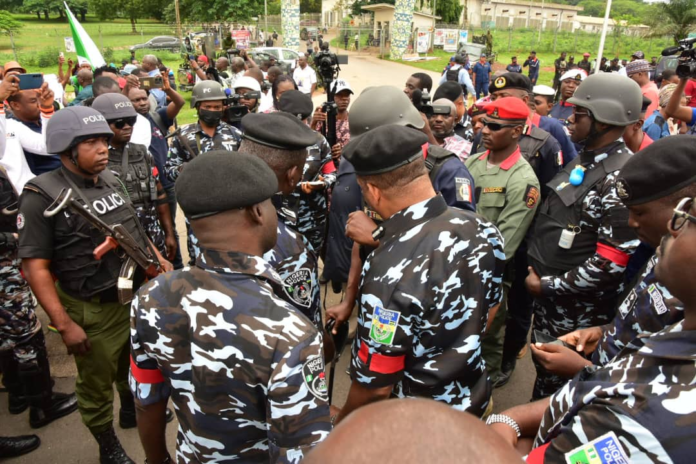
Viral video shows male and female inmates in Maroko police cell in Lagos, police refute claims

A trending video has shown how male and female suspects including young persons were stuffed together in a Maroko police cell in Lagos State Nigeria.

A woman identified as Real Omo claimed that officers from the Lagos State Police Command detained her, along with other women, in a single cell with men at the Maroko Police Station, located in the Lekki area of Lagos State.

The woman made the allegation in a viral video shared on Monday by a user identified as Oyindamola, tweeting as #dammiedammie35 on X.com.

She explained that she and the other women were picked up by the police while walking in an undisclosed area of Lekki, expressing her disbelief at the situation.

“Men and women are together in the cell. There are even young children with us. We don’t know what to do. Please, come to our aid. We are at the Maroko Police Station, and we need help right now,” she pleaded.

“Last night, they picked us up and arrested us. They said we couldn’t walk because they were conducting a raid. How was I supposed to know there was a raid in Lekki? I’m a victim. Please, this is Real Omo speaking. They said I’m going to prison—for walking at night? This is too much to bear. Does this make sense?” she asked.

The video also showed an open roof and broken parts of the cell wall.

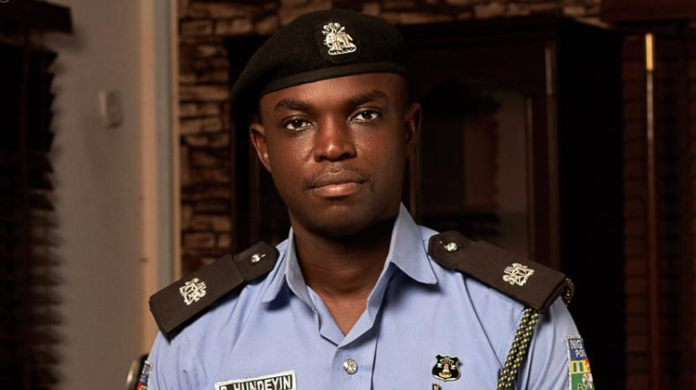
In response to the tweet, Lagos State Police Command spokesperson, Benjamin Hundeyin, refuted the woman’s claims. In a tweet posted on Monday, Hundeyin clarified that the individuals were kept in a “holding area” where they were visible to officers on duty at the charge room.

He explained that once individuals are moved into the main cell, they are separated by gender and are not allowed to use mobile phones.

Hundeyin wrote, “That is a holding area where they are visible to officers on duty at the charge room (counter). Once they move into the proper cell, they are separated, and they would not even have their phones with them.”

However, in an accompanying video shared by Hundeyin, five men and five women were seen facing the wall.

The officer in the video stated, “This is an open cell. These are children who have been roaming the streets and ran away from their homes. The residents of Lekki brought them to the station, and most of their parents had already collected them. They were only kept in an open cell at the back of the charge room.”

The video also showed the charge room, with the officer explaining that the individuals in question “chose” to stay along the passage leading to the male and female cells.

Watch the video below.

TIPS