Lead City University under five-year moratorium for repeated violations of admission quota
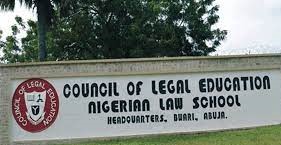
The Council of Legal Education (CLE) has suspended the admission of students into the Faculties of Law at nine Nigerian universities. The decision was made during the council’s second quarterly meeting of 2024, chaired by Chief Emeka Ngige, SAN.
The universities in question were found to have admitted and graduated law students without obtaining the necessary accreditation from the CLE.
The nine affected universities are:
Nigerian Police Academy, Wudil, Kano State
Fountain University, Osogbo, Osun State
Redeemers University, Ede, Osun State
Taraba State University, Jalingo
Western Delta University, Oghara, Delta State
Kwara State University, Malete
Bingham University, Karu, Nasarawa State
Crescent University, Abeokuta, Ogun State
Tansian University, Umunya, Anambra State
In addition to the suspension of admissions, Lead City University in Ibadan, Oyo State, has been placed under a five-year moratorium. The CLE cited inadequate infrastructure and repeated violations of the university’s admission quota as the reasons for this decision. The council has pledged to accommodate the over 1,000 students unlawfully admitted by Lead City University within the available space.
The CLE also addressed a recent judgment against it regarding a property in Lagos that once housed the first Nigerian Law School students. An ad-hoc committee has been formed to ensure compliance with the judgment and explore options for securing the historic building.
Furthermore, the council granted provisional accreditation status to two private universities: El-Amin University and Newgate University, both located in Minna, Niger State. These institutions have been given an admission quota of 50 students each.
The CLE will revisit the Faculty of Law at Veritas University in Abuja and Kola Daisi University in Ibadan at a later date to assess their compliance with the accreditation team’s findings. The University of Abuja, however, has had its admission quota increased from 100 to 160 students due to improvements in infrastructure and the recruitment of additional academic staff.
Lastly, the council approved the establishment of a legal unit within the office of the Director-General of the Nigerian Law School. This unit will monitor court cases involving the CLE and keep the council informed of any developments.
Parents whose kids may want to apply to the affected universities for law are by this information advised to apply to other universities.
Anambra State LGA Elections. Comment by His Lordship, Bishop Ndubuisi Obi. Anglican Bishop of Nnewi Diocese.
“Looking back at what transpired on Saturday during the Local Government and Councilors elections in my state, I feel pained at the fact that a Professor cannot effectively conduct a credible election in his state.
I’m particularly pained at what happened in one of the Wards in Nnewi where a physically challenged guy put himself forward to represent his people as a Councilor and the guy kept giving updates on the election day and showed evidence that what happened on the day was a charade.
They eventually used tear gas on him and the rest is history. If the government of the day wanted to write results because other states are doing that, they shouldn’t have allowed these young fellows to waste their time and resources pursuing what never existed in the first place.
What is the essence of going to school if our being educated cannot help us do things differently? Why should we even bother to send our children to our universities if their Lecturers after teaching for so long in the university will enter the political terrain and behave like an illiterate agbero?
If elections conducted at the grassroots can be this marred with glaring irregularities, what hope do we give the people that the beneficiaries will be accountable to the people. If the young man that won a seat as a Councilor is made to believe that he only needs to belong to the right political party and be a sychophant to the powers that be for him to win an election, what kind of society are we building?
My pain is that we are destroying the society we are supposed to be building. My pain is that those that won in this election may not care to serve the people as they know they did not have the mandate of the people.
My pain is that this nonsense is happening under the watch of somebody I trusted to do things differently. My pain is that if the academia cannot produce men that can change the status quo in our clime, where else do we turn to?
Thank God I did not waste my time and resources attending your so called Institutions of Higher Learning that cannot produce people with character and integrity who will be committed to doing things decently and differently for posterity sake”.
Bishop Ndubisi Obi, The Lord Bishop of Diocese of Nnewi.
The Edo State Judicial Service Commission Must Uphold the Law In Its Activities, Publication of Expression of Interest of Appointment of New Judges Unconstitutional When Other Recommended Judges Have Not Be Sworn In
By Vanguard for the Independence of Judiciary
The Vanguard for the Independence of the Judiciary has called on the Edo State Judicial Service Commission to be judicious and comply with the Rule of Law in its activities stating that the recent publication for appointment of New Judges when 3 out of 8 Judges recommended by the National Judicial Council since June ,2023 have not be sworn in is Unconstitutional.
In a statement in Abuja by Its Programmes Officer, Deborah Christopher on Friday the 4th of October, 2024, the Vanguard for the Independence of the Judiciary States that:
The Vanguard for the Independence condemns in all ramifications the attempt by the Edo State Judicial Service Commission to topple Constitutional Order by advertising for the appointment of 3 additional judges for the Edo State Judiciary, when there are 3 Judges already recommended for appointment by the National Judicial Council and the Governor of Edo State refused to swear them in out of personal vendetta.
The Governor of Edo State firstly refused to swear in 8 Judges recommended by the National Judicial Council for about a year and there was dead silence from the Edo State Judicial Service Commission. When the Governor woke up from a good side of his bed he swore in 5 of the 8 Judges, which notice was given to the Newly sworn in Judges by phone calls and text messages, an anathema unknown in the history of Nigerian Judicial Trajectory. The Governor of Edo State has treated the Edo State Judiciary as an extension of the Government House in these matters and despite the brazen impunity of the Edo State Governor in refusing to swear in the other 3 Judges, the Edo State Judicial Service Commission maintained a grave side silence.
The Edo State Judicial Service Commission that have been unable to uphold the Law in this matter , has suddenly found its voice in an attempt to circumvent constitutional order, by advertising for appointments already officially concluded by the National Judicial Council by the provisions of the Constitution of the Federal Republic of Nigeria, 1999 (As Amended ),by the fifth alteration.
The timing of the advertisement is also suspect as we know that the same Governor that has been in the Vanguard of not swearing in the NJC recommended Judges ,will cease to be Governor on the 12th of November 2024 .So is this recruitment process an attempt to foist a fait accompli on the incoming Government?
We call on the Edo State Judicial Service Commission to be wary not to be caught up in a needless political cross fire. The Service is a quasi Judicial Body run by Judicial Officers. It is apposite for the Edo State JSC to heed to voice of reason to protect the integrity of the Judiciary and not for it to be perceived to giving an official imprimatur to executive recklessness and bureaucratic brigandage. The Edo State Judiciary over the years comes top in the whole of Nigeria in its adherence to due process and proper procedure. May the Labour of our Heroes’ Past do not become in vain”.
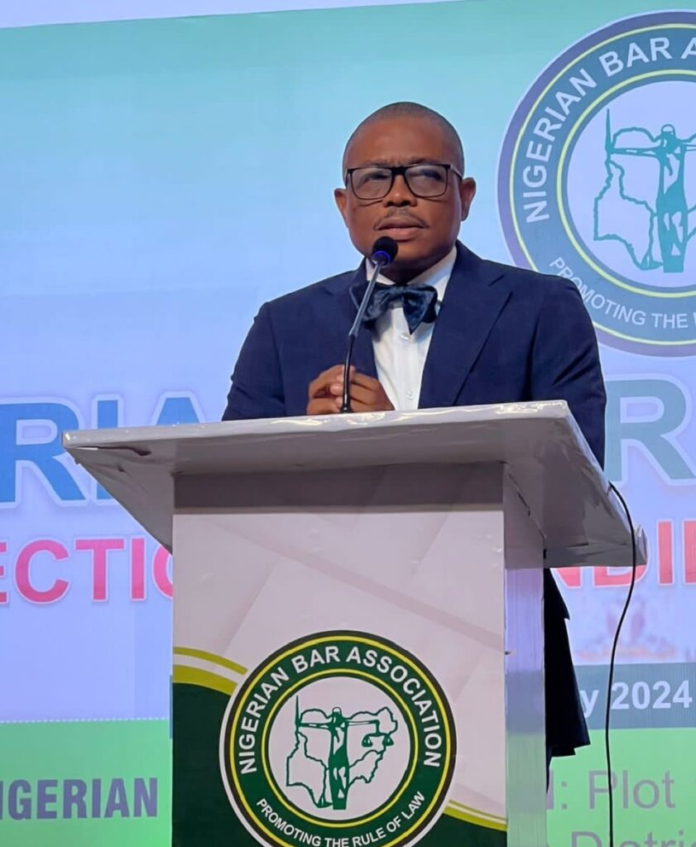
The Nigerian Bar Association, NBA has noted with deep concerns, the controversies and actions of actors relating to and pertaining the scheduled Local Government elections in Rivers State.
The NBA has noted with particular interest the statement released by the Rivers State Police Public Relations Officer (PPRO), SP Grace Iringe-Koko, which indicates that the Rivers State Police will not provide security during the Local Government elections scheduled for Saturday, October 5, 2024.
The NBA has also read the disturbing report that some Policemen were alleged to have attempted to cart away electoral materials in the dead of the Night at the Head office of Rivers State Independent Electoral Commission, RSIEC.
We agree with the statement issued by the Chairmen of NBA Branches in Rivers State as we find it deeply troubling that the Police would brazenly issue a statement that they would shirk their constitutional responsibility of providing security in Rivers State in purported compliance with an order of court. Even if a court has directed the Police not to work with the Electoral Commission in Rivers State, nothing says the Police should not provide security for peace and order in Rivers State.
The responsibility of the police to ensure peace and security in Rivers State is constitutional and cannot be restrained by any court. The Police should at all times provide security for the good people of Nigeria and should in fact be worried if any court order purports to prevent them from discharging this responsibility. The duty to secure the lives and property of the people is one that should never be restrained by the court. The Police as well as all Nigerians should be concerned that such a statement was issued by the Police confirming they would abdicate their duty. The Police must ensure they discharge their duties at all times and urgently take steps to set aside any judgement that seeks to prevent them from discharging their constitutional responsibilities. To do otherwise may enthrone a reign of terror or breakdown of law and order. The people of Rivers must never be left unprotected, no matter what.
Any act or position that leave the people and their activities unprotected is utterly unacceptable, and strongly condemned by the Nigerian Bar Association. The assertion by the Rivers State Police, through the PPRO, that the Police will not provide security for the elections, if accurate, is an unfortunate abdication of responsibility and egregious violation of constitutional duties. The refusal to provide security is not only unconstitutional but also illegal, immoral, and a dangerous signal that invites lawlessness and undermines democracy. It is, in every sense, a direct attack on the democratic rights of the people of Rivers State and, by extension, Nigeria as a whole. In fact, it threatens our democracy.
The Nigeria Police Force is constitutionally mandated to protect lives and property, and this duty extends to providing security during elections. Any failure to perform this obligation is unacceptable. The security of elections and indeed every other activities are not matters for negotiation. They are constitutional responsibilities that must be carried out by the police at all times. The Police should NEVER shirk such responsibilities.
The Nigerian Bar Association condemns, in the strongest possible terms, any attempt to undermine the scheduled elections in the 22 Local Government Areas of Rivers State by refusing to provide security. We will continue to closely monitor the situation as it unfolds.
We call on all security agencies to rise to the challenge of protecting lives, property, and democracy during this critical time. Furthermore, we urge the Inspector General of Police to launch an immediate investigation into these troubling report that Policemen sought to cart away electoral materials and ensure that any errant officers involved are swiftly and appropriately disciplined, regardless of whose interests are affected.
The NBA has also taken note of the conflicting judgments from the Rivers State High Court and the Federal High Court in Abuja concerning the scheduled Local Government elections. It is deeply disheartening and amounts to judicial rascality that courts of concurrent jurisdiction are issuing contradictory orders on the same matter. The NBA is committed to engaging with all relevant stakeholders to find a sustainable solution to this constant judicial conflict, as the consistency and coherence of the law are fundamental to its effectiveness.
The protection of our democracy and the upholding of the rule of law must remain the highest priority.
Mazi Afam Osigwe, SAN President, Nigerian Bar Association
Press Statement by the Nigerian Bar Association (NBA) Rivers State Branches on the Scheduled Local Government Elections in Rivers State
In light of the upcoming local government elections scheduled for October 5th 2024, in Rivers State, the chairmen of the eight branches of the Nigerian Bar Association (NBA) in Rivers State wish to make the following statement:
1. Legitimacy of Local Government Elections Local government elections are a critical part of the democratic process in Nigeria, as enshrined in the Constitution of the Federal Republic of Nigeria 1999 (as amended). Therefore, these elections are legal and sanctioned by law, and the Rivers State local government elections are no exception.
2. Judicial Interpretations and Conflicting Judgments It is widely known that multiple court judgments on issues relating to the Rivers State local government elections have been circulating on social media. Unfortunately, many of these judgments emanate from courts of coordinate jurisdiction and have been subject to varying interpretations. While we do not wish to reignite the controversies or dwell excessively on the ongoing issues, we must emphasize that the Nigerian Constitution remains the supreme law from which all government institutions derive their legitimacy. All judgments or laws inconsistent with the Constitution are null and void to the extent of their inconsistency.
3. Role of Security Agencies Security agencies are constitutionally tasked with maintaining law and order in the country. Failure to carry out this role undermines both democracy and the Constitution. We urge these agencies to uphold their responsibilities to ensure a peaceful and lawful election process.
4. Participation and Observations As far as the NBA branches are concerned, there is no legal barrier to conducting the local government elections in Rivers State. The NBA branches will participate as election observers to promote transparency and accountability.
5. Encouragement to Voters We remind all eligible and registered voters in Rivers State on election day to exercise their constitutional right to vote. It is crucial for the advancement of democracy that all citizens make their voices heard through peaceful participation in the electoral process.
6. Peaceful Conduct and Law-Abiding Citizens Finally, we advise all residents and indigenes of Rivers State to remain peaceful and law-abiding throughout the election process. Respect for the rule of law is fundamental to the stability of our democracy.
For further details, please click [here] to access the signed letter from the eight chairmen of the NBA branches in Rivers State.
A perfect storm is brewing over the desolate Nigerian Military Industrial-Complex (MIC) that has remained constant in the news for the wrong reasons. The misogynistic military has been roped once again for forcing out junior female officers in rape incidences. There are several cases of rape and sexual abuse that have been scuffled under the deepest cult of the military’s oath of secrecy.
The most recent is the allegation from Miss Ruth Ogunleye, who hastened out of the military conclave in resignation that Col. IB Abdulkareem had raped, put her in body bag and denied her legitimate benefits of the service. In January 2024, Miss Ruth, alleged on her TikTok page via @Ogunleyeruthsavage1, accused Col. IB Abdulkareem, Col. G.S. Ogor, and Brig. Gen. I.B. Solebo of making her life unbearable and confining her in a psychiatric hospital for several months because she turned down Abdulkareem’s sexual advances.
In a latest interview with Africa Independent Television (AIT), Miss Ruth pointed accusing fingers at the army spokesman, Major-General Onyema Nwachukwu, for marking her out for elimination after her appearance on the Brekete radio program in Abuja a few days ago. If Miss Ruth is to be believed — then Major-General Onyema and the Nigeria Army should better direct such threats to Boko Haram militias who have carved out a territory for themselves in the North East — instead of shackling hapless former female officers.
While the military is pawning off female officers as objects of sexual fascination, thousands of people are being killed daily in Northern Nigeria, especially in Maiduguri, as a result of Boko Haram’s ruthless decimation of the military. Good citizens are even astonished that apprehended terrorists who went through rehabilitation and were sent back to the same community have, more than ever before, become deadlier for lack of durable military tactics and solutions to terrorism. It is curious that in a nation where Boko Haram is touted to have been technically defeated, farmers still seek clearance from the military before going to their farm.
Besides, it’s tragic that the government that has been gloating and enabling terrorism in Nigeria has ignored the calls to apply six-pronged solutions to tame the scourge. That’s why, 15 years into the counter-insurgency operation, we are not seeing major successes. The endemic poverty in parts of the Northern region, as well as the insurgents’ violent methods, enable the continued recruitment of generation after generation of fighters by several militia groups.
The Nigerian Army’s handling of Private Ruth Ogunleye’s case has raised serious concerns about the treatment of female soldiers who accuse senior officers of sexual abuse. While the Army said Ruth Ogunleye was discharged from the service on medical grounds, Ruth told the world that she earlier sent a handwritten letter of withdrawal from the service after accusing Colonel I.B. Abdulkareem of random sexual abuses.
The Army claims that Abdulkareem was cleared of any wrongdoing, but Ogunleye disputes this, stating that she was never invited to testify before any investigative panel to prove her sanity. This case bears a disturbing resemblance to others involving female soldiers who have accused senior officers of sexual abuse. For instance, Beauty Uzezi, a 19-year-old airwoman, was forced out of the Nigerian Air Force on medical grounds after alleging she was drugged, tortured, and raped by an officer.
Despite the fact that a human rights activist and Senior Advocate of Nigeria (SAN), Mr. Femi Falana secured a $200,000 judgment for her through the ECOWAS Court, the accused officer was never sanctioned. Another female soldier, Lance Corporal Philomena Nnamoko, attached to Ilese Sappers Barracks, Division 2, Nigerian Army, Ogun State, had also alleged that her senior colleagues beat her up and sent her to the Yaba Psychiatric Hospital on account of her refusal to give in to their sexual advances.
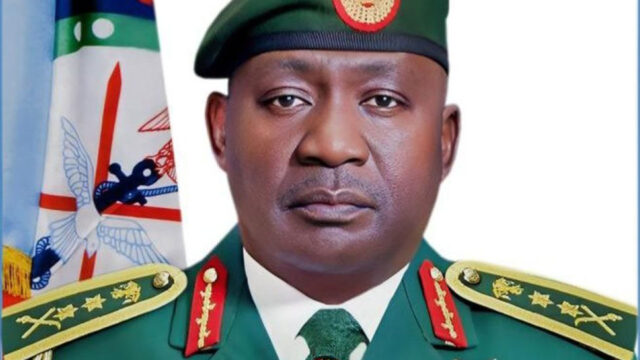
The present Chief of the Defence Staff, General Christopher Gwabin Musa, should, as a matter of urgency, come clean on the exploited soldier’s claims that she once told him about the vicious rapes and sexual abuses to which she has been subjected. Rather than take action, Ruth said he advised her to endure the pillaging of her humanity from beastly superior officers. That clarification is needed by General Musa, whom many have described as the intrepid tribune of the modern Nigerian Army. The Army shouldn’t always follow a clear escalation formula of self-indulgence. Withstanding growing pressure to name and shame black legs in the Nigeria Army is in the enlightened self-interest of the revered institution as a mark of metric for sanctity.
This is one of the biggest elephants in the military’s room. Even in primitive caves, where people balk and bristle, there are humane moments of self evaluation, introspection, and moments of truth for self-sufficiency. This, undoubtedly, would make a radical and revolutionary impact on the post-colonial military era — as the military transits to modernity, most importantly — for the military to exert her full dominion on the turbulent nation, it needs to demonstrate the capacity for self re-engineering.
Here is the conundrum: will Nigerians allow the venerated military to push itself down the slope? Are we going to allow the military to make a throne of bayonets for itself? Can the Nigerian military exalt itself over and above citizens’ rights on grounds of misguided national security while the people are subjected to pain and misery? Is it possible for the senior military officers to keep their female folks down without staying with them in the ditch, even in militaristic countries? The military should be concerned that the entire Northern Nigeria has virtually succumbed to banditry on an industrial scale as well as numerous local insurgencies across the country.
The military should be providing solutions to the regular bloodletting traceable to contending local factions and seething internal contradictions that have turned the eastern part of the country into a war zone. The military should be troubled about her servicemen’s misfortune and disenchanted female officers who are bent on fighting bad eggs in the institution, despite the activities of those who are unleashing campaigns of vicious and active sabotage against the institution.
This certainly would bring solace and succor to the injured and serially violated junior officers who have been put through the guillotine. Because in a fractured multi-ethnic military roiling in mutual hate and distrust, military amity is compulsory to bridge the yawning chasm created by hierarchical subjugation.
Speaking plainly, these cases suggest a pattern of the Nigerian military labeling female soldiers who accuse senior officers of sexual harassment as having medical issues. President Bola Tinubu should intervene and prevent the military from investigating itself in such cases, instead handing them over to the police for investigation. The Nigerian military’s actions have severe consequences for the women involved, including stigma, loss of livelihood, and denial of justice. It’s crucial to ensure that these women receive fair treatment, as well as holding perpetrators to account.
A judge of the National Industrial Court, Owerri Division, Hon. Justice Nelson Ogbuanya has disclosed that among the four proposed states for creation in Nigeria’s Southeast region, Adada stands out as the most desirable and legally formidable.
Justice Ogbuanya described Adada as a state with strong cultural homogeneity and the oldest unresolved state creation request in Nigeria.
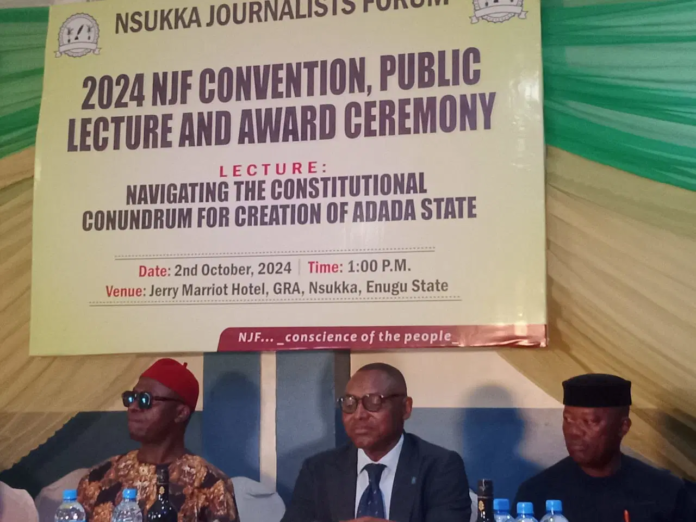
His Lordship made this assertion during a Guest Lecture titled “Navigating The Constitutional Conundrum for Creation of Adada State: Interrogating the Prospects, Demystifying the Challenges, and Strategizing the Advocacies.” The lecture was delivered at the 2024 Nsukka Journalists Forum (NJF) Convention, Public Lecture, and Award Ceremony held in Nsukka, Enugu State, on Wednesday.
According to Justice Ogbuanya, the agitation for Adada State dates back to 1983 when Hon. Yunusa Kaltungo, a federal lawmaker from Bauchi State, first proposed it in the National Assembly, citing Nigeria’s imbalance in state creation, particularly in the Southeast.
This was followed the same year by Senator Isaiah Ani, who represented the Nsukka Senatorial zone in the Second Republic.
He further explained that the request was submitted to the Mbanefo Panel on State and Local Government Creation and Boundary Adjustment in 1996 and gained traction following the 2014 Constitutional Conference, which recommended the creation of an additional state in the Southeast.
“The creation of Adada State was also unanimously endorsed during the 2005 National Political Reform Conference held under former President Olusegun Obasanjo’s administration,” Ogbuanya added. He pointed out that Nsukka, the proposed state capital, is Nigeria’s largest and oldest local government, dating back to the colonial era. It remains the only district of its size and history that has yet to become a state capital. The area designated for Adada is also the only former province east of the Niger that has not achieved statehood.
Currently, the National Assembly is considering the proposal under the ‘Constitution of the Federal Republic of Nigeria, 1999 (Alteration) Bill, 2024 (SB. 482)’. The bill seeks to amend Section 3(1) and the First Schedule, Part 1 of the Constitution to facilitate the creation of Adada State, bringing the number of Southeast states to six. This would enable the Southeast to be on par with other geopolitical zones in the country.
Justice Ogbuanya emphasized that Adada State has a stronger case than its competitors due to the need to correct imbalances within the Southeast. He explained that the current five Southeast states are unevenly distributed between the Northern Igbo (Ndi Wawa) — comprising Enugu and Ebonyi States — and the Southern Igbo (Ndi Agbenu), which includes Abia, Anambra, and Imo States. With the Southern Igbo holding three of the five states, an additional state should be allocated to the Northern Igbo, where Adada belongs.
He urged the public not to be discouraged by the challenging process of amending the constitution for state creation. As an example, he cited the successful elevation of the National Industrial Court of Nigeria to the status of a Superior Court of Record under Section 254C of the Constitution (as amended), demonstrating that constitutional amendments are achievable in a democratic system.
A civil society organisation (CSO) the Rule of Law and Accountability Advocacy Centre (RULAAC), has strongly criticised the alleged attempts by the Nigerian Police to frustrate Saturday’s local government election in Rivers State.
RULAAC expressed deep concerns over the reported attempt by a police team from the Rivers State Police Command to break into the Rivers State Independent Electoral Commission’s strong room to remove electoral materials meant for the Saturday elections in the State.
It was earlier reported that Rivers State governor, Siminalayi Fubara, faulted the Inspector-General of Police, Kayode Egbetokun, over the controversy surrounding the conduct of the state’s local government elections.
While speaking to journalists after storming the Rivers State Independent Electoral Commission office in the state on Friday morning, Fubara stated that there appeared to be a more than professional relationship between the IGP and “someone who says he is more powerful than the state” in apparent reference to his predecessor, Nyesom Wike.
Governor Siminalayi Fubara of Rivers State early on Friday led top government officials and political leaders in the state to foil what was described as an attempt to steal election materials at the RSIEC headquarters in Port Harcourt, the state capital.
It has also been reported that Nigerians condemned the police boss for allegedly attempting to disrupt the upcoming local council election.
The controversy surrounds Egbetokun’s purported order to policemen from Imo State to break into the Rivers State Independent Electoral Commission (RSIEC) office and seize election materials.
Critics took to social media platforms, formerly Twitter, now X, to express their discontent and outrage over the alleged actions.
Reacting to the controversy, the Executive Director of RULAAC, Okechukwu Nwanguma, in a statement issued on Friday said, “The incident, especially in light of recent allegations of police partisanship during the Edo State governorship election, and later in the local government electoral sham in Imo State underscores a troubling trend of political interference and brazen irregularities in local elections by federal authorities instrumentalising the police.”
Nwanguma further noted, “Local government elections are under the jurisdiction of state governments, and any attempt by federal politicians to leverage police power for electoral manipulation is a serious threat to Nigeria’s democratic process. Such actions undermine the integrity of elections and erode public trust in democratic institutions.
“It is imperative for President Tinubu to ensure that the Nigeria Police Force operates independently and refrains from interfering in state electoral matters, thereby allowing states to manage their own affairs without undue federal influence. This is essential for the preservation and strengthening of Nigeria’s democracy.”
In any nation where the rule of law holds sway, judges must be independent.They must not be seen to be partisan or allow themselves to be used to achieve a predetermined partnership political position.
Judicial independence therefore is the foundation of a fair and impartial system of justice, to ensuring that judges can make lawful decisions without external influence or pressure.This means judges should be free to decide cases based on facts, individual merits, and legal arguments, without fear of retaliation or pressure from the government, powerful parties and they must adhere to authoritative binding judicial precedents.
On July 11, 2024, the Supreme Court of Nigeria delivered a landmark judgment affirming the financial autonomy of Nigeria’s 774 Local Government Councils in Nigeria.The seven-member panel, led by Justice Mohammed Garba, JSC, granted the reliefs sought in the suit brought by the Federal Government of Nigeria through the office of the Hon Attorney-General of the Federation which suit was aimed at reinforcing the independence of local governments across the country.
Parts of the facts of the case were that it is unconstitutional and undemocratic to have caretaker committees for any of the 774 local governments in Nigeria. Section 1 of the 1999 constitution makes the constitution supreme and has binding forces of all persons and authorities, including all Nigerian courts.
Section 287 [1] of the 1999 constitution says that the decisions of the Supreme Court of Nigeria shall be enforced in any part of Nigeria by all persons and authorities and by courts with subordinate jurisdiction to that of the Supreme Court. Judgements of the Supreme Court, whether rightly or wrongly decided, can not be questioned or ignored by all courts and persons in Nigeria. It can only be criticised.
Based on this, therefore, it should worry reasonable Nigerians that despite the judgement of the Supreme Court of 11th July 2024, some Nigerian judges are still issuing orders restraining INEC from giving out electoral materials or documents to the States’ Independent Electoral Commission to conduct local government elections. These are materials that are necessary for the conduct of democratic processes in the local governments. Yet judicial officer will order that it be not given.
It is sad that some Nigerian political actors are hell-bent in abusing judicial processes to satisfy their selfish personal interests. It is even more worrisome that some members of the legal profession will also agree to engage in filing processes that have the potential to undermine the judgment of the Supreme Court on the legal government autonomy and democratic governments in that branch of government.
The manner in which orders are flying from one court to the other are not in my view healthy for good governance and economic development of this country. Reasonable members of international communities are watching us as a nation where judicial processes can be used for selfish interests even when the processes are down outright frivolous and scuttling of good governance.
The Hon the Chief Justice of Nigeria and leadership of the legal profession must do something and urgently too to save the legal profession, the judiciary, and our democracy from the ridiculous orders from some of our courts. It is sad, to say the least, to see and read of the kind of orders coming out of some of our courts which orders are clearly in sabotage of democratic processes and the judgment of the Supreme Court. These should not be allowed to continue unchecked and unpunished.
Our site uses cookies. By clicking “Accept All Cookies”, you direct Law and Society Magazine to store cookies on your device and disclose information in accordance with our Cookie Statement: cookie policyACCEPTREJECT
Privacy & Cookies Policy
Privacy Overview
This website uses cookies to improve your experience while you navigate through the website. Out of these cookies, the cookies that are categorized as necessary are stored on your browser as they are essential for the working of basic functionalities of the website. We also use third-party cookies that help us analyze and understand how you use this website. These cookies will be stored in your browser only with your consent. You also have the option to opt-out of these cookies. But opting out of some of these cookies may have an effect on your browsing experience.
Necessary cookies are absolutely essential for the website to function properly. This category only includes cookies that ensures basic functionalities and security features of the website. These cookies do not store any personal information.
Any cookies that may not be particularly necessary for the website to function and is used specifically to collect user personal data via analytics, ads, other embedded contents are termed as non-necessary cookies. It is mandatory to procure user consent prior to running these cookies on your website.