Home Blog Page 522

BOSAN applauds Council of Legal Education for instilling discipline in the system, sanctioning violators

The Body  Of  Senior  Advocates Of  Nigeria (BOSAN) has commended the Council of Legal Education (CLE) led by Chief Emeka Ngige, SAN for infusing discipline and sanity in Nigeria’s legal educational system.

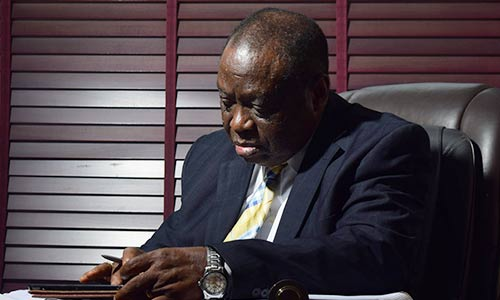
Okpoko, SAN

Speaking on behalf BOSAN at  the special  sitting  of  the Supreme Court of Nigeria to mark the opening of the 2024/2025 legal year and the induction and admission of new legal practitioners to the inner bar on 30th September, 2024, Chief T. J. Onomigbo Okpoko, SAN remarked that “Unless our society embraces the principle of adhering to discipline, development and improvement of life and property of citizens in our country will continue to elude us.”

Excerpts.

“Still on this line of indiscipline, a clear example is the sanction recently imposed by the Council of Legal Education headed by an Eminent Senior Advocate of Nigeria- Chief Emeka Ngige, SAN. The Council of Legal Education has rolled out sanctions against some faculties of Law in some of our Tertiary Institutions.

“For some time now, our training program for Candidates seeking admission to the legal profession, has been put under stress by acts of indiscipline by some Law faculties in some of our Tertiary institutions which admit students in Faculties of Law and graduated such student with Law degrees without accreditation by the Council of Legal Education.

“It is the indiscipline of such institutions that create the problems of Law graduates sitting at home for some years without gaining admission to law school. This problem itself is further aggravated by emergence of the despicable and destructive “Nigeria factor” which creates priority for those who have connection and influence peddlers.

“In the press statement, the Council of Legal Education listed the sanctioned institutions barred from sending graduates to the Law school for now. These Law graduates of several Universities whose Faculties of Laws admitted and graduated Law graduates without accreditation of their Institutions by the Council of Legal Education to run Law degree course.

“The Council also discovered that a University that has accreditation for 50 Law students has in fact admitted 1000 students into its faculty of Law, in total violation of admission quota. Such acts of indiscipline that has pervaded some tertiary institutions in the country is not acceptable by BOSAN.

BOSAN congratulates the Council of Legal Education for sanitizing the system and sanctioning violators. The Deans of Law in the affected tertiary institutions are violators and deserve to be sanctioned. Nigeria will be a better place if all will learn from the action taken by the Council of Legal Education. Discipline is the watchword.

“Unless our society embraces the principle of adhering to discipline, development and improvement of life and property of citizens in our country will continue to elude us. And so to our new Seniors Advocates, we say once more that discipline is the key.”

Why the Supreme Court’s immunity ruling is untenable in a democracy

By Stephen S. Trott

Justices’ ruling in immunity case creates one legal standard for presidents and a different standard for citizens

The court majority’s convoluted answer to the charge that they have unjustifiably placed the president above the law is that the president is not above the law because it is the law itself that says he is above it. No matter how cleverly articulated, the result is the same: The president and his agents are free to break the laws that apply to every other person in the nation. This newly minted imperial power is difficult to reconcile with an explicit presidential responsibility in Article II of the Constitution to “take Care that the Laws be faithfully executed.”

The court’s paradoxical holding is that the person we choose every four years to faithfully enforce our laws does not have to follow them. Why? Because if he must comply with our laws, it might render him fearful and cautious in office to the detriment of the responsibilities of the executive branch. The court cited no evidence or examples to support this concern. As Justice Ketanji Brown Jackson observed in dissent, this unsupported, counterintuitive holding allows a president to do whatever he wants as long as he uses his official powers to do so. The court has uprooted the principle that it is the law that is supreme, not our officeholders.

There is a conspicuous flaw in the court’s constitutional analysis. Although the Constitution provides impeachment as a method to remove a person from office for criminal behavior, the framers of the Constitution did not consider the remedy of removal alone to be sufficient. It provides that a person removed from office by impeachment “shall nevertheless be liable and subject to indictment, trial, judgment and punishment according to law.” The Trump majority evades the plain meaning of this text by noting that the clause “does not indicate whether a former president may, consistent with the separation of powers, be prosecuted for his official conduct in particular.” The court’s reasoning is unconvincing.

As the dissenters in the case explain, it is neither necessary, wise nor appropriate to resort to the extreme of removing the president from the reach of the justice system when a less drastic prophylactic would do. It is sufficient to give former presidents the protection of an adequate defense to criminal charges, a defense that honors the special and important responsibilities of the office. Without getting into details, such defense would include an “as applied” constitutional challenge to the application of a statute to the activity at issue, a defense of “public authority” to do what is in question, and having acted on authoritative advice of counsel. In conjunction with the robust procedural safeguards that every suspect and defendant enjoys, these defenses would accomplish the majority justices’ objectives. The final safeguards, of course, would be the criminal law’s burden of proof beyond a reasonable doubt and a jury trial by the former president’s peers.

It would seem to come down to this consideration: Either we trust our justice system to resolve challenging cases and controversies appropriately, or we do not.

Nowhere in the Constitution or the Federalist is there any provision, suggestion, or hint that the president can with impunity commit crimes against the state or lawlessly abuse citizens without recourse. But that is what the Supreme Court has left us: a kingdom within our republic.

Stephen S. Trott is a senior judge on the U.S. Court of Appeals for the 9th Circuit. He was appointed to the federal bench by Ronald Reagan.

Read more @ https://www.washingtonpost.com/opinions/2024/10/07/trump-immunity-justices-ellsberg-nixon-trott/?utm_medium=email&utm_source=newsletter&wpisrc=nl_popns&utm_campaign=wp_opinions_pm

Wike, Fubara: Bitten by Tiger cub

Omóníjó (A child has his day) was born into a small and heavily oppressed royal family. His lineage was marginalised by the other siblings. On his birthday, Omóníjó’s father, Ifátúbèrú (Ifa worth being feared), took him for divination to determine what his future would be.

The diviner, an old blind man called Mókomomótunúrè (Don’t teach a child more than what nature has deposited in him), after casting his Òpèlè, sighed. He told the curious father that the little boy would be great and would triumph over adversaries. But there were conditions attached.

The Babalawo told Ifátúbèrú that for the little Omóníjó to attain what Ifa said about him, he must be soft as èko and be solid as a rock (Omóníjó á rò bi èko, á tún le bi òkúta).

The Oracle warned that although the little boy had an eruptive nature, he must be guided to suppress those volcanoes within him and play the fool until he is of age to exhibit what destiny had deposited in him. Otherwise, Ifa warned, Omóníjó would end up like a snake which glides on the rock and leaves no trace. But that was not all.

The diviner said that for Omóníjó to be able to combine the two qualities of a soft and hard man without exhibiting his tempestuous nature, as soon as he was weaned, he must be taken to the home of the most cantankerous man in the land to learn the virtue of patience! What a contrast!

The only man in the land then that had the qualities Ifa mentioned was one old intemperate called Amómoekùnsajásín (He who takes the cub of a tiger like a puppy). Amómoekùnsajásín needed no one to provoke him before he would fight. He was provocation personified. He was a man who thrived only when there were crises. And he took no prisoners! Omóníjó’s journey to adulthood was indeed a complex one.

The complexity notwithstanding, Ifátúbèrú did exactly as Ifa directed. As soon as Omóníjó was weaned at age three, he was taken to the home of Amómoekùnsajásín. Zoologists, animal scientists and biologists all agree on the ferociousness of the tiger. It was at the home of a man who shared the same nature with the tiger that the lad was brought up. From time to time, Omóníjó’s father would check up on him and remind him of the injunctions that he must not exhibit his latent eruptive nature, no matter the provocation until it was the fullness of time.

Growing up in an irascible environment, the lad behaved like a fool. He lost his meals to lesser beings many times, but he would not fight back. He was ill-treated countless times, but he maintained his cool. On most occasions, Omóníjó was punished for offences he did not commit but never complained.

The entire household of Amómoekùnsajásín dismissed him as a never-do-well, a born fool. He was like Tommy, the character in Kenny Rogers’ song, “Coward of the Country”, who “Everyone considered him to be the coward of the country/He’d never stood one single time/To prove the country wrong/. Only the patriarch of the family knew that the little boy was destined to be great. And the master taught the lad all he needed for life’s journey. The old man held nothing back from the lad, who turned out to be a fast learner himself!

He served his apprenticeship, and his father took him back to the old Babalawo to offer thanksgiving offerings to Ifa. It was a great celebration and Omóníjó was released to the world to join the rest of humanity in the journey of life.

Even upon his release to the world, the adult Omóníjó carried on the way he did in the home of his master. Many who did not know about his tutelage took him for another dull man in town. They served his meals cold and gave him the shorter end of the stick. Omóníjó took everything in his stride.

Then a day came. The Oba on the throne joined his ancestors. It was the turn of the Omóníjó’s family to ascend the throne. But because they had remained a subjugated people, the entire community gathered and decided to give the title to another family. Incidentally, Omóníjó’s mentor and master, Amómoekùnsajásín, was leading the pack.

Initially, Omóníjó thought it was a joke. He never believed that his master, who trained him in all acts, arts and means, would be the one to lead the conspiracy to deny his family his rights. Nevertheless, as custom demanded, Omóníjó’ took the elders of his family and gifts to see Amómoekùnsajásín on the obaship matter.

True to his nature, Amómoekùnsajásín did not give a listening ear to the visiting party. He showed them why he was feared and revered at the same time. He forgot that one of his best apprentices was in attendance. The old man did not realise that there was no secret of the game Omóníjó did not learn from him. The party left his house.

On their way home, Omóníjó’s family decided to visit the old blind diviner, Mókomomótunúrè. The Babalawo did not allow them to sit down. He asked them what they wanted. They told him their predicament. The diviner said, without casting his Òpèlè, that the solution lay in his name. So, he asked the consulting party what his name was. They chorused Mókomomótunúrè (Don’t teach a child more than what nature has deposited in him). The old man rolled up his divination mat and entered his inner chamber, leaving the party to solve the riddle.

Omóníjó got the message. Ifa had no further instructions for them. He dropped the usual gifts for Ifa and he led his family members back home. At home, he called an extended family meeting, where he told them to prepare for the coronation of a new king. “Ha”, the family shouted. “Who is going to be the new king?” They asked him. Beating his chest, Omóníjó roared: “I am the new king. My coronation is ìtàdógún – 17 days.”

Those who heard him trembled. They looked for where the voice came from. Omóníjó’s countenance became fear itself. His eyes dilated dangerously. His nostrils emitted a fuse. He looked exactly like a Tiger, ready to pounce, unprovoked. His father, Ifátúbèrú, thanked his Babalawo, and the Babalawo in turn thanked Ifa. The people were emboldened. The battle line was drawn.

Seventeen days came. The traditional drum was beaten. Ifátúbèrú led his son, Omóníjó, to the inner shrine. The loyal kingmakers asked him to choose which swaddling clothes he would wear and Omóníjó chose the skin of the Tiger (Awo Ekùn). For his crown, he chose the one carved with several skulls of the Tiger. And for his staff, he picked the one decorated with the eyes of the Tiger; and picked the tail of a Tiger in place of horsetail!

The new Oba came out of the groove like a Tiger to the waiting battle party of the rebellious group led by Amómoekùnsajásín. Oba Omóníjó remembered his name. A child has his day. He leapt on the party. He spotted those who maltreated him in the house of his master and dealt them deadly blows.

He did not spare the ones who called him a fool and gave them the fool’s treatment. He made for the master himself. Amómoekùnsajásín saw what was to befall him. He fled in all wings. But for the fact that he was the master himself, Amómoekùnsajásín’s reign of terror would have ended that day. He escaped, but he was badly bruised. Omóníjó did not pursue him. He knew another day would come. Omóníjó triumphed as Ifa predicted. And Omóníjó’s lineage, nay, the entire community, became liberated. Every man must indeed answer his name on the most important day. Omóníjó did that in that battle of survival.

Our elders are wise. They counsel that once a Tiger helps in sharpening the incisors of its cub, it should avoid being bitten by the cub. A bad leader must produce the worst apprentice. Why leaders don’t learn from the above wisdom baffles me. I chose the above old but long folktale to start today’s piece. I did so because I found the moonlight tale relevant to contemporary Rivers State.

When the crisis between Governor Siminalayi Fubara of Rivers State and his predecessor cum godfather, Nyelsom Wike, broke out, I did a piece titled: “Fubara, Wike and day I broke duck’s eggs”, on December 19, 2023, on this page. In that piece, I called on the godfather of all godfathers, President Bola Ahmed Tinubu, to step in and settle the matter to avoid the danger hanging on Rivers State and, by extension, Nigeria, if the crisis was allowed to fester. I made that call because I believed then, as I still do now, that whatever muscle Wike is pulling, it is because he has the Federal Government behind him.

I never expected the President to act. It was not politically wise for him to do so. President Tinubu needs a ruined Wike for him (Tinubu) to take hold of Rivers State. The President knew that Wike, like the foolish Tortoise on a perilous journey, would not relent until he was thoroughly disgraced. Our leaders of this era needed all the weak men they could get around them to remain in power. Wike never realised this, hence, he continued his journey to political perdition!

I watched the video of Governor Fubara’s short ‘press conference’ on Saturday morning on the premises of the Rivers State Independent Electoral Commission (RSIEC). The governor was said to have held the ‘press conference’ by 1.00 am on Saturday, hours before the contentious local government election in the state. In the video, Fubara said, among other things, that “…This election must hold. If you like, whatever it is you like to do, do it. The election will hold, results will be declared, people will be sworn in…” He uttered those words in reference to the biases the police high command had shown in the crisis.

When I heard those words and the gesticulation of the governor, the voice that rang in my head and the words I heard were those of Omóníjó, when he roared: “I am the new king. My coronation is ìtàdógún.”

And just as he declared, the local government election took place in all the 23 local government areas of the state. Results were declared and all the winners were sworn in. Governor Fubara did all that without the police providing security. Wike and his men were nowhere near Rivers State while all that took place. But that should not be mistaken for peace!

This is exactly what happens whenever any typical Amómoekùnsajásín attempts to hold on to the leash of the ram offered to the deity. Every godfather must learn to draw the line and be conscious of when he is crossing the red line. Wike, in this crisis, has demonstrated so far that though he is bold, his courage is brash, tactless, and bereft of the necessary ingredients of native intelligence. A man who doesn’t know when to apply the brakes must run with his tail between his legs like Amómoekùnsajásín did in the fable above.

Why the Minister of the Federal Capital Territory (FCT), did not learn from the wise saying that nobody looks down on a day-old corpse without losing his garment to the gods, interrogates how much of his childhood he spent with the elders. That is a pity.

With the outcome of the Rivers State council election, Wike certainly has something bigger coming for him unless he stops in his tracks now. But whatever may be his lot in the impending loom, I can only wish him a full portion of what he deserves.

My concern here, however, is the implications of the Rivers State shenanigans and political banditry on our democracy. I have no doubt within me that it is not yet Uhuru for the oil-rich state. The days, weeks and months ahead are pregnant.

As I penned this, information filtered in that armed men had set some local government secretariats in Rivers State ablaze in what appeared to be a ‘counterattack’. Unfortunately for the hapless citizens of the state, they have, in this period, the most unprofessional, biased and brazen security agencies to contend with. While the arson lasted, no single security agent was sighted. The arsonists had a field day to operate!

This is where my fear lies. This is where the danger hangs, precariously. A security architecture that allowed non-state actors to supervise the Rivers State council election the way it happened last Saturday can do anything. Such pliable security agencies would look the other way even if the Pope’s Cathedral is set on fire! Rivers State is a ticking bomb!

Former President Goodluck Ebele Jonathan, in his reaction to the crisis, alluded to how such a political conflagration in the South-West in the 60s truncated the First Republic. I do hope someone is taking notes of the events in Rivers State. A lot of people fought for this democracy. I have checked the list, and I couldn’t find Wike’s name there. Fubara’s name is equally not listed among the ones who swallowed fire so that the present locusts in power could drink water.

This is why all lovers of good things must rise and condemn the destructive tendencies of the Wikes of this era. This democracy is like the proverbial hut which the owner must protect from the ruinous flood aiming at its foundation. The Wikes of this era have enough to take them out of this country if anything odd happens. Many of us with nowhere else to turn must unite in our resolve to save our nation. The docility and complicity of the Presidency in this matter is highly censurable. The roof is about to come down on all of us!


A 30-step guide to the emergence of Nigeria, By Ayo Akinfe

As we celebrate 64 years of independence, here is a 30-step guide to how Nigeria came about. We have come a long way as a nation but the best is yet to come.

1 On August 6 1861, the port of Lagos was seized by the British.

      2. On 5 March 1862, the Crown Colony of Lagos was declared, governed directly from London

      3. In 1881, British soldier turned explorer George Goldie sought a charter from the British government seeking to do exactly what Cecil Rhodes did in southern Africa. To meet his objectives, the capital of the United African Company was increased from £250,000 to £1m and great energy was displayed in founding stations on the River Niger

      4. On 1 January 1890, the Royal Niger Company’s charter was revoked and the British government took control of the area currently constituting Northern Nigeria

      5. On 1 January 1900, the Royal Niger Company transferred its territories to the British government for the sum of £865,000. The ceded territory together with the small Niger Coast Protectorate, already under imperial control, was formed into the two protectorates of Northern and Southern Nigeria

      6. In 1900, the Protectorate of Southern Nigerian was created with the union of the Niger Coast Protectorate with territories chartered by the Royal Niger Company below Lokoja, with its capital in Calabar

      7. In 1902, Frederick Lugard was appointed the High Commissioner of the newly created Northern Nigeria Protectorate, with his headquarters in Zungeru

      8. In 1906,the Lagos colony was added to the Protectorate of Southern Nigeria and the territory was officially renamed the Colony and Protectorate of Southern Nigeria

      9. In 1906, the Protectorate of Northern Nigeria was created built after the conquering of the Sokoto Caliphate

      10. On January 1 1914, the northern and southern protectorates were formally united as the Colony and Protectorate of Nigeria

      11. In 1917, Frederick Lugard moved the capital of the Protectorate of Northern Nigeria to Kaduna from Zungeru

      12. In 1922, the Clifford’s Constitution was enacted, which created a legislative council comprising 30 official members, 15 unofficial ones nominated by government and three unofficial members representing the municipal areas of Lagos and Calabar

      13. In September 1923, Nigeria’s first ever elections were held and the Legislative Council was inaugurated in October of the same year

      14. In 1939, the British created three regions in Nigeria – Northern, Eastern and Western

      15. In 1946, the Richards Constitution provided for an expanded Legislative Council empowered to deliberate on matters affecting the whole country. Under this constitution, separate legislative bodies, the houses of assembly, were established in each of the three regions to consider local questions and to advise the lieutenant governors

      16. As a result of the adoption of the Richards Constitution, mass political parties were formed in Nigeria. First created was the National Council for Nigeria and the Camerouns (NCNC) in 1944, the Action Group (AG) in 1950 and the Northern People’s Congress (NPC) in 1951

      17. In 1951, regional elections were held under the McPherson Constitution, with representatives elected into all three regional Houses of Assembly

      18. In 1952, Ahmadu Bello, Obafemi Awolowo and Eyo Ita took up the titles of Leaders of Government Business in their respective regions

      19. In 1953, Anthony Ehahoro moved a motion in the Federal House of Representatives calling for Nigeria’s independence by it was defeated. His motion was emulated in nearby Ghana when on 3 August 1956, the Gold Coast Assembly adopted Kwame Nkrumah’s resolution demanding independence from Britain

      20. In 1954, the Lyttelton Constitution declared Nigeria a federation consisting of three regions, the federal territories of Lagos and the Southern Cameroons

      21. On 1 October 1954, the colony became the autonomous Federation of Nigeria and that year, the first ever federal elections were held. Three regional assemblies were elected in each region

      22. On October 1 1954, Ahmadu Bello, Obafemi Awolowo and Nnamdi Azikiwe became the premiers of the Northern, Western and Eastern regions, marking the first time Nigerians had direct control over their own affairs

      23. Nigeria’s first Constitutional Conference took place in London from May 23 until June 26 1957, attended by all the major political players including Ahmadu Bello, Nnamdi Azikiwe, Obafemi Awolowo, Joseph Tarka, Eyo Ita, Harold Dappa-Biriye, Tafawa Balewa, Ladoke Akintola, Michael Okpara, Kinglsey Mbadiwe, Anthony Enahoro, Bukar Dipcharima, Sam Ikoku, Rotimi Williams, Ayo Rosiji, Theophilus Benson, Remi Fani-Kayode, Festus Okotie-Eboh, Muhammed Ribadu, Inuwa Wada, Shettima Kashim and Josiah Olawoyin

      24. In 1957, Chief Ladoke Akintola moved a second motion for independence in Parliament and asked Nigeria to gain our independence from the British in 1959. This motion was passed but the British authorities refused to acquiesce to it

      25. In 1957, Abubakar Tafawa-Balewa was elected chief minister of Nigeria, leading a coalition government of NPC, NCNC and AG members

      26. In 1958 Remi Fani-Kayode moved the third motion for Nigeria’s independence in the federal parliament, asking that Nigeria should be given her independence on April 2 1960. The motion was not only passed by parliament but it was also acquiesced to by the British.

      27. In September and October 1958, the second Nigerian Constitutional Conference took place in London at which it was agreed to fix October 1 1960 as Independence Day.

      28. Federal elections were held in 1959, during which the likes of Nnamdi Azikiwe and Obafemi Awolowo gave up their premierships to stand in the federal parliament.

      29. In 1959, Jaja Wachukwu became the first speaker of the House of Representatives and on January 1 1960, Nnamdi Azikiwe became the first president of the Senate in the run-up to independence.

      30. On October 1 1960, Nigeria gained independence with Tafawa Balewa elected prime minister, Nnamdi Azikiwe governor-general and Obafemi Awolowo, leader of the opposition. Ahmadu Bello, Ladoke Akintola and Michael Okpara became the regional premiers.

      31. As speaker of the House of Representatives, Jaja Wachukwu lowered the Union Jack and handed it to the visiting Princess Alexandria, the representative of the British Royal family. He then hoisted the green-white-green flag in its place. Tafawa-Balewa was subsequently sworn-in as the head of the government.

      [email protected]

      Rivers: Beyond Wike and Fubara

      By Lasisi Olagunju

      Chief Obafemi Awolowo’s 1947 book, ‘Path to Nigerian Freedom’, opens with three quotations. The first tells the reader: “This above all: to thine own self be true…” It is from William Shakespeare’s ‘Hamlet’. It simply says do not deceive yourself – like the one with a sore in the right leg but who nurses the healthy left. The one who deceives himself suffers deception from the gods.

      The second quote, from Shakespeare’s ‘King Lear’, is a warning that “Who cover faults, at last shame them derides.” In today’s English, it says those who cover their faults always end up being shamed by them. The third quotation enjoins you to “fight all opinions contrary to truth, but let your weapons be patience, sweetness, and charity…” The words belong to an 18th century Catholic saint, John of Kanty, who ended that quotation with a counsel that the best cause almost always gets spoilt by violence.

      My eyes caught the quotes as I was considering recommending ‘Path to Nigerian Freedom’ to the gladiators fighting to the death in Rivers State and to the puppeteers behind the problem. If the 134-page book is too thick for them to read, at least, they should buy the three quotes for their politics and, especially, for their politicking.

      Rivers State suffers the oríkì of an oba who profits from planting corn of trouble in the backyard of his victims. The king’s fruited corn must not be harvested and, it must not be destroyed. It is trouble.

      The people behind the crisis in that state are those who urge the creditor to demand his pay and, at the same time, nudge the debtor to repudiate his debt. Their goal is conflict that benefits the palace.

      Yes, dirty water quenches fire but why not use clean water which neither stains nor stinks?

      Very wild Rivers State conducted its local government elections two days ago without police presence. The police stayed away and the state said it didn’t miss them. In scoring that first, Rivers State has helped us ask two pertinent questions: is the Nigeria Police Force for the Federation of Nigeria or for the Federal Government of Nigeria? Who should determine what goes on in the local governments? Is it the state or the federal government?

      In a properly structured family, a slave knows himself as slave; the indentured knows what he is too (Eru a mo’ra e l’eru; Iwofa a m’ora e ni Iwofa). If Nigeria were a properly structured nation, last week’s drama between Governor Sim Fubara of Rivers State and the Inspector General of Police would be very unnecessary. Who should be in charge of security in Rivers State? Who should be in charge of the local governments there? The Federal Government or the State Government? Or who?

      We may not be a very good record-keeping country, but those who enslaved us kept and still keep records. We see in colonial records, including the Hansard of the British parliament, tomes of materials which tell us that Nigeria is a negotiated country. Every bit of its structure was argued and fought over by the founding fathers who did not take anything for granted. On Wednesday, 21 October, 1953, Lord Milverton briefed the British House of Lords on what he called “prospective constitutional developments in Nigeria.” It was essentially a report of that year’s constitutional conference. Here, I am interested in what Lord Milverton said the leaders of the Nigerian people agreed to on the structure and control of the police. Milverton said: “The Conference agreed that the police, other than local authority and native authority police, should be a central function, but control of police contingents stationed in the regions is to be vested in the regional commissioners of police, who will be responsible solely to the Governor of the region, who, in turn, will be responsible only to the Governor-General. I regard this as a very satisfactory decision, to avoid the danger of the police coming under the control of a political party.”

      Subsequent constitutional conferences of 1954, 1957 and 1958 had variants of this agreement. And there are records that show that two of the regions – the West and the North – which already had local authority and native authority police, demanded regional police in addition to a central police force. The Western Region, especially, believed that “a centralized police force” would most certainly become the “deadliest weapon for any dictator.” But, the Independence Constitution of 1960 struggled to allay the fears of, especially, the West on the potentiality of a federal government appropriating the central police to decimate the regions. The drafters of the constitution – and of subsequent ones – thought that the creation of a Police Council to own and manage the Nigeria Police would keep us safe from dictators. We’ve seen how wrong the allayers of that fear were.

      If you’ve ever witnessed how village folks extract kernels from palm nuts, you would understand the struggle for control of the councils between the federal government and the states. Who should manage local governments and their affairs? As flawed and inadequate as the 1999 constitution is, it contains enough hints on what local governments are and how they should be run. But our law means nothing to us – even to the courts. As usual, the judiciary shat in its pants in this Rivers matter. Federal High Court knelt for the federal; State High Court prostrated before the state. The courts messed up so much that street chickens played with their balls.

      Unlike the control of the police, management of local governments was not a problem at the beginning of our journey. It is a problem created by the military which found Nigeria in a hole and stupidly dug it deeper. Their training missed for them the first law of holes. What did we inherit?

      In April 1952, members of the Western House of Assembly thoroughly debated the local government system they wanted for their people. The region’s Leader of Government Business and Action Group leader, Chief Awolowo, spoke there on what he called “local self-government.” He explained this to mean “a system of local government wherein local councils make, accept responsibility for and implement their own decisions.” A year later, Chief Awolowo described local governments as “the superstructure on which the regional government is erected.” Soon afterwards, the Western Region became the first to conduct council elections and introduce elected representatives into the local government system in Nigeria. That was in June 1953. And the elections were free and fair to the extent that an Adegoke Adelabu got elected as Chairman of Ibadan District Council under a regional government headed by Chief Awolowo. The elections were strictly a regional matter.

      If today’s Federal Government had known its limits, it wouldn’t have suffered the disgrace it suffered in Rivers State at the weekend. The election it struggled to frustrate eventually held. And I see it as a victory for federalism and one major step in our forward march to defeat the current forces of resurgent unitarism.

      Should the eye ever forget what the heart has seen? Those words impose on us the duty of protecting our heritage. The people in charge of the government in Abuja today claim to be followers of Chief Awolowo. They claim Awolowo but want states and local governments in their federal pockets. How do they think Awo would have taken it as premier if Prime Minister Tafawa Balewa had attempted to organise an election into Ibadan District Council? Or seek to use federal police to stall the conduct of elections into Western Region’s Divisional Councils?

      Our state governors may have not managed excellently the local governments, but digging a hole to fill another will most certainly pockmark the face of the earth. When states conduct local government elections, the ruling party wins all. The present set of governors inherited that wrong from those who had been there, including the incumbent president. We do not find what the governors do with the councils funny at all. We think what they do is not democracy; we think it shames democracy. And what solution do we have? Use the federal police to balance the terror.

      What else are we brewing? We have before the Senate a bill seeking to establish an agency for the federal government to conduct local government elections. The promoters call it Local Government Independent Electoral Commission Establishment Bill 2024. The day that bill is passed and signed into law is the day Nigeria becomes Paul Biya’s Cameroun. Check who Paul Biya is and what he means to the peace of his country and to the prosperity of his people.

      You remember how Shakespeare’s Cassius paints the canvas of imperial Caesar?: “Why, man, he doth bestride the narrow world/ Like a Colossus, and we petty men/ Walk under his huge legs and peep about/ To find ourselves dishonorable graves.” Historical Caesar truly became a colossus when he seized control of all Roman structures. In the vicious contest for the control of the local governments between the presidency and the governors, behind whom would you queue? My own vote on this would go to the governors. Why? Let me ask: is it not better to have 36 mini emperors ‘assisting’ us to hold down an elephantine imperial presidency than to have a sole administrator, a real Caesar, bestriding the whole Nigerian world like a colossus?

      The theory of unintended consequences has ensured that governors fill the void left by what should be a virile opposition and a checking legislature. You will understand my drift if you’ve ever seen how a cackle of hyenas tackle conceited Lion, king of the jungle, and cut him to size. They have to, otherwise they all become endangered, and the forest becomes a proper state of nature – a nasty, brutish dictatorship.

      Olusegun Obasanjo’s presidency was stopped by the governors. Governor Bola Tinubu was the field commander in that battle. Umaru Yar’Adua’s and Goodluck Jonathan’s presidential tenures suffered pacification at the hands of their governors. The governors of those eras, warts and all, reined in the omnipotent presidents and we and our democracy were the better for it. Then a paternalistic, free-roaming Muhammadu Buhari came and tamed the governors, and crashed the plane, and landed all of us in this emergency ward. We will see the worst of it with the grasping present.

      Fortunately we have a set of governors for whom flames in the tiger’s eyes signify nothing. And these governors are from all parties who have governors.

      Imagine 220 million Nigerians peeping under the huge mahogany legs of a presidential table begging to breathe. The spectacle of a begging nation is worse than miserable minions peeping about in search of “dishonorable graves.” And we will have it the moment this president, or the next one, is allowed to ‘elect’ chairmen and councilors into the 774 local government councils.

      I try to loan myself sense on the crisis in Rivers State. The issue there is beyond Nyesom Wike and Sim Fubara. The two gentlemen, in fact, need to be rescued; they are grasshoppers in the hands of some wanton gods. Some harvesters’ silos need the grains of that fight for their barns to be truly full. A grisly game of thrones is, therefore, afoot. Wike and Fubara and their Rivers are mere boots in that battle.

      The very week of our independence anniversary was the week we experienced Rivers State.

      Public intellectual and ebullient media icon, Ambassador Yemi Farounbi, early last month sent me a text: “I’m getting worried by the increasing distance from good governance, the rapid movement towards dictatorship and the deafening graveyard silence within the Nigerian elites.”

      The day Nigeria celebrated its 64th independence anniversary was the day Farounbi turned 80. Amidst all the dirt and madness around, the old man has managed to keep his medal of sanity. A man with such a journey and unique birth date should be celebrated with the nation. But there was no reason to roll out the drums. For our country, the auguries are not good.

      If you make a dove president of Nigeria, the present structure will transform that dove into a hawk overnight. Too much money and too much power at the centre is what I meant by ‘structure’. Everything comes down to the imperative of meeting our demand for a proper federation run on the principles of true federalism. We run an inverted federation of the centre holding the ladle at the dining table. The current revenue sharing formula gives the federal government 52.68 percent, the 36 states 26.72 percent and the 774 local governments, 20.60 percent. The oil-producing states take 13 percent as derivation revenue. Typically in this Orwellian contraption, Big brother harvests more than it should take. The Federal Government takes more than half of everything, yet it cheats.

      I am aware that four states are currently before the Supreme Court asking my Lords to order the president to obey Section 162 (1) and (3) of the constitution. The section makes it mandatory for all monies made by the federation to go into the federation account. Section 162(3) provides that “any amount standing to the credit of the Federation Account shall be distributed among the federal and state governments and local government councils in each state of the federation on such terms and in such manner as may be prescribed by the National Assembly.”

      But the states say that the Federal Government, in the name of deductions and transfers; refunds and interventions, cheats them and the local governments monthly. For instance, at the July 2024 meeting of the Federation Account Allocation Committee (FAAC), N1.35 trillion was shared to the three tiers of government as allocations for the month of June 2024 from a total gross revenue of N2.4 trillion. There is a difference of over N1 trillion between what the federation admitted making in that month and what the tiers of government shared. Check other months; the pattern is the same. We wait to see what the Supreme Court will say on those four cases. It will make new laws.

      The fear of the worst happening is ever present. The consolation is in one of the lines I dropped here some weeks ago. “The closer the collapse of the empire, the crazier its laws are.” The quote belongs to Roman orator, lawyer and statesman, Marcus Tullius Cicero. You must not keep quiet, covering your faults and letting them shame you. We should know that when it rains – and it will rain – all roofs will get wet. And, so with charity and sweetness of patience, we must continue to “fight all opinions (that are) contrary to truth.”

      The  epic battle between King Sunny Ade and Chief Bolarinwa Abioro

      By Onigegewura

      A True Story on Music and Business (Sunny Ade vs Abioro)

      It was in 1974 that the news broke. Chief Bolarinwa Abioro, the Balogun of Ipokia, the Chairman of African Songs Limited, had taken his star musician to court! Everyone who knew #KSA knew Abioro. Everyone who knew #Abioro knew Sunday Adeniyi. #Sunny was the son. Abioro was the father. What could have gone wrong between father and son?

      KSA was the second artiste to be signed on to the stable of African Songs Limited. Ayinde Bakare was the first. Sikiru Ayinde Barrister was the third. Like most creative people, young Sunny Ade was more concern about his passion and less concern about the business aspect of music. His passion was to play music and to excel as a musician.

      It was enough that Abioro – one of the biggest men in the music industry at the time – was ready to promote him. They brought documents for Sunny and his band boys to sign. They called it a contract. It could have been called any other name for all that KSA cared. Won ni ko wa je saara, o ni ojo ti wonu ju. Se ata ni won ni ko mu wa ni, abi iyo. You are invited to a free feast, you are complaining about the short notice, are they asking you to bring salt or pepper? Sunny Ade and his boys didn’t hesitate. It is doubtful if any of them read what the contract said. The most important thing was that they were going to become recording artistes. Sunny signed. His band boys signed. Everybody was happy.

      The contract was for 5 years. However before its expiration, KSA had become a household name. His album, Challenge Cup, sold in excess of 500,000 copies. It was certain that King Sunny Ade was going to dominate the music scene for a very long time to come. African Songs Ltd knew a good product when it saw one. The management of the company didn’t wait for the first contract to expire before they brought a new contract.

      The new agreement was carefully worded. KSA and his band boys agreed to perform and record exclusively for ASL for a period of five years. ASL had full copyrights to all compositions and recordings of Sunny Ade. ASL was entitled to the sole right of production, reproduction, and use of King Sunny Ade’s performance throughout the world. That was not all. During the period of the agreement, KSA was prohibited from rendering any performance whatsoever to himself, any company or group of persons. The contract also stipulated that ASL had the option to renew the agreement at its expiration for a further term of two years or for any longer period. Sunny Ade had no such right.
      That was not all. On the sale of every album which price was then fixed at N6.00, KSA and his boys were entitled to a princely sum of 20 kobo. Yes, you read that right. African Songs would go home with the remaining N5. 80 kobo. Onigegewura’s mathematics has never been good. He is just an amateur historian. You can do the sum yourself.

      Still basking in the euphoria of his growing fame, Sunny gratefully signed again. His band boys signed. 20 kobo was still something. Orogun iya re da sokoto fun o, o ni ko bale, melo ni iya to bi o da fun o? You are complaining that the trousers made for you by your step-mother was not long enough, where is the one your own mother made for you? They were expecting their 20 kobo royalty on every album. Well, when the time came for actual payment, it was then discovered that mathematically and arithmetically, it was not supposed to be 20 kobo. They had not factored the cost of publicity and promotion! And since it was the artiste that was being promoted, he must be the one to bear the cost! After the addition and subtraction, Sunny was given 15 kobo per album.

      KSA was not Chike Obi, the mathematician. But he knew that 20 kobo and 15 kobo were not the same thing. Compared with his contemporaries in the music industry, KSA realized that he was holding the short end of the stick. His colleague, Baba Commander, Chief Ebenezer Obey was earning as high as 70 kobo per album. Others were earning between 35 kobo and 60 kobo.

      That was when Sunny decided to ask Chief Abioro for a raise of the royalty payment. The chairman listened patiently to KSA and his colleagues. He was nodding as they canvassed one reason after another why a raise was in order. When they finished, Chief Abioro flipped open a file he had on his table. He brought out a bundle of documents. Even from where he was seated across the table, Sunny saw that it was a copy of the contract he signed. “An agreement is an agreement. It is a binding contract!” The chief informed them. “This is what you signed. This is what you are entitled to! No more, No less.” He returned the documents to the file. Case dismissed.

      But Sunny was not done. “Chief, this is not about contract. You are our father. Our request is for adequate compensation! Let’s leave the contract aside.” Chief Abioro looked at the young star the way a parent looks at a child asking for another candy. “Leave the contract aside? We should leave the contract aside?” The chairman asked incredulously. “You know, it would be nice to leave the contract aside. But you know what? That would be illegal!”
      Haba! Illegality ke! . It was then that someone brought up the idea of requesting some of his friends to plead their case. Sunny agreed. After all, Eni ti o mo oju Ogun, ni pa obi ni ‘re. It is the person who is conversant with Ogun, the god of iron, that is usually given the duty to administer its rites. They went to meet Prince Okunade Sijuwade who would later become the Ooni of Ife. They also met with Chief Afolabi Joseph. Even Chief Ebenezer Obey was also requested to intervene as well as Chief Nurudeen Alowonle.

      The eminent persons appeared in the court of the Balogun of Ipokia as ‘amici curiae’ on behalf of the musicians. Amici curiae are lawyers invited by the judge(s) to assist in filling briefs that may be helpful to the court in deciding a case. Our eminent persons argued their case like experienced advocates. They cited relevant sections of the unwritten Yoruba constitution. They cited Yoruba proverbs. They made reference to the story of Oduduwa. The presiding chairman listened to their submissions and summarily dismissed the case. Contract is contract!

      Chief did not only dismiss the request for a raise. He opened another file on his table and brought out a new set of documents. Your guess is right! A new five-year contract! By now, Sunny Ade had learnt enough law. He had become a professional mathematician. He had obtained his Master of Business Administration from practical experience. He knew the implication of putting pen to paper. He applied for an adjournment.

      The King of African Beats found himself in a quandary. His new songs were ready but Chief had threatened not to release any new album until he signed the new contract. And KSA was not ready to sign any new contract until the issue of royalty was resolved.

      KSA remembered his grandmother’s proverb. Ti abiku ba gbon ogbon ati ku ni igba erun, iya abiku a gbon ogbon ati sin oku e si etido. If an abiku decided to die during the dry season when he knew that the ground would be hard to dig, his parents would also decide to bury him by the riverside where the ground would not be hard to dig.

      Sunny Ade decided to release his record with another company. His plan was to use the album to bargain for a better deal with African Songs. Instead of the measly 20 kobo, he was confident that the chairman would be ready to pay him at least N1.00 per copy. The album was recorded in Nigeria but taken to London for mixing. What Sunny Ade did not know was that Chief Abioro was a master at the game. Before Sunny could get a copy of his own album, Chief Abioro was already in possession of the new record.

      Baba Ibeji was composing fresh materials at home when the court bailiffs arrived. They served him with an order of interim injunction! The court order was as comprehensive as it was broad. Sunny Ade was prohibited from sale, distribution, marketing, dealing, etc. etc. of the record. He read the order again. Even without being a lawyer, he knew the implication of the document he was holding.

      With palpable emotion, his mind went back to how he came to Lagos from Abeokuta with only one shilling and eighteen pence! He remembered his years with Baba Sala. He recalled how he got stranded with Baba Sala’s travelling theatre in Jebba and Kano. How he did not see his mother for two years whilst he suffered to make it as a musician. He recalled how his first album sold only 13 copies. Now when he was at the threshold of success, this court order! With grim determination, he knew he couldn’t afford to quit.

      He remembered his first day at Oshodi when he missed his way trying to locate Moses Olaiya’s house and how he was directed instead to Dr. Victor Olaiya at Tinubu. He recalled how he knelt down in the dust of Oshodi to pray. Immediately he knew what he must do. Sunny went down on his knees and with an emotional voice, he prayed and prayed. It was not the Sunday Adeniyi that knelt down to pray that stood up. He had become empowered. He had become emboldened. That same evening, he established his own label.
      Sunny Alade Records was born! He didn’t bother to sit down again. He remembered the threat of Chief Abioro to bring him down at all cost. He needed a lawyer who knew his law and who would be prepared to fight his cause against the Magnate. He went off in search of Gani Fawehinmi.

      Gani collected the court papers and looked at the claims. He looked at his client. He looked again at the claims. Chief Abioro was not leaving anything to chance. He knew what he wanted from the court. His lawyer had read the agreement between African Songs Limited and Sunday Adeniyi.

      Chief Abioro wanted only four things from the court: a declaration that the agreement between ASL and Sunday Adeniyi and his boys was still subsisting; an injunction restraining Sunny Ade from distributing or selling the record; an account of all sales of the record; and N1 million for breach of contract.
      I hope you are not sneering at the N1 million as being ‘chicken change’. Remember this was in 1974. The price of a brand new Volkswagen Beetle car was about N500 at that time. N1 million in 1974 was a princely sum!

      On the day of the trial, the court was filled to capacity. Gani Fawehinmi was armed with every conceivable legal authority. The law books he brought to the court were more than enough to open a library. There were books on Contract. There were books on Human Rights. There were volumes on Intellectual Property. Gani even brought some books on Slave Trade.

      The first application Gani brought before the court was for an order to compel African Songs to produce its statement of account over the preceding three years. The court granted the order. It was discovered that the company was making almost N900,000 every year from the sale of Sunny Ade Records. It was also discovered that the total sum that KSA received was N62,000 in the almost ten years he was with the company. How can you be asking me what is 900,000 divided by 62,000? I have told you that I’m not a mathematician. Please don’t ask me about percentages or fractions.

      Gani did not forget to raise the issue of how 20kobo became 15 kobo. He also cross examined Chief Abioro at length on the onerous terms contained in the contract. Gani put it to the chief that the contract was in restraint of trade and that it was therefore null and void as it amounted to colonization of King Sunny Ade, a free citizen of the Federal Republic of Nigeria and a citizen of the Commonwealth!

      My Lord Justice L. J. Dosunmu listened patiently to the parties. His Lordship also asked the witnesses some probing cases. The court thereafter adjourned the matter to February 14, 1975 for judgment. It did not even occur to the King of African Beats that the day was St. Valentine’s Day. His only preoccupation was to find out the direction in which the pendulum of justice was going to swing.

      On February 14, people started arriving at the court as early as 7am. The court officials had hectic time controlling the mammoth crowd that had come to court to witness the historic decision. In His Lordship’s judgment, Justice Dosunmu held that although some of the terms of the contract were stringent, that was not a ground for holding the contract invalid. In effect, the contract between ASL and KSA was therefore valid. As the court pronounced on the validity of the contract, Sunny looked at his lawyer. Gani signaled to him to be calm, the court had only resolved one issue out of four.

      With regard to the second claim, the court held that since the records in question had been distributed all over Nigeria, there was no way the court could order them to be recalled. The court therefore refused to restrain Sunny Ade and his marketer, M. Ola Kazim from distributing the album. A tiny smile crossed Sunny’s face.

      You recall that Chief Abioro was asking for N1,000,000 as damages for breach of contract. The court ruled that for recording with another company during the subsistence of the contract, Sunny Ade was liable. He was asked to pay N300! Yes, Three Hundred Naira! From N1,000,000 to N300! Sunny smiled for the first time.

      The court having found that the contract was still subsisting, KSA was ordered not to release another album pending the expiration of the contract with Chief Abioro’s company, which was due in six months. Six months! What am I going to be eating? Sunny thought. Apparently, this was the only part of the judgment that Anti Wura, Buroda Alani’s third wife must have heard, and heard wrongly too! As if reading Sunny Ade’s mind, Justice Dosunmu said he realized that Sunny Ade would need to eat and feed his family in the six months that the contract had to run. His Lordship therefore held that the injunction was limited to only recording of albums and that Sunny Ade was free to do live performances for fees. His Lordship said that this was in order to avoid a situation where the King of Music would starve or be compelled to go back to Chief Abioro.

      The Judge had hardly risen before King Sunny Ade jumped up to hug his counsel. He was free! He gave Gani a bear hug. He had learnt his lesson. Creativity and Business must go hand in hand. Years later, the King of Music recalled: “The lesson I learnt from the episode is that if an artiste is churning out hit records, he needs to keep an eye on the business side of things. If not, he would be in a mess

      Culled from Onigegewura blog

      Nigeria’s Federal High Court: A scandalized court

      By Chidi Anselm Odinkalu

      On 7 June 1911, the High Court of Australia decided a very interesting case. It arose from a publication issued two months earlier, on 7 April 1911, by a newspaper called The Mercury, published from Hobart, in Tasmania. Under the title “A Modest Judge”, the newspaper took aim at Mr. Justice Higgins, a senior judge of the High Court of Australia who was also the first President of the Commonwealth Court of Conciliation and Arbitration.

      According to the records, in a case presided over by Justice Higgins in the Court of Conciliation and Arbitration, a lawyer, Mr. Starke, accused a labour union of impunity, alleging that “they are encouraged…. by the Government of this country.” On hearing this, Justice Higgins prohibited the lawyer from uttering such words. When counsel protested his right to vigorously advance the case of his client, the judge retorted “[Y]ou are not entitled to speak disrespectfully of those above us.” Here was the jurisprudence of Kabiyesi articulated with forceful clarity more than three quarters of a century before it arrived in Ligali Ayorinde’s High Court of Lagos in 1989.

      This was the factual background to the article that was to become the centrepiece of the proceedings in the High Court of Australia in which the newspaper said of Mr. Justice Higgins that  he was “we believe, what is called a political Judge, that is, he was appointed because he had well served a political party. He, moreover, seems to know his position, and does not mean to allow any reflections on those to whom he may be said to be indebted for his judgeship.”

      The Attorney-General of Australia charged the newspaper with the crime of “scandalizing the judiciary.” Dismissing the charge, Samuel Walker Griffith, Australia’s inaugural Chief Justice, who presided over the proceedings had this to say: “I am not prepared to accede to the proposition that an imputation of want of impartiality to a Judge is necessarily a contempt of Court. On the contrary, I think that, if any Judge of this Court or of any other Court were to make a public utterance of such character as to be likely to impair the confidence of the public, or of suitors or any class of suitors in the impartiality of the Court in any matter likely to be brought before it, any public comment on such an utterance, if it were a fair comment, would, so far from being a contempt of Court, be for the public benefit, and would be entitled to similar protection to that which comment upon matters of public interest is entitled under the law of libel.”

      The crime of “scandalizing the judiciary” has largely fallen into disuse. It assumed that the people who scandalize courts were always others rather than judicial staff, or even judges themselves. In Nigeria, the people most likely to scandalize the judiciary these days sit in most cases as judges and magistrates.

      In her first official act as the 18th indigenous occupant of the office on Monday, 30 September, at a special session of the Supreme Court to conduct the annual ritual of inducting the latest set of Senior Advocates of Nigeria (SANs), new Chief Justice of Nigeria (CJN), Kudirat Kekere-Ekun, warned that under her watch, obedience to court orders will be “non-negotiable. No individual or institution, irrespective of their standing, will be permitted to treat the judgements of our courts with levity or disregard. The Judiciary stands resolute in ensuring that the sanctity of our legal decisions is upheld.”

      Regrettably, Madam CJN labours under the misapprehension that it is always possible or easy to know what the order is that is to be obeyed. The joke is that court orders these days are so lucrative that many judges make them – in good old Nigeria-speak – double-double. Responsibility for this sorry state lies mostly with the Federal High Court.

      The ancient city of Kano now has two Emirs, one state and the other federal after a rogue Federal High Court judge decided to take chieftaincy into the federal realm.

      Edo State has two Deputy Governors too.

      By dint of the judicial labours of Peter Lifu, a judge, the Federal High Court also attempted to impose two separate dates on Rivers State for the conduct of Local Government elections after Chigozi Igwe, a judge of the High Court of Rivers State, had issued a considered decision setting 5 October as the date for the election. Rivers State Governor, Sim Fubara, acknowledged Peter Lifu’s hardwork by handing him the moniker of “that justice that gave that fraudulent judgment.”

      This is not the first time the Federal High Court will gratuitously constitute itself into an appellate forum to review without benefit of the records of proceedings and with the practised ill-will of a political hit-job dressed up in judicial robes, decisions of State High Courts. Nor is it the first time that the Federal High Court will convert itself into a court of unlimited jurisdiction that it is not at the expense of a State High Court which, under the Constitution, is indeed the only court of unlimited jurisdiction.

      This Federal High Court has become the place where the law falls into disrepute and Lady Justice suffers repeat rape.

      This has become the routine of the Federal High Court under the leadership of its current Chief Judge who enables a notorious line up of judges of the court who clearly seem to be able to habitually scandalize the judiciary without consequence. This Chief Judge of the Federal High Court favours them with the species of cases that lend themselves to pay-as-you-go judicial dispositions that can only originate in the bedrooms of their favorite politicians.

      Not even the Inspector-General of Police who must provide the steel behind the orders of courts in Nigeria, has much regard for them. The most charitable that can be said of Kayode Egbetokun is that he is a political IGP. For most of his professional life, Mr. Egbetokun has been the Aide-de-camp to the man who now occupies the presidency. Even as IGP, the habits of a lifetime as ADC die hard. In his current office, he now heads the uniformed, armed wing of the ruling party. In that role, his brief is to make his principal happy. If a court order gets in the way of that, it is for CJN Kekere-Ekun to worry about that.

      The people who have the gumption to call out such conspiracy of conceit become the butt of a line-up of professional hirelings defending the habitual malefaction of those who supervise judicial malpractice as standard procedure. One example of such faceless hirelings is the fly-by-night entity that calls itself “Global Network for Justice and Equity.” There’s the even more risible “Centre for Reform and Advocacy”. Others are plainly disreputable. One of the more enthusiastic among that species, a lawyer, has a quite shameful rapsheet with the Legal Practitioners Disciplinary Committee. It reflects the sad state of the judiciary whose orders CJN Kekere-Ekun swears by, that such are the only specimens these days who can now be counted upon to speak up in defence of the authority of the branch of government that she must lead.

      Some lawyers, judges and politicians would like to see the new CJN shut down all criticism of judicial malfeasance, requiring them all to go to the National Judicial Council. Regrettably, she cannot do that without bringing manifest disrepute upon herself. As David Pannick KC reminds us: “where criticism [of judges] is wrong or misguided, one should have the confidence in the strength of the institution to demonstrate by its conduct that it serves a valuable function and does its job well.”

      Above all, that is very much like insisting that Martin Luther, instead of posting his 95 Theses on the gate of that church in Wittenberg as he did, must hand them to the Pope. Surely, there would have been no Reformation to speak of. Meanwhile, we await the next judicial scandal of a pre-destined order on Rivers State to be issued by the Federal High Court.

      A lawyer and a teacher, Odinkalu can be reached at [email protected]

      Nigerian embassy officials in Mali must be probed

      By Innocent Duru

      My report today focuses on Nigerian ladies languishing in prison in Mali. Some of them alleged that they have been in prison for many years without trial and may get a 10-year jail term when eventually sentenced.

      To make matters worse, some of them are in the dingy prison with their children and as long as they, the mothers are there, the children will remain co-prisoners even when they have committed no offence.

      The innocent kids will, ipso- facto, be subjected to life of total deprivation and not have access to even basic education. The only shelter they have known and will continue to know is the four corners of the suffocating prison. Imagine the damage to their psyche!
      It is unfortunate that Nigerians who are citizens of the Giant of Africa are being enslaved and dehumanised in wretched and less sophisticated African countries where they have unfortunately gone to seek greener pastures.

      The National Assembly should with the same speed it waded into the Bobrisky issue, probe the embattled ladies’ allegations of extortion by the Nigerian embassy officials in Mali. The Immigration Service should be made to answer questions about how hordes of young Nigerians beat security networks at the borders and end up in slavery camps across Africa.

      Beyond appealing to social media influencers to speak against irregular migration, the government MUST revive the economy. The PUSH factors have worsened in recent times.

      We can’t continue to apply make-up to the issues affecting our people and the nation. If the rich are crying, you can be sure that the poor are already bleeding and not just ordinarily bleeding but profusely bleeding and inching near the morgue.

      Click here to watch video of the women in Mali prison.

      Read The Nation’s report, Inside Mali’s house of horror here.

      The Alarming Collusion in Kogi State: A call to action for parents

      By Garbson Olanrewaju

      In recent times, the private education sector in Kogi State, and indeed throughout Nigeria, has seen a disturbing trend that threatens the very foundation of our educational system. A coalition of private school proprietors, Parent-Teacher Association (PTA) representatives, book publishers, and even officials from the Ministry of Education appears to be operating in concert to exploit unsuspecting parents. This unsavory alliance is transforming educational institutions into profit-driven enterprises, prioritizing financial gain over the welfare of students and their families.

      The Extortionate Practices

      Parents are increasingly becoming victims of a system designed to extract as much money as possible from them. Some of the most flagrant practices include:

      1. Compulsory Purchase of Customized Exercise Books: Many schools are mandating the use of specially branded exercise books, often sold at excessively inflated prices. Comparatively, prices at local bookshops are significantly lower, yet parents are left with no choice but to comply due to the school’s regulations. This not only places an additional financial burden on families but also raises questions about the authenticity of the educational experience being offered.
      2. Manipulating Textbooks into Workbooks: Another insidious tactic involves converting textbooks into workbooks. By doing so, schools eliminate the possibility of passing textbooks to incoming students. This not only forces parents to purchase new books annually but also creates a cycle of continuous expenditure that many families struggle to manage.
      3. Collusion with Book Publishers: The relationship between private schools and publishers appears to be mutually beneficial at the expense of parents. Schools are increasingly insisting on student buying textbooks in school, often at considerably higher prices. This monopoly denies parents the choice of seeking cheaper alternatives, such as local vendors.
      4. Lack of Support from PTAs and Ministry: In theory, PTAs and the Ministry of Education are meant to represent the interests of students and parents. However, many parents, including myself, have found that when we raise these valid concerns, we are met with hostility or indifference. In a personal experience, after I flagged these issues during a chat at PTA platform at Omoduni Academy, the director removed me from the platform, opting for silence over dialogue. My subsequent petition to the Ministry yielded no relief, as they seemed to align more with the schools than the parents they are meant to support.

      The Consequence: A Decaying Educational System

      This alarming situation is not just about financial exploitation; it is undermining the educational system itself. When institutions prioritize profit over pedagogy, classrooms become less about learning and more about revenue generation. The essence of education is being distorted into a marketplace, where the focus shifts from imparting knowledge to lining pockets.

      A Clarion Call for Parental Action

      The time has come for parents to unite against these exploitative practices. We must become vigilant guardians of our children’s education, demanding transparency and fairness. Here are some steps we can take as a collective:

      1. Educate Yourself and Your Community: Understanding the rights of parents and students in the educational system is crucial. Attend meetings, read up on policies, and share information with fellow parents to create awareness.
      2. Form Support Groups: Create a coalition of concerned parents to discuss issues and collaborate on strategies to resist these exploitative practices. There is strength in numbers.
      3. Engage with the Ministry of Education: Write letters, submit petitions, and request meetings with educational authorities to voice your concerns. Highlight the illegalities and ethical breaches occurring in the name of education.
      4. Advocate for Fair Pricing: Encourage schools to develop partnerships with local vendors and support a competitive marketplace that benefits parents and students alike.
      5. Leverage Media and Social Platforms: Use social media to bring attention to these practices. Highlight the challenges faced by parents and students and seek broader community support.

      In conclusion, the time for complacency is over. Parents must take an active role in safeguarding our children’s educational experience, advocating for systemic changes that put student welfare over profit. We need to restore the sanctity of our educational institutions and ensure they serve their intended purpose: to educate and empower the next generation. Together, we can redefine the narrative and reclaim our children’s right to an equitable education.

      Doctor tells how a married man omitted wife’s name as beneficiary of his HMO plan and added girlfriend’s name

      A Medical doctor has shared the story of how a man excluded his wife from his HMO plan and instead, included his company’s HR manager who he says is the man’s girlfriend. 

      According to the doctor, the said man hid his marital status from the HR manager.  Read below…

      Nigerian doctor shares story of how married man omitted his wife
      Nigerian doctor shares story of how married man omitted his wife

      Linda Ikeji

      TIPS