Home Blog Page 518

Citizen Usman Mohammed’s wickedness

By Tribune Editorial Board

In an unfortunate, recent incident involving unwarranted display of extreme cruelty, a 24-year-old man resident in Ambassadors’ quarters in Katsina, Katsina State, one Usman Mohammed, allegedly raped a 16-year-old girl and threw her into a well after the dastardly act! The girl, a minor under the law, was running an errand for her parents when she was waylaid by Usman who reportedly threatened her with a knife and dragged her into an uncompleted building where he allegedly raped her.

And as is common with most criminals, who ordinarily are cowards, Usman thereafter became jittery and afraid of taking responsibility for his action, and therefore sought to obliterate anything that could link him to the awful incident. He cast his victim into a well and hurled stones into it to make her survival and escape from death virtually impossible. Happily, however, he failed.

The police, upon receiving the report of the incident, swiftly swung into action, which culminated in the arrest of Usman and the rescue of the girl. Expectedly, the condition of the girl is described as grave, but she is said to be responding well to treatment in hospital. The question is, how wicked can someone get? Usman was not content with the physical and psychological trauma that non-consensual coitus entailed; he wanted to cut short his victim’s life just so he could go scot-free. After he had committed a flagrant and deplorable breach of the law, Usman thought he needed to engage in another but graver criminal act. He did not care a hoot if the innocent girl died, so long as his liberty was assured. That is tantamount to selfishness and callousness in the extreme.

The sheer preponderance of impure thinking by many, especially the youth, on certain issues today, has become a matter of grave concern. Thinking and acting within the precincts of decency and decorum is increasingly a rarity among young Nigerians. And it is down to the warped moral values over which we have urged reorientation and rearmament rearmament time and again. How do you throw a person into a well after raping her? And the suspect was not done with these acts of extreme wickedness: he hurled stones down the well to crush his victim!

Certainly, the suspect has no regard for human life; he is a lawless, irredeemably criminal and incredibly selfish person. And sadly, he is not alone: there are many just like him on the streets out there, people with defective upbringing who are making life a nightmare. Pray, how and why would a well-brought-up young man disrespect a girl, let alone raping and attempting to kill her? What happened to the traditional and time-tested values of decency and the sanctity of human life?

It is sadly the case that people, especially girls, can no longer move around freely and parents can hardly send their children on errands again because there are many beasts and sexual predators on the prowl. The society has truly lost its moral fabric, so much so that certain persons habitually carry out hurtful actions, including those that could cause irreparable damage to their fellow human beings, without blinking. A great deal of intense advocacy is urged to reorient aberrant members of the society on the perils inherent in the single-minded pursuit of objectives, no matter how ignoble.

The society must be deliberate and intentional about altering the notorious Machiavellian principle of the “end justifies the means” which has been imbibed by many people but which is flawed in many ways. Due cognisance must be taken of the consequences of actions rather than prioritizing just the outcomes. That is for the long haul. Meanwhile, it may be helpful and important to intensify neighbourhood watchfulness to protect vulnerable members of the community from the deleterious activities of ubiquitous malefactors and sexual predators waiting in the wings. The spate of lawlessness in the country is disturbing, and it is important that leaders and ordinary members of the society collaborate with the security agencies to rein in acts of lawlessness.

We urge that the victim of rape and attempted murder should be officially accorded as much assistance as she may need in order to fully rehabilitate her and also reassure her that she is a wonderful human being, and not a beast as her morally depraved assailant treated her. The chances of the victim collapsing under the psychological trauma of her recent horrible experience are very high. As such, the state should swiftly and robustly come to her aid. Increasingly, it seems, no one is safe in this country. The ease with which people are raped, defiled, kidnapped, maimed and killed is troubling. Governments at all levels are called upon to be alive to their primary responsibility and indeed the very essence of their existence, which is the welfare and security of the citizenry.

In addition to taking steps to prevent crimes in the society, the state must ensure that the chances of anyone escaping justice after breaching the law are negligible. If it becomes the rule rather than the exception that lawbreakers are apprehended and punished, aberrant behaviour will reduce drastically. Unfortunately, there is a sense in which a feeling of hopelessness could sway citizens with a weak moral fabric to commit crimes of different hues, including those whose outcomes have little or no connection with the restoration of hope, as in the instant case, but that does not stop the law from taking its course. For instance, today when the paramount concern of the average Nigerian is all about how to stay safe and navigate the current economic hardship in the land, it is unclear how raping and attempting to kill an innocent girl could positively impact the socioeconomic condition of Usman.

The police should launch a painstaking inquiry into the incident and ensure that Usman is charged under the appropriate code and diligently prosecuted. Truth be told, the beastly and extremely callous conduct which involved the alleged sexual violation of an innocent girl and the deliberate attempt at liquidating the victim reflects badly on the Nigerian society. It is yet another low in the seemingly inexorable descent of the country into the abyss. And unless serious and concerted efforts are made by the state and community to arrest the drift, many may continue to buckle under the weight of the overwhelming and multi-pronged challenges besetting the country.

UNICAL suspends another lecturer over misconduct

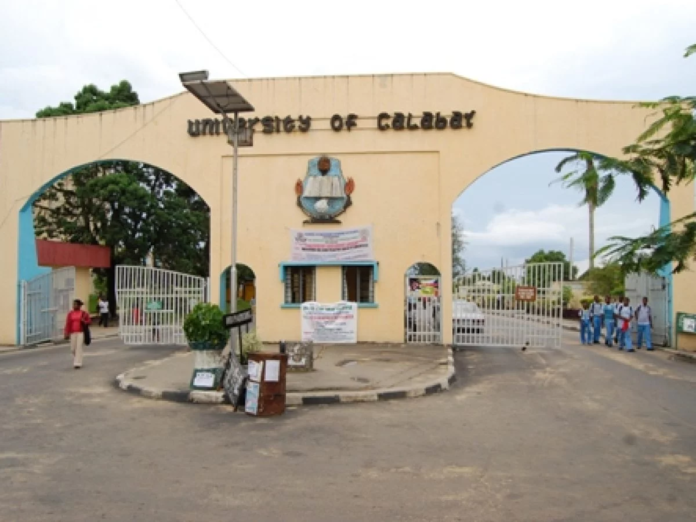
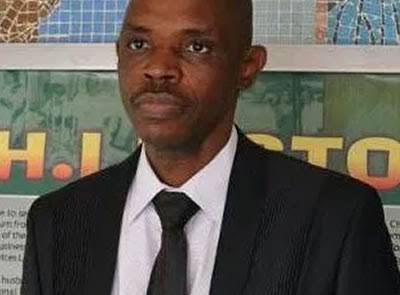
The University of Calabar (UNICAL) has suspended another lecturer, Dr Joseph Idung from the Department of Science Laboratory Technology, amid ongoing suspensions within the institution.

Tribune reports that a suspension letter from Registrar, Gabriel Egbe, indicates that Dr. Idung failed to return funds collected from students for their induction into the Nigerian Institute of Science Laboratory Technology (NISLT).

This decision comes just days after the Acting Head of the Department of Pharmacology, Dr Joseph Akpan, was suspended and dismissed following revelations of his involvement in altering examination scores in PHM 311 (Introduction to General Antimicrobial Pharmacology), as reported by the Senate Examination Misconduct Committee (SEMC).

The administration expressed disappointment over Dr. Idung’s refusal to refund the allegedly extorted money. The letter stated that Vice-Chancellor Professor Florence Obi has ordered his suspension from university duties to allow him to face the Anti-Corruption and Transparency Monitoring Unit (ACTU), which is tasked with investigating the issue.

He has also been instructed to return all university property in his possession to the Head of the Department and to avoid campus unless responding to ACTU’s summons.

Additionally, the letter advises the Bursar to place Dr. Idung on half of the salary during the suspension period.

[Video:] Over 3000 rendered homeless in Lagos over mass demolition

Sorrow and misery have gripped the over 3000 residents of Ayetoro community in Lagos State whose homes were demolished without prior notice by officials of the Lagos state government.

As they continue to cry out to the government following the demolition which left many of them homeless, forcing families to sleep on the streets without food or shelter, there seems to be no hope in sight to assuage their pain and hardship under the bleak economic hardship in the country.

AFCON 2025 Qualifiers: NIDCOM says treatment of Super Eagles players in Libya was despicable

PRESS STATEMENT

ABUJA, OCT. 14, 2024: Hon. Abike Dabiri-Erewa, Chairman/CEO, Nigerians in Diaspora Commission (NIDCOM) has condemned the treatment meted out to Super Eagles team by Libya authorities ahead of its second leg match slated for Tuesday in the country.

She noted that travelling by road in Libya is most dangerous and totally not advisable because of the current situation in the country.

The team which left Nigeria on Sunday to Libya for their return match had their flight diverted to an innocuous airport far away from the venue of the match.

The implication of the diversion will now be another three hours of road travel to the main venue of the match, not minding the risk of road travel in Libya , considering the situation of the war-torn country.

Dabiri-Erewa said the safety of Nigerian players is paramount to the country, and was optimistic that the Ministry of Sports and the NFF will advice appropriately.

She also called on CAF to treat the matter with the seriousness it deserves.

Already, the players, the pilots and others on board the flight had been stranded and subjected to inhuman treatment at the airport for over 13 hours without water, food, rest and other means of communication.

“The team were delayed at an airport in Libya for more than 13 hours without any tangible reason”

 The Super Eagles flight was redirected air borne on Sunday and they were required to travel by road to their destination.

However, there was no provision made for them by the Libya authorities and all efforts to make alternative provisions by Nigeria Football Federation (NFF) was frustrated.

Dabiri-Erewa appealed to the Super Eagles to remain calm why the Nigerian Football Federation will decide the next line of action.

E-signed.
Abdur-Rahman Balogun
Director of Media, Public Relations and Protocols Unit NiDCOM, Abuja.

Petrol price as slow poison

By Lasisi Olagunju

On May 25, 2020, George Floyd of Minneapolis repeatedly pleaded for reprieve. “I can’t breathe,” he groaned while police officer, Derek Chauvin, smashed his knee on Floyd’s neck and back. A bystander saw what was happening and exclaimed “let him breathe.” No. The officer was killing Floyd slowly. For every plea for breath, Derek Chauvin pressed harder the back of George Floyd’s neck. The law enforcer kept his knee there – one minute, two minutes, three minutes….ten minutes. Then there was quiet. The bell tolled for Floyd. And then the war – Black Lives Matter. This government’s economic policies feel like Derek Chauvin’s knees on George Floyd’s neck. The more we plead for life, the harder the pressure from their knees.

Northern Nigerian politician and Borno South Senator, Ali Ndume, rushed out a warning to President Bola Tinubu last Friday. He said he was in Maiduguri and was alarmed by what he saw and at what was coming. He said so many eerie stuff in that short note: He asked the president to do something about the hardship in the country, before it is too late. He said that around the president are wicked advisers “who don’t mean well for the people of this country.” He said they “give him wrong advice.” He begged that Nigerians “can’t afford the things that are being pushed on them every day by enemies of (the) state.” He was afraid to name the enemies.

Before this government came into our lives last year, petrol sold for less than N200. Last week, I bought a litre for N1,200. Friends and foes of the president are now united in misery. Someone said the president is talk-and-do. They cynically said the man contested to be “pressdent.” Now that he has become what he wanted to become, shouldn’t he do what he said he would do? The ‘pressdent’ is pressing and denting. Loafers around power, and government defenders used to personify W.B. Yeats’ “the worst”. They used to be loud and “full of passionate intensity.” Now, they sound silent, they talk and write sober. What I meet in petrol stations is what they meet there. They plead for life too, but the knee is there, going down harder.

Petrol must be very expensive for our economy to be healthy. That is what the government says. It is the elixir as prescribed by the powers behind the throne. Shouldn’t they know that whatever is worth being called medicine could be poison as well? ‘Pharmakon’ is the Greek word for medicine; it is also the Greek word for poison. Medicine is Oògùn in Yoruba. Poison is also Oògùn in Yoruba when it is encased with appropriate parts of speech. A similar expression in Hebrew is ‘sam’, the use and meaning of which hint us of the very thin line between what cures and what kills. Another dividing line between what kills and what cures is how a drug is taken. That which is for external use only, what is it doing in our mouth? Haruna Ishola, deeply witted, foremost Yoruba musician, in an album said his enemies were in trouble because they drank what they were asked to bathe with. “Má dà wá l’órí rú Oluwa (May God not inflict us with madness)”.

Implicated in our case is the IMF. One official mission of the IMF is to discourage “policies that would harm prosperity.” Whose prosperity? Why has no sick nation ever been cured of poverty by that Fund’s prescriptions? Or do we take it that the problem lies with the patient and not with the physician? What this government force-feeds us with is a drug we took before. Almost forty years ago, the prescription was labeled Structural Adjustment Programme. It didn’t work for our health; it deformed our country and stunted its growth. Those who professed it that time are in our control room today, testing anew the old drugs. Now, we all can’t breathe.

The Nigerian vase of survival is broken and every one declares their innocence. The president’s wife was in Ile Ife last week where she posted a disclaimer: my husband is not the cause of this hardship. She didn’t name who caused the hardship. Ndume blamed not the president, but his nameless bad advisers for the poisonous prescriptions. “The tempter and the tempted, who sins most?” Shakespeare asks in ‘Measure for Measure’. But it does not look like the president is being misled by any tempter. He knows what he is doing. He tells us to calm down as he hammers out tooth after tooth. A giant using his strength like a giant, the man does his thing spraying pain as anesthesia. The closest persons to him impress it on us that he is a physician committed to healing the nation and its sick people. His party vowed last Friday that the pain in town notwithstanding, their man wouldn’t change the drug dosage regimen. So, whose knee is suffocating us?

The president and his clan are the only ones who see life at the end of today’s tunnel of pain. For us, their victims, the way the regime injects petrol price increments, almost monthly, into our lives makes it look like Doctor Death. They are very professional about it. They know what dose to drop and when. Professional poisoners do what they do. They remind one of France’s ‘L’affaire des Poisons’ (Affair of the Poisons) and the case that triggered it.

Almost two centuries ago, Dr James Johnstone was a fellow of the Royal College of Physicians and Professor of Materia Medica and Therapeutics at the Queen’s College, Birmingham, United Kingdom. On October 5, 1847, Johnstone delivered a lecture at the college on what he themed ‘The Accumulative Action of Medicines, with Some Remarks on Slow Poison’. Midway into the lecture, the professor told the story of Marie-Madeleine-Marguérite d’Aubray, marquise de Brinvilliers, a French noblewoman who was found guilty of several murders, and was executed in Paris in 1676.

Jonestone told the woman’s story to illustrate the lethality of slow poison. Several authors, playwrights and filmmakers have used her life to teach the consequences of wickedness. The ‘Marquise of Darkness’, a 2010 TV movie, is one. I use it here as a metaphor for the fatal effects of killer policies, greed and wickedness, and how populist palliatives can kill.

The woman in the story was wealthy but she wanted more. She was the kind who would be queen, yet invest in money ritual. She wanted everything around her to be hers only. Madame Marie wanted all of her rich father’s wealth for herself but she had two brothers and a sister whose claim to the wealth was as strong as hers. It was a difficult wish but where there is a will there must always be a way. She romanced a man called Sainte-Croix. Apparently an expert at preparing lethal substances, Sainte-Croix designed a scheme for Madame that would help her take out her ‘rivals’ one by one. Dr. Jonestone said the woman’s father was the first to go. He “was without hesitation sacrificed…The first dose of poison was given to him in soup. The man suffered so much pain after it…and in the space of a few days he expired.”

Madame Marie’s father was dead but her two brothers and a sister still lived to share the wealth with her. Those ones must die too. She agreed with her accomplice that what would kill her siblings must not look like what killed her dad. The murderous resolution was that “to avoid suspicion, it was necessary to employ a poison less rapid in its action than that which had killed the father.” They procured their substance but, first, they must test its efficacy. The wicked did not use animals for their experiments. They used human beings. And who? Poor patients in a public hospital.

Madame Marie had a reputation for piety, charity and philanthropy. She had repeatedly been to that hospital before with wine and medicine “to relieve the distressed.” Now, she went there with biscuits and fruits and other food items. The hungry, poor, and sick ate her food with much relish and thanks. A month later, Madame went to check on her patients. Their conditions had worsened; they suffered now a disease they did not have before. No one suspected Marie and her pan of palliatives. Doctors told her that “the disease was unknown, and defied their utmost skill.” Madame left. Two weeks later, she was back to check the result again. The story teller said “some of the patients were dead, others still lingered in hopeless agony – animated skeletons, whose only signs of life were the voice, sight, and breath.”

So, it happened that all who took Madame’s palliatives died within two months. Every expert inquiry as to what killed them drew blank. “Encouraged by this success,” Johnstone continues the story, Madame “commenced operations upon her brothers and sister. The sister escaped by leaving Paris, but one of the brothers expired in two months, and the other about five months after they had been subject to the influence of poison….”

Nigeria has become a nation of “animated skeletons.” The land is poisoned. Ndume spoke about “enemies of the state” advising the president. Who are they or can’t we ask who they are? Are we victims of some experiments by those governing our president? The way petrol price daily moves up the spiral staircase feels like Madame Marie’s poison. And just like her palliatives – the biscuits and fruits she graciously gave the needy at that Paris hospital – the kindness of the wicked here kills in devastating installments.

Yet, it doesn’t look like we’ve seen enough. The sad are many but they are past weeping. Shouldn’t there be an end to human suffering? Cornelius Lucey in his ‘The Mystery of Suffering’ (1931:401) writes about life, its constitution and how it handles pain and suffering. He says life sets “limits of time and of degree to the endurance of suffering” so much so that “when pain reaches a certain intensity, nature comes to the rescue. Self-consciousness is suspended, the patient faints off, and the pain ceases to be felt…” The passage you just read euphemises death. Mass suffering, administered in unremitting doses, kills massively.

Yet, in Nigeria, those who daily bake loaves of pain preach endurance. They say we will thank and worship them after this tenure. How many will be alive by the time these times are over? Is it not there in the Christian Bible that only the living strike up the tunes as “fiddles and mandolins.”? The dead don’t bite, yes. They also don’t praise. We beg those who minister pain to please read their Bible; Isaiah 38: 18-20: “The dead don’t thank you, and choirs don’t sing praises from the morgue. Those buried six feet under don’t witness to your faithful ways. It’s the living—live men, live women—who thank you, just as I’m doing right now…”

How many will be around when this government leaves power? Already the country is being emptied, one by one by starvation; en masse by emigration. Japa is no longer a southern Nigerian solution to destitution; resilient northern Nigerian middle class members are bailing out too. That is how forests lose their verdure and cities get abandoned. Look inside the houses around you; the buildings are either empty nests of lonely aged persons or completely abandoned sepulchers.

Alfred Joyce Kilmer (1886 – 1918) wrote ‘The House with Nobody In It’ – a poem about emptiness, about lost glory, about abandonment, about aborted promise. The poet looks at a poor old farmhouse. It hurts to gaze at this house with its crumbling roof and falling shutters. It hurts to think that this house has seen golden years when it sheltered life and hugged man and wife and echoed a baby’s laugh. It hurts to look at the poor old house and feel the pulse of its broken heart. It stands empty, it looks idle. It is stupid.

This poet talks to himself. He says this empty house needs somebody to weed the compound and cleanse the kitchen and the rooms upstairs and downstairs; it deserves some persons of courage and knowledge who would kill the snakes in the crevices, and the scorpions in the cracks. But nobody cares about the dirt and death stalking the stairs. The house needs people in its life. Even if they are ghosts, humming the right tunes. A country is a house.

The Nigerian house is damp and dank. Its hearth needs embers of care. Who will light the wood? The one holding the matches is holidaying somewhere on the moon, transiting from the infirmary of King George IV to the sanatorium of Napoleon Bonaparte. While he does that, this big house is left alone to drift in cold, mournful loneliness, broken hearted. Nigeria should not be that house. Or is it that house? I ask because it hasn’t been this dreary for it all its life. There was a fleeting past of warmth and hope.

It is in some records that this country showed some promise before the terrible crash of less than ten years ago. A World Bank study revealed that between 2003 and 2013, “the size of the middle class in Nigeria increased from 13 per cent to 19 percent while poverty reduced from 45 percent to 33 per cent.” But, by mid-2015, the bank had started asking where the Nigerian middle class was. “Nigeria, where is your bourgeoisie?”, it asked in a blog article in May 2015. Where growth grew yesterday, decay thrives there today. And, that is not the end of the horror. The worst is that those in charge are insisting that what is killing us will eventually give us life. Poison is remedy. Government by oxymoron.

We hope the president will listen to his friend, Ndume, and release us from his chokehold. If he is the thoughtful person they say he is, he will do the right thing on time and give life back to our country. If he refuses to do so, that day will still come when we will inhale and exhale like Philonise Floyd did after a guilty verdict on his brother’s killer. Survivors of this moment will chant: “Today, we are able to breathe again.” That day will come.


R.Kelly’s daughter says she was too scared to tell anybody he sexually abused her as a kid

Speaking out publicly for the first time about the alleged abuse she suffered during her childhood at the hands of her father, R. Kelly’s daughter, Buku Abi alleged she was abused by her father as a child.

In a two-episode documentary Karma: A Daughter’s Journey, which premiered today, October 11, Abi, 26, claims she was abused by her father as a child, and she first reported it to her mother Andrea in 2009, when she was 10 years old. 

“He was my everything. For a long time, I didn’t even want to believe that it happened. I didn’t know that even if he was a bad person he would do something to me,” she says in the documentary, the first episode of which is streaming now. 

“I was too scared to tell anybody. I was too scared to tell my mom.”  

Though Abi, who was born Joann Kelly, does not go into detail about the alleged abuse in the first episode, she says that she believes jail is a “well-suited place” for Kelly, 57, to be, as she knows from her “personal experience.” 

“I really feel like that one millisecond completely just changed my whole life and changed who I was as a person and changed the sparkle I had and the light I used to carry,” she says. “After I told my mom, I didn’t go over there anymore; my brother [Robert] and sister [Jaah], we didn’t go over there anymore. And even up until now, I struggle with it a lot.” 

In the second episode, Buku goes into more detail about the alleged abuse, which she says happened when she was 8 or 9. 

“I just remember waking up to him touching me,” she recalls, crying. “And I didn’t know what to do, so I just kind of laid there, and I pretended to be asleep.” 

Buku says she eventually told her mother what happened, and they went to the police and filed a complaint as “Jane Doe,” but, she adds in the documentary, “They couldn’t prosecute him because I waited too long. So at that point in my life, I felt like I said something for nothing.”  

In a statement to People, Kelly’s attorney Jennifer Bonjean said, “Mr. Kelly vehemently denies these allegations. His ex-wife made the same allegation years ago, and it was investigated by the Illinois Department of Children & Family Services and was unfounded…. And the ‘filmmakers,’ whoever they are, did not reach out to Mr. Kelly or his team to even allow him to deny these hurtful claims.”  

In February 2023, Kelly was sentenced in Chicago to 20 years in prison on charges of child pornography and enticement of minors for sex. The year prior, he was sentenced to 30 years in prison for racketeering and sex trafficking charges based out of New York. He’s currently serving 19 years of his two sentences concurrently, and he will be eligible for release in 2045.

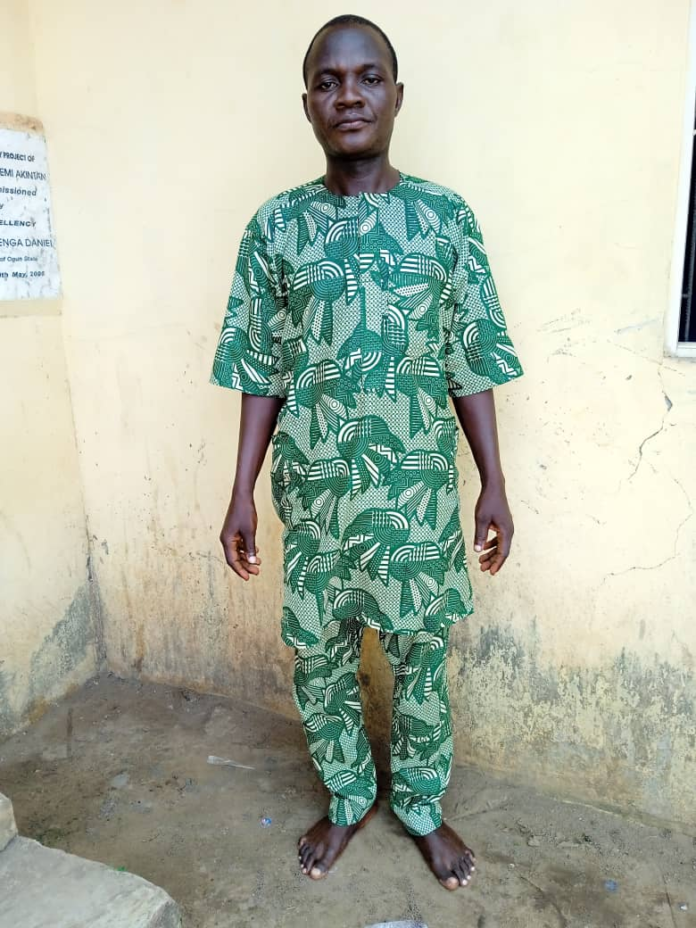
41-year-old man arrested in Ogun State for having carnal knowledge of 12-year-old daughter for two years

A 41-year-old father, Aliu Ibrahim, has been arrested by officers of the Ogun State Police Command after he was accused of having carnal knowledge of his 12-year-old daughter, Rodiat Ibrahim, for two years. 

Ibrahim was arrested on October 10 after his estranged wife, Egbebi Temitope, who resides in the Papa Olosun area on Oja-Odan reported him at Oja-Odan Division of the Ogun State Police Command. 

Temitope said Aliu Ibrahim allegedly defiled their daughter all the times she stayed with him during her holidays. 

She said that she became aware of the assault after she took Rodiat to the State Hospital in Ilaro over untreated vaginal discharge that has been recurring in the child for an extended period. 

At the hospital, it was discovered that her father had allegedly been having sex with her. 

Following the report, operatives of Oja-Odan Divisional Police Headquarters swung into action and arrested Ibrahim at about 2:10 pm on October 10, 2024. 

Preliminary investigation is ongoing by the human rights section of Oja Odan division after which the suspect would be transferred to the State Criminal and Investigation Department, Eleweran, Abeokuta, the Ogun State capital. 

The spokesperson of the Ogun State Police Command, Omolola Odutola, confirmed Ibrahim’s arrest.

Intercultural solidarity achieving agricultural opportunity in Morocco

A talk by Yossef Ben-Meir, President of the High Atlas Foundation in Morocco,
at the Integrated Management of Cultural Tourism Conference on 11 June 2024
hosted by Egypt’s Ministry of Tourism and Antiques and the United States Agency for International Development

The High Atlas Foundation (HAF) has initiated a positive intercultural and development project that is now gaining scale, and we have been able to secure domestic and international public and private investment for it.
 
How, in the community’s determination of development priorities, can we simultaneously interject matters of interfaith partnerships and cultural preservation? It begins with human development and participatory planning among the beneficiaries.
 
HAF, a U.S.-Moroccan nonprofit organization, is dedicated to community development and supports the projects that local people identify as most important to them. So naturally, as agriculture in Morocco accounts for 80 percent of rural incomes, we focus heavily on that sector. Clean drinking water also continues to remain a priority of the people, along with irrigation systems, family literacy, and cultural preservation.
 
Based on our expertise in assisting communities to identify and discover what they want most of all in their lives, HAF initiates programs based on the specific priorities expressed by community members and then builds partnerships to achieve them. We launch this process with a four-day empowerment exploration process that brings about a sense of priorities and an action plan reflecting the will of what local communities want to achieve in their futures.
 
However revelatory, this process is also an intense emotional experience that brings the people to that outcome. Participants look at the social relationships in their lives and the things they feel doubt and fear about. They look at their inner emotions and outlooks about money and work, all things that bear upon people’s ability and determination in knowing what they want and pursuing what they most seek.
 
The conditions of rural life in Morocco underscore the necessity of growing fruit trees. The contribution of land is what prevents farming families across the nation from building community nurseries for cultivating young trees. They cannot set aside a portion of their land normally used for growing barley and corn in order to grow a seed into a sapling. They must harvest every year.
 
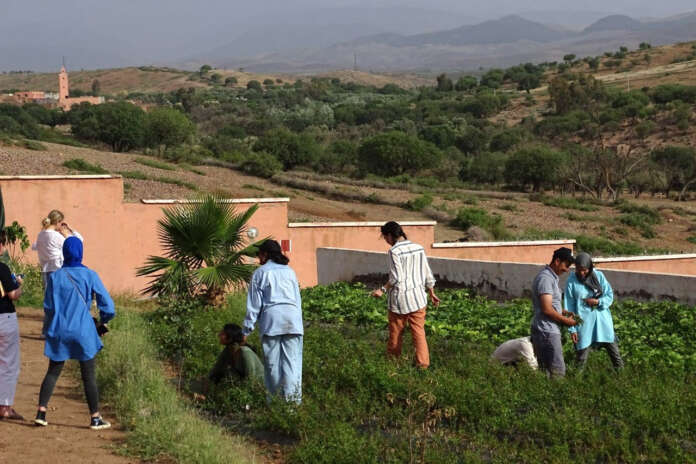
HAF seeks the contribution of land from public and civil agencies. In doing the kind of process described, we found land available next to an historic Moroccan Jewish cemetery, about 30 minutes outside of Marrakech, and we asked the Moroccan Jewish community for permission to use the land to build a people’s tree nursery.
 
That inquiry began what is now a heritage initiative gaining broader and broader scale, called our House of Life program. We were not necessarily seeking heritage and an intercultural partnership but rather pursuing the will of the people first: the people wanted trees most of all.
 
The Moroccan Jewish community said yes to the land, which happens to be adjacent to a 700-year-old cemetery. In this case, the nursery now generates over 70,000 trees (olive, fig, and pomegranate) each year, and it has been an ongoing project for about ten years. The USAID Farmer-to-Farmer Program was very important in this pilot in building local people’s technical skills in nursery management.
 
As the nursery began to take hold, HAF engaged not just with those immediately surrounding the nursery but with communities in the region. Similarly, the four-day empowerment experience began with women’s groups in the nearest villages, supported by the the U.S. Department of States Alumni Engagement Innovation Fund.
 
These communities identified, based on their tradition and the skills that they have gained from their previous generations, the desire to make carpets and other clothing articles derived from their cultural history and as symbols of their cultural past. They dye wool from their sheep using medicinal plants that grow endemically in the area.
 
Now, in the interim, the engagement with communities has continued and expanded. The nursery serves a broader region, and the community dialogue around new priorities and implementation of their dreams is ongoing.
 
Of course, a pervasive issue that we have in rural Morocco is clean drinking water. We have municipalities where many girls fetch water instead of going to middle school. We have a terrible prevalence of water-borne diseases. We have higher infant mortality in rural places.
 
To address the widespread priority of clean drinking water with partners, in this case Yves Saint Laurent Fashion, we implemented clean drinking water initiatives and integration of irrigation infrastructure utilizing clean energy, including a solar water pump system for the nursery financed by the Moroccan company, FENELEC. From these projects, the community is in a position to enable even greater tree planting.
 
The other investment that we secured was connecting the 700-year-old cemetery with a road, about a kilometer in length, to the women’s co-op so that visitors of the cemetery can also visit the cooperative. Again, there are layers to this process. It began with an intercultural partnership for community planning and then moved towards cooperative building driven by women making carpets of local materials and designs based on their heritage.
 
This empowerment then allowed for developments in clean drinking water, irrigation, and fruit tree planting. HAF with Reforest is now in the process of supporting the community’s planting of 23,000 olive trees.
 
The High Atlas Foundation, with a full-time staff of nearly 100 people, is currently supporting nine nurseries in Morocco that house over 3.2 million trees. Just this season, we have transplanted 800,000 and we have monitored about 820,000, including trees from prior years. This is a pilot within a broader program, including the newly added overlay of tree monitoring for carbon offset credits. Now, in addition to receiving land from the Moroccan Jewish community, we have also received land from the Moroccan government and the National Agency of Waters and Forests for tree nurseries.
 
From this pilot creating these layers of human development with a cultural gateway, the number of visitors has grown beyond what we could have imagined. Since the start of 2023, visitors from some 40 universities (Moroccan, U.S., and European) have toured this pilot site and engaged in intercultural dialogues with the community members.  Starting in 2021, HAF administered the USAID Dakira program for cultural preservation in Morocco, and these dialogues meet this initiative’s goals. 
 
We have been visited by dozens of tourist groups, because, if people have half a day and have not had the experience of a genuine rural community visit to learn about rural life conditions, here lies this pilot just outside of Marrakech where they can see and internalize Moroccan culture, Moroccan agriculture, matters of public health related to water, and school infrastructure. In a single location, visitors can see all of these different dimensions of broad-based community development. The more people that are drawn to this experience, the more advocacy and public awareness that comes about, encouraging even more to visit.
 
Income generated by the Achbarou Women’s Cooperative from selling carpets and other goods to visitors keeps their families financially afloat. The European Union funded Achbarou’s family literacy program and other essential skills-building activities. In some cases, the women’s supplemental income has more than doubled the overall household income for the families. With some further investment by the Moroccan government’s National Initiative for Human Development (NIHD) and Planeterra, the cooperative has been able to reinvest revenue from their entrepreneurial efforts into the purchase of land to build a new workplace and storefront facility. Without the scores of visitors from universities and tourism, this would not have been possible.
 
The Moroccan government, which for generations has prioritized Moroccan multiculturalism, saw this opportunity. Now, every time we replicate—we are currently building the fourth of such intercultural tree nurseries—the Moroccan government, through the NIHD, puts $50,000 into that nursery. In short, the Moroccan government funds a tree nursery on Moroccan Jewish community land for the greater public of that region.
 
The regions and areas described are not ones that are typically visited by outside groups. Through this process, it brings people to places where visitors are not going. 
 
There may be pilgrims to the Jewish cemeteries, but they will not typically go into the surrounding villages and meet the members of cooperatives or initiatives. Their visits are limited to the cemeteries and typically at only at certain times of the year such as the anniversary of the passing of some of the recognized saints in Moroccan Jewish-Muslim-Amazigh culture. These are also very rare visits, and so what we have to do is expand the desired travel destinations of those coming to Morocco.

 
The policy context of Morocco has created the opportunity for organizations like the High Atlas Foundation and cooperatives like Achbarou to learn and pursue local hopes, with the support of all sectors and tiers, and in pursuit of scale. Even still, the actual achievement comes with an enormity of expended energy and time, withstanding trials such as the 2023 earthquake, and with the loving heart of the Moroccan people to unite across their diversity of identities as they have done for centuries.

Dr. Yossef Ben-Meir is President of the High Atlas Foundation in Morocco.


Nigeria At 64: Harvest of Despondency, Hunger and Poverty

By Richard Odusanya

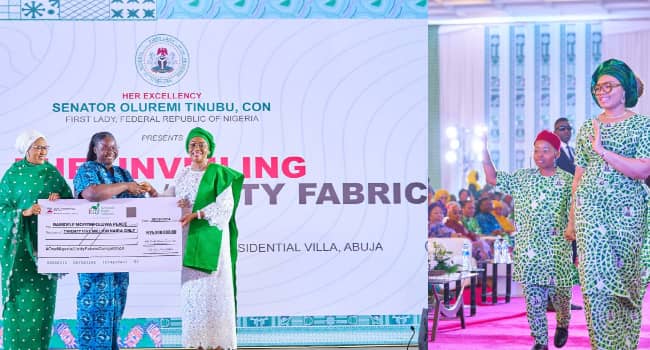
In preparation for the 64th Independence Anniversary, the First Lady, Sen. Oluremi Tinubu, had in September unveiled a new ‘national unity fabric’ as part of her Renewed Hope Initiative (apparently, the yin to the yang that is Renewed Hope Agenda). This fabric, we gather, will be worn across the country for the Independence Day celebrations on October 1st. According to the First Lady, the fabric is a symbol of national unity. 

While the First Lady is preoccupied with her ‘national unity fabric’, Nigerians, especially youths, are perfecting plans to take to the streets on October 1st in protest to demand good governance, an end to hunger, poverty, bad policies, corruption, and insecurity in the country. Same country, different realities! This unsettling juxtaposition of realities leaves us with two vital questions: As we turn 64 as a nation on the 1st of October, what are we celebrating? Does the First Lady, her husband, the President, and members of his government live in a different country? 

Over the years, Nigerian leaders seem to valiantly try to outdo one another when it comes to misrule and wanton inhumanity. The immediate past administration of Muhammadu Buhari and the current administration of Bola Tinubu undoubtedly have surpassed the entire pack in this vile contest. And yet every October 1st the government spends millions, if not billions of naira celebrating our independence. 

Interestingly, the First Lady has succeeded in adding a new exciting element to this year’s celebrations- a new ‘national unity fabric’. Yes! To the First Lady, what we need the most right now is some fabric that will magically unite us all. 

The signs that Nigeria is headed for the rocks have always been there, but in our characteristic fashion, we have always only prayed and wished and hoped things would get better. The deliberate effort to keep power within the circle of a select few while the rest of the populace perish did not begin today. Some argue that it is precisely the basis upon which Nigeria was built. The profound words of Alice O’Connor, better known by her nom de plume, Ayn Rand, beautifully capture the Nigerian situation: ‘When you see that trading is done, not by consent, but by compulsion–when you see that to produce, you need to obtain permission from men who produce nothing–when you see that money is flowing to those who deal, not in goods, but in favors–when you see that men get richer by graft and by pull than by work, and your laws don’t protect you against them, but protect them against you–when you see corruption being rewarded and honesty becoming a self-sacrifice–you may know that your society is doomed.’ 

The above assertion seems tailor-made for Nigeria. Yet, we obstinately cling to false hope and refuse to accept that we might truly be doomed. This singular assertion defines Nigeria aptly more than all our symbols of national identity put together.

Bad leadership has always been the bane of Nigeria, but the Tinubu-led administration has raised the bar, unleashing a whole new level of hardship, pain, hunger, and poverty on Nigerians. But, in a way, it was expected. Nothing positive should be expected of a man whose aspiration to lead was based solely on the inane, vindictive premise that it was his turn. Through his many anti-people and ill-conceived policies, it has become abundantly clear that Bola Tinubu meticulously planned how to grab power but did little or no planning at all on governance. Perhaps the plan was to have no plan at all or to run Nigeria like a criminal enterprise until it is completely run aground. 

And Nigerians are helpless just as they are hopeless. This administration has proven that contrary to what we all believe, power belongs to those in power and not the people. Nigerian leaders have perfected the art of forcing themselves on the people irrespective of what happens at the polls. It is against this backdrop that Chinua Achebe posited in There Was a Country that ‘The question of choice in selecting a leader in Nigeria is often an academic exercise due to the election rigging, violence and intimidation of the general public, particularly by those in power…’ Sadly, this already complex problem has taken a new twist. The courts might soon outrightly replace the electoral umpire as after each election, politicians run to the judges to help them reclaim their stolen mandate which, it should be noted they originally stole from the people.

Today, we live in a nation where those who try to protest, question, or criticize the government are slammed with charges of treason and thrown behind bars. That is our reality. One might be tempted to ask how our leaders became daring and reckless. Well, we lent them a helping hand by living in denial, selling our votes (and by implication, our feature) for peanuts, believing in their endless lies and ultimately adapting and surviving instead of revolting when we are dehumanized and afflicted. 

Meanwhile, we effectively told our leaders to carry go! And Bola Tinubu has proven to be the leader who comprehended the message the most. This is evident in his modus operandi and policies. Everything about Bola Tinubu’s government reeks of indifference and defiance. The people and their expectations and demand for good governance count for nothing. 

Suffice it to say that, it is on record, that the present gladiators ground their way to power with the promise of renewed hope but despondency is all you see in the eyes and gait of the people on the street. The devaluation of the Naira has yielded nothing but economic wreckage, just as the ill-conceived removal of fuel subsidies, inexplicably electricity hike, and other forms of cut-throat taxation have plunged the economy into a nosedive. However, the president and his team of ‘experts’ insist that we are headed in the right direction. Recently, former President Olusegun Obasanjo posited that ‘If you look clinically at the people in government today at both executive and legislative levels, some of them should be permanently behind bars for their past misdemeanor and criminal misconduct.’ Some might not like the messenger, but the message cannot be disputed. 

At its core, Bola Tinubu’s team of ‘experts’ have people who can only be referred to as unsavory characters, to say the least. It is only God in his infinite wisdom that knows how Bello Matawala, a man who stands accused of not just sponsoring terrorism but also allegedly being a terrorist himself is the Defence Minister. The president can reshuffle or scramble his ministers and team of ‘experts’ all he wants but roses will never grow on concrete. As long as the ruling party continues to be a haven for politicians who should be in jail, things will get even worse. 

At 64, Nigeria has come of age, and Nigerians too have also come of age. And with age comes the inevitable acceptance of truth. At this stage, we must start seeing things exactly the way they are and quit living in denial and false hope. The time has come for Nigerians to wake up and take back their Nation from men who should have no business being leaders. Sadly, taking back Nigeria via the pools is no longer viable and we are running out of peaceful options through which Nigeria can be redeemed. As Nigeria is beset by insecurity, poverty, hunger, and economic hardship, what is there to celebrate on the 1st of October? The earlier we all agree that this man is running an I-Before-Others leadership style, the better for our health and peace of mind. 

In conclusion, permit me to share with you part of the lecture delivered some decades ago by Dr. Segun Osoba (as he then was). Osoba remarked thus: ‘Our nation is in the grips of a serious moral crisis and value disorientation. We live in an age when our consciences have become so blunted and de-sensitized by the greed for personal wealth and power that the suffering of millions of our compatriots do not move us.’

Osoba continued: ‘Millions of Nigerians, even in the best of times, are undernourished, are ill without the hope of receiving healthcare of any description, live in intolerable conditions of squalor and degradation (sometimes sharing the same living room with their goats, chickens, and dogs!) while a handful of us enjoy scandalous opulence and luxury. What is even more pathetic is that our highly-remunerated, high-living, well-housed, over-fed, and over-dressed elites are so lacking in modesty and basic human decency that they flaunt their prosperity in an unblushing manner before the masses of our poor compatriots – the wretched of the earth – who, ultimately, pay the bills for our elite extravagance and criminal exhibitionism. We sublimate our moral poverty and degeneracy in consumer culture, like a psychologically disturbed person who tries to drown his mental crisis in a sea of alcohol.’ I daresay, that, the lecture delivered many years ago is sufficiently gaining ground and profoundly philosophical!

Finally, While DESPONDENCY, HUNGER, and POVERTY persist, there is no true FREEDOM. In the words of Sonny Okosun, of blessed memory, a Nigerian musician, who was known as the leader of the Ozzidi band: ‘Freedom is now a medal, we got to win it or lose it forever.’ Nigeria has officially been designated POVERTY capital of the world. Families are going through excruciating pain, paying the price of cluelessness, nepotism, favoritism, the plundering of resources, the squandering of riches, and corruption. History and posterity will not be kind to those who benefit from the rot.

Richard Odusanya, [email protected]

International Day of the Girl Child 2024: FIDA Abuja, FEMPOWER Africa takes menstrual hygiene awareness campaign to Abuja primary school

Press Statement

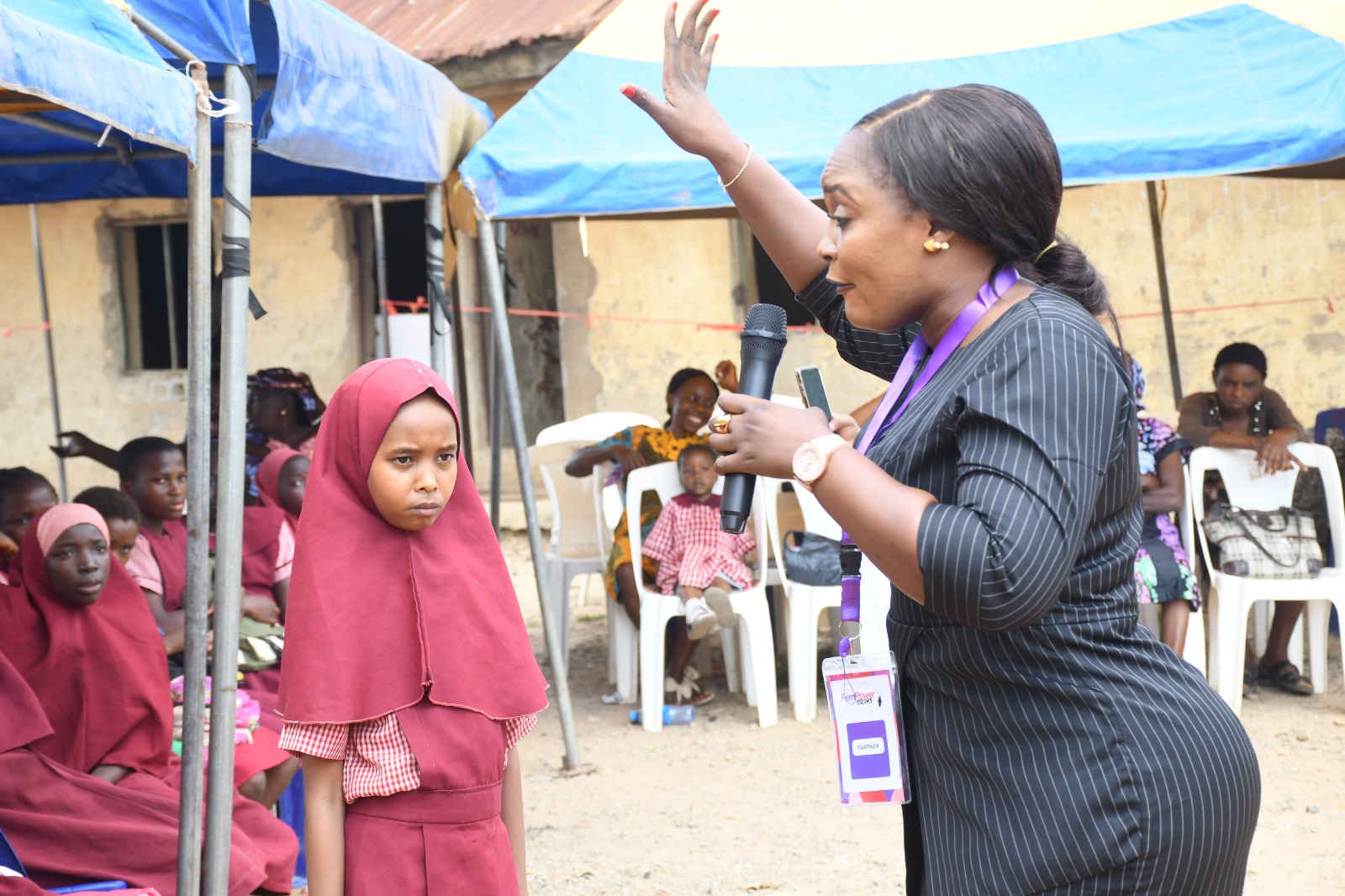
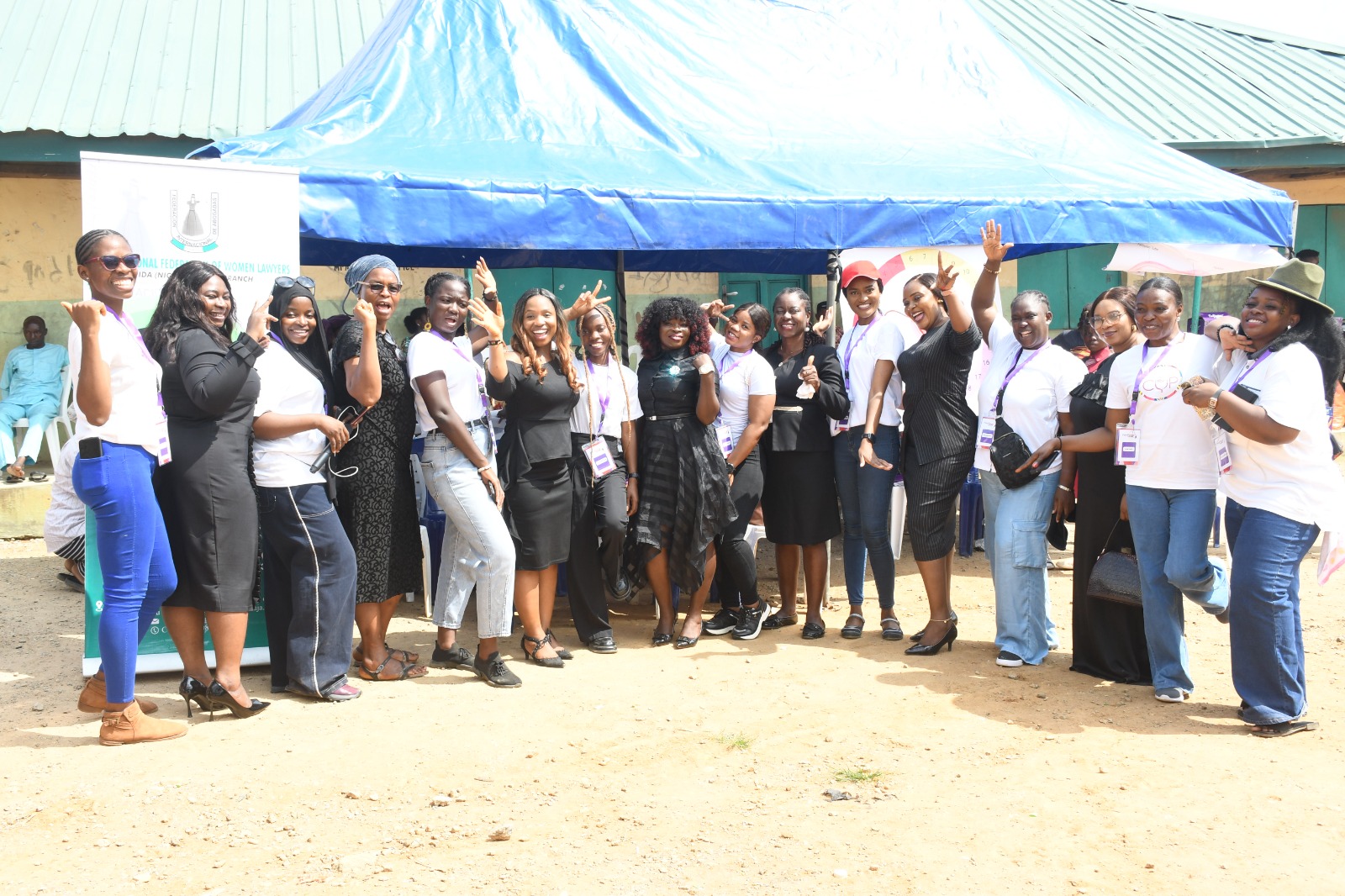
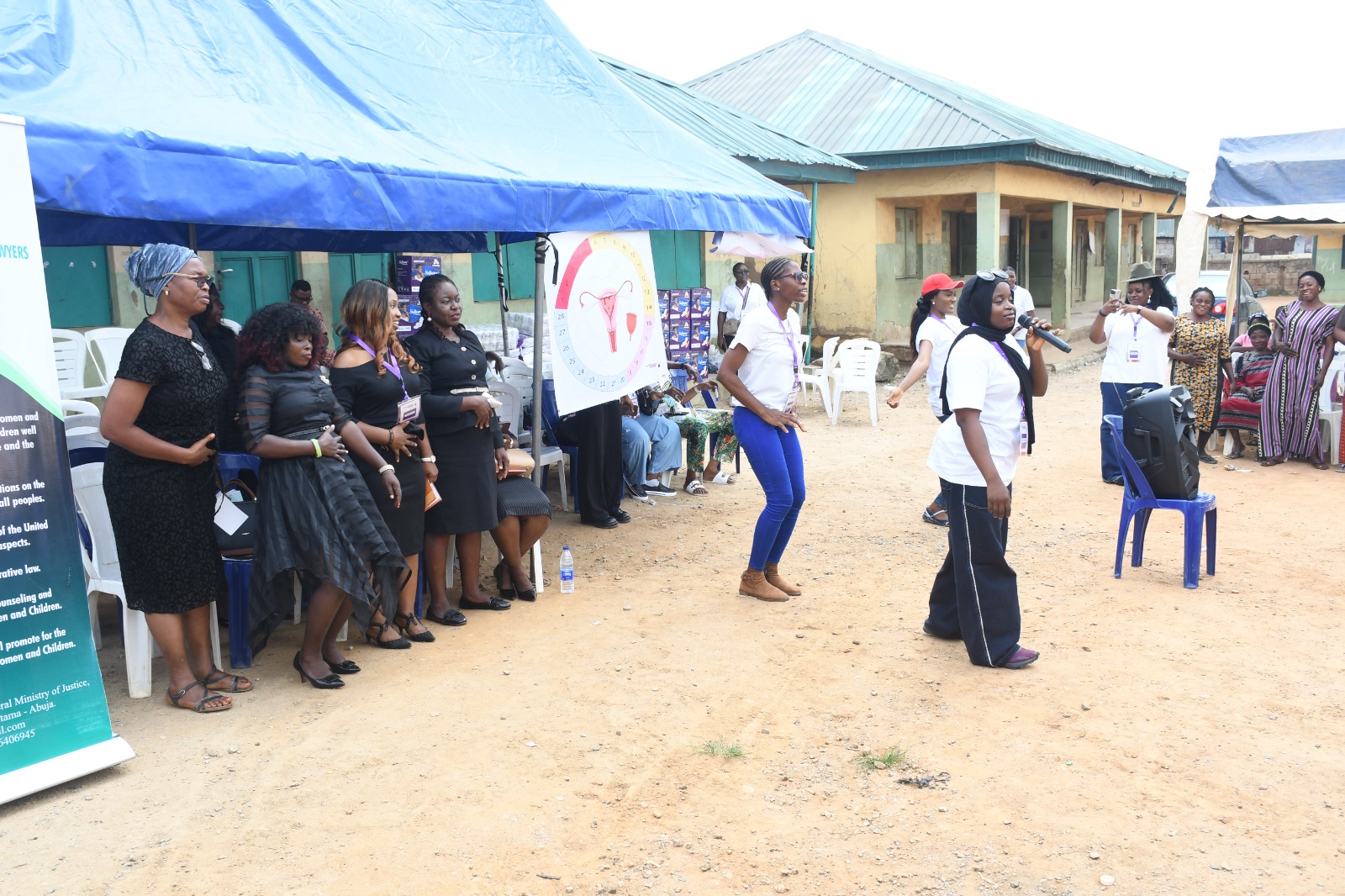
To commemorate the International Day of the Girl Child 2024, the Branch in partnership with FEMPOWER AFRICA carried out a campaign on Menstrual Hygiene Awareness at the LEA Primary School Mpape, Abuja.

In the spirit of the globally celebrated day, the campaign aimed at raising awareness of good menstrual hygiene for young girls and women.

The Publicity Secretary FIDA Abuja, in a session called “Know Your Rights”, enlightened the women and school girls specifically on issues bothering on Rape, Female Genital Mutilation and Bullying as as enshrined in the Violence against Persons Prohibition (VAPP) Act 2015. She admonished the women and girls to report any violation of their rights to the appropriate authority closest to them.

The Coordinator, FEMPOWER Africa, Ms. Dorkong Rimdan, who informed the gathering of the purpose of the day’s event, educated the teaming school girls on how best to take good care of their bodies during menstruation. For the girls below the age of menstruation, she informed them that menstruation is not abnormal but an inevitable part of the woman biology which will occur in their pre-teen years.

Also, present at the campaign were representatives of partners such as 99.5 Wazobia FM, 96.9 Cool FM, 95.1 Nigeria Info, Chiggy Nsofor Foundation, and representatives of the school, Mrs Esther Bulu ( Head Mistress LEA Primary School) and Mrs. Benedicta Ugbechie (Assistant Headmistress LEA Primary School).

The highlight of the visit saw the FEMPOWER team and other volunteers train the women and girls on how to use the menstrual hygiene kits like the Menstrual Cups while also teaching them how to sew alternative reusable sanitary towels.

At the end of the day’s event, cartons of Sanitary Towels and other menstrual kits were donated by FEMPOWER and FIDA which were distributed to the women and girls accordingly.

In Attendance:
1) Olosen Victoria Ibiezugbe (Publicity Secretary)
2) June Idang Etim (Welfare Secretary Emerita)
3) Fareeda Usman Umar
4) Udeji Adaeze
5) Uwamusi Ikhisemon-Oje Ezeonara
6) Mimi Ayua
7) Theresa Adamu Nuntu

Olosen Victoria Ibiezugbe
Publicity Secretary

TIPS