Home Blog Page 517

We’re not greedy, just rich – Remi Tinubu tells hurting Nigerians

By Ikeddy Isiguzo

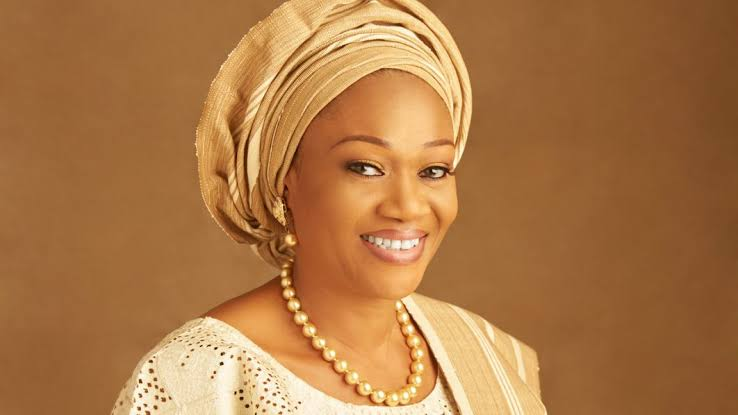
Only a day after the price of petrol, a major liquid that moves Nigerian life was increased again – for the third time in a month – Mrs. Remi Tinubu, President Tinubu’s wife, had no soothing words for millions of Nigerians who were groaning under the harsh policies that the President announced while being inaugurated on 29 May 2023.

The most crushing of the policies was the removal of subsidy on petrol which has adversely affected prices across all sides of life. Inflation is racing at a rate the National Bureau of Statistics cannot capture. The people feel it. The pangs of stiff economic conditions are matched by the words and deeds of Mrs. Tinubu. When she speaks, her words are as annoying as the millions that the First Lady’s Office wastes on foreign trips at time the economy runs partially on borrowed funds.

Mrs. Tinubu was First Lady in Lagos State in the eight years her husband was Governor and a Senator for 12 years, during which nobody remembers her contributions, except an altercation with Dino Melaye on the floor of the Senate where unprintable words were thrown around. She requested for more security following Melaye’s threats to beat her up outside the Senate Chambers.

Her penchant for saying annoying things could earn her an award for excellence in that sphere. Proud of her voice, desirous of being heard, and pointedly distant from issues, she delights in minimalising the sufferings of Nigeria with prescriptions that erect her clear indifference to the agonies the President’s policies have created in 18 months.

She told us to plant our own food as food prices soared, claiming her vegetables come from her garden. Lucky her.

Pump price of petrol has increased from N198 on 28 May 2023 to N1,030 by 9 October 2024. The President rationalises subsidy removal by saying it would free up resources that would be deployed to improve the economy.

Mrs. Tinubu while speaking at the Palace of Ooni of Ife, Oba Adeyeye Ogunwusi, on Thursday, said the Tinubu administration was too young, and could not be blamed for the nation’s doldrums.

“We are just two years (actually 17bmonths) into our administration, we are not the cause of the current situation, we are trying to fix it and secure the future,” she told the gathering.

“We know that subsidy has been removed but with God on our side in the next two years Nigeria will be greater than this. With your prayers in the next two years, we will build a nation for the future.”

Even if the First Lady knows nothing about governance, she knows that most of those working with her husband cannot do much to change the situation. She knows too that the President’s indiscernible commitment to improving the economy is obvious in his policies, long absences and expenditures that rich countries do not make.

The purchase of two new presidential jets, a new accommodation for the Vice President at N21 billion, the Lagos Calabar Coastal Highway, and the First Lady’s trips are drains on resources.

Recourse to “the grace of God” and prayers are not standard policies, particularly when those resorting to the divine leverages have ungodly tendencies. Mrs. Tinubu’s supported thuggery during last year’s presidential election. One would have thought her exposure would redeem her from narrow views of that nature.

Her insults continue thus, “With your prayers in the next two years, we will build a nation for the future”. How are we to understand this forlorn hope?

Our prayers will determine what happens. If we do not pray well, or hard enough, Tinubu’s continuous failure would be our fault.

No matter how we pray, not minding our current plight, the results of our pleas to the Almighty would take two years to materialise, that is by 2026. In case Mrs. Tinubu has forgotten, by then we would be in the morass of the campaigns for Tinubu, who has done so well. His magic, strategic vision, sagacity, economic management skills and experience garnered from his days in international organisations would rescue Nigeria from certain doom. We would be reminded that only Tinubu could have steered Nigeria from a certain doom to an uncertain doom.

More strikingly, Mrs. Tinubu has assured us that by 2026, “we will build a nation for the future”. Those expecting answers today or in two years, should perish the thought. Tinubu, according to his wife, is building for the future, not for you.

When you complain about today, you would be left behind. Only those who understand “build a nation for the future” would realise that the presidential jets and ceaseless comforts the President provides for himself are parts of the nation’s future.

We criticise the President in vain when we discuss today, the immediate. The President is in-charge of the future. He has immersed himself in the future hence he has conceded the present to prayers and market forces.

A quick reminder, the President graduated with honours in Economics from Chicago State University, was on the Dean’s List for most of his stay in Chicago. He recalls these achievements with glee. He was a most sought-after student by international organisations that tapped into the breadth and depth of his mastery of Economics, Accounting, and Business Management.

The nearest we came to a glimpse of the fecundity of the President’s fondness for the future is what we were told during the campaigns. It was revealed that he made his money through investments in stocks, and futures. We have Chicago State University to thank for helping deliver a President of outstanding managerial skill sets to Nigeria

A minor challenge is that an undiversified economy for people of diverse tendencies like Nigerians can only be appreciated only in future, certainly beyond 2026.

None understands the future more than the First Lady who has stood with the President all these years. She may not speak with that Chicagoan drawl that is exclusive to the President, but knows him enough to speak with a confidence that without assurance hints at a co-presidency that has Mrs. Tinubu as a central partner.

“We give glory to God for our status, myself and my husband, we are not greedy but we thank God for what God has done for us,” said the First Lady, who was in Ife to inaugurate a hostel and a 2.7-kilometer road donated to Ọbafẹmi Awolọwọ University, OAU, Ile Ife, by the Ooni of Ife. Both projects are named after Mrs. Tinubu.

And we can ask her more question.

  • Is your status the Presidency?
  • Who dared accuse you of greed?

The Tinubus are the most selfless politicians to have held public office since 1914. It must have hit the First Lady hard for her and her husband to be accused of greed, and without proof.

“It is not common for rich people to get to this seat but I am grateful to God. We cannot disappoint Nigeria and with the help of God, we are getting to the promised land in no distant time,” Mrs Tinubu promised, on behalf of the President.

Until her important speech in Ile-Ife, I considered things I have heard about Tinubu being rich as exaggerated speculations. I would not get into debates on whether he is rich or wealthy or a man of means.

The First Lady could also have been hurt by the lack of public recognition of how rich she and the husband were. Jokes apart, have Nigerians studied the implications of the uncommonness of a rich Tinubu being President? The point should not be pushed further until the President obliges us his assets declaration form.

Perhaps provoked by the insensitivity of Nigerians taking the “grateful to God”, rich presidential family for granted, the First Lady, a 1983 alumna of the then University of Ife donated N1 billion to the university’s development, doubtlessly, another investment in the nation’s future.

These donations are remarkable and draw attention to the wife of the President and sources of her income.

Mrs. Tinubu is not new to big donations. On Tuesday, 12 September 2023, the 500 families devastated by communal clashes in Plateau State got N500 million from her. She gave N500 million on Wednesday 18 September 2024 to the flood victims in Maiduguri.

In three weeks, she has shelled out N1.5 billion. An applause is appropriate and more applause when Zacch Adelabu Adedeji, chairman of the Federal Internal Revenue Service, FIRS, tells us how much Mrs. Tinubu pays as tax.

We should not wait for the information from Adedeji before commending impoverished Nigerians, who were wherever they were on Wednesday to learn that transport fares had neared the skies with the increase in the price of petrol. How they made it home sprout stories that can fill books.

They are not rich. They are not greedy. Are they being punished for their poverty that is rooted in poor policies and governments’ wastes?

Mrs. Tinubu has answered the questions with the cocksure footedness of the President’s wife – Tinubu is only after the future, a future that would be clearer from 2026! Side-stepping the present to hasten the future is the major execution strategy.

We have Mrs. Tinubu to thank for revealing what could have been a secret for much longer.

Isiguzo is a major commentator on minor issues

Catalogue of Lootings in Nigeria: How corruption under PDP became a child’s play under APC

By Femi Falana, SAN

Globally, subsidies, whether for food, transportation, energy or housing, are part of good governance. So, the issue is not subsidies but who benefit from them.
In Nigeria, subsidies are primarily of the rich, by the rich and for the rich.
I will highlight a few, how they are being manipulated and how huge sums of money can be recovered not just to subsidize fuel but also provide funds for development.

  1. Diversion of N40 billion from Federation Account

A company, Continental Transfert Technique had been hired by the Ministry of Interior to collect the Combined Expatriate Residence Permit and Alien Card (CERPAC) Fee of $2,000 per annum from every expatriate in Nigeria.
The revenue from 2019 comes to an average of N40 billion per annum.
This collection which violates Section 162 of the Constitution and provisions of the Immigration Act 2015, is then shared on percentages of Federal Government, 30, Interior Ministry, 7, Immigration Service, and Continental Transfert Technique, 58 per-cent.

We challenged this illegality at the Federal High Court and won the cases.
The court directed the NIS to collect the funds henceforth and remit same to the Federation Account.
But the contractor and the federal government appealed against the judgment and have continued to share the N40 billion per annum

  1. Additional Revenue of $1.5 billion payable to Federation Account

In July 2015, I drew the attention of the Federal Government to the fact that the 15-year fiscal incentives given to the oil and gas companies operating under the Deep Offshore and Inland Basin Production Sharing Contracts Act had expired in June 2014.
When the Federal Government ignored our request, we drafted a Bill for the amendment of the law.
The Bill which was adopted and sponsored by Senator T. Orji scaled the first reading in the Senate but was not passed before the dissolution of the 8th National Assembly.

However, the same Bill was modified and passed by both houses of the 9th National Assembly and assented to by President Buhari on November 4, 2019. In justifying the passage of this Bill, Senate President Ahmed Lawan announced that the new law would increase the revenue of the nation by not less than $1.5 billion per annum.

  1. Outstanding royalties of $62 billion

In campaigning for the amendment of the Deep Offshore and Inland Basin Production Sharing Contracts Act,
I requested the Federal Government to collect outstanding royalties payable by the International Oil Companies under the Act.
The Federal Government admitted that the country had lost a whopping sum of $60 billion.
But my demand for the collection of the huge fund was ignored.

The governments of Rivers, Akwa Ibom
and Bayelsa States then approached the Supreme Court which on October 20, 2018 ordered the Federal Government to collect the royalties for the past 18 years.
The Federal Government confirmed that the outstanding royalty withheld by the IOCs is $62 billion but has refused to collect it.

  1. FG denied revenue of $500 million by a group of corrupt public officers

The international Cargo Tracking Note Scheme to protect international shipping and prevent the movement of dangerous cargo and arms shipments was introduced into Nigeria in 2010 via an agreement between the Nigerian Port Authority and TPMS, a private company. Barely a year later, the agreement was suspended.
When our attention was drawn to the illegal suspension of the Cargo Tracking Note system, we protested and the suspension was lifted on May 28, 2015 only to be suspended again in 2016.

In 2022, President Buhari issued an executive order which authorized a company to operate the Cargo Tracking Note.
But 5 companies sponsored by top government functionaries overruled the President and hijacked the contract.
The company that won the contract has since sued the federal government at the Federal High Court.
Meanwhile, Nigeria has lost at least $500 million while the security of the nation has been compromised by a bunch of corrupt public officers.

  1. Sale of public assets and enterprises

Successive regimes have been selling assets and enterprises owned by the Federal Government to members of the ruling class in the name of privatisation.
The buyers turned round to engage in asset stripping.
According to the Bureau of Public Enterprises, between 2004 and 2002, the federal government sold 142 public enterprises to members of the ruling class.
The 10 per cent shares reserved for the staff of every privatised enterprise have been cornered by the so called “core investors” contrary to the provision of section 5(3) òf the Privatization and Commercialization Act.

  1. $7 billion fixed in 14 banks

Sometime in 2006, the CBN yanked off $7 billion from the nation’s foreign reserves and fixed it in 14 commercial banks in Nigeria.
The deposit and the accrued interests were not recovered from the banks.
When I reported the matter to one one of the anti-graft agencies, the CBN claimed that it had forgiven “the forbearance”.

  1. Sale of Heritage Bank, Keystone Bank, Union Bank and Polaris Bank by CBN

The CBN took over Heritage Bank, Keystone Bank, Union Bank and Polaris Bank, spent trillions of Naira to revitalise them only to turn round to sell them under the table.
For instance, CBN invested N1.3 trillion in Polaris Bank but sold it for N50 billion!

  1. Theft of Crude oil

The Nigerian Extractive Industries Transparency Initiative (NEITI) has revealed that Nigeria lost 619.7 million barrels of crude oil valued at N16.25 trillion ($46.16 billion) to crude oil theft between 2009 and 2020.
Immediate past National Security Adviser, General Babagana said that Nigeria might lose $23 billion in 2023 to crude oil theft.

  1. Theft of gold and other solid minerals

The theft of the nation’s mineral resources is not limited to crude as solid minerals are equally smuggled out of the country by highly placed criminal elements.
Former Minister of State for Mines and Steel Development, Dr Uche Ogah recently disclosed that private jets are being used by the rich for gold smuggling in Nigeria. He stated this at an investigative hearing on $9 billion annual loss to illegal mining and smuggling of gold organised by the Senate Committee on Solid Minerals, Mines, Steel Development and Metallurgy.
During his contribution at the hearing, Senator Orji Uzor Kalu disclosed that Nigeria lost close to $54b from 2012-2018 due to illegal smuggling of gold.

  1. AMCON is owed N5.4 trillion by the rich

A few years ago, commercial banks were going to collapse due to toxic loans taken by members of the ruling class. To prevent the impending economic doom, the Federal Government set up the Asset Management Corporation of Nigeria (AMCON) to buy off the loans with trillions of Naira provided by the CBN.
AMCON has not been able to recover the loans of N5.4 trillion from about 370 corporate bodies.

  1. Indiscriminate import duty waivers

A few privileged members of the business community buy dollars at official rate while they are allowed to import all manners of goods into the country.
In the last 5 years, import duties worth N16 trillion were waived for them.

  1. Effort to track and monitor tankers conveying fuel sabotage by NNPC

On August 8, 2018, the Federal Executive Council (FEC) approved the installation of technology monitoring schemes and structures under the Petroleum Equalisation Fund (PEF) for N17 billion.
The technology which was designed to track and monitor tankers conveying fuel and other petroleum products was not acquired while the N17 billion approved for it was diverted.

  1. N10 trillion diverted by CEOs of Government enterprises

The Buhari government revealed on December 19, 2018 that government enterprises including the CBN owed about N10 trillion in unremitted operating surplus as at August 2018.
The details were provided. The said sum of N10 trillion remains unpaid.

  1. N6 trillion unpaid ground rents by buyers of Government properties

On March 29, 2023, the Senate noted that since 1992, over two million houses across the 36 states and the FCT had been built and allocated to beneficiaries by the federal government without evidence of payment of ground rent on the properties.
Consequently, the Senate set up an Ad Hoc Committee to recover over N6 trillion unpaid ground rents from property owners in the country.

  1. Stolen crude oil valued at $29.17 billion

A group of lawyers engaged by NIMASA confirmed that 60.2 million barrels of crude oil valued at $12.7 billion of crude oil was stolen and illegally exported to the United States of America between January 2011 and 2014. This has not been recovered.
Also, the House of Representatives investigated and confirmed that undeclared crude oil worth $17 billion was exported to global destinations during the same period.
The affected companies are known but government seems to lack the will to bring them to book and recover the sum of $29.7 billion being the value of the stolen crude.

  1. Oil theft of N16.25 trillion

The Nigerian Extractive Industries Transparency Initiative (NEITI) revealed that between 2009 and 2020
Nigeria lost 619.7 million barrels of crude oil valued at N16.25 trillion ($46.16 billion) to oil theft.
The security forces have not been able to stop the stealing and smuggling of crude oil from Nigeria.

However, Tantita Security Services Nigeria Ltd (TSSNL), a private company discovered pipelines through which crude oil was being diverted from a 40,000 barrel per day Forcados pipeline to the high seas for export.
The indicted oil companies including an IOC involved in this grand theft are yet to be prosecuted.

  1. Deduction of collection costs by FIRS & NCS

The Federal Inland Revenue Service and Nigeria Customs Service are allowed by their enabling laws to deduct percentages of the taxes and duties collected by them as collection costs.
Thus, the FIRS between 2016 and 2020 made N533.39 billion deductions
while Nigeria Customs Service withdrew N128.64 billion as cost of collection in 2022.

The laws which allow agencies of the Federal Government to deduct collection costs are contrary and inconsistent with section 162 of the Constitution which provides that all revenues collected by the Government of the Federation shall be paid into the Federation Account.

  1. Diversion of $6.065 billion approved for turn-around maintenance of refineries

Between 1993 and 2016, successive regimes spent, through the NNPC, about $6.065 billon on the so-called turn around maintenance and rehabilitation of the four refineries at various times.

It is public knowledge that the turn-around maintenance of the refineries was not carried out.
Therefore, the contractors should be invited by the EFCC and compelled to refund the said sum of $6.025 billion.

  1. Investment in Dangote refinery and rehabilitation of 4 refineries

The Federal Government has invested $2.7 billion in Dangote Refinery while the NNPCL will supply the refinery with 300,000 barrels of crude oil per day.
Furthermore, the Government has awarded the contracts for the rehabilitation of the two refineries in Port Harcourt for $1.5 billion, as well as Kaduna and Warri refineries for $1.4 billion.

We are compelled to call on the Nigeria Labour Congress and Trade Union Congress to monitor the ongoing rehabilitation and upgrade of the 4 refineries.

  1. Special salaries for top public officers, security votes, and pension for governors

Top public officers have illegally taken themselves out of the general salary structure.
For instance, contrary to section 70 of the Constitution which provides that the salaries and allowances of legislators shall be fixed by the Revenue Allocation Mobilization and Fiscal Commission the members of the National Assembly are paid emoluments ranging from N13 million to N15 million per month.

In addition to their salaries the 36 State Governors are paid security votes running into hundreds of millions per month.
The largesse has since been extended to all senior public officers, including heads of ministries, departments, and agencies of the federal and state governments, as well as local government chairmen.
The security votes paid to senior public officers are about N241 billion per annum.

As if such subsidy is not enough, state governors have been placed on scandalous pension of billions of Naira.
But due to public criticisms, the Lagos State Government has halved the pension for ex-governors while the Governments of Kwara, Imo, and Zamfara States have abolished the payment of the outrageous pension to former governors and deputies.
We call on all other state governments to emulate the example of the aforementioned 3 state governments.

  1. Diversion of dividend and feed gas of $33 billion by NNPCL

Nigeria LNG Limited is jointly owned by Nigeria and the OICs. The 49% shares of Nigeria in the joint venture were paid for from the Federation Account in 1989. On March 29, 2021, former President Buhari disclosed that the Nigerian Liquefied Natural Gas (NLNG) had generated $114 billion in revenues,
paid $9 billion in taxes, $18 billion as dividend and $15 billion in Feed Gas Purchase to the Federal Government.
However, rather than pay the fund into the federation account as constitutionally directed, the $33.9 billion dividend and feed gas was diverted by the NNPCL.

  1. Diversion of trillions of Naira through fuel subsidy fund

Notwithstanding the allocation of 445,000 barrels of crude oil to NNPC per day for domestic consumption,
it has been confirmed that the figures for fuel importation in Nigeria between 1999 and 2023 are as follows:

  1. 1999-2006 =N813 billion;
  2. 2007-2009= N794 billion;
  3. 2010-2014= N3.9 trillion;
  4. 2015-2023= N11 trillion.

Last week, the Chief Executive Officer of the Nigerian National Petroleum Company Limited (NNPCL), Mr. Mele Kyari stunned the nation when he said that the federal government still owes the company N2.8 trillion in fuel subsidy payments. But the monumental fraud that has characterized the fuel subsidy scam has been confirmed by the Buhari regime.

Thus, on March 27, 2022, former Minister of State for Petroleum Resources, Mr. Timipre Sylva publicly lamented the controversies surrounding the amount of petrol that the nation consumes daily, said the subsidy regime encouraged criminal activities like smuggling, which in turn impact negatively on the nation’s oil resources. He said that, “I am told the figure sometimes rise to as high as 90 or over 100 million litres. I don’t know how that happens. At this rate, I have said if anyone is looking at a criminal enterprise, look no further than the fuel subsidy.”
The criminal enterprise ought to be probed by the Bola Tinubu administration.

Conclusion

It is crystal clear from the foregoing that members of the ruling class are heavily subsidized by the peripheral capitalist system while the masses are subjected to excruciating economic pains. We are therefore compelled to call on the Nigeria Labour Congress and Trade Union Congress as well as the progressive extraction of the civil society to mount pressure on the federal government to stop the dollarisation of the national economy,
indiscriminate grant of duty waivers,
theft of crude oil, gold, and other mineral resources and recover the nation’s looted wealth. In other words, these ‘subsidies’ should be recovered while the nation’s refineries are fixed so that the country can provide genuine subsidies that can make life livable in Nigeria.

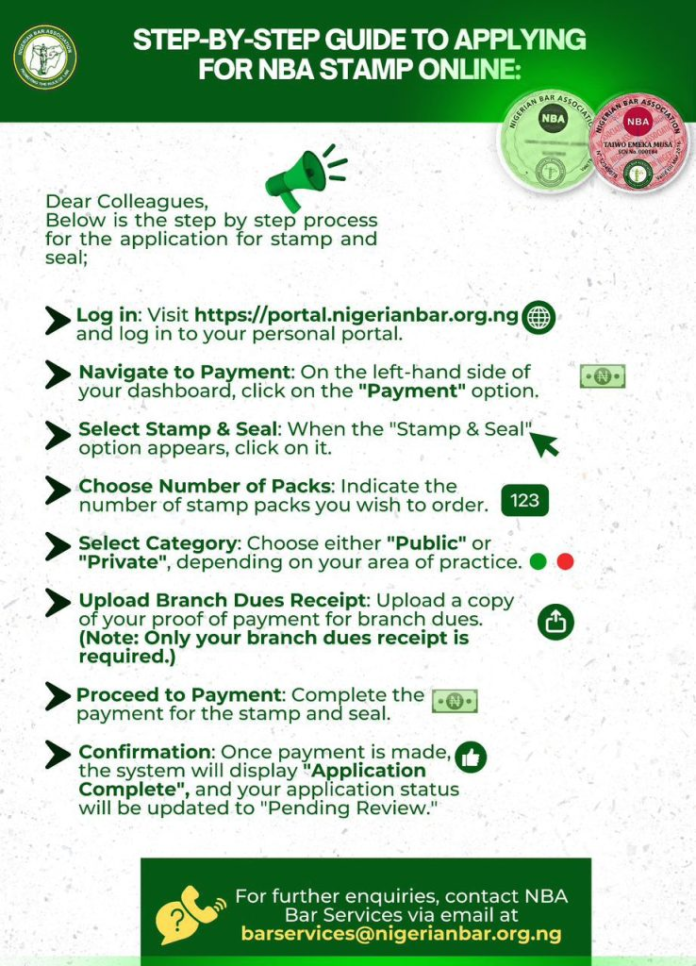
Navigating the step-by-step guide to applying for NBA stamp online

Dear Colleagues,

Below is the step by step process for the application for stamp and seal;

1. Log in: Visit https://portal.nigerianbar.org.ng and log in to your personal portal.

2. Navigate to Payment: On the left-hand side of your dashboard, click on the “Payment” option.

3. Select Stamp & Seal: When the “Stamp & Seal” option appears, click on it.

4. Choose Number of Packs: Indicate the number of stamp packs you wish to order.

5. Select Category: Choose either “Public” or “Private,” depending on your area of practice.

6. Upload Branch Dues Receipt: Upload a copy of your proof of payment for branch dues. (Note: Only your branch dues receipt is required.)

7. Proceed to Payment: Complete the payment for the stamp and seal.

8. Confirmation: Once payment is made, the system will display “Application Complete,” and your application status will be updated to “Pending Review.”

Important Notes:
1. All applications will undergo a review before final approval.
2. If the branch dues receipt is incorrectly uploaded, your application will be rejected, and you will receive an email requesting a re-upload. To re-upload your branch dues receipt, go to the ‘Stamp Application’ tab in your portal and click on the ‘Upload document’ button.
3. Upon successful application, you will receive a message that “your stamp application has been approved. You shall be duly notified by your branch as soon as it is delivered.”

For further enquiries, contact NBA Bar Services via email at [email protected]

Thank you for your cooperation.

Dr. Mobolaji Ojibara
General Secretary

Affidavit fingers Aig-Imoukhuede in plot to take control of late partner, Herbert Wigwe’s assets

  • View and download affidavit

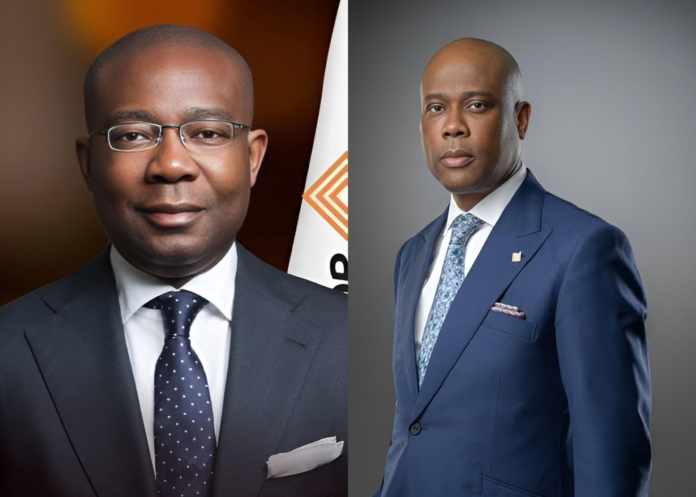
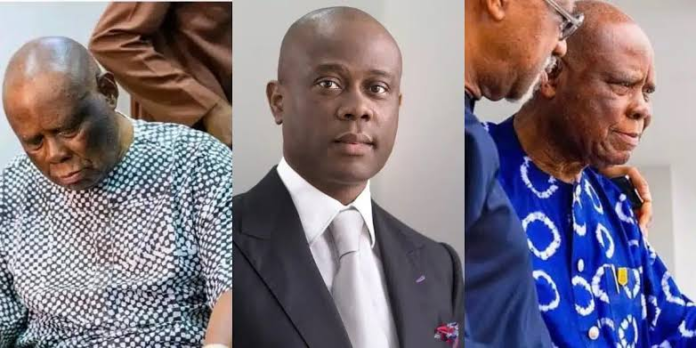
A cousin of the late Herbert Wigwe and former group managing director and CEO of Access Bank, Christian Chukwuka Wigwe has filed an Affidavit of Truth at the Lagos High Court Probate Registry alleging that Aigboje Aig-Imoukhuede is plotting to take indirect guardianship and custody of the deceased’s assets and children.

Christian Wigwe in the affidavit stated that Aig-Imoukhuede, who was the deceased business partner is taking on a role that should rightfully belong to Pastor Shyngle Wigwe, the grandfather of the children.

In the affidavit dated October 7, 2024, sighted by Law & Society Magazine, Christian stressed that Pastor Shyngle should be the one to determine the welfare of his grandchildren David, Hannah and Great.

He said: “In accordance with African values and good order, it will naturally be the father of the deceased, Pastor Shyngle Wigwe, who will act as guardian to the minor children or at the very least, he will be consulted to ascertain who should act as guardian.

“Pastor Shyngle Wigwe (grandfather) should ordinarily play a role in determining the welfare of his grandchildren. Given his fatherly role, his involvement in their upbringing would be both natural and beneficial.”

This act, Christian said, had made it difficult for Shyngle to act as “guardian for the children, particularly the minor children.”

He added: “Aigboje Aig-Imoukhuede is currently controlling the assets of the late Herbert Wige. While Pastor Shyngle Wigwe, otherwise natural guardian of Herbert’s minor children, would usually not be bothered by this, the way Aigboje Aig-Imoukhuede is handling the assets is grossly undermining Pastor Shyngle Wigwe’s role as guardian and the head of the Wigwe family.

“Aigboje Aig-Imoukhuede’s access to Herbert’s funds gives him a certain level of influence over decisions that affect the deceased’s children. Although he is not their legal guardian, his control over the estate puts him in a position where he indirectly acts as one. This situation has made Pastor Shyngle Wigwe uneasy.”

He said Aig-Imoukhuede’s actions had raised concerns for Shyngle, who doubts that if this continues, the grandfather’s legal and natural role as guardian will be further eroded.

While Christian acknowledged Aig-Imoukhuede’s role in providing continued financial support to the deceased’s dependent parents, Shyngle and his wife Mrs. Stela ‘Affong-Wigwe, as well as covering the ongoing expenses related to the deceased’s children, he mentioned that Aig-Imoukhuede has not provided any formal updates or disclosed how these expenses are being met, or their impact on the overall Estate.

He said, “The absence of critical information or any accounting makes it unclear how much of the deceased’s wealth is being expended for the sustenance of the deceased’s dependents.”

Christian also mentioned that Aig-Imoukhuede’s domineering attitude, along with his unrestricted access to Herbert’s wealth, is causing some family members to align with him to gain his favour.

He said such a dynamic was creating tension within the family, alienating other members, and potentially causing rifts if not addressed properly.

Christian further pointed out in the court document that this development had effectively given Aigboje Aig-Imoukhuede indirect control over the deceased’s assets, without being formally accountable to the beneficiaries or dependents of the estate, which “goes against the deceased’s purported will.”

Aigboje Aig-Imoukhuede and the late Herbert Wigwe were business allies and friends from childhood and co-founder of Access Bank.

They both left GTBank as Executive Directors to take over Access Bank in early 2000. Herbert succeeded Aigboje after he finished his term as the Group CEO following CBN Directive in 2010 that forced Bank CEOs that had spent more than 10 years in office to step down.

The late Herbert Wigwe expanded the presence of the bank across Africa and made it bigger after strategic acquisitions of Diamond Bank and other banks in Kenya and South Africa

In the past months, there have been controversies within the family, especially regarding concerns about the control of the late Herbert Wigwe assets.

An online publication had indicted Wigwe’s parents of filing a caveat at the Probate Registry, seeking to challenge the distribution of his estate as outlined in his will.

This legal manoeuvre was allegedly aimed at altering the directives set forth by the deceased regarding the administration of his estate.

Shyngle has since denied the reports making the rounds that he was fighting over his late son’s property.

In a statement signed on behalf of the family by Emeka Wigwe on Tuesday, the claims made in the report was refuted by Old Pastor Shyngle Wigwe stressing that at no point had he requested 20 per cent of the estate of his late son.

Click here to download the affidavit.

The-Wigwe-Affidavit

“It looks like his professional reputation is worth less than 1 #TPain kobo”, Odinkalu drags Nkem Okoro

Law teacher and rights advocate Chidi Anselm Odinkalu has again hit hard on Nkem Okoro, the legal practitioner who issued a 7-day ultimatum months ago demanding that Odinkalu writes an apology to then CJN Olukayode Ariwoola, CJ FCT, Hon. Justice Husseini Baba-Yusuf and Justice Sylvanus Oriji or face court action following an article In the matter of the yam eating division of the FCT High Court written by the Professor of law.

Earlier, the the ex-Chair of National Human Rights Commission (NHRC) revealed that Okoro has had brushes with the Legal Practitioners Disciplinary Committee (LPDC) and even received a warning from the Committee over a judicial breach.

In a Wednesday post on his X (formerly Twitter) page Odinkalu further revealed that Okoro still has a pending matter before the Legal Practitioners Disciplinary Committee (LPDC) bordering on falsification and more.

FCT Judge questions lawyer about client in a divorce matter, “Did you advise her that husbands are scarce?”

The reason why many women would rather die in abusive marriages than seek divorce or even speak out was accentuated on Wednesday morning at a High Court of the Federal Capital Territory (FCT) where the presiding judge asked the petitioner’s counsel whether she advised her client that “husbands are scarce.”

Not a few Nigerians have expressed outrage over a bizarre incident which occurred in open court leaving lawyers and litigants alike stunned.

When the matter was called, the lawyer handling this matrimonial matter sought to move a motion to serve the Respondent via email but the Judge refused her application stating that he does not grant such applications in his court.

Undaunted, she pointed out that the court should be guided by the Rules of Court and proceeded to read out the relevant portion which said service could be done via email.

At that point, His Lordship asked whether the Petitioner was the husband or wife and the lawyer responded, “the wife.” He asked if the woman was in court and she said no.

Pressing harder, the Judge asked whether she advised her client that husbands are scarce and hard to come by, adding that a woman who is not married is like a goat in the market that anyone can approach.

Swiftly, the lawyer told him she was glad her client was not in court to hear him say all the things he was saying.

Also, she told the court that she had discussed with her client and that she would not miss whatever benefits marriage confers on women since she had not enjoyed them in a long while.

Interestingly, the Judge continued without appearing to hear all she said; only stopping when he asked if he was making sense and all she could muster was “I wouldn’t want to say no!”

Describing the judge’s remarks as scandalous, several public affairs analysts noted that Nigeria has a long way to go in combating gender prejudices.

Lawrence Agbo a social justice advocate posited that how a presiding Judge could jump into the arena and make such a statement so callously in open court is mindboggling.

A female lawyer who does not want her name in print added: “They bring their religion, culture and patriarchy to court to oppress women. I find that this is a big problem with male Judges in matrimonial proceedings especially when the woman is the petitioner. This is just unacceptable.”

Another lawyer who also spoke under anonymity, disclosed that a high court judge has failed to give a ruling in a motion she moved since April requesting a virtual hearing for children in a matrimonial cause petition she filed in 2022 considering that one is in a boarding school and the others outside the country.

Tribute: How Justice Emmanuel Ayoola changed my world; a father and confidant

By Sir Folu Olamiti

It was happenstance I least expected that Monday morning of 1999. I had dressed up to go to work as Editor of Nigerian Tribune from my new home at the outskirts of Ibadan, the Oyo State capital. Moments later, Justice Ayoola drove in, in his yellow 19th century Mercedes Benz car. He alighted to discuss heartily with one of my neighbors. He was obviously in an expansive mood that morning.

I greeted him with reverence he deserved as a man of his stature and standing in legal jurisprudence and society in general.

“Are you the editor I was told, has this imposing building?” he asked with a smile across his lips.

I chuckled and nodded affirmatively. He shook my hands and started discussing with me as if we had met a decade before. He told me of his undeveloped land behind my house. We bantered a while, then he drove off

It would take two solid years after that chance engagement before we would meet again.

However, a divine intervention came in 2003 and shattered the lull in our relationship.

Then, President Olusegun Obasanjo nominated me as a member of the Presidential Action Committee on firearms and light weapons. Justice Ayoola was named as chairman of the committee. His appointment as chairman marked the beginning of a bond that would last till he passed on August 20, 2024, at the age of 90.

The chemistry between us became stronger and solidified by the fact that we were both from Ibadan. Besides, I had more time to play with as I had just resigned my appointment with the Nigerian Tribune after 32 years of meritorious service to the company and my country. Leaving my job at Nigerian Tribune Newspapers without pension made my future look very bleak.

But God brought Justice Ayoola as my guiding Angel as he used him to reassure me about the future, a future pregnant with opportunities. He took me not just as a member of his great family but as a close one at that. He made sure I lacked nothing, always meeting me at every point of need throughout the two years that I served on the committee.

The Committee’s assignments took us to all the 36 states of the Federation. It afforded me another opportunity to know every nook and cranny of Nigeria . My first opportunity was with Chief Obafemi Awolowo during the 1983 general elections.

I never traveled alone. I was always riding in the same vehicle with Justice Ayoola. We were so close. As the assignment wound up, I began to have a sense of foreboding, thinking that the committee’s assignment would be the last close tie that I would have with Justice Ayoola.

How wrong I was. When he was appointed as Chairman of the Nigerian Human Rights Commission, he beckoned on me again. Though his stay on that beat was brief as President Obasanjo appointed him as the second Chairman of Independent Corrupt Practices and other Related Offenses Commission, ICPC.

It was a tug of war between him and the presidency before Justice Ayoola could accept the offer. He had just been offered a juicy and respectable appointment at the World Court in Hague. To discourage President Obasanjo from looking his way on the ICPC offer, he created some obstacles. He forwarded somewhat impossible conditions to the presidency, including his acceptance of the job at The Hague. He told me that he didn’t see how those prayers would be granted.

So, he waited. The response came the third day, and all the prayers were granted. President Obasanjo was looking for a transparent and incorruptible person to take over from the late Justice Mustapha Akanbi, the pioneer chairman of the ICPC, who rejected a second term in office.

Justice Ayoola became an ICPC Chairman in 2005 and turned things around for better in the fight against corruption. The assignment was easy for him as he told me: “I wrote 80 percent of the charter for the establishment of ICPC.” He said he did it pro bono because Justice Akanbi was one of his closest friends.

There were many challenges in the task of fighting corruption. He witnessed many battles of how corruption was fighting back from every sector . Justice Ayoola was undaunted. Most garrulous elements were firing from the corridors of power from the presidency and in the main the National Assembly, even to the point of blackmail. Justice Ayoola stood like a rock. He was undaunted. He stood his ground. During the period he was on assignments to the Hague with operational seat in Sierra Leone, Justice Ayoola ensured he put in place an iron cast structure at ICPC that made it easier for him to closely monitor activities at the headquarters in Abuja .

At the initial stage, my position and duties at ICPC were not clearly defined. However, after a few months of deliberations, the then Secretary to the Commission, Dr Tukur Ingawa, came up with the designation of Resident Consultant Media and Event. I became the first occupant of that office.

Justice Ayoola pampered me at ICPC to the extent that members of staff nicknamed me 2ic. I rode in the same official car with him in the morning to the office and back home at the close of work. Our frequent traveling from Abuja to Ibadan was most pleasurable as we gisted and brainstormed on so many issues I could not disclose here. I’m saving that for my next memoirs . God willing.

Justice Ayoola came up with a novel idea of fighting corruption through preventive mechanisms, using it in pari pasu with arrest and prosecution of alleged corrupt elements. As an offshoot of preventive mechanism, came the National Anti-Corruption Volunteer Corps NA VC, of which I became its grand commander.

Shortly after President Obasanjo tenure ended, Justice Ayoola made up his mind to quit. It was a tug of war between him and the late President Musa Yar’adua. Obasanjo told President Yar’adua that Justice Ayoola insisted on quitting at the end of his President Obasanjo’s tenure so he can face his international assignments at The Hague with every sense of responsibility.

But President Yar’Adua, like Obasanjo, refused to let him go. He, therefore, stayed on to complete his first term in office. Sadly, with six months left for him to quit, President Yar’Adua passed on, and President Goodluck Jonathan came in..

I followed Justice Ayoola to President Jonathan’s office the day he was to submit his letter of resignation , having refused to seek a second term. President Jonathan refused to accept the letter, telling Justice Ayoola that he had no one in mind to succeed him. So, President Jonathan appealed to him to stay on. He gave Justice Ayoola one week to go and sleep over it. I, too, chipped in, asking Baba Ayoola to reconsider his decision.

But Baba appeared to have made up his mind. He told me: ” Folu, it is better to quit the stage when the ovation is loudest . I have worked with three presidents within five years, and I have been able to convince myself that this is the time to go. Out there, there are more opportunities to render service to humanity and to serve God.”

Indeed, he served God to the end. He was a committed and devout Christian. He authored a book of prayer, which he distributed to many faithful and non-Christians free of charge. Myself and Ambassador Godwin Adama became one of his many disciples. During his tenure at the ICPC, it was a daily ritual to pray before leaving his residence and another one as we stepped into his office. At the end of the day at work, we prayed.

Justice Ayoola was a workaholic. His daily schedule at work was to attend to various meetings and delegate officers to already vetted case files. Getting home, he would take his late lunch at 5 p.m. and thereafter retire to have a late siesta . He would wake up at 9 p.m. to take his late dinner and then move to his well stocked study room to work on case files he daily brought home. He would work till 4 a.m., leaving a little time for a short snap, after which he would wake up to have his devotion, have his bath, dress up, and have his breakfast. He would wait for me and Adama to join him at breakfast. It was our daily routine to plan for the day–a caucus meeting – for strategies, and chart new ideas in the fight against corruption. Thereafter, we would move in a convoy to the office.

Justice Ayoola was an extraordinary and very humane personality. No one that I knew that came across him that did not gain one thing or the other from him. He ensured that all drivers and house help were house owners. He gave out personal cars to the needy. He just loved to give. As old as I am and being one of his confidants, each time I was leaving, Baba would fish out his cheque book to give me something to take care of my emergency needs. Even when I did not need it, he would say: : ” Never reject a gift however small from an elderly friend. Such a gift is from his heart to show his fondness for you.”..

Baba Ayoola hated liars and lazy people . The other side I noticed of him was his short temperament. But his anger never lingers. He might get angry with you now. The next moment, he would be welcoming you with a broad smile. He was such a kind-hearted man. As the remains of this highly intelligent and quintessential jurist will be laid to rest on 22 November 2024 in Ibadan Oyo State, I am confident that his soul is resting peacefully with the Lord May his soul continue to find eternal rest. Adieu Baba. You came, saw, and conquered.

Sir Folu Olamiti, FNGE, writes from Abuja.

The president is missing

By Suyi Ayodele

I do not claim authorship of the above headline. That credit goes to Bill Clinton, former President of the United States of America (USA), and his co-author, the American novelist, James Patterson, who penned the words as the title of their novel, roundly described as “a political thriller novel”, The President Is Missing, published in 2018.

I adopted the title because the thematic preoccupation of the plot, with particular emphasis on the presence of inner enemies within power circles, resonates with the current state of the Nigerian presidency, especially under President Bola Ahmed Tinubu.

One of President Tinubu’s frenemies, Senator Ali Ndume of Borno South Senatorial District, last Friday, alluded to the bad elements in the Presidency who never wished Nigeria or its people well. Ndume suggested that these vipers in the corridor of power, have held Tinubu captive. He said those locusts were responsible for the bad economic policies of the president. He therefore asked the President to do something to ameliorate the pain in the land to avoid the impending disaster.

As much as I don’t trust Ndume or anyone else in his phylum, I think his allusion to bad close allies of the president is a bit plausible. That finds its strength in the saying of our sages that the insect which devours the vegetable lives right on the stems of the vegetable. Leaders, all over the world, are surrounded by terrible allies who engage their principals and feed them with the worst of ideas.

But that does not exculpate the principals. Show me your friends and I will tell you the type of person you are, goes the saying. President Tinubu must be bad himself to have accommodated those “bad advisers” for 17 months! I say this again because the elders of my place submit that a man who is taught bad behaviours and goes ahead to exhibit them must have been congenitally bad himself!

The fictitious President Jonathan Lincoln Duncan of the USA in the referenced novel above has trusted, but bad allies in his cabinet. One of them, and who is responsible for the entire incidents that permeate the episodic novel, “The Missing President”, is no other person than Ducan’s Chief of Staff, Carolyn Brock. How Ducan handles her and any other frenemy within the cabinet is what distinguishes a present president from a missing president. Ndume’s allusion to “bad advisers”, to me, only points to one thing, to wit: in the Nigerian Presidency, the missing link is nothing but a Missing President. I will explain.

Alhaji Abdulrazak Ganiyu Folorunsho, otherwise known as A.G.F. (1927-2022), was the chairman of the committee that gave Nigeria the current presidential system of government. When General Murtala Mohammed’s military administration conceived the idea of a return to democracy, A.G.F. headed the sub-committees of the 1975 Constitution Drafting Committee saddled with the responsibility of determining the modus operandi of the envisaged presidential system of government. It is on record that of all the sub-committees of the Constitution Drafting Committee, only the Ilorin-born lawyer and diplomat’s sub-committee had all its recommendations adopted without changes. The question is, what did the A. G. F’s sub-committee do differently?

In determining how the presidential system would work perfectly for Nigeria, the sub-committee placed a huge premium on the personality of the would-be president. With the precision of a thorough surgeon, the sub-committee defined the personality of who should aspire to be president thus:

“He must perform and be seen as performing the following functions: that of being a symbol of national unity, honour and prestige; being a national figure- a political figure in his own right; and that of being an able executive-someone who can give leadership and a sense of direction to the country”.

This submission entails that there shall be no abdication of responsibilities by the president. No buck-passing and no blame-game. The president must be someone who is ready “to give leadership and a sense of direction to the country”. This is where Ndume’s theory of “bad advisers” to President Tinubu falls short.

The 1975 sub-committee, which is 49 years ago, validates this position when it submitted, alongside other recommendations, that in arriving at the identikit description of the intending president, its decisions “were very much influenced by the debate on national objectives and public accountability…., adding that “What has been uppermost in our minds is how to provide for an effective leadership that expresses our aspirations for national unity without at the same time building up a Leviathan whose power may be difficult to curb.” The whole argument is about leadership and that, unfortunately, has been in short supply in the present administration.

No one expects Mr. President to do it alone. He must, as a matter of necessity, have people he can call upon to do one thing or the other. The difference here, however, is that the buck stops on his table. His personality also counts. Bad advisers or no bad advisers, President Tinubu is the one elected and he takes the blame for his inability to be firm, resolute and consistent. The nation’s economy is dancing to the yoyo percussion because the President has not demonstrated enough understanding of the simplest of governance intricacies.

If President Tinubu has failed in the last 17 months to identify the “bad advisers” in his cabinet, and he keeps listening to them as his voodoo economic policies push Nigerians to the pit of want, lack and abject poverty, he is to be blamed. At his electioneering, Nigerians were assured that Tinubu would assemble the best of “technocrats” and fix the nation. If what we are seeing now is the best that can come out of the ovens of his “best technocrats”, then something is fundamentally wrong! Tinubu therefore carries the can, no argument!

Unlike what happened in Clinton and Patterson’s novel, when Ducan deliberately goes ‘missing’ at one of the most crucial times in the history of America, in order to solve the riddle of the bad element in his cabinet, President Tinubu at the moment is holidaying in one of the coolest spaces in the world, doing nothing, at a time Nigerians are gasping for breath because his administration, has, within a month, inflicted pain on them, twice, by increasing the pump price of fuel. One of President Tinubu’s handlers, Bayo Onanuga, the Special Adviser on Information and Strategy, told us, that while on leave, Tinubu could go anywhere he chose.

I have no problem with that, and I will also not join the ‘bandwagon’ of those who think the President should be sensitive enough to show compassion, even if feigned at this period.

I also don’t want to believe that Oga Onanuga is one of the alluded “bad advisers” of the president. Every man gives to the best of his aptitude. I have often heard that morality has no place in Nigerian politics. Only a morally-sound adviser would be able to tell his principal that this is not the time to junket at the expense of the people. What Onanuga failed to tell us is that while on holiday anywhere in the world, President Tinubu pays no bills. Our treasury does that. Tinubu is not just our president; he is equally our burden! Again, we are not at liberty to ask which duty has the president performed in the last 17 months to deserve a leave. A man who has the capacity to inflict this level of pain on us deserves a rest from his ‘hard work’! Phew!

I also think we should not blame Mrs. Oluremi Tinubu, the president’s wife, who, last week, asked us to look in the haystack for the needle for those responsible for our present economic woes. To the First Lady, 17 months is not enough for Nigerians to start asking Tinubu questions about how their nation’s economy has nosedived. It would not matter to her that Nigerians cannot afford the N1,700 loaf of bread as long as she can donate the sum of N1 billion to her alma mater, Obafemi Awolowo University (OAU), Ile-Ife.

How she came about the huge amount of money and the N500 million she earlier dashed the Borno flood victims, should we ask, Mrs. Tinubu is likely to remind us she told us, plainly, that her family was already well-to-do before her husband’s presidency. Mrs Tinubu can afford to throw around N1.5 billion in just a month! Only a beneficiary of the Biblical proclamation: “Blessed art thou among women” (Luke 1:42), can achieve that feat!

Writers are ‘bad’ people. They depict characters in very fanciful ways. In depicting an average Nigerian in his novel, “Lonely Londoners”, Sam Selvon, gives Captain, or Cap for short, the portrait of a roué. That identikit fits perfectly typical Nigerian leaders, who, like Cap, do nothing but live on our common patrimony, smoke the best cigarette, drink the most expensive wine and keep the most beautiful ladies as their wives or girlfriends.

Selvon says this of Cap: “It have some men in this world, they don’t do nothing at all, and you feel that they would dead from starvation, but day after day you meeting them and they looking hale, they laughing and they talking as if they have a million dollars, and in truth it look as if they would not only live longer than you but they would dead happier.” So, it is with our leaders who not only live parasitically on our commonwealth but flaunt the same and ask us to go hug the next electric pole!

“They say there’s no manual for overcoming the death of a spouse (110). Ducan again, the fictitious US President, utters those words in the novel cited in our opening paragraph. Nigerians are at that stage of our excruciating pain inflicted on us because we have a President who chooses to be missing in his own Presidency. It is only a missing president that would allow “bad advisers” to take over his government and dish un-squeezed bitter leave portions to the people at regular intervals the way we have in this Tinubu’s administration. The physical presence of the man notwithstanding, President Tinubu is missing in action in his own government.

The allusion to a “missing president” was first thrown at us when the former Secretary to the Government of the Federation (SGF), Babachir Lawal, in October 2017, asked rhetorically: “Who is the Presidency?” Lawal, who was accused of diverting the sum of N544 million meant for cutting grasses at Internally Displaced Persons’ (IDP) camps to his personal company, was asked by a horde of journalists to confirm his suspension as the SGF, after he emerged from the office of the Vice-President, Professor Yemi Osinbajo. Bewildered that the information he shared only with Osinbajo had leaked, Lawal threw the question back at the journalists by asking them who suspended him. When he was told “by the Presidency”, he retorted: “Who is the Presidency?”

The former SGF asked that question because in the administration where he served as the SGF, President Muhammadu Buhari was a “missing president”, a President-do-nothing, at best! And that has been the misfortune of Nigerians in the last nine years. Everything in the administration has been on autopilot because the one elected to lead has abdicated that responsibility. President Tinubu had no mistakes about the tasks before him when he sought to be president. He told whoever cared to listen then that he understood the enormity of the problems and promised to fix them.

He assured the people with his “E lo fokan bale” campaign payoff. On the fuel increase prior to the 2023 general election, Tinubu said “a ma gbe wa le” (we shall reduce it). So, the excuse by Mrs. Tinubu that her husband’s administration just being 17 months old is to say the least, blether!

President Tinubu must change the narrative. What we have now is a situation where the government does not even know what the problems are. Nothing, I dare reiterate, in the last 17 months, shows that President Tinubu has the aptitude for the work he elected to do. If nobody has told the president that, I think we owe him that obligation to tell the President that he is missing in his Presidency!

Herbert Wigwe’s estate: It’s all lies, a simple search at probate registry would have revealed the truth — Family

  • Father refutes allegations of 20% demand on estate

The father of Herbert Wigwe, the late Chief Executive Officer, Access Holdings, and patriarch of Wigwe family, Pastor Shyngle Wigwe, has in a riposte -and in a seeming God forbid disposition-rebutted media report that insinuated him into legal moves to claim 20 percent of his late son’s property.

Below is the rebuttal issued on his behalf and on behalf of the entire Wigwe family by Emeka Wigwe.

“Rebuttal: Pastor Shyngle Wigwe’s Family Responds to Inaccuracies in Media Report”

We, the family of Pastor Shyngle Wigwe, wish to address a recent article titled “Family Dispute Erupts Over Estate of Late Banking Executive Herbert Wigwe” published on October 13, 2024.

This article has unfortunately spread widely across social and national media. While we recognize the role of the press in sharing news, it is vital that such reports are based on truth and accuracy.

To clarify, at no point has Pastor Shyngle Wigwe requested 20% of the estate of the late Herbert Wigwe.

Neither has there been any such request by other family members. The article’s claim that this demand contradicts Herbert’s will is entirely false and misleading. The facts regarding the estate are already publicly available in the Probate Registry, where an affidavit clearly outlines the correct details. A simple search by your reporters would have revealed this truth.

During this painful time of grief, our family remains united, focusing on healing and growing stronger together. We have no intention of engaging in a public defense because there are no sides to take. The only truth is that we are navigating this immense loss and will continue to do so with dignity.

Herbert Wigwe’s legacy as a visionary banker and entrepreneur is what should be remembered. He transformed Access Bank into a national leader and devoted himself to empowering others through initiatives like The HOW Foundation, which focused on education and healthcare. These are the values that define his life and should be the focus, rather than unfounded speculation.

We respectfully urge your publication to correct the inaccuracies in the report and to exercise greater diligence in fact-checking future stories.

Sincerely,
Emeka Wigwe for the
The Family of Pastor Shyngle Wigwe.

Empowering the Nigerian Rural Woman: A call to invest in dignity, economic development, and food security

By Mabel Adinya Ade

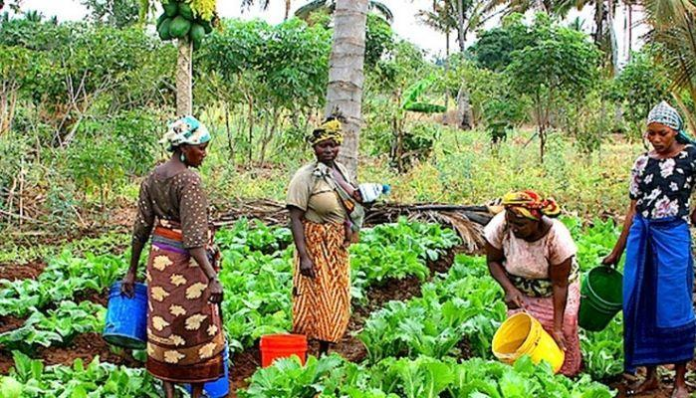
The Nigerian Rural Woman stands at the crossroads of tradition and modernity, holding the weight of her family, her community, and, to a large extent, the nation’s agricultural sector. Every day, she rises early to juggle domestic chores, farming, trading, and other activities, all while navigating a landscape shaped by patriarchy and systemic inequalities. Her resilience in the face of these challenges is admirable, but her full potential remains unrealized. Without urgent and targeted investments in her health, economic opportunities, and access to technology, the Nigerian Rural Woman will continue to be underserved, and the country will struggle to achieve inclusive growth and sustainable food security.

The Weight of Patriarchy and Social Exclusion

Patriarchy remains deeply rooted in rural communities, restricting the roles of women to domestic duties and farming, while barring them from decision-making processes. This exclusion limits their access to education, financial services, and political participation. Without a platform to express their views or engage in policy discussions, rural women are left at the mercy of decisions made on their behalf, reinforcing a cycle of poverty and marginalization. This gap in gender equality not only undermines the rural woman’s dignity but also stifles her economic potential.

Health and Maternal Care: A Critical Need

The health of Rural Women is often jeopardized due to poor access to healthcare, particularly maternal and reproductive services. Many rural areas lack healthcare infrastructure, and those that exist are often understaffed and ill-equipped. The inability to access sanitary materials, combined with limited reproductive health services, means that many rural women face preventable health crises that erode their productivity and wellbeing. This situation is further aggravated by the absence of comprehensive health insurance, leaving rural women vulnerable to life-threatening maternal complications. Addressing this health gap is not just a matter of equity it is essential for improving their economic productivity and ensuring the wellbeing of future generations.

Climate Change and Food Security

Climate change is an existential threat to Nigeria’s agricultural sector, and rural women, who rely heavily on farming, are at the frontline of this crisis. Unpredictable weather patterns, soil degradation, and reduced crop yields have made it increasingly difficult for rural women to secure food for their families and contribute to the nation’s food security. However, despite their crucial role in agriculture, they are often excluded from climate resilience programmes and decision-making processes. Without access to farm inputs, information, and technology that can help them adapt to climate change, rural women are left vulnerable, which in turn jeopardizes Nigeria’s food security.

Gender-Based Violence and Political Exclusion

Gender-based violence (GBV) remains a pervasive issue in rural communities, where cultural practices and social norms often perpetuate cycles of abuse. Women are frequently silenced, both in their homes and in the public sphere, where they are excluded from meaningful political participation. This social exclusion denies rural women the opportunity to advocate for their own rights, and policies that could directly improve their lives remain out of reach. The absence of women’s voices in political spaces is a critical gap that must be addressed for Nigeria to build an inclusive society.

The Role of Legislation in Women’s Health and Well-Being

The importance of strong legal frameworks cannot be overstated in the quest to enhance women’s health and well-being. The Nigerian National Assembly must prioritize the passage of pending Gender Bills that aim to protect and empower women. These bills are essential for ensuring equitable access to healthcare services, safeguarding reproductive rights, and addressing GBV. Furthermore, the ongoing threat to the Violence Against Persons Prohibition (VAPP) law must be addressed urgently. This law provides crucial protection against violence and discrimination, and its reinforcement is vital for the safety and empowerment of rural women. By establishing robust legal protections, Nigeria can create an environment where women can thrive and contribute meaningfully to society.

Technology and Information: Transforming Lives

In the face of these daunting challenges, technology offers a beacon of hope. With mobile phones and internet access becoming increasingly available, rural women now have the opportunity to bridge the information gap that has long held them back. Technology is proving to be a game changer, particularly in enhancing access to financial services, health care, and agricultural knowledge.

1. Access to Financial Services and Markets: Mobile banking has revolutionized the way rural women access financial resources. With mobile money services, rural women can now save, borrow, and transfer funds without needing to travel long distances to banking institutions. This access to financial resources opens doors to entrepreneurship and enables them to invest in more profitable ventures. In addition, e-commerce platforms can connect them directly to consumers, eliminating middlemen and increasing their income from agricultural products.

2. Digital Agricultural Tools: Mobile applications that provide real-time information on weather forecasts, market prices, and sustainable farming practices are empowering rural women to make informed decisions that enhance their productivity. Access to climate-smart agricultural techniques and inputs, such as drought-resistant seeds, helps women mitigate the impact of climate change and improve food security for their families and communities.

3. Telemedicine and Health Information: Telemedicine is another powerful tool in bridging the health care gap. Rural women can now consult with healthcare professionals remotely, reducing the need for costly and time-consuming travel to health centres. Mobile health apps that provide information on maternal health, family planning, and menstrual hygiene further empower women to take control of their health, ensuring healthier outcomes for both themselves and their families.

4. Education and Capacity Building: E-learning platforms and digital literacy programs can unlock new opportunities for rural women, equipping them with the skills needed to improve their economic prospects. Online courses in business management, financial literacy, and agricultural best practices can empower rural women to build more resilient livelihoods and contribute more meaningfully to their communities.

5. Empowerment through Social Media and Advocacy: Social media platforms provide rural women with a voice to advocate for their rights and participate in broader conversations about governance and policy. By engaging in online advocacy, rural women can connect with development partners, policymakers, and like-minded organizations to drive change and raise awareness about the issues affecting them.

The Path Forward: Investing in the Nigerian Rural Woman

For Nigeria to achieve its development goals and secure a future of inclusive economic growth and food security, it is imperative that we invest in the rural woman. Here’s how:

1. Health Insurance and Quality Health Care: Establishing accessible health insurance schemes that cater to the unique needs of rural women will ensure they have access to quality health services. This will improve maternal and reproductive health outcomes, reducing the burden of preventable complications that currently hinder their productivity and economic participation.

2. Financial Empowerment and Education: Investing in microfinance initiatives and educational programs targeting rural women can help close the financial literacy gap and empower them to start or expand businesses. Financial inclusion will not only boost their individual economic standing but also contribute to the overall economic growth of rural communities.

3. Climate Resilience and Agricultural Support: Including rural women in climate resilience programs is crucial for safeguarding Nigeria’s agricultural sector. Providing them with the tools, technology, and knowledge to adapt to climate change will enhance their productivity and ensure the future of food security in Nigeria.

4. Political Participation and Social Inclusion: Creating platforms for rural women to participate in political processes and advocacy efforts is essential for their empowerment. Ensuring that the voices of Rural Women are heard in policy discussions will lead to more gender-sensitive policies that address their unique challenges and pave the way for meaningful change.

5. Legal Framework and Protections: The Nigerian National Assembly must prioritize the passage of pending Gender Bills and reinforce the VAPP law to create a robust legal framework that protects women’s rights and enhances their health and well-being. This legal backing is essential for fostering an environment where rural women can thrive.

6. Technology-Driven Development: Expanding access to digital tools and internet connectivity in rural areas will accelerate the economic empowerment of rural women. Technology-driven solutions can enhance their access to markets, financial services, health care, and education, ultimately improving their quality of life and their ability to contribute to the economy.

Conclusion:

The Nigerian rural woman is a pillar of resilience and strength, but she faces immense challenges that stifle her dignity and potential. To unlock her full contribution to Nigeria’s socioeconomic development, we must prioritize investments in health, education, financial empowerment, and technology. Policymakers and development partners must recognize that by empowering rural women, they are not only uplifting individuals but also driving Nigeria towards a more equitable and prosperous future. The time to act is now, and the future of Nigeria’s food security, economic growth, and social stability depends on it.

Mabel Adinya Ade is the Executive Director, Adinya Arise Foundation (AAF)

[email protected]

TIPS