Home Blog Page 516

SSS officials invade home of media staff, spirit her away

Press Release

Today, October 18, 2024, a group of armed men, identifying themselves as officers of the Department of State Services (DSS) from the Office of the National Security Adviser (NSA), forcefully stormed the home of an OrderPaper staff member, Edna Ulaeto, and abducted her without any explanation. The young lady, still in her casual nightwear, was violently manhandled and whisked away to an unknown destination, leaving her family and neighbors in shock and fear. Shockingly, it has come to light that her phone number was illegally tracked, a tactic typically reserved for dangerous criminals, not innocent media staff.

OrderPaper suspects this cruel and unjust act is connected to a recent news article that mistakenly reported on an alleged DSS invasion of the National Assembly, supposedly to block an attempt to impeach the Senate President. Despite immediately issuing a retraction and public apology, masked men broke into her home, tore through her personal belongings, and caused immense trauma to her and her family.

Neighbors who attempted to follow or capture the horrifying event were shoved aside, with some forced to delete photos and videos under the threat of arrest. No official notice or invitation was ever sent to the individual or OrderPaper by the DSS or police, raising serious concerns of foul play. Since the abduction, all efforts to reach her have failed, intensifying fears for her safety.

This brazen, terrifying act has left the entire staff of OrderPaper living in fear, uncertain of what may happen next. We urgently call on the public, Civil Society Organisations (CSOs), and the international community to demand her immediate release and to ensure her safety. Join us in condemning this unlawful attack on press freedom and basic human rights before it is too late.

Signed:

Management
October 18, 2024

Preparation for parenting

By Bob and Debby Gass

‘Parents are the pride of their children.’ Proverbs 17:6 NIV

Many of the appliances in your home come with an instruction manual. Taking the time to read and understand it can save you all sorts of trouble. And God has given us the ultimate instruction manual for raising children—the Bible. It says, ‘Children’s children are a crown to the aged, and parents are the pride of their children.’ (Proverbs 17:6 NIV). One of the highest callings is that of becoming a parent. It involves the most significant and life-changing decision you will ever make. Therefore, you should make it with serious consideration, prayer, and a sense of humour, and it can turn into one of the greatest joys of your life. Your children need you to establish boundaries for them and safeguard them from harm. You need to conduct yourself as their spiritual and moral compass.

Today children are being inundated with television shows, advertisements, music, video games, the Internet, and magazines full of images of materialism, cruelty, sex, and drug and alcohol abuse. And a lot of the negativity they see is admired and celebrated. So much so that even possessing a strong moral centre, they may start to feel like something is wrong with them if they don’t follow along. As a parent, your job is to reinforce your beliefs again and again while equipping your children with the tools they need to withstand the pressures of life. It’s a lifetime commitment. In a sense, you will be on call every day, all day, for the remainder of your life. And since God is called ‘our Father’, He understands what you’re up against and will help you when you turn to Him in prayer. If you’re not a parent, why not take this opportunity to pray for the parents and children you know.

SoulFood: Num 29:1-6 Matt 24 Rev 11:15-19 1 Cor 15:50-58

The Word for Today is authored by Bob and Debby Gass and published under licence from UCB International Copyright 2024

Find a mentor

By Bob and Debby Gass

‘Then He said to them, “Follow Me, and I will make you fishers of men.”’ Matthew 4:19 NKJV

Most people who decide to grow personally find their first mentors in the pages of books. That is a great place to start. For that matter, it’s a great place to continue. And the wisdom that’s found in Scripture makes the Bible the best mentor’s manual ever written. If you are not reading it daily, you are robbing yourself of the greatest source of inspiration and illumination. And at some point, if you’re wise, you will also look for a role model to mentor you. No matter how gifted and experienced you are, you will go further with the right mentor than you will on your own.

Jesus, the greatest mentor of all, discipled a group of men who changed the world forever. ‘And Jesus, walking by the Sea of Galilee, saw two brothers, Simon called Peter, and Andrew his brother, casting a net into the sea; for they were fishermen. Then He said to them, “Follow Me, and I will make you fishers of men.” They immediately left their nets and followed Him. Going on from there, He saw two other brothers, James the son of Zebedee, and John his brother, in the boat with Zebedee their father, mending their nets. He called them, and immediately they left the boat and their father, and followed Him’ (Matthew 4:18-22 NKJV).

Note the words ‘Follow Me, and I will make you …’. Just as the right mentor can make you, the wrong mentor can break you. So, you need to pray about this. Then you must do something about it. Why? Because if you follow only yourself, you may find yourself going in circles and getting nowhere.

SoulFood: Lev 16 Lev 23:26-32 Heb 9:1-14 Heb 13:11-16

Find a mentor (2)

‘Let me teach you.’ Matthew 11:29 NLT

Jesus said, ‘… I will build my church; and the gates of hell shall not prevail against it’ (Matthew 16:18 KJV). When Jesus spoke those words, the religious leaders of His day were plotting His death, the society in which He lived was controlled by the might of Rome, and His followers were common people. Humanly speaking, what He promised was audacious, and the possibilities of it happening were zero. Nevertheless, it came to pass. Two thousand years later, He is the most quoted author in the world, and many of our values are based on the principles He taught. How did He do it? By mentoring others.

So, when looking for a mentor, try to find someone who exemplifies the qualities and character Jesus displayed. ‘Then Jesus said, “Come to Me, all of you who are weary and carry heavy burdens, and I will give you rest. Take My yoke upon you. Let Me teach you, because I am humble and gentle at heart, and you will find rest for your souls. For My yoke is easy to bear, and the burden I give you is light”’ (Matthew 11:28-30 NLT).

Jesus used an agricultural illustration His listeners would understand. To get the highest productivity out of an ox, the yoke around its neck had to be a comfortable fit. A good mentor is someone who understands you and knows what the right fit is for your temperament and talents. A mentor is an extra pair of eyes and ears and someone who always has your best interests at heart. When you think about it, having the right mentor is one of the best investments you can make in your future.

SoulFood: Heb 11:22 Gen 41:1-39 Gen 45:1-11 Gen 50:15-26

Find a mentor (3)

‘Follow my example, as I follow the example of Christ.’ 1 Corinthians 11:1 NIV

Your mentor should not only demonstrate professional excellence and possess skills from which you can learn but must also be someone who displays character qualities worth imitating. Bernie Madoff was one of the most admired and sought-after brokers on Wall Street. That is until he ended up in prison for perpetrating a multibillion-dollar Ponzi scheme that devastated the lives of individuals, companies, and even governments. Numerous actors, athletes, political leaders, and business executives today attempt to deny their position as role models when people are already following them and imitating their conduct. They would like people to distinguish between their personal behaviour and their professional life, but such separation cannot really be made.

As you search for role models and mentors, examine their personal lives as thoroughly as their public performance. Your values will be shaped by theirs, so don’t be casual or careless about whom you decide to follow. Paul writes, ‘Follow my example, as I follow the example of Christ.’ (1 Corinthians 11:1 NIV). You must be sure that the person in whose footsteps you are following is following in the footsteps of Christ.

Why is this so important? Because there will be an audit! Whatever you have spent your life building will be evaluated at the judgment seat of Christ, and you will be rewarded accordingly. ‘…each one’s work will become clear; for the Day will declare it, because it will be revealed by fire; and the fire will test each one’s work, of what sort it is. If anyone’s work which he has built on it endures, he will receive a reward. If anyone’s work is burned, he will suffer loss; but he himself will be saved, yet so as through fire’ (1 Corinthians 3:13-15 NKJV).

SoulFood: Exo 22-24 John 3:1-21 Ps 89:1-14 Pro 26:17-19

Find a mentor (4)

‘I have called you friends.’ John 15:15 NKJV

The mentors you choose must be available to you. Jesus told those He mentored, ‘No longer do I call you servants, for a servant does not know what his master is doing; but I have called you friends, for all things that I heard from My Father I have made known to you’ (John 15:15 NKJV). You need time with your mentor, asking and learning from questions and answers.

American author Dr John Maxwell writes: ‘The greatest piece of advice I can give in the area of availability is that when you are looking for a mentor, don’t shoot too high too soon. If you are considering going into politics for the first time, you don’t need the advice of the president of the United States. If you are a high school student thinking about learning to play the cello, you don’t need to be mentored by Yo-Yo Ma. If you’re just starting your career, don’t expect to get extensive mentoring time from the CEO of your organisation. Why shouldn’t I? you may be thinking.

First of all, if you’re just starting out, nearly all of your questions can be answered by someone two or three levels ahead of you (not ten). Their answers will be fresh because they will have recently dealt with the issues you’re dealing with. Second, CEOs need to be spending their time answering the questions of the people who are on the verge of learning at their level. I’m not saying you should never go to the top. I’m saying spend the majority of your time being mentored by people who are available, willing, and suited for the stage of your career.’

SoulFood: Exo 25-27 John 3:22-36 Ps 89:15-37 Pro 26:20-22

The Word for Today is authored by Bob and Debby Gass and published under licence from UCB International Copyright 2024

Be present in the moment

By Bob and Debby Gass

‘This is the day the Lord has made; We will rejoice and be glad in it.’ Psalm 118:24 NKJV

One author writes: ‘One of the strategies I employ is to block enough time so that I’m not thinking of what I have to do next. I find it best to wait until I can invest more than a few minutes in being with someone so that the person is not frustrated with my divided attention and tight schedule.’ If you keep robbing your loved ones of time, there may come a day when they have no time for you. Ask yourself, ‘Is this person worth more to me than the plan, project, problem, or pressure I’m dealing with?’

Learn to enjoy the moment and focus on the person you’re with. Ask open-ended questions that encourage them to answer with more than a yes or no. Listen carefully and ask additional questions. This helps people feel you are engaging with them and caring about their replies. Yes, your thoughts may flit into the future for a few seconds, but instantly push them back into the present by rejecting those concerns. You can attend to them later. Concentrate, concentrate, concentrate.

There is great pleasure in doing this after you get used to it. A poet wrote, ‘I wished to live deliberately … and not, when I came to die, discover I had not lived.’ To make sure that doesn’t happen to you, heed Solomon’s words: ‘And people should eat and drink and enjoy the fruits of their labour, for these are gifts from God’ (Ecclesiastes 3:13 NLT). If you have to do with less in order to enjoy the people you love more, do it; you will never regret it!

SoulFood: Exo 28-29 John 4:1-12 Ps 89:38-52 Pro 26:23-26

The Word for Today is authored by Bob and Debby Gass and published under licence from UCB International Copyright 2024

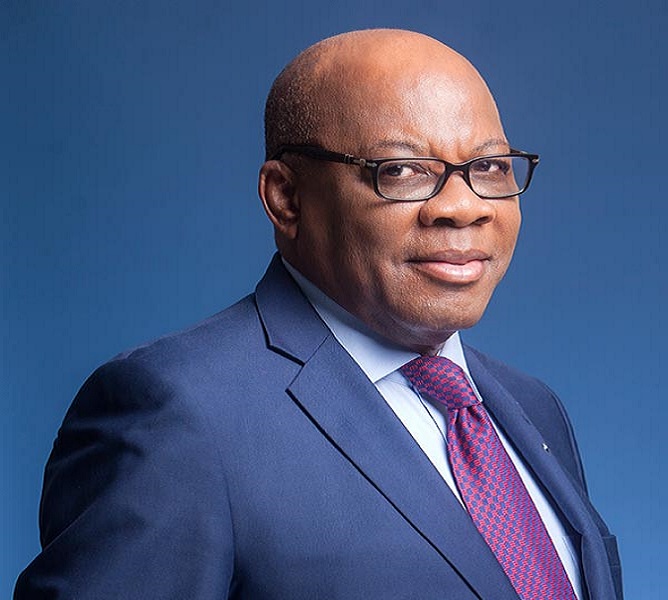
EFCC is terrorizing Nigerians —Olisa Agbakoba

Notable rights activist and ex-President of the Nigerian Bar Association (NBA), Dr. Olisa Agbakoba, SAN, has strongly criticized the Economic and Financial Crimes Commission (EFCC), calling the agency a “terrorist organization.”

Agbakoba who was interviewed on Arise TV’s morning show, accused EFCC operatives of abusing their powers to bully and intimidate Nigerians.

“They are terrorists… they are terrorizing us… intimidating Nigerians with their powers,” Agbakoba stated during the interview, expressing frustration over the agency’s conduct.

Agbakoba’s comments add to his longstanding criticisms of the EFCC. Recently, he wrote letters to both the Senate and House of Representatives, questioning the constitutional legitimacy of the EFCC’s establishment by the Federal Government.

He has argued that the agency operates outside the framework laid down by the Nigerian Constitution, further exacerbating concerns about its overreach and alleged misuse of authority.

The former NBA President’s remarks come amid growing public debates on the conduct of anti-corruption agencies in Nigeria, with many questioning whether these institutions are adhering to their mandates or operating with unchecked power. Agbakoba’s criticism underscores ongoing calls for reforms and greater oversight of the EFCC.

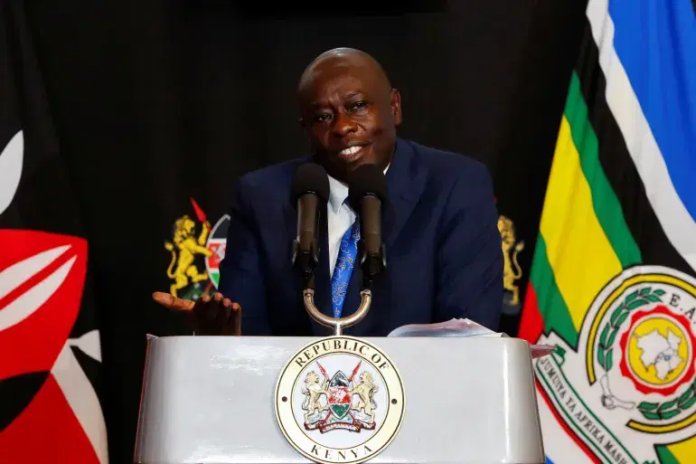
High court throws Kenya deputy president replacement into confusion

Kenya’s parliament on Friday unanimously voted to back President William Ruto’s pick to replace his impeached deputy Rigathi Gachagua, even as a High Court injunction threw the historic political process into disarray.

In a fast-moving political drama, Gachagua was sacked by the upper house on Thursday night on accusations of stirring ethnic hatred and undermining the judiciary, charges he denied and vowed to fight in court.

Interior Minister Kithure Kindiki was swiftly nominated to replace Gachagua in a shake-up that analysts suggested could help Ruto consolidate his grip on power that has been shaken by recent anti-government demonstrations, the biggest test of his two-year presidency so far.

But in a further twist to the political turmoil, a High Court in the capital suspended the appointment process within minutes of parliament voting overwhelmingly to approve Kindiki, a 52-year-old academic turned political heavyweight.

It followed a case filed by Gachagua’s legal team alleging his ouster had been unfair and rushed.

“The petition and application raise monumental constitutional issues,” the High Court order said, effectively blocking Kindiki from taking office until October 24 when a bench will hear the case.

Almost at the same time, Kindiki’s appointment was published in the official government gazette, a necessary step ahead of his swearing-in, leaving it unclear over what the next move from either side could be.

The high-stakes political drama has transfixed the East African country, generally regarded as a stable democracy in a turbulent region.

While Ruto has not given any public comment on the impeachment, Gachagua has said the process could not have gone ahead without his boss’s blessing.

– Violating the constitution –

The Senate pushed ahead with Gachagua’s impeachment on Thursday — finding him guilty of five out of the 11 charges against him — despite the absence of the embattled 59-year-old due to ill health.

He failed to testify in his defence after being rushed to hospital in a Nairobi suburb with severe chest pains. The facility’s chief cardiologist Dan Gikonyo later told reporters he was stable but would remain under observation for 72 hours.

Still, his absence plunged the session into disarray, with the Senate rejecting an appeal by his legal team to delay the hearings, prompting the lawyers to walk out in protest.

Gachagua is the first deputy president to be impeached since the process was introduced in Kenya’s revised 2010 constitution.

The National Assembly, the lower house of parliament, had overwhelmingly also voted for impeachment in an October 8 vote.

Gachagua’s downfall is the culmination of a bitter falling out with Ruto, whom he helped win a closely fought election in 2022 by rallying support from the crucial Mount Kenya region.

Kindiki — who has served as interior minister in Ruto’s government for more than two years — also hails from the vote-rich region.

Gachagua was found guilty on charges of “gross violation” of the constitution, including threatening judges and practising ethnically divisive politics, but cleared of others including corruption and money-laundering.

He has denied all the charges and no criminal proceedings have been launched against him.

A powerful businessman from Kenya’s biggest tribe, the Kikuyu, Gachagua has weathered previous corruption scandals.

But in recent weeks, he has complained of being sidelined by the president, while also being accused of supporting youth-led anti-government protests that broke out in June.

Vanguard

Unconstitutional judicial construct of section 45(1) of the Nigerian constitution as a limitation clause

By Fredrick  Awkadigwe

Introduction 

From the time of Osawe & 2 Ors v Registrar of Trade Unions (1985) 1 NWLR Pt 4 Pg 755, till today, the Supreme Court of Nigeria, SCONA, has consistently held that section 45(1) of the Constitution of the Federal Republic of Nigeria, CFRN, is a limitation clause on fundamental rights entrenched in sections 37-41 of the CFRN.

The objective of this work is to determine whether section 45(1) of the CFRN, as held by SCONA, is indeed a fundamental right limitation clause; or an unconstitutional judicial construct that has significantly harmed guaranteed fundamental rights of persons in Nigeria. 

Fundamental rights in sections 37-41, not limited by section 45(1), of the CFRN.

Fundamental constitutional rights are those rights of persons which stand above the ordinary laws of the land, and which in fact are antecedent to the political society itself. See Eso, JSC, in Ransome-Kuti v The Attorney General Federation (1985) 2 NWLR (Pt. 6) 211. The fundamental rights are so basic that they are inserted into the Constitution of the Federal Republic of Nigeria in sections 33-45. Like every other right emanating directly from the provisions of the CFRN, they cannot be controlled by the legislatures unless with a constitutional approval. See NCP v National Assembly (2016) 1 NWLR (Pt 1492) 1 CA. 

Fundamental rights are variously controlled in the national constitutions of different countries, by different constitutional mechanisms. Under the CFRN, the different constitutional mechanisms used, range from the use of exemption terms or phrases within a fundamental right section to exempt some attributes of the protected fundamental right, as seen in section 33(1) of the CFRN; the use of subsections to create some exceptions to the preserved fundamental right, as seen in section 34(2) of the CFRN; use of the schedules to the CFRN to empower the legislatures to make ordinary laws in fields already covered by the fundamental rights section, seen in sections 4 & 40 of the CFRN, and Item 34 & 56 of Part I of the Second Schedule to the CFRN; use of another section of the CFRN to create a parallel or opposing right, seen in  sections 37 & 39(1) of the CFRN; empowering the legislatures to make restrictive ordinary laws in the field of the fundamental right, as seen in section 41(2) of the CFRN; the use of fundamental right limitation clause to empower the legislatures to limit fundamental rights in a particular condition, which is what this work is set to pulverize; or empowering the legislatures to make ordinary laws that derogate fundamental rights in periods of emergency.

The legislatures cannot employ a mechanism outside the ones provided in the CFRN. A fundamental right that escapes all these constitutional mechanisms of limitation, is still not absolute; the courts are there to balance out competing ‘absolute’ rights at the end of the day.

In Aviomoh v COP (2022) 4 NWLR (Pt. 1819) 69, SCONA holds, though as what appears to be an orbiter, that section 45(1) of the CFRN excludes the supremacy provision in section 1(3) of the CFRN. How SCONA arrives at that conclusion is most baffling in the light of the clear provisions of the CFRN, and the previous decisions of the same SCONA, particularly in Nkwocha v. Governor of Anambra State (1984) 6 S. C. 164. A concession to the existence of constitutional limitation clause of section 45(1) of the CFRN on sections 37-41 of the CFRN, is a concession that the legislatures can limit the rights in sections 37-41 of the CFRN even by the criminalization of the exercise of the rights. 

The law, as ordained by section 4 & 318(1) of the CFRN and Parts I, II & III of the Second Schedule to the CFRN, is that for a legislature to have the competence to legislate an ordinary law on a constitutional legislative matter that shall have been constitutionally assigned to the legislature, the legislature shall have a competent substantive constitutional legislative power to legislate on a competent substantive constitutional legislative matter. See also AG Abia v AG Federation (2002) 6 NWLR (Pt. 763) 264; (2006) 16 NWLR (Pt. 1005) 265 SC.

A fundamental right limitation clause crystalizes a substantive constitutional legislative matter under Item 67 of Part I of the Second Schedule to the CFRN, and creates the ground for criminalization of the exercise of the right under Items 67 & 68 of Part I of the Second Schedule to the CFRN. 

There is nothing in subsection 45(1) of the CFRN, outside the marginal note of the section 45, that suggests that there is any intendment to permit the legislatures to ‘derogate’ the fundamental rights guaranteed in sections 37-41 of the CFRN. The marginal note of section 45(1) of the CFRN reads: ‘Restriction and Derogation from Fundamental Human Rights’. While ‘limitation’ is the restriction term used in peace time, the term ‘derogation’ is the restriction term used in international conventions to signify restrictions of fundamental constitutional rights in periods of emergencies. See the difference between the Limitation Clauses (Part I) and the Derogations in a Public Emergency (Part III) of the Siracusa Principles on the Limitation and Derogation Provisions in the International Covenant on Civil and Political Rights, U.N. Doc. E/CN.4/1985/4, Annex (1985). 

The SCONA, relies on the marginal note, and repeatedly uses the term ‘derogation’ to refer to subsection 45(1) of the CFRN in its decisions, in periods of no emergency. As far back as 1982, the Supreme Court of Nigeria has admonished, in the case of Uwaifo v Attorney General of Bendel State (1982) LPELR-3445(SC), that marginal notes, explanatory or side notes are to be ignored as mere aids in construing provisions of statutes.  

Furthermore, section 45(1) of the CFRN has not excluded, in any way whatsoever, the general constitutional invalidating effect of the provision of section 1(3) of the CFRN from the purpose of section 45(1) of the CFRN. The law is now well settled that no provision of a section of the CFRN shall restrict or limit the other. One section of the CFRN cannot limit, derogate or override the provision of another section of the CFRN. See Opara & Anor v Amadi & Anor (2013) LPELR 20747(SC). To reinforce the above recounted jurisprudencial matters of constitutional interpretation, the case of Nkwocha v Governor of Anambra State (1984) 6 SC 164, becomes relevant. In Nkwocha’s case, section 315(5) of the CFRN excludes the invalidating effects of section 1(3) of the CFRN, from invalidating any provision of the Land Use Act; yet, the Nigerian Supreme Court still refuses to recognize the exclusion, and goes ahead to hold that any provision of the Land Use Act that is in conflict with the provision of CFRN shall to the extent of the inconsistency be declared null and void, by virtue of section 1(3) of the CFRN. 

If section 315(5) of the CFRN, that has expressly excluded the invalidating effect of section 1(3) of the CFRN, cannot save conflicting provisions of the Land Use Act from the provisions of the CFRN, is it section 45(1) of the CFRN, that does not exclude the invalidating effect of section 1(3) of the CFRN, that can save the provisions of conflicting ordinary laws made within the scope provided in section 45(1) of the CFRN!  

There is also no term of limitation in section 45(1) of the CFRN. The text of the passage does not contain words associated with limitations. Instead, the passage appears to be an affirmative provision, confirming that laws reasonably justifiable in a democratic society will not be invalidated by sections 37-41 of the CFRN. It is not only sections 37-41 of the CFRN that can invalidate an ordinary law; section 1(3) of the CFRN is lethal; and even if sections 37-41 of the CFRN does not invalidate, section 1(3) will still go ahead and invalidate any conflicting ordinary laws. 

In other words, all the ordinary laws made within section 45(1) of the CFRN, are only valid to the extent that they do not in any way, seek to invalidate the clear provisions in sections 37-41 of the CFRN. The use of permissive, rather than restrictive, words in paragraphs a & b of subsection 45(1) of the CFRN therefore clearly shows that there is no intention to limit the fundamental rights in sections 37-41 of the CFRN through subsection 45(1) of the CFRN. Section 45(1) of the CFRN is therefore a shield, and not a sword. 

All the ordinary laws, made within subsection 45(1) of the CFRN, are saved from the invalidation of sections 37-41 of the CFRN by the provision of subsection 45(1) of the CFRN, while sections 37-41 of the CFRN are also saved from the invalidation of ordinary laws made within subsection 45(1) of the CFRN by the provision of section 1(3) of the CFRN. 

Nigeria does not need limitation clause for state protection and preservation.

The SCONA’s position that section 45(1) of the CFRN is a limitation clause on sections 37-41 of the CFRN, is without any constitutional legislative basis or value, as the limitation offered by section 41(2) of the CFRN, for instance, to the fundamental right in section 41 of the CFRN, is even wider in scope and extent than what SCONA purports to attribute to section 45(1) of the CFRN. While section 41(2) limits the right to movement whenever it is reasonably justifiable in a democratic society, section 45(1) of the same CFRN purportedly limits the right to movement, when it is reasonably justifiable in a democratic society in certain circumscribed public and private interests. Assuming without conceding that section 45(1) of the CFRN is a limitation clause on section 41 as held by SCONA, the reasoning of the courts will therefore suggest that section 45(1) of the CFRN is promulgated to provide a limitation that is already provided in section 41(2) of the CFRN, albeit to a spent and vain extent.

In the US, fundamental rights are couched in absolute terms, while fundamental rights in Canada, are couched in relative terms of a limitation clause. See Section 1 of the Canadian Charter of Rights and Freedoms, as Part I of the Constitution Act, 1982, which is enacted as Schedule B to the Canada Act 1982, 1982, c. 11 (UK). The US Supreme Court (SCOTUS) has fashioned limitations by itself. See District of Columbia v. Heller, 554 U.S. 570, 626 (2008). The lack of a limitation clause in the US national Constitution has not resulted in rights being deemed absolute but rather in the judicial implication of limits. See Stephen Gardbaum, The Myth and the Reality of American Constitutional Exceptionalism, 107 Mich.L. Rev. 391, 401 (2008). 

Although the USA has no limitation clause in its national Constitution, yet it has numerous ordinary fundamental right limitation laws, signifying that the absence of limitation clauses in national Constitutions does not mean that fundamental rights cannot be limited by ordinary laws. According to Justice Black, in Black, The Bill of Rights and the Federal Government, in The Great Rights, p. 60 (Cahn ed. 1963), the Bill of Rights is constantly watered down through judicial ‘balancing’ of what the Constitution says and what judges think is needed for a well-ordered society. 

Black maintains that ad hoc judicial balancing gives the courts and the Congress greater powers of overriding the texts of the Bill of Rights on a finding that a weighty public interest exists. As Irving Brant see Irving Brant, in ‘Seditious Libel: Myth and Reality’, 39 Nyul Rev 1, 18-19 (1964), says that the balancing test developed by SCOTUS does not dis-enable the legislatures of the power to trench upon the field in which the Constitution says that the Congress should not make ordinary civil laws. See Garrison v Louisiana 379 U. S. 64, 74 (1964). 

The far-reaching effect of Irving Brant’s position is that the US legislatures are free to churn out ordinary laws in restriction of persons’ guaranteed constitutional rights until the judiciary intervenes.  

The major difference between ordinary laws made pursuant to a limitation clause and those made without the authority of a limitation clause, is in the judicial approach in the construction of the ordinary laws. The court will place judicial reliance on the principle of ad hoc judicial balancing in the latter, and on the Siracusa Principles in the former. The principle of ad hoc judicial balancing of rights requires that judges should look at each case of conflict of rights independently to avoid broad bans that might impede upon entrenched constitutional rights or freedoms of persons. 

The power of the US judiciary to apply ad hoc judicial balancing, is a judicial contraption, per Douglas J, concurring in Garrison v Louisiana, 379 U. S. 64, 74 (1964), mainly enabled by the implied and inherent jurisdiction of courts, and designed to overcome the difficulties inherent in the absolute terms of the fundamental constitutional rights, where the life of the state is severely threatened by the exercise of entrenched fundamental constitutional rights. 

While the judicial contraption of ad hoc judicial balancing arose from the necessity of an incentive filling a void created by the absence of limitation clause in the US Constitution, the construct of section 45(1) of the CFRN as a limitation clause to fill the void created by the absence of limitation clause in the CFRN is unfortunate. The implied and inherent constitutional power of the judiciary to apply the principle of ad hoc judicial balancing in Nigeria is adequately covered by sections 1(3), 4(8), 6(6), 36 and 46 of the CFRN, but SCONA derelicts. 

While ad hoc judicial balancing in jurisdictions without limitation clause is a judicial contraption, the Siracusa Principles applied in jurisdictions with limitation clauses, which Nigeria is not one, are judicial approaches based on constitutional legislative requirements. The end game of applying the Siracusa Principles and the principle of ad hoc judicial balancing is for the assessment of whether a limitation of a guaranteed right is permissible or not in a particular situation, legislative or judicial. 

However, the judicial approach of arriving at that endgame is completely different from the legislative approach. It is the approach that makes the difference, not the end game. While ad hoc judicial balancing is sensitive to the fundamental right preservation, the Siracusa Principles are sensitive to the preservation of the ordinary law.

Conclusion 

Section 45(1) of the CFRN is not a limitation clause, and has not excluded section 1(3) of the CFRN on ordinary laws made within section 45(1) of the CFRN; the legislative restrictions to fundamental rights, in some progressive countries of the world, are not tied to limitation clauses; Nigeria does not need a limitation clause in the CFRN before it can protect the well-being of the country within constitutionally permitted limits; and, the term ‘derogation’ is only applicable in emergency situations.


“How Govt. officials nearly frustrated the 15 percent electricity needs I generate for Nigeria”— Davido’s father

Adedeji Adeleke, the father of the award-winning superstar, David, popularly called Davido, has revealed what he went through securing the environmental permit for his power plant worth over $2 billion.

The billionaire industrialist disclosed this while speaking as a Layperson from the West-Central Africa Division during the Seventh Day Adventist General Conference Annual Council on Tuesday, which was held in Maryland, United States of America.

While sharing his experience as a Baptist member, Adeleke recounted how he ran into bottlenecks with ‘difficult government officials’, with a particular official saying to him that the project would never ‘see the light of day’.

He said he went on his knees and prayed to God because he did not want to accept the government official’s statement as the final say for his company, Pacific Energy which was closely working with Chinese engineering companies for the construction and design of the power projects.

“I am a businessman in Nigeria. I’m into the electricity business. I own a power plant, I generate about 15 per cent of the electricity needs for Nigeria. I have Chinese engineering companies that work for me. I’m building the biggest power plant in Nigeria that will be completed in January 2025. It is a 1,250-megawatt power plant.

“During the course of the design and getting the permit, we ran into difficult government officials. For environmental reasons, our permit was denied, and the particular government officials that I held a meeting with told me to my face that my project would never see the light of the day.

“But while he was saying that, I was saying in my mind that this guy is talking as if he is God. I was saying in my mind that God should listen to him; Because he is not God, whatever he is saying is null and void.”

“So I left, disappointed and I told my Chinese friends that unfortunately we have difficulty and this project is going to stall. Meanwhile, the project is worth about $2 billion. In the process, a lot of money had already gone into the design and preliminaries. Before we get to the stage where we would need a permit and then break ground.

“So my Chinese friend was worried because the Afrexim Bank of China was involved so that meant bankruptcy for him. I told him not to worry,” he said.

Adeleke further stressed that his Chinese friend had to travel down to Nigeria to discuss a way out because he never believed that prayer was enough to get the project done, noting that it did as the then Minister of Power granted the approval because he saw that the project was a brilliant one.

Recall that Adeleke had earlier spoken about this power project while delivering a lecture note at the 9th graduation ceremony of Adeleke University, Ede, Osun State in July 2023.

Group says FG must check sexualisation of Nigerian pupils

  • Says “We cannot copy abrasive foreign lifestyles”

 Press Release

By  FOUNDATION FOR AFRICAN CULTURAL HERITAGE  (FACH)

On

a.   The move by the Federal Government to legalize abortion in Nigeria

b. The Bill at the National Assembly to regulate Surrogacy in Nigeria

c. The LGBT Provisions in the SAMOA AGREEMENT signed by Nigeria

d.   Sexualization of Nigerian school pupils through the corruption school curricula to include teaching school pupils how to do abortion, masturbation, beast enlargement, touching of their genitals

We, the FOUNDATION FOR AFRICAN CULTURAL HERITAGE (FACH), a coalition of values-driven NGOs in Nigeria which includes: Family Action Africa, Project for Human Development (PHD), Global Pro-life Alliance (GPA), Doctors Health Initiative, Happy Home Foundation, Association of Concerned Mothers, Nigerian Life League, Islamic Education Trust, Association of Catholic Medical Practitioners of Nigeria, Islamic Medical Association of Nigeria, Knights of St. Mulumba, Blissful Life for Youth Empowerment, Nigerian Association for Women Advancement, National Association of Catholic Lawyers, Sympathy Worldwide Organization, Life Choice International Initiative, Good Parenting and Youth Empowerment Initiative, Social Inclusion of the Voiceless and Neglected (SIVON),  Foundation for Marriage and Family, Centre for Corrections and Human Development, Islamic Platform of Nigeria, Advocacy for moral sex Education, AyubsonLife Foundation, ConstitutionalWatch (CONSWATCH), Voters Awareness Initiatives.

HEREBY issue a Press Release on the above and state as FOLLOWS:

A         ABORTION

  1. If the U.S Supreme Court has upturned ROE V WADE that hitherto legalized abortion in the U.S, the Tinubu government cannot be seen to be legalizing abortion in Nigeria. More importantly, the abortion issue is a very sensitive religious and moral issue. It is also a very divisive issue capable of destroying the trust and loyalty which is the people of Nigeria have in the President Tinubu government.
  2. Abortion is murder. If the West is experiencing demographic disaster owing to diminishing human capital, how can Nigeria be legalizing the killing our babies?
  3. Abortion is completely illegal in Nigeria, without any exception under which abortion can be permitted. By virtue of the combined effects of sections 228, 229,230, 297, 309, 328, of the Criminal Code Act CAP C38 (and their equivalent provisions in the Penal Code); sections 3,4, and 17 of the Child Rights Act 2003; sections 17 and 33 of the 1999 Nigerian Constitution; Articles, 3, 4 and 5 of the African Charter on Human and Peoples’ Rights; Preamble to the 1990 Convention on the Rights of the Child (CRC) (ratified and adopted by Nigeria) abortion is completely illegal in Nigeria.
  4. The Federal Ministry of Health, Abuja has no right to legalize abortion in Nigeria. Consequently, the National Guidelines on Safe Termination of Pregnancy and National Guideline on Self-Care For Sexual Reproductive and Maternal Health 2020 issued by the Federal Ministry of Health, Abuja  legalizing abortion and sterilization in Nigeria are unconstitutional and illegal.

B.       SURROGACY

  1. Surrogacy- renting a girls’ womb to bear children-thrives in Nigeria. It is the exploitation and objectification of women and girls’ bodies with the commercialization of childbirth. This practice diminishes the humanity of the women and girls who bear the child.
  1. Surrogacy seeks to legitimize the manipulation and renting of women’s wombs, as well as the manipulation of embryos and zygotes, the import and export of human embryos, and the splitting and harvesting of human eggs and sperm.
  1. Establishing and preserving identity of products of surrogacy can be difficult or impossible for children born through surrogacy. Articles 7 and 8 of the Convention on the Rights of the Child (CRC) (Nigerian has ratified and domesticated this Convention) protect a child’s right to be registered at birth and to preserve their identity, but surrogacy can negatively impact these rights.

4. Surrogacy is illegal in Nigeria under sections 17(3)(h), 21, 33, 37, and 38 of the           1999 Constitution; section 30 of the Child Rights Act; Sections 13, 21, 82, Trafficking In Persons (Prohibition) Enforcement And Administration Act (TIPPEA Act).

    5.  Surrogacy is banned in the European Union, as Article 3 of  the Charter of Fundamental Rights of the European Union states: “In the fields   of medicine and        biology, the following must   be respected in particular: […] (c) the prohibition  on      making the human body and its parts as such a source of financial gain.”

   6.     Therefore, if surrogacy is illegal in Nigeria, government cannot regulate surrogacy. Government cannot regulate illegality. You cannot regulate or amend a snake because it will still bite you. We cannot regulate surrogacy. Surrogacy requires outright ban.

     C.            SAMOA AGREEMENT

   1.    If Nigeria has outlawed LGBT by virtue of the Same-Sex Marriage(Prohibition) Act     2014, why should Nigeria turn round to sign and embrace the SAMOA AGREEMENT containing LGBT provisions?

  2.     Articles of the Samoa Agreement especially Articles 2.5,29.5, 36.2, 88, 97 clearly endorse LGBT, abortion, sexualization of children and consequently violate Nigeria’s laws, Nigeria’s sovereignty and African Charter on People’s and Human Rights

  3.     The African Bar Association (AfBA) has recently issued a Report on SAMOA AGREEMENT highlighting  deceptive LGBT Provisions in the SAMOA AGREEMENT.

  4.     Therefore Nigeria is advised to enter a RESERVATION in the Samoa Agreement or          seek for outright amendment to remove the LGBT, abortion, sexualization of children

D.  SEXUALIZATION OF NIGERIA SCHOOL PUPILS

 1. The National Sexuality Education Curriculum developed by the National Council on      Education is modeled after the book – Guidelines for Comprehensive Sexuality Education in  Nigeria– published by Action Health Incorporated (AHI), a Lagos-based NGO and this AHI book is an adaptation of the 1991 Guidelines for Compressive Sexuality Education New York produced by Sexuality Information and Education Council of the United States (SIECUS).

 2.  In this Curriculum, school pupils are taught different techniques of masturbation, dating, how to wear the condoms, how to do an abortion, kissing, caressing, erection, ejaculation, sterilization procedure is damaging to the character and morals of Nigerian school pupils and are in violation of sections 17(3)(f) (g), 21 (a),23, 37, 38,42 of the 1999 Constitution of the Federal Republic of Nigeria and Articles 2, 8, 18, 28, 29 of the African Charter on Human & Peoples’ Rights (Ratification Enforcement) Act, CAP 10 and therefore illegaland unconstitutional.

3. Shockingly, some textbooks and novels used in Nigerian primary and secondary      schools such as Tears of a Pride- By Oyekunle Oyedeji; The Precious Child- By Queen O. Okweshine; Precious Little Darlings- By Oladosu Ayodeji; Classic Basic and Technology 3 (For Junior Secondary Schools) By M. Abdussalam, D E Akintelure, F .A Ibekwe and B.B Akintele contain techniques of doing abortion, explicit sexual, masturbation, breast enlargement, sterilization, abortion injection, erotic and lewd materials aimed at luring the school pupils into early sex, dating, pornography are damaging to the character and morals of Nigerian school pupils and are in violation of sections 17(3)(f) (g), 21 (a),23, 37, 38,42 of the1999 Constitution of the Federal Republic of Nigeria and Articles 2, 8, 18, 28,   29 of the African Charter on Human & Peoples’ Rights (Ratification Enforcement) Act, CAP 10

4. A people without identity are a people without existence. Europe and America are now defined by LGTBQ1+ and marriage and between a woman and a woman (lesbianism) and marriage between a man and a man (homosexuality), or,   marriage between a man and animal (bestiality),    surrogacy, abortion, sexualization of school children. Are these what we want to import into Nigeria?  Certainly No. We are a different people. We cannot be copying hook line and sinker abrasive foreign lifestyles and imposing them on our people. Gay practices and gay marriage are illegal in Nigeria by virtue of the Same Sex (Marriage) Prohibition Act 2014.

5. The consensus reached at the various United Nations Conferences, is that the law passed in every developing country including Nigeria must reflect the diverse social, economic and environmental conditions of that country, with full respect for their religious, cultural backgrounds and philosophical convictions. LGTBQ1+, surrogacy, abortion, sexualization of school children have no respect for the religious and philosophical convictions of the Nigerian people and therefore cannot be imported into Nigeria.

6.  Laws are made in consonance with the values of a people. Every country is interested in protecting what it holds dear or its cherished values. LGTBQ1+, surrogacy, abortion, sexualization of school children  are a complete break with African civilization.  We must stick to our own values and traditions. It is suicidal to import practices and lifestyles which are alien to Nigeria and seek to impose them as laws all in the name of observing international obligations.

7. The value of democracy stands or falls with the fundamental values that it embodies and promotes. A democratic government ought to conduct its activities in line with the will, aspirations and cultural values of the people. Any democracy that violates the inalienable human rights of citizens and their cultural values is despotism par excellence, even though it externally wears the toga of democracy.

Signed

Mrs. Haleemah Alli-Bankole

Advocacy for Moral Sex Education (AMOSED)

Barr. Aham Njoku   

Director,  ConstitutionalWatch  (CONWATCH)

Mr. Yusuf Ayuba

Director, AyubsonLife Foundation

Mrs Chinwe Eze

Association of Concerned Mothers

Barr. Mary Ekemezie

Legal Consultant, Foundation for African Cultural Heritage (FACH)

Dr. Nkechi Asogwa

Director, Foundation for African Cultural Heritage (FACH)

Ms Naomi Ojugbeli

Program Officer,  Doctors Health Initiatives

Dr. Regina Akosa

Director, Happy Home Foundation

Resistance, Liberty and Heritage: How enslaved people are gaining freedom by deconstructing negative identities rooted in painful memories

By Kachi Okezie

For many individuals of African descent, the legacy of slavery and colonialism has left an indelible mark on cultural memory. This collective memory has often been a source of negative identity, fostering feelings of inferiority, victimisation, and powerlessness. The social, psychological, and economic scars of slavery have contributed to the internalization of inferiority and limited the imagination of what is possible for the future.

The Caribbean writer and thinker Frantz Fanon, in his seminal work Black Skin, White Masks (1952), speaks potently to this phenomenon. He argues that the oppressed often internalise the colonial narratives of inferiority, leading to a fractured sense of self that aligns more with the identity imposed by the coloniser than with an authentic sense of self-worth.

HE Dr Hajo Sani, OON, Ambassador, Permanent Representative of Nigeria to UNESCO

I was therefore, delightfully intrigued by the remarks made by HE Dr Hajo Sani, OON, Nigeria’s Ambassador and Permanent Representative to UNESCO at the 30th anniversary commemoration of UNESCO’s programme of the route of enslaved people earlier in the week. With the theme, Resistance, Liberty and Heritage, Dr Sani noted that “Over the last three decades, this programme has constantly reminded us of the effects of the imprint of history on the present and the future, how memories could shape a person and the need to deconstruct negative identities, to gain freedom from continued slavery of the mind.” The speaker went on to describe the programme as a “tool to shape our construction and imagination of the world for the present and future orientations.”

A seemingly subtle but highly significant tinkering with the title of the programme caught my attention: the shift in emphasis from “slave” to “enslaved people”, thereby highlighting the elements of resistance, liberty and heritage as key characteristics of people compelled or coerced against their will into a condition of great disadvantage. The name change has become something of a game-changer, which has “proved fundamental to the deconstruction of the discourse, de-radicalisation of our vision and decolonisation of our imaginations, particularly as pertains to the concept of race that justifies exploitation, such as the erroneous belief by some that all men are not equal.”

Under the programme, two historic sites in Nigeria have been identified for recognition and attention, both of which epitomise resilience and relics of history, depicting the strength of the then enslaved people. These are the Seriki Faremi Williams Abass Slave Museum and Monuments associated with the slave trade, in Badagry, Lagos State; the Slave History Museum at Marina Beach (Old Calabar Slave Port-Point of No Return) together with the Esuk Mba Slave Beach Market in Cross River State.

To its credit, UNESCO has, in creating a network of ‘places of history, linked to enslavement and the slave trade”, delivered a truly worthwhile initiative which advances the cause of deconstructing negative identities to gain freedom from continued slavery of the mind. Which calls to mind the immortal and iconic words of Bob Marley from his “Redemption Song”: — “Emancipate yourselves from mental slavery; none but ourselves can free our minds” — encapsulating a profound message about liberation that is just as relevant in the post-slavery, post-colonial era for Africans and people of African descent.

This idea of mental emancipation no doubt goes beyond physical freedom, addressing the deeper psychological and cultural effects of slavery and colonialism, and calls for an urgent re-evaluation of identity, history, and self-perception. After all, history records that even after the physical chains of slavery were broken and colonial powers retreated from African lands the psychological scars and cultural damage linger still.

Colonialism and slavery were not just systems of economic exploitation; they were also systems of cultural domination, where African people were made to internalise feelings of inferiority and powerlessness. Mental slavery therefore refers to the continuing effects of that conditioning — the internalised beliefs that African people are somehow less worthy, less capable, or less important in the global human narrative.

It is impossible to over-state the importance of mental emancipation in the post-slavery, post-colonial era. Yet, it is a task that must be accomplished if lessons from the past must truly be learned. Emancipating the mind from these ideas is crucial for several reasons. First is the need to reclaim identity and dignity, reclaiming a sense of pride in African identities, histories, and cultures that were devalued under slavery and colonial rule. This involves reconnecting with indigenous traditions, languages, and worldviews that were marginalised.

Second is the need to break the cycles of oppression. Without mental liberation, people may unknowingly perpetuate the very systems of inequality that oppressed them. Internalised colonialism can manifest as colourism, self-hate, and the desire to emulate Western ideals at the expense of African heritage.

Third is the need to promote cultural and economic autonomy. A mentally free population can drive cultural, economic, and political autonomy. Freed from the colonial mind-set, African nations can prioritise African solutions to African problems, rather than defaulting to Western models of development and governance.

Fourth is the need to heal and be healed of generational trauma. Colonialism and slavery inflicted deep trauma on African societies, breaking up families, disrupting social structures, and instilling fear. Mental emancipation is part of the healing process, allowing people to address the pain of the past and move forward. It is a long-term process that requires both individual and collective efforts. One of such efforts is education and awareness-raising. Education that centres on African history, philosophy, and culture can help reverse centuries of miseducation. African intellectuals like Chinua Achebe, Ngũgĩ wa Thiong’o, and Amílcar Cabral have emphasised the importance of cultural reclamation in the liberation process.

Art and culture is another. Art, music, film, and literature are powerful tools for reshaping identity. Artists and creators can challenge colonial narratives and offer new images of African life, rooted in dignity, resilience, and joy. Equally important is political and economic independence. While mental freedom begins in the mind, it cannot be sustained without material changes. African nations must continue the work of achieving true economic and political autonomy from former colonial powers, creating systems that prioritise the well-being of African people.

Spiritual and emotional healing is also vital. Mental slavery also has deep emotional and spiritual dimensions. Addressing trauma through cultural practices, communal support, and psychological healing is essential for breaking free from its grip.

Thankfully, Ambassador Sani’s message was amply philosophical and forward-looking: “As a people, we would rather convert the pains of yesterday to a source of inspiration, to move past the memories of those phenomena that divide humanity on to those that unite it such as human dignity, human resilience, social justice, equality, equity and renaissance.”

“Those sites where merchandising and shipping of fellow humans took place are today sites of remembrance of how this inhumanity translated into a diversity of colours, cultures and heritage,  spread beyond Nigeria and Africa, to Europe,  America, the Caribbean, and beyond. Our differences should and must forever be a source of pride; never again to be used as a source of complex – whether inferior or superior.”

All considered, memories have the power to shape identity, but they do not have to define it permanently. By actively deconstructing negative identities rooted in painful memories and re-imagining new possibilities, individuals can break free from mental enslavement and move toward a liberated and empowered self. The path to freedom is paved with self-awareness, healing practices, and the courage to reimagine one’s role in the world; not as a passive product of the past but as an active creator of the future.

©Kachi Okezie is a lawyer and international management consultant. He can be reached by email at [email protected]

TIPS