Home Blog Page 515

FG plans 5% tax on telecoms services, others

The Federal Government has proposed a five percent excise duty on telecommunications services, gaming, and betting activities as part of a new bill to overhaul Nigeria’s tax framework.

The bill, titled, “A Bill for an Act to Repeal Certain Acts on Taxation and Consolidate the Legal Frameworks relating to Taxation and Enact the Nigeria Tax Act to Provide for Taxation of Income, Transactions, and Instruments, and Related Matters,” was dated October 4, 2024, and obtained from the National Assembly.

An analysis of the proposed legislation on Friday showed that it seeks to introduce excise duties on services such as telecoms, gaming, gambling, lotteries, and betting provided in Nigeria.

A section of the bill read, “The amount of an excisable transaction is the amount chargeable for the service by the service provider, both in money or money’s worth.

“Services, including telecommunications, gaming, gambling, betting, and lotteries however described, provided in Nigeria shall be charged with duties of excise at the rates specified under the Tenth Schedule to this Act in a manner as may be prescribed by the Service.”

A breakdown of the excise duty structure in the bill indicates that telecoms services, including postpaid and prepaid services regulated by the Nigerian Communications Commission, will attract a five percent duty.

The same rate will apply to gaming, gambling, betting, and lottery services.

The bill also introduces guidelines on currency transactions, specifying that any difference between the prevailing Central Bank of Nigeria exchange rate and the actual transaction rate will be subject to excise duty.

The new tax regime forms part of the government’s strategy to boost non-oil revenue amidst fiscal pressures.

With rapid growth in the telecoms and betting sectors, authorities are looking to widen the revenue base.

The bill also aims to ensure that currency exchanges align with official CBN rates, with any excess payable as excise duty under a self-assessment model.

Punch

EndSARS Memorial: Nigeria had gone from consequential to a victim – a country that couldn’t pay its debts

By David Hundeyin

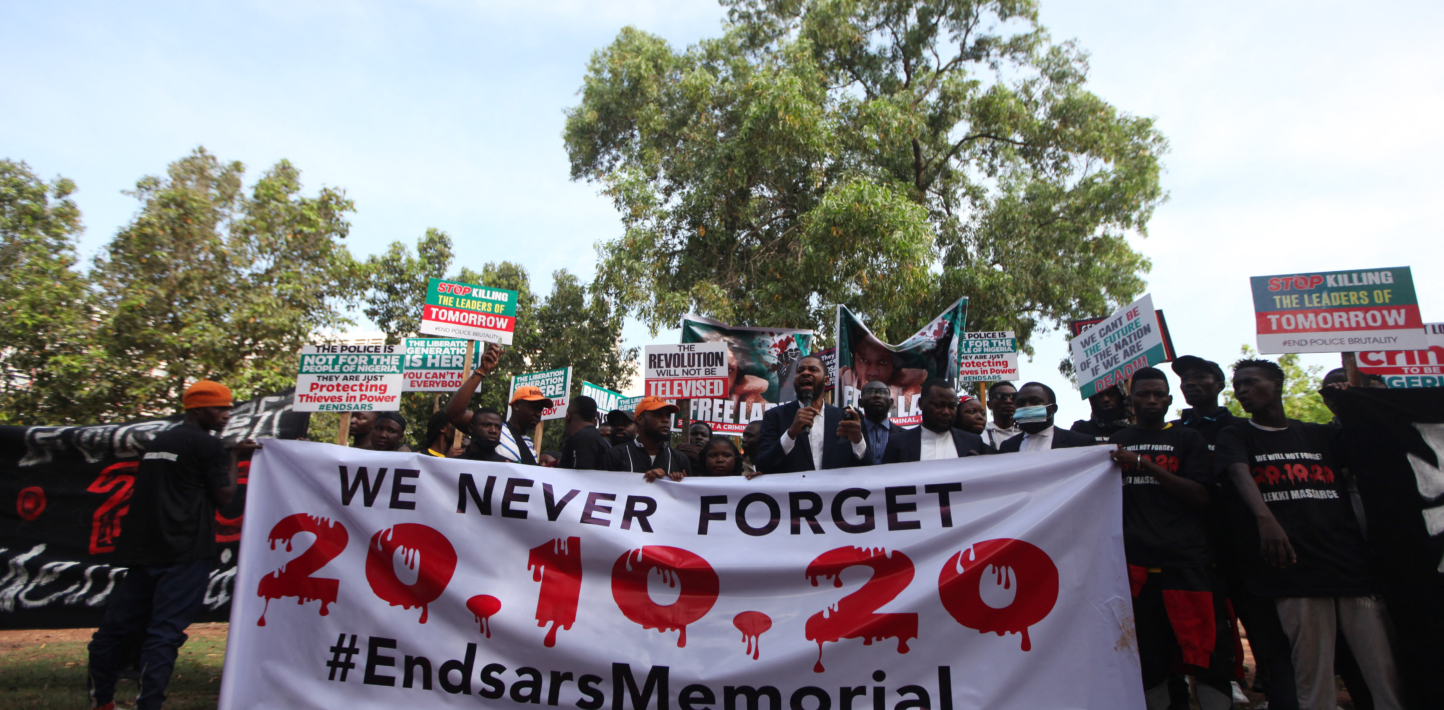
4 years ago on October 20, 2020, my ongoing journey began with the Lekki Massacre, which happened just a couple of kilometres from my apartment. Within the next 17 days, I was forced to smuggle myself out of Nigeria and I haven’t been able to go back since.

In the intervening period, I have spent time in a Ghanaian safe house, I have been declared wanted for “national security violations” in Nigeria, and I have survived a kidnap/assassination attempt in Accra organised by the (now former) Director of the National Intelligence Agency, Ahmed Rufai Abubakar.

In all this time and across all these experiences, one piece of wisdom I heard from my good friend @YarKafanchan has never left my head and remains my true north. She said it in passing one evening in 2021 when we were hanging out at Breakfast 2 Breakfast, Osu, and she probably didn’t realise that what she said was so profound that it would remain stuck in my head forever.

She said: “Nigeria’s biggest trick is convincing you that nothing is happening. Meanwhile everything is happening.”

She said that in the context of us figuring out whether the Buhari regime had forgotten about teaching us #EndSARS people a lesson, and if we should risk returning home, but I took that pearl of wisdom, expanded its application, and made it my True North for analysing Nigeria.

Nigeria was not always this way, but after decades of deliberate actions by internal and external actors, it has become the country where “nothing happens.” When it comes to anything consequential, meaningful and positive like favourable trade policy, economy-boosting infrastructure projects, or diplomatic and geopolitical positioning to enhance regional integration, nothing happens in Nigeria. It is frozen in time and covered with dust and cobwebs. To all intents and purposes, nothing is happening.

But behind the scenes, when it comes to listening to the counsel of American econmic hitmen and piling on ruinous dollar-denominated debt that the country categorically does not need, or when it comes to spending billions of dollars to develop military, intelligence and law enforcement capacity, only to use it to monitor the young girlfriends and political opponents of middle aged big men with potbellies, everything is happening. Nigeria may not be able to generate more than 5,000 MW of electricity for 200 million people, but when it comes to using NIA field agents – actual intelligence operatives trained expensively in Israel and North Korea – to go after outspoken Nigerian citizens in foreign countries, everything is happening.

This is why I cannot bother myself with who Peter Obi chooses or does not choose to wish Happy Birthday to. It’s not that I don’t think Yakubu Gowon is a genocidal a-hole. It’s that his involvement in what happened between 1966 and 1970 is not even the worst or most disastrous thing he has done. The worst things Yakubu Gowon did came AFTER the war, and they are why we are where we are today.

Nigeria as it existed then, was one of the most powerful countries in the entire Global South, and a very consequential country on the world stage. Nigeria was a country that funded liberation movements in other countries, used its economy and military to massive geopolitical effect in Africa, gave out foreign aid, and came within one Ajaokuta Steel Complex of becoming Africa’s first proper industrial economy.

Most of this period, when Nigeria was one of the world’s real movers and shakers in the decade between 1970 and 1979, fell under Yakubu Gowon’s tenure. The Nigeria he had was a country where everything was happening, and everybody could see that everything was happening. Nigeria was one of the players moving pieces on the global chessboard, and not merely one of the pieces being moved.

Yakubu Gowon had the unique opportunity with a postwar Nigeria that found itself economically, militarily and geopolitically in the proverbial Garden of Eden, to lead the country into World Power status. There was a perfect storm of geopolitical circumstances, and Nigeria was right in the sweet pot. The country had real money to spend on infrastructure and industrialisation, and very little foreign debt. It had de-facto geopolitical leadership of Sub Saharan Africa, and infinite possibilities for continental alignment and integration. He didn’t even have to worry about winning an election every 4 years. All he had to do was deliver leadership

If he had delivered Sub Saharan Africa’s first industrialised nuclear power, Africa and the African diaspora would have finally had an untouchable base to build from, and the world would never again have been able to treat Black people with the levity it continues to do in 2024. I am 34 this year. Gowon became Head of State at 33. He found himself leading this budding postwar superpower with everything falling into place for it at 37. And what did he do with this once-in-a-century opportunity?

He did Cement Armada. Udoji Awards. Offshore bank accounts. Contract and invoice inflation. Free Nigeria Airways flights for anyone who could get a “note” from a military officer, which eventually ran the airline into the ground. Cars, houses and holidays in London for girlfriends of big men in government. The beginning of the Rolls Royce culture in Ikoyi. During his 5 postwar years in power, Nigeria for the first time began piling on dollar-denominated foreign debt that it did not need, which was the fuel for the explosion that came 15 years later called IMF Structural Adjustment.

He met a country that was powerful and competent enough to hatch its own foreign influence and subversion operations around the world. Nigeria used to be so consequential that every single liberation war it directly or indirectly intervened in swung the way it wanted. From Lagos, the outcomes of liberation wars in Mozambique, Zimbabwe and Namibia were decided. By the time he and his mad dog successor Murtala Mohammed left the scene, Nigeria had gone from this to a victim – a country that couldn’t pay its debts, started suffering electricity blackouts, and ended up having American intelligence penetrate its core, to the point where the outcome of elections or post-coup succession was decided by people like Susan Rice.

It was once a country where everything happened in plain sight, but by the time Yakubu Gowon and the Class of 1966 were done, it became the Nigeria we know today – a benighted country where you have to be highly connected or extremely intelligent to even suspect when anything is happening, because to all intents and purposes, nothing ever happens.

The challenge for my generation and the coming ones is to hijack and regain control of our collective destiny, which Yakubu Gowon and his contemporaries lost for us. They inherited the Black world’s most powerful country and potent nation state. They bequeathed a parody of a country that has been fully captured by economic hitmen, where the CIA has been able to openly install a drug peddler with urinary incontinence to become puppet president of the largest Black country in the world – a level of blatant disrespect that illustrates just how much has been taken from us.

Instead of getting mad at Peter Obi for wishing such people Happy Birthday (which doesn’t actually change the figurative price of garri in the market), our generational challenge as Millenials and Zoomers is to wrest back control of our country and its governance, intelligence, law enforcement and military institutions from the foreign interests that took them from our 90 year-old “senior statesmen” who sold their children for the proverbial mirrors, gin and red cloth.

Getting angry at Yakubu Gowon is pointless and is not going to save us. Getting mad at people wishing him Happy Birthday is borderline asinine. He has already got what he wants out of life. At 90, he has amassed a lifetime’s worth of oyibo’s mirrors, gin and red cloth, and the Black superpower he once led is now dragging status with Eswantini and Sao Tome & Principe. We should be happy for him. He is a fulfilled man who led a life that clearly fills him with fulfillment.

We have our own mission now, and it is to start undoing his damage. In our lifetime, Nigeria should once again becomes a country where everything is happening. It has to happen soon. Otherwise, 200 million people go kpai.

Let’s be guided.

https://x.com/DavidHundeyin/status/1848153436182970474


All Notaries Public need to upgrade details for electronic notaries’ register

Press Statement

Dear Colleagues,

We are pleased to announce that the www.notary.gov.ng website is now live and fully operational. The registration link remains unchanged from the previous Public Notice but now directs you to a functional registration form.

All Notaries Public are encouraged to register for vetting and inclusion in the Electronic Register for Notaries.

Before beginning your registration process, please ensure you have the following documents and information ready:

  1. Passport Photo: Prepare a passport-sized photo (jpg, jpeg, or png) saved on your device.
  2. Supreme Court Number & Swear-in Date: Have your Supreme Court Number and the date of your swearing-in (as indicated on your Oath document) ready.
  3. File Number (Optional): If you have a file number from the Supreme Court, use the year and 6-digit number from your latest letter.
  4. Legal Email & Contact Info: Submit your official email address and phone number for communication purposes.
  5. Accurate Data: Ensure all information provided is accurate. Incorrect or duplicate entries may result in submission issues.

For Clarity, Please Note the Following Key Points from the Previous notice:

1. File Number
2. SCN Number
3. First Name
4. Middle Name
5. Surname
6. State of Practice or Current State
7. Office Address
8. Date Sworn in
9. Phone Number
10. Legal mail

Upon submission, a confirmation email will be sent to you.

Bridget Edokwe
Publicity Secretary, Nigerian Bar Association

EndSARS Memorial: Wander to Wonder

By Charles Okeibunor

In 2014, I traveled to a beautiful nation that made me wonder. But each time I savored the beauty of the host nation, I found myself, questioning why my country didn’t measure to the standards I was seeing.

Have you ever been in faraway land and whatever you see makes your mind wander back home?

Then suddenly, I had an epiphany… I realized I could subsume the myriad of our national problems, into two major headings. Just two, no more, No less.

  1. Leaders who have no shame
  2. Followers we are not united

This combination summarized the outcome of why we were where we were as a nation.

I asked, don’t our leaders visit this nation? How then do they feel when foreigners from this nation come visiting and meet us the way we are?
Do they not feel any shame at the wide gaps?

Then October 2020 happened.

From no where, Nigerians from all works of life, without a leader, without a commander, without inducement spoke with one voice.

They arose irrespective of tribe, regardless of religion or the almighty political affiliation in different states all at once saying “enough is enough”.

Day and night, they sang from the same hymn sheet. Determined they had had enough of eating shit from those meant to protect them, who now only beat, hit and obliterate them.

For that moment, the office of the citizen became supreme.

I could see a sense of Purpose.
I could see a sense of ownership.
I could see a sense of belonging.

One night of October 20, 2020 the cloud gathered, the oppressors had had enough of our melodrama and they ended it!

Gun shots fired. Many maimed for life, many lost their lives and all were scarred for life.

Though extinguished the mission was accomplished.

You are going to say “But How?”

Here is how…

For everyone that went to the protest ground. For everyone that cleaned after their brother. For everyone that danced with their sister. For every one that lost possessions. For everyone that was wounded. For everyone that spilled their blood. For everyone that gave their life. They all proved one thing, that Unity is possible.
That Unity is effective and that was the ultimate goal.

In these days, we may have drawn back to the abyss of tribalism, religionism and ‘partysim’. Yet it won’t change history that we were once united against a common enemy.

Now that the “unity box” is ticked, all be it in trial mode

When will we have leaders with shame?

When shall we taste conscious and conscientious leadership?

A day when we can now afford to wonder, because our mind has no more need to wander…

Hopefully, some day…

Charles is a Lawyer, Executive Coach and public affairs analyst.

This piece is specially dedicated to the heroes of October 20th 2020.

Follow me on X @okeibunor11

#OneVoice

#Leadership

#Influence2024

The waist beads of Olajumoke

By Lasisi Olagunju

All music comes from Africa,” African pop singer, Angélique Kidjo, told an interviewer in 2023. Kidjo’s dad is Fon; her mum is Yoruba. In locating Africa as the source of all music, she was saying that in our music and in our songs are all things that interest, excite or worry humanity. In that same interview, Kidjo waxed lyrical. She said she came from a culture “where you spend 10 minutes saying good morning, how is your father? How is your grandmother?”

In every story, every conversation, there is at least a song. And that includes Kidjo’s ten-minute greetings. I feel her. As a Yoruba, I am expected to make anything sing. The unpleasant, if sung the right way, will be good music. That is why we are advised to laugh at any occurrence the severity of which sobbing and weeping cannot redeem. And, so, in spite of everything, the time to sing, dance and laugh is now.

At 4.50 pm on 29 May, 2023, a lady of influence tweeted: “You either accept Bola Ahmed Tinubu GCFR and Kashim Shettima GCON as your president & vice president respectively or join the wailers for the next 4 years, at least, or 8 years. And if you ask me, wailing for 8 years will be emotionally exhausting. If a new Nigeria is your concern, you’ll pray to God to guide our leaders right irrespective of the party you belong in.”

That was a few hours after Alhaji Bola Ahmed Tinubu became president and pronounced “subsidy gone.”

Fast forward to 10:30 am on 9 September, 2024. The X influencer tweeted: “I am fully committed to campaigning for and supporting any better candidate who can defeat this government in 2027, regardless of their party. For me, removing PBAT is a personal mission and a priority. In shaa Allah.”

Our lady has clearly violated the 4-years-or-8-years timeline she gave us just one short year ago. What has changed that has soured the romance?

In case you are scouring the ocean beds in search of what crime the president committed which has cost him the love of this prime supporter, a window opened at 11:23am on 15 October, 2024. The lady tweeted: “Are we really just going to sit back and accept that spending 100,000 Naira a week on fuel is now the norm? That’s 400,000 Naira a month. How many of us can actually afford this? And meanwhile, electricity costs have shot up by nearly 400%. Are we okay with being drained financially just to survive, or are we ready to question why we’re being squeezed like this?”

The last time I checked, the above tweet had attracted almost 800,000 views. Many who replied to the lady’s tweets abused her. They shouldn’t have. When Saul came back from Damascus and became Paul, how was he received? I commend this lady for her forthrightness. At least, unlike others, she didn’t subscribe to John Milton’s fallen character in ‘Paradise Lost’ who loses and shouts: “…farewell hope, and with hope farewell fear” but goes ahead to yell “Farewell remorse: all good to me is lost; Evil be thou my good.” To that Miltonic character, repentance and remorse are too high a price to pay for whatever sin he had committed.

The lady here is one of millions with blisters of buyer’s remorse under their skirts. But she came out to yell and bail out of the abusive love. I commend her. Out of the eight million who voted in this government, there must now be at least seven million sipping the ale of regret quietly in public but cursing King Macbeth privately under their creaky beds. Evil should stop being their good. Because of tomorrow, their buyer’s remorse should be loud.

In 1994, Angélique Kidjo released ‘Agolo’ an album that contains the song: ‘Orio rio/ Ola djou monké n’lo/ Ola djou monké/ Ola djou monké n’lo’. What is she saying? The wordings are obviously in her Quidah, Benin Republic Yoruba. The Oyo-Yoruba in me has no difficulty in situating the root of the lyrics in one of her mum’s folksongs, ‘Ori Ori o Olajumoke nlo…’ There is a story behind that song. And this is where I am going. The folksong rose to meet me when I read the tweets I started this piece with.

The ‘Olajumoke’ song is a lyricised Yoruba folk story about the consequences of rash choices. It says that if you are going to choose a husband or wife, open your eyes, the inner and the outer. The dude you are dying to have may be an empty tin (agolo/pangolo), an àgbá òfìfo (empty barrel).

The story goes that Olajumoke was the most beautiful girl in the village and she knew it. Suitors came after suitors. None was handsome enough to match the taste of the fussy, finicky damsel.

One bright sunny day, a very handsome young man sauntered into the marketplace. The dude is a complete stranger, the type the clairvoyant would see and describe as a beautiful snake. The enchanting young man’s out-of-this-world elegance charmed Olajumoke. The strangeness of his person and his suspicious entry did not alarm Olajumoke. They instead combined to disarm her. She melted and commenced a session of comely stalking, and followed the love of her life up and down the market.

The sun was going down; buying and selling was over. Bobo Handsome commenced his exit from the market but noticed this beautiful girl following him. He asked why. Olajumoke broke all rules and protocols of village romance. She toasted the unknown man of uncommon allure. “Let us be husband and wife.” The strange man was forthright. He couldn’t marry her. “I am Orí (head), a complete stranger here. My place is beyond the Blue Sea (Odò Aró) and even far after the Red Sea (Odò Èjè). You can see that we cannot be husband and wife.”

Because love is blind, Olajumoke would have none of what the stranger was saying. Remember Angélique’s line:

“Ifé ayé ilé /Igbadoun foun ayé (Love in this world is strong/ It is pleasure for the world)”.

The lady of beauty insisted she would follow the strange man to wherever on earth. Then Orí, the young man, lunged into a burst of songs. “Leave me/ If you don’t turn back, we will get to the Sea of indigo/ If you don’t leave, we will reach the Sea of blood…”

The lady of our story did not heed the warnings, neither did she contemplate a change of resolve. She must marry this man of means and colour. That was how she followed a complete stranger on a journey of love. It was a long trek across daylight and moonlight. Then, they reached and crossed the Blue Sea. Soon, they reached and crossed the Red Sea. Then, things moved very fast for the lovey-dovey girl. It turned out that everything that gave the man elegance was borrowed. He started dropping the parts one by one where he got them. He started with his arms, and then his legs. The spirits that loaned them to him got back their properties. Then the torso, the flesh, the hairs and the nails. Every minute part was a borrowed item and the lender got back their properties. Orí is no longer what we call head. What he is is one ugly, scary skull. Now, beautiful girl knew she was in deep trouble. She is married to a Skull – deathly and deadly. She no do again. She told Orí but the ex-handsome man said it was too late; their romance was till death do them part.

Skull did what captors do with their victims. To ensure his ‘wife’ did not escape, Orí decided to ‘bell’ her with waist beads. Each time beautiful Olajumoke attempted to run away, the beads alerted the husband, jingling: “Ori Ori o Olajumoke nlo (Skull, Skull, Olajumoke is running away).” How did this girl get back her freedom? Did she ever get a reprieve? Well, the conclusions are as varied as the storytellers and where they belong.

How Olajumoke chose her husband is the way we choose our leaders. The signs are always there that the masquerade we are costuming will most certainly snatch the singlet we have as our only garment. Like Mr. Skull, they do not hide who they are. The parts that make up their bodies of intelligence are unreal; they are borrowed. The only parts that are truly theirs are the fingers – for counting billions.

“Omo eni kò sè’dí bèbèrè” was the battle cry of Tinubu’s campaigners in Yorubaland last year. Everything was reduced to beads (ìlèkè) and bottoms (ìdí). Any Yoruba person who campaigned against the child of the house was a bastard. We asked the past why it invented (ìlèkè ìdí) (waist beads) for girls only. The past told us it was for reasons of beauty – rounded hips, slim waists, etc. We asked what else? We are told the beads also tell which girl is chaste and which is not – or likely to be not. The loose loosen their waists; they walk and roll the beads pushing the world into libidinous wars. Where such is seen, waywardness robs such girls of parental adornments. That was why some of us insisted in 2023 that not all omo and their big bottoms deserved the land’s ìlèkè. But they said our mouths smelt bad. What did we know?

The reason we talk today is the reason we counseled yesterday against replacing destroyers with predators. We said last year do not vote for election, vote for structure. Let us break down this house and rebuild it so that we can all be safe. “It is very difficult, indeed almost impossible, to maintain liberty in a republic that has become corrupt or to establish it there anew” (Machiavelli). We ignored structure and everyone gave their electoral waist beads to their own child. Votes were reduced to abject ornaments for voluptuous behinds. Machiavelli wrote again, “people are often misled to desire their own ruin.”

When Sani Abacha took over the government in 1993, people clapped for the kingmaker who had made himself king. They said he was a wrong-righter. When by 1994 it became clear Abacha was determined to sit still on the June 12 election and the mandate it conferred, MKO Abiola went philosophical: Ìlèkè tó sò’dí òpòló ni ejò gbé wò yí o (a string of beads is found to be too large for Toad’s waist, Snake now goes for it). It is the same today. Check toad, check snake, measure their waists, solve the riddle.

Some regime backers, last week, told the newspaper columnist to stop his criticisms of the president and his bumbling presidency. “Provide solutions,” the persons yelled in forwarded messages. Well, the columnist did not campaign last year to be beaded with power. The columnist’s duty is to tell the king that he is naked. If the naked, his clothiers and courtiers do not know the solution to the nakedness, then, what else is there to say other than sing in musician Lagbaja’s voice: “Mo sorri fun gbogbo yin l’okookan.”

I am not done with Angélique Kidjo and the interview in which she spoke the words I quoted earlier. It is in the 29 June, 2023 edition of The Telegraph of the U.K. In her words is a warning to the ‘victorious’ to know how very slippery the mountaintop is. The powerful who think they stand firm and therefore could betray the ground that holds their ladder should hear out Angélique: “I didn’t get here because I decided to be number one. I got here because people decided to listen to me. The people who put you up here, well, they can always pull you down.” Wisdom. But ‘they’ won’t listen. Their ears are like Ori’s body parts – borrowed – and collected back by the lenders.


#EndSARS Memorial: We must confront the systemic flaws undermining Nigeria’s democracy —Olufunke Okome

By Prof. Mojubaolu Olufunke Okome

Today, we somberly commemorate the EndSARS massacre at Lekki Tollgate, a grim reminder of Nigeria’s faltering democracy. The youth’s courageous protests against systemic injustices and demand for reform were met with brutal force, exposing the government’s disdain for citizen rights. This incident underscores the inherent contradictions in Nigeria’s democratic project – a gerontocratic system riddled with bias against the youth, ethnocentrism, sexism, and restrictions on freedom of speech.

The EndSARS movement embodies the aspirational spirit of democracy, seeking inclusive governance and legitimate state-citizen relations. However, the government’s response has been tone-deaf, prioritizing suppression over engagement.

Organized peaceful protests are essential for democratic praxis, allowing citizens to negotiate public authority and influence governance. Yet, Nigeria’s leadership has consistently demonstrated hostility towards dissenting voices.

As we reflect on EndSARS, we must confront the systemic flaws undermining Nigeria’s democracy and demand meaningful reforms. The youth’s struggles will not be silenced; their demands for accountability and justice will continue to shape Nigeria’s democratic trajectory.

#EndSARS

#LekkiTollgate

#4yearsOn

Theresa Chikeka: The retired judge as chief judge of Imo state?

The judicial career of Francis Chukwuma Abosi was supposed to last only seven years. In the event, he did 12 and may well have reached 20 years if events had not intervened. In his 12th year as a judge in April 2020, while serving as the acting president of the Customary Court of Appeal of Imo state in south-east Nigeria, the National Judicial Council (NJC) mercifully ended it all.

When he attended the Nigerian Law School, as all Nigerian lawyers must, Francis Abosi deposed that he was born in November 1950. On his appointment as a judge in 2008, therefore, Francis Abosi was 58. At the time, the retirement age of all judges was 65. This meant he would have been due to retire in 2015. 

In 2008 also, a judge could only retire on their terminal salary as pension if they had served for at least 15 years. In the case of Francis Abosi, he well knew that based on his date of birth, he was eight years short of what he needed to be eligible to retire on his terminal salary as his judicial pension.

The answer to this problem was rather straightforward – Francis Abosi edited his birth year from 1950 to 1958. This act added eight years to the seven that he would have served, bringing his notional judicial tenure to 15 years, at which point he would have been entitled to his terminal salary as his judicial pension.

What Francis Abosi could not do, however, was alter the filings he had done prior to becoming a judge, especially those he made upon matriculation as an undergraduate and also on admission to the Nigerian Law School. Upon being appointed to act as the president of the Customary Court of Appeal, they caught up with him. In April 2020, the NJC found him guilty of  “the falsification of his date of birth from 1950 to 1958. Findings showed that he was supposed to have retired in November 2015 when he clocked the mandatory retirement age of Sixty-five (65) years.”

Francis Abosi’s feat of genealogical management had far-reaching consequences. He became president of the Customary Court of Appeal of Imo state nearly three years after he should have retired. That means he took someone else’s job unlawfully. It could have been worse. Had the NJC not stopped him, Francis Abosi would have been in the position in 2023 when the age of retirement changed from 65 to 70, meaning that he would have been on the job until 2028 when biologically he would have been 78. That would have given him 15 years of judicial service beyond his due retirement age.

Abosi was not alone in the business of injudicious emendation. One of his peers in the 2008 cohort of appointments to the judiciary in Imo state was Theresa Eberechukwu Chikeka. A graduate of the University of Maiduguri, Theresa Chikeka became a lawyer in 1982 and did her National Youth Service Corps at the Borno state ministry of justice, which employed her thereafter as state counsel. There she worked for the first ten years of her professional career before transferring her service to Imo state in 1993. 

Up to this point, Theresa Chikeka’s records indicate that she was born on October 27, 1956. With this date of birth, she would have attained retirement at 65 in 2021, two years short of the 15 years of service which would have entitled her to retire on her terminal judicial salary. Borrowing a leaf from Francis Abosi’s book of elastic genealogy, it seems, Theresa Chikeka also adapted her age sometime in 2006, changing her birth year from 1956 to 1958 and making her eligible to retire in October 2023 instead of 2021. 

Indeed, according to records in the possession of the Imo State Judicial Service Commission which has looked into the issue, the affidavit deposed to Theresa Chikeka’s mother in support of her new birth year claimed that she was born in 1958, without providing the day or month on which she was extruded from the womb.

On 28 June 2022, the Imo State House of Assembly (IMSHA) confirmed Theresa Chikeka as chief judge. This was more than eight months after she should have retired as a judge. In other words, the house of assembly confirmed as chief judge a person who was – as a matter of law – not a judge on the date that they did so. 

In 2023, when the age of retirement of judges of the high court was increased to 70 from 65, Theresa Chikeka received another five years of judicial life as chief judge when in fact she should have been in retirement two years earlier in 2021.

These facts are not seriously in dispute. 

On 14 June 2024, one Comrade Ndubuisi Onyemaechi, on behalf of a group called the Civil Society Engagement Platform (CSEP), filed a petition with the Imo state house of assembly in Owerri alleging that the chief judge had unlawfully edited her age. This allegation goes to the heart of Rule 1(3) of the Judicial Code of Conduct in Nigeria which stipulates that “a judicial officer should respect and comply with the laws of the land and should conduct himself at all times in a manner that promotes public confidence in the integrity and impartiality of the judiciary”.

The IMSHA referred this to its judiciary committee, which began investigations the following month. They invited Theresa Chikeka to attend but she declined. In a letter to the house dated 12 July 2024, she claimed that “the provisions of the guidelines of my office…. do not permit me to appear before any Investigation Panel (sic) other than a panel set up by the National Judicial Council”.

On 17 July, the judiciary committee reported to the IMSHA in plenum which voted through a resolution calling for the removal of Theresa Chikeka as chief judge for falsifying her age. Moments after this vote, on the same day, the chief judge served the house with an ex-parte order of the federal high court in Owerri restraining the house from taking the vote that it had already concluded.

Matters have since then relocated to the NJC which now has cognisance of the allegations against Theresa Chikeka. Having previously told the IMSHA that she cannot answer to any panel except one constituted by the NJC, Theresa Chikeka now tells the NJC that she cannot answer to their panel because of an interim order of the federal high court, which has lapsed. On this artifice, she presently claims to function in an office for which she was ineligible to begin with.

In the last week, Chief Justice of Nigeria (CJN), Kudirat Kekere-Ekun, voiced concerns about the credibility of the judicial branch that she leads, appearing rather incredulously to suggest that it is a function of how many judgments and rulings judges produce. 

The CJN must realise that no one will take her seriously if she continues to prove unwilling and unable to act swiftly to get rid of the person who now desecrates the office first occupied in 1976 by Akunne Chukwudifu Oputa.

The least anyone can ask of those who hold leadership positions in the judiciary is that they are fit in law to serve as judges. Theresa Chikeka is not. She ceased to be a judge in October 2021. Allowing her to hang on as chief judge of Imo state today is egregiously unlawful. The NJC owes Francis Abosi an apology and a recall if Madam CJN continues to prove unwilling and unable to get rid of Theresa Chikeka.

 Let her go! 

A lawyer and a teacher, Odinkalu can be reached at [email protected] 

Jigawa Commissioner arrested by Hisbah’s arrest over alleged adultery in uncompleted building says, ‘my political enemies are behind this’

Auwalu Danlladi Sankara, the Jigawa state Commissioner for Special Duties at the centre of an alleged illicit sexual affair has denied the accusation, describing it as a political witchhunt by his political enemies.

Although the state government has not made any official comment on the matter, the embattled commissioner in a statement he signed on Friday night, refuted the allegation saying, it was concocted by unnamed political elements to tarnish his image.

It would be recalled that the news of the alleged illicit sexual affairs by the commissioner with a married woman under suspicious circumstances by operatives of Hisbah in Kano went viral across various news platforms on Friday.

The arrest was said to have been prompted by a complaint from Nasiru Bulama, the woman’s husband, who accused Sankara of engaging in an affair with his wife, Tasleem Baba Nabegu, the mother of his two children.

The Kano State Hisbah Board has since confirmed the arrest and detention of Sankara, in an uncompleted building with Bulama’s wife.

The board’s Director General, Dr. Abba Sufi, also confirmed the arrest Friday evening.

He said the arrest was made possible through intelligent tracking after receiving a series of complaints of his nefarious acts with the married woman by her husband.

“Yes, it is true, we have arrested Auwal Danladi Sankara, the Jigawa Commissioner, with a married woman in an uncompleted building that belongs to him.

“Unknown to him that we were tracking him based on reports against him that we received,” Dr. Sufi said.

According to him, the arrest followed a complaint by Nasiru Bulama, the woman’s husband, who accused the commissioner of engaging in an illicit affair with his wife, Tasleem Baba Nabegu, the mother of his two children.

“Nasiru Bulama filed the complaint with the Kano State Police Command, the Department of State Services and the Hisbah Board, alleging Sankara’s involvement in illicit sexual activities with his wife,” the official added.

The DG explained that they are taking Sankara to Court on a number of cases against him including operating illicit drug centres with the names Picklock, 360 and others.

He said, “We have been having problems with Sankara because he is operating illicit drug centres in the names of hotels with prostitution and drug addiction activities”.

Sufi added that they are prosecuting Auwalu Sankara on Monday at a competent court of law.

World Bank’s 15-year death sentence on Nigeria

By Farooq A. Kperogi

The World Bank’s Senior Vice President by the name of Indermit Gill, who is originally Indian, incited mass panic in Nigeria on October 14 when he said Nigeria would need to sustain its current soul-sucking, agonizingly punishing, and self-destructive “reforms” for “at least another 10 to 15 years to transform its economy.”

Gill’s speech at the 30th Nigerian Economic Summit in Abuja—which read partly like the smug, cloying, self-congratulatory bluster President Bola Tinubu would write and partly like the intentionally obfuscating gobbledygook of dubious experts who want to conceal the truth from the uninitiated—elicited verbal and nonverbal expressions of fervent disapproval from the well-fed elites of the Nigerian Economic Summit Group and the Ministry of Budget and National Planning (who planned the event) when he said Nigeria must continue this path of national self-incineration “at least another 10 to 15 years.”

Gill was compelled to wonder aloud if the murmurs his callous exhortation triggered were a signal of disagreement or agreement from his audience. The camera zoomed in on people nodding discontentment or using their fingers to gesture disapproval. If he is smart, he would know the answer to his question.

But the soulless, blood-sucking economic vampire was unmoved. He insisted that enduring “terrible hardship across the breadth of Nigerian society” (his words) as a consequence of the gutting of petrol subsidies is the only way to “become the engine of growth in sub-Saharan Africa.” “It is very difficult to do these things,” he said, “but the rewards are massive.” What massive rewards can come out of policies that take both lives and means of livelihood?

The phrase “at least” suggests that 10 to 15 years of piecemeal national mass immolation is the irreducible minimum required to achieve prosperity. That is, 10 to 15 years is the smallest possible national self-annihilation Nigeria has to endure to “transform its economy.” Since the least possible effort can’t always guarantee success, it means it would take more than 15 years (possibly 50 years— or even eternity) to achieve prosperity through national mass annihilation.

Well, since President Tinubu can’t rule longer than seven more years (assuming he wins a second term in 2027), the World Bank has effectively prepared the perfect, ready-made alibi to explain away the irrecoverable harm its loathsome and baleful prescriptions will visit on Nigeria in the next few years.

Tinubu’s successor, whoever that may be, would be insane to continue with this mass obliteration of the populace they call “reforms.”

If he or she has brain cells in his or her skull and reverses this ruinous course, the World Bank would say, “Well, we told you that you needed to incinerate yourselves for at least 15 more years before you can have a chance at living. Since you brought yourselves back to life after only eight years of being in the burner, you are not sufficiently cooked, and we are not responsible for the burns and devastation that eight years of incineration brought to you. You see, you can only live if you burn yourselves alive, which you refused to do.”

This caricature might come across as grotesque and transgressive of the bounds of reasonableness, but it faithfully captures the logic of World Bank economic prescriptions for developing countries: you need to die before you can live.

If not, how could anyone celebrate the democratization of privation? “The price of [petrol] has quintupled since the subsidy cuts, imposing terrible hardships across the breadth of Nigerian society,” Gill said with a triumphant tone.

Well, one of the unspoken, unacknowledged but nonetheless far-reaching consequences of the quintupling of petrol prices is the slow but sure death of what remained of Nigeria’s education. Because of the dire existential precarity that the unaccustomed and ceaseless hikes in petrol prices have caused, many children are dropping out of school like leaves abandoning a tree before the storm hits.

A National Assembly member told me a few days ago that a prominent emir in Northwest Nigeria confided in him that he was alarmed by the sheer number of young people who are dropping out of school (at all levels of education) in his traditional sphere of authority because parents can’t afford to feed, and they consider paying the school fees of their children a burden they can’t shoulder.

This tragedy, this conscienceless assassination of the future of our youth in the service of the World Bank, isn’t limited to the North.

Two weeks ago, a close relative of mine who lives in the Southwest requested my assistance to pay the school fees of five children who were roaming the streets because they had been sent home from school for failure to pay their school fees. Their father disappeared without a trace before he couldn’t cope. Their mother, a petty trader, manages to feed the children once in a day on a good day. But they used to get by before Tinubu’s “economic reforms” upended their lives.

We in the North are in a worse state because we are already behind the rest of the country in educational attainment. Now we are sliding even further as the sting of Tinubu’s World Bank-instigated “reforms” disrupts lives.

When a “reform” rolls back gains in school enrollment and effectively jeopardizes the future of the youth and of the country, you have to wonder why you need to implement it for at least 10 to 15 years to “grow.” It’s like pulling bricks from the foundation of a house in the name of building a taller roof. What good can possibly come out of that?

What sort of “reform” contracts the economy, diminishes the productive sector, reduces the purchasing power of the people, reverses growth in education, and even kills people’s will to live?

Tinubu has repeatedly assured Nigerians that the dark tunnel of his “reforms” will produce light during his presidency and that Nigerians only have to endure a temporary penance. But the World Bank, his puppeteer, has undercut his message. It says it will take at least 10 to 15 years of maintaining these “reforms,” which extend beyond the time he is constitutionally allowed to rule, to see any benefits.

In other words, Nigerians are condemned to unmitigated anguish and deprivation for a deferred benefit that will never come since Tinubu won’t be around for the next 10 to 15 years, and his “reforms” would probably ensure that Nigerians don’t elect another neoliberal World Bank/IMF flunkey who will tout mass starvation of the citizenry as praiseworthy “reform.”

And here’s the uncomfortable truth: history offers too many cautionary tales of developing nations that have followed this very same script, only to find themselves worse off. Argentina in the early 2000s, for instance, stood on the precipice of ruin after blindly swallowing the IMF’s bitter medicine. With a wild, neoliberal, anarchist wacko of a president called Javier Milei, Argentina is back in the pit of World Bank/IMF hell.

Ecuador, too, suffered a devastating financial crisis when it adopted policies that hollowed out its middle class.

The World Bank and its cadre of international experts rarely account for the peculiarities of each nation’s economic and social dynamics. What they offer is a one-size-fits-all solution that has often wreaked havoc on the most vulnerable.

Nigeria is being told to trust this path, but development doesn’t emerge from policies that wipe out the middle class, impoverish the population, and render a nation’s currency barely worth the paper it’s printed on.

True development is rooted in fostering economic diversity, building local industry, and safeguarding the purchasing power of ordinary citizens. It’s about listening to the rhythm of the local economy and respecting its complexity, not bulldozing over it with a neoliberal agenda crafted in the halls of Washington.

No doubt, Nigeria’s economy has long needed repair. But it is one thing to call for reform and another to advocate for policies that feel like economic warfare on your own people. Tinubu may believe that this is a necessary sacrifice, but the logic of endless suffering in the name of eventual relief is deeply flawed. Countries do not develop by punishing their citizens into submission.

We must ask ourselves: how much longer can Nigeria afford to endure policies that erode its very foundation? For a nation whose citizens have weathered so many storms, the path forward must be built not on external dictates but on an understanding of Nigeria’s unique strengths and vulnerabilities. And while the World Bank preaches patience from afar, Nigerians know better than most that promises of future prosperity mean little when the present is unbearable.

A leader worth following is one who understands this. A leader who places the needs of the people above the dictates of international financial institutions. Nigeria cannot afford to pay this price much longer, and Bola Tinubu’s legacy may well rest on whether he is willing to listen to the cries of his people—or whether he will remain a distant echo of the world’s technocrats.

[Video] The Federalism Question: Akaraiwe, SAN, says minimum wage cannot be set across broad

A Senior Advocate of Nigeria, Ikeazor Akaraiwe has waded into the perennial federalism controversy in Nigeria, questioning how minimum wage could be fixed across board considering that the cost of living in various states is markedly different.

Akaraiwe who was a guest on Channels Television morning show, #SunriseDaily remarked that for there to be a proper federation, “some states will have to merge,” adding that: “Many northern states can survive if the solid minerals they have been blessed with are properly exploited and not by individuals.”

Watch the full interview below.

TIPS