Home Blog Page 491

Nigerian lawyer Says: Clients abandon us in court, stop picking our calls only to discover they’ve gone back to their abusive marriages

A Nigerian lawyer, Favour Ajuebor, has narrated how some clients who were seeking divorce abandoned lawyers even in court and cut off all communication only for them to discover that they had gone back to their abusive and deadly marriages. 

He disclosed this while reacting to the report of the woman who was brutally beaten by her husband and kicked out with her baby in Anambra but refuses to leave him. 

Clients abandoned us in court, stopped picking our calls only for us to discover they went back to their abusive and d3adly marriages  - Nigerian lawyer says

Battered Anambra nursing mother Says: “I love my husband, I don’t want to leave him”

Mrs Ifeoma Nwafor, the 27-year-old Anambra woman who was found lying half-dead on the road with her two children in a bush after she had been brutally beaten by her husband and kicked out of their home, has said she intends to remain with her husband, Chukwujekwu Nwafor.

In a chat with Human Rights activist, Harrison Gwamnishu, the mother of two said she still loves her husband and will stay with him. The husband on his part, promised not to beat his wife anymore, adding that he loves her as well.

Gwamnishu said that when he and his team members visited Anambra state after getting wind of her case, he noticed that the woman had refused for them to meet with her husband and that she insisted that she doesn’t want her husband to be punished.

Gwamnishu said the Anambra state government has now taken over the case and will handle it according to the laws of the state.

‘’WIFE BADLY BE@TEN BY HUSBAND IN AMAOKPARA, ANAMBRA STATE.

“Regarding the criticism leveled against us for not arresting the husband, it is essential to examine the circumstances surrounding our visit to their home.

“Upon arrival, the wife took measures to protect the husband, refusing to allow us to see him until we pressed the issue, at which point she presented him to us.

“Throughout our interaction, she maintained that she wished to remain with her husband and asked that we not apprehend him.

“Our primary focus was ensuring the woman received proper medical care, and we appreciate the Wife of the Anambra Governor’s intervention to provide further support to her and children,” Gwamnishu wrote.

On visiting the private medical facility where the woman is receiving medical attention, Mrs Soludo, who was represented by the Commissioner for Health, Dr Afam Obidike, confirmed from the doctor on duty that the woman had received adequate treatment for the injuries sustained on her face and head.

Read Also: 16 Days of Activism Against GBV 2024: Anambra First Lady intervenes in case nursing mother gruesomely assaulted by husband

Thereafter, Ifeoma Nwafor’s bills were paid. Arrangements are underway for her to take up a job with Orumba North Local Council Area, from where she could make sustainable earnings to take care of her two kids.

Mrs Soludo has also made arrangements for the supply of food items to the family early next week.

The First Lady who restated that the culprit would face full justice, reaffirmed her commitment to protecting women and children in Anambra State from domestic violence and abuses.

Watch a video of the couple professing love for themselves below…

Mother of late Lagos pupil Sylvester Oromoni’s dies; family, friends mourn

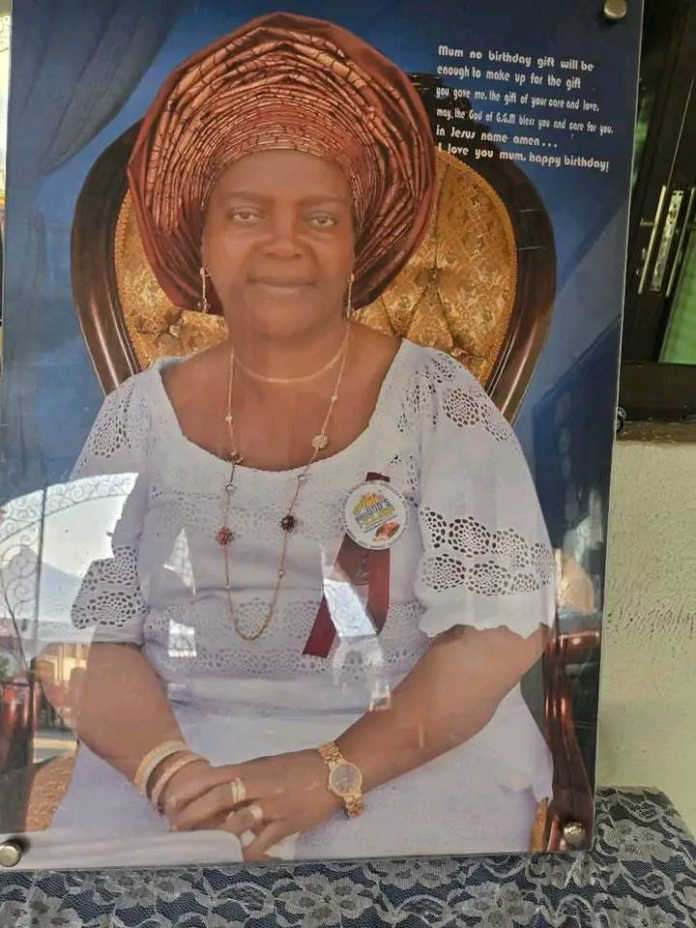
The mother of the late Sylvester Oromoni, Mrs. Rosemary Oromoni, has reportedly passed away on November 25, 2024.

Mrs. Oromoni’s death comes just three years after the tragic loss of her son, Sylvester Oromoni Jr., who died in November 2021 after allegedly being bullied at Dowen College in Lagos.

The sad news was confirmed by a series of posts and condolences shared by the family and their close associates.

Read Also: Those accused of Sylvester Oromoni Jr’s Murder have been exonerated.

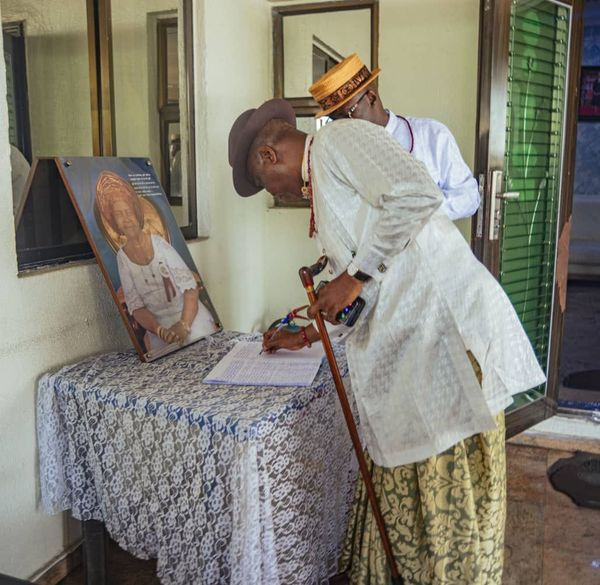
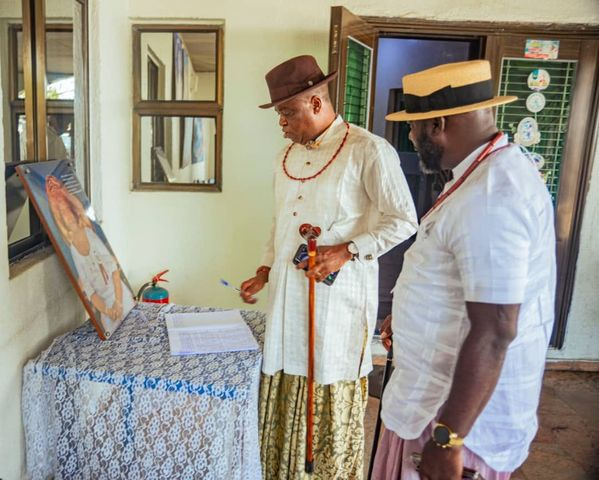
The Executive Chairman of Ughelli North Local Government Area, Jaro Egbo, visited Mr. Oromoni Snr., who is also a chairman of the Warri South West Local Government Council, on November 28 to offer condolences to the family.

In pictures from the condolence visit shared on Facebook by the Ughelli North Local Government Council, Egbo was said to have described Mrs. Oromoni’s sudden death as shocking and painful, stating that she passed away at the time when her presence will be needed most by the husband.

Read Also: Let Sylvester Oromoni not die in vain

The caption partly read, “Mrs. Oromoni’s passing has left a void in the lives of those who knew her.

“On behalf of my immediate family and the good people of Ughelli North Local Government Area, I expressed my heartfelt condolences to my dear brother, friend, and great colleague on the passing of his beloved wife, Mrs. Rosemary Oromoni.”

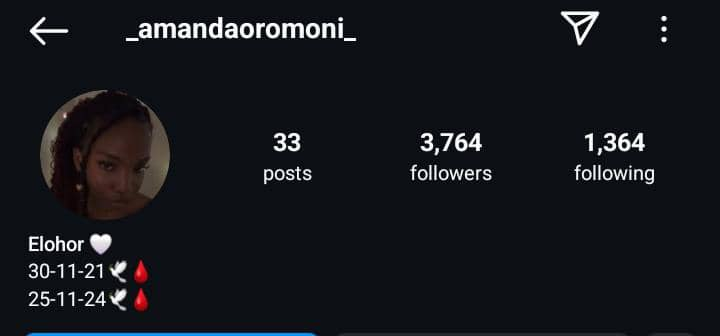
One of the late Sylvester’s sisters, Amanda, identified on Instagram as amandaoromoni, also marked the family’s loss with a symbolic post that appeared to reflect the family’s grief and the dates of the losses.

Read Also: Nigeria’s tearful education sector

On her Instagram profile, Amanda wrote, “30-11-21  25-11-24,” marking the anniversary of her brother, Sylvester’s death and the date of her mother’s passing, respectively.

Additionally, Blessing, another sister of the late Sylvester, identified as b_anuta247, also shared a post on her Instagram story on Tuesday containing a prayer for those who are grieving.

The post partly read, “Dear God, we pray for those who are grieving today; please wrap your loving arms around them and bring them comfort in their sorrow.

Nigerians on social media have also been expressing their condolences and sharing messages of sympathy for the loss of Mrs. Oromoni, with some reflecting on the journey the family has endured since the tragic death of Sylvester Oromoni Jr. in 2021.

Imoleishere wrote on X.com on Tuesday, “I think her son’s death played a part in her death. May her soul rest in peace.”

MARTINSJOSEPH1 wrote, “This is sad mehn, may God rest her soul.”

obisam20 also wrote on X.com, “Very sad. The love of a mother is so strong. She couldn’t get over the shock of the demise of her son. May her soul rest in peace.”

The Oromoni family has been at the centre of public attention since the tragic death of Sylvester Jr. in 2021, which ignited widespread outrage.

Photo Credit: Facebook| Ughelli North Local Government council, Instagram| b_anuta247, amandaoromoni

PUNCH

39-year-old female banker who allegedly stole ₦116m from customers’ accounts remanded at koyi prison

The Police at Lion Building have arrested Mrs Sadiku Ruth Olubunmi, a 39-year-old banker with Seedwest Limited on Balogun Street, Lagos Island, over allegations of stealing ₦116 million from customers’ accounts.

Olubunmi is accused of forging documents, including a letterhead of Towade Global Business Ventures, purportedly bearing the signature of Mrs Adelakun Funke, to fraudulently withdraw ₦15 million.

Police also alleged that she diverted ₦101 million received from various customers for deposits into her personal use.

The alleged fraud came to light after customers lodged complaints with the management of Seedwest Limited, prompting an internal review and a report to the police.

Following an investigation by Inspector Pius Ndegbe and his team, Olubunmi was arraigned before the Igbosere Magistrate’s Court sitting at the Tinubu Magistrate’s Court, Lagos Island.

She faces a four-count charge of obtaining money under false pretence, forgery, and stealing.

According to the prosecution led by Inspector Ejime Okete, the offences were committed between June and August 2024 during her tenure as a cashier responsible for receiving and depositing customers’ funds.

The charges contravene Sections 411, 365, 314, and 287 of the Lagos State Criminal Law, 2015.

Olubunmi pleaded not guilty to the charges.

Chief Magistrate B.A. Sonuga granted her bail in the sum of ₦2 million, with two sureties in like sum, and adjourned the case to 22 January 2024 for mention.

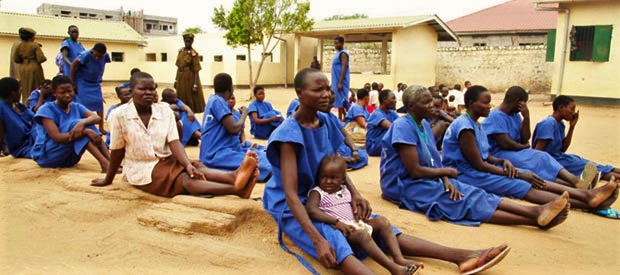
Until her bail conditions are met, she is to be held at the Ikoyi Correctional Facility.

Appeal Court to Anti-corruption agencies—Go after bigger fish, not yahoo boys

The Presiding Justice of the Court of Appeal, Sokoto Division, Hon. Justice Muhammad Lawal Shuaibu, on Monday, told anti-corruption agents in Nigeria to focus on larger figures involved in corrupt practices, rather than targeting “Yahoo boys.”

Justice Shuaibu made this call during the opening of the North West Zonal Attorney General’s Anti-Corruption Forum (AGAF), organized by the Independent Corrupt Practices and Other Related Offences Commission (ICPC), with support from the Rule of Law and Anti-Corruption (RoLAC), the International Institute for Democracy and Electoral Assistance (IDEA), and funding from the European Union (EU).

His Lordship emphasized that targeting high-profile individuals was crucial for achieving a stable society. “At the NJI, I criticized the EFCC Chairman, though we disagreed. Since 2007, when I stopped handling corruption trials, I can’t recall a significant case. Now the focus is on Yahoo boys. I implore all of you to target the bigger fish. Only then will we have a stable society,” he said.

Justice Shuaibu shared his frustration over the continuing presence of corrupt individuals in positions of power, citing an example of a serving governor who had previously been incarcerated under his watch. He expressed disbelief at how such individuals returned to power and urged stronger collaboration between state and federal agencies.

He also criticized judges who issue ex parte orders protecting individuals with immunity, preventing anti-corruption agents from carrying out their duties. He stated, “People with immunity can still be invited and investigated.”

Kano State Chief Judge, Justice Dije Aboki, echoed Shuaibu’s sentiments, urging anti-corruption agents to expose corruption at all levels, regardless of the status or influence of the individuals involved.

ICPC Chairman, Dr. Musa Aliyu SAN, assured that the commission was not afraid to pursue high-profile targets, but stressed that improving the justice system through technology would expedite the process.

Aliyu also called for the swift passage of the Whistleblower Act, which he believes would significantly aid in the fight against corruption by protecting whistleblowers and exposing corrupt actors.

On behalf of the European Union (EU) and RoLAC, Mr. Emmanuel Uche highlighted the importance of expanding collaboration with state Attorneys General to strengthen the anti-corruption efforts in Nigeria.

Vanguard

Lawyer who sexually exploited street children to spend eight years in jail

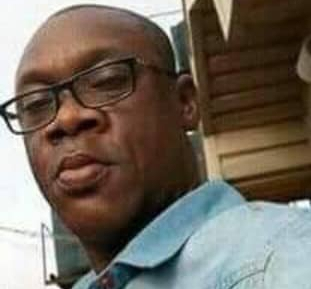
For statutory rape and the sexual exploitation of homeless children whom he paid for sex, Theo Hartzenberg, a South African Attorney-at-law will spend eight years in prison.

A Wynberg regional court in South Africa sentenced him on Monday, 2 December after he pleaded not guilty to over 20 charges.

The court heard testimony from a 21-year-old homeless male victim, who knew Hartzenberg as a lawyer living in a block of flats in Muizenberg, Cape Town. The victim revealed that he and other boys were exploited by Hartzenberg, who paid them for sex.

National Prosecuting Authority (NPA) spokesperson Eric Ntabazalila provided details of the case, explaining that the victim and his friend observed Hartzenberg leaving his flat, heading to the beach, and engaging in sexual acts with other boys behind a wall. The victim was paid R100 for acting as a lookout during the incident.

The following day, the victim, his friend, and another boy were paid R100 each after engaging in sex with Hartzenberg. This exploitation occurred repeatedly, with the victim using the money to buy food and drugs.

The trial also included testimony from a 16-year-old boy, who confirmed the accounts of the previous victims. He described how he initially struggled to engage in sex with Hartzenberg but was still paid. On subsequent occasions, he and other boys engaged in sexual acts with Hartzenberg in exchange for R100.

Hartzenberg attempted to have the charges dropped, but the state opposed his request, arguing that Hartzenberg deliberately exploited vulnerable homeless children. In closing arguments, prosecutor Jacqueline Hefele emphasized that the victims were not contradicting themselves during their testimony and that Hartzenberg was fully aware of their vulnerable circumstances.

Prosecutor Jacqueline Hefele said in closing arguments that Hartzenberg knew the victims were vulnerable street children who were easy to exploit. She emphasised they did not contradict themselves while testifying.

“The accused knew the victims as he admitted to giving them money and food and the witnesses had no reason to fabricate evidence against their benefactor. The court found the evidence against the accused overwhelming.  The court accepted the accused solicited the services of the complainants to provide him with sexual services in return for monetary payments. It found the state proved its case against the accused,” said Ntabazalila.  

Hartzenberg was sentenced to eight years’ direct imprisonment for statutory rape with three years suspended for five years on condition he is not convicted on a similar charge during the period of suspension.  The court also sentenced him to eight years’ direct imprisonment for sexual exploitation of a child and three months’ direct imprisonment for engaging in sexual services with a person older than 18 years, suspended for five years on condition he is not convicted for committing a similar offence during the period of suspension.  

He was declared unfit to possess a firearm. His name will be added to the National Child Protection Register and National Register for Sex Offenders.

Waterways: A plea against suicide

By Suyi Ayodele

December 15, 1970, was a terrible day in South Korea. The Asian country lost 362 of its citizens to a boat mishap. The South Korean ferryboat known as Namyoung, sailed out of Busan River, in Seogwipo-si, on December 12, 1970. It had on board, 338 passengers and crew members, heading towards Seongsampo Port on Jeju Island. The boat, according to the report, sank about 28 nautical miles (approximately 45 kilometres) away from Yeosu and Jeollanam.

The sinking of the ferryboat was blamed on overloading. It was said to have 150 crates of tangerines on one side, which made it tilted. The entire cargo capacity of Namyoung was 150 tons. But as at the time it sank, it had 500 tons! The ancient wisdom states: “Greed fills the boat, but the sea claims the excess.” That was the fate Namyoung suffered. The sea ate up 326 of its passengers and the cargo therein because, as the elders are wont to say: “A boat that carries too much sinks under its own weight!”

The death that will kill a farmer, our elders say, lives right at the tips of the yam heaps. Every profession has its hazards. Life on the river, they say, is the easiest. There are many Nigerians today, especially our brothers and sisters along the coastlines, who depend on the river. The river is their life. I watched some lads in the river at Gbelebu, an Izon community in Edo State, about three weeks ago. Daring children! They were even playing games inside the river and were happy about it.

I equally noticed the various wooden boats by the bank of the river. Across the river, my friend pointed to Ijaw Arogbo in Ondo State. The community people, he announced, travelled about in those boats. A close look at the wood called boats, fitted with something that looked like grinding machines, were metal patches used in sealing the holes in the boats. Yet people use them as means of transportation, forgetting the injunction that “trusting an old boat is gambling with unseen leaks.”

My appreciation of those ‘boats’ I saw by the Gbelebu River rose after the news filtered in on Friday, November 29, 2024, about another boat mishap in Kogi State end of the Niger River. Yes, the boats I saw at Gbelebu are smaller ones. But no one can tell how many passengers they carry. What are their passenger capacities in the first instance? Who assesses their waterworthiness? There was no presence of any official of the National Inland Waterways Authority (NIWA), in that locality. The people are their safety officers; they are the regulators and authority. God forbid any mishap in that axis!

In the last three months, over 150 Nigerians have been lost to boat accidents. On September 16, 2024, over 40 passengers of an ill-fated boat died in Gummi Local Government area of Zamfara State. The seafarers were sailing on the Bakin Kasuwa River in Uban Dakawaki town when their boat capsized. Till date, no one knows the size of the boat, its capacity and any safety measure(s) put in place by the operators. All we know is that over 40 bodies were recovered. How many are truly missing?

Barely a month later, on October 4, 2024, another accident happened on the Gbajiibo River in Mokwa Local Government Area of Niger State. A boat, loaded with 300 passengers, capsized. By the first rescue operation, 70 bodies were recovered, with 150 others rescued alive. It was gathered that because the accident happened at night, rescue operations became hampered. The fate of the remaining 80 passengers is yet to be ascertained! Officials of the NIWA and the National Emergency Agency (NEMA), were said to be “searching for the remaining missing passengers.”

One interesting thing about the Mokwa boat tragedy is that the accident happened at about 8.30 p.m., a time such a wooden boat without any navigational equipment, should not be sailing! That is in tandem with the saying of the old men of Greece that “A boat without light courts the shadows of the deep.” The water transportation code set out for operators of such boats stipulate that no such boat should be in the waters at night. The question is, who authorised that movement? Where were the water marshals and those in charge of safety on the waters?

Lagos Area Manager of NIWA, Mrs. Sarat Braimah, while commenting on the incident, said the four water marshals deployed to the Gbajiibo River where the incident occurred had already closed from duty for the day and left. NIWA, under the present management, has done a lot to bring sanity to water travel in Nigeria. But I suggest a 24-hour deployment of marshals. People disobey laws, including transportation codes put in place for their own safety. They misbehave big time under the cover of darkness and commit suicide. That is why water marshals should be on duty day and night.

Nigerians don’t learn from histories, no matter how sordid they are. While the nation was still smarting from the Mokwa incident, another boat mishap took place in Kogi State on Friday, November 29, 2024. The capsized boat was said to be carrying marketers from Eve in Kogi State to Katcha Market in Niger State. Over 22 dead bodies were recovered after the initial rescue operation, and many more still missing!

There are common denominators with all the boat mishaps recorded above and many others not mentioned here. The boats are all wooden, old, rickety and overloaded. Again, the operators flagrantly disobeyed navigational codes! But, most saddening is the culpability of the passengers, dead or alive, who boarded the boats with the ancient mentality of soole, the cheap means of transportation whereby passengers circumvent the laws.

Yes, life gives cheaper alternatives! But, most often than not, the cheaper alternative also comes with its own risks! How are we sure that the over 300 passengers cramped in a rickety wooden boat on the river were not victims of soole mentality! Why on earth would anyone subscribe to the idea of being parked like sardine in a boat? What level of poverty would make people take unnecessary risks? Why would anyone be in a boat without any navigational equipment at night? More importantly, why would anyone venture near the water without a life jacket?

Braimah, the Lagos NIWA boss, said that night sailing by rickety wooden boats with overloaded passengers is a major problem of the body. It is a problem that NIWA should confront frontally. NIWA should step up its game and ensure that the ban on night sailing is enforced with grave consequences for offenders.

Enough of countless deaths on our waters! There are senators, members of House of Representatives and legislators from the various states, Houses of Assembly, who have those riverine areas as their constituencies. It is not just enough to answer “Distinguished” as an appellation when the bearer cannot do anything distinguishable. There is nothing “Honourable” if the one who carries the prefix is not honourable enough to attend to the basic needs of his or her constituents.

We have had “Constituency Project” budgets running into billions of Naira, approved for lawmakers at all levels. Can we appeal to them to stop providing only grinding machines, wheelbarrows and shoe-repairing kits?

How much does it cost to purchase modern boats built with local fibre and equipped with navigational equipment? Is it not cheaper, more honourable and humane to keep these locals alive with good boats than to organise mass burial for them? We need to beg our politicians to learn how to set their priorities right.

Every community has peculiar needs. The peculiar need of a fishing community and water dwellers is good means of transportation. The people who live and get their sustenance from the waters probably don’t need Okadas (motorcycles). Good boats and other safety kits would be of more delight to them. The “Distinguished” and the “Honourables” have enough constituency project funds to take care of that. Happily, it is not something they will be doing frequently!

It is a pity, and most unfortunate, that thousands of lives have been lost to boat mishaps as we have in road accidents. NIWA and other agencies can put all the measures in place to ensure safety on the waters. They can also run as many jingles and safety awareness campaigns as they can. But the responsibility to live is that of the people.

It is suicidal for anyone to board a rickety boat and be cramped with hundreds of others in the manners we had in those mishaps. It amounts to sheer personal irresponsibility for anyone to be on a boat without a safety vest! “A life jacket”, the saying goes, “doesn’t judge the depth of the water.” This underscores the importance of safety.

It is equally unthinkable that anyone would agree to be shipped in a boat at night without any navigational equipment! Dangers loom at night hence the seamen of old state that “the sea at night hides its teeth; only the cautious will see the dawn.”

Some of the boats that capsized were said to have taken to the creek routes to dodge the water marshals, and in the process, collided with trees and other objects. It will be difficult to blame the government and its agencies for that!

We need that reorientation to get to know that in the search for cheap alternatives, Nigerians must place their personal safety concerns as priority. We need to collectively stop the death on old wooden boats because “an old boat may remember the sea, but its cracks betray the journey.”

Nigerians must consciously put an end to the killing soole mentality. Agreed that the government has failed in its responsibilities towards the citizenry, however, it is unfathomable that anyone would embark on a night journey on the sea in a bad boat without safety codes and measures! This is what my people call: ó kù sí owó olè, ó kù sí owó olóko (both the thief and the farmer are guilty).

Nations learn from past mistakes South Korea, again, recorded yet another boat accident on April 16, 2014. In the accident involving a ferryboat MV Sewol, 304 passengers out of the 476 onboard the boat perished. Of the figures, 250 were said to be students of the Danwon High School in Ansan. This accident led to the enactment of the Serious Accident Punishment Act (SAPA), which imposes accountability on the safety culture of corporate bodies, operators of water transportation inclusive.

Though SAPA, generally, is not all about maritime safety, its principles, letters and application of the safety accountability spelt out hold company executives accountable for any mishap that occurs at the workplace due to negligence.

By the Act, if workers aboard a ship are injured due to negligence in safety protocols and procedures, the act could be invoked and the erring companies punished. This Act and its application would do us well in Nigeria, where everyone feels that he can get away with anything.

But above all, everybody should be encouraged to obey the laws. And the lawmakers themselves must be ready to enforce them. If the laws on safety on our waterways are not adequate, the idle lawmakers in Abuja should be asked to make more laws like the South Korea’s SAPA

May Nigeria never experience untimely and avoidable deaths as we have had in the scenarios above. May God grant the souls of the departed rest


Woman narrates how neighbour died after her husband refused to take her to hospital, insisting on home birth

“She was in labour for one week” recounts a Nigerian woman who said how a neighbour died after her husband refused to take her to the hospital, insisting on home birth

She was in labor for one week - Nigerian woman narrates how a neighbour died after her husband refused to take her to hospital, insisting on home birth

A Nigerian woman, Jane Arike Francis has narrated how her neighbour and her baby died after a prolonged labour.

According to Jane, the woman had been in labour for one week but her husband insisted on her giving birth at home despite the midwife’s advice to take her to the hospital for a C-section. 

“I just lost a neighbor this afternoon, and I feel really traumatized about it because this was such an avoidable death,” she wrote in a Facebook post on Sunday, December 1.

“This woman had been in labor for a week. She gave birth to her first and second children at home, but for this one, the midwife said she needed to be operated on, seeing that she couldn’t deliver on her own. 

However, her husband refused and said, “This isn’t her first time giving birth on her own.” So, he left her at home.

“On Wednesday, when she couldn’t bear the pain any longer, they finally took her to the hospital for the C-section, which was successful, but unfortunately, the child was already dead. Today, she passed away too.” 

She was in labor for one week - Nigerian woman narrates how a neighbour died after her husband refused to take her to hospital, insisting on home birth

Linda Ikeji

FRN V Akaeze: Criminal investigation simplified (2)

By Ebun-Olu Adegboruwa, SAN

The main responsibility of the court is to interprete the law and provide enforceable guides for the implementation of laws and policies of government. This is why section 287 has been inserted in the 1999 Constitution of the Federal Republic of Nigeria for all persons exercising executive, legislative and judicial authority to obey and enforce all decisions of courts established by law. The stage is thus set for the enforcement of the statutory prescriptions contained in the Administration of Criminal Justice Act by all the law enforcement agencies. The Inspector-General of Police under the Constitution and the Nigeria Police Establishment Act has statutory authority over general command and operations of the police force in Nigeria.

The decision of the Supreme Court in FRN v Akaeze and a host of other cases which have offered binding judicial pronouncements on the mode of obtaining the statements of suspects should constitute working instruments to guide all officers involved in criminal investigation. This is because the police is the law enforcement agency that is closer to the people presently given that there is at least one police division or station in every local government area in Nigeria. Working with the legal department of the police, a new set of guidelines should be developed and codified for distribution in all divisions of the police regarding this matter.

In addition, regular training sessions by seasoned criminal law experts should be organized for all police officers involved in criminal investigation in order to bring them up to date with this crucial development. No excuse should be proffered by the police and none will be accepted by the people after these authoritative declarations from the final court. The purpose of enacting ACJA is to depart from the archaic and mundane procedures of criminal investigation where brute force and torture have been the order of the day in most police formations. This much was stated by the Supreme Court at page 21 paragraphs E-G of the judgment.

Read Also: 16 Days of Activism Against GBV 2024: Anambra First Lady intervenes in case nursing mother gruesomely assaulted by husband

“The fundamental purpose necessitating the enactment of the Administration of Criminal Justice Act, 2015 is unequivocally provided in section 1 of the Act. The section states that the purpose of the Act is to ensure the system of administration of criminal justice in Nigeria promotes efficient management of criminal institutions; speedy disposing of justice; protection of the society from crime and protection of rights and interests of the suspect, the defendant, and the victim; and that the courts, law enforcement agencies, and other authorities or persons involved in criminal justice administration shall ensure compliance with the provisions of the Act for the realization of its purposes.”

The Houses of Assembly of the States in Nigeria have either adopted ACJA or enacted statutes with similar provisions for the administration of criminal justice. As critical stakeholders in the chain in criminal justice administration, the police and all other law enforcement agencies should collaborate together to develop a uniform procedure of compliance with the decision in FRN v. Akaeze. Section 2 (1) of the Administration of Criminal Justice Act, 2015 states that the provisions of the Act shall apply to criminal trials for offences established by an Act of the National Assembly and other offences punishable in the Federal Capital Territory, Abuja.

So long as security and other matters related to it are retained in the Exclusive Legislative List of the Constitution, most law enforcement agencies will continue to wear the federal outlook, the consequence of which is that criminal investigation will most likely be governed by ACJA, which contains statutory provisions governing arrest, investigation and criminal prosecution of suspects, especially Section 3(3) thereof that: ‘a suspect or defendant alleged or charged with committing an offence established by an Act of the National Assembly shall be arrested, investigated, inquired into, tried or dealt with according to the provisions of the Act, except otherwise provided under the Act.’

Lawyers also have a critical role to play in effective criminal law administration. Sections 15(4) and 17(2) of ACJA place a great burden on lawyers who go to police formations to represent suspects. The reason why the law has imposed an obligation for their physical presence during the process of obtaining the statement of the suspect is to protect the suspect from threats and abuse and also to assist the police in verifying the voluntariness of the statement. In this regard, the Nigerian Bar Association should produce a document containing guidelines outlining the duty of lawyers attending statement recording sessions. Such document should contain matters of introduction as to the name of counsel, his office, his seal and his relationship with the suspect. Counsel should write a letter of confirmation to the police wherein his details are provided as his contact point.

As soon as the suspect is arrested, his lawyer should be informed immediately. The document should also specify the role of counsel during the session to avoid undue interference by way of dictating to the suspect or taking over the process of recording his statement. He is to take notes during the session and raise objections where the police seem to suggest answers to the suspect for adoption or lead the suspect in any other way. Counsel should be allowed to have a private meeting with the suspect at least thirty minutes before the recording session commences. In that meeting, counsel will ascertain the state of health of the suspect, his physical and mental ability and the general condition of the place of detention.

In addition, counsel will confirm if the suspect has been tortured or threatened by the police in any form. This is to establish the voluntariness of the statement of the suspect. The lawyer is not to attend the statement recording session as a robot procured for the sole purpose of endorsing the said statement. While not interfering in the process of recording the statement, he must also ensure that the real purpose of demanding his presence is achieved. It is in the interest of the police and other law enforcement agencies to work with the NBA to achieve this objective, as stated by the Supreme Court on page 31 paragraphs G-H of the judgment in FRN v Akaeze that the prosecution bears the burden of proving the voluntariness of the statement of the accused

“The legal and primary burden on the prosecution to prove the guilt of the accused person beyond reasonable doubt includes the proof that a confession by the accused person while under arrest and in the custody of the prosecution was made freely and voluntarily. Therefore, if there is any reasonable doubt that the confession was voluntary, then the prosecution has failed to prove that it is voluntary.”

Read Also: Changing Nigeria’s Reality

The video of the recording session should be part of the proof of evidence front-loaded with the information to be filed in court. It should be served on the defendant so that he can share it with his counsel ahead of his trial. What ACJA has done is to save the suspect, the police, the court and indeed society at large, of the wastages associated with previous experiences of trial within trial, whereby the main criminal trial is jettisoned on account of the tardiness of the investigative process. Cases of non-compliance should thus be visited with appropriate sanctions by the police authorities and the NBA.

To my mind, one of the reasons for this elaborate process is to assist the criminal law administration in order to ascertain the involvement of the suspect in the offence. The usual complaint of suspects is that of threat, abuse and torture by the police and this goes to the root of criminal trials as it will be improper to proceed against an innocent soul who has no hand in the commission of the crime, but where the involvement of the suspect has been established prima facie, he should not be allowed to use the lapses of the police to escape justice. The police and the NBA should therefore hold sessions together to share and compare notes with regard to the code of conduct for police officers and lawyers involved in the statement recording sessions of suspects. This will eliminate confusion and avoid inconsistencies in the implementation process. This has become so vital to criminal law administration that it should not be left to the nuances of individual police officers and lawyers.

Read Also: FRN V Akaeze: Criminal investigation simplified (1)

The Supreme Court has also placed a heavy burden on judges overseeing criminal trials in relation to confessional statements. Since the lawyer of the defendant was with him at the statement recording session, there is nothing wrong if counsel is invited by the court to give evidence of what happened at the session in cases where the defendant is trying to play smart by deliberately denying his own voluntary confession. The law is for the protection of the suspect, not for him to deploy to take advantage of the prosecution. Once the police and the NBA have been able to agree on the code of conduct for statement recording sessions, it should be shared with the court to serve as a guide in the determination of the voluntariness of the statement of the defendant, especially in serious cases. This will work to simplify the trial in compliance with the decision of the Supreme Court.

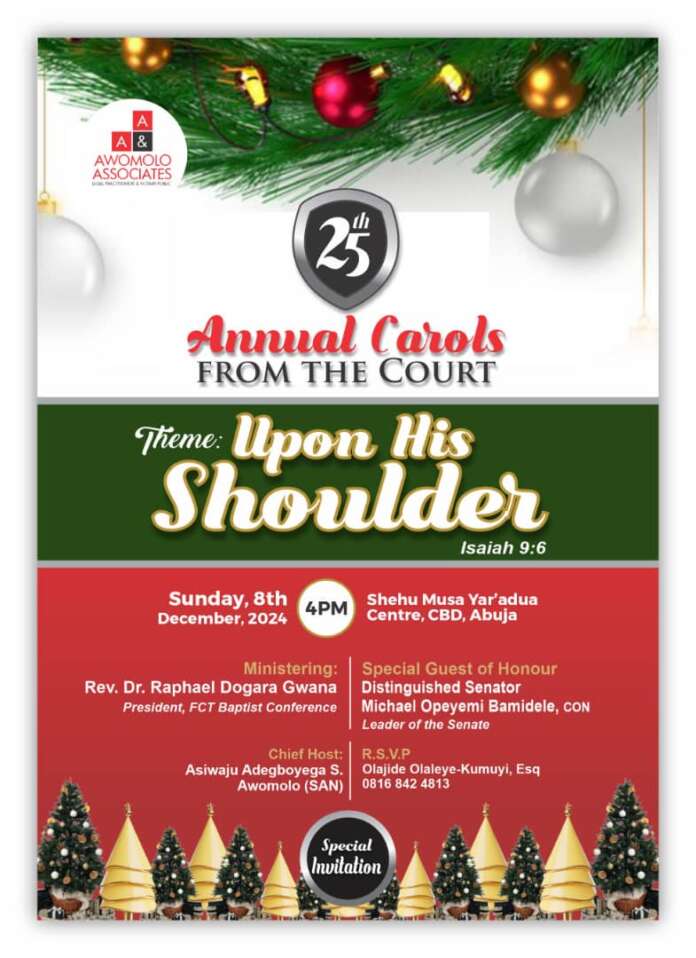
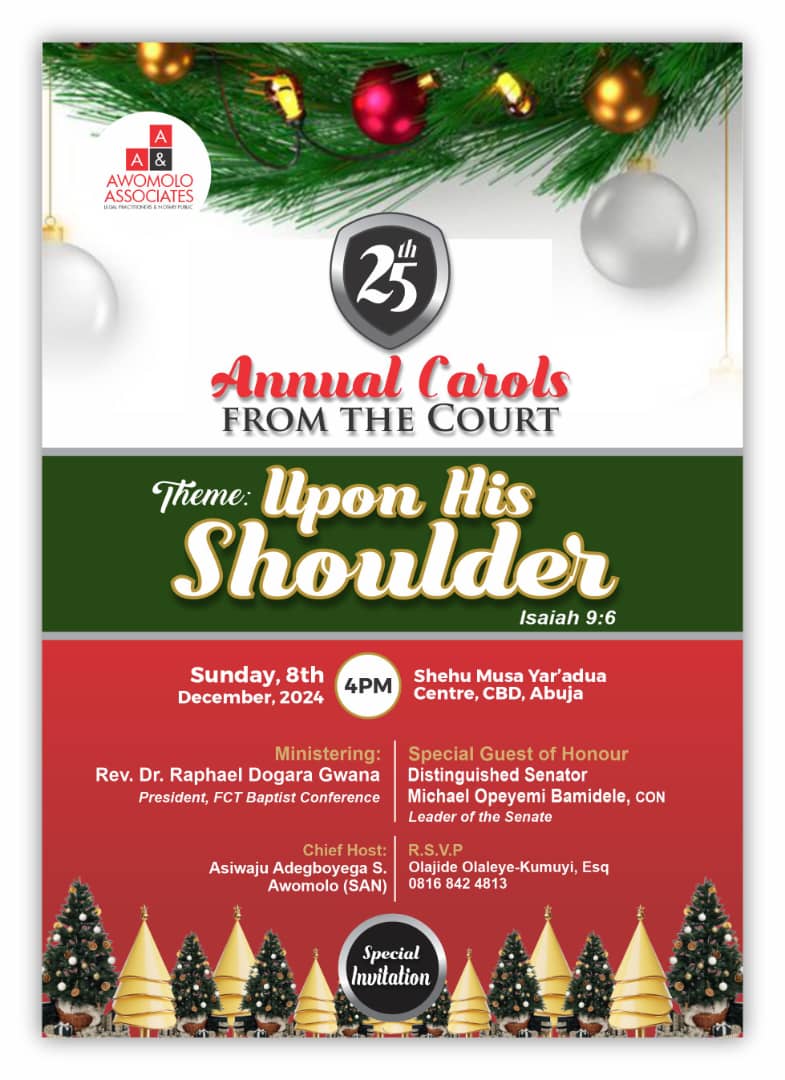
Senator Opeyemi Bamidele, others to grace A. A. Awomolo and Associates’ annual Carols From The Court

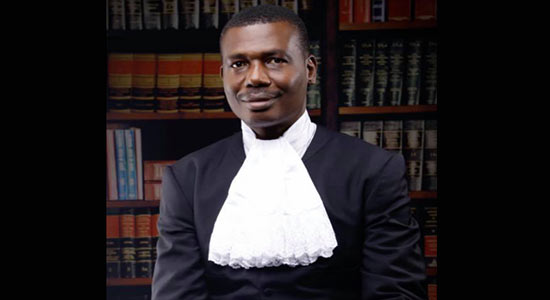
The Senator Representing Ekiti Central Senatorial District and Senate Leader, Senator Michael Opeyemi Bamidele is the Special Guest of Honour for the forthcoming annual Carols From The Court hosted by Adegboyega Awomolo and Associates.

Like the previous years, other distinguished personalities are expected to be in attendance.

The Carol with the theme: Upon His Shoulder will take place on Sunday 8th December 2024 at She Musa Yar’Adua Centre in Abuja. It is the 25th edition of the event.

TIPS