Home Blog Page 490

The Revival of Acha

By Kirsten Okenwa

I conversed with a friend in the USA for a short course and she shared how delighted she was to have celebrated her first Thanksgiving in the country. She was enthused over the holidays and recounted her food experience at the family dinner she was invited to join. She had visited a Kenyan family and they had the traditional American Thanksgiving cuisine of turkey and all the trimmings, but there were also tureens of delicious native Kenyan foods.

Surprisingly, they also served “Acha”, Fonio in English, which is a traditional food crop in many parts of northern Nigeria and some other West African countries like Burkina Faso, Guinea and Togo. My friend is from Plateau state, Nigeria and she was happy to find her local meal of Acha potage served and enjoyed by her Kenyan hosts. They told her that Fonio was the new super-food and many people in the USA and Caribbean had been introduced to this grain, a smaller kind of millet, imported from West Africa. Food lovers and chefs are preparing Acha (Fonio) with Mexican flavours and Caribbean spices. Others view Acha as medicine and eat it in different ways to prevent health problems like obesity, diabetes, hypertension and high cholesterol.

I concurred with my friend because I have witnessed Acha’s recent revival across Nigeria and beyond. More and more consumers are enjoying the tastiness and dietary qualities of Acha. Rich in fibre, high in protein, minerals, amino acids, and many other nutrients, Acha is also gluten-free. This nutrient-packed ancient grain is low in calories, making it the favourite for fitness enthusiasts. It has become a trendy go-to meal, especially in the ever-increasing wave of health consciousness in Nigeria and around the world. I have read and watched countless testimonials of people who have benefitted from regular consumption of Acha.

Divers Acha recipes are returning to the dining table, as they are considered best for our bodies. Many people desire to eat clean and live naturally. And for some, eating organic foods like Acha is now fashionable.  

Growing up in Kano state, I remember my mother cooking Acha on several occasions. In my young mind, though we enjoyed the meals, I viewed eating Acha as a sign we were low on rice or macaroni. Even at boarding school, we enjoyed Acha with our northern friends, brought to them from home during visiting days; but we never really understood the health benefits. It was just another “Hausa” food to eat. Today, the health and agriculture benefits of Acha are spreading and no surprise that the cost of Acha has suddenly skyrocketed in our Nigerian markets. Formerly known as “Hungry-Man Rice” because it was viewed as a poor man’s rice substitute, Acha is now widely consumed by both the rich and poor.

Acha (Fonio) grown for over 5000 years by West African farmers, is a cereal crop prized for its resilience and minimal water requirements. It has emerged as an important food source in discussions about regenerative and sustainable agriculture, particularly in regions facing water scarcity. Acha is valued for its ability to grow in areas of drought and high temperatures. It is among the world’s fastest-maturing cereals (60-70 days). A very hardy crop, it grows well on poor soils, and can even produce seed on soils that are toxic to other crops. Fonio can grow without fertilizer, pesticide, fungicide and constant irrigation. It is sometimes regarded as the “grain of life” as it provides food early in the farming season when other crops are yet to mature for harvest.

Though Acha is widely cultivated today, very little is known about the grain’s evolution, origin and genetic characteristics, unlike other millets. The Food and Agriculture Organization of the United Nations (FAO) has organized several initiatives to highlight the various health, environmental, social and economic benefits of Acha (Fonio), the rich heritage and vast potential of the grain. Using local African chefs, social media influencers, youth and women organizations, the FAO and partners are creating more awareness of this Indigenous crop.

It is pleasing to see the myriad ways Acha is being revived in the food and beverage sector. I watched an American brewer Garrett Oliver, the brewmaster of Brooklyn Brewery, speak highly of his Fonio beer. Garrett’s exploration with fonio in beer making was inspired by Senegalese chef Pierre Thiam. After seeing a TED talk by Thian, Oliver saw the potential to use fonio in a brewing context, to support African communities and farmers. The new fonio beer is doing well in the market and Garrett hopes that by introducing brewers around the world to this brewing ingredient, there will be a wider use of this sustainable grain in beer.

Other entrepreneurs are giving big names to their Acha products. In Jos, Plateau state, a young lady rebranded the humble, native kunun acha, a local nourishing drink made from Acha. She calls her product Acha Latte, and her market is large! Another entrepreneur on social media vends a local cookie that has been a staple munching snack made with Acha but is now sold as a ‘fat-free’, ‘healthy’ and ‘oil-free’ snack called Fonio Crispies.

Whatever the new name of this resilient, nutritious indigenous crop, we are pleased to witness and enjoy the revival of Acha.

Kirsten Okenwa is a writer and Industrial Chemist. She has over 20 years of work in the nonprofit sector. Kirsten is fervent about food systems and agriculture.

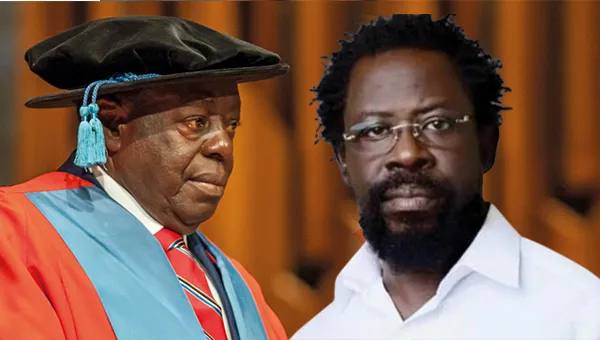
Afe Babalola’s petition that led to Dele Farotimi’s arrest, prosecution

By Premium Times

Nigeria and social media have been abuzz following three revered Aare Afe Babalola’s petition to the police alleging that a lawyer, Dele Farotimi, criminally defamed him.

Below is the full text of the petition that legal luminary, Afe Babalola, submitted to the police alleging that lawyer and activist, Dele Farotimi, criminally defamed him.

Following the complaint, the Ekiti State Police Command tracked Dele Farotimi to Lagos, arrested him and whisked him to Ekiti, the state capital.

On Wednesday, 5 December, the police arraigned Mr Farotimi before a magistrate court, which granted an order remanding him in prison custody till 10 December.

Read Afe Babalola’s full petition below.
———————————————-

9th November, 2024.

The Commissioner of Police,

Ado-Ekiti,

Ekiti State.

Dear Sir,

CRIMINAL DEFAMATION OF AARE AFE BABALOLA, AFE BABALOLA & CO AND HER LAWYERS BY DELE FAROTIMI

I write to report the criminal defamation of myself, my law firm Afe Babalola & Co and my lawyers in person of Olu Daramola SAN and Ola Faro by one Dele Farotimi in his book titled ‘NIGERIA AND ITS CRIMINAL JUSTICE SYSTEM’ published by Dele Farotimi publishers in respect of Suit no: SC/146/2005: Major Muritala Gbadamosi Eletu & Ors V. H.R.H Oba Tijani Akinloye & Ors.

SUIT NO: SC/146/2005:

MAJOR MURITALA GBADAMOSI ELETU & ORS V. H.R.H OBA TIJANI AKINLOYE & ORS (2013) 15 NWLR PART 1378

We were solicitors to the Gbadamosi Eletu family in the case of Major Muritala Gbadamosi Eletu & Ors V. H.R.H Oba Tijani Akinloye & Ors.

The Appellants lost the case at the High Court and the Court of Appeal before briefing my law firm to represent them at the Supreme Court.

The Appellant in this suit were Defendants at the High Court. The subject matter of the suit was 254 hectares of land at Osapa Eti-Osa Local Government Lagos sold to the late Gbadamosi Bamidele Eletu in 1977 by the Ojomu family. The said parcel of land was later acquired by Lagos State Government after it was sold to the Gbadamosi Bamidele Eletu by the Ojomu family.

The Ojomu family contested the acquisition against Lagos State Government in Suit No: ID/1883/89 wherein the court set aside the acquisition by the Lagos State Government. The Ojomu family then instituted the suit at the High Court of Lagos State claiming that title to the land had reverted to the Ojomu family despite the earlier sale of the land to late Gbadamosi Bamidele Eletu.

We represented the Eletu family and Judgement was delivered by the Supreme Court on 13/7/2013 in favour of the Eletu family wherein the Supreme Court held that:

“Where a party has fully divested himself of all interest in land, no right vests in him to deal with the same property by way of further alienation anymore. He is caught by the maxim, nemo dat quod non habet; that is, he cannot give that which he no longer has. In the instant case, it was unfortunate that the respondents claimed title to the whole of their family land compulsorily acquired by the Lagos State Government including the portion earlier sold to the father of the appellants and in which they were in effective possession. The claim so made without disclosing the truth and excluding the said portion so sold was clearly made in bad faith and smacked of insincerity. It was very unconscionable and consequently against the principles of equity and good conscience”.

The Supreme Court also held that:

“A court of law should not allow itself to be used as an engine for the perpetration of fraud, in whatever guise”.

A copy of the judgment is hereby attached as annexure 1.

VARIATION OF JUDGEMENT

Honourable Justice Kumai Bayang AKA’ AHS JSC wrote the lead judgement. His Lordship erroneously limited the land of the Appellants to 10 hectares (24.17 acres) in respect to Suit no: M/779/93 whose subject matter was part of the 254 hectares owned by the Eletu family.

We immediately filed a motion for variation of the judgement of the Supreme Court pursuant to Order 8 Rule 16 of the Rules of Court. The said motion was heard and ruling delivered on 18/3/2014 granting statutory right of occupancy to the Appellants in respect to the entire 254 hectares sold to late Gbadamosi Bamidele Eletu by the Respondents.

A copy of the ruling is hereby attached as annexure 2.

ENFORCEMENT

Upon the delivery of the Judgement, our client surreptitiously employed the services of S.B Joseph & Co to enforce the judgement before we applied for variation of the judgement with the intention of not paying our professional fees.

The judgement was however varied on 18/3/2014 as earlier stated.

NEW SUIT BY ESTATES/PERSONS AFFECTED BY THE JUDGEMENT

Several residential estates were affected by the judgement of the Supreme Court among which were Pinnock Estate, Beach Resort, NICON Estate, Friends’ Colony Estate and Victory Park Estate etc. Dele Farotimi was lawyer to one of the Estates.

The affected estates and individuals immediately filed fresh suits against the Eletu family with the purpose of frustrating the judgement of the Supreme Court.

The Eletu family were lured by the affected estates to settle some of the suits behind our law firm despite being counsel on record by filing terms of settlement with the aim of denying us our professional fees. This was admitted by Dele Farotimi in page 73 of his book ‘NIGERIA AND ITS CRIMINAL JUSTICE SYSTEM’.

INTERVENTION BY LAGOS STATE GOVERNMENT

The Lagos State Government issued a publication indicating their awareness of the Supreme Court judgement and the need for the State to intervene in order to maintain public peace and order. The Lagos State Government invited us for several meetings with respect to compromising the judgement of the Supreme Court.

The said judgement was eventually compromised and the Eletu family were compensated by the Lagos State Government so as to avoid a massive dislocation of persons and communities directly affected by the Judgement.

DEFAMATION BY DELE FAROTIMI

Sometime on 2/11/2024, one of our lawyers while travelling through Murtala Muhammed Airport bought a book by Dele Farotimi titled ‘NIGERIA AND ITS CRIMINAL JUSTICE SYSTEM’ published by Dele Farotimi publishers. He read the said book and immediately brought it to my attention. Many of my lawyers also bought the said book and read same.

We received several calls from professional colleagues, friends and family members who watched a program on Channel’s TV wherein Dele Farotimi was interviewed with respect to the said book where he made several defamatory statements against myself, my law firm Afe Babalola & Co (Emmanuel Chambers), Olu Daramola SAN and Ola Faro Esq.

We also received several calls from persons who saw excerpts of the book and interview on several social media platforms.

The said defamatory statements are detailed below:

  1. “That Aare Afe Babalola corrupted the Supreme Court to procure a fraudulent judgement in the service of his client” See page IX.
  2. “That Aare Afe Babalola, Olu Daramola, Olu Faro and the law offices of Afe Babalola & Co, (Emmanuel Chambers) compromised the Supreme Court and the remaining semblance of integrity it might have had when they went back to the Supreme Court and got the Court to swim in the sewer of corruption and shameful self-Abnegation”. See page X
  3. “That Afe Babalola libeled me and the fact of the libel became known to me in a suit against Lawal Pedro SAN”. See page X.
  4. “That I sued Afe Babalola SAN for libel and he leveraged his influence in the Judiciary to deny me justice”. See page X.
  5. “That I have always been familiar with the fact of our perversion as a People and I have few illusions about equity and justice reigning in Nigeria but I had always assumed that there were lines that should never be crossed. I have however been slapped awake by the brazenness of the judicial brigandage unleashed on hapless citizens, corporate, and individuals by the Nigerian Supreme Court, acting under the direction of Aare Afe Babalola. At least five Justices of the Apex Court have been identified as guilty of odious corruption and or gross incompetence. Either is sufficient to have them removed from their office and this is my petition to the Nigerian people and most definitely to the NJC”. See pages 10 to 11.
  6. “The first we knew of the magic been put together by Afe and his elves must have been around the middle of July”. See page 49
  7. “While all this was going on, we had a meeting in the law office of Afe Babalola in Magodo, where Olu Daramola SAN made himself unavailable, and had us meet with Olu Faro, a younger counsel……..but Olu Faro Esq was remarkably insolent and assured that we were made aware of just how powerful the law office he worked for believed itself to be and how much above the law and the practice of law they believed themselves to be”. See page 52
  8. “The judgement of the court was unanimous in giving judgement to the Eletus………But Justice Rhodes-Vivour laid a foundation for the fraud that was to come. He spoke of an unextinguished equitable interest in 254 hectares”. See page 52 to 53.
  9. “ We quickly realized that the law office of Afe Babalola & Co, Emmanuel Chambers had outsourced the judgement execution to another law office, the firm of S.B Joseph & Co the firm had fraudulently and deliberately concealed the judgement of AKA’AHS and had underlined the words of Justice Rhodes Vivour to deceive and perhaps mislead Atilade or as is more likely, Atilade was always a part of the original fraud”. See page 56.
  10. “But even as Atilade J. played the contrition game, she was already part of the game plan being staged together by the grandmaster of judicial corruption in Nigeria, Afe Babalola. I have come to the conclusion that the required form of the application and her ruling were all part of the insidious plans of Afe Babalola, his band of crooked lawyers and coterie of crooked/incompetent justices of the Supreme Court”. See page 59.
  11. “The battle to quash the warrant opened my eyes to the extent of the rot in the court system and I came to the knowledge of the sickening realities of the systemic putrefaction. The Supreme Court’s Judgement was doctored by the confederation of lawyers in Afe Babalola’s chambers and the law offices of S.B Joseph & Co and the end desired by the confederacy was sought with the active connivance of the head judge of the Lagos Division, Atilade J.”. See page 60.
  12. “As the mountain of evidence in prove of the Eletus’ fraud began to pile up and in view of the order that Atilade had granted quashing the fraudulent warrant that she had issued and as Afe came to realize how useless the original judgement had become, Afe went back to the accomplices at the Supreme Court and this is the only logical explanation for the shameless and brazen review of the fraudulent judgement by the second seating of the court where the justices destroyed whatever doubt one might have harbored of either corruption and/ or incompetence”. See page 64.
  13. “It was around this time we began to hear rumors of a return to the Supreme Court by Afe Babalola and his magical elves and the rumors became real when I got a call from Tokunbo Williams SAN, who informed me of the receipt of a motion on notice before the Supreme Court, seeking to correct an error in the judgement reproduced below”. See page 64.
  14. “But apparently, we had underestimated the extent of the putrefaction of the Supreme Court and the extent of Chief Afe Babalola’s corrupt reaches into the innards of the Supreme Court”. See page 64.
  15. “The quashed warrant of execution became the basis of Afe Babalola latest excursion to the Supreme Court and the error of my acceptance of the Corrupt offer of an exparte application to quash the warrant for “Documentary Irregularity” became obvious to me. I knew before the motion was heard, that the court was working to the conclusion desired by Aare Afe Babalola”. See page 67.
  16. “The Lagos crowd had been snookered into a corner by the exertions of my chambers and we had demolished the original fraud that was hatched before Afe secured the first of the two judgements………..The Supreme Court cannot hide behind the incompetence of counsel as it has a duty to examine its own appalling intellectual indolence, corruption or incompetence”. See page 70.
  17. “But the court as though enthralled by whatever Afe the Circus Master had Promised the Justices, acted with utmost carelessness about the integrity of the court, the interest of the citizens and the State that they had been sworn to protect. The conspiracy was always a step ahead of us because some of the clients mistook key members of the confederacy of friends and helpers”. See pages 70 to 71.
  18. “The Attorney General had been dragged into the matter. The brutal attempt at enforcement of the original judgement against organized estates and corporate establishments had served to galvanize extremely critical and sensitive mass of the affected peoples and this was when Afe Babalola lost his influence on the Eletus and the Lagos Mafia whose original brief to procure enforcement of the judgement became the dominant force in the conspiracy muscling out the Afe gang. With Afe Babalola rendered impotent, Lawal Pedro muscled in on the queue”. See page 71
  19. “…… she knows more about the case that culminated in the Supreme Court Judgement and she also knew everything that I had known about the Eletus fraud and Afe Babalola’s shenanigans”. See page 76.
  20. “But Afe knew that he could get the Supreme Court to do whatever he wanted and to rule however he asked. Pedro knew this too and he being the original Lagos boy, showed Afe a bit of Lagos magic. Afe Babalola and the Eletus might have killed the buffalo but had no way from feeding from the carcass. We have turned the corrupt triumph at the Supreme Court into a pyrrhic victory and it was at this point that Pedro craftily inserted himself into the plot”. See page 80.
  21. “If Afe Babalola might be likened to the lion, Lawal Pedro and the Lagos gang are the originally Africa wild hyenas. They literally chased Afe Babalola off his skill. They repackaged the conspiracy, cut the losses and went for the lower hanging fruits”. See page 80.
  22. “This was enough until “eedi” (karma) caught up with Afe Babalola; he dragged Lawal Pedro before the Lagos High Court and the Eletus before ICPC”. See page 81.
  23. “Sometimes in 2016, I started hearing rumblings of some serious fight between Chief Afe Babalola and Lawal Pedro. I was told that Chief Afe Babalola had written a petition to the LPDC, alleging that Lawal Pedro had railroaded his client Gbadamosi Eletu, into an agreement that circumvents his own legal agreement with the Eletus. About same time, I also heard that the ICPC had been pressed into action against the Eletus, Lawal Pedro and S.B Joseph, which seemed quite incongruous, given the fact that the Eletus were not public officers this event stirred an interest in me. I got my popcorn at the ready and waited to be entertained by the squabbling thieves”. See page 81.
  24. “When Amina Augie JSC railed against Chief Afe Babalola’s professional conduct, or misconduct in the Bayelsa case, she did so either as an ostrich or out of ignorance. Afe has been corrupting the Supreme Court from ages past and had led it to commit the most egregious acts of evil and wanting injustice. Afe knows what her ladyship does not know or pretend not to know: that justice does not live in the Nigerian court or you can get the court to do whatever you want, as long as you know who to speak with and who to pay”. See page 83.
  25. “Afe’s letter to Tunde Phillips, then C.J of Lagos State showed how frustrated he had become about the inability to execute the fraudulent judgement. In spite of the fact that he asked the Supreme Court to do what it had never done before……. the Eletus had formed a new confederacy and had neither room or use for Afe Babalola, who had overestimated his own importance to the plot and failed to discern that he had defectively become unnecessary to the new plotters”. See page 84
  26. “Afe is so enmeshed in his corruption that he has lost all sense of propriety and or fairness”. See page 84
  27. “I have absolutely no interest in taking Afe Babalola’s corrupt money but I was not going to allow a corrupt, amoral man, devoid of any integrity, to define me for posterity when none of us will be around to dispute the hagiographic account of the event”. See page 84
  28. “Afe Babalola was imperial by the suit I filed in court it was designed to blow open the tawdry details of his dirty deals with the Supreme Court…….it was a thing to be having a quarrel among thieves, each knew how far they might push their claim but it is quite another thing to get into “roforofo” fight with a man seemingly incapable of walking way from a fight”. See page 85
  29. “The perils that were been faced by all key members of the twin camps of conspirators………I must close with a caveat; I am not privy to what happened in the conclaves of crooks….” See page 85
  30. “But there was a second incentive. This was the promise to get rid of the nuisance that my libel suit against Afe represented. I knew when I knew when I was filing the suit, that Afe was not in a position to ever defend the suit. He has no defense and he never anticipated that I will ever become aware of his libel and if he did, he wasn’t concerned about what a mere mortal like me could do to a god like him. Afe was offered assurances that he need not worry about the case. The conspirators had it in hand and would extinguish the fire.” See page 88.
  31. “I sued Afe Babalola because I was always going to blow his dirty, tawdry secrets. I did not know how long any of us had to live and I did not want to be dealing with the idiotic arguments that I could envision, of Afe’s proteges, arguing that I was slandering the dead if the book was to be published after his demise. He is already well in his 80s. I have offered him the opportunity to defend himself. He went to extra ordinary lengths to deny me my day in court”. See page 93.

The book ‘NIGERIA AND ITS CRIMINAL JUSTICE SYSTEM’ is hereby attached as annexure 3.

All these statements are false and incorrect written deliberately to destroy my reputation. Dele Farotimi referred to me severally in his book as the Doyen of the legal profession.

The book has been circulated all over the country particularly in Ekiti State where so many persons who respect me as an elder state man has expressed their disdain as a result of the defamatory statement made by Dele Farotimi. The book has also been massively distributed online and has reached many persons globally who have expressed concern by Dele Farotimi’s intention to damage my hard-earned reputation. This is contrary to Section 374 of the Criminal Code.

These Statements are contrary to Section 373 and 375 of the Criminal Code which forbids any one from making defamatory statement which is likely to injure the reputation of any person by exposing him to hatred, contempt or ridicule or likely to damage any person in his profession or trade by an injury to his reputation.

The said statements are meant to lower myself, my law firm and my lawyer’s self-esteem in the eyes of members of the society and also to expose us to hatred, contempt or ridicule in the eyes of right-thinking members of the society. These statements were intended to cause right thinking persons in the society to shun and avoid me, my law firm and my lawyers.

The statements were made with the purpose of discrediting my law firm and ridicule us within the legal profession in order to injure our hard-earned reputation and financial credit.

The statements have caused many of our clients to stay away from us and seek the services of other law firms.

These defamatory statements have aroused the anger of right-thinking members of the society particularly members of the legal profession against me, my law firm and my lawyers.

These statements are likely to set the legal profession and the society at large ablaze in a way that can disturb public peace.

MY REPUTATION AND MY LAW FIRM

With every sense of modesty, I am one of the most distinguished legal luminaries of my generation, renowned both in Africa and globally for my profound contributions to the legal profession and the advancement of education. With over six decades of uninterrupted legal practice, my career is a testament to exceptional dedication, integrity, strategic advocacy, and visionary leadership.

I am a highly accomplished advocate, with some of the most celebrated cases in Nigerian legal history, representing high-profile clients, including government institutions, multinational corporations, and individuals. My advocacy spans domestic and international courts including contributions as a consultant to the Federal Government of Nigeria, World Bank, and various conglomerates. My extensive experience includes my role in arbitration, both locally and internationally, where I remain a respected authority. I appeared in numerous landmark cases, shaping Nigerian jurisprudence and establishing myself as one of the nation’s most formidable legal minds.

My influence goes beyond the courtroom. As the Founder of Afe Babalola & Co. (Emmanuel Chambers), one of Nigeria’s leading law firms, I have trained over 300 lawyers, including 14 Senior Advocates of Nigeria (SANs), judges, and attorneys-general, making my chambers one of the most significant contributors to the legal profession in Nigeria. My exceptional litigation skills and legal acumen earned me the prestigious title of Senior Advocate of Nigeria (SAN) in 1987, cementing his place at the pinnacle of legal practice in the country. I currently have 7 senior advocates in chambers.

I am a renowned scholar and author. I have authored several authoritative legal texts, including Injunctions and Enforcement of Orders and Law and Practice of Evidence in Nigeria. My contributions to legal education extend to teaching at the Nigerian Institute of Advanced Legal Studies and delivering lectures at prestigious universities such as the University of Lagos and the University of Ibadan. My popular column, YOU AND THE LAW, published in the Nigerian Tribune, reflects my commitment to educating the public on legal matters.

Beyond my legal practice, I have made extraordinary strides in education. My experience as Pro-Chancellor and Chairman of the Governing Council of the University of Lagos (2001-2007) spurred me to establish Afe Babalola University, Ado-Ekiti (ABUAD). ABUAD has quickly become a beacon of academic excellence, integrity, setting new standards in Nigeria’s educational system. My efforts in education has been recognized globally, with numerous honorary degrees from universities including the University of London, University of Lagos and Ekiti State University.

My leadership in academia and law has earned me numerous accolades, including the Officer of the Federal Republic (OFR), Commander of the Order of the Niger (CON), and international recognition such as the Queen Victoria Commemorative Award at the Socrates Awards in Oxford, UK. I was named Africa Man of the Year on Food Security and awarded an Honorary Doctor of Management by the Federal University of Technology, Akure. My groundbreaking achievements continue to inspire generations of lawyers and leaders across Africa and beyond.

In addition to my legal and educational contributions, I remain a committed philanthropist and advocate for reform in various sectors. My vast experience, unmatched expertise and unwavering commitment to excellence make me a trailblazer in the fight for truth, fairness and justice.

Key Achievements:

  • Senior Advocate of Nigeria (SAN), 1987.
  • Officer of the Federal Republic (OFR).
  • Commander of the Order of the Niger (CON).
  • Pro-Chancellor and Chairman of the Governing Council, University of Lagos (2001-2007).
  • Founder and Chancellor, Afe Babalola University, Ado-Ekiti (ABUAD).
  • Queen Victoria Commemorative Award winner, Oxford UK.
  • Fellow, Nigerian Institute of Advanced Legal Studies.
  • Honorary Doctor of Laws from the University of London, Ekiti State University, University of Lagos, and more.

My law firm was established in 1965 and has been nurtured and sustained by the finest legal values including integrity, advocacy, fairness, discipline and justice.

DELE FAROTIMI’S ADMISSION OF CRIME

It is necessary to bring it to your notice that Dele Farotimi admitted to have unlawful access to and corrupted the judiciary when he wrote in page 58 of his book as follows:

“The original Motion prepared by my office was a Motion on Notice. We prepared this and readied our processes to be filed, and then word came to us vide the Ojomu’s palace. Atilade had asked that we filed the motion expatre; this was to avoid a lengthy delay she assured her messangers to me, as having the motion papers served on Afe Babalola & Co will only serve to prolong the resolution of the problems created either by her corruption and or incompetence. My reasoned arguments against the exparte motion were not countenanced by the clients. They all just wanted the mess over and done with. Multi billion naira investments were being undermined by the situation. And several lives were being disrupted they argued”.

DISREGARD FOR RULE OF LAW

It understandable why Dele Farotimi threw caution into the winds in writing his defamatory book. He stated in page 41 of the book, his uttermost disregard for the rule of law as follows:

“It was during one of our heated sessions that I declared my philosophy of law and I believe it was also the day that we began to understand the strength of our synergy and the value and efficiency of our then emergent partnership. I explained to him that I did not read law to follow the rules.”

CONCLUSION

We hereby humbly request that you use your good office to investigate the matter and stop Dele Farotimi from further damaging my reputation, the reputation of my law firm and that of my lawyers.

We also request that all existing hard copies of the said book should be recovered by the police while we take other necessary legal actions against Dele Farotimi.

In addition, his admition of corrupting the judiciary should also be investigated .

We request that this should be treated with utmost urgency in other to preserve the dignity of the temple of justice and the legal profession.

Yours faithfully

Aare Afe Babalola SAN

Founding Partner

Afe Babalola & Co

This article was originally published as Inside the Afe Babalola petition that led to Dele Farotimi’s arrest, prosecution by Premium Times on December 5, 2024


Microsoft sued for £1bn in the UK

Microsoft is facing a 1 billion euros ($1.27 billion) legal action from United Kingdom businesses over claims it overcharged firms for access to products.

The claim filed to the Competition Appeal Tribunal alleges customers using rival cloud computing platforms to Microsoft’s own Azure were charged higher licensing fees to access its Windows Server.

It alleges that UK businesses and organisations are collectively owed more than 1 billion euros in compensation for being overcharged and that Microsoft has used anti-competitive practices to try to force customers to move to its cloud computing services.

The claim had been filed by digital markets regulation and policy expert Dr Maria Luisa Stasi and law firm Scott+Scott.

However, all UK businesses who bought licences for Windows Server via rival cloud platforms such as Amazon’s AWS, Google Cloud Platform, and Alibaba Cloud are represented in the “opt-out” collective action.

Stasi said: “Put simply, Microsoft is punishing UK businesses and organisations for using Google, Amazon and Alibaba for cloud computing by forcing them to pay more money for Windows Server.

“By doing so, Microsoft is trying to force customers into using its cloud computing service Azure and restricting competition in the sector.

“This lawsuit aims to challenge Microsoft’s anti-competitive behaviour, push them to reveal exactly how many businesses in the UK have been illegally penalised, and return the money to organisations that have been unfairly overcharged.”

Partner at Scott+Scott UK, James Hain-Cole, said: “Collective actions level the playing field and allow organisations to fight back against anti-competitive behaviour from some of the biggest companies in the world.

“Dr Stasi’s case against Microsoft aims to do exactly that. We are proud to support her efforts to secure compensation for the class and hold Microsoft to account for its conduct that affects businesses and organisations across the UK economy.”

Microsoft has been approached for comment, dpa reported.

The Conclave

72-year-old Nandi-Ndaitwah becomes Namibia first woman president

Namibia, a country in Southern Africa has elected 72-year-old Nandi-Ndaitwah as its first female president.

The country’s ruling party, the South West Africa People’s Organisation, was declared the winner of last Tuesday’s disputed elections, ushering in the southern African country’s first woman president after a disputed vote that the main opposition has already said it does not recognise.

Vice-President Netumbo Nandi-Ndaitwah took just over 57 per cent of ballots, followed by the candidate for the main opposition, Independent Patriots for Change, with 25.5 per cent, the election authority announced on Tuesday.

Nandi-Ndaitwah, 72, becomes the first woman to rule the mineral-rich southern African country that has been governed by the South West Africa People’s Organisation since independence in 1990.

The November 27 election was extended twice as logistical and technical problems, including a shortage of ballot papers, led to long queues.

Some voters gave up on the first day of voting after waiting for up to 12 hours.

The IPC has already said this was a deliberate attempt to frustrate voters and it would not accept the results of the elections.

Its presidential candidate Panduleni Itula, 67, said last week there were a “multitude of irregularities”.

No matter the result, “the IPC shall not recognise the outcome of that election”, he said on Saturday, the last day of the extended vote.

Opposition rejects poll

Itula said the IPC would “fight… to nullify the elections through the processes that are established within our electoral process”.

An organisation of southern African human rights lawyers serving as election monitors said the delays at the ballot box were intentional and widespread.

Of the nearly 1.5 million registered voters in the sparsely populated country, nearly 77 per cent had cast ballots in the presidential vote, it said Tuesday.

The election was seen as a key test for SWAPO after other liberation-era movements in the region had lost favour with young voters.

In the past six months, South Africa’s African National Congress lost its parliamentary majority, and the Botswana Democratic Party was ousted after almost six decades of power.

Namibia is a major uranium and diamond exporter, but analysts say not many of its nearly three million people have benefited from that wealth in terms of improved infrastructure and job opportunities.

Unemployment among 15- to 34-year-olds is estimated at 46 per cent, according to the latest official figures from 2018, which is almost triple the national average.

Nandi-Ndaitwah, a SWAPO stalwart known by her initials NNN, will be among the few women leaders on the continent.

The conservative daughter of an Anglican pastor, she became vice president in February this year.

Recognisable by her gold-framed glasses, she has tried to vaunt the wisdom of her years during the campaign, when she was often wearing blue, red, and green, the colours of her party, and of the national flag.

Among her election promises, NNN said she intends to “create jobs by attracting investments using economic diplomacy.”

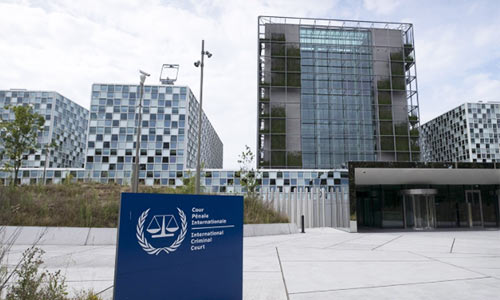
How ICC sat over only two cases concerning Sudan in 20 years, no final judgments issued

International Criminal Court
  • Atrocities Watch Africa raises concern over disparity in the attention given by the Court to certain situations

Atrocities Watch Africa (AWA ) has raised concerns over the disparity in the attention given by the International Criminal Court to certain situations. The group in a statement issued at the #ASP23 general debate observed that: “Nearly two decades since the Darfur situation was referred to the Court by the Security Council and the first arrest warrants were issued, only two cases have commenced and no final judgments have been issued.”

The full text of the sttaemmet issued on 3 December 2024 reads:

On behalf of Atrocities Watch Africa we wish to offer the following observations to the Assembly of States Parties, particularly regarding the need for equal and robust action in all situations in which the International Criminal Court has jurisdiction.

AWA is concerned about the disparity in the attention given by the Court to certain situations.

In this context, we would like to raise urgent concern about the situation in Sudan. The Sudan war has displaced roughly 11.2 million people and has been characterised by ground attacks on civilians, indiscriminate aerial bombardment, extrajudicial killings, conflict-related sexual violence, and obstruction of humanitarian aid. We agree with the Prosecutor that the “absence of any meaningful justice for the serious crimes committed in Darfur twenty years ago, has sown the seeds for this latest cycle of violence and suffering”.

Nearly two decades since the Darfur situation was referred to the Court by the Security Council and the first arrest warrants were issued, only two cases have commenced and no final judgments have been issued. We welcome the new round of investigations announced by the Prosecutor but encourage the office to act with greater urgency in filing additional cases, particularly in relation to well-documented crimes in El Geneina in 2023 and in El Fasher over the past six months. In addition, the Prosecutor should examine the role of external actors in facilitating ongoing violence in Darfur.

We call upon States Parties to support these investigations through appropriate cooperation. This should include both public and financial support for ongoing investigations and redoubling efforts to enforce existing arrest warrants in the Darfur situation, including by exerting diplomatic pressure on Sudan.

Meanwhile, more than seven million people have been displaced in the Democratic Republic of the Congo, more than 6.5 million in the eastern provinces of North and South Kivu and Ituri. Amid ongoing fighting, the displaced are facing acute food insecurity. While we welcome the Prosecutor’s October 2024 statement that additional investigations would be undertaken, we highlight that the situation is urgent.

In addition, we would like to ask the Court and the ASP to prioritise the situation in Nigeria. The country has been suffering violence and insecurity at least for the last 15 years. Boko Haram has killed civilians, attacked schools, abducted women and children and forced them to fight or serve as sex slaves. The Nigerian military has also committed a range of violations including extrajudicial executions, enforced disappearances, torture, sexual violence and other violations.

Despite these serious crimes, the situation in Nigeria remained under preliminary examination for ten years, with former Prosecutor Fatou Bensouda only initiating investigations in 2020. In the last four years, although the preliminary examination has been closed, no investigation has been opened. This lack of action leaves victims feeling abandoned and emboldens perpetrators. In addition, the lack of communication about the status of the case exacerbates the sense of neglect and leaves victims in limbo. On 2 December

2024, Amnesty International and Jire Dole Networks filed an application with the President of the Pre-Trial Division asking for a chamber to be designated to examine victims’ request to compel the Prosecutor to seek authorisation to open an investigation. We hope that this provides incentive for the OTP to urgently clarify its position.

We thank you for your time and consideration of these matters.

Amnesty International urges ICC to swiftly open investigations into war crimes, human rights violations in Nigeria’s North East

  • Says: “In failing to request authorisation to open an investigation into the situation in Nigeria, the Prosecutor is acting inconsistently with their obligation under article 15(3) of the Statute…”

Having failed to open an investigation into the various human rights violations and abuses by the armed group Boko Haram or the Nigerian state in the northeast, four years after concluding its preliminary examination, Amnesty International on 2 December submitted a letter to the President of the Pre-Trial Division of the International Criminal Court urging it to do the needful.

Requesting the Pre-Trial Chamber on behalf of victims of war crimes and crimes against humanity in northeast Nigeria who are members of the Jire Dole Networks (“the Applicants”), Amnesty International pointed out that: “In failing to request authorisation to open an investigation into the situation in Nigeria, the Prosecutor is acting inconsistently with their obligation under article 15(3) of the Statute, and to take any appropriate measures to remedy the situation.”

According to the International Non-Governmental Organisation (INGO), “The Office of the Prosecutor (OTP) of the International Criminal Court (ICC) opened a preliminary examination into the situation in Nigeria in 2010, then closed it in 2020, concluding that the criteria were met for the opening of an investigation.

“Four years later, the OTP is yet to request the authorization to open such investigation and to provide an explanation with regards to the delay.”

The group further stated that: “The applicants are of the view that, under Article 15(3) of the Rome Statute, the Prosecutor has a legal obligation to request authorization from the Pre-Trial Chamber to open an investigation if they conclude that there is a reasonable basis to proceed with an investigation.

“Having made that conclusion in relation to the situation in Nigeria, the Prosecutor was and still is under a legal obligation to request authorization from the PreTrial Chamber to proceed with an investigation, without further delay. This legal obligation is also consistent with internationally recognized human rights, including the rights of victims to truth, justice and reparations, and to being informed about the status and progress of criminal proceedings.”

Jire Dole networks is a group constituted of eleven different social networks of individuals who have suffered various human rights violations or abuses by the armed group Boko Haram or the Nigerian state in northeast Nigeria. It is led by a group of human rights activists, journalists and relatives of victims and survivors based in Maiduguri, set up in April 2017.

They organise a loose network of victims, survivors and relatives through the setting
up of groups and structures in Maiduguri and various IDP camps in Borno state. This
submission is filed on behalf of the following networks, which are part of Jire Dole Networks: the Knifar Movement, composed of over 5,720 displaced women who were separated from their husbands since their husbands were arrested; the Returning Knifar Husbands network, composed of over 2,840 men who returned from the Safe Corridor and Giwa BarracksMilitary Joint Investigation detention centers; the Jire Dole Mothers, composed of over 5,800 relatives of arrested and disappeared young men; the Njotkuno Movement, composed of over 6,650 women, men and children formerly detained by the Nigerian military; and the IndaRai network, composed of over 2,365 survivors of abductions and sexual violence and mothers of the ‘invisible children’ who were conceived and born while their mothers were in Boko Haram captivity or in detention facilities. Members of these seven networks alone total 23,382 individuals as of January 2024.

Amnesty International has worked in close collaboration with, and in support of, Jire Dole networks for over a decade, including to document crimes committed within the armed conflict in northeast Nigeria and to advocate and campaign for justice at the national and international levels.

Amnesty International has also shared its documentation of relevance to the Nigeria situation with the Office of the Prosecutor to support its preliminary examination.

The present submission has been filed on behalf of members of the networks who are direct and indirect victims of murder, enforced disappearances, abductions, conscription and use of child soldiers, enslavement, forced marriage, sexual slavery, rape and other sexual violence, mutilation, imprisonment, torture and other ill-treatment, and other crimes committed in the context of the conflict in northeast Nigeria since 2011, constituting war crimes and/or crimes against humanity.

    NBA on the Arrest of Dele Farotimi: Law enforcement agencies must prioritize the principles of legality, fairness, respect for human rights

    STATEMENT BY THE NIGERIAN BAR ASSOCIATION ON THE ARREST OF DELE FAROTIMI AND ALLEGED INVASION OF HIS LAW FIRM

    The Nigerian Bar Association (NBA) is gravely concerned about the arrest of Dele Farotimi on allegations of libel, as well as the reported invasion of his law firm and the harassment of lawyers and staff within the premises. These actions constitute a troubling breach of the rule of law and the sanctity of the legal profession.

    While the Nigerian Police Force has the authority to investigate crimes, this power must be exercised within the confines of the law and in respect of offenses recognized under Nigerian law.

    We must reiterate that the alleged offense of libel, for which Dele Farotimi was reportedly arrested, is not recognized as a criminal offense under the laws of Lagos State. The Criminal Law of Lagos State 2011 repealed the criminalization of defamation by omitting it from its provisions. This progressive legislative move aligns with global best practices, which treat defamation as a civil wrong rather than a criminal offense.

    The Supreme Court in Aviomoh v. Commissioner of Police & Anor (2021) affirmed this position. Justice Helen Ogunwumiju, JSC, unequivocally held that defamation ceased to be a criminal offense in Lagos State following the enactment of the Criminal Law of Lagos State 2011. This authoritative pronouncement leaves no room for doubt.

    Furthermore, under Sections 4 and 24 of the Police Act, 2020, the Nigerian Police Force is mandated to act only about conduct that constitutes a criminal offense under Nigerian law. Arresting individuals for non-criminal matters, such as defamation in Lagos State, is not only unlawful but also a blatant violation of the principles of legality and the rule of law.

    Of equal concern is the reported invasion of Dele Farotimi’s law firm and the harassment of lawyers and staff within the premises. Reports that phones were confiscated from lawyers and staff during this invasion highlight a severe disregard for the sanctity of legal practice and the constitutional rights of individuals. The legal profession is a cornerstone of justice and democracy, and any attempt to undermine its independence is a direct assault on the rule of law.

    The NBA unequivocally condemns the invasion of Mr. Farotimi’s law firm, the harassment of its lawyers and staff, and the unlawful seizure of their phones. Such actions are not only a violation of the constitutional right to dignity and privacy but also an affront to the independence of the legal profession.

    We, therefore demand the immediate release of Dele Farotimi, as his arrest lacks any basis under the laws of Lagos State. The authorities must swiftly launch an investigation into the invasion of his law firm, with the findings made public and those responsible held accountable.

    We urge law enforcement agencies to prioritize the principles of legality, fairness, and respect for human rights in their operations. These principles are foundational to justice, democracy, and the protection of citizens’ freedoms.

    Mazi Afam Osigwe, SAN
    President
    Nigerian Bar Association

    Arrest of Dele Farotimi by Police is a gross abuse of power, Kunle Edun, SAN condemns police action

    The news of the arrest of citizen Dele Farotimi by officers of the Nigerian Police Force on the allegation of committing criminal defamation is illegal and an unpardonable abuse of power of arrest. Criminal defamation is no longer an offence known to our laws, same having been held to be unconstitutional by the appellate Court. Defamation is a civil matter and any person aggrieved should resort to civil remedies and not to employ security agencies to go after the alleged maker of the defamatory statement.

    The penchant of the security agencies to arrest patriotic citizens who are exercising their constitutional right to freedom of speech is an unconstitutional exercise of power and privileges. The powers given to the security agencies are in trust for the public and should not be used for private purposes.

    I have observed that it is only the affluent and the wealthy people particularly, the politicians and those close to the powers that be that are fond of using security agencies to go after their perceived enemies, and thereby using the instrument of State power as an oppressive tool against Nigerians that speak truth to power. That is a betrayal of public trust on the part of the security agencies.

    I call on the Inspector General of Police to call his men to order and direct the immediate release of Mr. Dele Farotimi immediately. There are bigger criminals within the corridors of power looting public funds and mismanaging our commonwealth, that should be the concern of the security agencies. The Police should stop de-marketing and making itself available to be used to settle civil scores of power-drunk individuals in the society.

    Kunle Edun, SAN

    Zimbabwean High Court okays abortion for pregnant minors and women raped by husbands

    A Zimbabwean High Court ruling has declared that denying pregnant children and married women of marital rape access to abortion is unconstitutional.

    Justice Maxwell Takuva’s ruling, delivered on 22 November, has been hailed as a significant step forward in protecting the rights of women and children in the country.

    His Lordship found that Section 2(1) of the Termination of Pregnancy Act [Chapter 15:10] violates constitutional protections of dignity and the right to protection from degrading treatment. “The dignity of adolescent children who are impregnated and married women who are raped is adversely affected by the provisions of s 2(1) of the Act,” he said.

    In his judgment, Takuva referenced Zimbabwe’s Constitution, emphasizing that everyone is entitled to dignity in both private and public life. He pointed out that sexual intercourse with minors is unlawful, adding, “Sex with a minor is therefore unconstitutional, and any pregnancy arising from such intercourse must be treated as unlawful.”

    The ruling sheds light on the dire conditions faced by child mothers, describing forced pregnancy as a form of abuse. Justice Takuva cited medical expert Dr Nawal Nour, who stated, “Girls aged 10–14 are 5–7 times more likely to die from childbirth compared to women above 20.”

    He called the situation a “major human rights issue,” noting that child pregnancies in Zimbabwe are often driven by poverty.

    Takuva emphasized that forcing children to carry pregnancies without access to safe abortion perpetuates poverty and suffering. “Teenage pregnancies foster poverty and cyclical reproduction of poverty,” he stated, adding, “It is torture, cruel and degrading treatment for a child to carry another child.”

    The High Court ruling now awaits confirmation by the Constitutional Court of Zimbabwe. Human rights lawyer Tendai Biti, representing Women in Law in Southern Africa and Talent Forget, praised the judgment, calling it a step toward justice. “Children were dying by the thousands in illegal and unsafe abortions,” Biti said. “This small victory hopefully closes the chapter of child mothers in Zimbabwe.”

    Takuva concluded by highlighting the constitutional breach, stating, “Failure to include pregnancy of a minor and marital rape as unlawful intercourse violates the right to human dignity, protected under section 51 of the Constitution.”

    Activists and public affairs analysts claim that the ruling will be pivotal in reshaping abortion access in Zimbabwe, particularly for the country’s most vulnerable citizens.

    Credits: Linda Ikeji

    Of VCs, CMDs, dying patients and physician conspiracy

    By Calixthus Okoruwa

    Not many people may have heard of Miriam Olusanya. But Ms. Olusanya is currently Managing Director of GT Bank, a company with a market capitalization in excess of a trillion Naira and well over three thousand permanent employees. GT Bank generated a profit slightly in excess of a trillion Naira in the first half of 2024.

    Ms. Olusanya originally trained as a pharmacist. Were she to have pursued a career in pharmacy and chosen to work in a hospital, she would never have been privileged to lead any public hospital whatsoever. Indeed, she would never have risen above the role of Director of Pharmaceutical Services, which is where pharmacists tend to be capped in the hospital environment.

    This is the paradox of Nigeria’s health institutions: Chief Medical Directors, as managing directors of hospitals are known, must be medical doctors, according to a decree that was engineered by Prof. Ransome-Kuti, health minister in the Babangida years. Even though it is irrational and illegal, being discriminatory against other health practitioners, that decree has since become entrenched in our statute books.

    Managing an enterprise, as the world has long come to realize, is not necessarily a function of professional training. You do not necessarily need to have trained as a banker to run a bank successfully, as Olusanya and many others have proven. Nor do you need to be a trained physician to successfully run a hospital. In fact, in the United States, less than 5 percent of hospitals are led by medical doctors. Managing a thriving hospital as the US has long realized, is a function of how skillfully a leader synergistically aligns all the critical elements such as planning, organizing, staffing, controlling and leading. While a medical doctor may indeed possess all of these qualities in addition to his skills as a physician, those traits are not exclusive to medical doctors and may also dwell in the sundry other professionals who provide service in the hospital environment: pharmacists, nurses, medical laboratory scientists, accountants, physiotherapists, psychologists, health economists, administrators, and many more.

    Unfortunately, doctors, aided by Ransome-Kuti’s decree have continued to feed Nigerians with the wrong impression that only doctors can run hospitals. In the process, the dragnet for the selection of Chief Medical Directors of hospitals in Nigeria, is deliberately constricted, being restricted to doctors. These critical public institutions are therefore denied the potential leadership that may have been provided by hordes of talented professionals in disciplines other than medicine.

    The situation is not different in Nigeria’s medical or health universities. While Nigeria’s first specialized university is the Tai Solarin University of Education in Ijebu-Ode, medical universities have over the years, gradually sprung up across the country. These universities train doctors and in addition, pharmacists, nurses and other medical specialties. They are staffed by medical doctors as well as teachers from other disciplines including the medical sciences. It doesn’t take rocket science to know that medical or health universities are not fundamentally different from other universities. They are only different in that they are limited to teaching courses in the medical and health fields. Managing these universities, therefore is no different from managing any other university in Nigeria.

    Curiously, however, only medical doctors can aspire to become Vice Chancellors of Nigeria’s medical and health universities as any advert for that position will confirm. The current VC of Lagos State University is a physiologist – Physiology is one of the medical sciences. Were the College of Medical Sciences of Lagos State University to be upgraded to a full-fledged medical university today, LASU’s VC would not qualify to be its VC.

    A few months ago, the Nnamdi Azikiwe University, Awka threw up a case that presents a perfect opportunity for medical doctors to hold a mirror to themselves for a thorough examination. Seeking a new VC to replace the outgone one whose tenure had expired, the university advertised the vacant VC position. Any aspiring VC it stipulated, in keeping with a key requirement by the National Universities Commission, must possess a PhD.

    Hell was let loose as the same doctors who have for decades been beneficiaries of the discriminatory Ransome-Kuti decree which makes the CMD position exclusive to them, who have been discriminatory of other professions with regard to VCship of medical universities, cried blue murder. The university, they complained, was being “discriminatory” against medical doctors. In their reckoning which they presume is superior to the NUC’s prescription, the clinical training which a medical doctor undergoes in the quest to become a specialist or consultant, is “equivalent to a PhD.”

    Interestingly, quite a number of medical doctors possess both the clinical qualifications as well as PhDs which suggests that the PhD is not quite the superfluous degree they would want the world to believe.

    The medical consultants went further. In typical fashion, they went on strike. They abandoned the sick and dying to their fate, in order to justify a claim that is at best questionable, and at worst an attempt to deceive the public.

    Which brings us to the question: Why do Nigerian doctors go on strike at the drop of a hat? Medical consultants are the top doctors in Nigeria – the most experienced and perhaps the most skilled. In downing tools over an unproven assertion that claims parity between clinical fellowships and PhDs, abandoning the same sick and dying patients whom they swore to protect and save, what manner of example do they leave their younger colleagues?

    University College Hospital, UCH, Ibadan has been in the news for all manner of reasons lately. The hospital has defaulted serially in paying its energy bills and its current circumstances are deplorable. Could leadership be its problem? Is it not plausible that opening the CMD position to sundry professions and in so doing broadening the pool from which the best leaders can be selected, could help redress the hospital’s pathetic situation?

    The current system that imposes the doctor as the compulsory head of all health institutions, including medical universities, is anachronistic and has no place in the present day where all the health professionals are equally well-educated. Nigeria needs to jettison this ancient practice and allow the country benefit from the value potentially derivable from selecting leaders of Nigeria’s healthcare institutions from a diverse pool of professionals. This will also help to considerably curtail the disharmony that exists in the health sector.

    It is unfortunate, however, that other health professionals have over the years tended to accept with equanimity, a situation where they are perpetually subjugated in hospital settings and now, in medical university settings. Why have they been unable to challenge prevailing laws which are discriminatory even when Nigeria’s constitution explicitly states that citizens must not be discriminated against, under any guise? They need to borrow a leaf from the pragmatism of their doctor colleagues who typically waste no time in agitating vehemently, whenever they imagine they are oppressed.

    George Bernard Shaw was spot on when he asserted that every profession is a conspiracy against the laity. Apparently, no profession anywhere in the world typifies this assertion better than Nigeria’s medical doctors whose conspiracy of deceit has often left Nigeria with the short end of the stick.

    Do medical doctors play an incredibly vital role in our lives? Without question. That role, however, should embody honesty, honour, humility and responsibility. Doctors need to temper their sense of self-importance with a recognition of the sanctity of the lofty oaths they have taken to save lives. Governments on the other hand, must also learn not to become slaves to the demands of doctors, however irrational. And other health professionals must eschew complacency and fight for their rightful place in Nigeria’s healthcare settings, currently monopolized by their doctor colleagues.

    • Okoruwa, a fellow of the Nigeria Academy of Pharmacy, is chief executive officer of the communications consultancy, XLR8

    TIPS