Home Blog Page 492

Marriage collapses over husband’s refusal to do chores, while wife financially provides 100%

A woman has left her husband who refused to contribute to their household and his family is reportedly on her side. 

A medical doctor shared the story on X while claiming the woman was her friend. 

She wrote: “My friend is the one providing financially while doing 100% of house chores and childcare. Her jobless husband will eat and leave the plates for his wife to come back from work to pack, abuse and treat her like trash. She has Sha left, Guy don lean hunger wan finish am.” 

She added that the man’s family had begged the wife to leave the husband since he wouldn’t act right.

Man loses wife over refusal to do chores while she "provides financially 100 per cent"

Changing Nigeria’s Reality

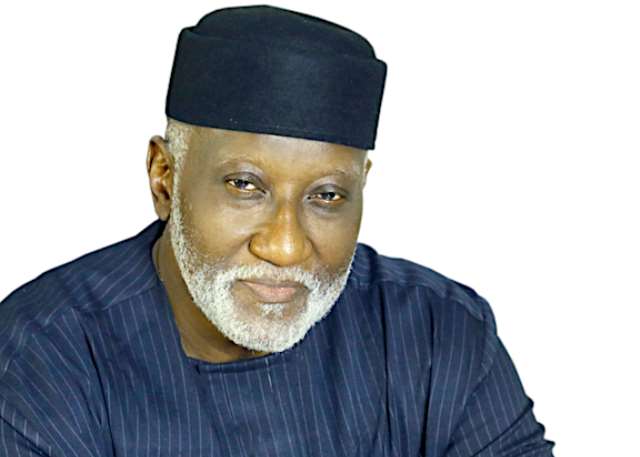
By Oseloka H. Obaze

Nigeria’s paradox is that it is as simple as it is complex.  In Nigeria, both the simple and complex are fungible. Primarily, Nigerians make simple and straightforward issues unnecessarily complex.  Bad leadership, in turn, compounds already complex issues. The sum total of this byzantine political alchemy is that in her sixty-four years of independence, Nigeria’s prime challenge has been and remains how to overcome the bad leadership and poor governance that has riddled her national elite cadre with levitas.

Successive Nigeria leaders, both military and civilian cannot be accused of lack of commitment to nationalism. The problem is that they were never properly schooled on the fundamentals of delivering good governance that fosters stable nationalism. Most Nigerian leaders in the three tiers of government, assume perfunctorily that getting into power would make them good leaders. In truth, the reverse has always been the case. You had to be a good leader before getting political power. Nigeria is also a nation, where the political processes are hackneyed. Thus Nigeria’s allied political institutions are manifestly fashioned to hoodwink and prepurposed to be sufficiently and unapologetically malleable. Consequently, national institutions are by default, weak. Sardonically, no nation with weak institutions is ever strong and resilient. And Nigeria can’t be an exception.

Often, the point is made that lack of elite consensus adds willy-nilly to Nigeria’s problematique. But lack of elite consensus, is a choice; a contrived default option, which having permeated the national mindset, is now institutionalized groupthink.  This groupthink favours a revolving-door or musical-chair syndrome that is hardly predisposed to proper succession planning that should compel mandatory leadership training. Think of this; very few, if any Nigerian leader leave public office and venture into the classrooms of Nigerian tertiary institutions to teach. What is lost, is the unique opportunity to pass on to future leaders, priceless lessons learned and missed opportunities. That mix of theory and practice is invaluable where it is made readily available.

I’ve always suspected that returning to teach our future leaders would be for most Nigerian politicians, utterly condescending and infradig. Then, again, most are ill-equipped to undertake such tasks. For this reason also, the mission and raison d’être of the National Institute of Policy and Strategic Studies (NIPSS) as a strategic-agenda setting institution has long been forgotten, if not abandoned. Not long ago, I irreverently but jokily asked John Kayode Fayemi, the former Governor of Ekiti, why in electing to return to the classroom after his tenure as Governor and Minister, he chose Kings College London, over University of Lagos, University of Ibadan, Ahmadu Bello University, University of Nigeria, Nsukka and Obafemi University at Ile-Ife. Fayemi politely laughed off and parried my question. He understood fully, the import of my question. He confirmed my suspicions.

Ironically, the hallways of great and renowned global universities – Harvard, Cambridge, Sorbonne, Oxford, Berkeley, Makerere, Achimota, Legon and Stanford – are littered with former world leaders and policymakers, who are Fellows and Visiting Scholars. Last September, some former global leaders gathered in Athens, Greece, for an international dialogue focused on governance, security, and the economy. The key theme was “Lessons for Future Leaders.” Only two Nigerians were in attendance; but from other nations came former presidents, prime ministers, senators, opposition leaders and retired ranking military generals. Indubitably, there are inherent lessons to be gleaned from such auspicious gathering. It underlined that governance matters. Given our stark realities, training in good governance ought to matter all the more.

Nigerian leaders love clichés and highfalutin political sound bites. So our leaders parrot buzz words like, “due process,” “best practices,” “rule of law,” “quick-wins,”  “low-hanging fruits,”  “special purpose vehicle,” “benchmarks,”  “gender-mainstreaming,” “added-value,” “fiscal responsibility,”  “environmental impact assessment,” “counterpart-funding,” and “value chain.” Such political and policy-driven jargons often picked up from civil society organizations and non-governmental organizations needs-assessment and mission reports; make our leaders sound smart, credible, important and hands-on. But it’s all about airs; vacuous airs fraught with ruse and legerdemain. Those bereft of good governance credentials also mouth those platitudes easily.

What Nigeria needs in order to change her present sad reality, is to orchestrate the emergence of purpose-driven leadership or a disruptive leadership.  This type of leadership is not just visionary; but also adaptive and transformative. It’s a leadership that understands that scoped and sustainable governance entails mission focus, and short, medium and long term plans in order to succeed.  Above all, it’s a leadership style that calls for continuous self-sacrifice. Yet, it is not just enough to have a cadre of leadership that meets the prima-facie requirements of leadership. Such leaders must also be accountable in their personal and public conducts. Collectively, Nigerian leaders have shown a crass inability to self-censure or to censure their colleagues.  As a group, the national leadership –read national elite- has forever and a day, turned a blind eye to members of their cadre who are scofflaws or engaged in suborn.

Leadership in Nigeria is much more tilted to precept than practice. We are as a nation, now dubious about speaking truth to power in matters of dire national interest. If ever there was an optimal case study of progressive State Capture, present day Nigeria fits the model squarely. Yet it would seem utterly asinine to broach that topic in any civilized Nigerian company, talk less of governmental circles. It’s oxymoronic to be talking of rationalizing government, and cutting costs, while in reality, engaging in extreme fiscal profligacy. But who cares? Aspiring for Nigeria to model itself after South Korea, Dubai, Taiwan and Singapore, requires more than lip service. It requires disciplined leadership.  It requires understanding history- ours and those of countries we seek to emulate – and putting such history to good use in our governance decision-making. It requires training. But leadership training does not happen in a vacuum. It’s a life-long process.

Issues and problems that hobble Nigeria are commonly known. So too are the sustainable solutions –beyond our fixation with prophylaxis targeted at bad governance symptoms. So, whether we wish to tackle our decrepit hard infrastructure; or our hierarchy of needs-based social infrastructure, we know what is required.  Similarly, we know what to do to lift millions of Nigerians out of multi-dimensional poverty. Ditto for tackling the scourge of out-of-school children; banditry, visceral violence, insecurity our parlous economy and debt overhang.

Changing Nigeria’s reality requires no magic wand. The coalition that brought APC to power in 2015 was predicated on subsidiary interests. Now, another coalition based entirely on national interest is required to flip the change. All it requires is a thorough orientation and a new national mindset fostered by candid retrospection and introspection. The process will require a combination of like minds and rivals – “a team of rivals” – of sorts to bring it about. Such alliances will consist of a “Coalition of the Willing.” The common denominator will still be self-preservation, but not as an adjunct to the present unwilling collective, but as an integral remedial component of the nation already on the road to perdition and on the brink of self-destruction.  

The state of the nation is bleak. Some may still wish to varnish the status quo. Whether, varnished or burnished, the gravamen of the irrelevance and inefficacy of “Renewed Hope” is that in this promised instance, hope is merely a loss leader that has all but died in Nigeria. Those who had the courage to grab power ought to have the courage to accept their comeuppance. Rather than tackle the present realities, some are already segueing to 2027 as if that date is a certainty.

If that day comes, this much should be obvious, given our present realities. The 2027 general elections will be Nigeria’s first true referendum on good governance. It will be APC vs. Nigerians. Those will be the only two parties contesting. With any luck, primordial interests will be set aside in the national interest and Nigeria’s patriotic and moral majority will finally carry the vote. Meanwhile, this is the juncture at which we must begin to make Nigeria whole again. Don’t wait for 2027. Procrastination is dangerous. Delay may be fatal. I’ve said my piece.

Obaze is MD/CEO, Selonnes Consult – a policy, governance and management consulting firm in Awka.

With over 820,000 out-of-school children, Jigawa spends N1.5bn to build religious centres in three months

Despite a record 820,000 out-of-school children in the state, Jigawa State government led by Governor Umar Namadi spent N1.5 billion, within three months, on the construction and renovation of mosques and other religious structures.

The strange scenario was disclosed in the state’s budget performance report obtained and highlighed in an editorial matter published by SaharaReporters.

The report entitled “Jigawa State Third Quarter (July – September) 2024 Budget Performance” was posted on the state government’s website.

The document showed that the Namadi-led government spent N1,040,000,000.00 on “Construction of Mosques and other religious structures in 2024”.

Another N458,470,310.00 was said to have been spent on “Completion of ongoing construction of Mosques and other religious structures”.

Jigawa is ranked fifth state in Nigeria for the high number of out-of-school children.

According to a survey by the Education Sector Support Programme in Nigeria (ESSPIN), there were more than 820,000 out-of-school children between the ages of 3 and 18 in the state.

Speaking at a recent commitment meeting with the Jigawa State House of Assembly in Kaduna, Mohammed Farah, Chief of United Nations Children’s Fund (UNICEF), Kano Field Office, disclosed that only 16.8% of children in the state were currently enrolled in school.

Farah explained that 44% of primary school-age children and 52% of secondary school-age children in Jigawa were not attending school, creating a significant educational gap and depriving these children of their fundamental right to universal basic education.

He also highlighted the alarmingly low levels of foundational literacy and numeracy in the state.

Farah urged the state legislature to take immediate action, calling for substantial reforms ahead of the next Multiple Indicator Cluster Survey (MICS), which was scheduled for 2026/2027.

He emphasised the need for a radical shift in the state’s educational landscape to address these pressing issues.

The Barr., A Sim Ma Atunyere Gi [Barrister, I Decided to Patronise You] – This condescending conspiracy against legal practitioners

By Chinedu Agu

Last month, I lost two briefs bordering on preparation of legal instruments that convey title. One was for a land purchased at 28 million, while the other was for another land purchased at 70 million. The donors in these transactions were my good friends to whom I provide free legal advice through either casual phone calls or at social gatherings.

The first had sent me details for the preparation of an instrument after he told me that I almost “missed” this brief because he had contacted “one of his guy” [sic], not being sure I was in the country. And now that I am in the country, how lucky a man I am, he must have reasoned!

Certainly, this “one of his guy” had agreed fees with him for #75,000.00, and I could sense his joy from his voice on the telephone, realising I was available for the brief. Probably, he reasoned he could price lower.

I told him that lawyers, as a matter of law, now charge 10% of the consideration of a property as professional fee for preparation of the legal instrument.

“Ah ah, since when, the Barr?” He queried.

“I came back and met it this way. And it is operational through out the country.” I responded.

He complained that 2.8m was too much for him to pay. I told him I could give him a rebate and take 5% based on relationship. But he was not having it. He told me that that “one of his guy”[sic] was ready to do it for #75,000, but that, “The Barr., a sịm ka m tụnyere gị as onye nke m [Barrister, I decided to patronise you as my own person],” repeating that condescending remark. “You are charging me very high, the Barr.” He kept protesting.

I explained that this was a matter of law, and that I could get into trouble if I charged him lower than that. He then asked if that “one of his guy” [sic] was also not a lawyer like me?

He then said, he would get back to me. I am still expecting that call till this evening.

I lost the 2nd brief in similar circumstance 2 days hence.

Heartbroken by that loss, I typed this long message which I am delivering today as a lecture, to post it on our NBA platforms to swear at that “one of my guy” [who probably is sitting here this evening] that condescendingly debriefed me.

While typing this, a colleague of ours with whom I share my lawyerly inspirations and ideas, Ikenna Ujah, called. I shared it with him on a long call. He shared with me his kindred experiences, and he thought our discussion could make a better lecture on ethics. He encouraged me to develop it and seek permission of the Chairman to deliver it as a Lecture during one of our meetings.

And so, this is how what was supposed to be a rant has metamorphosed into a Lecture. In that sense, this is more of a Rant-ure than a lecture.

When I stopped worrying about losing that 2.8million naira, the worry at how lay people regard lawyers and perceive legal services, replaced it, which now lingers.

Why do people who seek legal services have the impression that they are doing a lawyer a great favour for seeking those services?

Why do lay people who retain a lawyer for legal services assume they are trying to save the lawyer from impending hunger, or trying to lift him from a prolonged penury and squalor.

Why do lay people who pay for legal services rendered by a lawyer posture themselves as though it is almsgiving to the lawyer?

Expressing the idea that various professions, including law, operate in ways that protect their own interests at the expense of the general public, George Bernard Shaw, coined the expression “conspiracy against the laity” in his 1906 Play, “The Doctor’s Dilemma.”

In the said book, Shaw criticizes several professions beyond the medical field. He refers to the legal profession, describing it as a conspiracy similar to that of doctors. Additionally, he critiques the military, religious, educational, and artistic professions, suggesting that all these fields operate in self-interest at the expense of the public. Shaw argues that these professions collectively form conspiracies against the laity, obscuring their true motivations and shortcomings. He subsumes this in his popular quote, “All professions are conspiracies against the laity.”

This appears to be so, because of that air of esoterism and mysticism that envelopes many professions mentioned by Shaw. Law used to stand out in this.

Unfortunately, many of those professions have left the legal profession behind since that veil of esoterism was ripped and lifted by lawyers themselves.

The legal profession on losing its esoterism and reconditeness is now at the mercy of the laity, so that instead of the legal profession maintaining its flair and steaze that gives off this facade of conspiracy against the laity – which makes them hold us in high esteem – the laity is now rather the conspiracy against the legal profession. In a sense, we no longer hear, “Nwanyi gbalaga Dị gị n’ abịa, but Dị gbalaga Nwanyị gị n’ abịa.”

We lifted our veil of esoterism by ourselves through what I have chosen to coin as Professional See-finish-ism. And because the members of the laity have “seen us finish,” little regard is now placed on both legal profession and legal services. It is what a man calls his dog that his neighbours will refer to it as. _Judicial See-finish-ism did not also help matters, because members of the laity rarely differentiate between the judiciary and the Bar. To them, “all of una nah the same thing!”

A colleague told me about his experience at a time. His secondary school pal and classmate asked him to prepare Tenancy Agreements for 6 of his tenants in his building. And that when he was done, “Gị agwa m ihe m ga achọrọ gị” [When you are done, you tell me what I can help you with]. This didn’t sit well with him, and he quickly told him off. He lost that client for his good.

We must resist the lure to reduce our professional fee to alms.

Lawyers have by themselves made lay people to have the notion that legal services are not essential services. We cheapen legal services in several ways, thus making members of the public consider both lawyers and legal services as dispensable. This is not so with other professions.

A customer who walks into a pharmaceutical shop and buys as simple a medication as panadol, does not tell the owner of the shop, “I came to your shop to buy this because, “A chọrọ m I tụnyere gị” [I came to your shop to buy this medication just to support you]. After taking the panadol, he will also not tell him, “Gịnị ka m ga achọrọ gị maka ọgwụ a” [How much do I help you with for the medication]. This is regardless of the relationship between both of them.

A patient who walks into a hospital, and pays for his consultation, his card, does not, walk into the doctors office telling him he has come to “I tụnyere ya” [to support him], regardless of their relationship.

A man who stops by the roadside to vulcanise his tyre does not tell the vulcaniser that he passed several other vulcanisers, but has called in because he wants to support him.

A man who sends his car to the mechanic does not tell him that he has another mechanic close to his house, but has come to him because he wants to support him.

So it is with a man who consults a Surveyor; a sinner in need of grace who consults a priest; a man who consults an engineer; a commuter who enters the bus, etc.

The simple reason behind this is that these classes of individuals are considered to be providing services that are essential. So, the man who consults a Pharmacist, Doctor, Vulcaniser, Mechanic, Surveyor, Priest, Engineer, and Taxi driver does so because they cannot provide it to themselves. Unfortunately, lay people prepare legal instruments and bring to a lawyer who puts his stamp and seal and collects a pittance.

I am not able to exhaust the ways in which lawyers cheapen legal services. This is already contained in the lecture I delivered in May, titled, “The See-finish-ism Afflicting the Legal Profession.” But I can list a few others.

  1. By charging peanuts for legal services.

Legal Practitioners are often wont to charge peanuts for legal services in the hope of keeping or retaining that client.

The truth is that most things that come cheap are not valued by those who receive them. When, for instance a lawyer charges peanut to render a huge professional service, the client smiles home. But when a bigger brief comes, suddenly, something tells him that “this cheap lawyer” does not have the professional competence to handle this big brief. He will revert to that other lawyer from whose office he left angrily because of exorbitant fee.

There is no attempt here to suggest that services should be made unreasonably expensive. But remuneration for legal services ought to be commensurate with services.

I have met a client who once told me that he suspected the Power of Attorney prepared by his lawyer was a fake one. When I asked him the reason, he told me the lawyer prepared same for #10,000.00.

  1. Rendering legal services through proxy, who is not a lawyer.

This is the height of professional see-finish-ism.

A lawyer friend called me sometime to place an advert for him for the position of secretary. Then when I asked about the one I recommended to him barely 6 months before then, he narrated an experience to me, which goes thus:

He keeps his stamp and seal with his secretary. And his secretary has the responsibility of preparing legal instruments for him at all times, especially in his absence. She would also frank documents for him when he is not available.

One fateful day when his secretary left her phone in the office to do some filings in court on his request, a man walked into his office, requesting to see “Blessing,” his secretary.

He told the man to reach her on the phone, but the man said she was not picking up her calls, hence he decided to come. He handed to him three different Powers of Attorney, which Blessing gave him the previous day, which he has just returned for correction.

Trying so hard to mask his incredulity, the lawyer took the documents and asked him to return in 2hours, by which time Blessing would be back to correct them.

On perusing these documents, they were prepared with the name and seal of this lawyer, without his consent or knowledge. He would discover later that Blessing prepared those documents at fees higher than that of her boss!

The inevitable happened. Blessing got fired upon return from the court.

Have you observed that sometimes, while in the court premises with a lawyer, you would hear him screaming instructions at his secretary through the phone of a client, on where to stamp a document that has been brought for notarisation. “Check inside that drawer, you will see my notary stamp. Put one original stamp and seal on the document, only one seal o! Don’t waste my seal. Then take that red stamp with inscription ‘notarised by me’ and stamp under the lawyer’s seal. Then sign and put date. I mechaa ya, nata ya two thousand Naira” [Collect two thousand naira from him when you finish].”

At other times, you would hear a lawyer in a public place, bellowing instruction over the phone to a secretary to delegate lawyer’s work to her, “Blessing, check your Whatsapp, I have sent you details of the Power of Attorney for Mr. Anthony. Don’t forget to put my seal on only one cover page o.” In most situations, Mr. Anthony is there in the Chambers, standing infront of Blessing while her boss tells her what to do. As a matter of fact, Mr. Lawyer spoke to Blessing through his phone.

After preparing the Power of Attorney in his presence, Blessing will spiral-bind and do everything that was supposed to be done in private in the presence of Mr. Anthony. This is the reason some clients will tell you, “The Barr. enwekwerenu ihe nọ na ihe a [There is nothing difficult about this]. Just tell your Secretary to remove the name of the buyer and seller, and replace with mine. Is that what you are charging so much for?”

Some arrogant clients sometimes will tell you, “The Barr, Power of Attorney, is it not this one I can go and prepare in Garden Park.” Most times, most of these clients have the temerity to bring a Power of Attorney prepared by themselves and tell you, “The Barr, I have done all the work. Just put your stamp and seal for me make I give you 5kpa (Five thousand Naira], “a sị m ma atiiri gị. [I want to support you].” If there are no lawyers who oblige them, this system would have stopped long ago. Unfortunately it persists.

In a bid to curb affidavit touting and racketeering, which has now become very tolerable in our jurisdiction, the then Chief Judge of the State, Hon. Justice B.A. Njemanze, made a Practice Direction requiring that every, affidavit must be endorsed by the lawyer who prepared it. This endorsement shall include office address of the lawyer. A clerk of court approached me to endorse an affidavit which she prepared. When I refused, she was startled, telling me she approached me only because the lawyer who rendered such services for her was not in court premises that day. She told me that the bundle of paper which the lawyer had pre-endorsed for her had been exhausted.

When I doubted her, she convinced me that she would go to the lawyer’s office the following week and return with one full rim of pre-endorsed papers for affidavit preparation.

True to her promise, she showed me, and it was a lawyer called in the year 2002, who was not less than 15years at the Bar at the time. I also gathered that this lawyer performs that service to the majority of the judiciary staff within that premises for a paltry sum.

What makes the Shrew stink comes from the Shrew’s body! Lawyers have made themselves rats, and so are now pursued by Cats.

There is no other profession on earth that witnesses this level of condescending conspiracy and sabotage as much as the legal profession.

Have you noticed that in a transaction where a surveyor, architect, engineer, doctor and lawyer actively participated as agents [even though the courts have rightly held that this is unethical], it is only the lawyer that the agents will turn to and say, “The Barr, you no be agent for this transaction. You no go chop power of Attorney money, come chop agency money.” And if that lawyer does not stand his ground, he will be sidelined in the business.

But the surveyor in that transaction, who will subsequently conduct survey on the land, will not be sidelined because he has “chopped survey money.”

They will not sideline the architect, who will produce the plan of the house subsequently, because he has “chopped architect money.”

Nobody will tell the engineer, who will build the house later, “Engr, you no follow for agent, your work nah to build house for oga. You no go chop engineer money, come chop agency money.”

What have lawyers done wrong?

Lawyers must eschew those unprofessional/unethical practices that lower the standing of legal practitioners before the general public.

  1. Except in deserving circumstances, lawyers must not render legal services free to clients.

Those who do not genuinely deserve free legal services will exploit free legal services.

Free legal aid may lead to the perception that legal services are not valuable, which can undermine the respect and authority associated with the legal profession.

More so, if legal services are predominantly offered for free, clients may come to expect such services as the norm, potentially leading to a lack of appreciation for the expertise and effort involved in legal work. This can also blur the lines between legal practice as a profession and as a charity, affecting the premium members of the public attach to legal services.

  1. Create some air of esoterism around your legal services. You must not notarise documents in the presence of clients, or prepare a legal instrument and frank same in the presence of clients. It makes those services appear cheap.
  2. Never delegate legal services to non lawyers.
  3. Do not run after clients to render legal services to them. Do not tell your clients, “Chief, when you buy that land, remember say nah me go run the document.” Do not also tell your clients, “Chief, when you finish that building remember say nah your boy go manage am o.”
  4. As much as you need to be prompt with legal services, but do not render them as though they are “wait and take passports.” This is so especially with legal instruments.
  5. Always charge consultation fee, whether the consultation is by one-to-one interaction or telephone conversation.

I almost ran into trouble when I was making immigration inquiries from a UK Solicitor sometime. I called the office line, and the courteous secretary picked up. After pleasantries, I introduced the topic for which I called. She was straightforward with what I should do next, “Okay, Mr. Agu, what medium is most convenient for you in making payment for our consultation fee of £150.” I quickly ended the call and ran away. £150 only to ask questions bordering on immigration!

But the truth is, legal consultations ought to be paid for. A client who spends one hour on the phone with you or in your office will not value that time and services except when charged.

Annoyingly, in most circumstances, after wasting an hour of your time, they would brief another lawyer for the execution of the work. So, in order not to lose out entirely, charge consultation fee at the earliest possible time.

  1. Lawyers must learn how to appear clean and groomed. The competence of a shabbily-dressed lawyer is often brought under the microscope. A shabbily-dressed lawyer is also often priced very low. With a dirty and rickety car, unkempt appearance, you need to go extra mile to prove to your client that you are worth that high fees you have charged.

It doesn’t take affluence to make a white shirt clean. It doesn’t take affluence to make a car appear clean. It doesn’t take affluence to make an office appear clean and tidy. It doesn’t take affluence to polish a black shoe and keep it clean. It doesn’t take affluence to make bib and collar appear clean. It does not take affluence to wash the mouth and body in the morning before going to court. It only takes discipline and conscious efforts.

Regardless what a lawyer is going through, his appearance ought not reflect it. Even the scripture urges us not to look like our problems when it says, “When you fast, annoint your head with oil and wash your face.” [Matthew 6:17].

  1. Never borrow money from your client.

In my pupillage, my principal, Ama Akalonu, drummed this into our ears that it is better to borrow money from a colleague than a client, no matter how rich and generous he is.

  1. Never owe rent where you reside or maintain office.
  2. Never mis-apropriate client’s money you hold for him in trust.

Maintaining the flair and steeze of the legal profession is the only way to attract respect to the profession. It is time lawyers come to understand that the responsibility of retaining the prestige of the legal profession lies in our hands. The members of the public have conspired against us. The system has conspired against us. The least we can do for ourselves is to come together, and put in place systems that will make the practice of our profession lucrative, and resist every temptation to sabotage it.

[This lecture was delivered at the Monthly General Meeting of NBA Owerri on the 30th day of November 2024]

Chinedu Agu is a lawyer, and can be reached at [email protected] or 08032568512.

16 Days of Activism Against GBV 2024: Anambra First Lady intervenes in case nursing mother gruesomely assaulted by husband

The First Lady of Anambra State, Mrs Nonye Soludo, has wadded into the case of a man who allegedly assaulted his wife in the state and left her in a near-death condition.

Stressing that the man will face the full weight of the law after she visited the victim at a hospital in Oko, Orumba North Local Government Area, Mrs Soludo said Anambra state has zero tolerance for gender-based violence (GBV)

Over the weekend, an amateur video went viral on social media showing a woman who appeared badly battered and lying helplessly by the bush path at night clutching onto her eight-month-old baby.

Mrs Ifeoma Nwafor

While being questioned by passers-by who met her there, the woman, Mrs Ifeoma Nwafor, from Ajango Village, Amaokpala, Orumba North Local Government Area, said her husband, Chukwujekwu Nwafor assaulted her over a misunderstanding.

When she saw the video, Mrs Soludo swiftly directed that the woman be sought out and taken a the hospital where she could get the best medical care while efforts were made to apprehend the said culprit.

On visiting the private medical facility where the woman is receiving medical attention, Mrs Soludo, who was represented by the Commissioner for Health, Dr Afam Obidike, confirmed from the doctor on duty that the woman had received adequate treatment for the injuries sustained on her face and head.

Thereafter, Ifeoma Nwafor’s bills were paid. Arrangements are underway for her to take up a job with Orumba North Local Council Area, from where she could make sustainable earnings to take care of her two kids.

Mrs Soludo has also made arrangements for the supply of food items to the family early next week.

The First Lady who restated that the culprit would face full justice, reaffirmed her commitment to protecting women and children in Anambra State from domestic violence and abuses.

For the three musketeers of Kano

By Lasisi Olagunju

An epic poet describes the Fulani hunter as “shepherd of wild animals.” The hunter is also the one “who knows the calm and wild forest, with its many dangerous paths…..” When a man so described describes you as a target, you had better go sew a dress of steel. If you are from the South-West and you can read, read this: “Our next target now is this geo-political zone. The south-west geo-political zone. You know we are good at getting the target. We will do all that is possible to bring them into the fold.” That is from Abdullahi Ganduje, immediate past governor of Kano State and incumbent national chairman of the All Progressives Congress (APC). He made the solemn pledge in Akure, the Ondo State capital, after his party’s governorship election victory in that state two weeks ago.

Now, which fold was Ganduje talking about? And who are the “we” that are “good at getting the target”? Ganduje is smart. He chose his words deliberately and carefully. The strongman from Kano has significantly stepped back from his earlier obsession with capturing Oyo and Osun states. He now targets the entire zone. For whom? It can’t be for the APC – the party already has two-thirds of the zone. In Adebayo Faleti’s ‘Ogun Awitele’ (Foretold War), a band of thieves sent a handwritten letter to a village head: “We are coming to rob your people in seven days’ time.” The tone of the letter rattled the Baale and his chiefs.

If you are sure of the efficacy of your amulets, you swear by them. The leader of the band of thieves signed his name as Ajiboogunsoro (he-who-wakes-up-to-converse-with-charms). A significant takeaway from that moment of fear and anxiety is the village head’s charge to his security chiefs to always know that no matter how powerful the boastful invaders are, “you should always remember that you are hunters, they are thieves (ode ni yín, olè ni wón)”. What Ganduje, the big man, said is evocative of a deja vu. There is something in Nigeria’s political history that suggests today’s mission as an echo of a daring, fateful yesterday.

But, whatever the man might be saying, I suggest he and his “we” take time to watch closely the Eyo masquerade of Lagos and listen attentively to their songs. The Eyo seductively mock their challengers with a folk song composed for colonialism on the futility of its land-grabbing propensity. They sing: “The white man took Oluwole; Lagos did not utter a word. With ease, the white man took Marina; again Lagos was silent. Now, they want to take Isale Eko. They think we are dumb.” The Eyo actually use the Hausa word, Kurumo (deaf and dumb). The Kano man, Ganduje, understands perfectly the imagery of the speechless who is at the same time dead in hearing. I am very sure that no one ever takes the South-West as a zone of the invalid, deaf and dumb.

Rabiu Musa Kwankwaso is a former governor of Kano State. He has been the boss (and friend) of Ganduje from the beginning of time. In a speech he delivered at the convocation ceremony of Skyline University, Kano, two weeks ago, Kwankwaso claimed that “Lagos” was working hard to enslave the whole North. He said: “Today, we can see very clearly that there is a lot of efforts from the Lagos axis to colonize this part of the country.” Kwankwaso is an old war horse and a rambunctious power-player. You ignore him at your peril, and to your sorrow

You remember a gentleman called Festus Odimegwu, a former Managing Director of the Nigerian Breweries Plc who was made the chairman of the National Population Commission (NPC) by President Goodluck Jonathan? In October, 2013, because Odimegwu said “No census has been credible in Nigeria since 1816″ (1866?), Kwankwaso stormed the Villa and asked President Jonathan to sack the man as NPC chairman. Kwankwaso told State House correspondents after meeting Jonathan: “I also raised the issue of the chairman of the National Population Commission, NPC, headed by one Festus Odimegwu. We are not happy about that appointment, and (we) think that it was a mistake. He (Odimegwu) had only worked in the alcoholic industry all his life. And my guess is that he’s taking a lot of his products and that is why we feel that his appointment is a mistake because he cannot be the chairman of NPC and at the same time attack what his predecessors have done.” With “automatic alacrity”, Jonathan obeyed Kwakwanso and asked Odimegwu to go on October 17, 2013. That is how you feel the power of power.

Ganduje was direct in naming his target: the South-West. Kwankwanso went poetic; Lagos was (is) his metaphor for the West. The man who wants to be president of Nigeria also spoke on tax collection. He said: “Today, we are aware that the Lagos young men are working so hard to impose taxes and take away our taxes from Kano and this part of the country to Lagos.” Who are Kwakwanso’s “Lagos young men”? And what VAT is Kwakwanso fighting over? VAT from confiscated products of “the alcoholic industry”? Or from the leveled groundnut pyramids of Kano?

Kwakwanso spoke about colonialism; Ganduje spoke about “getting the target.” Those two deserve more than anyone’s passing attention. Between them, Kano has been a captive cripple since 1999. Ibrahim Shekarau who acted during an interlude was Kwankwaso’s permanent secretary. The incumbent governor, Abba Kabir Yusuf, is Kwakwanso’s son-in-law. Check the figures: How many poor people did they meet in Kano in 1999, how many do they have now? In his ‘The Psychology of Science: A Reconnaissance,’ Abraham Maslow wrote in 1966: “If the only tool you have is a hammer, it is tempting to treat everything as if it were a nail.” Some describe what Maslow propounded as the ‘law of the instrument’. Others say it is the ‘law of the hammer’. Yet, some other analysts prefer to christen it ‘Maslow’s hammer’ or ‘the golden hammer.’ For persons whose idea of leadership is all about slave raiding, zone targeting and capturing, their choice of mission will always employ the rhetoric of slavery.

While Ganduje and Kwakwanso are doing their own their ways, the third Kano man, Shekarau, has been busy setting up a group he calls League of Northern Democrats (LND). At a meeting with the Arewa Consultative Forum (ACF) in Kaduna some days ago, a more nuanced Shekarau spoke on why he is doing what he is doing: “This marks the beginning of what we hope will be a transformative coalition for Northern Nigeria to confront its challenges…The challenges facing our region – poverty, insecurity, illiteracy, religious intolerance, disunity, and diminishing political influence – are indeed serious. The North is today in an ugly situation…” There is a fitting quote here attributed to Albert Einstein: “We cannot solve our problems with the same thinking we used when we created them.” Those who disfigured the face of beautiful northern Nigeria cannot now beautify it. You know what happened when the monkey insisted she wanted to beautify her child’s ugly face? She pushed the eyeballs deeper into the sockets. Monkey’s fingers are not structured to beautify anything. Take a look at them.

So, when I heard Ganduje say that his target was the South-West, I wondered why it is not his “target” that Kano’s groundnut pyramids are restored. And, when Kwakwanso said ‘Lagos’ was determined to colonise his “part of the country”, you should wonder why his rhetoric was all about power and not how to make his part of the country as safe and prosperous as the part where Lagos belongs. And Shekarau spoke about the North’s “diminishing political influence.” If I would counsel him, I would suggest that what the North of 2024 needs to regain its mojo is for its leaders to make the region safe by educating their young, and empowering and feeding their poor without enslaving them.

I call Kwankwaso, Ganduje and Shekarau the three musketeers of Kano. A soldier armed with a musket is a musketeer. In French history, we read of the Musketeers of the Guard (Mousquetaires de la garde) or the King’s Musketeers (Mousquetaires du roi). They existed to fight the king’s battles. Their exploits of guile, of swordsmanship and chivalry later spilt over to the plains of popular culture. Because of them, we have books and films with ‘The Three Musketeers’ (Les Trois Mousquetaires) as titles. The story of Kano since 1999 has been an intricate story of war and romance among those three musketeers who shared the years equally among them. They are not done with that city state, and with their North. They are not even done with the whole country. That is what you get when an elite band targets, captures and enslaves an enclave. Get your popcorn. They appear gearing up for war – with “Lagos”. And a good fight is coming

Mass murder on River Niger

By Lasisi Olagunju

“As of today, the combined efforts of NEMA, Kogi State Emergency Management Agency and the Red Cross have recovered 54 bodies. Unfortunately, there was no manifest for the boat, which makes it difficult to confirm the exact number of passengers. The journey took place at night, and none of the passengers had life jackets.” The Head of Operations of the National Emergency Management Agency (NEMA) in Kogi State, Justin Uwazuruonye, told the above to newsmen on Saturday. He was speaking about last Friday’s boat accident involving about 200 women and labourers.

A folk poet says “the young goat fled the slaughterers/ He took shelter among the butchers./ The couscous fled those who sprinkle sauce over it,/ It took shelter among those who eat it.” People who were running away from hunger and poverty in one place ended up buying death on the waterways at another end. That is what happened to the casualties of that accident who were women on their way to a market in Niger State. Their boat sank into River Niger with all in it. Nigeria is still searching for the remains of many.

Like Wole Soyinka’s metal on concrete, reports of that accident on the Niger jarred the heart. We still do not know the exact number of those who sank with that sepulchral boat. What we know is that all of the dead had no names – they are just a number, nameless. People who have names – big names – don’t travel in deathly canoes; they don’t paddle coffins to their places of trade. 

Overcrowded boats are cemeteries in motion. Two hundred people crammed into a creaky bowl of wood is mass murder – or mass suicide. Many of the boats are old and decrepit; they are very well-known disasters waiting to happen. Yet, people pay to use them because they are the only affordable means of transportation available to those who use them.

We may not trust the authorities in big things, but in ‘small’ talks like how to save ourselves from recalcitrant death, we must listen. The Nigeria Inland Waterways Authority (NIWA) recently rolled out a safety protocol. Obey them. They say do not be lured into boarding wooden boats whose expiry dates are in the last century. They say do not travel on water without life vests. They say the flip side of not wearing life vests is wearing aprons of death.

Murderers are not just felons with swords and daggers. Operators of boats without care are killers. They maximize profit and overload boats. They use corner-corner creek routes and compromise safety; they offend the law and dodge regulators; they break rules and avoid water marshals. They run faster than their destinies and collide with tragedy. They mass-kill the helpless who trust them with their lives.

How do we say enough is enough? Can we appeal to the big men from that axis of tragedy to intervene with their money? Is it not possible for the rich to replace every aged wooden boat with modern watercraft that won’t crack and perish under the weight of struggling children, women and labourers? Can the powerful channel monies currently being spent on buying wheelbarrows into buying life jackets for every household that must travel on water? Can radio and television stations in these areas and in other places mount a campaign against suicidal cruises on the waterways? Can we make this avoidable accident the very last on our waterways?

No one wants to die. The hundreds who have perished in boat accidents this year alone in that axis wanted to live. Over 100 died in October in Mokwa, Niger State; more than 40 died somewhere in Zamfara State in September. The latest casualties were on their way to farm work or to buy and sell in a market. They were looking for what to eat. May we not run from the house of hunger to the house of stupid death. May the souls of the dead Rest In Peace. May the living learn from the dead.

Between EFCC boss and NBA

By Tribune Editorial Board

Apparently worried by the incidence of enablers’ role that some lawyers allegedly play in high-profile cases of economic and financial crimes, the chairman of the Economic and Financial Crimes Commission (EFCC), Ola Olukoyede, recently lashed out at legal practitioners engaged in such illegal and morally reprehensible acts. He pointedly accused some lawyers of colluding in financial frauds and illicit financial flows, thereby enabling corrupt practices to thrive in Nigeria. Speaking at the opening of the sixth Annual Criminal Law Review Conference in Abuja, the EFCC helmsman described lawyers’ involvement in transferring massive funds to offshore accounts in tax havens as a major concern for the anti-graft agency. Olukoyede also alluded to high-profile cases where lawyers helped their clients to fleece the state, corporate organisations and individuals. Specifically, he cited the P&ID scam, the Mambilla Power Project and the Sunrise power plant as typical examples of how some lawyers aided dubious foreign investors to defraud the nation. In his words, “The most traumatic discovery of the EFCC in recent years was the subjugation of national interest and well-being to personal interest by lawyers who aided foreign briefcase investors to fleece the nation in dubious transactions.”

The EFCC chairman has ample reasons to be outraged by the detestable turn of events because the professionals allegedly aiding and abetting corrupt practices are supposed to be officers in the temple of justice. Incidentally, he is a lawyer too and he knows the expectations of the state and society from the average legal practitioner. Nonetheless, Olukoyede may have to be circumspect in his utterances, in addition to being specific and unequivocal about the allegations he makes. The reaction of the Nigerian Bar Association (NBA) to his recent allegations is suggestive of a blanket profiling of lawyers as corrupt by the EFCC. If the chairman’s allegations had been more measured, specific and unmistakable, such a confusion, as it were, would not have arisen. It is instructive that the NBA president admitted that the association has its own fair share of bad eggs just like in any other profession, but this bitter truth does not in any way warrant the tarring of all members of the profession with the same brush. Specificity is crucial.

Certainly, regular disclosure of established and proven cases of gross misconduct by legal practitioners will help in shaming those who have breached the ethical boundaries. Besides, it is not enough to make allegations; the EFCC chairman must prosecute those corrupt lawyers and make an example of them. We urge Olukoyede to endeavour to be more emphatic and unequivocal on issues in his speeches, which are capable of multiple interpretations. For instance, even when he does not suggest that all lawyers are colluding with criminals, he should endeavour to stress that fact by way of repetition and emphasis so that members of the public will realise that he is not alluding to all lawyers as criminals. In other climes, such a repetition may be unnecessary and indeed unwarranted, but in an environment where one is prone to being misunderstood or misrepresented either out of ignorance or mischief, it may be expedient to go that route.

It is gratifying that both the EFCC and NBA have a crucial point of convergence, which is the need to stamp out corruption from the society. This laudable objective can only be achieved through collaborative efforts, not by seemingly antagonistic tendencies. The NBA president has offered the EFCC the services of its internal disciplinary mechanisms for dealing with aberrant members: the agency is urged to accept the offer. The Nigerian legal profession is well known for its robust disciplinary mechanism which is delivered through the Legal Practitioners Disciplinary Committee (LPDC). This body is on record to have consistently demonstrated its commitment to maintaining professional ethics by investigating and prosecuting cases of misconduct against erring lawyers. The anti-graft activities of the EFCC stand to get a boost if the agency can work closely with the NBA through the LPDC, and all it needs to do is to report suspected erring  lawyers to the committee.

It is in the overall interest of the country that either directly or by subterfuge, no party lives in self-denial. For instance, it is difficult for Nigerians to accept that there is no corruption among lawyers in the country. Members of the NBA themselves have been known to condemn corruption in the bar and bench. Thus, it is not out of place to be concerned about corruption, but it is also a fact that the population of lawyers who engage in corrupt practices pales into insignificance when compared to the total population of lawyers in the land. Again, it is erroneous to surmise that legal practitioners seen around or handling cases of corruption for their clients are corrupt. That would be ludicrous. Lawyers have a duty to hold briefs for and defend their clients who are suspected to have breached the law, and having a lawyer in a criminal case is the right of every citizen. This right is so sacrosanct that the state is even obligated to provide legal representation to any citizen who cannot afford it. Thus, no legal practitioner should be adjudged corrupt just because (s)he has clients that have allegations of corruption levelled against them by the anti-graft agency. What is unethical and criminal is for lawyers to willfully go outside their briefs to help corrupt persons to facilitate and/or perfect their act of corruption or any other criminal acts against the state, corporate organisations or individuals. That is patently antithetical to the oath of office of any legal practitioner whether in the private practice, corporate organizations or public sector.

The denigration of the integrity, deliberately or inadvertently, of the two major planks – the bar and the bench – upon which the justice system rests has the potential to create an atmosphere  of despondency and erosion of public confidence in the system as a potent mechanism for the enthronement of the rule of law and social reengineering. Therefore, circumspection is strongly urged on the part of the EFCC chairman regarding his incessant and alleged uncomplimentary public utterances that tend to portray lawyers as criminals. Even though he would appear to have always, albeit perfunctorily, qualified his public statements in that regard, there is no harm in being more circumspect and unequivocal. Perhaps it is even time that he began to act more and talk less. And on the part of the NBA, it should by way of deliberate and intentional, coordinated interplay of more rigorous sensitisation, intense advocacy and deterrence, try to rein in the few among its members who readily cross the line from the legitimate and noble terrain of availing their clients of legal and professional services to the felonious territory of criminality.

Right Of Reply: When will the judges who cheated on their age be made to account?

By Johnson Agwu

On 20 October 2024, I was gloomy. It was four years since the #EndSARS protests by Nigerian Youths against police brutality and the bloody reprisals that followed in its wake. I scrolled my phone with the intention of exiting the #EndSARS sorrows. Instead, I scrolled unto premium tears.

On Premium Times, I stumbled on an article headlined: “Theresa Chikeka: The retired judge who is chief judge of Imo State? By Chidi Anselm Odinkalu”. I take anything written by Prof Odinkalu seriously because he bears a torch in the dark times we find ourselves in this country. By his flint we hope to find guidance to the paths that could make life liveable for those coming after us. The opening phrases of the article read as follows:

“The judicial career of Francis Chukwuma Abosi was supposed to last only seven years. In the event, he did 12 and may well have reached 20 years if events had not intervened. In his 12th year as a judge in April 2020, while serving as the Acting President of the Customary Court of Appeal of Imo State in South-East Nigeria, the National Judicial Council (NJC) mercifully ended it all.”

The story was not about Francis Abosi though. It was about Theresa Eberechukwu Chikeka who was appointed a judge of the High Court of Imo State on the same day as Abosi in 2008. Theresa Chikeka schooled, did Youth Service, and worked on the basis that she was born on 27 October 1956 and should have retired at 65 in October 2021. Instead, she changed her year of birth from 1956 to 1958, thereby making her eligible to retire in 2023 instead of 2021. On 28 June 2022, Imo State House of Assembly confirmed her as Chief Judge, more than eight months after she should have retired.

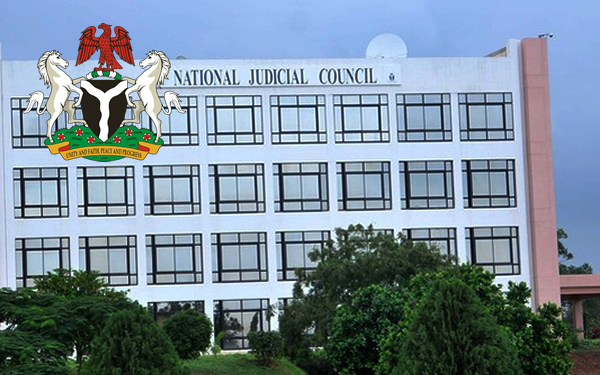
On 18 November 2024, the National Judicial Council (NJC) recommended the sack of Chikeka for age falsification. Additionally, “the council found that Grand Khadi Mahdi of Yobe State had three different dates of birth – December 10, January 28, and July, all in 1959, while his actual date of birth is 1952. The council held that Babagana, the Grand Kadi of Yobe, committed an act of misconduct in violation of Rule 02908 (i) and (ii) of the Public Service Rules, 2021 and ought to have retired from service 12 years ago.”

I am scandalised to learn that falsification of age by judicial officers is this rampant. How many more retired judges remain in service of the judiciary? The judicial officer’s calling is to do justice and, in some instances, convict people who cheat the system, falsify documents, or depose falsehoods on oath. What is the moral justification for persons like Abosi, Babagana, or Chikeka to purport to dispense justice on others?

I thank Odinkalu for amplifying the situation, keeping it in the front burner and insisting that the right thing is done. It remains to be seen if the NJC’s recommendation directing compulsory retirement and refund of salaries by the number of months that Babaganda and Chikeka respectively overstayed their judicial tenure will be implemented.

However, retirement and refund of salaries alone are, in my opinion, not proportionate punishment for the misconduct established. I think that there should be additional consequences for the misconduct by  Abosi, Babagana and Chikeka. They have each done considerable damage to the standing of the judiciary and to the careers of other persons who could have been President of Customary Court of Appeal, Grand Khadi, or Chief Judge who would have filled the vacancies had they left the judicial service when they were due. Their conduct also implicates several heads of crime, including fraudulent misrepresentation, forgery, and perjury.

The Difficult Question

The more difficult question is: what is the fate of judgments or proceedings delivered or conducted by these judicial officers after the time that they ought to have retired?

The judiciary is not like the executive where acts done by a person who is not the governor or duly appointed executive member could still be saved by several theories, such as the doctrine of necessity. Nor is the judiciary like the legislature where the participation of persons not qualified to do so would not necessarily invalidate laws made. Of course, participating in parliamentary proceedings when unqualified is unconstitutional under section 57 of the Nigerian Constitution of 1999.

However, that did not deter people like Salisu Buhari from forging their age and qualifications to claim eligibility to become elected to the position of the Speaker of the House of Representatives from 3 June 1999 to 23 July 1999. Laws, resolutions or proceedings made while he was speaker did not become void. Salisu Buhari would later confess, resign, apologise, and be convicted of his crimes. President Olusegun Obasanjo extended a pardon to him after the courts sentenced him to two years in prison for those crimes.

Numerous lawmakers had been in the national or state assemblies making laws while not eligible to be in those places. The constitution in those instances provides that the ineligibility of a lawmaker does not make the law made invalid. No one has bothered to ask if without those ineligibles, the legislature would have been quorate to begin with.

The enquiry as to whether the acts of Chikeka, Mahdi Babagana, or Abosi would remain valid is important because of its implications for the validity of their decisions after they should have retired. The case of former Abia State governor, Orji Uzor Kalu, is relevant here.

The Economic and Financial Crimes Commission (EFCC) prosecuted Orji Kalu for stealing the equivalent of about US$700m from the state’s coffers. The trial court convicted and sentenced him to about 12 years in jail. Before the conclusion of the proceedings, the trial judge (Muhammed Idris) was nominated a justice of the Court of Appeal. Orji Kalu applied for Idris to continue and complete the trial. Section 396(7) of the Administration of Criminal Justice Act (ACJA) allowed a judge of the High Court elevated to the Court of Appeal to continue to sit as a High Court judge for the purpose of concluding partly heard criminal matters which s/he was handling before the elevation.

Idris granted Orji Kalu’s application and concluded the trial despite his nomination to the Court of Appeal. On appeal, the Supreme Court held that Idris was no longer a judge of the Federal High Court on the day he convicted and sentenced Orji Kalu. It therefore set aside the proceedings. On 2 June 2020, Justice Abdullahi Liman ordered the release of Orji Kalu from custody, claiming that the decision of the seven-person panel of the Supreme Court meant that his conviction was wrongful and there was no basis for him to remain in custody. Justice Inyang Ekwo on 21 September 2021 restrained EFCC from re-arraigning Orji Kalu, holding that to do so would breach the constitutional prohibition against double jeopardy.

The principle in this decision is clear. So, what happens to the decisions rendered by Chikeka, Babagana, Abosi or any other unqualified judge rendered after they were supposed to have retired? What about accused persons convicted or acquitted by Chikeka et al? Will the Orji Kalu precedent be democratised and who will bear the cost of wasted time and resources of the State and litigants? It is not just enough for Abosi, Babagana, Chikeka and others to disgorge salaries unlawfully earned. They deserve their day(s) in court.

Johnson Agwu is a lawyer and writes from Lagos

Justice Denied: A call to reassess the Appeal Court’s verdict on sexual abuse of a minor, By the Adinya Arise Foundation AAF

On November 29, 2024, the Court of Appeal sitting in Lagos overturned the conviction and life sentence of Dr. Olufemi Olaleye, a medical director previously found guilty of sexually abusing his wife’s 16-year-old niece. The judgment, which ruled that the evidence presented by the prosecution was “tainted” and “unreliable,” has sparked outrage, especially as the global community marks the 16 Days of Activism Against Gender-Based Violence.

This verdict is not just a blow to the victim; it sends a chilling message to survivors and activists fighting for justice in cases of sexual violence. The ruling undermines decades of progress in addressing the culture of silence and impunity surrounding sexual abuse, particularly against minors.

A Failure of Justice

The appellate court’s decision rested on perceived procedural flaws in the trial, including contradictions in the victim’s testimony and the trial judge’s alleged interference to “bridge gaps” in the prosecution’s case. However, the essence of justice should not rest on procedural technicalities but on the pursuit of truth and the protection of vulnerable individuals.

The survivor in this case, a minor under the care of the accused, demonstrated immense courage by coming forward. Her testimony, corroborated by expert evidence from a child forensic specialist and a medical doctor from the Mirabel Centre, painted a clear picture of abuse. Yet, these voices were dismissed as “worthless.”

By prioritizing procedural missteps over the survivor’s ordeal, the appellate court has inadvertently sent a dangerous signal: that the rights of the accused to escape conviction outweigh the rights of the survivor to be believed and protected.

The Broader Implications

This ruling arrives at a critical moment when global campaigns against gender-based violence are gaining momentum. It threatens to erode trust in the judicial system and discourage other survivors from seeking justice. If survivors feel that their testimonies and expert evidence can be so easily disregarded, many will remain silent, emboldening perpetrators.

Moreover, the ruling has undermined the painstaking efforts of activists, social workers, and NGOs who have fought tirelessly to create an environment where survivors of sexual violence are empowered to speak out. This decision risks undoing years of advocacy and sets a dangerous precedent for future cases.

A Call for Reawakening and Accountability

The justice system must prioritize the protection of the vulnerable and the accountability of perpetrators over technicalities. This case demands an urgent review. The Supreme Court must step in to reassess the facts and evidence, ensuring that justice is served.

Furthermore, this ruling underscores the urgent need for judicial reforms, including:

  1. Training for Judges: Judges should receive specialized training in handling gender-based violence cases, particularly those involving minors.
  2. Victim-Centered Approaches: Legal proceedings should prioritize the well-being of survivors, ensuring they are not re-traumatized by the judicial process.
  3. Strengthened Prosecution: Prosecutors must be equipped to present watertight cases, with a clear focus on safeguarding survivors’ rights.

The Fight Continues

This verdict is a setback, but it is not the end. Activists, legal practitioners, and the public must rally to ensure that the rights of survivors are upheld. We owe it to the young girl at the center of this case and to countless others who face similar atrocities to ensure that their voices are heard, believed, and acted upon.

As the 16 Days of Activism Against Gender-Based Violence continues, let us channel our anger and disappointment into renewed advocacy. The fight for justice is far from over, and this case must become a rallying cry for systemic change.

Justice for one is justice for all. Let us not rest until the scales are balanced. Adinya Arise Foundation AAF stands in solidarity and relentless in her advocacy to end GBV

TIPS