Home Blog Page 489

The other side of the tax debate, By Ike Abonyi

Collecting more taxes than is necessary is legalized robbery” – Calvin Coolidge

Whenever a national debate is ongoing in Nigeria, it would be difficult to enter the fray from a rational and patriotic point of view. In Nigeria, debates are usually pigeonholed into ethnic and/or religious and geopolitical slants, as is the case with the ongoing tax reform debate.

The ongoing brouhaha over tax reform, like every issue in Nigeria, has been muddled up; the main issue has taken backstage. The sentiments in it now drive the debate, and it’s difficult to join the debate without being identified as either pro-North or pro-Tinubu and his Lagos group.

NNPP presidential candidate in the 2023 election Rabiu Kwankwaso even tagged his understanding of the tax reform as the continuation of the colonisation of the geopolitical North that began with Tinubu’s attempt to install an Emir in Kano State.

Reforms all over the world do not just come; they face enormous resistance, but when they survive the bashing, it’s usually for the good of society. What determines the survival of a reform anywhere depends on the motive of the person or group driving it. If the motive is seen as selfish and devious in handling, even the positive end of it will suffer. That appears to be the crux of the matter with the resistance to the tax reform bills.

Recall that in September, President Tinubu sent four tax reform bills to the National Assembly: the Nigeria tax bill, the Joint Revenue Board Establishment Bill, the Nigeria Revenue Service, and the Nigeria Tax Administration bill. The four bills are fallouts from the Presidential Committee on Fiscal Policy and Tax Reforms set up by the President in August 2023. The committee was chaired by a notable Lagos tax expert, Taiwo Oyedele.

If these four bills are turned into law at the National Assembly, it would lead to the repealing of at least eleven existing tax laws in Nigeria and it will bring them into one uniform law.

The President, by his argument, sees his new bills as pro-poor and pro-growth to the extent that it exempts anybody earning N800,000 or less from income tax and reduces the income tax from 30% to 25%, exempting small companies from paying income tax. But the hike in VAT from 7.5% to 15% appears to have taken away the gains from consumers.

But the question is, If the reform has all these positives why the resistance? The defiance against the tax reform has its origin in the electoral mandate of the President. It’s an indisputable fact that an elected president in a democracy can rightly claim to have the mandate of the people. But to what extent can Bola Tinubu rely on his mandate? Even if the INEC and the judiciary gave legal authority to his mandate, to what extent is that to the larger population who were part of the electioneering and the eventual outcome?

Aside from the k-leg of his mandate due to the electoral malfeasance recorded during the election, how enticing can Tinubu’s administrative style win sympathy for any of his policies? The decreed manner he removed the petrol subsidy soon after his swearing-in on May 29, 2023, had no input from the people. The government’s apparent indifference to the suffering populace arising from his harsh policies, the lavish public and private lifestyle of the regime operatives, and the prioritising of grandiose projects ahead of what addresses the welfare of the ordinary people, among others, combine to de-market any policy of this government.

How on earth will Tinubu expect his tax reform to enjoy accolades with the frightening nepotism his regime is exhibiting, especially in the finance sector? The Chairman of the Presidential Advisory Committee that recommended the tax reform is Yoruba, the Chairman of the Federal Inland Revenue Service that will implement the reform is Yoruba, the Governor of the Central Bank of Nigeria, CBN that will supervise the reform, is  Yoruba, ditto the Minister of Finance the custodian of all revenues also Yoruba, the blue Economy Minister also Yoruba, the head of the main revenue collector, the Customs Service also Yoruba, etc.

Nigerians, not just the North, should be apprehensive about any form of reform, particularly taxation, coming from a regime that has demonstrated enormous bias in appointments, particularly in the Finance sectors of all federal establishments. A country of over 200 ethnic groups having one tribe that also has the President heading the Police, the DSS, the Army, and virtually all revenue points in Nigeria cannot come up with a reform that will not be challenged.

Nothing so far in the 19 months of Tinubu’s administration that will make Nigerians jump at any of his policies as having a national or patriotic touch, more so taxation, where the President had demonstrated some wizardry with his controversial Alpha Beta tax consulting group.

Also, meaning well and delivering well are two different things. If Tinubu means well in the tax reform, why not make efforts and deliver it well instead of pushing it aggressively enough to raise suspicion from bystanders?

One significant other side of this tax reform issue that has been brought out copiously, which Nigerians are not looking at critically, is the vertical division it exposed in Tinubu’s administration.

Number two citizen of this country, Vice President Kashim Shettima, has the constitutional mandate to head and preside over the National Economic Council, NEC, the highest statutory economic body of the government. This august body looked at the reform and recommended that it be withdrawn for now for further consultations, but he was ignored.

That’s disrespectful from whichever angle you stand to look at it. As the highest Northerner in this system, the VP met with Northern governors who raised some apprehension over the reform bill, and their concern was discarded. No wonder the VP’s Senator Ali Ndume and his Governor Babagana Zulum are more pissed off and vocal against the reform.

Even the appointment of the integrity-challenged Daniel Bwala, who is from the VP’s state as presidential adviser when it’s known that he is not on good terms with the VP also says a lot. Even if one does not agree with the North on certain aspects of their position on tax reform, the obvious disrespect to the office of the VP and the Northern governors is too daring and politically unwise.

Subjecting such critical things like the controversial tax reform to the National Assembly looks plausible since they are the people’s representatives, but this 10th Assembly is beyond being just a rubber stamp; they are virtually a department in the Executive arm. They passed the new National Anthem without consulting anybody; they passed a private jet purchase for the President without a single debate.

Under their watch, the exact figures of the national budget are unknown; they approve loans, both local and foreign, without debate, all the President’s nepotistic appointments are going on and they just look away.

Against this backdrop, Nigerians will find it difficult to jump at anything coming from the two arms, the Executive and the Legislature especially knowing too well by empirical evidence that the third arm, the judiciary is virtually non-existent being a member of the triumvirate and will gladly play along even if the People’s interest is at risk.

Therefore, the points highlighted above are responsible for the sparked intense discussions going on, and its fallout could have significant implications for the country’s economy, politics, and social stability. The proposed VAT increase could lead to further higher prices for goods and services, affecting low-income households disproportionately. Small businesses might struggle to comply with the new tax laws, potentially leading to business closures or reduced operations.

Politically, the tax reform debate has already flared regional tensions, with Northern leaders opposing the bill and this could lead to increased political polarisation. The controversy surrounding the tax reform bill could lead to legislative gridlock, making it challenging to pass other important bills, and above all, it has raised concerns about the Tinubu government’s commitment to fairness and equity. On the social flank, the tax reform is going to further send more population into multidimensional poverty and may lead to further brain drain. (japaring)

The accompanying intrigue and the horse trading being witnessed in the debate have brought to the fore various interests and intrigues. It’s also creating further division between the regions, raising constitutional issues about its infringements on the powers of state governments to collect taxes. This has led to concerns about the potential for legal challenges and conflicts between the federal and state governments. There are also fears that the reform tends to give more revenue power to the federal government, which is already enjoying an overdose of power and is rightly seen by many discerning minds as too overwhelming.

But all said and done, the citizens should be paramount, and this brings this conversation conclusively to Ronald Paul’s remarks that “One thing is clear: The Founding Fathers never intended a nation where citizens would pay nearly half of everything they earn to the government.” And Chinese philosopher Lao Tzu notes that “The people are hungry because those in authority eat up too much in taxes.”
God help us.


IGP says Nigeria’s justice system is weak, sick, and needs help

The Inspector General of Police (IGP), Kayode Egbetokun has said the criminal justice system in Nigeria is weak, sick and requires a total overhaul. 

The IGP who spoke on Thursday at the 2024 Annual Lecture/Award Ceremony, organised by the Crime Reporters Association of Nigeria (CRAN) also urged Nigerians to stop blaming the police.

“Police is not the only pillar or stakeholder in the criminal justice system in this country. We have challenges, we accept, but we will try our best to make sure we have a better system. 

“All of us must come together to help perfect criminal justice or justice system administration in Nigeria. If this system is working well; it is going to affect you, it is going to us,”  he said.

IGP Egbetokun was represented at the event by the Force Public Relations Officer (FPRO), ACP, Muyiwa Adejobi. 

On his part, the Chairman of the Independent Corrupt Practices Commission (ICPC), Dr Musa Adamu Aliyu, SAN, said that corruption remains one of the most persistent challenges affecting all sectors and institutions of Nigerian society, undermining policy-decision making. 

According to Aliyi, “Corruption remains one of the most persistent challenges affecting all sectors and institutions of the Nigerian society, undermines policy-decision making, resource mobilisation and utilisation, policy execution and service delivery. 

“Our experience at the ICPC in partnership with key stakeholders, has shown that tackling corruption effectively, across sectors and institutions, requires a proactive, multi-faceted approach. This approach should focus not only on enforcement but also on prevention, deterrence, and systems reform.” 

Aliyu pointed also out that the Justice System Administration faces institutional, funding, infrastructural, human resources, and socio-cultural challenges. adding that: “The widespread corruption within the justice system, including bribery, influence peddling and attitudinal challenges are more fundamental and daunting.

“I dare say that the justice sector remains a focal point of concern, particularly regarding bribery involving stakeholders in the justice sector, and despite limited public contact, judicial officials exhibit relatively high bribery prevalence, hence the need for targeted anti-corruption measures in this sector.”

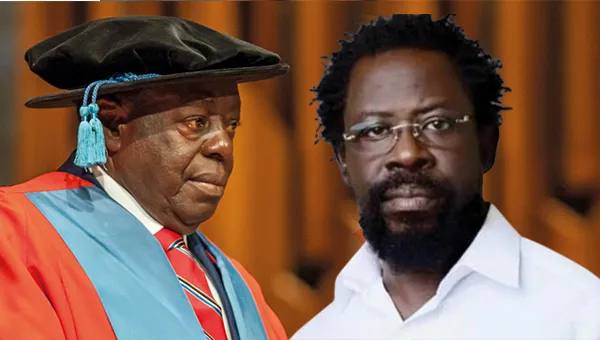
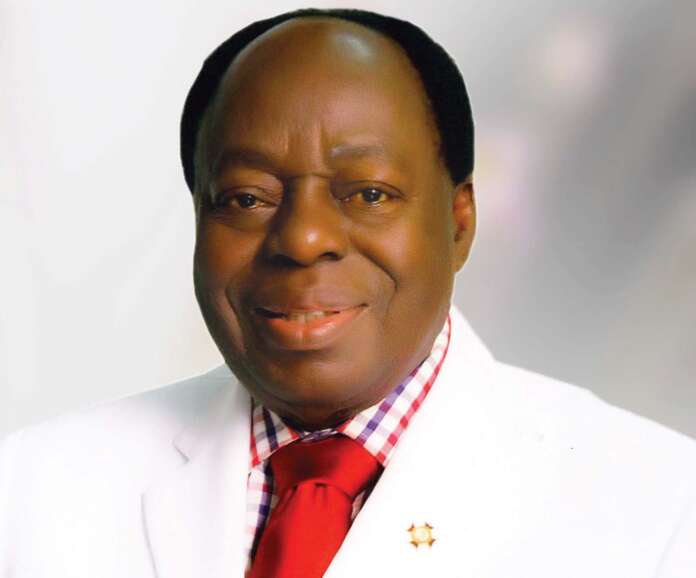
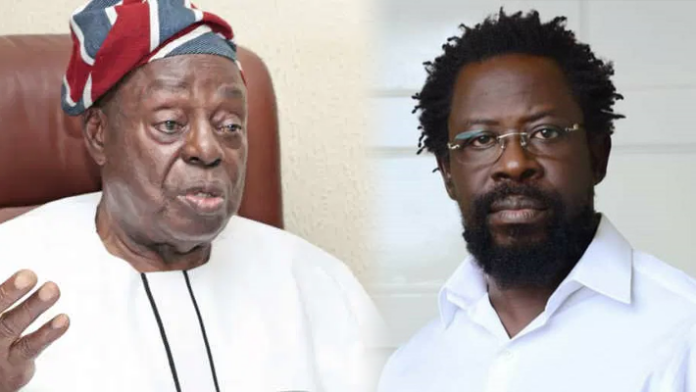
Dele Farotimi will be free when he proves his assertions in the book are true — Afe Babalola’s lawyers

The legal team of Senior Advocate of Nigeria, Afe Babalola, has given conditions for the release of human rights lawyer, Dele Farotimi.

Babalola’s legal team said Farotimi would be free when he proves the defamatory allegations against the notable Senior Advocate of Nigeria.

His lawyers, Owoseni Ajayi, Olakanmi Falade, and Lawrence Fasanmi, disclosed the information during a press briefing in Ado Ekiti, the capital of Ekiti State, on Friday.

The lawyers said Babalola petitioned the Police to investigate the defamatory allegations Farotimi made in his book, Nigeria and its Criminal Justice System.

Read Also: When false publications may amount to criminal libel

Read Also: A parallel between Soyinka/Farotimi and Afe Babalola/Femi Okunnu

They explained that charging Farotimi to court by the law enforcement agency was for the law to take its due cause on the matter.

Ajayi said the press conference was to correct the various misleading publications about the ongoing matter between the Nigeria Police Force and Farotimi.

He said, “All facts are verifiable. I urge Nigerians to verify and find out what the truth is first before picking a side.

“Is it wrong for Aare Afe Babalola to seek justice for these false utterances against him? Should justice only be available to Mr Dele Farotimi because Aare Afe Babalola is a global icon?

Read Also: Farotimi & the Trial of Ekiti Judiciary

“Once Mr Dele Farotimi can show proof that his assertions in the book are true, then he will be free.

“The law allows free speech, but not one that is calculated to injure the good reputation of another.”

Daily Post

The case of two maniacal looters and our future

By Adekunle Adekoya

Two major reports on the anti-corruption landscape made the headlines these last few days. Given the sheer scale of their activities, both left me wondering about the perpetrators’ mental state.

All of us still remember the late maximum dictator, General Sani Abacha. Since his passing, it has come to light that the redoubtable General siphoned so much money from the national exchequer that 30 generations from him would never have to work again. Such was the gargantuan scale of his kleptomania that social media jokers applaud him for giving Nigeria alerts, more than 15 years after his transition as tranche after tranche of what we now know as Abacha loot got repatriated back to national coffers. And they were in millions of dollars, which, converted to naira, would be billions or trillions.

Last week, it hit the newswires that a former minister spent N20m of Hydro Power Fund to lodge in a resort, according to a witness in the trial of former Minister of Power, Saleh Mamman, which continued on Wednesday, November 27, 2024 in the Federal High Court, Abuja, presided over by Justice James Omotosho with the cross-examination of the third prosecution witness, (PW3), Colonel Adebisi Adesanya (retd).

The cross-examination followed the testimony of the witness on Tuesday, November 26, 2024, in which he disclosed that the former minister spent the sum of N20 million from the fund earmarked for Mambilla Hydro Power project on payment for lodging in a resort over a period of one year.

The Economic and Financial Crimes Commission, EFCC, is prosecuting Mamman on a 12-count charge bordering on conspiracy to commit money laundering to the tune of N33,804,830,503.73(Thirty-three Billion, Eight Hundred and Four Million, Eight Hundred and Thirty Thousand, Five Hundred and Three Naira, Seventy-three Kobo).

By the way, Saleh Mamman, an engineer, was one of only two ministers that General Buhari ever sacked from his cabinet. The other was his Agric minister, Mohammed Nanono.

The second one was about the final forfeiture of 753 duplexes owned by a single individual in Abuja. 

According to the EFCC , a single individual acquired 150,500 square metres of land and built 753 units of duplexes and other apartments from proceeds of crime. EFCC said the property estate located on Plot 109 Cadastral Zone C09, Lokogoma District, Abuja is the single largest seizure since its inception in 2003.

The property has now been forfeited to the government.

However the EFCC did not name the individual behind the crime and the estate.

I am of the opinion that naming and shaming is an integral part of the punishment for the crime, and the EFCC declining to name the culprit somewhat makes the agency complicit, or it was pandering to the wishes of powerful interests behind the act.

We are partly where we are as a nation because of corruption. Unfortunately, as has been observed elsewhere by others, the queue of those waiting to commit corrupt acts is longer than that of those who have already committed it, including those caught and those who escaped. 

It takes me back to an earlier edition of this column in which I called for social re-engineering of the Nigerian polity. Those who pursue  careers in government are drawn from amongst the people. What happens to them that they become inveterate looters once in government? I think this trait has been incubated in the genetic pool and gets hatched when people get into government. Besides, one person building 753 duplexes will collect rent on such a scale that the proceeds will rival Abacha’s loot, albeit in naira. How does a minister dip his hands into money meant for a power project to pay for pleasures of the flesh? What goes on in his brains? Clearly there is some mania at play here. 

Those stealing money in government, and using such to acquire property and make investments which they hope to bequeath to their progeny are reading their books upside down. Already, mansions in many of our towns and cities are empty, as those they were built for have found other attractions in other climes and are not in the least enamoured of property owned by their parents. Nigerians, let’s wake up to the realities staring us in the face. Many states recently held local government elections. If there’s an art by which the minds could be read from the faces, it will come to light that many local government chairmen and councillors are incubating notions of rivalling state governors and senators in terms of material wherewithal. Not exactly what should be on the minds of people who want the best for their country, right?

As a result, I hereby move the motion that we adopt the Chinese model of dealing with corruption: on conviction, wear a body bag and face the firing squad. It is a big problem and we must deal with it. However, aside from government agencies whose job is to deal with corruption, it is crystal clear that the power elite currently in charge of our affairs lacks the mindset to deal with corruption. Prove me wrong, dear reader. If not so, why would people sponsor litigation that aimed to kill the EFCC, with ICPC in tow?

Let it be known here and now: corruption has eaten very deep into the soul of many a Nigerian. We’re in deep trouble. If you need the services of an artisan, you will discover what I’m talking about. The carpenter, plumber, electrician or the motor mechanic are all out to get as much as possible from you while rendering very poor services and ensuring you’ll call again to rectify what you just paid them for.

What to do? Apart from adopting the Chinese manual, let’s get the educational system to tackle the problem. With immediate effect, we must resume teaching Civics in our schools at all levels, and in the tertiary rungs, let it be made compulsory courses.  That way, in 30 years (a generation), we might be able to solve the problem. TGIF.

How 28-year-old who took hard drugs died after touching live wire in Ondo

A 28-year-old man tragically ended his life abruptly when he touched a live wire while reportedly under the influence of hard drugs in Ondo State.

Spokesperson of the Ondo State Police Command, Funmilayo Odunlami, who disclosed this on Friday, December 6, 2024, said the young man allegedly took some suspected hard drugs after which he climbed a fence, touched a live wire and got electrocuted. 

“Esther Igbekeles Song ‘Se Normal’ is the best advice for those involved in Drug Abuse/ Substance use: Ondo State live wires and future (Youths). You have a long way to go, don’t allow Drugs take you away, a lot of people are looking up to you. A WORD is enough for the Wise,” she wrote. 

“It’s saddening that some of our youth have refused to ‘ Se Normal’ despite the warnings. A young man of 28 years old suspected to have taken hard drugs, climbed a fence and touched a live wire , unfortunately he was electrocuted. RIP to the dead. DON’T BE A VICTIM, SE NORMAL.” 

28-year-old man who took hard drugs electrocuted after touching live wire in Ondo

“My father has been abusing me through my anus and from the front, threatened to kill me” —Cries an 11-year-old girl

An an 11-year-old girl who now bleeds from the anus narrated to an Akure Magistrate’s Court in Ondo State how her 38-year-old father, Moses Udoh has been sexually abusing her from the anus and from her privates.

Udoh who has been remanded in prison custody for the alleged indecent sexual assault of his daughter was arraigned by the police on a two-count charge of indecent sexual assault of a minor and threat to life.

The Police Prosecutor, Taiwo Oniyere, said that the defendant committed the offence on November 26, at 10.20 p.m., at his residence located at No 20 Igboniki Street, along LAO, Akure, Ondo State.

Oniyere, told the court that Udoh, on several occasions forcefully had sexual intercourse with his biological daughter.

According to him, the defendant severally threatened to kill the victim if she reported him to anyone.

According to the charge sheet, offence committed contravene Sections 25(a) and 86(2) of the Ondo State Violence Against Persons (Prohibition) Law of 2021.

The plea of the defendant was not taken due to the nature of the offence.

Police prosecutor therefore urged the court to remand the defendant to prison, pending legal advice from the office of the Director of Public Prosecution (DPP).

The trial Magistrate Temilola Olusola-Olujobi, thereafter, ordered his remand in prison.

Olusola-Olujobi, also ordered the transfer of the case to the Family Court and adjourned it to December 10, for trial, because of the age of the victim.

Meanwhile, in an interview, the victim narrated how her father, severally violated her in his room and threatened to kill her if she open up to anyone.

According to her “My father has been forcefully having sexual intercourse with me through my front and my back.

“He started it when I was 10 years old and I cannot count the number of times he has done it.

“Whenever my father was sleeping with me in the night, he would increase the volume of his radio, so that my voice would not be heard by neighbours around.

“He instructed me not to tell our neighbours about it and also threatened to kill me and the person.

The victim added that “When I noticed that blood was coming out of my anus, which is now causing discomfort for me, I decided to tell his sister.

Alleged Defamation arrest backfires as Dele Farotimi’s book becomes #Number 1 Worldwide Bestseller on Amazon

Following Dele Farotimi’s arrest over the alleged defamation of legendary lawyer and Senior Advocate of Nigeria, Aare Afe Babalola in a book he authored, Amazon has listed the book ‘Nigeria and Its Criminal Justice System’, as its number one bestseller in global politics.

The book climbed to the top of Amazon’s rankings on Thursday evening. A bestseller is a book or other product that sells in very large numbers.

The demand for Mr Farotimi’s on global platforms like Amazon followed a similar rush to bookstores across Nigeria, where citizens were curious to learn its content.

The surge in demand on global platforms like Amazon mirrored a rush to bookstores across Nigeria, as citizens sought to uncover the book’s controversial content.

Farotimi’s arrest on Tuesday, reportedly on orders by Babalola, fueled interest in the book.

Read also: A parallel between Soyinka/Farotimi and Afe Babalola/Femi Okunnu

Read Also: Farotimi & the Trial of Ekiti Judiciary

The 93-year-old senior lawyer alleged being accused in the book of compromising Nigeria’s judiciary.

Read Also: When false publications may amount to criminal libel

The book, published in July 2024, critiques systemic corruption in Nigeria’s judiciary and highlights specific instances of alleged misconduct by legal figures. Farotimi, a retired lawyer based in Lagos, used the book to criticise corruption in the Nigerian judiciary and specifically namechecked Mr Babalola as one of the top offenders. 

Read Also: NBA on the Arrest of Dele Farotimi: Law enforcement agencies must prioritize the principles of legality, fairness, respect for human rights

Although the book recorded low sales initially, Farotimi’s arrest ignited public curiosity and propelled it to bestseller status.

The author was detained by armed policemen in Lagos on Tuesday and transported to Ado Ekiti, about 300 kilometres northeast of the city, where Babalola is a prominent figure.

Dele Farotimi was arraigned in Ekiti on Wednesday, with a judge ordering his remand pending a bail hearing on December 10.

The detention has sparked public outrage, with Nigerians demanding Farotimi’s release while railing against the old Senior Advocate of Nigeria, who is widely adjudged the most influential private citizen in Ekiti State. 

When false publications may amount to criminal libel

By Aare Afe Babalola SAN

In recent times, there has been an increase in the arrest and arraignment of persons alleged to have published false and misleading information against public figures. The first of these was that of a blogger who was arrested, arraigned and subsequently remanded in prison in connection to publication relating to a cleric. Since then there have more of such incidents including journalists of mainstream media outlets. Understandably, these arrests have attracted scrutiny from the public. While some have condemned what they see as highhandedness on the part of the complainants who in most cases are elected government officials, some have argued that the right to freedom of speech comes with a responsibility to keep within the law and that anyone who fails to keep within accepted boundaries must be subjected to the law.

However, most notably has been the perspective that the complainants should simply have filed civil actions against those they claim to have peddled wrong and injurious information concerning them. Those who hold this view argue, albeit wrongly, that such false and injurious publications give rise only to a right of action in a civil claim. It is for this reason that I intend to briefly highlight the fact that the publication of false and misleading information can give rise to criminal prosecution.

In doing so it is not my intention to validate the various prosecutions that are ongoing or to suggest that such prosecutions are always the best way of dealing with wrongful and misleading publications. Rather it is my aim to draw the attention of stakeholders, particularly members of the fourth estate of the realm, to the fact that certain actions may bring them on a collision course with the law so that they may accordingly be guided in the exercise of their profession.

DEFAMATION CAN BE CIVIL AND CRIMINAL

Although tortuous defamation is the more common and more widely discussed, defamation is a dual-nature offence and it can be a civil wrong and as well a criminal act.

In its civil form, defamation seeks to protect for a man during his life-time the untainted possession of his reputation and good name.  It is therefore a wrongful act in the eyes of the law for a man to directly impress in the mind of another person a matter that is not only untrue but is likely in the ordinary and natural course of things to substantially injure the reputation of a third party.  This is what is called defamation and in tort may attract the award of damages in favour of the person wronged.

However, defamation can also be a criminal wrong for which an offender can be charged, prosecuted, convicted and sentenced.  And this form of defamation is the concern of this paper.

In criminal defamation, the law seeks to prevent a situation in which defamation assumes a tendency to arouse angry passion, provoke revenge and set the society ablaze in a way that public peace is endangered.

Defamation is generally of two kinds: if it is published in a transient, fugitive form, it is called slander.  A permanent publication, printed or written, of a false and injurious material against another person, whether it be in painting or picture, effigy, caricature, advertisement, article, news report, talking film or any disparaging object will qualify as libel.

Broadcasting, including sound and television aimed for general reaction is a publication in permanent form and therefore libel.

Publication is important in defamation, whether tortuous or criminal.  Section 374 of the Criminal Code Law defines the publication of a defamatory matter as being:

“a)   in the case of spoken words or credible sounds, the speaking of such words or the making of such sounds in the hearing of the person defamed or nay other person;

 “b)   in other cases, the exhibiting it in public, or causing it to be read or seen, or showing or delivering it, or causing it to be shown or delivered, with intent that it may be read or seen by the person defamed or by any other person”.

The above definition of instances of publication in the crime of defamation shows a clear difference in the conception of publication in the tort of defamation.  Whereas in tort the false publication must be to a third party before it is taken as defamatory, in the crime of defamation, however, publication to the person defamed alone is enough.

Criminal Libel may be a criminal offence as well as a civil wrong because of its tendency to provoke a breach of the peace. An indictment will lie (1) where the libel tends to provoke the person defamed to commit a breach of the peace; or (2) where it is in the public interest that criminal proceedings should be brought. Hence, publication to the person defamed may support a criminal prosecution but not a civil action. The prosecution is not bound to prove that the libel is unusually likely to provoke a breach of the peace.

At common law the truth of defamatory matter was not a defence to a prosecution for criminal libel, but this is no longer so if, in addition to the truth of the defamatory matter, the defendant can also establish that its publication was for the public benefit.

Before criminal proceedings in respect of a libel, are instituted, there must be a case to go before a criminal court that is so clear at first sight that it is beyond argument that there is a case to answer. Secondly, the libel must be a serious one, so serious that it is proper for the criminal law to be invoked. It may be a relevant factor that it is unusually likely for the libel to provoke a breach of the peace, although that is not a necessary ingredient at all. Thirdly, the question of the public interest must be taken into account, so that the judge has to ask himself the question: ‘Does the public interest require the institution of criminal proceedings? Once the Attorney General arrives at the conclusion that the criminal law ought to be invoked, then it is not a private case between individual: the state has an interest and the state has a part in it.

The highly respected Lord Coleridge CJ had this to say on public interest;

There ought to be some public interest concerned, something affecting the Crown or the guardians of the public peace (likely to be broken by the alleged libel), to justify the recourse by a private person to a criminal remedy by way of indictment. If, either by reason of the continued repetition or infamous character of the libel, breach of the peace is likely to ensure, then the libeler should be indicted; but, in the absence of any such conditions, a personal squabble between two private individuals ought not to be permitted by grand juries, as indeed, it is not permitted by sound law, to b the subject of a criminal indictment”.

 The above is essentially the principle that should guide the decision to institute criminal libel cases in Nigeria. As noted, personal squabbles between individuals should not find their way into the criminal docket of any court. Thus the Police should not lend themselves to an abuse of the judicial system by rushing to prosecute any journalist on account only of the fact that he has published a story which a governor or some other government official does not agree with. The proper step in such instances is for the government to put forward its own narrative regarding the subject of the publication. It is for this reason that most governors surround themselves with Press aides. However, those who make publications should also take extra effort to authenticate the sources of their stories. In a country such as ours with a history of violence brought about by misleading information, the duty becomes even more important.

In this regard, I note that there are current efforts to stem the tide of fake news in the mainstream and online media. There are now platforms dedicated to fact checking claims made in publications. In the wake of the last xenophobic attacks on Nigerians in South Africa, a popular blogger reported that the office of a South African owned telecommunications company in Lagos had been set on fire. However, the falsity of the publication was quickly spotted and reported as the picture of a burning office included in it was identified as that of a fire incident that occurred years earlier. These efforts must continue. It is in the interest of all that peace endures in Nigeria.

 AARE AFE BABALOLA, OFR, CON, SAN, LL.D

https://www.abuad.edu.ng/when-false-publications-may-amount-to-criminal-libel/

A parallel between Soyinka/Farotimi and Afe Babalola/Femi Okunnu

By Sir Richard Akinnola II

I don’t have the details of the portions of Dele Farotimi’s book on Nigeria’s criminal justice system that irked revered Chief Afe Babalola, SAN who claimed he was defamed.
Chief Babalola is one Nigerian that l hold in the highest esteem.
When Wole Soyinka came out of General Gowon’s gulag, he wrote his epic book -“THE MAN DIED”.

However, sometime in 1978, Alhaji Femi Okunnu, a Minister under the Yakubu Gowon regime, instituted a N500,000 libel suit against Professor Wole Soyinka over certain portions of Soyinka’s book “The Man Died”, the prison memoirs of Soyinka, as they related to him (Okunnu).

Professor Soyinka had written “The Man Died” shortly after his release from detention in 1969. The book was published in 1970 by the London Publishers, Pex Collings and Company. It was a caustic account of Soyinka’s one year, nine months in detention. Soyinka had been detained by the Gowon administration over his roles during the civil war. The Gowon administration had accused Soyinka of maintaining contact with Chief Emeka Ojukwu who was leading a secession against Nigeria. Soyinka was alleged to be supporting Ojukwu.

While Soyinka admitted to making contacts with Ojukwu, but that it did not amount to acts detrimental to Nigeria’s government’s interest. The title of the book ‘The Man Died’ came from the contents of a telegram message sent to him by a friend who was reporting the case of a tortured Nigerian journalist who was beaten on the orders of a military governor during the Gowon regime. The telegram said in part “And the man died.”

Evocative as it is pungent, the book has been compared to the French writer, Victor Serge and his “Man in Prison” and many such accounts of prison experiences. In the book, apart from highlighting the roles played by some key elements in Gowon administration, Soyinka recreates the minute details of prison life, the attempts to break the mind and spirit within the confines of solitary confinement and the challenges posed by prison conditions. In sections of the book, he mockingly recreates dialogues with wall geckos and cockroaches which slip into his prison room at precise moments of the day.

But a major section the book was devoted to seemingly personal attacks on the major actors of the civil war. Those who argue that the war was more than a clash of personal interests say that “The Man Died” hardly transcends such narrow confines. It was on the basis of these personal attacks that Alhaji Okunnu decided to take Soyinka to court for libel.

In his judgment on January 31, 1984, Justice Candide-Ademola Johnson held that in pages 71 and 72 of the book, Alhaji Okunnu was portrayed as a tricky and dubious character.
Justice Candide-Johnson however stated that he was satisfied that “the matters that motivated the comments are matters of public interest. A lot of wrongdoings were perpetrated during the Gowon regime. He (Okunnu) was part and parcel of that regime and he never raised any eyebrow over the activities of the government” said Justice Ademola-Johnson.

He therefore held that the pleas of “fair comment” in those areas by Professor Soyinka had been established.

In view of the observations of the judge that many of the passages complained about were fair comments and looking at the totality of the write-up as it concerned the plaintiff, Alhaji Okunnu, Justice Ademola-Johnson awarded a paltry N250.00 (Two Hundred and Fifty Naira) as damages against Soyinka, amounting to the lowest libel damages in the legal history of Nigeria. The judge also awarded N100.00 (One Hundred Naira) damages against the publishers.

It is with this background that l look at the face-off between our highly revered Chief Babalola and Dele Farotimi over alleged defamation in some parts of Farotimi’s book. While it is within the personal choice of individuals to choose one’s cause of action, I think with the age (90 plus) and the unblemished legal practice of Chief Babalola, resorting to the police to literally ambush and more or less abduct Dele, instead of towing the path of Alhaji Okunnu against Soyinka by suing for defamation, would have been an ideal move.

Now, attention would be shifted from the alleged defamation to the brute force used by the police in apprehending Dele Farotimi. Aare Babalola doesn’t need this at the twilight of his life.

After he left the Bench, Dr Akinola Aguda, an erudite jurist and the first African Chief Justice of Botswana, opened a legal consultancy office where he often invited me, to regal me with his experiences.

On one occasion, he told me that two briefs he usually advised against were Defamation and Divorce matters, particularly if the person is old. According to him, at the hearing, lots of unpalatable things that people never knew about, may come up, to the embarrassment of the parties and their children.

For instance, in defamation matter when your reputation is in question, a defendant is at liberty to bring up a dirty past the plaintiff may have forgotten. This reminds me of the libel case instituted by Chief FRA Williams, SAN against Newswatch in 1985 in which matter Dele Giwa informed me l was likely to be a witness.

Newswatch hired Gani Fawehinmi, who pleaded justification, that Chief Williams had no reputation to protect. He supported this by excavating a 1949 case in which Chief Williams was charged to court for stealing his client’s money and how Justice Abbot lampooned him for a dishonorable conduct.

Even though he was eventually discharged, Gani annexed the judgment and highlighted where the judge upbraided Williams for a dishonorable conduct.

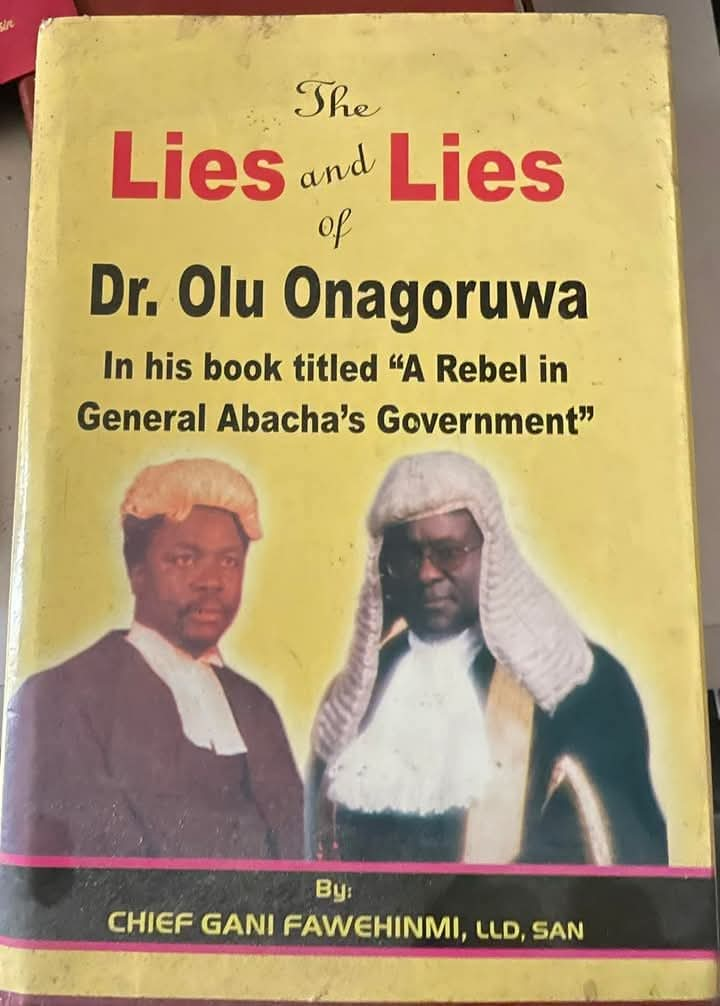
Also, after Chief Gani Fawehinmi fell out with his bossom friend, Dr Olu Onagoruwa, over the latter’s decision to join the Abacha government, Dr Onagoruwa wrote a book to justify his inclusion in the Abacha government. Titled “A REBEL IN GENERAL ABACHA’S GOVERNMENT”.

In a part of the book, he defamed Gani Fawehinmi, who decided to write another book to counter the false assertions against him in Onagoruwa’s book. Titled-“THE LIES AND LIES OF DR OLU ONAGORUWA IN HIS BOOK TITLED ‘A rebel in General Abacha government’, Gani debunked with facts, the lies against him by Onagoruwa in his book.

While it is within the right of any individual to choose his right of individual to choose his right of action when defamed, the admonition of Dr Aguda is quite instructive.

Farotimi & the Trial of Ekiti Judiciary

By Festus Ogun, Esq

Human Rights Lawyer, author and activist, Dele Farotimi was yesterday arraigned before an Ekiti Chief Magistrates Court over a charge of alleged defamation of character, at the behest of Chief Afe Babalola, and Farotimi was subsequently remanded by the presiding Magistrate, Abayomi Adeosun, pending the hearing of Farotimi’s bail application. Everything is wrong with Farotimi’s arrest and remand.

First, the arrest of Farotimi was wrongful and constituted a gross violation of his fundamental rights guaranteed by the Constitution. As you are aware, in the recent past, Farotimi has honoured not less than two Police invitations in Lagos over allegations of criminal libel and has been released on bail on self-recognizance. Now, what could be the justification for the callous abduction of Farotimi on Tuesday by Policemen from Ekiti State Command? Considering that the disputed book was published and launched in Lagos and Farotimi is resident in Lagos, why should the freedom fighter be arrested and whisked to face trial in Ekiti State? While the choice of place of arraignment is a subject of legal debate, I hold the considered view that the insistence on prosecuting Farotimi in Ekiti is suspicious and represents a clear case of forum shopping – an abuse of judicial process.

Now, assuming without conceding that the Police from Ekiti State Command could effect Farotimi’s arrest in Lagos so that he can rightly have his day before an Ekiti court, can the mode of his arrest be justified? As far as I know, Farotimi is a public figure and a widely respected intellectual. A simple formal invitation to him would have saved the police from all the embarrassment it has caused the country.

However, no official invitation was extended to him, even when his office address was public knowledge. Against what is expected of a police force, the men of the Ekiti Command invaded the law Firm of Farotimi in Lekki Lagos, tortured and brutalized his staff, seized the phones of all occupants of the building including all lawyers, damaged properties and violently arrested Farotimi in the most dehumanizing manner – even when none of the staff at his office resisted his arrest or obstructed police duties.

Thereafter, Farotimi was bundled into a police vehicle and violently driven to Ekiti like a common criminal. I am aware that Farotimi arrived in Ekiti in the dead of the night. All through the torturous journey, Farotimi was denied access to his lawyers and family members, food and drugs for his health. All of these were done against clear provisions of the Constitution with the intention of breaking his resolute spirit.

Look, should there have been an arrest in the first place over an alleged case of defamation? I do not think so. Defamation is a private affair that should be settled in civil court between parties. I do not believe state resources should be expended on prosecuting a case of libel against the person of another. In support of my modest position, Chief Afe Babalola, SAN in an article titled “When False Publication May Amount to Criminal Libel” published via https://www.abuad. edu.ng/when-false-publications-may-amount-to-criminal-libel/#:~:text=A%20permanent%20publication%2C%20printed%20or,object%20will%20qualify%20as%20libel stated as follows: “As noted, personal squabbles between individuals should not find their way into the criminal docket of any court. Thus, the Police should not lend themselves to an abuse of the judicial system…”. Chief Afe further argued that the proper step that whosoever feels defamed should take is “to put forward its own narrative regarding the subject of the publication”. Chief Afe cannot be more correct. It is, therefore, quite interesting to note that Chief Afe is the nominal complainant in Farotimi’s libel trial at a criminal court.

Moving to the issue of arraignment and remand, I am honestly afraid like many other Nigerians that Farotimi may not be afforded fair trial. As a minister in the temple of justice, I say this with all sense of responsibility. To start with, Farotimi was charged to court barely a few hours after he was sandwiched to Ekiti. Could it be that the Police did not spend time to conduct proper investigation whatsoever?

I read in the papers that Adeniran Akinwale, Ekiti State Commissioner of Police, stated that the allegations were “fully established”, at a time when Farotimi had not arrived in Ekiti. To my mind, the Police had taken a stand with the accuser prior to Farotimi’s arrest and did not bother to conduct any thorough investigation upon the arrest of the accused. What a Police Farce!

Upon arriving at Ekiti, the Police filed a charge at Ado Ekiti Chief Magistrates Court on Wednesday morning. Almost immediately, the charge was assigned to a Magistrate and arraignment commenced pronto. Farotimi pleaded not guilty to the charges. Curiously, his oral bail application was refused by the trial magistrate. The magistrate insisted on a formal (written) bail application, against regular and conventional procedure at magistrates’ court. I am tempted to ask, what is the legal justification for the learned magistrate’s insistence on a formal bail application?

For the avoidance of doubts, the charges levelled against Farotimi are bailable under the law and magistrates courts are courts of summary jurisdiction; a court that operates with little or no formality. In my few years of active legal practice, I have not seen any instance where a magistrate court requires formal application for bail of defendants standing trial. In fact, a Magistrates Court can take a defendant’s plea, conclude trial and deliver judgment in a day – if the circumstances so permits. It is not the practice and law for formal bail application to be filed in a case before a court of summary jurisdiction. Why was this required in Farotimi’s case? Even if Farotimi did not orally apply for bail or where Farotimi is not represented by a legal counsel, the magistrate court is bound to suo motu grant him bail.

The refusal of an oral bail application for Farotimi under very debatable circumstances may support the position of those who feel that he is unlikely to get a fair trial in Ekiti. I firmly believe that Farotimi is no longer the one on trial. The judicial system in Ekiti must demonstrate its impartiality by ensuring that justice is not only done but must be manifestly seen to have been done to all parties.

The verdict of history beckons.

Festus Ogun is a human rights lawyer and Managing Partner at FOLEGAL, Lagos. [email protected]

TIPS