Home Blog Page 482

Re: Death by Hanging for Stealing fowl, Upholding the Integrity of the Judiciary and Setting the Record Straight on the Conviction of Olowookere Segun and Morakinyo Sunday

By Akinwole Olasubomi A.

The Osun State Government’s recent consideration of the prerogative of mercy for convicted individuals has drawn significant attention and have invariably stirred public opinion based on incomplete or misleading narratives. While this action demonstrates the government’s commitment to exercising compassion and upholding constitutional provisions, it is imperative that such privilege is not misinterpreted or misused to distort the sanctity of judicial decisions. Misleading narratives aimed at undermining the judiciary not only threaten public trust but also obscure the real facts surrounding this case.

The Osun State Government deserves commendation for its thoughtful approach to this matter, particularly its willingness to consider clemency in light of the convicts’ circumstances through the prerogative of mercy as exercised by the executive arm of government is a constitutional provision designed to temper justice with compassion and mercy when appropriate. But this authority is not in anyway a critique of judicial decisions. Instead, it reflects a complementary relationship between the arms of government, underscoring the separation of powers.

However, it is equally crucial to avoid abusing this constitutional privilege by turning the law into a tool to fit a distorted narrative, especially one that trivializes the gravity of the original crimes. This recent development does not, and should not, be interpreted as a challenge to the judiciary’s authority. The judiciary’s role is to ensure that justice is served based on evidence and the letter of the law, while the executive’s mercy is a discretionary act that operates within a separate but complementary sphere.

It is therefore crucial to clarify the facts and reaffirm the role of the judiciary as the backbone of any functional democracy tasked with interpreting and enforcing the law impartially based on evidence, legal statutes, and due process. The misleading portrayal of the judiciary, and in particular the judge who presided over the case, is not only unfair but risks undermining public trust in this vital arm of government.

The current case is a reflection of this democratic balance. The judiciary fulfilled its mandate by delivering a verdict based on the facts and the law. Any subsequent exercise of clemency by the executive does not negate the judiciary’s integrity but highlights the collaborative nature of governance under the separation of powers.

The Facts of the Case

Contrary to sensationalized reports, the conviction of Olowookere Segun and Morakinyo Sunday was not for the petty theft of a fowl, but for armed robbery and related crimes. The prosecution, led by the state Solicitor-General, Mrs. Abiola Adewemimo, presented irrefutable evidence, including eyewitness accounts and confessions from the accused.

The case stemmed from an incident in the year 2010, when the convicts forcefully broke into the home of Mr. Balogun Tope, a police officer, armed with a cutlass and a dane gun. They carted away valuables, including livestock, and were apprehended following their involvement in similar robberies. The evidence showed a clear pattern of criminal behaviour, including their admission to robbing another individual, Alhaja Umani Oyewo, from whom they stole broilers, eggs, and kegs of vegetable oil.

Justice Jide Falola of the Osun State High Court, sitting in Okuku, delivered a judgment grounded in the law. The convicts were found guilty of conspiracy, robbery, and stealing, with sentences proportionate to the gravity of their crimes, death by hanging for conspiracy, in accordance with Section 6(b) and 1(2)(a) of the Robbery and Firearm (Special Provisions) Act, Cap R 11, Laws of the Federation of Nigeria, 2004. Life imprisonment for robbery. Three years’ imprisonment for stealing.

The judge also showed humanity in his judgment, recommending that the governor may consider commuting the death sentence to a ten-year prison term, given the convicts’ ages and circumstances. This reflects a balanced application of the law, tempered with empathy, a situation we now witnessed been put into play by the Osun State government.

It is however disheartening to see attempts to trivialize this case by focusing solely on the theft of a fowl, ignoring the armed robbery charges and the overwhelming evidence presented in court. Such distortions risk misleading the public and eroding confidence in the judiciary. It is important for citizens to understand that the judiciary operates based on evidence and established legal frameworks, not emotion or public sentiment.

To those who care to know, the judiciary system in Nigeria cutting across the 36 sates and federal capital territory is a pillar of democracy, tasked with delivering justice impartially and without bias. So in the case of Osun State, Justice Falola’s handling of the case in question reflects the professionalism and integrity that underpin the judiciary’s work. The prerogative of mercy, if exercised, is not a repudiation of the court’s judgment but a constitutional tool for tempering justice with clemency.

Members of the public are urged to seek facts and reject narratives designed to undermine the judiciary. Trust in this institution is essential for maintaining law, order, and justice in society. Let us protect the integrity of the judiciary and support its critical role in safeguarding our democracy.

Whither Nigeria as Morocco, Saudi host World Cup?

By Martins Oloja

There is a sense in which we can claim that Morocco’s bid to co-host the 2030 FIFA World Cup with Portugal and Spain and Saudi Arabia’s 2034 have been remarkable for the Arab world and Africa. This opportunity presents numerous lessons for both regions, highlighting the importance of strategic partnerships, infrastructure development, and sports diplomacy. This is where Nigeria’s duty bearers who are so obsessed with politics, which often takes a lot of steam from their governance and fundamental objectives of state policies. Let us get our political leaders at all levels to note these deliverables and lessons immediately:

# Lesson 1: Strategic partnerships are key to success
Morocco’s decision to partner with Portugal and Spain demonstrates the value of strategic partnerships in achieving ambitious goals. By joining forces with neighboring countries, Morocco can leverage their collective strengths, share resources, and present a united front to the international community. A Moroccan technocrat who spoke last month at Maureen Chigbo’s Real News annual lecture in Sheraton Lagos when Professor Ibrahim Agboola Gambari gave a keynote showed clearly that the country (Morocco) uses its best brains to develop the country and that is one place Nigeria’s apparently arrogant leaders who celebrate mediocrity, should learn from.

# Lesson 2: Infrastructure development is crucial for growth
Hosting the World Cup requires significant investments in infrastructure, including stadiums, transportation systems, and accommodations. Morocco’s bid highlights the importance of infrastructure development in driving economic growth, creating jobs, and improving the quality of life for citizens. Can Nigerian leaders at all levels sit down in their council chambers and deeply reflect on this for their #Project 2027 obsession?

# Lesson 3: Sports diplomacy can foster international cooperation
The World Cup is a global event that brings nations together, promoting international cooperation, understanding, and peace. Morocco’s bid demonstrates the potential of sports diplomacy to foster positive relationships between countries, promote cultural exchange, and address common challenges.

# Lesson 4: Regional cooperation can drive economic integration
The Arab world and Africa can learn from Morocco’s approach to regional cooperation. By working together with even developed neighboring countries, Morocco can promote economic integration, increase trade, and attract foreign investment, ultimately driving economic growth and development.

# Lesson 5: Branding and marketing are essential for success
Morocco’s strategic bid to host the World Cup highlights the importance of branding and marketing in promoting a country’s image, culture, and tourism industry. Effective branding and marketing strategies can help Morocco showcase its unique attractions, rich cultural heritage, and warm hospitality to a global audience. I hope the image makers around presidential palaces in Nigeria can read this writing on the wall.

# Lesson 6: Private sector engagement is critical for development
The private sector plays a vital role in driving economic growth, creating jobs, and promoting development. Morocco’s bid demonstrates the importance of engaging the private sector in large-scale projects, such as hosting the World Cup, to leverage their expertise, resources, and networks.

# Lesson 7: Human capital development is essential for competitiveness
Hosting the World Cup requires a skilled and competent workforce, including professionals in hospitality, tourism, and sports management. Morocco’s bid highlights the importance of investing in human capital development, including education, training, and capacity-building programmes, to enhance competitiveness and drive economic growth. When will our policy experts and advisers around government houses in Nigeria realise the debilitating effects of celebrating

# Lesson 8: Environmental sustainability is a key consideration
The World Cup is a high-profile event that attracts global attention, including scrutiny of environmental sustainability. Morocco’s bid demonstrates the importance of incorporating environmental considerations into large-scale projects, including reducing carbon emissions, promoting sustainable transportation, and conserving natural resources.

# Lesson 9: Cultural heritage preservation is vital for national identity
Morocco’s rich cultural heritage is a significant aspect of its national identity. Hosting the World Cup provides an opportunity for Morocco to showcase its unique cultural attractions, including historic sites, museums, and festivals. This highlights the importance of preserving cultural heritage and promoting cultural exchange to foster national pride and international understanding. Nigerian leaders at all levels need to deepen their understanding of what development of critical sports infrastructure can do to our national identity. It isn’t enough for us to be shouting every day that we are the most populous black nation on earth. What are we doing through robust investment in critical infrastructure to live up to this billing that even the iconic Madiba warned us about before he flew away in 2013. We have over-quoted Nelson Mandela here on this. He told a visiting Nigerian diplomat and senior public officer, Dr. Hakeem Baba Ahmed in an unusual interview in South Africa: ‘The world will not respect Africa until Nigeria earns that respect. The black people of the world need Nigeria to be great as a source of pride and confidence…’ When will Nigeria earn that respect? When will Nigeria step out of its obscurity to be a source of pride and confidence to the black race through intentional development of critical infrastructure even in sports and tourism? When will even Lagos develop world-class stadiums that will attract international competitions including World Cup?

# Lesson 10: Resilience and adaptability are essential for success
Finally, Morocco’s bid to play host to the World Cup demonstrates the importance of resilience and adaptability in the face of uncertainty and adversity. The COVID-19 pandemic has presented unprecedented challenges to the global community, including the sports industry. Morocco’s bid shows that with determination, flexibility, and creativity, it is possible to overcome obstacles and achieve ambitious goals.

Here is the conclusion of the whole matter: Morocco’s bold bid to co-host the 2030 FIFA World Cup with Portugal and Spain and Saudi’s cultural transformation and bid to be the host in 2034 present valuable lessons for the Arab world and Africa. By embracing strategic partnerships, infrastructure development, sports diplomacy, and cultural heritage preservation, among other key considerations, Morocco and Saudi Arabia can showcase their unique attractions, promote economic growth, and foster international cooperation.

Specifically, hosting the 2034 World Cup is expected to bring significant benefits to Saudi Arabia, including enhanced global reputation, increased tourism, and economic growth. The tournament will also provide an opportunity for Saudi Arabia to showcase its culture, history, and modernization efforts to a global audience.

And so as the Arab world and Africa continue to navigate the complexities of globalisation, these lessons can serve as a blueprint for success in the 21st century. When will Nigeria wake up from too much politics, meretricious attention to serious governance issues and ‘national greed’ that has diminished its status in the new world order?

Let no one tell us here that the hosting rights have been dogged by controversy due to concerns over human rights violations, women’s rights abuses, and the criminalisation of homosexuality in Saudi Arabia. Critics are still arguing that awarding the World Cup to Saudi Arabia amounts to “sportswashing,” where the country uses sports to divert attention from its human rights record. The liberal western press played up the same thing about Russia (2018) and Qatar (2022) before the two nations showcased to the world that western propaganda alone cannot prevent any nation from developing world-class, innovative and smart sports infrastructure.

Let’s finally look at what attracting only one influential sports figure can do to sports diplomacy. Now, consider how Cristiano Ronaldo alone fits into this picture. The Portuguese soccer star’s high-profile move to Saudi Arabia’s Al Nassr football club in January 2023 has been seen as a strategic move to promote Saudi Arabia’s sports ambitions and improve its global image. Ronaldo’s involvement in the Saudi Pro League has been viewed as a way to “normalise” Saudi Arabia in international affairs and change perceptions about the country. Ronaldo’s comments about his move to Saudi Arabia, stating that he is “not here to win money” but to “win,” were earlier reported by the western press as an attempt to downplay the controversy surrounding his decision. Critics had then argued that Ronaldo’s involvement in Saudi Arabia’s sports scene is a form of endorsement for the country’s human rights record. They will always say that but now the result is clear as Saudi has silenced critics.  

Morocco’s superiority in soccer infrastructure over Nigeria is evident. Morocco’s state-of-the-art stadiums, training facilities, and grassroots development programmes have earned it a reputation as a soccer powerhouse. In contrast, Nigeria’s infrastructure lags behind, hindering its ability to host major tournaments like the World Cup. South Africa’s successful hosting in 2010 and Morocco’s co-hosting bid for 2030 demonstrate the importance of investing in quality infrastructure. Nigeria must prioritise infrastructure development to compete. 

Besides, Morocco has been a centre of international business. Rabat has established itself as a significant player in Africa, hosting several high-profile international conferences and meetings in the last two years.

Recent International Conferences and Meetings
World Bank Meetings
2023 Spring Meetings: Although not exclusively held in Marrakesh, Morocco, the World Bank’s 2023 Spring Meetings featured discussions on debt relief, restructuring, and sustainability for low-income countries, including those in Africa. The World Bank Group typically hosts its Annual Meetings in Washington, D.C., but it’s essential to note that these meetings often feature African countries and their economic development. 2023’s was held in Morocco.

African Development Bank’s Annual Meetings: Morocco has hosted these meetings in the past, showcasing its capacity to organise large-scale international events.
– *Africa-Europe Summit*: Morocco has participated in and hosted various Africa-Europe summits, highlighting its role as a bridge between Africa and Europe. Morocco has played host to Nigerian businessmen and even wealthy men who have held various business meetings and wedding parties in Marrakesh, as reported. Where is Nigeria’s Marrakesh?

Let’s reflect on this fact: The Godswill Akpabio International Stadium in Uyo, Nigeria, is actually not the only stadium certified by FIFA for international competitions. In fact, Nigeria has several FIFA-standard stadiums, including the Moshood Abiola National Stadium in Abuja, the Teslim Balogun Stadium in Lagos, the Stephen Keshi Stadium in Asaba, and the Samuel Ogbemudia Stadium in Benin City. These stadiums have hosted various international football matches, including World Cup qualifiers and African Cup of Nations matches. But the Godswill Akpabio International Stadium in Uyo is particularly notable for its state-of-the-art facilities and beautiful ambiance, making it a popular choice for international matches. This is so because their leaders have been developing world-class infrastructure, which will always attract the brightest and the best in the world. Why can’t other leaders in Nigeria look up to the hills in Morocco, which incidentally remain the best ranked African football team following their prefect AFCON qualifying campaign where Nigeria struggled with poor infrastructure and wobbly leadership in sports administration. Congratulations, Morocco and Saudi Arabia!

RE- Death by Hanging for Stealing a Fowl: Governor Adeleke intervenes, orders action for prerogative of mercy

Mutalubi Ojo Adebayo, SAN

I have just read the press release by the Spokesperson to the Governor of Osun State, Mallam Olawale Rasheed.

Governments at all levels and the general public should not allow bloggers and internet idlers to mislead them to unnecessarily harrass, villify and attack the judiciary through dissemination of half truths and outright lies.

The report that the prisoner was convicted and sentenced to death for stealing a fowl is a pure lie and cheap blackmail that was packaged with a view to secure freedom for the prisoner through a backdoor.

The prisoner was a member of a notorious gang of armed robbers that were terrorising the people of Odo-Otin local government area of Osun State before he was arrested, arraigned and tried before the high court of Osun State where he was convicted and sentenced to death by hanging. It was very fair trial and there was no appeal against the judgement since same was delivered about 14 years ago.

It must be made clear that I am not disputing the right of any Governor or even the President to grant pardon to any convict as same is a constitutional provision. However, it is unconstitutional for any Governor or President to investigate the circumstances under which any judge delivered his judgement and or the reason(s) and or proprietary or otherwise of the judgement. The executive lacks such powers. It is a clear usurpation of the powers vested in the judiciary by the Constitution.

It is always deeply traumatic whenever Judges are being bullied and harrassed on the internet for performing their lawful duties, moreso when such attacks are even premised on falsehood and rumours.

We must avoid exposing our Judges to dangers and risk of being attacked by criminals which can lead to loss of lives.

Governor Ademola Adeleke of Osun has unlimited powers to set free the convict in question and any other convicts for that matter without any reason, but that unconstitutional investigation must be stopped fortwith. It is my hope that the Honourable Attorney-General and Commissioner for Justice of Osun State shall properly advise his principal on this matter.

Dated 18th December, 2024

Mutalubi Ojo Adebayo, SAN
Asiwaju of Ita-Ege & Idi-Aro,
Ward 5,
Ibadan South-East Local Area of Oyo State, and
Agbaofin of Orile-Igbon,
Surulere Local Government Area of
Oyo State
Email- [email protected]
+2348033275495
+2348181585848

N2.23tn in 12 months: Experts say ‘ransom economy’ sucked the country dry

Rural banditry in northern region - ET Reports

With the recent revelation from the National Bureau of Statistics (NBS) that about N2.23 trillion was paid in the last 12 months as ransom in Nigeria, public affairs analysts reckon that this figure may exceed the transaction value of the trans-Atlantic slave trade.

Perhaps, African historians and statisticians will provide answers in due time.

In his reflections on the matter, Chris Kwaja, a Senior Lecturer and Researcher said: “With an estimated N2.22 trillion reportedly paid as ransom between January and November 2024 in Nigeria, it means the ‘the ransom economy’ sucked the country dry.

“Unfortunately, it raises two troubling questions. First, the role of the CBN in the drive towards a cashless economy, in the midst of the ‘ransom economy’, that is evidently surviving on ‘cash transfers.’

“Second, the unseen hands of government agents and other persons/groups involved in mediating between ransom givers and ransom collectors. This is huge pandora box that must be frontally confronted.”

The NBS disclosed on Tuesday that about 51,887,032 crime incidences were experienced by households nationally between May 2023 and April 2024.

According to the Crime Experienced and Security Perception Survey (CESPS) 2024 report released by the statistical agency, the average amount paid as ransom was N2.67 million, while about N2.23 trillion was paid in total within the reference period.

The study further stated that the North-west reported the highest incidences of crime, with 14.40 million cases, followed by the North-Central, with 8.77 million, while South-east recorded 6.17 million incidences.

The report also showed that crime incidence in rural areas stood at 26.52 million, higher than 25.36 million in urban areas.

The report disclosed that 4.14 million home robbery cases were experienced in the review period. It said less than half (about 36.3 per cent) of the households, who were victims of home robbery, reported their experience to the police.

According to the study, the most common reasons for not reporting crimes included a lack of confidence in law enforcement and the belief that police intervention would not result in meaningful action.

At the individual level, 21.4 per cent of Nigerians reported being victims of crime, the most common crime being phone theft, which accounted for 13.8 per cent.

About 90 per cent of victims of phone thefts reported to the police, and only 50 per cent of the victims expressed satisfaction with police responses, NBS added.

Nationwide, about 1.4 million experienced sexual offences, which occurred mostly in someone else’s home (27.7 per cent), followed by the victim’s home (22.2 per cent).

The study also showed that sexual offences were less likely to occur at a public transport station (0.9 per cent), and only 22.7 per cent of victims reported to the police.

Public perception on safety showed that 9.6 per cent of Nigerians believed they might be a victim of crime in the next 12 months.

In rural areas, 13 per cent of the population believed they could be victims of crime compared to seven per cent in urban areas.

Security agencies’ average response time to emergencies was a key indicator of effective crime prevention, the study noted.

Nationally, 33.1 per cent of the population reported that the average response time to an emergency call by security agencies was less than 30 minutes. About four out of 10 households had at least one interaction with state or local security forces within the reference period.

Similarly, one out of two households had contact with the Nigeria Police, and 25.7 per cent reported the incidence of crime to the police after experiencing a crime.

The report further revealed that satisfaction with police responses was notably low, particularly for crimes like livestock theft (42.9 per cent) and crop theft (42.4 per cent).

In rural areas, many households relied on local vigilante groups, the report added.

CESPS, a household-based survey, provided an in-depth understanding of crime in the country.

The target population comprised household members 15 years and older. The survey was carried out to produce estimates at national and zonal levels, covering both urban and rural areas, for a 12-month reference period – May 2023 to April 2024.

The findings provided crucial insights for security agencies, stakeholders, and policymakers to improve public safety and align with the Sustainable Development Goals.

Also, the Senate, on Tuesday, urged the federal government to fund the establishment of modern ranches across the country. It said the idea would enhance safety and economic productivity for both herders and local residents.

The upper chamber also resolved to enact a law that would define the limits of economic activities under the Economic Community of West African States (ECOWAS) treaty.

The resolutions followed a motion, titled, “Urgent need to address incessant banditry attacks/killings and displacement of innocent Nigerians in some villages at Billiri Local Government Area of Gombe State,” moved by Senator Anthony Siyako Yaro (Gombe South).

Yaro called for urgent action to address the recurring banditry attacks in Billiri Local Government Area of Gombe State, following the killing of several residents and widespread destruction of property by suspected herders on December 11, 2024.

He decried the attacks on villages, including Sansani, Kalindi, Powishi, and Lawushi Daji, where armed assailants killed residents, burnt houses, and destroyed food supplies and livestock, leaving scores of people displaced.

Yaro cited Sections 33 and 41 of the 1999 Constitution, which guaranteed the rights to life and freedom of movement for all Nigerians, emphasising that the government has a primary obligation to protect its citizens’ lives and property.

He said the attacks not only destabilised the affected communities but also threatened the peace of neighbouring states, such as Taraba, Bauchi, and Adamawa.

Yaro added that the attacks had disrupted food sufficiency and major economic activities in the region.

Deputy President of the Senate, Senator Jibrin Barau, stressed the need to do something about the bandits, particularly in the northern parts of the country.

Barau said, “For us in the North-west, it’s nothing new. It’s something we face daily. But to have it extended to some parts of the North-east, where this problem did not exist before…

“I think it’s something that all those that are given the responsibility to restore peace and order in that area should stand up and deal with this matter so that it doesn’t get to the stage we are now in the North-west.

“I agree with the mover of the motion, and I also support that all that needs to be done should be done to make sure that it does not happen any longer.”

Barau added, “Of course, Senator Abdul Ningi raised an issue that the government should come in. Yes, the government should come in, and as was said by the senate president, the issue of security is everybody’s business.

“The federal and state governments, every individual, should come in to help, to assist the people of that area, to make sure that it doesn’t happen again, and to extend every assistance possible to those affected by the nefarious act of these bandits. We shouldn’t allow them to remain alone; we should support them.”

Senator Seriake Dickson, in his contribution, advocated the establishment of modern ranches funded by the federal government.

Dickson argued that such facilities would enhance safety and economic productivity for both herders and local residents.

He urged a comprehensive approach, involving key government agencies, to develop a proposal for implementing the ranching initiative across the country.

Highlighting the economic plight of herdsmen, who trek long distances, like from Sokoto to Lagos or Bayelsa, the senator described ranching as a legitimate business opportunity.

He said they could address the challenges and boost local economies, even as he emphasised the importance of tackling the root causes of the herdsmen crisis.

Dickson, who cited the recurring nature of conflicts and the need for a sustainable solution, concluded that the initiative could transform livestock management in Nigeria, promote peace and foster economic development nationwide.

Senator Adams Oshiomhole reminded his colleagues of the senate’s prior agreement to hold a national public hearing to explore legislative solutions for addressing security challenges tied to economic activities and movement.

Oshiomhole expressed concern about criminal activities perpetrated by individuals entering Nigeria under the ECOWAS framework. He stressed the need for stricter regulations to curb such incidents.

The former governor of Edo State called for swift action to create laws that would regulate movement and economic activities, as well as safeguard the rights and safety of Nigerians.

The senate observed a minute’s silence in honour of the deceased victims of attacks by herdsmen and other bandits.

It also urged the Inspector General of Police, the Chief of Army Staff, and the Director-General of the Department of State Services (DSS) to investigate the attacks, arrest the perpetrators, and prosecute them.

Global Coalition seek justice for Farotimi

Press Release

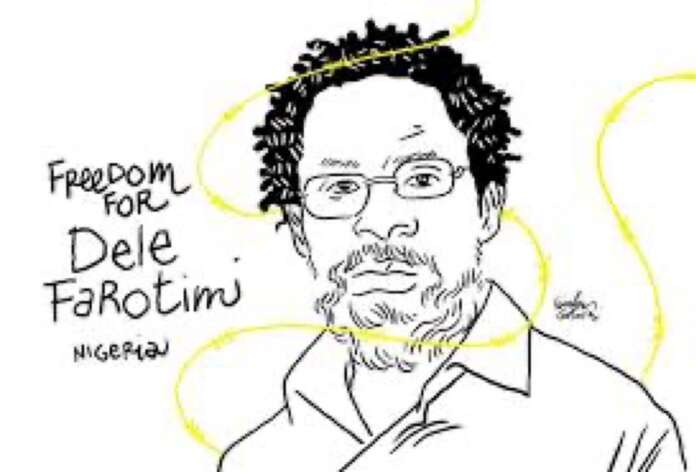
A group of Nigerian activists, and organizations in Nigeria and the diaspora have come together to coordinate support for Dele Farotimi in his current fight against corruption in the Nigerian judicial system.

Members of the coalition include Omoyele Sowore former AAC presidential candidate and publisher of Sahara Reporters, Rudolf Okonkwo, Professor Odinkalu, Barrister Deji Adeyanju and Dr Malcolm Fabiyi of Governance Advancement Initiative for Nigeria, GAIN.

According to Dr Fabiyi, spokesperson for the coalition, their work is aimed at supporting the coordination of efforts towards ensuring Dele Farotimi gets justice.

“Everyone knows that the Nigerian judicial system is corrupt. The politicians say it. The people know it. Even judges have come out to decry the corruption within the system. In the polling that we do at GAIN, the judiciary and the police consistently rank at the top of Nigerian’s ratings of the most corrupt institutions in the country”

Dele’s offense it seems is to have had the audacity to provide names and context to this patently obvious corruption.

Dr Fabiyi noted the irony that Dele Farotimi’s treatment so far has further confirmed his allegations that the system is corrupt.

How is a man jailed in Ekiti for not attending court proceedings that he received no notifications were taking place? How does a man get charged for an offense of criminal libel that legal scholars like Professor Odinkalu tell us does not exist in Ekiti state law? And most egregious of all, how does a team of police men from Ekiti travel past multiple states to arrest a citizen of Lagos state, within Lagos state?

This is a train of illegalities mounted and layered upon one another, yet the person whose rights have been abused is the one in chains and in prison! This is real time confirmation of the allegations that Dele has made.”

The coalition announced that its work will be focused on three things. These are
First, the setting up of a Legal Defense Fund to ensure that Dele Farotimi will have the means and resources to robustly defend himself. Secondly, the coalition will coordinate Global Action in Support of Dele’s Cause.

Thirdly the coalition announced a new Whistleblowing Initiative aimed at encouraging insiders with knowledge about corruption within the judicial system especially as it pertains to Dele’s assertions of judicial corruption against Chief Afe Babalola and some judicial officers, to provide such information.

According to Dr Fabiyi, the coalition will provide a secure platform for information sharing and provide monetary incentives for the whistleblowers.

For every act of corruption there is a clerk who moves files, there is a court registrar that was asked to make corrupt administrative alterations. There are emails, letters, notes and text messages. There are bank workers who are aware of secret transfers. If the system thinks that by shutting down Dele Farotimi they have scared Nigerians into silence, they are mistaken. They will be unleashing a Pandora’s box of catastrophe on themselves.

The coalition will have an online meeting later today at 7PM Nigerian time to which the general public is invited using the link https://bit.ly/Farotimi.

Dr Malcolm Fabiyi
Spokesperson,
Justice for Dele Farotimi Coalition

Bombshell! Suspected killer’s mom told FBI she ‘could see’ her son shooting UnitedHealthcare boss before his capture

The mother of Luigi Mangione made a shocking admission to police before the suspected assassin was arrested, it was announced on Tuesday.

The NYPD had been searching for the man who killed UnitedHealthcare CEO Brian Thompson, 50, at point-blank range for several days – and released surveillance images of the suspected shooter.

One image of the suspect with his mask down caught the attention of a San Francisco police officer who had been searching for Mangione, 26, since his mother, Kathleen, reported him missing in mid-November.

She claimed she had not spoken to her son since July 1, and noted that he worked for San Francisco-based TrueCar, an online automotive marketplace – apparently not realizing he had been laid off in 2023. 

Upon recognizing the suspect, the police officer called the FBI and provided the bureau with Mangione’s name – prompting New York officers working alongside the FBI’s task force to call Kathleen.

‘They had a conversation where she didn’t indicate that it was her son in the photograph, but she said it might be something that she could see him doing,’ NYPD Chief of Police Joseph Kenny said at a news conference on Tuesday.

He noted that the conversation happened ‘very late’ on December 7, and the  information was passed on to New York City cops the next morning – but he wasn’t arrested until December 9, while he was eating at a McDonald’s in Altoona, Pennsylvania.

Mangione has since been indicted on a murder charge as an act of terrorism for Thompson’s death.

Under New York law, such a charge can be brought when an alleged crime is ‘intended to intimidate or coerce a civilian population, influence the policies of a unit of government by intimidation or coercion and affect the conduct of a unit of government by murder, assassination or kidnapping.’   

The doomed CEO was shot dead as he walked to a Manhattan hotel where Minnesota-based UnitedHealthcare – the largest medical insurer in the United States – was holding an investor conference.

‘This was a frightening, well-planned, targeted murder that was intended to cause shock and attention and intimidation,’ Manhattan District Attorney Alvin Bragg said Tuesday.

‘It occurred in one of the most bustling parts of our city, threatened the safety of local residents and tourists alike, commuters and businesspeople just starting out on their day.’

Mangione has two court hearings scheduled for Thursday in Pennsylvania, including an extradition hearing, Bragg noted.

He is not expected to fight extradition to the Big Apple at the hearing on Thursday, which means he could be sent back to New York City that same day, sources told Fox News. 

Some legal experts have previously suggested Mangione avoid arguing over his guilty and focus on getting himself a lesser sentence by claiming extreme emotional disturbance.

‘There is no likely path to him walking out a free man,’ said Manhattan defense lawyer Ronald Kuby told The Wall Street Journal. ‘The best he could hope for is mitigation of the crime and punishment.

‘Usually the defendant’s entire history, their grievances, their pain, their sufferings, that all comes before the jury.’

Investigators’ working theory is that Mangione, an Ivy League computer science grad from a prominent Maryland family, was propelled by anger at the US health care system.

Police have said he was found with a manifesto outlining his grievances against UnitedHealthcare

‘To save you a lengthy investigation, I state plainly that I wasn’t working with anyone. This was fairly trivial: some elementary social engineering, basic CAD, [and] a lot of patience,’ he allegedly wrote in the manifesto, according to the Daily Beast. 

He went on to say he had ‘respect’ for federal investigators, and apologized for causing any ‘traumas,’ but seemed to defend his alleged actions.

‘Frankly these parasites had it coming,’ the manifesto wrote. 

It claimed that the United States had the ‘most expensive healthcare system in the world,’ but blasted the system for making America only the 42nd in life expectancy.

Officers also said they matched a gun found on Mangione with the shell casings recovered at the scene and his fingerprints with a water bottle and energy bar wrapper found nearby.

Following news of the arrest, Mangione’s family released a statement saying they were ‘shocked and devastated.’

‘We offer our prayers to the family of Brian Thompson and we ask people to pray for all involved,’ it said ‘We are devastated by this news.’

None of the alleged assassin‘s family then appeared at his court hearing, and inside sources told Fox News that the 26-year-old has not had any meetings with relatives since his arrest. 

His influential Italian-American family is known in their community for their real estate fortune and nursing home empire, but he may not see any of the money his philanthropist grandmother left behind.

Her fortune, estimated to be worth at least $30million, was put into a trust where the trustees – one of whom is Mangione’s father – have the power to make distributions. 

One of the trust’s conditions is that anyone charged with a crime may not see any of the money, meaning Mangione may never get his share.

Watch the full video of the shooting below.

Culled from Daily Mail online.

Nigerian British, Amanda Amaeshi, is UK ‘Changemaker of the Year’ 2024

Amanda Amaeshi, an award-winning activist, campaigner, and writer specialising in gender equality, anti-racism, and youth voice, has been named My Life My Say’s ‘Changemaker of the Year’ for 2024.

Ms Amaeshi, a final-year Law student at University College London (UCL), has consistently used her voice to influence policy and advocate for social justice.

The award, decided by public vote, was announced at My Life My Say’s ‘Next Generation Conference’, held on November 22, 2024, at the Barbican Centre in London. The conference – an annual highlight of the youth-led, non-partisan charity’s activities – brought together hundreds of young people alongside renowned speakers, activists, and politicians to explore innovative solutions to some of society’s biggest challenges.

Amanda emerged as the winner from a shortlist of inspiring changemakers, including youth leader Yahye Abdi, social enterprise founder Abdirahman Ahmed, TV personality Georgia Harrison, climate activist Clover Hogan, and artist Jordan Stephens.

A Journey of Advocacy and Activism
From an early age, Amanda showed a keen interest in addressing social issues. In 2017, she won the Young Reporters for the Environment competition for her writing on food waste solutions in Scotland. Her advocacy journey gained momentum when she became a Year of Young People 2018 ambassador, advocating for youth participation in politics and young people’s rights — issues important to young people across Scotland.

As a member of Girlguiding’s national Advocate Panel, Amanda spoke out on issues affecting girls and young women in the UK. She engaged audiences of CEOs, politicians, and decision-makers through speeches, blogs, and live radio interviews.

Today, Amanda remains a Young Spokesperson for Girlguiding Scotland and serves on Scotland’s First Minister’s National Advisory Council on Women and Girls (NACWG), engaging in collaborative intersectional policy scrutiny and providing the much-needed youth voice to ensure that NACWG’s work in holding the Scottish Government to account is helpful for girls and young women.

Her guest articles for Scottish newspaper The National further amplify her advocacy, challenging societal norms through her fresh perspective, and inspiring readers to engage in collective action against injustices.

Amanda also works closely with organisations including the Young Women’s Movement Scotland, Intercultural Youth Scotland, and the National Youth Agency in England — showing her unwavering commitment to fostering inclusive and intersectional practices across various sectors.

Recognised and Celebrated
Amanda’s contributions have already earned her numerous accolades. She was named on the Young Women’s Movement’s 30 Under 30 list in 2020, featured in the WOW Foundation’s Young Leaders Directory in 2022, and was honoured as the Glasgow Times Young Scotswoman of the Year for 2020.

In her acceptance speech at the Next Generation Conference, Amanda reflected on the broader impact of her work: “Winning is an honour, as I’ve said, but it’s even more of an honour to have a platform to share what I’ve done with others, perhaps with those who otherwise wouldn’t have known. Because, really, this award’s not about me: it’s about the work that I’ve done, the work that I do together with other people, and its positive impact for society at large.”

Inspiring the Next Generation
Amanda is hugely grateful to not only all those who voted for her, but everyone who has supported her throughout her advocacy journey so far.

Amanda is determined to use her platform to motivate others to make a difference, encouraging everyone to contribute in their own way to creating a better world.

Congratulations to Amanda Amaeshi, a true changemaker and an inspiration to many!

Find Amanda’s work here: https://linktr.ee/amandaamaeshii
Watch Amanda’s acceptance speech here: https://youtu.be/gBl0QcJ7kzU

Remorseless ex-prison guard trainee sentenced to death for ‘cruel and calculated’ slaying of five women at a Florida bank

An ex-prison guard trainee who executed five women inside a Florida bank almost six years ago was sentenced to death on Monday as his judge called the slayings calculated, heinous and cruel.

Zephen Xaver, 27, appeared to gulp but otherwise showed no emotion as Circuit Judge Angela Cowden pronounced the sentence at the Highlands County Courthouse in Sebring. 

After a two-week penalty trial, a jury in June voted 9-3 to recommend that Cowden sentence Xaver to death.

According to Daily Mail Online, Cowden said the weeks of planning that Xaver performed before the 2019 murders at Sebring’s SunTrust bank, the enormity of the crime and the fear the victims felt as they were shot greatly outweighed the two dozen mitigating factors his attorneys had presented, including his history of mental illness, his benign brain tumor and his jailhouse embrace of Christianity.

‘May God have mercy on your soul,’ Cowden told Xaver.

Xaver pleaded guilty last year to five counts of first-degree murder for the slayings of customer Cynthia Watson, 65; bank teller coordinator Marisol Lopez, 55; banker trainee Ana Pinon-Williams, 38; teller Debra Cook, 54; and banker Jessica Montague, 31.

At gunpoint, Xaver ordered the women to lie on the floor and then shot each in the head as they begged for mercy.

Kiara Lopez told Xaver and the court that her mother Marisol had welcomed him into the bank with a smile, an act he repaid by murdering her.

‘You shattered me into a million pieces,’ Lopez said.

 ‘I will celebrate the day you die, whenever that might be. Let it be known that you will always be a killer, a coward, a nobody and a waste of human life.’

Michael Cook, Debra’s husband, also called Xaver a coward and told the judge, ‘I have absolutely no sympathy for him.’

Xaver´s lead public defender, Jane McNeill, had asked that Cowden spare her client, saying a life sentence would put an end to the case instead of dragging it out for a decade of appeals and possibly a retrial if the sentence is overturned.

‘The only way for this matter to be brought to an end so that the families of the victims and this community is able to move forward is a life sentence,’ McNeill argued. The sentence will be automatically appealed.

Under a new Florida law, death penalty sentences can be rendered by a jury vote of 8-4 rather than a unanimous recommendation. 

The change was adopted after the 2018 Parkland high school shooter could not be sentenced to death for murdering 17 people despite a 9-3 jury vote.

McNeill called the new law unconstitutional.

Xaver moved to Sebring, a city of about 11,000, in 2018 from near South Bend, Indiana.

In 2014, his high school principal contacted police after Xaver told others he was having dreams about hurting his classmates. 

His mother promised to get him psychological help.

He joined the Army in 2016. A former girlfriend, who met him at a mental hospital where they were patients, told police he said joining the military was a ‘way to kill people and get away with it.’ 

The Army discharged him after three months. 

In 2017, a Michigan woman reported him after he sent her text messages suggesting he might commit ‘suicide by cop’ or take hostages.

Despite his psychological problems and dismissal from the Army, Florida hired Xaver as a guard trainee in November 2018 at a prison near Sebring. 

He quit two months later, two weeks before the shootings and the day after he bought his gun.

Hours before the murders, Xaver began a long, intermittent text message conversation with a former girlfriend in Connecticut, telling her ‘this is the best day of my life’ but refusing to say why. Fifteen minutes before the shootings, he texted her, ‘I’m dying today’. 

Then, from the bank parking lot he texted, ‘I’m taking a few people with me because I’ve always wanted to kill people so I am going to try it and see how it goes. Watch for me on the news.’

Daily Mail

Fiasco at CCT as Umar, Kogo parade selves as chairman

Nigeria’s Code of Conduct Tribunal (CCT) is embroiled in a sizzling confusion as both embattled chairman, Danladi Umar, and the newly-appointed chairman, Mainasara Kogo, are laying claim to its chairmanship.

A report by Daily Trust indicated that both persons had officially visited and held discussions with staff members of the tribunal without any clear directive on who is in charge.

President Bola Ahmed Tinubu had on July 13 appointed Kogo as the new chairman of CCT the same day he announced Omolola Oloworaran as the Director-General of the National Pension Commission (PenCom).

Although the staff members complained about the lull in the work of the tribunal since the controversy over Umar’s removal began, it was observed that corruption cases involving public servants were still being taken with several charges listed on the course list either for trial or arraignment.

However, senior staff members of the tribunal, who spoke on the condition of anonymity, told Daily Trust that they are confused about who to work with as both men have spoken with them and they are only civil servants who obey instructions.

“We are civil servants and we believe we can work with anyone that comes,” a staff said.

“We have not seen any letter to the effect of these changes. We believe there is a procedure for the removal and appointment of a new chairman of the CCT.

“We know that the president and the two arms of government have made pronouncements but we don’t know if invisible hands are working on these but we know there is a process,” he added.

One of the officials said the process is for the appointee to go through the screening by the Federal Judicial Service Commission (FJSC), who recommends to the National Judicial Council (NJC) and then to the President, who approves and forwards to the Senate for confirmation.

The senior official said there has been a pile of unattended files arising from a lack of clarity on the chairmanship of the tribunal.

“He came today and left and the entire judiciary is now on holiday so we have taken the liberty to adjourn all the outstanding cases to January,” the witness said.

However, a former staff of the tribunal, who pleaded anonymity, criticised Umar for visiting the office after what he said his valid removal.

“Why is he still coming to work seeking to sign some documents and approve payments to contractors?”

He said Umar’s visits were illegal as he was no longer the chairman of the commission.

Umar’s removal was endorsed by Senate and Reps

After the presidential announcement removing Umar, both the Senate and the House of Representatives in separate plenaries on November 20 and 26, also endorsed his removal as CCT chairman on allegations of misconduct and corruption.

Both resolutions were hinged on Section 17 (3) Part 1, Fifth Schedule of the Nigerian Constitution and Section 22 (3) of the Code of Conduct Bureau and Tribunal Act 2004 for the decision.

The section provides that “A person holding the office of chairman or member of the code of conduct tribunal shall not be removed from his office or appointment by the president except upon an address supported by 2/3rd majority of each house of the national assembly praying that he be so removed for inability to discharge the functions of the office in question (whether arising from infirmity of mind or body) or for misconduct or for contravention of this code.”

The legal dispute over Umar’s tenure is being tested in a suit before a Federal High Court in Abuja by the Community Rescue Initiative, Toro Concerned Citizens and Relief Foundation, who are contending that by the provisions of sections 1(1) and (3), 6(6), 153 (1) (e) & (i) of the 1999 Constitution of the Federal Republic of Nigeria (as amended) as well as Paragraph (3)(a) (vii) and (b) of the Third—Schedule thereof, the purported concurrence of both Senate and the House of Representatives was null, void, unconstitutional and of no effect whatsoever.

Lawyers say Umar has not been validly removed

Lawyers have picked holes in the process that has created the situation in the CCT with both Umar and Kogo claiming leadership of the tribunal.

Reacting, Sunusi Musa (SAN) said the president did not announce Umar’s removal as provided by the constitution, which states that he can only do so after a resolution of two-thirds of the two houses of the National Assembly.

He explained that at the same time, there have been no further announcements about Kogo’s appointment by the NJC after Umar’s purported removal.

“Where is he getting the powers to visit the tribunal if he has not been appointed by the NJC and has not been inaugurated as the chairman of the tribunal?,” he asked.

Similarly, Dayo Akinlaja (SAN) said if the newly announced chairman has not been issued any letter, which ought to be an instrument of appointment, his appointment is not binding.

He said a letter of appointment would imply that removal has been done which the person affected could then challenge “Not by taking the laws into his hands but through the judicial process.”

In his submission, Haroun Eze, Esq said there are some irregularities in the purported removal of the CCT chairman, Umar.

“The removal did not accord with the procedure for the removal of the CCT chairman and that is why the National Assembly provided that aspect by their resolutions for the removal,” he said.

“Even the resolution, to what extent does it conform to the provision of the Code of Conduct Tribunal Act, particularly Section 22?”

He said the Attorney General of the Federation ought to have commenced an action to establish a case of misconduct against the CCT chairman, which would have given the National Assembly the leeway to pass the resolution they did.

Credits: Daily Trust

Human rights in crisis: Addressing the challenges facing Nigeria (2)

By Ebun-Olu Adegboruwa, SAN

The UDHR was the first document in history to explicitly define what individual rights are and how they must be protected. The Preamble of the document outlines the rights of all human beings: “Whereas recognition of the inherent dignity and of the equal and inalienable rights of all members of the human family is the foundation of freedom, justice and peace in the world,

Whereas disregard and contempt for human rights have resulted in barbarous acts which have outraged the conscience of mankind, and the advent of a world in which human beings shall enjoy freedom of speech and belief and freedom from fear and want has been proclaimed as the highest aspiration of the common people …”

Thus, for the first time in history, human rights were assembled and codified into a single document. The Member States, or sovereign states that are members of the United Nations, came together in agreement to protect and promote these rights. As a consequence, the rights have shaped constitutional laws and democratic norms around the world, such as the Human Rights Act of 1998 in Britain; the Civil Rights Act of 1964 in the United States; the African Charter on Human and Peoples’ Rights (Ratification and Enforcement) Act 1983 and the Constitution of the Federal Republic of Nigeria, 1999 (as altered) [“the Constitution”]; both in Nigeria; etc.

  1. What led to the Human Rights Day (HRD)?

The United Nations General Assembly established Human Rights Day in 1950 to commemorate the adoption of the Universal Declaration of Human Rights (UDHR) on December 10, 1948. Human Rights Day is observed by the international community every year on 10 December. It commemorates the day in 1948 when the United Nations General Assembly adopted the Universal Declaration of Human Rights. The formal inception of Human Rights Day dates from 1950, after the Assembly passed resolution 423 (V) inviting all States and interested organizations to adopt 10th December of each year as Human Rights Day. When the General Assembly adopted the Declaration, it was proclaimed as a “common standard of achievement for all peoples and all nations”, towards which individuals and societies should “strive by progressive measures, national and international, to secure their universal and effective recognition and observance”.

2. NBA as a key stakeholder on HRs:

    The Nigerian Bar Association (NBA) is a professional body of lawyers in Nigeria and it plays a significant role in promoting and protecting human rights in the country. NBA is an avowed defender of HRs through advocacy for the rule of law in Nigeria, emphasizing the need for justice, equality, and fairness in the legal system; legal aid and pro bono services; human rights committees; Public Interest Litigations, and through collaboration and linkages with HRs organizations globally and locally.

    3. NBA’s Aims and Objectives in its Constitution:

      The NBA, by its aims and objectives, as embodied in its Constitution, expresses its overarching vision to uphold the regime of HRs in its operations. Section 3 (11) and (12) of the NBA Constitution, 2021 provides thus:

      1(1). Promotion and protection of the principles of the rule of law and respect for fundamental rights, human rights, and people’s rights.

      4. 1(2). Creation of schemes for the empowerment of newly qualified members and members living with disabilities, and for the provision of assistance to aged or incapacitated members of the Association.” [Emphasis supplied].

      We hold the view that above is the framework that sets up the vision and mission of the NBA in relation to HRs.

      4. NBA HRs Institute (NBA-HRI):

        The Nigerian Bar Association Human Rights Institute (NBA–HRI) was established to effectively and efficiently promote and protect the rule of law, the independence of the legal profession, and to advance human rights enforcement in Nigeria. It will promote respect for human dignity, and translate human rights into specific guidelines for putting those principles into practice. The Institute provides technical development programmes and is also a resource development framework for advocacy in the Nigerian Bar Association. The Institute has a human rights desk in all the 120 branches of the Nigerian Bar Association across the country. The Human Rights Institute at the branch level is chaired by the Vice-chairman of the NBA of each branch. The Institute is governed by 15 members of the Governing Council saddled with the responsibility of supervising and controlling its affairs. The 1st Vice President of the NBA is the Chairman of the Council. The Institute also has four full-time staff that run its activities daily.

        The role of the NBA-HRI is to empower lawyers to manage issues relating to the protection of the fundamental human rights of citizens as guaranteed by the Constitution of the Federal Republic of Nigeria and international instruments to which Nigeria remains a signatory. Also, to participate in the education on human rights, publish regular reports on issues relating to human rights and carry out other related functions in regard to the Human Rights Institute. The NBA-HRI is primarily concerned with the promotion, protection and advancement of human rights in Nigeria and its work is predicated on the standards embodied in the various international and regional human rights instruments ratified by Nigeria in addition to existing local legislations. The mandate of the NBA-HRI is certainly midwifed by the NBA objectives contained in its Constitution as already identified above.

        The Strategic objectives of the NBA-HRI include:

        To develop human rights policies and programmes for the Nigerian Bar Association.

        To implement and advocate for the implementation of the National Action Plan on Human Rights.

        To collaborate with the Human Rights Committee of the NBA at National and Branch levels in the implementation of human rights policies and programmes.

        To promote, protect and enforce human rights under a just rule of law.

        To adopt and implement standards, practices, and instruments regarding human rights accepted and enacted by the comity of nations.

        To promote and protect the independence of the Judiciary and the legal profession in Nigeria

        To develop programmes relating to rule of law and advocate for compliance with principles of rule of law and due process.

        To monitor and ensure strict compliance with all court orders by governments, institutions, agencies, and individuals.

        To gather and disseminate information concerning issues relating to human rights, judicial independence, and the rule of law.

        To establish and maintain relations with other national, regional and international Human Rights organizations.

        To promote the objects, principles, and aims of the Nigerian Bar Association

        To collaborate with other organs of the NBA in developing and improving the image and status of the NBA and members of the legal profession in Nigeria.

        • To promote compliance of the Nigerian government with regional and international treaty obligations on human rights.

        To engage in promoting accountability from public officials.

        5. The nature of hrs crisis in Nigeria

        The crises beleaguering HRs in Nigeria are multi-faceted. They are hydra-headed and like the octopus have many tentacles. We shall x-ray some key areas of these crises affecting HRs in Nigeria.

        1. Judicial Crisis:

        The judiciary is a member of the trinity of government. Following the Legislative and Executive Arms of Government which make and implement laws respectively, the judiciary, as per the courts, is constitutionally vested with the powers to interpret laws. It has the mandate to hold power accountable through checks and balances in relation to the other arms of government. In an ideal situation, the judiciary ought to be the last hope of the common man. Right from the colonial era, through the various civil and military regimes since independence, there is no doubt that the judiciary has been at the forefront of the fight for HRs through epoch-making landmark decisions that shaped constitutional jurisprudence, particularly as touching HRs. Such decisions as: Olawoyin v. A-G., Northern Region (1961); Nafiu Rabiu v. Kano State (1980) 8-11 SC 130; Ransom-Kuti v. A.-G. Federation (1985) 2 NWLR (Pt. 6) 211; Chief Gani Fawehinmi v. General Sani Abacha (2000) 6 NWLR (Pt. 660) 228; Ogugu v. State (1994) 9 NWLR (Pt. 366) 1; Uzoukwu v. Ezeonu II (1991) 6 NWLR (Pt. 200) 708; and a legion of other cases, have shaped the landscape and advanced the frontiers of the our legal system in the area of Human Rights practices.

        However, our judiciary, particularly in recent times, has become bedeviled with so many interfering crises which have, in turn, affected HRs drastically. Some of the challenges are identified below:

        Political corruption through the interferences and undue influences by the Executive and Legislative arms of government, undermining public confidence;

        Stifling of independence of the judiciary;

        Favouritism of the elite and affluent at the expense of the marginalized. This erodes the ideals of equality before the law (See Section 42 of the Constitution);

        Delay in hearing suits especially Fundamental Rights Enforcement actions despite the provisions of the Fundamental Rights Enforcement Procedure Rules for expeditious disposal of Fundamental Rights Enforcement causes;

        Threat of violence or harassment of the judges and justices or their relations;

        Infrastructure failure such as lack of adequate power supply leading to incessant adjournment of cases;

        Inability of the judicially to hold the security agents accountable;

        More value is placed on property and assets than on human beings. You can get an order to arrest a ship than to release a citizen wrongly detained.

        TIPS