Home Blog Page 480

Nigeria’s Curious Next Steps

Oseloka H. Obaze

The art and practice of good governance and nation-building is not for the apathetic, shortsighted or presumptuous. Only focused, selfless, visionary, adaptive and transformative leaders end up being great leaders and nation builders. For sixty-four years, Nigerian leaders have respectively offered platitudinous intent to make Nigeria great, and to restructure it for greater equity and effect. They all failed. On their respective watch, Nigeria has with disambiguating blatancy stagnated.

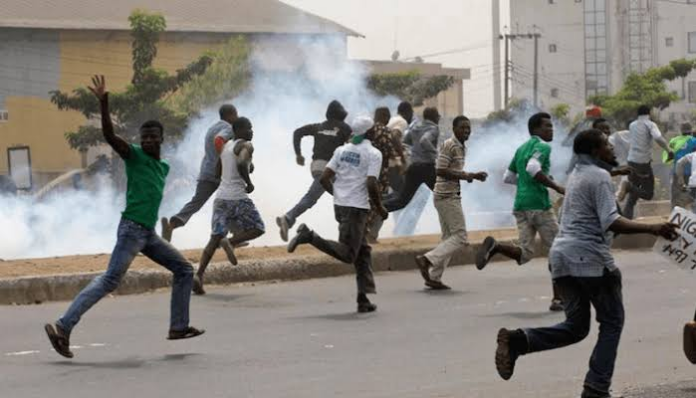
The argument has been made continually that Nigeria needs systematic restructuring, or risk being restructured by default, with indefinite outcomes. Realities gleaned from the just-concluded #EndBadGovernance protests offer a scary insight into the unfolding trajectory.  Nigeria has never been this polarized. Besides bad governance, Nigeria has been damaged by highly-placed bigotry. The protests have ended, but two salient variables remain: lessons learned and missed opportunities.

Curiously, one of the narratives that emanated from the August protests was the allusion of foreign involvement. This is mythical and mere shadow chasing. It was Nigeria that misplayed her diplomatic and political hands by meddling in Niger’s domestic affairs; thus damning as it were, realpolitik and historical and contiguous affinities. Some protesters unfurling presumed Russian flags on Nigeria’s soil was an outlier that reflected unintended and unforeseen consequences. It’s nonetheless a deeply troubling reality. Relatedly, the usually non-protesting North has finally protested. With its Zanga-Zanga fervor, the genie is out of the bottle and the much touted north-southwest pact stands amortized. Some have translated the Northern protests as indicative clamor for an Arewa Republic.

Nigeria’s diversity used to be her strength. As a composite of over 250 ethnic nationalities cobbled together by the colonialists, Nigeria had always managed to find some balance, by her three major Wazobia tribes symbolically standing in brotherhood, and also through the symbolic protection of minority rights.  This is no longer so. Unwittingly, Nigeria is presently being dangerously dissected by Nigerian elites, for primordial reasons that trumps her rich diversity and hardly serve common cause. 

Up till now, it was accepted, even if grudgingly, that each of the 250 ethnicities that form Nigeria’s national mosaic had a place and role in the federation. But as things stand, those places and rights seemingly can no longer be protected. Thus, the places and rights of the big three can’t be guaranteed. Ever more, Nigeria’s tight knit seams that underpin the national mosaic have frayed, making each ethnicity more distinct, yet weaker. Nigerians now seems averse to cohabitation, which denotes clear and present danger.  

Sardonically, some mistake and therefore misinterpret the evolving ethnocentric distinction as having achieved leadership primacy or unilateral sectional strength in a secular federal system. But the intrinsic comparative advantage of each ethnic component has not changed.  Neither has the mutually beneficial attributes. Here is the befuddling fallacy; whereas some national parts seem to have become stronger, the resiliency of the parts that form the whole have became visibly weaker. The crux of this challenge is the tactless default of recent leaders who placed sectional interests above national interest. 

In her 2018 book, Our Time Has Come; How India is Making its Place in the World, Alyssa Ayres, drew on how two successive Indian leaders, Mamohan Singh and Narendra Modi, single-mindedly and selflessly repositioned India. Apropos Nigeria, except for Murtala Muhammed’s Addis Ababa Declaration that ‘Africa has come of age’, no other Nigerian leader has in the strict sense, visualized and enunciated authoritatively, Nigeria’s place in the world. 

Contextually, Nigeria continues to wallow in unbridled leadership ineptitude and bad governance. Her comeuppance has manifested via unvarnished bigotry. And restructuring, as desirable as it is, remains to some, a national buzzword of seemingly inconsequential value. As far as metaphors go, present day Nigeria mirrors in stark reality, the depiction so well-captured by the great allegorist, John Bunyan: “He that is down needs fear no fall.” The apathy that is commonplace in Nigeria is predicated on the contrived willingness of the national elite to ensure that Nigeria, a fallen and failed nation stays down.

Oddly enough, the national elite clearly have not factored in fully, the intent and aspirations of the succeeding generation – Nigeria’s Gen-Zs. Hence, the unfolding battle ground for the soul of Nigeria, is across the generational divide. Perhaps Nigeria no longer needs to be restructured formally. The visible divide in the compartmentalized support of the national protests, speaks clearly to this fact. The people have restructured Nigeria, albeit involuntarily.

Also, the nation’s inexplicable change of her national anthem may yet prove prescient. ‘Nigeria, hail us or let huger kill us’. This assertion is antonym to ‘Nigeria we hail thee,’ which is now often mouthed facetiously and derisively. Such a sarcastic anecdote would be comical, if in reality, it was not so tragic. The scriptural return to the old order, if that was what the perfunctory anthem swap was meant to signify, holds nothing nostalgic, except for foolhardiness and pain, now well beyond suffering and smiling. It was exceedingly painful to hear Nigerians call for a return to military rule. It was also very painful for a nation of 200 million people to come off the 2024 Paris Olympics, without a single medal. Signs of the times!

For long Nigeria has been immersed in a rut. Truly, the rut did not start today. Still, given her dependent-independence status, asserting Nigeria’s independence, is now a bittersweet oxymoron. Nigeria can be whole, but it is not. Her citizens are cofounded by the stupor of independence co-mingled with incivility of deprivation. Long held beliefs of national greatness have turned grotesquely illusory. Due to squalidly bad leadership, Nigeria and her denizens reel in itinerancy. Nigeria and Nigerians have thus become a beggar nation, beggarly people; and debt and poverty challenged.

Bad governance in Nigeria is a reality. At all levels, governance has become a walk in the perilous forest; not a walk in the freedom park.  Presently, some of Nigeria’s best brains –youths trying to japa– lay buried in unmarked graves in the Sahara Desert and the Mediterranean Sea. Understandably it’s the prevailing dichotomies that compel some to seek an exit from the union; from that ‘sea of mud’ that is Nigeria, or die in the mud while trying. Yet some insist on the reset of Nigeria, convinced that a new Nigeria is possible. Their mission is not to put Nigeria asunder; but to reset it in line with the vision of the founding fathers and the tenets of true federalism and democracy.

There can be no pretenses whatsoever, that unaltered and un-restructured, Nigeria’s future will remain bleak; and her past indeterminate and fraught by a gilded era of disparate voices for unity. There could not be hope; not with interloping faux leaders taking charge in nation building; not with embedded voices in the southwest vociferously promoting the #IboMustGo campaign, without broad censure and disclaimers from the region’s elite; and not with the insipient call for military rule. What these attests to, is that very few true patriots remain who retain a modicum of unshaken faith in the cohesion and indivisibility of the nation. It’s salutary that some Patriots recently engaged the President.

Quo Vadis, Nigeria? Which Way Nigeria? Before ever talking of modalities for restructuring, Nigerians must grapple first with the need to reset Nigeria as one would reset an errantly late clock. There are two parts to this urgent process. There are inherent demands aligned with the national protestations. Too many grievances persist that needs to be addressed. So too, are unmet governance and material needs. Poverty, hunger and deprivations are the common denominators. That totality of bad governance can’t be wished away. And that’s the butt of the protestations by Nigerians.

Those protesters who took to the streets to clamor for change were not scofflaws or miscreants. They are hungry, disenfranchised and disappointed Nigerians. They are also Nigerians cognizant that peaceful protestations are permissible within constitutional ambits. Though separated by ethnicity and religion, they were unified by poverty, hunger and deprivations. As such, no bluster or intimidation can dampen their fervor. And so long as hunger and bad governance persist, we can expect more protestations in the months ahead.

Nigeria is in dire straits, but a sliver of hope remains. In contemplating Nigeria’s curious next steps, the present APC leadership should lead by example. First, is to acknowledge the evident governance fallibilities and quickly rethink its defective governance modalities. Second, is to concede to some key demands aimed at abating prevalent hunger and suffering. Third, with the recent convocation of the National Council of State, present and past Nigerian leaders must undertake measures to expeditiously rejig Nigeria; perhaps first, by embarking on a government of national unity comprised of a team of rivals. They can also elect to dither until unscripted circumstances compel a different trajectory to collective or segregated aspirations. That seemingly hard choice is indeed quite an easy one to make.

——

Obaze is MD/CEO, Selonnes Consult – a policy, governance and management consulting firm in Awka.

Former DG NIALS, Prof. Azinge, SAN is new Asagba of Asaba

One-time Director General of the Nigerian Institute of Advanced Legal Studies (NIALS), Prof Epiphany Azinge, SAN, has been announced as the 14th Asagba of Asaba in Delta State.

The Asagba-in-Council announced his selection as the most qualified among the 10 contenders in the race, who hail from Ugbomanta quarters and is to produce the next Asagba after Prof. Chike Edozien, who had since joined his ancestors.

The Ochendo Ahaba (Regent), Anthony Edozien, announced the result of the selection process in line with the Traditional Rulers and Chiefs Edict of 1979, applicable to Delta State, on Sunday at the Palace of the Asagba of Asaba at Ezenei quarters, Asaba.

He said, “Prof Epiphany Azinge, SAN, has been selected among 10 contenders after due process.

“He will be coronated in due course.”

Other contenders, apart from Prof. Azinge, are Tony Ogugua Konwea, Prof. Emmanuel Onwuka and Ogbuechi Chinedu Esealuka, among others.

Born 13 November 1957, Epiphany AzingeSAN, is the 5th Director-General of NIALS. He served 2009 and 2014.

He is a Judge at the Commonwealth Arbitral Tribunal sitting in London, where he represents Nigeria and Africa. He is the founder and senior partner at Azinge & Azinge, a law firm in Abuja where his wife Valerie Azinge, SAN is also a partner.

Epiphany had his secondary education at Sanit Patrick’s College, Asaba from 1970 to 1975. He studied law at the University of Lagos in 1976 and graduated with a Bachelor of Laws. He was called to the Nigerian Bar in 1980. He proceeded to the University of London for his Master’s degree in comparative constitutional law and shipping law in 1983. He proceeded to the London School of Economics for his Ph.D. His thesis was on Electoral Laws in Nigeria.[1] In June 2015, he was appointed a member of the Commonwealth Secretariat Arbitral Tribunal (CSAT) for a period of four years. He was re-appointed for another term of four years in 2019.

PUNCH

Policemen allegedly shoot each other after mistaking themselves for IPOB members

The police in Abia State, south-east Nigeria, say they are investigating a report that claimed some police operatives exchanged gunfire after mistaking themselves for members of the Indigenous People of Biafra (IPOB).

Mistaken for IPOB members

There was confusion on Wednesday around Alaoji Area of Aba, the commercial hub of the state, when some police operatives reportedly opened fire on themselves.

PREMIUM TIMES gathered that the shootout occurred between police patrol teams from Police Area Command in Aba, and another police team from Umuahia, the state capital.

Residents claimed the operatives appeared to have mistaken themselves for IPOB members in the area.

It was learnt that the incident occurred because operatives from Umuahia operated in commercial buses, prompting their colleagues from Aba to mistake them for the separatist group.

PREMIUM TIMES gathered that during the shootout, shop owners around Alaoji Motor Spare Parts Market and passersby scampered for safety to avoid stray bullets.

The market is located along the Enugu-Aba-Port Harcourt Expressway in the state.

A truck driver was killed by a stray bullet during the encounter.

It was learnt that an altercation ensued after the operatives realised that they were all police officers.

Police speak

Reacting in a statement on Thursday, the police spokesperson in the state, Maureen Chinaka, said police authorities are investigating the incident.

“From our preliminary investigation, there is no credible evidence to suggest that police officers mistook themselves for members of IPOB and fired at each other,” Ms Chinaka, an assistant superintendent of police, said.

“What we can confirm is that there was a shooting in that area, which resulted in the death of a civilian,” she stated.

The police spokesperson urged anyone with useful information regarding the incident to report to the police to aid their ongoing investigation.

IPOB, a group leading agitation for an independent state of Biafra from South-east and some parts of south-south Nigeria, has been accused of some fatal attacks in the two regions.

Credits: Chinagorom Ugwu, Premium Times

Adetshina: Why Africa’s politicians incite afrophobia

By Calixthus Okoruwa

The recent Miss South Africa pageant gave vent to yet another outbreak of the ugly war of mutual hate that has built up over the years, between South Africa and Nigeria. A lady, one Chidimma Adetshina had entered for the Miss South Africa pageant and been shortlisted for the finals. “Adetshina,” being a Nigerian name apparently derives from her father, being Nigerian. This was Adetshina’s original sin. Even though Adetshina had been cleared by the organisers of the pageant to compete, on the understanding that her mother was South African, to many South Africans, this wasn’t enough. Ms. Adetshina in having one parent as a Nigerian “was not South African enough” to compete in the Miss South Africa pageant.

Ms. Adetshina is a black African like majority of South Africans, but this fact may have even infuriated South Africans the more, as the country has for years exhibited a growing predilection to a unique form of xenophobia that is targeted at fellow black Africans, namely afrophobia.

The young lady was trolled mercilessly by South Africans online, a process that soon degenerated to virtual fisticuffs between Nigerians and South Africans. Days later, the country would announce that it had found evidence that suggested that Adetshina’s mother, an erstwhile citizen of Mozambique had in acquiring South African citizenship, done so fraudulently via identity theft. Investigations were ongoing, it said. The announcement was an “aha moment” for the millions of South African trolls as it provided a convenient justification for their callous bullying. It didn’t take long for the young lady to decline further participation in the pageant, again to the delight of her South African trolls.

Eventually, it was a South African lady with roots traceable to France – in fact her parents are Caucasian – who won the pageant.

The Adetshina affair, is just another in a growing list of afrophobic incidents in South Africa. In 2008, at least 62 people were killed and many more injured by South African mobs which targeted the homes and businesses of African migrants including Nigerians. Again in 2015, at least 7 people were killed in anti-black-African foreigner violence. In 2019, the Nigerian private airline, Air Peace, helped to evacuate hundreds of Nigerians in the heat of another round of xenophobic violence in South Africa. Like other foreigners of black African descent, Nigerians are blamed for the economic malaise of the country, reflected in massive unemployment, drugs and crime, among others. The criminality of some Nigerians, it must be stated, is inexcusable and it facilitates the convenient blanket scape-goating of Nigerians even when there are many Nigerians living decently in the country.

South Africa has, since the abrogation of apartheid, demonstrated that it is not significantly different from the dozens of African countries which attained independence before it. Its political leaders have largely been corrupt, greedy, managerially incompetent and lacking in vision. It is the symptoms of the ineptitude of the country’s politicians that are daily reflected in a rail system that is fast becoming dysfunctional with rail infrastructure regularly vandalized wantonly across the country. It is the corruption and ineptitude that manifests in the costly inefficiency of the erstwhile energy monopoly, Eskom, which delivers increasing hours of darkness to South Africa.

Eskom is in this wise, very much like Nigeria’s oil monopoly, Nigeria National Petroleum Corporation (NNPC), which has for decades kept its four refineries non-operational, preferring to export crude oil and import refined fuels in opaque and shady deals while petrol queues have become a fact of life in Nigeria. It is government corruption and incompetence that continues to drive social inequality that finds expression in the sprawling ghettoes, euphemistically referred to as “townships,” which adjoin South Africa’s major cities; “townships” overflowing with unemployed young people living in filth, disease and deprivation, amidst crime and insecurity. And it is a lamentable lack of foresight that leads politicians to neglect South Africa’s public education, in so doing, worsening the country’s inequality crisis. The average black South African, for instance, being a victim of the malnourished public education system, typically earns only a quarter of what his white counterpart earns.

Unfortunately, like their peers elsewhere in Africa, South Africa’s politicians have long systematically planted the seed of foreigner distrust in the minds of their simple citizens in order to deflect attention from their shortcomings. So rather than interrogate the competence or lack of it of their politicians under whose watch South Africa has for many years been on a steep decline, black South Africans regularly turn their anger and frustration at their worsening circumstances, against foreigners – fellow black Africans. They are poor and hungry because by setting up a shop or car-wash or hair salon nearby, the Nigerian immigrant deprives them of jobs, while the Malawian, Zimbabwean and Ethiopian immigrants have taken up the cleaning jobs at all the neighbouring hotels. The town is increasingly unsafe because the Nigerian immigrants have recruited dozens of jobless, uneducated South Africans, trafficking some and turning others to drug couriers and addicts. And the Nigerians have become so bold, so arrogant, they regularly marry South Africans!

Politician-inspired afriphobia did not start with South Africans, interestingly. Over the years, Nigerian traders have been deported from Cameroon, Ivory Coast, Ghana and the then Zaire. Togolese farmers and labourers have been deported from Ghana and Ivory Coast. Even civil servants from Benin Republic (Dahomey at the time) have been deported from Niger and Ivory Coast.

In 1981, with the Nigerian economy tottering on the brink of disaster even while its politicians, lived in nonchalant profligacy, the statesman, Obafemi Awolowo wrote an open letter to then President Shehu Shagari. To avert looming economic collapse, Awolowo counseled Shagari to radically reorganize the machinery of state, including eliminating wasteful spending. Shagari’s government dismissed Awolowo’s warning, countering that the Nigerian economy was sound and hinting that Awolowo’s critique was occasioned by sour grapes (Awolowo had lost the 1979 presidential elections to Shagari). Barely two years later, faced with the consequences of its poor economic policies in the face of rapidly plunging oil prices, Shehu Shagari sought out a victim to blame – foreigners. In January 1983, more than two million fellow Africans, comprising more than a million Ghanaians were summarily evicted from Nigeria. Their crime? As “illegal aliens,” they bore huge responsibility for Nigeria’s economic crisis. Fourteen years earlier, Ghana had similarly expelled Nigerians. Of course, as in the case of Ghana in 1969, there is no evidence to show that these evictions of millions of Africans from Nigeria made any positive impact on Nigeria’s economy, as the decline continued unabated. In fact by December 1983, it provided a convenient excuse for military adventurers, led by Muhammad Buhari to forcefully take over power.

Buoyed by the ignorance of majority of their people, Africa’s politicians have continued to resort to the afriphobia playbook. Where there are no foreigners to blame, they play the ethnic or religious card, both of which are ultra-emotional subjects in many parts of Africa.

Perhaps what the continent needs is the emergence of a corps of educated Africans which can help to play a mediating role of nipping the chicanery of politicians in the bud from time-to-time and encouraging Africans to be more rigorous in interrogating their leaders and holding them to account. In much the same way as the journalism profession introduced “factchecks” to help stem the spread of fake news, Africa’s elite need to come together to help save the continent’s peoples from the machinations of its indolent politicians who pith nationalities and ethnic groups against each other in order to deflect attention from their failures, corruption and incompetence.

  • Okoruwa works for Lagos-headquartered communications company, XLR8

Olukayode Ariwoola: The Baleful legacy of a lamentable tenure

By Chidi Anselm Odinkalu

At the beginning of March 2020, Nigeria’s Supreme Court  dismissed an application for the review of its seven-week old decision to judicially install Hope Uzodinma as the Governor of Imo State, citing as its main reason the need to preserve the authority and finality of decisions of the apex court. The court issued what appeared to be a principled defence of the finality of its judgments, declaring somewhat ostentatiously that once it had issued a decision, “it shall remain forever.”

Olukayode Ariwoola, who delivered the judgment of the majority in the review was also a member of the original panel which decided in January 2020 that Mr. Uzodinma had won the election despite being the candidate who came fourth in the tally of votes scored among the contestants on the ballot. Few could recall at the time that Olukayode Ariwoola had previous experience in this kind of improbable judicial alchemy.

Ahead of the 2007 general elections, the then ruling Peoples’ Democratic Party (PDP) chose Joy Emordi, a lawyer, to fly its flag in the contest to represent Anambra North in the Senate. In the contest for the party ticket, she had defeated Ubanese Alphonsus Igbeke, who had been installed by judicial order after the 2003 elections as the member representing Anambra East/Anambra West in the House of Representatives. After losing the senatorial ticket to Ms. Emordi, Ubanese Igbeke relocated his party loyalty to the All Nigeria Peoples’ Party (ANPP)

Election day was 28 April 2007 and voting took place in the seven LGAs of Anambra North to determine the person to represent the constituency in the Senate. At the end of the contest, the Independent National Electoral Commission (INEC) returned Joy Emordi as the winner. Five of the losing candidates, including Ubanese Igbeke, lodged petitions to challenge the outcome before the Election Petition Tribunal in Awka, the capital of Anambra State.

On 14 June 2008, the tribunal dismissed the petitions and upheld the return of Senator Emordi. Eight months later, on 10 February 2009, a Court of Appeal panel comprising Victor Omage, Ladan Tsamiya, and Olukayode Ariwoola as Justices of Appeal dismissed the appeal by one of the candidates, Jessie Balonwu, against the decision of the first instance tribunal, holding in particular that there were elections in the seven Local Government Areas (LGAs) of the constituency.

This was significant because the crux of the appeal by Ubanese Igbeke in his own appeal was that there were no elections in two of the seven LGAs in the constituency, specifically in Anyamelum and Onitsha South, respectively. At the same time, Igbeke also asked the Court of Appeal to find that Joy Emordi had failed to score the highest number of lawful votes in the election and to, instead declare that he had in fact scored the highest number of lawful votes in the election and return him as the winner.

One year later, on 25 March 2010, the Court of Appeal, this time comprising Amiru Sanusi, Ladan Tsamiya and Olukayode Ariwoola found in favour of Ubanese Igbeke on all issues and returned him as duly elected. To reach this decision, a panel of the Court of Appeal which included two of the three Justices who decided the earlier case, inexplicably changed their position on the pivotal issue of whether balloting in fact occurred in all the LGAs in the constituency but felt no need to explain how or why.

Having found in Igbeke’s favour on that point, the panel incredulously proceeded to award the election to him when the only logical order was a re-run in the LGAs where the court claimed that no balloting in fact occurred. The skills required to produce this outcome defied all laws of judicial calisthenics.

Senator Emordi lost in her effort to appeal against this to the Supreme Court and on 25 May 2010 – with a mere one year to spare out of a four-year parliamentary term – Ubanese Igbeke took the oath as Senator representing Anambra North.

Of the three Justices of Appeal who implausibly sent Ubanese Igbeke to the Senate, Ladan Tsamiya remained on the Court of Appeal where his career ended in ignominy in 2016 on allegations of corruption in another election dispute.

In the month of the fourth anniversary of the senatorial debut of Ubanese Igbeke secured through their judicial machination, Amiru Sanusi proceeded in May 2015 to the Supreme Court from where he retired in February 2020, the month after they installed Hope Uzodinma as Imo State Governor.

The year after Igbeke’s entry into the Senate, in November 2011, Goodluck Jonathan appointed Olukayode Ariwoola as a Justice of the Supreme Court. After more than one decade on the court, in June 2022, Ariwoola emerged as Chief Justice after leading an unprecedented mutiny against his predecessor in which 14 Justices accused then Chief Justice, Tanko Muhammad, of ignoring their wellbeing. He was officially born 22 August, 1954.

The tenure of Olukayode Ariwoola as Chief Justice of Nigeria began “amid ‘all-time low’ judicial trust.” It was not too much to hope that shoring up public trust in the judicial branch should have been a priority in these circumstances. Instead, he seemed to be on a mission to make up for lost opportunities in the material benefits of office. The result was a tenure which denuded public trust in the judiciary rather than rehabilitate it.

As CJN, Olukayode Ariwoola will be well remembered for the alacrity with which he redressed any previous neglect – real or imagined – of the welfare of his own family and his beloved village, Iseyin, in Oyo State. In two years in the position, he made his son a judge of the Federal High Court; his daughter-in-law a judge of the High Court of the Federal Capital Territory; his brother auditor of the National Judicial Council  (NJC) chaired by himself as Chief Justice; and another reported member of his family a Justice of the Court of Appeal. It was done with a grubbiness that did not pretend to have any regard for the authority of the CJN or respect for the Judicial Code of Conduct, which explicitly prohibits such manifest nepotism with the warning that a judge “who takes advantage of the judicial office for personal gain or for gain by his or her relative or relation abuses power.”

Fittingly, Olukayode Ariwoola’s tenure as Chief Justice ends in a filigree of clannish patronage. In his last meeting as Chair of the NJC, he handed out judicial sinecures to two sisters; one to the High Court of Kwara State and another to the High Court of Ondo State. The month before, he had installed their brother as a judge of the High Court of the Federal Capital Territory. Their dad was a judicial benefactor.

In 2020, the Legal Practitioners Privileges Committee (LPPC) then chaired by Olukayode’s Ariwoola’s predecessor sanctioned a lawyer who had applied for elevation to the rank of SAN by altering Supreme Court judgments to insert his name as counsel in cases in which he had not acted. 21 days to his departure as Chief Justice, Olukayode Ariwoola rushed through new elevations, making this same lawyer a SAN when he was better off being struck off the Roll entirely. When, in one of her first acts as Chief Justice, his successor inaugurates this kind of specimen into the Inner Bar, it will set the seal on unquestionably the most baleful judicial legacy in contemporary Nigeria.

Addressing the opening of the legal year before a special session of the Supreme Court – the last to be presided over by Olukayode Ariwoola as CJN – in November 2023, Ebun Sofunde, a Senior Advocate of Nigeria (SAN) speaking on behalf of the Body of Senior Advocates of Nigeria (BOSAN), testified that judicial reputation “is at an all-time low… to a point where it may no longer be redeemable” and ended with the complaint that Supreme Court judgments under him had become “perfunctory.” These words easily sum up what will be remembered as the most lamentable tenure in the office of the Chief Justice of Nigeria since the appointment of the first indigenous CJN in 1958.

A lawyer and a teacher, Odinkalu can be reached at [email protected]

How Nigerian Senator’s wife became Lord Mayor of Leeds

Nigerian-born Abigail Katung is the first African to become the Lord Mayor of Leeds in the United Kingdom. She shares her thoughts with BIODUN BUSARI on her life, family, career, and future aspirations among others

Can you briefly tell us about your journey to the UK?

My journey began in Zaria, Kaduna State. Graduating with a Bachelor’s degree in Business Education from Ahmadu Bello University, Zaria, laid the foundation for my academic pursuits. Subsequently, I pursued a postgraduate degree in the Department of Politics and International Studies at the University of Leeds in 2000, driven by my late father’s aspiration for me to further my education in the West. My father, a dedicated educator, instilled in me the ethos of education for service. Following his passing in 1999, I resolved to honour his legacy by pursuing studies abroad, which my mother supported.

How has your experience been as an immigrant?

My experience has been a journey of challenges and opportunities. Upon arriving in the UK, I encountered the familiar difficulties of adapting to a new culture, cuisine, and climate. However, resilience prevailed, and Leeds swiftly became my cherished second home. I established my own business while embracing the joys and responsibilities of motherhood to twin sons, who are now pursuing their studies at the university.

What was your motivation for going into British politics?

When I arrived in the UK, I was met with both opportunities and challenges, and it was the support of the local community that helped me navigate my new life here. Over time, I realised that one of the most effective ways to contribute to this community was through public service. After all, I studied politics, so it was just right to serve. I also felt a strong responsibility to represent the voices of those who are often underrepresented in politics. As an immigrant and a person of African descent, I understood the unique challenges faced by minority communities. I wanted to ensure that these communities had a seat at the table, that their concerns were heard, and that they were part of the decision-making process.

Did you have an inkling that you would become a mayor?

No.

How did you feel when you emerged as the first Lord Mayor of Leeds of African descent?

When I was elected as the first Lord Mayor of Leeds of African descent, I was overwhelmed with a deep sense of pride and gratitude. It was a profoundly emotional moment, not just for me, but also for my family, my community, and everyone who has supported me on this journey. This achievement wasn’t just about breaking new ground for myself, but it symbolised progress and possibility for so many others who may have felt overlooked or marginalised. It was a powerful reminder that barriers can be broken and that diversity is something to be celebrated, not just acknowledged. Becoming the 130th Lord Mayor of the second largest city in England reinforced my determination to ensure that this milestone wasn’t the end.

What other things are you doing to impact lives in Nigeria?

While my role as Lord Mayor in Leeds has been a significant focus, I’ve always felt a strong connection to my roots in Nigeria and a deep responsibility to give back to the communities there. My efforts to impact lives in Nigeria are driven by a commitment to education, community development, and empowering the next generation. I have worked in partnership with my husband Sen Sunday Marshall Katung in impacting lives in Nigeria through the Marshall Katung Foundation. One of the key areas we’ve been involved in is education and the welfare of widows and orphans. We’ve worked to establish and support scholarships and educational programs that provide opportunities for young Nigerians to pursue their studies, both within Nigeria and abroad.

How do you cope with managing the home front and the demands of your new position?

Balancing the responsibilities of my new position with the demands of managing the home front has certainly been a challenge, but it’s one that I approach with careful planning, support, and a commitment to maintaining harmony in both areas of my life. Firstly, I’ve learned the importance of time management and setting priorities. My role as Lord Mayor comes with significant responsibilities, but I make it a point to schedule time for my family and personal life. I’m also fortunate to have a strong support system. My family has been incredibly understanding and supportive of my role, which makes a huge difference.

Do you discuss British politics and governance with your husband?

Yes, I do discuss British politics and governance with my husband. These conversations are an important part of our relationship. My husband has been a tremendous support throughout my political journey, and having someone who understands the complexities and challenges of the role is invaluable. We often exchange ideas, perspectives, and insights on various political issues, both local and national. These discussions help me to think through decisions and strategies. Beyond the practical aspects, talking about politics and governance with my husband also helps to keep us connected.

What would you say is the major difference between Nigerian and British politics?

In the UK, politics is deeply rooted in long-established democratic traditions, with institutions and processes that have evolved over centuries. The parliamentary system, with its emphasis on checks and balances, allows for a structured and often predictable political environment. The political discourse in the UK tends to focus on policy debates, with a strong emphasis on institutional integrity, rule of law, and public accountability.

On the other hand, Nigerian politics is shaped by its relatively young democracy, with a history of colonialism, military rule, and a more recent transition to civilian governance. As a result, the political landscape in Nigeria can be more fluid and, at times, unpredictable. Issues such as ethnic and regional diversity, the influence of traditional structures, and the challenge of managing vast resources in a developing economy add complexity to Nigerian politics.

Overall, while both countries share a commitment to democracy, the major differences between Nigerian and British politics stem from their distinct histories, political cultures, and the challenges they face in their respective contexts.

What’s your take on the recent attacks on immigrants in some parts of the UK?

They were deeply troubling and disheartening. Such incidents are not only acts of violence against individuals, but they also represent a broader attack on the values of inclusivity, diversity, and tolerance that are fundamental to British society.

As someone who has experienced the immigrant journey firsthand, these attacks resonate with me on a personal level. Immigrants contribute significantly to the cultural, economic, and social fabric of the UK, and they deserve to feel safe, respected, and valued in the communities they call home. It’s painful to see any group targeted simply because of their background or identity.

In the last few years, there has been a mass migration of Nigerians to different parts of the world, including great talents like you. How do you think the Nigerian government can stop this brain drain?

The issue of brain drain is complex. The Nigerian government needs to take a multi-faceted approach that tackles the root causes. Firstly, improving the economic environment is crucial. Many Nigerians leave in search of better job opportunities, financial stability, and a higher quality of life. By fostering a more robust and inclusive economy that creates meaningful employment opportunities, particularly for young people and skilled professionals, the government can make it more attractive for talent to remain in the country.

What would be your advice to Nigerians planning to migrate to the United Kingdom?

Before moving, invest time in researching the UK’s culture, legal system, and lifestyle. Understanding the local customs, laws, and societal norms can help ease your integration into British life. Additionally, familiarise yourself with the cost of living in different parts of the UK, as this can vary significantly.

Ensure that you have the correct visa and legal documentation for your stay. The UK has various visa options depending on your purpose—whether it’s for work, study, or family reunification. Plan your finances carefully. Moving to a new country can come with unexpected expenses, so having a financial cushion is beneficial.

Moving to a new country can be both thrilling and challenging.

Culled from PUNCH

From Ariwoola to Kekere-Ekun: What lies ahead for Nigeria’s judicial system?

By Deborah Musa

Following the recommendation of Justice Kudirat Kekere-Ekun as the next Chief Justice of Nigeria by the National Judicial Council, DEBORAH MUSA takes a look at her rise in the judicial firmament and the legacy of the outgoing CJN, Justice Kayode Ariwoola, who will bow out on August 22, after presiding over the affairs of Nigeria’s Supreme Court for two years.

On Thursday, the National Judicial Council, in its 106th meeting presided over by the Chief Justice of Nigeria, Justice Olukayode Ariwoola, recommended Justice Kudirat Kekere-Ekun to President Bola Tinubu for appointment as the next CJN.

Upon the President’s approval, Justice Kekere-Ekun will become the second female CJN, the first being JusticeMariam Mukhtar, who held the position from July 2012 to November 2014.

Before her official recommendation, many already tipped Kekere-Ekun as the country’s next CJN, not only because she would become the most senior on the bench following Justice Ariwoola’s exit, but as the tradition is for the second most senior on the bench to succeed the outgoing CJN, but because she has what it takes to become the next CJN.

The 66-year-old jurist, who obtained her LL.B from the University of Lagos in 1980, was born in London on May 7, 1958. She was called to the Nigerian Bar on July 10, 1981, having attended and graduated from the Nigerian Law School. Afterwards, she went to the London School of Economics and Political Science, where she bagged her LL.M. in November 1983.

Justice Kekere-Ekun, a life bencher, was in private practice from 1985 to 1989 and was later appointed a Senior Magistrate Grade II, Lagos State Judiciary in December 1989. She was appointed a judge of the High Court of Lagos State on July 19, 1996, and served as Chairman of the Robbery and Firearms Tribunal, Zone II, Ikeja, Lagos, from November 1996 to May 1999.

She was elevated to the Court of Appeal on September 22, 2004, where she served in various court divisions and presiding justice of two divisions (Makurdi & Akure) in 2021 and 2022, respectively.

When Ariwoola was mentioned as a potential successor to Justice Tanko Muhammad as CJN, before his official appointment in an acting capacity on June 27, 2022, many Nigerians, particularly those disillusioned with the judiciary, did not view it as a significant development.

To them, Justice Ariwoola would not be different; neither would his tenure be immune from some unsavoury issues that laced the administrations of the two immediate past Chief Justices of Nigeria. And given the geopolitical zone he hails from, some others, especially political actors with allegiance to opposition political parties, openly expressed fears that he would be impartial in his judgment on political issues since the All Progressives Congress presidential candidate featured its presidential candidate from his zone.

Within his two-year tenure as the nation’s CJN, Ariwoola, like his two immediate predecessors, faced controversies. A group of lawyers and civil society organisations had prevailed on him to relinquish his position over the alleged appointment of his relatives to the bench and National Judicial Council.

Unlike Justices Walter Onnoghen and Tanko Mohammed, who resigned in controversial circumstances without much honour accorded them as had expected, Ariwoola maneuvered through the judiciary terrain, culminating in his expected eventual retirement on August 22, 2024. This is coming after his 13 years of being on the bench of the apex court in Nigeria.

To prove that he had no personal stake in the nation’s political affairs, the CJN recused himself and allowed other judicial officers to hear and determine the appeal against the judgment of the Presidential Election Petition Tribunal when the matter got to the Supreme Court. This was even though he is the most senior justice with years of experience on electoral issues.

Some notable judgments determined by the Supreme Court during Ariwoola’s tenure included the cash scarcity case and the famous local government autonomy case. There were, however, conflicting court orders, especially from courts of coordinate jurisdiction and perceived indiscipline on the bench during his tenure.

Looking at his two-year leadership at the nation’s apex court, as he bows out, having attained the mandatory 70-year benchmark for a judicial officer to retire, it is not in doubt that Ariwoola, an Iseyin, Oyo State-born jurist, has etched his name in the sands of time. This was in line with the promise he made when he assumed office as the number one judicial officer.

Speaking during the special court session to mark the Supreme Court’s 2023/2024 legal year on November 27, 2023, Justice Ariwoola regretted that the number of justices in the nation’s Supreme Court was grossly inadequate and vowed to push for its completion.

“As soon as I assumed office on the 27th day of June 2022, I immediately got down to work on this urgent and immediate need in particular. Though we have not gotten them on board yet, I can convincingly assure the litigant public that within a very short while, the Supreme Court of Nigeria will, for the very first time in its history, get the constitutionally prescribed full complement of 21 Justices.

“That is one of the legacies I have been working assiduously to leave behind, as it now seems that the court has been somewhat ‘jinxed’ from meeting its constitutional requirement since that piece of legislation was enacted several years ago,” he had said.

He saw this through when, on February 26, the apex court got 11 new judges to make the full complement of the Supreme Court.

 Some senior lawyers rate the outgoing CJN and his tenure:

Mike Ozekhome (SAN) described Ariwoola’s tenure as “a mixture of the good, the bad and the ugly.” The legal luminary said: “The Honourable Justice Olukayode Ariwoola’s tenure can be said to be a mixture of the good, the bad and the ugly – some achievements and some minuses, there is no question about that.

“He was my classmate at the University of Ife, the Nigerian Law School (1981 Law School Set). The last CJN, Tanko Mohammad, was also our classmate and, by the grace of God, the incoming CJN, Justice Kudirat Kekere-Ekun, is also our classmate. So the 1981 Law School set still has about five justices at the Supreme Court right now, with three justices back to back produced by the class. The 1981 Set has certainly done well for Nigeria.

“I want to say that the full complement of the Supreme Court with the entire 21 justices has been achieved by Justice Ariwoola. For decades, we have not had the time where we had the full Supreme Court complement for a long time, but he was able to pull that through, there is no question about that. That is a big achievement that is now reducing the over bloated docket of the Supreme Court which had been over-tasked and over-worked.

“Because of the previous development, justices were no longer patient enough to do rigorous over-analysis of the cases before them, rigorous research or apply rigorous thinking and philosophy, being a final court and also a policy court. We saw many decisions coming from the Supreme Court that cannot stand the test of time or even stand earlier cases before them. For example, the case of Yobe between Honourable Bashir Machina and the former Senate President, Ahmad Lawan, is a case in point where the Supreme Court relied on technicalities to deny a person who should have been at the Senate today (Machina) because Lawan did double registration, both as a presidential aspirant simultaneously as a senatorial aspirant.

“The facts were there. If they had done a more calm, more rigorous interrogation, all the facts were there and the Supreme Court would have seen that there was no way Ahmad Lawan would have won to be at the Senate today. It would have been Machina. That’s one case.

“The case of Hope Uzodinma and Emeka Ihedioha is another case which was decided by the Supreme Court and I went there to tell the Supreme Court to review itself, to review the judgment because the Supreme Court itself had said this can be done in a case of Adegoke Motors Limited versus Adesanya in a wonderful judgment delivered by late Justice Chukwudifu Oputa. He had said that the Supreme Court is final not because it is infallible, it is infallible because it is final. Then he added that they are mortals and as such they can make mistakes, they can err, therefore when there is an error, a bold, courageous lawyer should be able to approach the Supreme Court to tell it to correct this error because they are mortals, they are not God.

“Following that decision, I approached the Supreme Court last year in the case of Emeka Ihedioha versus Hope Uzodinma, not even to review its earlier judgment but actually to affirm an earlier judgment based on the facts presented but the Supreme Court was impatient with me. I wouldn’t know if it was because of the crowded docket, asking that it would prefer me to withdraw the application that they cannot be taking such a matter when there are more important matters, time-bound, timeline electoral matters that have crowded the court.

“I told the Supreme Court that based on my humble deep research, not just as a practising advocate but also as a professor of law, this was a case I believed they should have a second look at so that when I die, I will be able to tell my God that I discharged my duty to the best of my ability, but they insisted that I should withdraw the matter. I insisted that I was not going to withdraw it because of the preliminary points, even before I argued the main matter; they took a decision and gave a bench ruling dismissing the matter and imposing N40m cost against me, N10m in favour of each of the respondents. That should not be the case from the highest court in the land.

“This happened under the nose of Justice Ariwoola. The same Supreme Court had done it against Wole Olanikpekun (SAN) and Chief Afe Babalola (SAN), two legal titans so when you frighten lawyers of the citadel of justice from presenting a client’s case then, I think there’s the need for the Supreme Court to rethink this very seriously and I use this opportunity to call on the Supreme Court to allow a review of an earlier judgment like it has done in three or four other cases when the occasion rightly calls for it because their judgment should not be carved in the panoramic tablet. That was one big minus under Justice Olukayode Ariwoola.

“A second big plus is that going by my argument in the last four years, this year alone, the CJN was able to bring about 87 senior advocates. Last year, it was 58. My argument has always been that contrary to the fears of many lawyers, it is not a bastardisation or watery down of the quality of the rank of the silk, the rank of senior advocate, just because many people have been given it. I gave the example of the UK, England and Wales, small countries where, at times, they give out 155 silks to those who are qualified.

“My argument was and is still that if you have interviewed these aspirants for the silk and you have done your first filtration, you have done your second filtration and you have seen that they are qualified and you have called for public opinion on them and the public has reacted by writing on them and, at the end of the day, the Legal Practitioners Privileges Committee finally meets to asses these applicants and they found that these numbers have qualified, then give it to that number. There is no need to further prune it down because in doing that, you are discriminating against some of those who you have already found qualified by picking out some of them and leaving out others. That is when bad factors rear their head.

“Factors like ‘Are you a woman or a man? Are you from the North or the South? Are you the son or daughter of a past CJN, past minister, past governor or president? Are you the son of a poor peasant farmer from the village? Are you Yoruba, Hausa, Fulani or Igbo? Are you Edo, do you practice in Lagos or Benin or Abuja?’ are mundane and have nothing to do with the exceptional ability of these interviewees who are qualified and who have been found strong and in learning. It will now amount to discrimination against them to pull them out.

“Like this year’s list, 98 were listed and about 11 were rejected. We will not know why the LPPC said these people were not qualified. What is the yardstick used in not giving it to them? My argument remains that the 87 advocates given the ranks this year will no longer apply next year because they have been given. Only the few ones that did not get it this year will now apply, plus many others. I argue that a time will come when there will be no applicants because everybody qualified to apply has applied and has gotten it. I use my case as an example. I applied for the Senior Advocate rank eight good times before I was given. Of those eight years, I was qualified for at least six years, but different factors unrelated to my mental or intellectual capacity or unrelated to my moral upbringing or unrelated to how I have helped to develop the law contributing to its body, but other characters were being used against me until the time of Justice Kastina-Alu who said “give it to this young man.” That was how I got my rank after eight applications.

“I don’t want any Nigerian lawyer to go through that horrific, horrendous experience. To me, I say give it to those who are qualified. We are over 200,000 lawyers in Nigeria, even with these 87 senior advocates, we are still less than 500 senior advocates in Nigeria. There are still some states that don’t have a Senior Advocate of Nigeria resident in the state. The greatest concentration of these Senior Advocates is in Lagos, Abuja, Port Harcourt, and some in Enugu, Onitsha, Owerri and Ibadan. How many are in Benin, Asaba, Jos, Makurdi, Sokoto, Gusau,  and Nasarawa, which is near Abuja here? To me, that is a big plus to his administration, contrary to the views of some people that he has watered down the rank of senior advocates.

“The sky is large enough for all the birds to fly and I do not believe that a brief that God has destined for Mike Ozekhome will be taken away from him because 87 Senior Advocates of Nigeria had been made this year nor do I believe that any of those young Senior Advocates who have just been given the rank will have his case destined for him by God given to Mike Ozekhome because I’m older and more experienced. Everybody will have his chance in the market. That remains my view.

“I, therefore, think that Justice Ariwoola has done well in that regard by adopting a liberal policy by saying all those who are qualified and who have been deemed by the Legal Practitioners Privileges Committee ought to be given this rank and not denied for reasons that cannot be explained.

“In all, we saw a Supreme Court that delivered some very courageous judgments like the currency case that allows Nigerians to have two swaps of currency, the old and the new, side by side. If the Supreme Court did not intervene, what the Central Bank would have done was cripple the entire country and bring it to its knees also as the local government judgment, a lot of people have criticised the judgment just as many people including me have eulogised the Supreme Court for the judgment of the local government autonomy.

“The two key points are that local governments should not be funded if they are caretaker because Section 7 of the Constitution makes it clear that it is only a system of democratically elected government that has the structure and composition and accounting officers secured under Section 7 that are allowed. Therefore caretaker committees as many governors have in Nigeria are an aberration.

The Supreme Court said that in section 162, subsection (3) (4) (5) and (6), money from the federation account meant for the 774 local government councils was to be paid into a joint state, local government account but, over the years, since 1999, what has been happening is that the governors waylay the fund at source, which are meant for the local government and give peanuts. It is the people at the grassroots that suffer. Ordinary culverts, gutters, streetlights in a community, erosion control, maternity homes, cottage hospitals, they could not do things like that all because the money and power were concentrated in the state governors and at the federal government level.

“Under section 162, the local government is a third tier of government and you cannot ignore them by sharing the money meant for them. I, therefore, believe that the Supreme Court was smart enough in looking at Section 162 to say we have to creatively use the judiciary to chair activism to get the funds meant for the local government to be paid to them. Other people say the judgment was wrong because the constitution did not say that, I say well, the Supreme Court may have erred but it was trying to remove a mischief to attack a problem that has been there for years.

“Going by Justice Wendell Oliver Holmes Jr., who once said the processes of what the courts will do are nothing more pretentious, the Supreme Court judgment is what the federal government, state governments and local governments should follow. That is my take on it and it happened under Justice Ariwoola within a short space of two years.

“He has done great things in the judiciary, whether positively or negatively but more positively that have impacted the judicial sphere of Nigeria, including its jurisprudence and legal space. I commend the CJN as he retires into a world of rest from his services to Nigeria, from the time he was a prosecutor to the time he was a high court judge to the time he was at the Court of Appeal to the over 10 years he has been at the apex court of the land.”

Lekan Ojo (SAN):

“If you look at it on the whole, he had the most eventful tenure as CJN. I stand to be corrected, during his tenure as CJN, there was no prima facie case of corruption in the Supreme Court. My Lord the CJN promoted a collegiate culture in the Supreme Court. We never had a situation where some honourable justices of the Supreme Court were dissatisfied with the way and manner the CJN ran the affairs of the apex court. There might be some issues like maybe the appointment of judges. You see, nobody has ever come out to say that the in-law was not qualified or did not satisfy the guidelines laid down for the appointment of judges to the high court. Why must the daughter-in-law of the CJN be dropped just because she is the daughter in-law, even though she was qualified, having regard to the guidelines for the appointment of judges? Don’t you think it would have amounted to serious unfairness against that applicant?

“So, assuming the CJN still had up to four years, you are saying that she should never be appointed as a judge as long as her father-in-law remains the CJN? Will that be fair? That will not be fair. If his daughter-in-law was not qualified, it would have been a different thing, but nobody has said this. If they argue that there are senior people, that does not matter, appointment is not a promotional thing. Look at those elevated to the Supreme Court now, they are not the most senior, even there was this policy that stopped elevating to the Supreme Court, justices who have less than two years to spend.

“There can never be a perfect thing in life. Look at the appointment of senior advocates, you may have your juniors who get appointed as senior advocates before you, maybe because they are from a particular geographical zone or for any other reason. So you cannot criticise my Lord the CJN on that ground. That criticism is misdirected as long as those who were appointed are qualified and they are qualified. So On the whole, I certify and can conveniently say his tenure was most eventful.

“Honorable Justice Dattijo Mohammed, in his valedictory speech, had said the CJN is too powerful. He is too powerful because the laws made him too powerful. Is that his fault? The only thing is if you want to reduce the enormous powers of the CJN, you amend the law to reduce the powers of the CJN. So what wrong did my Lord the CJN commit by exercising the powers vested in him by relevant laws and regulations? So what you should do is criticise the system that has made laws getting enormous powers in the CJN. Honestly speaking, we have never had a perfect person and we will never have a perfect person.

“The Honourable outgoing CJN is a human being, perfection is not the hallmark of any human being. My Lord the CJN may have his shortcomings but it is the aggregate, if you take a holistic view of his tenure, you cannot but give the CJN a very good mark. He had a name, result-oriented, purpose-driven CJN. My Lord the CJN was an achiever and I am sure the incoming CJN will improve considerably on the achievements of the outgoing CJN.

Augustine Alegeh (SAN):

The CJN has put on a good shift, he has done his best, and he has done his fair bit of contribution to the judiciary and national development. I believe he has had a fair tenure, he’s been good. The judiciary has its challenges but there’s nothing new anybody can say about them. For the welfare of judges, the work environment, and for those who interact with the judiciary, the most challenging part is the delay in the determination of cases. Every CJN has always tried to find a way to work to see that cases are determined within the shortest possible time, but we still have a long backlog of cases. So we all need to keep looking for measures, ways and means that we can put in place to ensure the speedy determination of justice, because as the saying goes justice delayed is justice denied. That is a problem that we all face.

Mohammed Ndarani Mohammed, (SAN):

“It is not news that the Chief Justice of Nigeria, My Lord, the Honourable Justice Olukayode Ariwoola would, on the 22nd day of August 2024, take a bow as Nigeria’s lead jurist. I must say his stay has been an eventful one, given the expeditious determination of court cases at the apex court under his watch. There has been a commendable renovation of the entire Supreme Court Complex, giving it a facelift and ensuring a smooth administration of justice in the country.

“My Lord, Justice Ariwoola, has, with diligent enthusiasm, championed the cause of a workable judiciary through staff welfare and proper consideration for the welfare of judicial officers. It is on record that, under his watch, President Bola Tinubu graciously approved and has implemented the recommendation for the substantial increment in the earnings of judicial officers.

“One of the monumental achievements under the leadership of my Lord Justice Ariwoola as Chief Justice of Nigeria is the fact that he ensured that the Supreme Court bench was fully constituted with 21 justices, as prescribed by the Constitution of the Federal Republic of Nigeria, through the elevation of Justices to the Supreme Court. This is an uncommon feat and deserves our collective applause. It is a remarkable achievement.

“It cannot be forgotten in a hurry that, under his distinguished leadership, landmark judgments were delivered by the Supreme Court, which no doubt will add substantially to the development of jurisprudence in Nigeria. Just very recently, the judgment on the autonomy of local governments was delivered.

“The substantial increment in the salaries of judicial officers during the tenure of the outgoing Chief Justice will remain a scratch on the conscience of the Nigerian judiciary for a long time. It is a big achievement for which he should take credit. His efforts as a father are recognised and he will be greatly missed. I wish him a long life and God’s grace beyond the bench.”

Culled from PUNCH

Kidney transplant patient dies after money raised online for her treatment was allegedly stolen

In a deeply saddening development, Ruth Hwara, who had been anxiously awaiting a life-saving kidney transplant, has passed away. 

The heartbreaking news was confirmed by influencer and entrepreneur Joey Nyikadzino on her Facebook page.

Nyikadzino shared the tragic news on Thursday, August 15, revealing that she had learned of Ruth’s de@th through a message in the Hwara family WhatsApp group. 

Expressing her condolences, she also issued a stark warning to those who had delayed Ruth’s treatment, suggesting they would face divine judgment.

“We just saw a message in the Hwara group that Ruth is no more. May her soul rest in peace. Zimbabwe wanted you to live and fulfill your dreams, but it was not to be. Whoever delayed Ruth’s treatment, may God deal with you,” Joey Nyikadzino wrote in her post.

Ruth Hwara’s de@th comes just a week after it was revealed that Tendai Chibwe, an Ecocash agent in Dzivarasekwa 4, had allegedly stolen US$13,000 in funds donated by well-wishers for her kidney transplant. Chibwe, 46, was granted bail for US$100 after appearing before Harare magistrate Simon Kandiyero on fraud charges. He is scheduled to return to court on September 26.

The situation began when Ruth’s uncle, Nigel Makono, turned to social media to raise the necessary funds for her urgent medical procedure. Donations were sent to Makono’s EcoCash account, which eventually reached its transaction limit, leading him to seek Chibwe’s assistance.

Chibwe is accused of deceiving Makono by promising the funds were available, but only handing over a small portion of the total amount. Makono reportedly made additional transfers amounting to US$13,000 but received only $1,100 from Chibwe, who then became evasive when asked about the remaining funds.

Ruth’s untimely de@th has left many grieving and questioning the circumstances surrounding the delay in her treatment. 

Linda Ikeji

World’s heaviest man unrecognisable as he loses 542kg after offer from Saudi King (photos)

The world’s heaviest man who used to be lifted with a crane has now lost an unbelievable amount of weight after he got an offer from the Saudi King.

Khalid bin Mohsen Shaari, a young man from Saudi Arabia, used to weigh 610 kilograms. He was once known as the heaviest man alive.

However, he has undergone a major transformation and shed an astonishing 542 kilograms, thanks to an intervention by Saudi Arabia’s former King Abdullah.

It all began in 2013 when Shaari was bedridden for more than three years and had a weight of 610 kilograms.

World?s heaviest man, Khalid bin Mohsen Shaari is unrecognisable as he loses 542kg after offer from Saudi King (photos)

According to reports, he was not only the heaviest person alive, but also the second-heaviest person to have ever lived.

His health was so severe that Shaari was completely dependent on the support of his family and friends for his basic needs.

As he reached out for some help, this caught the attention of King Abdullah, who then decided to help Shaari with a comprehensive and costly plan to save his life.

The plan helped Shaari get access to the best medical care available, at zero cost.

Khalid was transported from his home in the city of Jazan to King Fahad Medical City in Riyadh with the help of a forklift and a specially designed bed. At the hospital, a team of 30 medical professionals were brought together to look after him.

World?s heaviest man, Khalid bin Mohsen Shaari is unrecognisable as he loses 542kg after offer from Saudi King (photos)

Under the care of the dedicated team, a strict treatment regimen, including both surgical and therapeutic approaches, was devised.

His treatment included a gastric bypass surgery as well as a properly customised diet and an exercise plan based on his needs and requirements. Interestingly, Khalid lost nearly half of his total weight in just six months.

The extensive care that Shaari received at the hospital also included intensive physiotherapy sessions that helped him regain long-lost mobility.

By the time his weight-loss journey came to an end, Khalid lost an astonishing 542 kilograms — last reported in 2023.

World?s heaviest man, Khalid bin Mohsen Shaari is unrecognisable as he loses 542kg after offer from Saudi King (photos)

At the time, his total weight was brought down from 610 kilograms to just 63.5 kilograms. However, multiple surgeries were carried out to remove excess skin.

Now, Shaari is popularly called “The Smiling Man,” a term coined by the medical staff who witnessed his journey from 610 to 63.5 kilograms.

World?s heaviest man, Khalid bin Mohsen Shaari is unrecognisable as he loses 542kg after offer from Saudi King (photos)

Senior lawyers differ on making law open to only first degree holders in Nigeria

At the just concluded reunion of the 1989 law class of Nnamdi Azikiwe University (UNIZIK) in Awka, Anambra State, Senior Advocate of Nigeria and Chairman, Council of Legal Education, Chief Emeka Ngige disclosed that there is a proposal to make the study of law open only to persons who have acquired a first degree in Nigeria.

Although he pointed out that need to deepen the practice and address unemployment among lawyers as the reasons behind this proposal, his proposal has thrown up a debate among lawyers.

Below are their diverse opinions as earlier published by TheNigerialawyer.

Ikeazor Ajaovi Akaraiwe, SAN
The former 1st Vice-President of the Nigerian Bar Association, Akaraiwe, supports making law a second degree of three years only. He argues that a broad-based foundation from a first degree in another field equips aspiring lawyers with the requisite maturity and intellect to carry the burden of lawyering. However, he emphasizes that academic distinction does not necessarily make a good lawyer.

He outlined the advantages of law as a second degree of three years only:
1. The nature of lawyering requires one to carry the burden of society.
2. A broad-based foundation like a first degree in another field equips one with the requisite maturity and intellect for lawyering.
3. A major argument against law as a second degree is that those who read law as second degrees did not necessarily do better in class than their classmates reading law as a first degree. This view mistakes academic ability for maturity.
4. A first class by a 23-year-old does not give an advantage for lawyering above a second class lower by one who read another course before reading law and has some work experience.
5. Academic distinction does not necessarily make a good lawyer.
6. Many who were called to the bar at 23 did not find their career purpose in life until around 30.

Peter Ntephe, PhD
Peter, a US-based lawyer, believes that the problem lies in Nigeria’s outmoded legal education, which is largely unfit for purpose given the current national economic and social reality. Peter advocates for a more practical, vocational curriculum that includes subjects like law firm management, business development, petroleum contracting, and ADR.

He suggested developing curricula around:
– Law firm management and business development
– Being an in-house corporate counsel
– Petroleum contracting
– Contract management and related software certifications
– Excel and PowerPoint as GS courses to prepare for the corporate world
– Practical aspects of Land Law like perfecting mortgages, deeds, applying for CofO, conducting searches at the Lands Registry
– ADR to develop a collaborative mindset for resolving disputes

Ntephe believes legal education should be made vocational and adapted to the demands of 21st-century Nigeria.

Chidi Odinkalu
Professor of Practice in International Human Rights Law and former Chairman of Nigeria’s National Human Rights Commission, Odinkalu pointed out that law is already effectively a second degree, considering the duration of study with strikes and shutdowns. He said, “The heart of the matter is this is a difficult proposal to come up with or implement in the middle of the worst economic downturn in the country’s history. There is no way to not make it almost sound callous.”

He argued that the university is not the place to fix the failings of basic education in Nigeria and that even making law a third degree would not address shortcomings originating from a poor basic education and high school system.

Prof. Ernest Ojukwu, SAN
Former Deputy Director of The Nigerian Law School, Prof. Ojukwu discusses the advantages and disadvantages of making law a second degree. While it may enhance the academic background and maturity of law students, it could also restrict access and increase costs. He emphasizes that the competencies and attributes required for effective law study are found among both degree and non-degree holders. Ojukwu believes that Nigeria’s problem lies in the human beings running the system and policies, and that making law a second degree is a waste of energy.

Ojukwu discussed the advantages of making law a graduate-only program:
– Enhanced academic background with critical thinking, research, and writing skills
– Increased maturity and focus of graduate students
– Interdisciplinary approaches enriching legal studies
– Shorter, specialized law programs
– Improved employability

He also outlined the disadvantages:
– Restricted access, potentially reducing diversity
– Increased costs, making law less accessible to low-income individuals
– Overemphasis on academia over practical skills
– Loss of diverse perspectives from non-traditional backgrounds
– Potential for elitism favoring those with existing educational advantages

Ojukwu emphasized that the competencies, capacities, and attributes required for effective law study are found among both degree and non-degree holders. Based on his teaching experience, he found a greater percentage of non-graduates and younger students possessing these qualities and being more open to altering their ethical values positively.

He argued that the reasons advocated for making law a graduate study, to check excessive demand or restrict it to only those deciding on their own to study law, hold no water in relation to solving the problem of standards of legal education and practice.

Ojukwu believes Nigeria’s problem lies in the human beings running the system and policies, with elements of dishonesty, corruption, recklessness, selfishness, disloyalty, and abuse of processes in the culture. He said, “Making law studies only open to graduates is a waste of energy.” ….Read more on this article

Abdul-Aziz Jimoh
A popular lawyer, Jimoh supports the proposal, arguing that the current pathways to becoming a legal practitioner in Nigeria are too simplistic and lack the depth, rigor, and experience found in other jurisdictions. He said, “The Legal Profession should admit of a minimum level of maturity and life experience, which I believe a first degree in most disciplines (including the sciences) would bring into the profession.”

He also suggested an alternative approach like the UK system, where there is a mandatory two years of articleship involving supervised training in approved law offices or government departments before being called to the bar. He believes the current system is turning out inadequately prepared lawyers.

Jibrin Samuel Okutepa, SAN
An iconic legal commander, Okutepa, SAN, opposes the proposal, stating that it could make studying law the exclusive preserve of the rich. He said, “Given the level of abuse of everything in Nigeria, making the requirement of a 2nd degree as a prerequisite to reading law in Nigeria means that in the not too distant future, the study of law in Nigeria will become the exclusive preserve of the children of the rich and moneybags in Nigeria.”

He acknowledged the reduction in the quality of legal education in Nigeria but argued that the solution lies in enforcing admission quotas and strict application of rules and regulations regarding the character of those admitted to study law. Okutepa wants to avoid a solution that denies the children of the poor the opportunity to become lawyers simply because they have no first degree. He himself did not have a first degree before reading law and believes having a first degree is not a function of maturity.

Prof. Abiodun Amuda-Kannike, SAN
Amuda-Kannike clarified that the Bachelor of Laws (BL) degree is separate from the “Certificate of Call to Bar” issued by the Body of Benchers. He pointed out that law school is configured like a university system with classroom attendance and a grading system, and the curriculum is regulated.

Prince Adeleke Olaniyi Agbola, SAN
Agbola supports making law a second degree course, not to alleviate poverty among fresh law graduates, but to improve the quality of lawyers being produced by broadening their outlook. He said, “I am not against the idea of making the study of law a second degree course in Nigerian universities but not for the reason as stated by Emeka Ngige, SAN. Making law a second degree course would not, of itself, alleviate the embarrassment of the abject poverty afflicting fresh law graduates.”

However, he believes the quality of lawyers produced would improve dramatically if law is made a second degree course, as it would broaden the outlook of fresh lawyers and hopefully improve their service delivery. Agbola noted that poverty among lawyers is tied to the comatose economy in Nigeria and lack of confidence displayed by some lawyers in billing clients. He suggested strict adherence to the Legal Remuneration Order to help in this regard.

Valentino Buoro
Buoro, a Lagos-based Attorney-Mediator and Multi-Door Courthouse practitioner, said, “I am in total support of making the study of law a second degree. It is becoming increasingly clear that the legal profession cannot continue to maintain its dignified status of the “learned” profession if it continues to restrict its exposure to only the knowledge of law in the face of an increasingly complex and sophisticated modern society.”

He believes a law degree, without more, is becoming unproductive and that specialization or niche practice is the way forward. Buoro argues that a first degree in any other academic or professional discipline would enable lawyers to seamlessly contribute to the development of law and society through foundational knowledge and expertise. He sees law as a second degree enabling lawyers to spread out into diverse areas of engagement in industry and commerce where they can use their niche practice to expand the frontiers of a better organized and law-abiding society.

Social Media Abuzz As Lawyers Discuss Ngige’s Second Degree Law Proposal

Meanwhile, Ngige’s statement has sparked a discussion among lawyers on social media.

Some have questioned the validity of the council’s assertion, asking if a survey was conducted to ascertain the veracity of the claim. Others argue that the number of lawyers in Nigeria is not sufficient, and the government should focus on growing the economy to absorb more lawyers.

A senior lawyer described the proposal as a “reactionary policy that is designed to exclude the children of poor people from the legal profession.” Another stated that the policy won’t change anything and is emblematic of Nigeria’s knack for shadow chasing.

Some lawyers pointed out that even if the study of law is made a second degree, there would still be a surplus of candidates admitted to practice unless the economy is grown to absorb a greater number. They also questioned if there is any evidence demonstrating that those who studied law as a second degree are better than those who did so as fresh young secondary school graduates.

A few lawyers called for the council to rescind this “harebrained policy,” stating that no society could have more than enough lawyers. They emphasized the need for quality assurance rather than restricting the number of citizens aspiring to become lawyers.

One lawyer shared their personal opinion based on their experience with the quality of lawyers being produced now and the availability of jobs for those being called to the bar. They suggested that this proposal might be the way to save the profession from total collapse and should be examined critically.

However, some lawyers strongly opposed the proposal, arguing that it is the dead economy that is making lawyers unemployed, not the fact that people can study law as a first degree. They accused the Council of Legal Education of having empty brains.

Nigerian Lawyers Statistics
According to a source who worked with Olumide Akpata’s administration at the Nigerian Bar Association (NBA), the Association’s list showed total of 146,539 lawyers who paid their paying practice fees. However, it is unclear if all of these lawyers are actively practicing in Nigeria.

The source mentioned that some foreign lawyers pay practice fees to participate in NBA elections, while others pay because they have offices in Nigeria. Regarding the number of new lawyers admitted to the bar annually, source stated that in the previous year, a total of 4,412 candidates were called to the bar in Part II. It was also noted that not all of these newly admitted lawyers will go on to practice law. Some individuals obtain the certificate without intending to practice, while others may choose to emigrate (referred to as “japa” in the local context).

Culled from TheNigeriaLawyer

TIPS