Home Blog Page 478

Mother, newborn twins and son abducted by bandits in Katsina

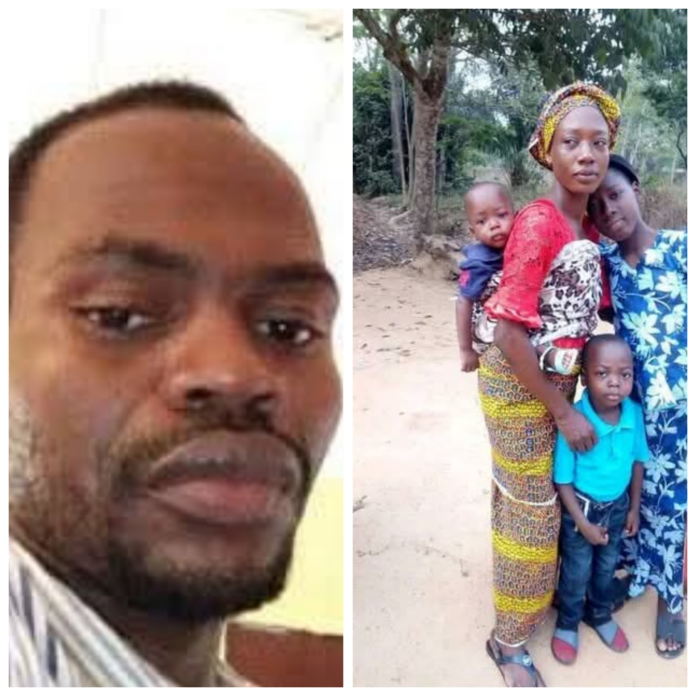
A nursing mother, Samaila Lilila, her infant twins and little son have been kidnapped by bandits in Kurfi town, Kurfi Local Government Area of Katsina State.

The bandits reportedly invaded the town three days ago and shot some residents before taking away Samaila, her young son, 34-day-old twin children (a boy and girl) and two other persons.

According to reports, the abductors have demanded a ransom of N15m for their release.

Bandits kidnap mother, her newborn twins and son in Katsina

Kano Chemist remanded for allegedly raping 9-year-old girl to death

A Kano Magistrate Court sitting in the Noman’s-Land area in Sabon Gari local government area has ordered the remand of a chemist for allegedly raping a 9-year-old girl to death. 

The State Counsel, Barrister Zainab Aliko, told the court that the Chemist, Manniru Ibrahim Fanisau, sexually violated the deceased, Rumaisa Sadiq when she was brought to him for malaria treatment at the Jaba area of Fanisau in Unogo Local Government Area of the state.

The late Rumaisa Sadiq

Aliko added that as a result of the incident the girl died. 

The defendant pleaded not guilty to two count charges of rape and homicide contravening sections 283 and 221 of Penal Code Law. The presiding judge, Hajara Safiyyu Garba, ordered that the defendant be remanded in a correctional centre.

Garba adjourned the case to September 30, 2024. 

Linda Ikeji

Falana reveals how police in Kano arrested 7 Polish students of BUK for taking photographs during #EndBadGovernance protest

  • 1,403 secretly arraigned in various courts

While it has been reveled that not less that than 2,111 protesters were arrested in connection with the 10-day #Endbadgovernance action across the country that was held from August 1st to 10th, rights lawyer and Senior Advocate of Nigeria (SAN), Femi Falana has revealed that among the arrested persons were Seven Polish students, who are taking part in an exchange programme in Bayero University, Kano,.

They were arrested for taking photographs during the protest. Meanwhile, 1,403 have reportedly been surreptitiously arraigned in various courts.

Also, the suspects were ordered to be remanded in prison custody due to a lack of legal representation, whereas the Nigerian Bar Association (NBA), had publicly announced its intention to provide lawyers to defend them.

Making the revelations, Falana who is also Chair, Alliance on Surviving Covid-19 and Beyond, ASCAB, issued an ultimatum for the government to charge them to court.

In the statement, titled ‘HALT THE CLAMPDOWN ON PROTESTERS’, Falana also said: “Seven Polish students, who were taking part in an exchange programme in Bayero University, Kano, were arrested for taking photographs during the protest.

“They may be charged with espionage to give the impression that the protests were instigated by foreign interest groups.”

On the arrested and detained protesters, Falana demanded that “Whenever the suspects are going to be arraigned, they must be given adequate notice to be able to contact the Nigerian Bar Association, NBA, and their family members to make arrangements for their defence.”

Arrest across Nigeria

Falana also gave a breakdown of the distribution of protesters arrested across the states and the Federal Capital Territory, FCT, Abuja.

1. Kano — 873

2. Jigawa — 403

3. Katsina–120

4. Gombe — 111

5. Sokoto — 110

6. Borno — 99

7. Yobe — 90

8. Bauchi-60

9. Plateau — 51

10. Kaduna — 50

11. FCT — 50

12. Nasarawa — 40

13. Niger — 25

14. Zamfara — 19

15. Cross Rivers — 10

‘Suspected looters are treated better’

According to the fiery activist, “We have also confirmed that individual lawyers who had applied for the bail of the detained suspects in police stations were not informed that they were going to be arraigned in the courts.

“We submit that the decision of the authorities to deny the suspects legal representation constitutes a violent breach of their fundamental right to fair hearing guaranteed by section 36 of the Constitution and article 7 of the African Charter on Human and Peoples Rights (Ratification and Enforcement) Act.

“This is highly discriminatory and illegal on the ground that politically exposed persons who are arrested for looting the treasury to the tune of several billions of Naira are usually informed in advance of the dates and of their arraignment in the courts.

“Such highly placed suspected looters are always granted bail in liberal terms and even authorised by trial judges to travel abroad for medical treatment.

“The offence allegedly committed by the 783 suspects arrested in Kano is that they displayed the Russian flag during the protest.

“A tailor who was sowing the flag was also arrested by the police. It may be difficult to press charges against the suspects in a country where the flags of the United States, United Kingdom, France, Germany and other European countries are hoisted by the majority of hotels in Nigeria while Churches hoist the flag of Israel based on the erroneous belief that it is a Christian country.”

Access to justice contributed largely to the delays at the Supreme Court —Ex-CJN Ariwoola

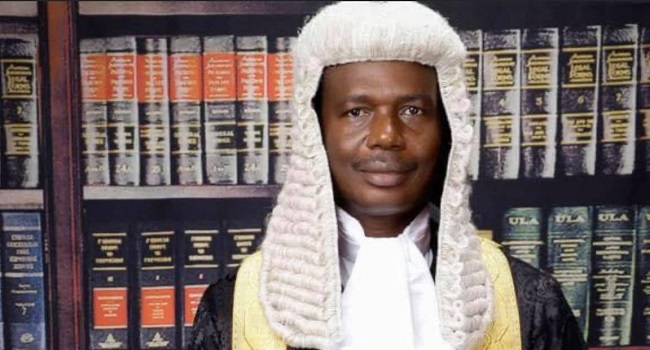
Hon. Justice Olukayode Ariwoola who retired as the Chief Justice of Nigeria having clocked 70 on Thursday told a crowded Supreme Court ceremonial hall that access to justice contributed largely to the delay in the hearing of cases as litigants and lawyers are forced to wait for several years to have their cases decided.

Speaking at his valedictory session at the apex court in Abuja, Ariwoola who explained that there are too many cases before the apex court which should have ended at the Court of Appeal added that the right to a fair hearing can only be guaranteed when lawyers and litigants do not have to wait for so long to have their cases heard.

Ariwoola who has handed the baton to Hon. Justice Kudirat Kekere-Ekun as CJN stressed the need for the bench to have more judicial officers to adjudicate on all matters timeously.

Expressing concern on the Supreme Court’s workload, the former CJN said a total of 1,124 cases were filed in the 2023/2024 legal year, which commenced in September 2023 and ended in July 2024.

Out of these, 435 were civil cases, 269 were civil motions, 219 were criminal cases, and 102 were criminal motions.

Additionally, although the year was not an election year, 89 political appeals were filed at the apex court, along with 10 originating summons.

He pointed out that: “During the same period, we delivered a total of 248 judgments and rulings, with 92 judgments in civil and originating summons cases, 81 judgments in criminal appeals, and 74 judgments in political appeals.”

Justice Ariwoola noted that the realisation of the need to reduce the undue burden on the Supreme Court led to the collaboration between the National Judicial Institute, the Ministry of Justice, and the Nigerian Bar Association to host the Justice Sector Reform Summit in April.

On some of his achievements, he said: “At the time the Supreme Court Rules 1985 were made, things that are now ubiquitous, like information technology, electronic transactions, and global telecommunication, were either not in existence or in their formative stages. How, then, could such outdated rules be adequate for today’s challenges?

“It was for this reason that I empaneled a Rules Committee to undertake the arduous task of reviewing the 39-year-old rules and the numerous extant practice directions comprehensively.

“I am glad to report that earlier this month, pursuant to the provisions of Section 236 of the Constitution of the Federal Republic of Nigeria 1999, I signed off on the New Supreme Court Rules 2024.”

Ariwoola expressed his belief that the rules of procedure of any court are crucial for its operation and must be dynamic and contemporary to meet the evolving demands of both the bar and the bench.

Vice President Kashim Shettima was among dignitaries who attended the public presentation of a book titled, ‘Judging With Justice’, written in Ariwoola’s honour.

The event was held at the International Conference Centre Abuja, a few hours after the official retirement of Justice Ariwoola.

Guests at the occasion include the Minister of the Federal Capital Territory (FCT),  Nyesom Wike; and Justice Kudirat Kekere-Ekun, who was recommended to President Bola Tinubu by the National Judicial Council to take over from Justice Ariwoola, as well as Justices of the Supreme and Appeal Courts.

Former President Muhammadu Buhari appointed Ariwoola as acting CJN in June 2022 following the resignation of Justice Tanko Muhammad on health grounds. Ariwoola was subsequently sworn in October of the same year following his confirmation by the Senate.

Ariwoola was appointed a Justice of the Supreme Court of Nigeria in 2011. He was a Justice of the Court of Appeal between 2005 and 2011 after having been elevated from the State High Court of Oyo State.

He studied law at the University of Ife (now Obafemi Awolowo University), Ile Ife and bagged his bachelor of laws degree with honours in July 1980. In July 1981, Ariwoola was called to the Bar and enrolled at the Supreme Court of Nigeria as a Solicitor.

Questions and more over Court’s approval of profit-making NNPC Retail to OVH Energy

NNPC Retail, the downstream arm of the Nigerian National Petroleum Company Limited, has ceased to exist after a court-approved transfer of its ownership and assets to OVH Energy Marketing Limited, a company it claimed to have acquired.

The court ruling effectively dissolves NNPC Retail, the primary importer of petrol in Nigeria, and transfers its ownership and operations to OVH Energy Marketing Limited, which now assumes full control of the entity.

This development follows a contentious purchase, as reported by PREMIUM TIMES, where OVH Energy effectively took control of NNPC Retail’s management, prompting an NNPC insider to describe the deal as ‘the most ridiculous business acquisition in the world’.

In October 2022, NNPC announced that it had acquired OVH Energy Marketing, owner and operator of the Oando downstream assets.

Through this acquisition, NNPC Retail Limited will build on the existing success of OVH and operate model service outlets leveraging OVH’s extensive asset base and commercial capabilities, it said.

NNPCL bought OVH from Nueoil Energy Limited a month after Nueoil Energy acquired OVH in September 2022.

Two months ago, NNPC Retail, OVH, and Nueoil jointly filed a petition at the Federal High Court in Lagos, seeking eight orders, including the dissolution of NNPC Retail and Nueoil without being wound up and the transfer of their assets to OVH Energy Marketing Limited. Justice C.J. Aneke granted all eight orders, making the merger effective from 1 January 2024.

The court ruling was based on a petition filed on 24 June by the three companies, with the affidavit of suit No: FHC/L/CS/921/2024 deposed by Valentina Ine Kodjo-Soroh. The court’s decision was published in the official gazette of the Nigerian government and in PUNCH Newspaper on July 18.

The acquisition includes a range of assets from OVH Energy, operator of Oando filling stations, comprising a reception jetty with a monthly capacity of 240,000 metric tonnes, eight liquefied petroleum gas (LPG) plants, three lube blending plants, three aviation depots and 12 warehouses.

In June 2023, a PREMIUM TIMES investigation revealed secret deals and a complex ownership structure behind the acquisition, which resulted in OVH Energy Marketing gaining managerial control of NNPC Retail.

The report also uncovered discrepancies in OVH Energy’s claimed number of filling stations during merger talks.

Furthermore, it exposed how Huub Stokman, OVH Energy’s former CEO, became NNPC Retail’s new Managing Director, adding to the complexity.

The investigation additionally found that the acquisition had created a toxic work environment at NNPC Retail, with OVH Energy officials dominating the management.

Despite the court’s orders, workers at NNPC Retail expressed concerns about the takeover, with one staff member describing it as “criminal.” They claimed that while they were aware of the gazette, they had not been officially informed.

“Nothing has changed in the working conditions of NNPC Retail,” said one aggrieved staff member. Another questioned how a profit-making NNPC Retail before the acquisition was now subservient to OVH, stating, “We bought them because we were making profits and needed expansion, and they were struggling. Now they own us. How do you explain that?”

Meanwhile, the House of Representatives has launched an investigation into the controversial acquisition, with many lawmakers describing a report presented on the matter as “suspicious and shabby.” The investigation continues under the House Committee on Petroleum Resources (Downstream).

In February, a civic group, Nigeria Transparency Council (NTC), petitioned the House of Representatives Committee on Downstream Petroleum to investigate how the NNPCL paid the sum of N140 billion for the acquisition of OVH Energy Downstream Assets.

The group also demanded the immediate suspension of Mele Kyari-led NNPCL management over the controversial and alleged shoddy acquisition deal between the company, Nueoil and OVH Energy Downstream Assets.

The group in a statement said the acquisition of the OVH Energy Downstream Assets cost hundreds of billions of Naira caused by alleged over-bloated assets with the merger of the acquired company not yet formalised.

The group said, “The NNPC announced in October 2022 that it had acquired OVH Energy Marketing, owner and operator of the Oando downstream assets, but did not disclose the price at which it bought it and the company that sold it.

“The House of Representatives last year set up an Ad-hoc Committee to investigate the alleged fraudulent acquisition of OVH by the National oil coy.

“But Mele Kyari, Group Chief Executive Officer of the NNPCL, appearing before the committee of the House before its dissolution in September, 2023 for an investigative hearing on the allegation, said the acquisition of OVH Energy was properly done, adding that it gave the NNPC over 30 percent control of the downstream sector with a profit of N18.4 billion in the first quarter of 2023, a position which have been disputed by industry players as not backed by any documentary evidence.

“Recently, it was disclosed that the National oil coy paid cash amounting to over $325.09 million (N140.559 billion) for the acquisition of Oando-branded retail stations and a reception jetty in Apapa, among other facilities with allegation trailing the acquisition that some of the acquired assets are alleged not to have belonged fully to OVH or licensed.”

Former Vice President of Nigeria, Atiku Abubakar had in a statement asserted that “the future of Nigerians has been effectively mortgaged to President Bola Tinubu, his family, and associates” adding that “even after Tinubu leaves office, it will be nearly impossible to break these shackles.”

Expressing astonishment at the operations of the NNPC and how the government-owned oil company had put its retail arm under the control of OVH, a company in which Oando, led by Wale Tinubu, owns 49%, Atiku said: “”Just as Alpha Beta, Primero, and others act as Tinubu’s proxies in Lagos, managing critical sectors and generating revenue for him and his family, he has begun to replicate this at the federal level.”

Sahara Reporters

Late Wigwe University Registrar’s family refute claims she was married to Jude Ezeobi

The family of Ulonna Inyama, the Registrar of @WigweUniversity who tragically died in Abuja on Monday 29 July has announced that contrary to information making the rounds, she was not married to one Mr. Jude Ezeobi.

Law teacher and rights activist, Chidi Anselm Odinkalu who made the revelation through an X (formerly Twitter) post said: “@fcthighcourt granted a decree of annulment in respect of Mr. Ezeobi’s marriage claims on 17 Oct. 2023.”

Prior to Odinkalu’s post, a group that described itself as Jude Ezeobi’s Committee of Friends released a statement announcing the passing of “the dear wife of our founding Chairman…”

Ulonna Inyama, according to a family source, died due to complications from fibroid surgery and a wrong blood transfusion.

The source revealed that she was initially admitted to a hospital in Abuja for fibroid treatment but suffered a fatal reaction after receiving the wrong blood type, Vanguard reports.

“She died of loss of blood due to fibroid complications under mysterious circumstances. We were told that wrong blood transfusion led to her death.

“When her condition worsened due to complications, she was referred to another hospital, where she passed on,” the source said.

The family has demanded an investigation into the circumstances surrounding Inyama’s death.

Inyama’s death came months after the tragic loss of Wigwe University’s founder, Herbert Wigwe, who died in a helicopter crash in California, USA, along with his wife and son.

Below is the judgment annulling her marriage with Jude Ezeobi.

Agenda for new Chief Justice Kudirat Kekere-Ekun

By Sonnie Ekwowusi

Following the retirement of former Chief Justice Olukayode Ariwoola from the Supreme Court upon reaching the mandatory age of 70, the National Judicial Council has recommended Justice Kudirat Motonmori Olatokunbo Kekere-Ekun to President Tinubu as his replacement, subject however to confirmation by the Senate.

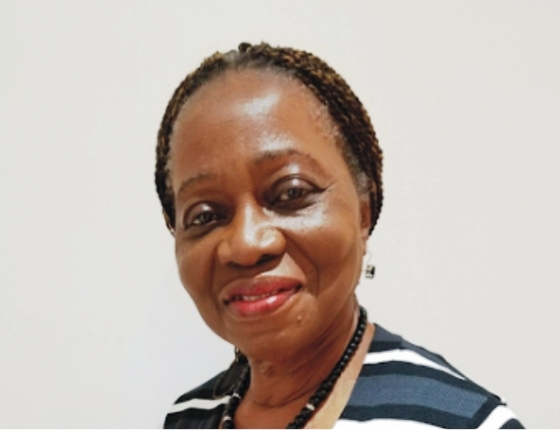
Justice Kekere-Ekun, who was called to the Nigerian Bar in 1981, is 66 years old. She began her judicial career in December 1989 as a Senior Magistrate Grade II in the Lagos State Judiciary, eventually rising to become a High Court judge in Lagos in July 1996. She was elevated to the Court of Appeal on September 22, 2004, where she served in various Court Divisions, including as presiding Justice of the Makurdi and Akure divisions in 2021 and 2022, respectively.

In 2023, she was elevated to the Supreme Court. As the most senior Justice in the Supreme Court following Justice Ariwoola’s retirement, Justice Kekere-Ekun has now stepped in as the new Chief Justice of Nigeria (CJN), making her the second female CJN in Nigeria’s history, after Justice Mariam Mukhtar, who served from July 2012 to November 2014.

I salute the new CJN and wish her a successful and impactful tenure, filled with wisdom, fairness, and dedication to upholding justice. I respectfully urge her to immediately initiate processes for a complete overhaul of the country’s judiciary to enhance judicial efficacy and efficiency and to bolster public confidence in the judiciary.

Justice Kekere-Ekun assumes her role at a time when the Nigerian judiciary is ranked as the most corrupt institution in the country, with Nigerian judges identified as the biggest recipients of bribes and kickbacks. According to a recent 160-page report titled “Corruption in Nigeria: Patterns and Trends,” based on a survey conducted by the National Bureau of Statistics (NBS) in collaboration with the United Nations Office on Drugs and Crime (UNODC), Nigeria’s public officials received N721 billion in cash bribes in 2023, with Nigerian judges topping the list of bribe recipients.

This is a severe indictment of the Nigerian judiciary and its judges, and it is deeply troubling. The new CJN must not treat this indictment lightly. What hope is there for the common man in Nigeria if the very judges who should be unbiased umpires in the adjudication of disputes are ranked as the biggest takers of bribes and receivers of kickbacks? There is no doubt that the country’s judiciary has been reduced to an object of derision by the very people who should labor to maintain its prestige. This is truly disheartening. In recent times, we have witnessed decency being discarded in open court, justice being put up for sale, frequent abuses of court processes, injustice being meted out to punish perceived enemies, and allegations of impropriety being openly leveled against members of both the Bar and the Bench. The avalanche of conflicting judgments from the Supreme Court has left Nigerian lawyers and the public uncertain about what judicial precedents actually are.

Therefore, Chief Justice Kekere-Ekun is respectfully urged to do everything possible within her authority and capacity to restore the integrity and honor of the country’s judiciary. She should begin by addressing official corruption and moral degeneracy within the Bench. Specifically, she should return the Supreme Court to its golden era, when Justices such as Anthony Aniagolu, Kayode Eso, Chukwudifu Akunne Oputa, Andrews Otutu Obaseki, Augustine Nnamani, and others brought their intellectual versatility and philosophical clarity to bear in their respective judgments to uphold substantial justice. Our democratization experiment will fail if the judiciary, a vital third arm of government, is compromised. Therefore, the judiciary must protect its independence and impartiality with the utmost care. It should be insulated from partisan politics, and political office holders must refrain from interfering with the judiciary’s work.

The Bench should be reserved for the best and brightest in character and learning, not for those who are unproductive or lack diligence. The appointment and elevation of judges should be based on merit, not on family connections, political patronage, or what Prof. Joseph Richard has dubbed “prebendalism.” The current process of appointing and removing judges in Nigeria is long overdue for a review. First, the process should be transparent, not shrouded in secrecy. Whenever a judicial vacancy exists, it should be widely advertised to the public so that interested lawyers can apply for consideration. The views of many practicing lawyers, who likely know the candidates better than the National Judicial Council (NJC), should be sought both before and after candidates are shortlisted.

Disciplinary action against judges should be routinely carried out to save the Bench from moral decay. Only incorruptible and irreproachable judges can steer the judiciary out of its current troubled state. The late eminent Justice Akinola Aguda was a tireless advocate for an incorruptible judiciary. He believed that a single error in appointing unworthy individuals to the Bench could ruin the entire administration of justice. His solution for ensuring an independent, incorruptible, and courageous judiciary was to appoint worthy individuals to the Bench.

The National Judicial Council (NJC), responsible for appointing judicial officers, is not obligated to appoint Supreme Court Justices exclusively from the pool of serving Court of Appeal Justices or to follow civil service bureaucracy in such appointments. There is nothing wrong with appointing senior lawyers with pedigree and respected academics to the Supreme Court to strengthen the Court.

For example, in 1972, Dr. Taslim Olawale Elias was appointed a Justice of the Supreme Court directly from the Faculty of Law, University of Lagos, and he later rose to become the most renowned scholarly Chief Justice Nigeria has ever produced. Justice Augustine Nnamani (of blessed memory) was appointed to the Supreme Court from the Bar. Justice Okay Achike (of blessed memory), who taught us Contract law and Commercial Law at the University of Nigeria, was appointed a High Court judge from academia and was later elevated to the Court of Appeal and the Supreme Court. There are more bright lawyers like Dr. Elias, Justice Nnamani, and Justice Achike waiting to be appointed to the Supreme Court.

In the same vein, seniority should not be the sole criterion for the appointment of the Chief Justice of Nigeria (CJN). Relying solely on seniority can lead to the promotion of mediocrity at the expense of meritocracy. A CJN can be appointed from academia. For example, in 1972, Dr. Taslim Olawale Elias came directly from the Faculty of Law at the University of Lagos to become the CJN, making his mark. There are more Dr. Eliases waiting in the wings to be appointed as CJN. We must discover them.

Beyond judges, our judicial personnel—court bailiffs, court clerks and registrars, court messengers, court typists, etc.—who also play crucial roles in the dispensation of justice, should strive to live above reproach. Our court personnel often ruin a litigant’s case even before it reaches the judge. Some court bailiffs refuse to effect a court process simply because they were unable to extort money from a litigant or their counsel. Many case files go missing in our courts today. Many litigants arrive at court only to discover, to their chagrin, that their case files have either been misplaced or completely lost. These are instances of administrative injustice, which in turn, lead to legal and social injustice.

Therefore, the Nigerian Bar Association (NBA) should also focus its attention on corrupt court personnel. Court registrars who indirectly extort money from litigants and lawyers should be exposed and brought to justice. Judicial personnel who extort money from litigants and lawyers before rendering the administrative services due to them should also be brought to justice. Lawyers must stop bribing court personnel or giving in to their extortionist demands.

The new CJN should muster the courage to revamp our criminal justice delivery system. One of the most egregious issues is that many awaiting trial inmates (ATMs) languishing in our correctional centres have spent more time in custody than they would have if they had been promptly charged, tried, convicted, and sentenced. There should be a massive decongestion of our correctional centres to alleviate the inhumane suffering of prisoners. The government should stop procrastinating and urgently implement the various recommendations presented to successive Nigerian governments regarding correctional centres.

Considering the lingering controversies surrounding the award of the rank of Senior Advocate of Nigeria (SAN) over the years, the guidelines for the conferment of SANship should be reviewed. The award of SANship should be based strictly on the quality of legal scholarship, not on the quantity of court cases a lawyer has completed at the lower and appellate courts.

Beyond the conferment of SANship for the quantity of cases a legal practitioner has completed in law courts, the Legal Practitioners Privileges Committee should consider conferring awards on legal practitioners who have excelled in other dimensions of legal practice. For example, to promote high ethical conduct and honorable behavior in the legal profession, the Legal Practitioners Privileges Committee could institute yearly awards for the most ethical and honorable legal practitioners in Nigeria. Alternatively, the Committee might consider rewarding diligence and hard work among practicing lawyers by setting up a Hall of Fame for lawyers who have diligently and expeditiously prosecuted their clients’ cases each year.

There should also be awards for legal practitioners who have excelled in securing the release of many Awaiting Trial Inmates (ATM) from unlawful detention. Additionally, there should be yearly awards for physically challenged legal practitioners in Nigeria and for the neatest and most properly robed legal practitioners. In this way, all-round excellence in the legal profession is promoted on non-discriminatory grounds.

All in all, evidence from around the world shows that the rule of law is a critical factor in empowering individuals, ending discrimination (especially against women), and enhancing competition. In fact, one of the four pillars of economic freedom and prosperity in any country is a strong rule of law. The rule of law deserves precedence over other important objectives if Nigeria is truly committed to improving human conditions, preserving peace, respecting individual human rights, and achieving greater economic prosperity and human flourishing.

Soludo reveals that daughter’s marriage is first in 142 years

The governor of Anambra State, Prof. Chukwuma Soludo, gave out his daughter, Adaora, in marriage at his home town in Isuofia, Aguata Local Government Area, on Saturday.

The event was attended by several dignitaries, mostly from his government and members of his in-laws’ family from Onitsha.

Soludo took to his verified Facebook account to state that the traditional marriage was the first in his family in the past 142 years.

Soludo said this was because of the scarcity of female children in his family, until he broke the jinx, as God blessed him with four female children.

Soludo wrote: “In the presence of my family, kinsmen, friends, and my in-laws from Onitsha, I gave out my lovely daughter, Ifeatu Adaora Soludo, to her heartthrob after all traditional rites had been met and certified in line with the customs of the Isuofia community.

“I celebrate this historic event for two reasons. First, God has graciously blessed the larger Soludo family with another such marital union after 142 years (by my estimate).

“This is largely due to the fact that female children have been a rarity in the past three generations of the Soludo family. To break that “jinx,” God has mercifully provided me with four beautiful daughters, whom I celebrate every day.”

Soludo stated that by marrying his daughter off to Arinze Ibekwe, his son-in-law, he has gained another son.

Daily Post

Attorney General’s office has no record of former-CJN Onnoghen’s CCT case file after five years

It was near pin drop silence at the Court of Appeal on Tuesday when the office of the Attorney General of the Federation and Minister of Justice (AGF) revealed that it was not in possession of the case file for the trial of former Chief Justice of Nigeria (CJN) Samuel Walter Nkanu Onnoghen, five years after the conclusion of the trial.

Onnoghen was prosecuted in 2019 by the federal government on false declaration of assets at the Code of Conduct Tribunal, found guilty, and removed from office.

He was also made to forfeit the undeclared assets to the federal government.

However, at the Court of Appeal sitting in Abuja, the representative of the federal government, Tijani Gazali, told the appellate court that not a single paper in respect of the trial and conviction of the ex-CJN was with the Federal Ministry of Justice.

Gazali, a Senior Advocate of Nigeria (SAN), informed the three-man panel of Justices billed to hear the appeal of Onnoghen that the trial of the former CJN was contracted to a Kano-based private lawyer, Aliyu Umar SAN.

He explained that the said private senior lawyer who prosecuted the case from the beginning to the end had died four years ago.

The federal government lawyer therefore appealed to the Court to grant an adjournment to enable the government to approach the chambers of the late private lawyer to retrieve necessary documents to respond to the appeal.

According to him, virtually all the processes served on the AGF in 2019 were taken to a private lawyer.

Besides, Gazali said that the matter was being looked into from another perspective with a view to working out an amicable resolution of issues in dispute by the new Attorney General of the Federation.

However, counsel to the former CJN, Chris Uche SAN, pointed out to the Court that some documents were actually served on the AGF office and acknowledged.

Uche appealed to the Court to allow him to move an application for an accelerated hearing, which was granted upon no objections from the federal government.

Justice C. I. Jombo Ofo, who presided over the matter, granted an accelerated hearing and subsequently fixed September 19 for the hearing of the appeal.

Onnoghen, who was in court to witness the proceedings, is praying the Court of Appeal to set aside the judgement of the CCT that removed him from office and ordered the forfeiture of his five bank accounts.

Of New CJN, Non-Performers, and Subversive Lawmakers

By Onikepo Braithwaite Onikepo

Honourable Justice Olatokunbo Kekere-Ekun, JSC: Making the Women Proud

Presently, the only silver lining in the cloud for many of us in the administration of justice sector, particularly the women and following the #EndBadGovernance (#EBG) Protest, is the excitement of welcoming the Second Female Chief Justice of Nigeria, Honourable Justice Kudirat Motonmori Olatokunbo Kekere-Ekun, JSC, CFR (the first Female to occupy that position, is Honourable Justice Aloma Mariam Mukhtar, GCON, July 2012 – November 2014), not just because history is being made again by a Female, but because #GoodGovernance needs to be injected into the Judiciary, it’s much battered reputation and confidence of the public in the Judiciary being the last hope of the common man, restored – and Justice Kekere-Ekun is  up to the task; she’s a Performer. 

Personally, I have only appeared before Her Lordship in one matter, when she was at the Court of Appeal, Port Harcourt Division, but, as Editor of this esteemed Publication, ThisDay Lawyer for almost eight years, we can testify to the fact that Justice Kekere-Ekun is hardworking, thorough and firm, as she appears to have delivered the highest number of lead judgements (sound judgements, I might add) that we have reported in the past eight years. 

Honourable Justice Kekere-Ekun who was elevated to the Supreme Court in 2013, has been recommended by the NJC to President Bola Tinubu, to be the next Chief Justice in accordance with Section 231(1) of the 1999 Constitution of the Federal Republic of Nigeria (as amended in 2023)(the Constitution). The President, in turn, forwards her name to the Senate for confirmation. By virtue of Section 231(4) of the Constitution, as the position of CJN becomes vacant on August 22, 2024, the President is mandated to appoint the most senior JSC to perform the functions of the CJN until the substantive CJN is appointed – Justice Kekere-Ekun is the most senior. Considering the fact that it has been clear to everyone since 2022 that the position of CJN would become vacant on August 22, I see no reason for there to be any delay in completing the process of CJN appointment timeously, so that by August 22, 2024 as one CJN is retiring, the new one is being sworn in, instead of needlessly leaving the issue to fester for up to 90 days beyond the date of appointment of the acting CJN (see Section 231(5) of the Constitution). 

In October, 2023, the UK appointed the first Lady Chief Justice of England and Wales, Baroness Sue Carr, and come September 1, 2024, the new South African female Chief Justice, The Honourable Mandisa Maya, will assume the position. We also look forward to having our own Nigerian Female CJN!

#GoodGovernance vs Non-Performers

In the spirit of #GoodGovernance, one would have imagined that, by now, the Federal Government of Nigeria (FGN) would have rushed to pick two of the juiciest low hanging fruits, to show that it has heard the cry of Nigerians and one of their #EndBadGovernance prayers – to get rid of non-performers – swiftly replacing the bad leadership of NNPCL and those related to Sports, since it is not in the nature of most Nigerians to resign, even in the face of shame arising from non-performance/failure. 

Is it fair that, despite the fact that Nigerians are going through an extremely difficult time, they should also be queuing up for fuel incessantly? For the past two years, Nigeria has gone from one fuel crisis to the other; it was also during the era of the present leadership that bad dirty fuel was imported in early 2022 or so, and many vehicles were damaged as a result; is this not enough to show that those in charge of that fuel supply area, are incompetent? Ditto for those in charge of Nigeria’s oil production output, and ensuring that our Refineries are rehabilitated – they are equally as inept or corrupt, or both. 

As for Sports Sector, need I discuss Nigeria’s shameful outing at the 2024 Paris Olympics? Nigeria went with 88 athletes, no medal! Botswana took 11 athletes, and won two medals, one gold, one silver. With a N12 billion budget, Nigeria was unable to purchase one bicycle for the competition, so much so, that we shamelessly had to borrow a bicycle from Germany for the Nigerian contestant to ride for the cycling competition! If there’s a word worse than shame, disgrace and humiliating, that’s what would be used to describe Nigeria’s 2024 Olympics outing (similar to that of 2020). Yet, in both Oil and Sports sectors, Nigerians haven’t heard of any heads rolling.

It is time to hold President Tinubu to the warning he gave at the November 2023 Cabinet Retreat for Ministers. He said: “If you are performing, nothing to fear. If you miss the objective, we review. If you don’t perform, you leave us….Don’t  be a clog in the wheel of Nigeria’s progress”. I submit that those running the affairs of the two aforementioned sectors, that is, NNPCL etc and Sports, are ‘clogs in the wheel of Nigeria’s progress’. Not only have they missed the objective, they are non-performers. There is really no justification, for keeping them in their jobs. Nigerians are waiting for the President to keep to his word, and do the needful. Walking the talk, particularly at this time, will inspire confidence in Nigerians and show the people that the President has heard their cry. After all, the welfare of the people is of the utmost importance, more so than keeping non-performers in their jobs. Thankfully, at least, the price of food stuff seems have come down.

Is Patriotism Singing the National Anthem and Reciting the Pledge?

This brings me to the issue of patriotism, something that all Nigerians, including public/government officials, should embrace; it goes beyond Nigerians singing the National Anthem and reciting the Pledge. 

How patriotic are some of our so-called leaders and Government Officials themselves? Living lavish lifestyles instead of opting for salary and allowance cuts, seeing as the country is going through difficulty and Nigerians are living in penury. The Liberian President, Joseph Boakai, slashed his salary by 40%, in an effort to cut government expenditure. Last year, the Zambian President, Hakainde Hichilema ordered that luxury vehicles purchased for government officials be sold; he also rejected the proposal to buy vehicles worth $1.8 million for his entourage. That is patriotism, not singing national anthem. Look at Dubai 30 years ago, and look at Dubai today – the UAE is now considered to be one of the most developed countries in Western Asia. They used the same type of resources Nigeria has, to develop their Emirate. Look at South Korea 60 years ago – a rural agrarian economy with no mineral resources, a country that Nigeria was said to have rendered financial assistance to all those decades ago; today, it has transformed into a First World country. What about Singapore and LKY? Yet, Nigeria, over 60 years post-independence still remains an underdeveloped third world country, the poverty capital of the world. The difference between their leaders and ours, is that their leaders have ‘a love for country’ – patriotism, which they have shown, not by singing national anthem, but by developing their countries and giving their people a good standard of living; ours love themselves.

Though I haven’t read the now-aborted controversial Counter Subversion Bill 2024 (CSB) sponsored by the Speaker of the House of Representatives (HOR), Rt Hon. Tajudeen Abbas, I have seen the highlights; it allegedly purported to slap a N5 million fine or 5-10 years imprisonment or both, on anyone who refuses to sing the National Anthem or recite the Pledge! What a harebrained law, particularly in a democracy! Has Nigeria become a Military or Police State like North Korea, where the people gather round in public places to worship the State and their leader? Are such silly provisions, what is required at this critical point in time in Nigeria’s trajectory? 

Freedom of Expression and the Right to Remain Silent

How would that ludicrous provision about not singing the National Anthem, even be applied? If people attend functions and they don’t sing the National Anthem, will there be Anthem Police to check mouths and arrest those who fail to sing? I thought Section 39(1) of the Constitution guaranteed the right to freedom of expression, which would include the right to speak or not to speak. See the case of Aviomoh v C.O.P & Anor (2021) LPELR-55203 (SC) per Abdu Aboki, JSC. 

By virtue of Section 35(2) of the Constitution, even a person who is arrested or detained has a right to remain silent, let alone one who hasn’t committed any crime, but doesn’t want to sing or recite some lines. In Igagbele v State (2006) LPELR-1441(SC) per Walter Samuel Nkanu Onnoghen, JSC (later CJN), the Supreme Court held inter alia that “….the citizen’s right to remain silent, even when arraigned for a criminal offence, is an inviolable one”. One wonders what type of lawmakers Nigeria has, seeking to enact laws that do not meet the basic threshold of constitutionality. Even though Section 45 of the Constitution can restrict or derogate from some fundamental rights, including the right to freedom of expression and peaceful assembly, the right to remain silent is sacrosanct, and not one of the rights that can be derogated from. So, if I don’t feel like singing the National Anthem, no law can force me to. The Constitution allows me to keep my mouth shut!

This kind of unserious, self-serving ridiculous lawmaking, makes one wonder whether some members of the three arms of government, even understand their duties. Their most important assignment, is the security and welfare of the people (Section 14(2)(b) of the Constitution). For one, making Nigerians queue for fuel incessantly, shows a total lack of concern for the people’s welfare on the part of the Executive; and instead of the HOR to exercise its oversight functions to call NNPCL to order, it is instead, trying to enact useless draconian laws. 

#FightAgainstCorruption

Aside from the fact that Section 15(5) of the Constitution mandates the State to abolish all corrupt practices and abuse of power, Government has another golden opportunity to show its commitment to #GoodGovernance, by ramping up its fight against corruption. Nigerians are asking whether Yahaya Bello, former Governor of Kogi State is above the law. Why has he not been arrested and arraigned, despite the humongous N80 billion charges that have been filed against him? Some say that the cowardly former Governor is hiding in Kogi State House. 

For the avoidance of doubt, the Constitution’s Section 308 immunity against suit and legal process clause, only extends to the persons of the incumbent President, Vice President, Governors and Deputy Governors – it does not extend to those who no longer occupy these positions. Furthermore, nothing in the said Section 308 makes their residences or official archives, inviolable. That inviolability of offices and residences, only applies to Diplomats. Section 1(1) of the Diplomatic Immunities and  Privileges Act 1962 provides inter alia for the immunity from suit and legal process, and the inviolability of residences and official archives of foreign envoys and foreign consular officers. Kogi State House certainly doesn’t belong to this category. See the case of African Reinsurance Corporation v J.D.P. Construction (Nig) Ltd (2007) LPELR-216(SC).

Conclusion 

The #EndBadGovernance Protesters have threatened to intentionally resume on October 1, 2024, which is Nigeria’s 64th Independence Day. Instead of relying on people that have some leverage on the public, like traditional and religious leaders to convince Protesters not to take to the streets again, Government should seize the opportunity during the intervening six weeks period between now and Independence Day, and show good faith by picking some of the available low hanging fruits like the ones I have outlined above and acting on them. Perhaps, if the people observe some genuine efforts by Government to display their patriotism by taking steps to deliver #GoodGovernance, then not only will there not be a need for another protest, Government will gain the confidence of the people. 

Onikepo Braithwaite [email protected]

TIPS