A new report by the United States Commission on International Religious Freedom (USCIRF) has raised alarm over escalating violence in Nigeria, warning that roughly 30,000-armed Fulani militants are now operating across multiple regions of the country.
In its May 2026 report, “Nonstate Violators of Religious Freedom in Nigeria: Fulani Militants,” the commission described the armed groups as among the deadliest non-state actors driving insecurity, mass displacement, and religious freedom violations nationwide.
According to USCIRF, the militants operate in loosely connected clusters ranging from small cells of about 10 fighters to larger formations with up to 1,000 members.
The report said attacks linked to the groups intensified across Nigeria’s Middle Belt and parts of the South, with the violence reportedly causing more deaths over the past year than attacks carried out by insurgent organizations and criminal gangs.
“Violence by Fulani militants caused the highest number of deaths among all religious communities in Nigeria over the last year,” the commission stated.
While many of the attacks targeted Christian communities, the report noted that Muslims were also victims of killings, kidnappings, and raids.
USCIRF said the militants do not operate under a unified command structure, though some factions allegedly collaborate with criminal gangs and extremist organizations pursuing financial and ideological objectives.
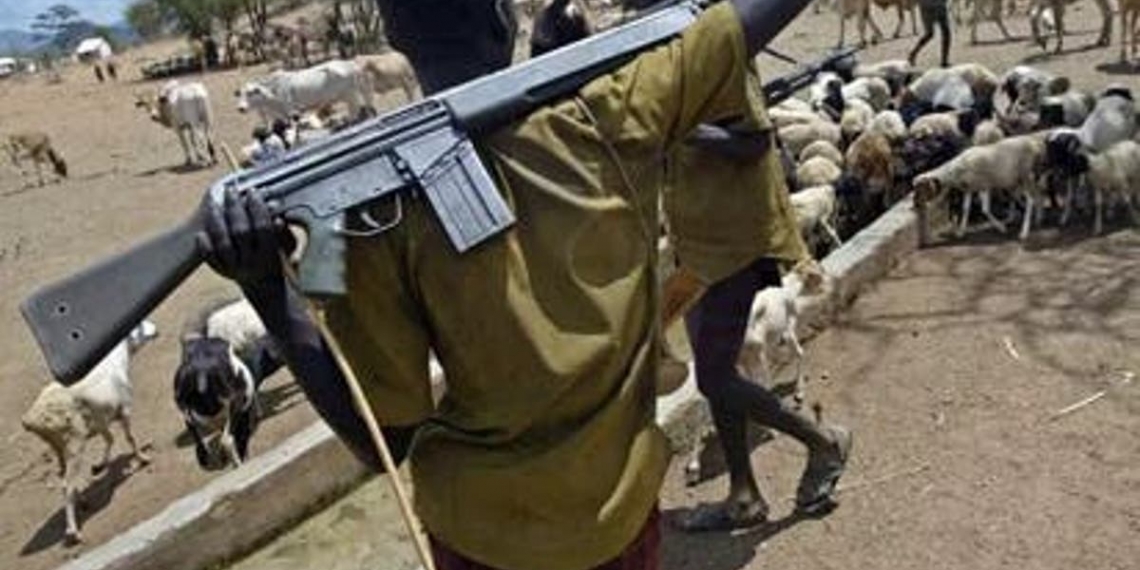
The commission described a recurring pattern of night attacks on rural communities, often carried out by gunmen on motorcycles armed with assault rifles and machetes.
“They often wield machetes and descend on vulnerable communities during the night, eliciting terror as a way to force victims to quickly leave and to achieve greater control of desired land,” the report stated.
According to the report, violence linked to Fulani militants and other armed groups has displaced at least 1.3 million people across central Nigeria, forcing many into overcrowded camps plagued by poor sanitation and limited security.
USCIRF highlighted several major attacks recorded in 2025 and early 2026, including a massacre in Benue State in June 2025 that reportedly left at least 200 people dead, among them internally displaced persons sheltering at a Catholic mission.
The commission also referenced the Yelwata massacre in Benue, where more than 200 Christians — mostly women and children — were reportedly killed and over 3,000 residents displaced.
According to the report, some attacks were deliberately timed to coincide with Christian religious celebrations such as Easter and Christmas in order to maximize psychological trauma among victims.
In one incident cited by the commission, suspected Fulani militants allegedly killed at least 32 people in Niger State in February 2026. Another attack reportedly targeted Holy Trinity Parish in the Kafanchan Diocese of Kaduna State, where three people were killed and 11 abducted, including Father Nathaniel Asuwaye.
The report also documented attacks on Muslim worshippers, including the abduction of an imam and seven worshippers from a mosque in Plateau State in February 2026. The attackers reportedly demanded a ₦16 million ransom.
USCIRF said debates over the root causes of the violence remain deeply contested. While some analysts point to climate pressures, land disputes, and economic hardship, others argue the attacks amount to systematic religious persecution targeting Christian communities.
“Multiple and overlapping factors, including religion in many cases, likely spur Fulani militants to attack communities or individuals,” the report stated.
The commission criticized the response of Nigerian security agencies, saying affected communities consistently complained of delayed interventions after attacks had already occurred.
It also noted allegations from some Christian groups accusing security agencies of bias during investigations and security operations.
The report pointed to recent government efforts aimed at curbing the violence, including a ranching initiative launched by governors from 11 Nigerian states in June 2025 to reduce clashes between farmers and herders.
USCIRF further linked recent federal actions to the October 2025 decision by former U.S. President Donald Trump to designate Nigeria as a “Country of Particular Concern” over alleged religious freedom violations.
Following that designation, President Bola Tinubu reportedly classified kidnappers and violent armed groups, including Fulani militants, as terrorist organizations in December 2025.
According to the commission, Nigerian security forces later rescued 309 hostages during operations in Kogi and Kwara states in January 2026, arresting 129 suspected militants and killing 55 others.
The report also drew renewed scrutiny toward the Miyetti Allah Cattle Breeders Association of Nigeria, which has faced accusations from some Christian leaders of failing to prevent attacks allegedly linked to armed herders.
The association denied any involvement in criminal activity.
“We do not support, condone, harbour, finance, or protect any form of criminality, extremism or violence,” the group said.
USCIRF disclosed that the U.S. Congress introduced the Nigeria Religious Freedom and Accountability Act of 2026 in February, a bill seeking sanctions against Miyetti Allah over alleged involvement in severe religious freedom violations.
Despite ongoing military operations and peace initiatives, the commission warned that central Nigeria remains trapped in what it described as a “daily” and “seemingly perpetual” security crisis.