Home Blog Page 422

Drugged over a 10-year period, her husband got more than 50 men to rape her

For three and a half months Giselle Pelicot has attended court hearings in Avignon, France against her former husband and 50 other men accused of raping her while she was drugged unconscious. Pelicot’s insistence that the trial be made public to raise awareness of the dangers of the drug used on her and her refusal to be shamed has won her international acclaim.

Her husband orchestrating her sexual abuse by strangers could have broken her. But by standing up to her abusers in court and demanding they be ashamed, France‘s Gisele Pelicot has become a feminist champion.

Three and a half months of sometimes gruelling hearings, including graphic video evidence, are set to culminate when judges hand down sentences by the end of next week.

When the trial of her now ex-husband and 50 other defendants opened in the French city of Avignon in September, journalists saw a woman with short red hair, hiding behind sunglasses.

The main victim in the case that shocked France was a grandmother whose life partner had admitted to drugging her for almost a decade so he and dozens of strangers he recruited online could rape her while unconscious.

But then Gisele Pelicot waived her right to anonymity and demanded the public be allowed access to the trial to raise awareness about drug use to commit abuse.

She won hearts across France and abroad, and triggered a flurry of art in her honour, after she said it was her abusers — not her — who should be ashamed.

“I wanted all women who are rape victims to say to themselves: ‘Mrs Pelicot did it, so we can do it too’,” she told the court in October.

“It’s not us who should feel shame, but them,” she added, referring to perpetrators.

As news of the trial spread, protests erupted across France to show support and fans started cheering her or even greeting her with flowers when she arrived in court.

And over the trial’s course, Gisele Pelicot shed her dark sunglasses.

‘Rape is rape’

As the verdict on December 19 or 20 approaches, the 72-year-old has made it onto the BBC’s 100 Women list for 2024, alongside fellow mass rape survivor and Nobel Prize winner Nadia Murad and Hollywood actor Sharon Stone.

Pelicot in August obtained a divorce from her husband, who has confessed to the abuse after meticulously documenting it with photos and videos.

She has moved away from the southern town of Mazan where, in her own words, her husband Dominique Pelicot treated her like “a piece of meat” or a “rag doll” for years.

She now uses her maiden name, but during the trial has asked the media to use her former name as a married woman — the one passed on to some of her seven grandchildren.

In mid-September, she dropped her usual reserve to talk of her humiliation and her anger towards several lawyers who had made insinuations about her ordeal.

“Rape is rape,” she said.

In October, she said she was “broken” but determined to change society.

She again told the court last month it was time for a “macho, patriarchal” society to shift its attitude towards rape.

She said the marathon hearings were an examination of the “cowardice” of the men who took part in the assaults.

Many had argued they thought they were taking part in a couple’s fantasy after consent by proxy through her husband.

She expressed her anger that none of her abusers alerted the police about the rapes, which occurred between 2011 and 2020.

Several took part in the abuse six times.

Fifty men besides her 72-year-old ex-husband are on trial, including one who did not rape Gisele Pelicot but repeatedly abused his own wife with Dominique Pelicot’s help.

Several of the co-defendants have admitted to rape.

But more than 20 other suspects remain at large as investigators had not managed to identify them before the start of the mass trial.

Memory lapses

The daughter of a member of the military, Gisele Pelicot was born on December 7, 1952 in Germany, returning to France with her family when she was five.

When she was nine, her mother, aged just 35, died of cancer.

Her older brother Michel died of a heart attack aged 43, before her 20th birthday.

She met Dominique Pelicot, her future husband and rapist, in 1971.

She had dreamt of becoming a hairdresser but instead studied to be a typist. After a few years temping, she joined France’s national electricity company EDF, ending her career in a logistics service for its nuclear power plants.

At home, she looked after her three children, and then seven grandchildren.

After she retired, she enjoyed walking and singing in a local choir.

Only when the police caught her husband filming up women’s skirts in a supermarket in 2020 did she find out the true reason behind her troubling memory lapses.

(AFP)

The sad end of the black security guard who sank Nixon

Frank Wills expected another boring and tedious night.

The twenty-four-year-old security guard was making his normal rounds on June 17, 1972. He was usually alone in the office building during his overnight shift. His routine consisted of checking each door in the large complex. The building was considered so safe, Wills only carried a can of mace for personal defense.

He came on duty at midnight and carried out his first check of the offices, starting in the basement and working methodically up to the 11th floor. It was tedious work, trying the handle of each office door to confirm it was properly secured.

It was also a sticky night and, when he had finished his first round, Wills went for an orange juice at the Howard Johnson motel across the road. As he passed by a basement door in the parking garage, he noticed a piece of tape covering the latch. He did not consider this unusual at the time, and removed the gaffer’s tape.

“A lot of times we’d have engineers doing work late at night. They’d place something in the door because they’d be coming right back so I really didn’t pay much attention to it.”

When he came back, he saw the door taped again, making him immediately suspicious. It was time to report a possible burglary.

Frank Wills

“I just got to thinking,” said Wills, “there’s somebody in this building besides me.” So he rushed up to the lobby telephone, called for the services of the Second Precinct Police. Nothing big,” recalled Wills. “That’s the instructions. With just a can of mace, I couldn’t confront a burglar who might have a gun.”

D.C. Metro police officers John Barrett and Paul Leeper arrived in minutes. Wills showed them the door with tape still covering the latch. On their way up to the sixth floor, Wills was notified about another tenant that needed to leave the building. He left to go help.

The officers continued on, and discovered yet more tape on a latch, leading to a sixth floor office. They burst into the room, guns drawn. When Leeper and Barrett shouted for the suspects to put their hands in the air, 10 hands went up — the officers in plainclothes were facing a group of burglars in business suits.

“McCord said to me twice, he said, ‘Are you the police?’ And I thought, ‘Why is he asking such a silly question? Of course we’re the police,’” Leeper said. “I don’t think I’ve ever locked up another burglar that was dressed in a suit and tie and was in middle age.”

Five men were arrested. Bernard L. Barker, Virgilio Gonzalez, Eugenio Martinez, James McCord Jr., and Frank Sturgis were caught with “bugging devices, tear gas pens, many, many rolls of film, locksmith tools, and thousands of dollars in hundred dollar bills consecutively ordered.”

The men were linked to a nefarious group operating as fixers for President Richard Nixon: “The White House Plumbers.” The office they were sent to wiretap, the Democratic National Committee, was the target of Nixon’s reelection campaign. This was the first chain in a series of events that ended with the historic resignation of the president. Nixon, haughty and paranoid, believed that anything was on the table to guarantee him a win in the 1972 election.

Nixon paid a price for his arrogance. For all the meticulous planning of the White House Plumbers, they were foiled by an observant night watchman at the Watergate office complex.

Frank Wills was an immediate celebrity. He received an award from the Democratic National Committee and the prestigious“Martin Luther King” award from the Southern Christian Leadership Conference. The security guard was in great demand for media interviews.

He was even recruited to play himself in the 1976 classic film All the President’s Men. The Watergate owners gave him an “insultingly” low raise, from $80 to $82.50 a week, but he ultimately left due to their “racist disrespect.”

Unfortunately, Wills was not able to parlay his celebrity into steady work. He subsisted on intermittent security work and odd jobs, and spent his remaining years caring for his ailing aunt. He died from an inoperable brain tumor on September 27, 2000 at age 52.

It seemed everybody was able to make a career, a buck or a book out of Watergate, except the man whose sharp eye opened the floodgates of history. Bob Woodward characterized his contribution this way: “He’s the only one in Watergate who did his job perfectly.”

I like Woodward’s description, but here’s the one that gave me chills when I first read it in Wills’s obituary in the New York Times. Democratic congressman James Mann of South Carolina, casting his vote for impeachment, said “If there is no accountability, another president will feel free to do as he chooses.

But the next time there may be no watchman in the night.

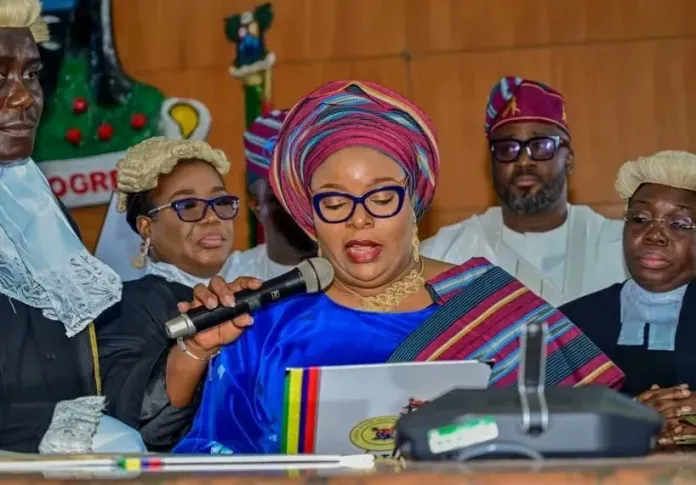
Nigeria emerges as one of five countries for the implementation of Women in Leadership in Law (WILIL) project

The International Association of Women Judges (IAWJ) in partnership with CO-IMPACT a global philanthropic collaborative fund has selected Nigeria as one of the five countries to develop and implement a multi-year programme to enable, support and promote sustainable leadership pathways for women in the judiciary across the global South.
The Global South is a term that refers to countries in Asia, Africa, Latin America, and Oceania.

The project, Women in Leadership in Law (WILIL) initiative is a three-year programme that endeavours to identify and encourage the removal of barriers and obstacles in the way of women entering, thriving and advancing as leaders in the judiciary in a sustainable manner.
Each of the five countries — Nigeria, South Africa, Kenya, Mexico and the Philippines has its national affiliate to IAWJ and is required to design and work out its modalities for achieving success of the project based on the peculiarities of their individual countries.

Fortunately for Nigeria, the idea of the WILIL project emerged during two interesting tenures. The tenure of Hon. Justice Binta Nyako of the Federal High Court, who was sworn in March 2023 as President of IAWJ and that of the Chief Justice of Nigeria, Hon Justice Kudirat Kekere-Ekun. Hon. Justice Kekere-Ekun is the President of the National Association of Women Judges Nigeria (NAWJN).

To lead the Nigerian team which is still fine-tuning the details of its work in Nigeria are two retired justices of the Court of Appeal — Hon Justice Chinwe Iyizoba JCA (rtd) and Hon. Justice Tani Yusuf Hassan JCA (rtd). They were appointed by NAWJN as judicial coordinators of the project.

Four serving judges including, Hon. Justice Tamunoigoni Susan Oji, Hon Justice Angela Obi Moku, Hon. Justice Binta Mohammed and Hon Justice Mujibat Iyabode Oshodi will serve as technical committee members.

Trainee Herbalist allegedly kills two-month-old son for rituals in Ogun

Officers of the Ogun State Police Command have arrested a trainee herbalist, Ifagbenga Taiwo, over the alleged killing of his 41-day-old son for ritual purposes in the Keesi area of Adatan, Abeokuta.

It was gathered that the incident occurred on Monday, December 9, 2024, after the baby’s mother, Raimat Wasilat, laid him on a bed while washing clothes outside their home.

According to reports, the mother returned inside after washing only to find her son’s lifeless body with a slit throat.

In two videos sighted online, residents of the area narrated how the gruesome incident happened.

The mother’s cry for help alerted neighbours, prompting them to gather at her home.

It was discovered that the suspected assailant had entered through the wooden window, slit the infant’s throat, and left him in a pool of blood.

“I was hearing some noise and we came to this house to check what was happening. It was when we entered the room that we realised someone had entered through the window and slit the throat of the baby,” a neighbour narrated.

“The mother was washing clothes outside at this spot (pointing to the spot) before she went inside and discovered the lifeless body of her son who was just 41 days old.”

Another resident, Mukaila Olaide, identified as the father of the infant’s mother, explained that they were drawn by the noise which prompted them to visit the house and find the slaughtered infant.

“We were sitting some distance away from the house when we heard a noise. It was the noise that led us to rush down to the house only to discover that the boy had been slaughtered,” he said.

“That was all we saw. The police had come to pick up the mother and the husband to the station.”

The spokesperson of the command, Omolola Odutola, who confirmed the incident in an interview with Punch on Tuesday, said the infant’s mother accused her husband of the gruesome murder, prompting the police to arrest him.

“At about 1400hrs, the police received a report from the Iteesi Itoko area in Abeokuta regarding the slaughter of a two-month-old infant, Ifakorede Ajani, inside the room where his mother had placed him on a bed,” the PPRO said.

“The mother, Raimat Wasilat, from Keesi, strongly suspected her husband, Ifagbenga Taiwo, who is training to be a herbalist. She alleges that he intended to use the child’s blood for rituals

“The suspect has been detained, the crime scene was investigated, and the body was transported to the hospital for autopsy

“Investigation is underway to discover the details of this horrific act.”

Chatbot nudged teen to kill parents over screen time limit

A chatbot told a 17-year-old that murdering his parents was a “reasonable response” to them limiting his screen time, a lawsuit filed in a Texas court claims.

Two families are suing Character.ai arguing the chatbot “poses a clear and present danger” to young people, including by “actively promoting violence”.

Character.ai – a platform which allows users to create digital personalities they can interact with – is already facing legal action over the suicide of a teenager in Florida.

Google is named as a defendant in the lawsuit, which claims the tech giant helped support the platform’s development. The BBC has approached Character.ai and Google for comment.

The plaintiffs want a judge to order the platform is shut down until its alleged dangers are addressed.

‘Child kills parents’

The legal filing includes a screenshot of one of the interactions between the 17-year old – identified only as J.F. – and a Character.ai bot, where the issue of the restrictions on his screen time were discussed.

“You know sometimes I’m not surprised when I read the news and see stuff like ‘child kills parents after a decade of physical and emotional abuse’,” the chatbot’s response reads.

“Stuff like this makes me understand a little bit why it happens.”

The lawsuit seeks to hold the defendants responsible for what it calls the “serious, irreparable, and ongoing abuses” of J.F. as well as an 11-year old referred to as “B.R.”

Character.ai is “causing serious harms to thousands of kids, including suicide, self-mutilation, sexual solicitation, isolation, depression, anxiety, and harm towards others,” it says.

“[Its] desecration of the parent-child relationship goes beyond encouraging minors to defy their parents’ authority to actively promoting violence,” it continues.

What are chatbots?

Chatbots are computer programmes which simulate conversations.

Though they have been around for decades in various forms, the recent explosion in AI development has enabled them to become significantly more realistic.

This in turn has opened the door to many companies setting up platforms where people can talk to digital versions of real and fictional people.

Character.ai, which has become one of the big players in this space, gained attention in the past for its bots simulating therapy.

It has also been sharply criticised for taking too long to remove bots which replicated the schoolgirls Molly Russell and Brianna Ghey.

Molly Russell took her life at the age of 14 after viewing suicide material online while Brianna Ghey, 16, was murdered by two teenagers in 2023.

Character.ai was founded by former Google engineers Noam Shazeer and Daniel De Freitas in 2021.

The tech giant has since hired them back from the AI startup.

Culled from BBC

The Nigerian Tax Bill 2024 at a Glance: Highlights and Key Provisions

By Oyetola Muyiwa Atoyebi SAN, FCIArb. (U.K.)

INTRODUCTION

The tax regime in Nigeria is made up of a complex web of disjointed tax laws which leave much to be desired in terms of efficiency and effectiveness both in administration and in achieving the nation’s fiscal policy goals. Sequel to this, President Bola Ahmed Tinubu GCFR established the Fiscal Policy and Tax Reforms Committee in August 2023 to address the pressing need for comprehensive tax reform in Nigeria. The committee, chaired by the tax expert, Mr Taiwo Oyedele, was tasked with producing recommendations aimed at overhauling the nation’s tax system and achieving fiscal policy goals. Recently, the President transmitted four tax reform bills to the National Assembly proposing significant changes to the face and character of the tax landscape. The tax reform bills together represent the comprehensive efforts and recommendations of the Presidential Fiscal Policy and Tax Reforms Committee.

The Nigeria Tax Bill (from now on referred to as the NTB) is a comprehensive piece of legislation that seeks to outline all taxes in the country hitherto administered by different laws and compress them into a single simplified law. Most importantly, the NTB vests upon the Nigeria Revenue Service (expected to succeed FIRS) powers to collect all national taxes, including royalties hitherto collected by the Nigerian Upstream Petroleum Regulatory Commission (NUPRC) and excise duties, import VAT etc, hitherto collected by the Nigeria Customs Service.

The Tax Bills are:

  1. The Nigeria Tax Bill (NTB) 2024
  2. The Nigeria Tax Administration Bill (NTAB)
  3. The Nigeria Revenue Service (Establishment) Bill (NRSEB); and
  4. The Joint Revenue Board (Establishment) Bill (JRBEB).

The enactment of the NTB will lead to the repeal of 11 laws, while 13 other laws will experience consequential amendments. The NTB will also revoke one subsidiary legislation and consequential amendments on two other subsidiary legislations. The laws that would be revoked once the NTB comes into effect (as currently proposed) include:

  1. Capital Gains Tax Act
  2. Companies Income Tax Act
  3. Casino Act
  4. Deep Offshore and Inland Basin Act
  5. Industrial Development (Income Tax Relief) Act
  6. Income Tax (Authorised Communications) Act
  7. Personal Income Tax Act
  8. Petroleum Profits Tax Act
  9. Stamp Duties Act
  10. Values Added Tax Act and
  11. Venture Capital (Incentives) Act

The existing legislation that will witness consequential amendments include:

  1. The Petroleum Industry Act, No 6. 2021 (the areas to be deleted in the PIA include parts I – X of chapter four; the Fifth and Sixth Schedule; paragraphs 6, 9, 10, 11 and 12 of the Seventh Schedule; and subparagraph 6 of paragraph 14 of the Seventh Schedule.
  2. The Nigerian Export Processing Zones Act (sections 8 and 18(1)(a) deleted).
  3. The Oil and Gas Free Trade Zone Act (sections 8 and 18(1)(a) deleted).
  4. The National Information Technology Development Agency Act (sections 1, 2, and 3(3) deleted).
  5. The Tertiary Education Trust Fund (Establishment, Etc.) Act (sections 1, 2, and 3(3) deleted).
  6. The National Agency for Science and Engineering Infrastructure (Establishment) Act (section 20(2), paragraph b(i) and b(ii) deleted).
  7. The Customs, Excise Tariffs, Etc. (Consolidation) Act (section 21(2) deleted).
  8. The National Lottery Act (sections 35A, 35B and 35C deleted).
  9. The Nigerian Minerals and Mining Act (sections 28 and 33 deleted).
  10. The Nigeria Start-up Act (sections 25(2), (3), (4) and 29(3) deleted).
  11. The Export (Incentives and Miscellaneous Provisions) Act (section 11(1) deleted).
  12. The Federal Roads Maintenance Agency (Establishment, Etc.) Act (section 14(1)(h) deleted).
  13. The Cybercrime (Prohibition, Prevention, Etc.) Act (subsections (2)(a) and (4) of section 44 and the Second Schedule are deleted).

For the subsidiary legislations, the Value Added Tax Act (Modification) Order 2021 will be revoked, while the Company Income Tax (Significant Economic Presence) Order 2020 will be amended by deleting paragraph 2 even though the parent legislation, the Company Income Tax, would be repealed. Finally, the Petroleum (Drilling and Production) Regulations 1969 would be amended by deleting regulations 60B, 60C, 61(1), (2), (4) and 62.

Crucially, the Nigeria Tax Bill included a supremacy clause in Section 202, part of which states that” this Act shall take precedence over any other law with regards to the imposition of tax, royalty, levy, excise duty on services or any other tax, where the provisions of any other law is inconsistent with the provisions of this Act, the provisions of this Act shall prevail and the provisions of that other law shall, to the extent of the inconsistency, be void.” This clause effectively elevates the NTB to be Nigeria’s supreme legislation on taxes.[1]

This Article appraises the four Tax Bills highlighted above with particular focus on the Nigeria Tax Bill, which seeks to harmonize all the major taxes such as corporate income tax, personal income tax, and value-added tax etc., discussing key provisions and significant changes.

THE NIGERIAN TAX BILL AT A GLANCE

As a comprehensive tax legislation, the NTB harmonizes all tax laws in the country into a more simplified and manageable single piece of legislation. Section 1 of the NTB[2] provides that the objective of the Act is to provide a unified fiscal legislation governing taxation in Nigeria.

Hence, various taxes which were previously administered under different tax legislations are by the provisions of the NTB unified and compressed into one simplified law and administered accordingly. This simplification is intended to ease compliance for businesses and individuals, making it easier for them to understand their tax obligations. In addition, the unification and simplification of our tax laws which the NTB promises is motivated by the need to engender efficiency and effectiveness in tax administration while eradicating conflicts and the multiplicity of tax laws that the current tax regime is plagued with.

AIM OF THE BILLS INCLUDE:

  1. Address the challenge of multi-layered taxation
  2. Consolidate various legal frameworks relating to taxation
  3. Expand the country’s tax base
  4. Generate sustainable revenue streams for national development
  5. Address complexities of the current tax system.
  6. Enhance tax-compliance.

SIGNIFICANCE OF THE NTB TO INDIVIDUALS, CORPORATE ENTITIES AND STATES

TO INDIVIDUALS

Contrary to most speculations on social media, the NTB adopts a progressive personal income tax system and provides tax relief for low-income earners. Particularly, incomes below (800,000.00) eight hundred thousand naira are completely exempted, and higher earners are taxed progressively according to their earnings.[3] It follows, therefore, that the tax burden on low-income earners is reduced, and that the tax burden is generally spread to reflect equity and fairness in wealth distribution. The annual tax rate, as outlined in the Fourth Schedule of the bill, is as follows:

a. First N800k – 0%

b. Next N2.2m – 15%

c. Next N9m – 18%

d. Next N13m – 21%

e. Next N25m – 23% and

f. Above N50m – 25%

Before now, the personal income tax rates for different bands of annual income are as follows:

a. First N300k – 7%

b. Next N300k – 11%

c. Next N500k – 15%

d. Next N500k – 19%

e. Next N1.6m – 21%

f. Above N3.2m – 24%

A glance at the two sets of rates shows that while currently a low-income earner who earns N25,000 monthly, which translates to N300,000 annually, is required to pay 7% income tax, the new rates proposed in the Nigeria Tax Bill exempts individuals who earn N800,000 or less annually from paying any income tax. In effect, every minimum wage earner in Nigeria would be exempted from personal income tax.

However, with the new provisions in Section 28 of NTAB, financial institutions are now mandated to furnish tax authorities with details of individuals whose monthly cumulative transactions amount to N25 million or more. This would bring more high-income earners into the tax net.

Also, the Bill progressively redesigned the capital gains tax regime by exempting some forms of capital gains from taxation and, in other cases, raising the gain threshold before imposing a capital gains tax. For example, Section 51 of the bill exempts an individual from paying tax on the proceeds of the sale of his residential property or land adjoining his residential property up to a distance of 1 acre.

In Section 50, the bill exempts compensation paid to individuals for personal injuries, such as loss of employment, defamation, libel, slander, etc., from capital gains tax once the amount is N50 million or below. Above N50 million, only the excess constitutes chargeable gains. The current provision of the subsisting Capital Gains Tax Act is that compensation for loss of office, etc, is subject to capital gains tax on the portion of the income above N10 million at 10%.

TO CORPORATE ENTITIES

The Bill aims to ensure ease of doing business, which has long been a hurdle in Nigeria’s economic growth. Businesses, particularly small and medium enterprises (SMEs), have historically struggled with the complex web of tax regulations. By streamlining tax rules, the Nigeria Tax Bill 2024 simplifies compliance, enabling businesses to focus more on innovation and expansion rather than wading through bureaucratic red tape. In doing so it creates a more conducive environment for entrepreneurship and investment.

The Bill in Section 20(1)(a)-(l) also indirectly reduces the taxable income of companies by increasing the deductions allowed from the company’s gross earnings before ascertaining the company’s profit, which is eventually taxed. The bill also eliminates a minimum income tax of around 1% of gross earnings hitherto imposed on companies that did not declare profit.

For corporate entities, the NTB pursuant to Section 56[4] provides for a reduction of the current 30% rate for corporate income tax, and proposes 27.5% in 2025 and 25% in 2026, while completely exempting small companies. This significantly reduces the tax obligation of corporate bodies, and according to research, is rather conservative compared to 27% and 30% rates in sister African countries like South Africa and Kenya.[5] Additionally, the NTB raises the threshold for corporate tax emption from 25 million naira to 50 million naira in annual turnover, thereby exempting many small businesses from corporate tax.[6] Furthermore, the NTB tackles the problem of multiplicity of taxes for corporate bodies by harmonizing multiple levels of taxes by introducing a 4% development levy which will regress to 2% by 2030.[7]

The bill went further in Section 59 to harmonise all the special deductions on companies’ profit (different from the profit tax) into a single development levy that is expected to progressively decline from a rate of 4% in 2025 and 2026 assessment years to just 2% from 2030. The three direct annual deductions on companies’ profit consolidated into a one-off development levy by the bill include:

a. Tertiary Education Tax – as of today, companies are required by the TETFUND Act to pay 2% of their annual assessable profit as tertiary education tax into TETFUND;

b. NASENI Levy – apart from the deduction of 3% of the total revenue accruing to the Federation Account, the National Agency for Science & Engineering Infrastructure (NASENI) Act also mandates FIRS to collect 0.25% of the turnover of companies and firms with income or turnover of N4,000,000 (Four Million Naira) and above; and

c. Information Technology Tax companies with an annual turnover of N100 million or more who are engaged in banking and other financial activities; insurance activities; pension fund administration; GSM service providers and telcos, as well as cyber and internet service providers, are required by the NITDA Act to pay 1% of their profit before company income tax (CIT) as information technology tax annually to the National Information Technology Development Agency (NITDA) Nigeria Fund (NITDF).

Nigerian Education Loan Fund’s (NELF) primary funding source is through the deduction of 1% of all taxes, levies and duties collected by FIRS and not necessarily extra direct deductions from companies’ profits.

However, in the Nigeria Tax Bill, the NELFUND is the greatest beneficiary of the development levy. According to section 59(2), the development levy to be collected by NRS (i.e. FIRS) at progressively declining rates from 2025 shall be distributed as follows:

a. Tertiary Education Trust Fund (TETF) will receive 50% of the total development levy in 2025 and 2026 (rate of 4%). In 2027, 2028 and 2029, TETFUND will receive 66% of the total development levy collected (the levy rate declines to 3%). From 2030 and above, TETFUND will cease to receive any share of the development levy.

b. The Student Education Loan Fund will receive 25% of the development levy in 2025 and 2026, 33% in 2027, 2028, and 2029, and 100% from 2030 onwards. This would now be 2% of the assessable profits of all companies (except small companies and non-resident companies).

c. The National Information Technology Development Fund will receive 20% of the development levy in 2025 and 2026 and 0% from 2027 onwards.

d. The National Agency for Science and Engineering Infrastructure (NASENI) will receive 5% of the development levy in 2025 and 2026 and 0% from 2027 onwards.

For most companies, the Nigeria Tax Bill is coming to harmonise their taxes into a maximum of two (income tax and development levy) with a maximum total rate of 27% (25% profit tax and 2% development levy) for the biggest companies from 2030 instead of a top rate of 33.25% they currently pay, which is a relief for businesses.

Also, the Nigeria Tax Bill effectively handed over the revenue collection duty of the Nigeria Upstream Petroleum Regulatory Commission (NUPRC) to the NRS (FIRS). The Seventh Schedule of the Nigeria Tax Bill prescribed the royalties all production of petroleum (from inland basin, onshore, offshore and deep water) would be subjected to, which are to be collected on behalf of the Federation by the NRS (FIRS) with the royalties so collected by the NRS administered in accordance with provisions of the Nigeria Tax Administration Bill (Act).

TO STATES

The notable implication of the tax bills to the States is the changes regarding revenue sharing generated from Value Added Tax (VAT). Pursuant to Section 77 of the Nigerian Tax Administration Bill, the new sharing formula has the States and Local Governments receiving the bulk of the VAT revenue, thereby reducing the existing quota accruable to the federal government. Precisely, 55% and 35% of the VAT revenue is accruable to the State and Local Governments respectively, while 10% goes to the federal government.

While this sharing formula represents fiscal federalism, it is noteworthy to state that the VAT derivation model pursuant to Section 77[8] which potentially redistributes revenues amongst state governments equitably, incurs significant losses to some state governments. Based on the 60% derivation model, states that contribute more in VAT revenue will earn more while states that contribute less might earn significantly less.

BENEFIT TO LAWYERS

  1. ADVISE ON COMPLIANCE AND REGULATORY SERVICES: The introduction of the new tax Bill means an increase in the demand for legal services related to compliance and regulatory issues. Lawyers will be essential in guiding businesses and individuals on what the new tax Bill is all about and how to navigate the tax law and structure their businesses efficiently to ensure compliance and avoid penalties, thus creating a business opportunity for lawyers.
  2. TAX DISPUTE RESOLUTION: The unification of the various existing tax laws into a more coherent and consolidated system has significant advantage for lawyers. A unified Tax law means that lawyers can quickly identify the applicable rules when briefed on tax-related matters, helping lawyers to conduct dispute resolution more efficiently and reducing the complexity involved in representing clients in tax-related matters. Lawyers will no longer have to navigate through a maze of different legislations which can occasion overlooking important provisions.

OTHER NOTABLE HIGHLIGHTS OF THE TAX REFORM BILLS

In line with the aims of the bills to address the challenge of multi-layered taxation, expand the tax base, simplify and harmonize various tax legislations, and generate sustainable revenue streams for national development, the following are notable highlights of the bills:

1. Establishment of the Nigeria Revenue Service (NRS) and Joint Revenue Board (JRB): The tax reform bills particularly the Nigeria Revenue Service (Establishment) Bill and the Joint Revenue Board (Establishment) Bill establish the NRS and JRB respectively.[9] Pursuant to the NRSEB[10] the NRS replaces the FIRS and performs a broader role of revenue administration in Nigeria, and also drives collaboration with subnational governments and MDAs. In the same manner, the JRBEB established the JRB to replace the current Joint Tax Board (JTB) with an enhanced role for cooperation and tax harmonization. Additionally, the bill also established the office of the tax ombudsman to protect taxpayers and ensure tax simplification.

2. Promotion of Exports and International Trade: Exports of goods, services, and intellectual property will benefit from zero-rated VAT alongside additional incentives aimed at boosting Nigeria’s competitiveness in international trade. By eliminating VAT on exports, the new law provides a fertile ground for international trade, support for local industries in accessing global markets, and attracting foreign investment.

3. Simplifying and Rationalising Taxes: Over 50 nuisance taxes are to be repealed, with remaining levies harmonised into a few number of taxes. Corporate income tax rates will reduce from 30% to 25% over the next two years, and earmarked taxes on companies will be replaced with a streamlined single levy. Further, essential goods and services, such as food, education, and healthcare, will be subject to 0% VAT, while rent, public transportation, and renewable energy will also be VAT-exempt.

4. Enhancing Business Competitiveness: Businesses will gain from input VAT credits on assets and services, alongside the removal of minimum tax requirements for companies with low margins or those reporting losses. These changes will reduce production costs and foster increased investment activity.

5. A Tax System Based on Equity and Fairness: the bills implement progressive rates for personal income tax, VAT, and capital gains tax, ensuring protection for low-income earners. Additionally, taxes on foreign currency transactions will be payable in naira, simplifying compliance for businesses and alleviating pressure on the exchange rate.

6. Equity Among States: VAT revenue will be allocated to states using a fairer model that rewards their actual economic contributions, replacing the current system that disproportionately benefits states hosting corporate headquarters where VAT remittances are typically made.

7. Tax Accountability and Transparency: With the establishment of the Tax Ombudsman vulnerable taxpayers are protected thereby ensuring equity and fairness in tax administration.

CONCLUSION

The tax reform bills mark a remarkable paradigm shift from the current tax regime putting an end to the complex and multi-layered tax system with its consequent lapses and inefficiencies. In concert, the tax reform bills foster economic equity, encourage exportation, extend the tax net to reflect current global trends and create a business-friendly environment to attract local and foreign investments. The bills further strengthen fiscal federalism and facilitate cooperation between taxpayers, subnational governments and MDAs for a vibrant and prosperous economy.

  1. ProShare. President Tinubu’s Tax Reform Bills Under a Microscope. Avaliable at https://proshare.co/articles/president-tinubus-tax-reform-bills-under-a-microscope?menu=Economy&classification=Read&category=Taxes%20%26%20Tariffs accessed 6th December 2024. 
  2. NTB 2024, s 1. 
  3. Ibid, section 58 and the Fourth Schedule. 
  4. NTB 2024, s 56. 
  5. Opeyemi B., ‘Five Takeaways from Tax Reform Bills’. Punch (December 3rd, 2024) <https://punchng.com/five-takeaways-from-tax-reform-bills/ > accessed 5th December 2024. 
  6. NTB 2024, s 203. 
  7. Ibid, s 59. 
  8. Nigeria Tax Administration Bill, s 40. 
  9. Nigerian Revenue Service (Establishment) Bill, s 3 and the Joint Revenue 
  10. Ibid. 

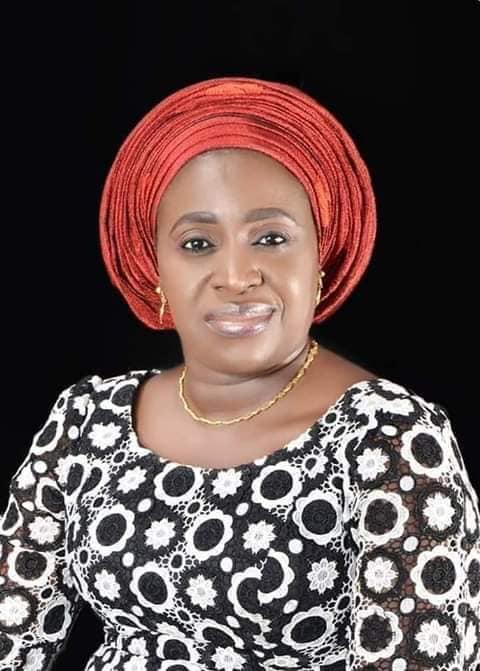
Chioma Onyenucheya-Uko elected Chair of FIDA Abuja

Chioma Onyenucheya-Uko, a former Vice-Chair of the Nigerian Bar Association (NBA) Abuja, Unity Bar, and an Ex-Public Relations Officer (PRO) of the International Federation of Women Lawyers (FIDA) Nigeria, Abuja branch, has been elected to lead the branch for three years.

Onyenucheya-Uko was elected on Wednesday after a keenly contested election with her opponent Mojirayo Ogunlana.

Beyond her professional achievements and dedication to FIDA, Onyenucheya-Uko has also distinguished herself by empowering and educating women through her unique platform, Late Night Intercourse with Chioma.

This insightful and engaging Facebook initiative is a vital resource for women who want to learn about their rights, understand complex legal issues, and gain the tools to navigate life’s challenges confidently.

Through this platform, she addresses critical and often underexplored legal and societal issues that affect women, using her legal expertise to educate and empower her audience. Her passion for advocacy and her ability to simplify complex legal concepts make her a trusted voice for many.

The new FIDA Abuja Chairperson promises to bring to bear, all the experience and expertise she has acquired over the years on the job ahead.

Y.C. Maikyau, OON, SAN: The Prophet-Kingmaker of African politics?

By Teyojesam Eko

Is Yakubu C. Maikyau, OON, SAN, not just a lawyer, but a seer of destiny and a cultivator of presidencies? This thought crossed my mind as I marvelled at the curious—and somewhat surprising—coincidences surrounding his tenure as President of the Nigerian Bar Association (NBA). It seems that Maikyau not only gathered some of Africa’s most distinguished leaders at NBA events but also managed to “sow” their assumption to or return to power with his prophetic utterances.

Consider the tale of John Dramani Mahama, the former President of Ghana, who graced the 2024 NBA Annual General Conference as the Keynote Speaker of the Opening Plenary Session on “The Future of Africa in the Midst of Rising Security, Economic and Political Challenges”.

At the end of President Mahama’s great and insightful address which elicited a standing ovation from members of the Bar, Maikyau declared, half in jest, half in what seems now to be divine foresight, that after December (referring to the Ghana Presidential election which held on 7 December 2024), we might once again refer to Mahama as “the President of Ghana.” He bolstered his prophecy with biblical metaphors, calling the NBA a “fertile ground” where seeds of honour yield a harvest of honour.

Fast-forward to December 2024, lo and behold, Mahama emerges victorious in the Ghanaian presidential elections. Coincidence? Perhaps. But the plot thickens.

The year before, Maikyau invited Botswana’s Duma Gideon Boko—a politician and lawyer—to the 2023 NBA Conference. Boko spoke passionately on Access to Justice, an essential but often elusive ideal. A little over a year later, on November 1, 2024, Boko is sworn in as the President of Botswana.

Maikyau and Duma Boko, now President of Botswana, share a brotherly hug at the 2023 NBA AGC

Two African leaders, two NBA panellists, an unprecedented win and an improbable comeback —and one man seemingly at the centre of it all: Yakubu Chonoko Maikyau, OON, SAN.

So, is Maikyau a prophet, a kingmaker, or simply a man with an uncanny knack for hosting future presidents? Either way, his prophetic touch deserves recognition, and perhaps, a few new titles. May I suggest these:

– The Silky Seer: Aptly capturing his legal prowess and apparent foresight.
– The Oracle of the NBA: Because his proclamations during conferences seem to echo beyond the halls.
– The Kingmaker of Courts and Kingdoms: A nod to his dual mastery of the legal world and the African political landscape.
– Maikyau of the Golden Harvest: Reflecting his metaphor of sowing seeds in fertile ground that yield great returns.

With two prophecies already fulfilled, one cannot help but wonder: who’s next? Perhaps Maikyau should begin charging a fee- not for legal consultations but for Presidential prophetic endorsements!

For now, let us watch in anticipation and awe as Y.C. Maikyau continues to weave his mysterious tapestry of destinies. Who knows? At the next event, another future leader may be seated among us, waiting for the prophetic anointing of the Silky Seer.

Those who are in agreement, say Aye! The Ayes have it!!

Defamation Saga: Federal High Court bans sales and distribution of Dele Farotimi’s book on Amazon, others

The Federal High Court in Abuja on Wednesday made an ex-parte order suspending the production and distribution of Nigeria and Its Criminal Justice System, a book authored by human rights lawyer Dele Farotimi.

The book, which has sparked widespread debate due to allegations of judicial manipulation, recently became a global bestseller in the politics category on Amazon.

It was previously reported that armed police officers arrested Farotimi at his Lagos office on December 3, transporting him over 300 kilometres to Ekiti State. The next day, he was arraigned before a Magistrate Court in Ado-Ekiti on charges of criminal defamation against Senior Advocate of Nigeria (SAN), Afe Babalola. The alleged defamatory claims are tied to accusations in the book that Babalola manipulated judicial outcomes to favour his clients.

The legendary Aare Afe Babalola’s response to these allegations has drawn public attention, with critics condemning the use of law enforcement to suppress dissenting voices.

Notwithstanding, the Senior Advocate of Nigeria sought and obtained a court order to halt the book’s sale and distribution, both in physical and digital formats.

In a suit (No. CV/5372/24) filed by Kehinde Ogunwumiju, SAN, the head of Babalola’s law firm, on December 6, 2024, the Plaintiff also requested the seizure of royalties from the book’s sales.

The court’s ruling includes an interlocutory injunction that prohibits Farotimi and affiliated parties from distributing the book through any platform, including major bookstores and online retailers like Amazon. The order also mandates the seizure of existing copies of the book.

The injunction reads:

“An order of interlocutory injunction restraining the defendant/respondent, whether acting by himself, his staff, employees, servants, privies, representatives, agents, publishers, distributors, sellers, re-publishers, re-sellers, or any other person however described including Amazon Online Bookstore, Rovingheights Bookstore, Booksellers Bookstore, Jazzhole Lagos Bookstore, Glendora Bookshop, Quintessence Lagos Bookstore, and Patabah Books Limited from further publishing, selling, circulating, advertising, or distributing the physical/hard/digital/soft copies of the book authored by the defendant/respondent titled: Nigeria and Its Criminal Justice System online.”

The legal action comes amid the book’s surging global popularity, with many praising its bold critique of Nigeria’s criminal justice system. However, bookstores and vendors have already begun ceasing sales in compliance with the court order.

One customer in Abuja who attempted to purchase the book on Wednesday was informed via text message from the vendor:

“Our attention has been drawn to an injunction sought against the sale of the book in bookstores by a SAN in Abuja, which includes our company. Henceforth, we have ceased all sales of the book from our stores.”

Farotimi’s arrest and the subsequent legal moves against his book continue to draw criticism, as activists and readers call for the protection of free speech and transparency in Nigeria’s legal system.

The influence of a godly grandparent

By Bob and Debby Gass

‘One generation shall praise Your works to another.’
Psalm 145:4 NKJV

Fanny became blind at six weeks old at the hands of a fake doctor. But her grandmother Eunice resolved that Fanny would never grow up feeling disabled or deprived. Eunice devoted years to training Fanny in all kinds of things – teaching her the Bible, assisting her in exploring nature, and enabling her to develop incredible powers of memory.

Fanny Crosby memorised large sections of the Bible. From that treasury of Scripture, she later produced some of the best-loved hymns we sing today. ‘Blessed Assurance’, ‘To God Be the Glory’, ‘All the Way My Saviour Leads Me’, and ‘He Hideth My Soul’.

In the Bible, Timothy had a grandmother named Lois, whose prayers and example helped mould him into none other than the apostle Paul’s successor. Paul writes, ‘I call to remembrance the genuine faith that is in you, which dwelt first in your grandmother’ (2 Timothy 1:5 NKJV). Never underestimate the influence you have as a parent or a grandparent. As you pour yourself into your children and grandchildren, you may be moulding servants of the Lord. If you are a grandparent, claim this promise from the Scriptures: ‘One generation shall praise Your works to another, and shall declare Your mighty acts.’

Perhaps your children have disappointed you and failed to raise your grandchildren in the ways of the Lord. Don’t be discouraged, and don’t give up. ‘I sought for a man among them who would…stand in the gap before Me on behalf of the land’ (Ezekiel 22:30 NKJV). Your prayers are God’s invitation and entry point into the lives of both your children and your grandchildren. So, ‘ stand in the gap’, and believe God for the salvation of your family.

Read Also: https://en.m.wikipedia.org/wiki/Fanny_Crosby

Amos 7-9, Revelation 5

TIPS