Home Blog Page 423

Tension rises as second Okuama leader dies in military custody

The Okuama community in the Ughelli South Local Government Area, Delta State, is gripped with fear and anger following the death of its 81-year-old treasurer, Dennis Okugbaye, in military detention.

Okugbaye’s demise comes barely six days after the community’s President-General, Pa James Oghoroko, reportedly died in similar circumstances in military detention.

Pastor Akpos Okugbaye, the son of the late community treasurer, tearfully announced his father’s passing on Tuesday, sending shockwaves through the already mourning community.

Both leaders, alongside others including Prof. Arthur Ekpekpo, Chief Belvis Adogbo, Mrs. Mabel Owhemu, and Mr. Dennis Malaka, were arrested by the military between August 18 and 20, 2024.

The arrests followed the March 14 killing of 17 soldiers on a peace mission aimed at resolving a dispute between Okuama and the neighbouring Okoloba community.

The military had responded to the soldiers’ deaths with a violent raid on Okuama, reducing the town to ruins and forcing residents to flee to an internally displaced person’s camp in Ewu Kingdom, established by the Delta State government.

The death of Pa Okugbaye has reignited community protests.

Aggrieved Okuama youths and women, on Tuesday, renewed their seven-day ultimatum to the Federal Government and the military, demanding the release of all detained leaders and the return of Pa Oghoroko’s corpse.

“After the seven days, this river will be blocked. Let the soldiers and Tinubu come and kill us so that we know Okuama is wiped out entirely,” protesters declared on Sunday.

Elder Ohwotake Otiero, speaking on behalf of the protesters, condemned the deaths in detention and called for immediate action:

“We want the corpse and those detained to be released immediately. We will take the laws into our hands because we have been pushed to the wall. Why should our P-G be killed through torture?”

Despite repeated attempts, military authorities have not provided any comments on the situation. Human rights groups and civil society organisations have also joined in demanding justice.

At a joint press conference in Warri marking International Human Rights Day, advocacy groups, led by Pastor Edewor Egedegbe of Value Rebirth & Empower Initiative, and Sir John Ebireri of Ewu Clan Development Forum, condemned the prolonged detention of Okuama leaders without trial.

“These individuals have been in detention for over 113 days without any charge brought against them. This is a clear violation of their fundamental human rights as guaranteed by the 1999 Constitution. Their detention breaches the principles of democracy and the rule of law,” they stated.

The groups demanded an investigation into the deaths of Pa Oghoroko and Pa Okugbaye and urged President Bola Tinubu to intervene.

“We demand that you (President Tinubu) order the immediate and unconditional release of Prof. Arthur Ekpekpo, Mr. Dennis Okugbaye, Hon. Belvis Adogbo, Dennis Amalaka, and Owhemu Mabel, as well as any other detained Okuama indigene. We also demand the establishment of a special commission of inquiry to investigate the March 14 crisis, the military’s reprisal, and the burning of Okuama.”

Also, the Urhobo Media Practitioners and Advocacy Group condemned the military’s actions, describing them as a gross violation of human rights and the dignity of Okuama residents.

“This incident is a gross violation of human rights and an affront to the dignity of the Okuama people,” the group said in a statement signed by Mr. Okpare Theophilus Onojeghen, Chief Omafume Amurun, and Comrade Shedrack Onitsha.

The group urged international human rights organizations to intervene and called for an unbiased investigation into both the killing of soldiers and the subsequent military reprisals.

“As a body of media practitioners, we’ll continue to condemn the gruesome and unjustified killing of the 17 military personnel. While we console the grieving families, we demand an unbiased and holistic probe into the tragic incident,” the group added.

Tensions remain high in Okuama as the ultimatum nears its expiration, with residents vowing to take drastic measures if their demands are not met.

Credits: PUNCH

Human rights in crisis: Addressing the challenges facing Nigeria (1)

By Ebun-Olu Adegboruwa

The United Nations declared December 10 every year as International Human Rights Day, mainly to highlight the rights now recognized globally as enuring to and enjoyed by human beings by virtue of their humanity. Although there is still so much ground to cover in the areas of protection of human rights, the decision to set aside a day for this purpose has helped in no small measure to draw global attention to the issue. I was one of the guest speakers of the Human Rights Committee of the Premier Bar on December 10, 2024, where I shared my thoughts on the topic.

Introduction:

According to António Guterres, the United Nations (UN) Secretary-General, “human rights are under assault… This year’s [2024’s] theme reminds us that human rights are about building the future — right now… We must stand up for all rights – always.” Guterres’ bird’s-eye view on the global crises against HRs from the vintage of global leadership undoubtedly provides us with a global big picture which is a true reflection of the stark reality of the crises beleaguering HRs right from the pinnacle of the intercontinental stage, through the international, down to national/local scenes. Guterres’ observation is an echo of this year’s theme: Our Rights, Our Future, Right Now.

At the intercontinental and international scenes HRs crises of epic proportions as seen, for instance, in the outrageous wars involving Russia and Ukraine, Israel and Gaza/Hezbollah and allied Middle Eastern forces; together with other sundry abuses of HRs are blood-cuddling to say the least. Back home in Nigeria, the incidences of decimation of HRs through indiscriminate destruction of lives and property through acts of terror, political crimes, banditry, kidnapping, grievous sexual assaults, domestic violence, etc. give us all a reason to worry. However, in a manner of speaking, Human Rights (HRs), with its global crusade has come a long way. Indeed, it is no longer the infant it once was, though we are yet to see it mature into the adult we all hope it ought to be. In the meantime, let us commemorate a milestone of an HRs global movement, albeit in its adolescence. Shall we?

Conceptual clarifications on key terms:

Rights: The concept of rights, as is typical with most legal concepts, is as multifaceted and poly-dimensional in meaning as there are jurisprudential schools of thought. To begin with, the Black’s Law Dictionary defines rights as something that is just, morally correct, and in accordance with ethical principles or the rules of positive law. It also defines a right as the capacity to control the actions of others with the assistance of the state. Without necessarily allowing ourselves to descend into the depths of the wells of a jurisprudence class on the concept of rights in all its academic nuances, we may further explore a few classical definitions of the most notable legal philosophers of global repute within the realms of jurisprudence.

Hugo Grotius (1583–1645) often considered as the father of international law defined a right as a “moral quality of a person, making it possible to have or do something lawfully.” Immanuel Kant (1724 – 1804) describes rights as the “capacity to constrain others in accordance with universal laws of freedom.” On his own part, Jeremy Bentham (1748–1832), dismissing the idea of natural rights, saw rights rather as creation of law, deriving existence and legitimacy from legal systems rather than from moral or natural law. From his positivist standpoint, John Austin (1790–1859) defined a right as a legally enforceable claim. He viewed rights as rooted in the commands of a sovereign and contingent on the existence of law. H.L.A. Hart (1907–1992), on his part, argued that a right is a protected interest or choice that individuals can exercise. His emphasis was on the connection between rights and duties. Wesley Hohfeld (1879–1818) espoused the relational and reciprocal nature of rights.

According to him, rights are a system of jural relations, such as claims, duties, powers, and immunities. The above definitions cut across Natural, Positivist, Utilitarian, etc viewpoints. A more contemporary approach, however, would leave us with the notion that rights encompass moral principles, enforceable claims, or relational constructs or structures ensuring justice and fairness; hence the axiom ubi jus, ibi remedium.

Human rights: Putting it in its simplest expression, HRs may be defined as the freedoms, immunities and benefits that, according to modern values, all human beings should be able to claim as a matter of right in the society in which they live. According to the UN, HRs may be defined as: Rights inherent to all human beings, regardless of race, sex, nationality, ethnicity, language, religion, or any other status. Human rights include the right to life and liberty, freedom from slavery and torture, freedom of opinion and expression, the right to work and education, and many more. Everyone is entitled to these rights, without discrimination.

Certain cardinal pillars of HRs as espoused by the UN include:

Universality: All people are born with the same rights, regardless of their race, sex, nationality, ethnicity, language, religion, or any other status; Inalienability: People’s rights can never be taken away; Indivisibility: All rights are equal in importance and none can be fully enjoyed without the others, Interdependence: All rights are related and must be treated as such;

Fundamentality: Human rights include the right to life and liberty, freedom from slavery and torture, freedom of opinion and expression, the right to work and education, and many more and Govern how people live: Human rights govern how individuals live in society and with each other, as well as their relationship with the State.

Human rights vs. fundamental rights:

The distinction between Human Rights (HRs) and Fundamental Rights (FRs) is only a little short of the distinction between six and half a dozen in that both concepts refer largely to the same substance. Traditionally, the term FRs is used in a constitutional context whereas the term HRs is used in international law.

By Order 1 Rule 2 of the Fundamental Rights (Enforcement Procedure) Rules, 2009 ”Fundamental Right” and “Human Right” are defined in the following manner:- “Fundamental Right – means any of the rights provided for in Chapter IV of the Constitution, and includes any of the rights stipulated in the African Charter on Human and People’s Rights (Ratification and Enforcement) Act. Human Rights – includes fundamental rights.

Eso, J.S.C. in Ransome-Kuti v. A-G. Federation, (1985) LPELR-2940(SC) on the nature and meaning of FRs, has this to say: …What is the nature of a fundamental right? It is a right which stands above the ordinary laws of the land and which in fact is antecedent to the political society itself. It is a primary condition to a civilized existence and what has been done by our constitution since independence, starting with the Independence Constitution that is: the Nigeria (Constitution) Order in Council 1960 up to the present Constitution that is the Constitution of the Federal Republic of Nigeria, 1979 (the latter does not in fact apply to this case: it is the 1963 Constitution that applies) is to have these rights enshrined in the Constitution so that the rights could be “immutable” to the extent of the “non-immutability” of the Constitution itself. [Emphasis supplied].

As such, FRs are those HRs trapped and domiciled or better still, entrenched within the documentary four walls of a Constitution or statute. HRs, on the other hand, extends beyond FRs, and embraces all those God-endowed rights intrinsic to the human person by virtue of his humanity. In our Nigerian context, the locus of the FRs is Chapter IV of the Constitution comprising Sections 33 to 46 thereof. FRs may also be found in the African Charter on Human and Peoples’ Rights (Ratification and Enforcement) Act.

A brief historical background on the UDHR:

The Universal Declaration of Human Rights (UDHR) was adopted by the United Nations (UN) General Assembly on the 10th of December, 1948. Like the UN itself, UDHR rose from the ashes of World War II. When it was adopted in 1948, much of the world was still recovering from the sore wounds of the deadliest conflict in history, which claimed more than 60 million lives.

In the aftermath of such unprecedented death and destruction of lives and property, the world turned to diplomacy to make sure history would not repeat itself. Nations came together for the first time to publicly declare the fundamental freedoms that belong to all of us. The Commission on Human Rights was set up, chaired by Eleanor Roosevelt, the First Lady of the United States of America (from 1933 to 1945) and tasked with the responsibility of composing the UDHR. Roosevelt asserted the Declaration would reflect more than Western ideas; to accomplish this, the Human Rights Commission was made up of members from various cultural and legal backgrounds from all around the world, showing respect for differing cultures and their customs while also ensuring each region had a hand in creating the document. Under Roosevelt’s leadership, the diverse commission was able to craft the UDHR in a unique and culturally competent way.

The UDHR contains a preamble and 30 articles outlining our most basic birth rights, including protection against torture, inhumane treatment, cruel punishment, slavery, and servitude. It covers both civil and political rights and economic, social and cultural rights. The document heralded a new chapter of human history.

Position Paper: Benefits of the Tax Reform Bills for the Southeast, a call for collaborative efforts with the Southeast Caucus of the National Assembly

By Chidiebere Nwabueze Udekwe

The tax reform bills currently under consideration by the National Assembly offer a historic opportunity to reshape Nigeria’s fiscal landscape for sustainable growth and equitable development. For the Southeast, these reforms carry the potential to address longstanding economic disparities, catalyze growth, and foster prosperity. As Otu Oka-Iwu Abuja, we present this position paper to highlight the benefits of these reforms for the Southeast and to extend a cordial invitation to the Southeast Caucus of the National Assembly for collaborative efforts toward ensuring their successful implementation.

Overview of the Tax Reform Bill

The tax reform bill introduced by President Bola Ahmed Tinubu represents a significant overhaul of Nigeria’s tax system. It aims to simplify tax processes, expand the tax base, and enhance fairness and transparency in tax administration. Key provisions of the bill include:

1. Simplification of Tax Laws
Consolidating various tax laws into a single framework to reduce complexity, ease compliance, and eliminate redundancies.

2. Broadening the Tax Base
Including previously untaxed sectors and ensuring equitable participation to increase government revenue without overburdening existing taxpayers.

3. Fair Tax Administration
Establishing a Joint Revenue Board and tax tribunals to ensure fairness, transparency, and accountability in tax collection and dispute resolution.

4. Value-Added Tax (VAT) Reforms
Gradual increases in VAT rates from 7.5% to 15% by 2030, alongside a revised revenue-sharing formula to allocate more funds to states based on contributions.

5. Tax Incentives and Exemptions
Exempting essential services—such as healthcare, education, food, and transportation—from tax burdens while incentivizing small and medium enterprises (SMEs) and businesses.

Opportunities for the Southeast

The Southeast stands to benefit significantly from these reforms through targeted application and implementation that address the region’s unique challenges and opportunities:

1. Economic Growth and Investment
• Increased Investments: Simplified tax processes and incentives will attract local and foreign investments to the region.
• Job Creation: New businesses and industries will generate employment, reducing unemployment and driving economic growth.
2. Infrastructure Development
• Improved Connectivity: Additional government revenue can fund infrastructure projects such as roads, railways, and ports, enhancing interregional trade and commerce.
• Enhanced Public Services: Increased resources for healthcare, education, and utilities will uplift living standards across the Southeast.
3. Equitable Resource Allocation
• The proposed revenue-sharing reforms offer the Southeast a fairer share of national resources, addressing historical imbalances and ensuring inclusive development.
4. Support for SMEs
• The Southeast’s entrepreneurial hub will benefit from tax incentives, reduced compliance costs, and improved access to financing for small businesses, driving innovation and economic resilience.
5. Enhanced Regional Competitiveness
• A thriving economy will attract skilled professionals and boost the region’s capacity to compete in national and global markets.

Our Commitment to Collaboration

As Otu Oka-Iwu Abuja, we recognize the importance of synergy between stakeholders to maximize the benefits of these reforms. We propose a partnership with the Southeast Caucus of the National Assembly to achieve the following objectives:
1. Advancing Regional Interests
By leveraging our expertise, we aim to support legislative efforts in advocating for provisions that align with the Southeast’s economic and infrastructural priorities.
2. Establishing the Otu Oka-Iwu National Assembly Forum
A dedicated platform for critical engagement and analysis of the tax reform bills, enabling informed decisions that protect and promote the interests of Ndi Igbo.
3. Public Sensitization and Consensus Building
Collaborating on awareness campaigns to address misconceptions, build public support, and ensure smooth implementation of the reforms.

Call to Action

We commend the Southeast Caucus for its dedication to legislative excellence and its commitment to advancing the region’s welfare. As advocates of justice and equitable development, we invite the Caucus to join hands with us in formulating strategies and presenting robust proposals that ensure the Southeast maximally benefits from these reforms.

We acknowledge the immense expertise within the Caucus and understand the significant efforts already being undertaken to review and refine the bills. However, we believe that our collaborative input can add a valuable perspective to strengthen these efforts further.

The Southeast stands at a pivotal moment to shape its future. Together, through strategic legislative engagement and advocacy, we can secure a tax framework that delivers growth, equity, and prosperity for our people.

Conclusion

The tax reform bills represent a transformative opportunity for Nigeria, and the Southeast must seize this moment to unlock its full potential. Through collaboration, transparency, and a commitment to equity, we can ensure these reforms address the region’s unique needs while contributing to national development.

We look forward to working closely with the Southeast Caucus of the National Assembly to champion the collective interests of Ndi Igbo and build a brighter future for all.

Otu Oka-Iwu, Onye Aghana Nwanneya!

Chidiebere Nwabueze Udekwe
President, Otu Oka-Iwu Abuja

Tax reform bills and need for consultation

By Kenneth Okonkwo

Comprehensive tax reforms in Nigeria is long overdue. Under existing laws, taxes like Personal Income Tax (PIT), Company Income Tax (CIT), Capital Gains Tax (CGT), Petroleum Profits Tax (PPT), Value-Added Tax (VAT), Tertiary Education Tax (TET), and other taxing provisions in numerous laws are administered separately, with individual legislative frameworks. The proposed reforms seek to consolidate these numerous taxes, integrating PIT, CIT, CGT, PPT, VAT, TET, excise duties, etc, into a unified structure to reduce administrative fragmentation.

While there may be differences in approach to the understanding of the specific provisions of the new tax bills, what is not in contention is the need to review the tax laws and how we administer them to serve the nation’s overall national development agenda. Presently in Nigeria, there are more than 100 different taxes on individuals and corporate bodies extorted from Nigerians by various legal and illegal entities thereby creating a toxic environment for business.

The tax bills before the National Assembly aim to streamline Nigeria’s tax administration processes, completely overhaul the nation’s tax operations, and align them with global best practices. President Tinubu set up the Presidential Committee on Tax and Fiscal Policy Reform in August 2023, and had only one objective: to reposition the economy for better productivity and efficiency and make the operating environment for investment and businesses more conducive. The Oyedele-led committee is responsible for transforming revenue generation for sustainable development to achieve at least 18% Tax to GDP ratio within the next three years, that is, by 2026. Subsequently, in early October 2024, President Bola Ahmed Tinubu transmitted the Nigeria Tax Bill 2024 to the National Assembly.

The four bills are the Nigeria Tax Bill, the Nigeria Tax Administration Bill, the Nigeria Revenue Service (Establishment) Bill and the Joint Revenue Board Establishment Bill. The Nigeria Tax Bill seeks to eliminate multiple taxation and make Nigeria’s economy more competitive by simplifying tax obligations for businesses and individuals nationwide. The Nigeria Tax Administration Bill (NTAB) proposes new rules governing the administration of all taxes in the country. Its objective is to harmonise tax administrative processes across federal, state and local jurisdictions to ease taxpayers’ compliance and enhance the revenue for all tiers of government.

The Nigeria Revenue Service (Establishment) Bill seeks to re-establish the Federal Inland Revenue Service (FIRS) as the Nigeria Revenue Service (NRS) to better reflect its mandate as the revenue agency for the entire federation, not just the Federal Government. The Joint Revenue Board Establishment Bill proposes creating a Joint Revenue Board to replace the Joint Tax Board, covering federal and all state tax authorities, and will also establish Tax Tribunals, and the Office of Tax Ombudsman to protect taxpayers’ interests and facilitate dispute resolution.

The advantages of these bills are obvious. The bills are expected to reshape Nigeria’s fiscal framework and establish a comprehensive legal framework governing taxation of incomes, transactions, and instruments. They will harmonise multiple taxes and levies at all levels of government and also will be responsible for the unification of revenue collection functions as well as modernisation and simplification of the tax system, including the use of technology for revenue collection.

Unfortunately, like most of what this regime does, consultation with stakeholders was inadequate. They need to know more to support the amendment. The National Executive Council (NEC), made up of the 36 Governors and headed by Kashim Shettima, the Vice President, pleaded with the President to withdraw the bill for further consultation. This agreement was announced by Seyi Makinde, the Governor of Oyo State. Even the traditional rulers of Oyo State pleaded for further consultation and information before the bills are forwarded to the National Assembly for passage to no avail. PAYE and VAT are state taxes. It’s preposterous that their advice and consent will not be sort before passing an Act that will affect their economy. Tinubu bluntly stated that any further consultations and engagement with key stakeholders to address any reservations about the bills should go on while the National Assembly considers them for passage.

This great speed to pass the bills created the impression that the government had a lot of things hidden in the bill that are targeted against certain sections of the country. They range from the sublime to the ridiculous. The first impression was that the tax regime was targeted against the North and was skewed to favour Lagos State. After a careful observation, the reverse was actually the case. The Northern Governors created the impression that the VAT regime was designed to be shared based on where the headquarters of the businesses reside. But the actual situation is that derivation formula will apply in the new bill for the collection and sharing of the VAT revenues, which meant that every state will receive the VAT revenue based on what is consumed in their states. No reasonable person can fault this arrangement. However, how can they understand if they are not informed.

The refusal of the government to consult has led to the opponents of the bills alleviating some obvious bad provisions to a level of intolerance. Section 146 of the bill, which should rank as the worst provision in the bills, seeks to raise the value added tax (VAT) from 7.5 per cent to 10 per cent by 2025, with further increases to 12.5 per cent from 2026 to 2029, and 15 per cent from 2030 onwards. How can a government which increased the price of fuel from N195 at inception to more than N1,000 now, increased electricity tariff, depreciated the naira from about N450 per a dollar to about N1,650 per a dollar, etc, be contemplating increasing taxes on Nigerians?

This is unconscionable and insensitive. This government seems poised to make 90% of Nigerians very poor before leaving office, God forbid. If this government had dialogued with all the relevant stakeholders, such provisions will not find a place in the bills. For the avoidance of doubt, any law that increases the tax of Nigerians by even one kobo now is a bad law and should be discarded by the legislature. The idea of taxing the rich and exempting the poor is not a clever excuse because if the rich can not afford the tax, they will not be able to employ the poor or pay them well if employed. If the rich becomes poorer, the poor become poorest. Every person needs reduction and relief from tax payment instead of increase in tax burden.

The tax reform bills also pride itself for exempting the poor from taxation. In pursuance to this, it stipulated that anyone earning N800,000 or below per annum will be exempted from taxation. The problem with this provision is that the minimum wage is N70,000 per month which totals about N840,000 per annum. This means that even the lowest earning worker in Nigeria is not qualified to gain anything from the exemption from paying tax. Who then can benefit from it? Consultation would have saved the executive from such little little embarrassment. When these bills were initially introduced to the National Assembly for passage what happened first was apprehension due to lack of adequate consultation and information about the bills.

This apprehension later grew into resentment when the executive resisted or rejected further consultation with relevant stakeholders before submitting to the National Assembly for approval. The resentment was so palpable that some religious fundamentalists even fabricated that some of the provisions of the tax bills are against the Sharia law. They insinuated that the bills contain provisions which will tax inherited assets by 24%. Till date nobody has pointed out such provisions. When there is information vacuum, ignorant and dubious men will fill it with fabricated lies.

This government has not learned any lessons from its past failures in consultation. President Tinubu declared that fuel subsidy was gone on the inauguration ground without consulting any human being, and went further to depreciate the naira mercilessly without a cabinet. He boasted to remove the Nigerien Military Head of State by force within seven days if he does not step down as Head of State after a successful military coup in Niger Republic, without consulting the Senate which constitutionally has the power to approve any military action outside Nigeria. He closed the border with Niger Republic for months without consulting the Governors of the seven northern states sharing border with Niger because of the coup even before exploring diplomatic means of resolving the problems, etc. Nigerians have been suffering from the consequences of such decisions till date.

This government must learn that it’s not a sign of weakness to consult with the people before presenting any bill to the legislature. Democracy is the rule of the people and the Constitution mandated the government to ensure and guarantee the participation of the people in their government. (See section 14(2)(c) of the Constitution of the Federal Republic of Nigeria as amended). It’s also good politics to carry all the political actors along while seeking approval of executive bills on the floor of the National Assembly. Shettima and the Governors must have been visibly embarrassed by the action of President Tinubu to treat their request for more consultation on the bill before legislative passage with absolute contempt. These bills contain some good provisions and deserve to be passed with desired and negotiated amendments.

Reduce Cost of Governance; Izagbo advises Govt

Dr. Austin Izagbo, a frontline politician, businessman and former Delta State Commissioner for Youths, Sports, Social Development and Culture, has called for major policy reforms, political will and stakeholders’ engagement in addressing the need for a drastic reduction
in the cost of Governance in Nigeria.

Delivering a Public Lecture on Saturday, December 7th, on “STRATEGIC RIGHT SIZING OF THE COST OF GOVERNANCE” at the University of Lagos, venue of the Convocation / Graduation Ceremony of the Strategic Business School, Lekki, Lagos, Distance Learning Students in affiliation with the European American University, UK, Dr Austin Izagbo commended President Ahmed Bola Tinubu for having the courage to revisit and bring to the fore the almost forgotten Oronsaye Committee Report on the need to streamline the Cost of Governance in Nigeria. He called for greater impetus in adopting the said Report in
order to reduce Nigeria’s current overbearing cost of governance.

He also called for a reduction in the large number of Political Aides being appointed into the three tiers of government. He cautioned that “the attainment of, and holding of Political Office should be for service to the people rather than an opportunity of ‘job for the boys’
and or for self-aggrandizement”. He stressed that the “sole end of governance is the advancement of the quality of lives of the citizens”.

Other Speakers at the event were Prof. Edmond John Kersey De – Polanie Patrikois of the European American University, UK on the topic – “Education without Boundries”, Prof. Noble Ogugua – “Maladministration in Nigeria, Burden & Interrogation”, Prof. Misan Fregene – “Strategic Leadership of a Nation : Insight from Singapore, UAE and Finland”, and Prof. Joseph Mba, CEO, Strategic Business School on the topic – “Nigeria in Nostalgia”.

Highlights of the lecture presentations and discussions harped on the following need areas for immediate address –

  • Greater transparency and accountability in government to address the
    issue of financial wastages in governance.
  • Greater efficiency and effectiveness in the management of public funds.
  • Strengthening of our institutions. Nigeria should be seen as a
    country of strong institutions rather than a country of strong men and
    women.
  • Entrench strict measures for the implementation of Performance-based budgeting
  • Introduction of e-functions and processes in Government
  • A clarion call on all Nigerians to participate more in government
    and to demand more from our leaders and hold them to greater
    accountability for their actions in Government, for together we can
    build a more transparent, accountable and prosperous Nigeria.

The highlight of the event was the Presentation of Certificates and Awards to the graduands including Florence Izagbo who bagged a Doctor of Business (DBA) in Strategic Education Management, Tessa Obiageli Anota (DBA) – Strategic Administration & Leadership, Victor
Olowo (DBA) – Strategic Leadership & Governance. Recipients of the Masters in Business Administration (MBA) category included Abdul Adejo and Okwara Owen.

The event also witnessed the Award of Chartered Licencies of the Chartered Institute of Strategic Managers & Leaders (CISML) to the following distinguished Management Practitioners- Joel Nwankwo, Abraham Adeniji, Samson Bamighayan and Oluwatosin Adeniji.

The Strategic Business School (SBS) took advantage of this event to unveil its many affiliating institutions and bodies across the globe.

Gender Based Violence: Emir Sanusi II slams wife beating, says it’s un-Islamic, seeks legal reform

The 16th Emir of Kano, Muhammadu Sanusi II on Monday threatened to remove any traditional title holder under his domain that beat his wife.

The monarch made the remark at Bayero University Kano, at the opening of the 2024 National Dialogue on the role of Islamic Opinion Leaders in the prevention of Gender-based violence in Northern Nigeria.

On account of the gross abuse of section 55 of the penal code law of Nigeria in the Northern part of the country, Sanusi also called for an urgent review of that portion which permits husbands to correct their wives.

The section as encapsulated in the Penal Code Law allows a husband to “correct” his wife if it is within the bounds of lawful customs and does not cause “grievous hurt”.

The former CBN Governor cited a documented case study conducted across nine Shari’a courts in Kano, revealing 45 per cent of gender-based violence out of the total cases being handled at the courts.

According to him, the research also indicated several instances where wives, as a result of violent abuse, suffered broken teeth and damaged jaws while many were left with thorough beating at the hands of their husbands.

The traditional ruler also cited several provisions of Islamic jurisprudence that prohibited violence against women, saying that the government must criminalise any act of maltreatment against women in a marriage.

“Husbands that beat wives for any reason, are being animalistic. And if we get to a point in our society where people are not restrained from beating their wives, the government should make it a crime. It should be prohibited.

“In the 24th century, if the Northern part of the country still held section 55 of the penal code that allows husbands to beat their wives, such a section should be removed. Nigeria should emulate the family laws of Islamic countries that prohibit such acts.

“When my daughters are getting married, I mostly tell their husbands, if you don’t like them anymore, send them back to me, don’t beat them. And my traditional title holders also know. If you beat your wife, you lose your title. At the same time, we must teach our girls to respect their husbands. Marriage is built upon love, mercy and mutual respect between husband and wife,” Sanusi said.

Similarly, the Director of the Centre for Islamic Civilisation and Interfaith Dialogue, Bayero University, Kano, Dr. Taofeek Abubakar Hussein said the centre is committed to promoting understanding of the role of Islamic scholars against gender violence.

Director of Partnership and Strategic Communications, Development Research and Projects Centre, Dr. Hassan Karofi explained the event was part of 16 days of activism to end gender-based violence in Northern Nigeria.

“With the theme, Islamic Teachings and Community Collaboration for the end of Gender-Based Violence, the event aims to strengthen the voice of Islamic.

PUNCH

Etsu Kwali calls for greater inclusion of women in enacting policies that affect them

The 14th Etsu Kwali, HRH Luka Ayedoo Nizasan II, a retired Correctional Officer and Child Protection expert has called on the Federal Government to explore a greater level of involvement for women when policies concerning them are being made.

The Etsu of Kwali Area Council which is in the Federal Capital Territory (FCT) was Keynote Speaker at the ongoing 2024 Law Week of the International Federation of Women Lawyers (FIDA) Nigeria, Abuja branch, with the theme The Impact of Insecurity on Gender: Empowering Women for a safer Nigeria.

It is worthy of note that in Nigeria, women and girls make up at least 79% of approximately 2.5 million people displaced across the country’s northeast as a result of insurgency.

2024 FIDA Nigeria Abuja Law Week Planning Committee

Submitting that “for every conflict, women are at the receiving end”, the Royal father added that “they are often treated as commodities and spoils of war”, citing the example of Chibok girls and Dapchi from where Leah Sharibu was taken into captivity.

The Etsu pointed out that aside from being directly affected by insecurity, women are badly affected when men are killed in conflicts, as they take on new roles of being both fathers and mothers to their wards and families.

He also revealed that when the men are not there, women and their daughters face all manner of injustices, oppression and stigmatisation in their communities and society.

Etsu Kwali argued that enacting policies concerning women when they are not part of the decision-making will be ineffective.

Dr Rosemary Chikwendu, Chief Mrs Victoria Awomolo, SAN and Ms Grace Egbagbe

This according to him is because the direct victims in every matter always have a better understanding of what they want.  

“They understand the issues better because they are directly involved. A gender perspective in such policies is required. If I suffer from a particular cause, I should be part of the decision aimed at bringing resolution to it,” he concluded.

Likewise, the Chairperson of FIDA Nigeria Abuja Branch, Chibuzo Maureen Nwosu counselled that “to achieve gender equality and the empowerment of women and girls by 2030 in accordance with the Sustainable Development Goal Five (SDG 5), the precise circumstance of women and girls in conflict and post-conflict states must be addressed.”

L-R: Nachamada Shaltha, other FIDA Members and Adama Mohammed

Ms. Nwosu observed that: “Nigeria is one of the countries where the manifestations of violent conflicts and crimes have significantly heightened the spate of insecurity in the last two decades.”

Chairperson of the 2024 Law Week Planning Committee, Chioma Onyenucheya-Uko had in her welcome address stated that: “The theme of the FIDA Nigeria, Abuja Branch’s 2024 Law Week, is one that compels us to interrogate the intersection of insecurity and gender, and the urgent need to empower women for a safer Nigeria.

“Today, we stand united in acknowledging the undeniable truth that insecurity affects everyone its impact on women is unique, profound, and often underrepresented in national discourse.”

[Video] SS2 student chained, bullied by seniors in Abuja school

Little girl suffering bullying raises her palm asking to stop the violence

Weeks after the Federal Government suspended 13 students of the Federal Government College in Enugu State for alleged bullying of a junior boy in the school, another troubling case of bullying has surfaced in Abuja after an SS2 Student of ‘Beautiful Beginning Academy’ named Imtiyas was allegedly chained and bullied by SS3 students in their hostel.

The distressing incident came to light after a video of the disturbing scene was shared on X (formerly Twitter), sparking widespread reactions online.

In the video, two of the boys were seen tying a chain around the Imtiyas neck with another in the background recording the disturbing scene.

“Another case of bullying again. Until a stringent measure is taken towards bullies, it’s not going to end soon,” an X user commented, reflecting the public’s frustration over repeated bullying cases in schools.

Another person wrote, “Let your child know that you are capable of leaving everything behind to fight for them. You bully my child, and you pay for it. Also, teach your children some basic skills to counter bullies.”

An X user, @Abuja_gist, in reaction to the issue, said: “I am appalled beyond words. This is the heartbreaking story of an SS2 student at Beautiful Beginning Academy, Zone E Legislative Quarters, Apo, Abuja.

“He was chained like an animal by some SS3 boys in the school, who went as far as recording this horrifying act.

“Being a boarding school, his mother was unaware of the situation. It was only when a sibling visited the school to deliver something that they found Imtiyas in a frail state.

“That was when the truth came to light. He was immediately taken home and hospitalized.

“Shockingly, this is not the first time he has been subjected to bullying, but this incident is particularly cruel.

“To make matters worse, the school has refused to take any action against the perpetrators, who behaved more like animals than students.

“We are calling on the authorities to investigate this case and ensure justice is served. Bullying in schools must stop. The SS2 student is not just their victim—he is our son, our brother, and a member of our community.

“I have spoken to his mother and obtained her consent to raise this issue. We stand with Imtiyas and his family, and we will not rest until justice is served.

“This is a call to all Nigerian bloggers, activists, and concerned citizens: let’s amplify this injustice. Together, we can demand accountability and ensure no child has to endure such cruelty again

As of press time, the school has not issued any statement addressing the incident, leaving parents and the public demanding accountability and action.

Click here to watch the video.

Credits: The Eagle Online

Defamation Saga: Akinseye-George, SAN commends Obi for visiting Afe Babalola

  • As Obi gets slammed by Sowore, others
  • Pro-Farotimi’s protests begin today

Following Mr Peter Obi’s visit on Monday to the founder of Afe Babalola University, Aare Afe Babalola, in Ado Ekiti to discuss the ongoing legal tussle between him and rights lawyer Dele Farotimi, Senior Advocate of Nigeria, Prof. Yemi Akinseye George described the move as “a powerful demonstration of Mr Obi’s leadership capacity.”

Extolling the Labour Party’s 2023 presidential candidate for his action, Akinseye-George in a WhatsApp chat sent to Law & Society Magazine said: “I commend Mr Peter Obi for the thoughtful visit to Aare Afe Babalola, SAN, OFR, CFR at Ado Ekiti. This is a powerful demonstration of Mr Obi’s leadership capacity and peace-building acumen. Kudos sir.

“Aare Afe Babalola has given literally all that he ever made back to the society through the establishment of ABUAD. He employs thousands of workers in his numerous enterprises. If all our wealthy people were like Aare Afe Babalola, Nigeria would be an El Dorado.”

Meanwhile, the one-time Governor of Anambra State has come under heavy criticism for paying the old Senior Advocate of Nigeria, a visit amid the ongoing trial.

Obi, who led a delegation to Aare Babalola’s office in Ekiti on Monday, refused to make the purpose of the visit public. He also visited Mr Farotimi in jail.

Despite not making the purpose of the visit public, Obi could be taking that step regarding the allegations preferred by Mr Farotimi over his controversial book ‘Nigeria and Its Criminal Justice System’, which has caught the attention of Nigerians both at home and abroad.

Reacting to Obi’s visit, in a tweet on Monday night, SaharaReporters publisher Omoyele Sowore slammed Mr Obi’s visit as harmful to the struggles to address injustice in Nigeria’s judicial system.

“I condemn those who went to ‘beg’ Chief Afe Babalola today over the unjust detention and persecution of @DeleFarotimi; the delegation led by @PeterObi did colossal injustice to the struggle to drain the swamp of judicial criminality in our country,” Mr Sowore posted on X.

A source said, “After Obi made his case for Farotimi, Babalola asked whether he had seen Farotimi that he had come to appeal on his behalf to know whether he has been remorseful.

“Baba told Obi that everything depended on whether Farotimi was remorseful for his actions or not.

“Obi pleaded with Babalola to please consider Farotimi and forgive him.”

Another source, who corroborated him, added, “From what I saw, Babalola would be willing to forgive Farotimi, except he decided to choose the path of perdition.

“I think that as it is, he (Farotimi) has to plead for forgiveness before he can be forgiven. We told Obi to go and talk to Farotimi, but if he is not ready for apology and says that he has evidence to prove that Baba corrupted Supreme Court judges, let him go and prove that in court.

“So, consequent upon that, Obi went to the correctional centre to meet with Farotimi. But I cannot say yet what transpired there. But I can tell you that Obi went there to meet him.”

Meanwhile, a social activist, Moses Paul, shared a video and pictures of Obi visiting Afe Babalola and the correctional service in Ado-Ekiti.

Paul wrote, “Today, Mr. @PeterObi traveled from Lagos to Ekiti State, dedicating the entire day to meaningful engagements. He visited Aare Afe Babalola at his office within the Afe Babalola University, where they had in-depth discussions on critical issues, including the situation of activists and lawyer @DeleFarotimi.

“Following this, Mr. @PeterObi proceeded to the prison facility where @DeleFarotimi is being held. In a private meeting, he expressed solidarity and engaged in a candid exchange aimed at addressing the prevailing challenges.”

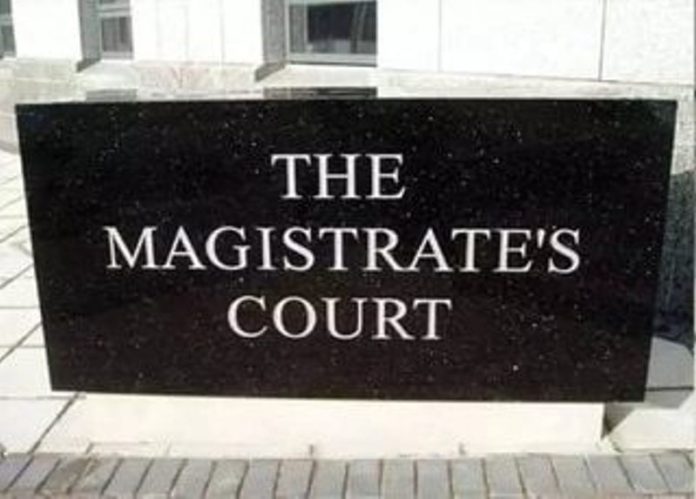
While the Magistrates’ Court had earlier remanded Farotimi and adjourned the case until December 10, the Federal High Court granted him bail on Monday, setting the terms at N50 million.

Mr Farotimi is standing trial over defamation allegations preferred against him by Babalola.
The controversy surrounding the book, which initially saw low sales after its release in July, has made it a bestseller on Amazon within three days of its author’s incarceration as curious Nigerians besieged the site with orders to read the damning accusations of corruption levelled against Babalola.

The defamation charge stems from allegations in Farotimi’s book Nigeria and its Criminal Justice System that accused Babalola of influencing Supreme Court judges.

Moreover, protests against the continued incarceration of Mr Farotimi were slated to be held Tuesday in Lagos, Abuja, Ekiti and London.

Still on Afe Babalola vs Farotimi

By Suyi Ayodele

Each time I watched the video of Dele Farotimi arrest in Lagos, I remembered my arrest in my office on Mission Road, Benin City that Monday afternoon in 2007!

When a matter is before the courts, no mortal is allowed to discuss it in the open. Lawyers call that sub judice. I want to believe that infraction is punishable. I have been locked up for five days for what they called “contempt of court”. The experience scares me to date.

My arrest by a team of seven policemen, a court bailiff, a lawyer, one unknown individual and the claimant in the civil matter involved, happened in less than 15 minutes. I was served Form 48 (Notification of contempt) and Form 49 (Committal to Prison) within an interval of six minutes.

Before I could read through the contents of the paper, I was surrounded by policemen. The only call I could make was to my landlady to help in picking up my son from school. The mother was away on a journey. What did I do wrong?

I was just a company representative in the matter involving a neighbour and the telecommunications company I worked for. The man complained about the noise from the telecommunication mast erected in the next compound to his. He went to a Benin High Court. He lost. While the case lasted, I was the one representing the company. My name and designation duly recorded by the court.

Not satisfied, the man approached some officials of the Edo State Environmental Sanitation Board. Somehow, a matter was filed at a magistrate court by a body which called itself Edo State Public Sanitation Officers. An unknown name and body. I was the one who received the court papers on behalf of the company and sent to represent the company each time the matter came up. The magistrate court also had my details.

As a preliminary measure, the presiding magistrate issued an “Abatement of Nuisance Order”, asking the company to shut down the power-generating sets on the site. The argument that the matter had been decided by a higher court of record would not persuade the magistrate. Not even the unassailable argument that the Edo State Sanitation Workers is a non-juristic body would hold water. The court just ordered for a shutdown of the base station!

I wrote a memo asking for compliance, when I received the enrollment order. The technical department shut down the site immediately. The base station started running on batteries. However, a maintenance contractor on a routine check discovered that the site was down, when the batteries got drained, and powered it on generators. Needless to say, the two generators were silent ones, noiseless! He did that on a Sunday night.

Early Monday morning, the complainant (Edo State Public Sanitation Officers) went to the court. The nominal complainant accompanied them. They filed for contempt, got the magistrate to hear the motion and ordered for issuance of Form 48, and signed Form 49 alongside.

A court bailiff was on hand to serve “all parties”; policemen were at alert to enforce the order. With the speed of light, execution of the court order was enforced. Pronto, I was “railroaded” to a jailhouse. And guess what, the magistrate who issued the arrest and detention order joined the Chief Judge of the state on prison visitation that same Monday. The only matter she heard and ruled on was my case! The prison visitation exercise was to last till Friday. The implication is that she would not be available to hear me “to show cause why I should not be committed to prison”. In any case, with the issuance of Form 49, which “cause” is left for me to show?

But the Legal Officer of the Edo Police Command had compassion on me. He listened to the circumstances of the matter. He used his discretion. Rather than calling the prison official to take me, he ordered that I be detained in police custody. Then he did something more wonderful. He instructed that I should be allowed to stay at the counter and not in any cell. I stayed in his office from morning till he closed. Then, I would be returned to the police counter. My car served as my bed at night and the Inspectors’ bathroom made available for my toiletries!  God bless the man wherever he is!

I spent Monday through Friday in police custody. It was not a nice experience. A senior lawyer, a friend, who saw me at the Edo Police Headquarters asked for the details of the matter. He was livid. First, the contempt should not have been issued against me but the company, he noted. I was just the company’s representative. Second, he contended that the order should have been to arrest the most senior manager of the company. But the contempt was issued against me in flesh and blood!

He explained that it was when the most senior manager was not available that the officers next to him in ranks could be picked up. Again, he said that Form 49 (committal to prison) ought to have been issued if the accused did not show cause to obey the court order. Most importantly, he faulted the idea of a magistrate issuing a warrant, an open-ended warrant, for an arrest for contempt and not making herself available to hear if the accused has purged himself of the contempt.

The senior lawyer was frank. Something was fishy. But he restrained himself from saying what he suspected. “Suyi, you are just a victim of the rots in the judiciary”, he told me. Then he assured that he would try to get the magistrate to take some hours off the prison visitation to hear the matter. That did not happen. And guess what, the man, who complained about the nuisance from the generator, was ‘visiting’ me daily in police custody. There was a time that he complained that I was not in the cell or prison as “ordered by the court.” He stopped that daily ‘mourning’ when a police officer told him off and threatened to lock him up should he come to tell them how to do their job.

To confirm my suspicion of a dirty game in the matter, when the magistrate finally made herself available on Friday, the complainant, the Edo State Public Sanitation Officers, was never in court, nor was the illegal body represented by a counsel. The nominal complainant also stayed off. The magistrate simply vacated the “order of committal to prison”, and I was set free! Nobody mentioned the matter thereafter. Life simply returned to normal for “all parties”! This incident happened in 2007.

I summoned the courage to write about the issue between the Lagos lawyer, Dele Farotimi, and Chief Afe Babalola, a lawyer and Senior Advocate of Nigeria (SAN), in the matter of defamation pending before a magistrate court in Ekiti State, because Babalola’s lawyers had chosen to address a press conference over the matter. If not, I wouldn’t have risked the idea of another possible “contempt of court!”. It is not for fun that our elders say that: Eni tí Sàngó bá tojú è wolè, kò ní bá won bú Oba Kòso (Whoever has witnessed the devastating ramming of thunder would never join in insulting the king of Koso -Sango).

Dele Farotimi wrote a book, “Nigeria and its Criminal Justice System.” Snippets from the book indicate that Farotimi raised serious allegations against Chief Afe Babalola (SAN). He railed against Babalola in a case in which the old man was his opposing lawyer. Afe Babalola, won the case, according to the information in the open space. Farotimi believed that the senior lawyer won because he “procured” the judgement for his client!  That is a weighty allegation to make. The old man expectedly was livid. Who won’t in that circumstance? Babalola petitioned the police for criminal defamation. Because Babalola resides in Ado Ekiti, he took his petition to the Ekiti State Police Command.

The police in Ekiti moved to Lagos. Farotimi was arrested, bundled to a vehicle to answer ‘present”, before a magistrate court in Ado Ekiti. He was remanded in prison custody. He was granted bail today.

I have read all the dramas that have played out. A senior editor that is close to me; sorry, I am the one close to him, (before dem catch me for insubordination) said that the “children of anger” would come into the fray. He was right! The Internet is practically on fire over the matter.

The entirety of Farotimi’s anger against the judiciary in his book is captured in his corruption allegation in that critical sector of our life. Is the fiery lawyer, right? Is he justified to be that venomous about our judiciary?

We may pretend about everything. But we cannot pretend that that there are no allegations against the judiciary especially in view of the quick recourse to the “go to court” cliche! The cliché, “go to court”, the new language of the present ruiners of our beings, confirms more than anything, the terrible situation our judiciary is. Once your opponent tells you to “go to court”, just know that he or she has the court in his or her pouch!

But is Farotimi right to have accused Chief Afe Babalola of “procuring” judgement in the matter he, Farotimi, lost to the senior lawyer at the Supreme Court? The answer is difficult to conjecture. Yes, if Farotimi has concrete evidence. And no, if he has no evidence but was just bitter because he lost the case.

But if on the other hand, Farotimi was just emotional about losing the 2013 Supreme Court case in the land matter between his client and Babalola’s client, and he decided to bring the roof down on everybody, I would commend him to learn from the ways of the hunters of old and their sharing formula.

The practice among hunters is that in a group game hunting, whoever fired the bullets that killed the game takes the head. It does not matter if the fortunate hunter is the youngest and the least experienced. The head of a game killed in a group hunting exercise is significant in all aspects. But its esoteric significance is what matters to the hunters. Don’t ask me for that here, please.

Farotimi has an onerous task. He must prove his allegations against Chief Afe Babalola. His second option is not too good. If he cannot prove the allegations, he must admit his mistakes and apologise or face the consequences of his actions with all boldness! A senior lawyer once told me that the major ingredient of libel is malice. This is what Farotimi has standing against him should he not have any proof!

The legal icon too, Chief Afe Babalola, has the right to defend his name. After over six decades at the Bar, Chief Babalola would be dead if he allowed the accusations to just go away like that. I would not buy the wisdom in the traditional philosophy of “Àgbà ló ma nrí ara gbà” (An elder should be able to accommodate all insults). No! That wisdom will not apply here, except the erring partner becomes sober and ready to make amends in the open!

If Dele Farotimi has no proof of his accusation, I would advise that he should look for all the Àró and Òdòfin (senior chiefs) of Yorubaland to help him beg Baba Afe Babalola. And if his case is like that of the hunters in a game sharing exercise, who had evidence (his gunshot sound) but was not concrete enough, he should still assemble the elders to assist him in placating the old man in Ado Ekiti.

TIPS