Until the Nigerian society takes seriously and finds a solution to the veritable challenge of moral decadence and warped value system, Nigerians will continue to be treated to deplorable spectacles and news of beastly conduct by some of their compatriots. It has now become routine to read news of Nigerians, especially young men and women, exhibiting subhuman behaviours that put a question mark on proper parenting.
This time around, the police in Minna, Niger State, have reportedly arrested three young men, Martha Andrew, James Luka and Johnson John, for luring a pregnant woman from the Rafin-Yashi area of the town to a hotel along the Eastern Bypass in Minna. Their ignoble mission, ostensibly with the consent of the woman, was to remove her six-month-old foetus and use it for money rituals. The bait was a promise of N30 million which, in all probability, these felons would not have paid the woman if they had succeeded in their awful mission.
However, according to the Police Public Relations Officer (PPRO), Wasiu Abiodun, the suspects were tracked and arrested in the hotel. In other words, were it not for the police’s prompt intervention which was apparently intelligence-based, the country would have been treated to yet another sad news of losing a young woman and her six-month-old pregnancy in a most horrific manner. Given the mouth-watering offer made to the apparently naive young woman, it was unlikely that the three misguided young men would have spared her life. And that is even in addition to the need to cover their tracks, which may be obviated if the young woman is alive.
It is really depressing to witness the kind of moral fabric that obtains in the country nowadays where everything goes, including bestial acts that ordinarily belong in the Hobbesian state of nature. There is no respect for social values or the sanctity of human life. The paramount interest or objective is financial reward and they are willing to engage in the most obnoxious activities to attain the ignoble objective. For N30 million, the young woman was goaded into accepting to terminate the life of her unborn baby and inadvertently put her life on the line.
Given the type and circumstances surrounding the aborted transaction between her and the three men, it is safe to assume that she would not have gone out of it unscathed. Yes, the sum of N30 million may appear huge and tempting, but where proper moral value system exists and reigns, no one needs to be told that no amount of money can equate human life. The woman cheapened herself because obviously she lacks the right set of values. And for a woman to acquiesce to an arrangement that would make her to sacrifice her unborn child on the altar of pecuniary advantage is a disgrace to womanhood and humanity.
What is the society turning into? it is the case, and sadly so, that there is no level people cannot go to make money. And perhaps more concerning is the fact that many no longer believe that hard work pays. Apparently, the suspects wanted to make quick money, like many today in Nigeria where money matters. There is this erroneous but widespread belief that it is possible to make quick and huge money on a sustainable basis without breaking a sweat. Yet, no money ritualist has ever made the Forbe’s list of wealthy people.
There is a sense in which the society could be described as unhelpful in the bid to stem the tide of quick and hot money syndrome, especially amongst the youth. And that is because the society, be it the family, church, mosque, palace, associations, town and so on, and even the government, tends to give unmerited recognition to citizens with deep pockets. Even where other factors or virtues are considered for recognition, they are simply tangential and meant to fulfill all righteousness. The worst part is that often, no one bothers about how these rich men and women make their money; they are simply honoured and recognised once they are reckoned to be people of means.
This societal disposition inevitably provides incentives for citizens with low moral fabric to engage in any activity, no matter how ignoble, to make money since the end seems to justify the means. Even the morally upright are sometimes tempted to slip into decadence when they observe how corrupt and fraudulent people are treated with respect and honour while they are at best ignored or even treated with disdain. And it is saddening that the family, the microcosm of the society, has become largely dysfunctional and ineffective, such that parents and guardians are increasingly becoming less crucial in the process of character formation of their children and wards. Yet, this is the level where people with high standards of character and conduct are supposed be bred before being unleashed on the larger society. For instance, today, some parents are known to accept car gifts from their children who are still in school studying without raising an eye brow. That would not have happened in the days of yore when people valued societal norms.
It is comforting to know that the police have apprehended and interrogated the suspects who were said to have confessed to the crime. However, we urge the police to work hard at arresting the suspects’ main accomplice, ‘Gbege’, who is said to be at large. His arrest will most likely shed more light on the original plan of these felons because he is the person they were supposed to take the pregnant woman to before the law caught up with them. It is unclear whether ‘Gbege’ is a medical doctor or a ritualist priest but his arrest will be helpful. It may even escalate the charge against the suspects by adding conspiracy to commit murder to conspiracy to commit miscarriage which the police said they plan to prefer against the outlaws because there is nothing to suggest that the young woman carrying the foetus would have been alive to spend the N30 million offered her if the deadly plan had succeeded.
We reiterate that the preponderance of anti-social behaviour and criminal conduct that has become a regular occurrence in the society may not abate unless critical stakeholders, including the government, takes deliberate and intentional steps to change the extant course and trajectory of societal recognition and reward systems that place disproportionate premium on people of means, regardless of how they come by their riches.
David Shikfu Parradang, former Comptroller-General of the Nigerian Immigration Service (NIS), has been killed by kidnappers in Abuja.
Citing sources, counter-insurgency expert, Zagazola Makama, Parradang, said Parradang was abducted in the Area 1 axis of Abuja in the early hours of Tuesday.
Makama said after being trailed from a bank where he had withdrawn money, the assailants took the cash from him before eventually killing him.
“The tragic incident has raised fresh concerns over security in the Federal Capital Territory, particularly regarding the increasing cases of kidnappings and targeted attacks,” Makama said in a post.
Parradang, who served in the NIS for over 30 years, held various positions across the country, including Comptroller General.
He served in Kano, Lagos, Kwara, Enugu, and the Federal Capital Territory.
He also attended several professional courses both within Nigeria and internationally.
In recognition of his service, he was awarded the national honour of Officer of the Order of the Federal Republic (OFR) and was a distinguished graduate of the National Institute for Policy and Strategic Studies (NIPSS).
Security agencies have reportedly launched an investigation into the circumstances surrounding his abduction and killing, with efforts ongoing to apprehend the perpetrators.
The Nigerian Immigration Service had yet to confirm the tragic development as of press time, but an official at Immigration headquarters in Abuja said it was true.
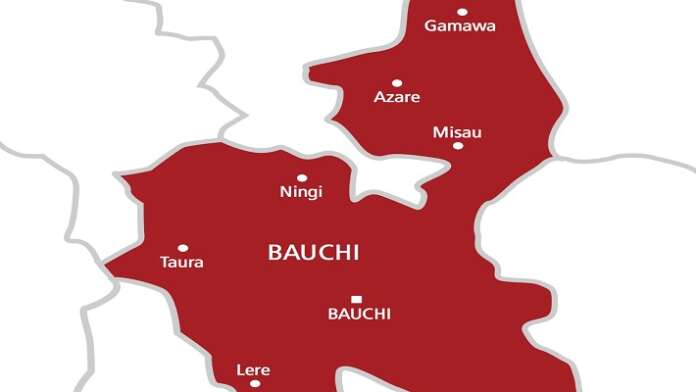
The Assembly of Councillors in Shira Local Government Area of Bauchi State has removed Chairman Hon. Abdullahi Ibrahim Beli and his Deputy, Hon. Usman Adamu, from office.
Their removal followed an investigation by a committee that found them guilty of gross misconduct, financial mismanagement, failure to perform their duties, and abuse of office.
A resolution signed by 10 councillors, including Council Leader Hon. Wali Adamu and his deputy, officially declared the offices of both the Chairman and Vice Chairman vacant with immediate effect.
“The removal of the Chairman and his deputy is based on the findings of the investigation committee, which has established that the chairman and his deputy were engaged in financial mismanagement, failed to perform their duties, breached the trust placed on them, and abused their office,” the resolution stated.
While briefing journalists on the development, the Council Leader said both Beli and Adamu had been under growing scrutiny over their management of the local government’s affairs. He stated that despite several warnings, they had failed to perform their duties and had lost the trust of the people of Shira, making their removal inevitable.
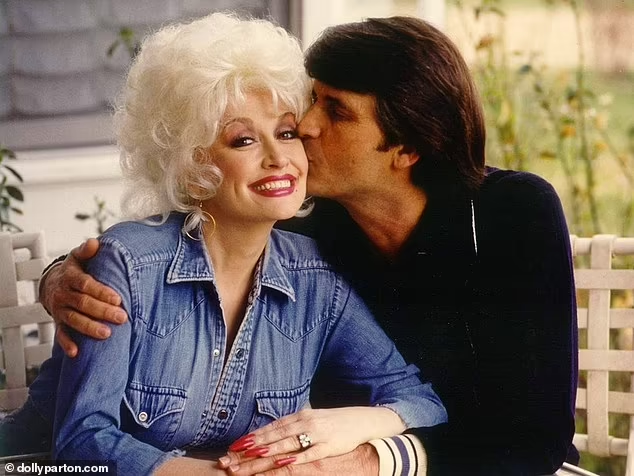
In a statement posted to Instagram, the legendary country songstress revealed that he had died earlier on Monday in Nashville, Tennessee.
Dolly wrote that she and Carl had ‘spent many wonderful years together,’ and the two had been happily married for nearly 60 years.
However, their union has been a complete mystery even to many of the 79-year-old singer’s biggest fans, who have long been puzzled about why the two never expanded their family.
Although Dolly has been known for years for her bubbly personality and forays beyond music into acting, her husband tended to operate behind the scenes, leaving her to be the public face for the couple.
DailyMail.com takes a look inside Dolly and Carl’s intensely private marriage.
Dolly and Carl’s meet-cute in Nashville
The 9 To 5 singer first met her future husband in a place most wouldn’t peg as a hotbed of romance — the laundromat.
But both Dolly and Carl described the fateful meeting in 1964 as love at first sight in later interviews.
‘I’d come to Nashville with dirty clothes,’ she told the New York Times. ‘I was in such a hurry to get here — and after I’d put my clothes in the machine, I started walkin’ down the street, just lookin’ at my new home, and this guy hollered at me, and I waved. Bein’ from the country, I spoke to everybody.’
Dolly said she had a feeling that the mystery man approaching her would become a major figure in her life.
‘He came over and, well, it was Carl, my husband,’ she declared.
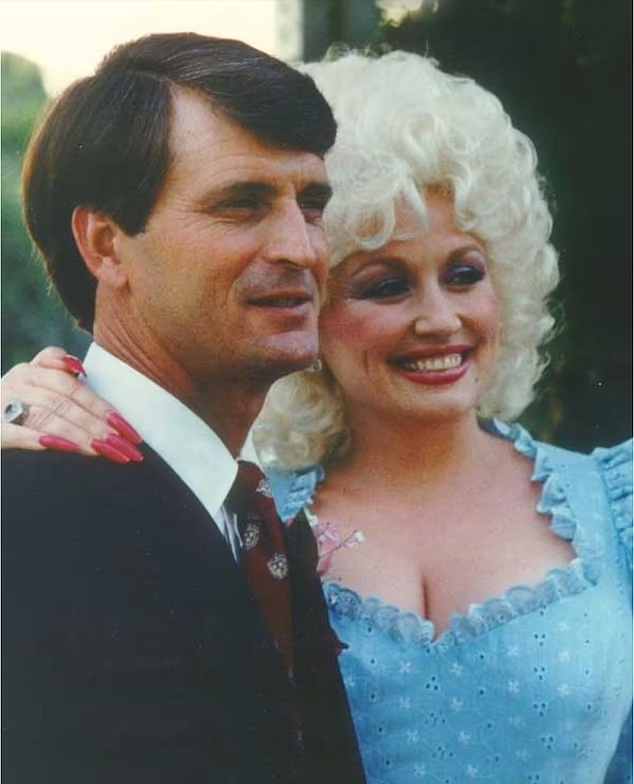
Dolly and Carl both described a laundromat meet-cute in 1964 that was love at first sight. They began dating that year, and he proposed in 1966
When the couple renewed their wedding vows for their 50th anniversary in 2016, Carl made it clear that he was just as entranced by Dolly when they met.
‘My first thought was I’m gonna marry that girl,’ he told Entertainment Tonight. ‘My second thought was, “Lord she’s good lookin.'” And that was the day my life began.’
Dolly and Carl began dating the same year, but it was difficult to find time together, as she was living with her aunt and uncle and didn’t want to bring him in the house while she was baby sitting her young cousin.
One day when she wasn’t on babysitting duty, she went over to Carl’s house to spend time with him
‘That was my first chance to go anywhere with Carl, and he drove me straight to his folks’ house and introduced me to his mother and daddy,’ she told the New York Times in 1976. ”Cause he said he knew right the minute he saw me that that’s the one he wanted.’
Carl and Dolly get married
Around two years after they started dating, Carl proposed to Dolly.
Although she was over the moon, the songstress later recalled that her manager at the time thought being engaged, and then married, could harm her career at that early stage.
She decided against a large wedding because of his warning, but she and Carl were still determined to get married, so they opted to tie the knot with just the pastor of Ringgold Baptist Church in Ringgold, Georgia, officiating.
The only witnesses to the low-key ceremony on May 30, 1966, were the pastor’s wife and Dolly’s mother, Avie Lee Owens, she told Local 3 News in Tennessee in 2012.
‘I had bought a little dress, momma had bought me a Bible, some flowers on it. We grabbed momma and went back, and got married on a Monday, in a church,’ she recounted.
The nuptials were so small scale that Dolly and Carl didn’t even have time to celebrate, as she said they both had to go back to work the following day.
‘We took momma back to the bus station in Chattanooga so she could ride on back to Knoxville,’ she shared. ‘So she wouldn’t be on our so-called honeymoon, which was a few hours and we both had to go back to work the next morning.’
In 2015, Dolly told People that part of the secret to their enduring love was that she and Carl were pleasantly different from each other.
‘They say that opposites attract, and it’s true,’ she explained. ‘We’re completely opposite, but that’s what makes it fun. I never know what he’s gonna say or do. He’s always surprising me.’
She later shed more light on why her husband avoided the spotlight, which he ‘never wanted to be in,’ in a 2023 episode of What Would Dolly Do? Radio on Apple Music.
‘He went to one thing with me early on, when we first married, to a BMI Song of the Year [event], and he came out of there taking off his tuxedo, his tie and all that and said, “Don’t ever ask me to go to another one of these damn things because I ain’t going.” I never asked him and he never did,’ she recalled.
Dolly releases her most famous song after foregoing children
Dolly was already a star of country music in 1973, but she elevated her profile considerably with the release of her hit single Jolene.
The song, which Beyoncé recently performed with rewritten lyrics on her Cowboy Carter album, was inspired by a bank teller that Parton came to think was flirting a bit too heavily with her husband.
‘She got this terrible crush on my husband,’ the singer told NPR in 2008. ‘And he just loved going to the bank because she paid him so much attention.
‘It was kinda like a running joke between us — when I was saying, “Hell, you’re spending a lot of time at the bank. I don’t believe we’ve got that kind of money,”‘ she joked. ‘So it’s really an innocent song all around, but sounds like a dreadful one.’
Despite the somber, pleading tone of the classic song, Dolly later claimed to the crowd at the Glastonbury Festival in 2014 that she ‘put a stop to’ the woman’s flirtations with her husband.
Despite achieving more success than she ever imagined, Dolly and Carl had had no children seven years into their marriage — and they never would.
While speaking to Saga Magazine in 2023, the performer shed some light on why she and Carl kept their family as a duo.
‘When you’re a young couple, you think you’re going to have kids, but it just wasn’t one of those burning things for me,’ she explained. ‘I had my career and my music and I was traveling. If I’d had kids, I’d have stayed at home with them. I’m sure and worried myself to death about them.’
Later, she felt vindicated by her decision, as she would ‘hate to be bringing a child into this world right now’ due to ‘everything that’s going on.’
However, in 2014 she told Billboard that she and Carl weren’t opposed to having children, and admitted they even had names picked out if they ended up having any.
The same year, she told People: ‘I often think, it just wasn’t meant for me to have kids so everybody’s kids can be mine.’
Back in 1977, she also told the publication that for her cover story that she wouldn’t want to have children if it meant ‘leav[ing] them for somebody else to raise while I have a career.’
Dolly’s behind-the-scenes love joins her as her career skyrockets — but affair rumors swirl
Carl had such a minimal presence throughout Dolly’s career that it was news when he opted to join her in public.
In 1979, Cosmopolitan reported that Dolly’s bandleader Gregg Perry had thrown a double surprise party, with one of the guests of honor being Carl.
Perry mused that Dolly’s husband ‘never goes with us, but this week he’s made a real exception’ since it was his birthday.
A year later, Carl made his presence felt again when he joined his love on a two-month trip to Los Angeles while she filmed her hit workplace comedy 9 To 5, which she starred in with Jane Fonda and Lily Tomlin.
Dolly’s husband made more of a public show of his affection around that period just as his wife was hit by rumors of an affair, which she denied.
In her first book, the 1994 autobiography My Life And Other Unfinished Business, the I Will Always Love You singer admitted to having an ‘affair of the heart’ with Perry, though she stressed that it never became physical.
‘Gregg and I became very close … I had never spent so much time with such a well-educated and knowledgeable man,’ she wrote, via People. ‘I let myself get completely wrapped up in him.’
Touring brought the two together, but things went south by 1982 when they were collaborating on the soundtrack for her 1982 film The Best Little Whorehouse In Texas.
According to Dolly, the stresses of the film meant that it ‘was not a fun project for anyone involved,’ and it led Perry to leave her band.
‘He told me he couldn’t take the pressure and the B.S. of the business anymore,’ she wrote. ‘The joy had gone out of it for him and I’m sure that I was no picnic to live with at that time … I was crushed when he left … It just about killed me. I cried an ocean.’
In 1982, Parton shut down rumors of an affair while speaking to People.
She clarified that her husband ‘was the man God intended for me to have.’
‘We’ll just always be together … To him it’s all a joke. There ain’t a man in this world could ever live up to my husband,’ she shared. ‘That’s one of the things that keeps me from going too far.’
Dolly’s songs of love
Carl was partly the subject of one of Dolly’s most famous songs, Jolene, a song about a woman angling to steal her man.
But in their later years, Dolly also wrote and recorded more traditional tributes to her longtime love.
Although she had recorded earlier songs as tributes to him, including Tomorrow Is Forever and Say Forever You’ll Be Mine (both recorded as duets with Porter Wagoner), she recorded a burst of new Carl-inspired songs in the 2000s and 2010s.
In 2002, she took a departure from her usual pop-inflected country style to release a cover version of her husband’s favorite song: Led Zeppelin’s Stairway To Heaven.
The song, included on her album Halos & Horns, was more country and bluegrass than hard rock after she got her hands on it, but she returned to the song on 2023’s Rockstar, which was also a tribute to her husband and his love of rock music.
That time around, she recorded a more faithful, rocking version with an assist from Lizzo.
‘My husband has such an odd taste in music, and he loves Led Zeppelin,’ Dolly explained in a promotional interview from 2002. ‘He’s been a “Led Head” from day one and also loves bluegrass and big-band music.
‘Stairway to Heaven was always Carl’s favorite. It was kind of like “our song” because at romantic times or sweet times, we’d just be riding around in the car and if that would come on, Lord, he’d just knock us out of the car turning it up full blast,’ she said.
Then, in 2012, she paid a more direct tribute to her husband by recording the love song From Here To The Moon And Back for her film Joyful Noise.
In the film, which also features Keke Palmer, Dolly’s character performs the song for her husband, played by her real-life friend and occasional collaborator Kris Kristofferson.
Dolly later rerecorded the song as a duet with another longtime friend, Willy Nelson, for her 2014 album Blue Smoke.
‘I thought in order to make it really real and really touching, I would write it about my real, true emotions about someone I really do love and have loved for more than half of my life,’ she told The Boot.
Dolly also confirmed to Rolling Stone in 2016 that her song Say Forever You’ll Be Mine, released the same year, was also inspired by her husband, as were several of the other songs on her album Pure And Simple.
Dolly and Carl renew their vows for their 50th anniversary — and finally, take their honeymoon
On May 30, 2016, Dolly and Carl renewed their vows at their home in Nashville to mark their 50th wedding anniversary.
‘I got all dressed up in the most beautiful gown you’ve ever seen and dressed that husband of mine up. He looked like a handsome dude out of Hollywood,’ she told Rolling Stone in 2016. ‘We had a few family and friends around. We didn’t plan anything big at all because we didn’t want any kind of strain, any kind of tension, any kind of commotion, so we planned it cleverly and carefully.
‘We just had a simple little ceremony at our chapel at our place,’ she shared. ‘We just had just a few people who needed to be there to make sure they got the pictures and the few things that we needed. We just had fun with it.’
Dolly later revealed that she and Carl were getting their second chance at a honeymoon with a long RV trip, which had long been a favorite way for them to travel without too much commotion.
Dolly puts on a spicy show by recreating Playboy cover for Carl’s birthday
Dolly famously posed in a busty black dress and bunny ears for a classic 1978 Playboy cover, and she decided to recreate the iconic image as a treat for Carl on his birthday in 2021.
The hitmaker highlighted her age-defying figure in a similar black dress, though this one had a slightly more conservative fishnet mesh covering her chest.
‘Today is July 20, it’s my husband Carl’s birthday,’ she said in a video posted to Instagram showing her revealing the results of her new photoshoot alongside the original cover image.
‘My husband always loved the original cover, so I was trying to think of something to do to make him happy,’ she said. ‘He still thinks I’m a hot chick, after 57 years, and I’m not gonna try to talk him out of that. And I hope he agrees.’
She also joked about how her figure had changed after more than 40 years.
‘In the first one, I was kind of a little butterball,’ she joked. ‘Well, I’m string cheese now. But he’ll probably think I’m cream cheese, I hope.’
Dolly says goodbye to her love of more than 60 years
Dolly shared the somber news on Monday, March 3, that her husband Carl had died at 82.
In her heartbreaking tribute, Dolly reflected on the ‘many wonderful years’ the pair spent together.
‘Carl and I spent many wonderful years together. Words can’t do justice to the love we shared for over 60 years. Thank you for your prayers and sympathy,’ Dolly wrote.
In addition to his longtime wife, Dean is survived by his siblings, Sandra and Donnie.
Parton’s statement indicated that her late husband would be laid to rest in a private ceremony attended only by their immediate family.
Nigeria’s Minister of Power, Adebayo Adelabu, said more than 60 percent of manufacturing companies in Nigeria have been forced to exit the national grid due to unreliable power supply.
The minister further stated that the development has resulted in the self-generation of power by these companies, leading to high production costs that made Nigerian goods uncompetitive.
Adelabu disclosed during the release of a National Integrated Electricity Policy (NIEP) and the public presentation of the Integrated Resource Plan (IRP) was also made public, in collaboration with the United Kingdom Nigeria Infrastructure Advisory Facility (UKNIAF).
He said that the launching of the new policy would help to drive the transformation of Nigeria’s power industry and ensure the return of the manufacturing firms which had exited the national grid. According to him, the new policy document had been submitted for the approval of the Federal Executive Council (FEC).
The minister emphasized that bringing back the manufacturing companies that left the national grid on board is the only way the government can drive the expected economic growth and national development.
He stated: “Today, more than 60 percent of our manufacturing industry is completely off-grid. They engage in self-generation, not because they are in rural areas or they are in semi-urban areas, they are in locations where there is access to electricity.
“But how reliable is this access? We all know that there are a lot of sensitive manufacturing processes that cannot tolerate a one-minute dip in the electricity supply. Instead of taking such a risk by connecting to a grid that is not reliable, these industries would rather go for self-generation which is very expensive.
“Therefore, our products or commodities being turned out from these factories can never be competitive. The only way we can allow this to contribute to economic growth, industrialization, and national development is to ensure that there is reliability in grid supply, so that all these companies that are currently off-grid can go back to the grid, and this will reduce their cost of production, it will reduce inflation, and our locally manufactured goods can now compete with imported goods.”
Adelabu estimated that an investment of $32.8 billion is needed in the power sector between now and 2030 to enable the country to achieve universal electricity access, adding that out of the amount, $17 billion is expected from the public sector while about $15.8 billion will be contributed by the private sector.
Nigeria’s inability to supply and distribute sufficient electricity has left many businesses at the mercy of generators powered by diesel and petrol, whose prices have surged in recent months. This has added to the production costs for manufacturers significantly and rendered their products uncompetitive against imported products.
It could be recalled that the Manufacturers Association of Nigeria (MAN) raised the alarm that manufacturers in the country spend about 40 percent of their total production costs on generating energy for their businesses.
MAN put the annual economic loss caused by the inadequate power supply at N10 trillion, accounting for almost two percent of the country’s Gross Domestic Product.
President of MAN, Francis Meshioye, noted that manufacturers were hit hard last year with “a drastic rise in electricity tariffs, with rates increasing by over 250 percent”.
According to him, the surge in energy costs “became one of the highest operating expenses for businesses in the sector in 2024”.
He lamented that this has forced many manufacturers to seek alternative energy sources, further straining their financial resources and complicating their ability to remain competitive.
A 20-year-old man, Safiyanu Dalhatu has been arrested by the Bauchi State Police Command for allegedly beating his mother to death.
This was disclosed in a press release issued on Tuesday by the command’s Police Public Relations Officer (PPRO), Ahmed Wakil.
The PPRO explained that, “On February 24, 2025, Peace and Security Committee members in the Abujan Kwata area of Bauchi reported an incident to the ‘A’ Divisional Police Headquarters.
“At about 3pm, Safiyanu Dalhatu, a 20-year-old male resident of Abujan Kwata, allegedly assaulted his biological mother, Salama Abdullahi, a 40-year-old female of the same residence.
“Safiyanu Dalhatu is accused of attacking Salma Abdullahi with a heavy pestle, resulting in fractures to both of her hands as well as other bodily injuries.”
Wakil noted that upon receipt of the report, the Divisional Police Officer, Abdullahi Muazu, led a team of detectives to the scene and transported the victim to the Abubakar Tafawa Balewa Teaching Hospital, Bauchi for medical attention, where a medical professional confirmed her death.
The statement noted that “Initial investigations suggest that the altercation between the suspect and his biological mother precipitated the assault.
“The suspect has been apprehended, and the pestle used in the incident has been recovered and documented as exhibits.”
The PPRO stated that the state Commissioner of Police, Auwal Muhammad, has directed a thorough investigation by the State Criminal Investigation Department.
He asserted that following the completion of the investigation, the suspect will be prosecuted.
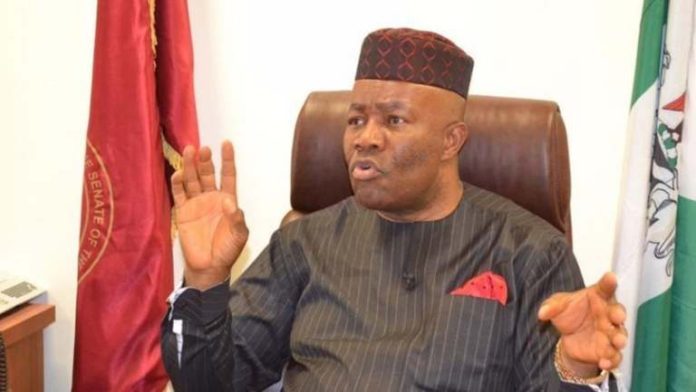
An ex-lawmaker for Cross-River South Senatorial District, Senator Florence Ita-Giwa, has dismissed Senator Natasha Akpoti-Uduaghan’s claim of sexual harassment, stating that women cannot be harassed once they become senators.
Ita-Giwa who spoke on Arise TV on Tuesday said that it is a sign of weakness for female lawmakers to make such claims.
Akpoti-Uduaghan had alleged that Senate President Godswill Akpabio frustrated her motions on Ajaokuta Steel Company because she refused his sexual advances.
Ita-Giwa, however, said, “By the time you contest elections and get to Senate, you have passed that stage of your life of being sexually harassed. You go there to serve, and you are all equal in that place.
“And again, it shows weakness; you don’t allow it. It (sexual harassment) can not happen in the Senate.
“I am not saying the lady is lying, but when you get to the Senate, you’re there as a person. You’re not there as a woman.”
When asked if female lawmakers should remain silent about harassment from colleagues, Ita-Giwa, who is a former presidential adviser, insisted that making such allegations at that level reflects weakness.
“At that stage in politics, if you come out and say someone is sexually harassing you, it is a weakness,” Ita-Giwa said.
She added, “I’m saying that it does not; it would not happen in the Senate, and it should not happen in the Senate and again, I’m not here to defend anybody in politics.”
She maintained that female senators should see themselves as equals to their male counterparts, emphasising that winning a senatorial election is no small feat.
Akpoti-Uduaghan’s conflict with Akpabio began last week when she discovered her Senate seat had been changed, leading to a brief disruption during plenary.
During her Arise TV appearance, Akpoti-Uduaghan claimed the issue started in December 2023 when she and her husband visited Akpabio’s home for his birthday.
She alleged that Akpabio made inappropriate advances while showing her around, prompting her husband to warn her against being alone with him.
While Akpabio has yet to respond to the allegation, his wife, Ekaette, has denounced Akpoti-Uduaghan and filed a defamation lawsuit against her.
Parton said in a statement about her late spouse on Monday, 'Carl and I spent many wonderful years together. Words can't do justice to the love we shared for over 60 years. Thank you for your prayers and sympathy'
The 78-year-old music legend made the revelation about the track, which came out in October of 1973, while in concert at the Glastonbury Festival in 2014.
The Independent reported at the time that the Pittman Center, Tennessee-born icon explained to the crowd how the tune came to be creatively.
After performing the song – which has been covered by Beyoncé and a host of other artists – Parton told the crowd, ‘Now, some of you may or may not know that that song was loosely based on a little bit of truth.’
‘I wrote that years ago when my husband … was spending a little more time with Jolene than I thought he should be.’
After the crowd booed at the news of Dean’s roving eye, Parton reassured the fans she ‘put a stop to that’ and ‘got rid of that redhead woman in a hurry,’ spurring cheers from the crowd
Parton told the audience that channelling her emotions from the uncomfortable situation into a Grammy-winning song ultimately made her very wealthy.
‘I want you folks to know, though, that something good can come from anything,’ Parton said. ‘Had it not been for that woman I would never have written Jolene and I wouldn’t have made all that money, so thank you, Jolene.’
Speaking with NPR in a 2008 chat, Parton said that the woman who inspired the track had ‘this terrible crush on [her] husband.’
She added, ‘And he just loved going to the bank because she paid him so much attention.
‘It was kinda like a running joke between us – when I was saying, “Hell, you’re spending a lot of time at the bank. I don’t believe we’ve got that kind of money.” So it’s really an innocent song all around, but sounds like a dreadful one.’
Parton told NPR about the physical characteristics the woman displayed and how they differed from her own.
‘She had everything I didn’t, like legs,’ Parton said. ‘You know, she was about 6 feet tall.
‘So no matter how beautiful a woman might be, you’re always threatened by certain… You’re always threatened by other women, period.’
While the emotions brought about by the bank teller made for the creative backbone of the hit song, Parton said the name Jolene itself was from a young fan who attended one of her concerts.
One night, I was on stage, and there was this beautiful little girl – she was probably 8 years old at the time,’ she told the outlet. ‘And she had this beautiful red hair, this beautiful skin, these beautiful green eyes, and she was looking up at me, holding, you know, for an autograph.
‘I said, “Well, you’re the prettiest little thing I ever saw. So what is your name?” And she said, “Jolene.”
Parton added, ‘And I said, “Jolene. Jolene. Jolene. Jolene.” I said, “That is pretty. That sounds like a song. I’m going to write a song about that.”‘
Parton’s publicist told the AP in a statement Monday that Dean passed away Nashville, Tennessee, and that his funeral will be a private ceremony restricted to relatives.
Parton said in a statement about her late spouse on Monday, ‘Carl and I spent many wonderful years together.
‘Words can’t do justice to the love we shared for over 60 years. Thank you for your prayers and sympathy.’
Ugwu, S.C., and Ugwuja D.I. in their work titled: The Role of Local Government in Nigeria Iosr Journal of Current Issues in Arts and Humanities, (2016) identified and discussed certain key roles played by the LGs. According to the erudite authors, fundamentally, the local government is aimed at:
Promoting participatory democracy at the grassroots;
Mobilizing local reserves for rapid social and economic development;
Providing certain basic amenities and services at the rural areas;
Encouraging initiative, and leadership potential in managing local affairs;
Development of agriculture and natural resources other than the exploitation of mineral;
Provision and maintenance of primary adult and vocational education;
Decentralizing political power and institutionalizing co-operative federalism.
The above, according to them, could be summarized into two major sectors. Local governments perform two key roles in the system; political and socio-economic roles.
POLITICAL ROLES
The principal issue here is that of democratisation. Local government’s political role is to serve as an instrument for promoting local democracy. The local government is well placed to mobilise the people politically through political education, political participative interaction, enlightenment and actions. In this regard, local governments have become useful democratic platforms for electing leaders at the grassroots levels of government. Furthermore, leaders who get elected at local levels and serve as representatives of the people in the local government council are prepared through such experience for higher responsibilities.
Local government is therefore a training ground for politicians and leaders or the primary source for leadership recruitment. Such training includes that of representativeness and political accountability. Another political role is the provision of law and order. Local governments work with the police, other security agencies and traditional rulers to enforce law and maintain security in rural areas. Moreover and in order to enhance responsive governance, local government serves as a two-way channel of communication between the government and the governed. Just as it transmits the decision of the government to the local people, it also conveys the demands or feedback from the local people to governments.
The exercise of democracy and human rights can only be meaningful if demands and policies can be translated into physical development, including the provision of basic socio-economic services. Such services are expressed in the functions of the local government, which include basic health, basic education, agriculture and revenue generation. People expect such services to be delivered to make any meaning of democracy and bureaucracy at the local level. It should be noted that in providing such services, LGs have to work with community groups and citizenry to harness community energies as inputs into development. In local government therefore, there can be a totally government-initiated development, a joint exercise with the community and completely community-initiated self-help projects.
FUNCTIONS OF THE LOCAL GOVERNMENT:
We submit that one practical way by which the local governments are enabled to perform their political and socio-economic roles efficiently is through navigating the various functions delineated in the Constitution.
By the Fourth Schedule to the Constitution (pursuant to Section 7 thereof), local governments are charged with certain responsibilities and functions.
The main functions of a local government council are as follows: (a) the consideration and the making of recommendations to a State commission on economic planning or any similar body on –
(i) the economic development of the State, particularly in so far as the areas of authority of the council and of the State are affected, and
(ii) proposals made by the said commission or body;
(b) collection of rates, radio and television licences;
(c) establishment and maintenance of cemeteries, burial grounds and homes for the destitute or infirm;
(d) licensing of bicycles, trucks (other than mechanically propelled trucks), canoes, wheelbarrows and carts;
(e) establishment, maintenance and regulation of slaughterhouses, slaughter slabs, markets, motor parks and public conveniences;
(f) construction and maintenance of roads, streets, street lightings, drains and other public highways, parks, gardens, open spaces, or such public facilities as may be prescribed from time to time by the House of Assembly of a State;
(g) naming of roads and streets and numbering of houses;
(h) provision and maintenance of public conveniences, sewage and refuse disposal;
(i) registration of all births, deaths and marriages;
(j) assessment of privately owned houses or tenements for the purpose of levying such rates as may be prescribed by the House of Assembly of a State; and
(k) control and regulation of – out-door advertising and hoarding,
(l) movement and keeping of pets of all description,
(m) shops and kiosks,
(n) restaurants, bakeries and other places for sale of food to the public,
(o) laundries, and
(p) licensing, regulation and control of the sale of liquor.
(2) The functions of a local government council shall include participation of such council in the Government of a State as respects the following matters:
the provision and maintenance of primary, adult and vocational education;
(b) the development of agriculture and natural resources, other than the exploitation of materials;
(c) the provision and maintenance of health services; and
(d) such other functions as may be conferred on a local government council by the House of Assembly of the State.
If the local government councils are granted autonomy in line with the above constitutional provisions, there will be massive development in the grassroots. The challenge we have presently is that the States have enacted laws to take away these responsibilities from the local governments and unless and until those laws are repealed, the local governments will remain in political and financial bondage.
CHALLENGES AND PROBLEMS MILITATING AGAINST LEADERSHIP SYNERGY BETWEEN STATE AND LOCAL GOVERNMENTS:
Politics of Sectionalism, Tribalism & Ethnic Bigotry:
A typical political leader in Africa tends to wear his tribal identity like a badge of honour. Leadership synergy then becomes a virtual impossibility when a leader from a particular political extraction is unable to see eye to eye with another leader from another extraction within the same political community. In multi-ethnic geopolitical expressions which most States in Nigeria fall into, this ought not to be. For any meaningful grassroots development to take place at the state and local government levels, both the governor and local government chairmen, once elected by the people (whether voted by a particular group or not) should learn to be detribalized, develop a large heart and pursue the greater good and prosperity for all.
Fluidity of Partisan Ideologies:
In a multi-party system like ours where indiscriminate defections from one political party to another for egoistic rather that ideological interests characterize the modus operandi of politicians, there is bound to be lack of cohesion, lack of solid ideological continuity in political programmes and projects, etc.
iii. Godfatherism, Ego and Power Tussle:
It is not uncommon to witness the clash of political egos. This may be between a political godfather and godson. The former wants to have his way. The latter would rather not have it so. One vows to make the polity ungovernable for the other, apparently forgetting that it’s not all about the leader but the people. So they go as far as sponsoring banditry and terrorism and while the battle of egos rages between the two titanic elephants, the grass below suffers the pounding of the great hoofs! What’s more? Development at both the State and grassroots/local levels suffers. Grassroots democracy is run aground. We can see this playing out in Rivers State presently.
Leadership Incompetence:
Leadership synergy will be hard where people who lack the basic leadership skills find their way to power. It is not unusual to find individuals who have virtually zilch leadership experience at any level to find their way to the corridors of political power. Because they lack the requisite leadership skills and capacity, they find it difficult to synergize with others to build a team.
Propaganda & Campaign of Calumny:
The rather infantile behaviour by which political opponents deploy the use of propaganda and smear media campaigns, hauling unprintable written and verbal muck at each other has unfortunately become the trademark and stock-in-trade of most politicians in Nigeria. They constantly engage in brutal winner-take-it-all, dog-eat-dog campaigns. They criminalise dissent, demonise political disagreements and do a lot of partisan witch-hunt, completely relegating the interest of the people to the background. How then can there be sustainable leadership synergy between a State governor and other leaders and local government chairmen/leaders that could strengthen statewide as well as grassroots democracy and development?
Lack of Autonomy:
For a long while, the problem of lack of autonomy among LGAs on account of interference by State Governments was the order of the day. There has therefore continued to be leadership tussles and clashes between the State and LGs. In addition to withholding funds, some State Governors have unconstitutionally removed democratically elected Local Government Chairmen and replaced them with “Caretaker Committee Chairmen” who are often more accountable to the Governors than to the local populace. This undermines democratic governance and severely disrupts the functioning of Local Governments. Consequently, many of Nigeria’s 774 Local Governments have been rendered ineffective, failing to serve their communities and fulfil their intended roles.
The Senate will not probe the sexual harassment allegations against Senate President Godswill Akpabio.
Senator Natasha Akpoti-Uduaghan (PDP, Kogi Central) the Senate had levelled the allegation during an interview on ARISE ZBews TV.
Speaking on ARISE News TV, on Monday, Chairman of Senate Committee on Media and Publicity, Senator Yemi Adaramodu (APC, Ekiti South), said that there was presently no petition before the Senate to necessitate a probe of Akpabio.
Adaramodu said: “The Senate does not conduct its affairs based on what is trending on social media. There must be a formal petition or a matter raised before the Senate before any investigation can take place.
“There is presently no formal matter before the Senate regarding these allegations. The only issue before the Senate is Senator Natasha’s non-compliance with the standing orders.”
He also dismissed her contention on the seating arrangement, saying that Order 6 of the Senate rules mandates the Senate President to assign seats to senators.
Senator Adaramodu said: ”All lawmakers are expected to speak from their designated seats, and any breach of this rule undermines order in the chamber.”
Our site uses cookies. By clicking “Accept All Cookies”, you direct Law and Society Magazine to store cookies on your device and disclose information in accordance with our Cookie Statement: cookie policyACCEPTREJECT
Privacy & Cookies Policy
Privacy Overview
This website uses cookies to improve your experience while you navigate through the website. Out of these cookies, the cookies that are categorized as necessary are stored on your browser as they are essential for the working of basic functionalities of the website. We also use third-party cookies that help us analyze and understand how you use this website. These cookies will be stored in your browser only with your consent. You also have the option to opt-out of these cookies. But opting out of some of these cookies may have an effect on your browsing experience.
Necessary cookies are absolutely essential for the website to function properly. This category only includes cookies that ensures basic functionalities and security features of the website. These cookies do not store any personal information.
Any cookies that may not be particularly necessary for the website to function and is used specifically to collect user personal data via analytics, ads, other embedded contents are termed as non-necessary cookies. It is mandatory to procure user consent prior to running these cookies on your website.