Home Blog Page 403

Odinkalu blames Supreme Court for Rivers crisis

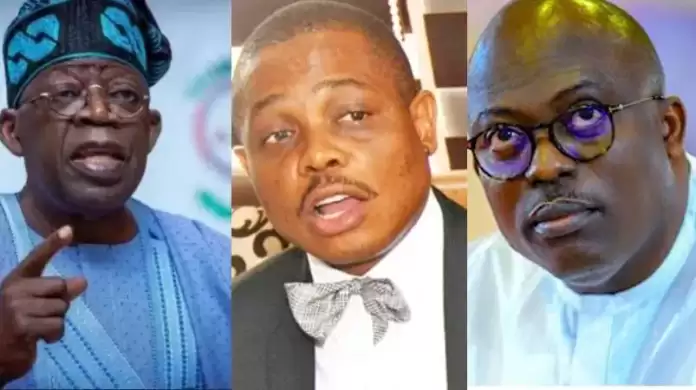
The ongoing political crisis in Rivers State has drawn sharp criticism from Professor Chidi Odinkalu, a former chairman of the National Human Rights Commission, who accused Nigeria’s Supreme Court of aiding a democratic breakdown.

In a series of social media posts, Odinkalu alleged that under the leadership of Chief Justice Kudirat Kekere-Ekun, the Supreme Court has become deeply compromised, claiming it now operates with an urgency to “send the country into perdition.”

Reacting to the declaration of a state of emergency in Rivers and the removal of Governor Siminalayi Fubara alongside the State House of Assembly, Odinkalu recalled the Court’s more principled past under Chief Justice Mohammed Lawal Uwais. According to him, the judiciary then had the independence and authority to “repeatedly save Nigeria from peril,” a contrast to what he described as today’s weakened institution vulnerable to political interference.

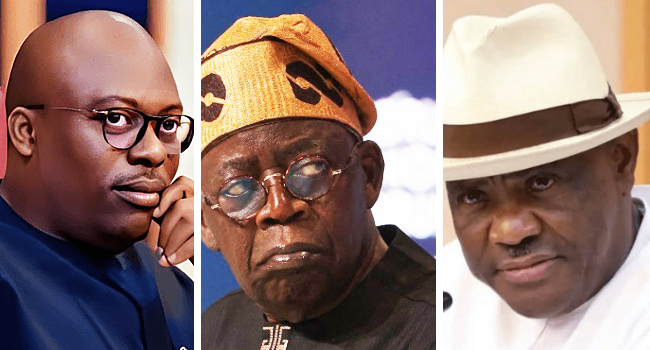
He further stirred public debate by posting a photograph showing the newly appointed Administrator of Rivers State, Vice Admiral Ibok-Ete Ibas (retd), alongside the Minister of the Federal Capital Territory and former Rivers Governor, Nyesom Wike. The image has sparked speculation about political alignments and deepened concerns over the legitimacy of the recent changes in Rivers State’s leadership.

Critics say the Supreme Court’s ruling, which paved the way for the installation of an unelected administrator, represents a major setback for democratic governance and the rule of law. Odinkalu’s remarks echo widespread unease over the judiciary’s role in what many see as a dangerous precedent.

The crisis has also rekindled memories of past opposition to similar federal interventions. In 2013, then-opposition leader Bola Tinubu condemned President Goodluck Jonathan’s declaration of emergency rule in Borno, Yobe, and Adamawa States. Tinubu called it a calculated move to subvert constitutional democracy, warning it could trigger radicalization and further destabilize the nation. He argued that the federal government’s use of security challenges as a pretext for political takeovers undermined democratic institutions and unfairly scapegoated governors who lacked control over federal security agencies.

Tinubu’s statement at the time, published by Premium Times, described Jonathan’s administration as rudderless and accused it of promoting division through ethnicity and religion for political gain. He cautioned that unjustified federal interference in state affairs would lead to long-term consequences that could not be easily reversed.

With the situation in Rivers State now mirroring past concerns, observers say the federal government and judiciary are treading a perilous path that could further erode public trust in Nigeria’s democratic institutions.

Solakuti.com

Then They Came For Ushie…

By Olufunke Baruwa

Over the weekend, the news of Ushie Rita Uguamaye who criticized the government’s failures and voiced her frustration over hardships filled social media. Uguamaye, a National Youth Service Corps (NYSC) member serving in Lagos, Nigeria, faced harsh backlash after posting a video on TikTok criticizing President Bola Tinubu’s administration and the unhygienic state of Lagos state.

In her video, Uguamaye expressed frustration over the nation’s economic hardships, stating that hard work no longer guarantees financial stability. She referred to President Tinubu as a “terrible leader” and described Lagos as a “smelling state,” highlighting poor living conditions and high cost of living – a context that almost every Nigerian can relate to.

Following the video’s viral spread, Uguamaye reported receiving threats, allegedly from NYSC officials, pressuring her to remove the content. She expressed concerns for her safety, stating that the officials had her personal details and were actively seeking her whereabouts. Despite the intimidation, she stood by her statements, emphasizing her right to free speech as a Nigerian citizen.

The incident drew attention from prominent political figures including Mr Peter Obi, the 2023 presidential candidate of the Labour Party who praised the youth corps member for her courage in voicing her grievances. He emphasized the importance of free speech in a democratic society and condemned any attempts to intimidate citizens exercising this right. Similarly, human rights activist Omoyele Sowore publicly supported Uguamaye, accompanying her to the NYSC Local Government Inspector’s office in Lagos amidst the controversy.

The situation quickly sparked widespread debate on social media regarding the balance between free speech and the responsibilities of NYSC members. While some argue that corps members, as temporary government employees, should adhere to certain restrictions, others insist that freedom of expression is a fundamental right that must be protected, regardless of NYSC status.

The NYSC program, established in 1973, aims to promote national unity by deploying Nigerian graduates to serve in various parts of the country. Over the years, it has faced criticisms related to security concerns and debates over its continued relevance. 52 years later, many Nigerians question the relevance of the scheme amidst many challenges including poor placement, insecurity and poor allowances.

First, They Came For Chioma

Uguamaye’s experience underscores ongoing tensions in Nigeria concerning economic challenges, freedom of speech, and the role of youth in advocating for change. But the real question is, did she lie? Is all well in Nigeria? The situation is akin to an Igbo proverb which says, “you don’t beat a child and also dictate how the child should cry”.

First, it was Chioma Okoli who was hounded by the police and Erisco Foods Ltd over a famous Facebook post reviewing the company’s Nagiko Tomato paste in September 2023 with criminal and civil charges brought against her and now, Ushie.

Our elites, government officials, politicians and law enforcement agencies continue to harass hapless Nigerians simply for voicing their dissatisfaction with the status quo. The Cybercrimes Law has now been weaponised against citizens who make any untoward comments on social media about their conduct.

One is forced to conclude that these government officials have a lot of free time on their hands or are using paid agents to monitor what ordinary citizens are saying on social media out of frustration. The NYSC does not speak for the Presidency and has no right to intimidate anyone over their social media comments on the state of the nation.

The last time I checked, Nigeria is still a democracy and freedom of expression is guaranteed. We cannot allow some unscrupulous politicians and individuals to return us to the military era where freedom of speech was a luxury. Our democracy (albeit imperfect) and freedom are perhaps the only luxuries that Nigerians have, and they must be guarded by all means necessary.

Capital Punishment For TikTok Post

One would think that Uguamaye’s statement was a matter of national security or a terrorist threat that needed a response from senior government officials including Toyin Ajayi, the Senior Special Assistant to the President on Media and Publicity. Ajayi, in his response to the issue on social media had called for capital punishment for the youth corps member. Following the outcry over his post, he quickly retracted by clarifying that his statement did not refer to the death penalty rather, he was calling on the NYSC to apply the stiffest penalty which is expulsion from the scheme.

According to him, “I suggested that flagrant and open abuse and disregard of NYSC by-laws and established protocol should attract the full NYSC disciplinary measures…nothing beyond the established norms and laws is suggested or remotely implied.”

Sadly, even this clarification is way too harsh for a social media post expressing frustration over harsh living conditions. Or does the presidential aide not understand the meaning of capital punishment? If this trend is allowed to continue, we risk descending into the military era where citizens are hounded and dispersed simply for voicing their opinion.

The government should realise that they can’t shut up over 200 million people for the sake of the 1% who control and have captured the state, judiciary and law enforcement. Rather than intimidate citizens for speaking truth to power, the government needs to rethink this missed opportunity to address the concerns of many Nigerians over the state of the nation.

According to this timeless quote by American cultural anthropologist and author, Margaret Mead, “Never underestimate the power of a small group of committed people to change the world. In fact, it is the only thing that ever has.”

What is the Government Afraid Of?

If Uguamaye had made a funny TikTok video or sung the praise of the government endlessly, would she have been handed the same penalties that the presidential aide and the NYSC are advocating? Would she be in violation of the NYSC rules and regulations that are now been popularised?

The saying “the youth are the leaders of tomorrow” has been faulted by many and replaced with “the youth are the leaders of today” because, given the state of the nation, tomorrow is no longer guaranteed. Perhaps that is why Uguamaye voiced out her frustration on social media, a platform which is by far the most widely available medium for young Nigerians to engage with their leaders, other Nigerians and the rest of the world.

One would imagine that it might be a better use of time and state resources if government agencies, officials and their apologists focus on more critical issues like healthcare, education, insecurity and power instead of combing through social media to curtail dissenting voices. The speed with which the NYSC and other government officials have called for stiff penalties against Uguamaye, is to say the least, alarming. How wonderful would it be if the same speed could be used to respond to power outages currently across the country, especially the incessantly collapsing national grid?

Perhaps its safe to conclude that these frequent hounding of ordinary citizens are not isolated events but part of a larger scheme to keep citizens busy and distracted. This timely statement sums it up perfectly, “If you keep a people exhausted and distracted, they won’t organise. If you keep them struggling and divided, they won’t resist. The system isn’t broken, it is working as designed”.

Martins Amaewhule, suspended Rivers Speaker, commends Tinubu on state of emergency, calls for urges for calm

Martins Amaewhule, Speaker of the suspended Rivers House of Assembly has applauded President Bola Tinubu on his decision to activate a state of emergency in Rivers.

Amaewhule also said that the move was in the best interest of the state and urged residents to cooperate with the newly deployed Sole Administrator, Vice Admiral Ibokette Ibas (Rtd).

The letter he signed on behalf of the state Assembly to the constituencies and distributed to newsmen in Port Harcourt on Wednesday reads thus in part:

”On behalf of the Rivers House of Assembly, I write to draw your attention to the declaration of a state of emergency by the President in line with the constitution of the Federal Republic of Nigeria, 1999 (as amended).

”The condition of our dear state today is mainly because of the malfeasance of the governor who serially disobeyed judgments and orders of courts, failed to govern the state in line with the oath of office and the Constitution.

”As an Assembly, we assure you all, our constituents that we would abide by this declaration even though it was not what we prayed for.

He, however, said that the President acted in the best interest of the country, and called on the constituents to remain calm as the Sole Administrator assumes duty.

NAN

Lawyer writes Tinubu, calls for immediate withdrawal of heavily armed soldiers holding Fubara and family hostage at Rivers government house 

A Nigerian lawyer, Kenneth A. Amadi, Esq. has in an open letter to President Bola Tinubu requested for the withdrawal of heavily armed soldiers that have allegedly prevented Governor Siminalayi Fubara and his family from moving their belongings out of the government house.

Part of the 19th March 2025 letter reads:

REQUEST FOR URGENT INTERVENTION TO ORDER IMMEDIATE WITHDRAWAL OF THE ARMED FORCES AND OTHER SECURITY PERSONNEL THAT ARE SUBJECTING HIS EXCELLENCY GOVERNOR FUBARA TO ILLEGAL IMPRISONMENT AT THE GOVERNMENT HOUSE, PORT HARCOURT, RIVERS STATE IN CONTRAVENTION OF THE CONSTITUTION OF THE FEDERAL REPUBLIC OF NIGERIA, 1999.

We write to bring to your attention the current situation reported by an online newspaper as follows: “Heavily Armed Soldiers hold Fubara, Family Hostage at Rivers Governor House https://newsmediang.com/heavily-armed-soldiers-hold-fubara-family-hostage-at-rivers-governor-house/”

We respectfully request your immediate intervention by way of immediate withdrawal of the said armed forces and security personnel.

TAKE NOTICE THAT AS BOTH CONSTITUENTS AND SOME OF US ARE STAFF OF THE RIVERS STATE GOVERNMENT HOUSE, OUR FUNDAMENTAL RIGHTS OF SAID STAFF AND THE SAID GOVERNOR OF RIVERS STATE WHOM WE ELECTED ARE BEING IMPEDED WITHOUT COMPLIANCE WITH A VALID ORDER OF COURT, THEREFORE WE SHALL UNDERTAKE LITIGATION TO PRESS HOME OUR DEMANDS IF YOU FAIL TO INTERVENE WITHIN TWO HOURS OF THIS LETTER.

Yours faithfully,
Kenneth A. Amadi, Esq.

The governor and his family according to 𝑷𝒆𝒐𝒑𝒍𝒆𝒔 𝑮𝒂𝒛𝒆𝒕𝒕𝒆 have been held hostage at the Government House, Port-Harcourt, by a contingent of heavily armed soldiers since Tuesday night.

The development comes moments after President Bola Tinubu invoked Section 180 of the Nigerian Constitution to proclaim a state of emergency in Rivers. The Nigerian leader based his controversial move on a prolonged and rapidly escalating political feud led by state lawmakers loyal to the Minister of the Federal Capital Territory, (FCT) Nyesom Wike.

Rivers government sources said that soldiers carrying out the president’s instructions on declaring the state of emergency barricaded all entrances and exits to the government house immediately after the president’s speech.

Attempts by Mr Fubara and his family to pack their belongings out of the Government House have been rebuffed by the soldiers, who suppressed all movements around the premises.

“We are being held hostage,” an affected official told 𝑻𝒉𝒆 𝑮𝒂𝒛𝒆𝒕𝒕𝒆 from the scene on Tuesday night. “They said they don’t have instruction to let anyone leave the premises.”

It was unclear whether the soldiers implemented their duties as instructed or were overzealous in following specific orders.

Spokespersons for the Nigerian Army and Defence Headquarters did not immediately return requests seeking comments about the soldiers’ treatment of the Fubaras.

President Tinubu’s declaration to suspend the feuding parties from office for six months, effective Tuesday, sparked furious debates across social media as netizens argued whether the president had constitutional grounds to suspend an elected governor whom the state lawmakers have not yet impeached. Efforts to impeach Fubara began on Monday, barely 24 hours before  Tinubu imposed an emergency ordinance.

Lawyers like Inibehe Effiong and Folarin ‘Falz’ Falana have excoriated the president for taking the law into his own hands without regard for the Constitution’s position.

The president named the retired chief of naval staff, Ibok-Ete Ekwe Ibas, as the military administrator in Rivers in the interim.

Abraham and Ephraim were robbed while trying to reunite with dad

Their effort to reunite with their father after arriving in Abuja on 11 March 2025 was aborted by men of the underworld who took all they had.

Abraham and Ephraim Chukwu arrived in Nigeria from Gabon via Lagos on March 9, 2025, and proceeded to Abuja on March 11, 2025, intending to reunite with their father, who resides in the Nyanya area of Abuja.

On account of the unfortunate incident, the FCT Police Command seeks the assistance of the general public in locating Mr. Arinze Chukwu, the father of Abraham and Ephraim Chukwu.

A statement signed by the FCT Police Public Relations Officer (PPRO ), SP Josephine Adeh ANIPR disclosed that the duo lost their belongings and mobile phones on their way, making it impossible to contact their father.

“The Police urge well-meaning members of the public, especially the Igbo community, to provide any useful information about his whereabouts. Please report to the nearest police station or call the FCT PPRO on 07038979348 or 08180382808,” the PPRO said.

Illegality of dissolution of elected democratic structures in Nigeria, By Femi Falana SAN

The decision of President Bola Tinubu to suspend Governor Siminalayi Fubara, his deputy, Mrs Ngozi Odu, and all elected members of the Rivers State House of Assembly for six months is illegal as it cannot be justified under any of the provisions of the 320 sections of the Constitution of the Federal Republic of Nigeria, 1999 as amended.

No doubt, Section 305 of the Constitution empowers the President to take extraordinary measures to restore law and order if, among other reasons, there is actual breakdown of public order and public safety in the Federation or any part thereof to such extent as to require extraordinary measures to restore peace and security or there is a clear and present danger of an actual breakdown of public order and public safety in the Federation or any part thereof requiring extraordinary measures to avert such danger.

But, the extraordinary measures which may be adopted by the President to restore peace and security in the Federation or in any particular State does not include the suspension of an elected Governor, an elected Deputy Governor and the dissolution of other democratic structures. For the avoidance of doubt, section 45(3) of the Constitution provides that a ‘period of emergency’ means “any period during which there is in force a Proclamation of a state of emergency declared by the President in exercise of the powers conferred on him under section 305 of this Constitution.”

Thus, in accordance with the relevant provisions of the Nigerian Constitution, the office of an elected governor can only become vacant upon death, ill health, resignation, or impeachment. Even where the office of the Governor becomes vacant for any reason whatsoever, the Deputy Governor shall be sworn in as the Governor.

And where the offices of the Governor and Deputy Governor become vacant at the same time, the Speaker of the State House of Assembly shall become an Acting Governor for not more than 3 months. During the 3-month period, a fresh election shall be conducted by the Independent National Electoral Commission for the election of a new governor.

It is pertinent to state that the failure of a House of Assembly to function in Rivers State can not be a justification for the dissolution of democratic structures in any State of the Federation. Indeed, the Constitution had envisaged that a State House of Assembly may not be able to function due to one reason or another. Hence, section 11(4) of the Constitution stipulates as follows:

“At any time when any House of Assembly of a State is unable to perform its functions by reason of the situation prevailing in that State, the National Assembly may make such laws for the peace, order and good government of that State with respect to matters on which a House of Assembly to be necessary or expedient until such time as the House of Assembly is able to resume its functions; and any such laws enacted by the National Assembly pursuant to this section shall have effect as if they were laws enacted by the House of Assembly of the State:

Provided that nothing in this section shall be construed as conferring on the National Assembly power to remove the Governor or the Deputy Governor of the State from office.”

In 2004 and 2006, we condemned the illegal dissolution of democratic structures when President Olusegun Obasanjo imposed emergency rules on Plateau State and Ekiti State, respectively. Regrettably, on both occasions, the Supreme Court refused to determine the constitutional validity of the dissolution of democratic structures on the ground that the suit were procedurally incompetent because they were instituted during the six-month emergency period by the suspended legislators in the name of Plateau State without the authorization of the Sole Administration of the state!

However, in 2013, when a state of emergency was declared in Adamawa, Borno and Yobe States by former Presidents Goodluck Jonathan, we urged him to reject the pressure mounted on by anti democratic forces to remove the elected Governors and dissolve democratic structures in the affected States. President Jonathan followed the path of constitutionalism.

In 2021, the then Attorney-General of the Federation and Minister of Justice, Mr. Abubakar Malami SAN announced the plan of the federal government to declare a state of emergency in Anambra State over insecurity and threat to a complete breakdown of law and order in that part of the Federation We advised President Buhari not to demolish democratic structures even if emergency rule was imposed on the state. President Buhari followed the path of constituionalism.

In the cases of Adegbenro vs. Attorney-General of the Federation (1962) 1 NLR 338 F.R.A. Williams V Dr. M.A. Majekodunmi (1962) 1 NLR 328 the Supreme Court of Nigeria validated the Emergency Powers Act 1961 to justify the dissolution of democratic structures as well as suspension of fundamental human rights in western region. As there is no equivalent of the Emergency Powers Act 1961 under the current constitutional dispensation, the suspension of an elected Governor by an elected President is a constitutional anomaly under the 1999 Constitution.

In Attorney General of the Federation v. Attorney General of Abia State & Ors (2024) LPELR-62576 (SC) filed by the Bola Tinubu administration, the Supreme Court of Nigeria held that the removal of elected chairmen and councilors as well as appointment of sole administrators or caretaker committees by State Governors to run local government councils are illegal and unconstitutional. It follows to reason that the suspension of elected governors and elected members of the House of Assembly by the President is illegal and unconstitutional in every material particular.

To that extent, a serving or retired military officer can not be imposed as a Sole Administrator to govern any state in Nigeria. Similarly, a military officer cannot be appointed by the National Assembly as a Sole Administrator to govern the Nigerian people during a war between Nigeria and another country.

In the Speaker, Bauchi State House of Assembly v Hon Rifkatu Danna (2017) 49 WRN 82 and several other cases, Nigerian Courts have held that the suspension of elected legislators is illegal and unconstitutional. Therefore, the National Assembly should not endorse the illegal suspension of the Rivers State legislators that have not defected from the People’s Democratic Party to the All Progressive Congress. Instead of approving the illegal dissolution of democratic structures in Rivers State, the National Assembly should assist Governor Fubara by invoking its powers under section 11 (4) of the Constitution “to make laws for the peace, order and good government of that State”

Therefore, we are compelled to call on President Bola Tinubu to follow the path of constituionalism without any delay. The President should proceed to reinstate the suspended Governor Fubara and Deputy Governor Odu and restore all democratic structures in Rivers State. This call is without prejudice to the duty imposed on the President to adopt extraordinary measures to restore law and order in Rivers State under Governor Fubara in strict compliance with the provisions of the 1999 Constitution of the Federal Republic of Nigeria, 1999 as amended.

Femi Falana SAN

The state of emergency as was dedclared in Rivers State by President Tinubu, My view

By Fred Obi

The recent declaration of a state of emergency in Rivers State by President Bola Tinubu has raised fundamental questions about the limits of executive power, the rule of law, and the integrity of democratic institutions in Nigeria.

Firstly, it is essential to acknowledge that the President’s decision is not entirely unprecedented. Former Presidents Olusegun Obasanjo and Goodluck Jonathan have also declared states of emergency in various states, albeit in response to clear and present dangers to national security or public safety.

However, a critical examination of President Tinubu’s speech preceding the declaration reveals a glaring bias against Governor Siminalayi Fubara. The President’s failure to address the numerous provocative statements made by Nyesom Wike, including his arrogant insults against various stakeholders and the sociopolitical group of the South-South PANDEF, is a clear indication of a skewed narrative.

The selective approach to addressing the crisis in Rivers State undermines the legitimacy of the President’s decision and raises concerns about his commitment to upholding the rule of law and protecting democratic institutions.

Furthermore, the President’s decision to suspend Governor Fubara and other officials for six months without due process or recourse to the judiciary is a blatant disregard for the principles of federalism and the separation of powers. This move has far-reaching implications for the stability of the state and the country at large.

It is crucial to note that the 1999 Constitution, as amended, provides clear guidelines for the declaration of a state of emergency. Section 305(1) states that the President can declare a state of emergency “if satisfied that a situation has arisen which requires immediate attention.”

However, the Constitution also emphasizes the importance of consultation with the National Assembly and the need for clear justification. In this case, the President’s decision appears to be driven more by political considerations than a genuine concern for public safety or national security.

Findings have revealed that it is becoming extremely difficult for the Rivers State Chief Judge to address the case of misconduct leveled against the Governor and his deputy. This has led to speculation that the President’s declaration of a state of emergency is an unconstitutional back-door approach to forcefully remove a democratically elected government. This is a clear abuse of power and a threat to democratic institutions.

The declaration of a state of emergency in Rivers State is a deeply troubling development that has significant implications for the future of democracy in Nigeria. The President’s biased approach, disregard for due process, and failure to uphold the rule of law undermine the legitimacy of his decision and raise concerns about the potential for abuse of power.

As a concerned citizen of this great Nation, it is essential that we demand a more nuanced and balanced approach to addressing the crisis in Rivers State, one that prioritizes the rule of law, democratic institutions, and the well-being of the people.

Comr. Fred Obi
(Agu Dini Obi)
Historian, Political Analyst and Public Commentator

The rape of constitutionality in Plateau

By Ben Nwabueze

The GUARDIAN, May 20, 2004

THE suspension of the Governor and House of Assembly of Plateau State and their replacement temporarily by an Administrator by President Olusegun Obasanjo are the greatest and most brazen illegality committed by any government in Nigeria, colonial, military or civilian.

Emergency powers comprise two distinct powers, viz (i) power to declare a state of emergency; and (ii) power to make laws and to execute them with respect to matters within exclusive state competence in normal time, and to overstep, with some exceptions, the limitations on power arising from the constitutional guarantee of fundamental rights in chapter IV. Section 305 of the 1999 Constitution, relied on by President Obasanjo for his action in Plateau State, grants only the first power, but not the second; it only empowers the President to declare a state of emergency in situations there specified. It is not intended for present purposes to go into the question whether or not the state of emergency in Plateau State was validly declared under section 305.

A state of emergency validly declared under section 305 does not by itself, bring into play the second power. It is a fundamental principle of the Rule of Law that executive acts must be authorised by law, at any rate, insofar as they affect the rights and interests of an individual, and that the Executive is not the one to confer the necessary legal authorisation on itself. The principle is well established by many authorities. As far back as 1921 in the celebrated case, Eshugbayi Eleko v. Government of Nigeria, the Privy Council applied it to invalidate the deportation of the then Oba of Lagos by the colonial Governor of Nigeria without authorisation by law, which as the sole legislature for the country at the time, he could have conferred on himself by simply issuing an Ordinance, but which he failed to do, relying instead on what he called his inherent authority as the Executive. In a judgement that has become a great constitutional landmark, the Privy Council, speaking through Lord Atkin, said that the Executive “can only act in pursuance of the powers given to him by law.”

The section in the 1960 and 1963 Constitutions (section 65 and 70 respectively) authorising the declaration of a state of emergency also empowered Parliament to make “laws for Nigeria or any part thereof with respect to matters not included in the Legislative Lists as may appear to Parliament to be necessary or expedient for the purpose of maintaining or securing peace, order and good government during any period of emergency” (section 65(1) 1960; section 60(1) 1963; emphasis supplied.)

Pursuant to the power conferred by this provision, Parliament enacted the Emergency Powers Act 1961 authorising the Governor General-in-Council to make “such regulations as appear to him to be necessary or expedient for the purpose of maintaining or securing peace, order and good government in Nigeria, or any part thereof during any period of emergency.” Altogether 12 regulations were made by the Governor General-in-Council under the Act. Of these the most far-reaching was the Emergency Powers (General) Regulations, 1962, which empowered the Prime Minister to appoint an Administrator for Western Nigeria (the emergency area.) The Administrator was authorised by the Regulations to administer the government of the Region, with power to legislate by means of orders for the peace, order and good government of the Region, and with full executive powers. He then suspended the Regional Governor, Premier, Ministers, and House of Assembly.

The Emergency Powers Act 1961 and the Emergency Powers (General) Regulations 1962 clearly went beyond what was contemplated by the enabling provision in Section 65(1) of the 1960 Constitution; they were a perversion of power, but they at least provided some measure of legal authorisation and basis for the appointment of the Administrator by the Prime Minister, and the suspension of the Regional Governor, Premier, Ministers and House of Assembly by the Administrator. The Act and the Regulations made under it lapsed by effluxion of time under Section 65(2) of the 1960 Constitution (section 70(2), 1963) that “any provision of law enacted in pursuance of this section shall have effect only during a period of emergency,” so that they are not in force today as existing laws under Section 315 of the 1999 Constitution. They are not therefore reproduced in the laws of Nigeria 1990. Even supposing them to be existing law, they will be inconsistent with Section 11(4) and (5) of the 1999 Constitution, quoted below.

With the experience of the perversions of 1962 in mind, Section 305 of the 1999 Constitution (reproducing Section 265, 1979 Constitution) gives the Federal Government no emergency powers, legislative or executive, exercisable during a state of emergency declared under its provisions. It (i.e. Section 305) omits completely the power in Section 65(1) of the 1960 and Section 70(1) of the 1963 Constitution. The only provisions relevant upon the points are those in Section 11(3), (4) and (5) of the 1999 Constitution (same section number in the 1979 Constitution) which, again significantly, make no reference at all to an emergency declared in terms of section 305 (section 265, 1979 Constitution).

These provisions need to be reproduced in their precise wording in order to underline their underlying aim of avoiding the evil of perversion made possible by the 1960 and 1963 Constitution. Section 11:

(3) During any period when the Federation is at war, the National Assembly may make such laws for the peace, order and good government of the Federation or any part thereof with respect to matters not included in the Exclusive Legislative List as may appear to it to be necessary or expedient for the defence of the Federation”

“(4) At any time when any House of Assembly of a State is unable to perform its functions by reason of the situation prevailing in that state, the National Assembly may make such laws for the peace, order and good government of that state with respect to matters on which a House of Assembly may be necessary or expedient until such time as the House of Assembly is able to resume its functions, and any such laws enacted by the National Assembly pursuant to this section shall have effect as if they were laws enacted by the House of Assembly of the State.

Provided that nothing in this section shall be construed as conferring on the National Assembly power to remove the Governor or the Deputy Governor of the State from office.”

“(5) For the purposes of subsection (4) of this section, a House of Assembly shall not be deemed to be unable to perform its functions so long as the House of Assembly can hold a meeting and transact business.” (emphasis supplied)

The severest of the restrictions on the powers of the Federal Government under these provisions is that where a situation of an abnormal extraordinary nature is confined to the territory of one State and does not extend beyond its boundaries, then, even although a state of emergency has been declared in the state in terms of section 305, the National Assembly is not to assume power to make laws on matters within exclusive state competence unless the State House of Assembly is “unable to perform its functions by reason of the situation prevailing in that state” (section 11(4) – i.e. the situation prevailing in the state independently of, not one brought about by, a declaration of an emergency. Further, “a House of Assembly shall not be deemed to be unable to perform its function so long as the House of Assembly can hold a meeting and transact business” (section 11(5). Again, what is envisaged is inability to perform its functions arising from the situation prevailing in the State independently of, but not one brought about by, a declaration of an emergency.

Finally, the removal of a State Governor from office by reason solely of an emergency situation prevailing in the State, whether or not an emergency is formally declared under section 305, is completely and unequivocally procluded by the proviso in section 11(4), which declares that “nothing in this section shall be construed as conferring on the National Assembly power to remove the Governor or the Deputy Governor of the State from office.” The Governor remains in office during such period with his executive powers undiminished, since by section 11(4) any “laws enacted by the National Assembly pursuant to this section shall have effect as if they were laws enacted by the House of Assembly of the State.” He is the rightful authority to execute such laws by virtue of the provision in section 5(2) that the executive powers vested in him shall extend to “the execution and maintenance of the Constitution (and) all laws made by the House of Assembly.” And if the National Assembly cannot, in the exercise of its power to make law under section 11(4), remove a State Governor, it cannot by law authorise the President to do so. The President has no inherent power to remove or suspend a Governor, anyway.

It follows that a State Governor elected into office under the 1999 Constitution cannot be removed from office by reason solely of an emergency validly declared under section 305 of that Constitution; in order words, there is nothing in the provisions of the 1999 Constitution relating to an emergency that can cause or be used to make a state Governor to “cease to hold office” within the meaning of section 180 of that Constitution.

All the military governments that have ruled Nigeria observed the Rule of Law at least to the extent of enacting laws (Decrees or Edicts) as a basis for their executive actions, especially executive actions affecting the rights or interests of individuals. There was seldom, if ever, an executive action of the military government not backed by law, a Decree or Edict, made normally prospectively, but sometimes retrospectively.

The suspension of the elected Governor and House of Assembly of Plateau State and their replacement by an Administrator by the democratic government of President Obasanjo without authorisation by law must rank as perhaps the greatest tragedy to befall the Rule of Law in Nigeria.`

Professor Nwabueze (SAN), a constitutional lawyer, is a member of The Patriots`

State of Emergency in Rivers: NBA blows hot, says “It’s unconstitutional!”

The Nigerian Bar Association (NBA) has condemned the suspension of River State Governor Siminalayi and other elected officials of the state under President Bola Tinubu’s declaration of a state of emergency in the state.

The body of Nigerian lawyers described the suspension of the elected state officials for six months as unconstitutional and an assault on democracy.

In a statement on Tuesday, NBA President Afam Osigwe said the move violates Section 305 of the Nigerian constitution, which outlines strict conditions for emergency rule.

The statement reads:

The Nigerian Bar Association (NBA) has taken due notice of the declaration of a state of emergency in Rivers State by President Bola Ahmed Tinubu, as contained in his address to the nation today, 18th March 2025. This declaration according to the President is due to the prevailing political tension in the state and due to the “vandalization of pipelines between yesterday and today:” This development has far- reaching constitutional and democratic implications, particularly in light of the provisions of Section 305 of the 1999 Constitution of the Federal Republic of Nigeria (as amended), which governs the procedure for the proclamation of a state of emergency and which the President purported to have relied upon.

Section 305 of the Constitution indeed vests the President with the power to declare a state of emergency, the Section stipulates strict conditions and procedural safeguards that must be followed to ensure that such extraordinary measures do not infringe on democratic governance and fundamental human rights.

The NBA is of the opinion that for a state of emergency to be validly declared in a state, the facts and circumstances enumerated in Section
305 subsections (3(c), (d) and (e)), of the Constitution, must be fulfilled.

These circumstances include: (c) actual breakdown of public order and public safety in the Federation or any part of such extent as to require extraordinary measures to restore peace and security. (d) a clear and present danger of an actual breakdown of public order and public safety in the Federation or any part thereof requiring extraordinary measures to avert such danger. (e) an occurrence or imminent danger or the occurrence of any disaster or national calamity affecting the community or a section of the community of the Federation.”

For a state of emergency to be declared, Section 305(3) of the constitution outlines specific conditions, including:

  1. War or external aggression against Nigeria.
  2. Imminent danger of invasion or war
  3. A breakdown of public order and safety to such an extent that ordinary legal measures are insufficient.
  4. A clear danger to Nigeria’s existence.
  5. Occurrence of any disaster or natural calamity affecting a state or a part of it.
  6. Such other public danger that constitutes a threat to the Federation.

The NBA questions whether the political crisis in Rivers State has reached the level of a complete breakdown of law and order warranting the declaration of a state of emergency. We think not! Political disagreements, legislative conflicts, or executive-legislative tensions do not constitute a justification for emergency rule. Such conflicts should be resolved through legal and constitutional mechanisms, including the judiciary, rather than executive fiat.

The essence of a state of emergency as can be seen from Section 11(1) of the Constitution is to empower the National Assembly to make laws for the Federation or any part therefore with respect to the maintenance and securing of public safety and public order and providing, maintaining and securing of such supplies and service as may be designed by the National Assembly as essential supplies and services.

The declaration which the President stated was to forestall further breakdown of law and order in the State bedevilled by political crisis for almost a year now, does not meet the threshold stated in Section 305 of the Constitution. Thus, the purpose or objective of the declaration of a state of emergency by a President is to among other things enable the Federal Government to take extraordinary measures to restore peace and security to such a state, and forestall a clear and present danger of an actual breakdown of public order and public safety in the state requiring extraordinary measures to avert such danger, and not to suspend, take over or assume governance over the state.

This is clearly reinforced by Section 11(4) of the Constitution which provides that “Provided that nothing in this Section shall be construed as conferring on the National Assembly power to remove the Governor or the Deputy Governor of the State from the office”.

The power given to the President under Section 305 of the Constitution does not empower the President to suspend a Governor, Deputy Governor or other democratic organs of government. By the clear provision of Section 11 of the Constitution, while “the National Assembly may make laws for the Federation or any part thereof with respect to the maintenance and securing of public safety and public order and providing, maintaining and securing of such supplies and services as may be designated by the National Assembly as essential supplies and services”, there is nowhere the President is empowered or authorised to suspend other elected State officials or legislature. It is therefore unconstitutional for the President to purport to have the power to suspend the Governor and his Deputy as well as suspend the House of Assembly for six months or any period whatsoever.

While we concede that the National Assembly may make laws for a state in which a state of emergency has been declared, we reiterate that the Rivers State House of Assembly could still make laws for the state. This is why it is expressly provided in Section 11(2) of the Constitution that “Nothing in this section shall preclude a House of Assembly from making laws with respect to the matters referred to in this section, including the provision for maintenance and securing of such supplies and services as may be designated by the National Assembly as essential supplies and services.”

The NBA is therefore gravely concerned about the purported suspension by the President of the Governor of Rivers State, the Deputy Governor, and the Members of the Rivers State House of Assembly for six months. We have no doubt the pronouncement in this regard is unconstitutional.

The 1999 Constitution does not grant the President the power to suspend or otherwise prevent an elected governor, deputy governor, or members of a state’s legislature from exercising the functions of their offices, under the guise of a state of emergency. Rather, the Constitution provides clear procedures for the removal of a governor and deputy governor as per Section 188. Similarly, the removal of members of the House of Assembly and dissolution of parliament is governed by constitutional provisions and electoral laws, none of which appear to have been adhered to in the present circumstances. These provisions have not been followed in this instance.

We reiterate that a declaration of emergency does not automatically dissolve or suspend elected state governments. The Constitution does not empower the President to unilaterally remove or replace elected officials—such actions amount to an unconstitutional usurpation of power and a fundamental breach of Nigeria’s federal structure. The NBA firmly asserts that the situation in Rivers State, though politically tense, does not meet the constitutional threshold for the removal of elected officials.

The purported suspension of Governor Fubara, his Deputy, and members of the Rivers State House of Assembly is therefore unconstitutional, unlawful, and a dangerous affront to our nation’s democracy. The same goes for the appointment of an Administrator to govern the State. The Constitution neither justifies the respective suspensions nor the
appointment of an Administrator.

These provisions provide that a state of emergency declared by the President does not assume automatic validity. It requires legislative ratification within a defined timeframe to remain in effect. The NBA, therefore, emphasizes that the National Assembly should not approve the declaration of a state of emergency in Rivers State as the same is unconstitutional.

In light of the foregoing, the Nigerian Bar Association:

a. Calls on the President to rescind the part of his declaration suspending of Governor Siminalayi Fubara and his Deputy and the Rivers State House of Assembly for a period of six months as the same is unconstitutional.

b. Calls on the President to ensure strict adherence to constitutional provisions in implementing the state of emergency and to act within the framework of the law. Any deviation from the laid-down constitutional process would set a dangerous precedent for democratic governance in Nigeria.

c. Urges the National Assembly to perform its constitutional duty diligently by independently reviewing the President’s proclamation and ensuring that it meets the legal and factual requirements before granting any approval as well as refusing approval to the parts of the declaration we have shown to have violated the Constitution. In fact, the National Assembly must critically examine whether the crisis in Rivers State justifies such extreme measures and whether the suspension of elected officials aligns with constitutional provisions.

d. Warns against arbitrary executive actions that may undermine the rule of law or result in excessive use of force by security agencies under the guise of enforcing emergency measures. The rights of citizens must be always protected, even in situations of emergency.

e. Emphasizes the need for political dialogue and institutional solutions to address the underlying issues fuelling the crisis in Rivers State. Resorting to emergency rule should not become a default mechanism for resolving political conflicts, as democracy thrives on dialogue, respect for the rule of law, and adherence to due process.

f. Encourages all stakeholders, including the judiciary, civil society, and the international community, to closely monitor the situation in Rivers State to ensure that fundamental rights, democratic principles, and the independence of institutions are not compromised.

The NBA remains committed to upholding the Constitution, defending democratic governance, and ensuring that the rule of law prevails in Nigeria. A state of emergency is an extraordinary measure that must be invoked strictly within constitutional limits. The removal of elected officials under the pretext of emergency rule is unconstitutional and unacceptable.

We call on all relevant authorities to act in accordance with the law and the best interest of the country. Nigeria’s democracy must be protected at all costs, and the Constitution must be upheld as the supreme legal authority in all circumstances.

Mazi Afam Osigwe, SAN

President

The power of the president to remove an elected governor and declaration of state of emergency in any part of Nigeria, By J.S. Okutepa, SAN

There is no doubt that the president of the Federal Republic of Nigeria has the power to declare a state of emergency in any part of Nigeria. But the constitution does not give the president the power to suspend an elected governor, deputy Governor, or even members of parliament.

Even the power to declare a state of emergency under Section 305 of the Constitution is not absolute. That is why section 305 (1) uses the language subject to the provisions of this constitution. The president is not the employer of the governor and deputy governor of Rivers State. He is also not the employer of the members of the State House of Assembly. The power to declare a state of emergency in any part of Nigeria or even in Nigeria must be exercised in accordance with the provisions of the 1999 constitution as amended and must not be exercised in flagrant abuse of the same constitution.

It is no news now that on the 18th of March 2025, President Ahmed Bola Tinubu declared a state of emergency in Rivers State. He suspended the governor and his deputy and members of the State House of Assembly for six months in the first instance. The decision by the President is contrary to the provisions of the Constitution that stipulate that no part of Nigeria shall be governed otherwise than by democratic means. The appointment of a Sole Administrator in a democratic system is unquestionably unconstitutional and a democratic aberration.

The administrator appointed by the president did not stand any election in Rivers State, and he was never elected by the people of Rivers State democratically as required by the Nigerian constitution. In any case, the constitution set out the powers and the conditions before a state of emergency can be declared in Nigeria or any parts of Nigeria. Because of the importance of the position I want to canvass in this write-up, let me quote the constitution in extenso. Let me refer to section 305 of the constitution.

Section 305 of the 1999 constitution provides as follows: 305 (1) Subject to the provisions of this Constitution, the President may by instrument published in the Official -Gazette of the Government of the Federation issue a Proclamation of a state of emergency in the Federation or any part thereof.(2) The President shall immediately after the publication, transmit copies of the Official -Gazette of the Government of the Federation containing the proclamation including the details of the emergency to the President of the Senate and the Speaker of the House of Representatives, each of whom shall forthwith convene or arrange for a meeting of the House of which he is President or Speaker, as the case may be, to consider the situation and decide whether or not to pass a resolution approving the Proclamation.

Section 305 (3) of the constitution sets out the conditions upon which the President shall have the power to issue a Proclamation of a state of emergency and this is only when –
(a) the Federation is at war;
(b) the Federation is in imminent danger of invasion or involvement in a state of war;
(c) There is an actual breakdown of public order and public safety in the Federation or any part thereof to such extent as to require extraordinary measures to restore peace and security;
(d) there is a clear and present danger of an actual breakdown of public order and public safety in the Federation or any part thereof requiring extraordinary measures to avert such danger;
(e) there is an occurrence or imminent danger, or the occurrence of any disaster or natural calamity, affecting the community or a section of the community in the Federation;
(f) there is any other public danger that clearly constitutes a threat to the existence of the Federation; or
(g) the President receives a request to do so in accordance with the provisions of subsection (4) of this section.
Section 305 (4) says: The Governor of a State may, with the sanction of a resolution supported by two-thirds majority of the House of Assembly, request the President to issue a Proclamation of a state of emergency in the State when there is in existence within the State any of the situations specified in subsection (3) (c), (d) and (e) of this section and such situation does not extend beyond the boundaries of the State.

Section 305 (5) says: The President shall not issue a Proclamation of a state of emergency in any case to which the provisions of subsection (4) of this section apply unless the Governor of the State fails within a reasonable time to make a request to the President to issue such Proclamation. Section 305 (6) of the constitution says: A Proclamation issued by the President under this section shall cease to have effect –
(a) if it is revoked by the President by instrument published in the Official Gazette of the Government of the Federation;
(b) if it affects the Federation or any part thereof and within two days when the National Assembly is in session, or within ten days when the National Assembly is not in session, after its publication, there is no resolution supported by two-thirds majority of all the members of each House of the National Assembly approving the Proclamation;
(c) after a period of six months has elapsed since it has been in force:
Provided that the National Assembly may, before the expiration of the period of six months aforesaid, extend the period for the Proclamation of the state of emergency to remain in force from time to time for a further period of six months by resolution passed in like manner; or
(d) at any time after the approval referred to in paragraph (b) or the extension referred to in paragraph (c) of this subsection, when each House of the National Assembly revokes the Proclamation by a simple majority of all the members of each House.

Now, section 305 (5) prohibits the president from making a declaration of a state of emergency unless certain events happen. It says: The President shall not issue a Proclamation of a state of emergency in any case to which the provisions of subsection (4) of this section apply unless the Governor of the State fails within a reasonable time to make a request to the President to issue such Proclamation.

Section 305 (4) put a duty on the governor to make a request to the president to make the declaration. It provides that: The Governor of a State may, with the sanction of a resolution supported by two-thirds majority of the House of Assembly, request the President to issue a Proclamation of a state of emergency in the State when there is in existence within the State any of the situations specified in subsection (3) (c), (d) and (e) of this section and such situation does not extend beyond the boundaries of the State.

Can it be reasonably said that the situations in section 305 (3) (c), (d) and (e) existed in Rivers State at the date the president purported to have the declaration of state of emergency. I do not think so. Many Nigerians of reasonable minds, too, do not think so. Let us see what the section is all about. These are the situations that can prompt the governor to make a request for a declaration of a state of emergency.

(c) There is actual breakdown of public order and public safety in the Federation or any part thereof to such extent as to require extraordinary measures to restore peace and security;
(d) there is a clear and present danger of an actual breakdown of public order and public safety in the Federation or any part thereof requiring extraordinary measures to avert such danger
(e) there is an occurrence or imminent danger, or the occurrence of any disaster or natural calamity, affecting the community or a section of the community in the Federation;and public safety in the Federation or any part thereof to such extent as to require extraordinary measures to restore peace and security.

Can it be said that these situations existed in Rivers State at the time Mr. President declared a state of emergency. I do not think so. But what do I know. The suspension of the Governor and his Deputy and the State House of Assembly is clearly an unacceptable and unconstitutional conduct on the part of Mr. President. The 1999 constitution deals with the processes of removal of state governors and deputies, and the powers to do so are not in Mr. President.

One may be tempted to ask. Is the president going to ignore the orders of the Supreme Court that restrained the release of money for Rivers State from the Federation Account unless there is appropriation law duly passed by the Rivers State House of Assembly. The president made copious references to the judgment of the Supreme Court. The way Mr. President declared this state of emergency, and in my humble view, I submit it was not actuated by respect for the Nigerian constitution. No, it was not. Mr. President, with respect, abused his powers of declaration of state of emergency, and this was done to satisfy partisan political interest and not the best interest of Nigerians and Rivers State in particular.

It is important to recall that during President Goodluck Ebele Jonathan, now Mr. President was clear in his condemnation of the declaration of a State of Emergency in some states in the North by President Jonathan in 2013. This is what now Mr President said then: “The body language of the Jonathan administration leads any keen watcher of events to the unmistakable conclusion of the existence of a surreptitious but barely disguised intention to muzzle the elected governments of these states for what is clearly a display of unpardonable mediocrity and diabolic partisanship geared towards 2015.”

This is what citizen Bola Ahmed Tinubu said in 2013. Citizen Bola Ahmed TInubu is now the commander-in-chief of the Armed Forces. This is what Mr. President said in 2013 when Jonathan declared a state of emergency in Borno, Yobe, and Adamawa States because of Boko Haram insurgency. But even then, the democratically elected officials were not even removed. Nigerians are worried about the trajectory of our democracy that is built around self-serving partisan interests instead of the best interest of the people.

The way Mr President has been handling this Rivers issue since inception gives the impression to any decerning minds that Mr President was not neutral. He seems to have taken sides and this declaration of a state of emergency does not have any other meaning than abuse of power in circumvention of the Nigerian constitution for purely partisan political interests. I say nothing more. Nigerians are watching.

TIPS