Home Blog Page 402

The Courts as the Last Hope of The Common Man & The Legislature as Representatives of The Will and Voice of the People: Going, going, gone

By Tonye Clinton Jaja

The sub-title of this write-up is “Going, going, gone”!!!

“Going, going, gone” is a phrase commonly used in auction chants to signal the final call for bids, indicating that the item is about to be sold to the highest bidder.”

The events of 28th February 2025 and 20th March 2025 respectively are concrete and empirical evidence that the era of either the courts or the legislature as the last hope of the common man is completely gone!!!

The two institutions (the courts of law and the legislatures) in Nigeria no longer exist to serve as the last hope of the common man but for the interests of the highest bidder. As expressed by the sub-title: “Going, going, gone!!!*

Reputable online newspapers such as Premium Times have published details of how legislators of the National Assembly received payment in us dollar denominated currency as inducement to vote in support of the Proclamation of the State of Emergency declared upon Rivers State on 18th March 2025 by the President of the Federal Republic of Nigeria.

In other words, if the constituents, or any other party, had offered a higher amount of money to the legislators of the National Assembly to vote against the imposition of the said State of Emergency in Rivers State, they would have done so!!!

The issue of legislators collecting money from the highest bidder as a pre-requisite for voting in favour of the highest bidder is a well established tradition since the year 1999.

At least one former legislator of the House of Representatives, National Assembly named Farouk Lawan has been convicted and sentenced to prison for this practice!!!

Another legislator, a former Senator of the National Assembly has openly confessed that he himself (and other Senators) was offered a ₦50,000,000 (fifty million naira) bribe to vote in favour of tenure elongation for former President of Nigeria, Olusegun Obasanjo!!!

In February 2025, Premium Times newspaper carried out an investigative journalism and reported how members of both Chambers of the National Assembly collected bribes as pre-requisite requirement before passing the budget for Nigerian tertiary institutions.

Excerpts from the said report is reproduced below:

“Amid the National Assembly’s denial of extorting universities and other tertiary institutions to pass their 2025 budgets, some senators have confirmed to PREMIUM TIMES how the last largesse was shared.

Some senators from the Senate Committee on Tertiary Institutions and TETFUND told this newspaper that they received $1,000 as “appreciation money” but were unaware of its source until a PREMIUM TIMES report exposed the ongoing corruption.

Earlier, this newspaper reported how the Senate Committee on Tertiary Institutions and TETFUND, along with the House Committee on University Education, demanded ₦8 million from each federal university in the country. The investigation revealed that lawmakers collected ₦480 million from university heads and threatened to “deal” with vice-chancellors who refused to cooperate.”

Based upon this incontrovertible evidence, it is now abundantly evident that the National Assembly is now longer the voice of the majority of the Nigerian citizens whom they allegedly represent.

For example, based upon several online pills conducted before 20th March 2025, majority of Nigerians, 90% stated they are not in support of the suspension of Governor Fubara by the President through the concocted State of Emergency in Rivers State.

However, on 20th March 2025, it was alleged that majority of the legislators voted in favour of the President in support of the same State of Emergency which their constituents have previously condemned!!!

From a purely statistical point of view, considering that according to the results of the 2023 general elections as published by the Independent National Electoral Commission (INEC) over 400,000 persons voted to elect into office Governor Fubara.

It is illogical and unjust that only 469 voters are now required to remove/suspend the same Governor Fubara from his elective office.

At the very least, a referendum ought to be conducted wherein the signatures of at least 50% of registered voters of Rivers State as a pre-requisite to suspend or remove an elected governor!!!

This should be included in the ongoing alteration of the Constitution of the Federal Republic of Nigeria, 1999 which is an ongoing exercise by the National Assembly!!!

Principals, heads of courts who engage in sexual harassment of juniors must face the full wrath of the law— Ogwu Onoja, SAN

We must have zero tolerance for sexual harassment, even if the perpetrator is somebody we like and admireAna Navarro

Justice and compensation for victims of sexual harassment, as well as punishment for perpetrators, however highly placed, were part of the recommendations made by the principal partner of Dr O.J. Onoja, SAN & Associates/ Publisher/Editor in Chief of Bar and Bench Publishers Limited, Dr. Ogwu James Onoja, SAN, during a recent webinar hosted by the Nigerian Bar Association (NBA) on sexual harassment.

Delivering a paper titled COMBATING SEXUAL HARASSMENT IN THE LEGAL PROFESSION: Fostering a Safe and Inclusive Workplace, Dr Onoja called on leaders of the bar and bench to live and lead by example, adding that allegations of sexual harassment must be thoroughly investigated and punishment meted out when a perpetrator is identified.

The Senior Advocate maintained that: “Principal Partners, the members of the Inner Bar and Heads of our Courts have an express and constructive obligation to ensure that they not only live by example but must investigate all allegations of sexual harassment and provide adequate punishment, deterrence and payment of compensations and engage therapists for the survivors.

“The issue of consent should not be an exculpating factor to let off the randy Principals and Head of Courts who engage in sexual harassment of their junior colleagues in the workplace. Such consents are usually given due to threats, intimidation and manipulations.”

Dr Onoja stressed that: “The Bar and Bench as custodians, interpreters and enforcers of
legislation must lead in the war against sexual predators in office environments. Any leader either of the Bar and Bench found wanting in this regard should be made to face the laws as well as pay compensations to the survivors.

“I must commend the NBA Women Forum for their rugged stand and attempts at formulating Sexual Harassment Policy for the Lawyers in the working environment. This policy should not focus on only women survivors.

“Men are also vulnerable and victims of women with capacity, audacity and opportunity to sexually harass innocent male lawyers. The juniors in chambers and courts also harass seniors sexually to tempt them.

“The NBA Women Policy on Sexual Harassment should be updated to include all categories of sexual harassment and made the document available to all members of the Bar and bench to educate the members and advise them on how to make complaints and get
help. This should cover the following types of sexual harassment:

  • Male Principal Partner against Female Junior partner or colleague.
  • Female Principal partner against Male Junior partner or colleagues.
  • Male principal Partner against Male Junior partners
  • Female Principal partner against female principal partner or vice versa

“A safe, free and healthy work environment is sin qua non to a healthy, fruitful, productive and beneficial professional service and justice delivery. By fostering a safe and inclusive workplace, we uphold our professional ethics and cultivate an environment where everyone can thrive.

“Let’s commit to making our legal community a space where respect prevails, and every individual can contribute without fear.”

Below is the full text of Dr. Onoja’s paper.

COMBATIN_SEXUAL_HARASSMENT_IN_THE_LEGAL_PROFESSION_BY_DR._OGWU_J._ONOJA_SAN_FCArb1

Suspension of Gov. Fubara & others amounts to forceful takeover of government

By Obioma Ezenwobodo

The declaration of a state of emergency by President Bola Tinubu suspending the duly elected Governor of Rivers State Mr. Sim Fubara, his Deputy, and members of the Rivers State House of Assembly by section 305(5) of the Constitution of the Federal Republic of Nigeria (CFRN) 1999 (as altered) is a flagrant abuse, disrespect and breach of the Constitution and democratic principles. The Country last witnessed such spectacle of unconstitutionality and abuse of power during the era of former President Olusegun Obasanjo who suspended the Governors, Deputies, and Houses of Assembly Members of Plateau State and Ekiti State for 6 (six) months respectively, and in their places, appointed Sole Administrators in 2004 and 2006 respectively.

Nowhere is the suspension of elected state officials provided for in the CFRN. To remove a duly executive Governor of a State or his Deputy, the provisions of section 188 of the CFRN have to be strictly observed. To remove an elected House of Assembly member, the recall procedure provided by Section 110 of the CFRN has to be strictly followed. These procedures represent the essence of our democracy as any other procedure would amount to a forceful takeover of government against section 1(2) of the CFRN. This is without prejudice to section 11(4) of the CFRN that authorises the National Assembly to step in to make laws for a state where there is a prevailing situation hindering the State House of Assembly from sitting to transact business.

A caveat to that provision states that nothing in the provision shall be construed as conferring on the National Assembly the power to remove the Governor or the Deputy Governor of the State from office. As a corollary, section 11(5) of the CFRN provides that the House of Assembly shall not be deemed to be unable to perform its functions so long as it can hold a meeting and transact business. Where then lies the power to suspend the elected officials of Rivers State through Executive Fiat.

Concerning Rivers State, the application of the provisions of section 305(5) of the CFRN is dependent on section 35(4)(c) and (d) of the CFRN which permit the President to issue a proclamation of a state of emergency where there is an actual, clear or present danger of breakdown of public order and public safety requiring extraordinary measures to restore peace or avert same. The essence is for the President to be decisive in maintaining peace in Rivers State using the coercive powers of the Federal Government. It involves deploying more security architecture and measures geared toward maintaining or restoring peace as the President has the ultimate control of the military, police, and other paramilitary agencies. Section 305(5) has no provisions for the suspension of elected states’ executive and House of Assembly members. The said section 305(5) is made subject to section 305(1) by providing that the powers to declare a state of emergency in the federation or any part thereof is subject to the provisions of the Constitution.

The President can neither expand his powers nor act beyond it. The President cannot use executive fiat to suspend elected government officials under any guise. The said act of suspension is a brazen violation of section 1(1) of the CFRN that provides for the supremacy of the Constitution on all authorities and persons throughout Nigeria. The deliberate act of imposition of a sole administrator on Rivers State amounts to a forceful takeover of powers in breach of section 1(2) of the CFRN. If we truly have a National Assembly representative of the wishes and aspirations of the country, it should refuse to pass a resolution approving the proclamation of a state of emergency in Rivers State.

Obioma Ezenwobodo LL.M
Managing Partner, Resolution Attorneys
Executive Director, Policy and Legislative Advocacy Network (PLAN)
[email protected]

First they called for her head, another presidential aide accuses corps member who criticised Tinubu of prostituting in Lagos

A presidential aide, Tope Fasua, has stirred controversy after accusing a corps member, Ushie ‘Raye’ Uguamaye, of engaging in prostitution in Lagos, following her viral criticism of President Bola Tinubu’s economic policies.

Ms Uguamaye, currently serving in the National Youth Service Corps (NYSC), recently lambasted President Tinubu in a TikTok video, describing him as “such a terrible president” due to the rising cost of living under his administration. “I don’t know if there is any other president that is as terrible as you,” she said, citing skyrocketing food prices.

Reacting via a cryptic Facebook post on Tuesday, Mr Fasua wrote, “Somebody who came to get her share from the N661 billion sub-sector that Lagos is famous for,” in an apparent reference to commercial sex work. He further added in Yoruba, “Which smell she dey perceive? Una know una sef eyin onise okunkun,” loosely translating to “You know yourselves, you workers of darkness.”

His comment follows a 2024 report estimating that men in Lagos spent approximately N661 billion on transactional sex.

Fasua’s comments come on the heels of a separate remark by another presidential aide, Temitope Ajayi, who said Ms Uguamaye’s public criticism amounted to a violation of NYSC’s code of conduct. “That is capital punishment under NYSC,” Ajayi wrote on social media, suggesting that the corps member could face expulsion or more severe consequences. He added, “If she is not a corper, she can say whatever she fancies… but a corper violated her oath.”

The backlash against Ms Uguamaye has sparked a heated debate online, with many Nigerians questioning the appropriateness of the aides’ responses, particularly the personal and demeaning nature of the accusations. Neither the NYSC nor the presidency has released an official statement on the matter.

Read Also:Updated: Presidental aide says corps member deserves to die for ‘insulting’ Tinubu, as Sowore reveals that NYSC officials disappeared from office after summoning TikToker

Be impartial in trial of FG’S case against Nnamdi Kanu, Igbo war veterans charge Justice Omotosho

The American Military Veterans of Igbo Descent (AVID), has charged Justice James Kolawole Omotosho of the Federal High Court in Abuja to be absolutely impartial in the trial of Biafra nation agitator, Nnamdi Kanu in the terrorism charges brought against him by the federal government.

The group insisted that Kanu is a prisoner of conscience and ought not to be put on trial by the federal government having not committed any crime.

Kanu is billed to be arraigned before Justice James Omotosho on Friday, March 21 in terrorism charges filed against him by the federal government.

In a statement in Abuja on Wednesday, the group recalled Kanu’s “extraordinary rendition from Kenya to Nigeria by government as well as his alleged unlawful detention in the Nigerian DSS dungeon”.

They also recalled various court judgments in Kanu’s favor that have not been implemented by the federal government.

The statement released in Abuja was jointly signed by AVID President, Dr. Sylvester Onyia, Rising Sun President, Chief Dede Maxwell and
Ambassadors for Self-Determination President, Chief Engr. Evans Nwankwo.

It read in part “The American Military Veterans of Igbo Descent (AVID), in conjunction with the Rising Sun and the Ambassadors for Self-Determination all located in the Continental United States (CONUS) have meticulously monitored the trajectory for Mazi Nnamdi Kanu’s subjugation in Nigeria security.

“Mazi Nnamdi Kanu the leader of IPOB has not committed any crime.

“We are aware of his extraordinary rendition from Kenya to Nigeria as well as his unlawful detention in the Nigerian DSS dungeon.

“Also, we are aware of various court judgments in his favor that have not been implemented.

“In July 2022, the United Nations Human Rights Council (through a landmark Opinion issued by its Working Group) states that the appropriate remedy would be for the Government of Nigeria to release Mr. Kanu immediately and accord him an enforceable right to compensation and other reparations, in accordance with international law.”

“On December 2023, the Supreme Court of Nigeria held that it was wrong to have revoked Mazi Nnamdi Kanu’s bail, meaning that his bail should, without more, be restored by virtue of Section 287(1) of the Constitution which states that:

“The decisions of the Supreme Court shall be enforced in any part of the Federation by all authorities and persons, and by courts with subordinate jurisdiction to that of the Supreme Court.”

“Based on documented judicial underpinnings, we collectively express disappointment on the mode of Mazi Nnamdi Kanu’s’s case handling

” Since he was acquitted by courts, we wonder why government is still trying to prosecute him. He has no case to answer; we demand his immediate and unconditional release now.

“We extend caution to Justice James Omotosho about Mazi Nnamdi Kanu’s safety and we stand our ground declaring that a rapist must not try his victim.

“As a judge (Justice James Omotosho), should not make mistake that Mazi Nnamdi Kanu’s case was inherited by President Tinubu’s administration with the awareness that you cannot pile illegality atop illegality when the entire world is watching.

“Finally, the Fulanis under Buhari’s administration committed this heinous crime against the Igbos, saw how empty the charges against Kanu are, pushed it over to the Yoruba
President to create dichotomy between the two groups: the Igbos and the Yorubas. Be
wise”, the statement said.

FCT high court rejects EFCC’s additional proof of evidence on Emefiele’s alleged procurement fraud trial

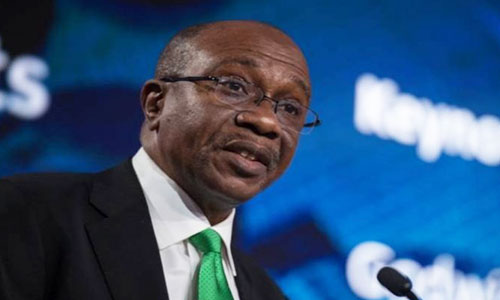
A High Court of the Federal Capital Territory (FCT), in Abuja, has rejected the additional proof of evidence brought by the Economic and Financial Crimes Commission (EFCC) against former governor of the Central Bank of Nigeria (CBN), Godwin Emefiele in the alleged procurement fraud trial brought against him.

The additional proof of evidence filed on October 15, 2024 by the EFCC was seeking to introduce fresh evidence against Emefiele, more than 365 days when the charges against him was filed.

It also sought to bring two witnesses, Tommy Odama John and Ifeanyi Omeke, whose extra judicial statements were made in August 2024, in respect of the charge that had been filed in August 2023.

Delivering ruling on Thursday in a motion on notice filed by Emefiele to object to the action of the EFCC, Justice Hamza Muazu held that the anti-graft agency had on February 12, 2024, first filed additional proof of evidence against the former CBN governor to accommodate the evidence of a former Secretary to the Government of the Federation, Mr Boss Mustapha and one Bamayi Haruna Mairiga.

The judge who noted that the charge against Emefiele was filed since August 14, 2023 and his plea taking on November 16, 2023, said that the action of the EFCC had a resemblance of denial of fair trial because the former governor of CBN was not confronted with the new evidence during investigation as required by law.

Justice Muazu said that the action of EFCC amounted to trial by ambush and a clear case of fishing for evidence in the trial that commenced since November 28, 2023.

In the ruling, the judge agreed that allowing the additional proof of evidence after the charge had been amended severally was prejudicial to the defendant, as his right to fair hearing is being breached.

Justice Muaza held that the position of the law, is that the charge was filed upon the completion of investigation and prima facie case established against any defendant in a criminal matter, adding that in the instant case, the contrary is the case.

The judge however, declined to strike out the charge for being a product of incomplete or ongoing investigation and therefore speculative as claimed by Emefiele.

Justice Muaza said that the charge cannot be struck down because both the defendant and the prosecution had joined issues with each other and trial almost completed.

The judge that having gone so far, justice would be served if the trial is completed on its merit and final judgment delivered in the matter.

He also declined to expunge the evidence of Boss Mustapha and Bamayi Haruna Mairiga from the court records as requested by Emefiele that the evidence of the two witnesses offended Section 36 (2) of the 1999 Constitution on fair hearing.

Emefiele had in the motion argued by his lead counsel, Mr Mathew Burkaa, SAN complained that the evidence of Mustapha and Mairiga were brought to court by EFCC without confronting him with their extra judicial statements made long after the trial had commenced.

Meanwhile, Justice Muaza has fixed June 3, for continuation of trial in the charge marked: FCT/HC/CR/577/2023.

Policemen, Soldiers attack Enugu Community women protesting herdsmen killings, injure several persons

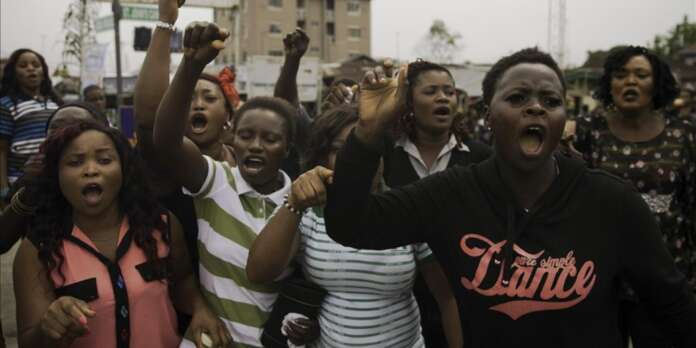
A combined team of Nigerian security agencies, comprising soldiers, police, and Nigeria Security and Civil Defence Corps (NSCDC), unleashed mayhem on thousands of women protesting against herdsmen killings in Eha-Amufu, Isi-Uzu Local Government Area of Enugu State.

SaharaReporters learned that the soldiers and police were deployed by the Enugu State government, led by Governor Peter Mbah, who allegedly wanted to suppress reports of herdsmen attacks and insecurity in the state.

Community sources revealed that trouble started when the women, numbering hundreds of thousands, apprehended two individuals, accused of masterminding herdsmen attacks in Eha-Amufu.

While one of them escaped, the women held the other suspect and paraded him through the communities. The government then deployed soldiers, anti-riot police, and NSCDC personnel to intervene.

Mrs. Regina Odoh, one of the leading protesters, recounted the events: “On getting to Eke, the central market, hundreds of soldiers and policemen blocked us. We pleaded with the security agents to leave our way since they could not protect them. When the security agents refused, we went back to Eha-Ohala and hid him in Umujove community and reinforced in our hundreds and came back to the town.”

“But the soldiers and policemen pursued us and blocked the major road we could come out to the town. On hearing what soldiers and policemen who could not protect us when Fulani herdsmen were attacking, killing, and rapping us, other women from five communities in Eha-Amufu mobilized and stormed the town where the security agents blocked and surrounding them. Immediately, they started shooting both live ammunition and teargas on the protesting women.”

“The women accused them of aiding the atrocities of Fulani herdsmen on their people and still want to shot their mouths from crying to the world. While the soldiers and police were shooting and teargas at them, they responded by pelting them with stones and sticks. In the chaotic scene the security team shot four and wounded several women who have been taken to hospital now.”

In several video and voice clips shared with SaharaReporters, the protesting women were overheard calling the Council chairman, Obiora Obeagu, saboteurs who profit from the blood of hundreds of Eha-Amufu people that herdsmen had killed in the past five years in their farms and homes.

In one of the video clips, a woman who appears to be one of their spokespersons was overheard saying: “Mr. Israel Mgborogwu is from Mgbuji community. He is an agent of government and collaborators of Fulani herdsmen. He works as a media aide to the Isi Uzo LGA chairman Mr Obiora Obeagu.”

“They (Isi-Uzu Council Chairman, Donatus Odoh and Israel) claimed that the woman who died after Fulani herdsmen raped and inserted stick in her private part didn’t die. They went and brought another woman who was earlier raped to claim that no raped woman died. They said that only one person had been killed in Eha-Amufu since November last year. This is a capital lie.”

“In the past two weeks no fewer than four women had been raped in their farm by Fulani herdsmen. They attacked Amofia Umuhu Eha-Amufu village, killed a final year graduate – late Ndubuisi in their compound and shot his uncle on the leg. While Ndubuisi, an only child was buried last week, his uncle is still in hospital. His killers also burnt down two houses and looted four others yet the government officials and some disgruntled elements from the community went to the media to brand our protest sponsored.”

She added, “if the government and security agencies cannot protect us they shouldn’t suppress our outcry.”

The road to constitutional dictatorship, By Olusegun Adeniyi

Ever since the fight for power and control commenced in Rivers State between Governor Siminalayi Fubara and his immediate predecessor and current Federal Capital Territory (FCT) Minister, Nyesom Wike, it was obvious the two groups were going for broke. While Fubara may have lulled himself to proclaim, as he did last May, that the ‘Jungle has matured’ enough for him to take the fight to his godfather, he didn’t reckon with the deployment of federal might. On Tuesday, he learnt his lesson the hard way when President Bola Tinubu declared a state of emergency that ousted him from office by appointing an administrator for Rivers State. Unfortunately, we have been down this dangerous route before, and it is always a slippery slope.

Although the crisis in Rivers State started immediately Wike left office, it took five months to blow open in October 2023, when some lawmakers loyal to him initiated impeachment proceedings against Fubara. “All of us want to be politically relevant; all of us want to maintain our political structure,” Wike said in response to allegations that he was behind the surreptitious attempt to oust the governor. “Will you allow anybody to just cut you out immediately? Everybody has a base. If you take my base, am I not politically irrelevant?”

Like the position taken by President Donald Trump on the war between Russia and Ukraine, President Tinubu took sides with Wike while urging Fubara to compromise for peace to reign in his state. What followed was the bombing of a section of the House of Assembly complex by forces loyal to the governor who then relocated the legislative arm to the Government House, Port Harcourt. And with 27 members ostracised, Fubara began to govern with four lawmakers domiciled within his office—making nonsense of the separation of powers doctrine on which the presidential system is anchored and without which there can be no transparency and accountability in governance.

Meanwhile, it is interesting that Tinubu is doing the same things he attacked his predecessors for before he became president. When in 2013, Jonathan declared a state of emergency in three states, Tinubu said the country was “witnessing a dangerous trend in the art of governance and a deliberate ploy to subvert constitutional democracy.” In a statement he personally signed, Tinubu called on “those who love this country genuinely (to) advise the federal government not to tinker with the mandates of these Governors under any guise. It is a potentially destructive path to take.” He added: “Any measures put in place which alienate the people, in particular their elected representatives, should be considered as fundamentally defective by every right-thinking person in the country.”

Jonathan did not even remove the governors, yet Tinubu wrote a damning statement ‘in defence of democracy’. But the hypocrisy is understandable. Handlers of every sitting president have always seen declaration of emergency as a political tool that could deploy against opponents. On 3rd June 2014, for instance, the late Ijaw Leader, Chief Edwin Clark, accused then Attorney-General and Minister of Justice, Mohammed Bello Adoke, SAN, of ‘misadvising’ President Goodluck Jonathan, in a 16-page letter he (Clark) still decided to read to the media. After citing the examples of President Olusegun Obasanjo who used ‘emergency powers’ to suspend Dariye (Plateau State) on 18th May 2004 and Ayo Fayose (Ekiti State) on 19th October 2006, Clark wondered why Jonathan was being prevented by Adoke to apply the same principle to oust Governors Kashim Shettima (Borno), Murtala Nyako (Adamawa) and Ibrahim Geidam (Yobe). “The President needs to suspend the affected states’ political structures because the roles of these governors have revealed them as conspirators who are hiding under the guise of opposition to display their politics of bitterness, hatred, ethnicity and religion to disparage him and scuttle Jonathan’s constitutional right to seek a second term as guaranteed by the 1999 Constitution,” Clark wrote.

I believed at the time, and still do so today, that Adoke sided with the law and Jonathan acted correctly on the issue. I therefore consider the action taken by President Tinubu on the crisis in Rivers State as self-serving, and to use his own words, “setting in motion a chain of events the end of which nobody can predict.” But before I conclude, let me take also a few excerpts from my June 2014 column:

“When in May 2004, President Obasanjo suspended from office Governor Dariye and members of the House of Assembly while appointing a Sole Administrator for Plateau State, the consensus of most prominent lawyers at the time was that he acted beyond his powers. From Chief FRA Williams to Professors Ben Nwabueze and Itse Sagay, the argument was that there is nothing in the Constitution that so empowers the president to take the actions he did. In fact, rather uncharacteristically, the late Williams issued a legal position which he circulated to the media. Titled ‘Illegality and Unconstitutionality of President Olusegun Obasanjo’s Declaration of Emergency and Suspension of the Governor and Parliament of Plateau State’ and dated 22 May 2004, ‘Timi The Law’ (as he was fondly called) wrote: “There is no provision contained in any part of our Constitution which confers such a power on the President. It is a contradiction of all known principles of true federation operating in a democratic society. The Governor is elected by the people of the state. So are the members of the House of Assembly. It was a recognition of these facts that informed the provisions inserted in our Constitution relating to the exercise of emergency powers…”

However, having spent several hours at the United States Information Service (USIS) in Lagos, scouring through documents and papers, I wrote a two-part column that I gathered earned me the sobriquet of ‘good boy’ at the villa at a period I was very critical of the Obasanjo presidency. Since the usual refrain in the country at that time was “this cannot happen in America”, I had relied on a 1989 document of the Library of Congress titled ‘Powers of the Presidency’ to suggest that such assumption was not entirely correct. Of course, it didn’t matter at the time that my intervention was more an academic exercise on the powers of the presidency than an endorsement of what Obasanjo did.

According to the Congressional paper, “this argument that presidents have the authority to violate the Constitution, to ensure the security of the nation, has been used by wartime presidents to justify extraordinary exercises of power. When it is evident that conditions of national peril exist, Congress and the American public have turned to the president for leadership. Under such conditions, Abraham Lincoln and Franklin Roosevelt stretched, reinterpreted, and in some cases, brazenly violated the Constitution in the name of national security. Their claim to an inherent executive power to safeguard the nation was accepted because the American people generally agreed with their assessment of the gravity of the emergency at hand. Presidential claims of an inherent executive power during a doubtful national emergency, however, will likely fail the test of public and judicial scrutiny…”

The crux of my position was that while a US President might not have removed elected public officials as Obasanjo did, some had also performed no less unconstitutional acts. For that reason, I argued that Obasanjo may have exercised powers beyond what the Constitution specified to curtail a situation that could lead to a breakdown of law and order in Plateau States at the time. I, however, went further to state that in the United States, the National Emergency Act of 1976 (PL94-412) terminated all states of emergency that were in effect until that time while also setting in place procedures for declaring and, more important from the view of many in Congress, terminating future states of emergency.

In the case of Nigeria, the ‘Emergency Powers Act 1961’ which Obasanjo sought to ‘modify’ was no longer in use which meant there was already a legal vacuum for the action he took on Plateau State. To that extent, I asked the National Assembly to look beyond the person of Dariye, ethnic affiliations and the religions members professed, to the larger implications for the future of our democracy. The question I asked them to address was, should the president have the power to suspend Governors and House of Assembly members and if yes, what political structure should be in place in the intervening period of interregnum and for how long…

ENDNOTE:

I wrote the foregoing in 2014 as a rehash of my earlier column published 21 years ago. While President Obasanjo got away with two ‘emergencies’ that ousted governors from office, President Jonathan chose not to travel that route in a commendable act of statesmanship. But the same Tinubu who waxed lyrical about the illegality of such action in the past has suspended the governor and legislature in a state after what is no more than a contrived crisis. The real danger, as we are now seeing in the United States where the powers of the president are being stretched, is that this may be the beginning of testing the limits of many of the assumptions that undergird our democracy in pursuit of self-interest.

In endorsing the suspension of Dariye in my 20 May 2004 column, ‘The President and His Powers’, I took account of the way he mismanaged the ethno-religious killings in his state, and for speaking the ‘we-versus-them’ language of war at a time the people needed peace. But despite my position on Dariye, I nonetheless raised a few pertinent questions that are still relevant today: Can this declaration not become an avenue for mischief makers in some states to put their governors under the siege of violence and then expect the president to wield the big stick? Under a system that is becoming increasingly intolerant of opposing views, are we not susceptible to constitutional dictatorship? Will a successful execution of this emergency order not embolden the president to go the ‘extra mile’ in other extra-constitutional matters, even concerning his term of office? Are we not unwittingly encouraging the creation of an Alberto Fujimori (who as an elected president dissolved the Peruvian Congress and Supreme Court, effectively becoming a dictator)? Have all the available options been explored before this emergency rule? Is it only a ‘military administrator’ that can instil order in a supposedly democratic government?

Like the mother of the dead child in the Biblical story of King Solomon’s judgment, the Rivers State House of Assembly Speaker, Martin Ameawhule, who led Wike’s ground forces against Fubara, has endorsed the presidential proclamation. But my main concern is about the future of our democracy. Considering how the president ‘resolved’ the Lagos State House of Assembly crisis in a manner that saw the return of an impeached Speaker, we should all be afraid of breeding an imperial presidency. With the All Progressives Congress (APC) National Secretary, Ajibola Basiru calling on the president to apply the same formular in Osun State against the Peoples Democratic Party (PDP) Governor Ademola Adeleke, there may be no end to this ‘Kabiyesi Syndrome’. Especially with a National Assembly whose leadership would only ask the president ‘how many times?’ the moment he asks them to jump!

Clearly, there is a travesty of democratic norms in the hasty declaration of an emergency in Rivers State. But the effect of this haste can only be remedied through the invocation of the power of dialogue as a democratic tool. Such dialogue must be across the partisan aisle. In addition, it remains within the powers of the president to whittle down the influence of those whose political interests may be behind the aggravation of the crisis in Rivers State. Besides, the brand of gunboat politics that necessitated the emergency in the first place must be discouraged. The people of Rivers state deserve better than a show of imperial presidential display and supremacist partisanship.

Emeka Ihedioha at 60

Former Imo State Governor, Hon. Emeka Ihedioha will be 60 on 24th March. That is this coming Monday. Two events are planned for the occasion. First, a colloquium chaired by former President Obasanjo with the theme, ‘Is Democracy failing in Africa?’ at which Bishop Matthew Hassan Kukah will deliver the keynote speech. There will also be a dinner to round it off. I first met Emeka in Abuja in 1992 when he worked in media management under the tutelage of former PUNCH editor, Mr Chris Mammah. I was then a State House Correspondent for African Concord magazine. And we became so close that when he was chasing Ebere (now his wife of 28 years), we were always going to her house together.

Interestingly, apart from his three-year at the Villa as a Senior Special Assistant to then Vice President Atiku Abubakar and his seven-month stint in Imo State, Ihedioha has spent most of his working life with the legislature. During the defunct Third Republic, Emeka was Press Officer to then Senate President, Dr. Iyorchia Ayu and later, Chief Press Secretary to then Deputy Senate President, Chief Albert Legogie. Under the current dispensation, Emeka was also Special Assistant (Media) to the late Dr Chuba Okadigbo (as Senate President) in the 4th Senate. Then in 2003, he contested and was elected to the House of Representatives. During his 12 years in the House, Emeka was at various times, Chief Whip and Deputy Speaker and he made considerable impacts in these positions. Emeka and I started as friends, now we are family. I wish him a most wonderful birthday filled with joy and laughter.

You can follow me on my X (formerly Twitter) handle, @Olusegunverdict and on www.olusegunadeniyi.com


A Tale of Two Governors (Fubara and Sanwo-Olu): PBAT and AGF’s new crime of “tele-guiding” and the unequal penalties for offenders

By Tonye Clinton Jaja

Yesterday, a very senior Editor of THISDAY LAWYER, who is a lawyer invited me to write an article about the ongoing State of Emergency in Rivers State.

So that I would not be accused of being emotional or sentimental because Governor Fubara and myself are both indigenes of Opobo Kingdom of Rivers State, I will simply submit facts here and allow the readers to draw their own conclusions.

The major argument and assertion that I am making is that, assuming though not conceding that Governor Fubara has committed any offence(s), is his suspension and declaration of a State of Emergency, the only penalty (out of many other available penalties) that ought to be imposed?

And why was the same penalty not imposed upon the Governor of Lagos State, (and Obasa) who committed a similar offence?

First of all, I am of the firm conviction that His Excellency Mr President is in violation of Section 305 of the Constitution of the Federal Republic of Nigeria, 1999 because the conditions precedent have not been met before he went ahead to proclaim a State of Emergency in Rivers State.

The four conditions that I have identified which means that the Proclamation of the said State of Emergency is in violation of various sections of the Constitution of the Federal Republic of Nigeria, 1999 and other relevant laws are as follows:

  1. Violation of Section 42 of the Nigerian Constitution by preventing our members who are both staff of the Rivers State House of Assembly and the Rivers State Government House, (other officials of the Executive Arm of the Rivers State Government such as Commissioners, Office of the Secretary to the Rivers State Government, etc.) to be involved in gainful employment to earn money to be utilised in acquisition of property through mortgage, etc.;
  2. The said Gazette dated 18th March 2025 which purports to appoints a Sole Administrator is a direct violation of section 1(2) of the Constitution of the Federal Republic of Nigeria, 1999″ the federal Republic of Nigeria shall not be governed, nor shall any person or group of persons take control of the Government of Nigeria or any part thereof, except in accordance with the provisions of this constitution “;
  3. There is no Resolution of the National Assembly in support of the said Gazette as stipulated under Section 305 of the Nigerian Constitution; and
  4. There is no primae facie evidence of failure of the said Governor of Rivers State in performance of his duty since after the judgment of the Supreme Court of Nigeria dated February 28th 2025. Therefore, pursuant to the provisions of Freedom of Information Act, 2011, which entitles our both individuals and Non-governmental Organisations to any such documented evidence of dereliction of duty by the said Governor of Rivers State which is a condition precedent before the publication of a Gazette under Section 305 of the Nigerian Constitution.

In a Press Statement issued after the Proclamation of the State of Emergency in Rivers State, the Hon. Attorney-General of the Federation (AGF), has stated that in addition to other offences, Governor Fubara is guilty of “Tele-Guiding” the actions of militants who blew up crude oil pipelines in Rivers State.

This is in addition to the allegation that Governor Fubara also “Tele-Guided” and prevented the functioning of the Rivers State House of Assembly.

With due respect to the AGF, who is a Senior Advocate of Nigeria-SAN, first of all you cannot create a new offence of “Tele-Guiding”, which is not defined in any written offence and then punish the said Governor Fubara on such an offence without any empirical evidence that Governor Fubara committed said offence.

The AGF’s statement is in violation of Section 36(12) of the 1999 Constitution of Nigeria, as amended, which states that a person cannot be convicted of a criminal offense unless that offense is defined and the penalty prescribed in a written law, which includes Acts of the National Assembly, State laws, and subsidiary legislation.

More importantly, the penalty imposed upon Governor Fubara is different and more punitive than Governor of Lagos State who also committed a similar offence of “Tele-Guiding” the Lagos State House of Assembly members to impeach Obasa on 13th January 2025.

Subsequently, Obasa used armed police men to reclaim his position as Speaker of the Lagos State House of Assembly.

In clear violation of the terms of agreement negotiated by His Excellency, Mr. President, Obasa has up till today refused to withdraw the lawsuit that he filed in court.

And even before the settlement meeting with Mr. President himself, Mr. President explored the option of sending emissaries headed by former Governor Akande to meet with Governor Sanwo-Olu, Obasa and legislators of the Lagos State House of Assembly and other stakeholders, to resolve the issues.

So it was not a one-off effort, His Excellency Mr President applied several efforts until an amicable resolution was arrived at in the case of Lagos State!!!

These steps or similar approach were not applied to the crisis in Rivers State!!!

During the week of 12th March 2025, at the meeting held at the Aso Rock, His Excellency Mr President admitted that Governor Sanwo-Olu, was guilty of the crime of “Tele-Guiding” when he was reported to say:

“I See Sanwo-Olu’s Hand In Obasa’s Impeachment And I’m Not Comfortable He Could Be That Powerful,’ Tinubu Tells Lagos Assembly Members” as reported by an online newspaper.

However, till today Governor Sanwo-Olu has not received the same penalty for “Tele-Guiding” that was imposed upon Governor Fubara.

The AGF, started off on a good note, when in the year 2023, he coined the phrase: “legislative fiat” to condemn the National Assembly for enactment of the National Anthem law without prior conduct of public hearing or referendum.

It appears now that the AGF is not as impartial or objective to condemn His Excellency Mr President of committing a similar crime of proclamation of a State of Emergency in Rivers State by way of an “EXECUTIVE FIAT” without taking time to obtain complete empirical evidence against Governor Fubara or conducting a public hearing or referendum to ascertain the public perception.

AGF has not even advised the President of waiting to obtain the two-thirds majority votes of members of the National Assembly before he published the Gazette containing the Proclamation of the State of Emergency in Rivers State.

So it implies that it is either:

  1. It is a foregone conclusion that the National Assembly would support the President, which then provides evidence of the sobriquet of the current National Assembly as a “rubber stamp” legislature; and
  2. Both the President and the AGF do not give a hoot about strict compliance with the provisions of the Nigerian Constitution!!!

The AGF should bear in mind that he occupies a significant position in the Federal Government of Nigeria by virtue of his current position.

The current AGF is the 24th AGF in the history of Nigeria. He holds the pen, and by his words and actions, he can either inscribe his name in gold or in infamy.

Let me conclude by stating that amongst the previous AGFs, Senator Godwin Kanu Agabi, SAN is one who still commands respect and a positive reputation amongst lawyers!!!!

Below is the list of the former AGFs:

  1. HON. JUSTICE TASLIM ELIAS ,CFR, GCON (1960 – 1966);
  2. CHIEF G.I.M ONYIUKE, SAN (1st March 1966 – 29th July 1966);
  3. DR. NABO GRAHAM DOUGLAS, SAN (1966 – 1972);
  4. HON. JUSTICE DAN IBEKWE (1972 – 1975);
  5. HON. JUSTICE AUGUSTINE NNAMANI, CON (1975 -1979);
  6. CHIEF RICHARD O.A AKINJIDE, SAN (979 -1983);
  7. MR KEHINDE SOFOLA, SAN (Oct 1983 – Dec. 1983);
  8. MR. CHIKE OFODILE, SAN (1984 – Aug. 1985);
  9. PRINCE BOLA AJIBOLA, SAN (12th Sept. 1985 – 4th Dec. 1991);
  10. CHIEF CLEMENT AKPAMGBO, SAN (1991 – 1993);
  11. DR. OLU ONAGORUWA (993 – 1994);
  12. CHIEF. MICHAEL A. AGBAMUCHE, SAN (994 – 1997);
  13. MR. ACHIJI ABDULLAHI IBRAHIM, OFR, SAN (1997 – May 1999);
  14. HON. KANU GODWIN AGABI, SAN (June 1999 – Jan. 2000);
  15. 15 CHIEF BOLA IGE, SAN (3rd Jan. 200 – 23rd Dec. 2001);
  16. HON. KANU GODWIN AGABI, SAN (2002 -2003);
  17. CHIEF AKIN OLUJIMI, SAN (July 2003 – July 2005);
  18. CHIEF BAYO OJO, SAN, FCI ARB, (UK) (July 2005 –July 2007);
  19. CHIEF MICHAEL A. AONDOAKAA, SAN (26th July 2007 – 10th Feb. 2010);
  20. PRINCE ADETOKUNBO KAYODE, SAN (10th Feb.2010 –17th March 2010);
  21. MR. MOHAMMED BELLO ADOKE, SAN, CFR (6th April 2010 – 29th May 2011);
  22. MR. MOHAMMED BELLO ADOKE, SAN, CFR ( 2nd July 2011 – May 2015);
  23. MR. ABUBAKAR MALAMI, SAN (11th Nov. 2015 to May 2023);
  24. Prince Lateef Fagbemi, SAN (16th August 2023 till date).

State of Emergency in Rivers State: African Bar Association condemns suspension of democratically elected state officials

The African Bar Association (AFBA) has condemned the suspension of the Governor,  Deputy Governor and members of the State House of Assembly following Tuesday’s declaration of a state of emergency in Rivers State by President Ahmed Bola Tinubu.

The association in a statement signed by Nicholas Sumba, Director of Publicity/Protocol then called for the “reversal of the Six (6) months suspension of the Governor,  Deputy Governor and members of the Rivers State House of Assembly same being illegal and unconstitutional.”

The statement dated 19 March 2021 in part reads:

African  Bar Association is  in  receipt  of fact of Declaration of  State of Emergency in   Rivers  State,   South-South  Nigeria and the additional suspension of the duly elected  Governor and members of the State House of Assembly by President  Ahmed Bola  Tinubu of Nigeria.

African Bar Association having been fully briefed of the facts of the matter, wish  to highlight  the inherent  danger of the unfortunate  incident.

1.    There  is no doubt  that  by virtue  of the provisions of section 305 of the constitution of  Federal Republic of Nigeria,   1999 as amended, the President of Nigeria is imbued with  right to proclaim  a state of Emergency subject to meeting the outlined provisions in section 305 (1),  (2), (3),  (4) and (5) especially subsection  (3).

African  Bar Association is not challenging this power of the President of Nigeria.

2.    African  Bar Association is  in disagreement with the  President of Nigeria  in adding Suspension of the Governor,  Deputy Governor and members of  the  State  House  of  Assembly,   duly elected  by the mandate of Rivers State electorate with  a term  certain.

African Bar Association  has copiously gone through the Constitution of Federal   Republic of Nigeria  1999 and cannot  locate the powers of the  President of Nigeria  to so suspend elected officials  of Rivers State Government and   her   Legislative   wing   and   subsequent appointment of  an  unelected Administrator    to  preside  over  the affairs  of  Rivers State .Government   for  an  initial  Six (6)  months. subject to re-appointment.

3.     Section   I  (1)  and (2)  of  the  constitution  of  Federal   Republic  of

Nigeria,   1999 provides  thus:

1(1)   This  constitution  is  supreme and  its  provisions  shall   have binding  force on all authorities and persons  throughout  the Federal  Republic  of Nigeria.

1(2)  The Federal Republic  of  Nigeria   shall not be governed, nor shall any persons or group of  persons   take control  of  the Government of Nigeria  or any  part thereof, except in accordance with  the provisions of this  constitution”.

The Supreme Court of Nigeria  did rule  in the case of A.G.  Federation V.AG Lagos State (2013) LPELR-20974  (SC) that, “Under  no circumstances shall the democratic structures be suspended  or dissolved,  even in a state of emergency”.

This ruling is  in  accord with  the Supreme Court of Nigeria decision on the governance module  of Local  Government  Councils in Nigeria.

The  Constitution of  Federal  Republic  of  Nigeria   1999 as amended in

Section  11(4)  stipulates thus:

“At any time when any House of Assembly  of a state is unable to perform its  functions  by  reason of  the  situation  prevailing   in   that  state,  The National  Assembly may make such laws for the peace, order and good government of that state with  respect to matters on which a  House of Assembly may make laws as may appear to be  necessary or expedient until such time as the House of Assembly is able  to resume  its functions; and any such  laws enacted by the  National  Assembly  pursuant  to this section shall have effect as if they were laws enacted by the House of Assembly-of the State:

Provided that nothing in this section shall be constituted as conferring on the National  Assembly  power to  remove the  Governor or the  Deputy Governor of the State form Office”.

From the foregoing,  the constitution  has taken care of what is to be done if the state legislature  is  unable  to function.  Therefore the President of Nigeria instruction  that the Administrator is free to “formulate regulations as may be found necessary to do his job, but such regulations will need to  be considered  and approved by the  Federal  Executive Council and promulgated  by  the  President for  the  state”  is  patently  illegal   and unconstitutional.

The President of Nigeria  should  ruminate and have a rethink  and follow the path of constitutionality.

4.  African Bar Association  is appalled and disheartened  by the action of President of Nigeria.  It is most unfortunate that the Constitution and case law in  Nigeria is quite clear and unambiguous  in outlawing what  the President of Nigeria  has done.

The   President   of   Nigeria    must   mind   the   consequences  of   his unconstitutional  and unlawful actions of dismantling democratic institutions,  which  is a kill joy to democracy.

The actions of the  President of Nigeria  is an aberration and an invitation to avoidable untoward negative happenings.

5.    Africa,  has myriad of problems,  especially good governance deficit, which has visited her people with abject poverty, educational impediments,  lack of  affordable  healthcare, unemployment,  non• payment of living wages which ought to engage her leaders for quick fix solutions.

6.    African governments  must  avoid the  invitation   of  humanitarian problems to the governed by deliberate actions that  are actuated by intended  democracy harm.

7.    African Bar Association   notes  the  raging problems in the  Sahel

States and their exit from ECOWAS.

8.    African Bar Association notes that  the President of Nigeria  had lead the fight against undemocratic governance in West Africa and Africa

and is therefore  worried  of his present action  as it  concerns  Rivers

State in South-South,  Nigeria.

9.    African  Bar  Association hereby calls on the  President of Nigeria  to restore the duly elected   Governor,   Deputy  Governor and members of the Rivers  State House of Assembly  to their positions  and follow the  dictates of the Constitutions of  Federal   Republic of  Nigeria  in any action to remove them from office.

10.   African  Bar Association  recognizes  the  competence  with  merit  of Attorney  General  and Minister of Justice of Nigeria  and do hope that he will do the needful  in  this matter.

11.    Finally, African  Bar Association calls for the reversal of the Six (6) months suspension of the Governor,  Deputy Governor and members of the Rivers State House of Assembly same being illegal and unconstitutional.

TIPS